Creating a living room that feels calm, welcoming, and beautifully put together can often feel like a delicate balancing act. You want the space to feel stylish yet simple, cozy yet uncluttered. This is exactly where Japandi design shines. By blending the refined minimalism of Japanese interiors with the warmth and comfort of Scandinavian style, Japandi creates a harmonious environment that feels both functional and deeply relaxing.
At its core, Japandi design is all about intentional living. Every piece has a purpose, every texture adds depth, and every color contributes to a soothing atmosphere. Neutral palettes, natural materials, and clean-lined furniture come together to form a space that feels open, grounded, and effortlessly elegant. The result is a living room that encourages mindfulness and offers a true sense of retreat from everyday busyness.
In this post, you’ll discover 20 Japandi living room ideas to help you design a serene and balanced space. Let’s discover how to design a space that feels calm, cohesive, and effortlessly stylish in every detail!
1. Thoughtful Indoor Greenery
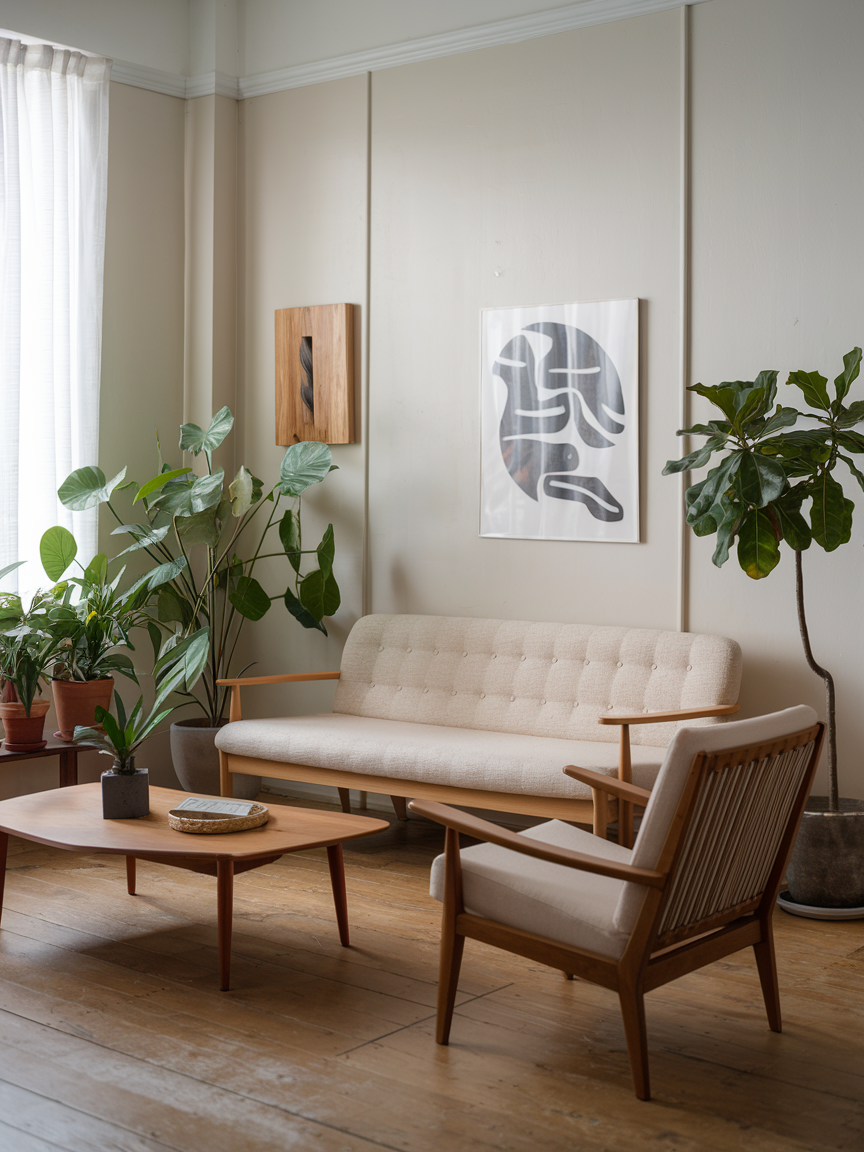
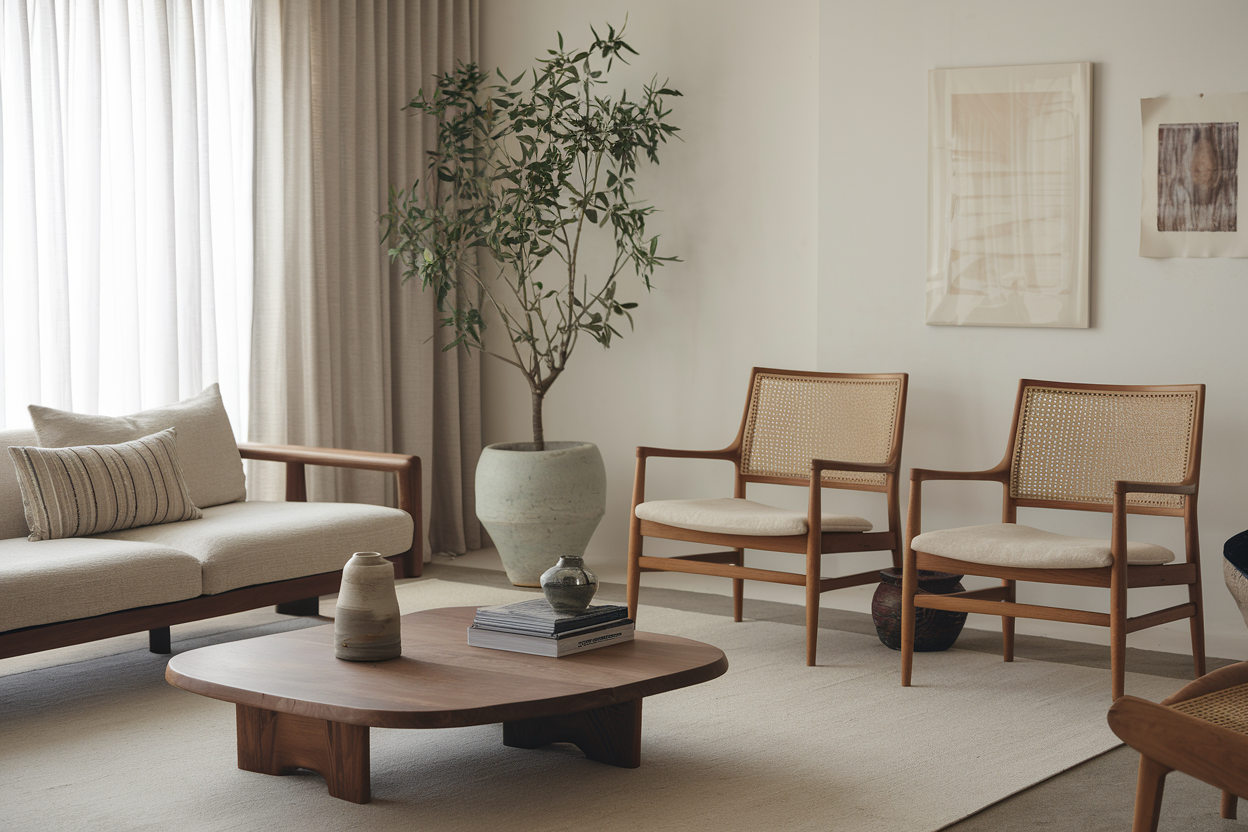
Adding greenery introduces a refreshing natural element that enhances the tranquil feel of the room while preventing it from feeling too minimal or flat. Choose sculptural plants like a rubber tree, bonsai, olive tree, or ficus that complement the clean lines of Japandi interiors. Keep planters simple in ceramic, clay, or stone finishes to maintain cohesion. Position plants intentionally—near windows, beside seating, or in empty corners—to create balance and softness. Even a single well-placed plant can breathe life into the space, improve air quality, and strengthen the calming connection between indoors and nature.
2. Light-Filtering Shoji Panels
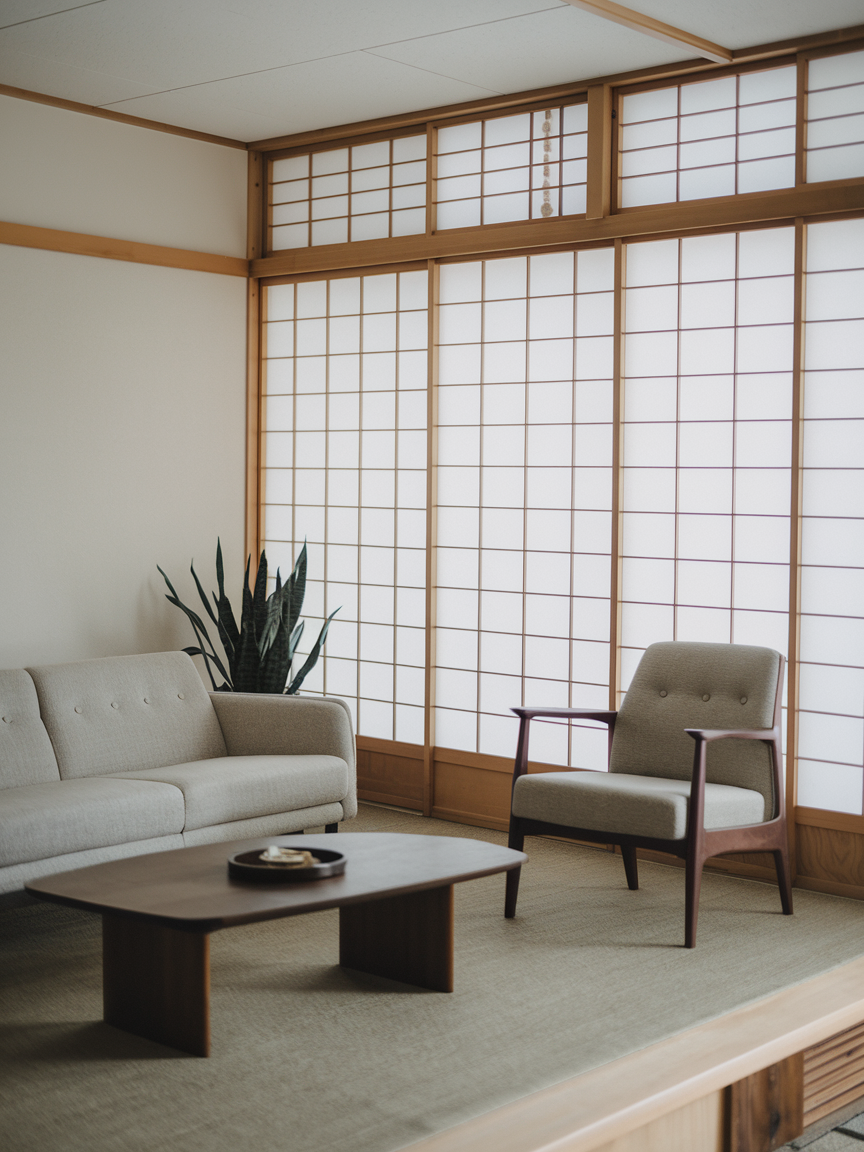
Shoji panels are a beautiful way to introduce traditional Japanese influence while maintaining a modern, minimalist aesthetic. Their delicate wooden grid structure, paired with translucent paper panels, allows natural light to pass through softly, creating a warm and diffused glow throughout the room. They can be used as sliding doors, window treatments, or subtle room dividers that define spaces without making them feel closed off. Beyond functionality, shoji panels add architectural interest and texture, reinforcing the serene, balanced atmosphere that Japandi interiors are known for.
3. Intentional Personal Touches
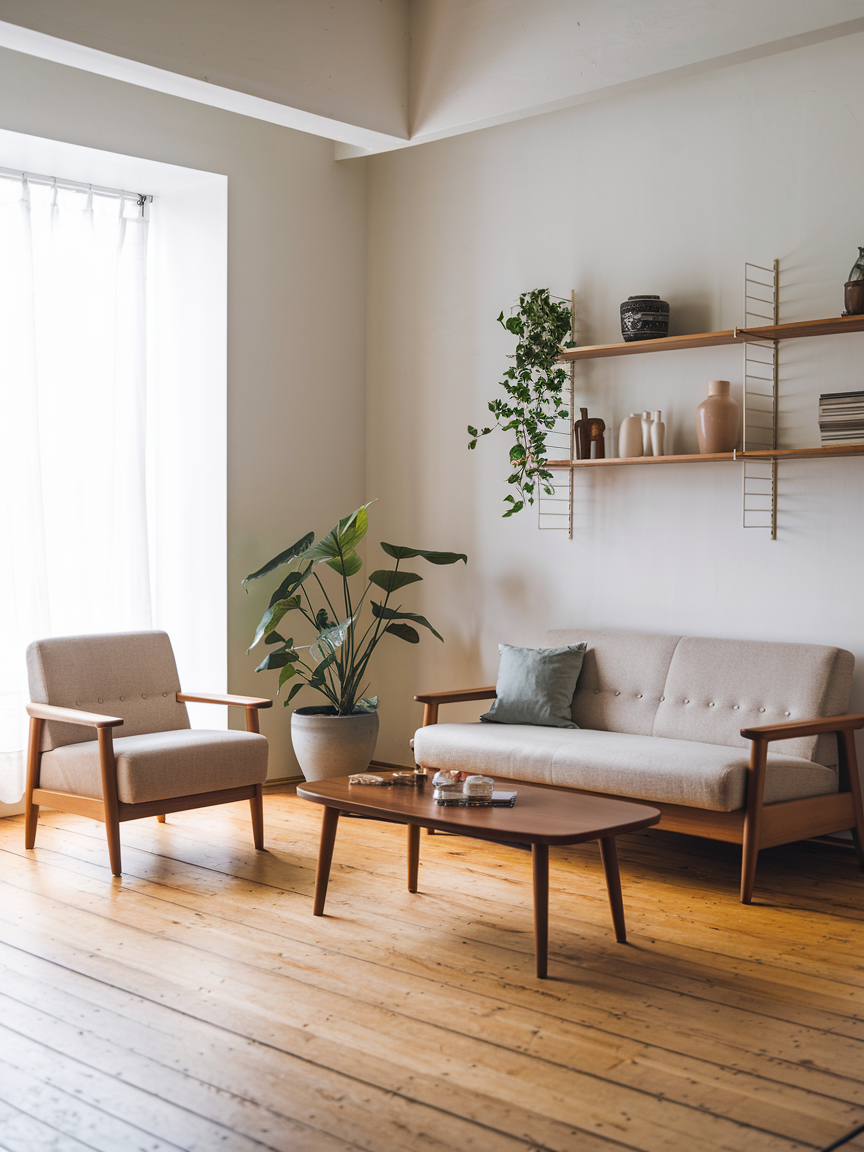
Personal decor in a Japandi living room should feel meaningful rather than abundant. Instead of filling shelves with many items, focus on a few carefully chosen pieces that tell a story, such as handmade ceramics, a favorite book, or a framed photograph. Each object should feel purposeful and contribute to the calm atmosphere rather than distract from it. This mindful approach to decorating creates a space that feels warm and lived-in while still maintaining a clean and uncluttered appearance that supports relaxation and clarity.
4. Versatile Wooden Benches
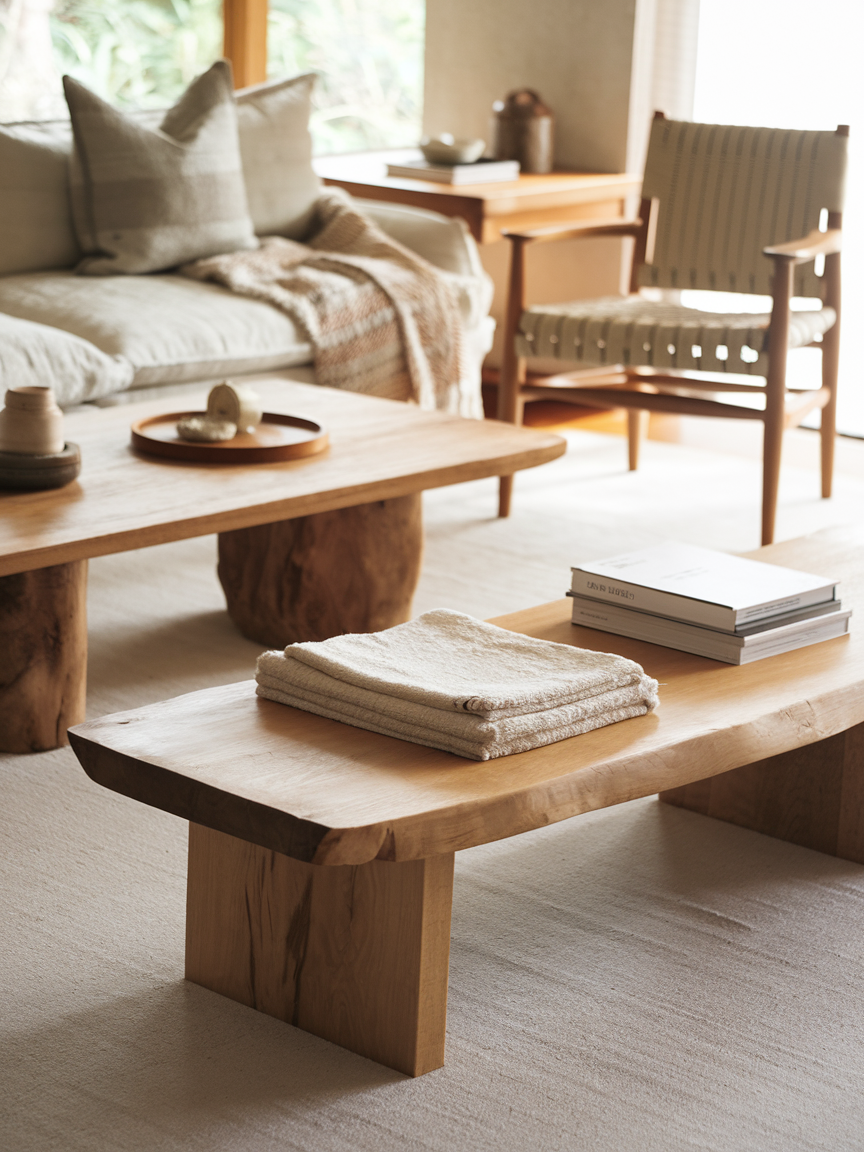
A low wooden bench is a versatile addition that blends seamlessly into a Japandi living room. It can serve as extra seating, a display surface, or even a transitional piece between zones. Its simple design and natural finish keep the look clean and understated. Adding a linen cushion or soft throw enhances comfort without compromising minimalism. The bench’s adaptability makes it both functional and aesthetically pleasing, supporting a flexible and clutter-free living space.
5. Wabi-Sabi Details
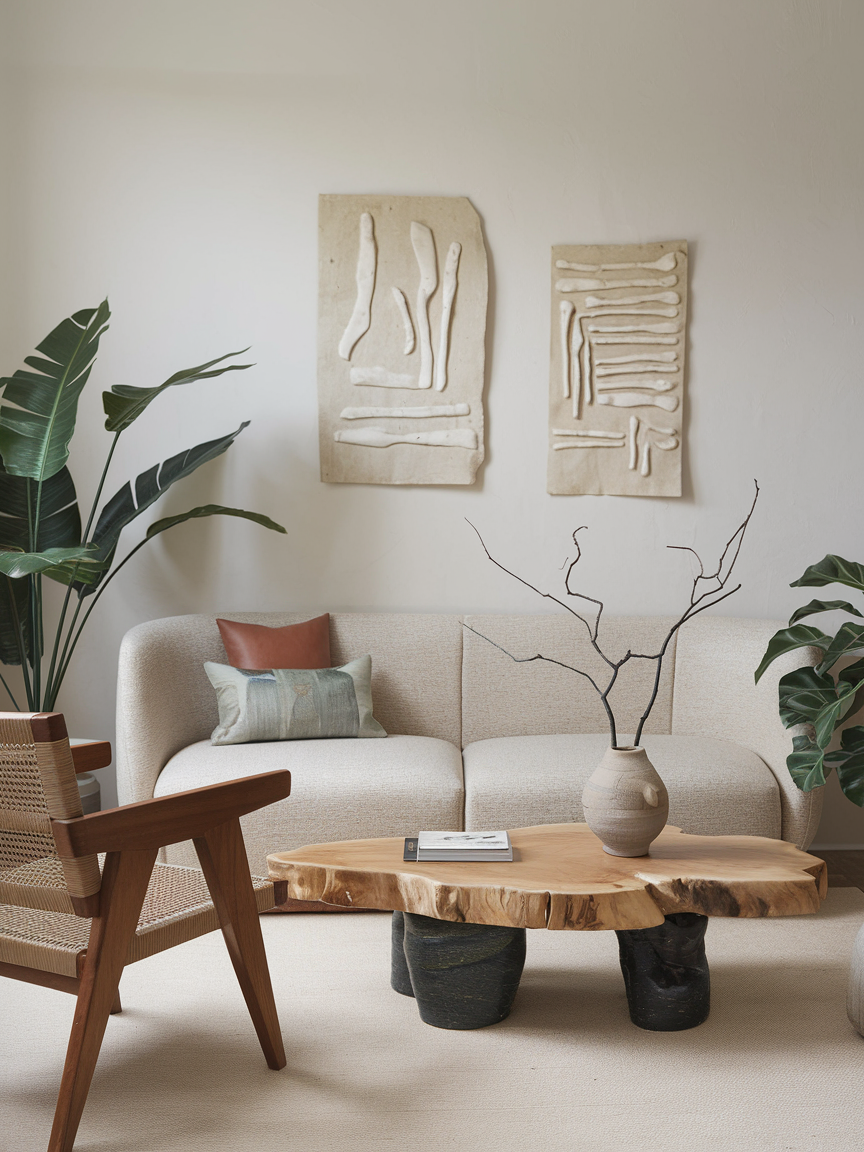
Wabi-sabi celebrates the beauty of imperfection and the natural aging process of materials. Incorporating elements with irregular shapes, raw textures, or subtle wear adds character and authenticity to your living room. Think of slightly uneven pottery, weathered wood, or handwoven textiles. These details create a sense of depth and storytelling, reminding us to appreciate simplicity and impermanence. They help the space feel more human and grounded, rather than overly polished or artificial.
6. Subtle Black Highlights
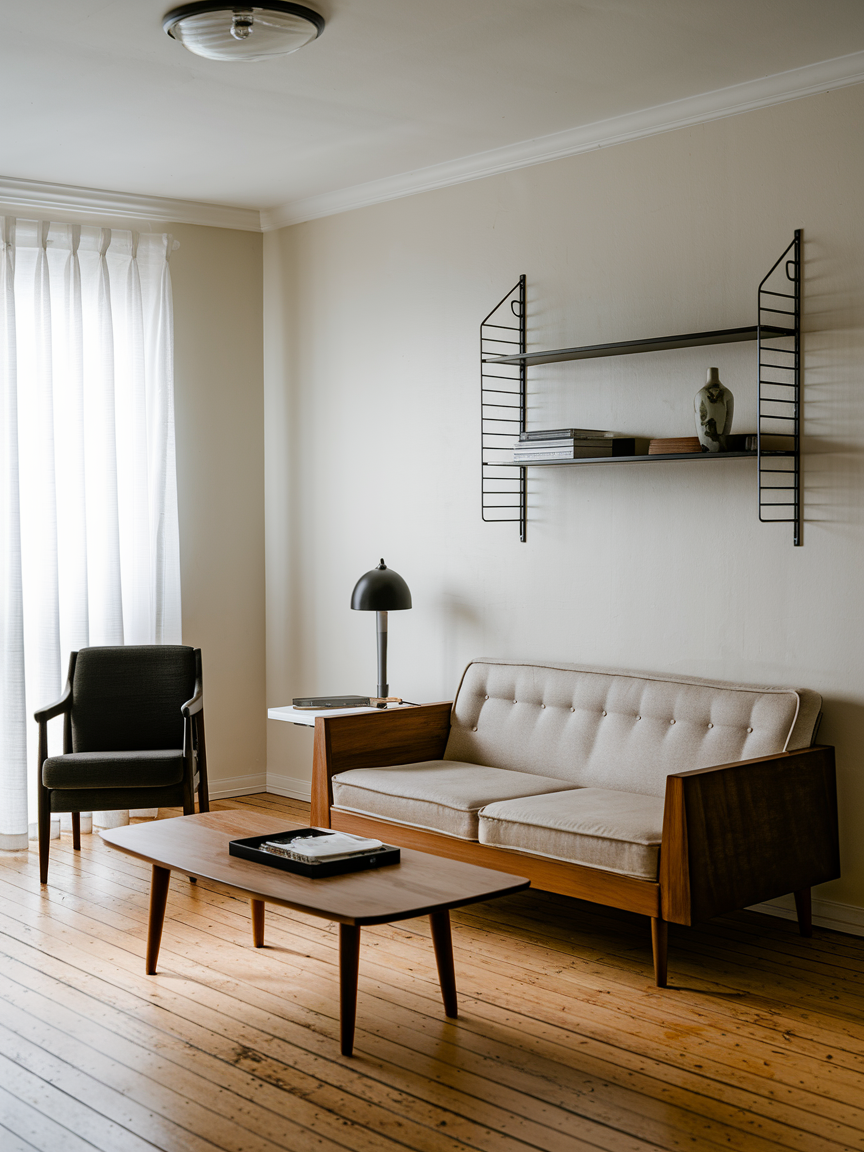
Black accents can add depth and contrast to an otherwise soft and neutral palette. Introduce them through small details like lamp bases, picture frames, or decorative objects. These touches help define shapes and create visual structure within the space. The key is to use black sparingly so it enhances rather than dominates the design. When balanced correctly, it adds a modern edge while maintaining the room’s calm and cohesive feel.
7. Gentle Organic Forms
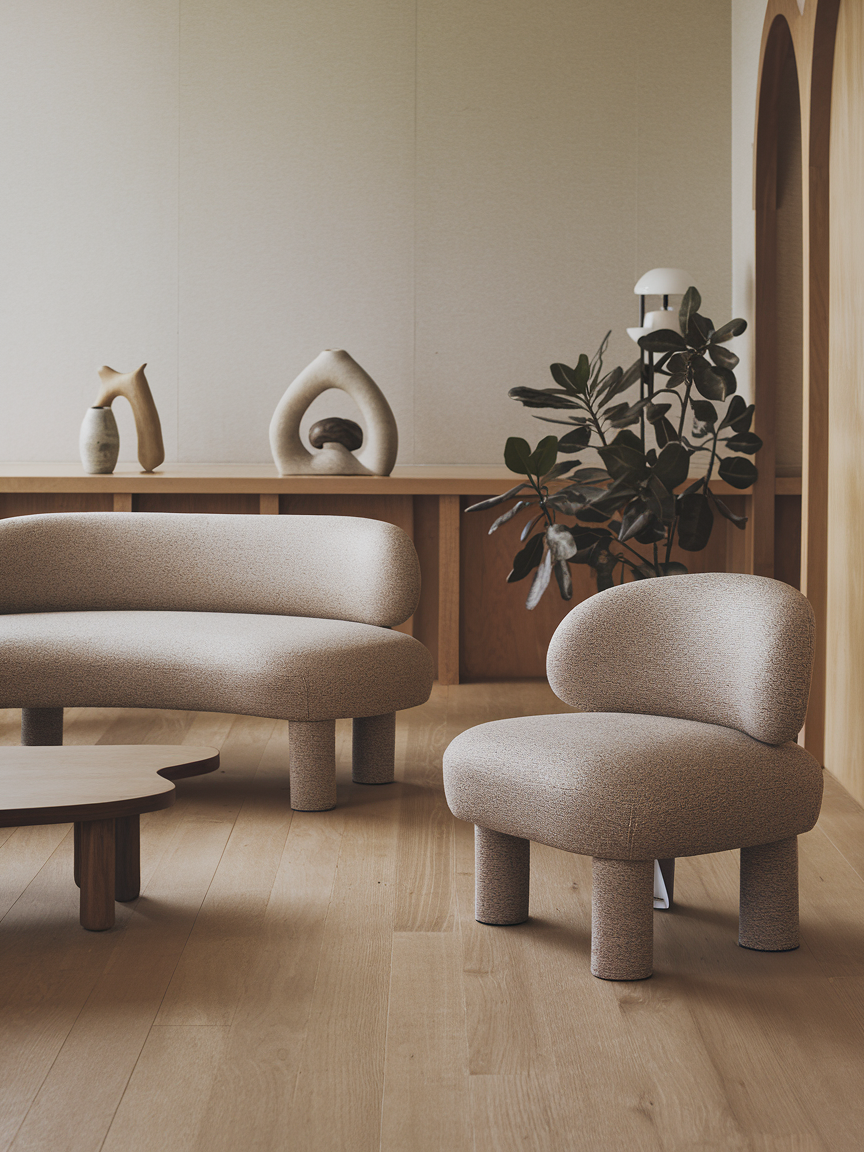
Organic shapes soften the structured lines often found in minimalist interiors. Incorporating rounded furniture, curved decor, or asymmetrical pieces creates a sense of flow and movement. These forms feel more natural and less rigid, making the space more inviting. When combined with straight lines, they create a balanced composition that feels both dynamic and harmonious without overwhelming the simplicity of the design.
8. Warm Layered Lighting
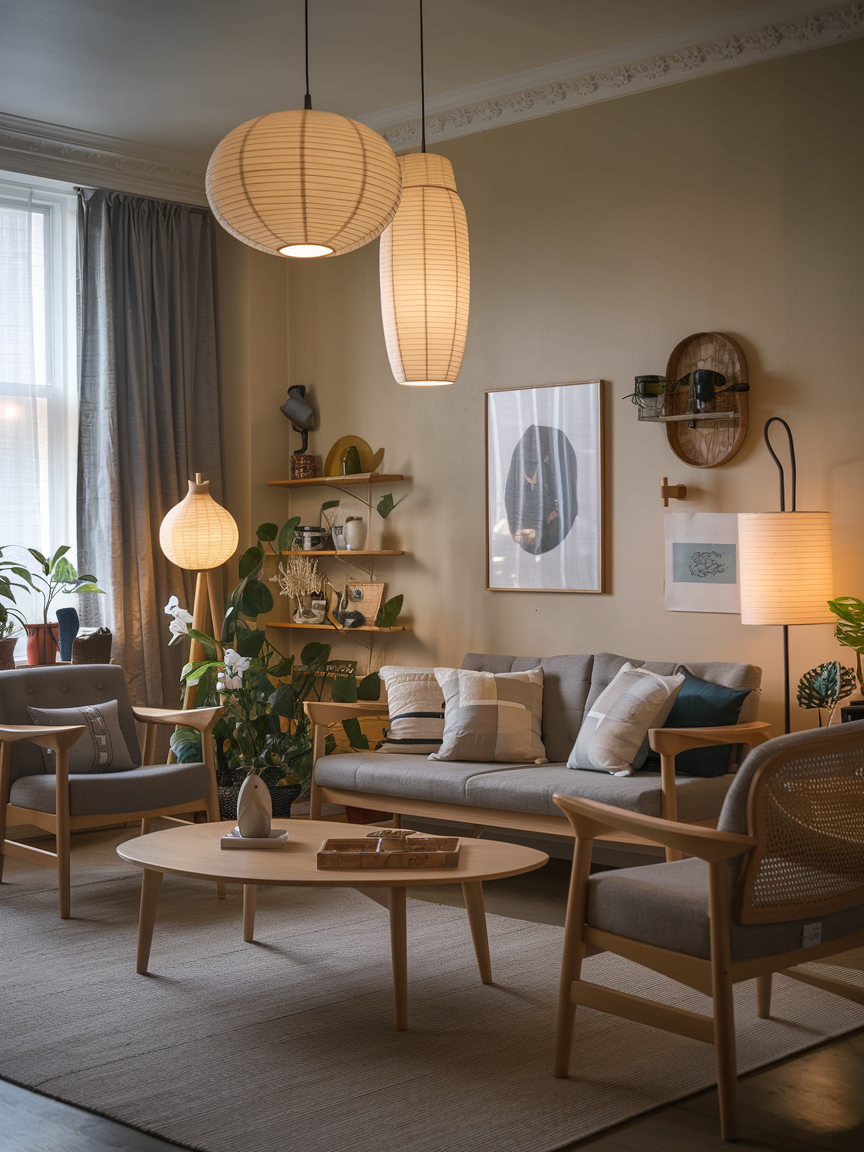
Lighting plays a crucial role in setting the mood of a Japandi living room. Combining different light sources, such as floor lamps, table lamps, and soft overhead fixtures, creates a layered effect that feels warm and inviting. Use warm-toned bulbs to enhance natural materials and textures. Thoughtful placement ensures that light is diffused evenly, highlighting key areas while maintaining a cozy and tranquil atmosphere throughout the day and evening.
9. Streamlined Media Units
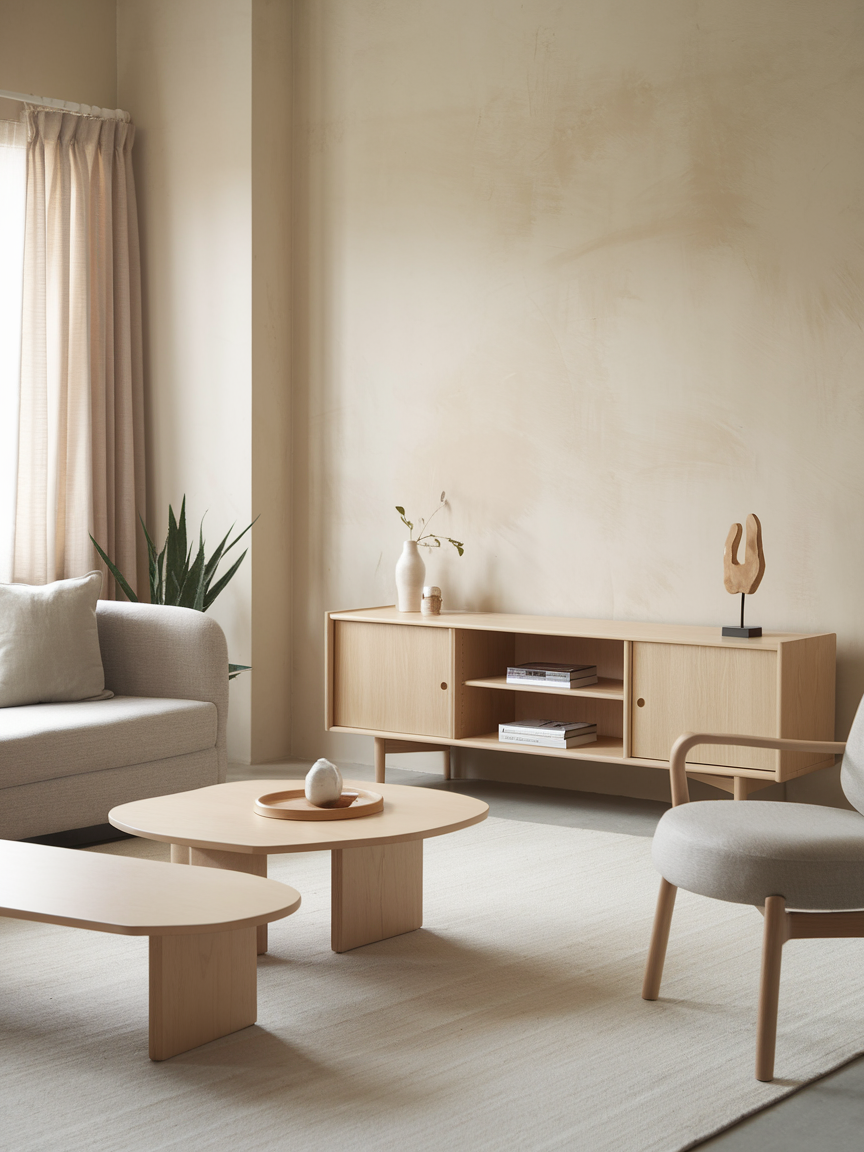
A minimalist media unit helps integrate technology into the living room without disrupting its aesthetic. Choose a low-profile design in natural wood or muted tones to keep the look cohesive. Hidden storage compartments can conceal cables and devices, maintaining a clean appearance. The simplicity of the unit ensures it blends seamlessly with other furniture, allowing the overall design to remain calm and uncluttered.
10. Soft Patterned Fabrics
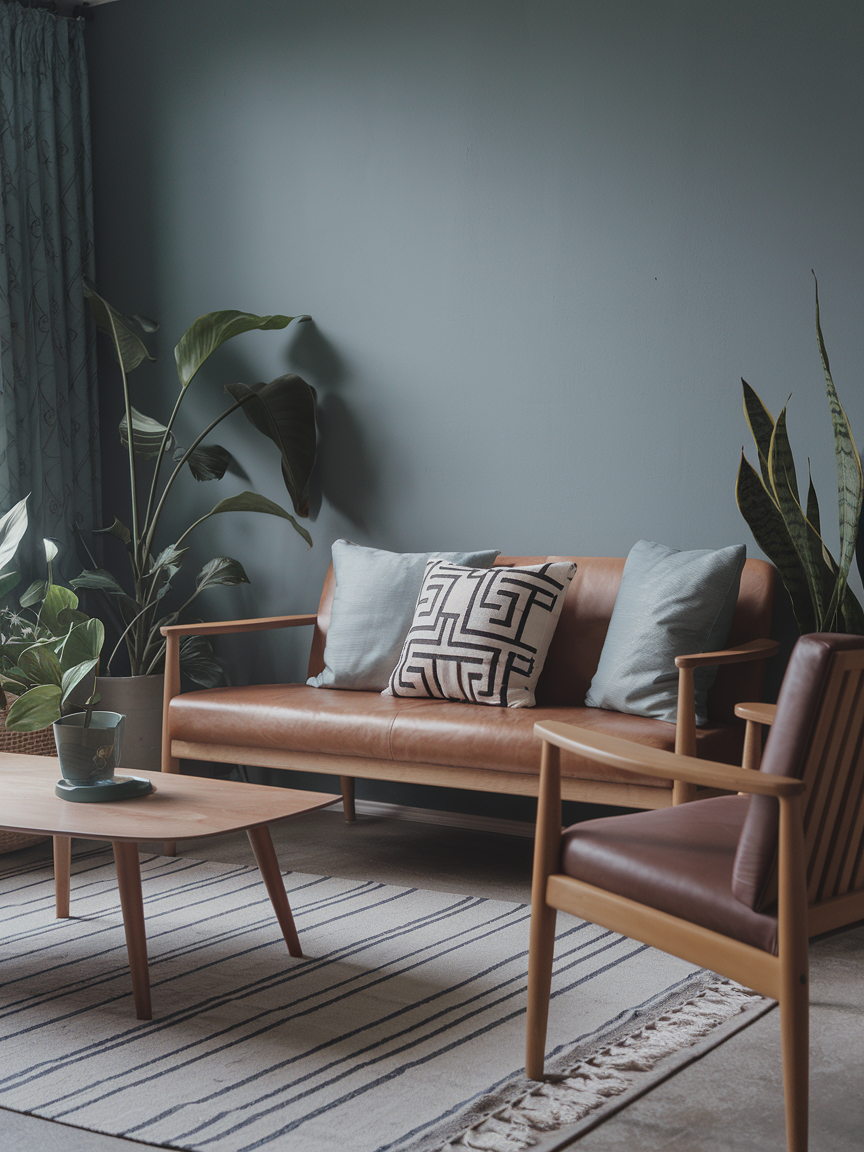
Subtle patterns can add depth and visual interest while staying true to the Japandi aesthetic. Look for gentle stripes, small geometric designs, or understated motifs in muted tones. Incorporate these patterns through cushions, throws, or rugs to create a layered and cozy feel. The key is to keep patterns minimal and harmonious, so they enhance the space without drawing too much attention.
11. Elegant Stone Accents
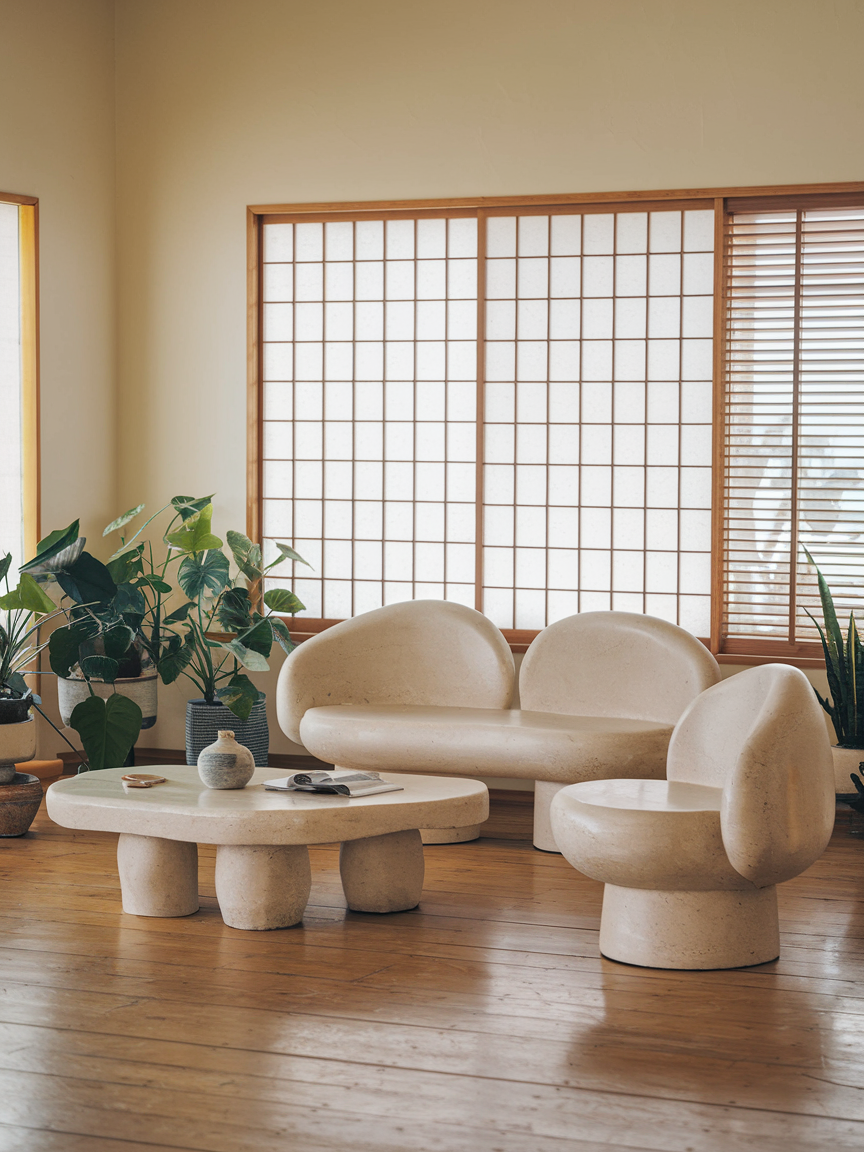
Natural stone elements introduce a sense of quiet luxury and grounding to the living room. Materials like marble, travertine, or raw stone add texture and contrast when paired with wood and textiles. Use stone in small, intentional ways, such as a coffee table, decorative bowl, or sculptural piece. These accents bring depth and sophistication while reinforcing the connection to nature that defines Japandi design, creating a space that feels both refined and serene.
12. Minimal Wall Art
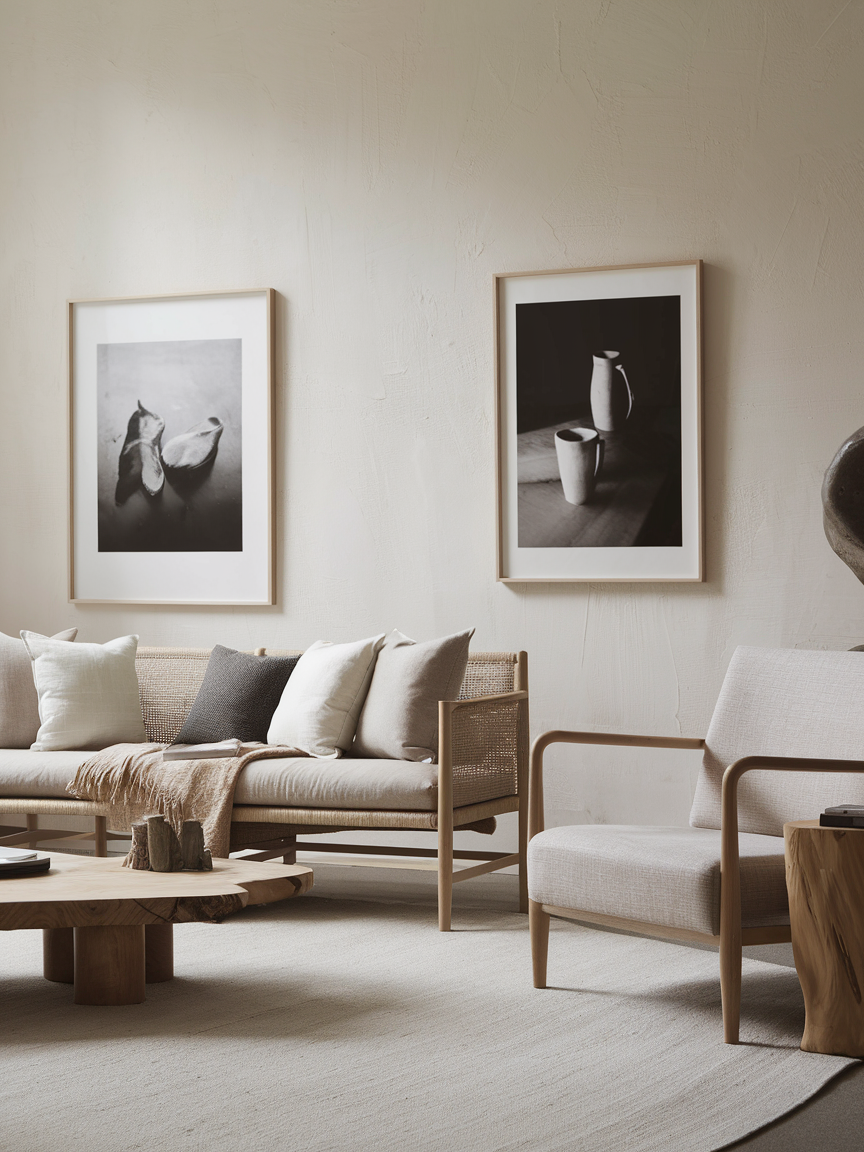
Wall art in a Japandi living room should feel calm and intentional rather than bold or overwhelming. Opt for pieces with muted tones, simple compositions, or nature-inspired themes. Black-and-white photography, abstract prints, or Japanese ink art work beautifully. Leave enough negative space around each piece so the walls can breathe. This restrained approach enhances visual harmony while still allowing personality to shine through in a subtle and refined way.
13. Layered Natural Rugs
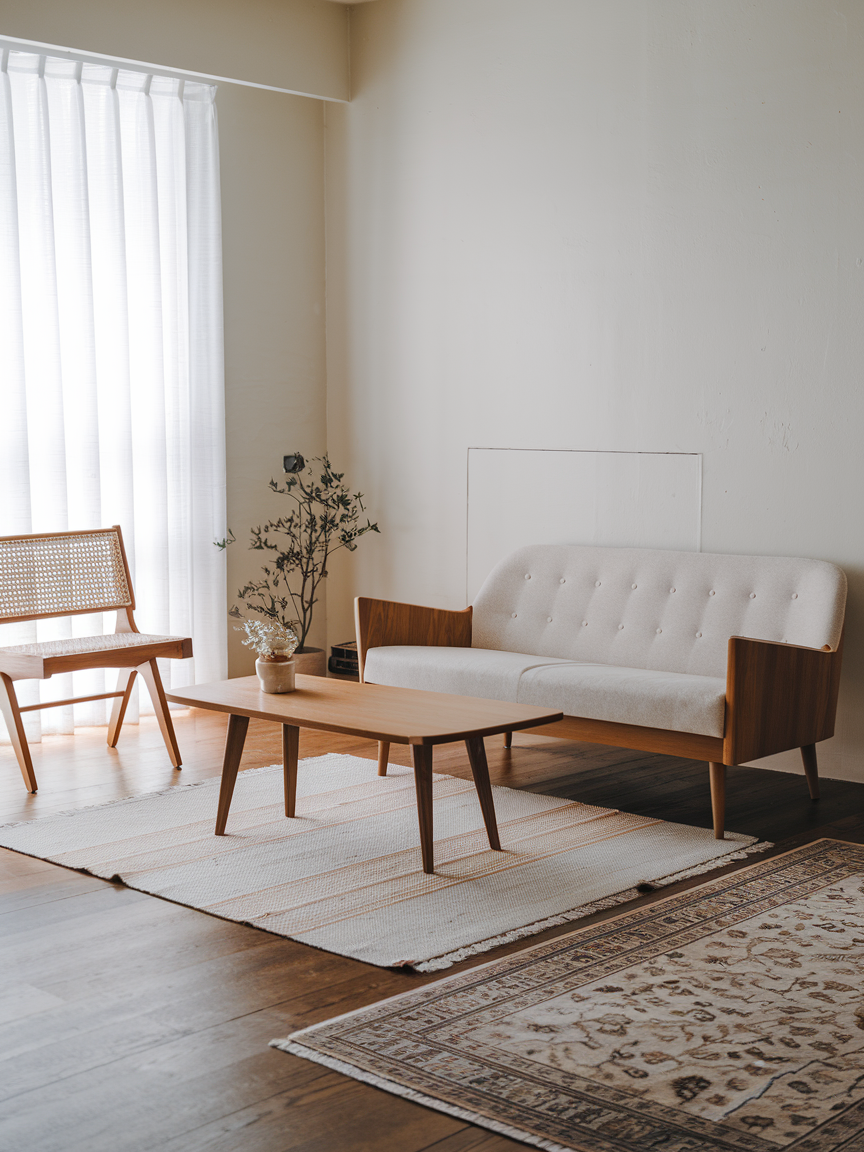
Layering rugs adds warmth and dimension while helping to define different areas within the living room. Combine materials like wool, cotton, or jute in neutral shades to maintain cohesion. Subtle variations in tone or texture create visual interest without disrupting the calm aesthetic. This layering technique also enhances comfort underfoot, making the space feel more inviting while preserving the simplicity and balance central to Japandi design.
14. Relaxed Floor Seating
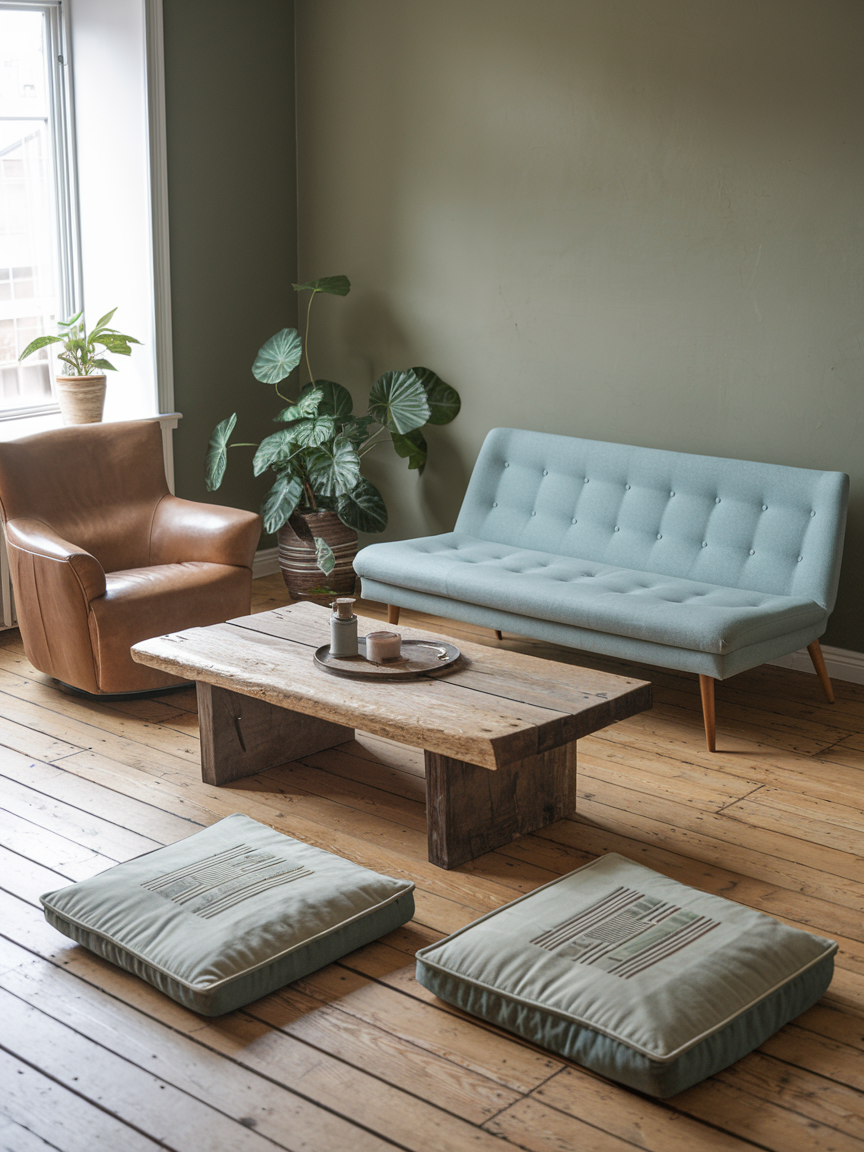
Floor cushions bring a relaxed and grounded feel that reflects traditional Japanese living. They offer flexible seating options for lounging, meditation, or casual gatherings. Choose cushions in soft, natural fabrics and muted tones to ensure they blend seamlessly into the design. Layering a few cushions of different textures can add coziness without clutter. This low seating style encourages a slower, more mindful way of living while enhancing the room’s inviting atmosphere.
15. Handcrafted Ceramic Accents
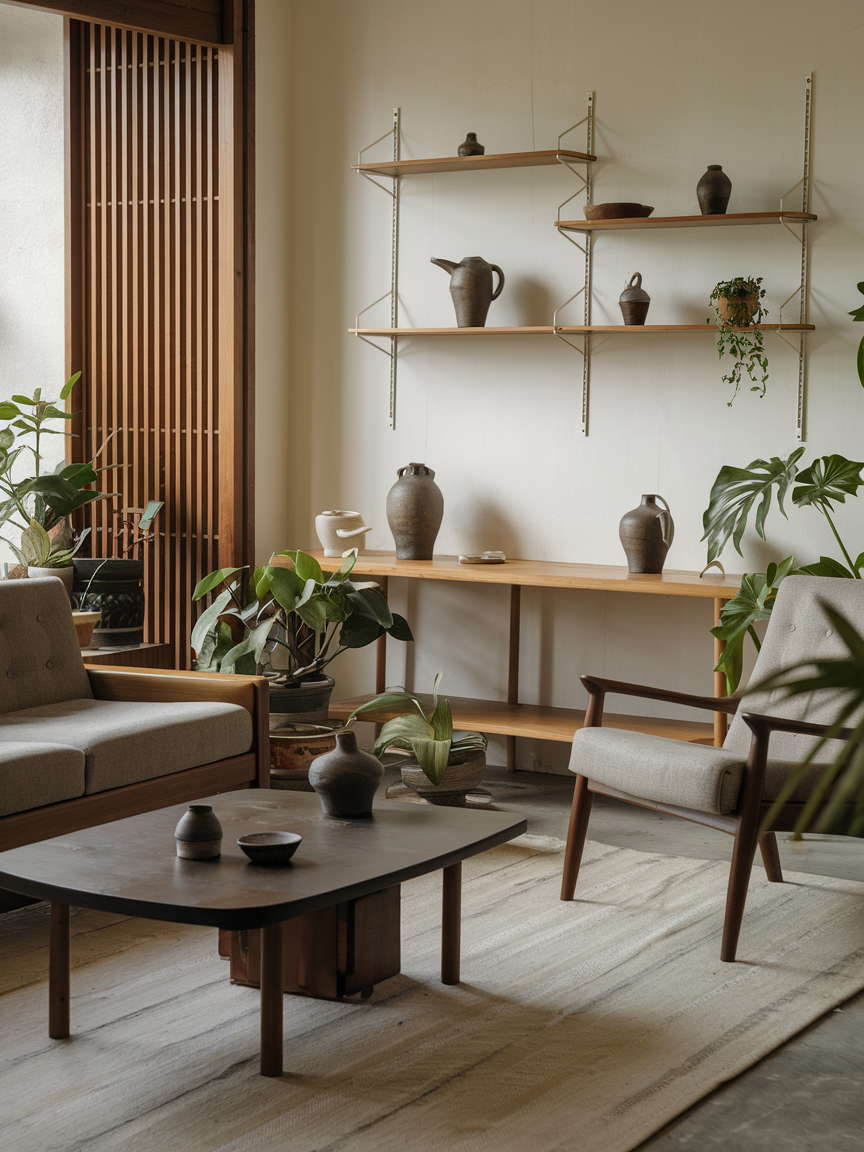
Ceramic pieces bring a quiet artistry into the living room through their organic shapes and subtle imperfections. Hand-thrown vases, textured bowls, or matte-finished trays can act as understated focal points when styled thoughtfully. Their earthy tones and tactile surfaces pair beautifully with wood and textiles, reinforcing the natural palette of Japandi design. Displaying ceramics in small groupings or as standalone pieces allows them to shine without overwhelming the space, adding depth, authenticity, and a sense of craftsmanship.
16. Simple Wooden Shelving
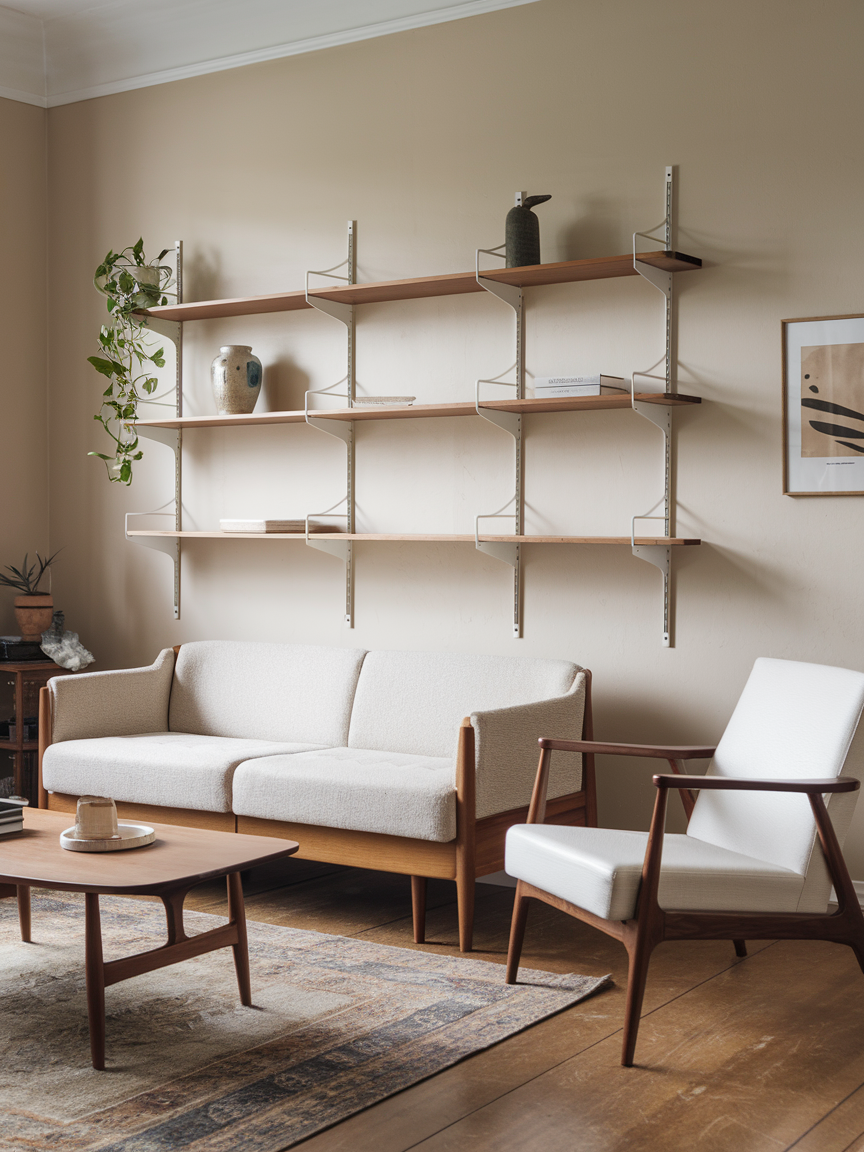
Wooden shelving offers both functionality and visual lightness when designed with simplicity in mind. Opt for open shelves with clean lines that allow items to breathe rather than feel crowded. Display only a curated selection of objects, such as books, plants, or ceramics, to maintain balance and intentionality. The natural grain of the wood adds warmth, while the open design keeps the room feeling spacious and uncluttered. This approach ensures storage remains practical while still aligning with the minimalist Japandi aesthetic.
17. Airy Neutral Curtains
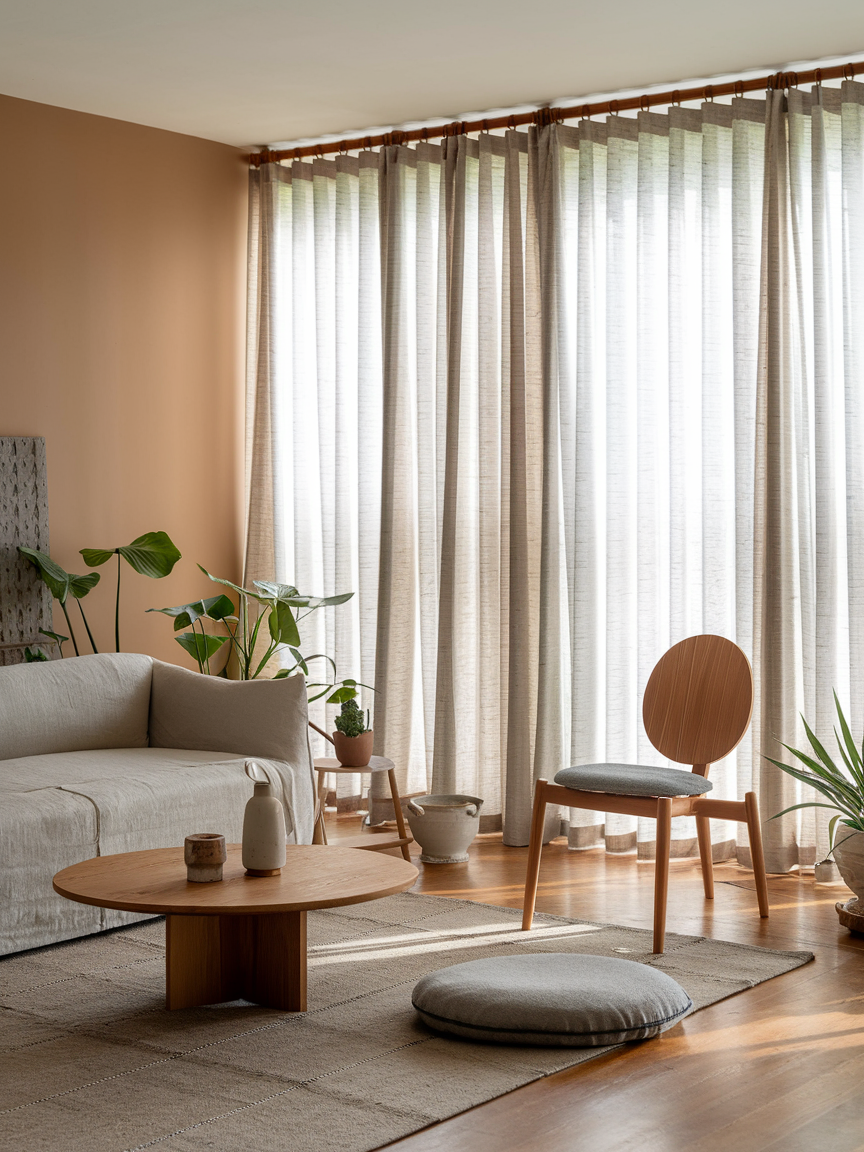
Light, neutral curtains soften the room while allowing natural light to filter through gently. Linen and cotton fabrics work particularly well, as they add texture without heaviness. Choose soft shades like off-white, sand, or light gray to maintain harmony with the overall palette. Floor-length curtains can elongate the walls and create a sense of height, enhancing the room’s openness. Their subtle movement adds a calming, almost ethereal quality that complements the serene atmosphere.
18. Natural Tatami Layers
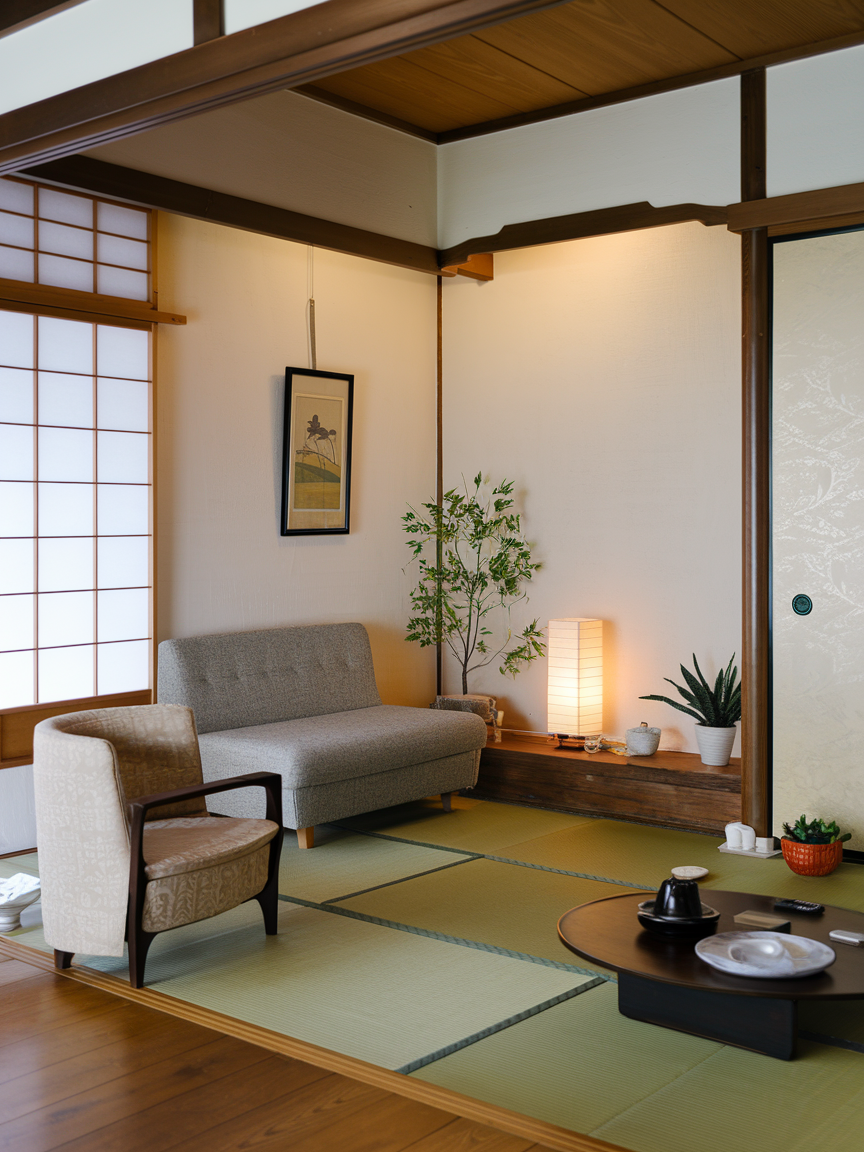
Tatami mats introduce an authentic Japanese element that enhances both texture and comfort. Their woven natural fibers create a soft yet structured surface that grounds the space. Use them beneath a coffee table or within a reading nook to define areas while maintaining a cohesive look. Tatami also adds a sensory dimension, offering a subtle scent and tactile quality that contribute to a calming environment. When paired with neutral tones and wooden furniture, they reinforce the connection to nature that defines Japandi design.
19. Seamless Storage Solutions
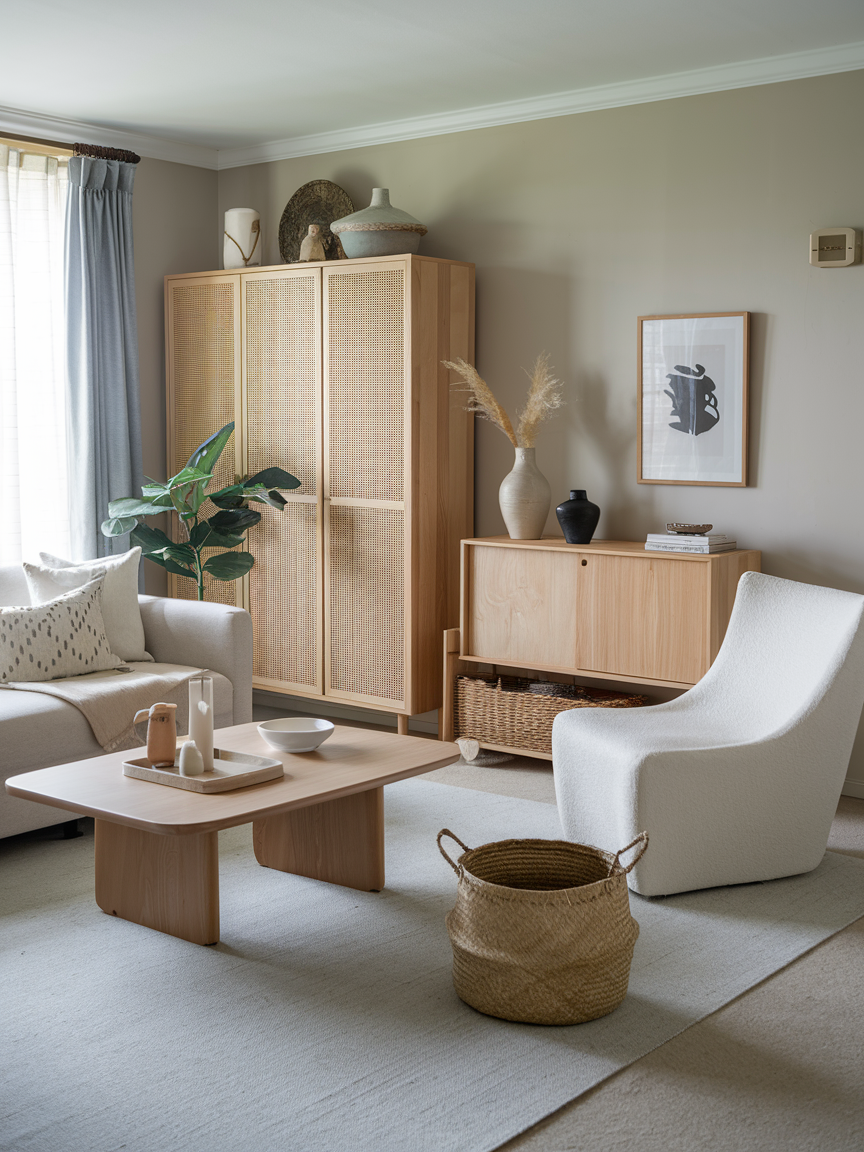
A clutter-free space is key to achieving a true Japandi aesthetic. Incorporate storage solutions that blend effortlessly with the design, such as wooden cabinets, woven baskets, or hidden compartments. Keeping everyday items out of sight maintains a clean and peaceful environment. Open storage can be used sparingly for curated decor, while closed storage keeps the room looking tidy and intentional. This balance ensures both functionality and visual calm.
20. Curated Coffee Table Styling
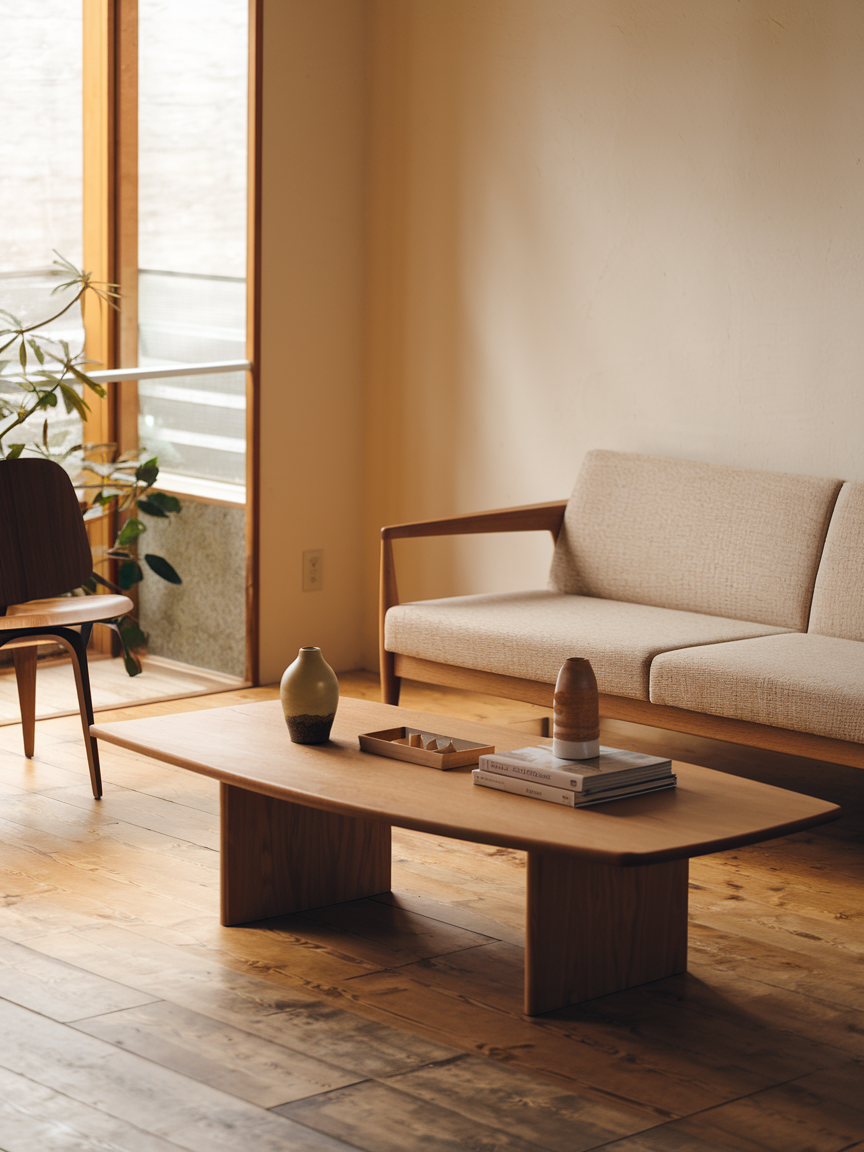
Styling a coffee table in a Japandi living room is all about restraint and intention. Instead of filling the surface, select a few meaningful items such as a ceramic vase, a small plant, or a stack of books. Arrange them with care to create balance and visual harmony. Leaving negative space is just as important as the objects themselves, allowing the table to feel light and uncluttered while still visually engaging.
* Now it’s time to bring these ideas into your own home. By embracing simplicity, natural materials, and thoughtful design, you can transform your living room into a peaceful Japandi-inspired retreat. Let’s create a space where you can truly unwind, recharge, and enjoy a sense of calm every single day.