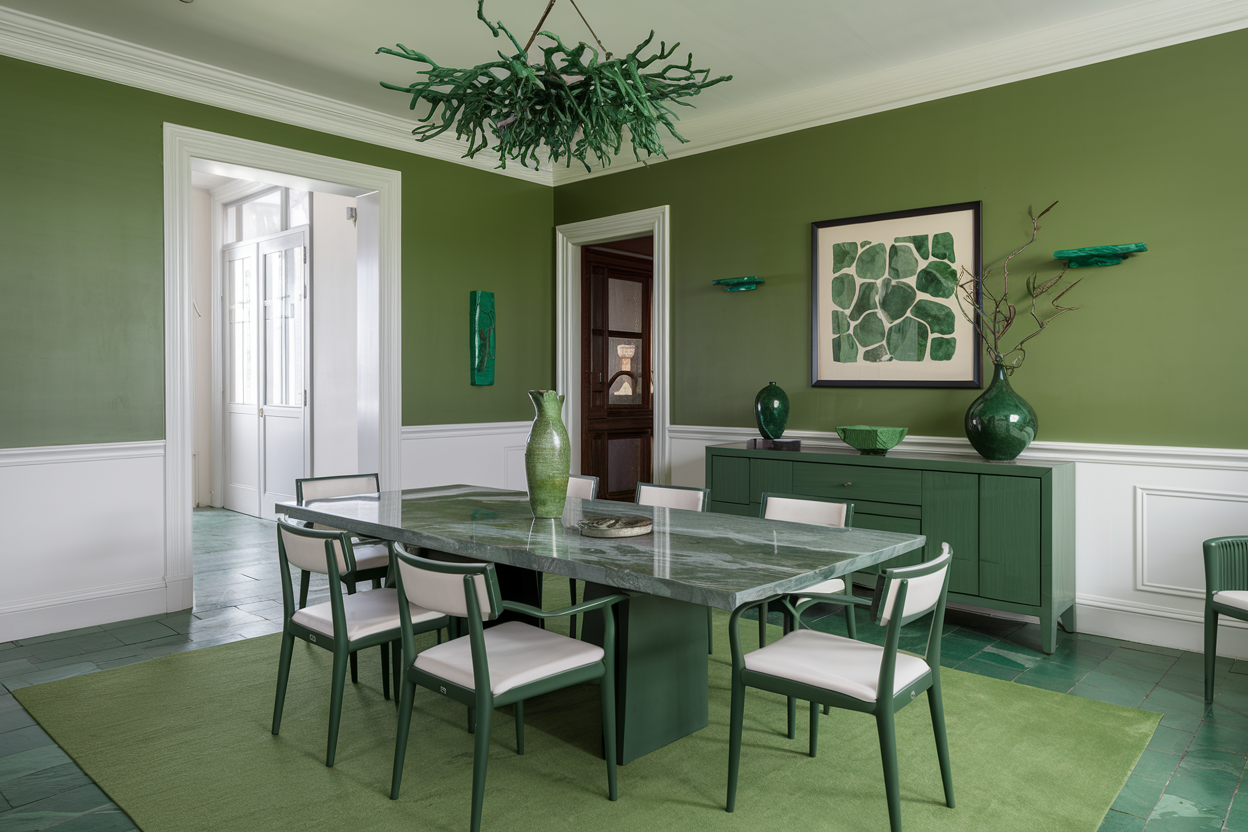
Green has a unique ability to bring both richness and freshness into a dining room, creating a space that feels grounded, elegant, and naturally inviting. From deep emerald hues to soft sage and muted olive tones, green introduces a sense of calm while still offering depth and character. It’s a versatile color that works beautifully across a variety of styles, from modern and minimalist to classic and traditional interiors.
A well-designed green dining room balances color with complementary elements. Neutral foundations such as white, beige, or warm wood tones help soften the richness of green, allowing it to stand out without overwhelming the space. Textures like velvet upholstery, natural wood finishes, and woven accents enhance the layered look, adding warmth and visual interest. Metallic details in gold or brass can further elevate the design, introducing a subtle touch of sophistication.
Incorporating green doesn’t always require bold walls or large statement pieces. Even small accents, such as dining chairs, table settings, artwork, or décor, can introduce the color in a refined and tasteful way. The key lies in creating harmony between tones, materials, and lighting so the space feels cohesive and well-composed while still expressing personality.
Let’s discover creative ways to design a dining room that showcases rich green tones while maintaining a sense of balance, warmth, and timeless style!
1. Natural Wood Elements
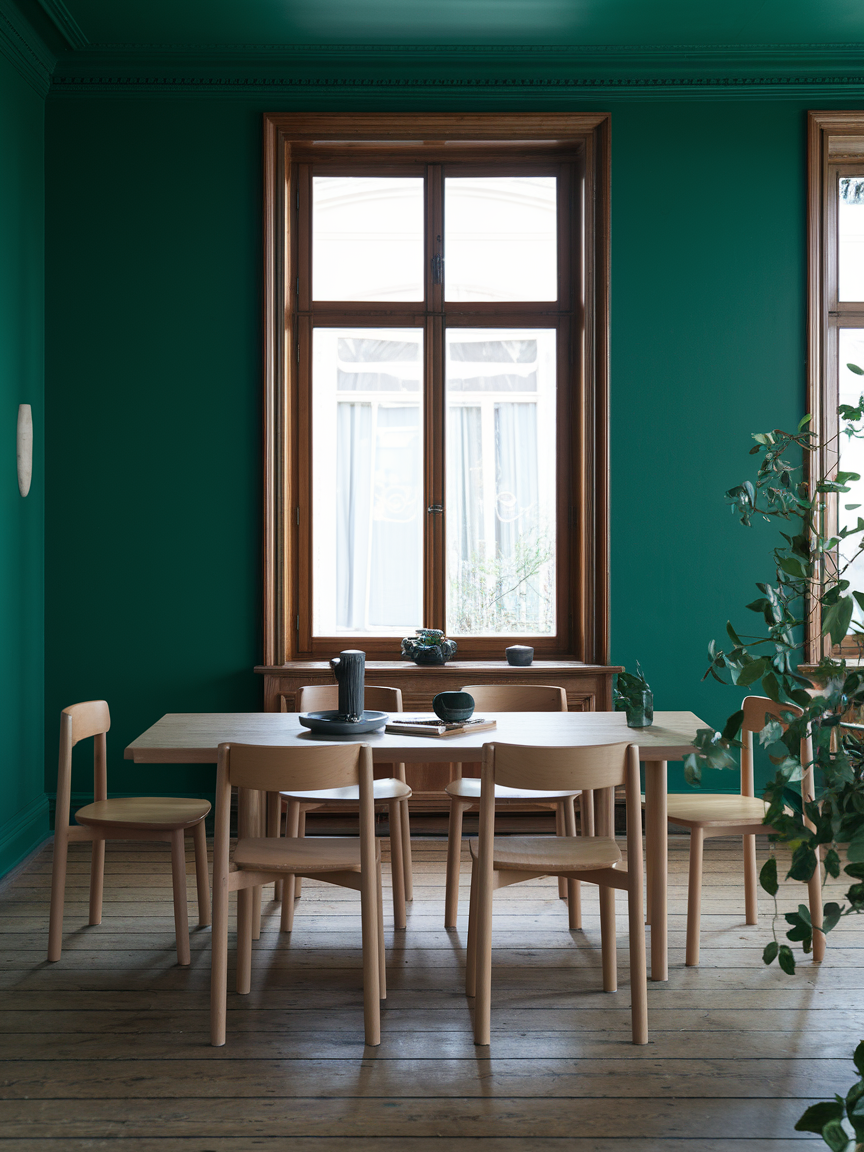
Natural wood and green form a classic pairing that brings warmth, texture, and timeless appeal to the dining room. Wooden dining tables, chairs, or cabinetry soften the visual impact of green walls while adding an organic, grounded quality to the space. Lighter woods help maintain an airy and modern feel, while darker woods introduce richness and contrast that complement deeper green shades. This combination works across a variety of styles, from rustic and farmhouse to contemporary and transitional interiors. The presence of natural wood also adds durability and longevity to the design, ensuring that the space remains functional and aesthetically pleasing over time. Together, green and wood create a dining environment that feels balanced, welcoming, and naturally elegant.
2. Mint Green
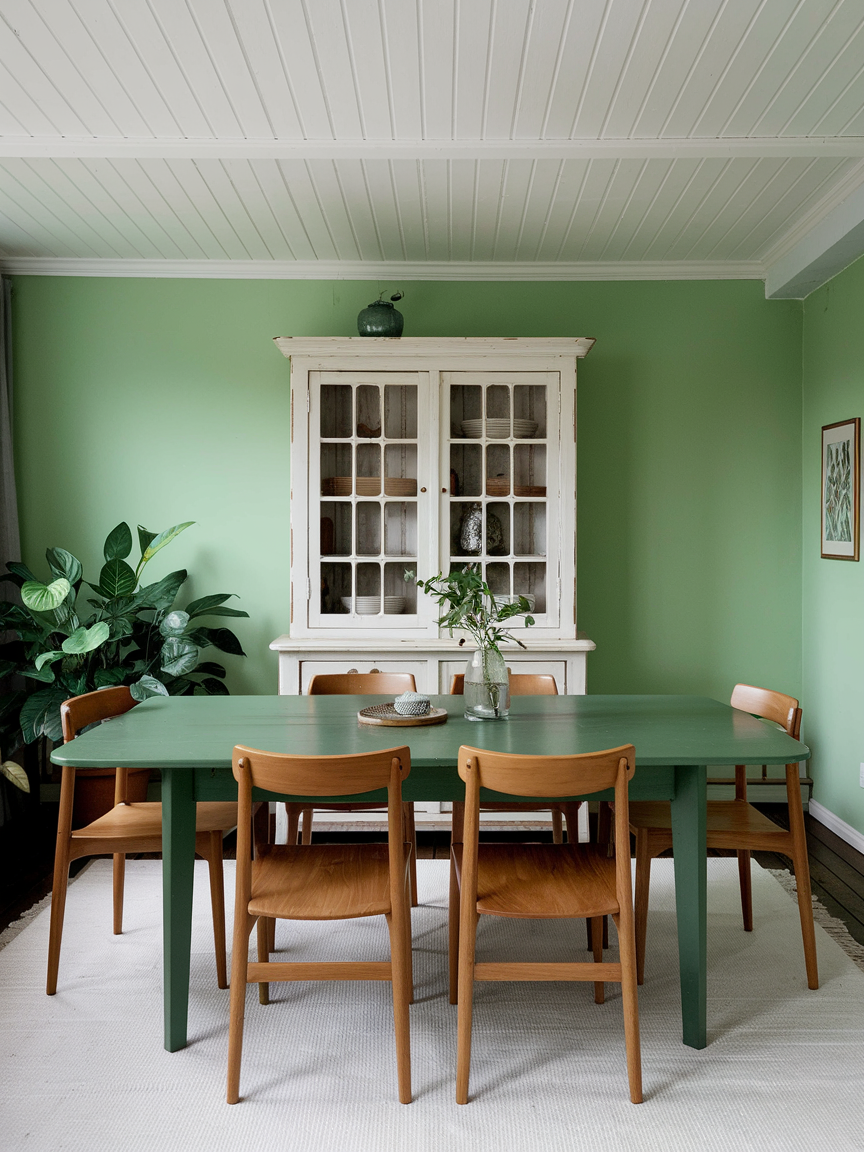
Mint green brings a light, refreshing energy that instantly brightens the dining room and creates a sense of openness. Its soft pastel tone works particularly well in spaces with abundant natural light, where it enhances brightness and contributes to an airy atmosphere. When paired with white furniture, glass elements, or minimalistic décor, mint green creates a clean and cheerful aesthetic that feels modern and approachable. Subtle metallic accents or delicate lighting fixtures can add just enough sophistication without overpowering the softness of the color. Mint green dining rooms often feel relaxed and uplifting, making them ideal for casual dining spaces where comfort and simplicity are prioritized alongside style.
3. Dark Green with Brass Accents
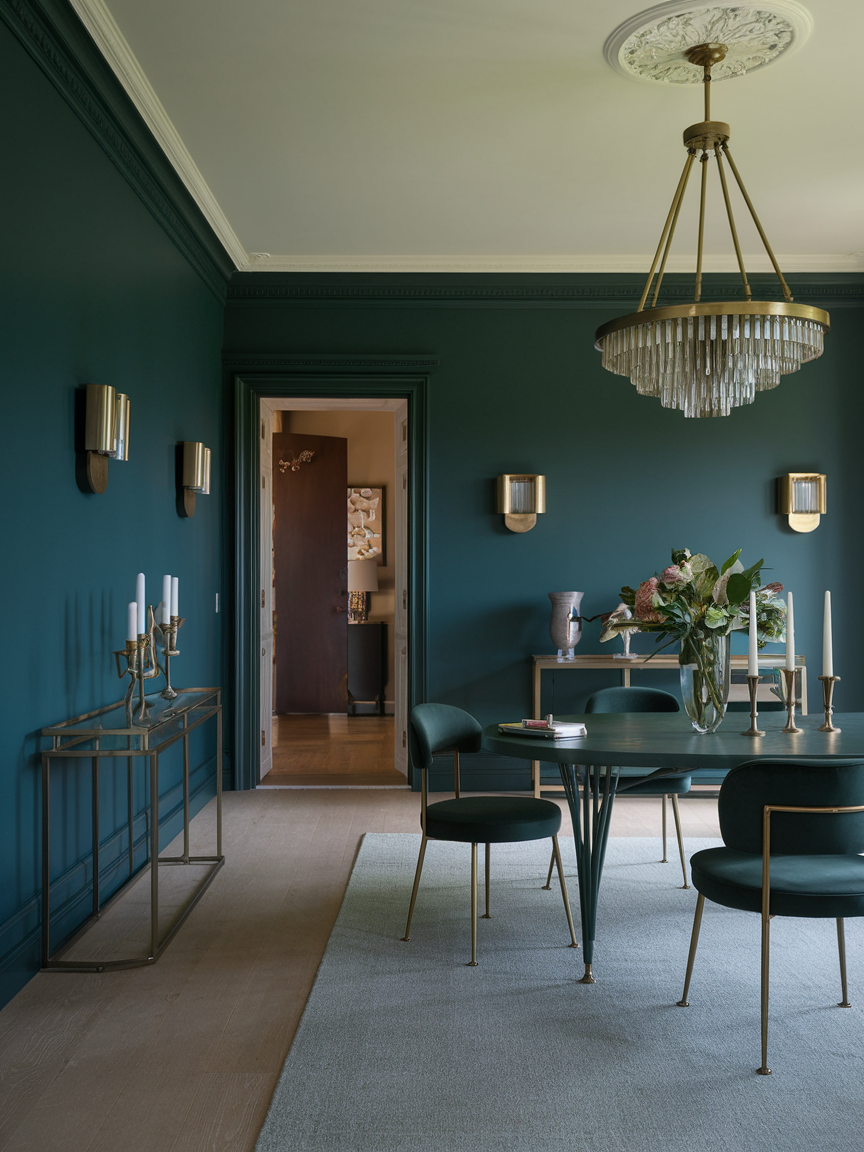
Dark green paired with brass accents creates a luxurious and visually balanced dining room that feels both rich and refined. The depth of dark green provides a dramatic backdrop, while brass elements introduce warmth and subtle shine that elevate the overall design. This combination works beautifully in spaces with classic or contemporary influences, where elegant lighting fixtures, framed mirrors, or decorative hardware can enhance the aesthetic. The reflective quality of brass helps prevent the dark tones from feeling too heavy, ensuring the space remains inviting. With proper lighting, this pairing creates a cozy yet upscale atmosphere, making it ideal for evening dining and formal entertaining.
4. Statement Lighting
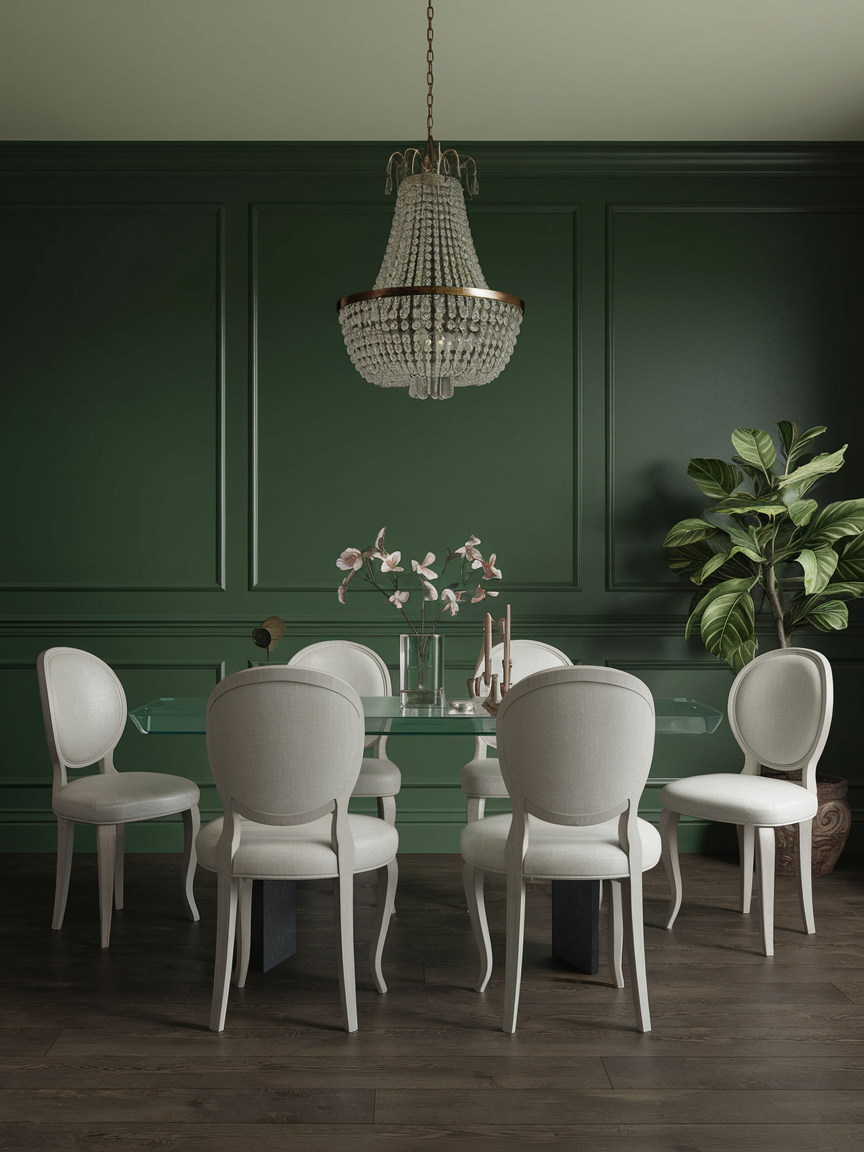
Statement lighting serves as both a functional and decorative element that can dramatically enhance a green dining room. A chandelier, sculptural pendant, or oversized fixture becomes a focal point that draws the eye upward and adds a sense of scale and personality to the space. When placed above the dining table, statement lighting helps define the area and reinforces its importance within the room. Warm lighting tones complement green hues by softening their intensity and creating a welcoming glow. This approach not only improves illumination but also adds character and sophistication, allowing the lighting itself to act as a central design feature.
5. Sage Green Dining Room
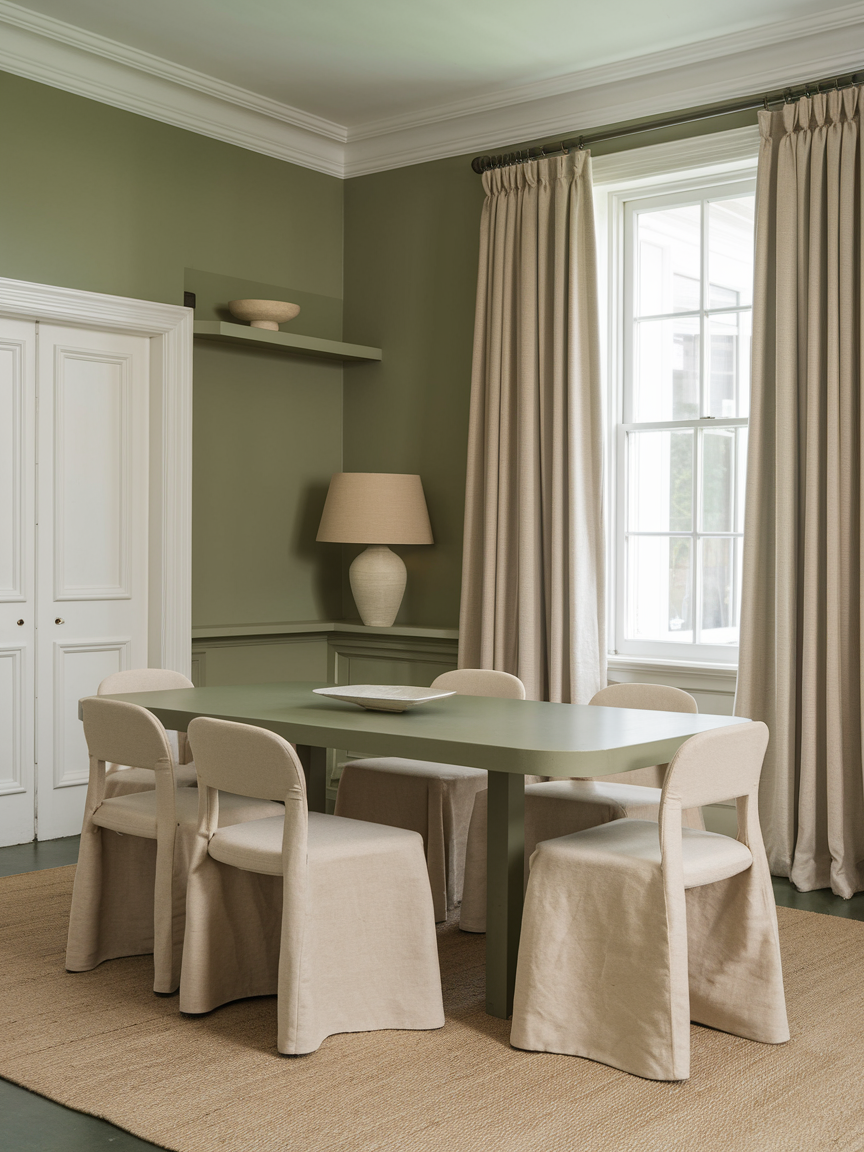
Pairing sage green with neutral textiles creates a layered and harmonious dining environment that feels calm and balanced. Materials such as linen curtains, upholstered chairs, and woven rugs introduce softness and tactile variation, enhancing the overall comfort of the space. Neutral shades like beige, cream, and soft gray complement sage green without competing for attention, allowing the color to remain the focal point while still feeling grounded. This combination results in a cohesive and soothing atmosphere that works well for both casual dining and more formal settings. The layered textures also add depth, ensuring the room feels visually interesting while maintaining a serene and uncluttered aesthetic.
6. Soft Sage Green
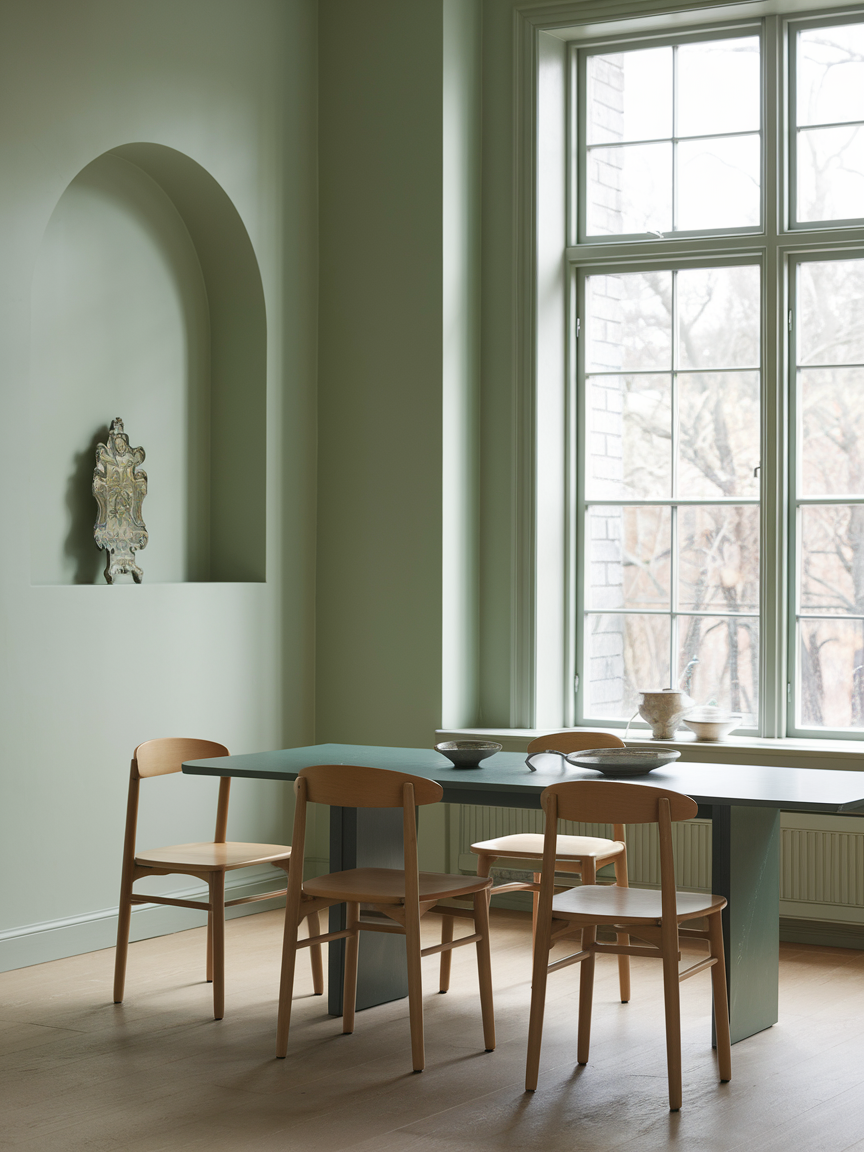
Soft sage green creates a peaceful and welcoming atmosphere that instantly softens the dining space and makes it feel more relaxed. Its muted undertone allows it to function as both a subtle neutral and a gentle color accent, making it incredibly versatile for different design styles. When used on walls, sage green reflects natural light in a soft, diffused way, helping the room feel brighter and more spacious without appearing stark or cold. Pairing it with light wood furniture, linen upholstery, and understated ceramic décor enhances its organic charm. This combination encourages a calm and unhurried dining experience, where conversations flow easily, and the environment feels naturally balanced. Sage green also adapts beautifully across seasons, maintaining its appeal whether styled with warm autumn accents or light summer tones.
7. Deep Emerald Green
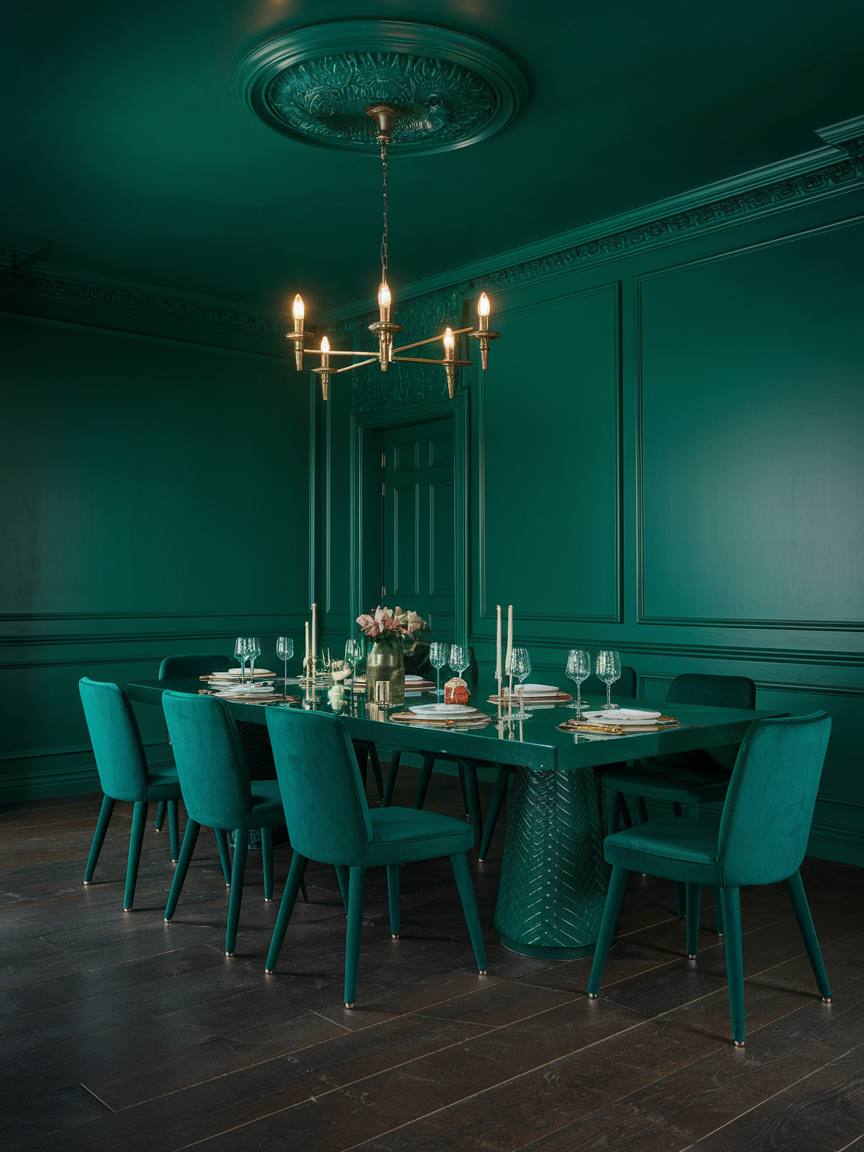
Deep emerald green introduces a rich, jewel-toned depth that transforms a dining room into a luxurious and visually striking space. This bold color works especially well in formal dining areas where a sense of elegance and occasion is desired. Emerald green walls or statement furniture create a dramatic backdrop that pairs beautifully with metallic finishes such as brass or gold, enhancing the overall sense of opulence. When combined with velvet seating, glass surfaces, or marble accents, the room gains layers of texture and contrast that elevate its sophistication. Proper lighting is essential to balance the intensity of this shade, as warm ambient lighting helps soften the look and maintain an inviting atmosphere. The result is a dining space that feels refined, memorable, and perfectly suited for hosting elegant gatherings.
8. Olive Green
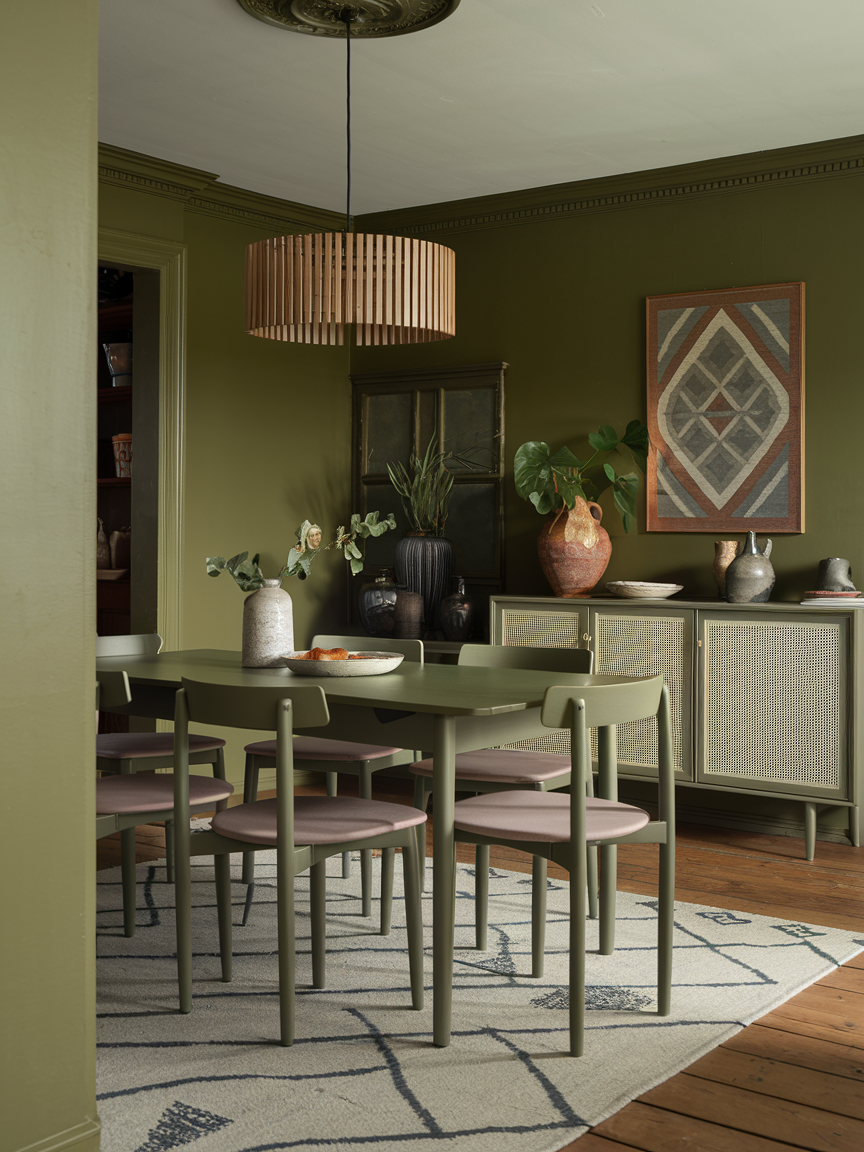
Olive green brings a grounded, nature-inspired warmth to the dining room, creating an environment that feels both cozy and refined. Its earthy undertones make it an excellent choice for spaces that aim to feel relaxed yet stylish. Olive green pairs effortlessly with natural materials such as wood, stone, and woven textures, enhancing its organic character. When used on walls or cabinetry, it provides a rich backdrop that complements neutral fabrics, cream tones, and handcrafted décor. This color works particularly well in transitional, rustic, or Mediterranean-inspired interiors, where comfort and authenticity are key. The overall effect is a dining room that feels welcoming, harmonious, and suitable for both everyday meals and special occasions, offering a perfect balance between casual living and timeless design.
9. Marble Accents
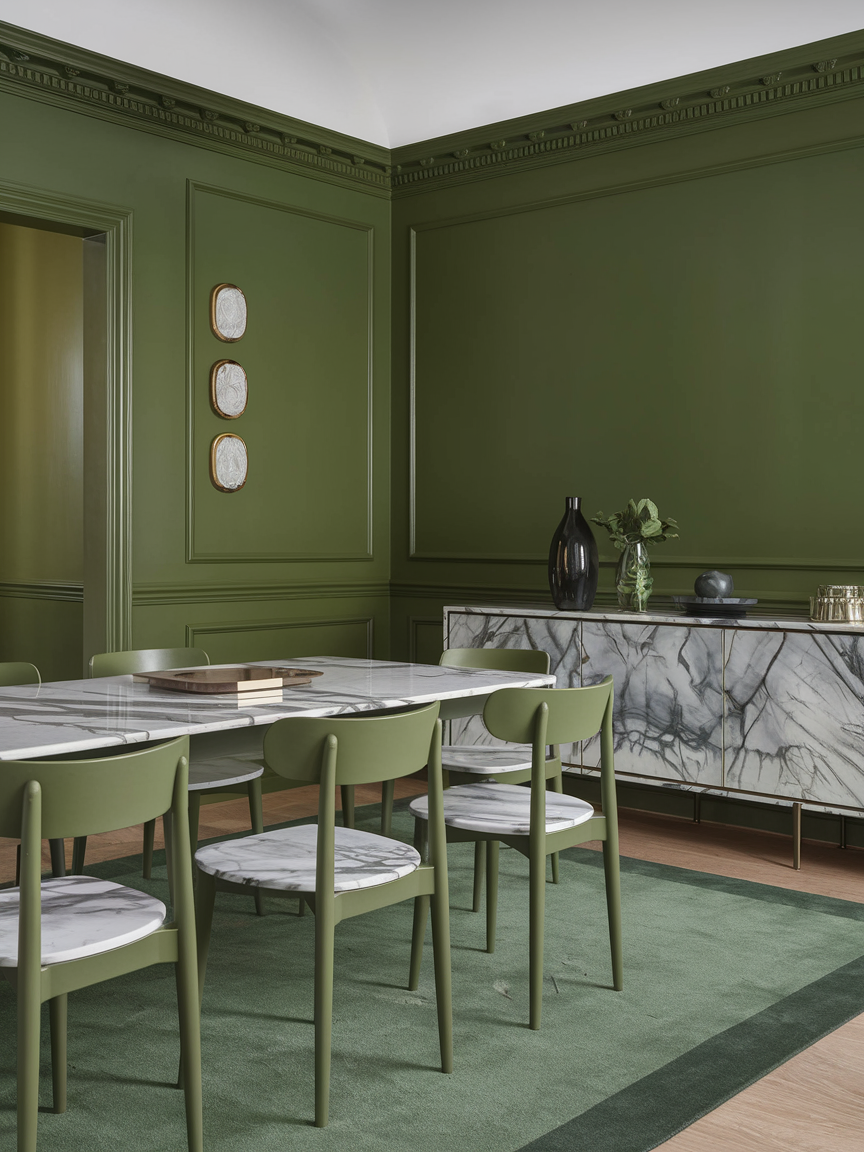
Marble accents bring a sense of luxury and refinement that pairs beautifully with green tones. The natural veining in marble introduces subtle patterns that complement the depth of green without clashing. Whether used in dining tables, countertops, or decorative pieces, marble adds brightness and contrast to the space. Its polished surface reflects light, helping to maintain a balanced and airy atmosphere. Combined with green, marble creates a timeless aesthetic that feels both upscale and enduring.
10. Olive Green with Gold-Framed Mirror
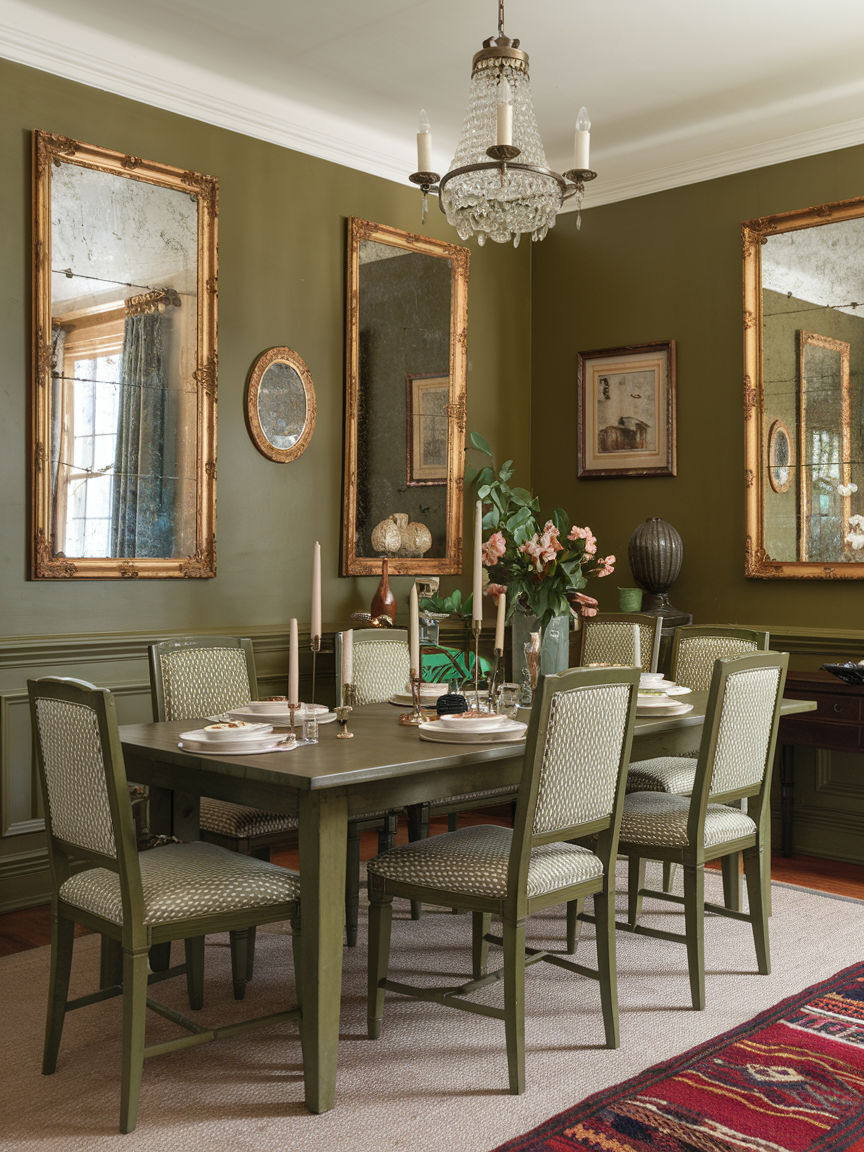
Gold-framed mirrors enhance olive green dining rooms by adding warmth, light, and a sense of expanded space. Mirrors reflect both natural and artificial lighting, making the room feel brighter and more open. The gold frames complement olive green’s earthy tones, creating a harmonious and elegant pairing. This combination works especially well in dining rooms that benefit from additional visual depth and brightness, while also serving as a decorative focal point.
11. Layered Lighting
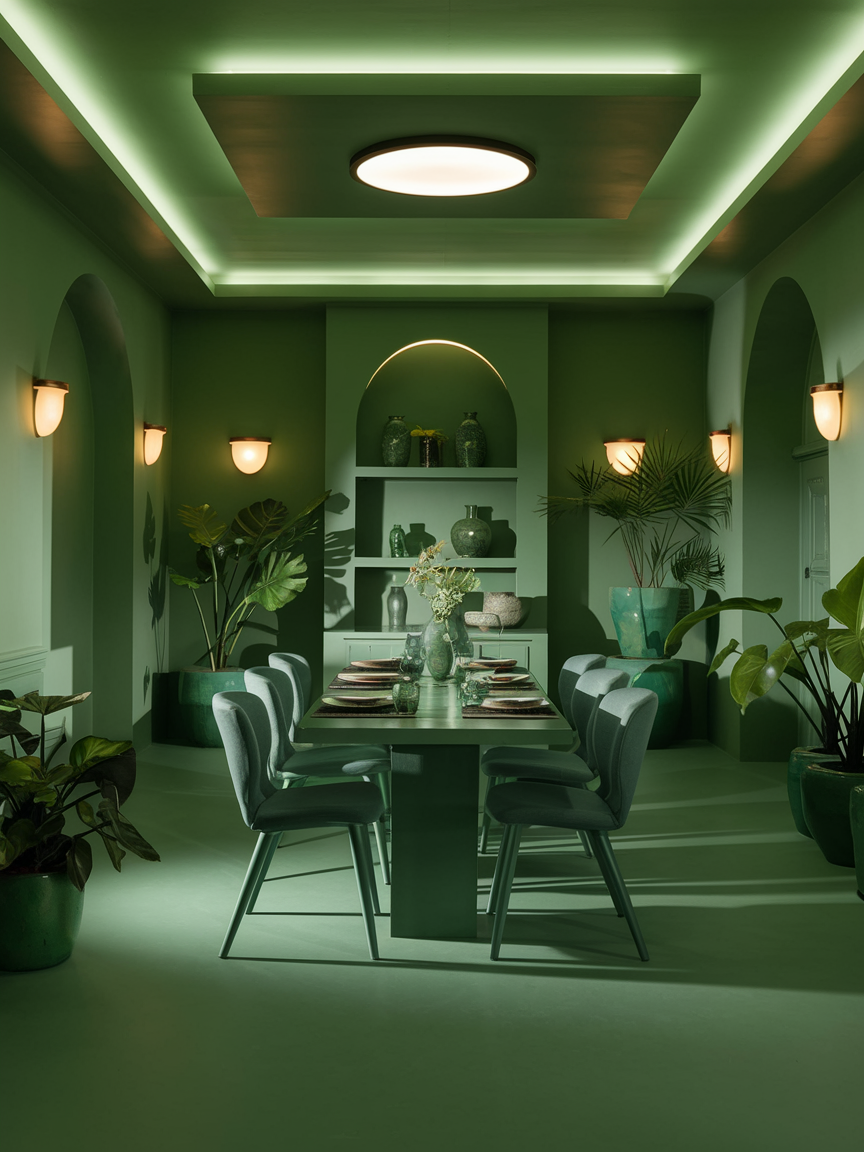
Layered lighting enhances both the functionality and ambiance of a green dining room by combining multiple light sources at different levels. Overhead fixtures provide general illumination, while wall sconces and table lamps add depth and warmth. This approach allows the room to adapt to different occasions, from bright daytime meals to intimate evening dinners. Warm lighting tones help bring out the richness of green hues, creating a welcoming and balanced atmosphere.
12. Artwork as a Focal Point
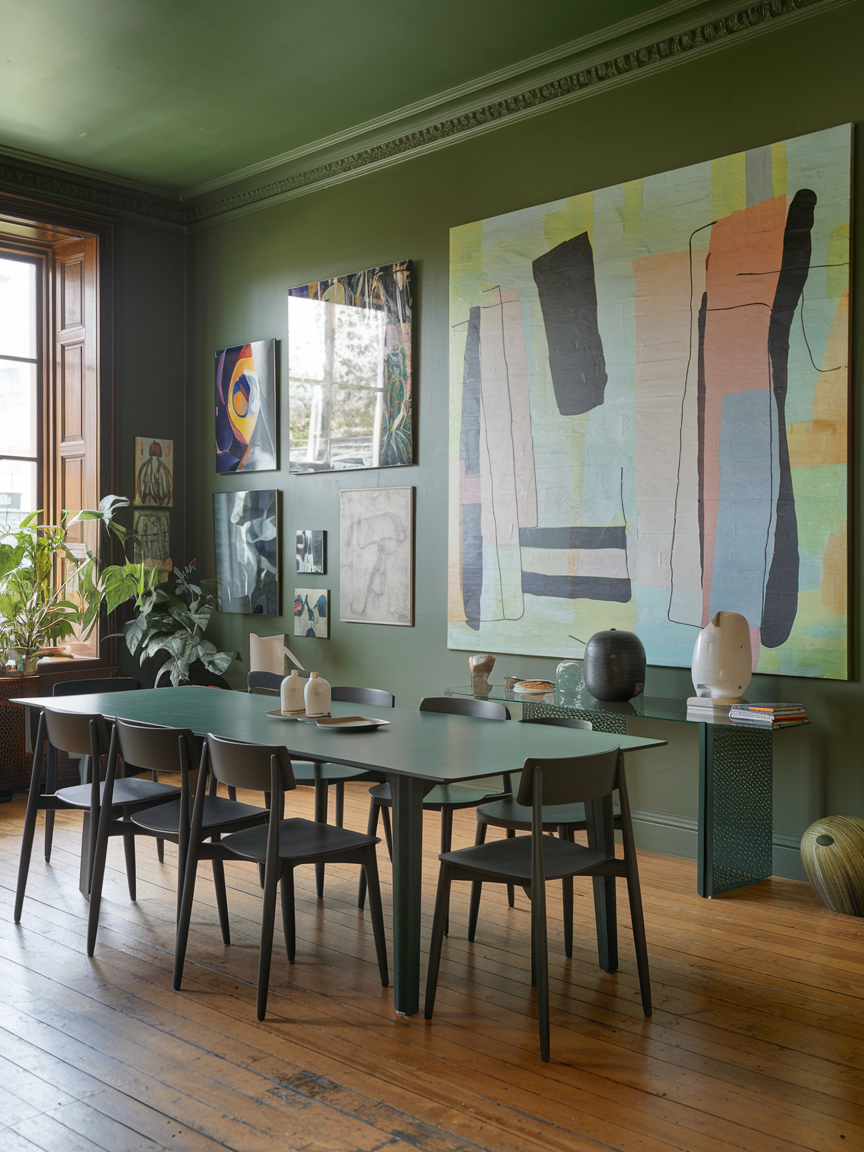
Artwork adds personality and visual interest to green dining rooms, transforming them into curated and expressive spaces. A large statement piece or a gallery wall can serve as a focal point that complements the surrounding décor. Art allows you to introduce additional colors, textures, and themes while maintaining cohesion with the green palette. When thoughtfully selected, it enhances the overall atmosphere and makes the dining room feel more personalized and complete.
13. Green and White
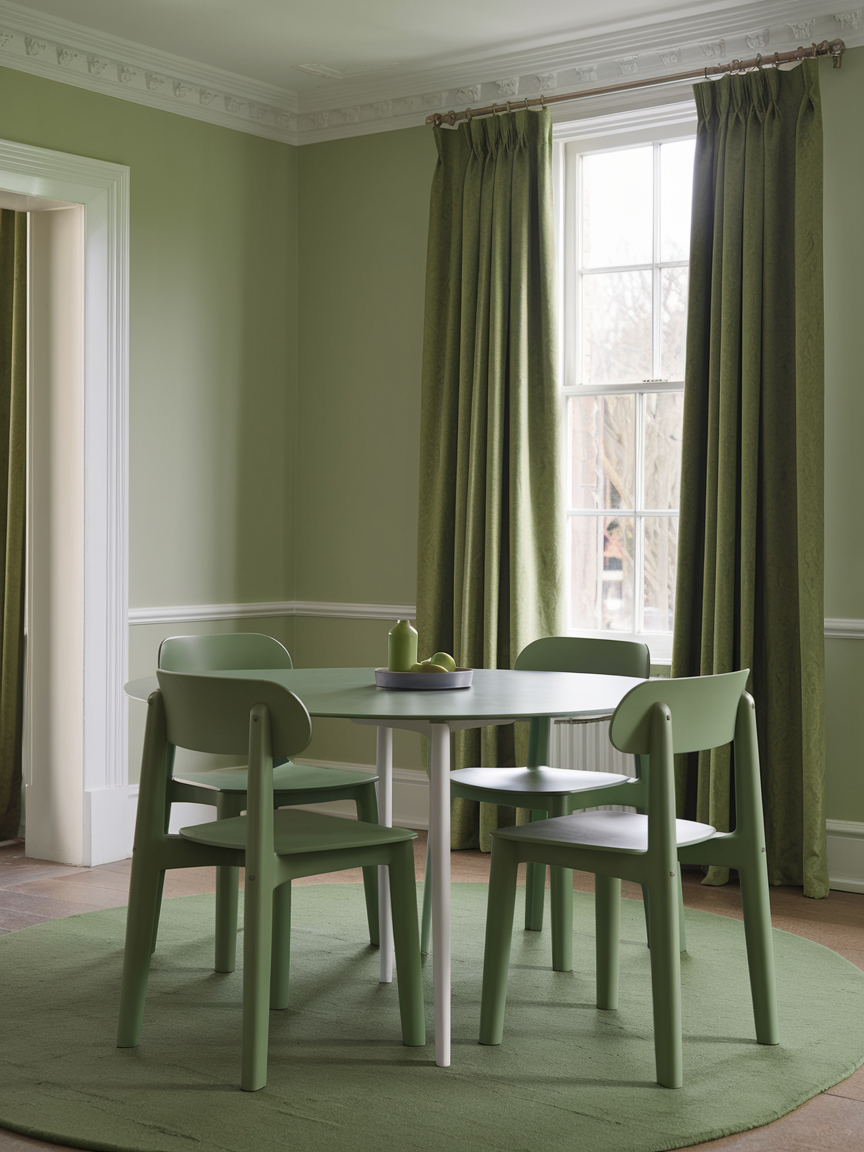
The combination of green and white creates a timeless and refreshing aesthetic that feels both clean and sophisticated. White elements help balance the richness of green tones, ensuring the space remains bright, open, and visually airy. This pairing works across a wide spectrum of green shades, from soft pastels to deep forest hues, allowing flexibility in design. White dining furniture, trim, or textiles act as a visual counterpoint that enhances contrast while maintaining harmony. In smaller dining rooms, this palette is especially effective as it maximizes light and prevents the space from feeling enclosed. Together, green and white create a balanced environment that feels elegant yet approachable, making it ideal for both casual family meals and more formal gatherings.
14. Forest Green Accent Wall
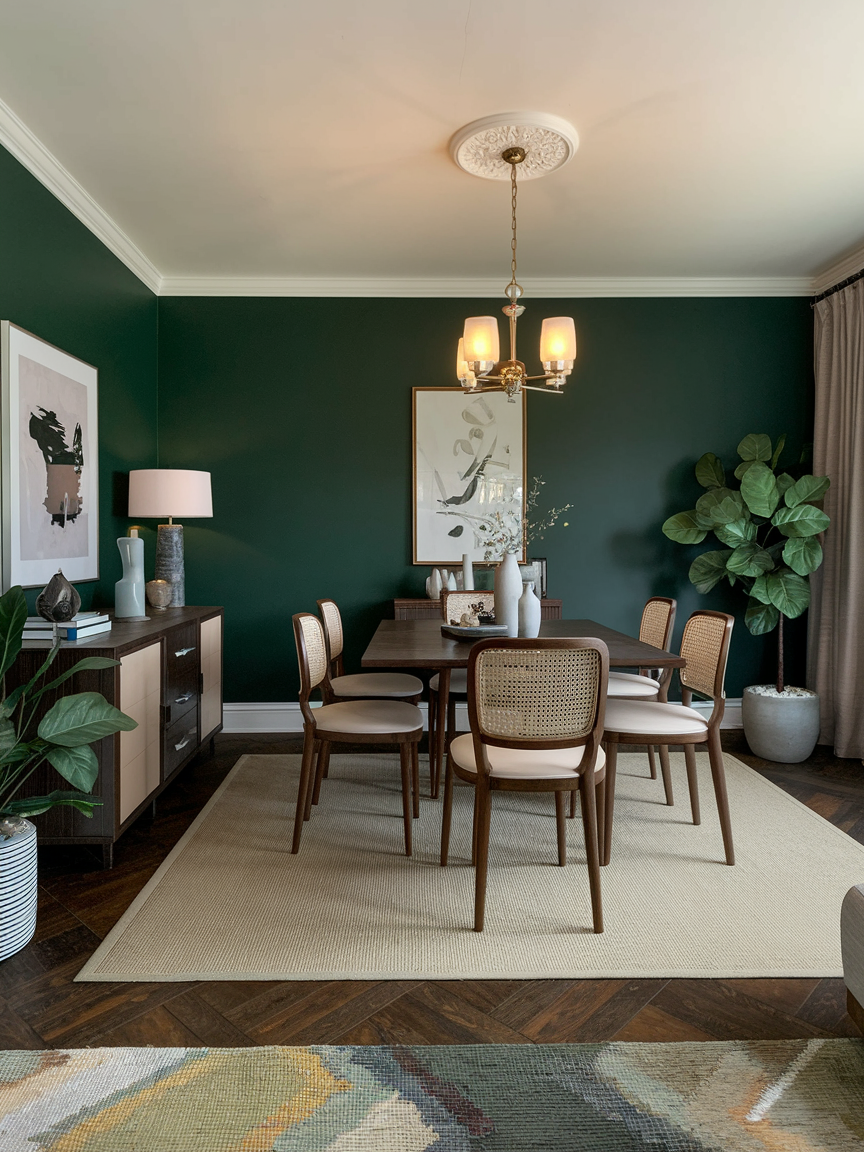
A forest green accent wall introduces depth and character without overwhelming the entire dining space. By focusing this rich tone on a single wall—often behind the dining table or sideboard—you create a natural focal point that anchors the room’s layout. This design approach allows you to experiment with darker hues while maintaining balance through lighter surrounding elements. Forest green pairs beautifully with warm wood finishes, black metal accents, and neutral upholstery, creating a layered and cohesive look. Adding artwork, mirrors, or shelving against the accent wall further enhances its visual appeal. The result is a dining room that feels intimate, grounded, and thoughtfully designed, offering just the right amount of drama while remaining comfortable and inviting.
15. Green and Black
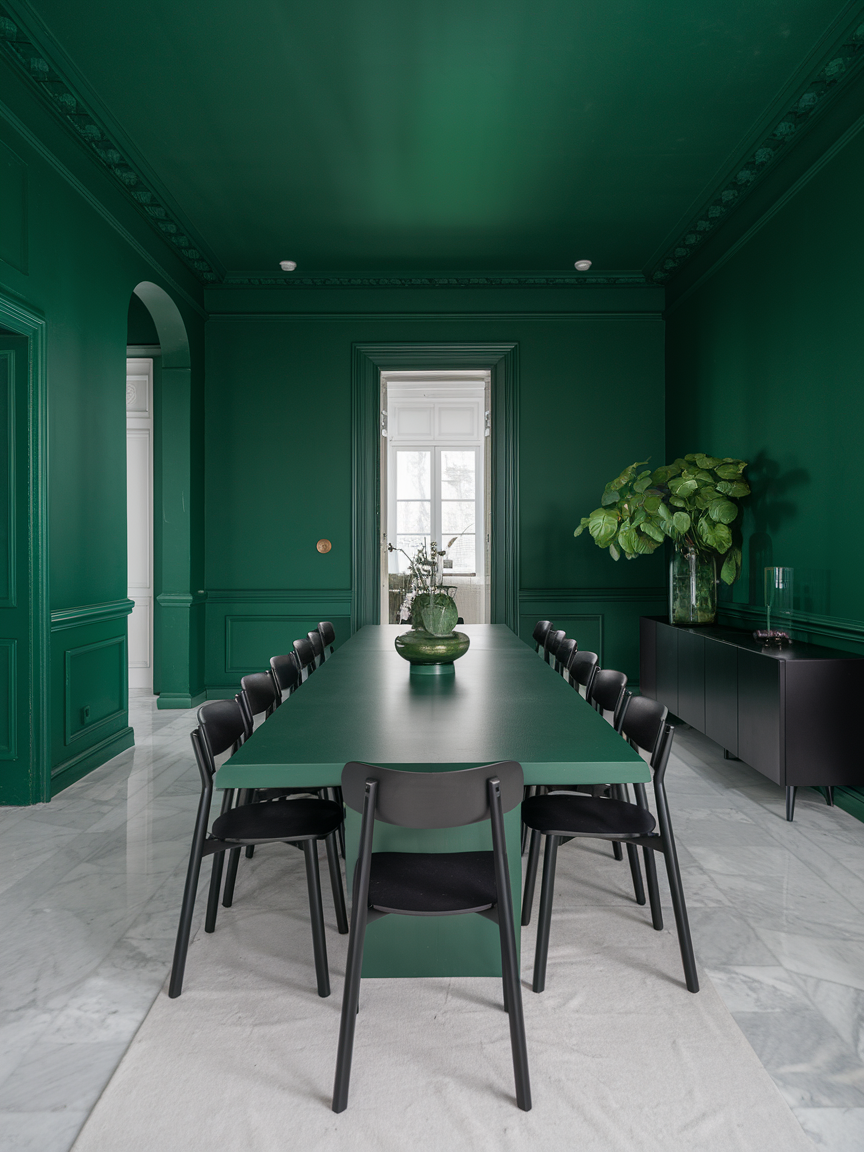
Green and black together create a bold, contemporary palette that feels sleek and intentional. Black elements such as furniture frames, lighting fixtures, or accents provide structure and contrast, while green introduces warmth and vibrancy. This combination works particularly well in modern dining rooms where clean lines and minimalistic design are emphasized. The contrast between the two colors adds visual clarity without overwhelming the space, especially when balanced with appropriate lighting. The result is a dining room that feels refined, confident, and distinctly modern, with a strong sense of style and presence.
16. Natural Botanical Elements
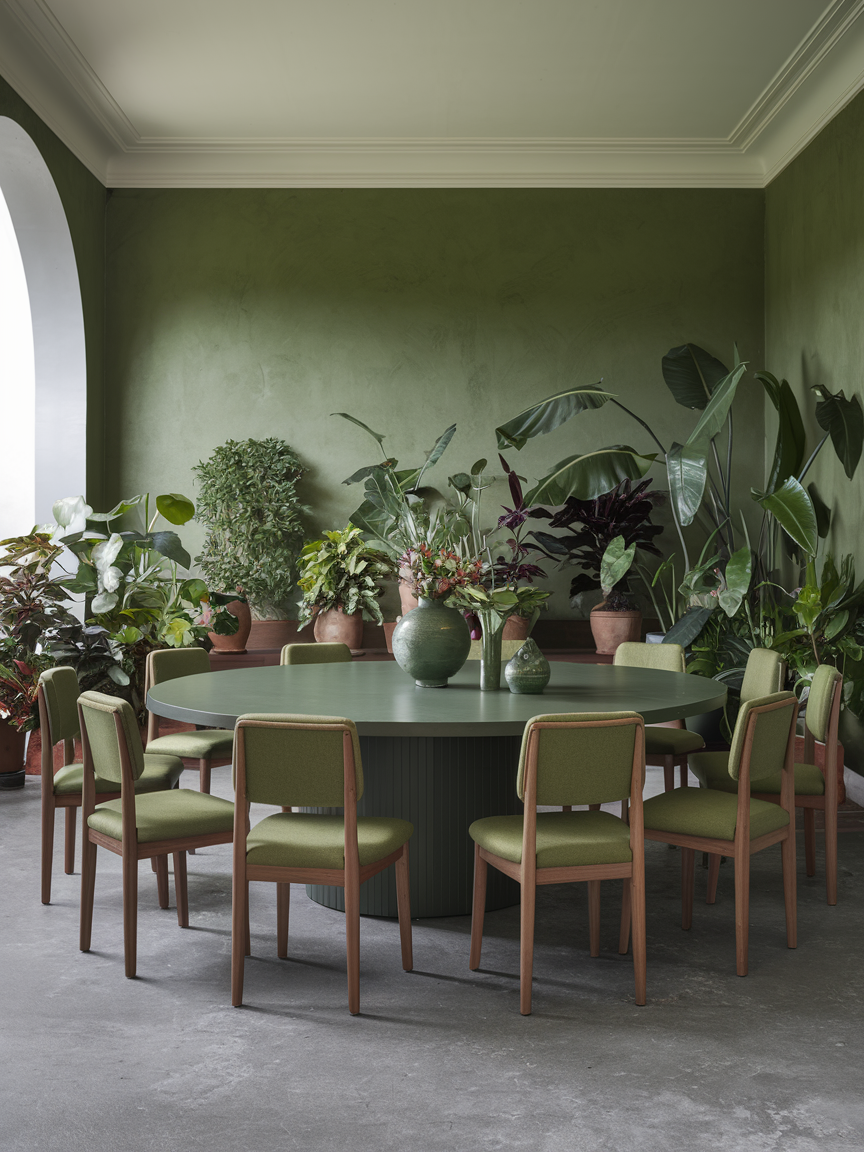
Botanical elements naturally complement green dining rooms by reinforcing the connection to nature and adding a sense of vitality. Incorporating plants, leafy arrangements, or botanical artwork introduces freshness and visual movement into the space. These elements soften structured furniture and create a more relaxed and inviting environment. Whether using large statement plants or smaller decorative greenery, the presence of natural elements enhances the overall atmosphere and contributes to a cohesive design. The result is a dining room that feels lively, organic, and calming at the same time.
17. Green Wallpaper
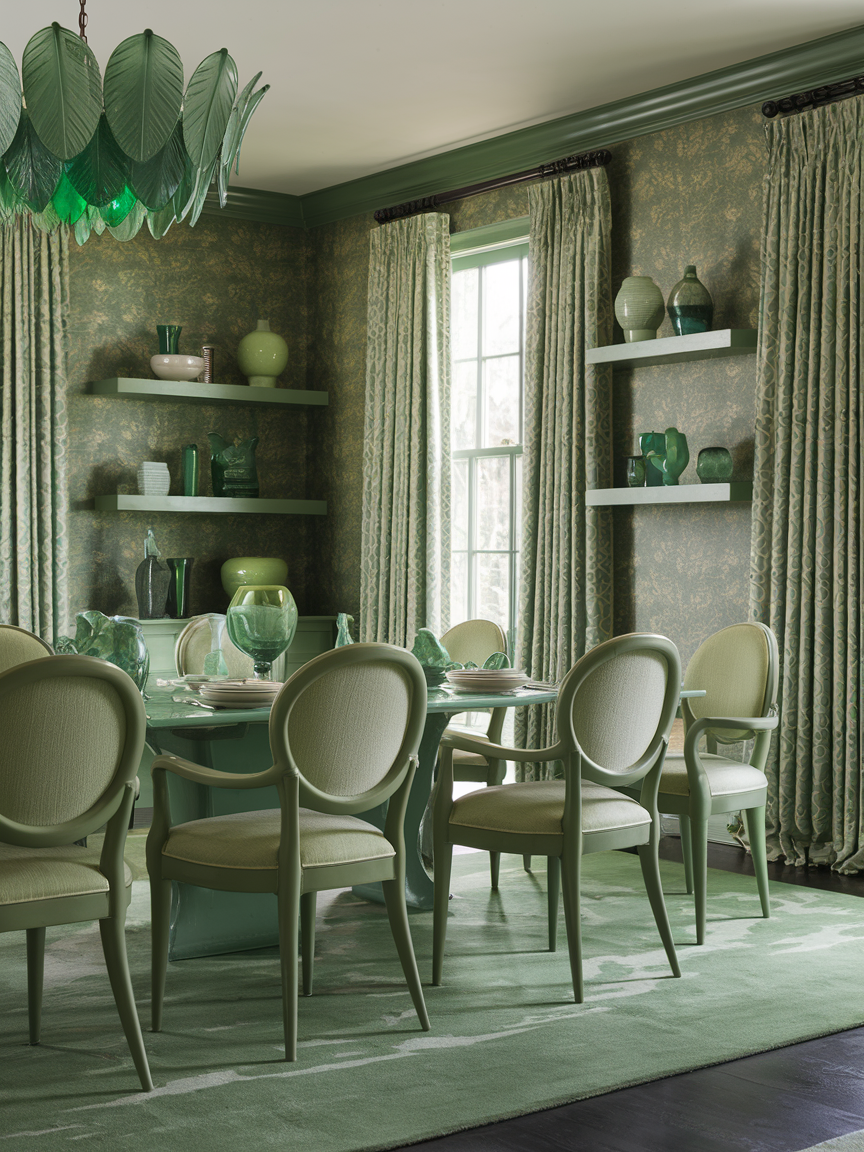
Green wallpaper adds both color and pattern, allowing you to introduce visual interest in a controlled and elegant way. From subtle textures to intricate designs, wallpaper can define the character of the dining room without overwhelming it. It works especially well as an accent wall or in spaces that benefit from added depth and dimension. When paired with simple furniture and neutral accents, patterned wallpaper becomes a standout feature that elevates the overall design. This approach creates a curated and polished look that feels intentional and sophisticated.
18. Welcoming Gathering Space
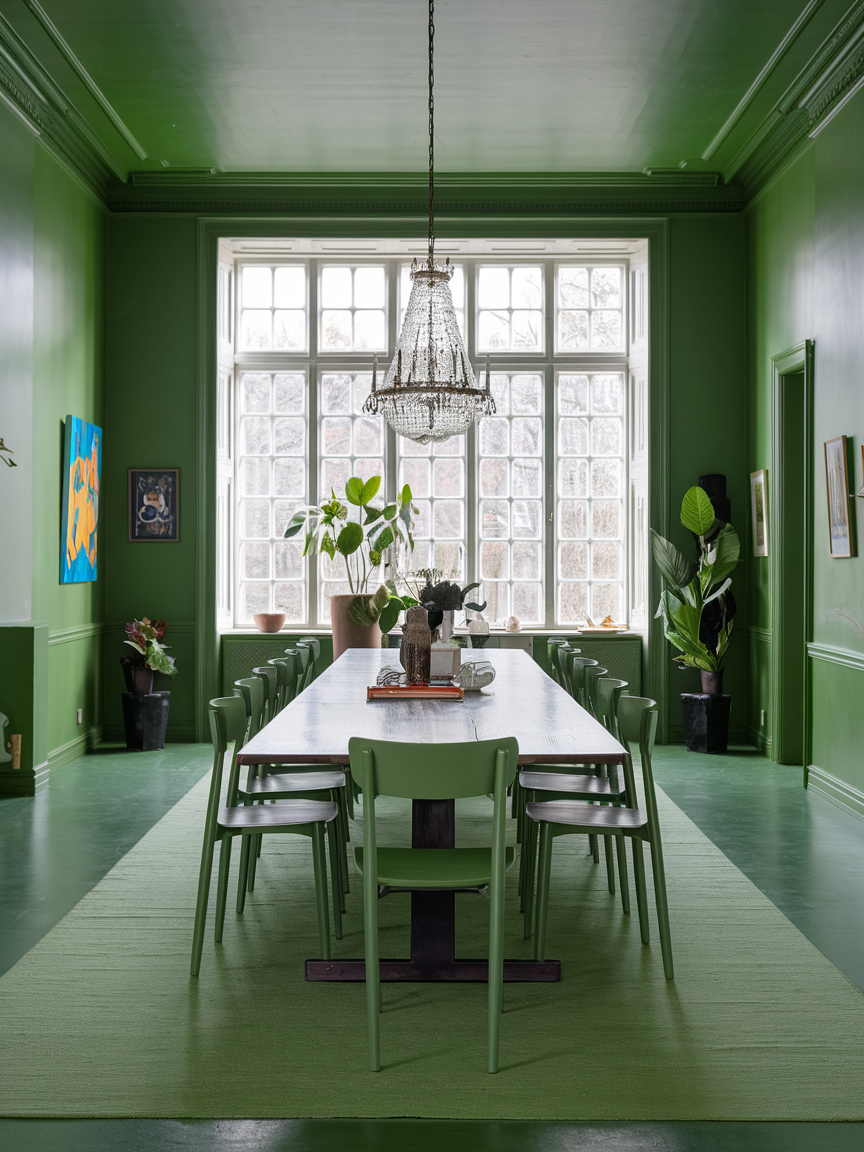
A green dining room naturally lends itself to becoming a chic gathering space where style and comfort meet. The calming qualities of green create an inviting environment that encourages guests to relax and enjoy their time together. Thoughtful combinations of color, texture, and lighting transform the dining area into more than just a functional room, it becomes a central place for connection, conversation, and shared experiences. With the right design choices, the space feels both elegant and welcoming.
19. Textured Area Rug
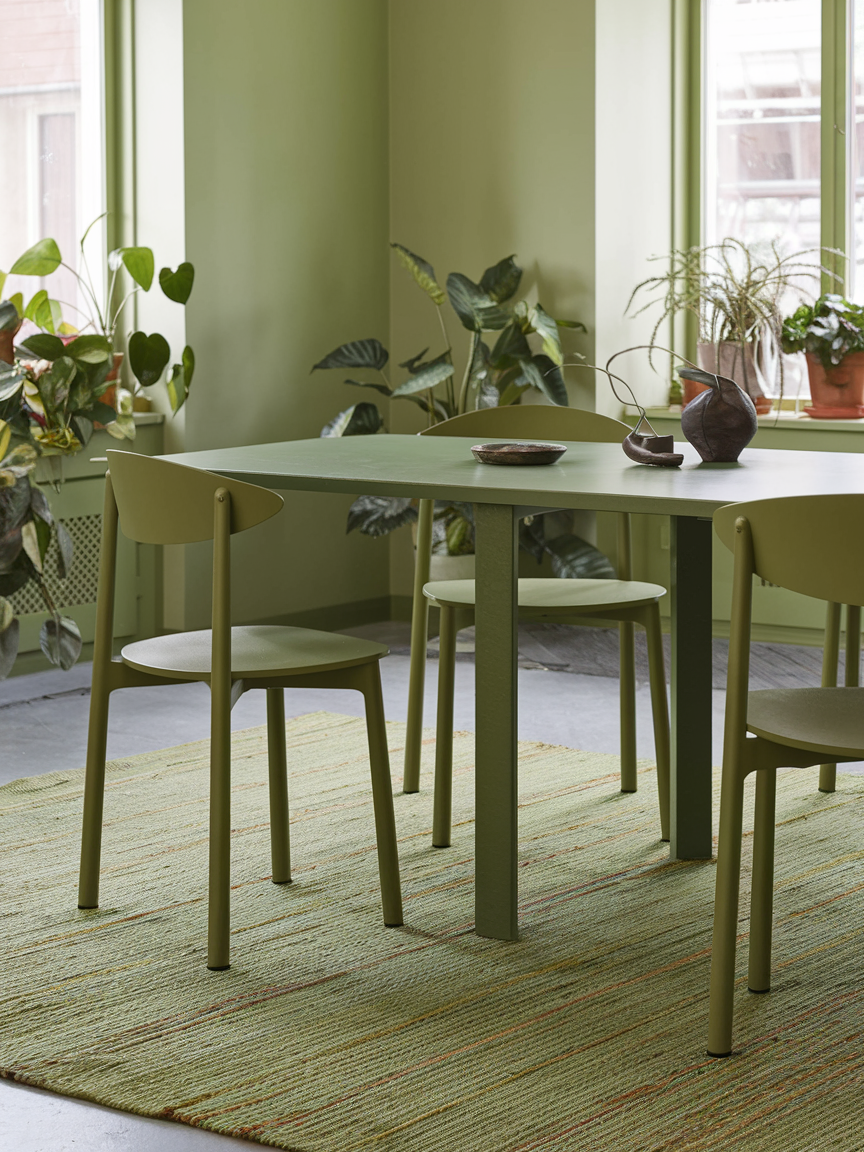
Textured rugs add warmth, comfort, and definition to green dining rooms by grounding the furniture and softening hard surfaces. Materials such as wool, jute, or woven fibers introduce tactile interest while complementing the natural feel of green tones. Rugs also help define the dining area within an open-plan layout, creating a clear visual boundary. When chosen in neutral or coordinating colors, they enhance the overall aesthetic without overwhelming the design.
20. Comfortable Upholstered Chairs
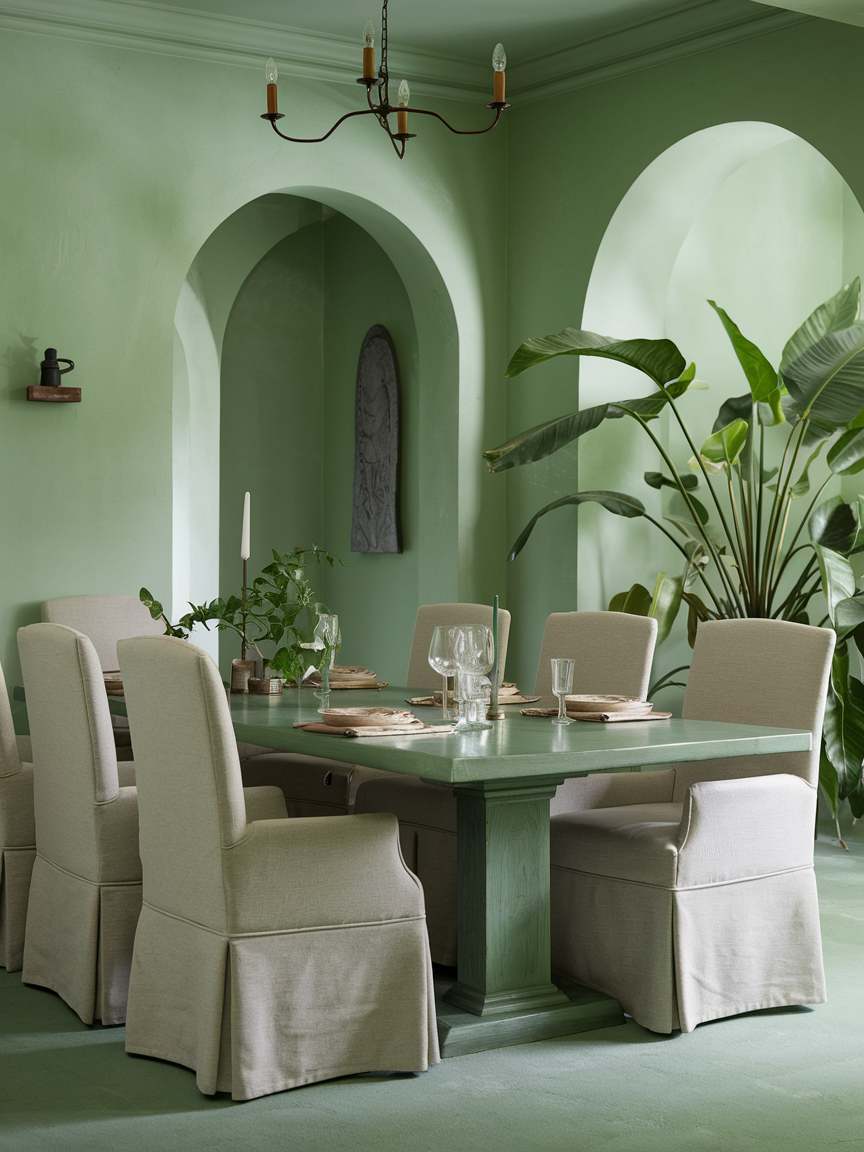
Upholstered chairs add comfort, texture, and a refined appearance to green dining rooms. Soft fabrics such as linen, velvet, or performance textiles enhance the seating experience while contributing to the overall aesthetic. Neutral upholstery tones help balance the richness of green walls, creating a cohesive and inviting palette. Beyond visual appeal, upholstered chairs encourage longer, more comfortable meals, making the dining space more functional and enjoyable. This combination of comfort and elegance results in a well-rounded design that feels both practical and stylish.
21. Green and Beige
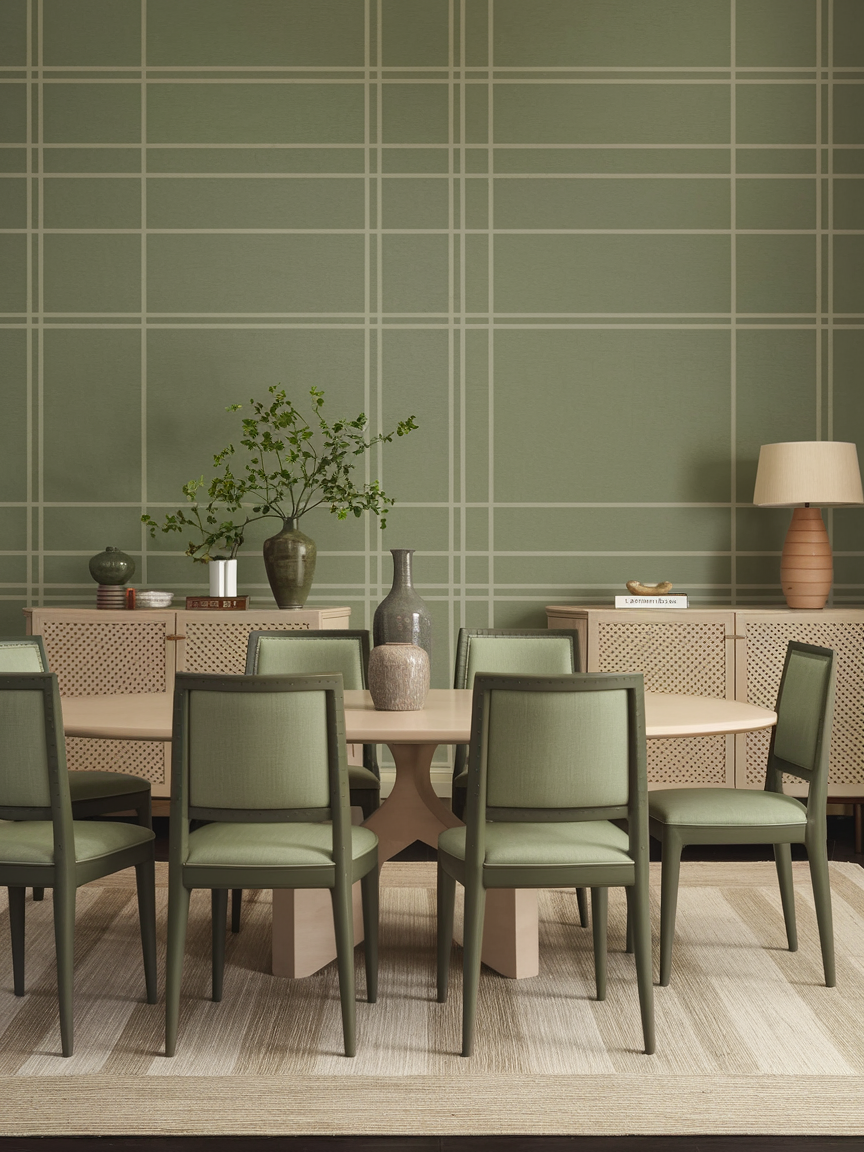
Green paired with beige creates a soft and sophisticated dining room palette that feels warm, balanced, and approachable. Beige tones help tone down the intensity of green, resulting in a more subtle and harmonious visual effect. This combination is particularly well-suited for traditional and transitional interiors where comfort and elegance are equally important. Beige furniture, rugs, or wall treatments provide a neutral foundation that allows green accents to stand out gently. The overall result is a timeless and versatile dining space that feels calm, inviting, and easy to live in.
22. Architectural Wood Paneling
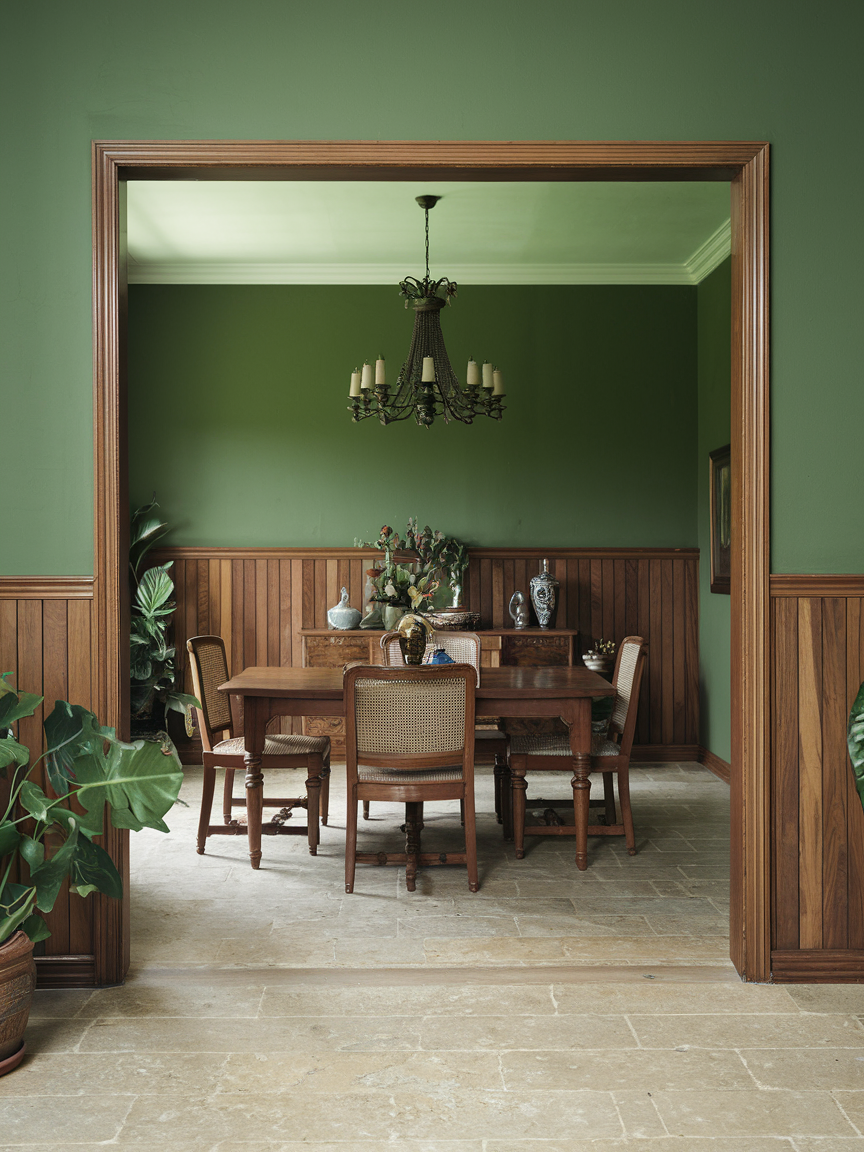
Wood paneling adds architectural interest and depth to green dining rooms, creating a layered and visually rich environment. When painted or combined with green tones, paneling enhances the room’s texture while maintaining a cohesive color scheme. It works well in both modern and traditional settings, offering flexibility in design. The warmth of wood paneling balances the coolness of green, preventing the space from feeling flat. This approach results in a dining room that feels structured, elegant, and thoughtfully detailed.
23. Dark Green Ceiling
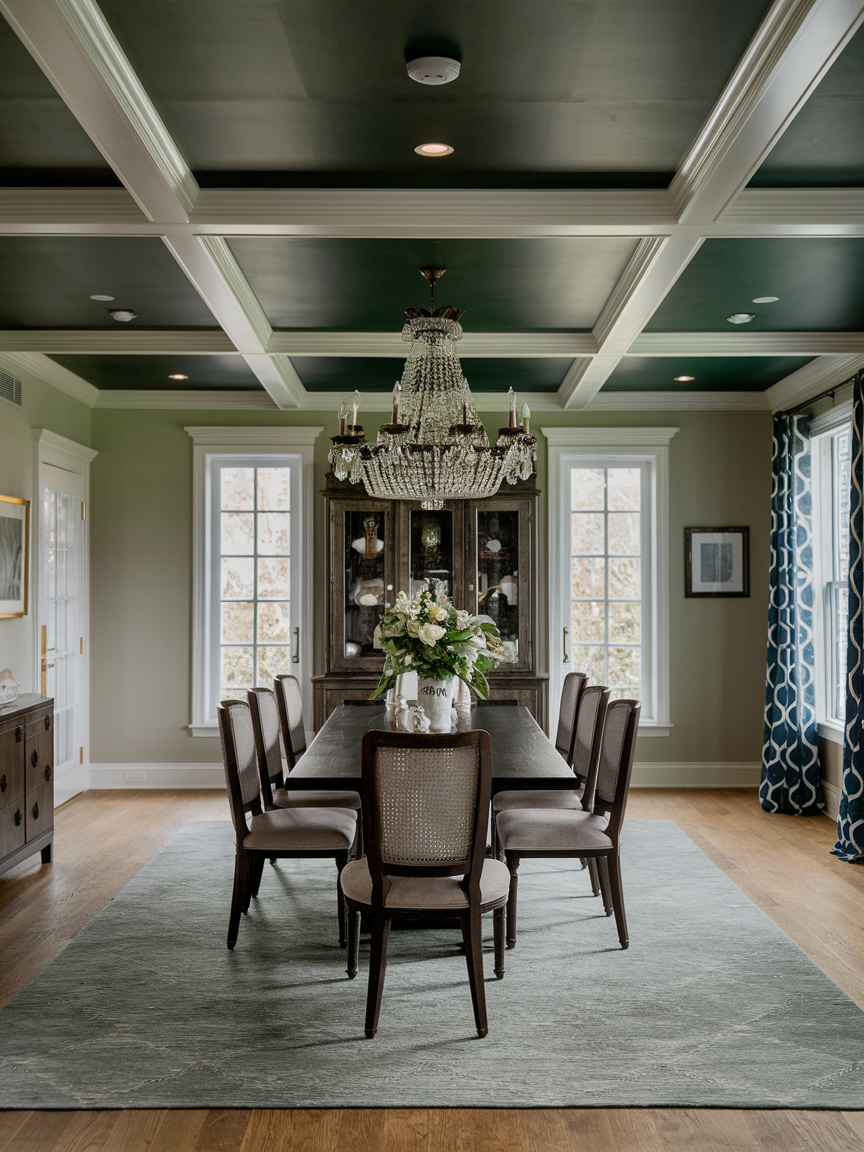
A dark green ceiling introduces an unexpected design element that adds drama and intimacy to the dining room. By drawing the eye upward, it creates a sense of enclosure that feels cozy and sophisticated. This technique works particularly well when paired with lighter walls and warm lighting, ensuring the space remains balanced and inviting. The contrast between the ceiling and the rest of the room enhances architectural features and adds depth. It’s a bold yet refined choice that elevates the overall design.
24. Curved and Organic Furniture
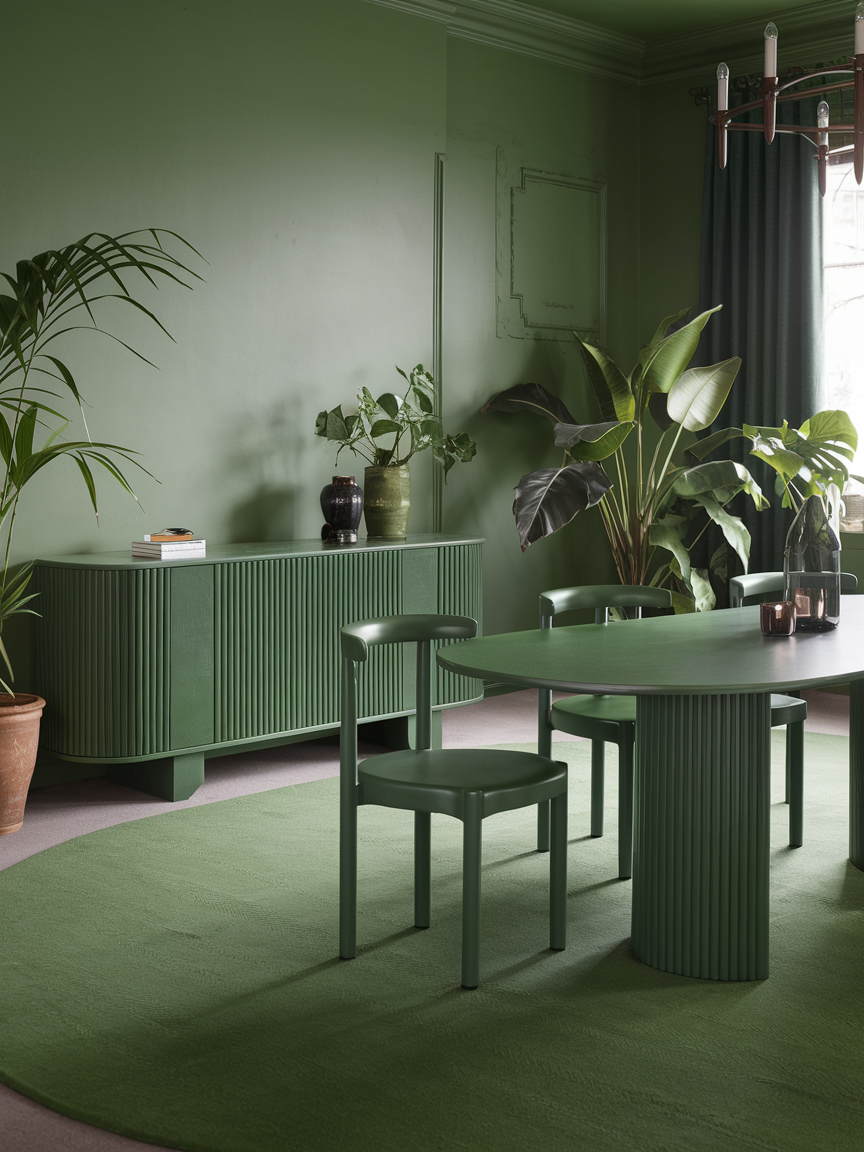
Curved furniture softens the overall look of a green dining room by introducing fluid shapes that contrast with straight architectural lines. Rounded tables, curved chairs, and organic silhouettes create a more relaxed and approachable environment. These shapes improve movement within the space and encourage a natural flow between elements. Curved furniture also complements the organic nature of green tones, reinforcing a sense of harmony and balance. The result is a dining room that feels both stylish and comfortable.
* In the end, a well-designed green dining room should feel like a perfect blend of freshness and sophistication. By focusing on harmony, texture, and intentional styling, you can create a space that not only looks beautiful but also enhances every dining experience with a sense of warmth and timeless appeal.