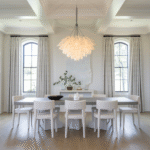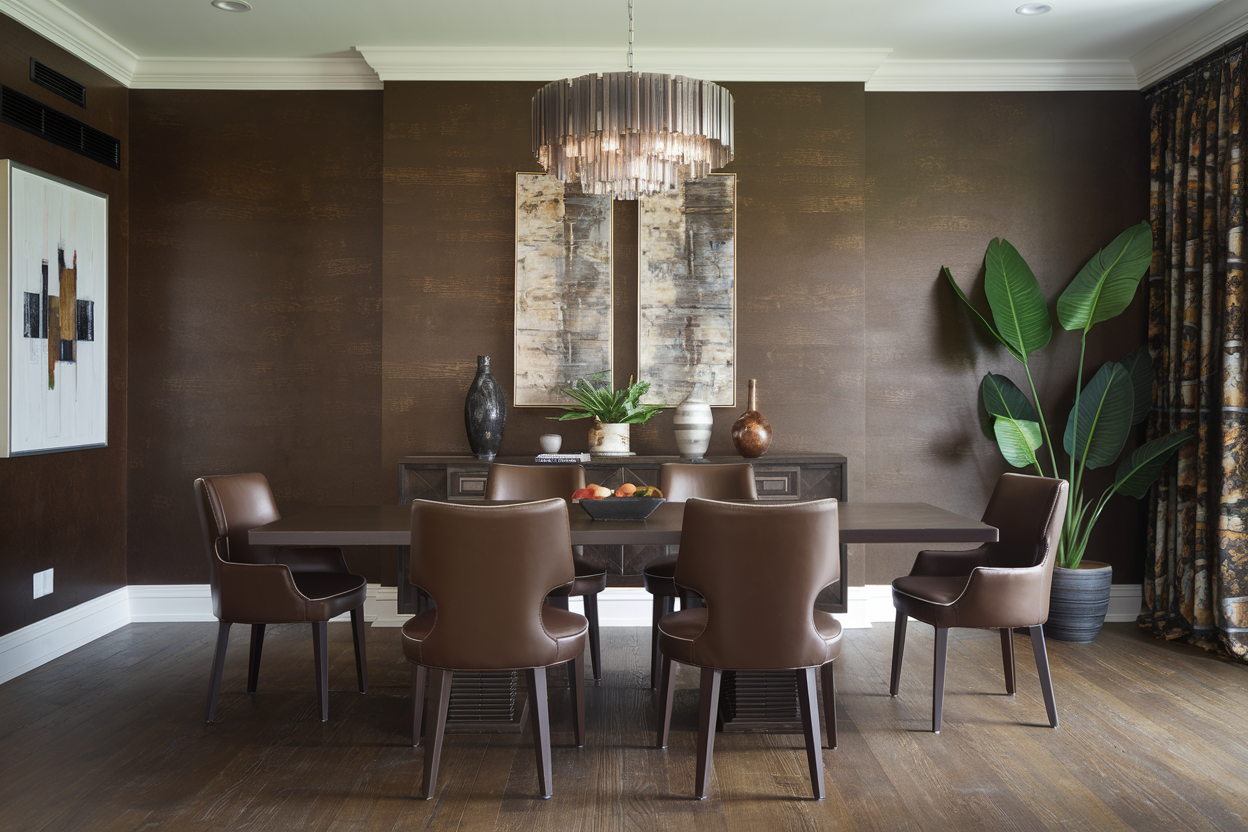
Brown has a remarkable ability to create dining rooms that feel warm, grounded, and effortlessly sophisticated. From soft taupe and honeyed caramel to deep walnut and espresso, this versatile color offers endless possibilities for crafting a refined atmosphere. Rather than dominating a space, brown enhances it—highlighting textures, enriching materials, and allowing every design element to feel more intentional and harmonious.
An elegant brown dining room is not just about color, but about balance. It’s the layering of tones, the interplay of textures, and the thoughtful use of lighting that truly bring the space to life. Natural wood finishes, plush upholstery, subtle metallic accents, and carefully curated decor all contribute to a dining environment that feels both polished and inviting. Whether your style leans classic, modern, or somewhere in between, brown provides a timeless foundation that adapts beautifully.
Let’s explore 27 elegant brown dining room ideas that showcase how this rich and versatile color can transform your space into a stylish setting perfect for both everyday dining and special gatherings!
1. Brown and Beige for Soft Elegance
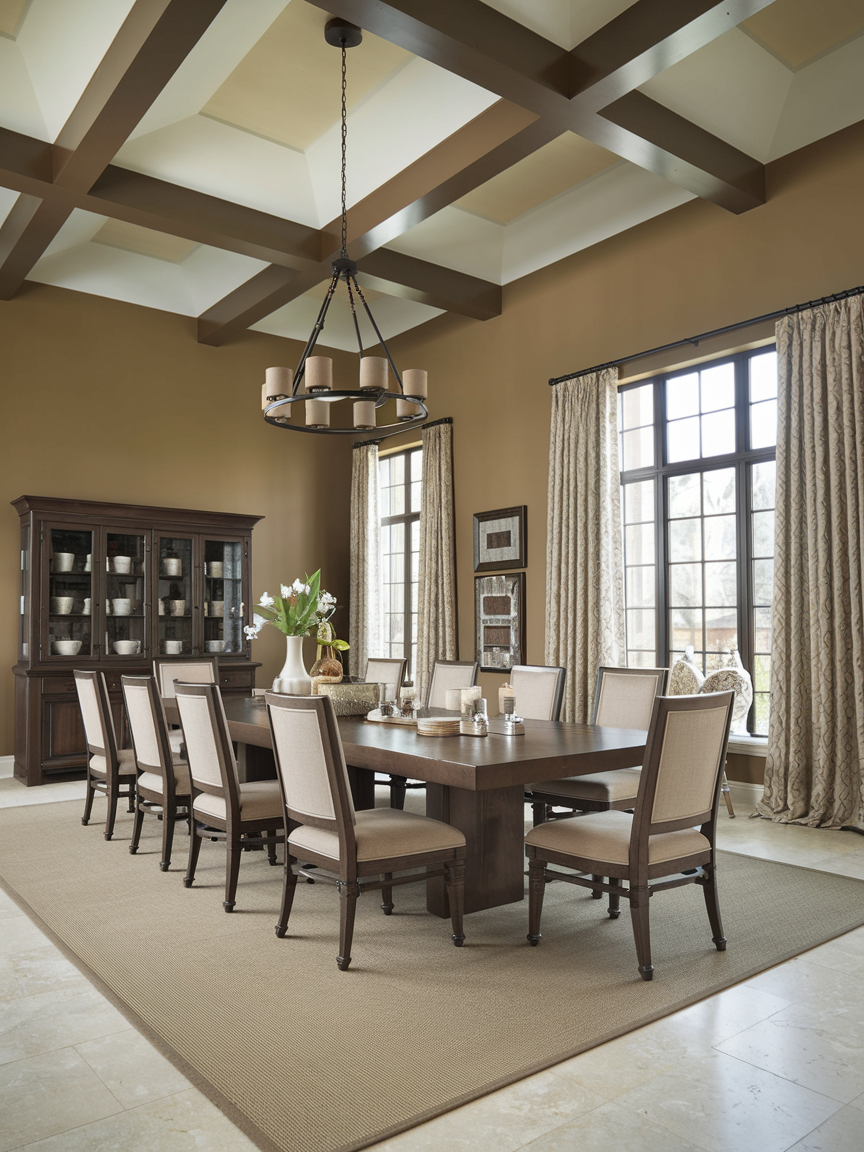
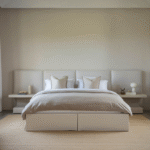
The combination of brown and beige creates a beautifully balanced palette that feels both warm and airy. Beige softens the intensity of brown, allowing the space to feel lighter and more approachable without losing its sophistication. This pairing works especially well in dining rooms where comfort and elegance need to coexist. Natural textures such as linen, wood, and woven accents further enhance the warmth of the palette. Together, brown and beige create a serene environment that feels inviting, cohesive, and effortlessly timeless.
2. Dark Accent Wall
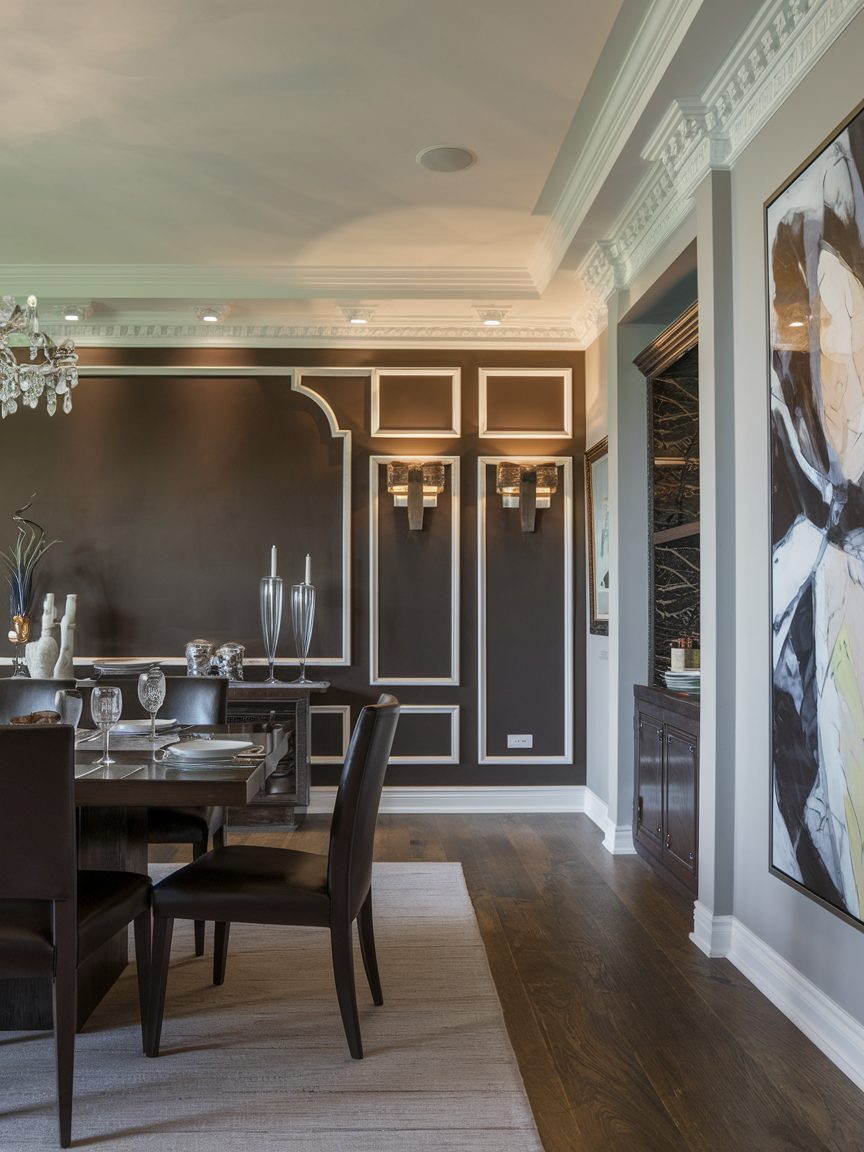
A dark brown accent wall serves as a striking focal point that adds depth and drama without overwhelming the entire room. It anchors the design and draws attention to key elements such as artwork or the dining table. When balanced with lighter walls, soft furnishings, and warm lighting, the contrast creates a visually dynamic yet harmonious space. This approach allows you to embrace bold color while maintaining elegance, resulting in a dining room that feels refined, intimate, and full of character.
3. Layered Brown Tones
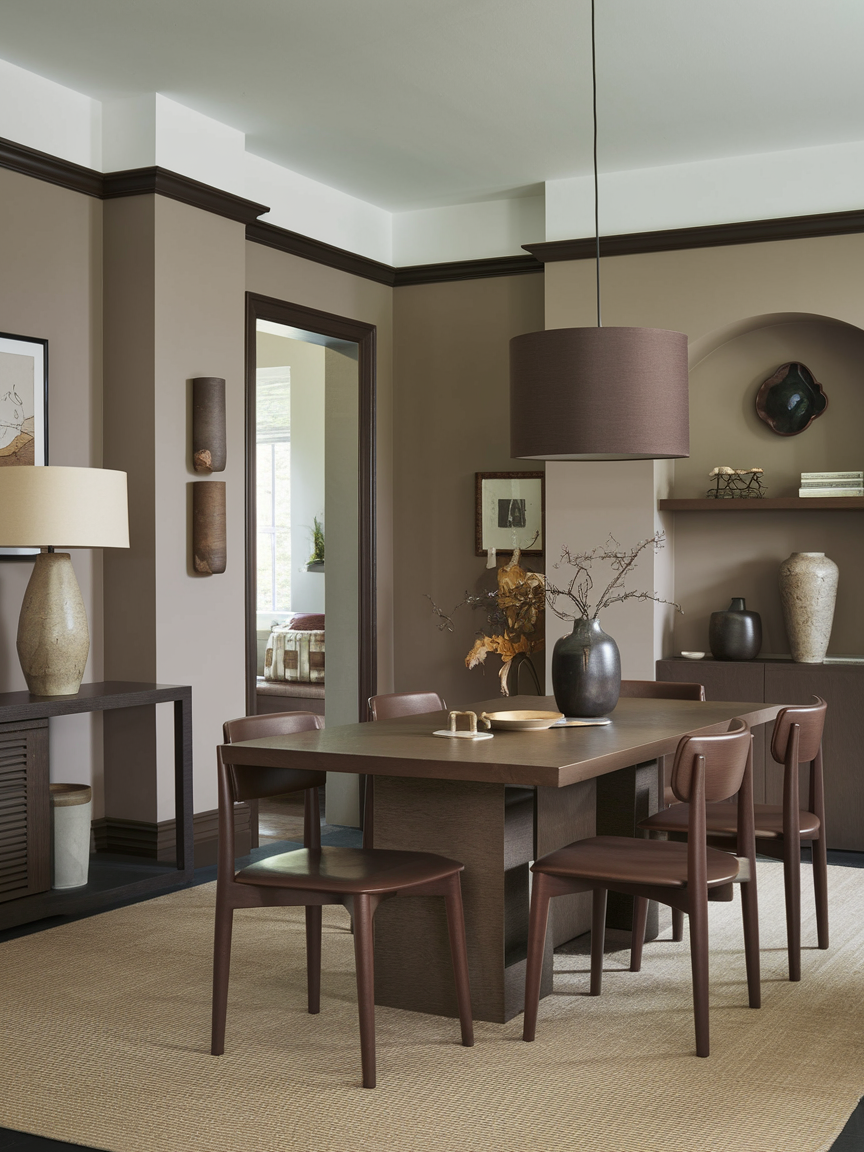
Layering multiple shades of brown creates a dining room that feels deep, cohesive, and visually engaging. Instead of relying on a single tone, combining lighter hues like taupe with medium wood finishes and darker accents introduces subtle contrast and movement. Texture plays an essential role in this approach—mixing materials like leather, linen, wood, and woven elements enhances the richness of the palette. Neutral accents such as cream or beige help soften transitions, ensuring the space feels balanced rather than heavy. This layered technique results in a dining room that feels thoughtfully designed, elegant, and full of dimension.
4. Brown and Gold Accents
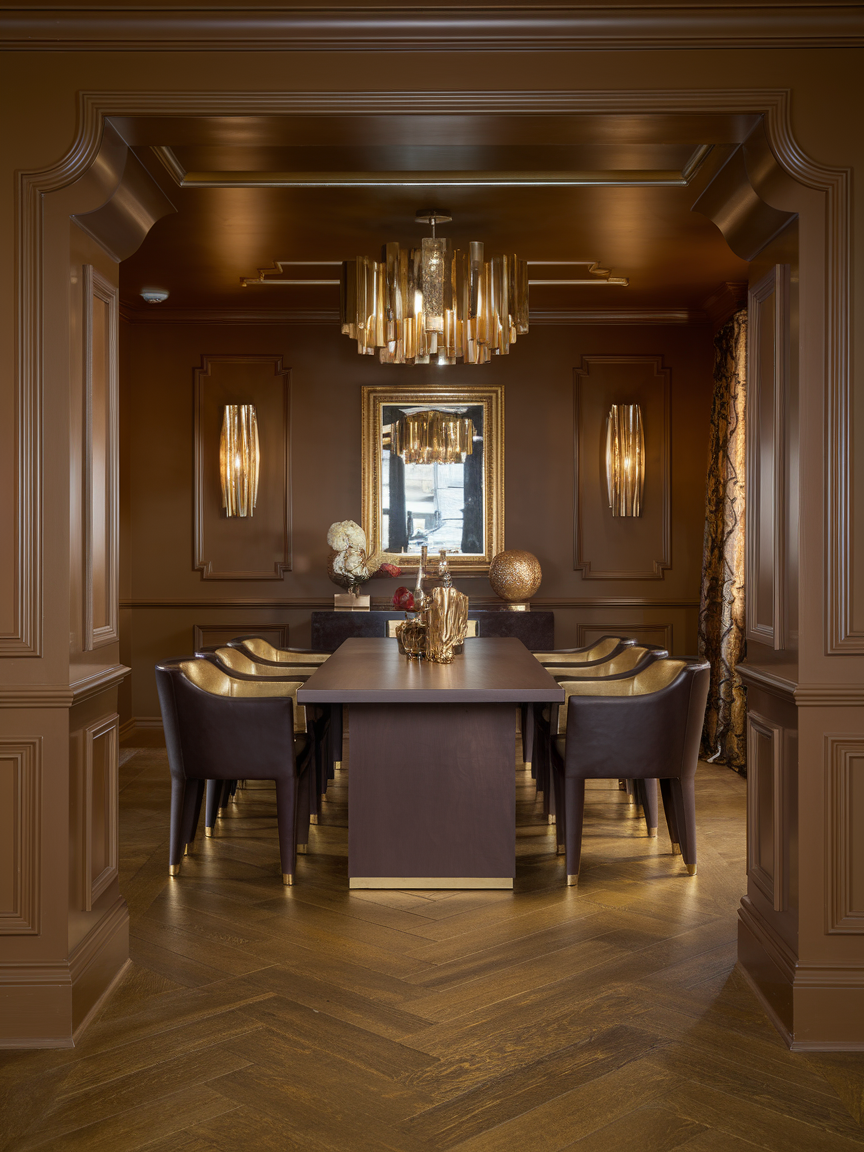
Blending brown with gold accents introduces a refined sense of luxury that feels both warm and sophisticated. Brown grounds the space with depth and richness, while gold adds a subtle shimmer that catches the light beautifully. Incorporating gold through lighting fixtures, mirror frames, decorative trays, or flatware creates elegant highlights without overwhelming the room. The key is balance—too much gold can feel excessive, but just the right amount elevates the entire design. When paired thoughtfully, this combination transforms the dining room into a space that feels polished, upscale, and effortlessly glamorous while still maintaining a welcoming atmosphere.
5. Brown Curtains
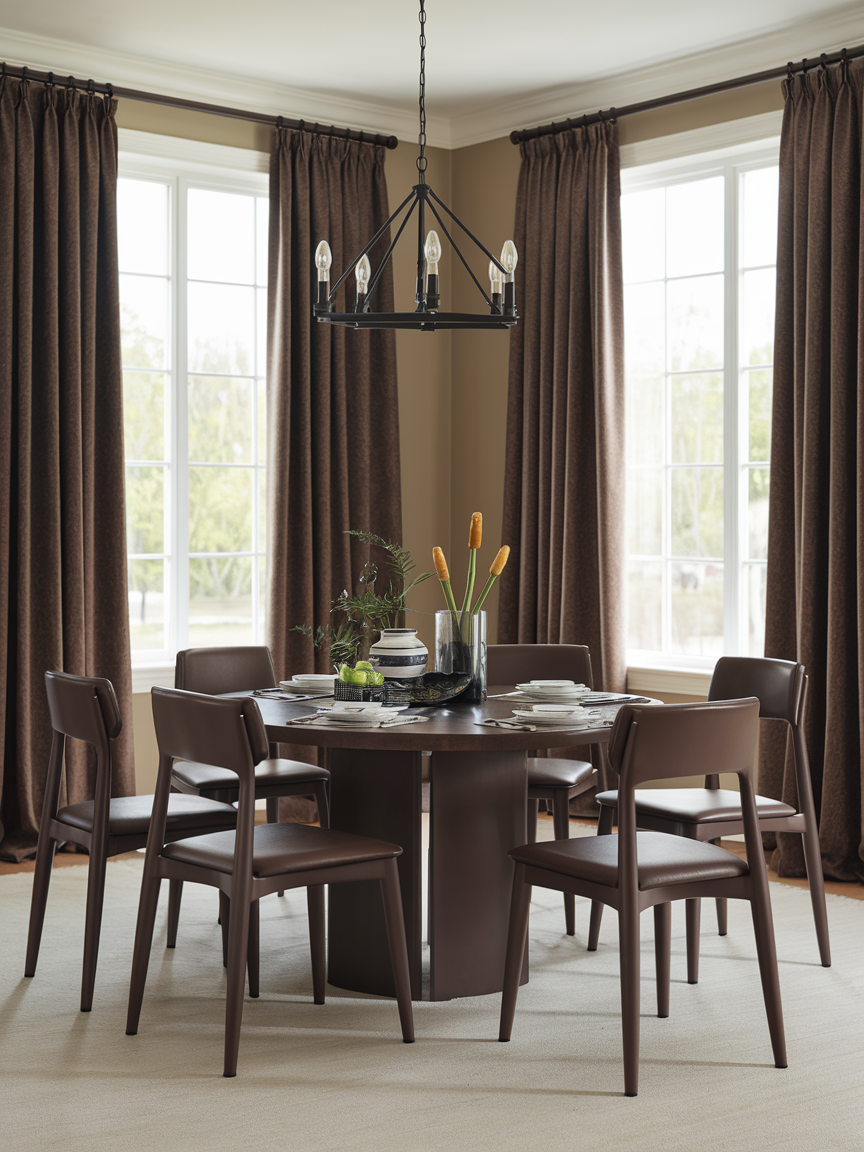
Brown curtains add a layer of softness that enhances both the comfort and elegance of a dining room. Fabrics like linen, velvet, or cotton introduce texture while gently framing windows and filtering natural light. Deeper brown tones create a cozy, intimate mood, while lighter shades like taupe or caramel keep the space airy and relaxed. Hanging curtains higher than the window frame elongates the walls and adds a sense of height, making the room feel more expansive. Beyond aesthetics, curtains also improve acoustics, helping conversations feel more intimate and pleasant. This simple addition creates a dining environment that feels warm, layered, and thoughtfully designed.
6. Brown Ceramic Decor
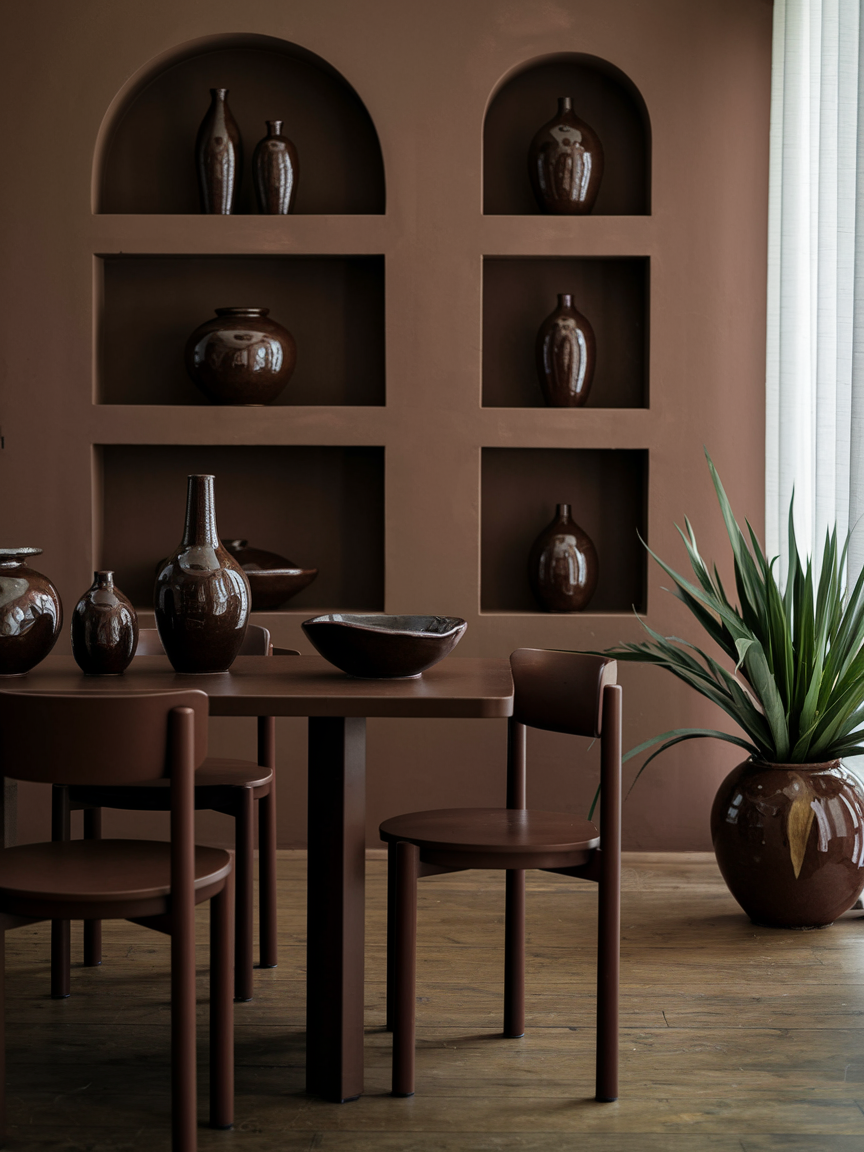
Brown ceramic pieces bring an artisanal, handcrafted quality that adds depth and authenticity to the dining room. Items like vases, bowls, or sculptural accents introduce subtle texture and earthy tones that complement wood furniture and neutral palettes. The natural imperfections and matte finishes often found in ceramics enhance the organic feel, making the space feel grounded and curated rather than overly styled. Grouping a few pieces together on a sideboard or dining table creates a cohesive display that feels intentional. Brown ceramics are a timeless way to add character and warmth while maintaining an understated elegance.
7. Brown and White Contrast
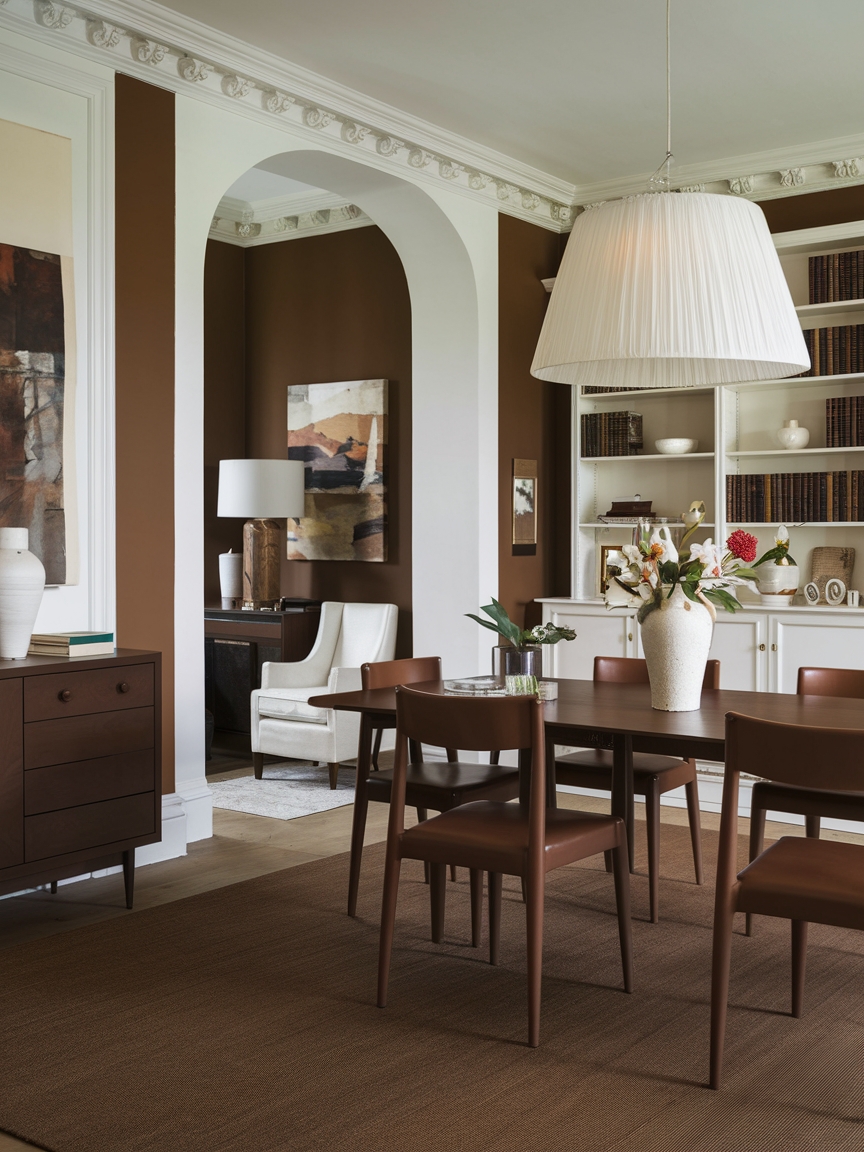
The combination of brown and white creates a classic, balanced aesthetic that feels both fresh and grounded. White elements, such as walls, upholstery, or tableware, brighten the space and reflect light, while brown furniture and accents anchor the design with warmth and depth. This contrast prevents the room from feeling too heavy or too stark, striking a perfect visual harmony. Clean lines and minimal decor enhance the sophistication of this pairing, making it suitable for both modern and traditional interiors. The result is a dining room that feels crisp, elegant, and timeless, with a sense of effortless refinement.
8. Dark Wood Sideboard
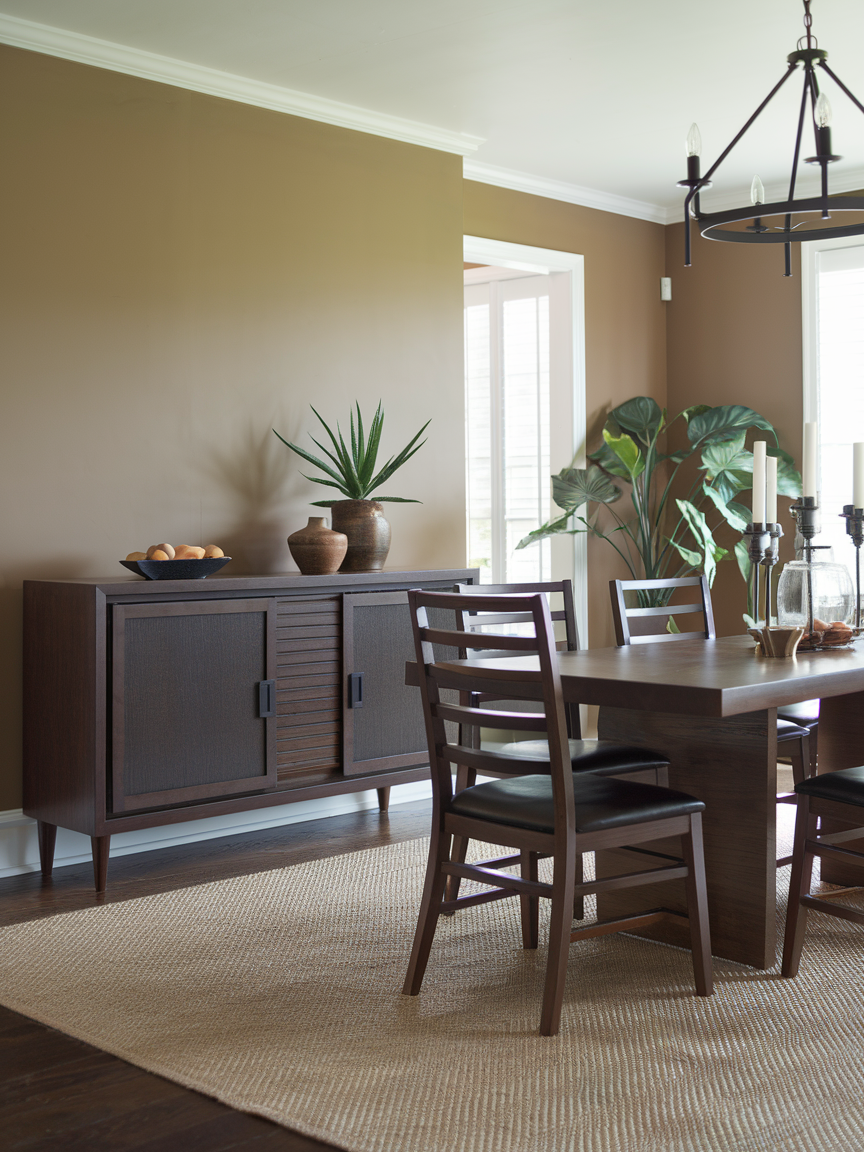
A dark wood sideboard serves as both a practical storage solution and a statement piece that elevates the dining room’s overall design. Its rich brown tones add depth and anchor the space, while its functionality keeps tableware, linens, and accessories neatly organized. When styled with restraint—perhaps a simple vase, artwork, or a set of candles—the sideboard enhances the room without creating clutter. Positioned against a neutral wall, it becomes a focal point that balances form and function. This piece brings a sense of structure, elegance, and timeless appeal to the dining area.
9. Elevated Table Styling
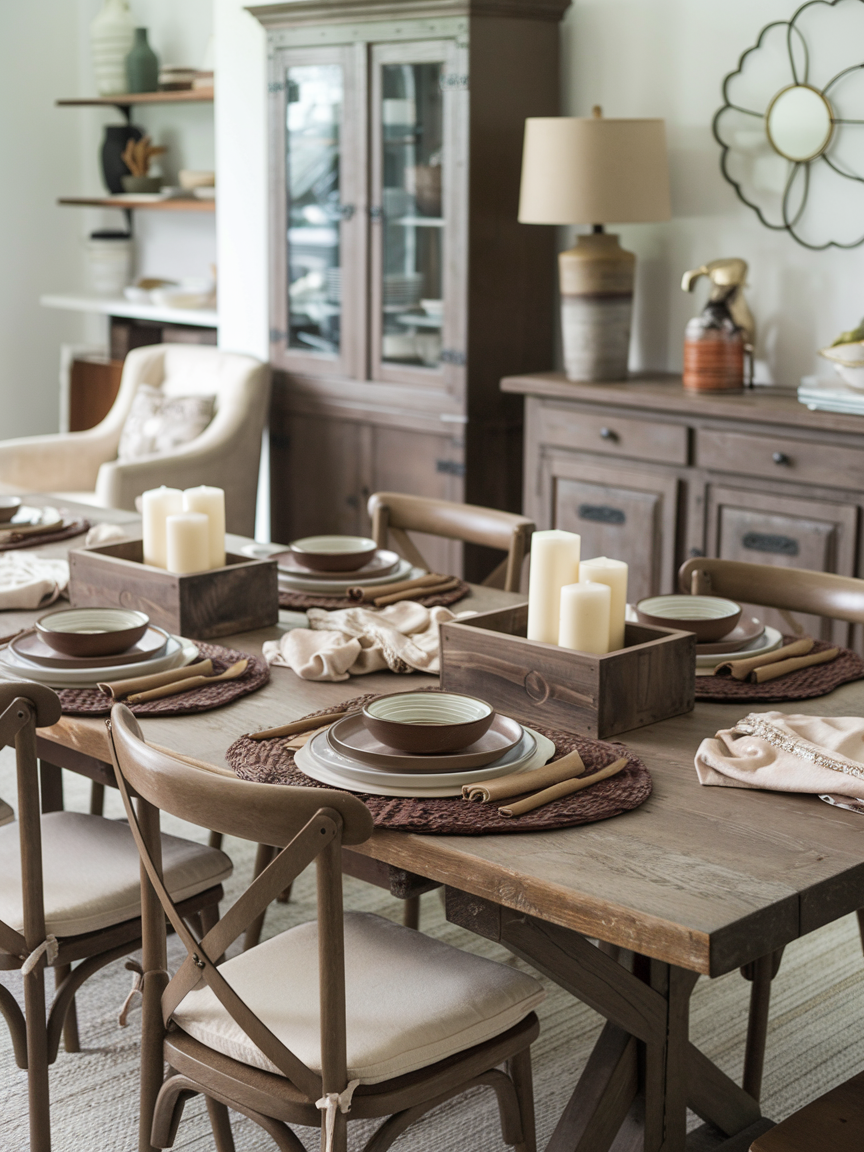
Thoughtfully styled tables can turn everyday meals into refined experiences. Incorporating brown-toned linens, layered textures, and coordinated tableware creates a cohesive and inviting setting. Mixing materials like ceramics, wood, and subtle metallic accents adds depth without feeling overly formal. Neutral dinnerware provides contrast, keeping the look balanced and light. Simple centerpieces, such as greenery or sculptural objects, enhance the table without overwhelming it. This approach ensures that the dining experience feels intentional, elegant, and visually pleasing every day.
10. Layered Lighting
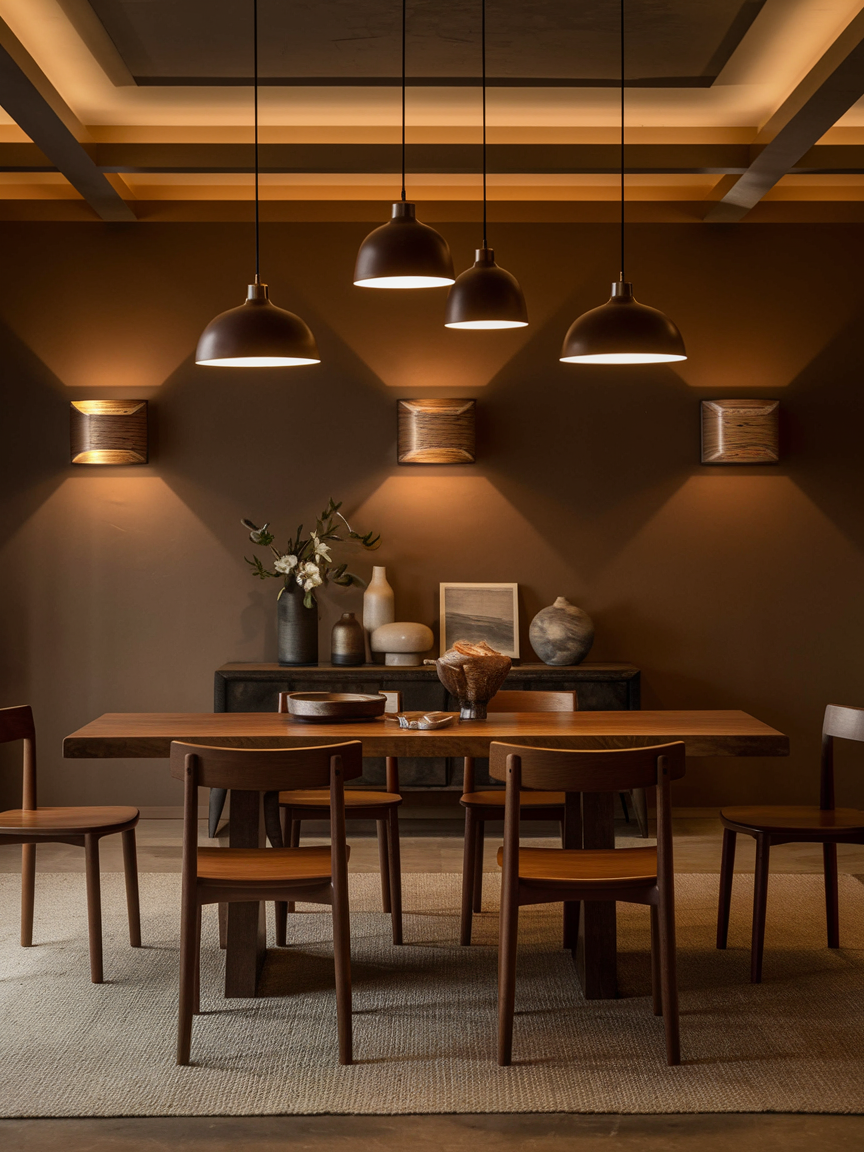
Layered lighting enhances the richness of brown tones while creating a flexible and inviting dining environment. Combining overhead lighting with wall sconces and ambient sources adds dimension and warmth. Each layer serves a purpose, from functional illumination to mood-setting ambiance. Warm-toned bulbs highlight textures and prevent darker shades from feeling heavy. Dimmers allow for easy transitions between casual and formal settings. This thoughtful lighting approach transforms the dining room into a cozy, elegant space that encourages connection and relaxation.
11. Textural Brown Feature Walls for Elevated Design
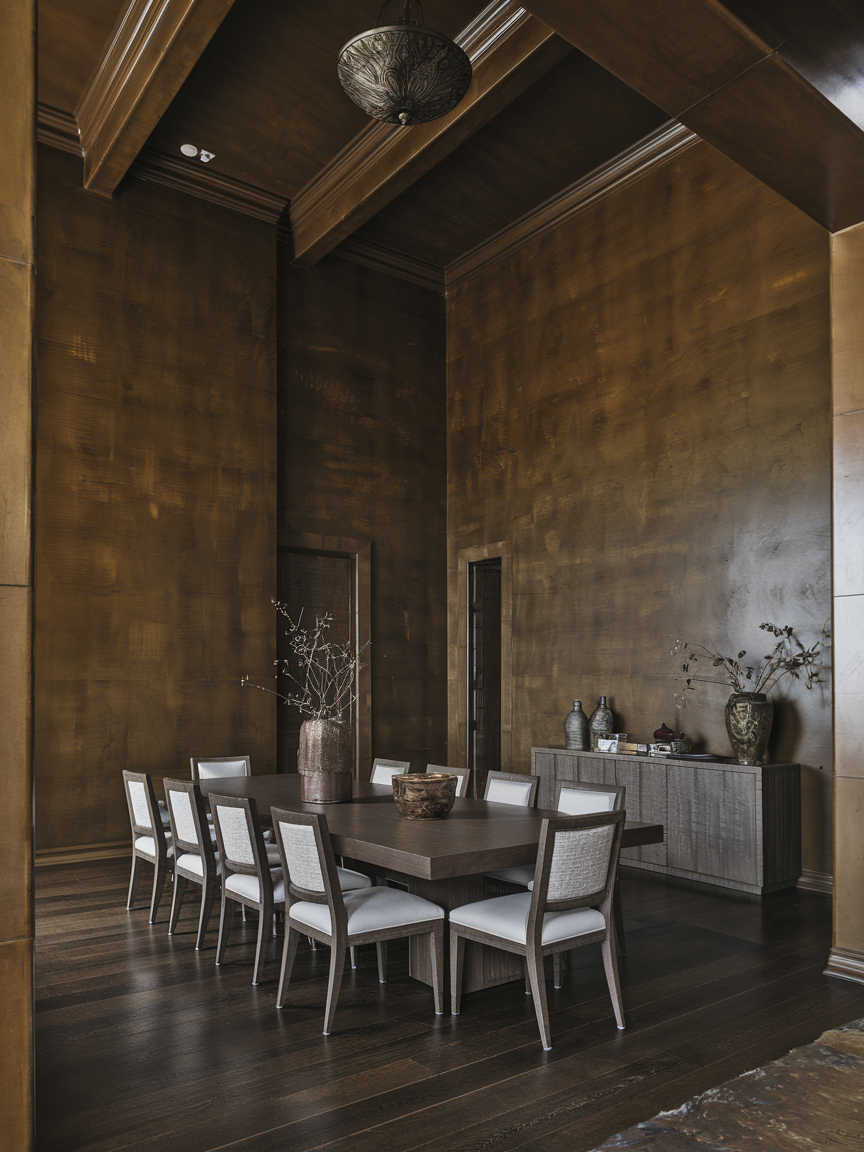
Feature walls with textured brown finishes add dimension and sophistication beyond simple color application. Materials like wood paneling, stone, or textured plaster create visual depth and interact beautifully with light. These surfaces serve as refined backdrops for furniture and decor, enhancing the overall composition of the room. When paired with minimal styling, the texture becomes the focal point without overwhelming the space. This design choice results in a dining room that feels layered, luxurious, and architecturally interesting.
12. Minimalist Brown Dining Room
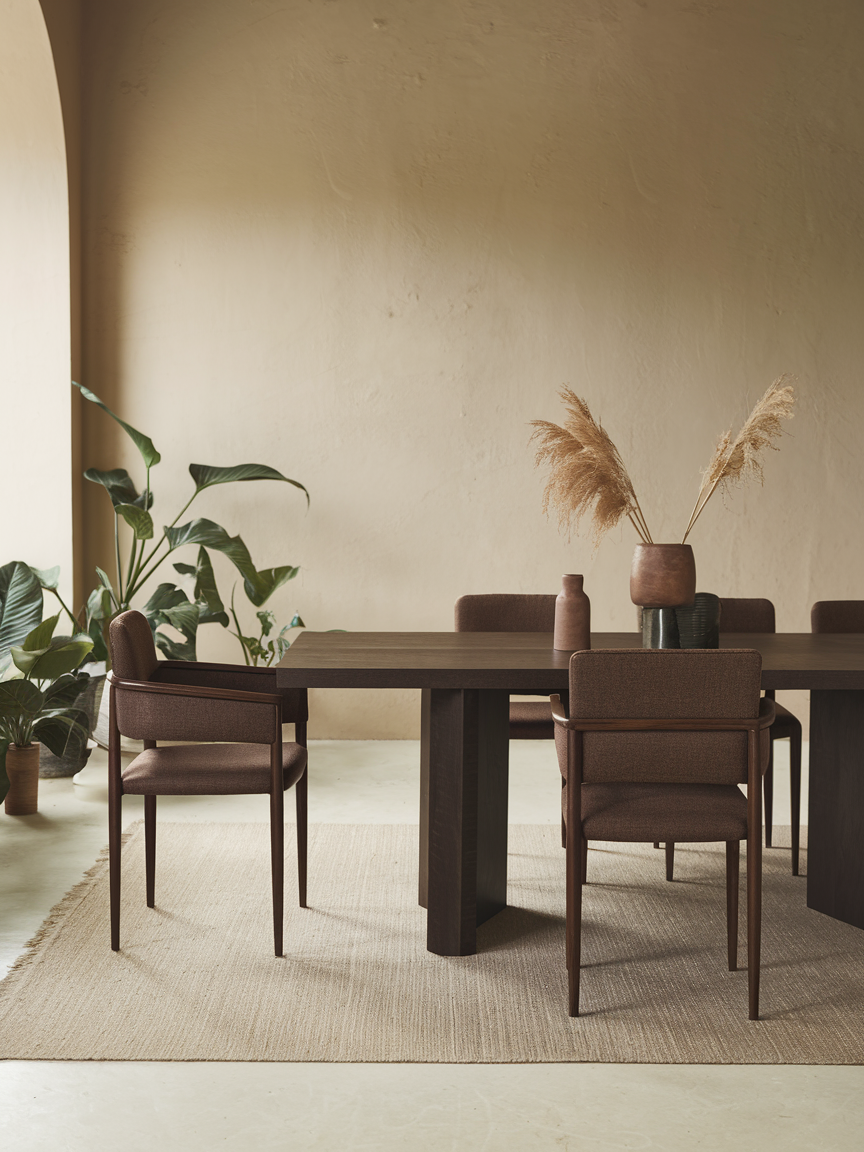
Minimalist brown dining rooms highlight the beauty of simplicity through clean lines, quality materials, and a restrained palette. Lighter brown tones maintain brightness while still providing warmth. Furniture with streamlined silhouettes and minimal detailing keeps the space feeling open and uncluttered. Texture becomes the primary source of interest, replacing excessive decoration. This approach creates a calm, balanced environment that feels both modern and inviting. The result is a dining room that embodies quiet elegance and timeless style.
13. Brown Statement Lighting Fixtures
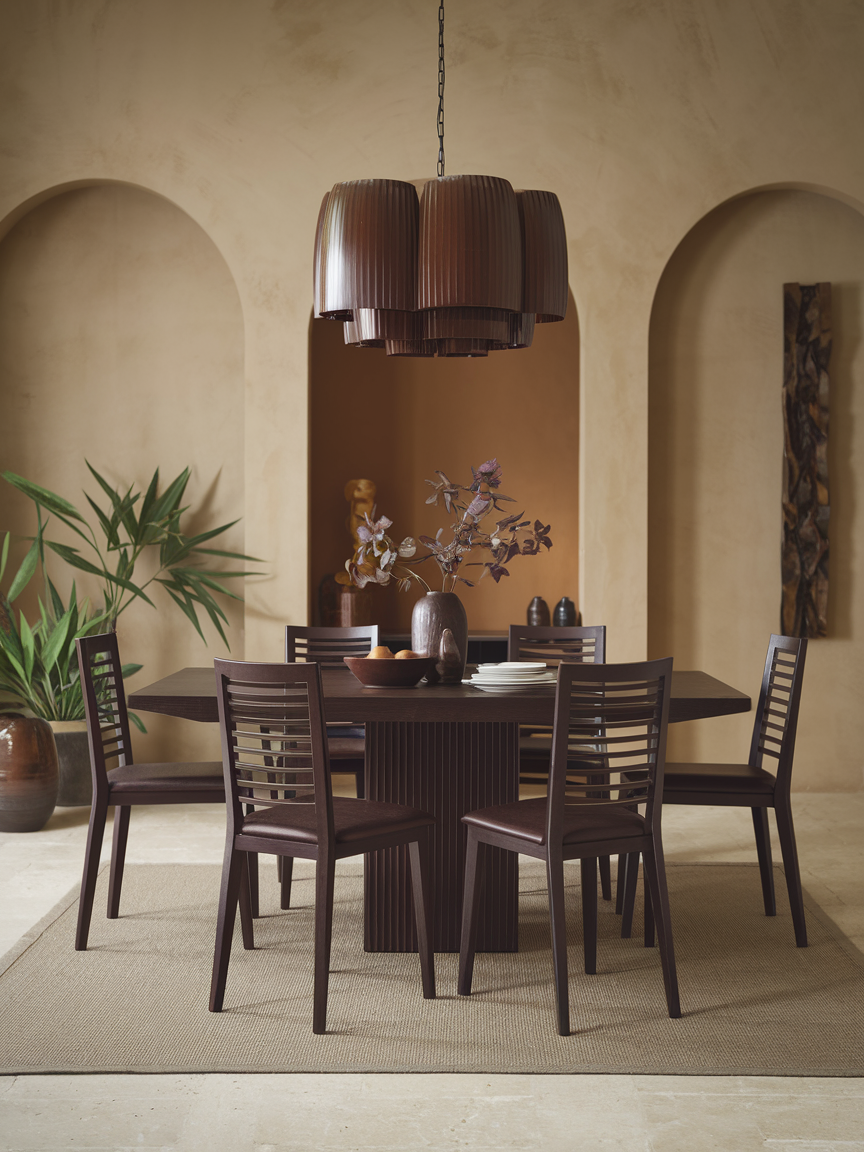
Lighting fixtures in brown or warm metallic tones act as both functional elements and artistic focal points within a dining room. Chandeliers, pendant lights, or sculptural fixtures in bronze, wood, or dark finishes draw the eye upward and add depth to the space. The interplay between light and material enhances textures throughout the room, from wood grains to fabric surfaces. Warm lighting softens the overall ambiance, ensuring the space feels inviting rather than overly formal. A well-chosen statement fixture ties the design together, creating a cohesive and elegant atmosphere that enhances every dining experience.
14. Brown and Gray for Contemporary Elegance
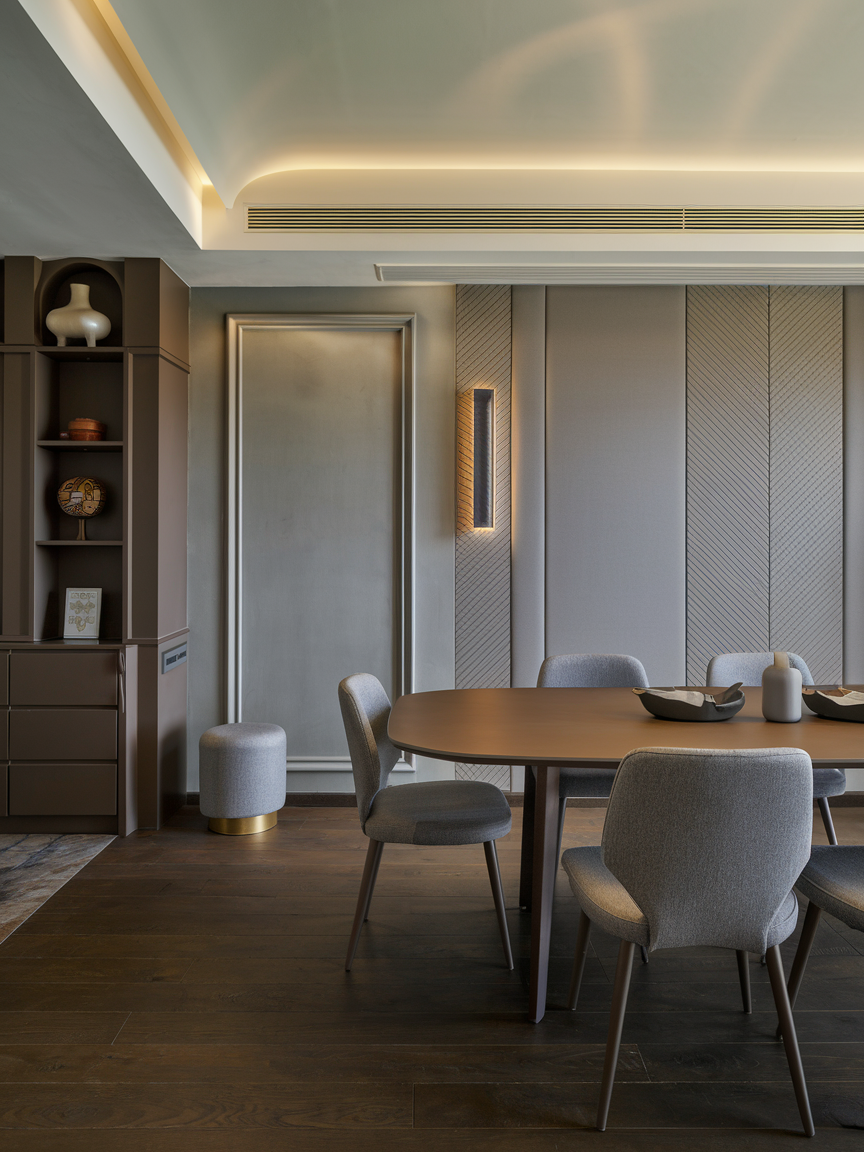
Combining brown with gray results in a sophisticated palette that feels modern yet warm. Gray introduces a cool, neutral balance, while brown adds richness and depth, preventing the space from feeling sterile. This pairing works especially well in contemporary interiors with clean lines and minimal ornamentation. Layering textures, such as wood, fabric, and metal, keeps the design dynamic and inviting. Subtle variations in tone help maintain visual interest without overwhelming the space. Together, brown and gray create a dining room that feels refined, balanced, and perfectly suited to modern living.
15. Leather Dining Chairs
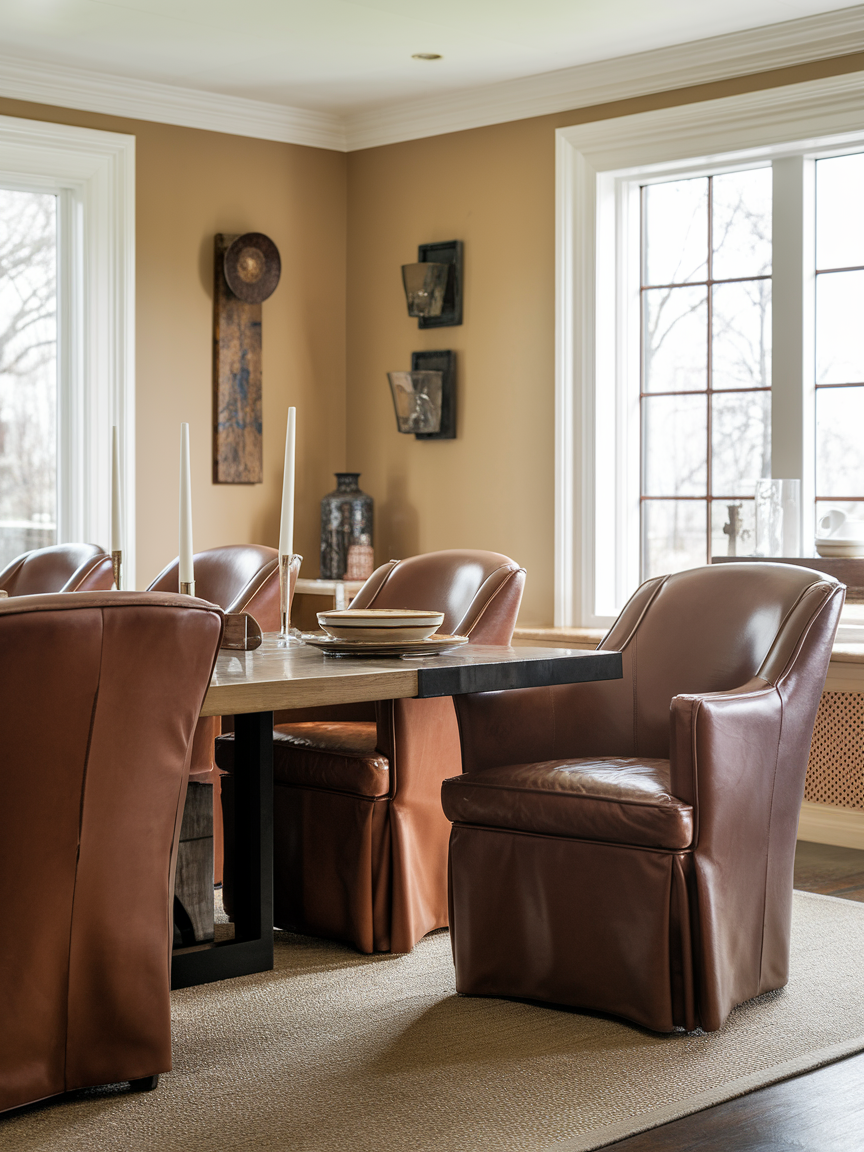
Brown leather dining chairs offer the perfect combination of luxury, durability, and timeless style. Their smooth texture adds a refined touch, while their natural aging process develops a beautiful patina over time, enhancing character rather than diminishing it. Leather pairs effortlessly with wood, metal, and stone, making it a versatile choice across design styles. Beyond aesthetics, these chairs provide exceptional comfort, encouraging guests to linger at the table longer. The result is a dining space that feels both elevated and inviting, where elegance meets everyday practicality.
16. Paneled Brown Wall
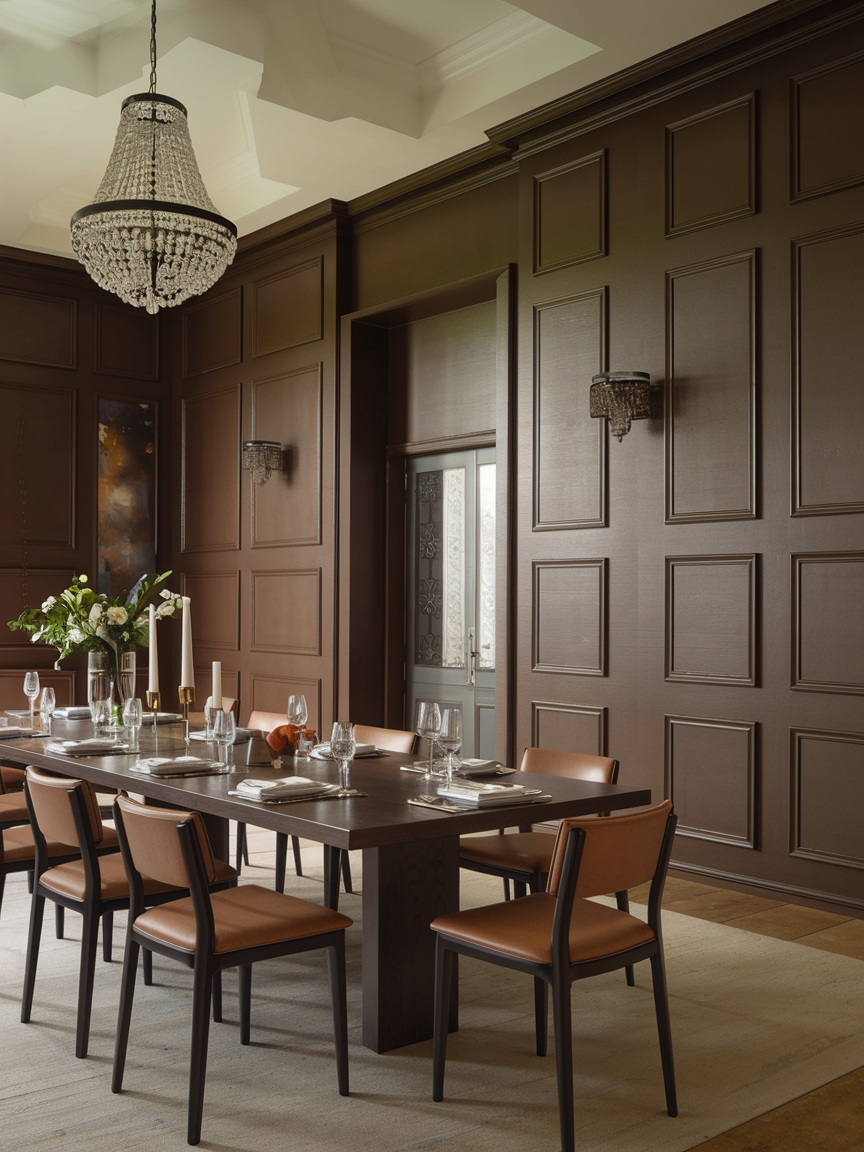
Brown wall paneling introduces a sense of structure and craftsmanship that instantly elevates the dining room. Whether designed in a classic wainscoting style or a more modern geometric pattern, paneling adds depth and visual interest that painted walls alone cannot achieve. The warm tones enhance the richness of the material, creating a space that feels grounded and sophisticated. When paired with minimal decor and soft lighting, paneled walls become a subtle yet powerful design feature, giving the room a timeless elegance that feels both refined and welcoming.
17. Brown Leather Accents
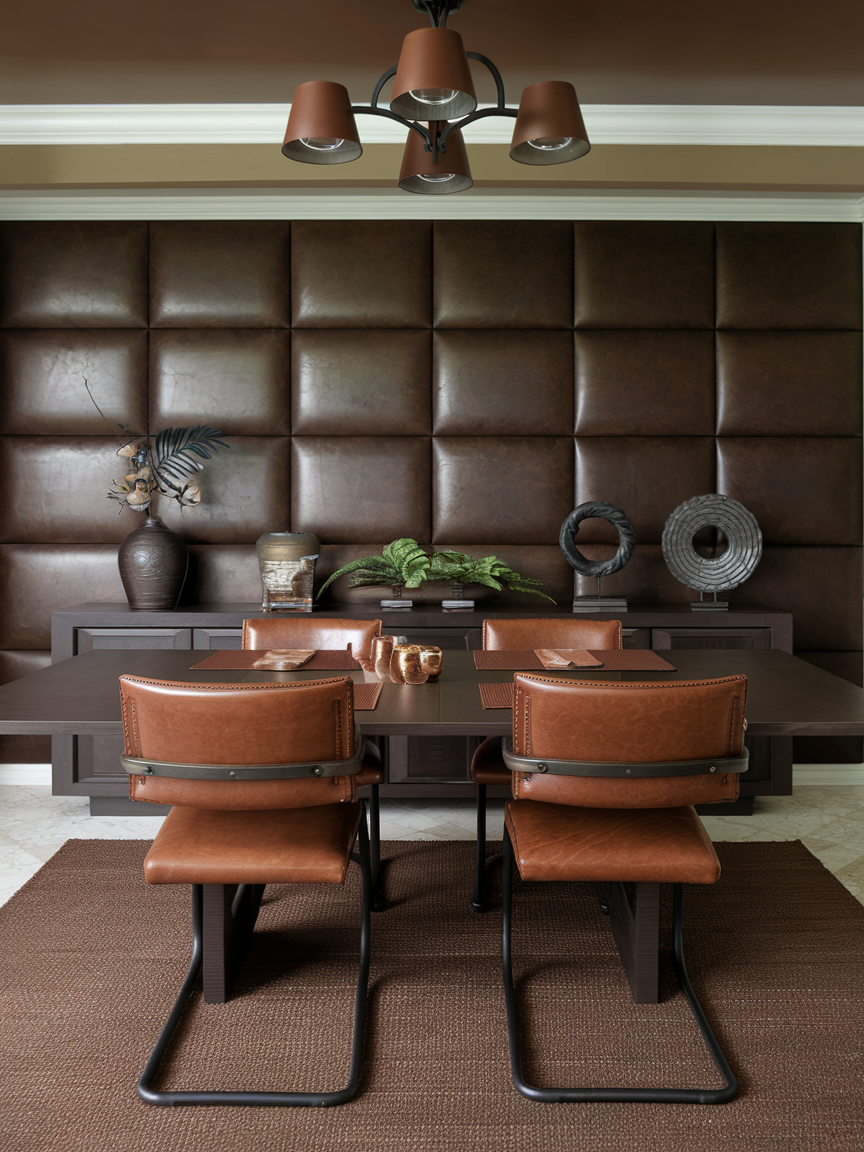
Incorporating brown leather accents beyond dining chairs introduces a subtle layer of richness and texture. Leather placemats, coasters, or decorative elements add depth while maintaining a cohesive palette. The natural patina that develops over time enhances the material’s character, making it even more appealing with age. Used sparingly, leather adds a touch of understated luxury without dominating the design. These small details contribute to a polished and cohesive look, reinforcing the overall warmth and sophistication of the dining room.
18. Brown Feature Ceiling
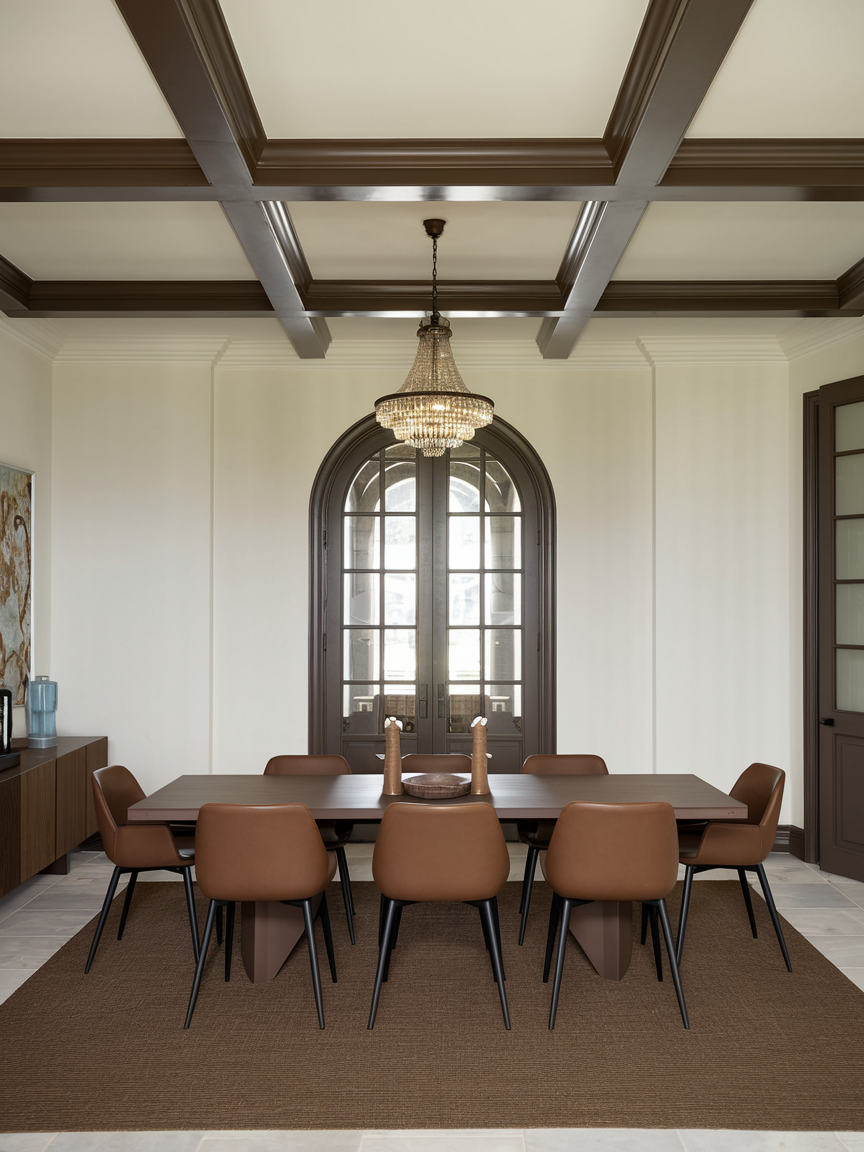
A brown feature ceiling is an unexpected design choice that adds dramatic elegance and intimacy to a dining room. This approach draws the eye upward, creating a sense of depth and architectural interest. When paired with lighter walls and balanced lighting, the ceiling becomes a striking focal point without making the space feel enclosed. Wood finishes, painted surfaces, or textured materials can all achieve this effect. Proper lighting is essential to highlight the richness of the color while maintaining brightness. A brown ceiling transforms the dining room into a more immersive and refined environment.
19. Exposed Wood Beams
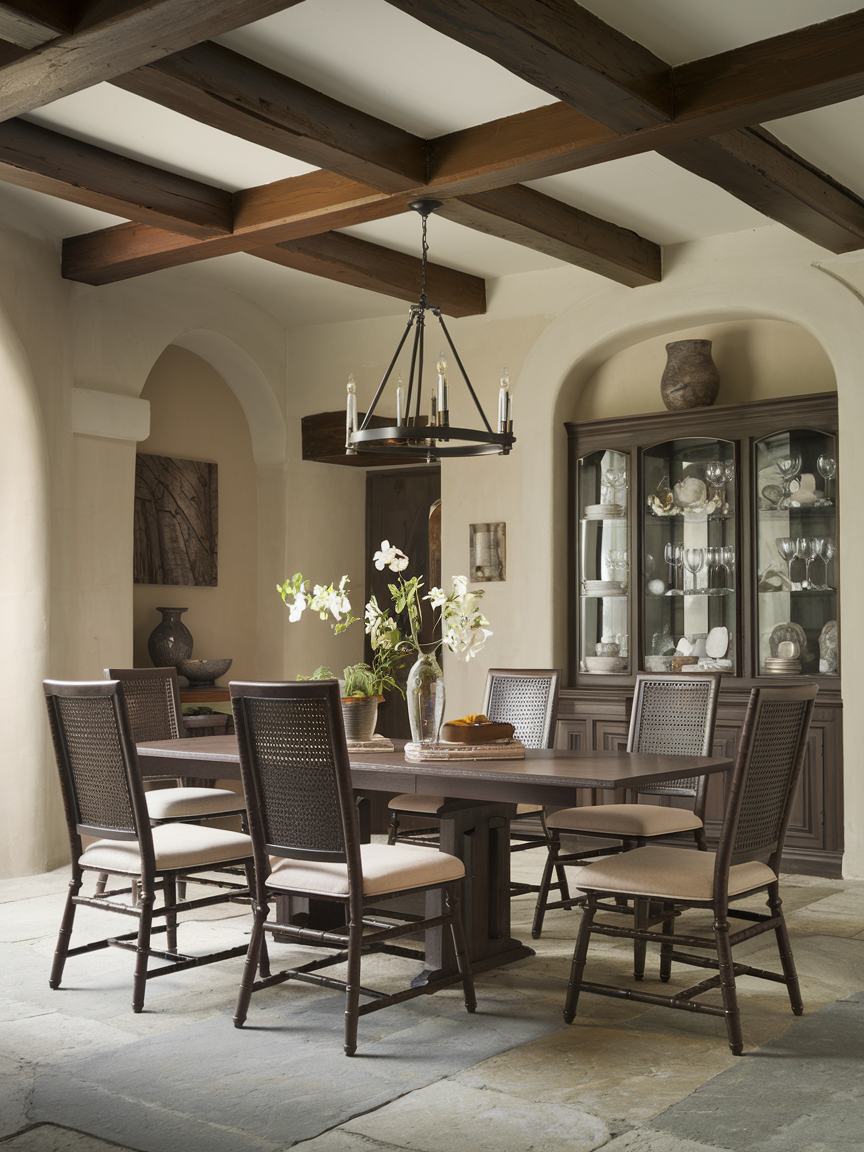
Exposed brown wood beams bring a sense of authenticity and timeless charm to a dining room. They add architectural interest while emphasizing the height and structure of the space. The natural texture and grain of the wood introduce warmth, making the room feel cozy yet elegant. This feature pairs beautifully with neutral walls and classic furnishings, creating a balanced aesthetic that feels both rustic and refined. With the right lighting, wood beams become a standout element that enhances the overall atmosphere.
20. Upholstered Bench
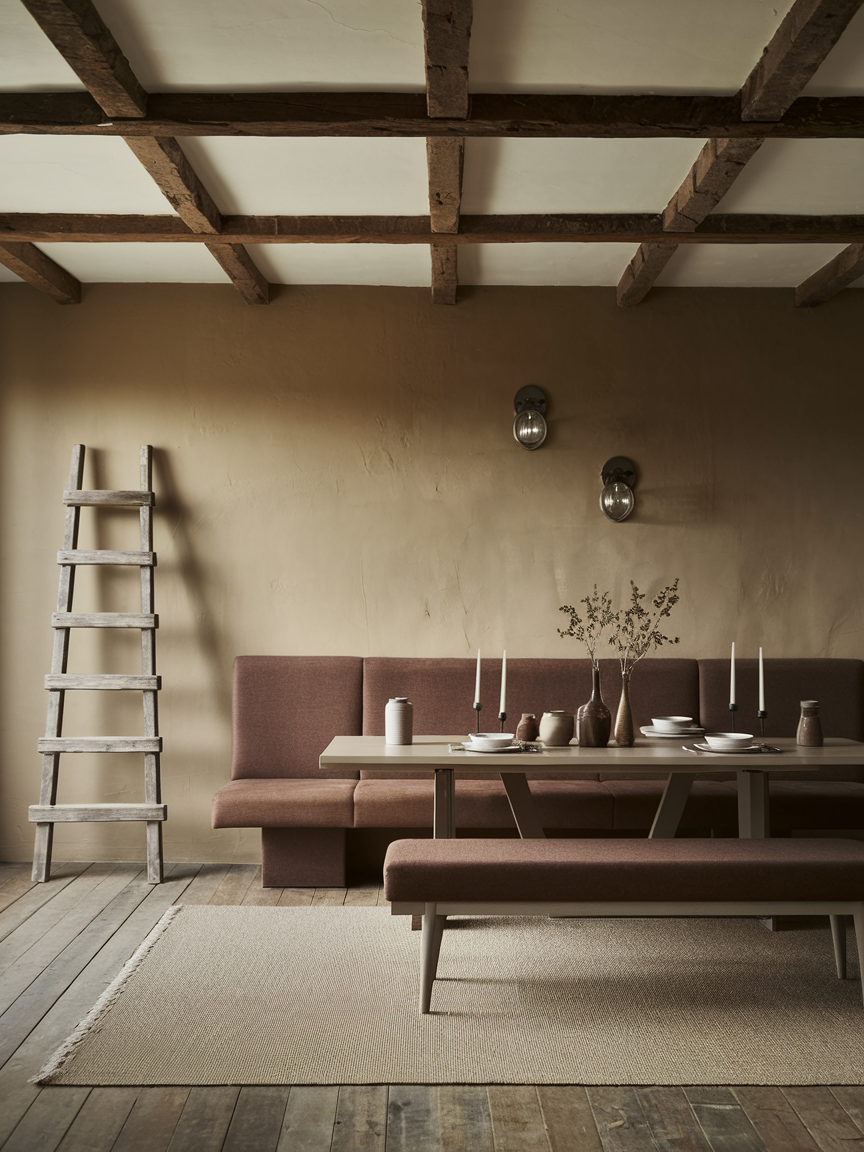
A brown upholstered bench adds a relaxed yet polished element to the dining room. It softens the overall look while maintaining a sense of structure and style. Benches are particularly effective in creating a more casual, welcoming seating arrangement, making them ideal for family gatherings or intimate dinners. When paired with structured chairs and a solid wood table, they create visual balance and variety. The addition of textured fabrics enhances comfort, ensuring the space feels as inviting as it is elegant.
21. Brown Rug
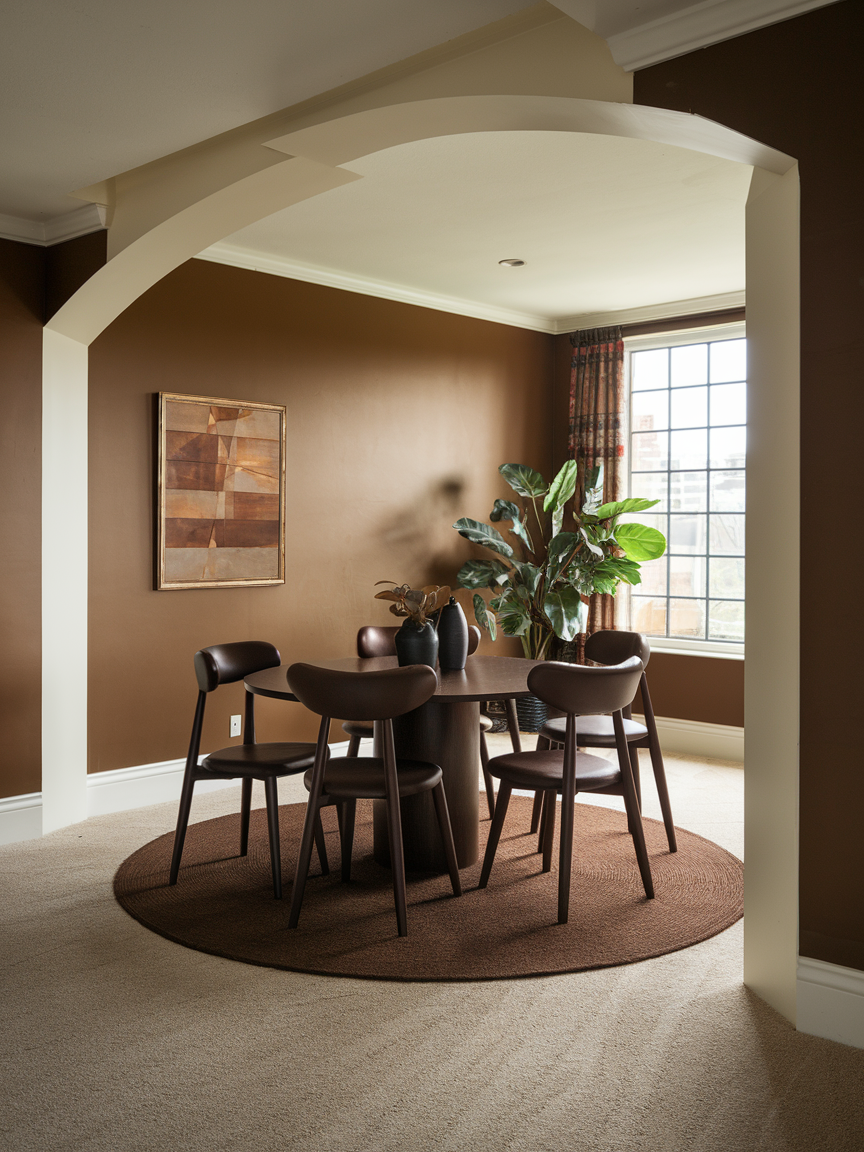
A brown area rug anchors the dining space, providing both visual definition and physical comfort. It helps frame the dining table, especially in open-plan layouts, while adding warmth and texture underfoot. Choosing a rug with subtle patterns or varied tones can introduce additional depth without overwhelming the design. Beyond aesthetics, rugs also improve acoustics and protect flooring, making them both practical and stylish. This simple addition enhances the overall cohesion of the room while reinforcing its cozy, elegant feel.
22. Deep Chocolate Wall
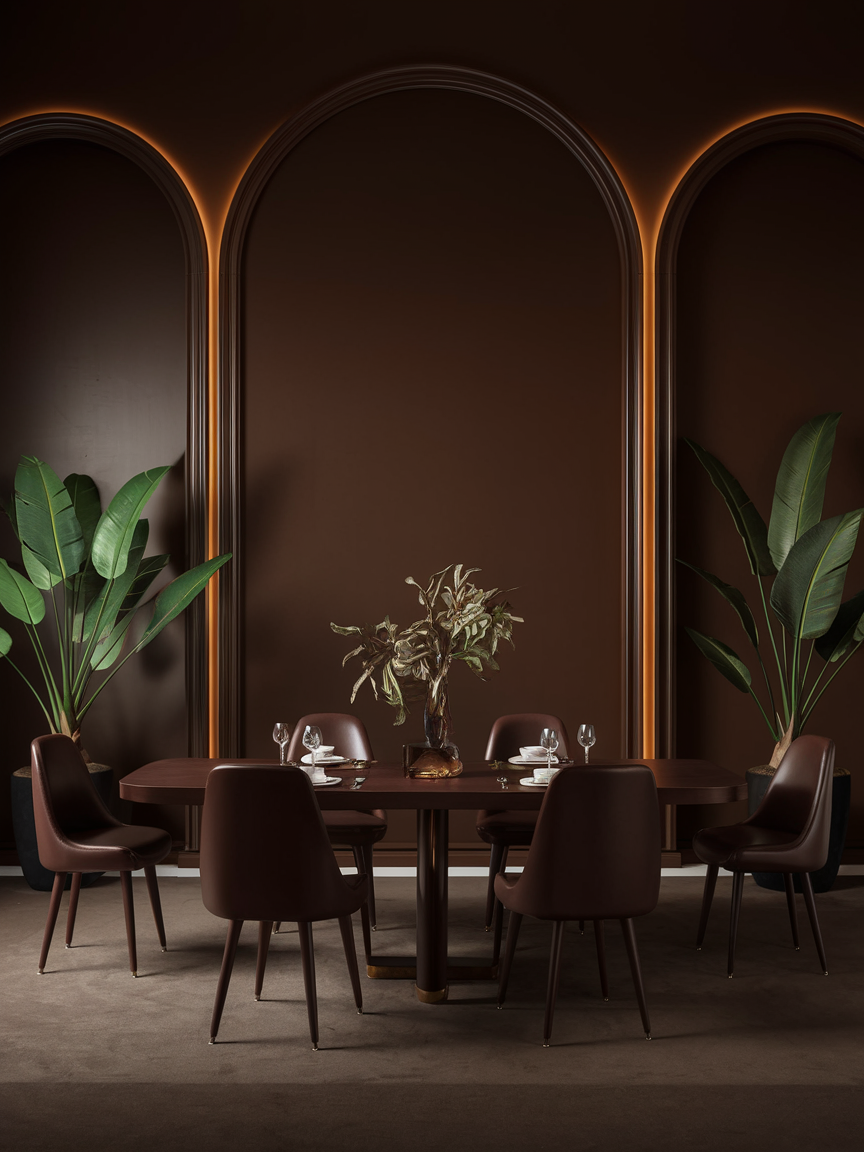
Deep chocolate brown walls create an enveloping sense of warmth and sophistication, instantly elevating the dining room into a more intimate and refined space. This rich tone works especially well when paired with lighter furnishings, metallic accents, or soft textiles that prevent the room from feeling overly heavy. The key is in the balance—warm lighting softens the intensity of the color while enhancing its depth, allowing the walls to feel cozy rather than dark. When styled with elegant artwork or neutral upholstery, chocolate brown walls create a timeless backdrop that feels both dramatic and welcoming, perfect for hosting memorable dinners.
23. Walnut Dining Table
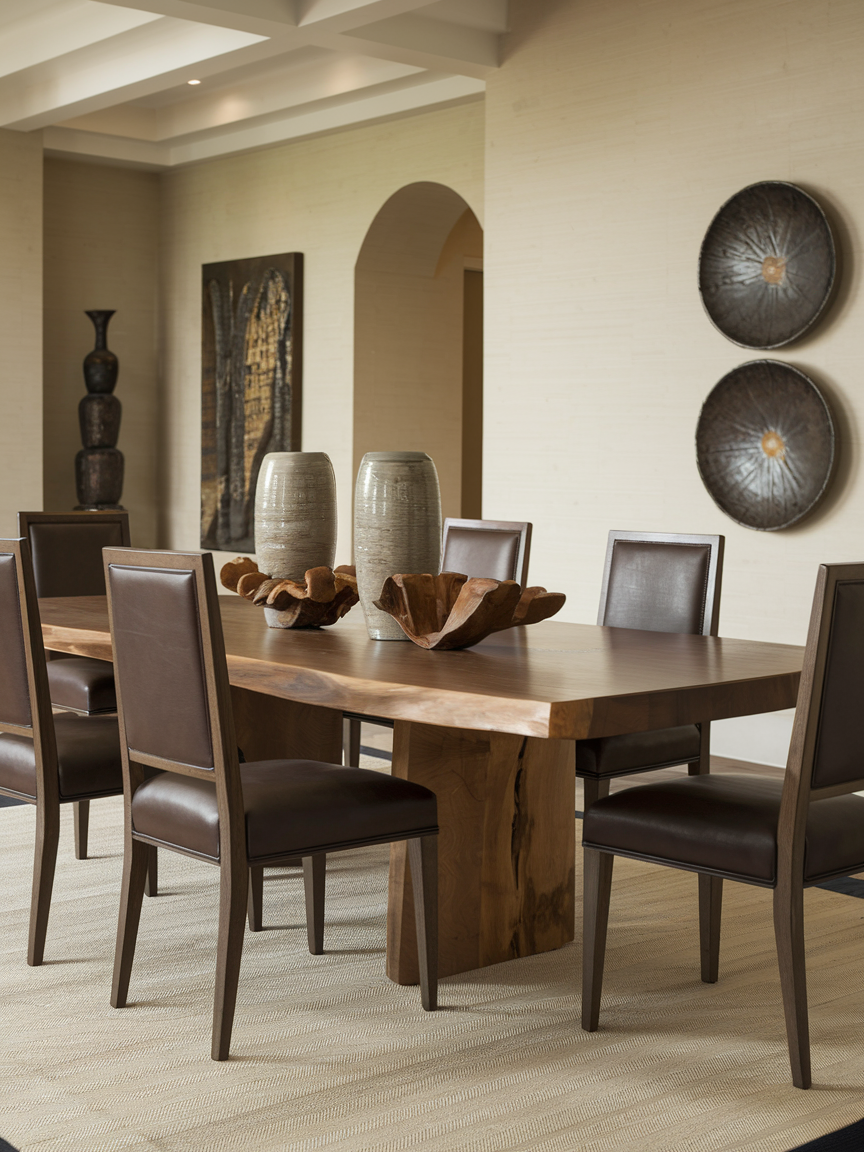
A walnut dining table naturally draws attention with its rich grain, warm undertones, and organic character, making it the perfect centerpiece for an elegant dining room. Its versatility allows it to blend seamlessly with both traditional and modern interiors, pairing beautifully with upholstered chairs, leather seating, or mixed materials. Beyond aesthetics, walnut adds a sense of authenticity and craftsmanship that elevates the overall space. When complemented by soft lighting and neutral surroundings, the table becomes the heart of the room—inviting, functional, and visually grounding without ever overpowering the design.
24. Brown and Natural Textures
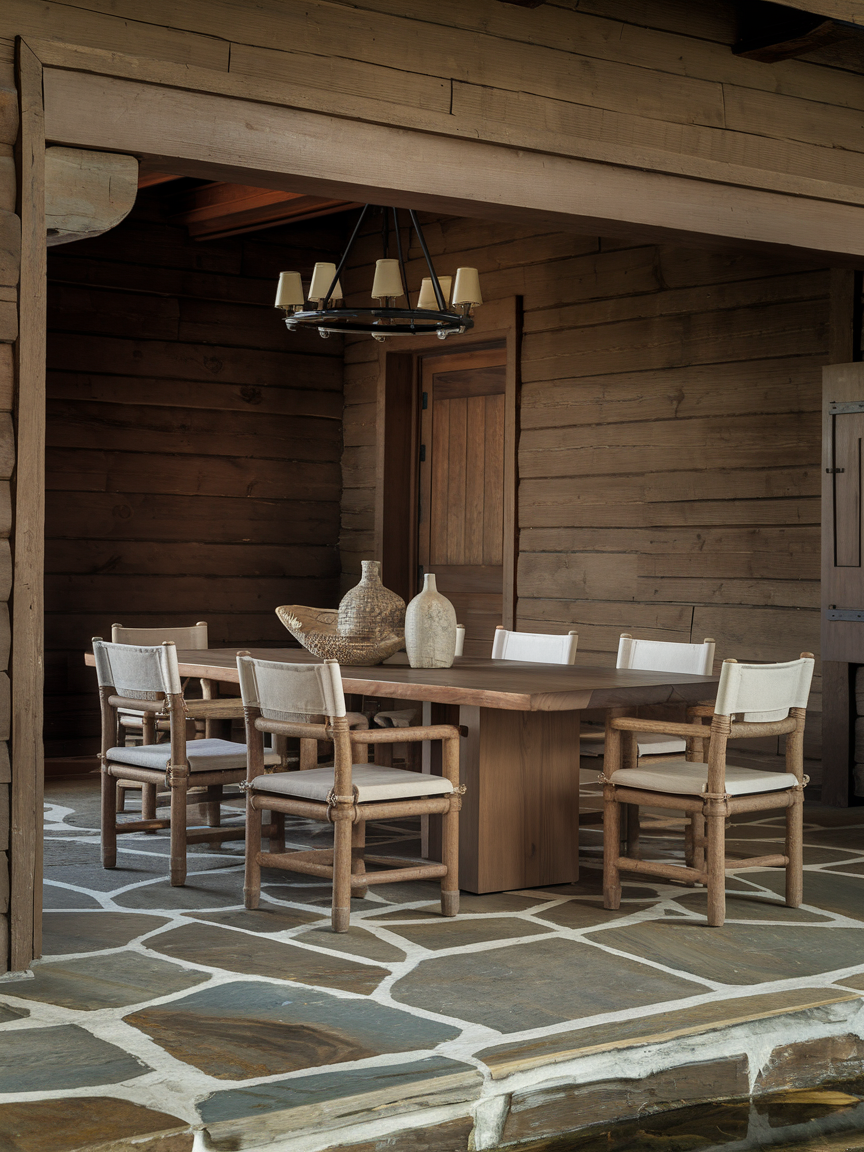
Combining brown tones with natural textures creates a dining room that feels grounded, inviting, and effortlessly elegant. Materials like wood, linen, stone, and woven fibers add tactile richness and soften the overall design. These elements work together to create a layered, organic aesthetic that feels both relaxed and refined. The interplay of textures prevents the space from feeling flat, while the consistent color palette maintains harmony. This approach results in a dining room that feels warm, comfortable, and deeply connected to natural beauty.
25. Subtle Pattern Play for Layered Sophistication
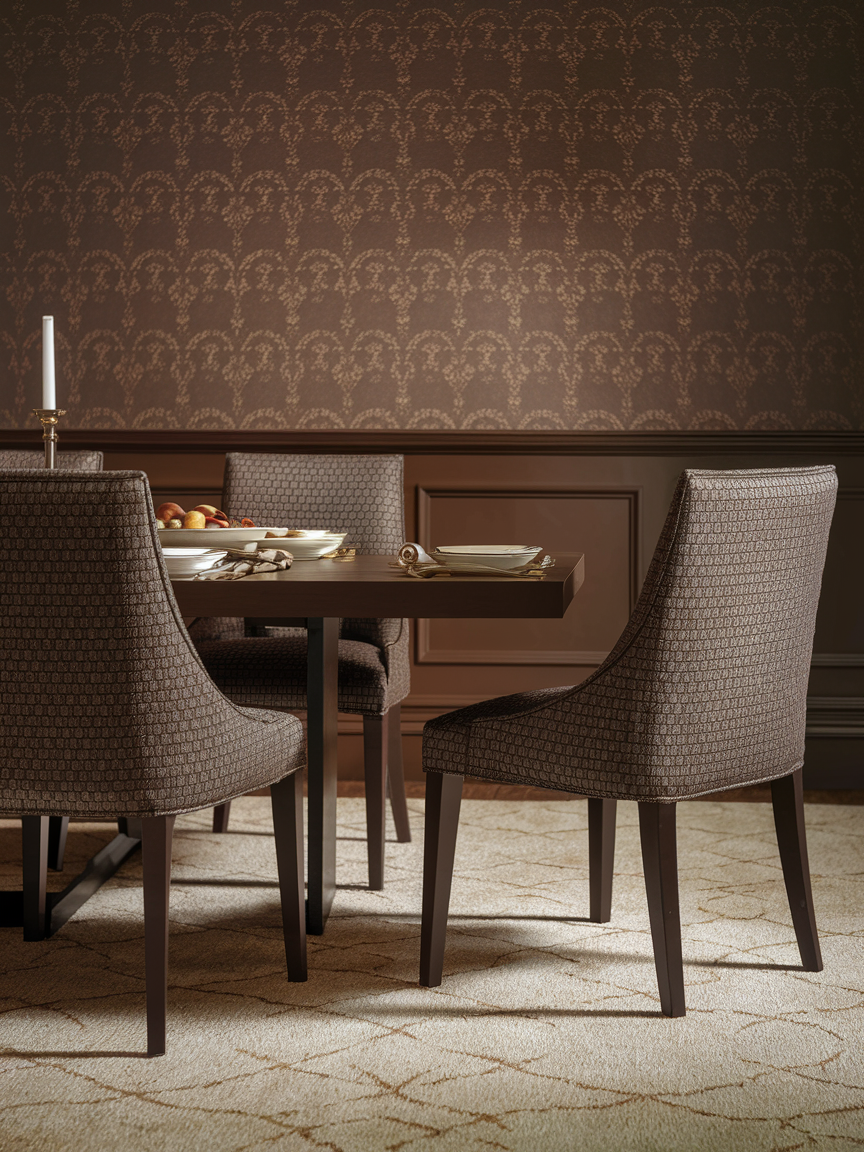
Introducing subtle patterns into a brown dining room adds depth and visual rhythm while maintaining a refined and cohesive look. Patterns can be incorporated through upholstered chairs, rugs, wallpaper, or textiles, creating gentle movement without overwhelming the design. When patterns stay within a warm neutral palette, they enhance rather than compete with the overall aesthetic. This layering technique adds complexity and interest, making the room feel more dynamic and thoughtfully curated. The result is a dining space that feels elegant, textured, and visually engaging while still remaining timeless.
26. Brown and Black Accents
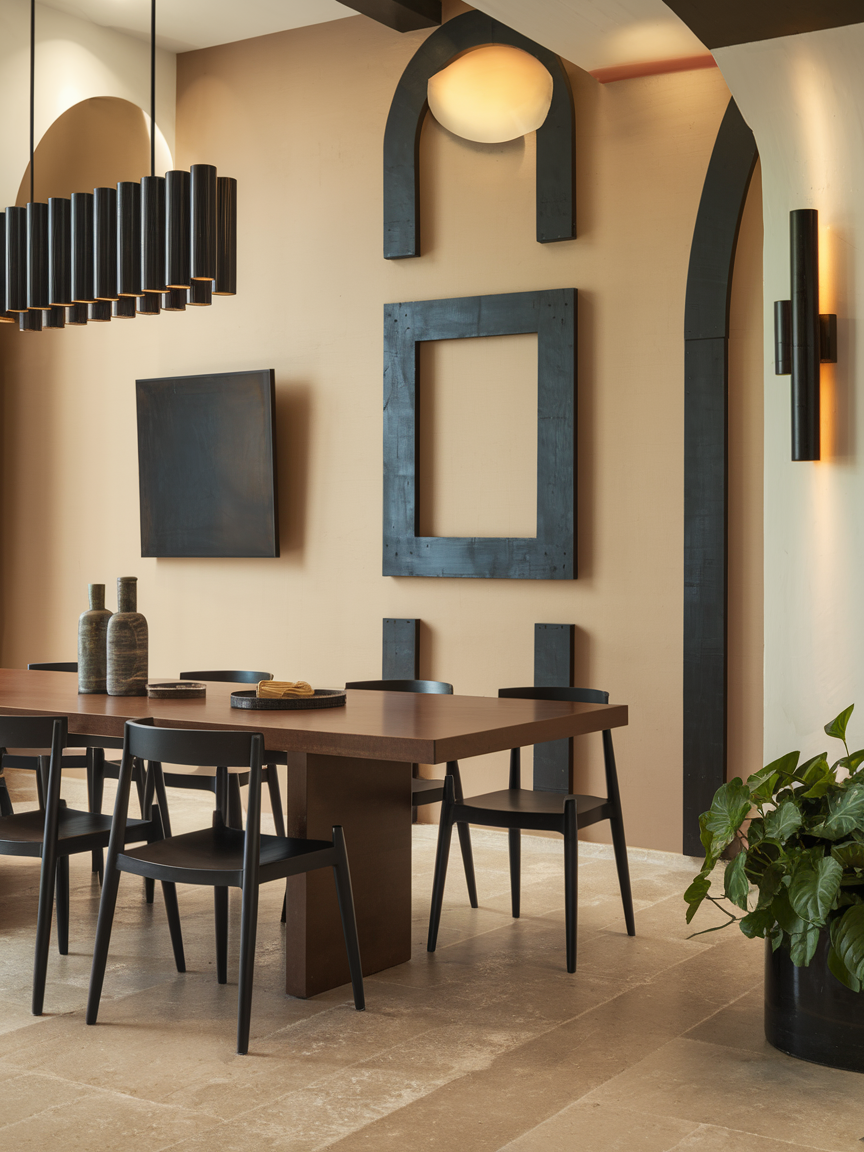
The combination of brown and black creates a bold, confident aesthetic that feels modern and sophisticated. Brown softens the intensity of black, ensuring the space remains warm and inviting. Black accents, such as lighting, frames, or furniture details, add definition and structure to the design. This pairing works especially well in contemporary or industrial-inspired interiors, where contrast plays a key role. Balanced with lighter elements and warm lighting, the room avoids feeling too heavy. Together, brown and black create a striking yet refined dining environment.
27. Elegant Artwork
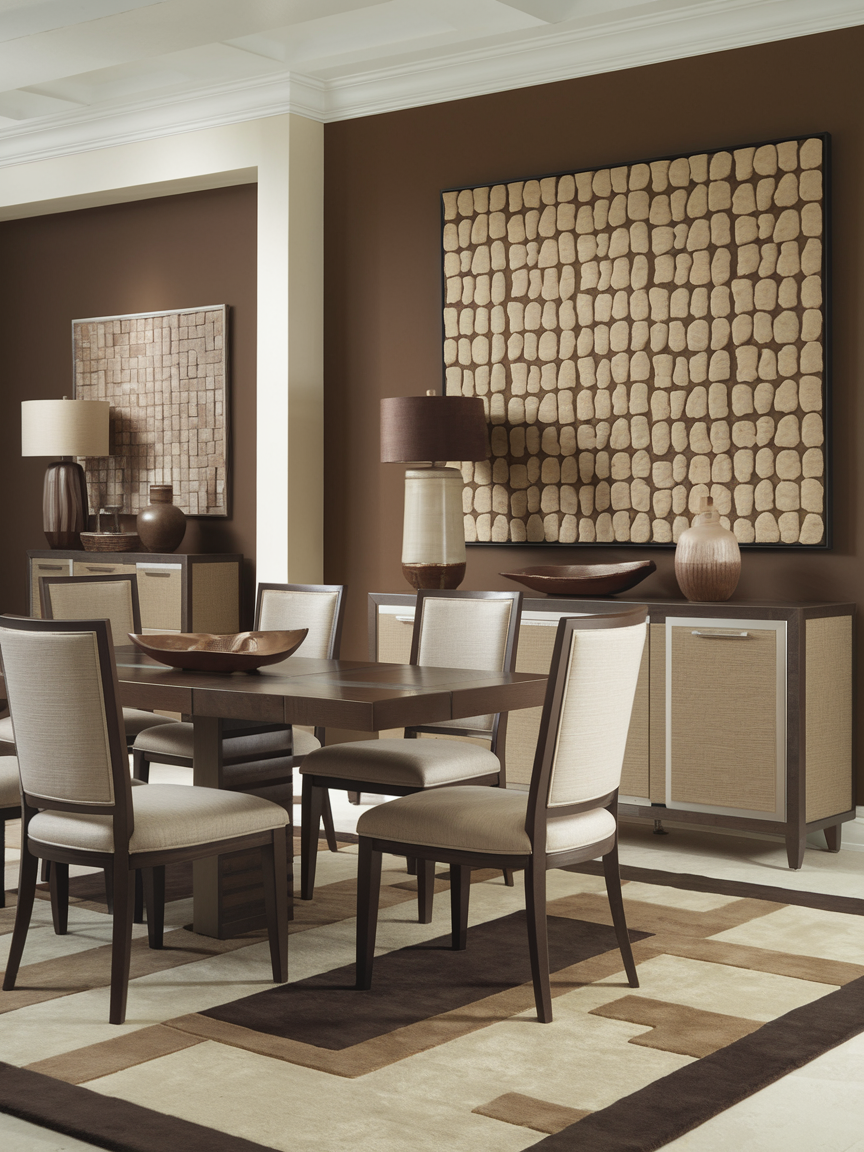
Artwork plays a vital role in elevating a brown dining room by adding personality, depth, and visual focus. The richness of brown tones provides an ideal backdrop that allows artwork to stand out beautifully. Whether you choose abstract pieces, landscapes, or monochromatic designs, art introduces contrast and emotional resonance. Larger pieces can anchor the space, while smaller groupings create an intimate gallery feel. Carefully selected frames enhance cohesion and tie the design together. This thoughtful integration of art transforms the dining room into a curated, expressive space.
* These 27 sophisticated dining room ideas show how rich brown tones can bring warmth, depth, and timeless elegance to your space. Let these ideas inspire you to design a space that feels grounded, stylish, and perfect for both everyday dining and special gatherings.