Designing a kids’ bedroom is one of the most exciting and rewarding projects you can take on as a parent or decorator. Unlike other rooms in the home, this space is meant to grow with your child while sparking joy and imagination every single day. The challenge is that it has to be so many things at once: functional enough to handle everyday routines, cozy enough for rest, and playful enough to inspire creativity and fun. A kids’ bedroom should feel like their own little world where they can dream, learn, and explore while still staying organized and clutter-free.
What makes designing these rooms truly special is the opportunity to blend practicality with personality. Bright colors, whimsical wall art, and themed accents can add a sense of adventure, while smart storage and thoughtful layouts keep the space calm and manageable. It’s all about finding the balance between a room that kids will enjoy spending time in and one that parents will appreciate for its order and versatility.
In this article, I’m sharing 27 creative ideas that strike the perfect mix of fun and relaxation. Let’s dive in and discover how you can create a space that both kids and parents will love.
1. Bright and Cheerful Color Palette
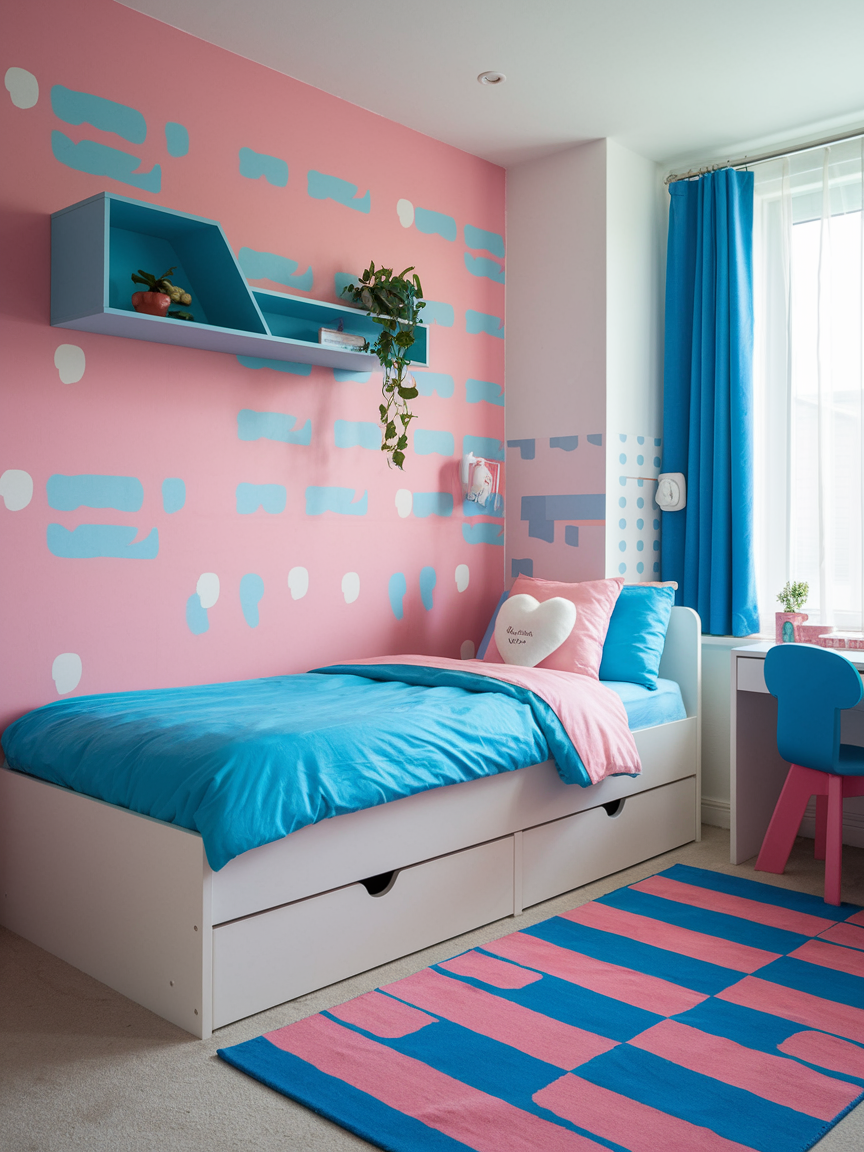
A lively color palette instantly makes a kid’s bedroom feel playful and welcoming. Think vibrant hues, pastel tones, or even bold accent walls that spark imagination. Bright colors stimulate creativity while soft shades provide a calming backdrop for rest. You can mix and match wall colors with furniture and bedding to create a cohesive yet dynamic look. Kids will love the energy of a colorful room, and parents will appreciate how thoughtful use of colors can balance excitement and relaxation, making the space both fun and functional.
2. Themed Decor for Imagination
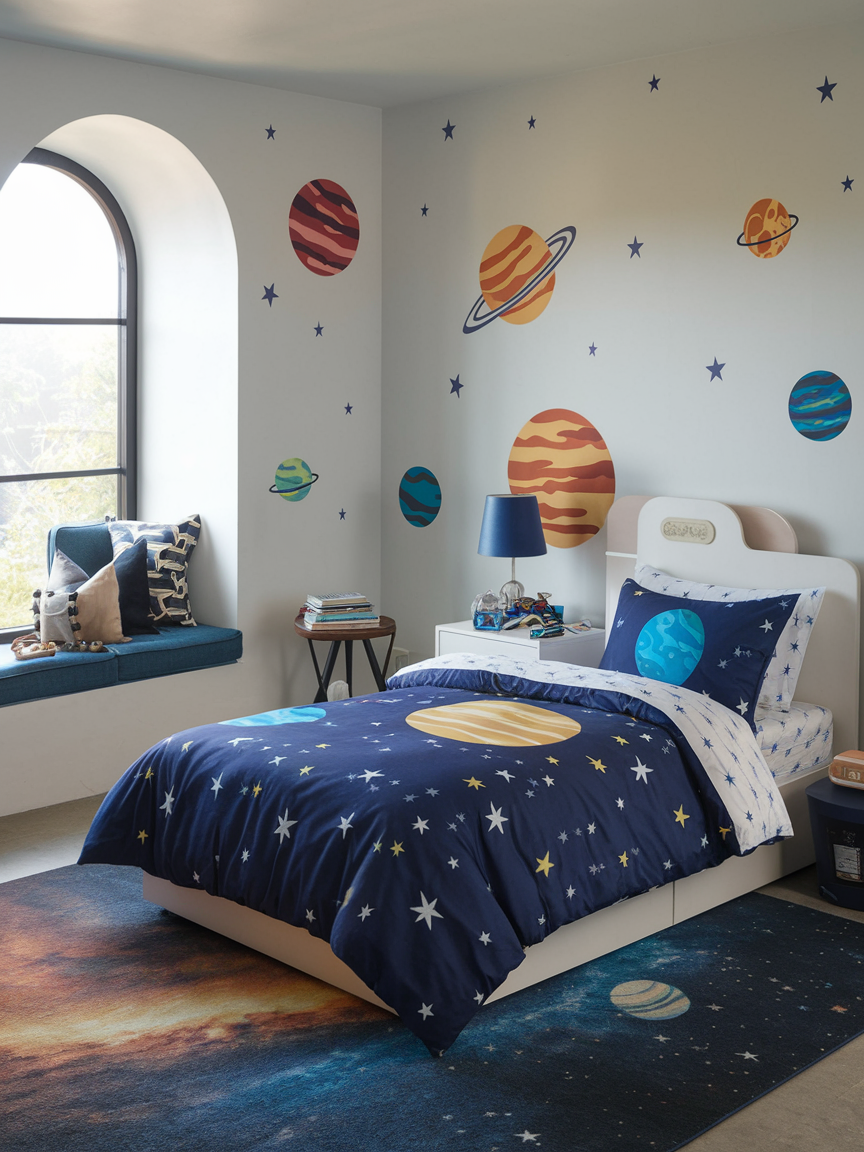
Themed bedrooms can transport kids into their favorite stories or interests. From space adventures to jungle safaris, a themed room encourages imaginative play and makes daily life more exciting. You can incorporate wall decals, bedding, rugs, and accessories that reflect the chosen theme. Adding interactive elements like a tent or a reading nook enhances engagement. Themed decor provides a cohesive aesthetic that is visually appealing and fun, giving children a sense of identity in their personal space while keeping the room organized and stylish at the same time.
3. Loft Beds for Extra Fun and Space
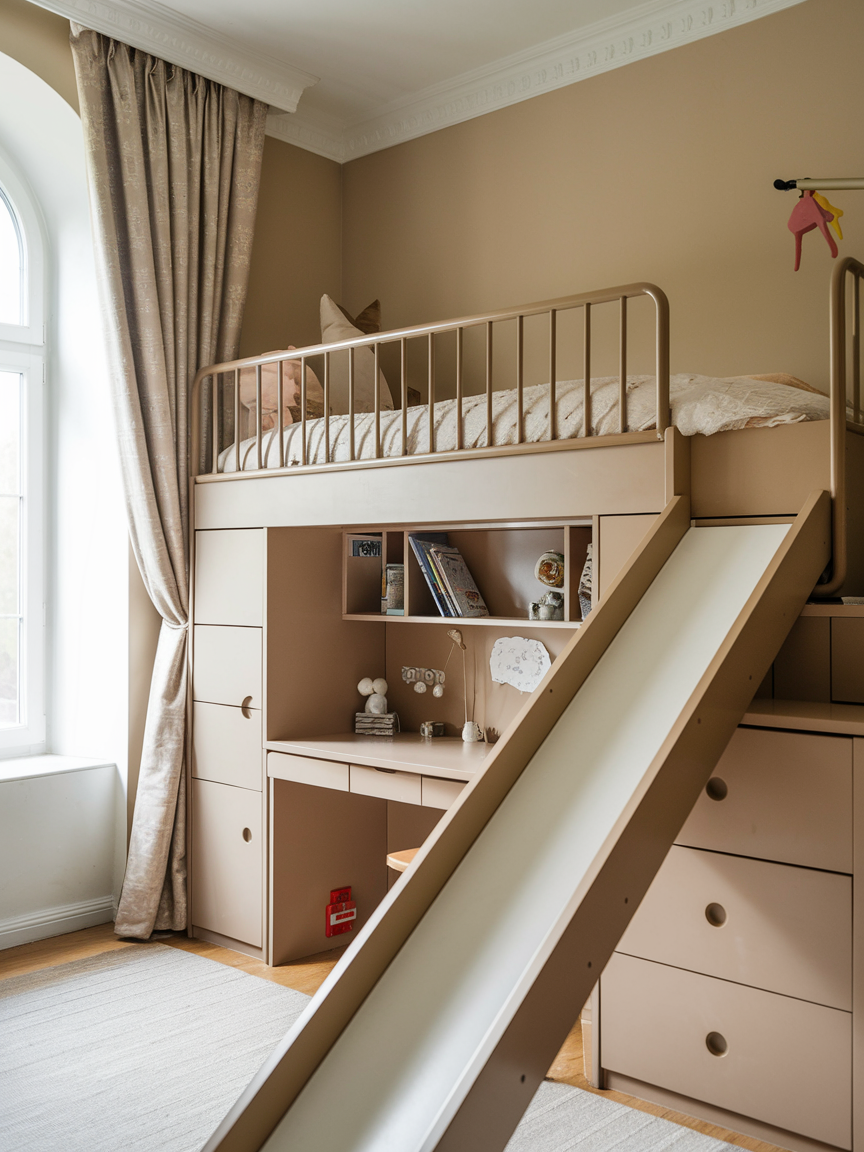
Loft beds are a fantastic way to maximize space and create a playful atmosphere. The elevated bed frees up room underneath for a desk, play area, or storage, making the bedroom multifunctional. Some lofts even include slides or climbing features for added fun. This design element is ideal for smaller bedrooms, helping to maintain an organized layout while encouraging creativity. Loft beds combine practicality with playfulness, providing kids with a sense of adventure while giving parents a clever solution for storage and space management.
4. Cozy Reading Nook
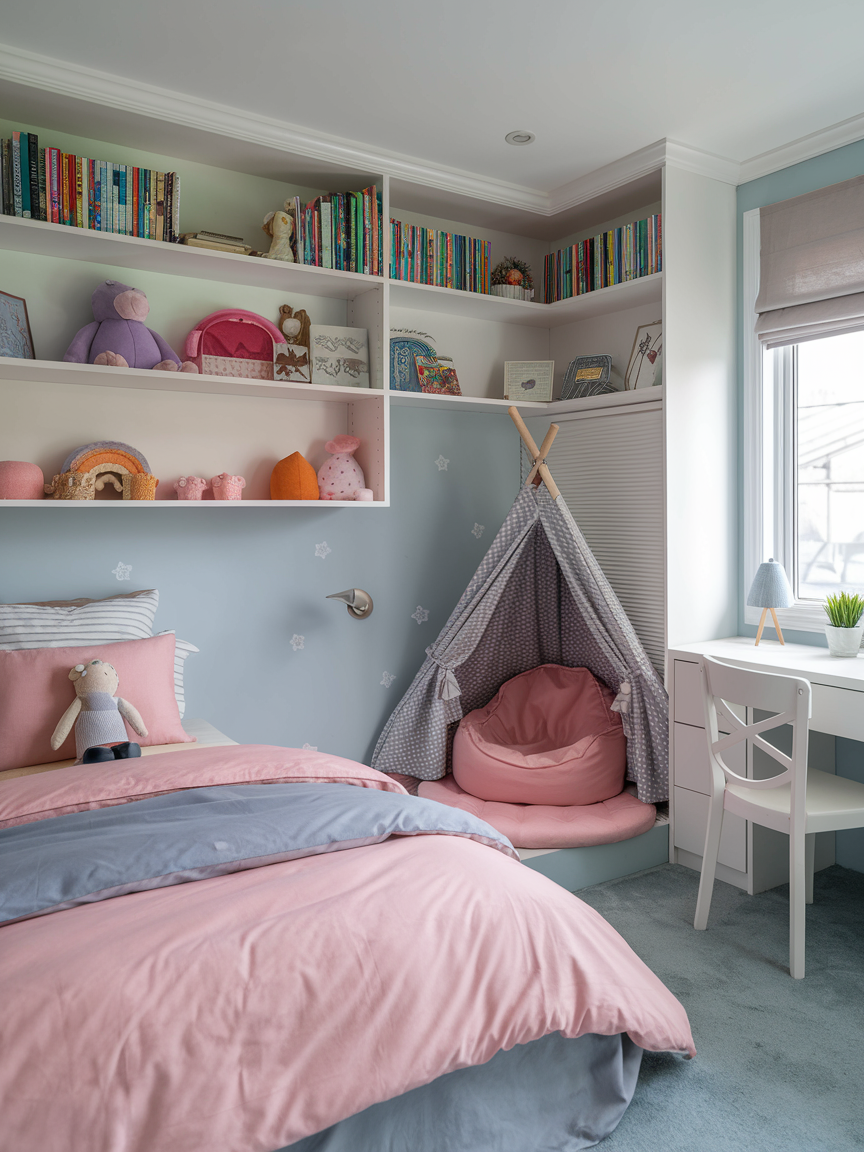
A reading nook encourages quiet time and fosters a love for books. Use a small tent, bean bag, or cushioned corner with good lighting to make it inviting. Stock the area with colorful books and soft toys to create a warm, playful environment. Reading nooks allow kids to have a personal retreat while adding charm and functionality to the room. This space encourages literacy, creativity, and independence, showing children that their room is not just for sleep but also a sanctuary for learning and imagination.
5. Fun and Functional Storage Solutions
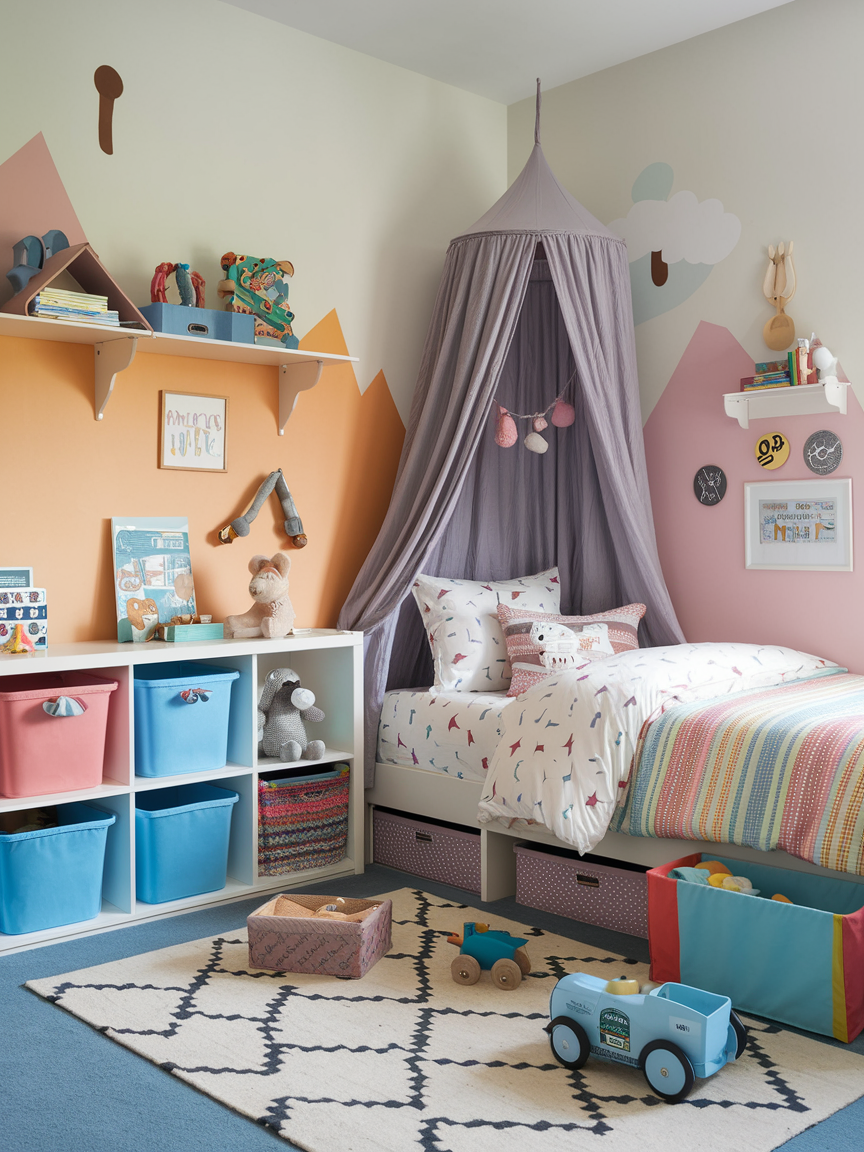
Smart storage keeps the room organized while maintaining a playful vibe. Use bins, shelves, under-bed drawers, or toy chests to make cleanup easy. Color-coded or labeled containers add structure while keeping the decor lively. Storage solutions that double as seating or play areas maximize space efficiency. Thoughtful storage prevents clutter from taking over the room, making it easier for kids to find their favorite toys and for parents to maintain a neat environment. This combination of fun and functionality ensures the room is both enjoyable and manageable.
6. Interactive Wall Features
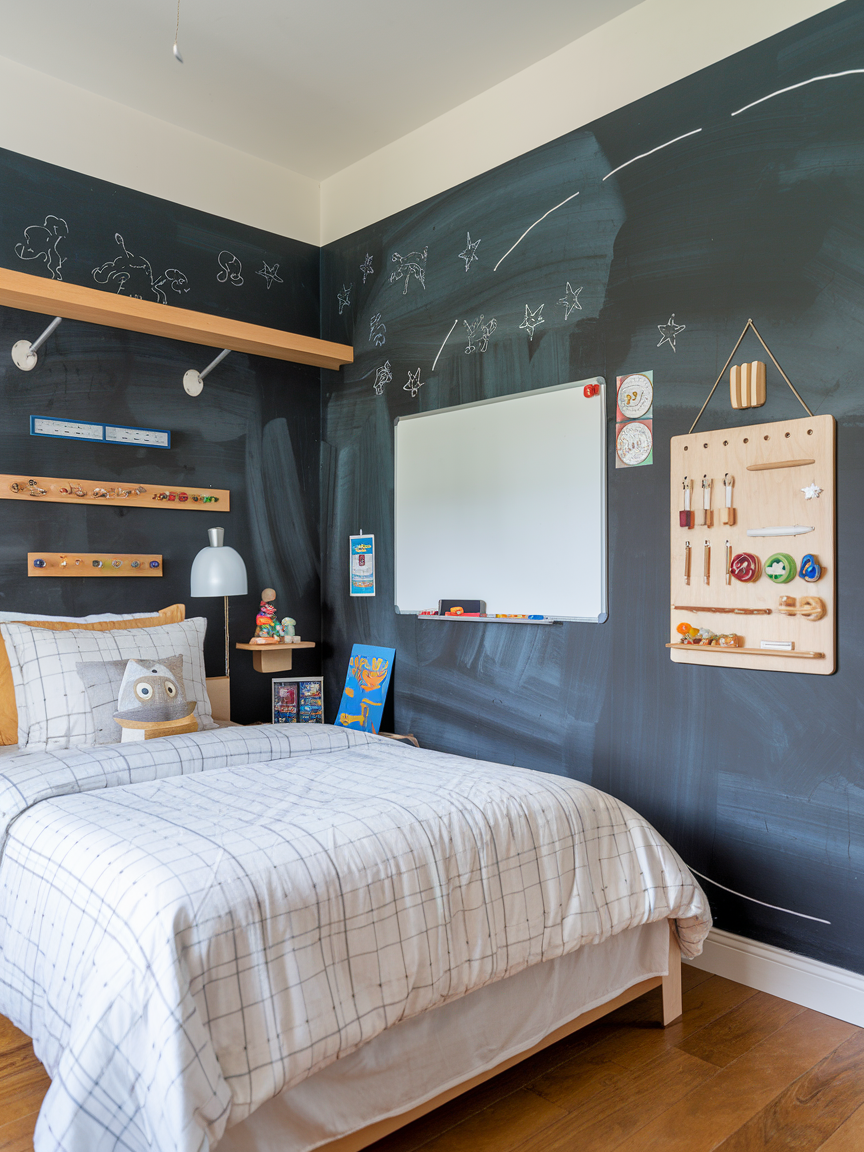
Walls don’t have to be boring in a kid’s bedroom. Chalkboard or whiteboard walls, magnetic surfaces, or wall-mounted activity boards allow children to express creativity freely. They can draw, write, or display artwork, making the walls part of the play area. This adds an engaging, ever-changing element to the room while keeping clutter off the floor. Interactive walls encourage imaginative play, personal expression, and learning in a fun and practical way, turning vertical space into a functional and stimulating part of the bedroom.
7. Comfortable and Colorful Bedding
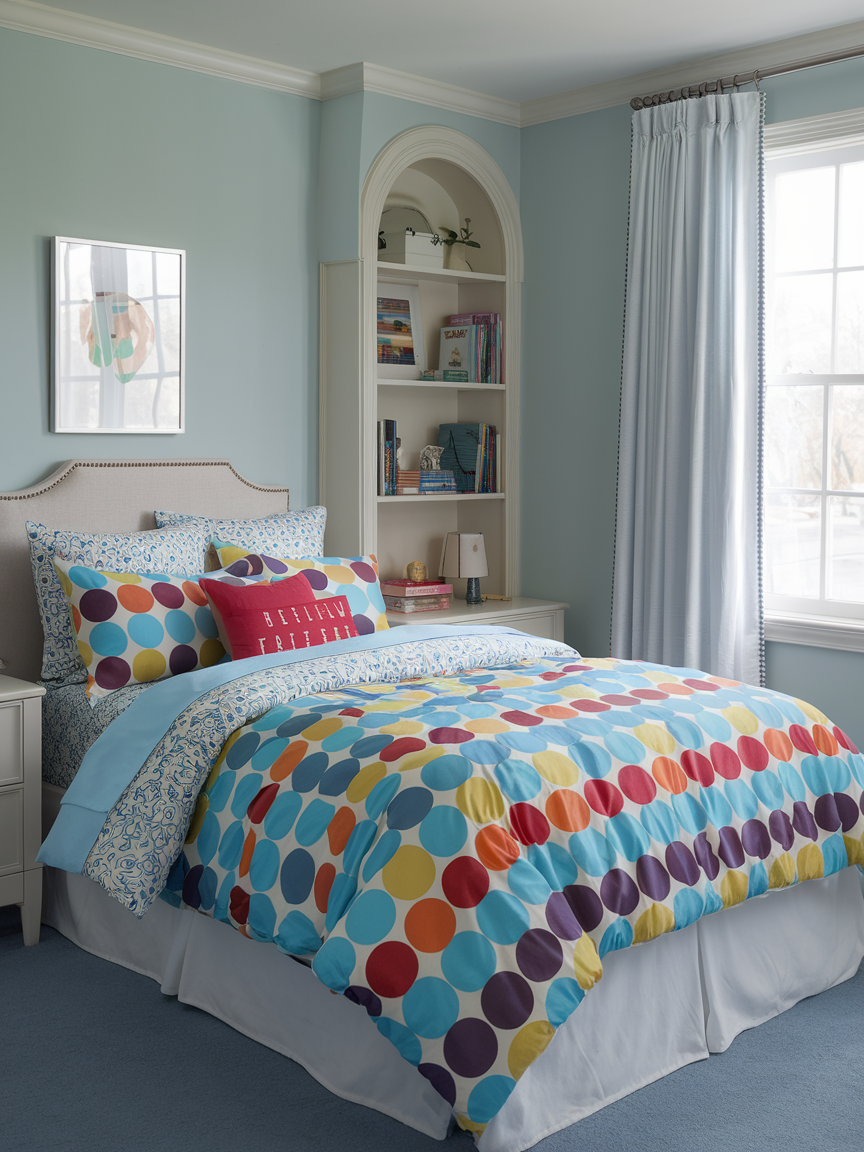
Bedding sets with playful patterns, bright colors, or themed designs make the bed inviting and cozy. Soft, high-quality sheets and blankets ensure comfort while fun patterns keep the space lively. Layering different textures adds warmth and tactile interest, making bedtime more appealing. Bedding that coordinates with the room’s overall theme or color scheme elevates the aesthetic. A thoughtfully styled bed shows kids that their room is special while providing a comfortable, secure spot for rest and relaxation.
8. Playful Rugs
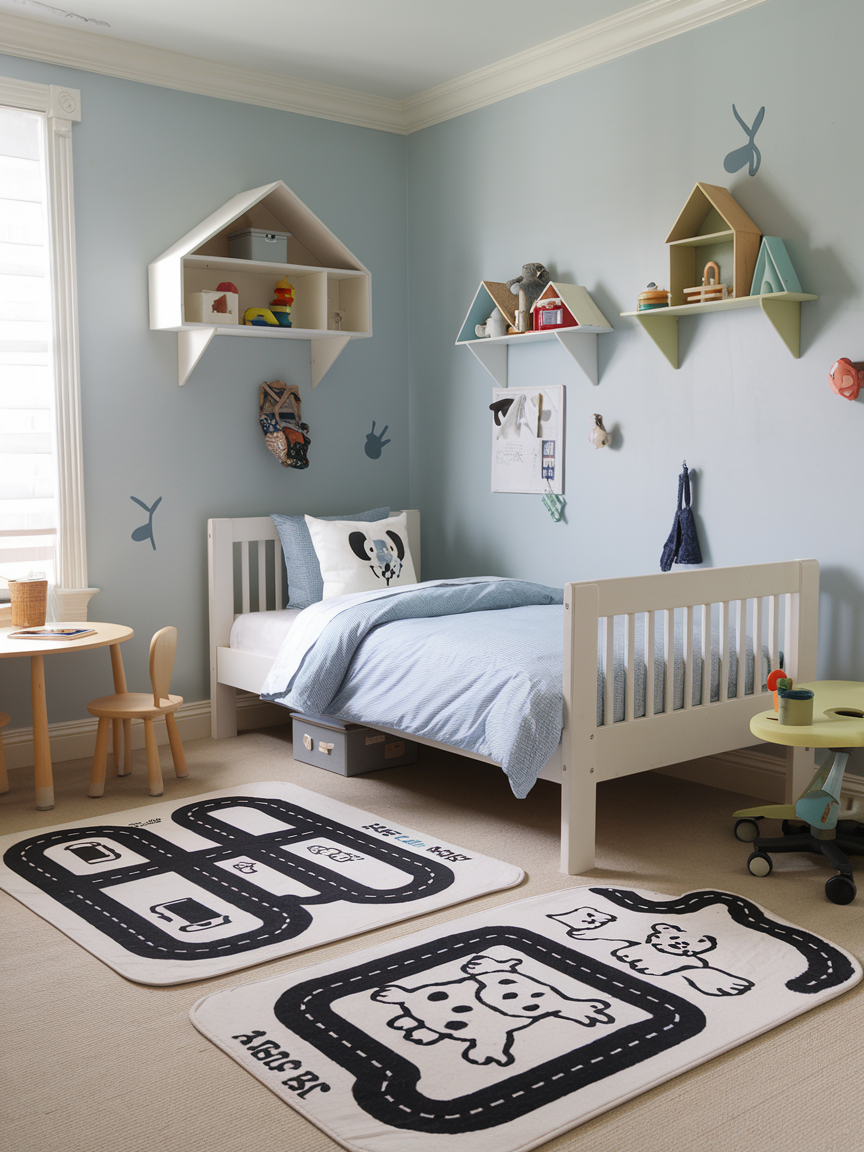
Rugs add softness underfoot and help define areas in the room. Choose patterns, colors, or shapes that reflect your child’s interests, like roads for toy cars or animal motifs. Rugs provide comfort for playtime on the floor and can absorb sound in busy households. They also tie the room together visually and add an element of fun without overwhelming the space. Playful rugs enhance both style and functionality, making the bedroom a cheerful, practical environment that invites both rest and imaginative activities.
9. Wall Decals and Stickers
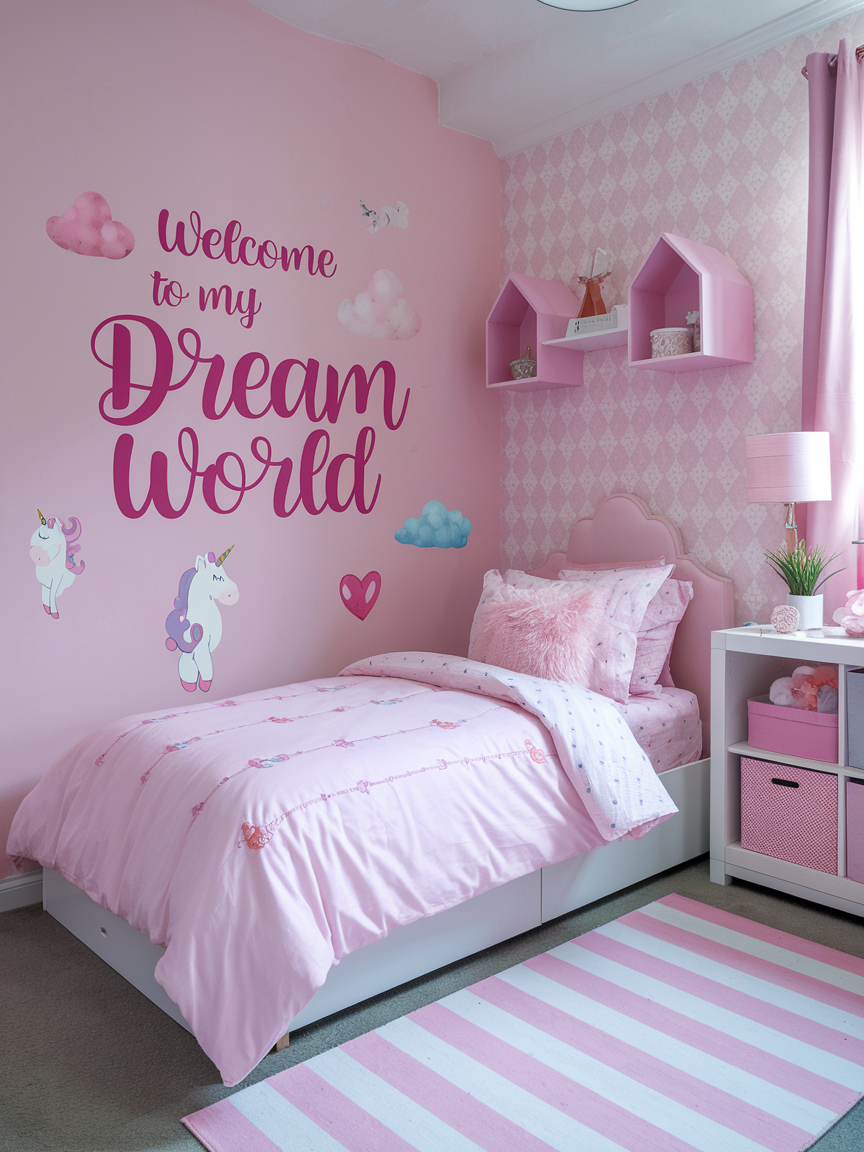
Wall decals are a flexible way to add charm and personality to a kid’s bedroom. Easy to apply and remove, they allow for frequent updates as children grow and interests change. Choose decals with animals, maps, favorite characters, or abstract designs to inspire creativity. Stickers and decals add dimension and color without committing to permanent paint. They make the room feel lively and personalized while keeping the decor manageable for parents. Wall decals are a fun, stress-free way to transform a space quickly and effectively.
10. Study and Homework Area
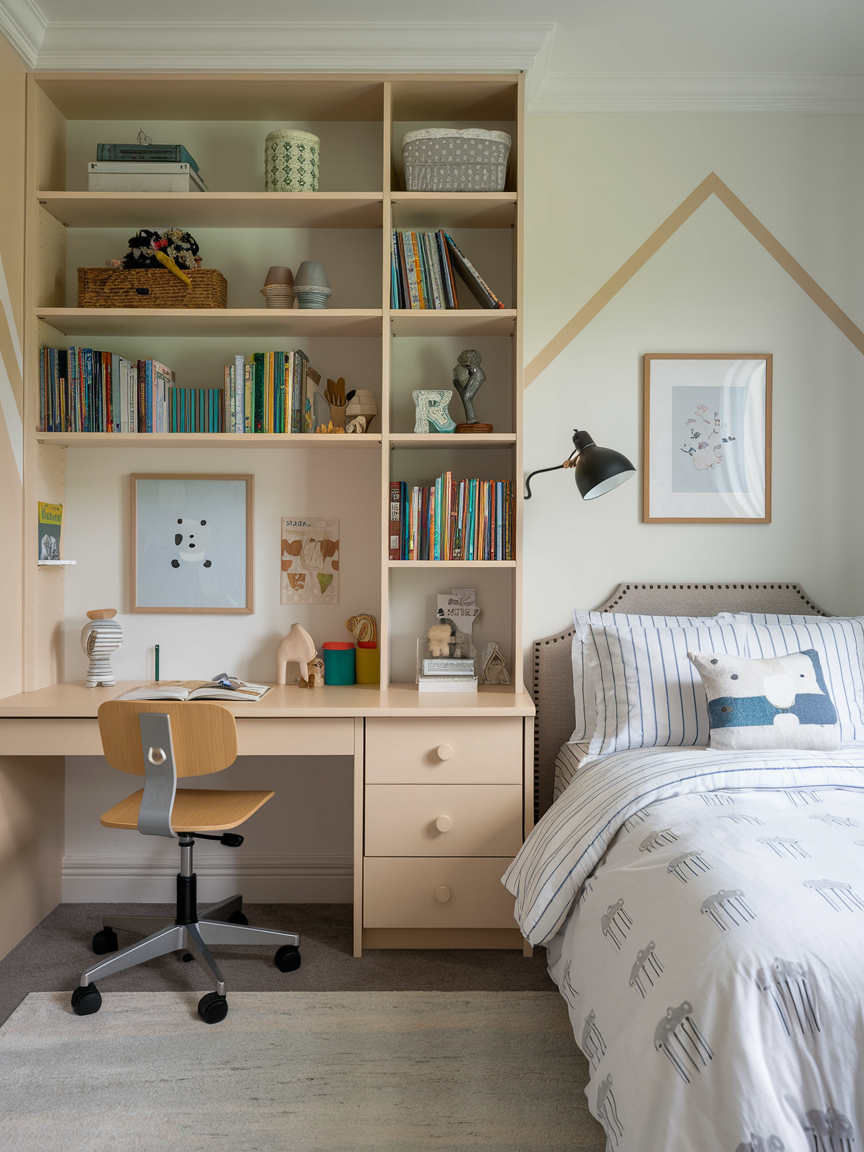
A small desk or workspace helps children focus on schoolwork or hobbies. Pair it with comfortable seating, proper lighting, and organized supplies to create an efficient study zone. A designated area for learning encourages responsibility and independence while maintaining the playful energy of the bedroom. Having a dedicated space for work helps children distinguish between play and study, fostering good habits. Thoughtfully designed study areas combine functionality with comfort, ensuring that kids have a balanced environment that supports both productivity and relaxation.
11. Personalized Decor
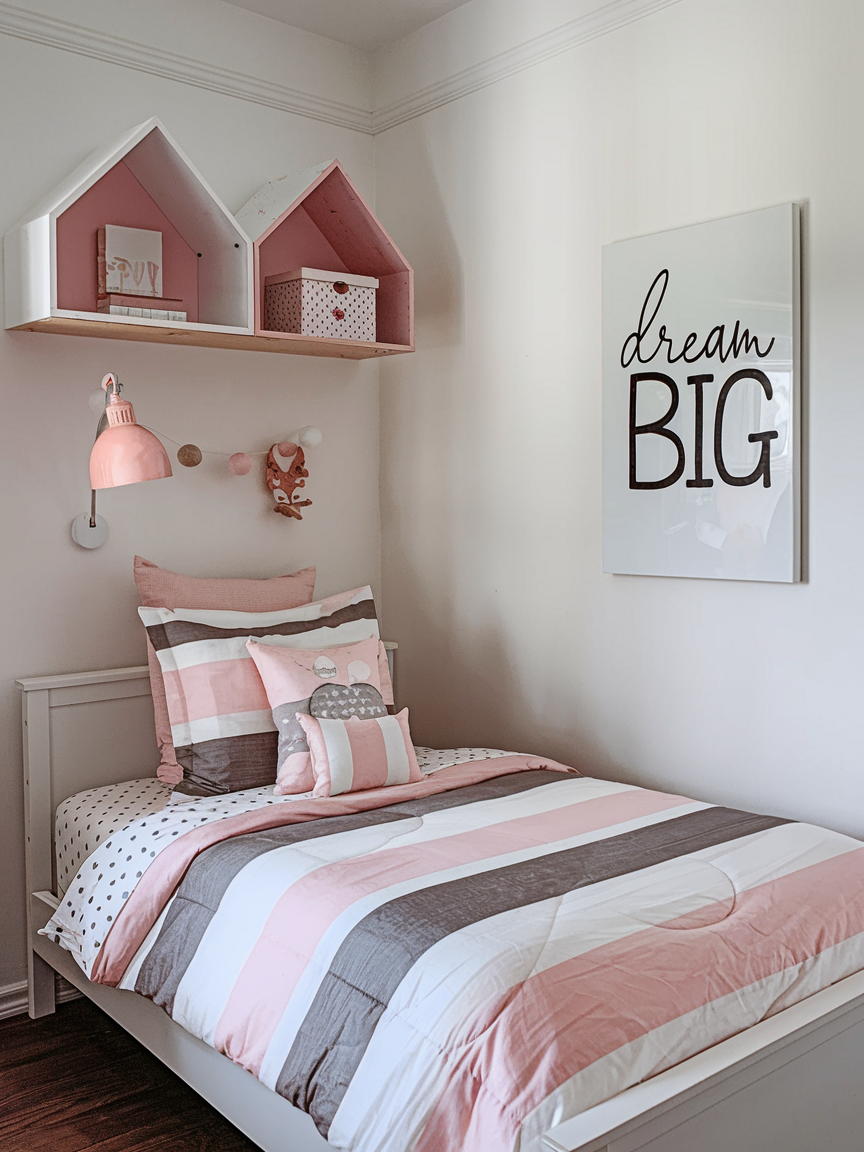
Adding your child’s name, favorite quotes, or custom artwork makes the bedroom feel uniquely theirs. Personalized decor adds warmth and personality while showing that their interests are valued. It can include framed photos, wall art, or custom bedding. Personalization encourages a sense of ownership and pride in their space, making them more likely to respect and enjoy their room. Incorporating these elements ensures that the bedroom is both fun and meaningful, reflecting your child’s personality and creating a space where they feel at home and appreciated.
12. Soft Lighting Options
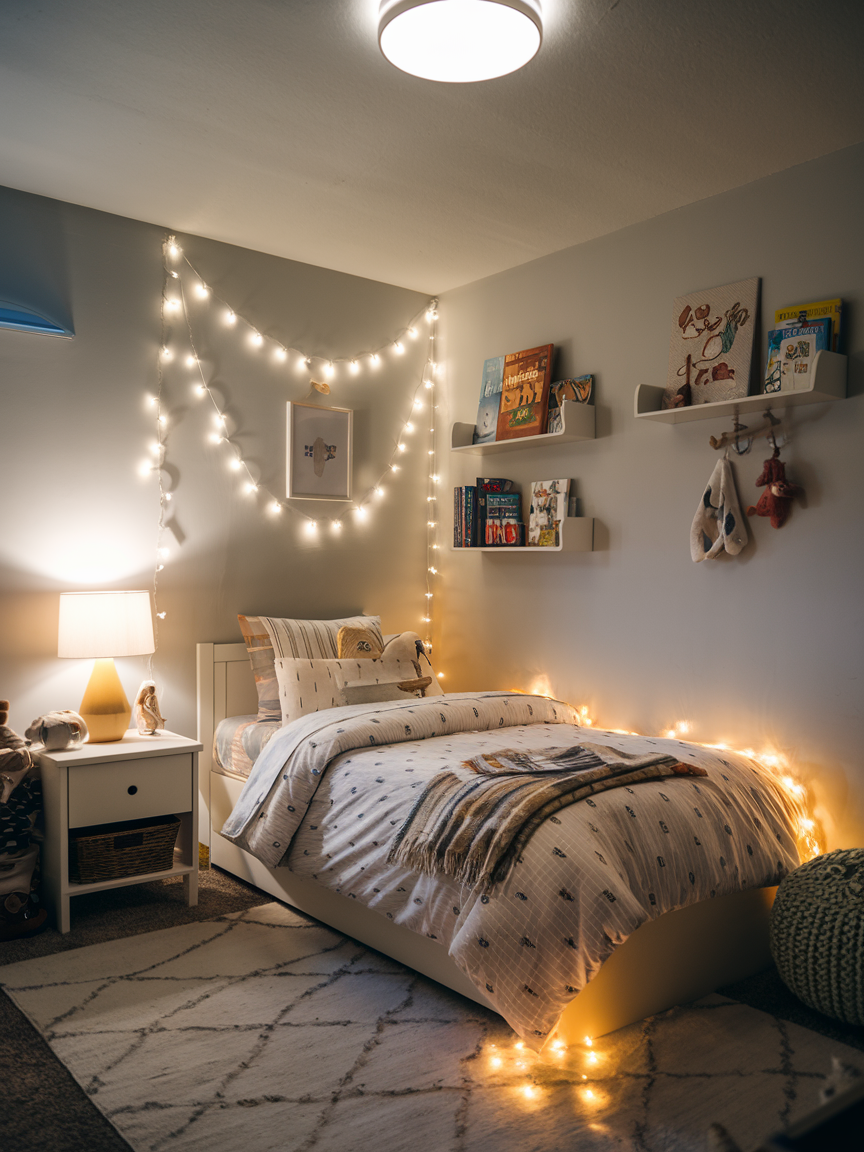
Soft and adjustable lighting enhances comfort and sets a cozy atmosphere. Table lamps, string lights, or dimmable fixtures provide flexibility for playtime, reading, or winding down before bed. Good lighting can prevent harsh glare and create a calm environment conducive to sleep. Thoughtful placement of lights ensures safety while adding charm and warmth. Lighting design that combines functionality and whimsy helps children feel comfortable and secure, making bedtime routines more pleasant and the room overall more inviting and playful.
13. Creative Storage Seating
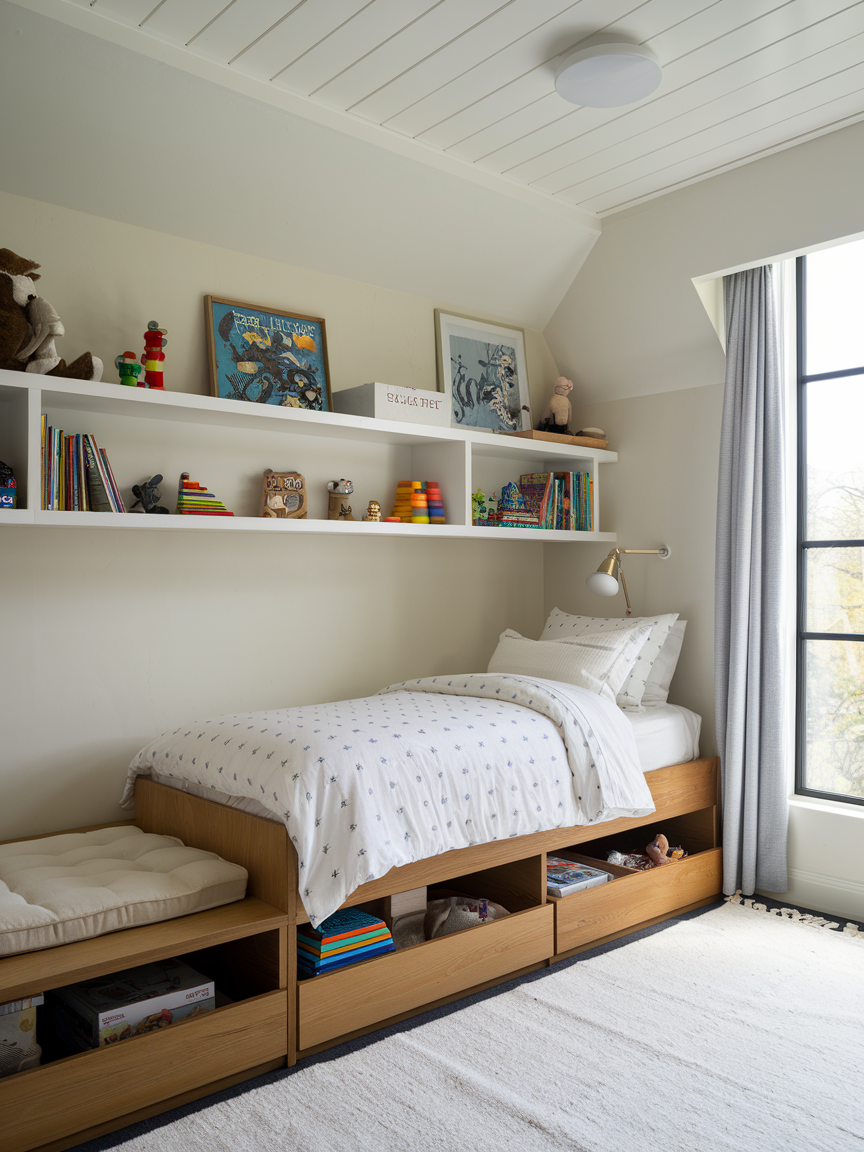
Storage seating combines practicality with comfort. Benches, ottomans, or window seats with hidden compartments store toys, books, or blankets while providing a comfy place to sit. This design saves space and keeps the room tidy without sacrificing style. Storage seating adds functionality to play areas or reading nooks and can be a fun part of the room’s decor. By combining seating and storage, you create a practical solution that encourages organization while adding charm and versatility to the bedroom.
14. Interactive Play Zones
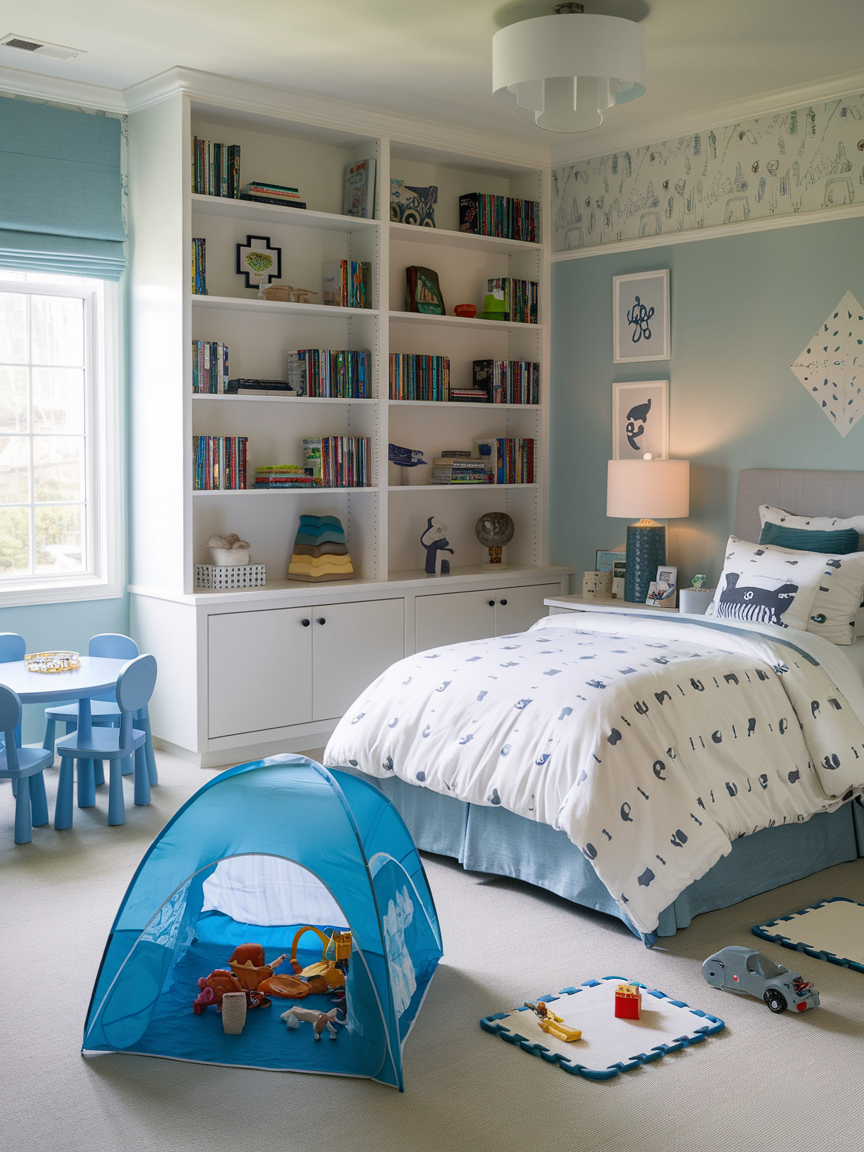
Designating a specific area for play helps organize activities and encourages creativity. Use mats, small tables, or play tents to define the space. Play zones provide a dedicated spot for imaginative games, crafting, or building with blocks. This approach keeps toys contained while giving children freedom to explore. Thoughtful play zones enhance the functionality of the room, making it easier for kids to focus on activities while keeping the overall space neat and visually appealing.
15. Hanging Storage Solutions
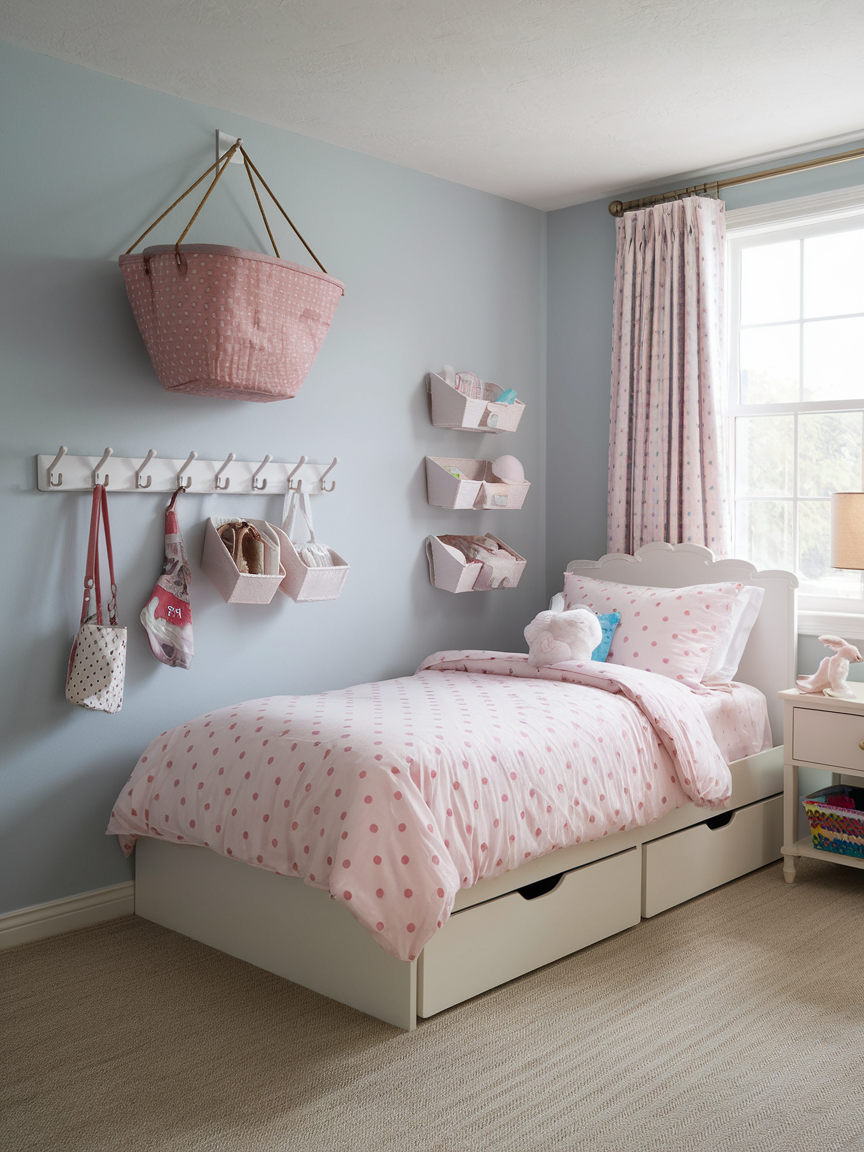
Wall-mounted baskets, hooks, or shelves save floor space and keep items within reach. Hanging storage is perfect for books, toys, or dress-up costumes. It encourages kids to keep things organized and makes use of vertical space efficiently. Fun, colorful containers or quirky hooks add charm while maintaining accessibility. These solutions balance functionality and playfulness, helping children stay organized while contributing to a visually interesting and lively bedroom environment.
16. Multi-Level Bedding
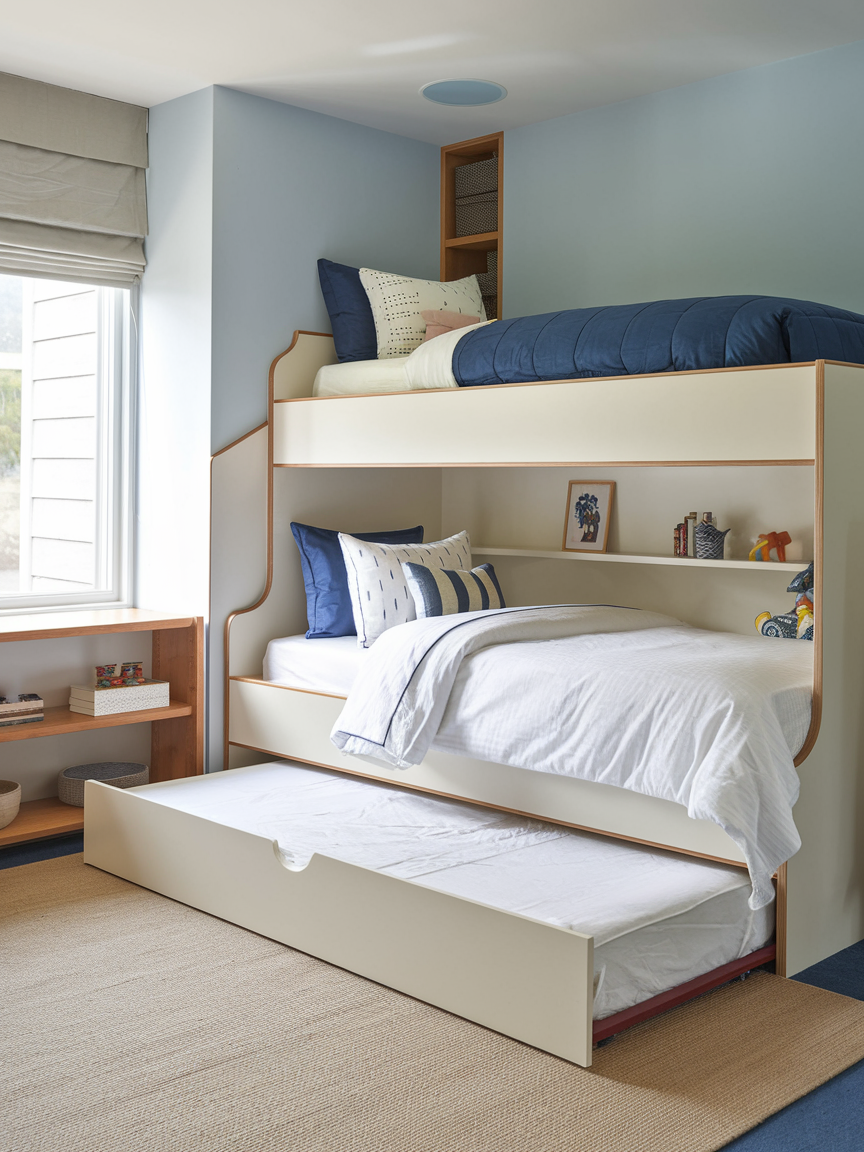
Bunk beds or trundle beds are ideal for shared rooms or sleepovers. They maximize space while adding an element of fun, allowing kids to enjoy climbing, exploring, and creative arrangements. Multi-level bedding also frees up floor space for play or study areas. Choosing safe, sturdy designs ensures comfort and security. This design adds excitement to the bedroom while maintaining practicality, making it enjoyable for children and stress-free for parents managing limited space.
17. Display Shelves
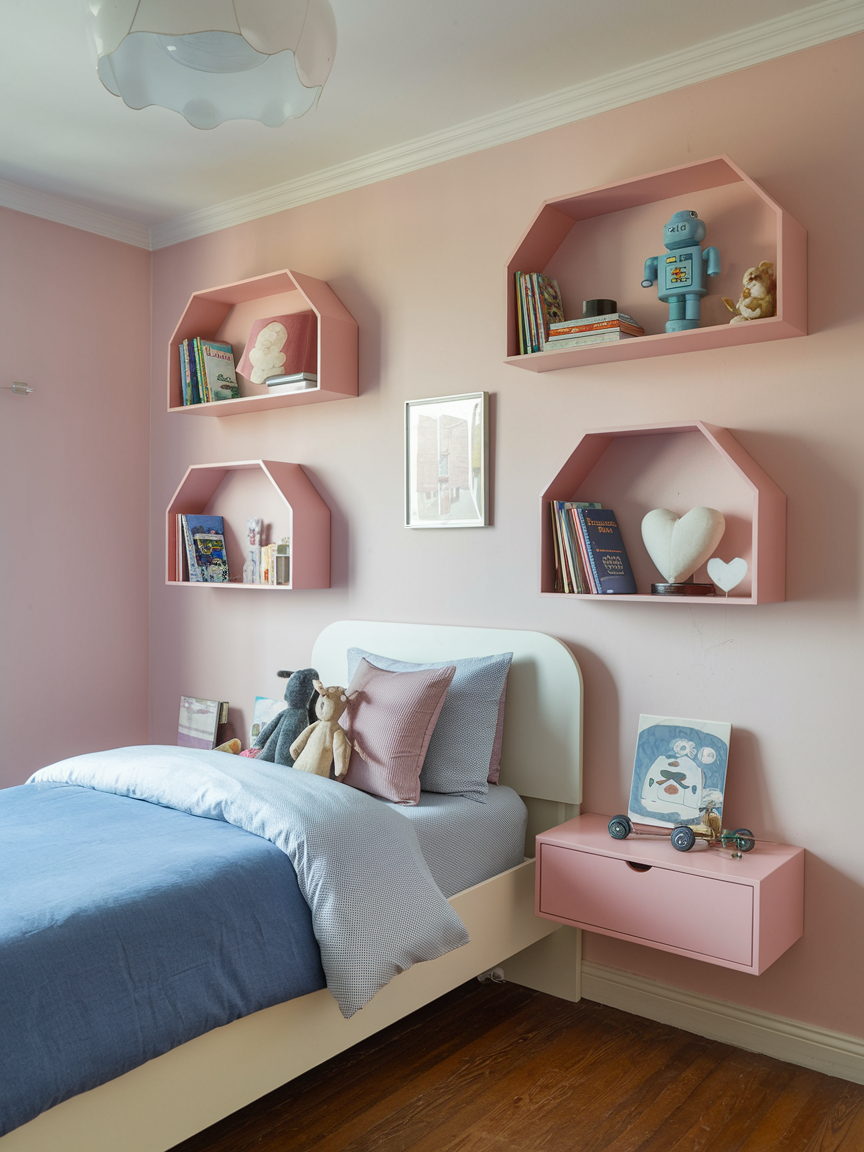
Open shelves for books, toys, or collectibles provide storage and decor simultaneously. Displaying favorite items encourages organization and adds personality to the room. Shelves can be arranged at varying heights for visual interest and accessibility. This design allows kids to showcase achievements, artwork, or treasured objects. Display shelves combine functionality with fun, creating a personalized, engaging environment that feels both welcoming and practical.
18. Playful Wall Art
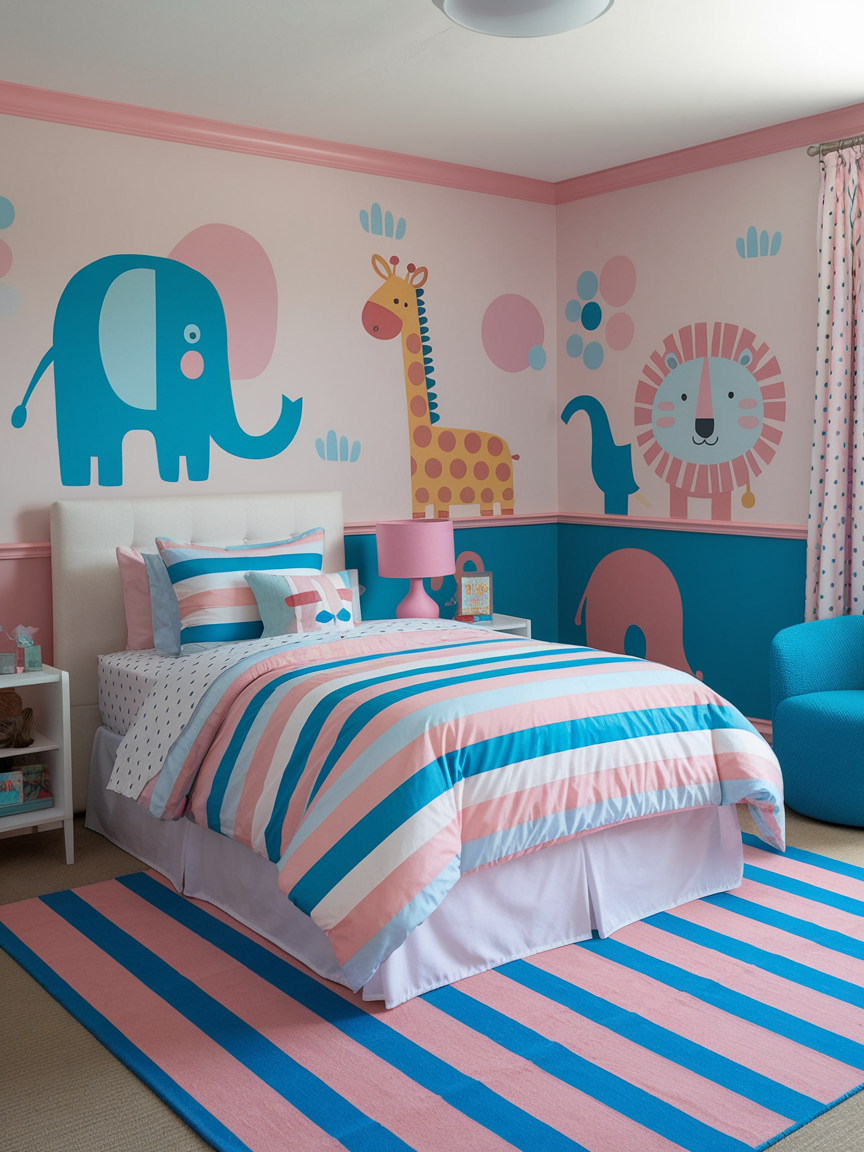
Art on the walls adds vibrancy and character. Choose prints, posters, or murals that reflect your child’s interests or favorite colors. Wall art creates visual focal points, stimulates creativity, and makes the room feel lively. Rotating art over time keeps the space fresh and adaptable as children grow. Playful wall art adds charm, making the room inspiring and exciting while contributing to a cohesive, fun, and comfortable design that balances aesthetics with functionality.
19. Textured Fabrics and Soft Furnishings
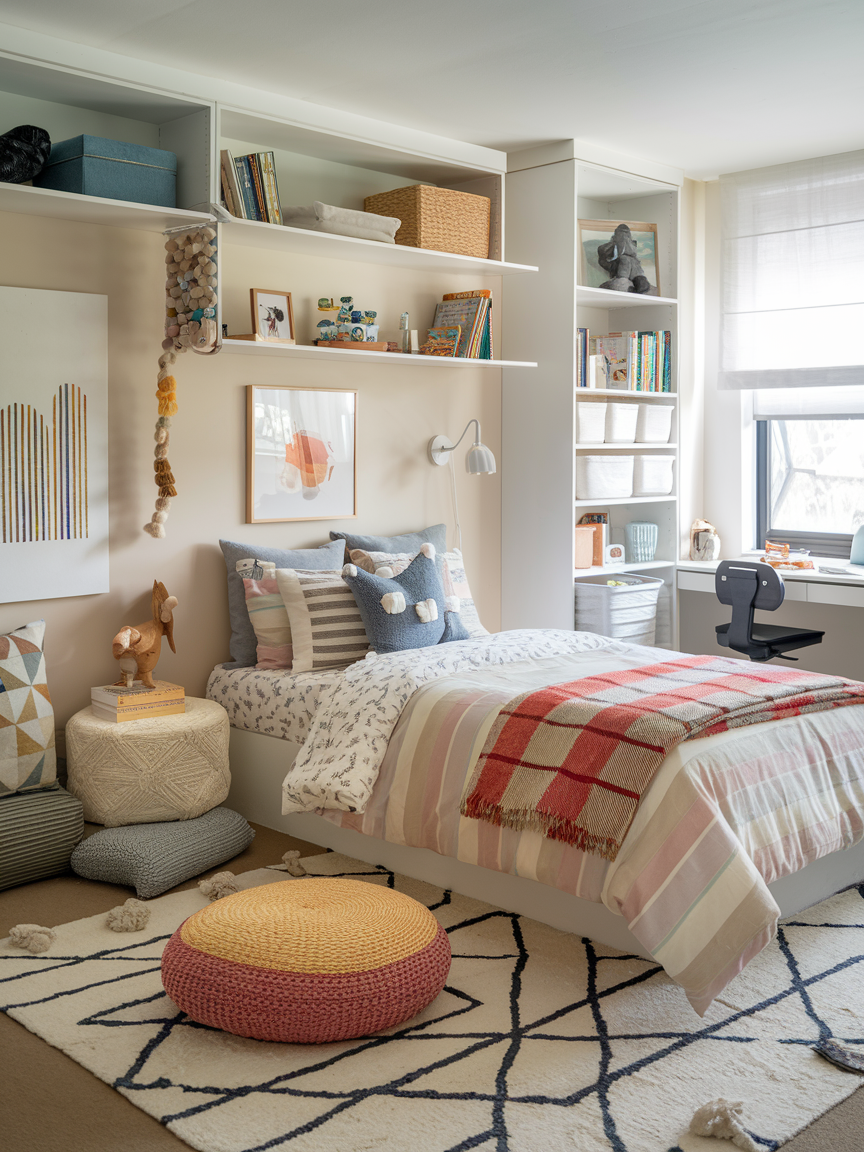
Mixing textures like rugs, throws, and pillows enhances comfort and visual interest. Soft fabrics invite touch and relaxation while adding depth to the room’s design. Consider playful patterns, tactile materials, and vibrant colors that complement the overall theme. Layering textures helps create a cozy, engaging environment where children feel comfortable and entertained. Thoughtful selection of fabrics balances style, playfulness, and practicality, contributing to a bedroom that is both inviting and fun.
20. Creative Wall Murals
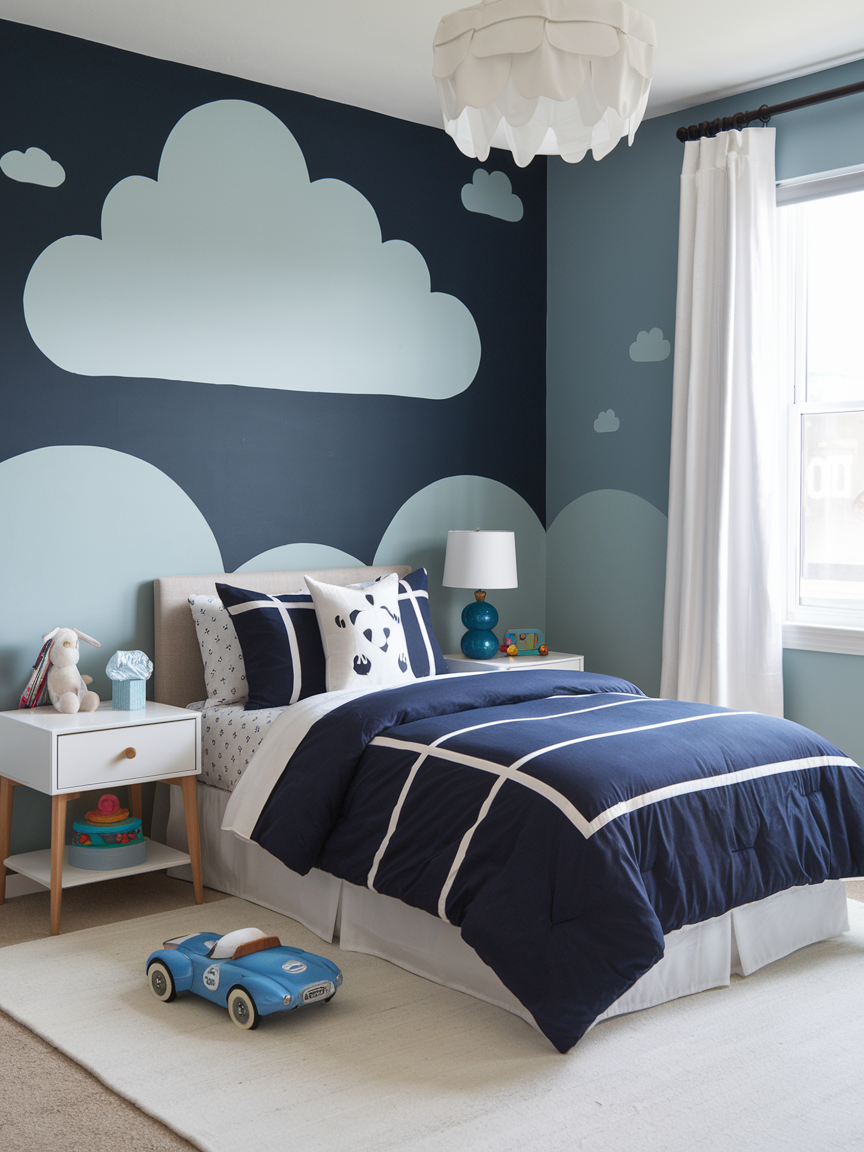
Wall murals provide an immersive design element that sparks imagination. Scenes like forests, cities, or underwater worlds turn the room into a playground for creativity. Murals can reflect hobbies, favorite stories, or abstract designs to match the child’s personality. This approach adds drama and charm without taking up floor space. Murals create an exciting, visually engaging environment that enhances playfulness while making the bedroom feel curated and thoughtfully designed.
21. Easy-to-Clean Surfaces
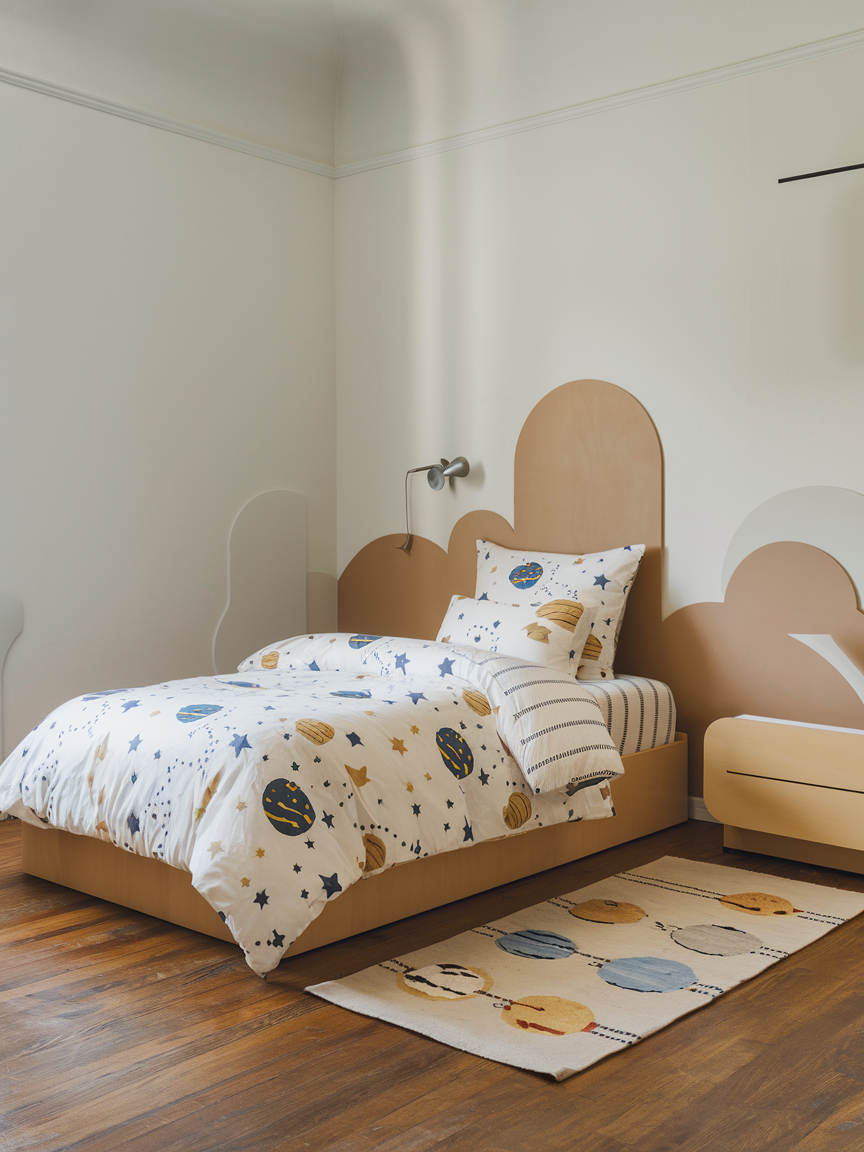
Kids’ rooms need practical, easy-to-clean surfaces to manage spills and messes. Hardwood, laminate, or washable paint ensures the room remains tidy without excessive effort. Incorporating rugs or mats that can be washed adds convenience. This balance of durability and style allows kids to play freely while parents maintain a clean and organized space. Easy-to-clean surfaces reduce stress and make the room functional, comfortable, and playful for both children and adults.
22. Personal Growth Spaces
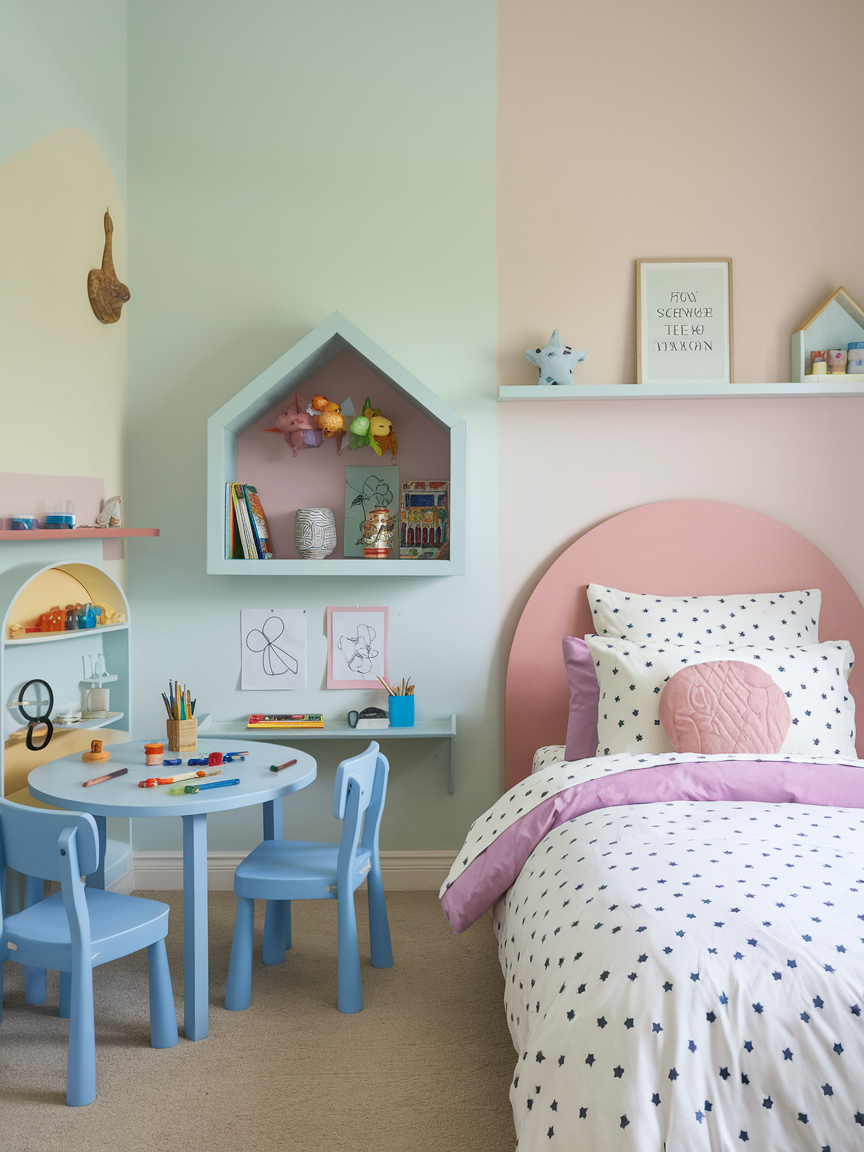
Designate areas that encourage skill-building, like a small craft corner, music space, or science station. These zones inspire creativity and learning while making the bedroom multifunctional. Children can explore hobbies and develop independence while staying safe in a controlled environment. Growth spaces enhance the room’s educational value while maintaining fun, encouraging a balance of play, learning, and rest. Thoughtful inclusion of these zones helps the bedroom grow with the child over time.
23. Fun Lighting Fixtures
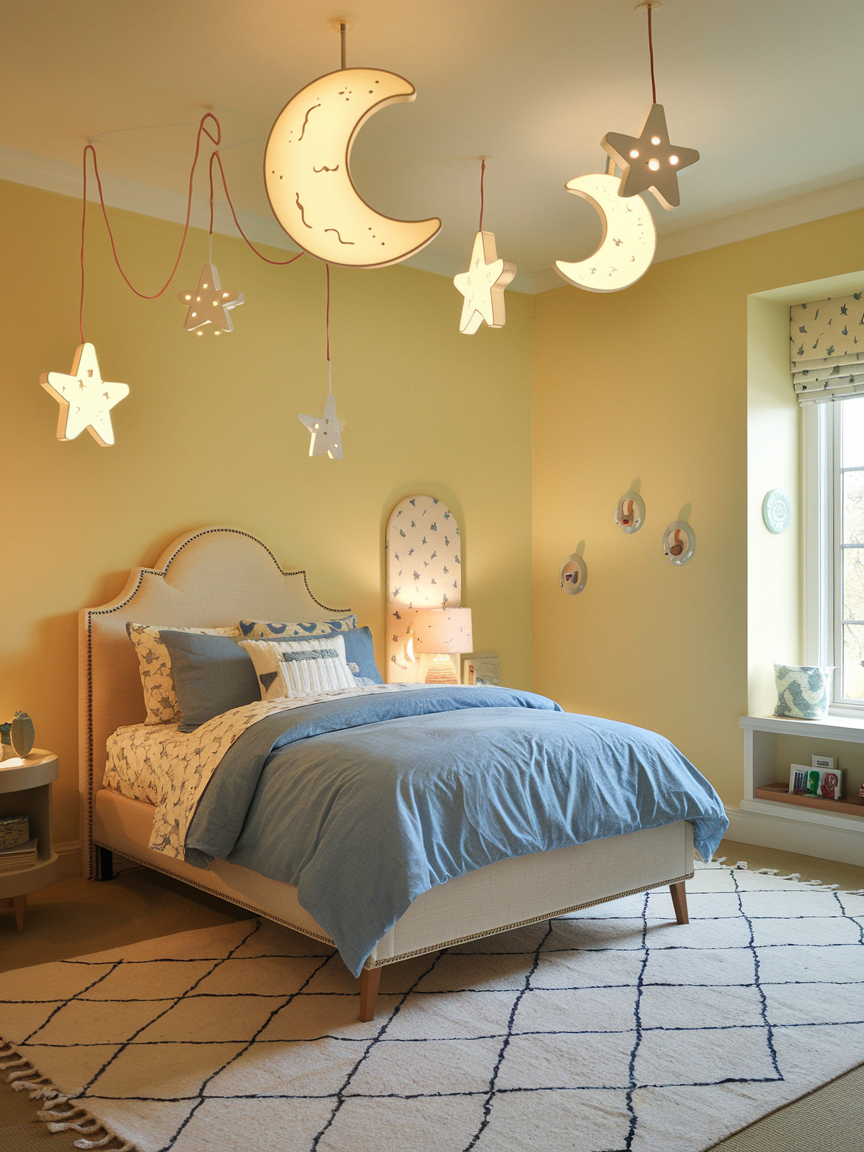
Ceiling lights or wall sconces with whimsical shapes, colors, or themes add charm and personality. Lighting doesn’t have to be boring and can double as decor. Unique fixtures create a playful, inviting ambiance while providing functionality. Fun lighting sparks excitement and adds a distinctive element to the room. Thoughtful lighting design enhances the overall mood, comfort, and aesthetic, making the bedroom more enjoyable for kids and visually appealing for adults.
24. Safe Play Equipment
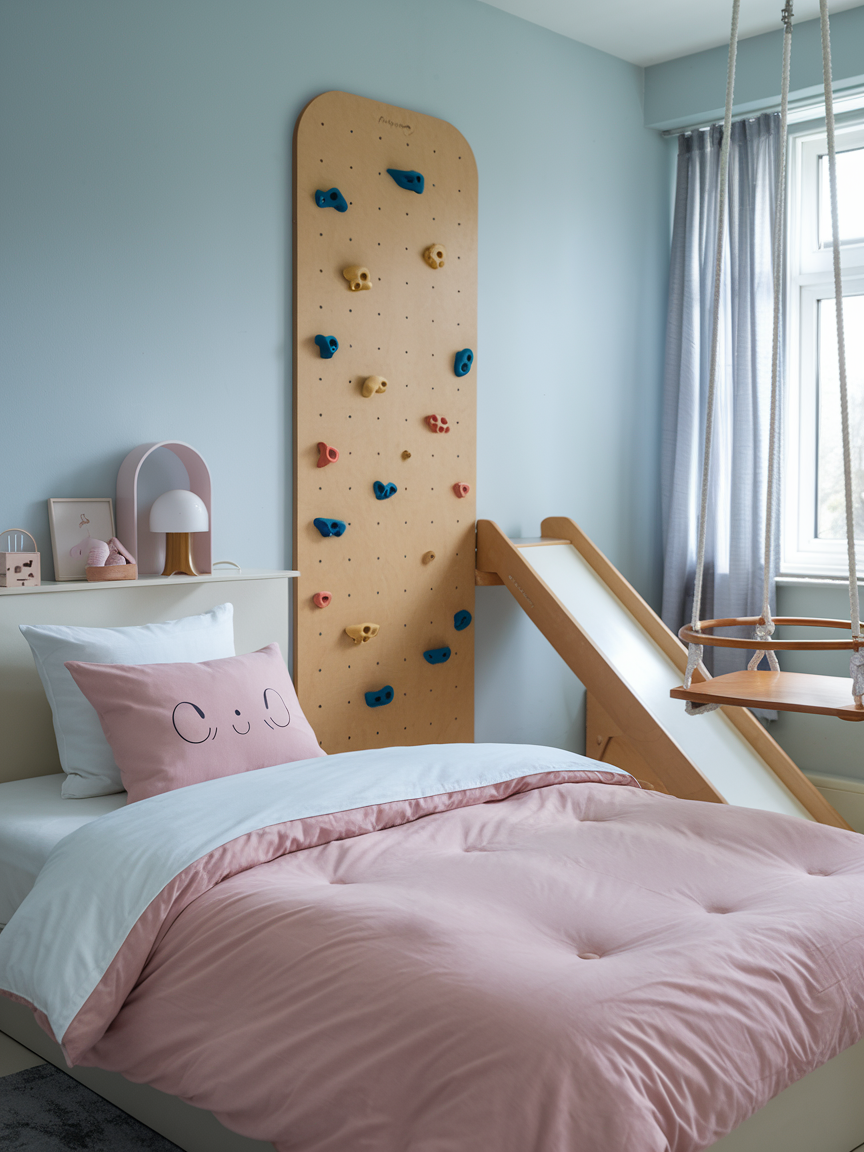
Integrate safe play equipment like climbing walls, small slides, or swing chairs. These elements encourage physical activity and adventurous play while remaining secure. Safety is crucial, so opt for sturdy materials, rounded edges, and age-appropriate designs. Incorporating fun, active elements creates a dynamic environment that keeps kids engaged and promotes movement. Play equipment enhances creativity and energy in the room while maintaining a safe, enjoyable, and interactive space.
25. Showcase the Artwork
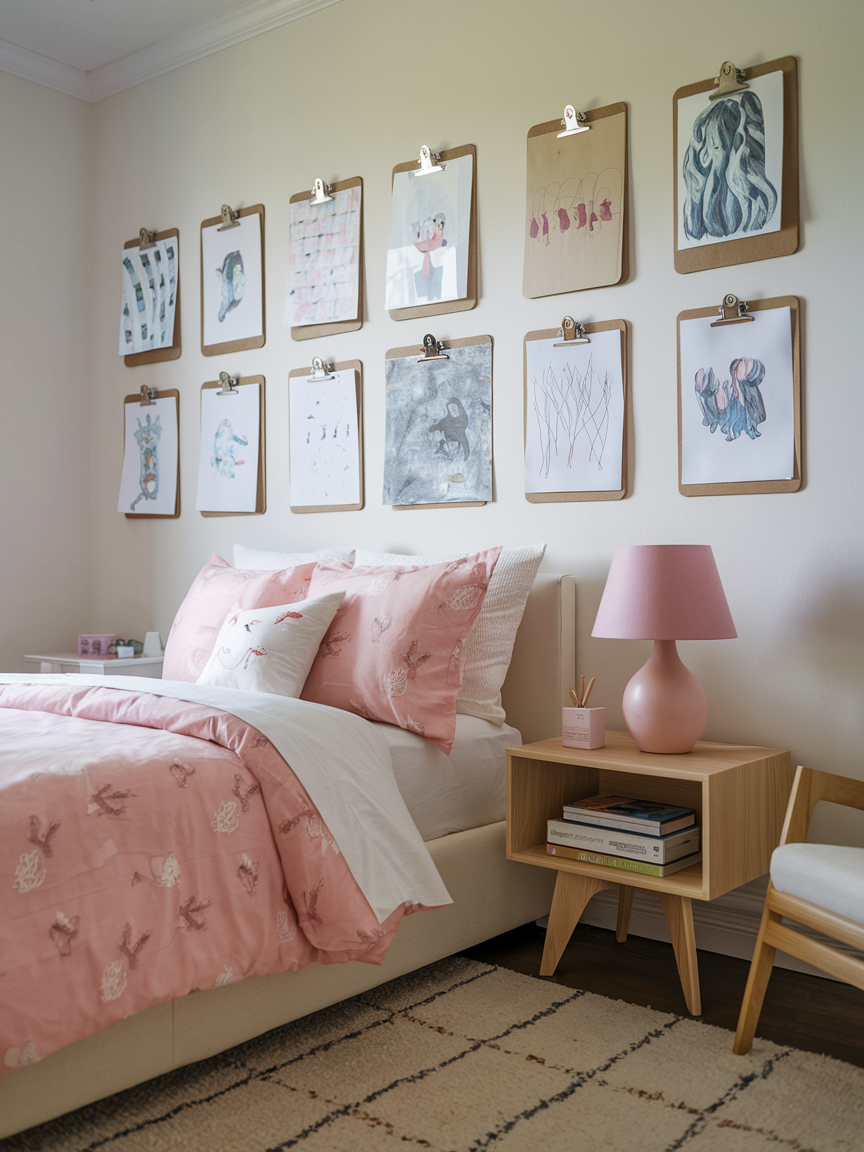
Create a gallery wall or frame system to showcase children’s artwork. Rotating displays encourage kids to take pride in their creations and keep the room dynamic. Frames or clipboards make it easy to update the art regularly. This approach personalizes the space, encourages creativity, and makes children feel valued. A rotating art display keeps the bedroom fresh and engaging, adding a personal and playful touch that highlights the child’s personality and imagination.
26. Interactive Play Mats
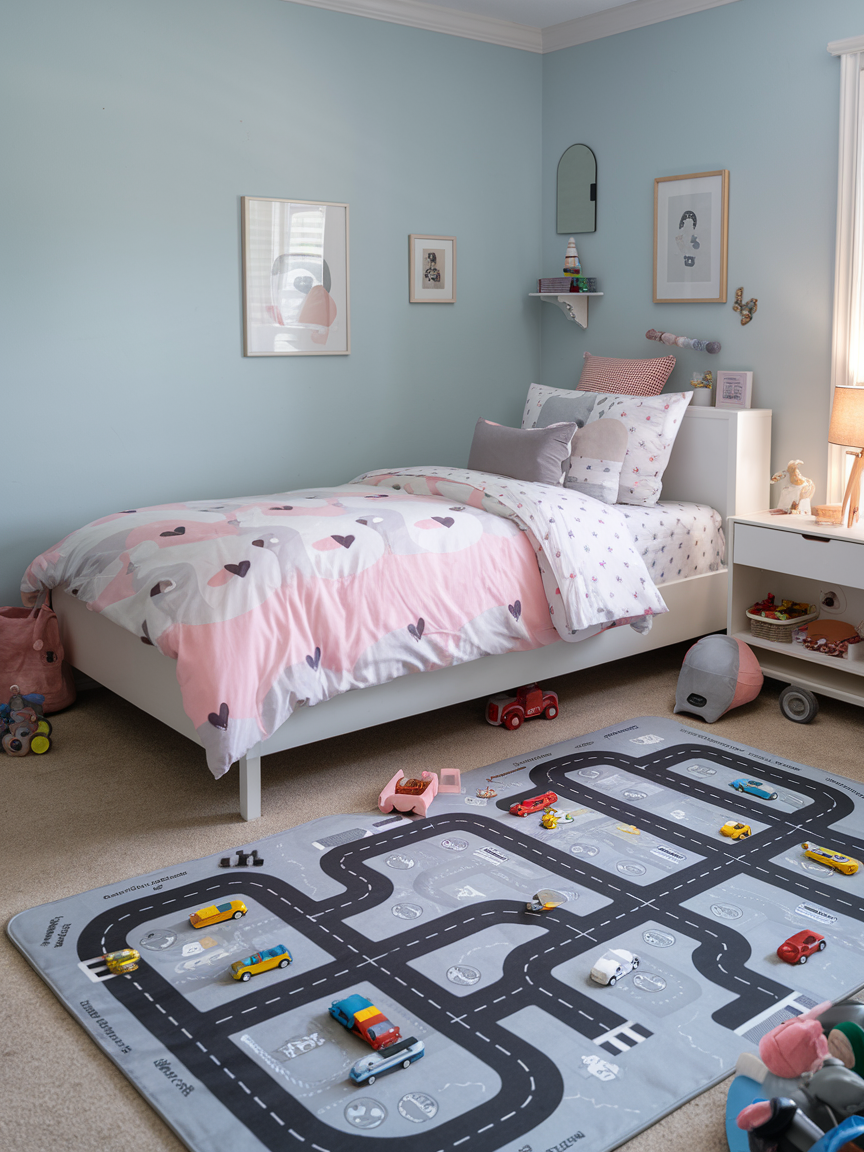
Play mats with patterns like roads, towns, or games can transform the floor into a fun activity zone. Mats are portable, easy to clean, and encourage imaginative play. They provide structure for games while protecting floors and defining specific play areas. This addition combines creativity, comfort, and practicality. Interactive mats make the bedroom an engaging and organized space where children can explore, learn, and play safely, enhancing both fun and functionality.
27. Open-Ended Toys and Modular Furniture
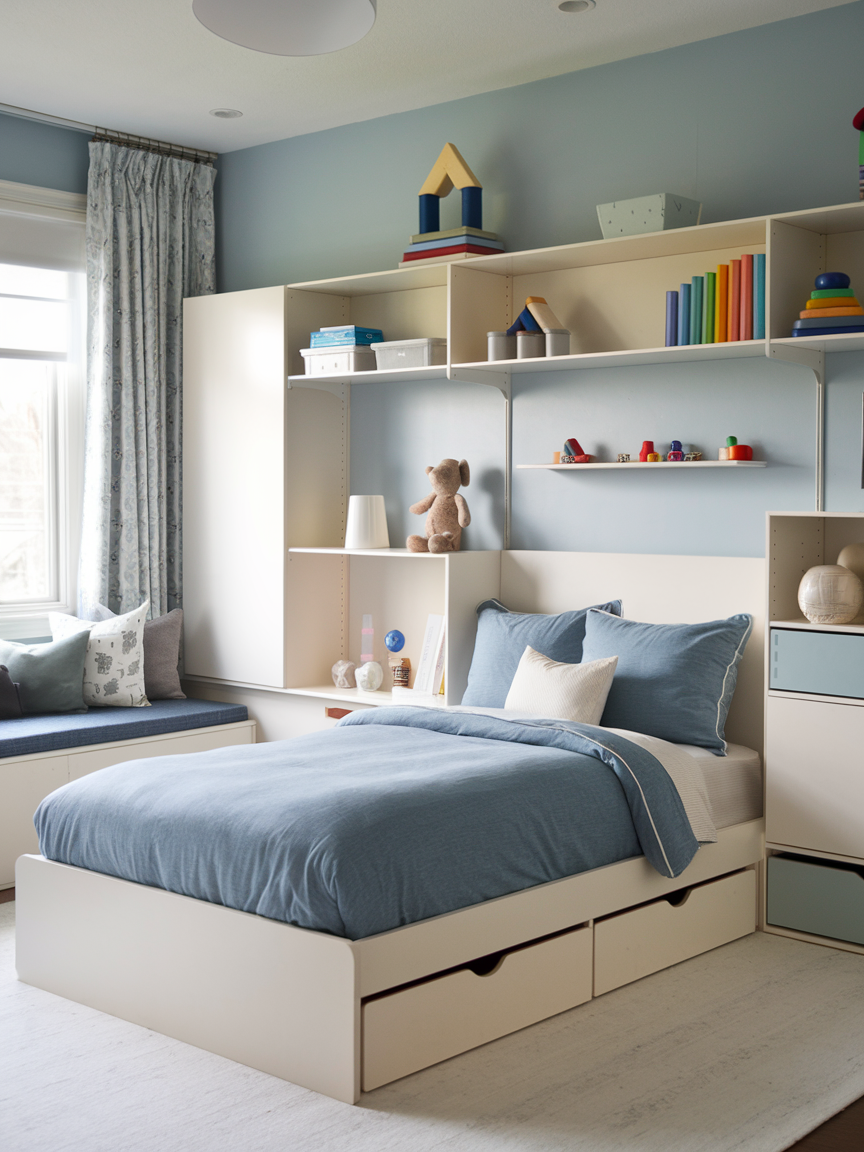
Modular furniture and open-ended toys, like building blocks or multi-purpose storage, allow kids to arrange and play creatively. These elements grow with the child and can adapt to changing needs or interests. Modular systems encourage problem-solving, independence, and imaginative play. By using versatile furniture and toys, the room remains functional, playful, and organized. Open-ended design fosters creativity while providing comfort and adaptability, making the bedroom a dynamic space for learning, playing, and relaxing.
* These 27 ideas combine practicality with imagination, ensuring the room grows with your child and supports both play and rest. A well-designed kids’ bedroom is a personal retreat that nurtures creativity, learning, and relaxation while keeping the space stylish, organized, and fun for years to come.