White dining rooms have a timeless appeal that effortlessly brings a sense of calm, elegance, and refinement into any home. A well-balanced white palette can make the space feel brighter, more open, and beautifully cohesive, allowing architectural details, textures, and decor to stand out with subtle sophistication. When styled with intention, white becomes far more than a neutral, it transforms into a foundation for a graceful and polished interior.
Refined white dining rooms often rely on layers of texture and carefully chosen materials to create depth and visual interest. Soft upholstery, natural wood accents, delicate metallic finishes, and sculptural lighting all contribute to a look that feels elevated without appearing stark or cold. Thoughtful contrasts, such as warm undertones or gentle pops of color, can further enhance the overall design, making the space feel inviting as well as stylish.
In this collection, let’s explore inspiring white dining room ideas that combine grace, comfort, and timeless style to create a truly stunning interior!
1. Minimalist Design for Clean Sophistication
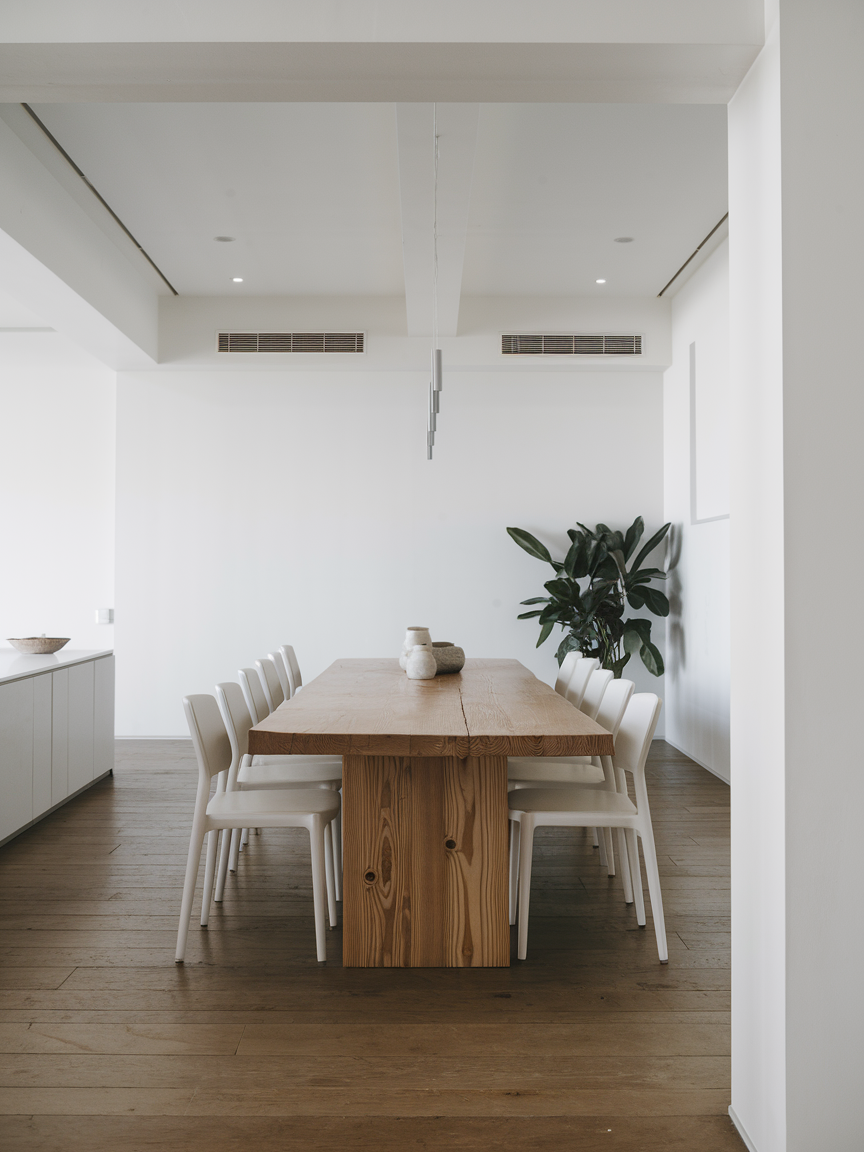
Minimalist white dining rooms focus on clarity, simplicity, and intentional design. By eliminating unnecessary elements, the space feels calm and organized. Clean lines and uncluttered surfaces allow materials and proportions to take center stage. White enhances this approach by reflecting light and emphasizing openness. Each piece of furniture is chosen carefully, contributing to both function and aesthetic harmony. The result is a dining room that feels refined and timeless, where elegance comes from restraint rather than excess.
2. Textured Walls for Subtle Dimension
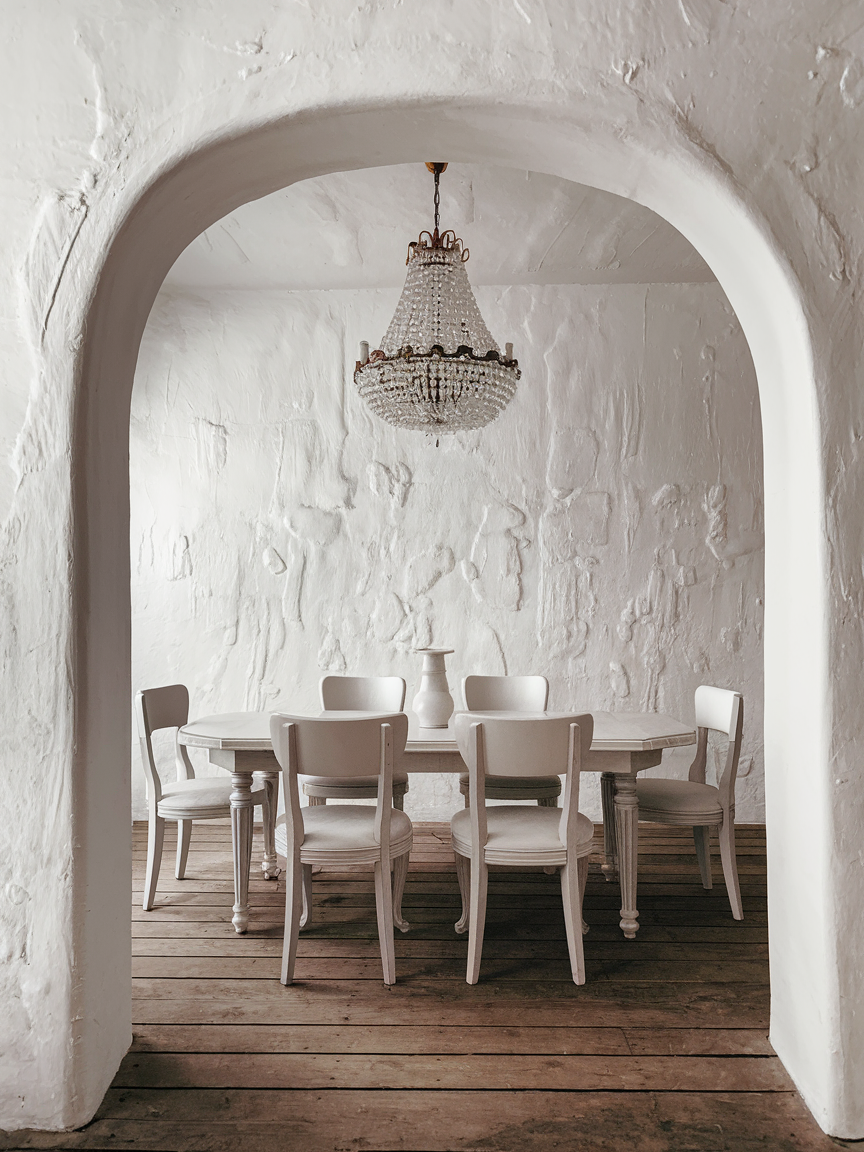
Textured white walls add depth and character without disrupting the neutral palette. Finishes like plaster, limewash, or paneling create soft variations that interact beautifully with light. These textures introduce a sense of movement and dimension, making the room feel layered rather than flat. The subtle complexity enhances the sophistication of the space while maintaining its serene quality. Textured walls also serve as a perfect backdrop for furniture and décor, allowing them to stand out naturally.
3. Upholstered Seating for Comfort and Style
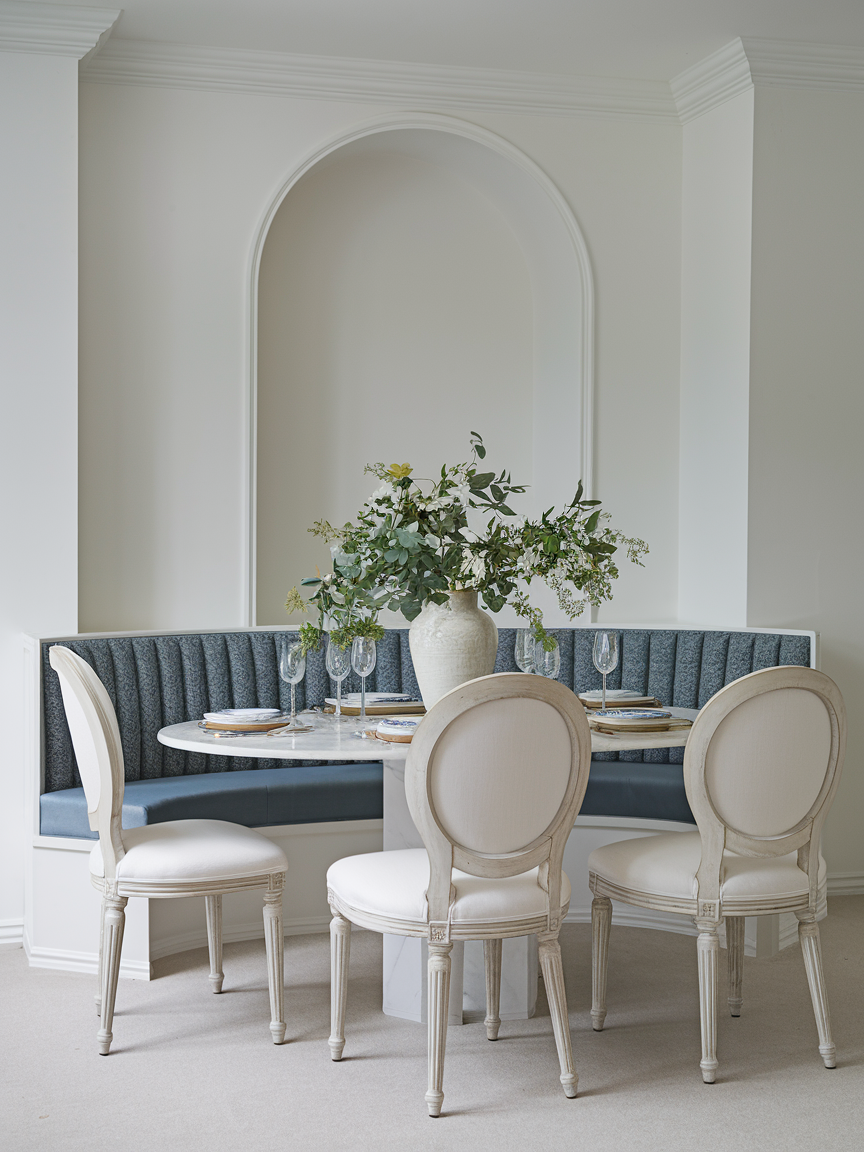
Upholstered dining chairs bring both comfort and elegance into a white dining room. Soft fabrics like linen, velvet, or boucle add tactile richness that balances the crispness of white surfaces. These materials enhance the overall coziness of the space, making it more inviting for long meals and gatherings. Subtle details such as stitching, curved backs, or tailored finishes elevate the design. Upholstered seating ensures the room feels luxurious yet approachable, blending functionality with refined style.
4. Black Accents for Defined Contrast
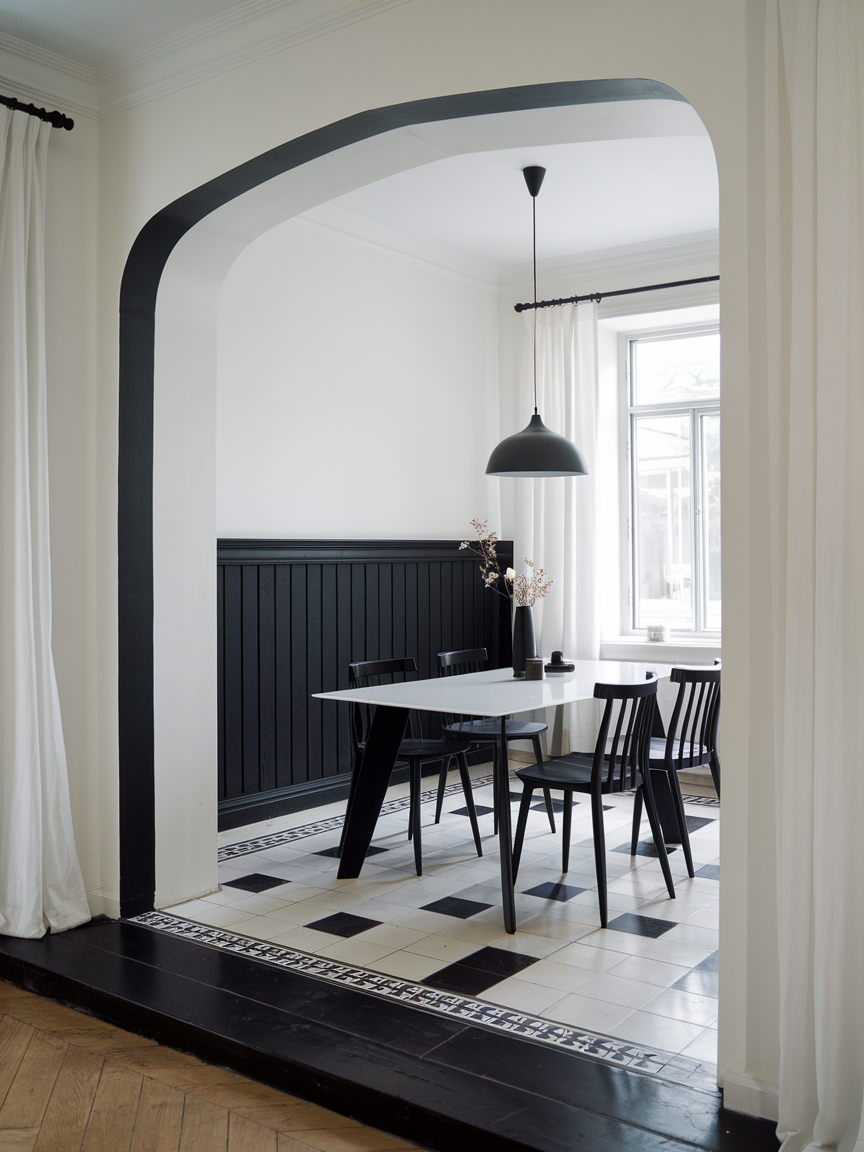
Introducing black accents into a white dining room creates a striking yet balanced contrast. Black elements—whether in lighting fixtures, chair frames, or decorative details—add structure and definition. This contrast prevents the space from feeling overly soft or washed out. When used thoughtfully, black enhances the elegance of white interiors by grounding the overall design. The interplay between light and dark creates depth, resulting in a dining room that feels modern, polished, and visually dynamic.
5. Architectural Details for Classic Appeal
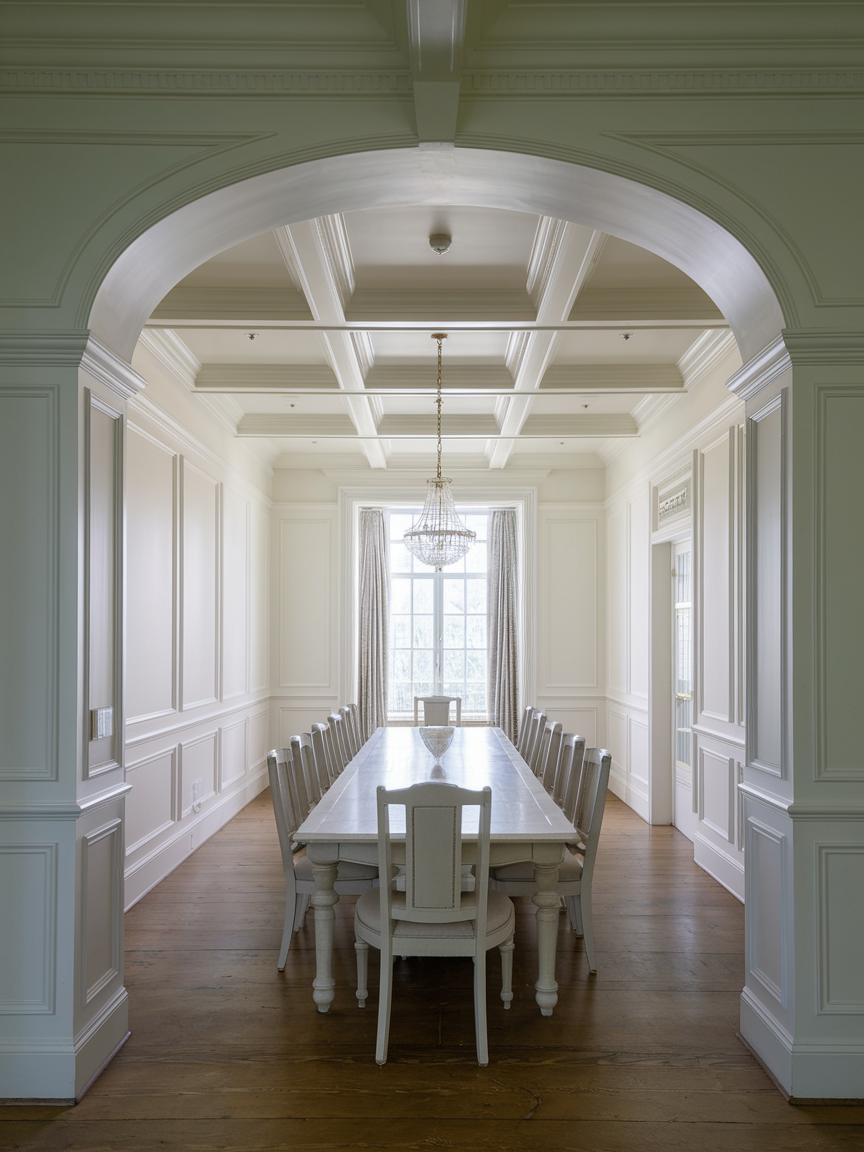
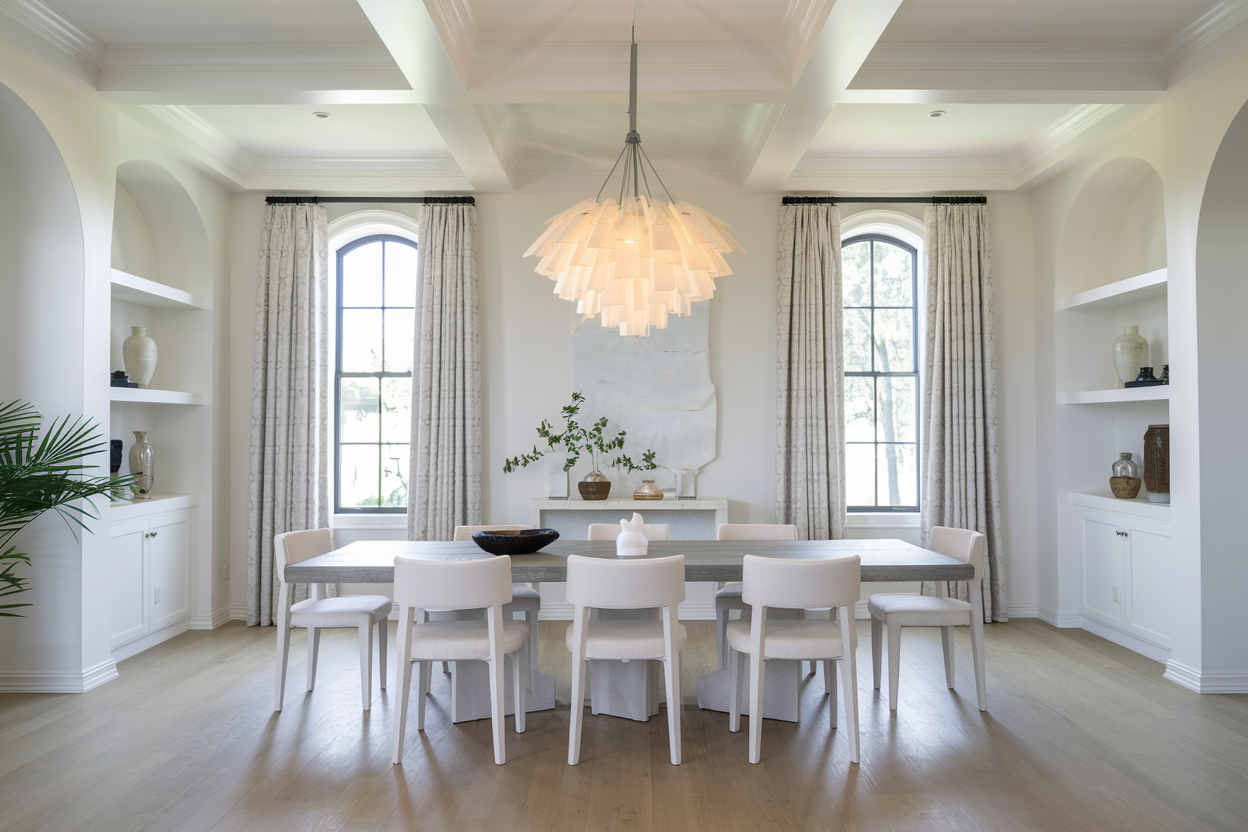
Architectural features such as molding, wainscoting, or coffered ceilings bring timeless elegance to white dining rooms. Painted in white, these details add depth through shadow and form rather than color. They create a sense of craftsmanship and refinement that elevates the entire space. These elements work particularly well in traditional or transitional interiors, where proportion and structure are key. The result is a dining room that feels sophisticated, balanced, and enduring.
6. Layering White Tones for Subtle Depth
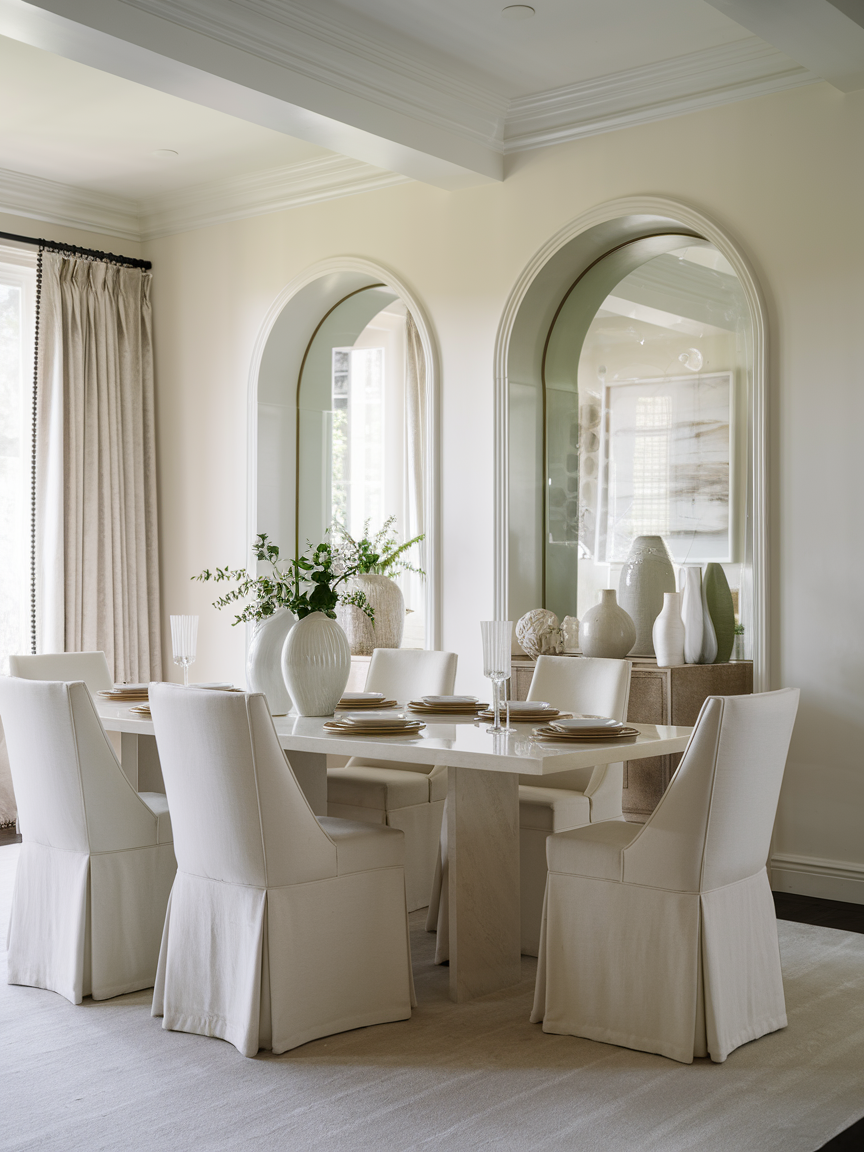
A sophisticated white dining room rarely depends on a single shade. Instead, layering multiple tones such as ivory, cream, eggshell, and soft alabaster creates a nuanced and visually engaging environment. These subtle variations allow light to interact differently across surfaces, producing gentle shadows and highlights that prevent the space from feeling flat. Walls, furniture, textiles, and décor can each introduce a slightly different hue, resulting in a cohesive yet dimensional look. This approach ensures the room feels calm and refined while maintaining visual richness. Layered whites create a timeless foundation that evolves beautifully throughout the day as lighting shifts.
7. White and Natural Wood for Balanced Warmth
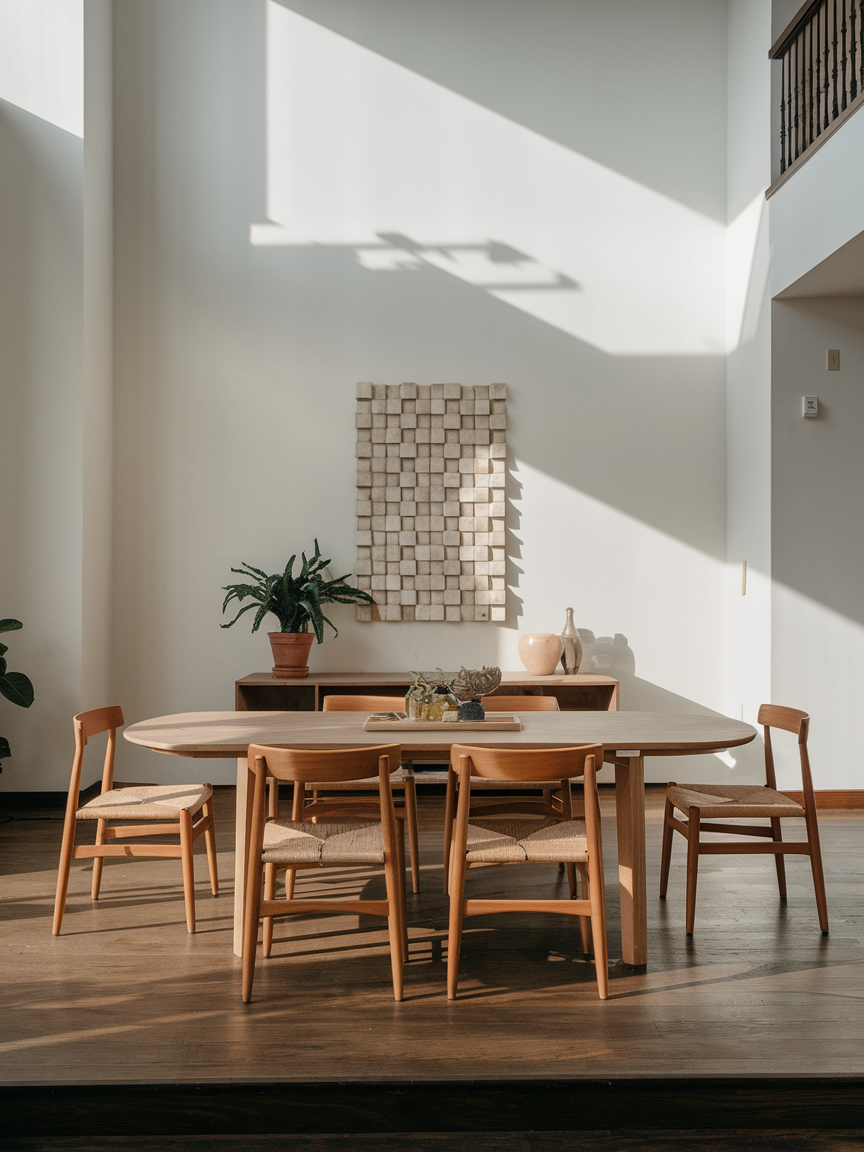
Pairing white with natural wood elements introduces an essential sense of warmth and balance. While white provides brightness and openness, wood grounds the space with organic texture and depth. Whether it’s a solid oak dining table, walnut chairs, or subtle wood accents, these elements soften the crispness of white and make the room feel more inviting. The natural grain and variation in wood add character, ensuring the design feels authentic rather than overly polished. This combination works across many styles, creating a dining room that feels both elegant and comfortably livable.
8. Sculptural Dining Chairs as Artistic Features
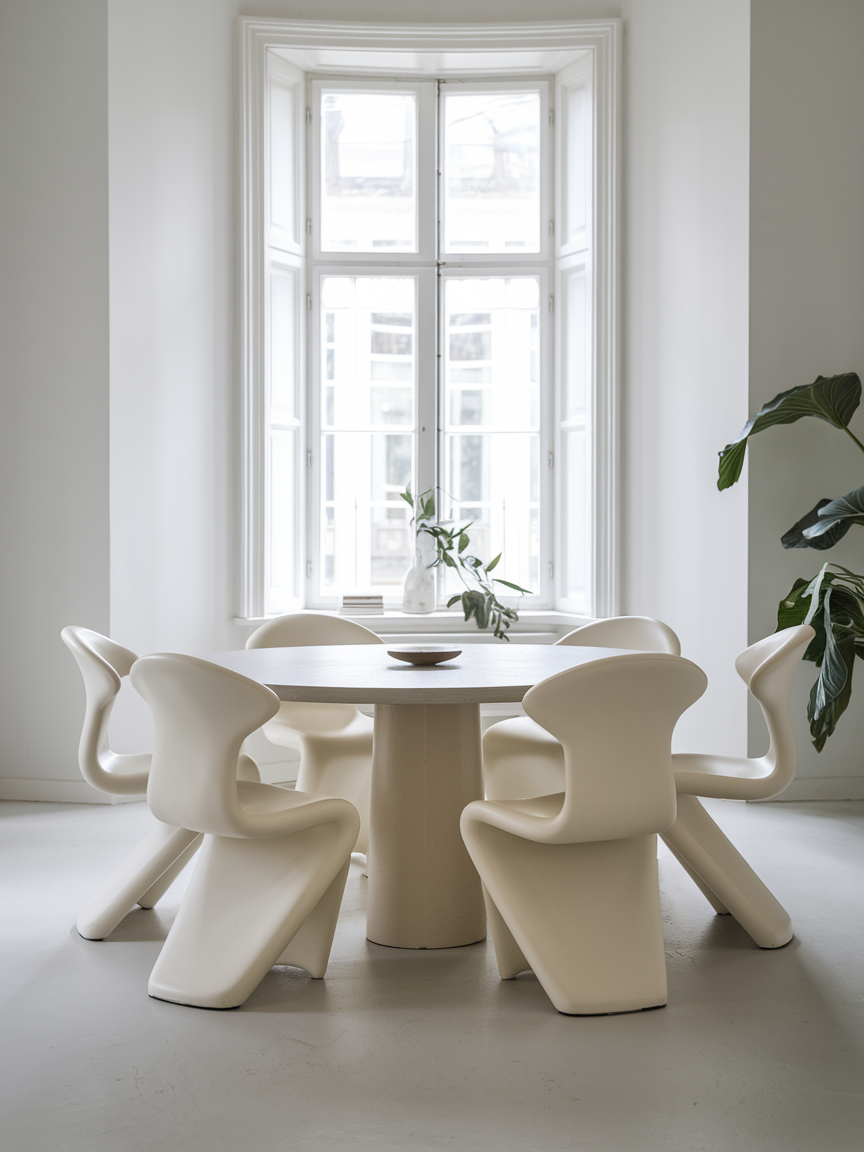
Sculptural dining chairs transform functional seating into design statements that elevate the entire space. Curved backs, fluid lines, and unique silhouettes bring visual interest without disrupting the calmness of a white palette. Upholstered finishes in soft fabrics like boucle or linen add texture, while sleek materials like molded plastic or metal create a more modern edge. In a white dining room, these forms stand out subtly, allowing shape and craftsmanship to take center stage. The result is a space that feels curated and artistic, where even everyday elements contribute to the overall sophistication.
9. Marble Dining Tables for Timeless Elegance
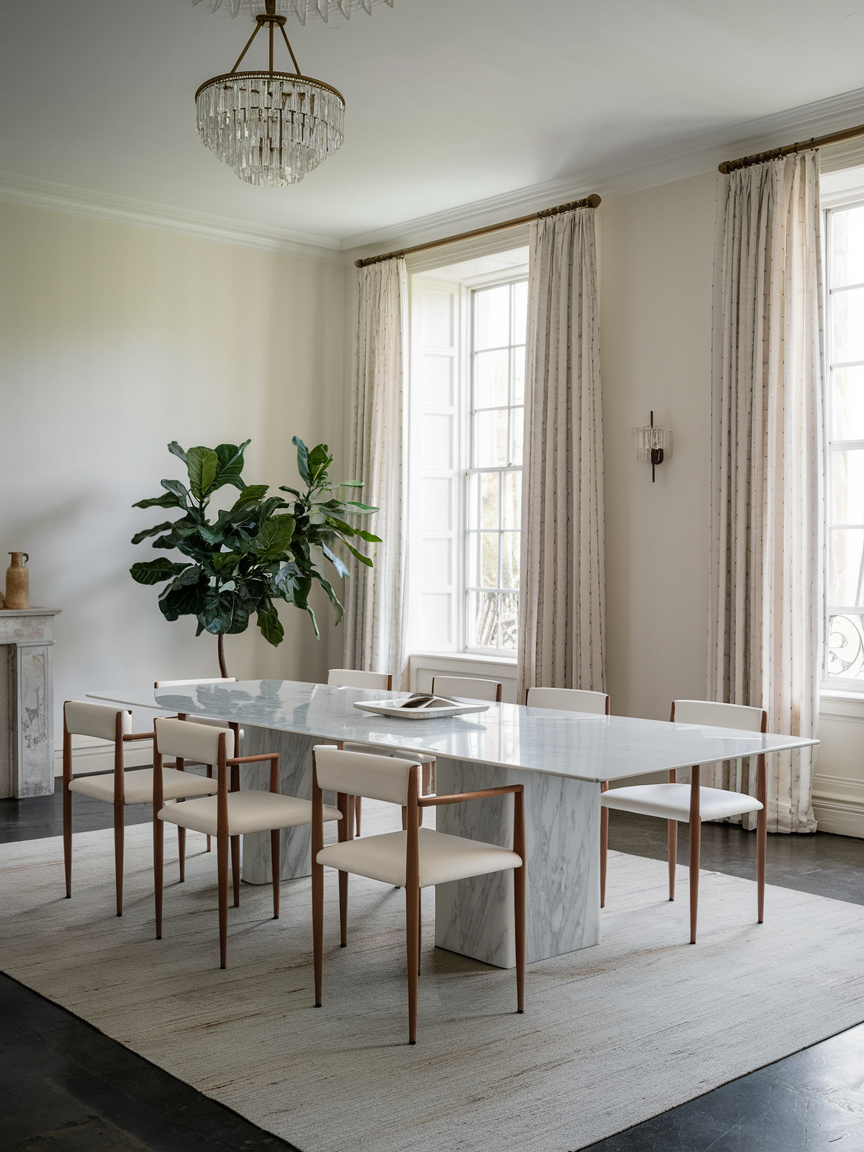
A white marble dining table instantly introduces a sense of luxury and timeless appeal. Its natural veining creates organic movement, ensuring the surface feels dynamic rather than plain. Marble reflects light beautifully, enhancing the brightness of the room while adding depth through its intricate patterns. Paired with minimalist chairs or upholstered seating, the table becomes the undeniable centerpiece. Keeping styling simple allows the material’s beauty to shine. Over time, marble maintains its elegance, making it a lasting investment that enhances both everyday dining and special gatherings.
10. Statement Lighting for Visual Impact
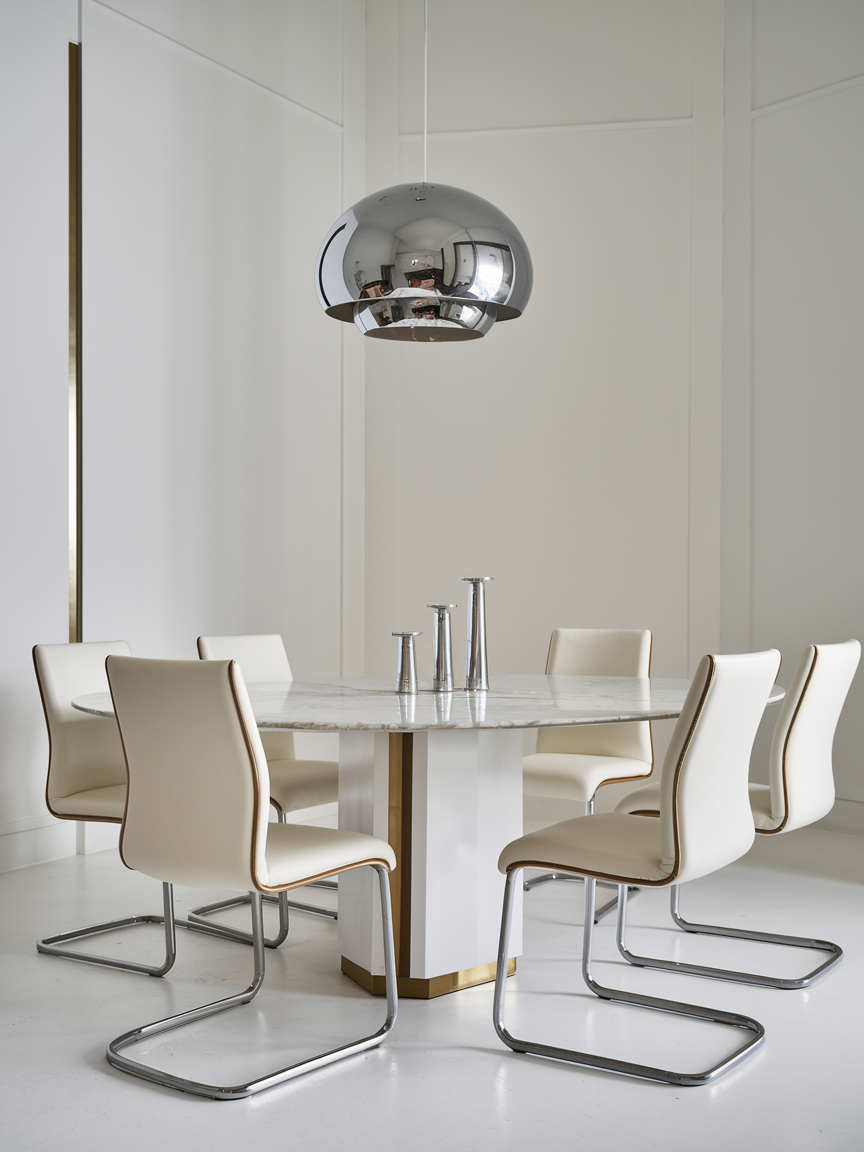
Lighting plays a pivotal role in shaping the mood and character of a white dining room. Statement fixtures such as sculptural chandeliers or modern pendants create a focal point that draws the eye upward. Against a white backdrop, these pieces stand out while still feeling cohesive. Materials like glass, metal, or fabric shades introduce contrast and texture. Proper placement ensures the dining table is well-lit while also enhancing the room’s overall ambiance. Dimmable lighting options add versatility, allowing the space to transition seamlessly from casual meals to elegant dinners.
11. Glass Elements for Lightness and Transparency
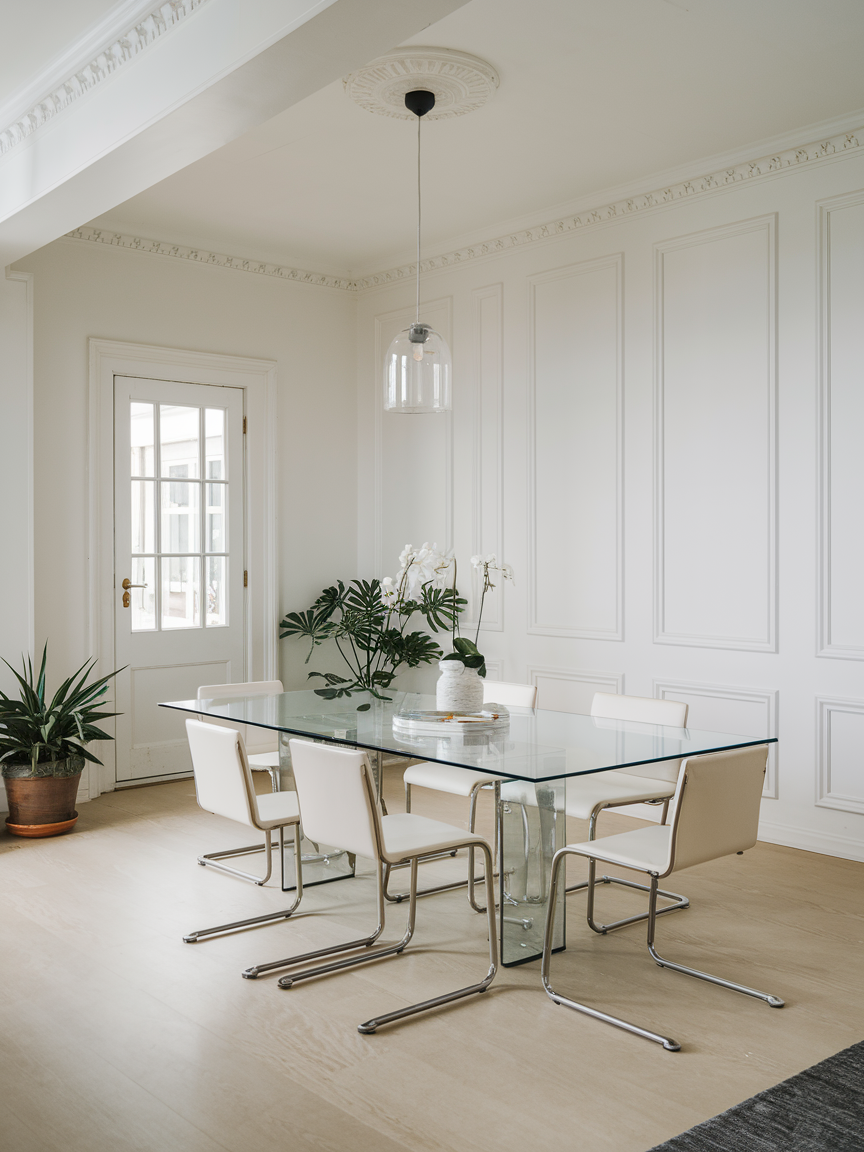
Glass elements enhance the airy quality of a white dining room by allowing light to pass through unobstructed. Tables, cabinets, or decorative pieces made of glass create a sense of openness and prevent visual heaviness. This transparency is especially beneficial in smaller spaces, where maintaining a light and uncluttered feel is essential. Glass also reflects surrounding elements subtly, adding dimension without overwhelming the design.
12. Neutral Textiles for Soft Warmth
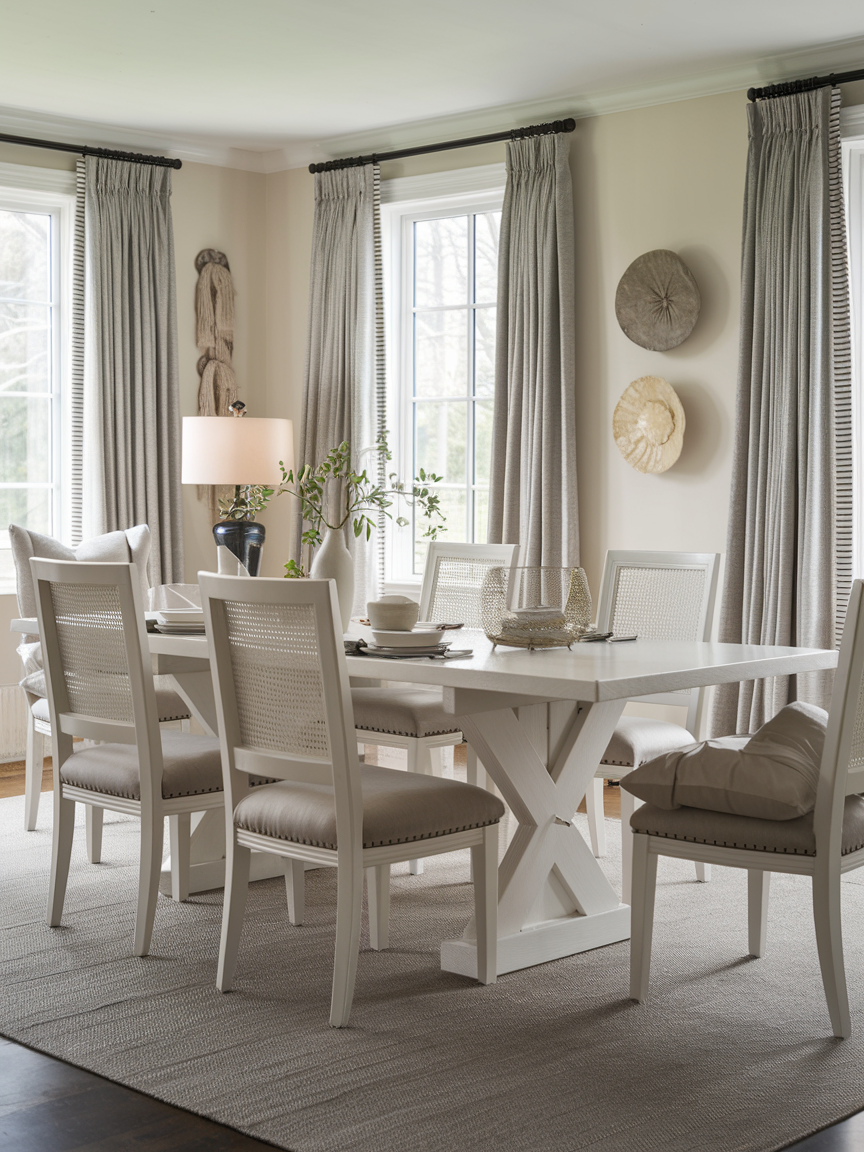
Neutral textiles such as rugs, curtains, and table linens introduce softness and warmth into a white dining room. These elements help balance the crispness of white surfaces, making the space feel more comfortable and inviting. Materials like linen, wool, or cotton add texture and depth while maintaining a cohesive color palette. Thoughtful layering of textiles ensures the room feels complete and harmonious.
13. Scandinavian Simplicity in White Dining Spaces
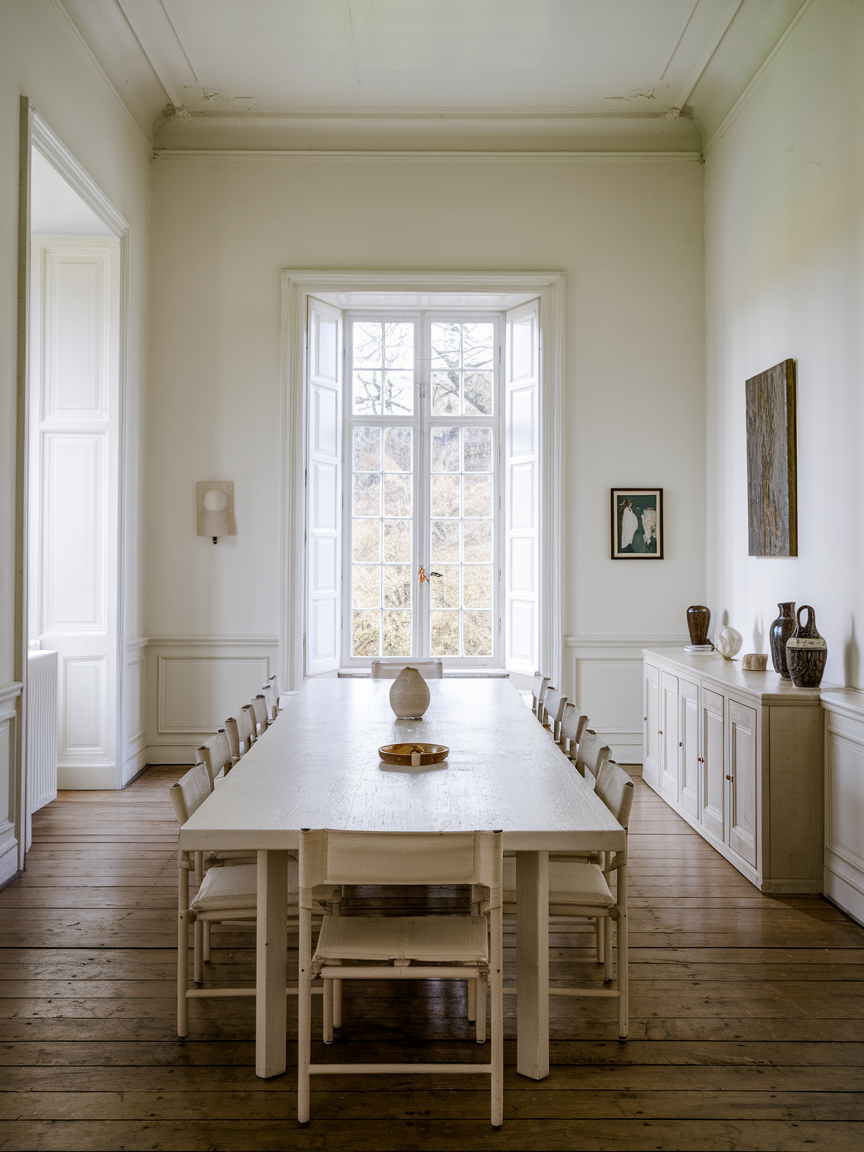
Scandinavian design embraces simplicity, functionality, and natural beauty. White walls enhance brightness, while light wood furniture and minimal décor create a calm and balanced environment. This style prioritizes comfort and practicality, ensuring the dining room feels welcoming and easy to live in. The restrained aesthetic results in a space that feels both modern and timeless.
14. Monochrome All-White Dining Room
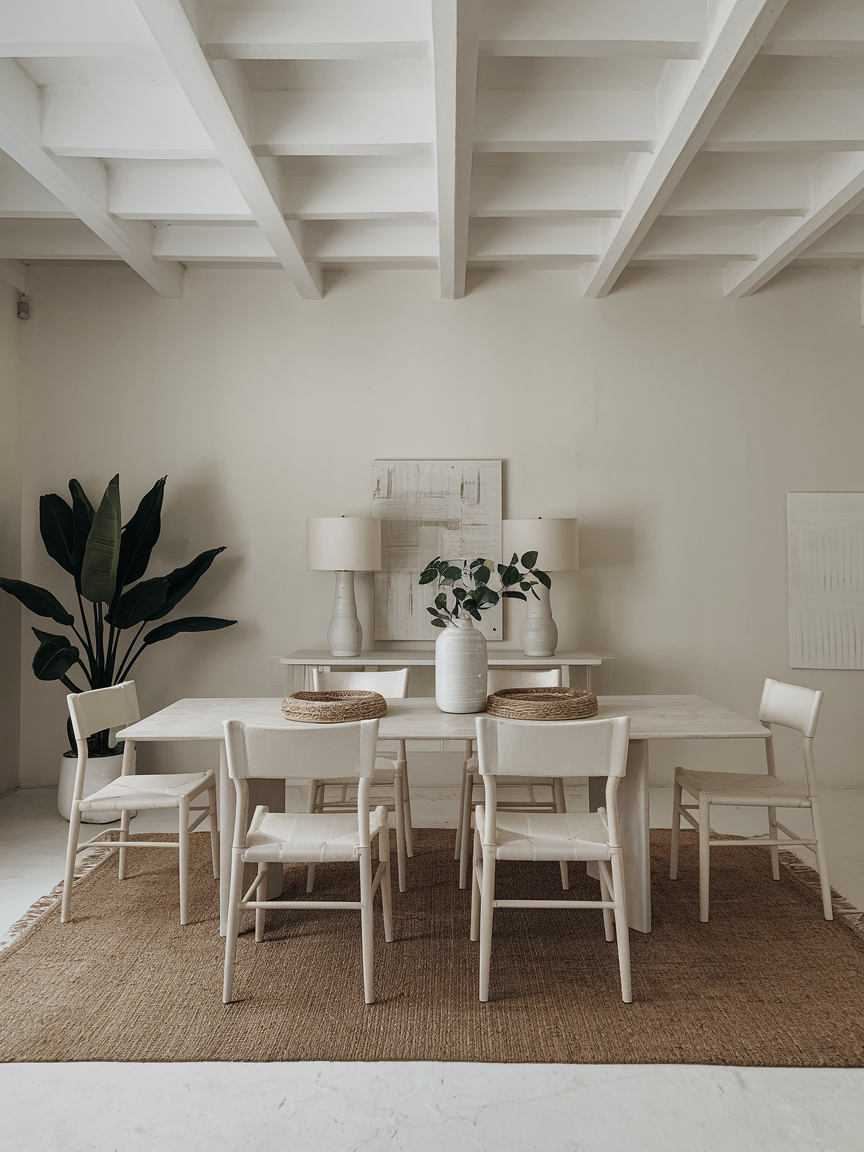
An all-white dining room can achieve extraordinary sophistication when executed with careful attention to variation and detail. Rather than relying on color contrast, this approach focuses on layering textures, finishes, and materials to create depth. Matte walls, glossy surfaces, soft upholstery, natural fibers, and subtle architectural details all work together to prevent the space from feeling flat. Light becomes a central design element, interacting with surfaces to create shadows and highlights that add visual interest. This monochromatic palette promotes a sense of calm and clarity, allowing the eye to rest while still appreciating the nuances within the design. The result is a dining room that feels serene, cohesive, and strikingly elegant in its simplicity.
15. High Ceilings in White Dining Space
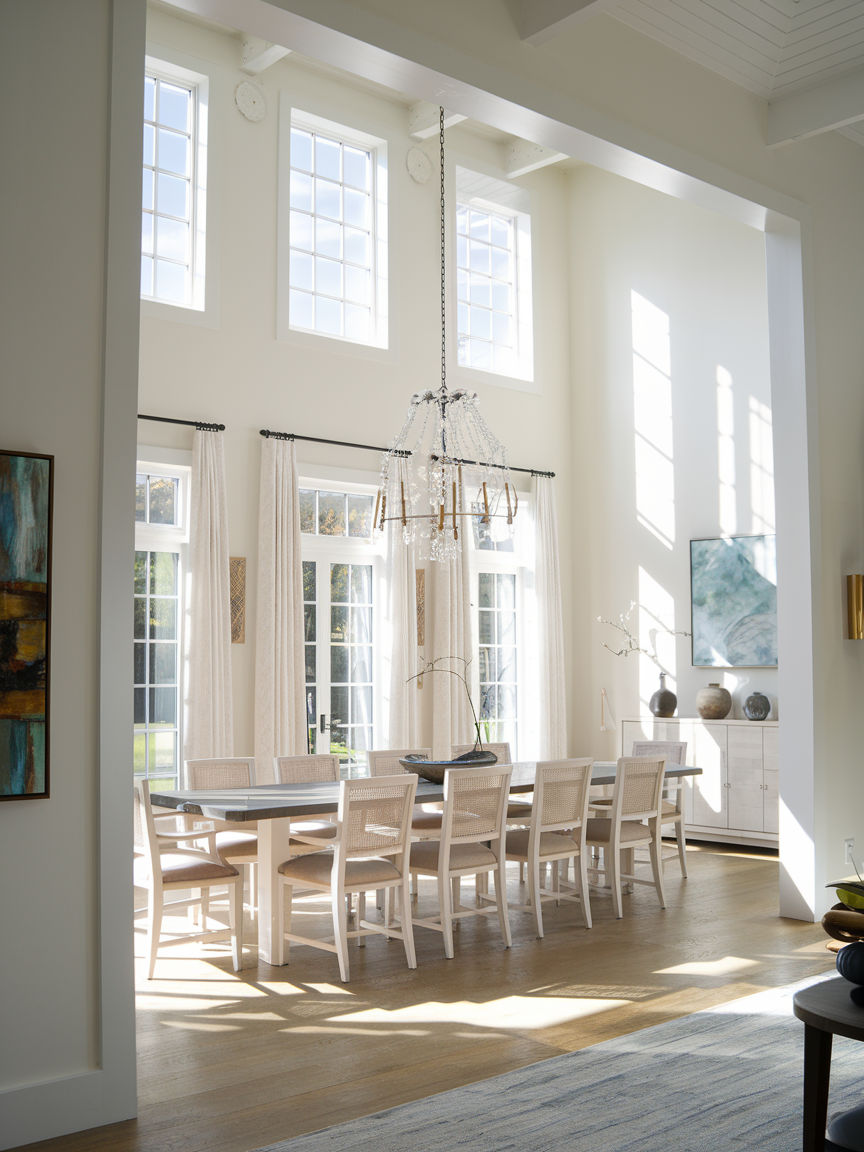
High ceilings elevate a white dining room by enhancing its sense of openness, light, and architectural grandeur. The vertical space allows white tones to fully express their reflective qualities, making the room feel expansive and airy. Elements such as tall windows, elongated curtains, or vertical wall paneling further emphasize height, drawing the eye upward and creating a sense of movement. Statement lighting fixtures suspended from above can add drama without cluttering the space. White surfaces amplify this effect by maintaining visual continuity, ensuring the room feels cohesive despite its scale. The overall atmosphere becomes both impressive and inviting, combining elegance with a sense of effortless spaciousness.
16. Open-Concept White Dining Room
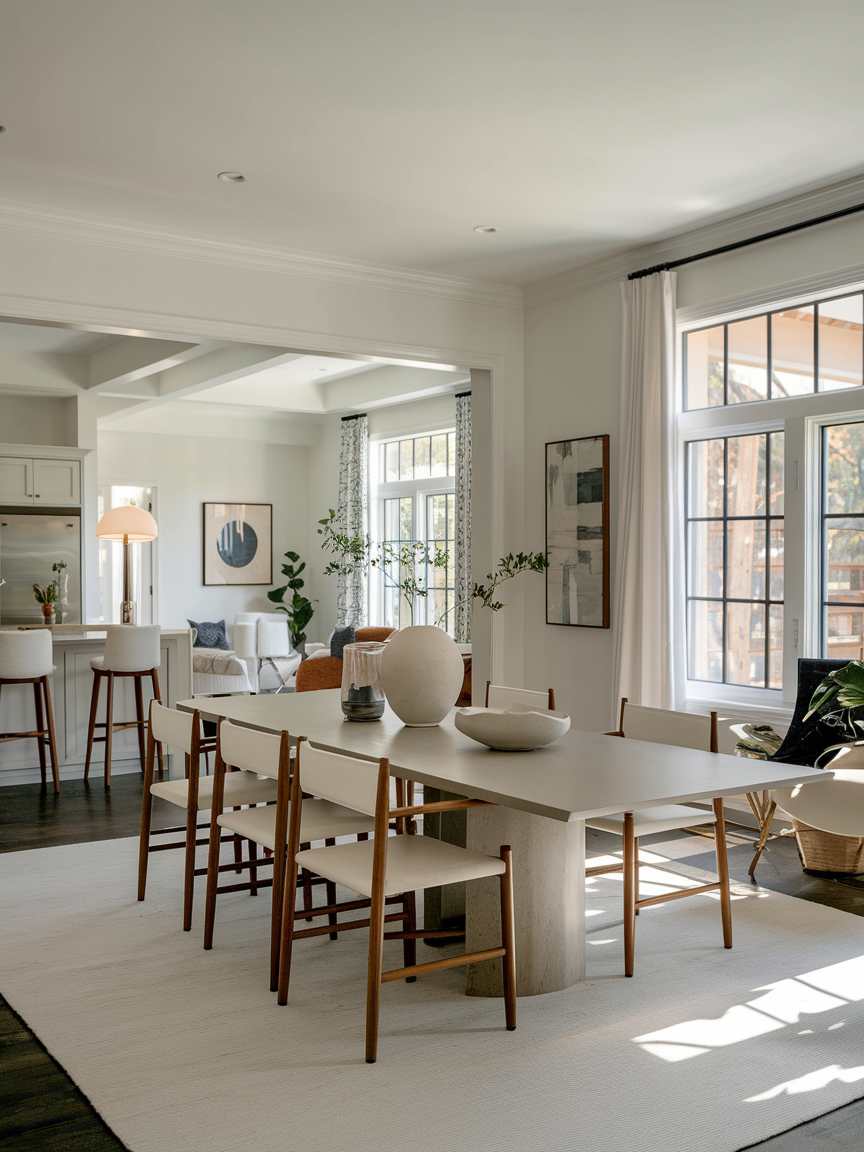
In open-concept layouts, white dining rooms play a key role in maintaining visual flow and cohesion. White reflects light effectively, allowing it to move freely between connected spaces such as the kitchen and living area. This creates a seamless transition that enhances the overall sense of openness. Despite the lack of walls, the dining area can still feel defined through elements like rugs, lighting, or furniture arrangement. The neutrality of white ensures the dining space complements rather than competes with the surrounding areas. This approach results in a harmonious environment that feels spacious, balanced, and effortlessly elegant—ideal for both everyday living and entertaining.
17. Mixed Materials for Depth and Refinement
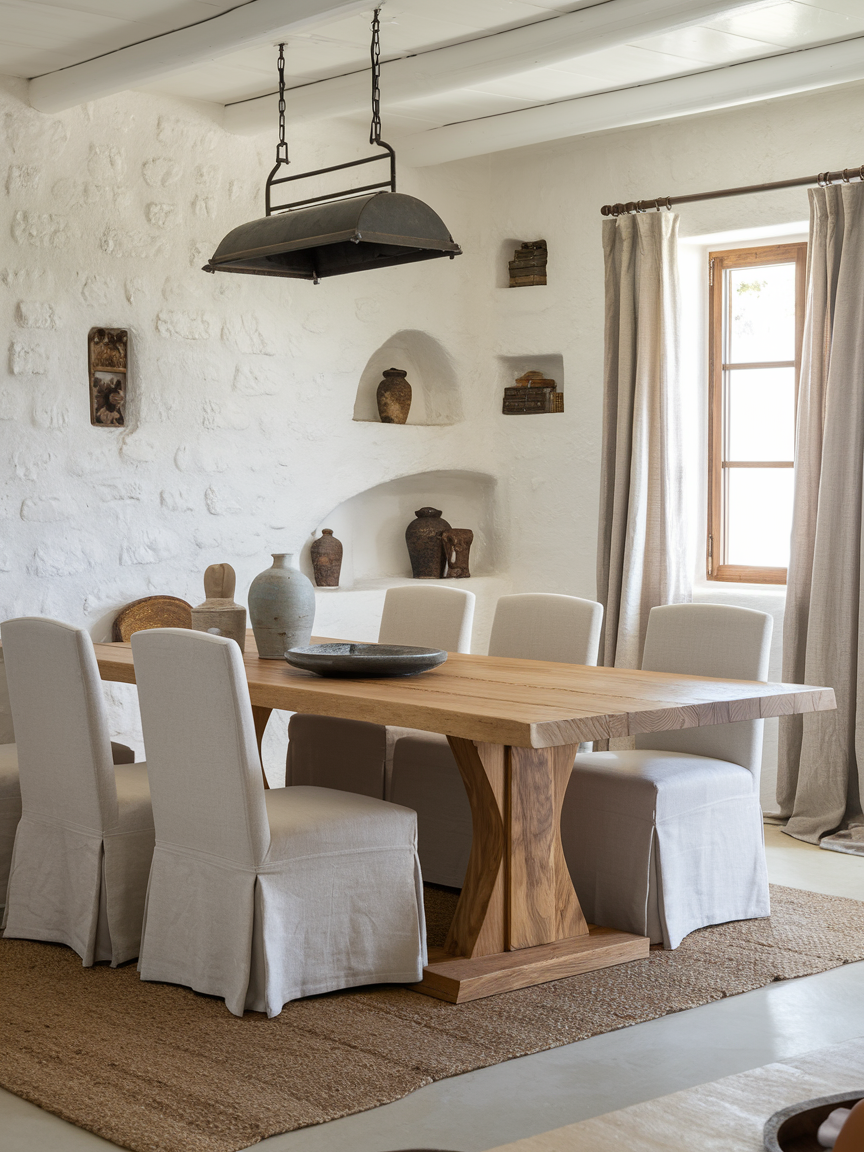
A white dining room gains richness and character when multiple materials are thoughtfully layered throughout the space. Combining elements such as wood, stone, metal, glass, and textiles introduces contrast and depth without disrupting the neutral palette. Each material contributes its own texture and visual weight, creating a dynamic yet cohesive composition. For example, a wooden table paired with upholstered chairs or a marble surface accented with metallic lighting adds subtle complexity. These variations prevent the room from feeling flat while maintaining its calm aesthetic. The result is a dining space that feels curated, balanced, and visually engaging, where every element contributes to a refined overall design.
18. Subtle Pattern Play in White Dining Room
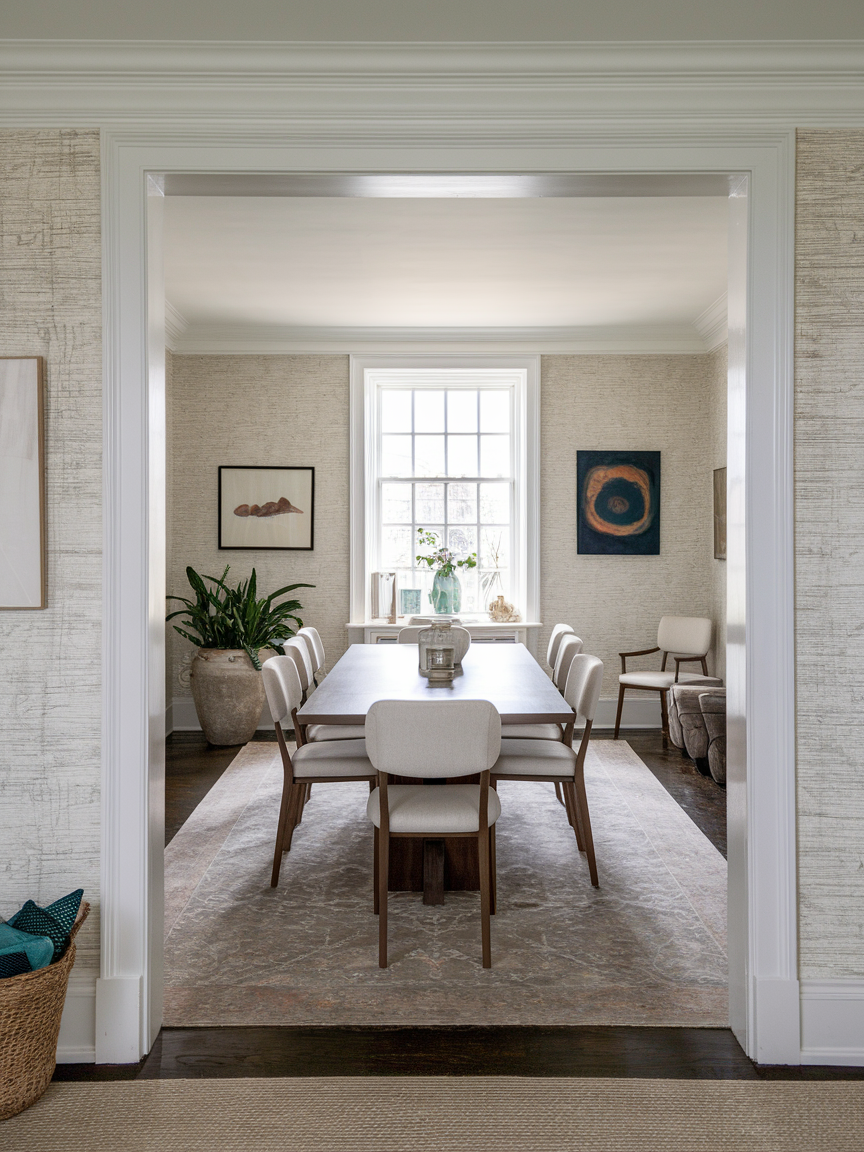
Subtle patterns add interest and personality to a white dining room without compromising its elegance. Soft geometric designs, delicate stripes, or lightly textured surfaces can be introduced through rugs, wallpaper, or upholstery. These patterns remain understated, enhancing the space rather than dominating it. In a predominantly white palette, even the smallest pattern becomes noticeable, making restraint essential. Thoughtful placement ensures balance and cohesion, allowing patterns to highlight specific areas such as the dining table or an accent wall. This approach enriches the design while preserving its calm and refined atmosphere, resulting in a space that feels both sophisticated and visually layered.
19. Artful Wall Décor for Personality
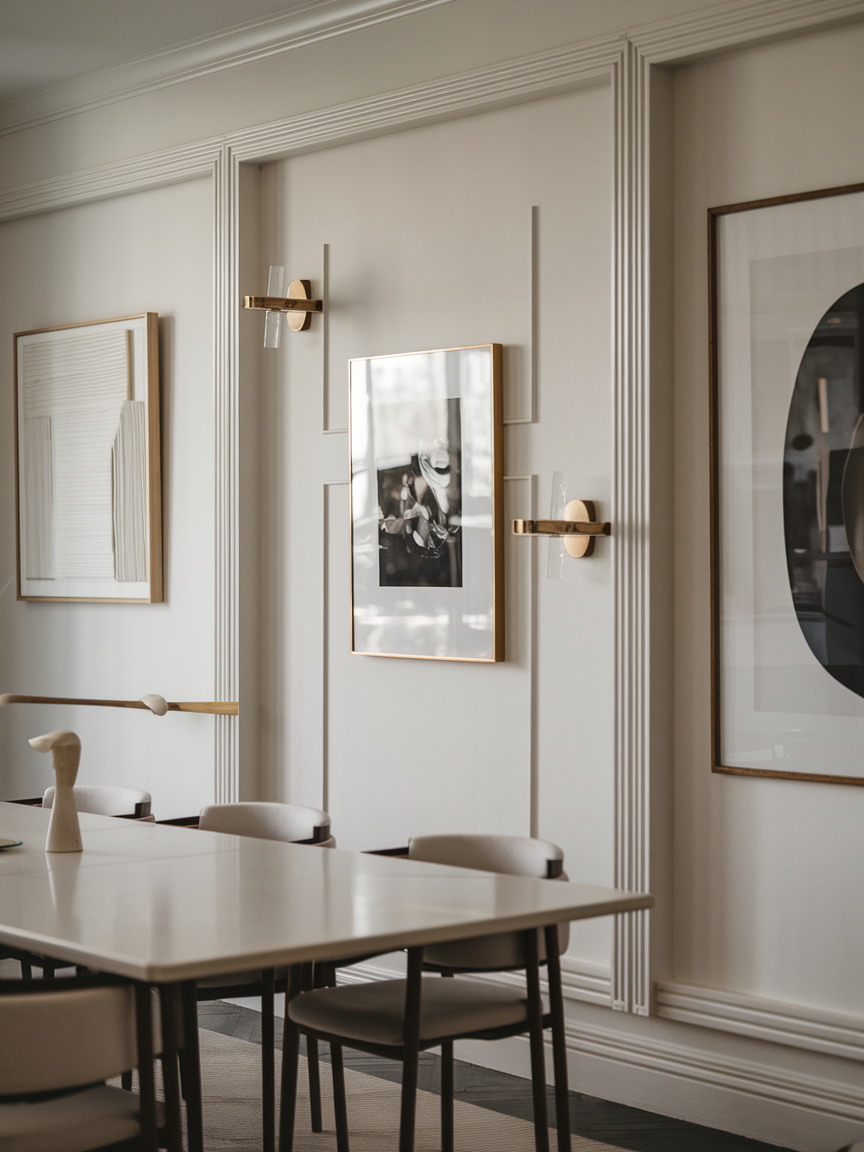
Artwork adds personality and depth to a white dining room. Carefully selected pieces—whether abstract, photographic, or minimalist—enhance the space without overpowering it. Neutral or monochrome palettes keep the look cohesive, while thoughtful placement ensures balance. Art transforms the dining room into a curated environment that reflects personal style.
20. Built-In Storage for Seamless Design
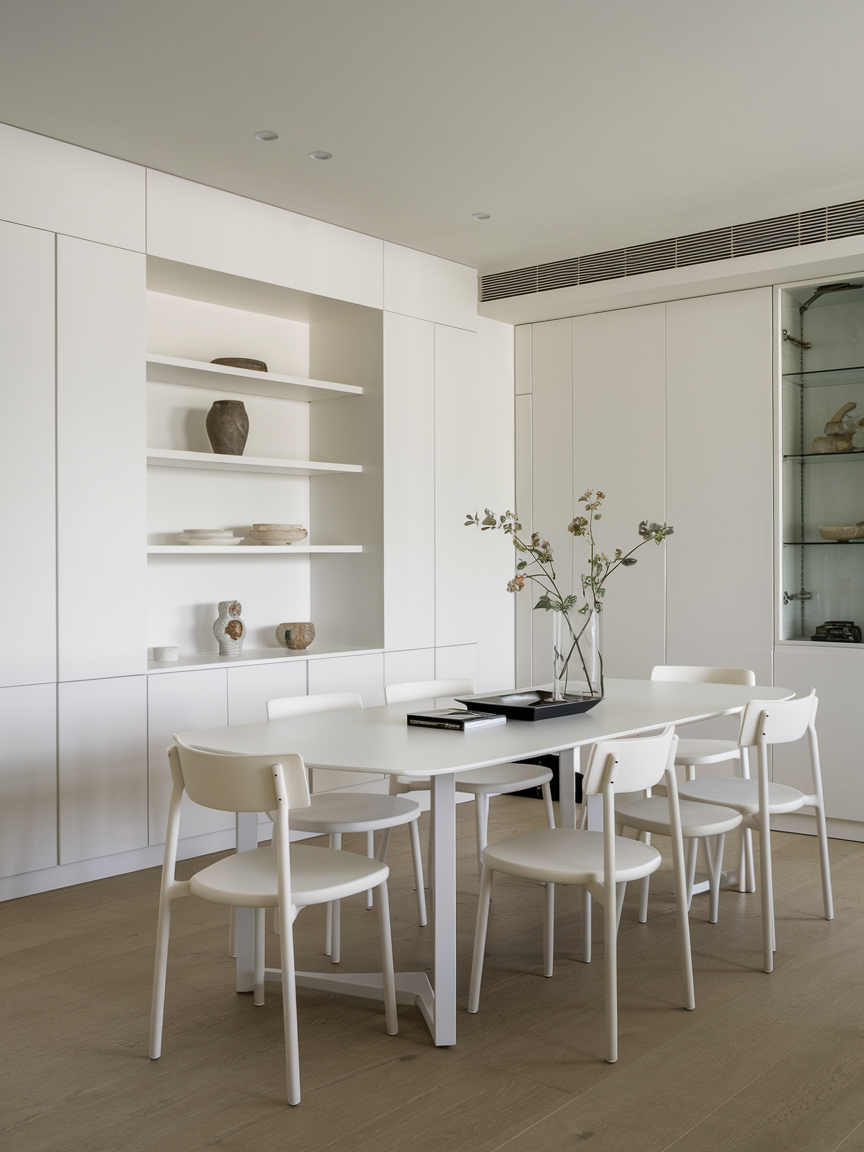
Built-in storage solutions maintain a clean and organized appearance in a white dining room. Cabinets and shelving painted in white blend seamlessly with the walls, creating a cohesive look. These features provide practical storage while also adding architectural interest. Styled thoughtfully, built-ins enhance both functionality and elegance.
21. Metallic Accents for Subtle Glamour
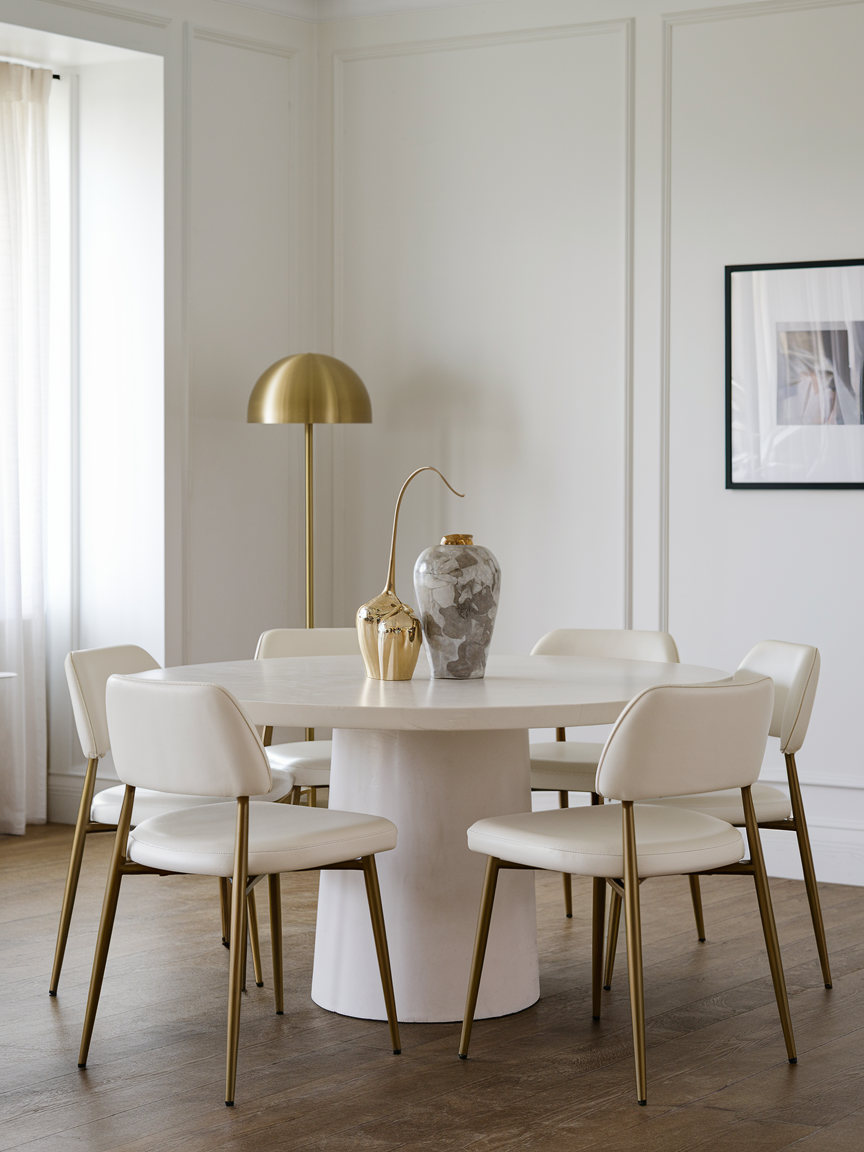
Metallic accents introduce a refined layer of glamour that enhances the luminous quality of a white dining room without overwhelming its calm aesthetic. Finishes such as brushed brass, soft gold, polished chrome, or muted champagne tones reflect light beautifully, creating gentle highlights that shift throughout the day. These accents can be incorporated through lighting fixtures, chair legs, table bases, or carefully chosen decorative objects. The key is restraint—using metallics sparingly ensures they elevate rather than dominate the space. Against a white backdrop, even the smallest metallic detail feels intentional and impactful. This interplay between matte white surfaces and reflective finishes adds dimension and sophistication, resulting in a dining room that feels polished, radiant, and quietly luxurious.
22. Statement Rugs for Grounded Elegance
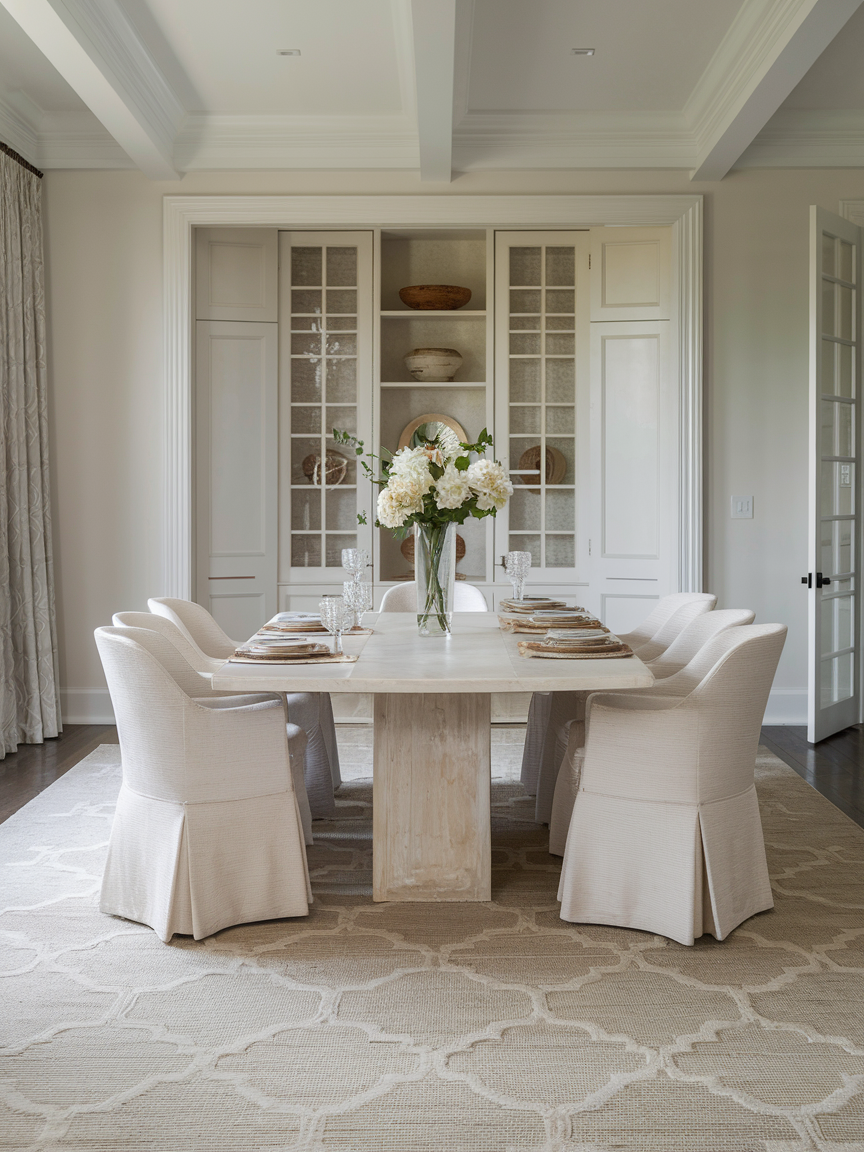
A statement rug plays a crucial role in anchoring a white dining room, providing both visual structure and tactile comfort. While the surrounding palette may remain light and airy, a thoughtfully chosen rug introduces depth through subtle patterns, textures, or tonal variations. Soft geometric designs, faded vintage motifs, or woven textures can all enhance the space without disrupting its cohesive look. Beyond aesthetics, rugs help define the dining area—especially in open-concept layouts—while also improving acoustics and comfort underfoot. Choosing high-quality, durable materials ensures longevity and practicality. A well-placed rug transforms the dining room into a more grounded, inviting environment that feels complete, balanced, and effortlessly elegant.
23. Modern Farmhouse White Dining Room
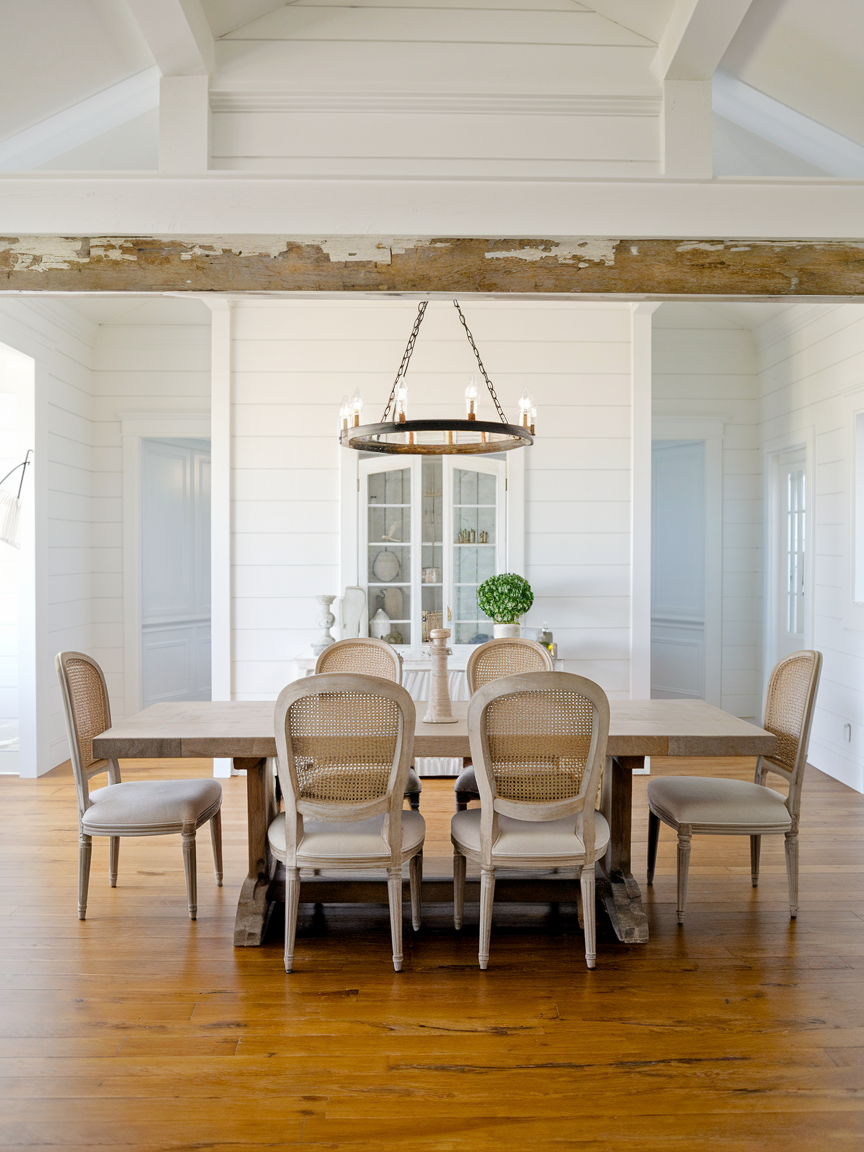
Modern farmhouse style blends rustic warmth with clean, contemporary simplicity, making it a perfect match for white dining rooms. Crisp white walls provide a bright foundation, while natural wood elements, vintage-inspired lighting, and subtle textures add character and depth. This combination creates a space that feels both polished and welcoming. The contrast between smooth white surfaces and slightly weathered materials introduces authenticity without overwhelming the design. Modern farmhouse dining rooms are versatile, accommodating both casual family meals and more formal gatherings. The overall effect is one of relaxed elegance, where comfort and style coexist effortlessly.
24. Timeless White Dining Room
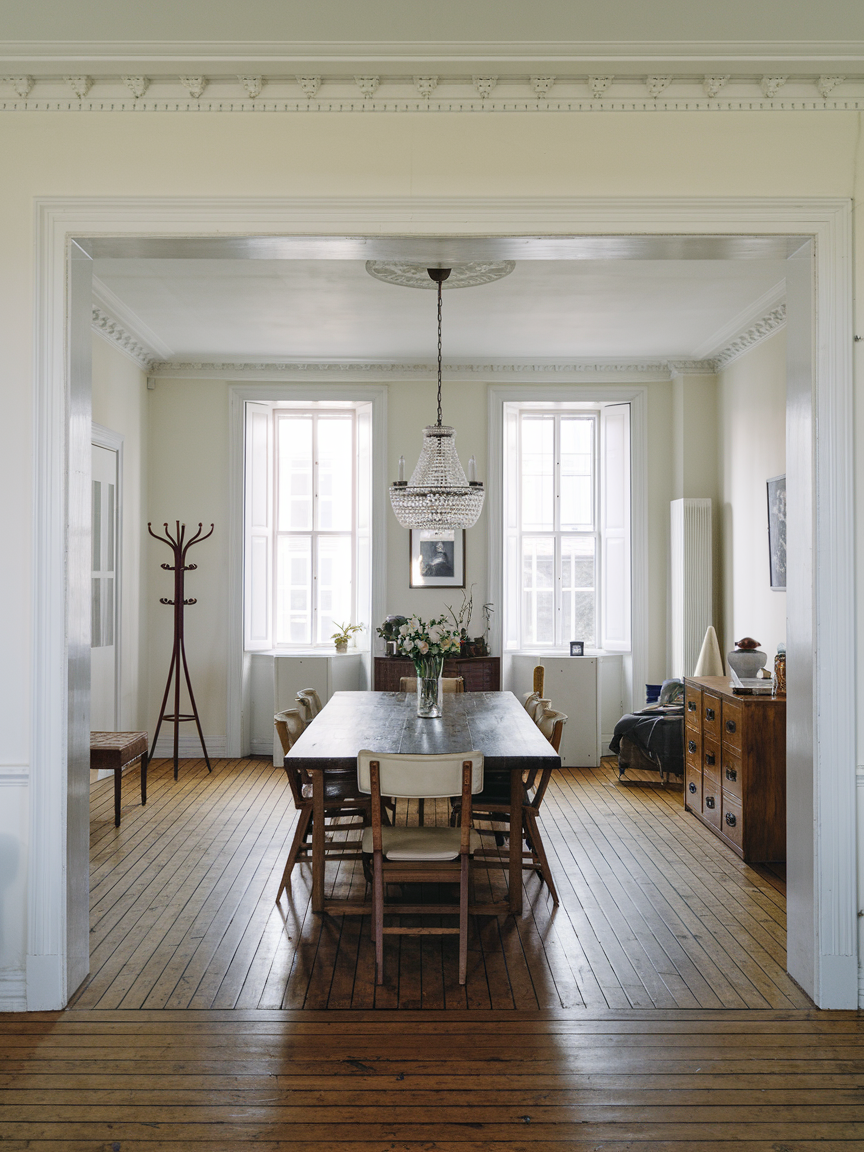
A truly successful white dining room balances beauty with practicality, ensuring it remains functional for everyday use while retaining its elegance. Durable materials, comfortable seating, and thoughtful layouts make the space easy to live in without sacrificing style. White serves as a flexible foundation that adapts to changing needs, whether through seasonal décor updates or evolving personal tastes. Incorporating subtle textures, layered lighting, and versatile furniture ensures longevity and comfort. This approach creates a dining room that feels welcoming and refined at all times—equally suited for daily meals and special occasions. It embodies the idea that timeless design is not just about appearance, but also about creating a space that supports real life with grace and ease.
25. Contemporary Art Lighting as a Focal Point
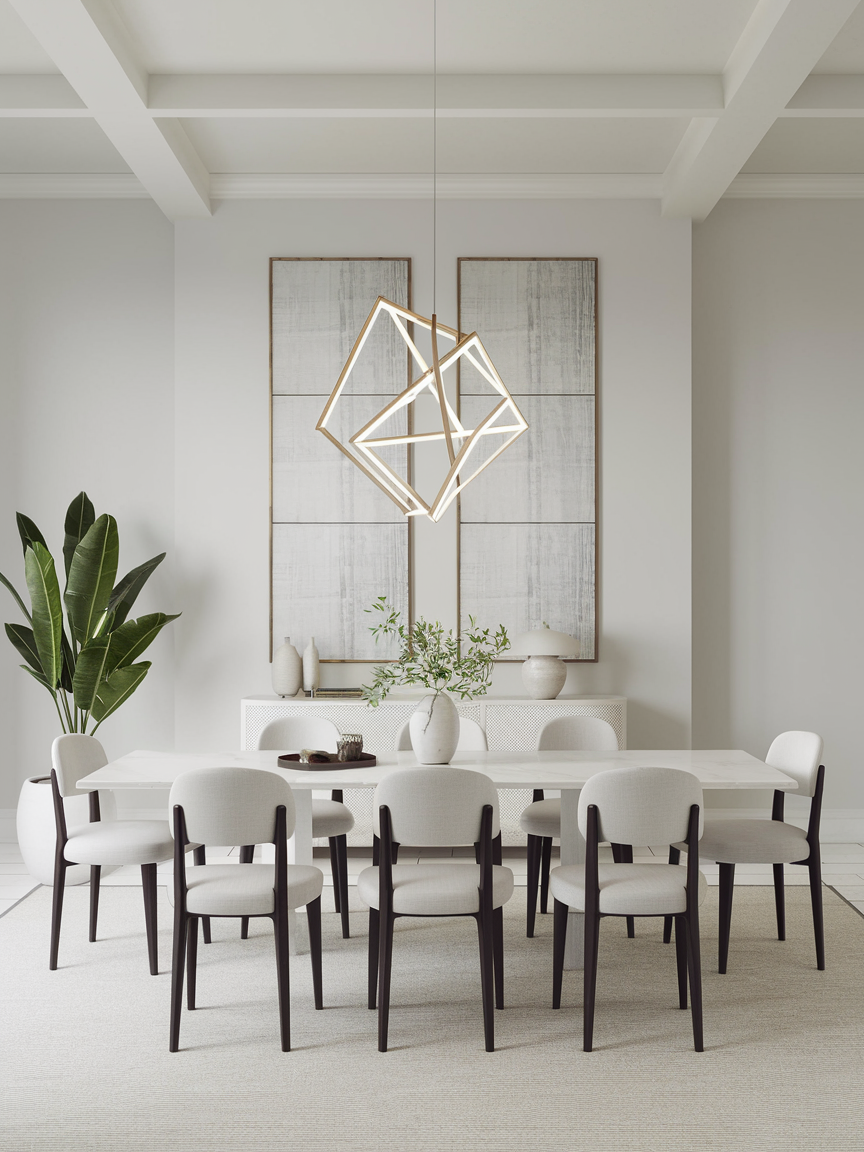
Lighting can transcend function and become a true artistic statement in a white dining room. Contemporary fixtures with sculptural forms, abstract silhouettes, or innovative materials act as focal points that define the space. Against a clean white backdrop, these pieces stand out beautifully, adding personality and creative energy without disrupting the room’s balance. Whether it’s a bold chandelier or a minimalist linear pendant, artful lighting introduces contrast and visual intrigue. It also enhances the ambiance by casting dynamic shadows and highlights across surfaces. This approach transforms the dining room into a curated environment where design and artistry intersect, resulting in a space that feels modern, expressive, and thoughtfully composed.
26. Curved Furniture for Soft Sophistication
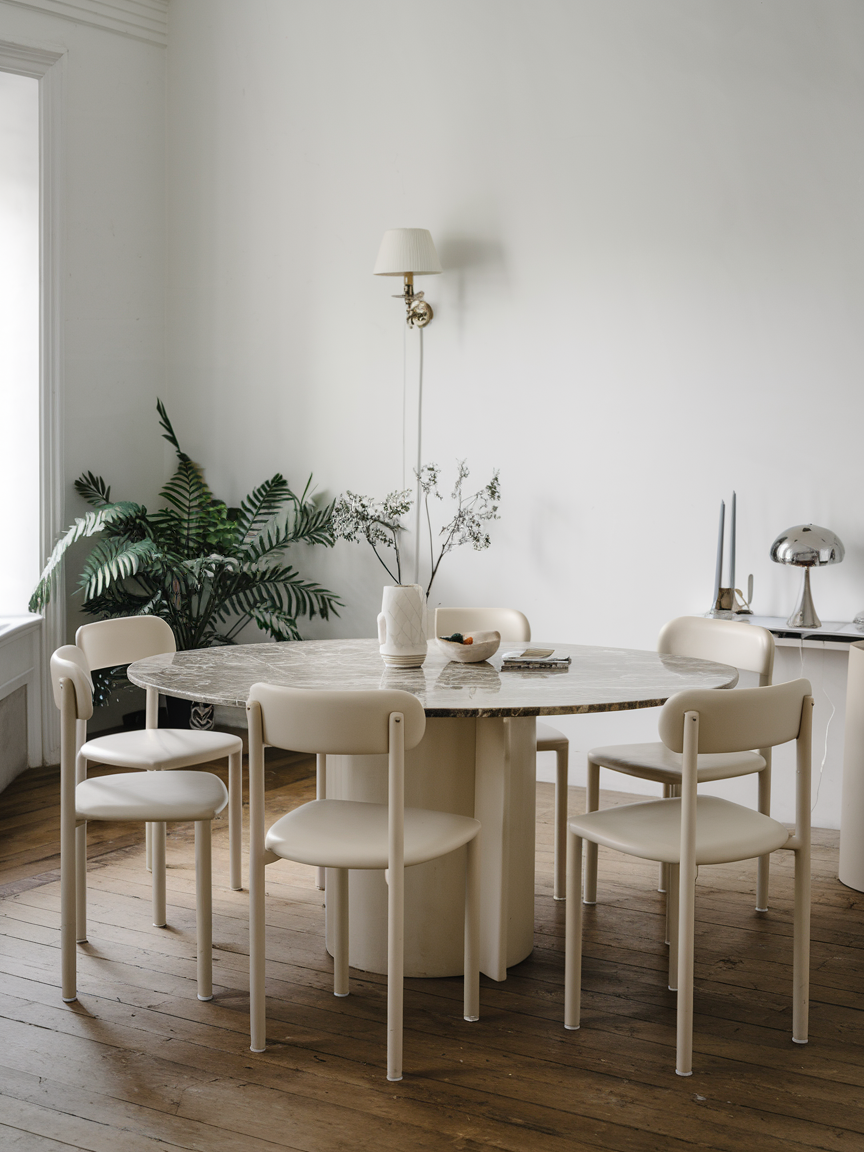
Curved furniture introduces a sense of fluidity and softness that balances the structured nature of a white dining room. Rounded tables, gently curved chairs, and organic silhouettes break up rigid lines, creating a more relaxed and inviting atmosphere. In a space dominated by neutral tones, shape becomes a defining feature, and curves help guide the eye naturally throughout the room. This design approach enhances comfort while adding a subtle layer of elegance. The contrast between soft forms and clean architectural elements results in a harmonious composition that feels modern yet timeless. Curved furniture ensures the dining area feels approachable, refined, and visually dynamic without relying on bold colors or excessive decoration.
27. Refined Centerpieces for Subtle Impact
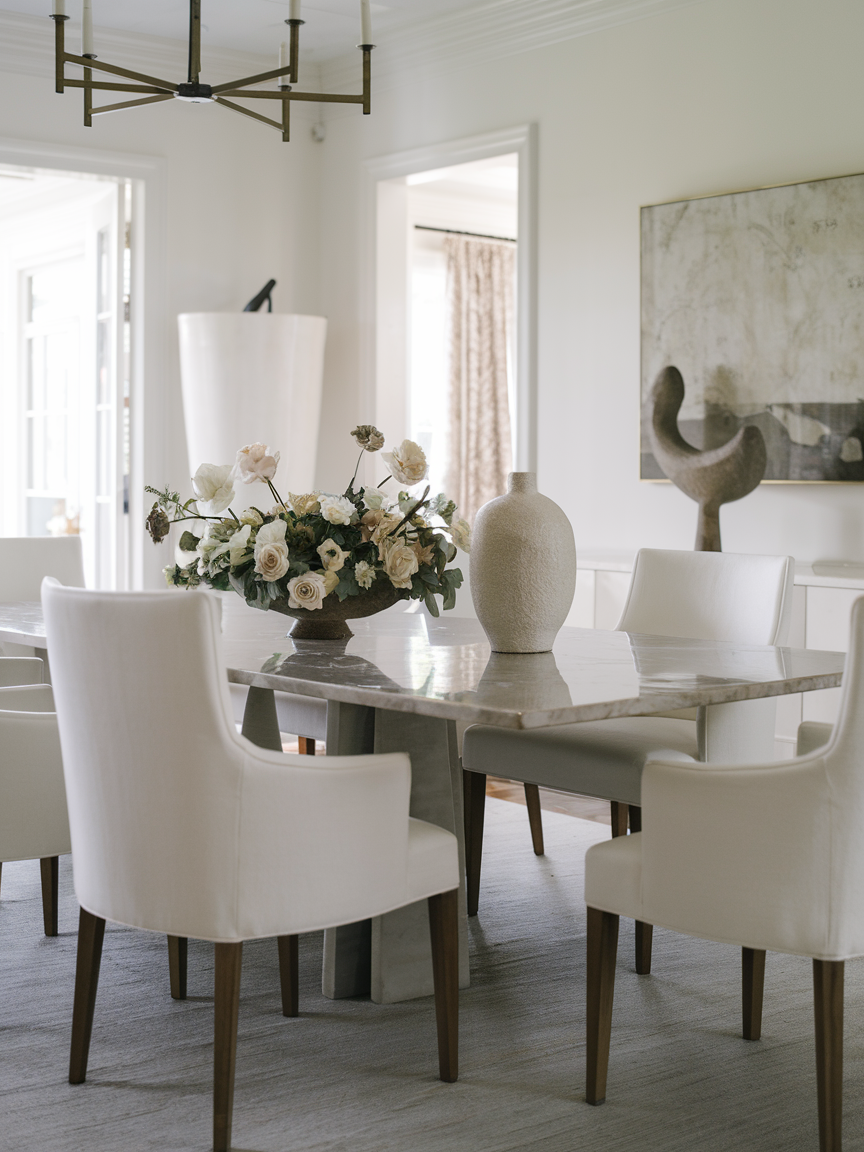
A refined centerpiece serves as a quiet yet powerful design element that enhances the dining table without overwhelming it. In a white dining room, simplicity is key—small, thoughtfully chosen objects often have the greatest impact. A low arrangement of neutral florals, a sculptural ceramic vase, or a delicate glass piece can add just enough visual interest to elevate the space. These elements should complement rather than compete with the table’s material, allowing natural textures like marble or wood to remain visible. By focusing on balance and proportion, a centerpiece contributes to a polished, curated look. This restrained styling approach reinforces the room’s elegance, proving that sophistication often lies in subtlety.
28. Floor-to-Ceiling Curtains for Soft Luxury
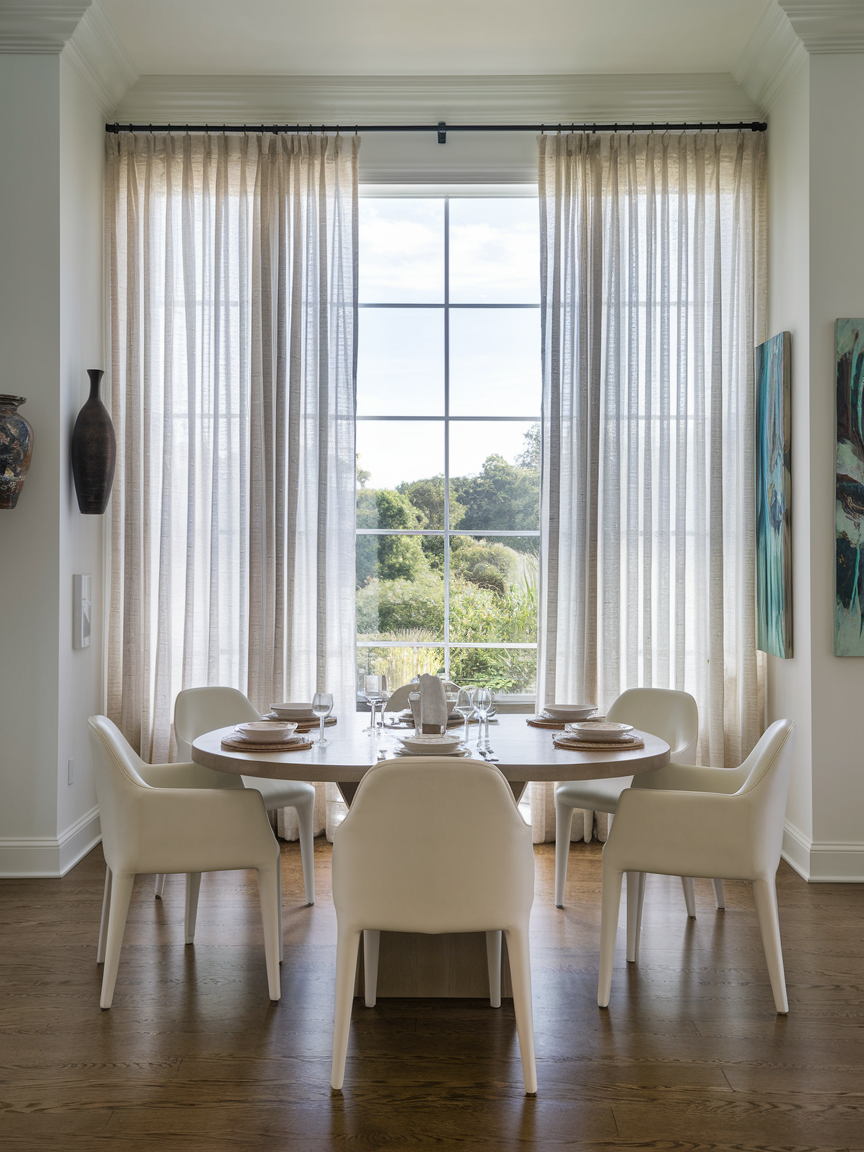
Floor-to-ceiling curtains add a sense of height, softness, and understated luxury to a white dining room. By extending fabric from the ceiling to the floor, they create a continuous vertical line that enhances the room’s proportions. Lightweight materials such as linen or sheer weaves allow natural light to filter through gently, maintaining brightness while adding texture. Curtains also frame windows beautifully, introducing an architectural quality without heavy detailing. Beyond their visual appeal, they improve acoustics and provide privacy, contributing to the room’s comfort. This simple yet impactful addition elevates the dining space, making it feel more refined, cohesive, and thoughtfully designed.
* These 28 white dining room ideas show how a thoughtfully designed palette can elevate the look and feel of your space with effortless elegance. Clean tones, layered textures, and carefully chosen accents come together to create a dining room that feels both graceful and inviting, proving that simplicity can be truly stunning. Let these ideas inspire you to design a dining space that feels timeless, stylish, and perfect for everyday dining and special gatherings alike.