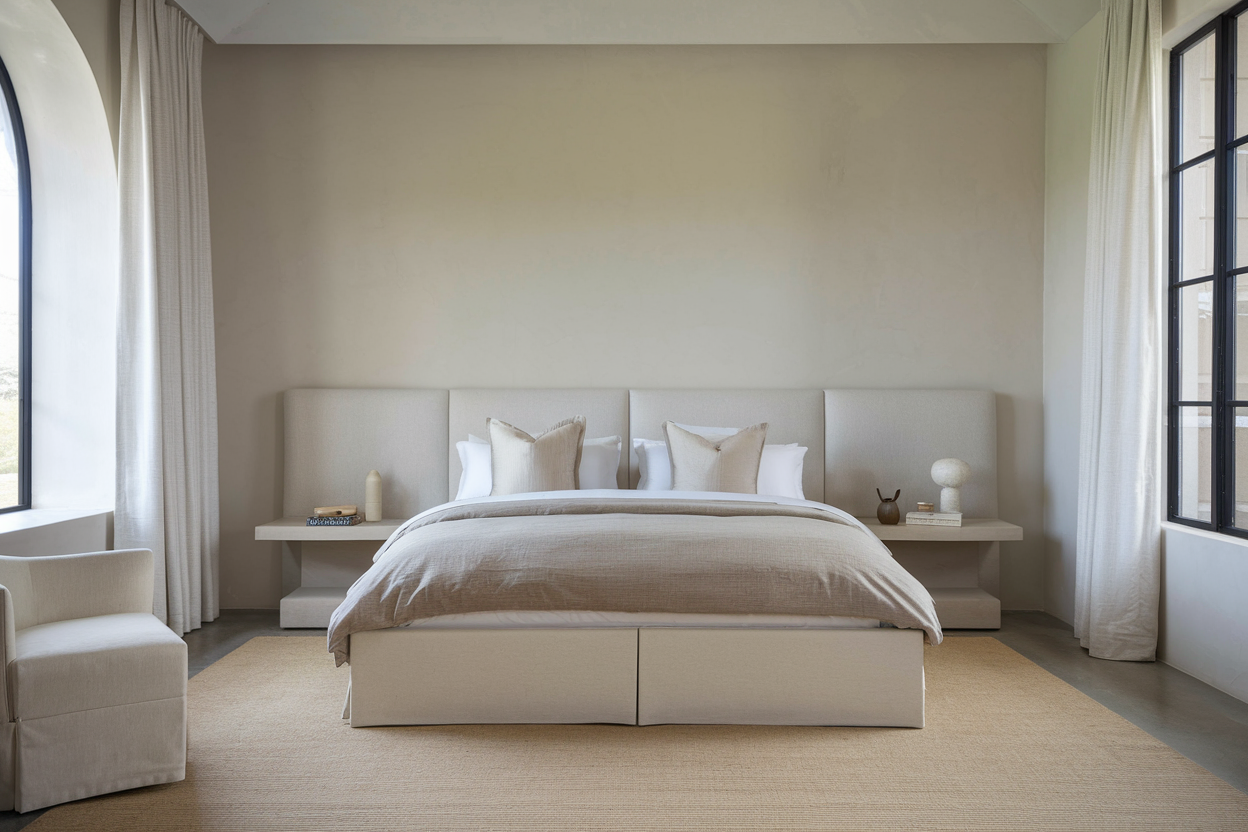
A minimalist bedroom offers a sense of calm that feels both refreshing and deeply restorative, turning your space into a quiet retreat from everyday life. Clean lines, uncluttered surfaces, and a thoughtful approach to design help create an atmosphere that feels light, open, and effortlessly serene. By focusing on simplicity and intention, a minimalist bedroom can achieve a refined look that still feels warm and inviting.
True minimalist design goes beyond reducing clutter, it’s about choosing elements that serve both function and beauty. Soft neutral palettes, natural materials, and subtle textures work together to add depth without overwhelming the space. Carefully selected furniture and decor pieces ensure every detail has purpose, resulting in a bedroom that feels balanced, harmonious, and easy to maintain.
In this collection, let’s explore minimalist bedroom ideas that create a calm, effortless environment designed for rest and relaxation!
1. Hidden Storage Solution
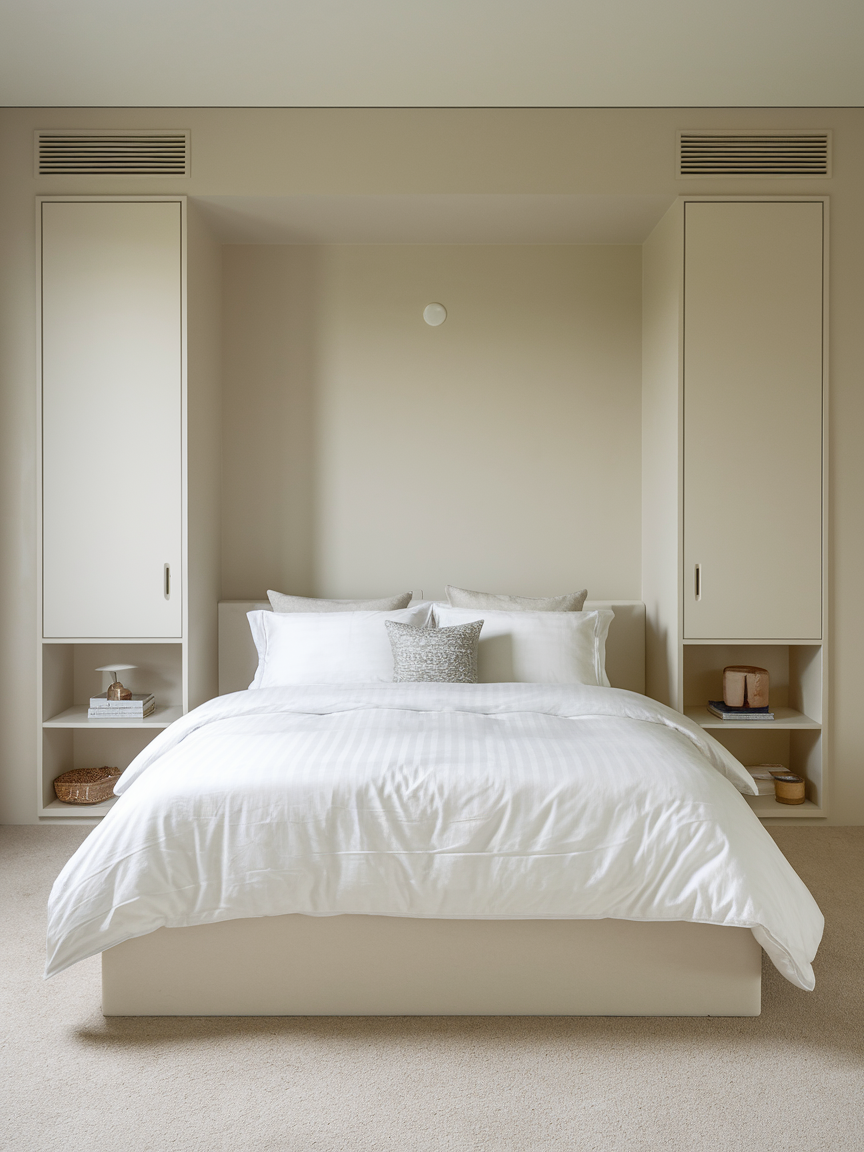
Effective storage is essential for preserving the clean aesthetic of a minimalist bedroom. Hidden solutions such as under-bed drawers, built-in cabinetry, or storage benches keep everyday items out of sight while remaining accessible. This approach reduces visual distractions and allows surfaces to stay clear, reinforcing a sense of order. A well-organized space naturally feels more relaxing, making it easier to unwind and enjoy the calm atmosphere.
2. Soft Area Rug
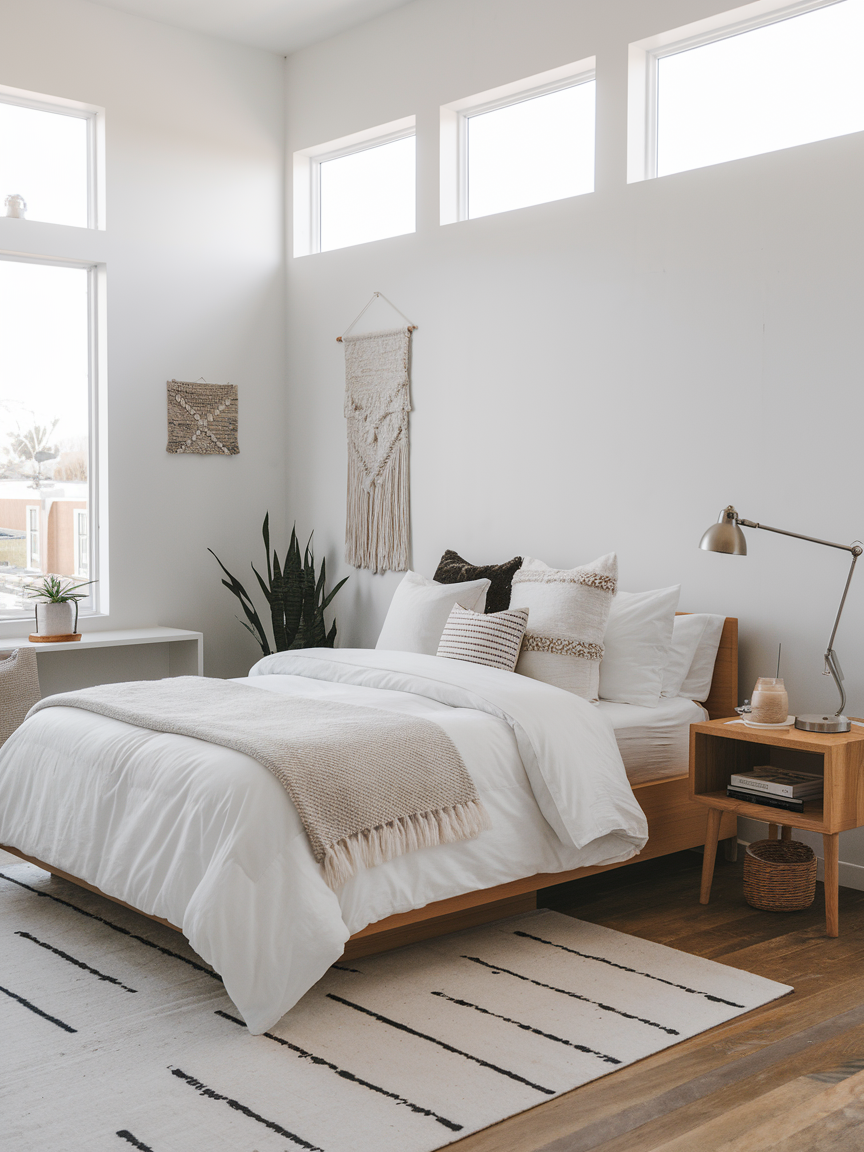
A soft area rug introduces warmth and texture while grounding the room visually. Natural materials like wool, cotton, or jute complement the minimalist aesthetic and add comfort underfoot. Rugs can define specific areas, such as the bed zone, while softening hard flooring. Choosing neutral tones ensures the rug blends seamlessly with the overall palette, enhancing coziness without disrupting the clean design.
3. Statement Lighting
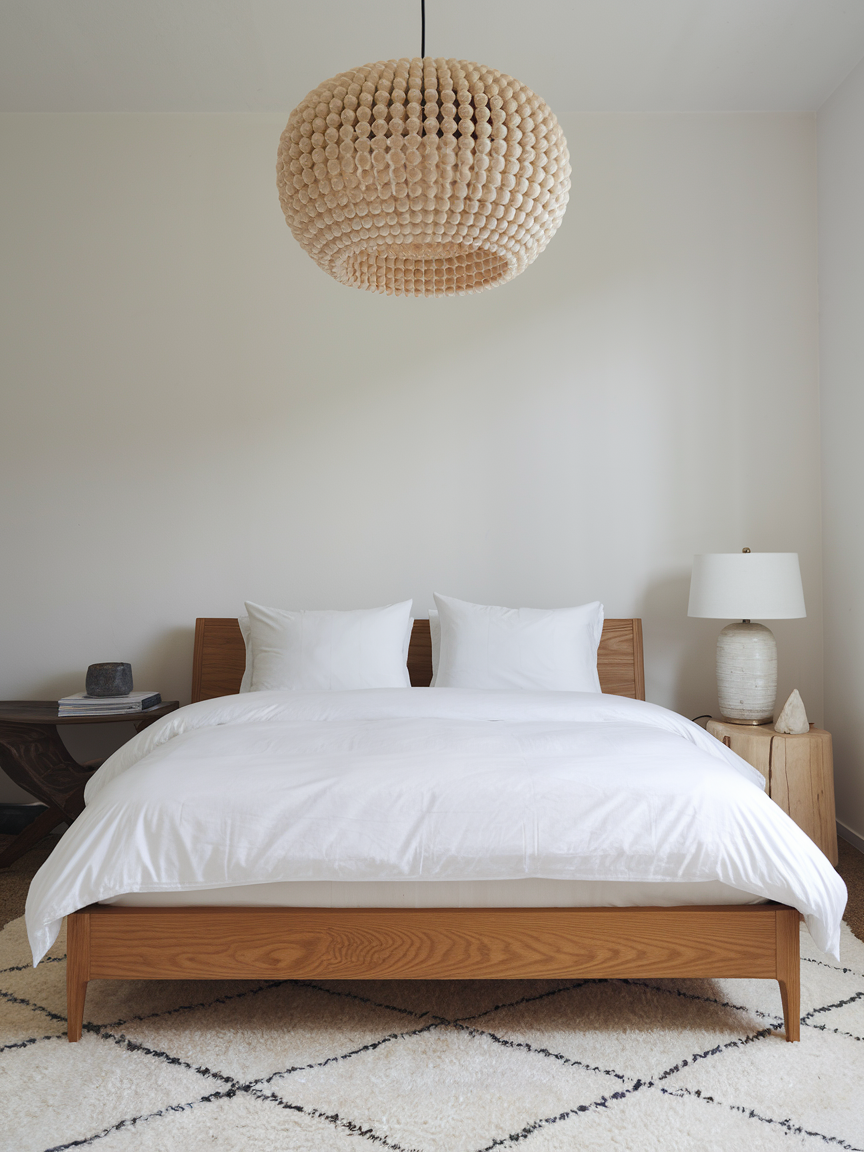
Lighting in a minimalist bedroom can act as both a functional element and a subtle design feature. Sculptural lamps, sleek pendants, or simple floor lighting add personality without cluttering the space. Warm, diffused lighting creates a relaxing ambiance, especially when paired with dimmable options. Thoughtfully placed lighting highlights key areas while maintaining a calm and balanced atmosphere.
4. Simple Window Treatments
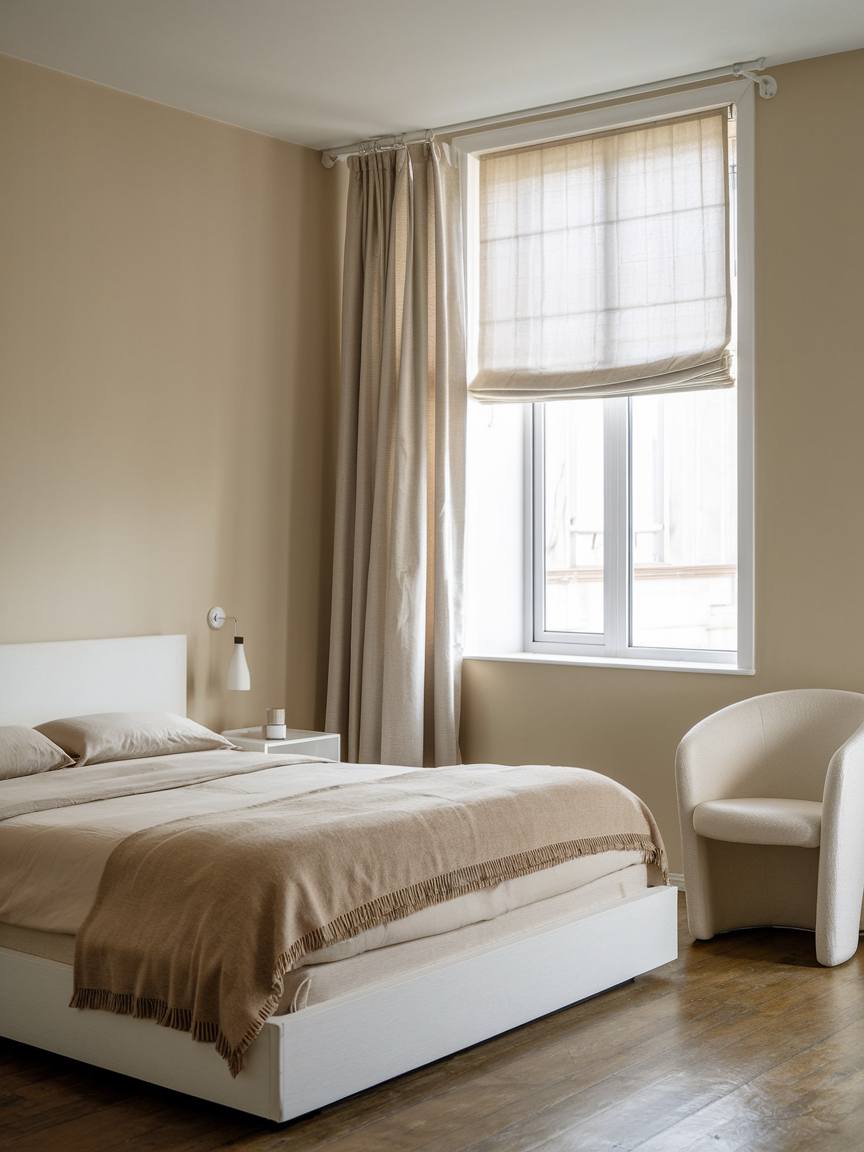
Minimal window treatments allow natural light to flow freely while maintaining privacy. Sheer curtains, light drapes, or clean-lined blinds enhance the airy feel of the room. Soft fabrics gently diffuse sunlight, creating a warm and inviting glow. Keeping window treatments simple ensures they complement the overall design rather than becoming a focal point.
5. Monochromatic Bedding
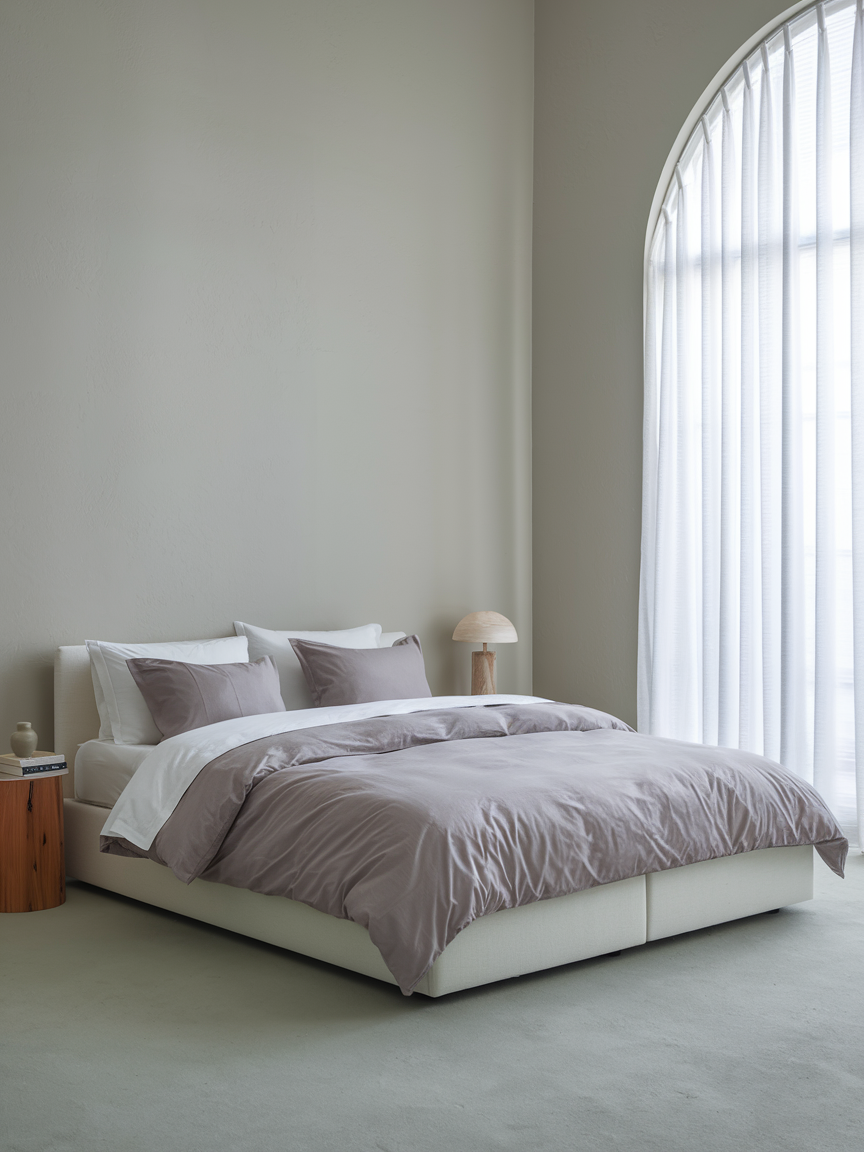
Using a monochromatic color scheme for bedding creates a cohesive and restful visual flow. Layering different shades of the same color adds subtle variation while avoiding unnecessary contrast. This approach allows textures, such as linen, cotton, or knit, to bring warmth and dimension to the bed. The result is a soft, inviting centerpiece that encourages relaxation while maintaining a clean and uncluttered appearance.
6. Minimal Wall Art
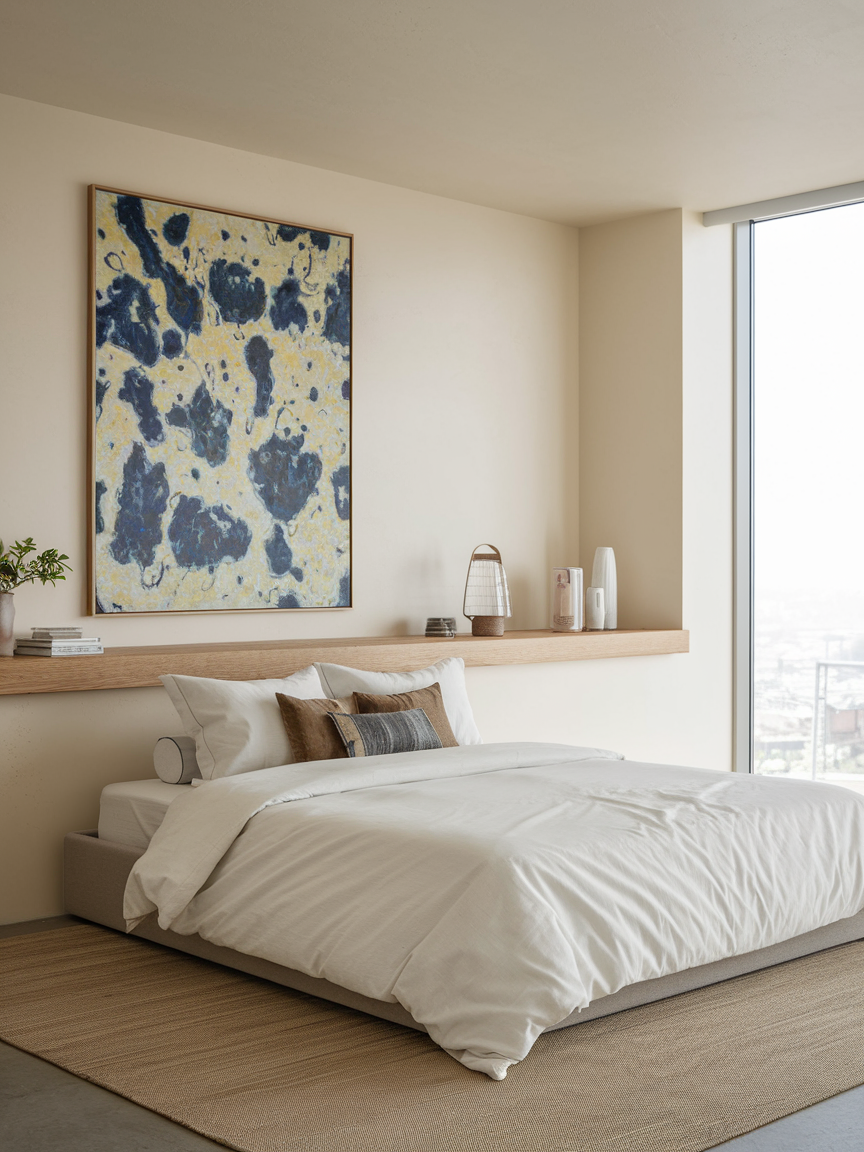
Wall art in a minimalist bedroom should feel intentional rather than excessive. Choosing one statement piece or a small curated selection helps maintain balance while still expressing personality. Artwork with simple compositions, muted tones, or calming imagery enhances the overall tranquility of the space. Proper placement ensures the art draws attention without overwhelming the room, contributing to a refined and peaceful environment.
7. Clear Pathways and Open Space
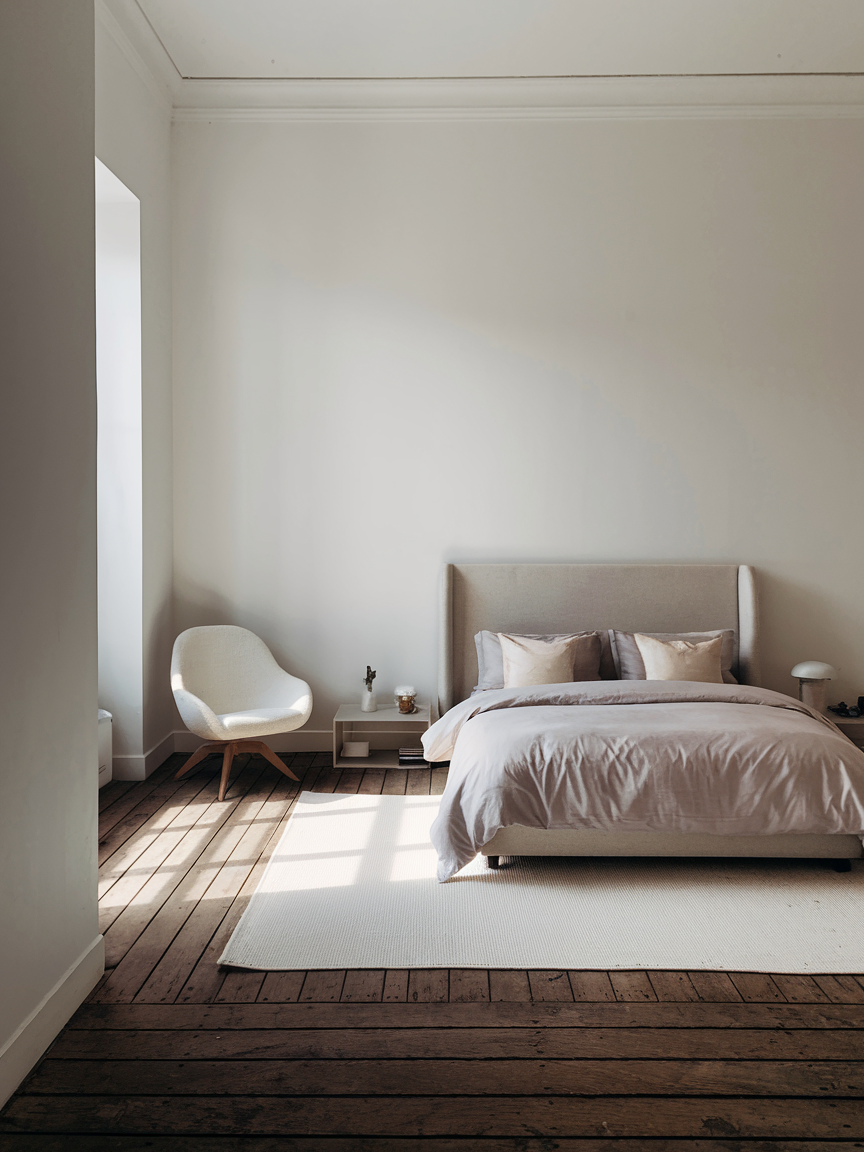
A defining feature of a truly successful minimalist bedroom is the presence of clear pathways and intentionally open space. Instead of filling every corner with furniture or décor, the layout prioritizes ease of movement and visual breathing room. This thoughtful spacing allows the room to feel calm, balanced, and far more spacious than its actual size. When furniture is arranged with purpose, daily routines become smoother, and the environment feels less overwhelming. Open space also enhances natural light flow, making the bedroom feel brighter and more inviting. By resisting the urge to overcrowd, you create a peaceful retreat where simplicity becomes the foundation of comfort, clarity, and effortless relaxation.
8. Floating Shelves
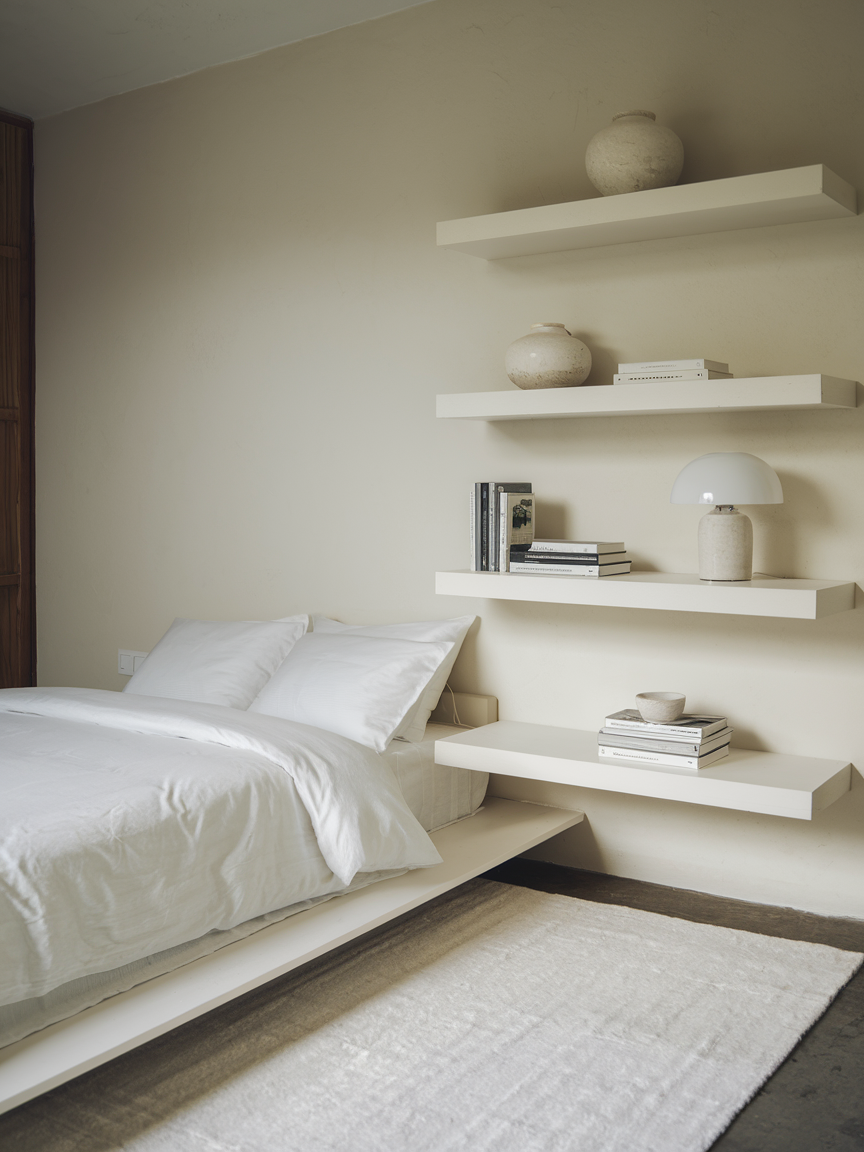
Floating shelves offer a refined balance between function and minimal design, making them a perfect addition to a calm bedroom retreat. Mounted directly onto the wall, they eliminate the need for bulky storage units while still providing space for essentials and curated décor. Their streamlined appearance keeps the room visually light and uncluttered, reinforcing the minimalist aesthetic. When styled thoughtfully—with just a few books, a small plant, or a meaningful object—they create a sense of intentional design rather than excess. Floating shelves also draw the eye upward, subtly enhancing the perception of height and openness. This simple addition brings both practicality and elegance, maintaining order without disrupting the room’s serene atmosphere.
9. Low Furniture Profile
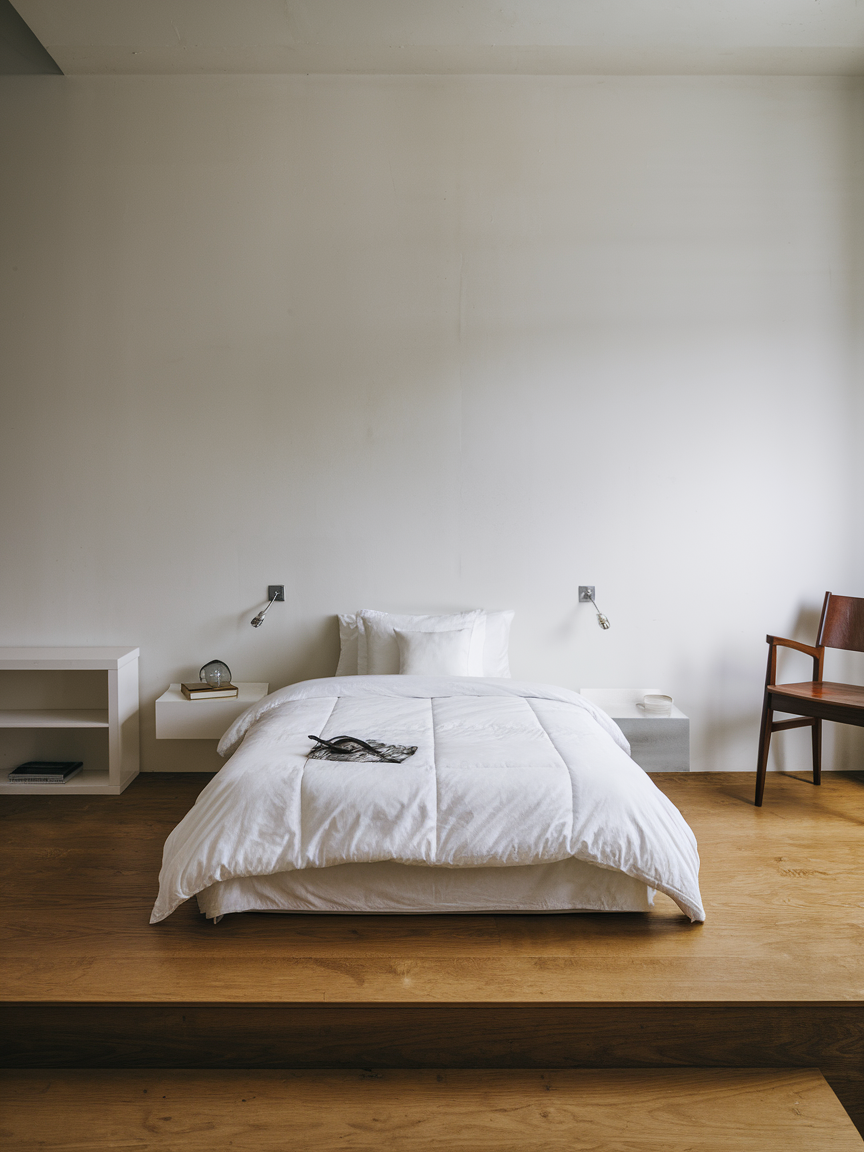
Opting for furniture with a low profile is a subtle yet powerful way to enhance the openness of a minimalist bedroom. Pieces that sit closer to the ground create a horizontal visual flow that makes the room feel wider and less confined. This design choice naturally draws attention across the space rather than upward, resulting in a calmer and more grounded atmosphere. Low-profile furniture also reduces visual weight, helping the room feel lighter and more balanced. When paired with neutral tones and soft textures, it contributes to a cohesive and harmonious design. This approach ensures the bedroom remains inviting, spacious, and perfectly aligned with minimalist principles of simplicity and comfort.
10. Minimal Decorative Objects
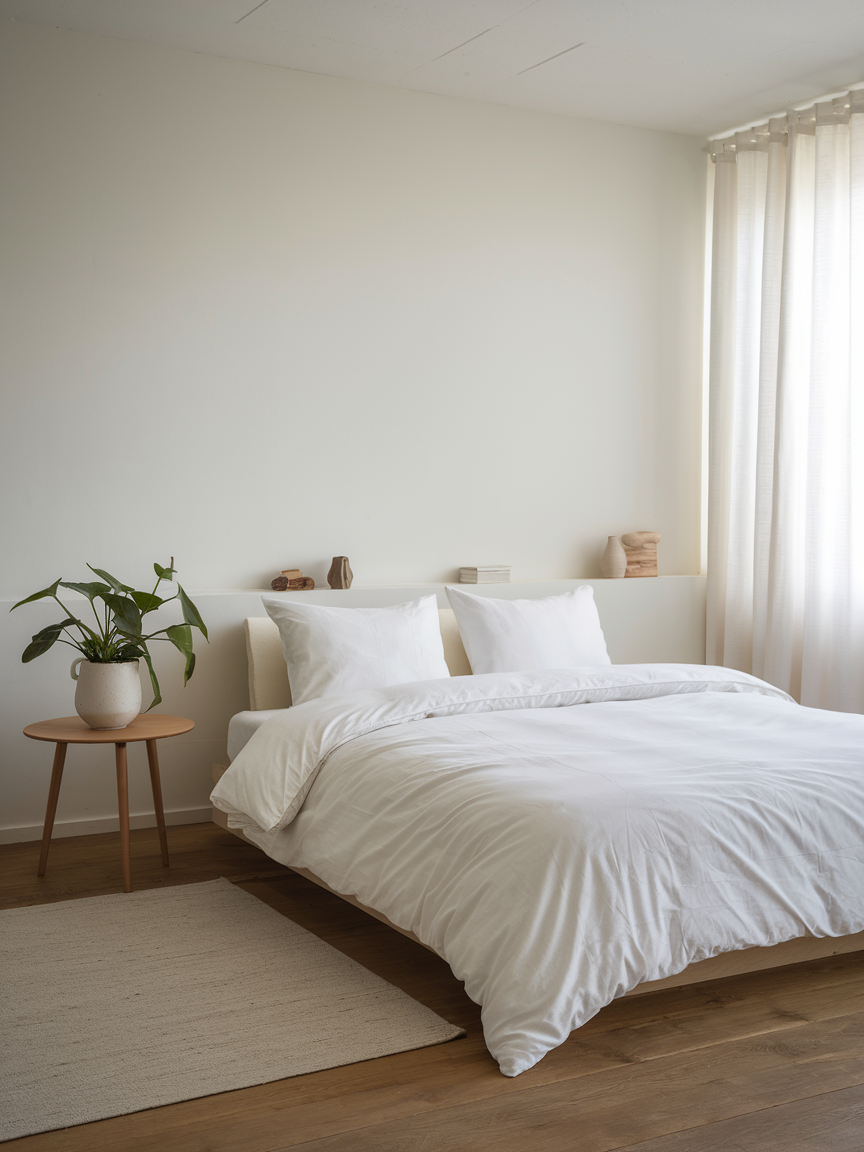
Decor in a minimalist bedroom should be carefully selected and intentionally placed. A few meaningful pieces, such as a small plant, a ceramic vase, or a single sculpture, add character without overwhelming the space. Limiting decorative items helps maintain clarity and focus, allowing each piece to stand out while preserving the room’s calm atmosphere.
11. Neutral Color Palette
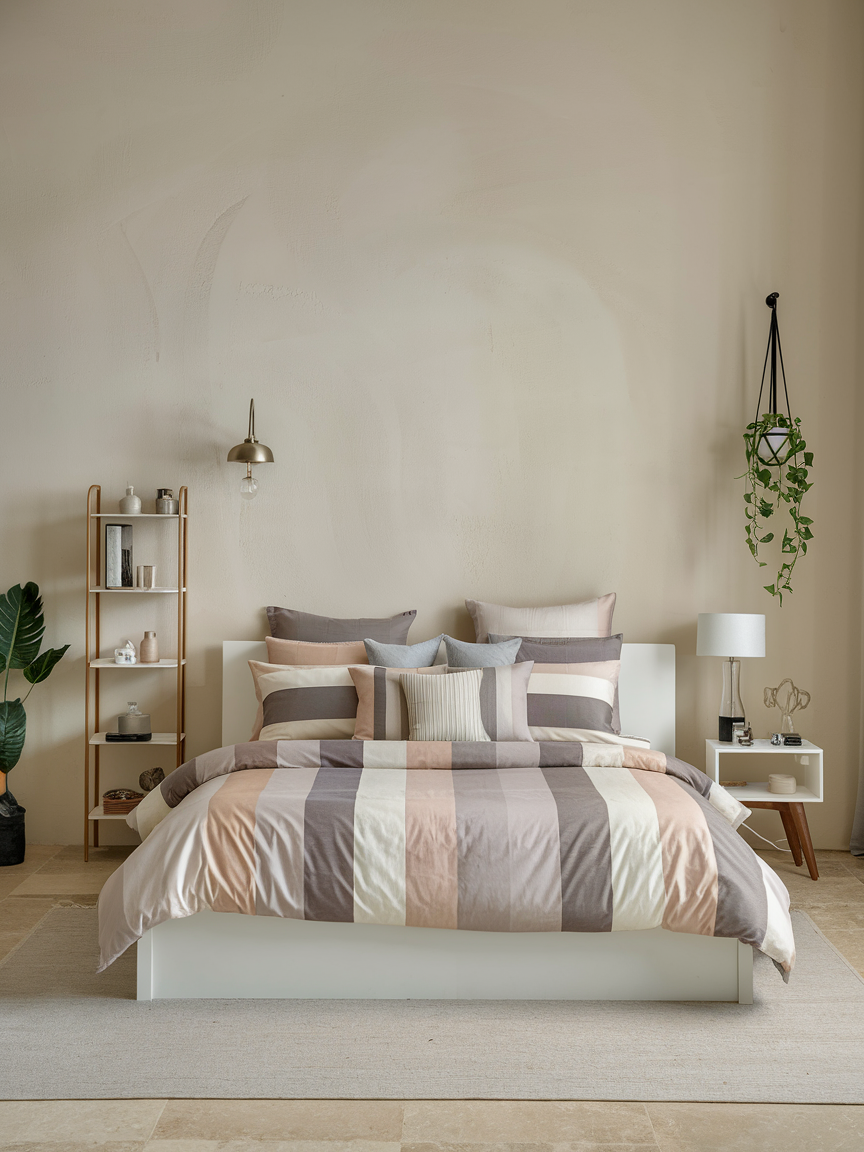
A neutral color palette sets the foundation for a calm and cohesive minimalist bedroom. Soft shades like beige, ivory, pale gray, and warm taupe create a soothing backdrop that instantly makes the space feel open and airy. These tones allow textures and natural materials to stand out without overwhelming the room. Layering different neutral shades adds depth while maintaining a serene atmosphere. This approach also offers flexibility, making it easy to introduce subtle accents or refresh the room over time without disrupting the overall harmony.
12. Platform Bed with Clean Lines
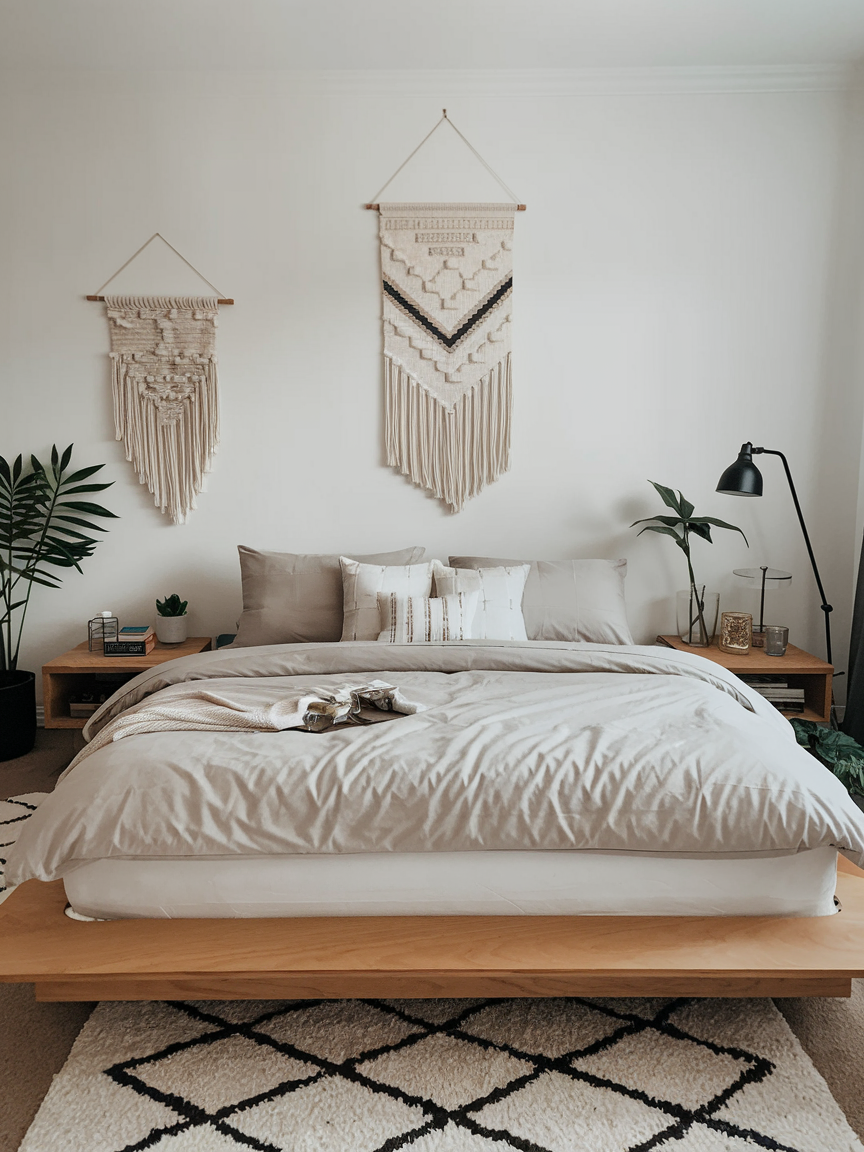
A low-profile platform bed helps establish a clean and uncluttered look in a minimalist bedroom. Its simple silhouette eliminates visual heaviness, allowing the room to feel more spacious and balanced. Pairing it with soft, high-quality bedding ensures comfort while maintaining the streamlined aesthetic. The bed becomes a quiet focal point, anchoring the design without overpowering it. This simplicity not only enhances visual calm but also makes everyday maintenance easier, reinforcing the effortless nature of minimalist living.
13. Floating Nightstand
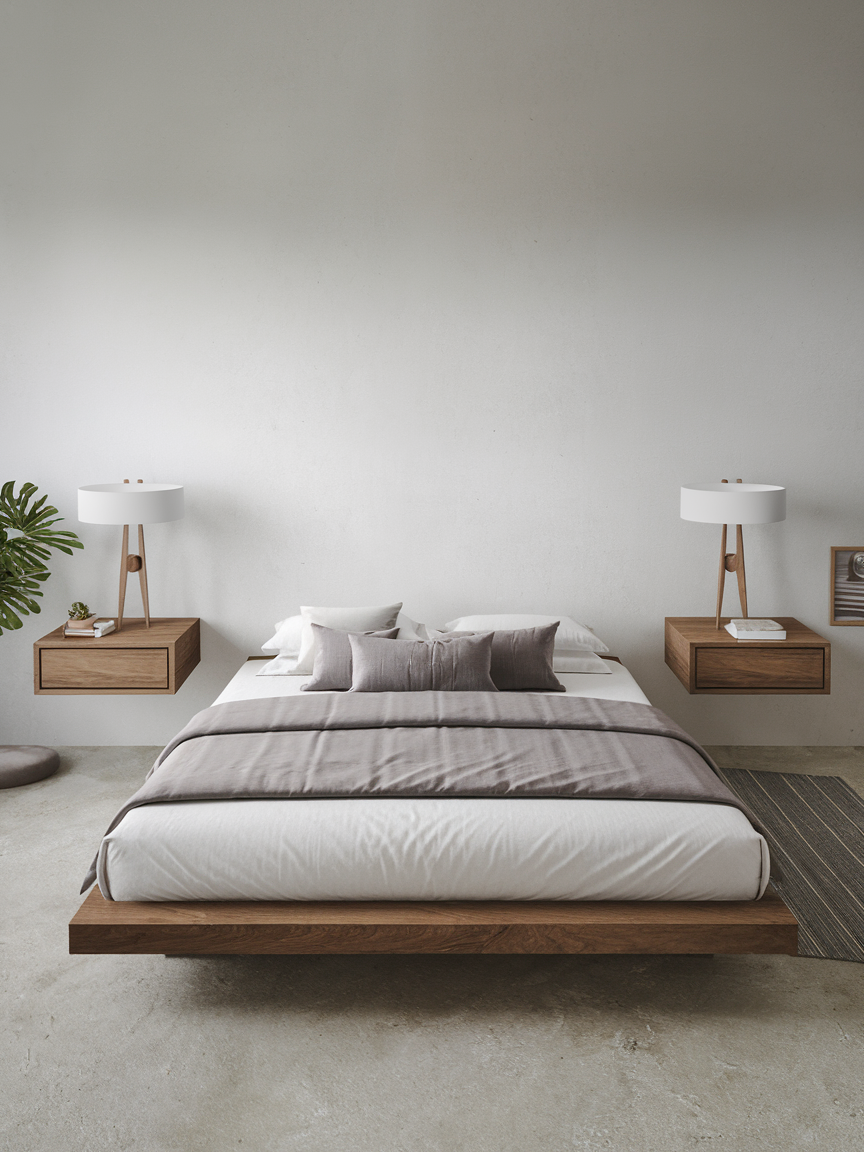
Floating nightstands contribute to a light and modern aesthetic by keeping the floor area open. Their streamlined design reduces visual clutter while still offering practical storage for essentials like books, lighting, or personal items. By lifting furniture off the ground, the room feels more spacious and less crowded. Styling them with just a few carefully chosen objects enhances their function without disrupting the minimalist feel, helping maintain a sense of calm and order.
14. Natural Elements
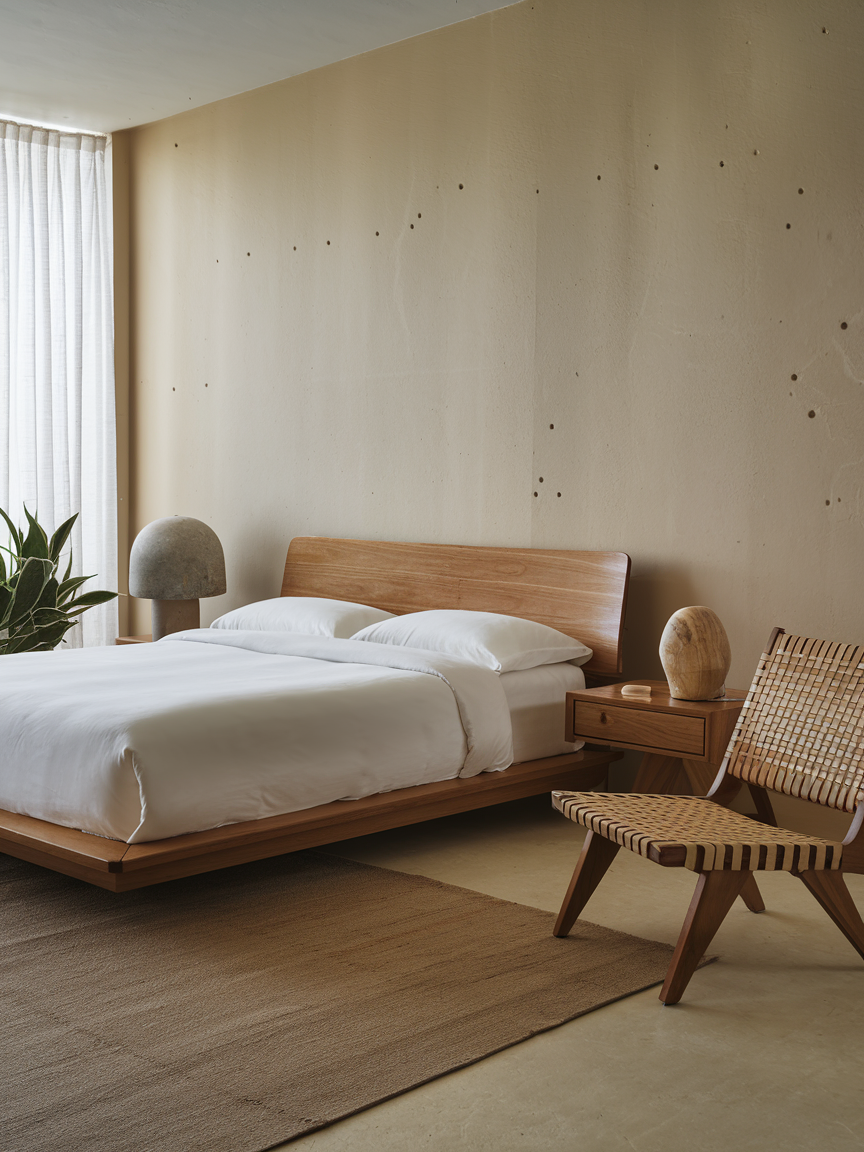
Incorporating natural elements is essential for bringing warmth and life into a minimalist bedroom. Materials like wood, stone, linen, and woven fibers introduce organic texture that softens clean lines and prevents the space from feeling too stark. These elements create a subtle connection to nature, which naturally promotes relaxation and well-being. Whether it’s a wooden bed frame, a rattan chair, or a simple stone accent, each piece adds depth without overwhelming the design. Natural finishes also age beautifully, enhancing the timeless quality of the room. By blending these textures thoughtfully, the bedroom becomes a balanced environment where simplicity meets comfort, resulting in a space that feels both grounded and inviting.
15. Calming Scents
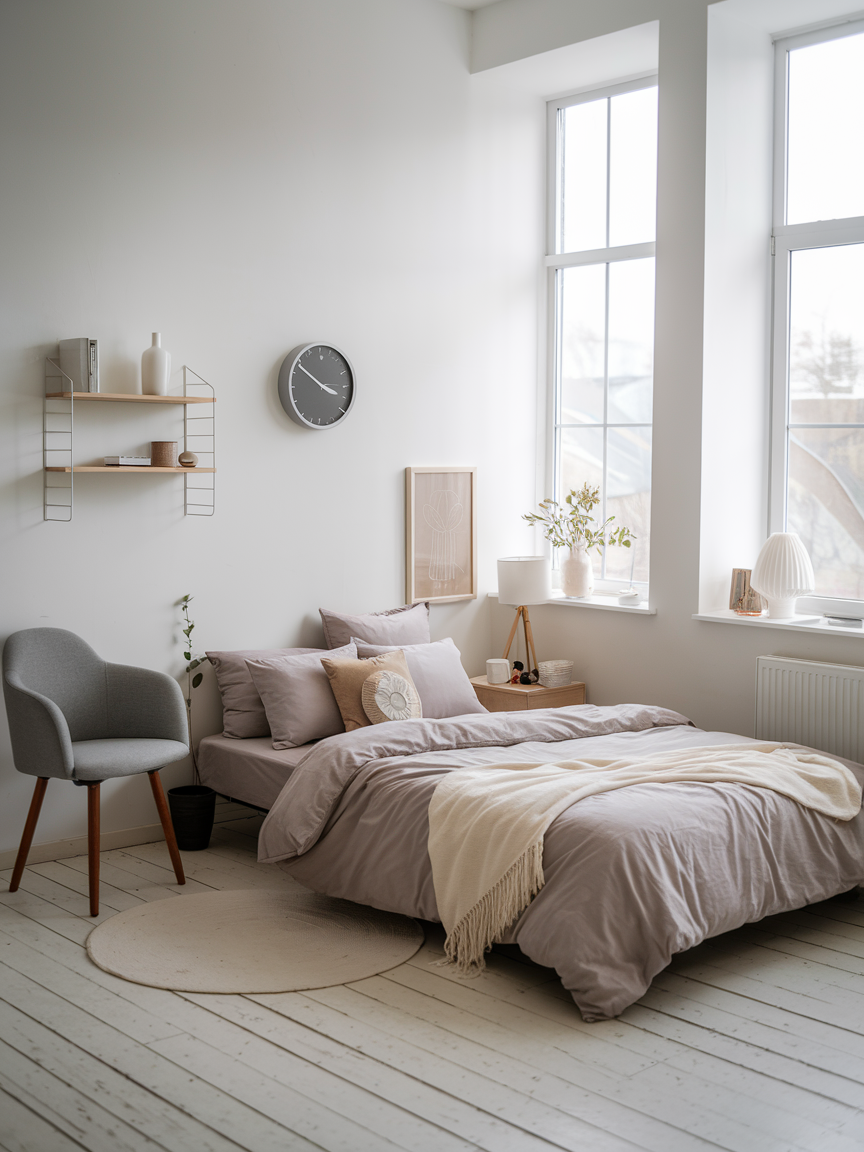
Introducing calming scents adds a sensory layer that enhances the overall atmosphere of a minimalist bedroom. Subtle fragrances such as lavender, eucalyptus, or sandalwood promote relaxation and help create a tranquil environment ideal for rest. Using simple diffusers, candles, or essential oil blends ensures the scent experience remains aligned with the room’s clean aesthetic. Fragrance works quietly in the background, complementing the visual calm with a soothing sensory effect. This multi-sensory approach transforms the bedroom into a more immersive retreat, where both mind and body can unwind. Thoughtfully chosen scents elevate the feeling of comfort, making the space even more inviting and restorative.
16. Minimal Desk or Vanity
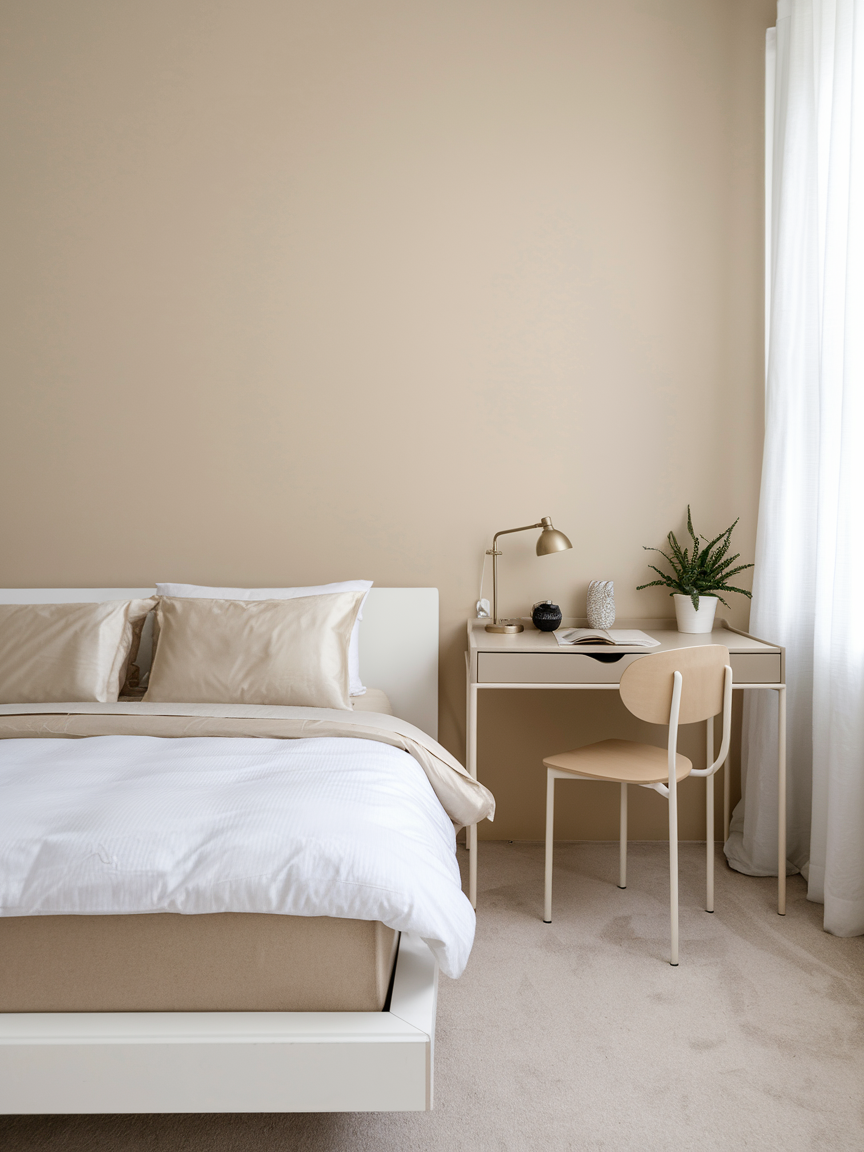
A minimalist desk or vanity ensures functionality without compromising the bedroom’s serene aesthetic. Clean lines, compact forms, and built-in storage allow the piece to blend seamlessly into the space. Keeping the surface clear and uncluttered helps maintain focus and reduces visual distractions, making it easier to transition between productivity and relaxation. Neutral finishes and simple materials enhance cohesion with the rest of the room. When thoughtfully styled, a desk or vanity becomes an integrated part of the design rather than a disruptive element. This balance allows the bedroom to serve multiple purposes while still feeling calm, organized, and inviting.
17. Textured Accent Pillows
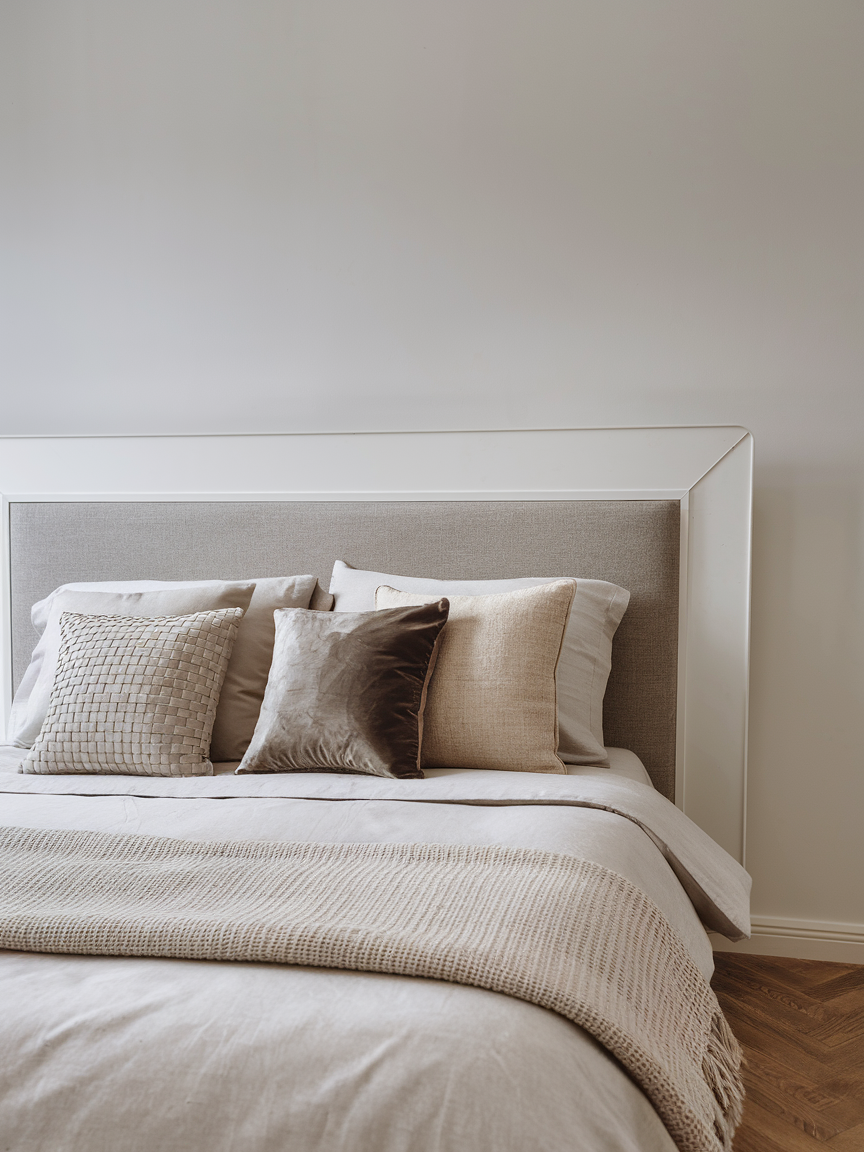
Textured accent pillows add subtle dimension and comfort to a minimalist bedroom without overwhelming its simplicity. Materials such as linen, boucle, or soft knits introduce tactile variety that enhances the overall coziness of the space. Keeping the color palette neutral ensures these additions remain cohesive while still providing visual interest. Layering a few well-chosen pillows creates an inviting bed arrangement that feels plush yet refined. These small details make a noticeable difference, softening the clean lines of minimalist design. The result is a bedroom that feels warm, balanced, and thoughtfully styled while maintaining its calm and uncluttered essence.
18. Subtle Art Installation
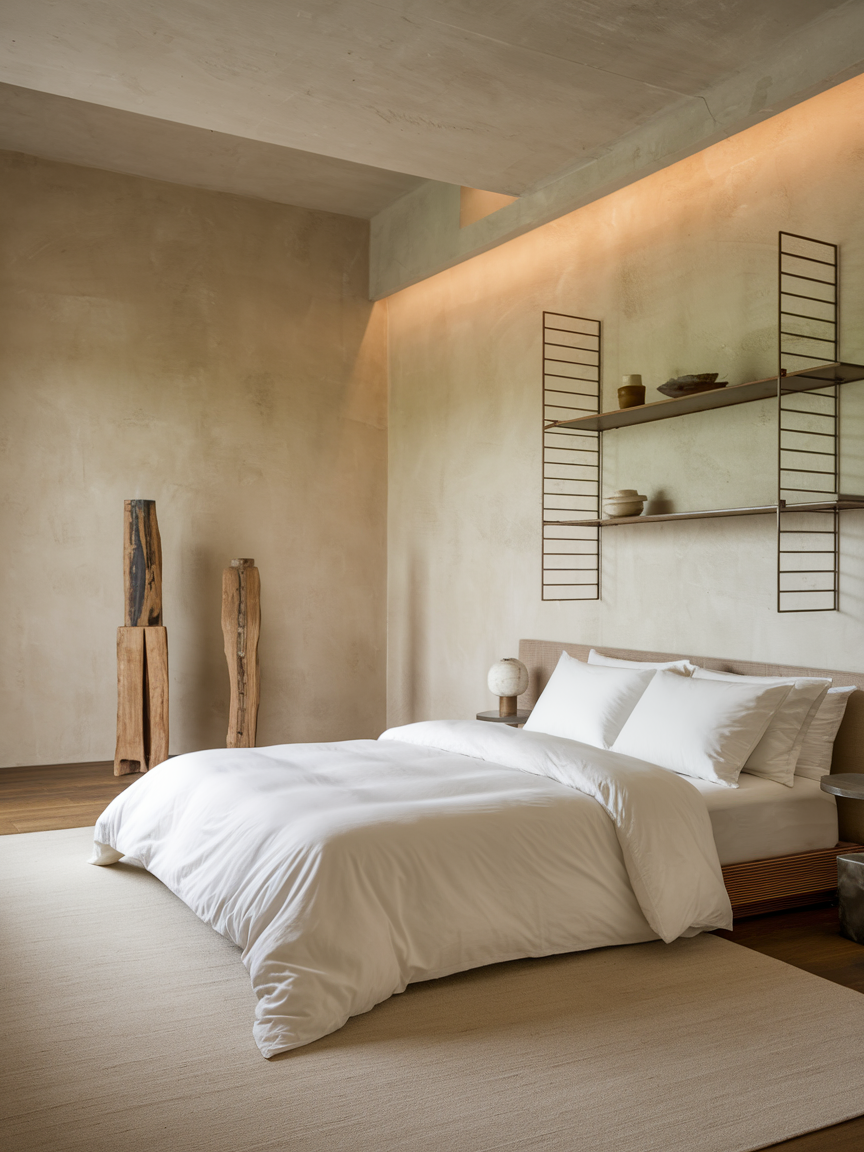
Subtle art installations bring personality and depth to a minimalist bedroom while preserving its clean aesthetic. Instead of bold or oversized pieces, consider understated sculptures, small wall-mounted designs, or delicate metal accents. These elements add visual interest without overwhelming the space, allowing the room to feel curated and intentional. The focus remains on quality and meaning rather than quantity, ensuring each piece contributes to the overall atmosphere. Subtle art enhances the room’s character while maintaining balance and harmony. This thoughtful approach allows creativity to shine through in a refined and understated way.
19. Minimal Tech Integration
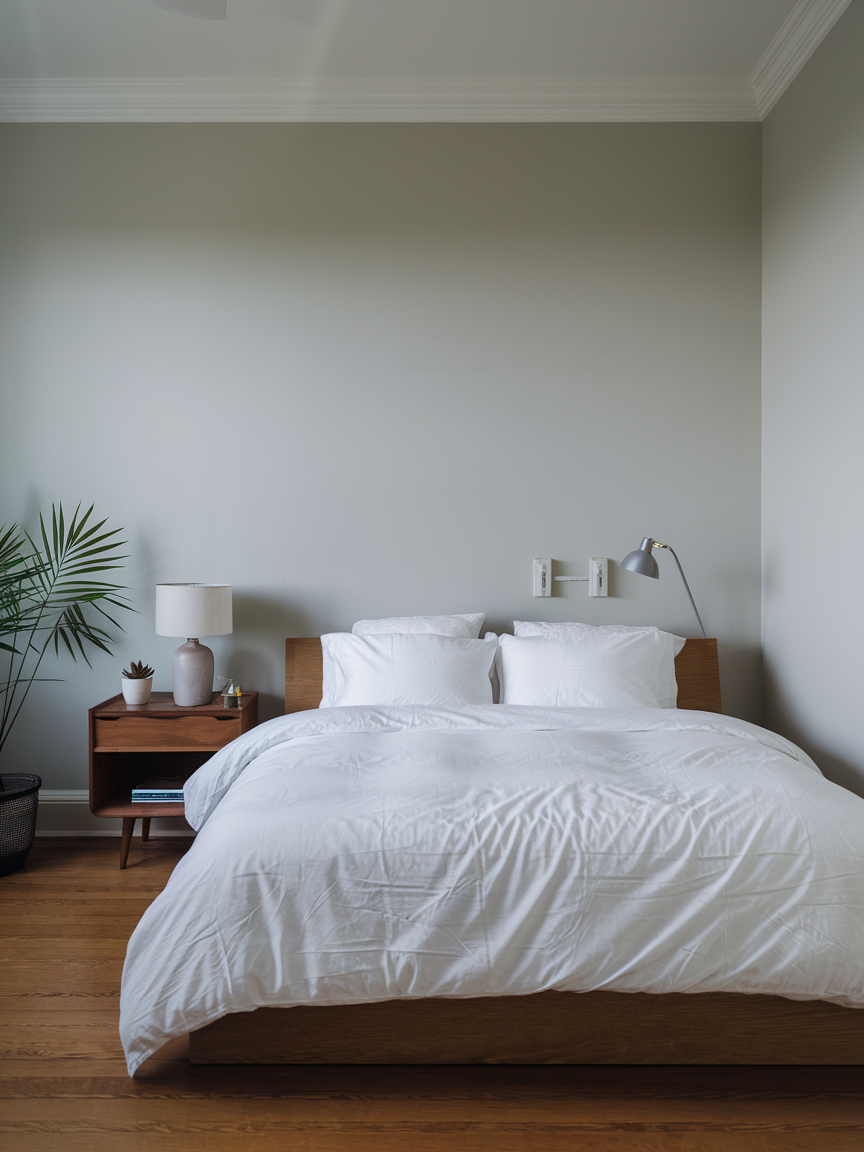
Keeping technology discreet is essential for maintaining the calm atmosphere of a minimalist bedroom. Concealing wires, storing devices out of sight, and limiting visible electronics help reduce visual clutter and distractions. Built-in storage or sleek furniture solutions can house televisions, chargers, and speakers without disrupting the design. This approach encourages a more restful environment, where the focus shifts away from screens and toward relaxation. By integrating technology thoughtfully, the bedroom remains functional while preserving its role as a peaceful retreat. The result is a space that supports modern living without sacrificing the simplicity and serenity that define minimalist design.
20. Minimal Mirror
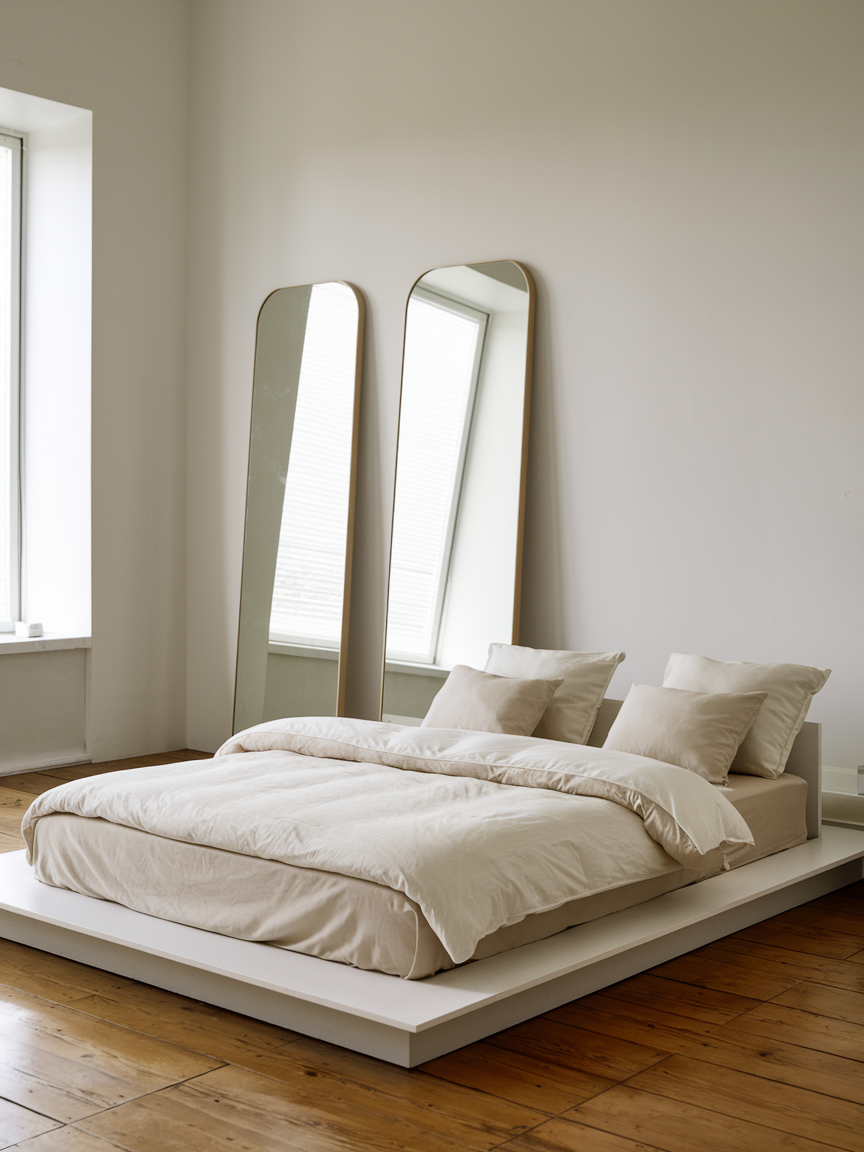
Mirrors play a quiet yet impactful role in enhancing a minimalist bedroom. Their ability to reflect light instantly brightens the space while creating the illusion of added depth and openness. Choosing simple designs, such as frameless mirrors or those with thin, understated frames, ensures they blend seamlessly into the overall aesthetic. Positioned strategically near windows or light sources, mirrors amplify natural brightness and make the room feel more expansive. Beyond their functional purpose, they contribute to the clean and uncluttered look that defines minimalism. A well-placed mirror enhances both practicality and visual harmony, helping the bedroom feel lighter, calmer, and effortlessly refined.
21. Soft Throw Blanket
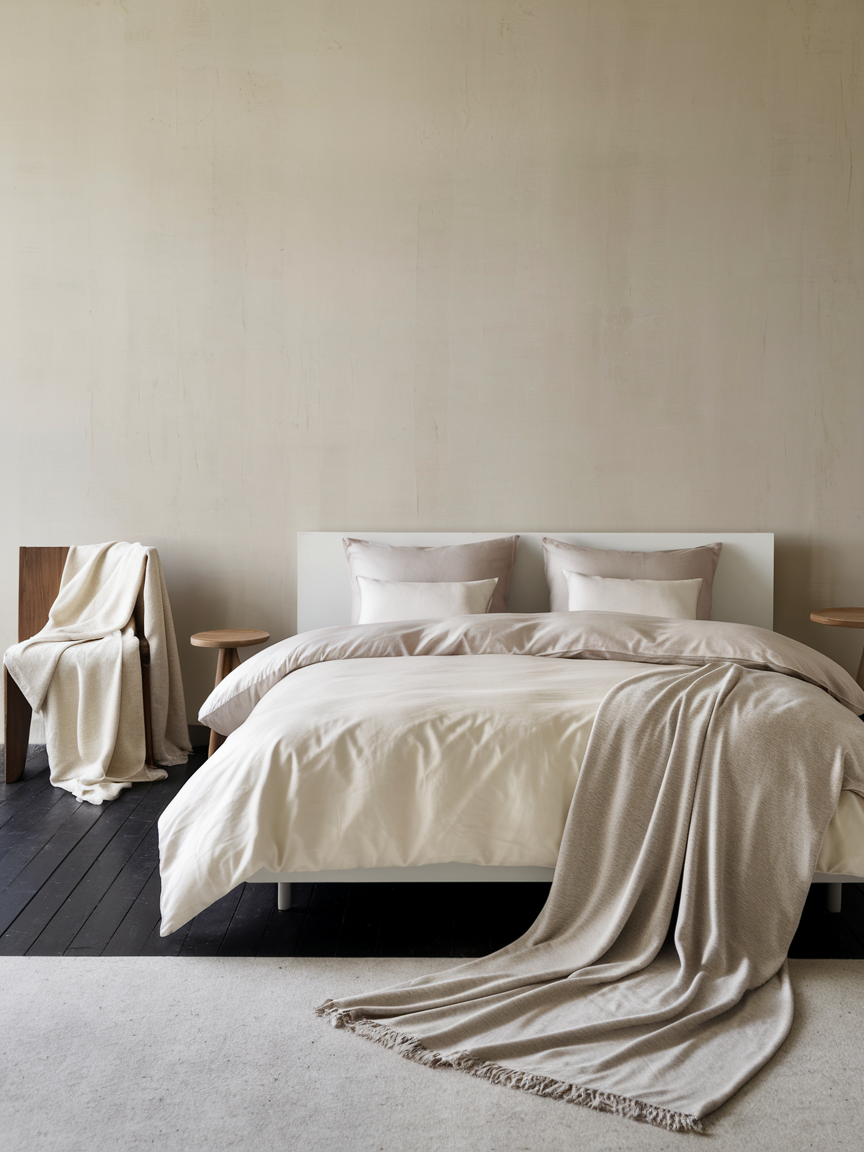
Soft throw blankets introduce an inviting layer of comfort that enhances the coziness of a minimalist bedroom without disrupting its simplicity. Carefully chosen in neutral tones or subtle textures, they blend seamlessly into the overall palette while adding depth and warmth. Draped casually over the bed or a chair, they create a relaxed, lived-in feel that softens the structured elements of the room. The contrast between smooth bedding and textured throws adds visual interest in a gentle, understated way. Beyond aesthetics, they provide practical comfort, making the space feel more welcoming. This small addition helps transform a minimalist bedroom into a soothing retreat that encourages rest and relaxation.
22. Integrated Nightstand
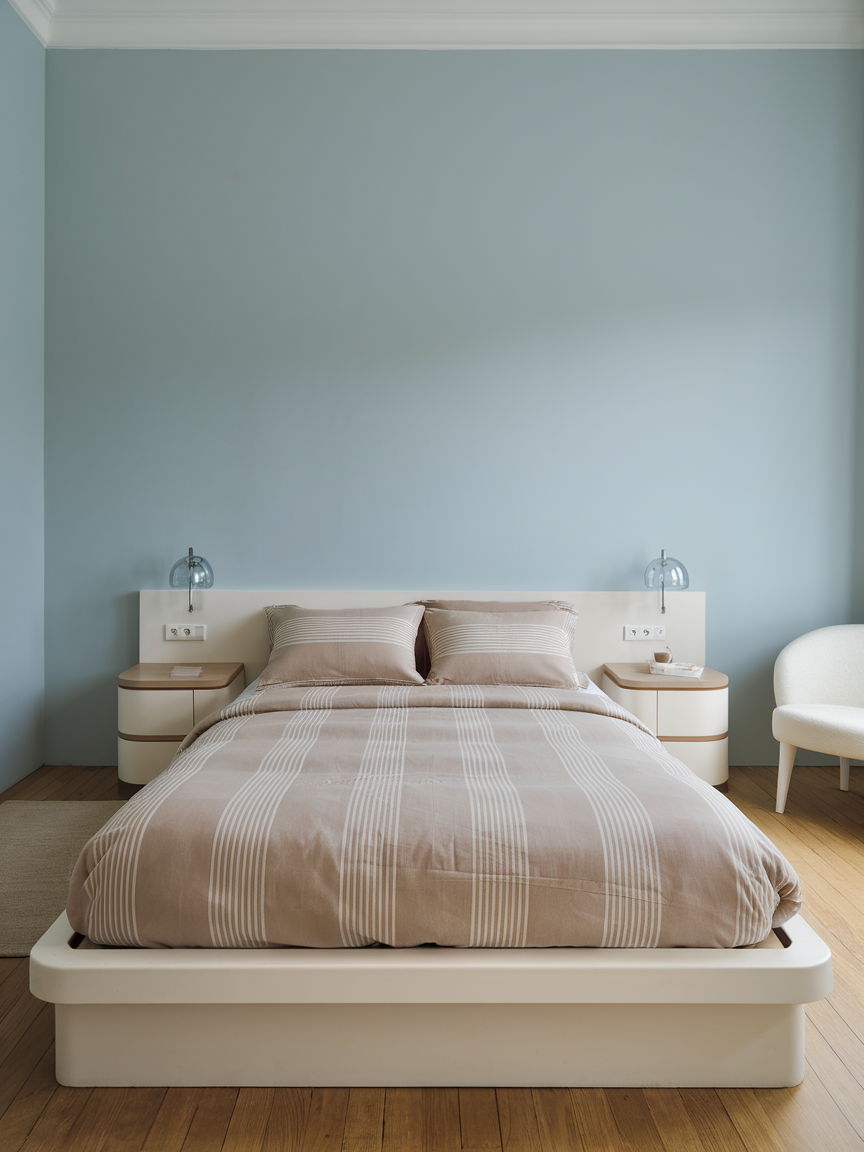
Integrated nightstands offer a seamless and highly functional solution for maintaining a clutter-free bedroom. Built directly into the bed frame or wall, they eliminate the need for additional furniture while providing convenient storage for everyday essentials. Their streamlined design enhances visual continuity, making the room feel more cohesive and thoughtfully planned. By reducing excess elements, integrated nightstands support the clean lines that define minimalist interiors. They also help keep surfaces organized, ensuring that only essential or meaningful items are visible. This approach combines practicality with elegance, allowing the bedroom to remain calm, efficient, and visually harmonious.
23. Minimal Headboard
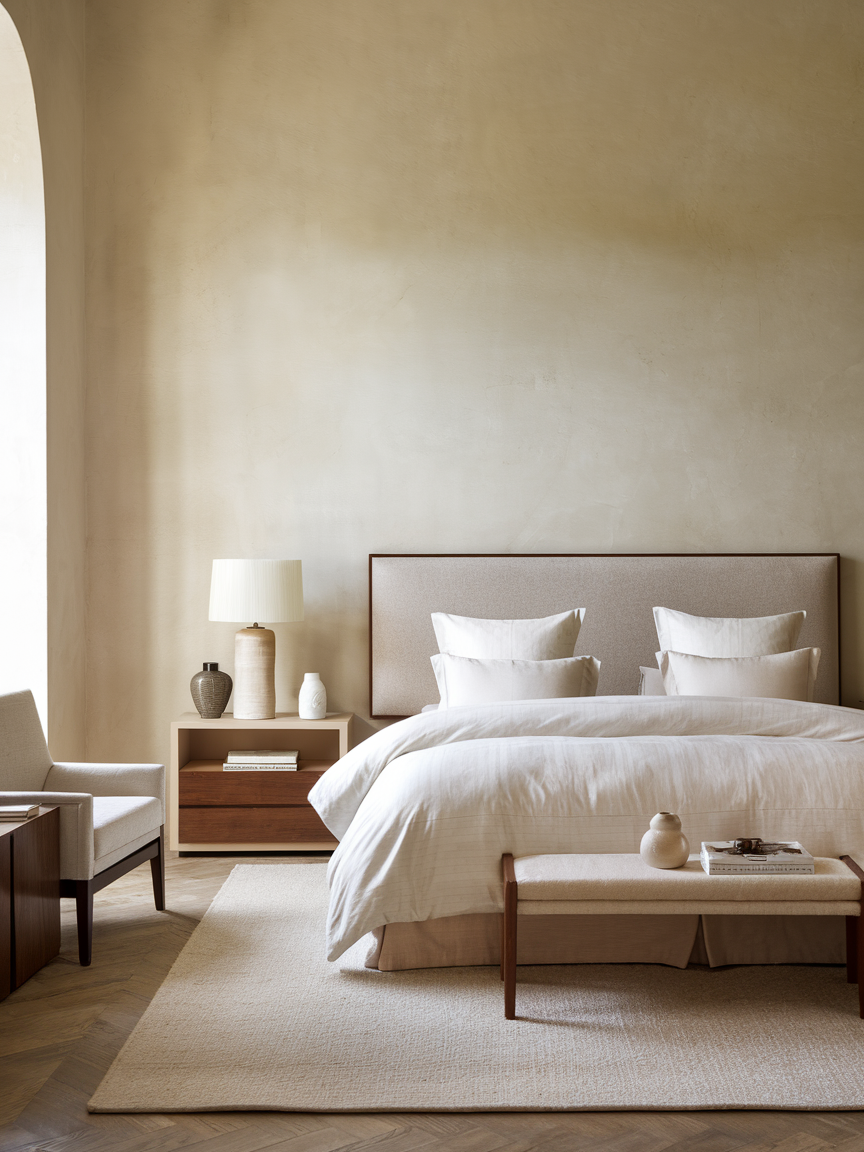
A minimalist headboard serves as a subtle focal point that enhances the bedroom without overwhelming it. Simple designs, such as low wooden panels, upholstered rectangles, or sleek frames, provide structure while maintaining a clean and uncluttered look. These understated pieces anchor the bed visually, helping to define the sleeping area within the room. When paired with soft bedding and neutral tones, they create a balanced composition that feels both cozy and refined. Minimal headboards also contribute to comfort, offering support without unnecessary ornamentation. This thoughtful simplicity ensures the bedroom remains serene, elegant, and perfectly aligned with the essence of minimalist design.
* Minimalist design is not about having less, it’s about making room for what truly matters. By focusing on simplicity, thoughtful choices, and calming details, you can create a bedroom that feels both functional and deeply relaxing.