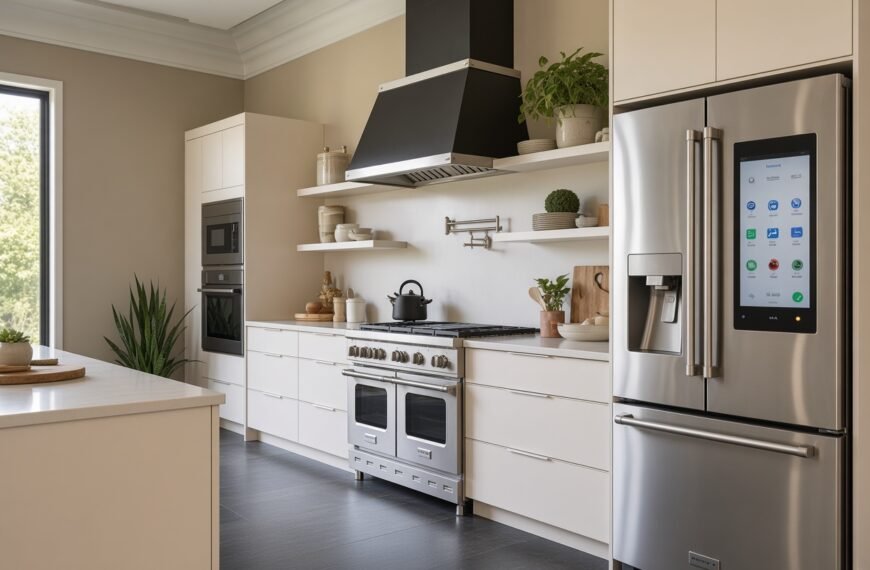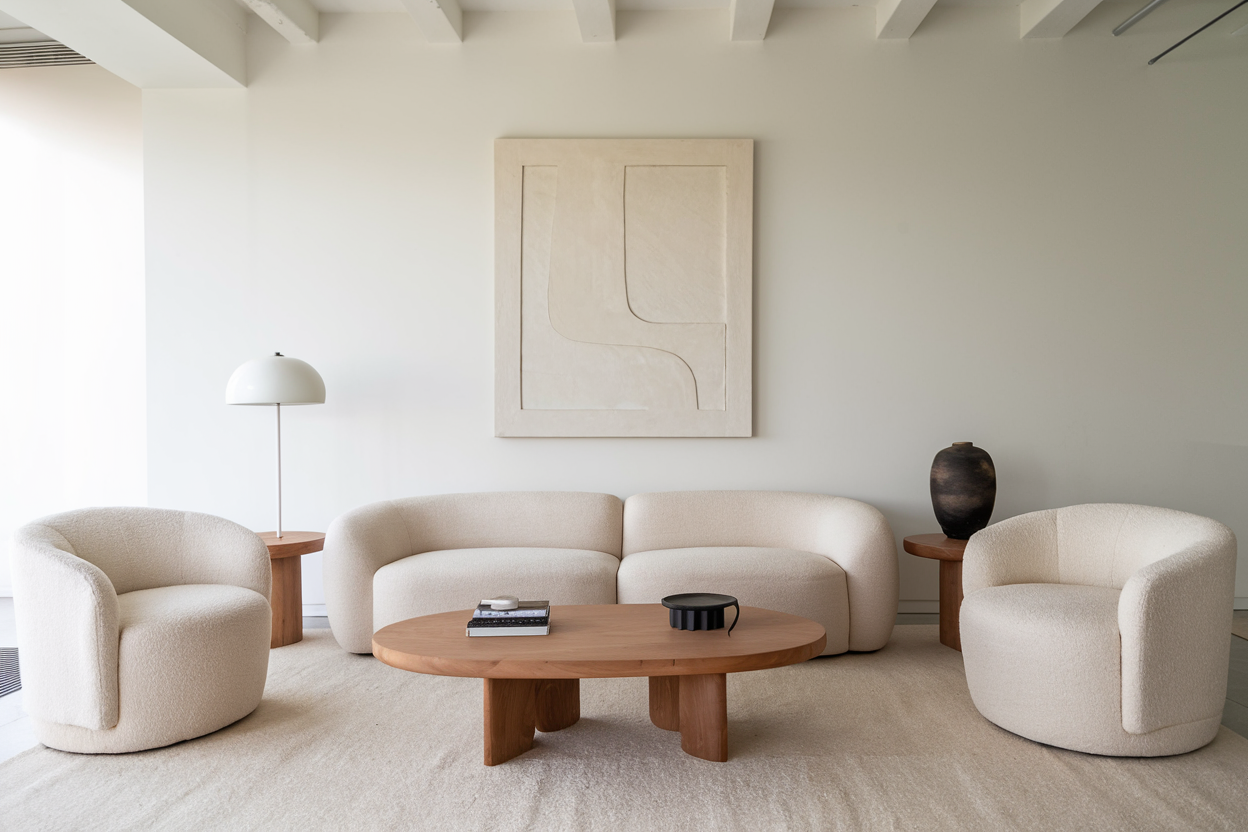
A modern minimalist living room embraces simplicity, clarity, and a sense of calm that transforms everyday living into a more intentional experience. Clean lines, open layouts, and a restrained color palette help create a space that feels light, organized, and effortlessly refined. By focusing on essential elements, the design allows each piece to stand out while contributing to a cohesive and serene atmosphere.
Thoughtful design plays a key role in achieving a minimalist look that still feels warm and inviting. Subtle textures, natural materials, and carefully selected furniture add depth without cluttering the space. Soft lighting and balanced proportions enhance the overall ambiance, creating a living room that feels both functional and visually harmonious.
In this collection, let’s discover modern minimalist living room ideas that create a space defined by clarity, comfort, and understated elegance!
1. Neutral Color Palette Foundation
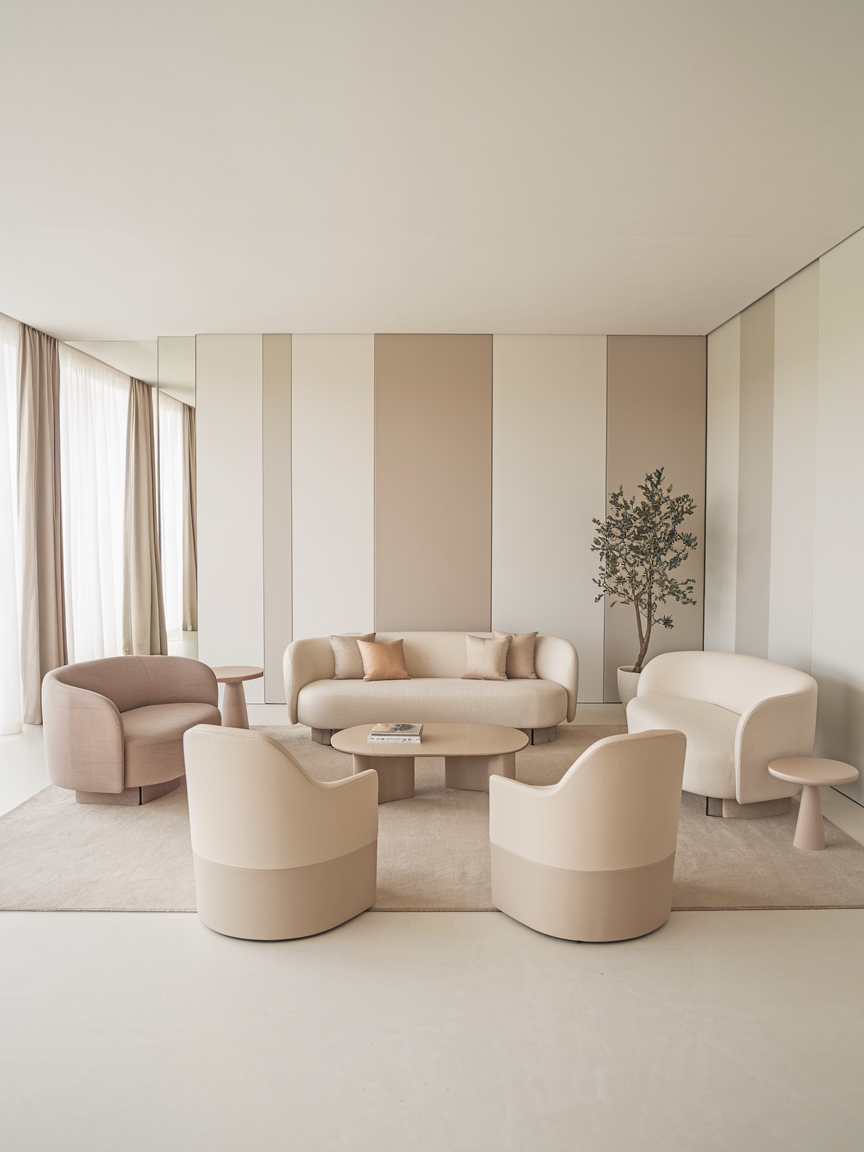
A neutral color palette forms the backbone of a modern minimalist living room, setting a calm and cohesive tone that instantly makes the space feel more open and breathable. Instead of relying on a single shade, layering tones like warm white, soft beige, light taupe, and gentle gray creates subtle depth and visual sophistication. These hues reflect natural light beautifully, enhancing the airy atmosphere while preventing the room from feeling flat or sterile. A neutral base also provides incredible flexibility, allowing you to introduce seasonal accents or small décor updates without disrupting the overall harmony. The result is a timeless foundation that feels both serene and effortlessly refined.
2. Low-Profile Furniture
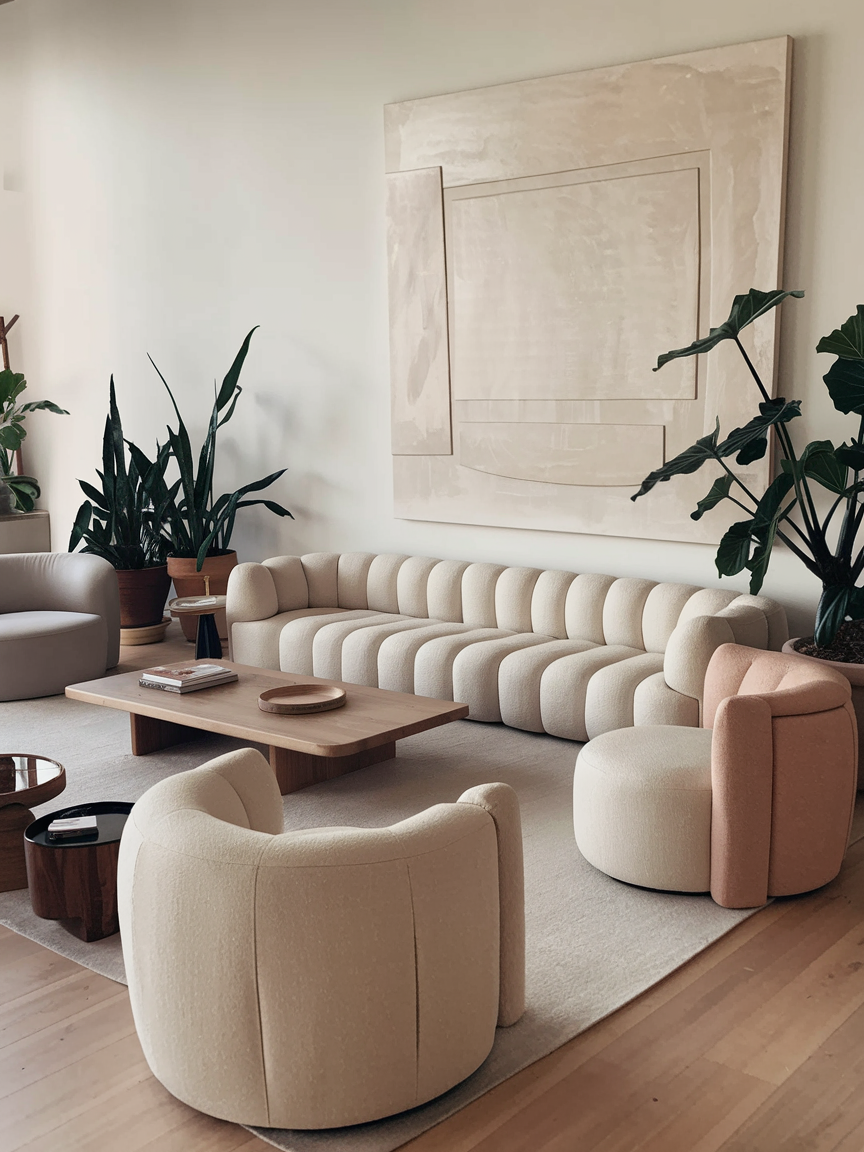
Low-profile furniture is essential for maintaining a sense of openness and visual calm in a minimalist living room. Sofas, coffee tables, and seating that sit closer to the ground help create clean sightlines, making the room appear more spacious and less crowded. This horizontal emphasis mirrors the relaxed, grounded feeling of modern interiors, encouraging a more laid-back and comfortable environment. In addition to aesthetics, low furniture also improves flow, making it easier to move around the space. When paired with soft textures and neutral tones, these pieces contribute to a living room that feels both stylish and deeply inviting.
3. Clean Lines and Simple Shapes
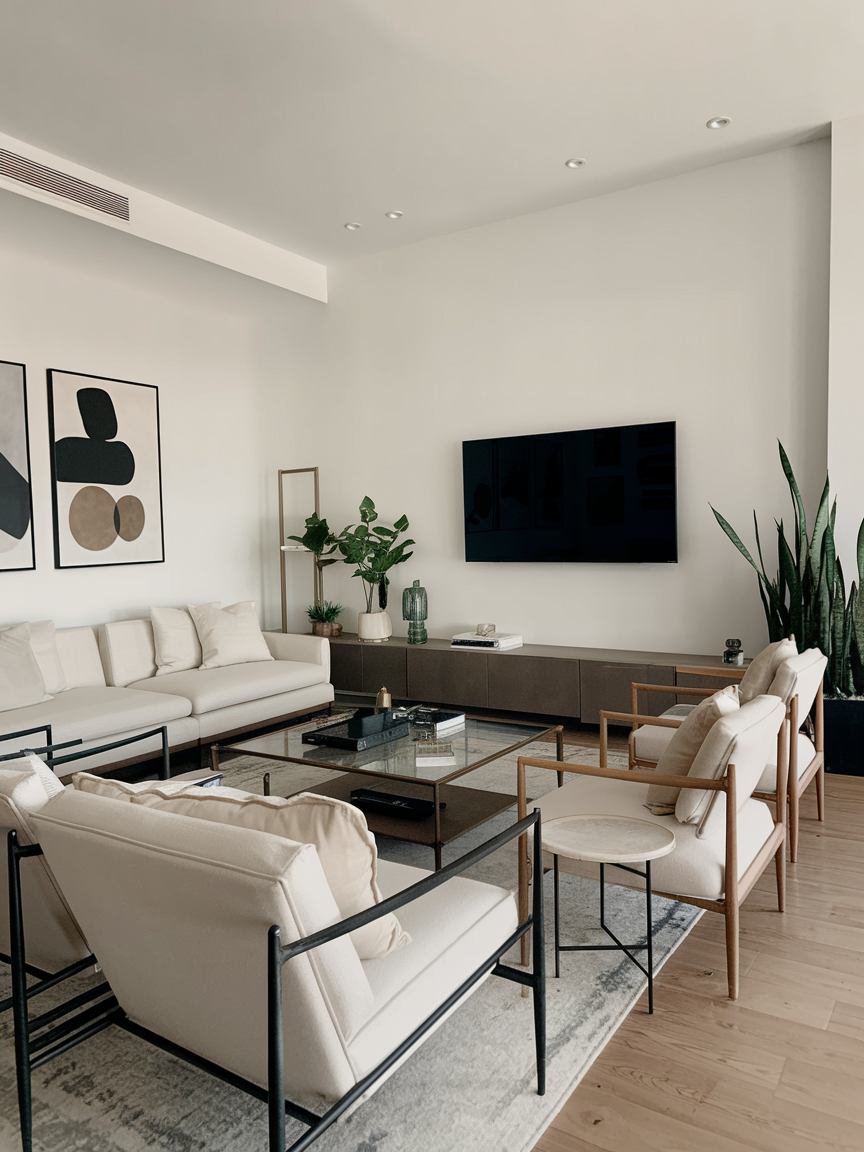
Clean lines and simple geometric shapes are at the core of minimalist design, helping to create a space that feels organized, intentional, and visually calming. Furniture with straight edges, smooth surfaces, and minimal detailing reduces visual noise and allows the eye to rest. This approach avoids unnecessary ornamentation, focusing instead on form, proportion, and balance. By choosing pieces with refined silhouettes, you create a living room that feels modern and sophisticated without appearing overly designed. The simplicity of these shapes ensures the space remains timeless, elegant, and easy to live in.
4. Decluttered Surfaces
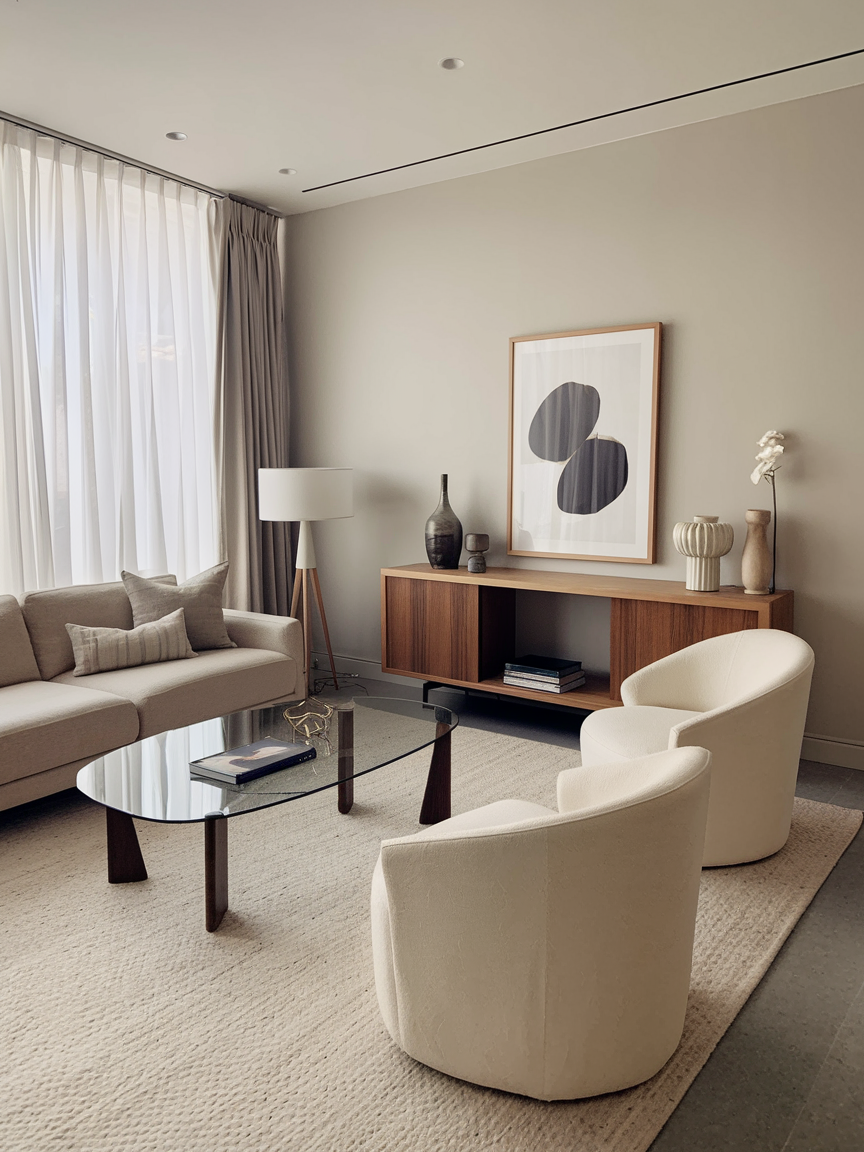
Keeping surfaces clean and uncluttered is one of the most impactful ways to achieve a minimalist living room. Coffee tables, shelves, and consoles should be styled with intention, featuring only a few meaningful or functional items. This approach not only enhances visual clarity but also creates a sense of calm and order. When surfaces are free from excess, the room feels more breathable and relaxing, allowing each chosen piece to stand out. A decluttered environment also simplifies daily living, making it easier to maintain a tidy and peaceful space over time.
5. Statement Sofa as a Focal Point
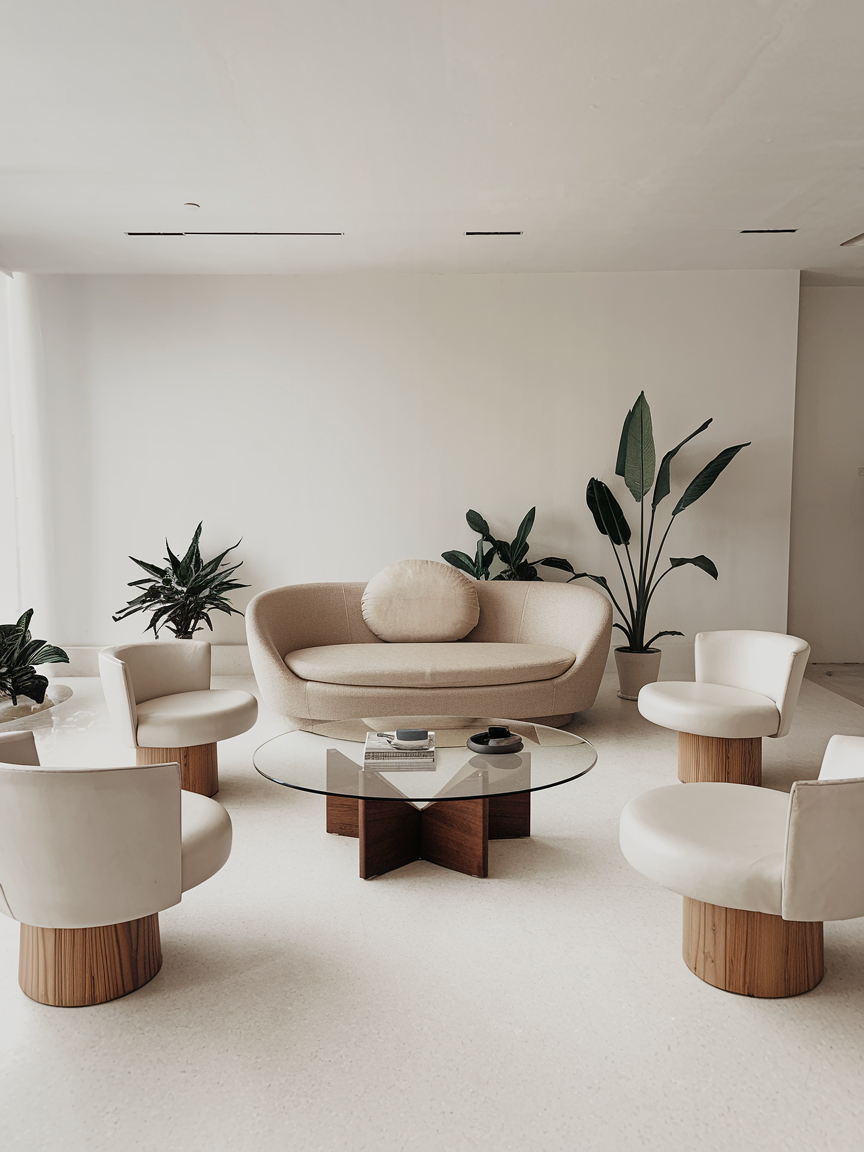
In a minimalist living room, a single standout piece can anchor the entire design, and the sofa often plays this role beautifully. Choosing a well-crafted sofa in a neutral tone or subtle texture allows it to act as the focal point without overwhelming the space. Clean lines, high-quality upholstery, and comfortable proportions ensure it is both functional and visually appealing. By keeping the surrounding décor minimal, the sofa naturally draws attention, creating a balanced and cohesive look. This approach highlights the importance of quality over quantity, making the space feel curated and intentional.
6. Natural Light Emphasis
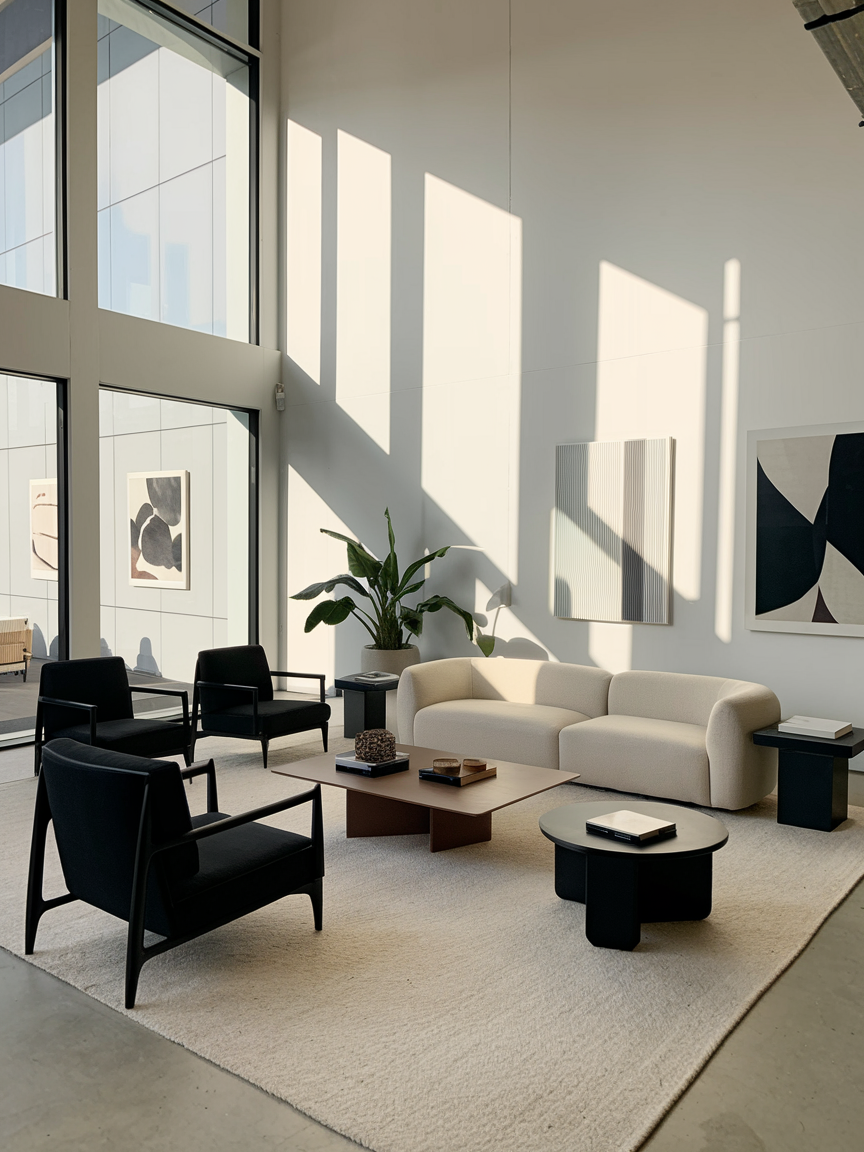
Natural light is one of the most powerful elements in a minimalist living room, enhancing both the aesthetic and the overall mood of the space. Large windows, sheer curtains, or unobstructed openings allow sunlight to flow freely, illuminating neutral tones and highlighting textures. This abundance of light creates a fresh, uplifting atmosphere that feels open and inviting. Maximizing natural light also reduces the need for artificial lighting during the day, reinforcing the simplicity and efficiency of minimalist design. The result is a living room that feels alive, warm, and effortlessly serene.
7. Soft Textures for Warmth
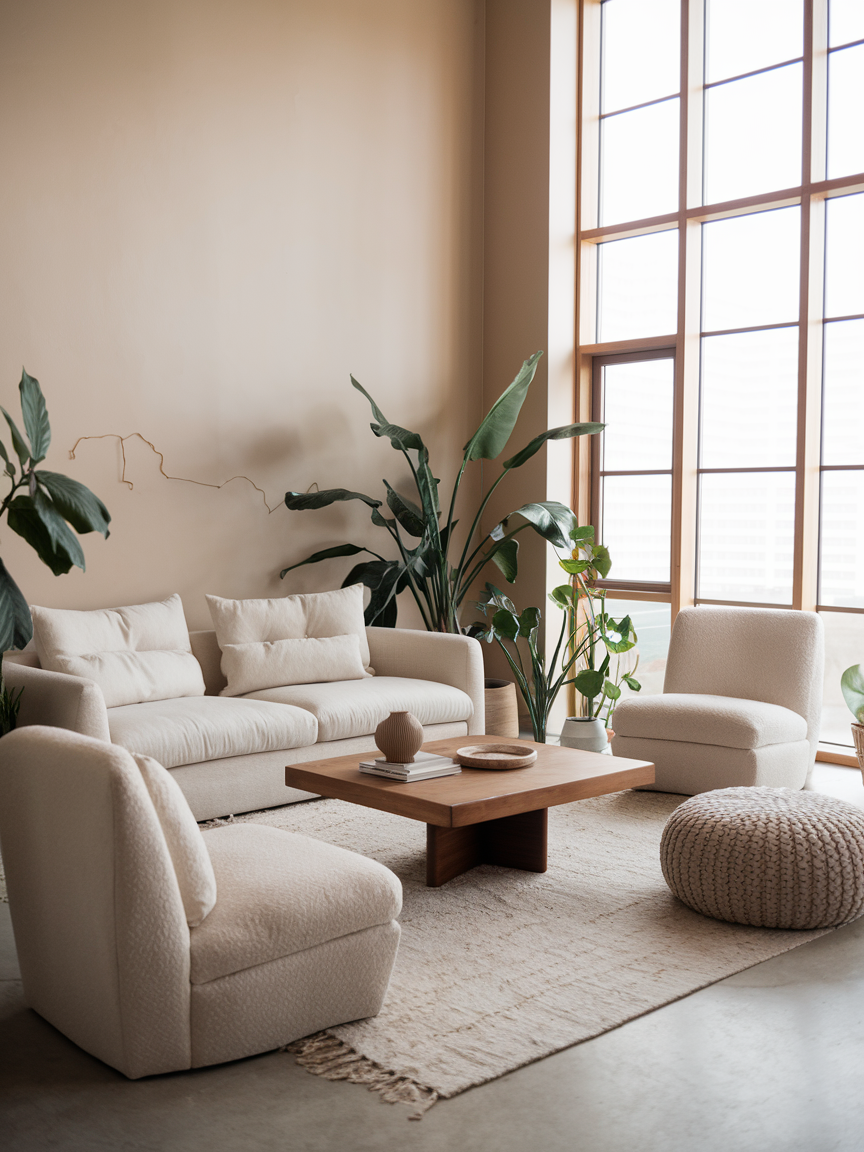
While minimalist spaces focus on simplicity, incorporating soft textures is essential to prevent the room from feeling cold or uninviting. Materials like linen, wool, cotton, and boucle add a layer of comfort and tactile richness that enhances the overall experience of the space. Throw pillows, blankets, and rugs can be layered subtly to create depth without clutter. These textures soften the clean lines of furniture and introduce a cozy, lived-in feel. The balance between simplicity and comfort ensures the living room remains both stylish and welcoming.
8. Subtle Texture Play
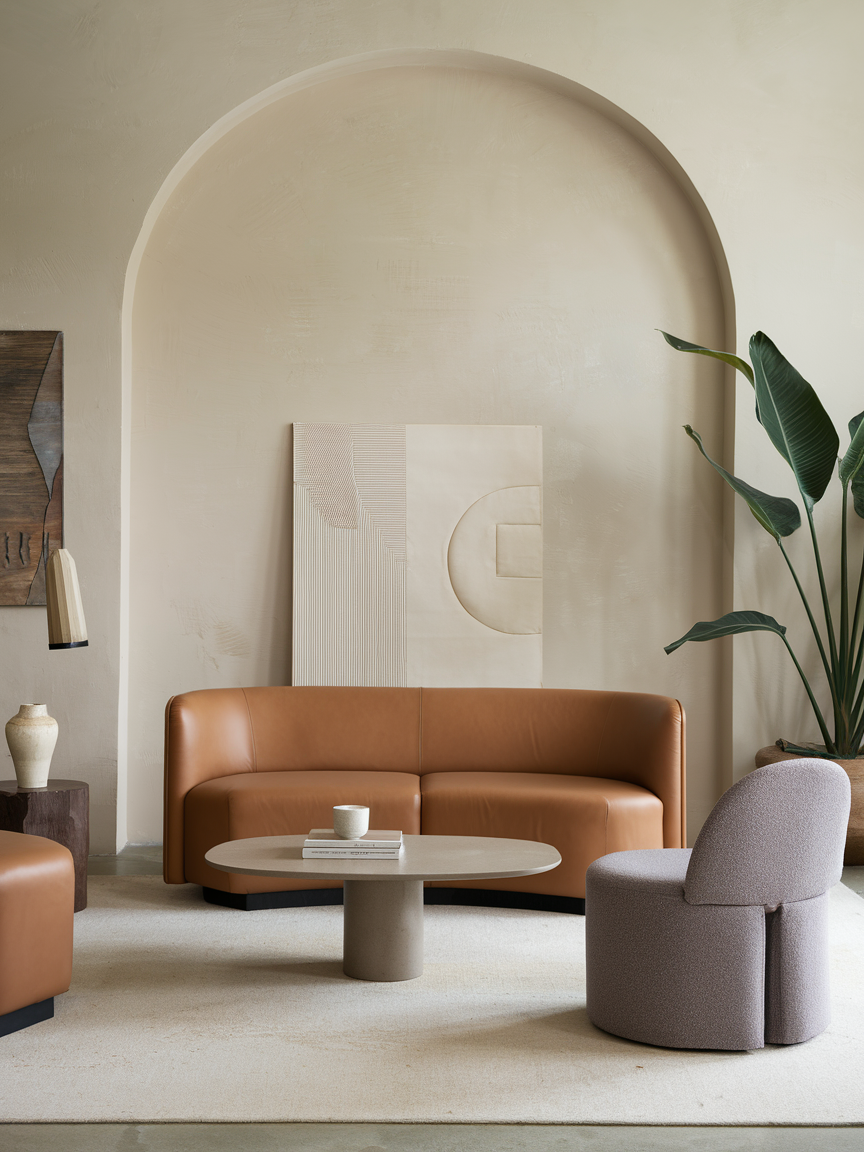
Texture is key to preventing a minimalist space from feeling flat or cold. Incorporating materials like linen, wool, leather, or woven fibers adds depth and warmth without adding visual clutter. I enjoy mixing soft and slightly rough textures to create a balanced, tactile experience. These subtle variations make the room feel more dynamic and inviting while maintaining a clean aesthetic. Texture allows minimalism to feel cozy and lived-in rather than stark or impersonal.
9. Minimal Wall Art
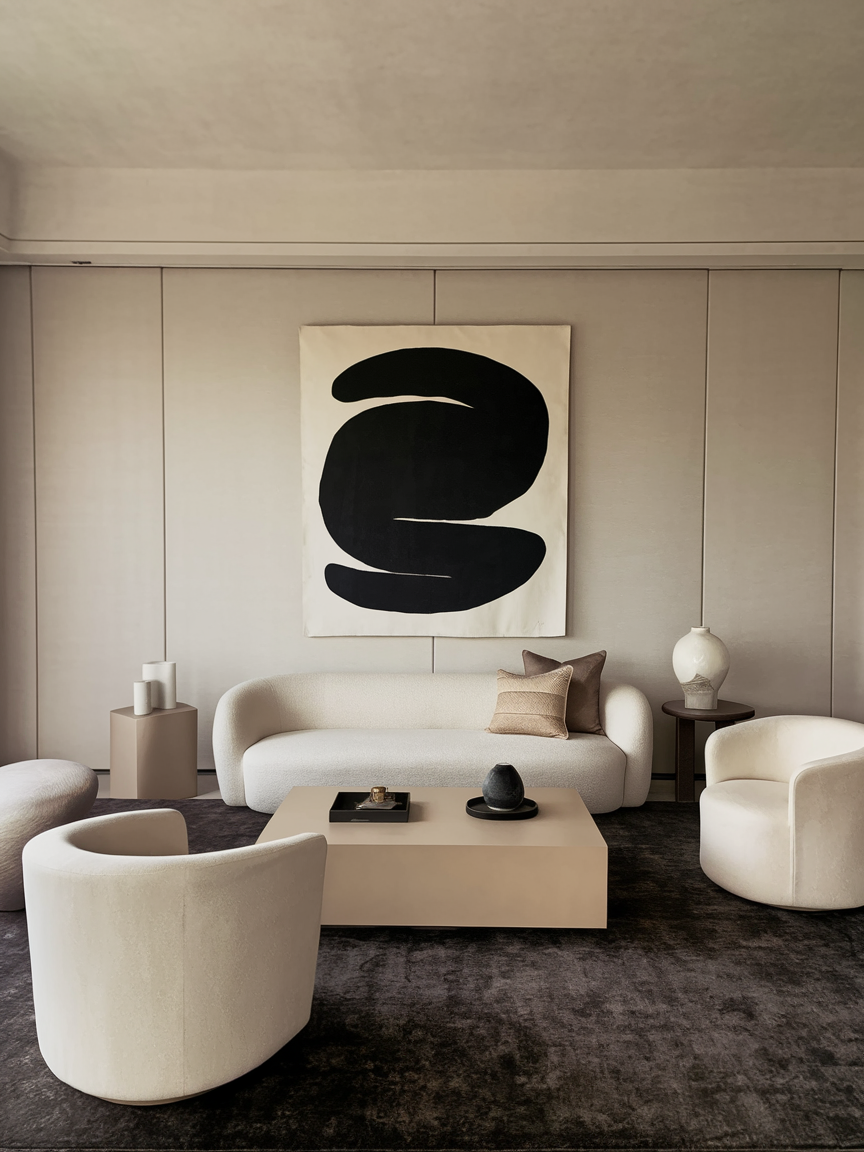
Wall art in a minimalist living room should feel intentional and carefully curated rather than excessive. A single large artwork or a small selection of cohesive pieces can add personality without overwhelming the space. Abstract designs, monochrome prints, or soft landscapes work particularly well, as they complement the calm aesthetic. Proper placement and spacing are equally important, ensuring the art enhances the room’s balance. Minimal wall art provides a focal point and visual interest while maintaining the overall simplicity and elegance of the design.
10. Monochrome Artwork
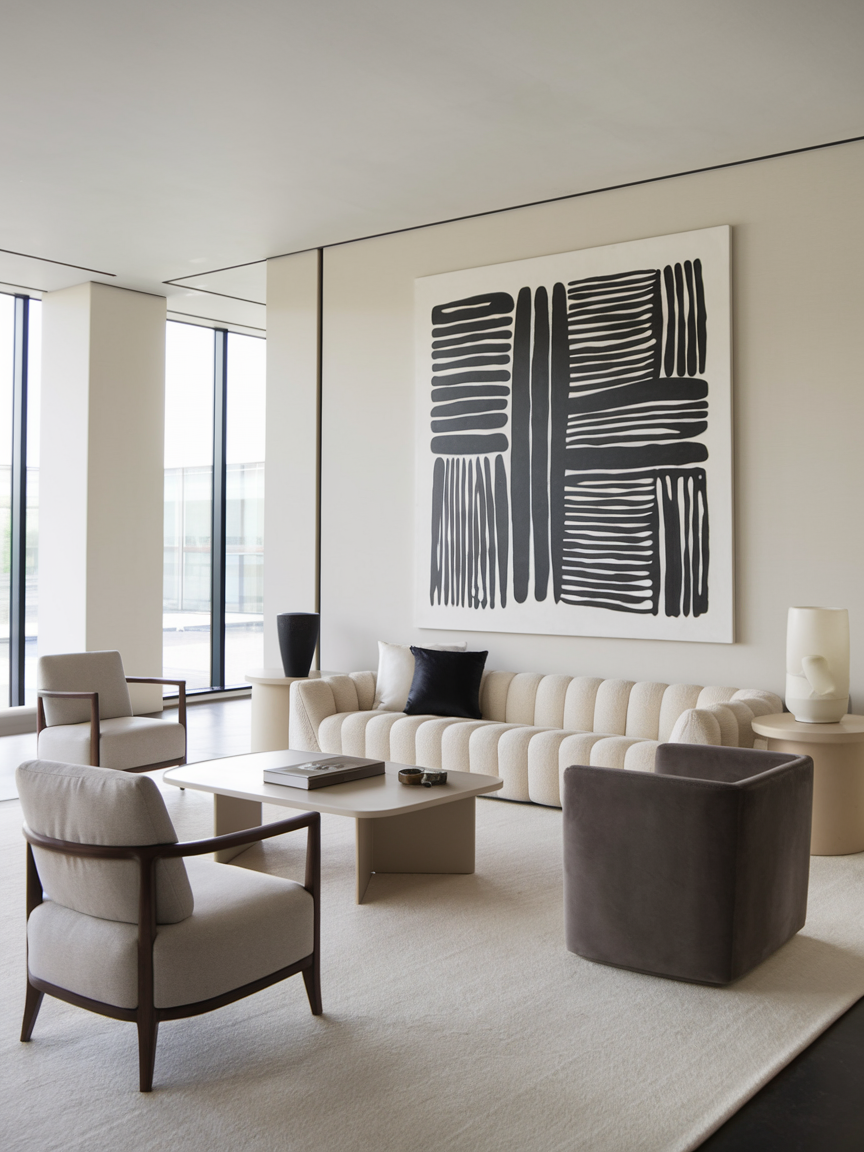
Monochrome artwork complements minimalist living rooms beautifully by adding interest without disrupting the calm color palette. Black-and-white photography, abstract line art, or subtle tonal paintings create a cohesive and sophisticated look. These pieces draw attention through composition and texture rather than bold color. I love how monochrome art can make a statement while still blending seamlessly into the room. It adds personality and depth, reinforcing the idea that minimalism is about thoughtful curation rather than emptiness.
11. Built-In Storage Solutions
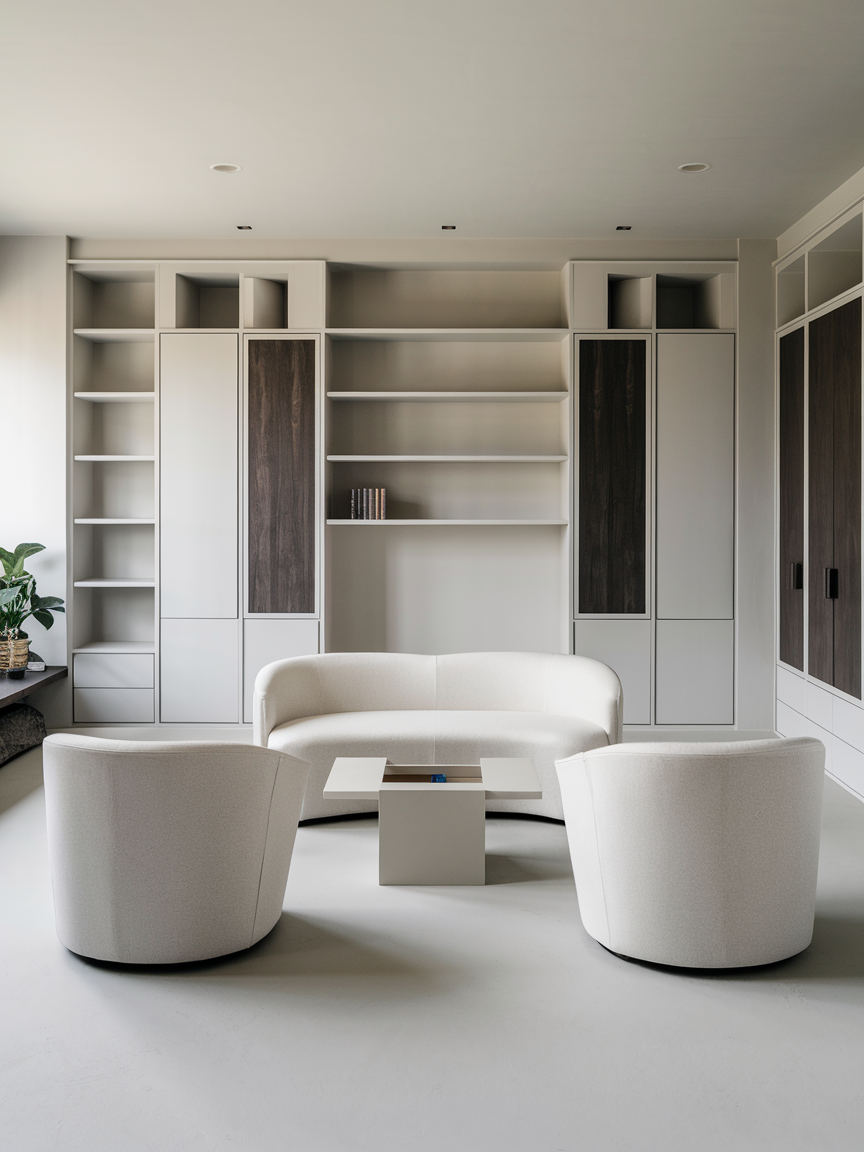
Built-in storage solutions are one of the most effective ways to maintain a clean and clutter-free minimalist living room while still meeting everyday functional needs. Custom cabinetry, recessed shelving, or wall-integrated storage units can be designed to blend seamlessly with the architecture of the space, often finished in the same neutral tones as the walls to create a cohesive and almost invisible effect. This approach allows you to store items like books, electronics, and everyday essentials out of sight, preserving the calm visual flow of the room. By eliminating bulky standalone furniture, built-ins enhance both efficiency and aesthetics, ensuring the space remains organized, polished, and effortlessly serene.
12. Monochromatic Color Schemes
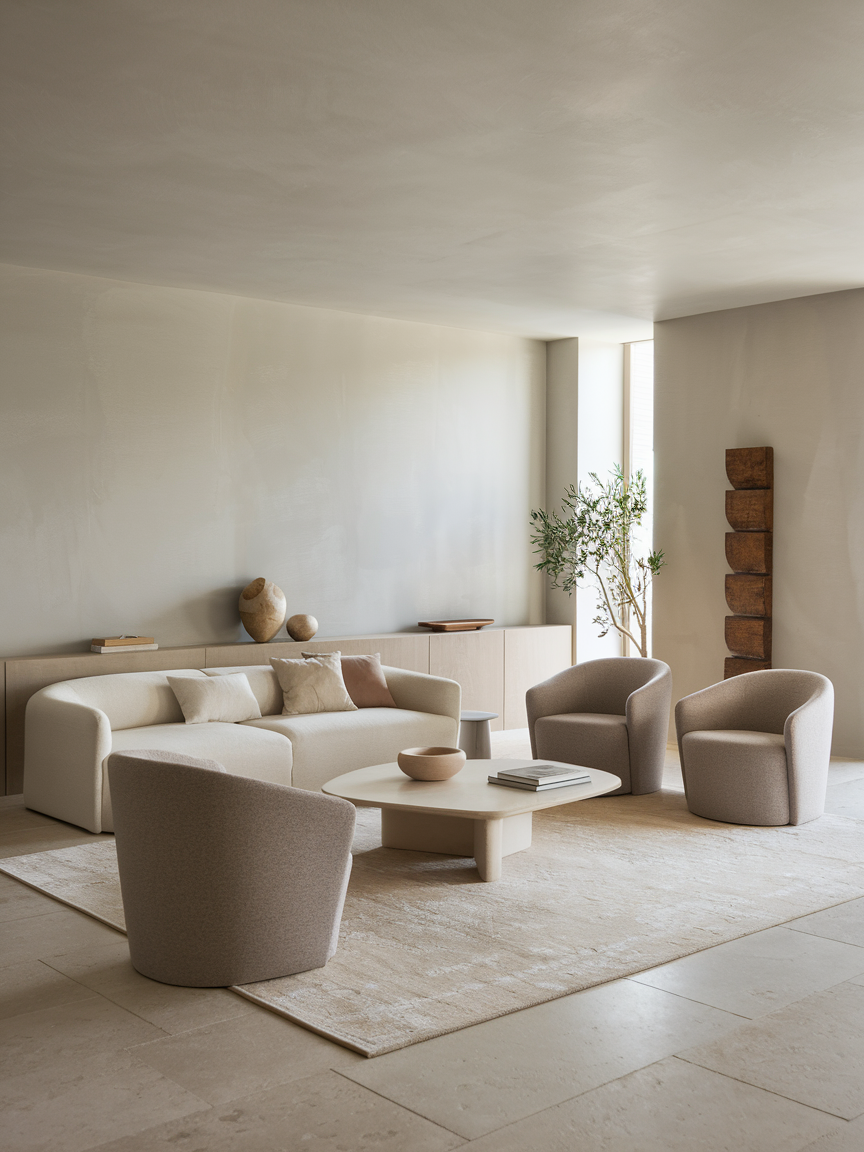
A monochromatic color scheme elevates minimalist design by introducing depth and variation without disrupting visual harmony. By working within a single color family, such as layering shades of gray, beige, or white, you create a cohesive and sophisticated look that feels intentional and refined. The subtle differences in tone allow textures, materials, and forms to stand out, adding richness to the space without relying on bold contrasts. This approach not only enhances the calming effect of the room but also ensures a timeless aesthetic that remains stylish and adaptable over time.
13. Intentional Negative Space
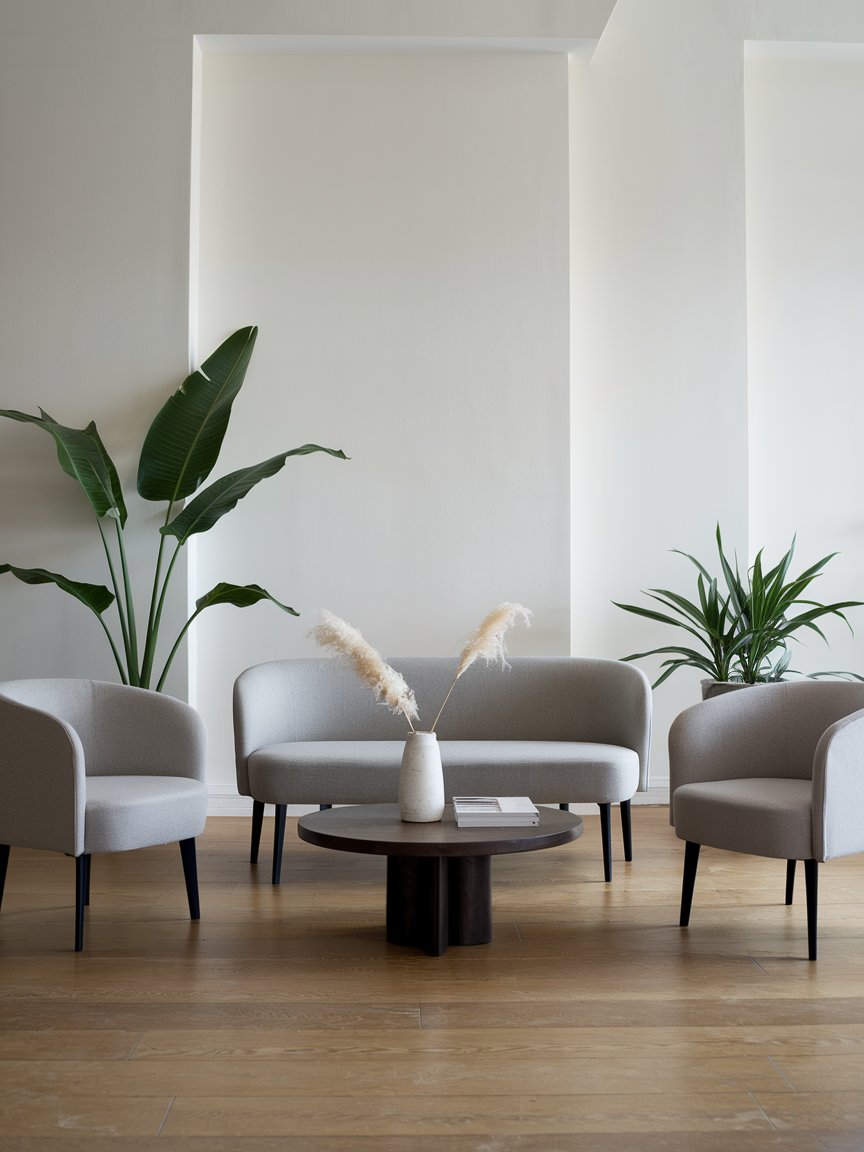
Negative space, or empty space, is one of the most powerful elements in minimalist design. Leaving areas intentionally uncluttered allows the room to breathe and highlights the beauty of each piece. I’ve learned that not every corner needs to be filled—sometimes less truly is more. Negative space enhances clarity, reduces visual stress, and creates a sense of calm. It ensures your living room feels open, balanced, and thoughtfully designed, making it the perfect retreat for relaxation and everyday living.
14. Natural Elements
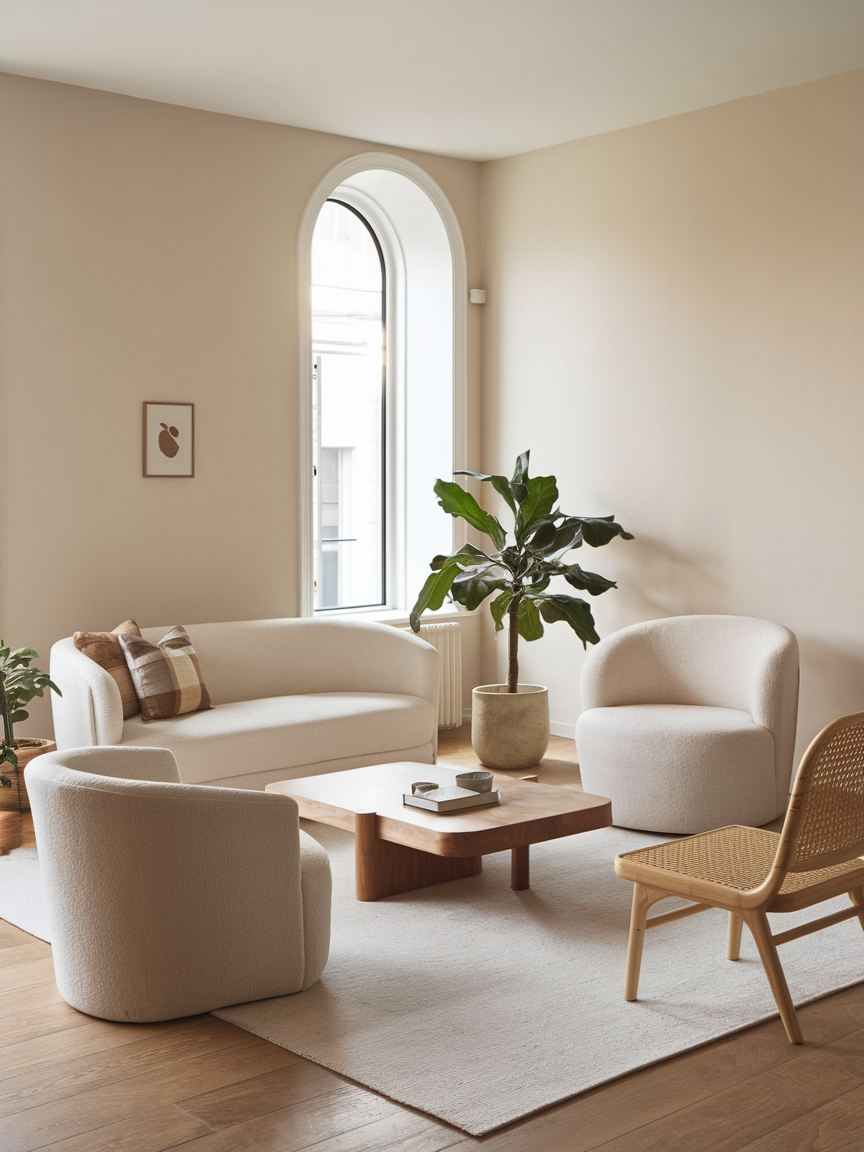
Incorporating natural elements into a minimalist living room adds warmth, texture, and a sense of calm that prevents the space from feeling too stark or sterile. Materials like wood, stone, linen, rattan, and even subtle greenery introduce organic beauty that softens clean lines and neutral palettes. I personally love how a simple wooden coffee table or a woven basket can instantly make a room feel more inviting and lived-in. These elements create a connection to nature, which naturally promotes relaxation and well-being. The key is to use them thoughtfully—choosing a few high-quality pieces rather than overcrowding the space. Natural materials also age beautifully, adding character over time while maintaining the timeless appeal of minimalist design. This balance between simplicity and organic warmth results in a living room that feels both serene and welcoming.
15. Minimal Mirrors
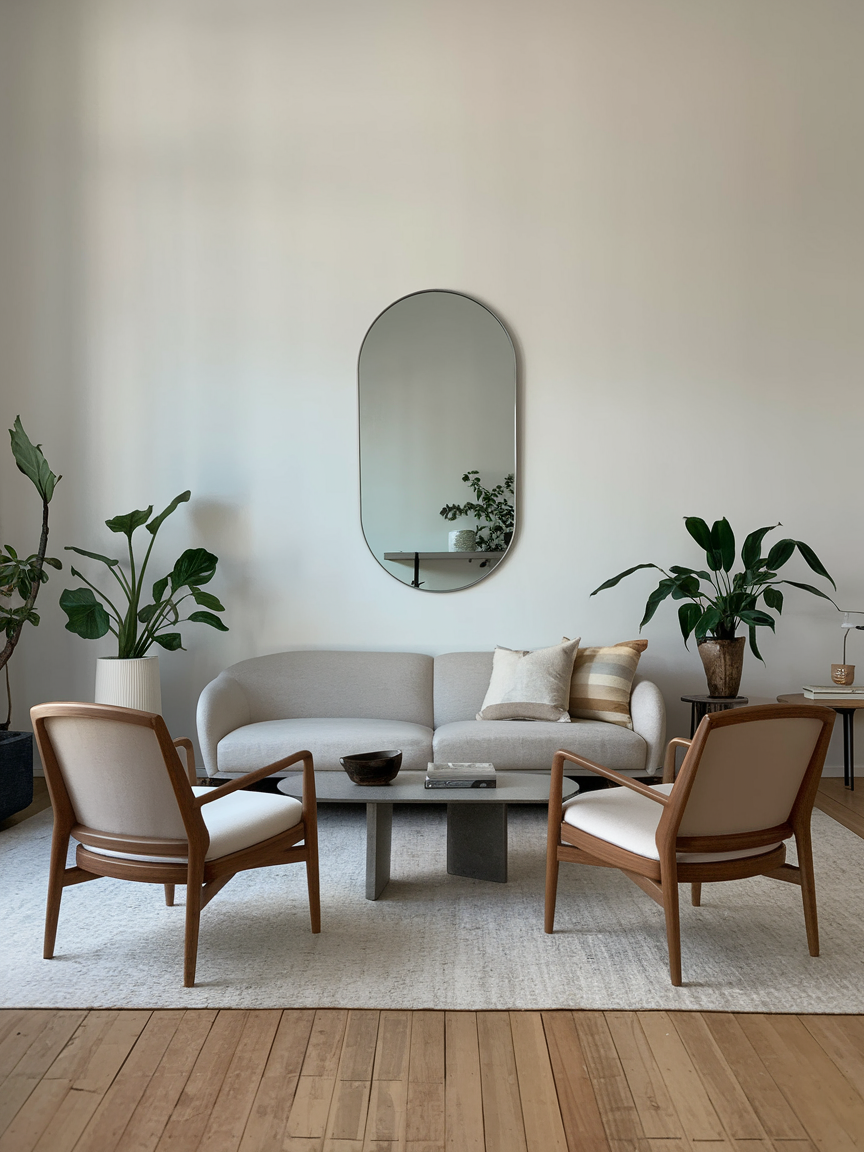
Mirrors play a subtle yet impactful role in enhancing a minimalist living room. By reflecting light and surrounding elements, they create the illusion of a larger, brighter space without adding physical clutter. Choosing mirrors with simple frames—or even frameless designs—keeps the look clean and aligned with minimalist principles. I like placing a mirror opposite a window to maximize natural light, which instantly makes the room feel more open and airy. Beyond functionality, mirrors can act as understated decorative features that complement the overall design. Their reflective quality adds depth and dimension, preventing the space from feeling flat. When used thoughtfully, minimal mirrors contribute to a calm, balanced atmosphere while enhancing both the visual and practical aspects of the living room.
16. Subtle Contrast with Dark Accents
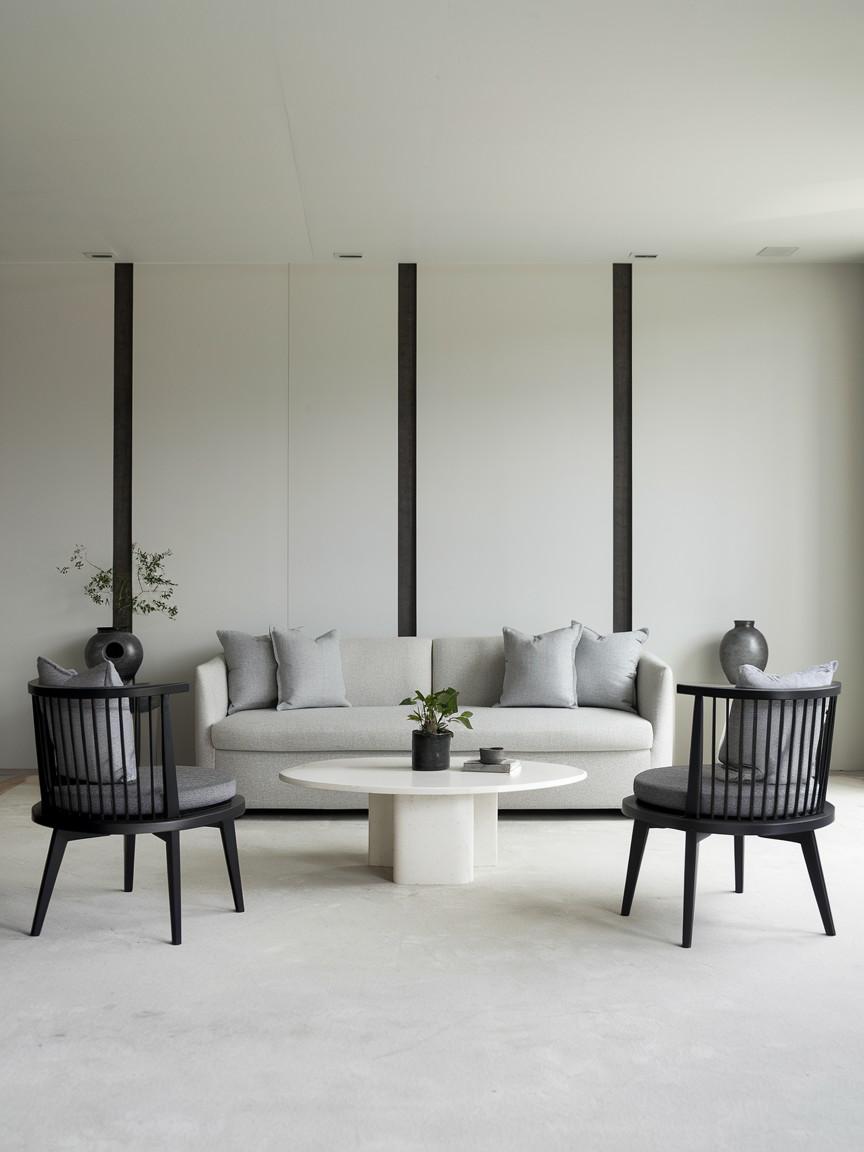
Even in a minimalist living room, a touch of contrast can elevate the entire design. Introducing dark accents such as black frames, charcoal cushions, or a deep-toned coffee table creates visual depth without overwhelming the clean aesthetic. These elements ground the space and prevent it from feeling too washed out or overly soft. The key is balance—using contrast sparingly so it enhances rather than dominates. This approach allows the room to maintain its calm, serene quality while adding a layer of sophistication and modern edge that feels intentional and refined.
17. Soft Neutral Layering
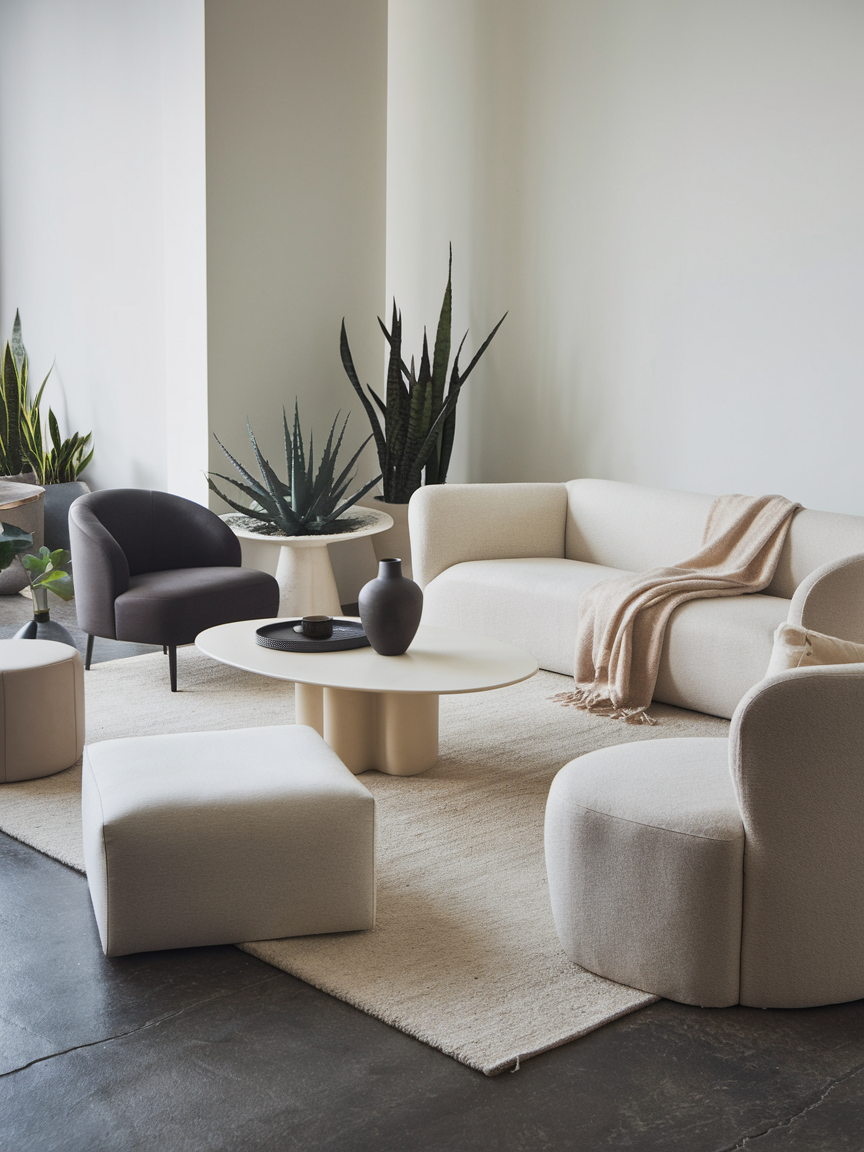
Layering different neutral tones adds warmth and dimension without compromising simplicity. Combining shades like ivory, beige, taupe, and soft gray creates a harmonious palette that feels rich yet understated. The beauty of this approach lies in subtle variation—each layer contributes to depth while maintaining a cohesive look. Textiles such as throws, cushions, and rugs can introduce these tones in a gentle, balanced way. This layering technique prevents the room from feeling flat, making it more inviting and comfortable while still embracing the essence of minimalist design.
18. Hidden Technology Integration
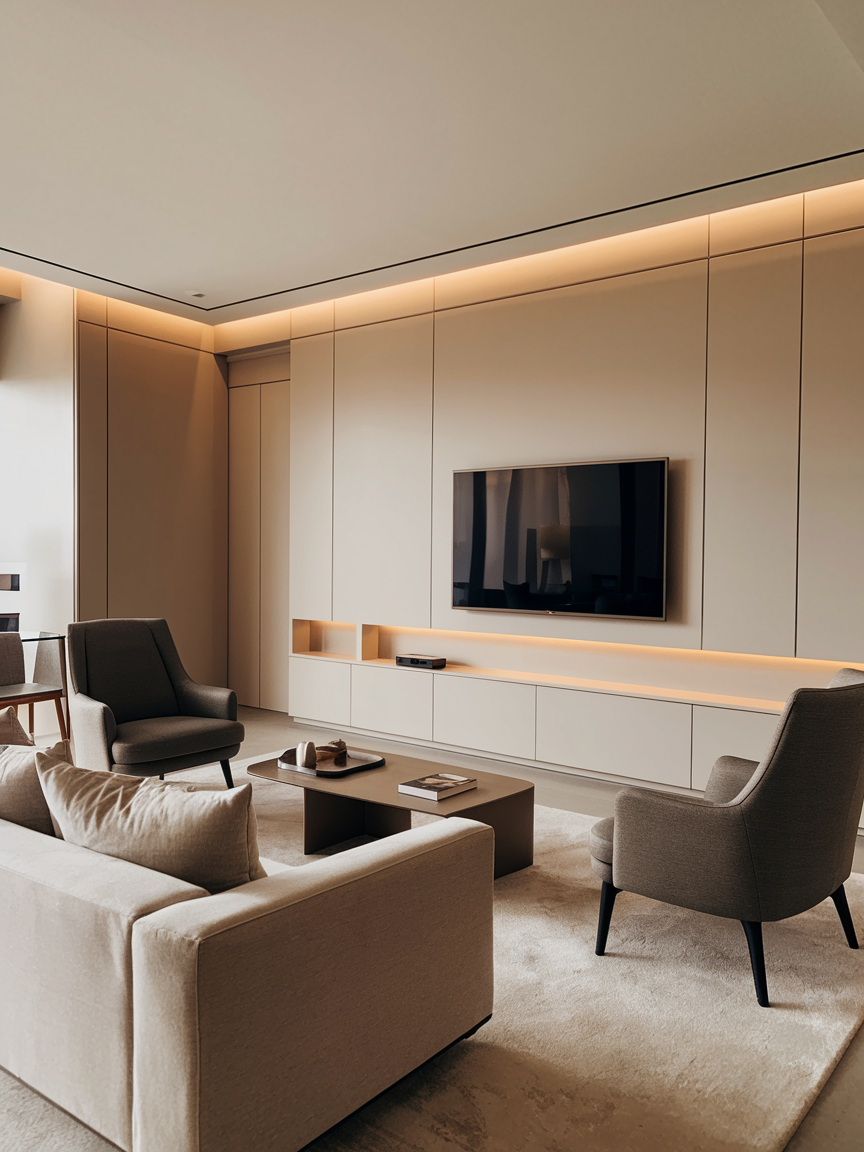
Modern living rooms often include technology, but in a minimalist design, it’s best to keep it discreet. Concealing cables, mounting TVs flush to the wall, or storing devices in cabinets helps maintain a clean look. I’ve found that reducing visible tech clutter makes the room feel more relaxing and less distracting. This approach allows you to enjoy modern conveniences without compromising the serene, uncluttered aesthetic that defines minimalist living.
19. Minimal Window Framing
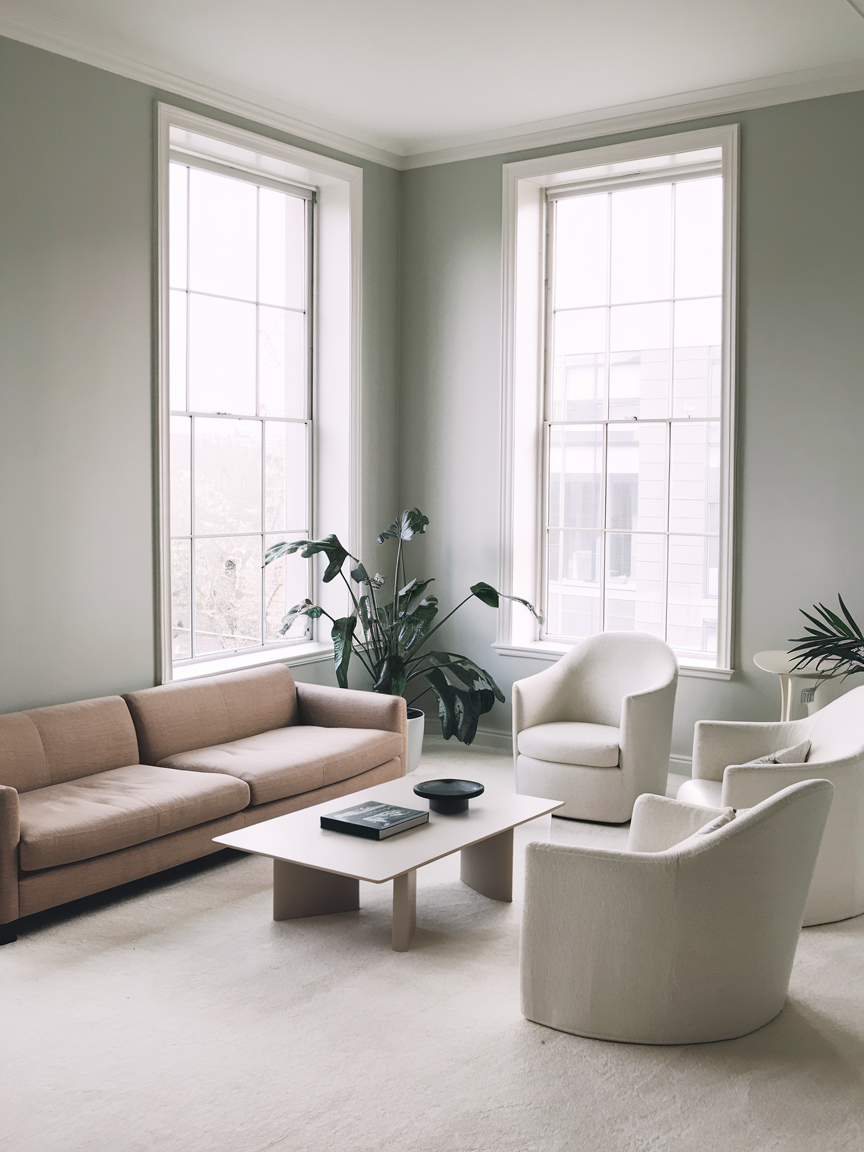
Windows play a significant role in minimalist living rooms, and keeping their design simple enhances the overall aesthetic. Thin frames, sheer curtains, or even bare windows allow natural light to take center stage. This approach creates a bright, airy environment that feels connected to the outdoors. I personally prefer light, flowing fabrics that soften the light without blocking it. Minimal window treatments ensure the room remains uncluttered and serene while maximizing brightness and openness.
20. Open Layout and Flow
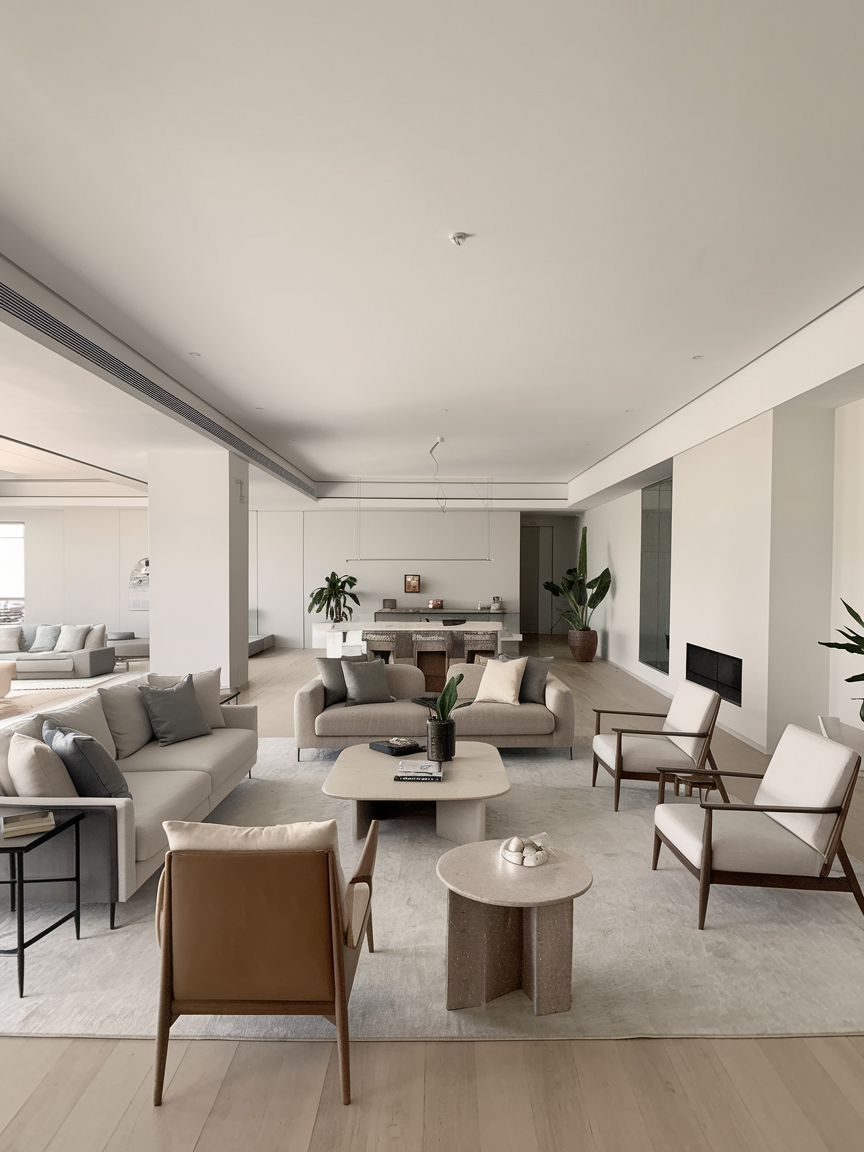
A modern minimalist living room thrives on openness and fluid movement. Arranging furniture to create clear pathways and avoiding overcrowding ensures the space feels breathable and easy to navigate. Open layouts encourage natural light to travel freely, enhancing the overall sense of calm. I’ve noticed that when a room flows well, it instantly feels more relaxing and functional. This design principle emphasizes intentional placement, allowing each piece to shine while contributing to a cohesive and harmonious environment.
* These 20 modern minimalist living room ideas show how simplicity, clean lines, and thoughtful design can create a space that feels calm and effortlessly refined. Let these ideas inspire you to design a space that feels uncluttered, peaceful, and beautifully intentional.