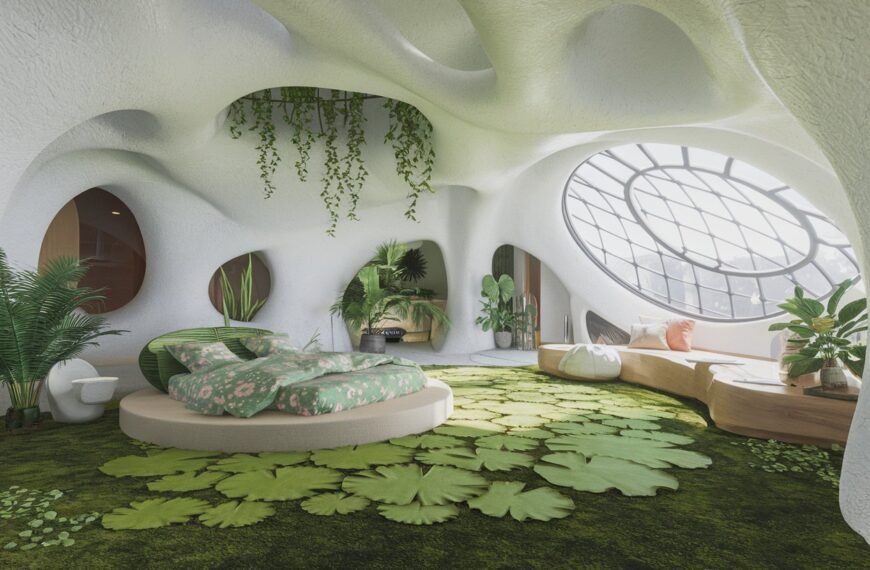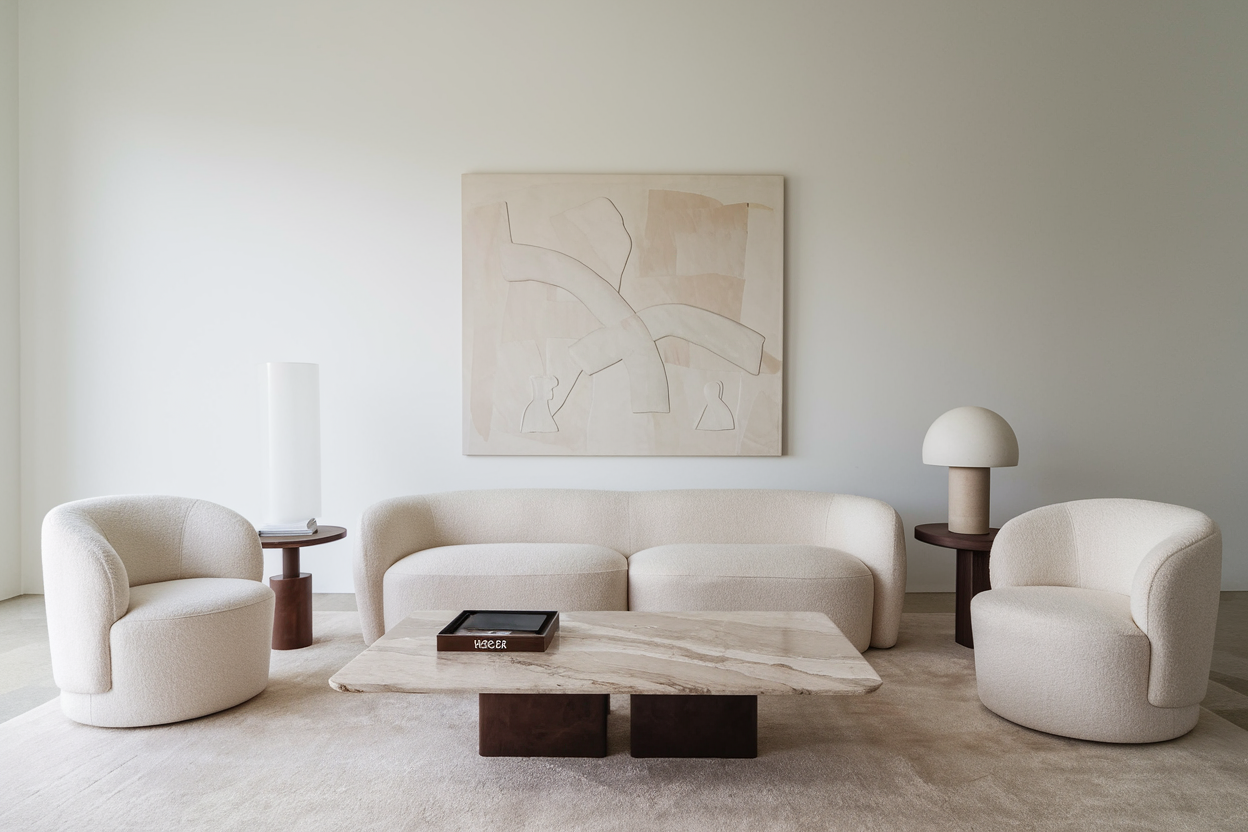
Modern minimalist living rooms create a sense of calm and clarity by focusing on simplicity, balance, and intentional design. Clean lines, open layouts, and uncluttered spaces help shape interiors that feel bright, airy, and effortlessly relaxing. A thoughtfully designed minimalist living room removes unnecessary distractions while allowing natural light, texture, and carefully selected furnishings to define the atmosphere in a subtle and elegant way.
A bright minimalist space relies on harmony between function and aesthetics to create a comfortable and visually peaceful environment. Neutral color palettes, streamlined furniture, natural materials, and soft layered textures all contribute to a serene and inviting look. Light wood tones, linen fabrics, sculptural lighting, and understated décor pieces help add warmth and character without overwhelming the room. Large windows, open shelving, and carefully planned layouts further enhance the feeling of openness and tranquility.
This collection showcases living room ideas that embrace modern minimalist principles while maintaining comfort and style. Let’s explore these modern minimalist living room ideas and discover how thoughtful design can transform your space into a bright and peaceful retreat for everyday living!
1. Statement Sofa as a Centerpiece
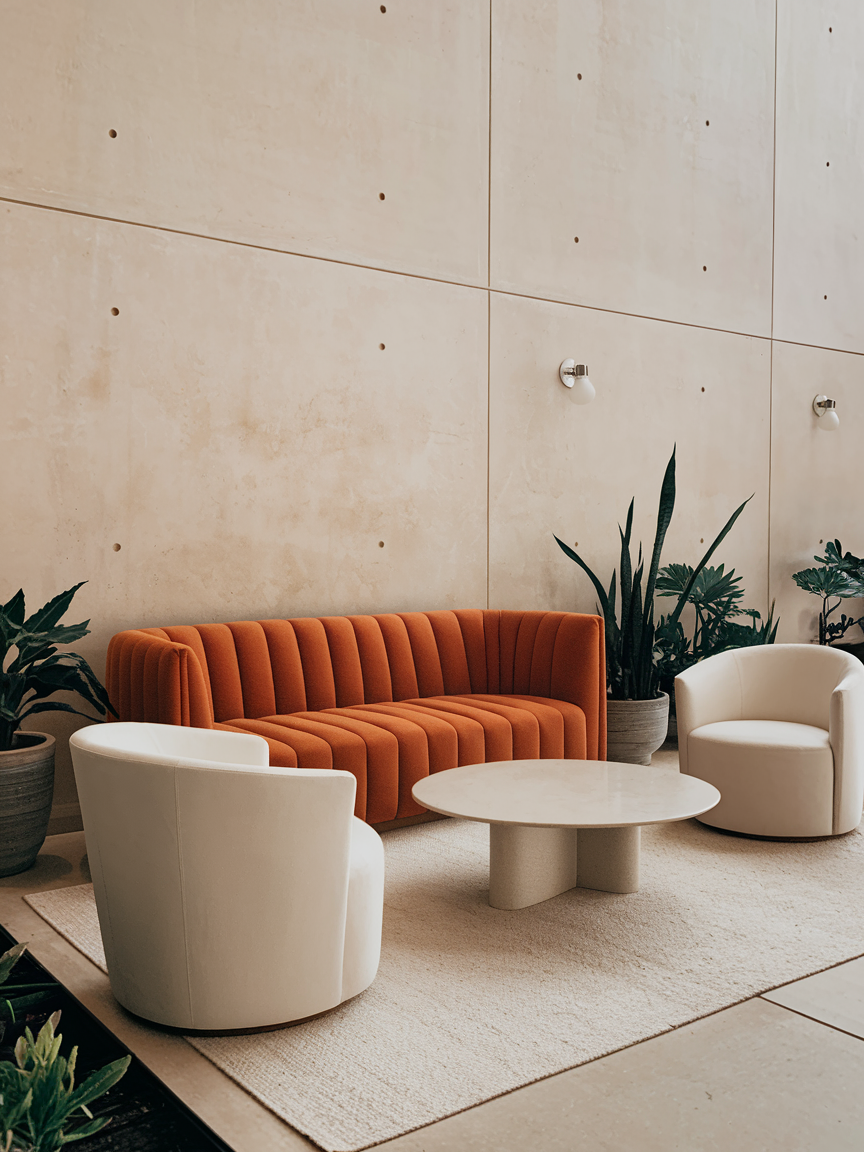
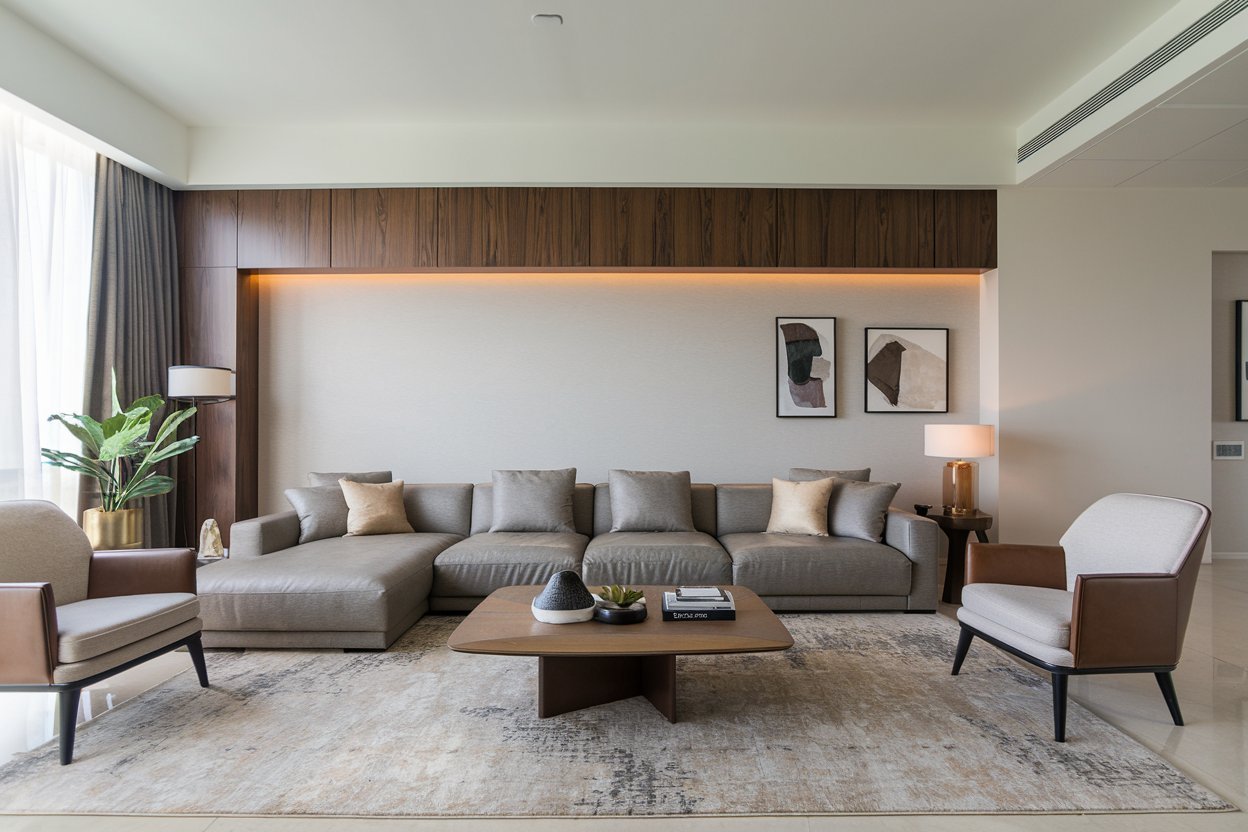
In a minimalist living room, a single well-chosen piece can define the entire space, and the sofa often becomes that focal point. A clean, structured silhouette in a neutral fabric allows it to stand out without overpowering the room. High-quality upholstery and balanced proportions make it both visually appealing and highly comfortable. By keeping the surrounding décor minimal, the sofa naturally anchors the space and becomes a subtle expression of style. This approach emphasizes quality over quantity, creating a curated and cohesive interior.
2. Maximized Natural Light Flow
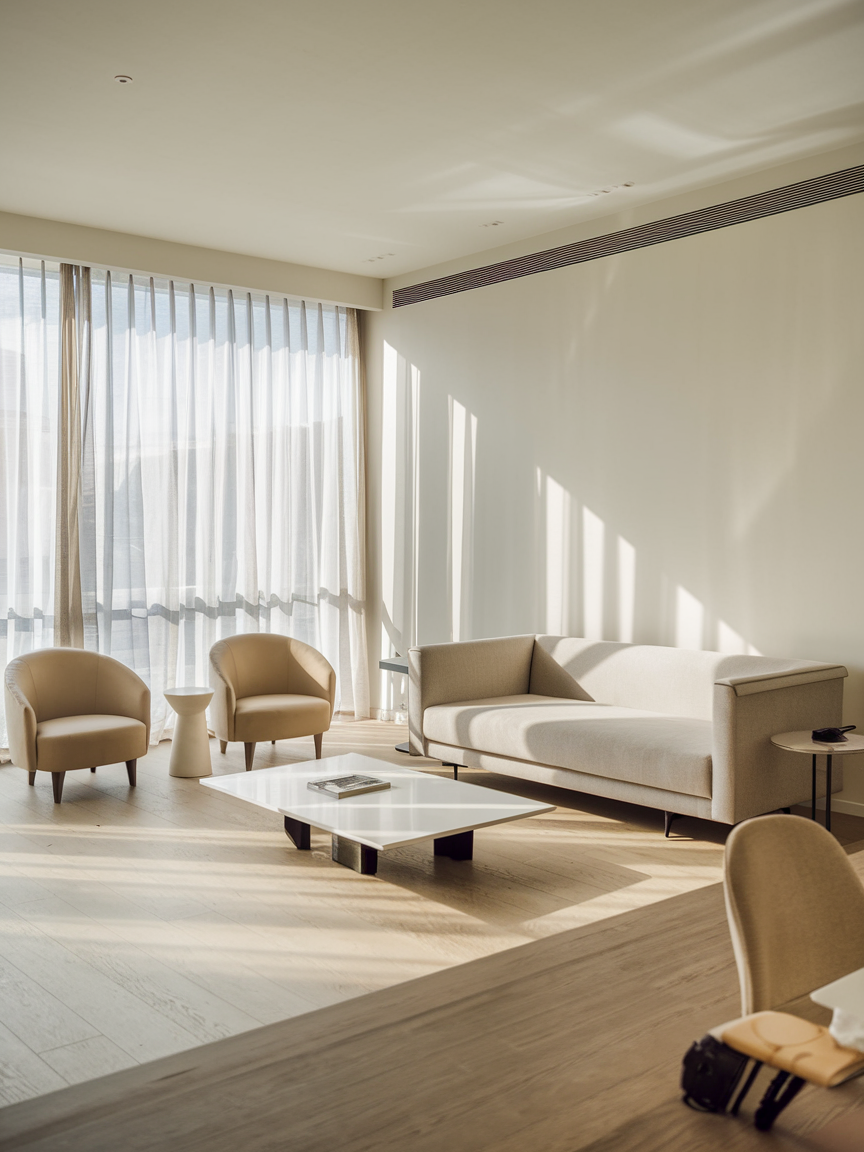
Natural light is essential in modern minimalist interiors, shaping both mood and spatial perception. Large windows, open openings, and sheer curtains allow sunlight to move freely throughout the room, enhancing brightness and highlighting textures. This natural illumination makes neutral tones feel warmer and more dynamic while reinforcing the sense of openness. Reducing heavy window coverings ensures that light remains a central design feature. The result is a living room that feels fresh, uplifting, and naturally serene throughout the day.
3. Open Layout for Flow and Balance
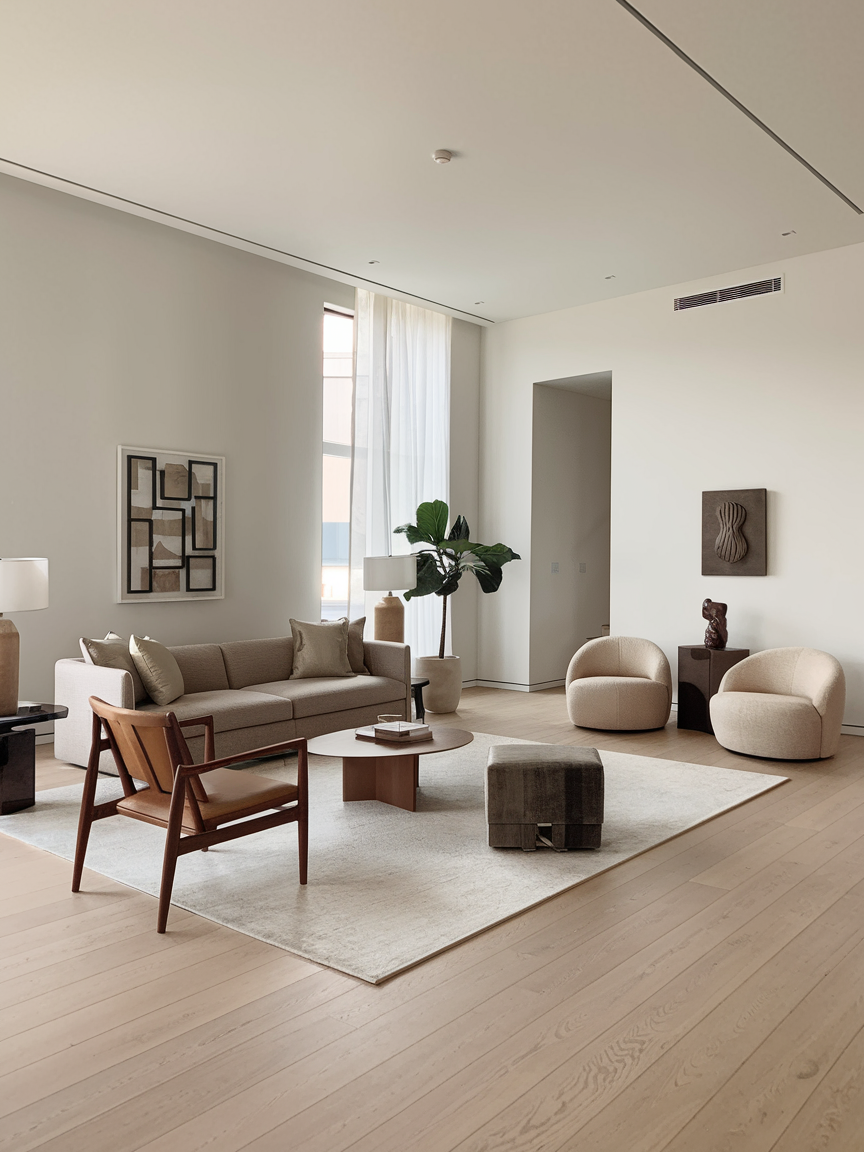
An open layout ensures that a minimalist living room feels spacious, functional, and easy to navigate. Thoughtful furniture placement creates clear pathways and encourages natural movement throughout the space. This openness allows light to travel freely and enhances the overall sense of calm. When every piece is positioned with intention, the room feels balanced, cohesive, and effortlessly livable.
4. Intentional Use of Negative Space
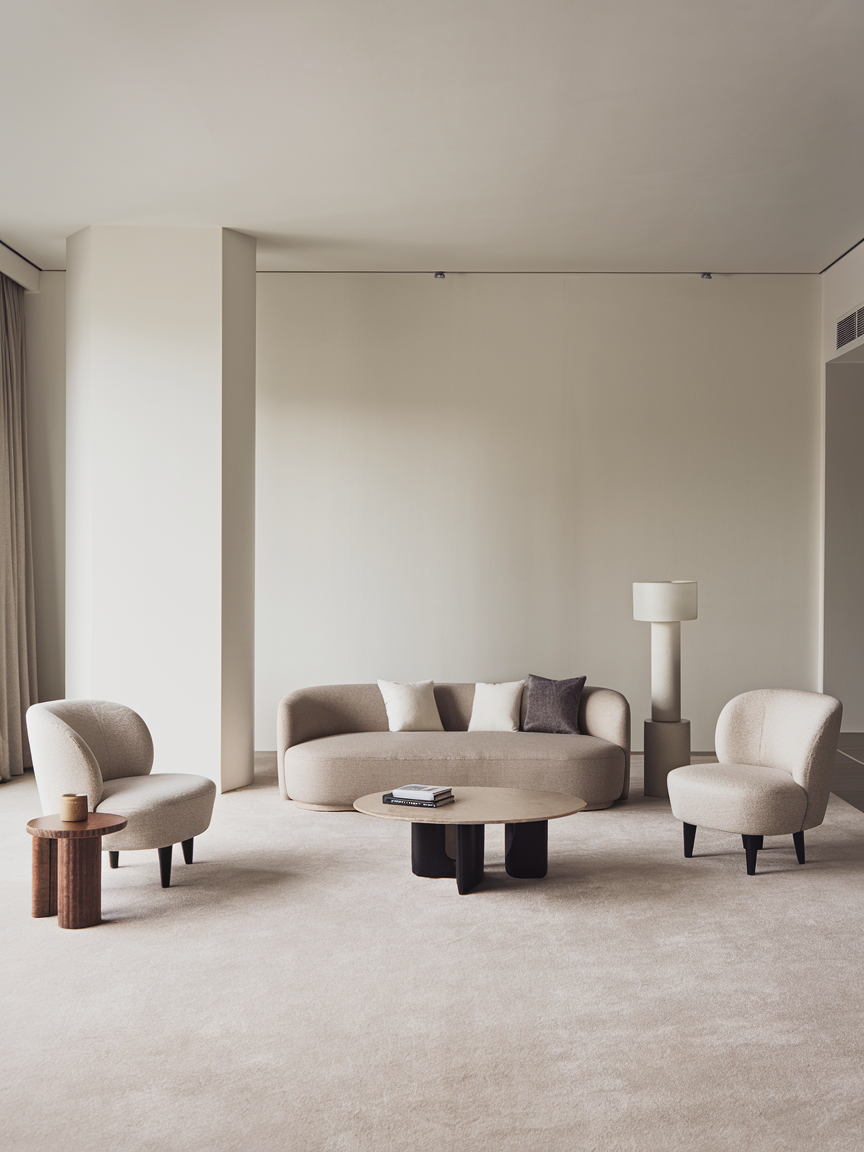
Negative space is a defining principle of minimalist design, allowing the room to feel open, balanced, and breathable. Leaving areas intentionally empty helps emphasize the importance of each selected piece. I’ve found that restraint often creates more impact than addition. This openness reduces visual stress and enhances relaxation, making the living room feel more peaceful and thoughtfully composed.
5. Natural Material Integration
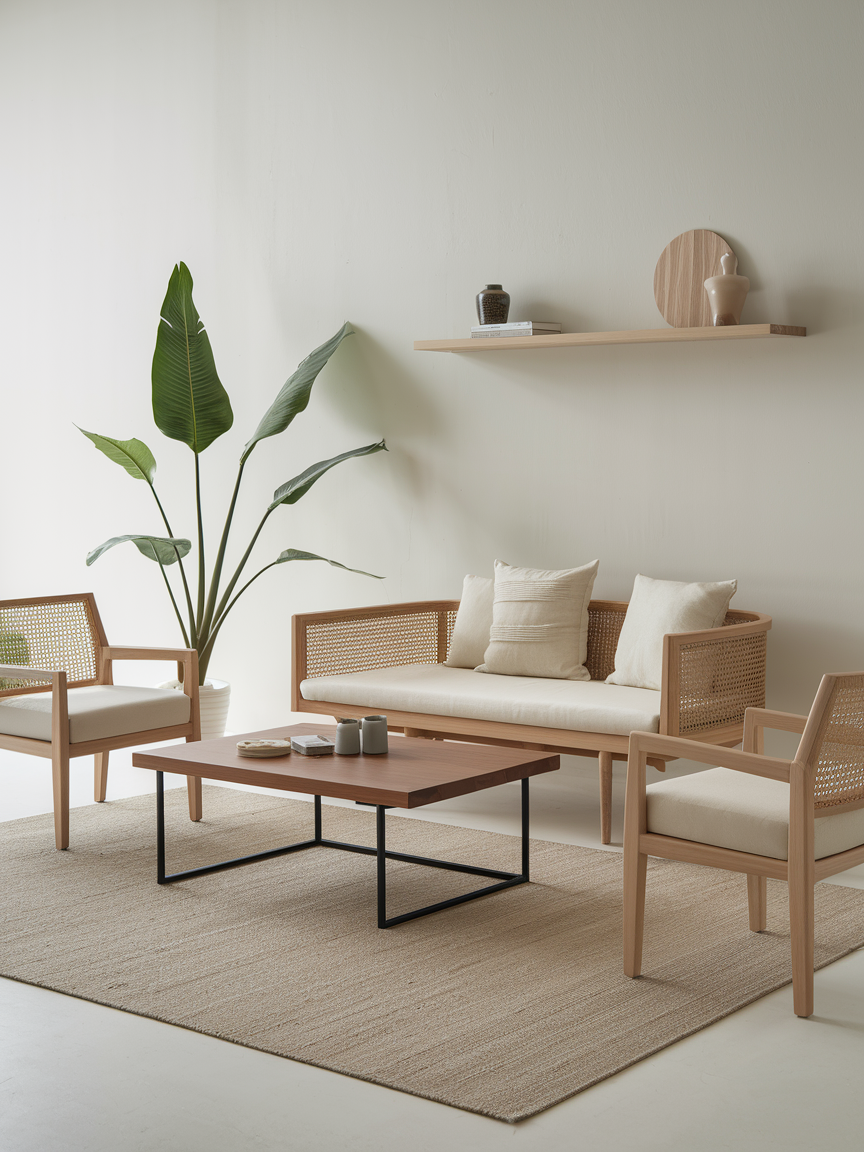
Natural materials bring warmth and grounding energy into minimalist interiors, preventing them from feeling too sterile. Wood, stone, linen, and rattan introduce organic textures that soften clean lines and neutral tones. Even small touches like a wooden table or a woven basket can significantly enhance warmth. These materials also age beautifully, adding character over time while maintaining a timeless aesthetic. The result is a balanced space that feels both modern and naturally inviting.
6. Soft Textures for Depth and Comfort
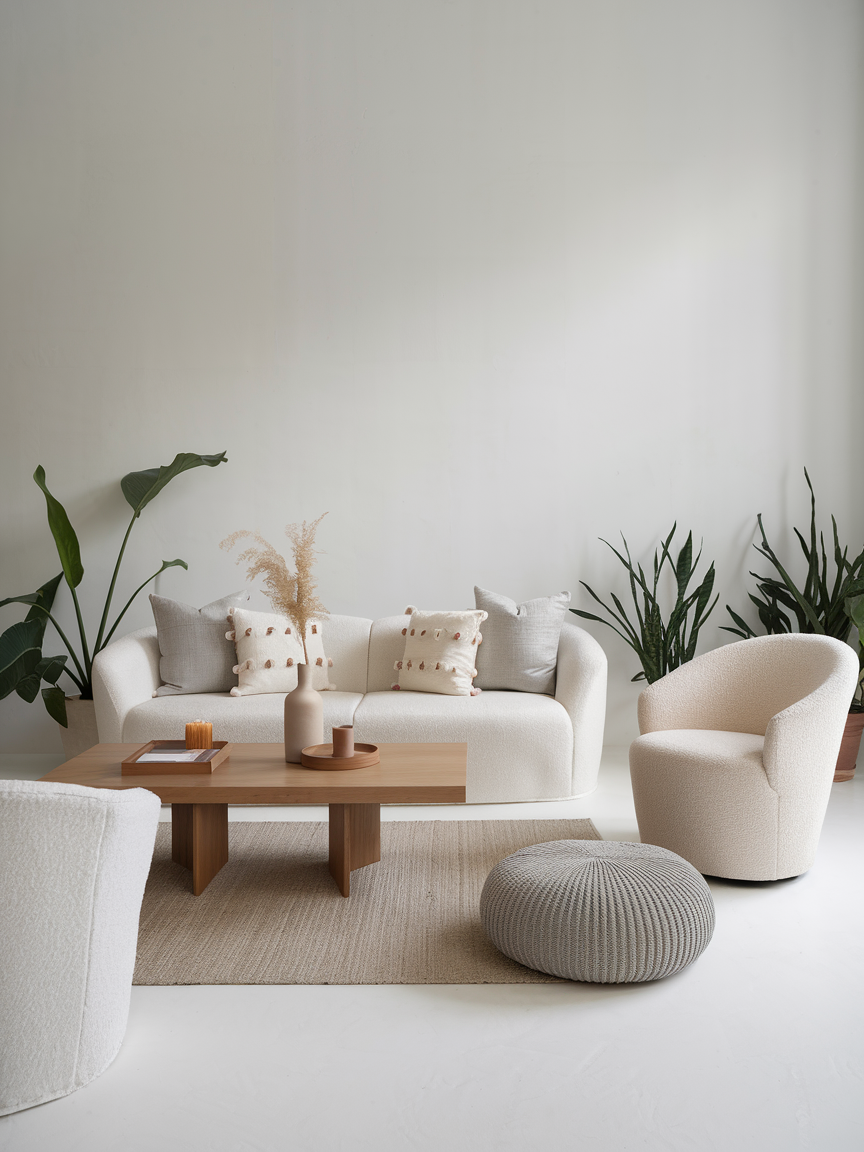
While minimalism emphasizes simplicity, soft textures are essential for adding warmth and emotional comfort. Materials such as linen, cotton, wool, and boucle introduce gentle tactile contrast that softens clean architectural lines. Layered cushions, throws, and rugs create subtle depth without disrupting visual clarity. These textures make the space feel lived-in and welcoming rather than stark or cold. The balance between simplicity and softness ensures a cozy yet refined atmosphere.
7. Functional and Minimal Coffee Tables
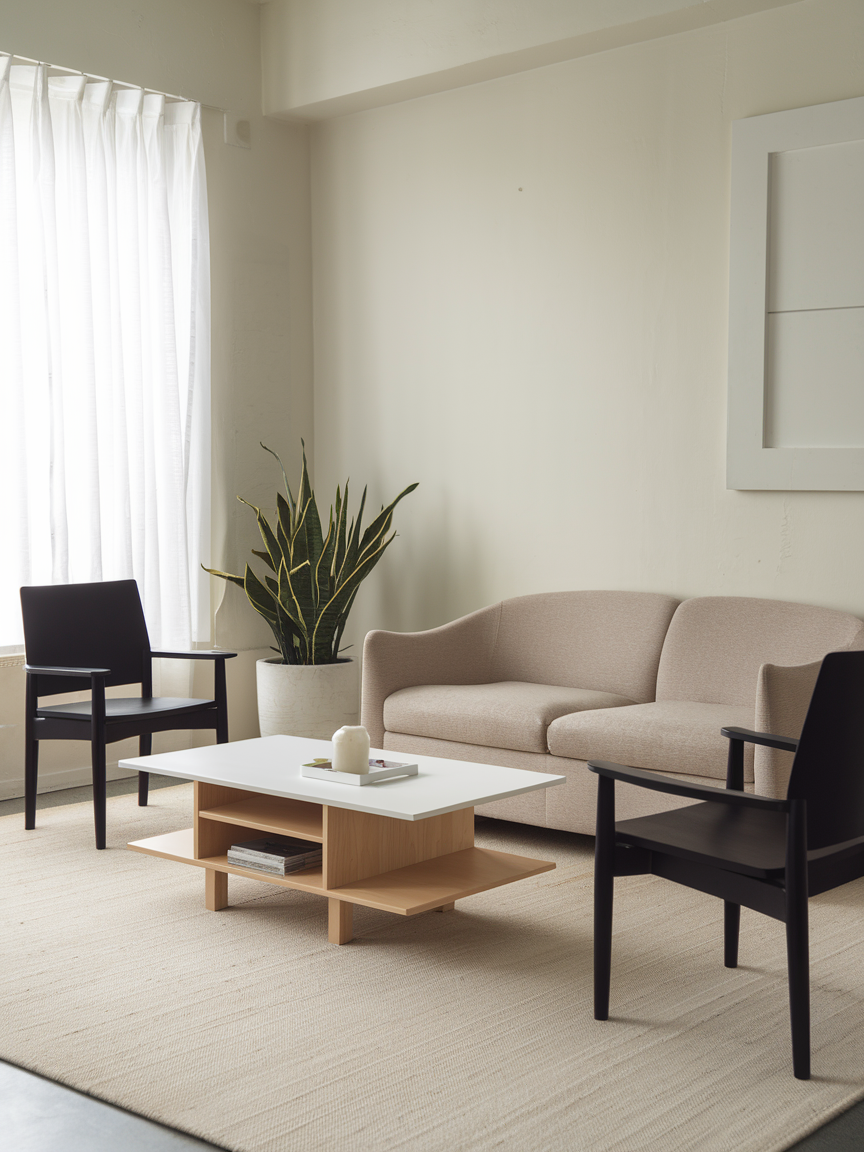
A minimalist coffee table should be both practical and visually restrained, acting as a subtle anchor within the seating area. Simple shapes and natural materials like wood, stone, or glass help maintain a clean aesthetic. Designs with hidden storage or open space underneath enhance functionality without adding clutter. The key is proportion—ensuring the table complements rather than dominates the room. When chosen carefully, it becomes a seamless blend of utility and style.
8. Neutral Color Palette Foundation
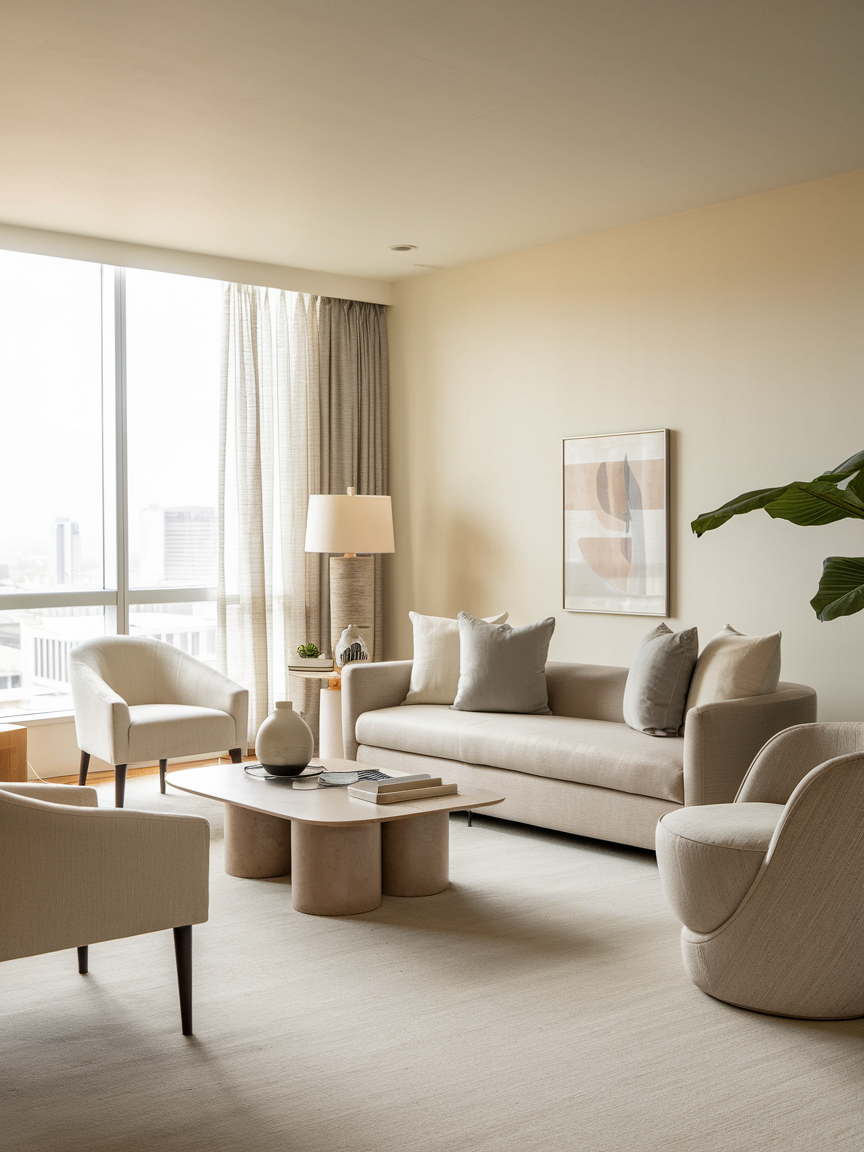
A neutral color palette forms the essential foundation of a modern minimalist living room, creating a calm and cohesive environment that instantly feels more open and balanced. Instead of relying on a single shade, layering tones such as warm white, soft beige, light gray, and muted taupe adds quiet depth and sophistication. These subtle variations help the space feel visually rich without introducing clutter or distraction. Neutral tones also reflect natural light beautifully, enhancing brightness and giving the room an airy, expansive feel. Because of their versatility, they allow you to refresh accents over time without disrupting the overall harmony. This timeless foundation ensures the living room remains serene, elegant, and effortlessly adaptable.
9. Low-Profile Furniture Design
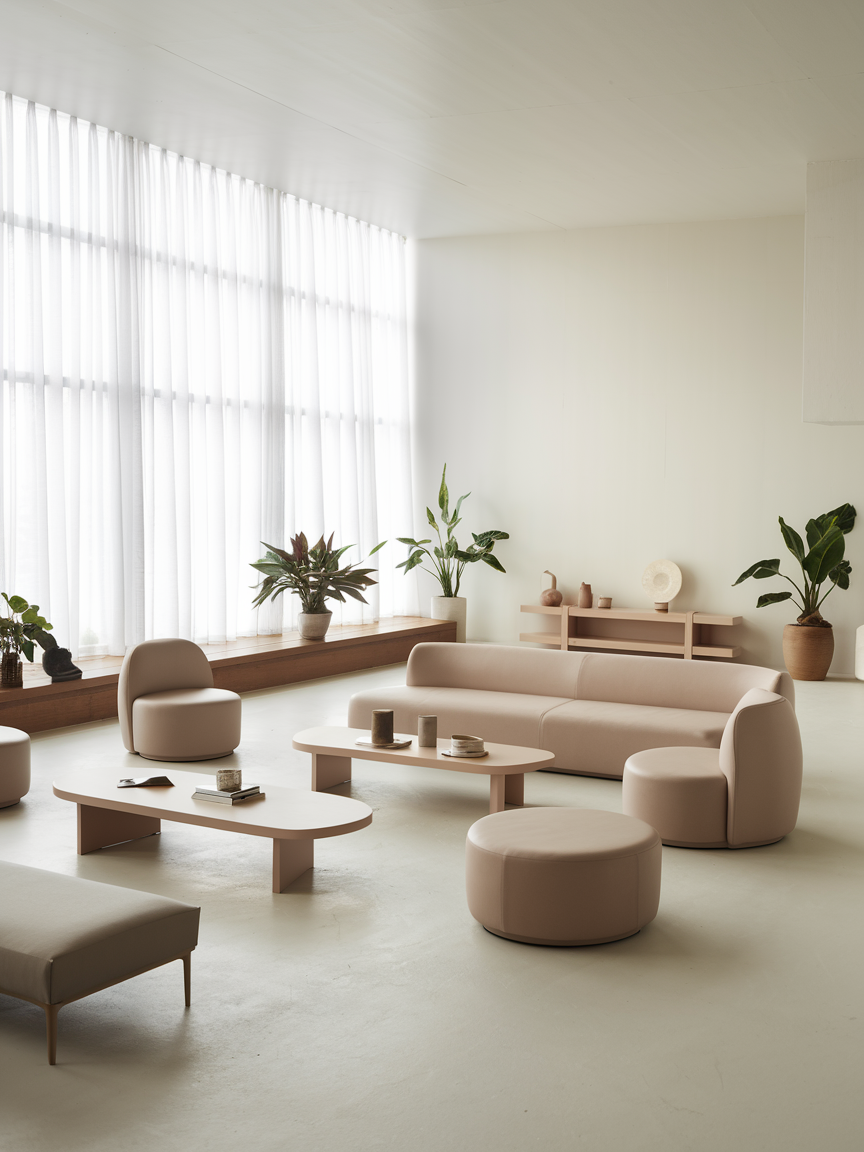
Low-profile furniture plays a key role in achieving a grounded and spacious minimalist living room. Sofas, chairs, and coffee tables that sit closer to the floor create a strong horizontal flow, which visually expands the room and reduces the sense of heaviness. This design approach encourages a relaxed, lounge-like atmosphere that feels modern yet comfortable. By lowering visual mass, the space appears more open and less crowded, even when furnished. When paired with soft upholstery and neutral tones, low-profile pieces help maintain both comfort and clarity. The overall effect is a living room that feels calm, balanced, and naturally inviting.
10. Clean Lines and Geometric Simplicity
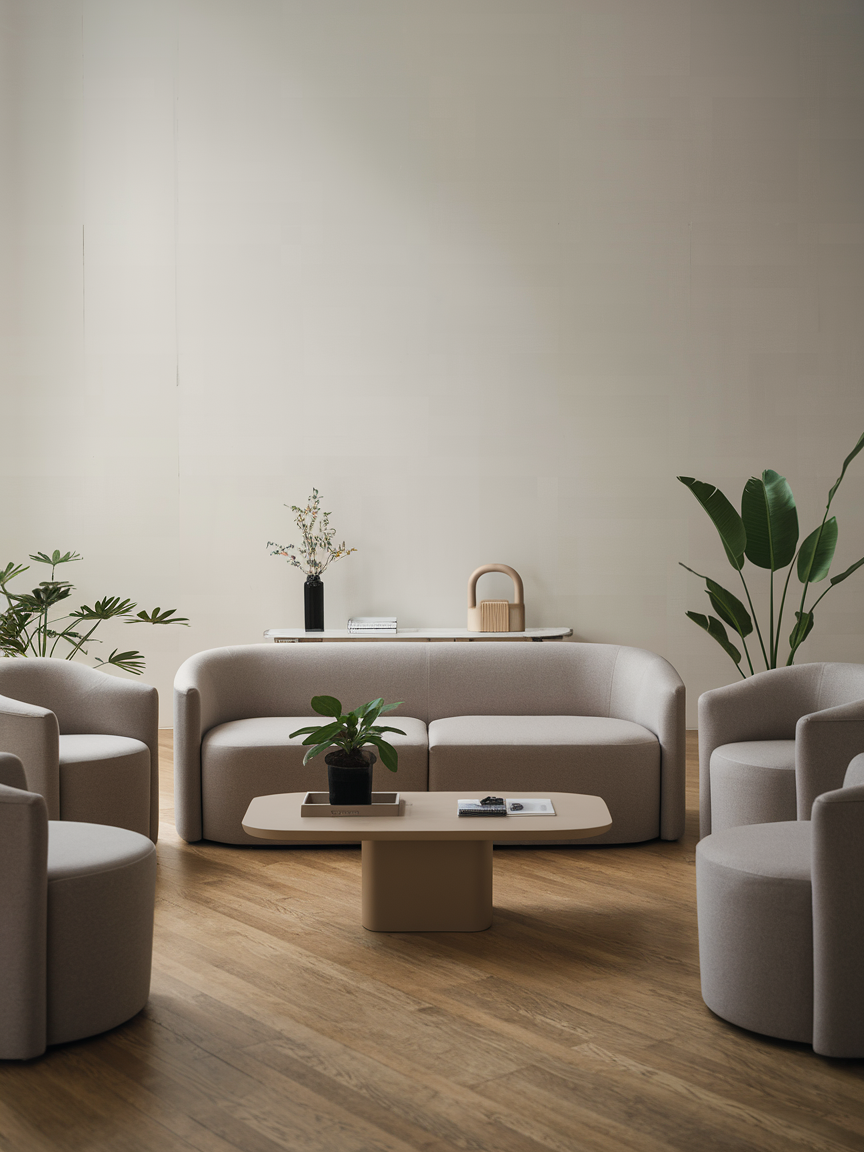
Clean lines and simple geometric forms are fundamental to minimalist design, ensuring that every piece feels intentional and visually balanced. Furniture with smooth surfaces, straight edges, and minimal ornamentation reduces visual noise and allows the architecture of the space to shine. This emphasis on structure over decoration creates a refined and orderly atmosphere. Instead of competing details, the eye is guided by proportion and form, which enhances the room’s sense of calm. The result is a living room that feels modern, sophisticated, and timelessly elegant without unnecessary complexity.
11. Decluttered and Intentional Surfaces
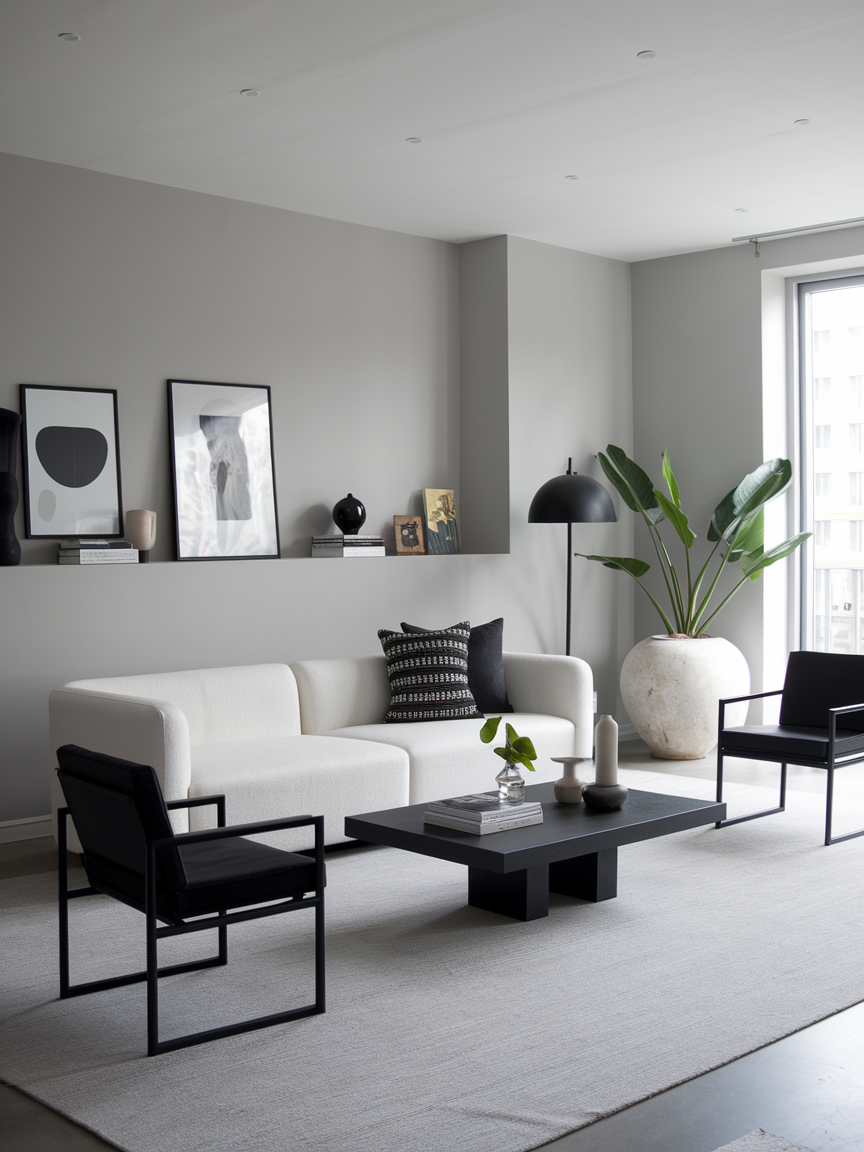
Keeping surfaces uncluttered is one of the most powerful ways to maintain a minimalist living room. Coffee tables, shelves, and consoles should be styled with restraint, featuring only a few meaningful or functional items. This intentional simplicity creates visual breathing room and allows each object to feel more significant. A clear surface also contributes to a sense of order and calm, making the space feel more relaxing and easier to maintain. Over time, this approach encourages mindful living, where everything has a purpose, and nothing feels excessive.
12. Minimal and Curated Wall Art
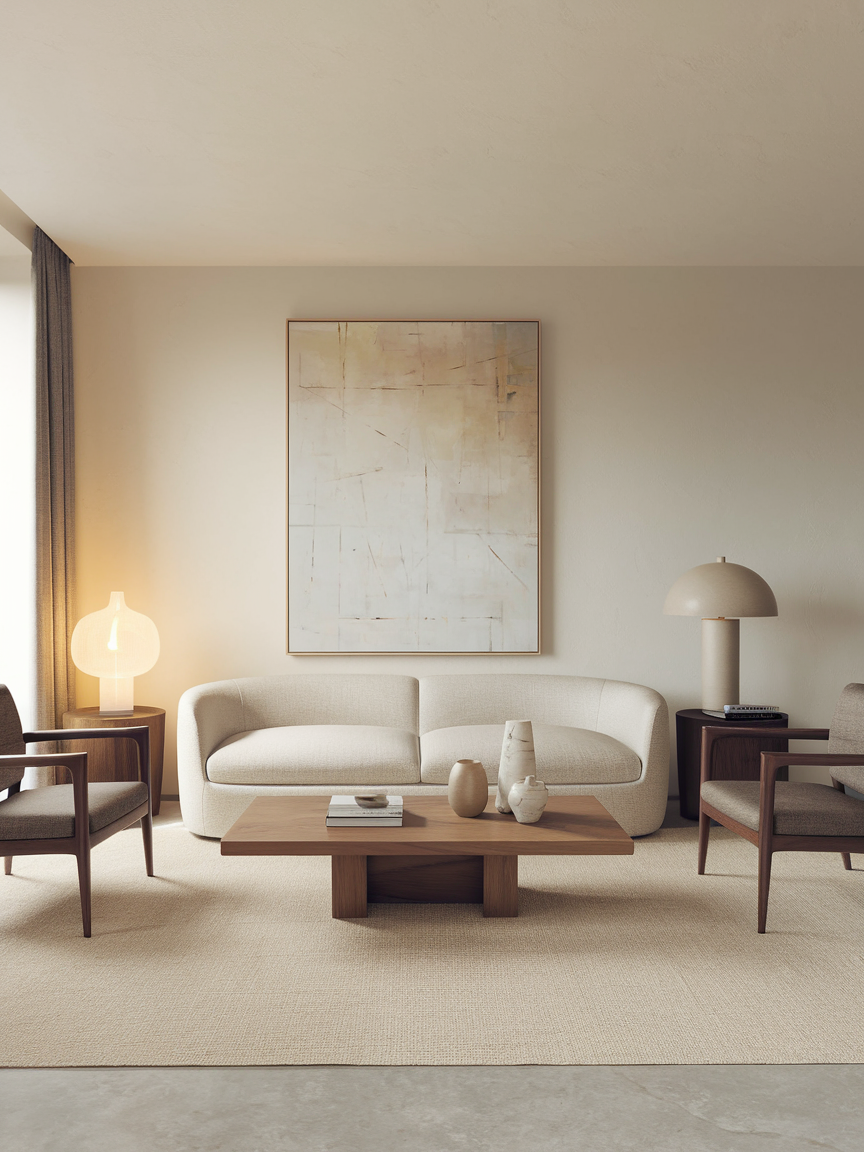
Wall art in a minimalist living room should feel intentional and balanced, enhancing the space without overwhelming it. A single large piece or a small, cohesive arrangement works best to maintain visual calm. Abstract forms, monochrome compositions, or soft landscapes align well with the serene aesthetic. Proper spacing and placement are just as important as the artwork itself, ensuring harmony within the room. This restrained approach adds personality while preserving simplicity.
13. Built-In Storage for Seamless Organization
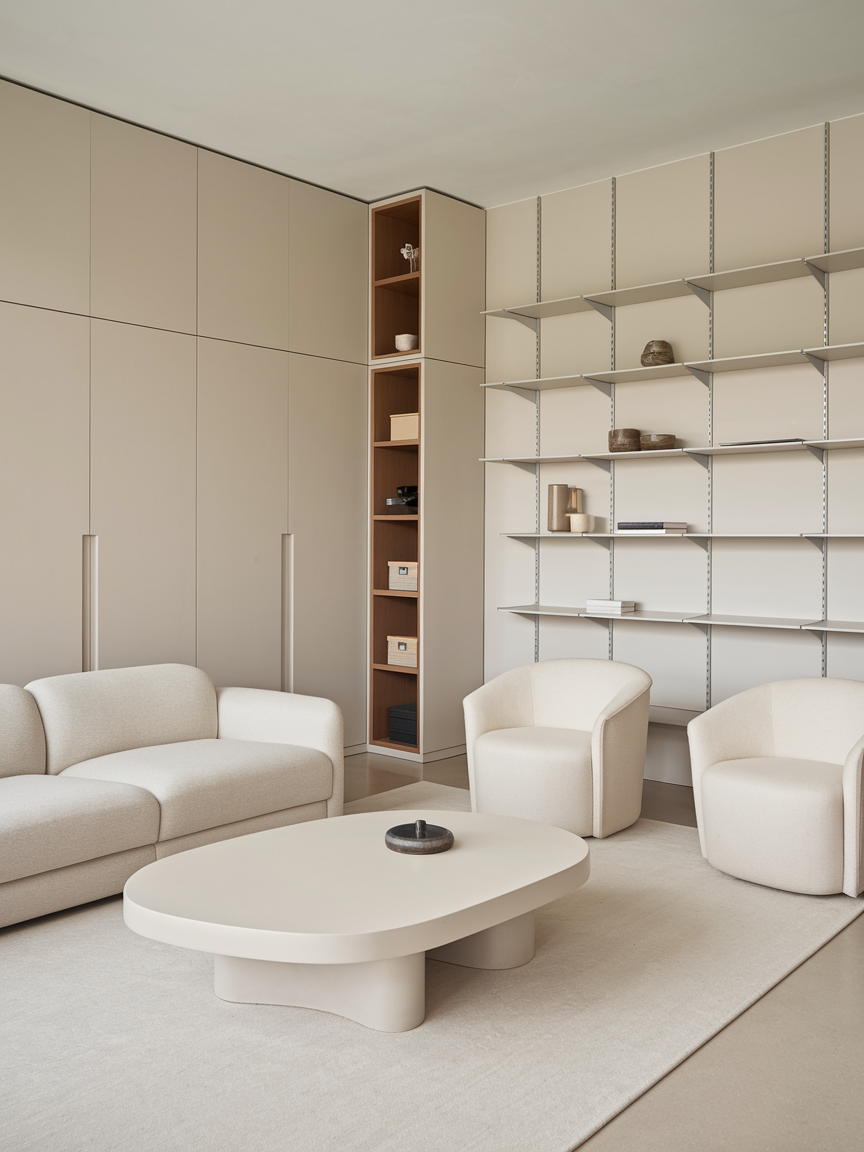
Built-in storage is essential for maintaining a clean, clutter-free minimalist living room. Custom cabinetry and recessed shelving blend seamlessly into the architecture, often finished in the same tone as the walls for a unified appearance. This integration allows everyday items to be stored out of sight while preserving visual calm. By eliminating bulky furniture, built-ins improve both functionality and spatial flow. The result is a space that feels organized, efficient, and visually continuous.
14. Monochromatic Color Layering
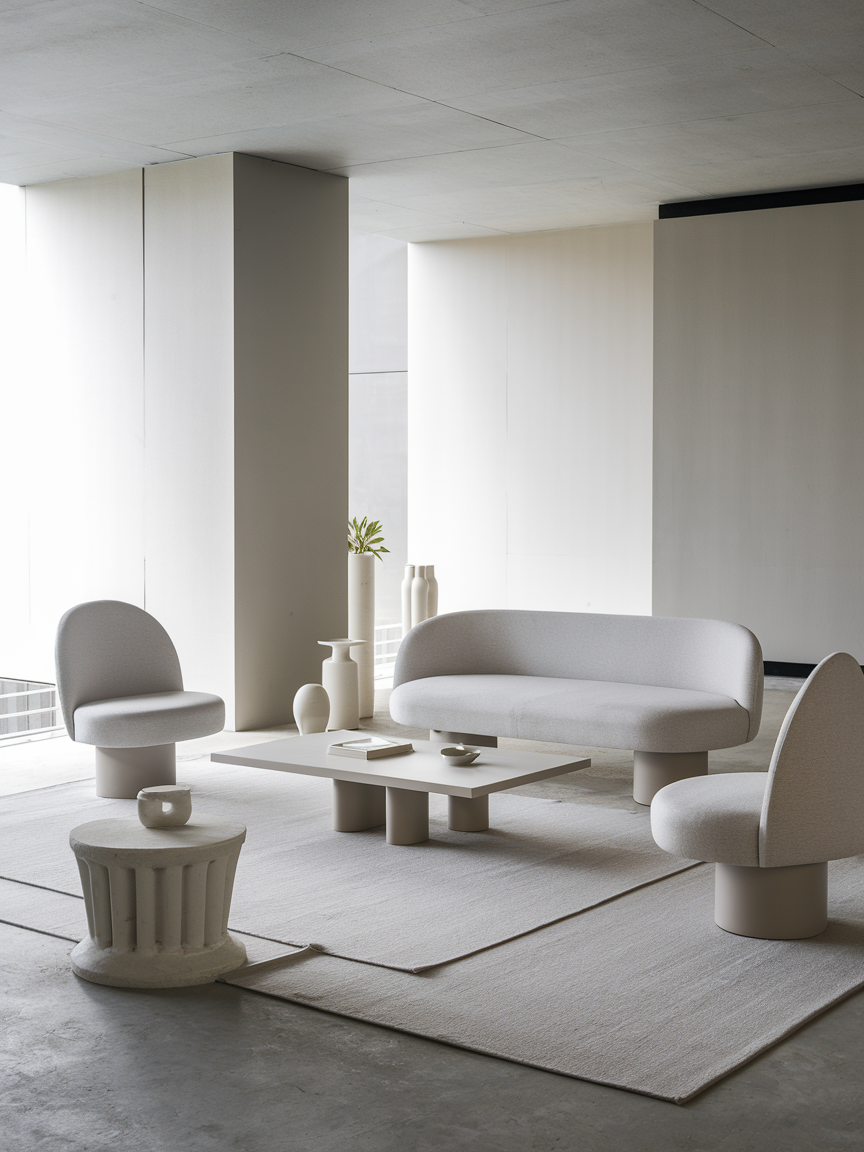
A monochromatic palette enhances minimalism by creating depth through tonal variation rather than contrast. Using different shades within the same color family, such as soft grays, warm beiges, or muted whites, adds richness while maintaining cohesion. This subtle layering allows textures and materials to stand out more clearly. The effect is a refined, harmonious environment that feels intentional and timeless while remaining visually soothing.
15. Layered Neutral Tones
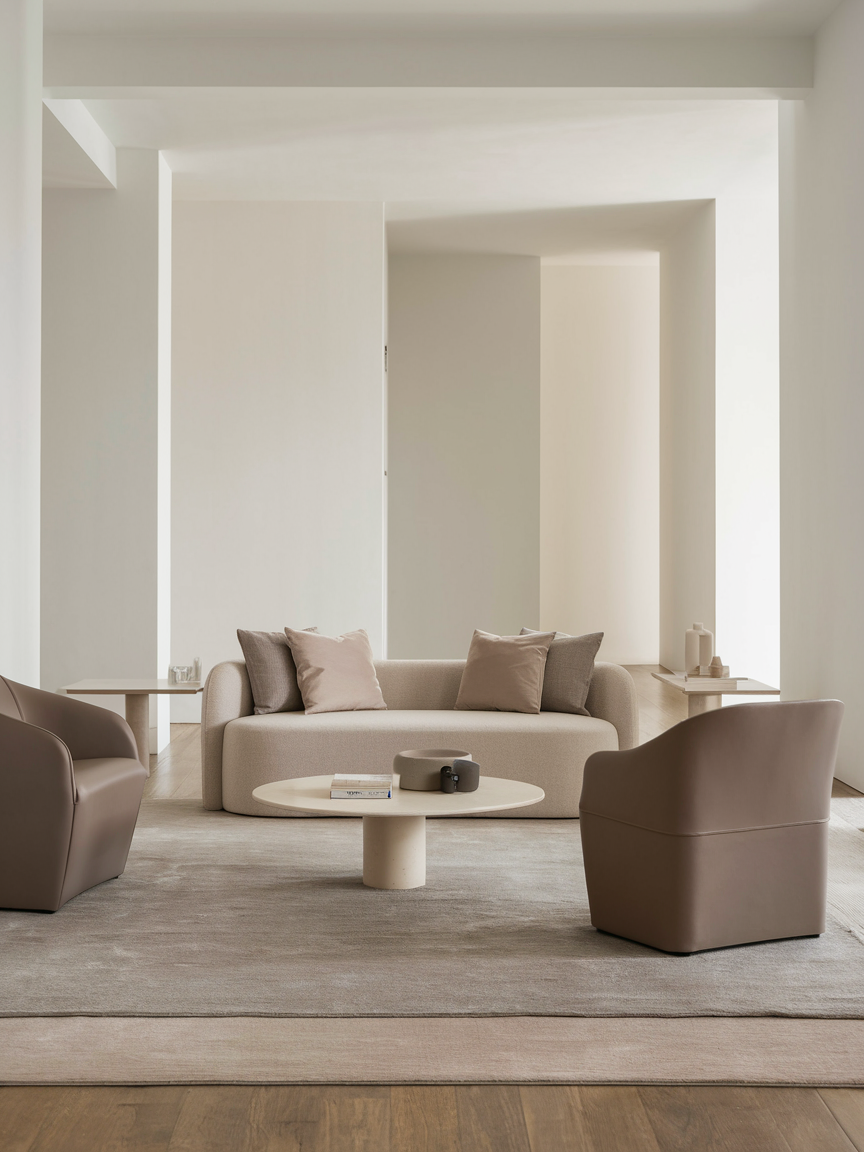
Layering neutrals adds richness and warmth while maintaining simplicity. Combining shades like ivory, beige, taupe, and soft gray creates a cohesive yet dimensional palette. Textiles such as rugs, throws, and cushions help introduce these tones gradually. This subtle layering prevents the room from feeling flat and enhances comfort without sacrificing minimalism. The result is a softly textured, inviting environment.
16. Hidden Technology Integration
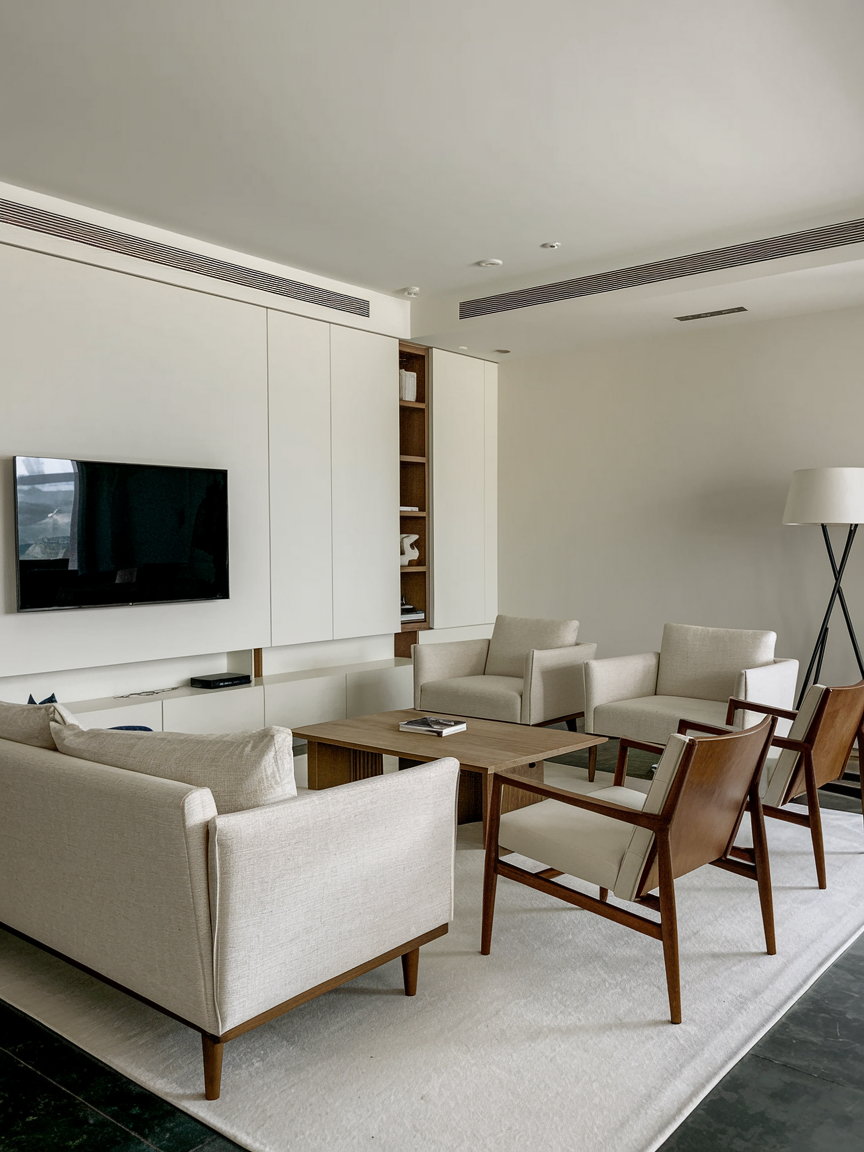
Modern minimalist living rooms benefit greatly from discreet technology integration. Concealing cables, using built-in media units, and mounting screens flush to the wall help preserve a clean aesthetic. I’ve noticed that reducing visible tech clutter makes the space feel more peaceful and less visually distracting. This approach allows modern convenience to exist without disrupting the calm atmosphere.
17. Minimal Mirrors for Light and Space
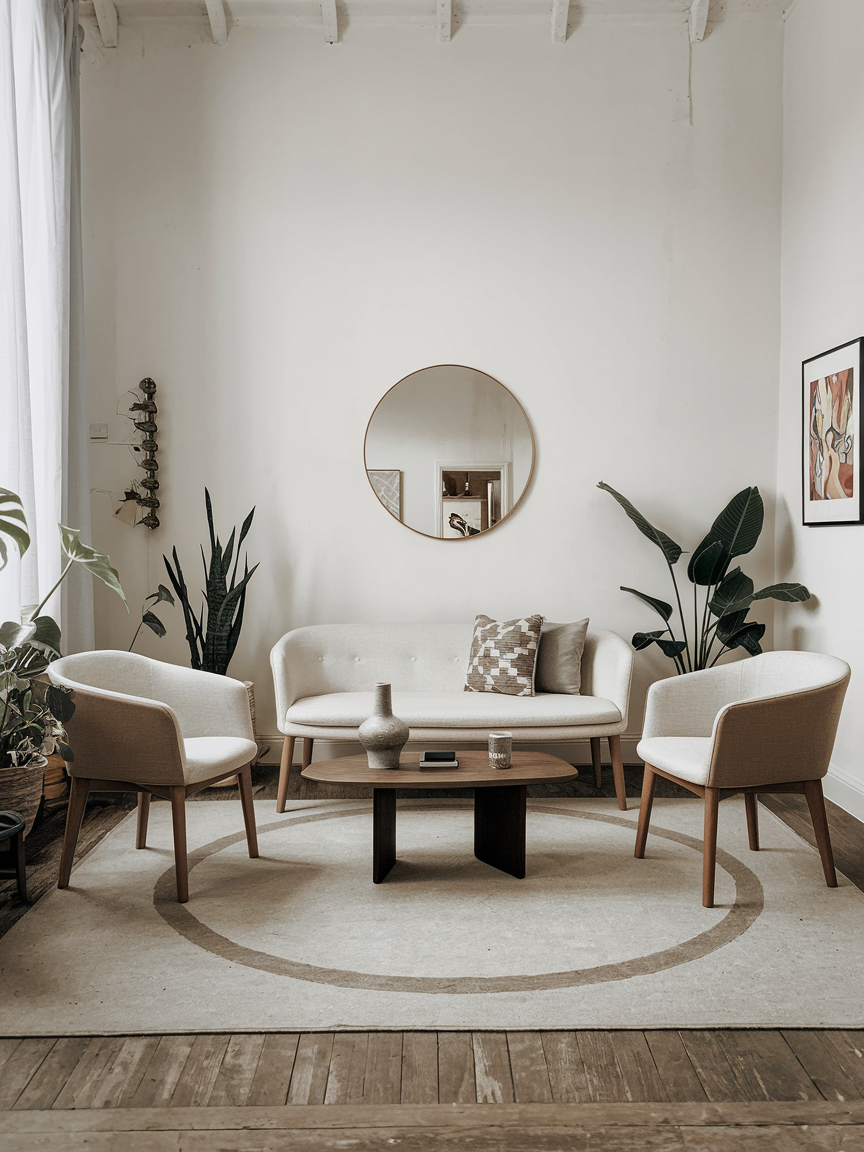
Mirrors are powerful tools in minimalist living rooms, enhancing brightness and creating a sense of expanded space. Simple, frameless designs or thin-profile frames maintain visual cleanliness while reflecting natural light. Placing mirrors strategically opposite windows amplifies daylight and adds depth to the room. Their reflective quality introduces subtle visual layering without clutter. When used thoughtfully, mirrors enhance both function and atmosphere.
18. Subtle Contrast with Dark Accents
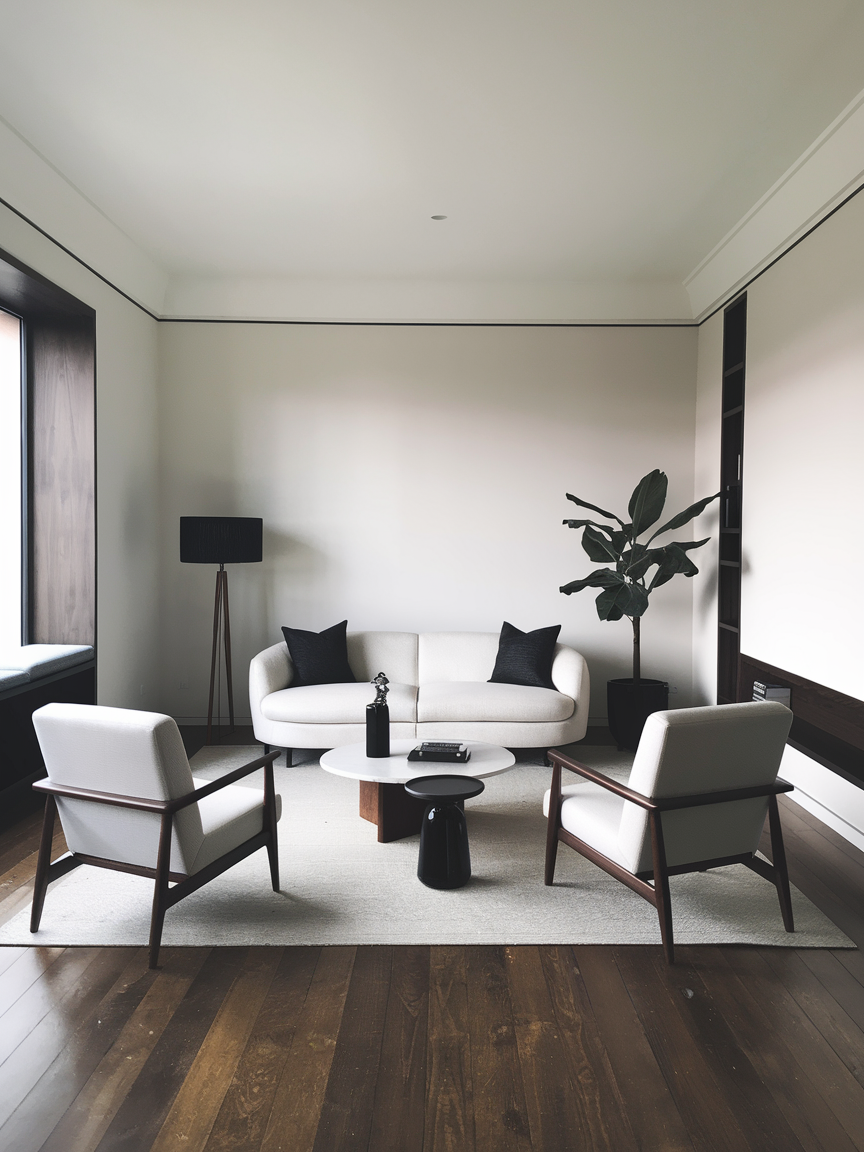
Introducing dark accents in moderation can elevate a minimalist space by adding definition and grounding the overall design. Elements like black frames, charcoal cushions, or dark wood surfaces create contrast without overwhelming the calm palette. This balance prevents the room from feeling too soft or washed out while adding modern sophistication. The key is restraint, ensuring contrast supports rather than dominates the space.
* The appeal of modern minimalist design comes from its ability to create interiors that feel clean, calming, and effortlessly refined. Draw inspiration from these designs to create a space that promotes relaxation, comfort, and a peaceful atmosphere while maintaining a timeless sense of modern elegance.