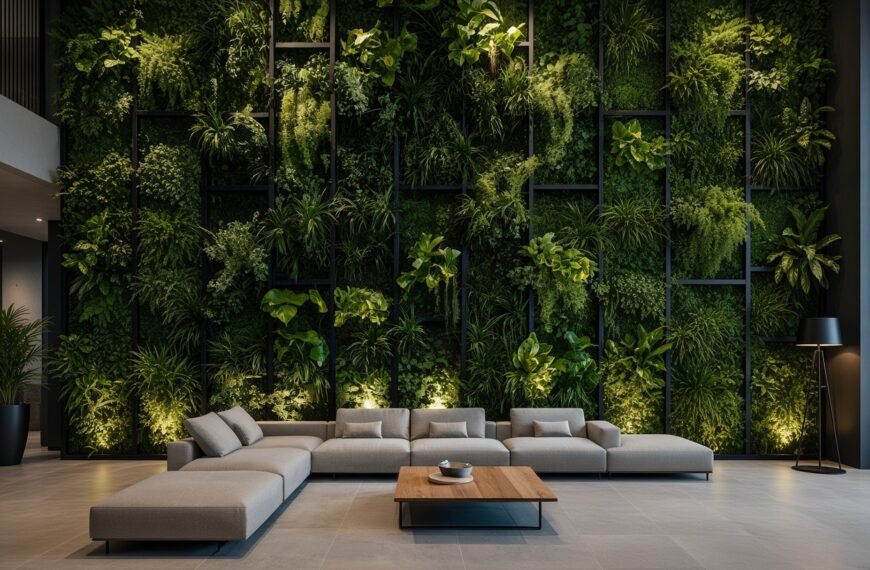
A dining room accent wall is one of the most effective ways to introduce personality, depth, and visual impact into a space that naturally brings people together. A thoughtfully designed feature wall can transform an ordinary dining area into a memorable focal point, adding character while enhancing the overall atmosphere of the room. Bold colors, rich textures, distinctive patterns, and creative materials all offer opportunities to make a lasting impression.
An eye-catching accent wall helps define the dining space and creates a sense of intention within the overall design. Paint, wallpaper, wood paneling, stone finishes, decorative molding, and artistic installations can all be used to add dimension and style. These design elements not only draw attention but also help establish the mood of the room, creating an environment that feels elegant, welcoming, dramatic, or contemporary depending on the chosen aesthetic. A well-executed accent wall can elevate the entire dining experience by adding visual interest without overwhelming the space.
This collection showcases dining room accent wall ideas that turn simple surfaces into stunning design statements. Let’s explore these eye-catching dining room accent wall ideas and discover how a creative focal point can bring style, personality, and unforgettable character to your home!
1. Board and Batten Paneling
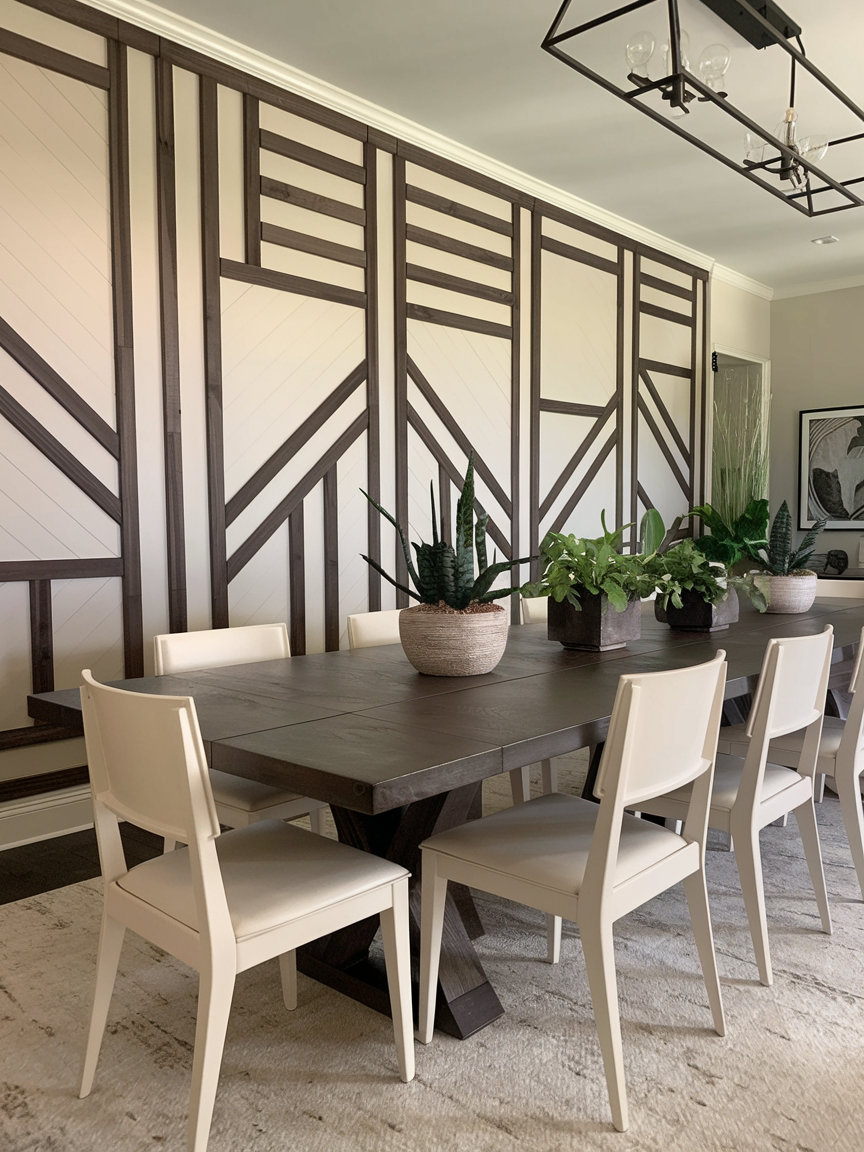
Board and batten paneling introduces timeless architectural detail that instantly enhances the character of a dining room. The combination of vertical and horizontal lines creates depth and structure while maintaining a clean and balanced appearance. Painted in crisp white, soft neutrals, or even bold colors, this paneling style can adapt to a wide range of interior aesthetics. In addition to its visual appeal, board and batten adds a sense of craftsmanship and permanence that helps elevate the overall design of the space.
2. Gallery Wall Display
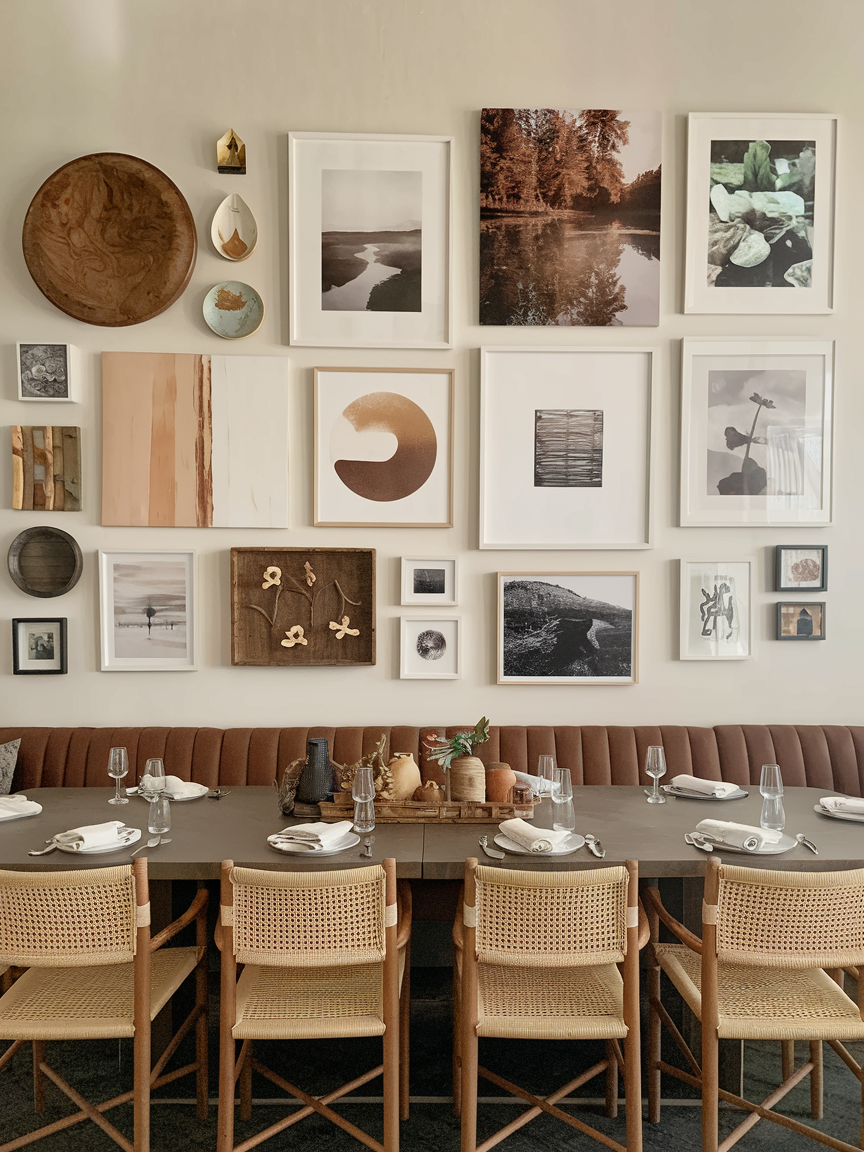
A gallery wall turns your dining room into a personalized and meaningful space filled with visual interest. By combining artwork, family photographs, illustrations, and decorative prints, you can create a display that reflects your personality and tells a unique story. Mixing frame styles and sizes adds depth and variety, while a consistent color palette helps maintain cohesion. Beyond its decorative value, a gallery wall often becomes a conversation starter, making gatherings feel more engaging and memorable.
3. Brick Accent Wall
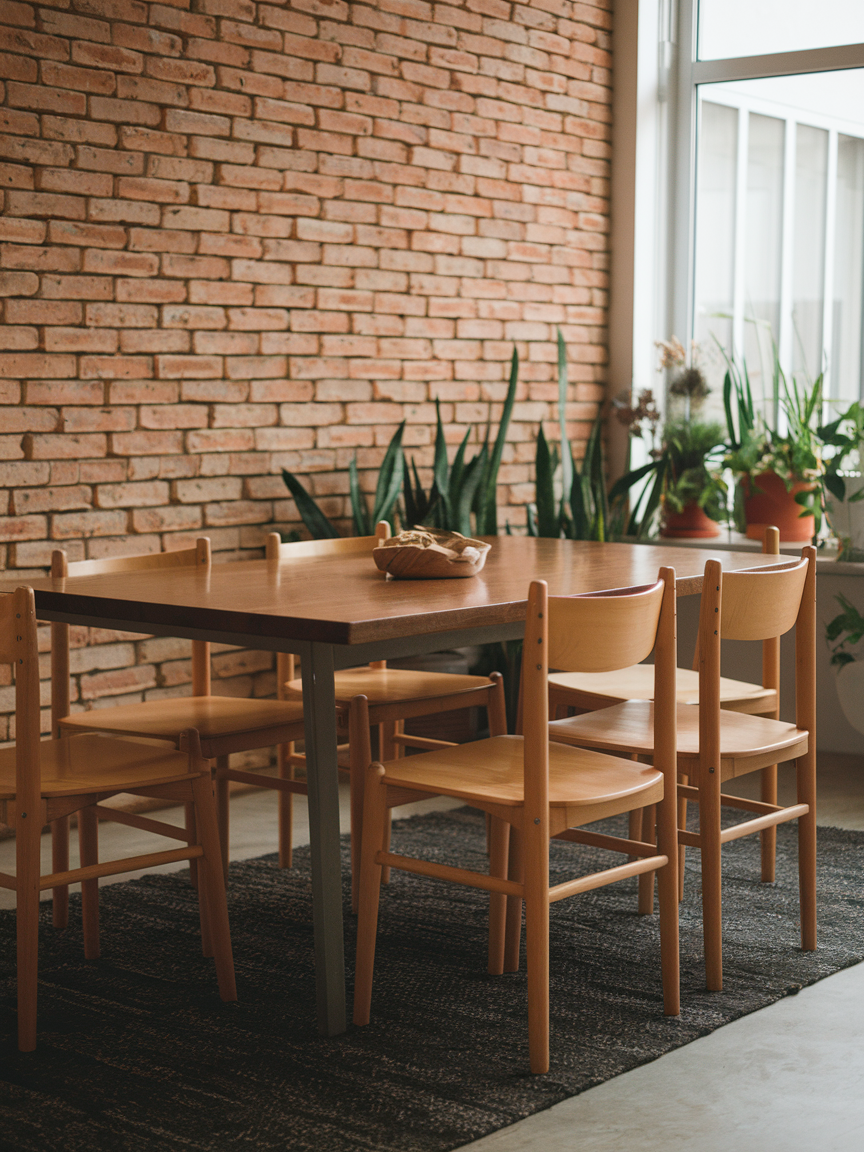
A brick accent wall introduces warmth, texture, and authenticity that instantly adds character to the dining room. Whether you choose exposed red brick, painted white brick, or a modern brick veneer, the natural imperfections create a sense of charm and history. Brick works beautifully with industrial, farmhouse, rustic, and contemporary interiors, making it a highly versatile design feature. The textured surface also adds visual depth, helping the room feel layered, inviting, and full of personality.
4. Textured Wallpaper Layers
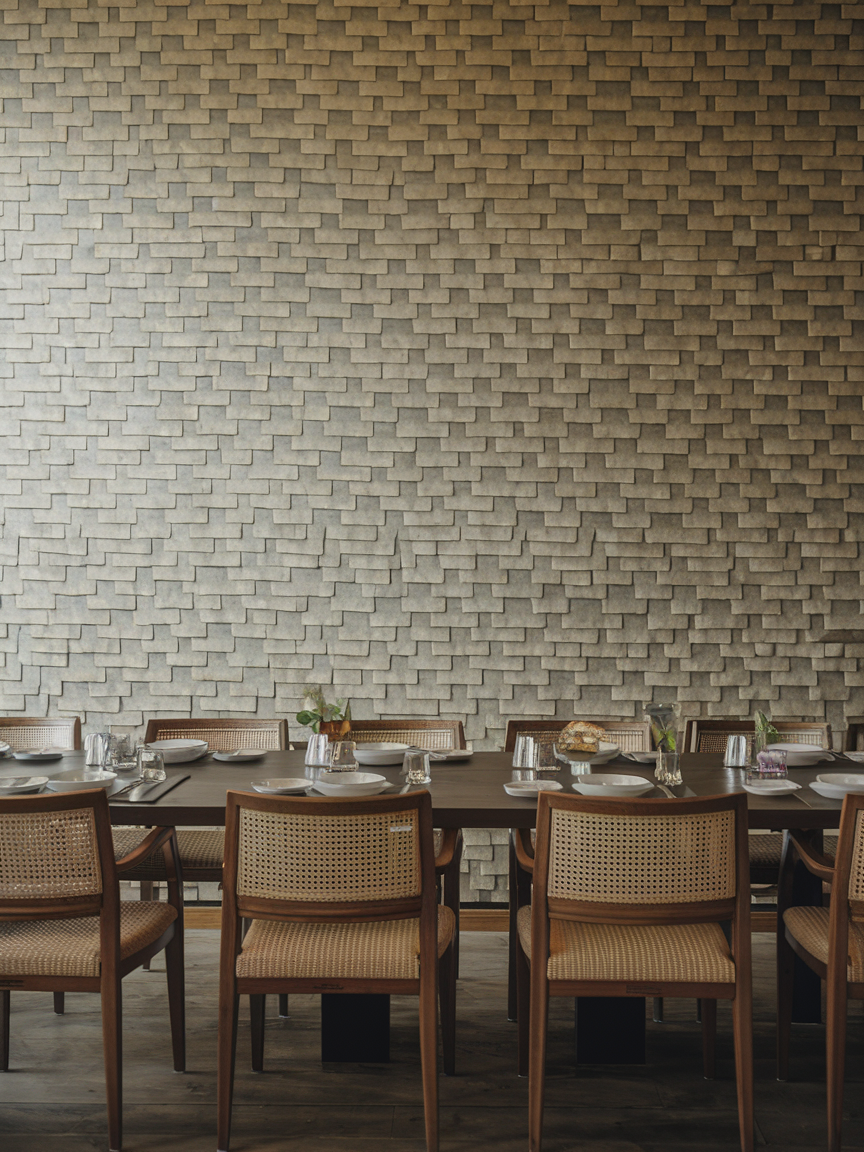
Textured wallpaper brings depth and sophistication to dining room walls through tactile surfaces rather than bold patterns alone. Materials such as grasscloth, linen-inspired finishes, woven fibers, and embossed designs create subtle visual movement that changes throughout the day as lighting shifts. These textures add warmth and richness while maintaining a calm and elegant atmosphere. Unlike heavily patterned wallpapers, textured options feel timeless and versatile, making them suitable for a wide range of decorating styles. The layered effect helps the room feel more inviting, comfortable, and visually complete.
5. Black and White Contrast Wall
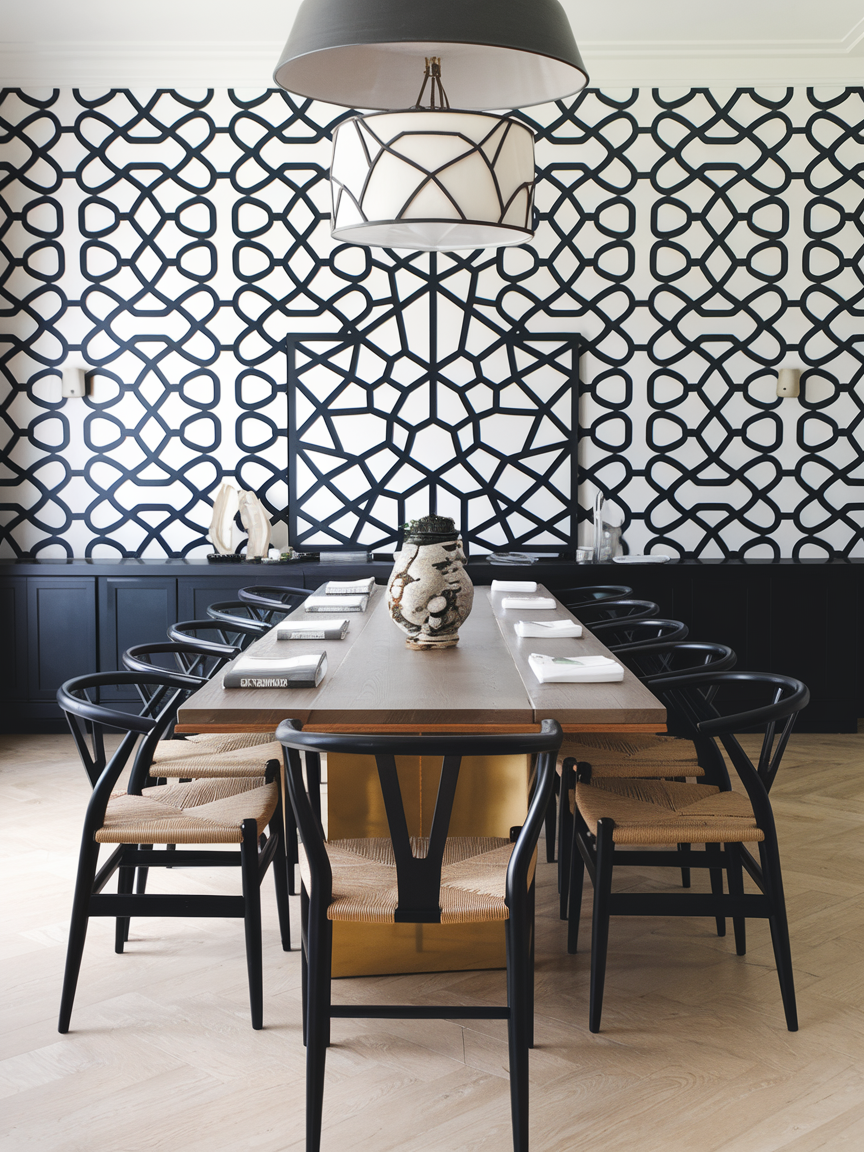
A black-and-white accent wall creates a timeless statement that feels both bold and sophisticated. The strong contrast immediately captures attention while maintaining a clean and organized appearance. This look can be achieved through geometric patterns, paneling, wallpaper, stripes, or painted designs. The monochromatic palette allows furniture, artwork, and lighting fixtures to stand out beautifully while providing a striking backdrop. Despite its simplicity, the combination feels modern and refined, making it an excellent choice for homeowners seeking a dramatic feature that remains stylish through changing trends.
6. Color-Blocked Wall Design
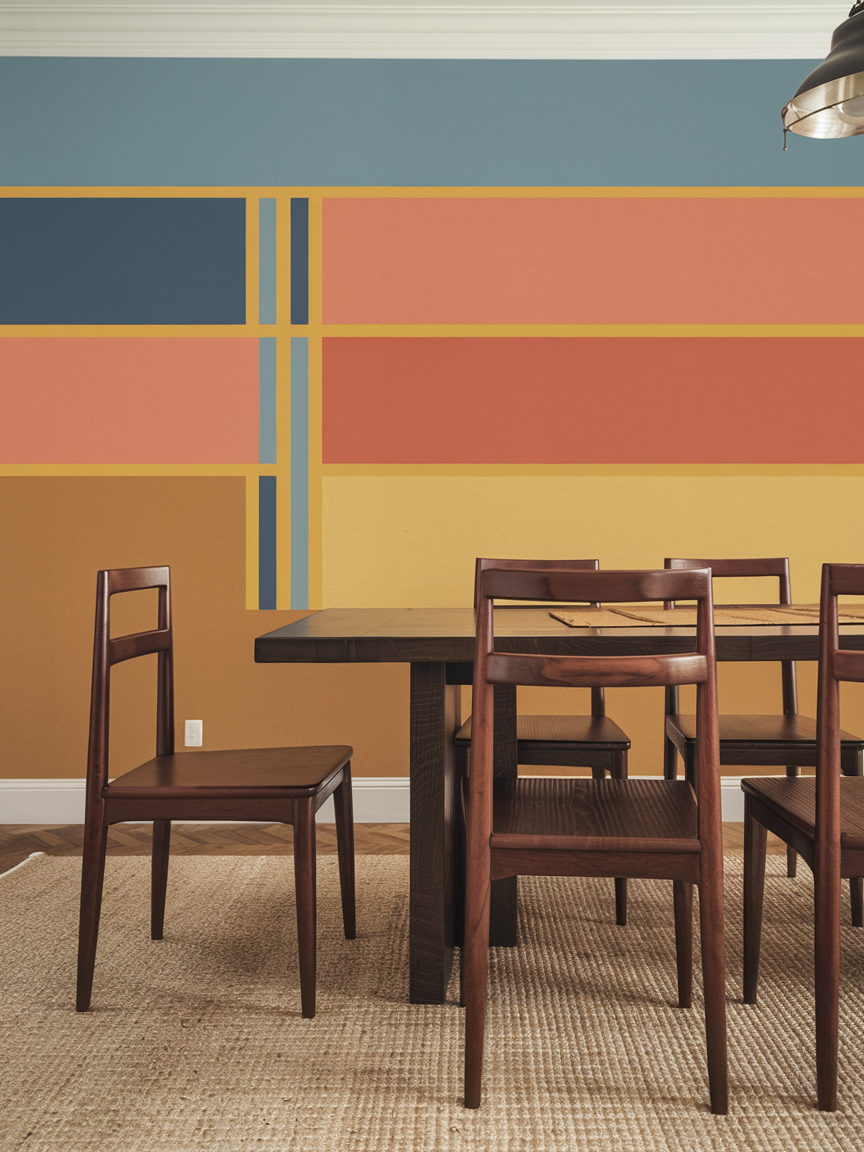
Color blocking introduces bold personality through carefully arranged sections of contrasting or complementary colors. This creative technique transforms a plain wall into a modern work of art while maintaining a sense of structure and balance. Large geometric shapes, curved sections, or layered color combinations can all be used to create unique visual effects. Color blocking is particularly effective in contemporary interiors where artistic expression is encouraged. The design adds energy and movement to the dining room while allowing homeowners to showcase their creativity in a controlled and sophisticated way.
7. Vertical Stripe Wall
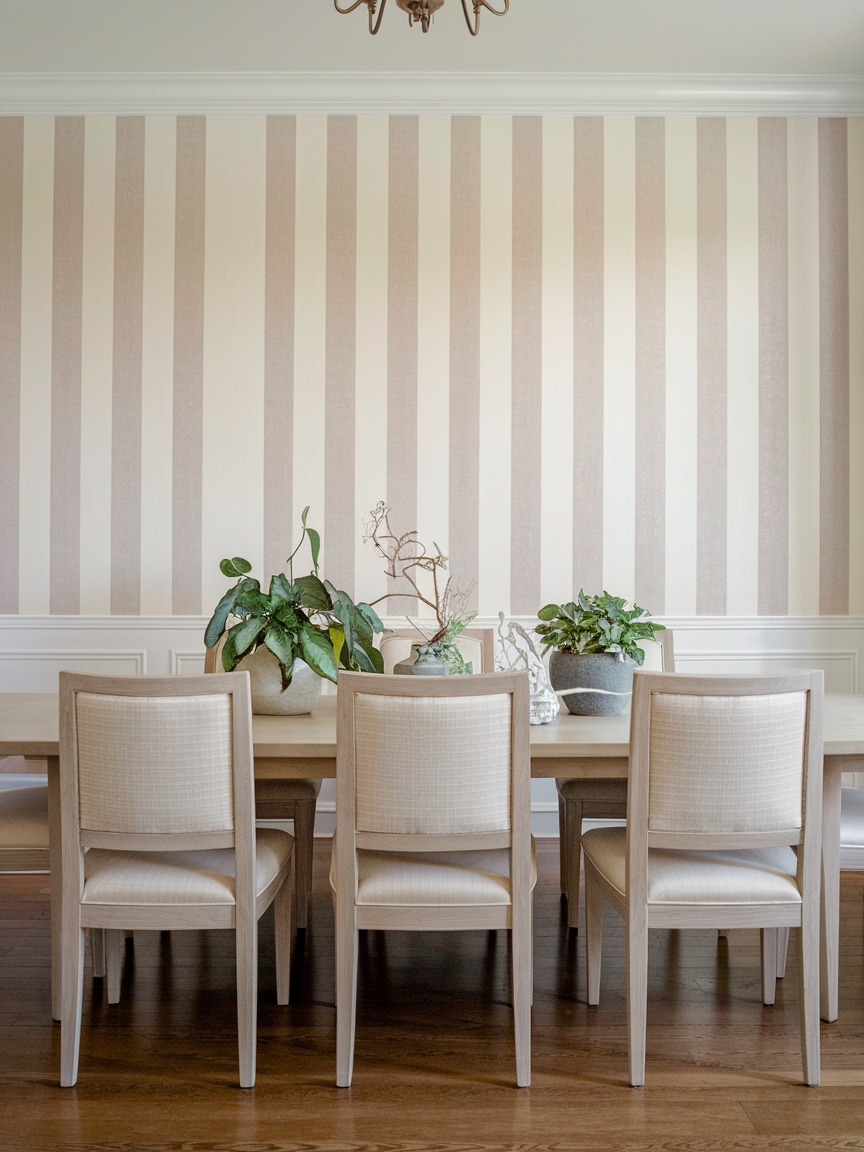
Vertical stripes are a classic design technique that helps enhance the perceived height of a room. The upward movement created by the stripes naturally draws the eye toward the ceiling, making the space feel larger and more open. Soft tonal stripes create a subtle and elegant effect, while high-contrast combinations offer a more dramatic appearance. This versatile design works well in both traditional and contemporary settings. Beyond improving proportions, striped walls introduce rhythm and visual interest that help the dining room feel more refined and thoughtfully designed.
8. Two-Tone Painted Wall
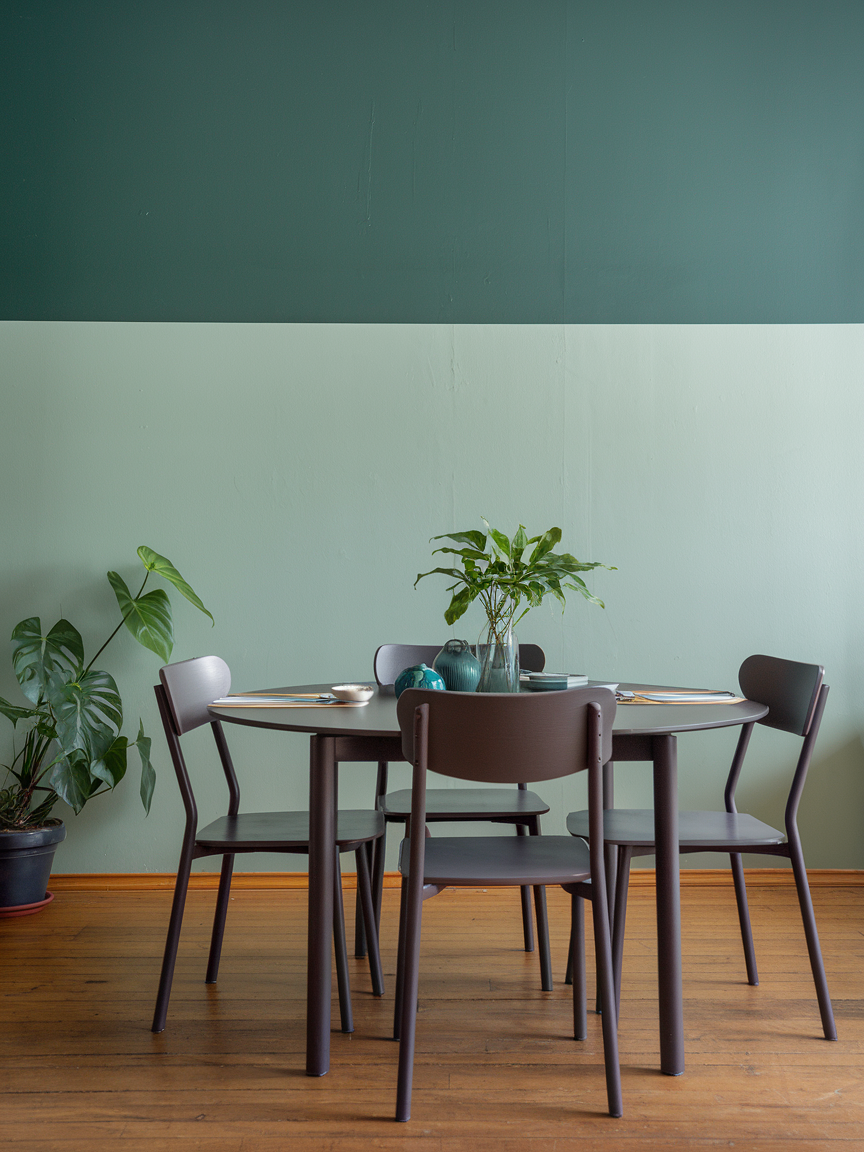
A two-tone wall design offers a creative way to add dimension without overwhelming the room. By dividing the wall with complementary colors, either horizontally or vertically, you create visual contrast that feels intentional and stylish. This technique can help define specific zones within the dining space while making the room feel more dynamic. Whether using subtle tonal differences or bold contrasting shades, a two-tone wall provides a fresh and modern update that remains elegant and easy to customize.
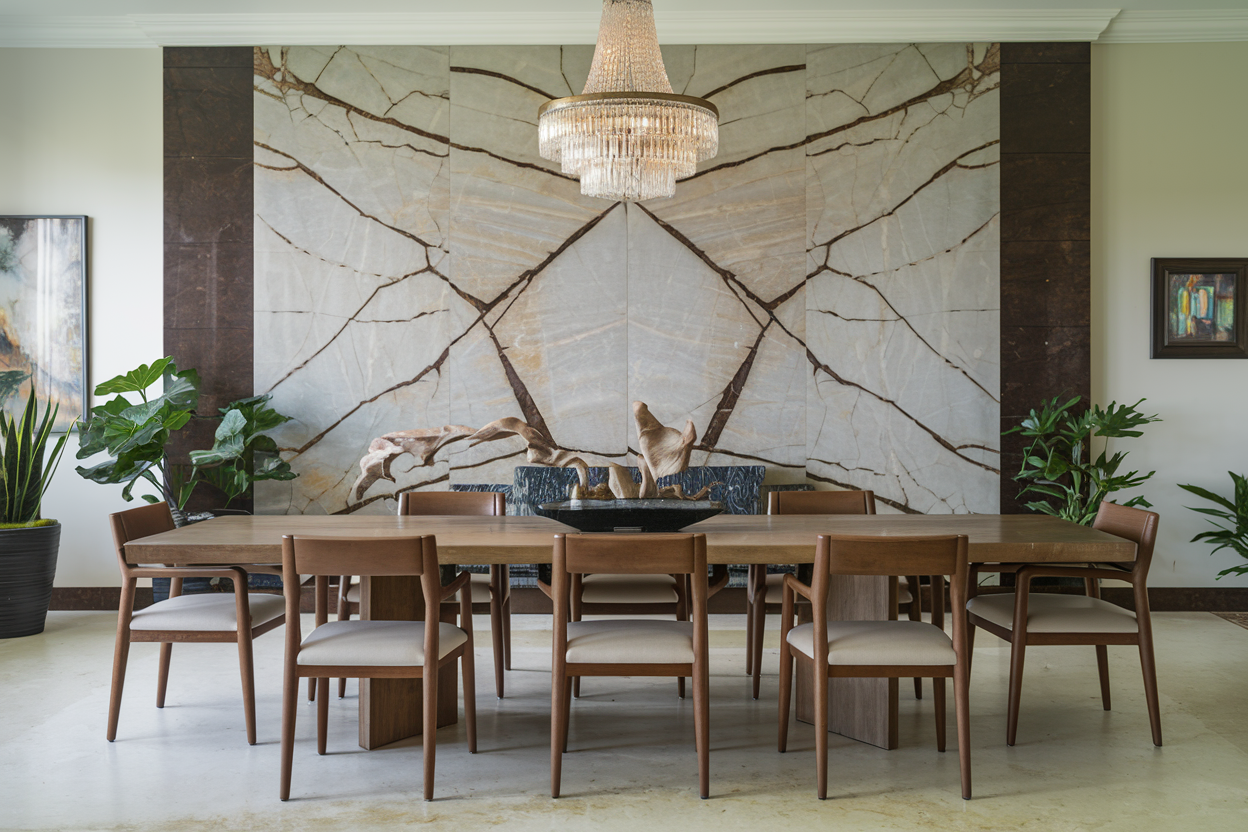
9. Marble or Stone Panels
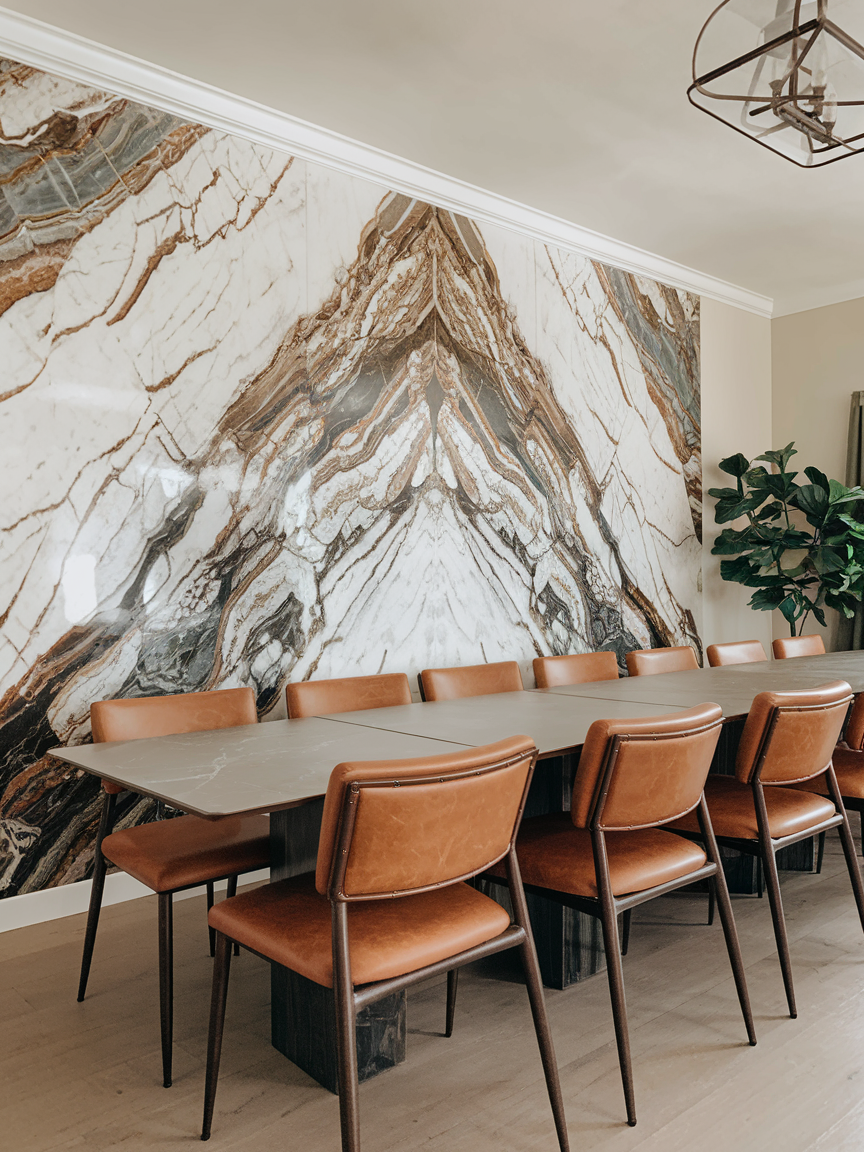
Marble or stone panels instantly introduce a sense of luxury and sophistication to the dining room. The natural veining, color variations, and unique textures found in stone create a visually striking focal point that feels timeless and elegant. Whether you choose dramatic marble slabs, subtle limestone, or textured travertine, these materials add depth and richness that elevate the entire space. Stone surfaces also reflect light beautifully, enhancing brightness and creating a polished atmosphere. Even when used on a single wall, marble or stone can transform an ordinary dining area into one that feels refined and high-end.
10. Dark Moody Wall
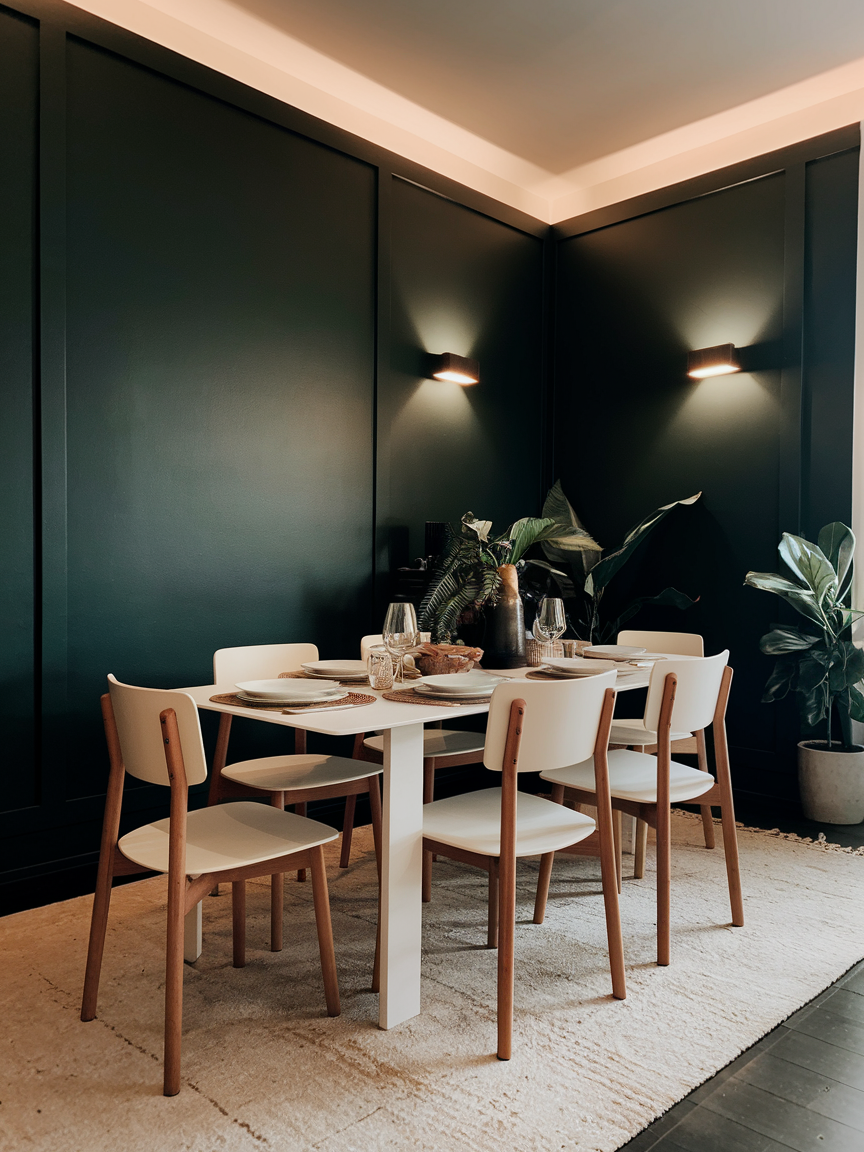
A dark accent wall creates an intimate and inviting atmosphere that is perfect for dining and entertaining. Shades such as deep green, charcoal, black, navy, or burgundy bring a sense of depth and sophistication while making decorative elements stand out more prominently. Dark colors can also make a large dining room feel cozier and more comfortable. When paired with warm lighting, metallic finishes, and lighter furniture, the contrast creates a balanced and stylish look. This design choice is ideal for those who want a dramatic yet elegant feature that adds character and visual impact.
11. Bold Painted Accent Wall
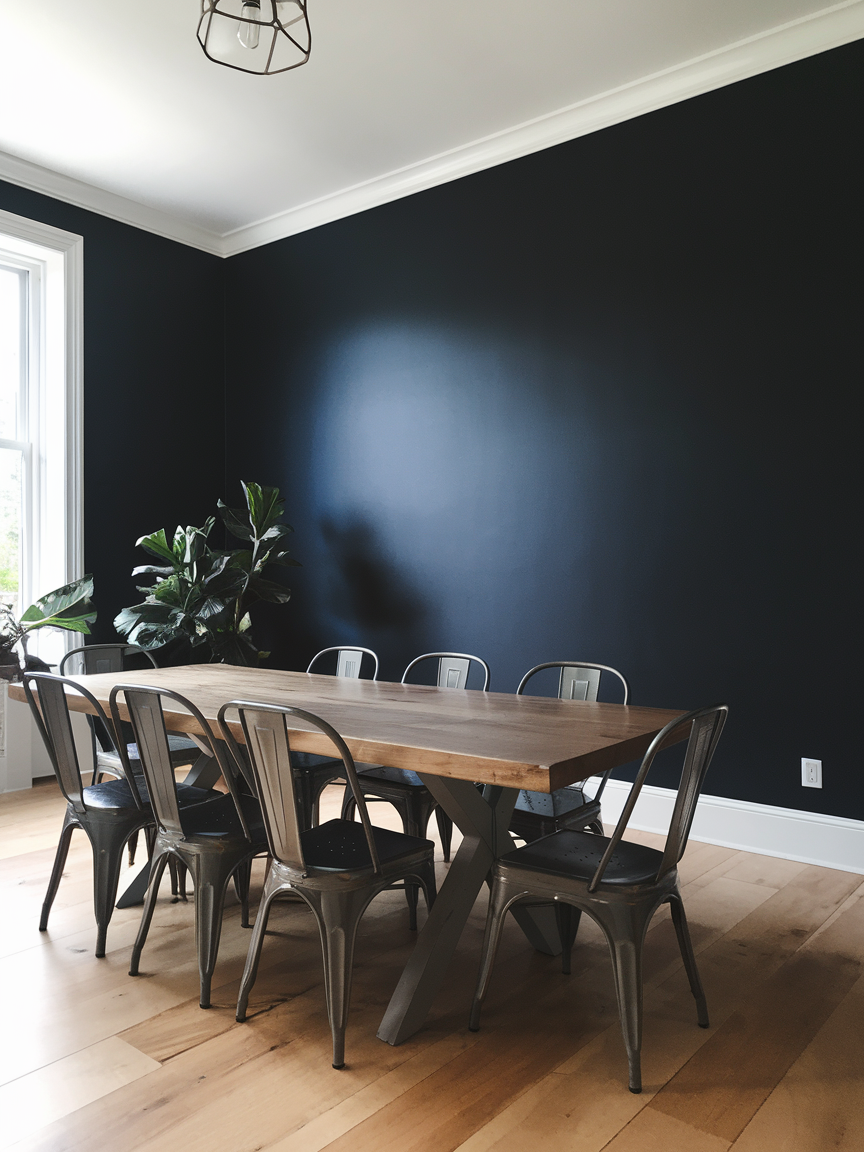
A rich paint color can dramatically change the mood of a dining room while creating a sophisticated focal point that immediately captures attention. Deep shades such as navy blue, forest green, charcoal gray, or burgundy add depth and character, helping the space feel more refined and intentional. These darker tones pair beautifully with lighter furniture, metallic accents, and natural wood finishes, creating a balanced look that feels elegant without being overwhelming. A bold painted wall is also one of the most affordable ways to achieve a high-impact transformation with minimal effort.
12. Soft Neutral Feature Wall
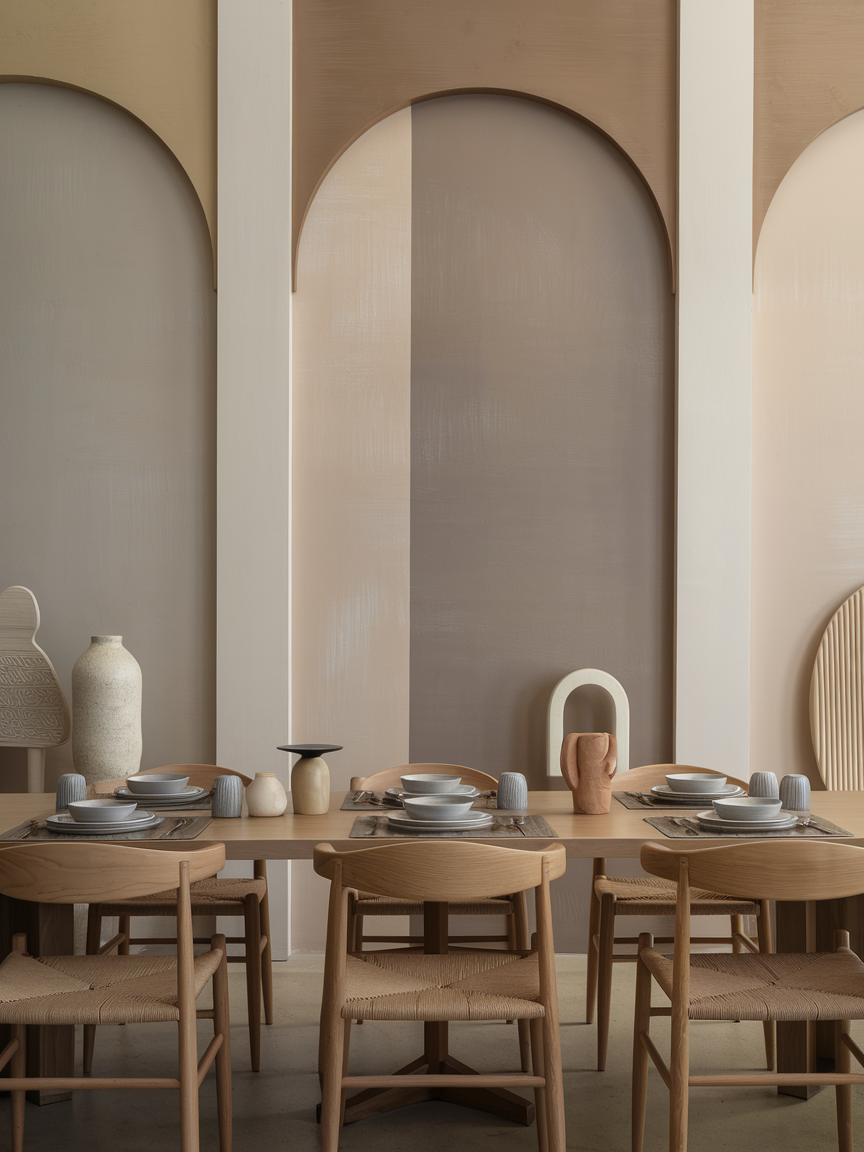
Neutral tones offer a refined way to add visual interest while maintaining a calm and welcoming atmosphere. Shades such as warm beige, taupe, greige, and soft gray introduce subtle depth that enhances the room without dominating the design. These versatile colors work beautifully alongside natural materials like wood, linen, and stone, helping create a cohesive and timeless aesthetic. A neutral accent wall also provides flexibility for future décor updates, allowing you to refresh accessories, artwork, and furniture without worrying about clashing colors.
13. Vertical Wood Slat Panels
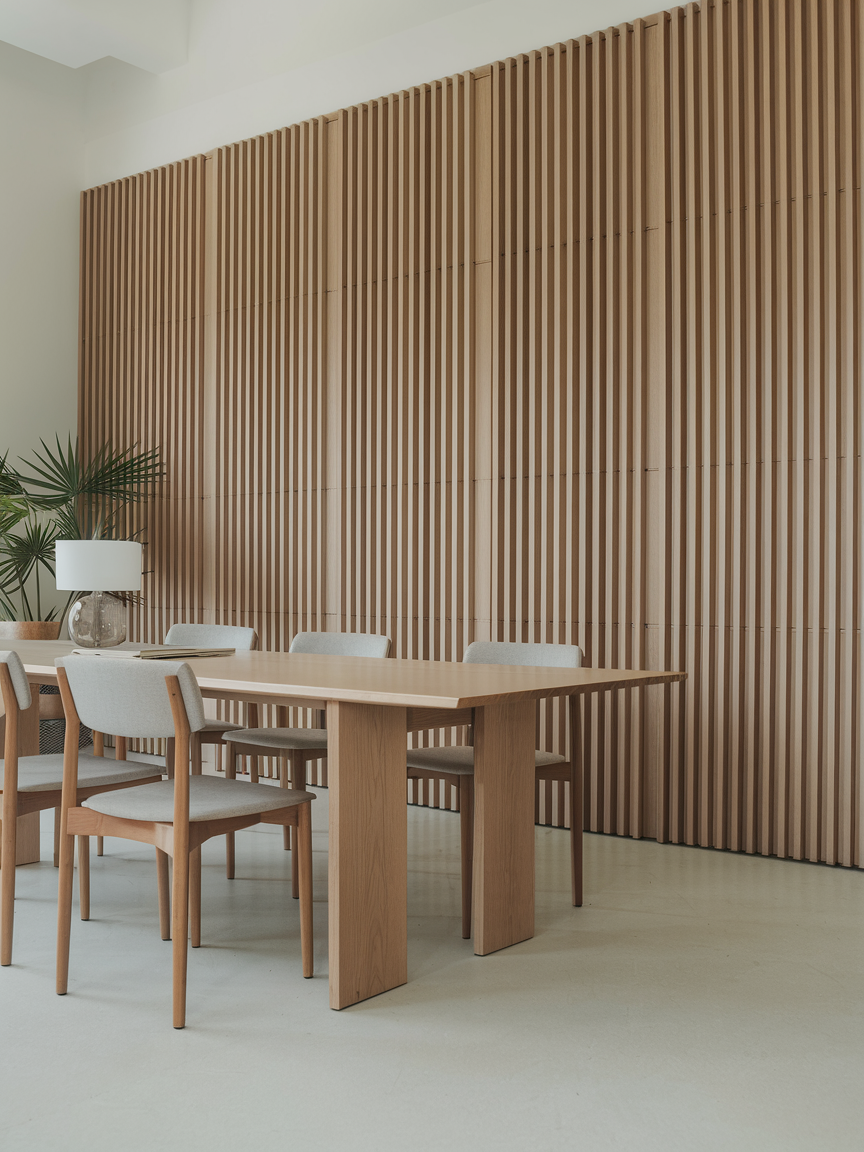
Wood slat walls bring warmth, texture, and architectural character into the dining room while creating a modern and elevated appearance. The vertical arrangement naturally draws the eye upward, making ceilings feel taller and the room appear more spacious. Depending on the finish, wood slats can complement contemporary, Scandinavian, rustic, or luxury-inspired interiors. The subtle shadows created between each panel add depth and dimension throughout the day, making the wall visually engaging even when kept simple and uncluttered.
14. Geometric Painted Patterns
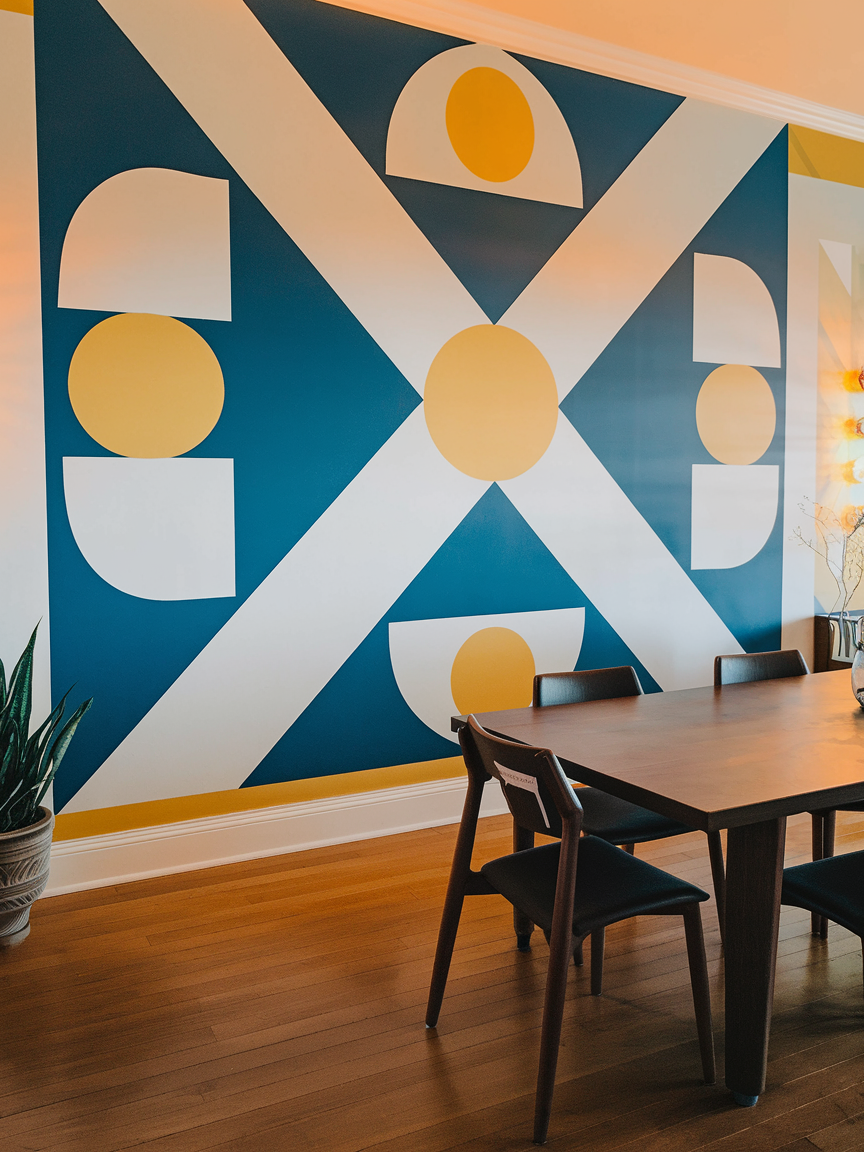
Geometric wall designs introduce creativity and personality while maintaining a structured and modern look. Carefully placed shapes, clean lines, and complementary colors can transform a plain wall into a unique piece of art. This design approach allows homeowners to experiment with bold visual elements without relying on expensive materials or permanent installations. Whether using subtle tonal contrasts or vibrant color combinations, geometric patterns create movement and energy that make the dining room feel more dynamic and thoughtfully designed.
15. Classic Wallpaper Statement
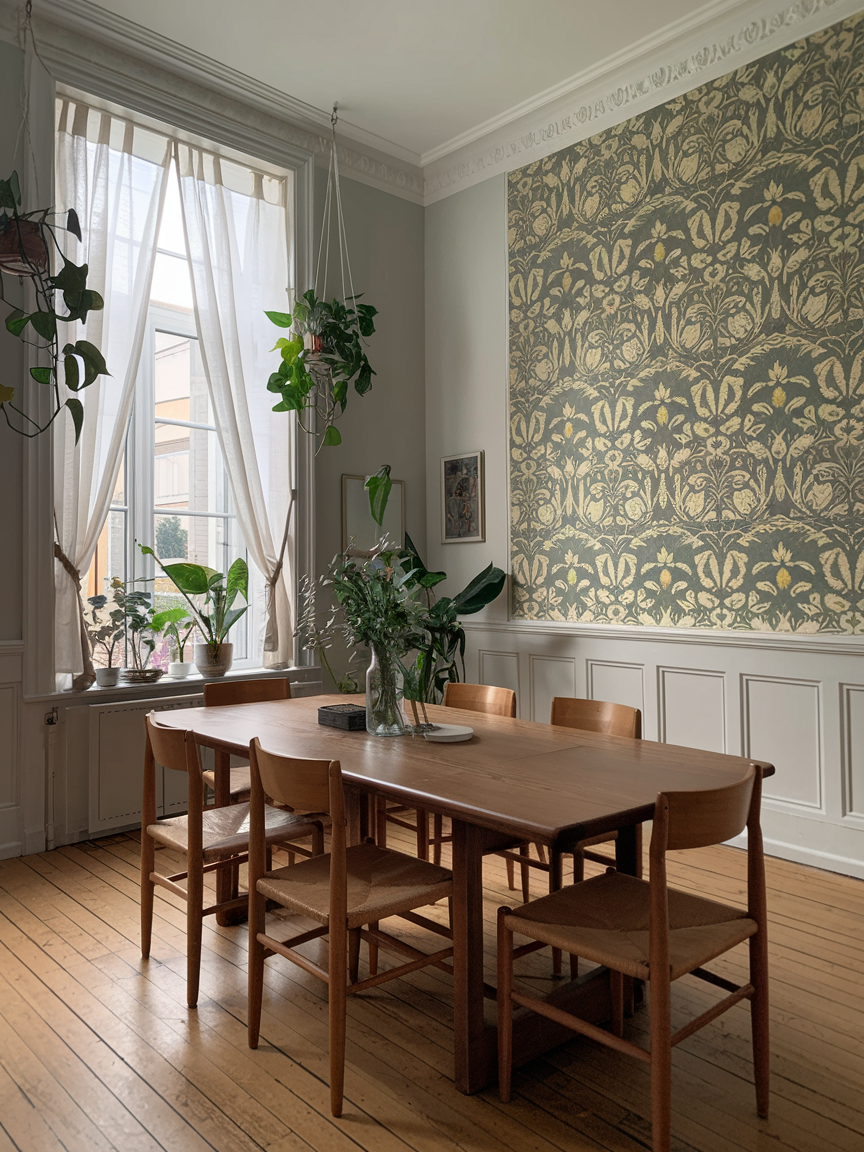
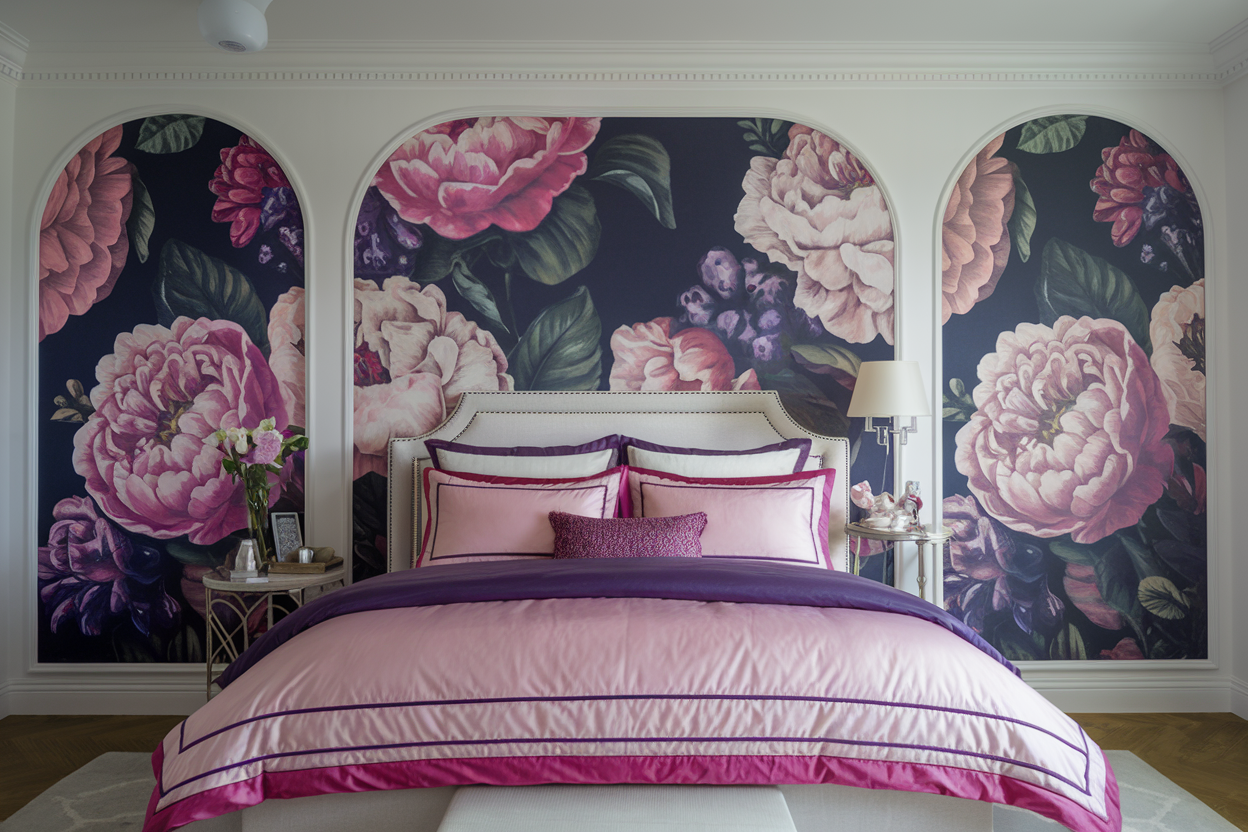
Wallpaper is one of the easiest ways to add personality, texture, and visual depth to a dining room. From oversized florals and botanical prints to abstract patterns and elegant damasks, the variety of available designs allows you to create a look that reflects your personal style. Wallpaper can instantly establish the mood of the space, whether you prefer something dramatic, sophisticated, or relaxed. It also adds a layer of richness that paint alone often cannot achieve, making the dining area feel more curated and complete.
16. Textured Plaster Finish
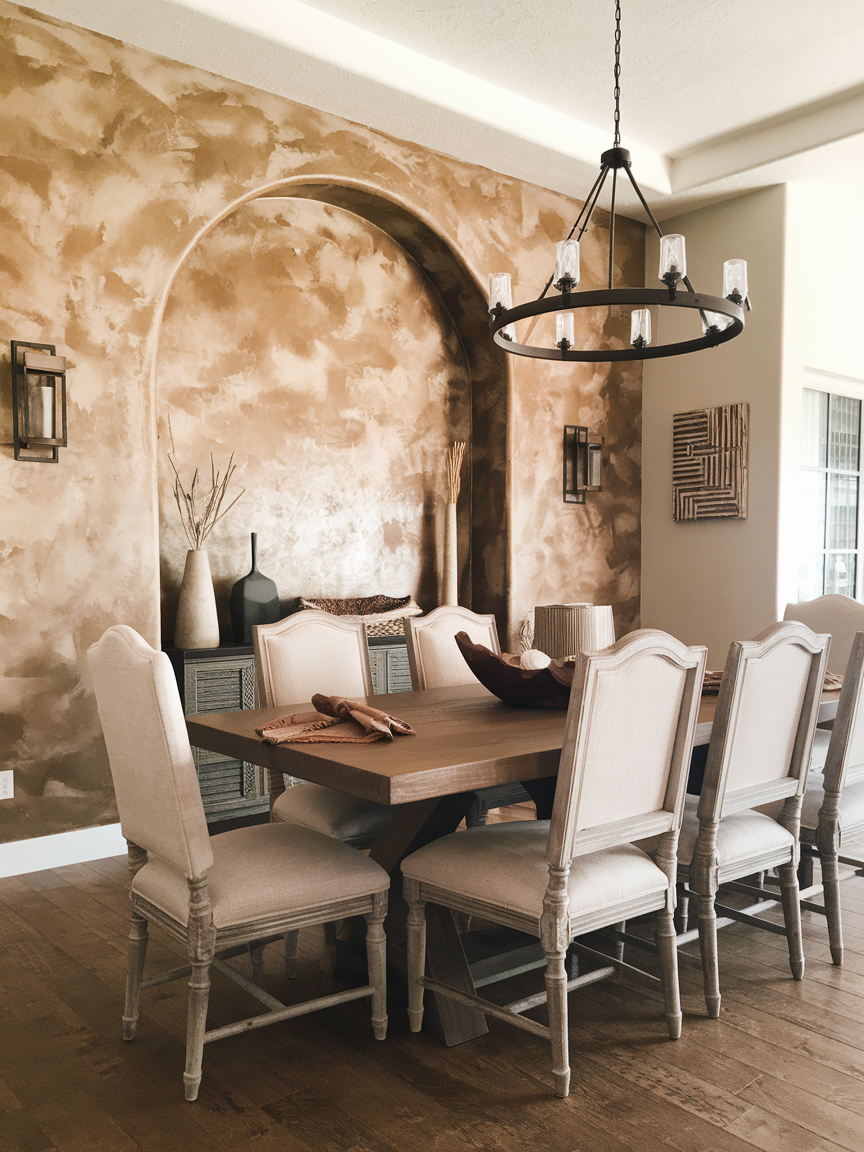
A textured plaster or limewash wall creates an organic and sophisticated backdrop that feels effortlessly elegant. The natural variations in texture and tone give the surface a handcrafted appearance that changes beautifully as lighting shifts throughout the day. Unlike flat painted walls, plaster finishes add depth without relying on bold colors or patterns. This subtle yet impactful design choice works especially well in minimalist, Mediterranean, contemporary, and luxury-inspired interiors where texture becomes an essential design feature.
17. Shiplap Wall Design
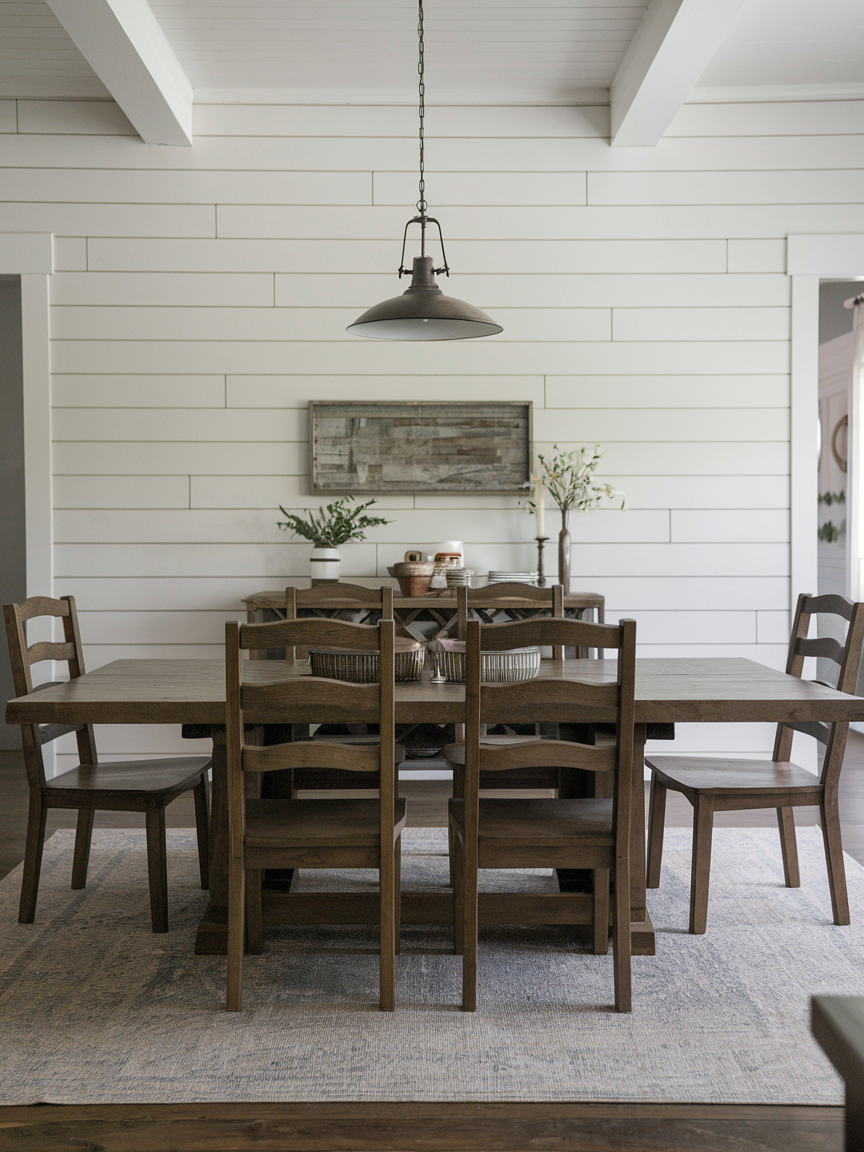
Shiplap adds subtle texture and timeless charm through its clean horizontal lines and understated appearance. This wall treatment creates visual interest without feeling overly decorative, making it suitable for a variety of interior styles. Painted in crisp white, soft gray, or warm neutral tones, shiplap helps maintain a bright and welcoming atmosphere while adding architectural detail. It works especially well in coastal, farmhouse, transitional, and modern rustic spaces. The simple yet effective design introduces warmth and depth, helping the dining room feel more polished and thoughtfully designed.
18. Metallic Accent Wall
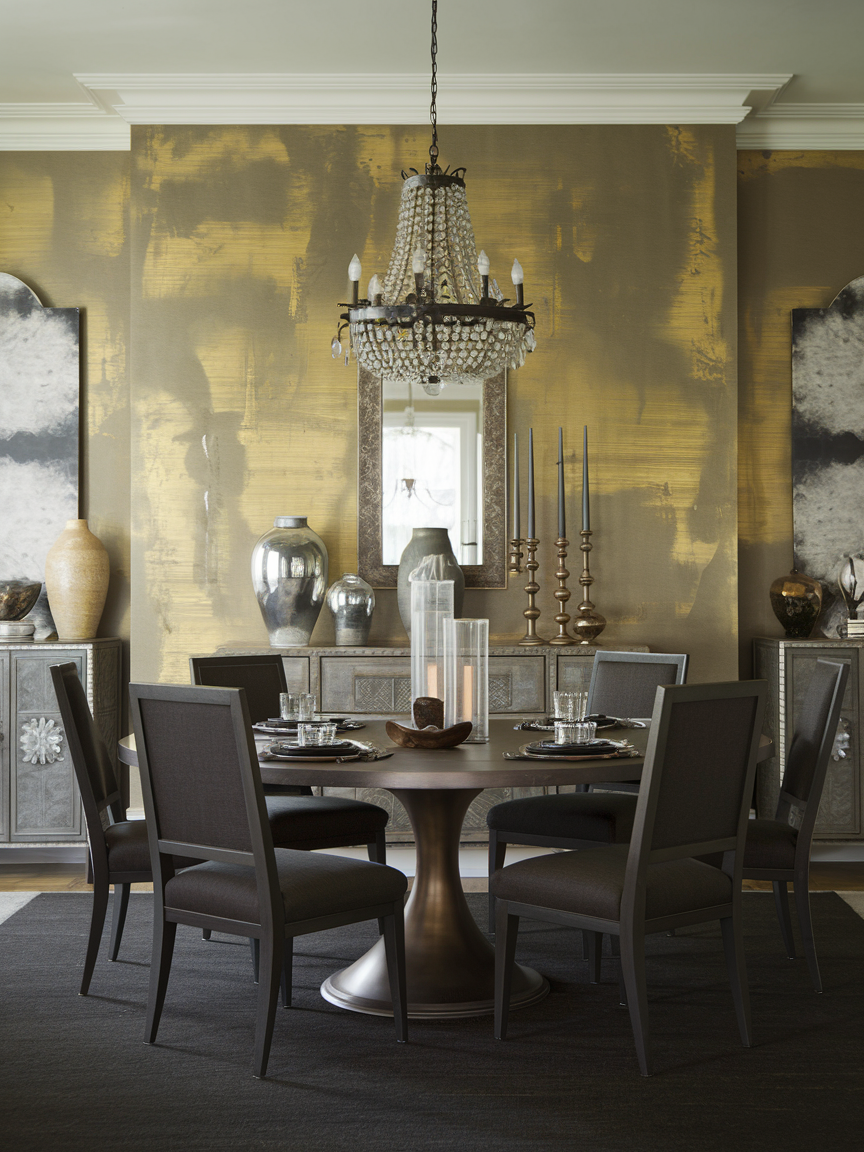
A metallic accent wall brings elegance and glamour into the dining room while creating a distinctive visual statement. Finishes such as gold, bronze, champagne, silver, or pearl reflect light beautifully, helping brighten the space and add dimension. Metallic surfaces can range from subtle shimmer effects to bold reflective finishes depending on the desired look. When balanced with neutral furnishings and understated décor, the wall becomes a sophisticated focal point without overwhelming the room. This design choice is perfect for creating a luxurious atmosphere that feels modern, stylish, and memorable.
19. Large-Scale Artwork Wall
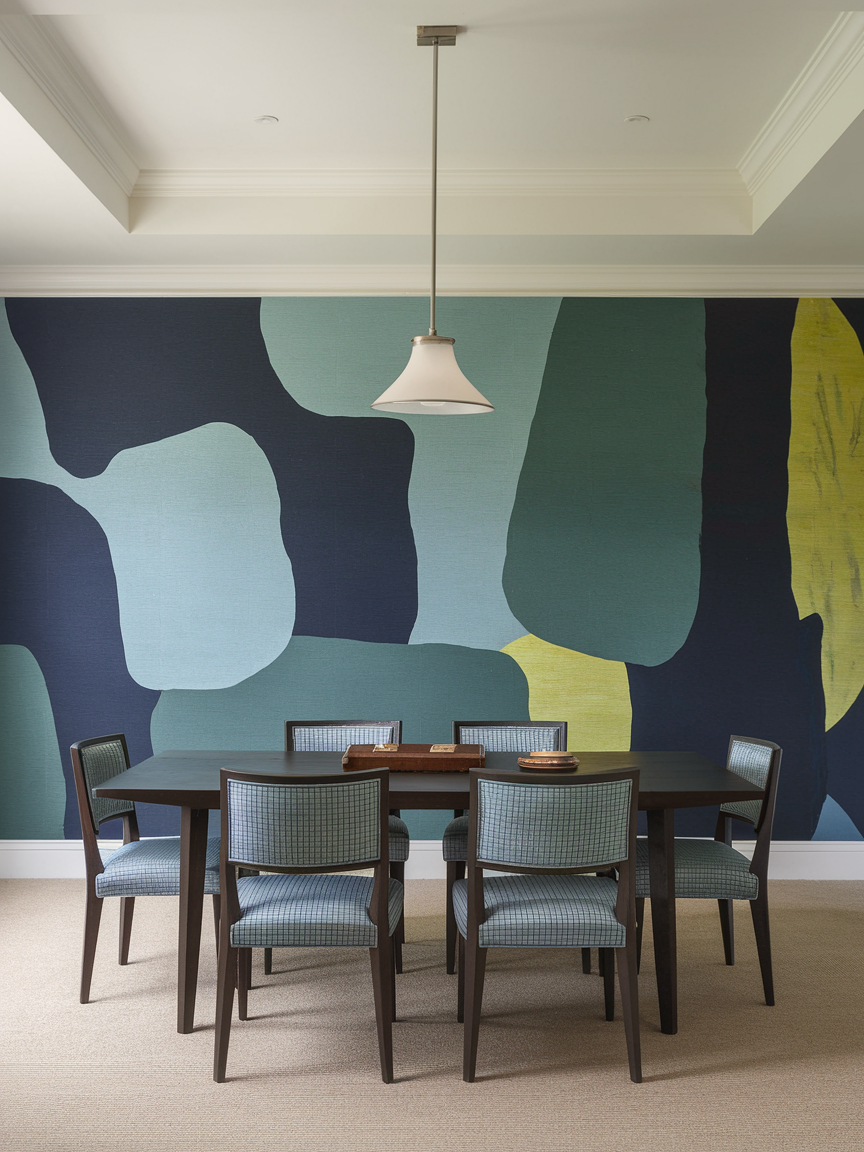
An oversized piece of artwork can completely transform the look and feel of a dining room by serving as a dramatic focal point. Large-scale art creates visual impact while maintaining a clean and uncluttered appearance, making it ideal for both contemporary and classic interiors. Whether you choose abstract paintings, landscape photography, or modern illustrations, a single statement piece can define the room’s personality. The artwork draws the eye and creates a strong sense of balance, helping the space feel curated, intentional, and visually engaging without the need for excessive decoration.
20. Reclaimed Wood Accent Wall
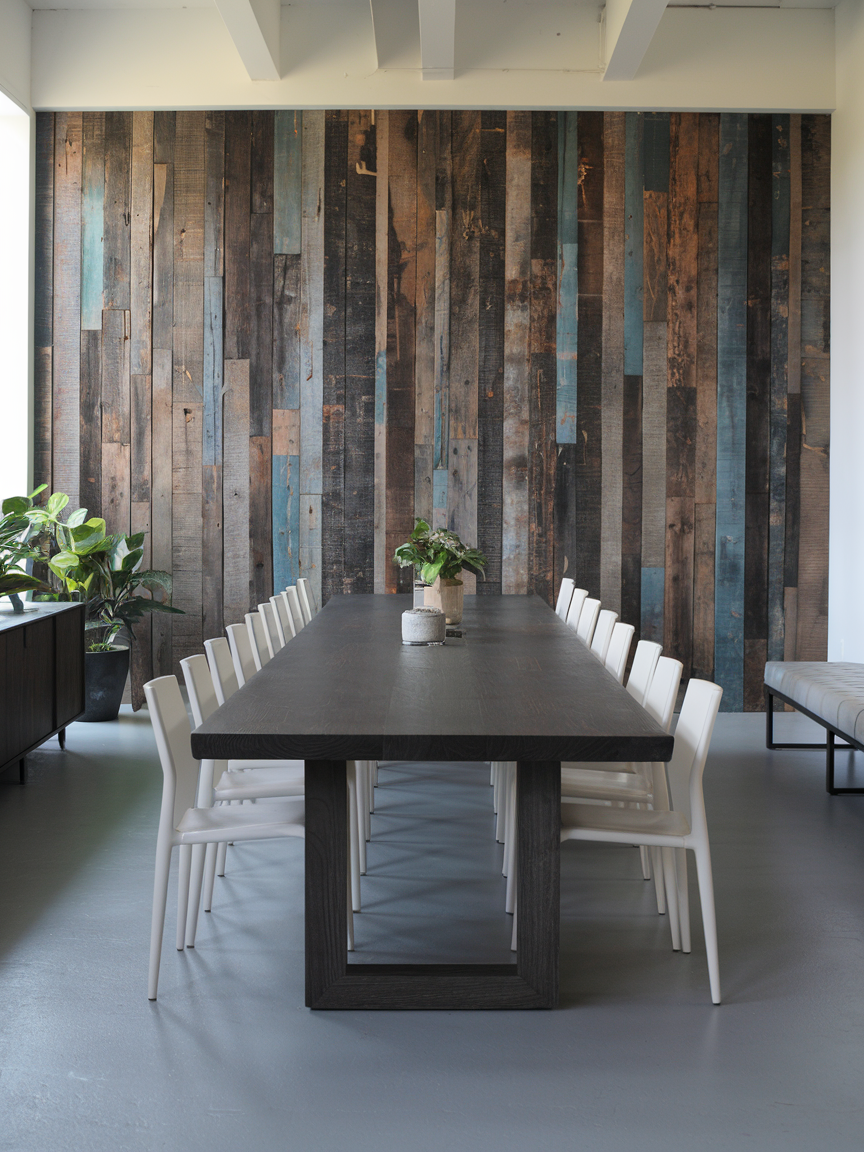
A reclaimed wood accent wall introduces warmth, authenticity, and character through naturally aged materials. Each board features unique grain patterns, textures, and weathered details that contribute to a rich and layered appearance. This sustainable design choice adds depth while telling a story through its imperfections and history. Reclaimed wood works beautifully in rustic, farmhouse, industrial, and even modern interiors where natural materials are used to create contrast. The result is a dining room that feels welcoming, comfortable, and full of timeless charm.
21. Minimalist Neutral Accent Wall
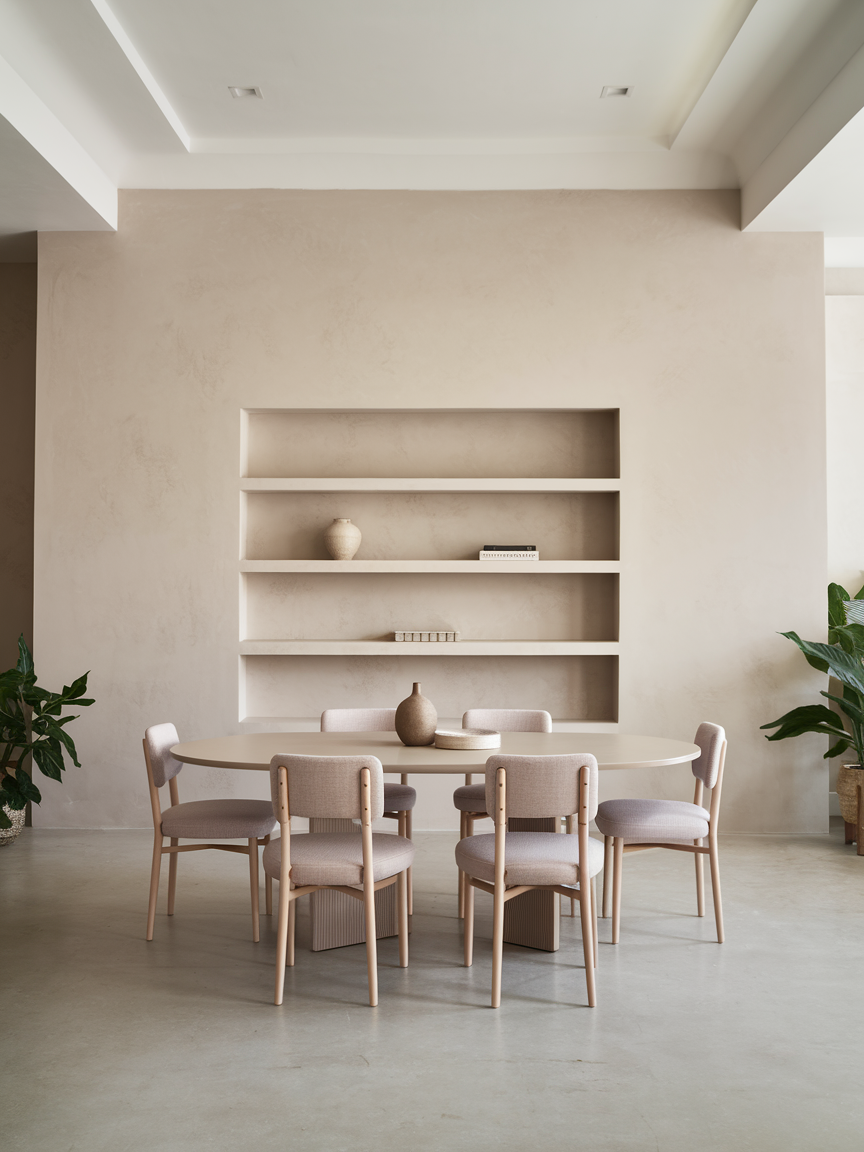
A minimalist neutral accent wall proves that simplicity can be incredibly impactful. Soft shades such as warm white, greige, taupe, or pale gray create subtle depth while maintaining a calm and uncluttered atmosphere. Rather than relying on bold patterns or dramatic colors, this design focuses on balance, texture, and understated elegance. The neutral backdrop allows furniture, lighting, and decorative accessories to become the visual highlights of the room. This approach is ideal for homeowners who appreciate clean lines, timeless style, and a serene dining environment.
22. Mixed Material Accent Wall
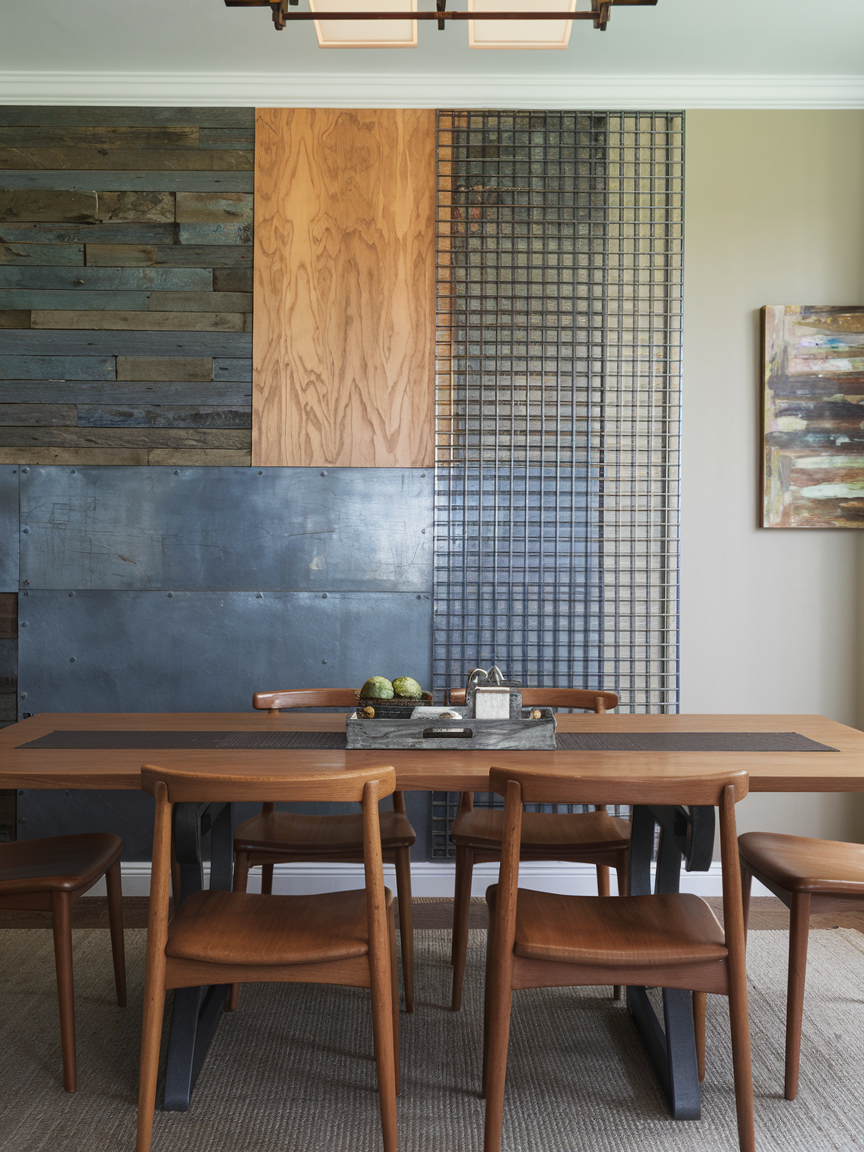
A mixed material accent wall combines elements such as wood, metal, stone, tile, paint, or textured panels to create a custom-designed feature filled with depth and character. The layering of different materials introduces contrast and visual richness while allowing each element to complement the others. This approach creates a highly personalized look that feels unique and thoughtfully curated. Whether blending rustic and modern finishes or combining natural and industrial textures, a mixed-material wall adds complexity and sophistication that helps the dining room stand out in a memorable way.
23. Wainscoting with Color Contrast
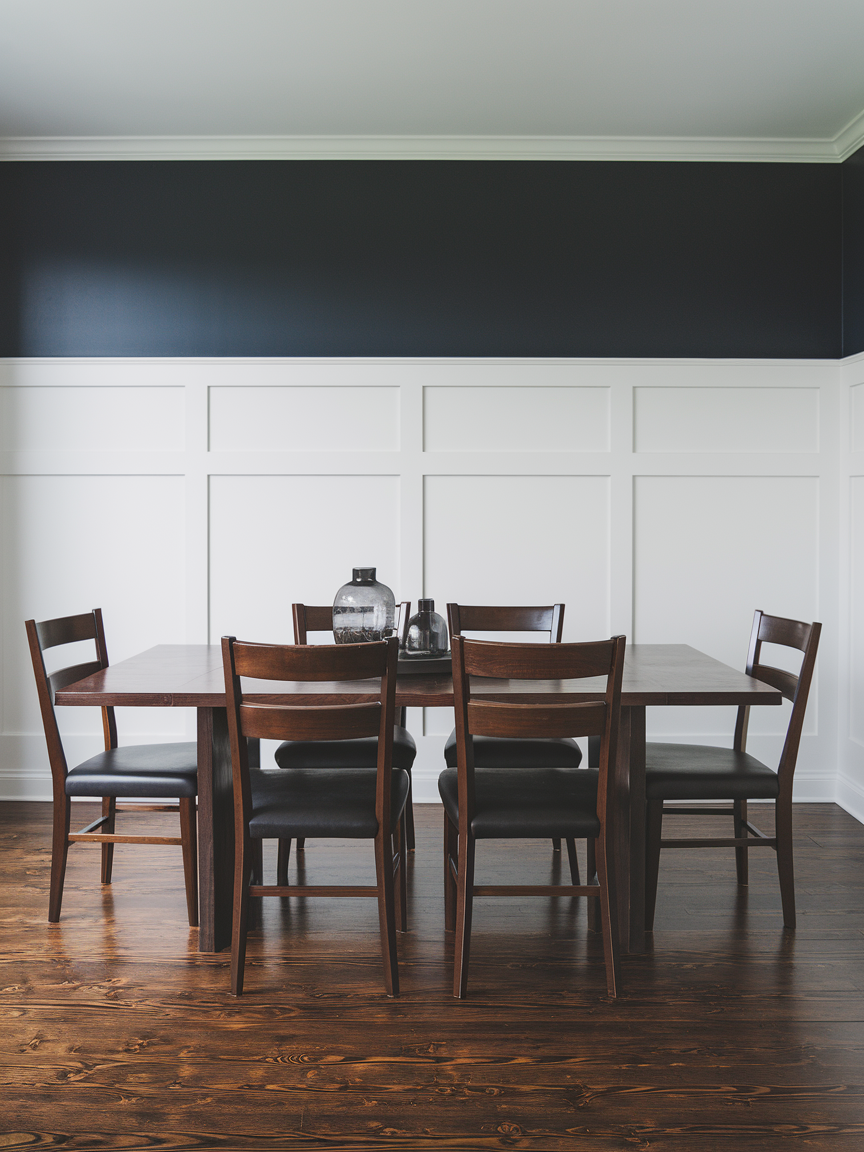
Pairing wainscoting with a contrasting upper wall color creates a layered design that feels elegant and visually balanced. The lower paneling introduces architectural detail and texture, while the upper portion provides an opportunity to experiment with color. Deep jewel tones, muted neutrals, or soft pastels can all complement traditional white wainscoting beautifully. This combination creates depth without overwhelming the room and helps establish a polished, custom appearance. Beyond aesthetics, wainscoting also adds durability and protection, making it a practical choice for frequently used dining spaces.
24. Mirror Panel Accent Wall
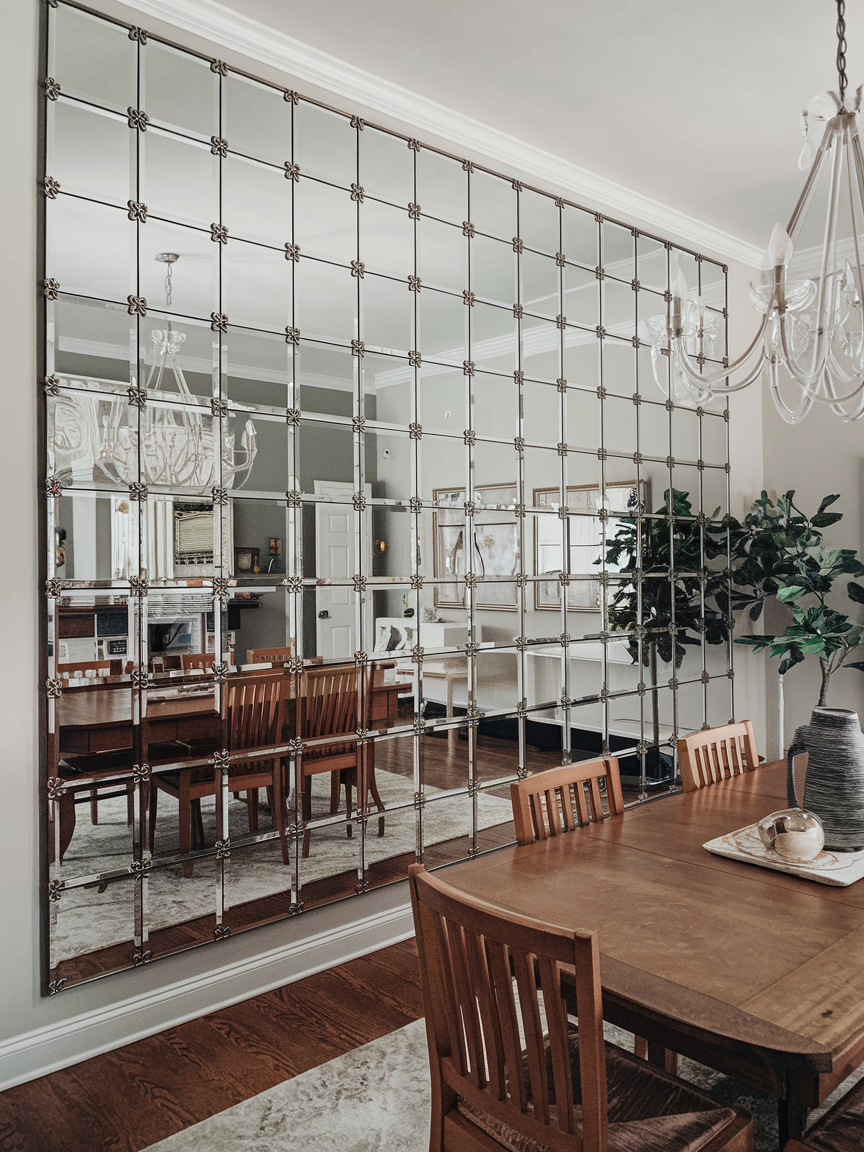
Mirror panels are an excellent way to enhance both light and spaciousness within a dining room. By reflecting natural daylight and artificial lighting, they create a brighter and more open atmosphere. Decorative grid-style mirror panels add architectural interest while maintaining an elegant and sophisticated look. This design is especially beneficial in smaller dining areas where maximizing visual space is important. The reflective surfaces also help showcase surrounding décor, creating additional depth and dimension. A mirror accent wall offers both functional and aesthetic benefits while contributing to a refined overall design.
25. Nature-Inspired Mural
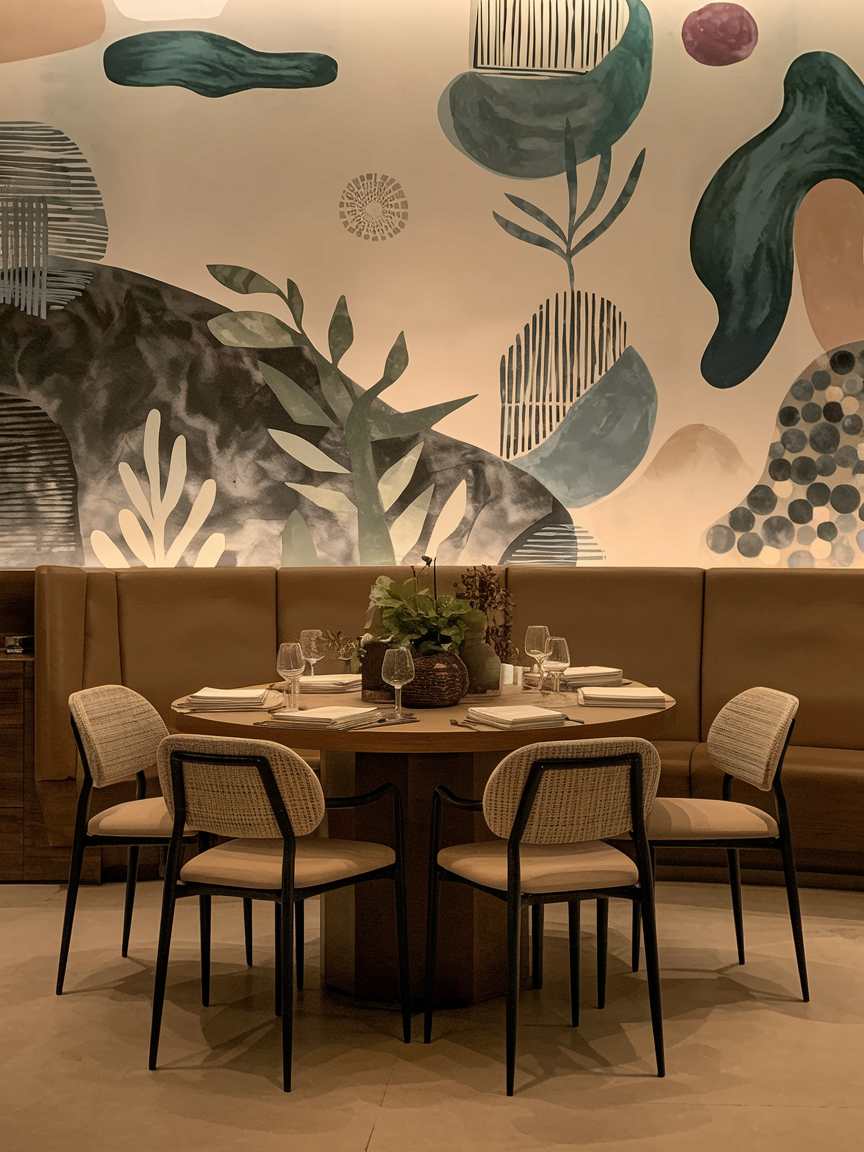
A nature-inspired mural transforms a dining room into a visually immersive environment filled with tranquility and beauty. Botanical illustrations, forest scenes, mountain landscapes, or abstract natural elements can introduce a calming connection to the outdoors. These large-scale artistic designs create a unique focal point that immediately captures attention and establishes the room’s atmosphere. Nature-themed murals work particularly well with natural materials, earthy color palettes, and organic textures. The result is a dining space that feels relaxing, expressive, and full of personality while encouraging meaningful moments around the table.
26. Concrete Finish Wall
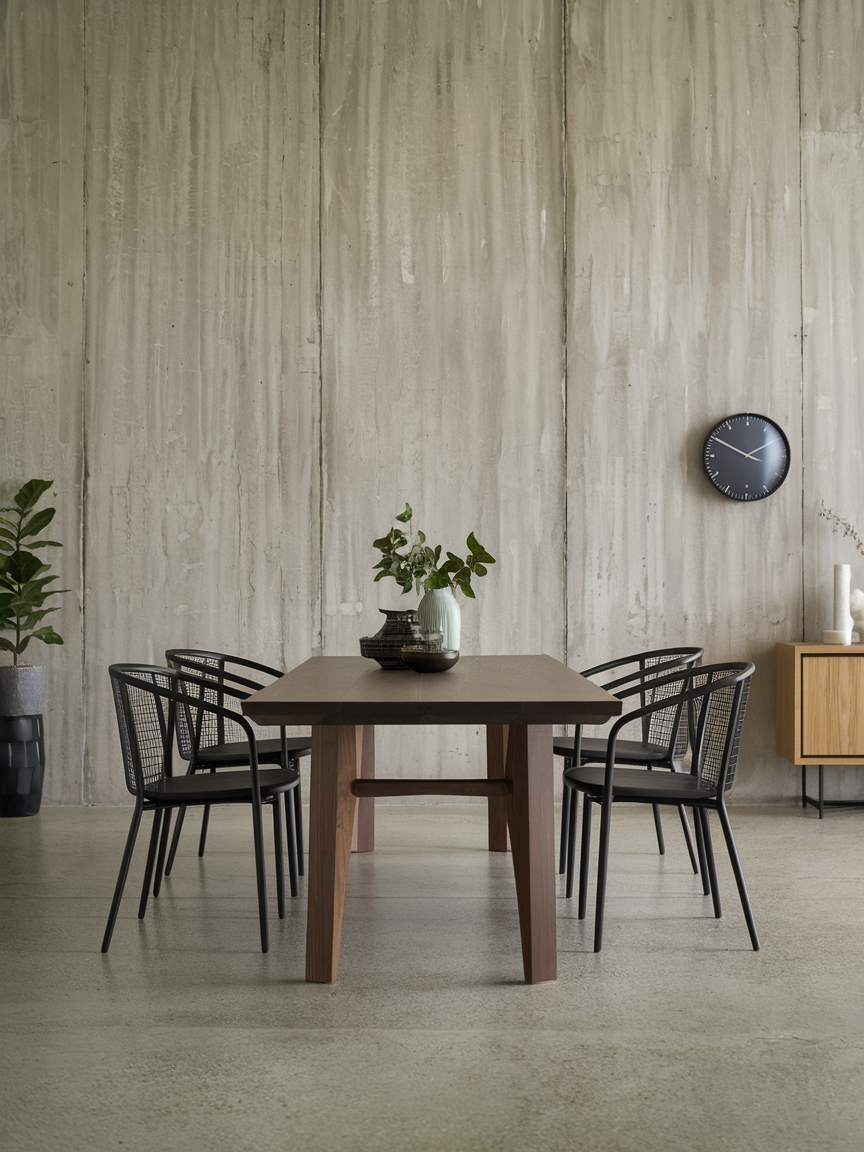
A concrete-inspired wall delivers a modern industrial aesthetic that feels sophisticated and understated. The subtle texture and natural tonal variations add depth without requiring bold colors or decorative patterns. Concrete finishes pair exceptionally well with wood furniture, black metal accents, glass lighting, and contemporary décor elements. Despite its minimalist appearance, the texture introduces warmth and visual interest that prevent the room from feeling sterile. This versatile design choice works beautifully in modern, industrial, and transitional interiors where simplicity and refined materials play a central role.
* The beauty of a dining room accent wall lies in its ability to make a lasting impact without requiring a complete redesign. Use these ideas to design a dining room that feels distinctive, welcoming, and full of character, proving that one statement wall can truly transform an entire space.