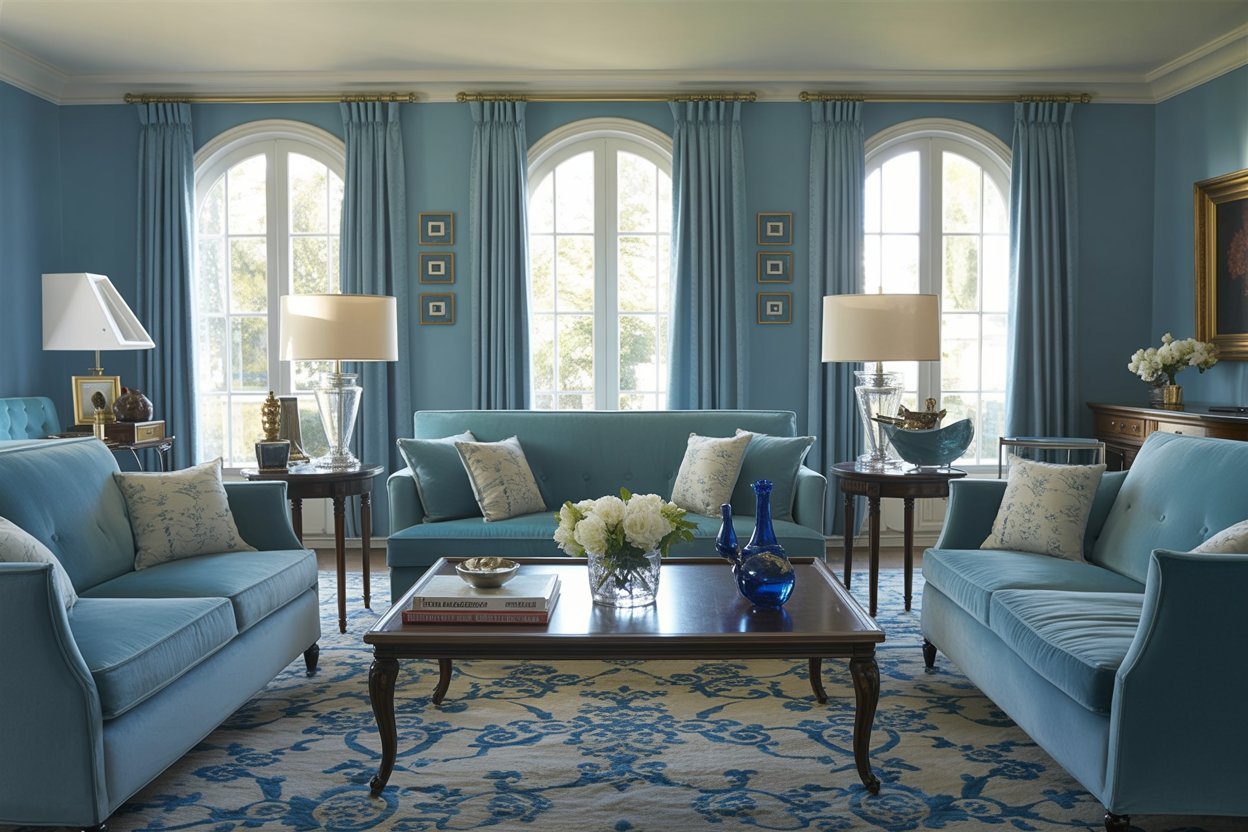
Blue can bring a calming yet sophisticated atmosphere to the living room, making it a versatile choice for creating a space that feels both stylish and comfortable. Soft powder blue, muted blue-gray, rich navy, and deeper teal can each create a different mood while adding depth and personality. The color also pairs beautifully with a variety of materials, making it easy to adapt to different interior styles.
A blue living room does not have to rely on bold color alone. Blue walls, sofas, accent chairs, curtains, rugs, and decorative accessories can be layered with warm wood, cream, beige, white, brass, or natural textures to create a balanced look. Thoughtful combinations of color, pattern, and texture can help the room feel inviting rather than overly coordinated.
This collection of blue living room ideas explores creative ways to introduce this versatile color into a chic and comfortable home. You’ll find inspiration for wall colors, furniture, textiles, artwork, lighting, accent pieces, and beautiful color combinations that can work across a range of decorating styles. Let’s explore these inspiring spaces and discover how blue can transform your living room into a relaxing, welcoming, and stylish retreat!
1. Blue Wall Art Gallery
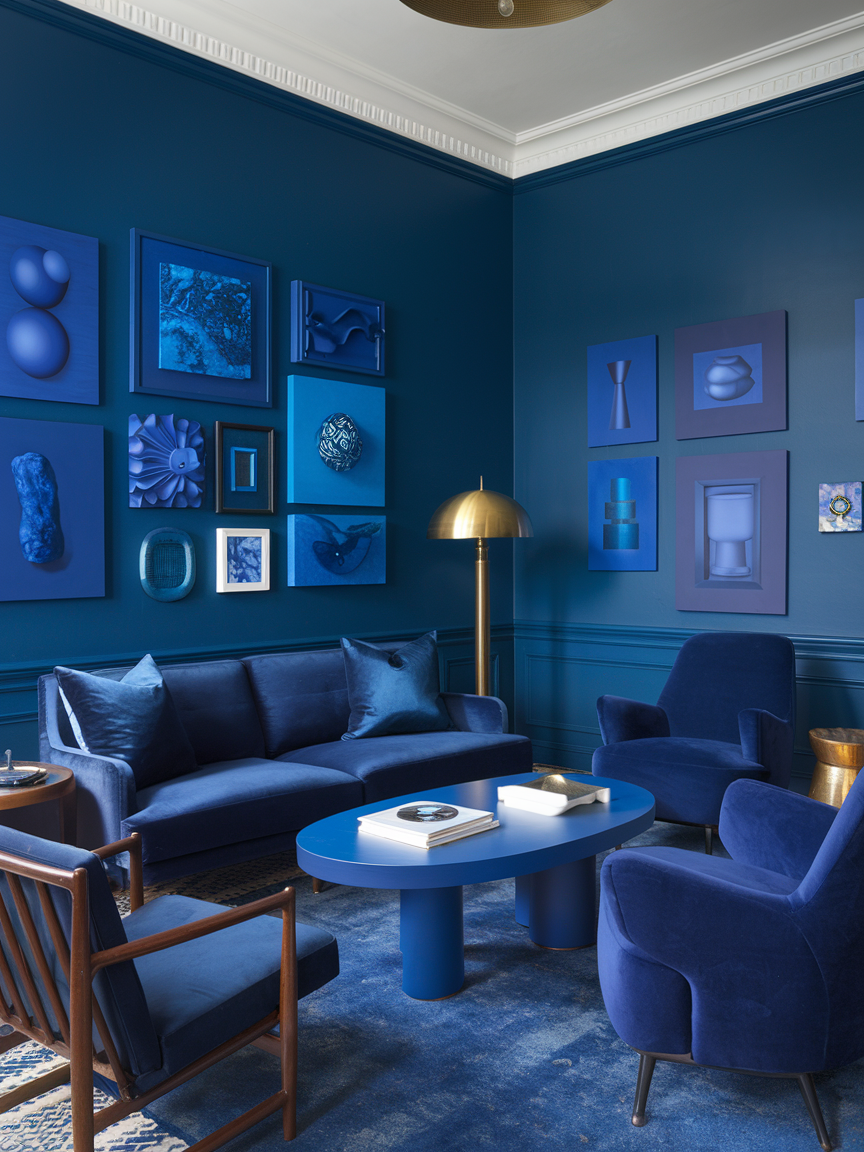
A blue-toned gallery wall can reinforce the room’s color scheme while adding personality to an empty wall. Abstract paintings, watercolor pieces, landscapes, and photography can introduce different shades without making the display feel repetitive. Mix frame materials such as natural wood, black, or brass to add warmth and variation. Arrange the collection above a sofa, console, or large wall to create a strong visual anchor. Artwork containing small touches of cream, brown, or gold can further connect the display with the rest of the room.
2. Blue Curtains for Soft Elegance
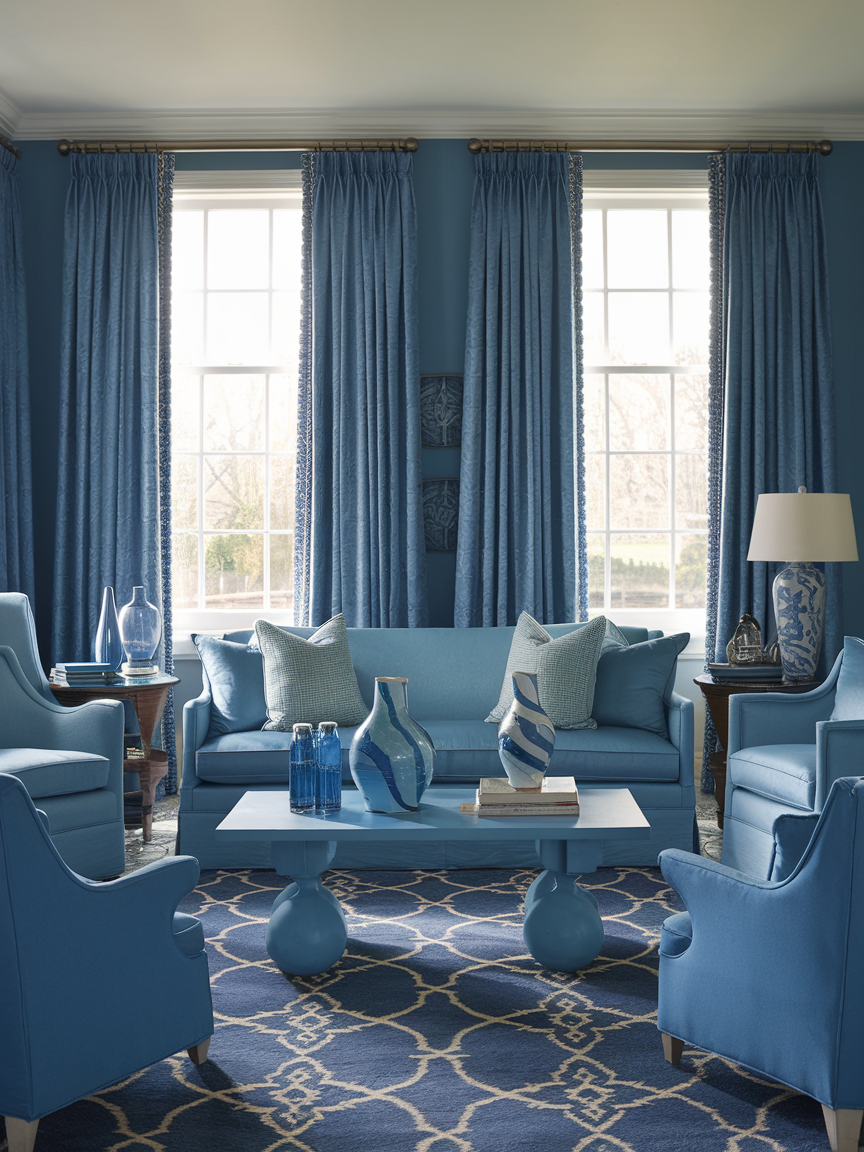
Blue curtains can frame windows while introducing another layer of color and texture. Light blue sheers create an airy appearance, whereas heavier navy or slate curtains bring more depth and warmth. Floor-length panels can also emphasize ceiling height and give the living room a more finished appearance. Linen provides a relaxed texture, while velvet creates a richer and more luxurious effect. Coordinating the curtains with other blue accents helps reinforce the palette without making the color feel excessive.
3. Mixed Blue Tones Throughout the Room
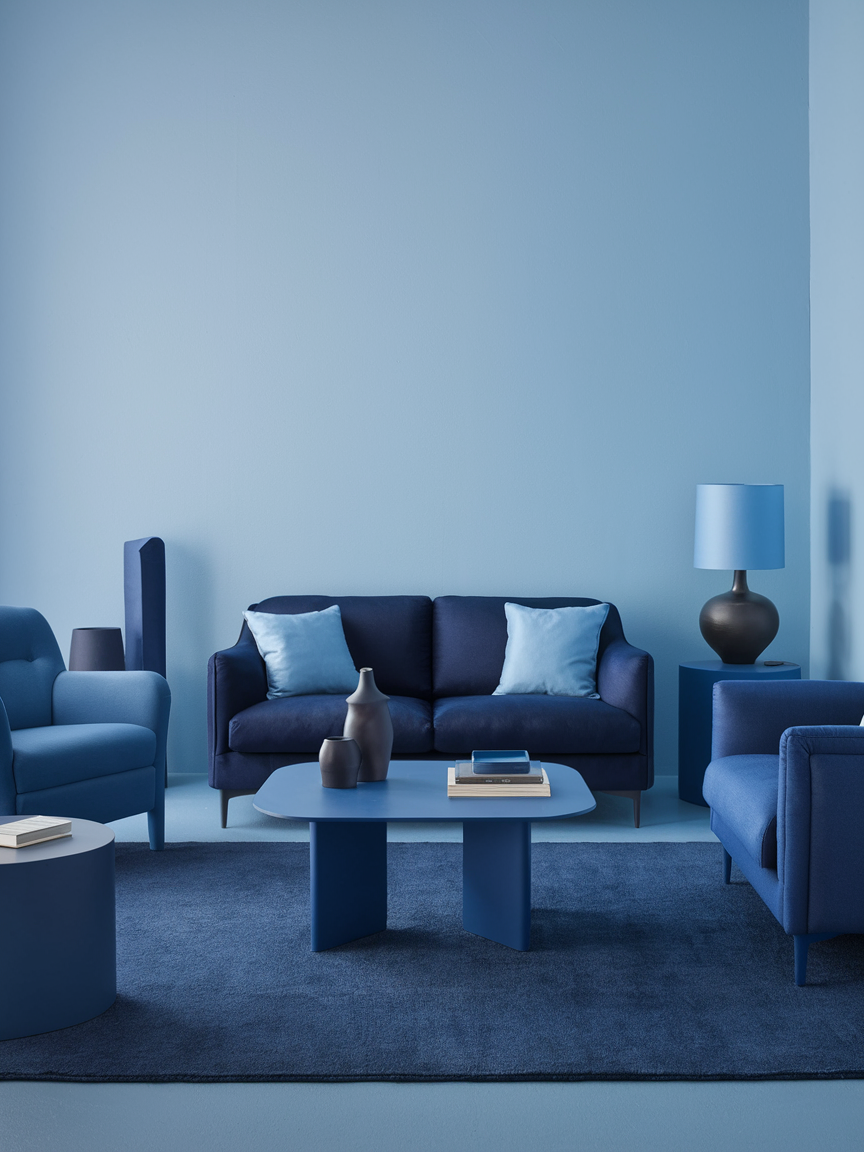
Using different shades of blue gives a living room more depth and prevents the palette from looking overly uniform. Combine pale blue walls with medium-toned upholstery, navy accents, and denim or slate accessories for a layered effect. The key is to keep the undertones compatible so the various shades feel connected. Introduce neutral furnishings and natural textures to provide visual breathing room. A carefully layered blue palette can feel rich and dynamic while still maintaining a calm atmosphere.
4. Blue and Leather Combination
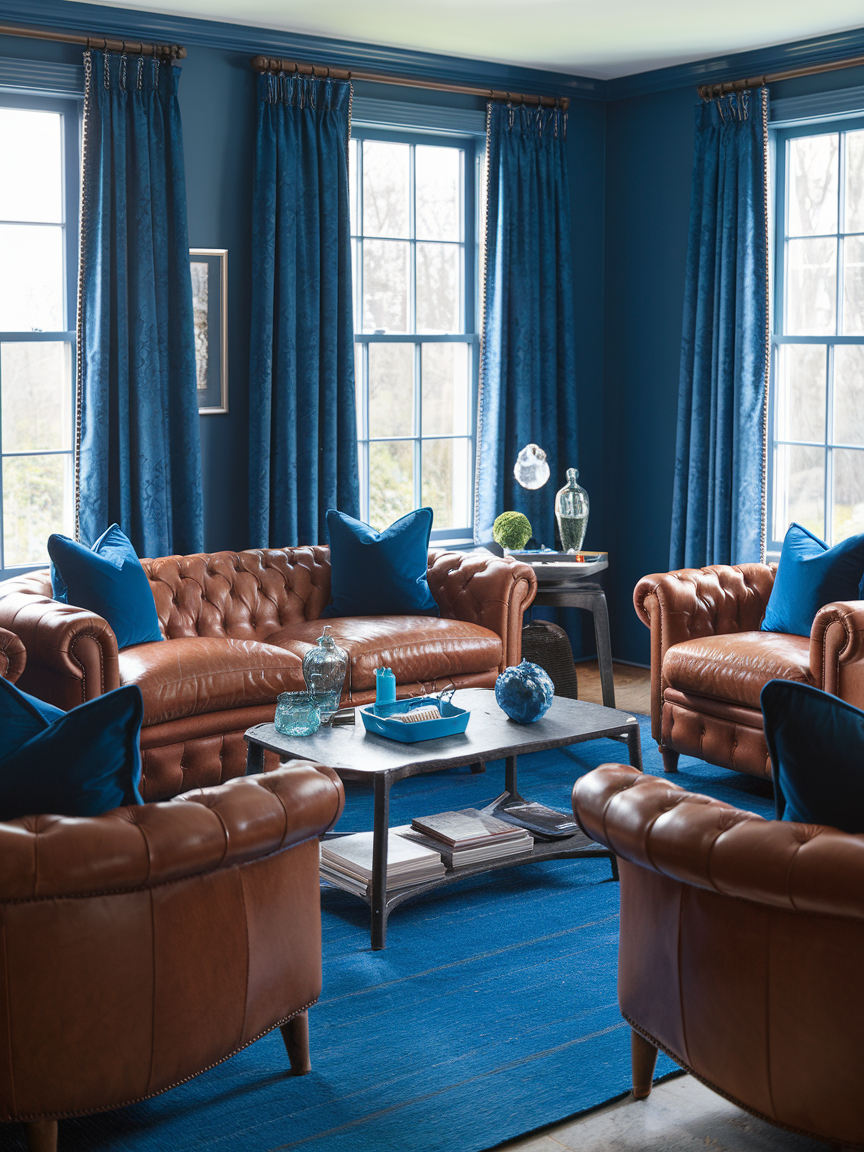
Blue and leather create a rich contrast between cool color and warm, tactile material. Brown, tan, and caramel leather furniture can soften the appearance of blue walls, rugs, or decorative accents while adding a sense of durability. A leather sofa paired with blue cushions or a blue accent wall can create a particularly balanced arrangement. Add warm wood and woven textures to strengthen the natural feel. This combination works well in modern, rustic, industrial, and transitional living rooms where contrasting materials add character.
5. Minimalist Blue Styling
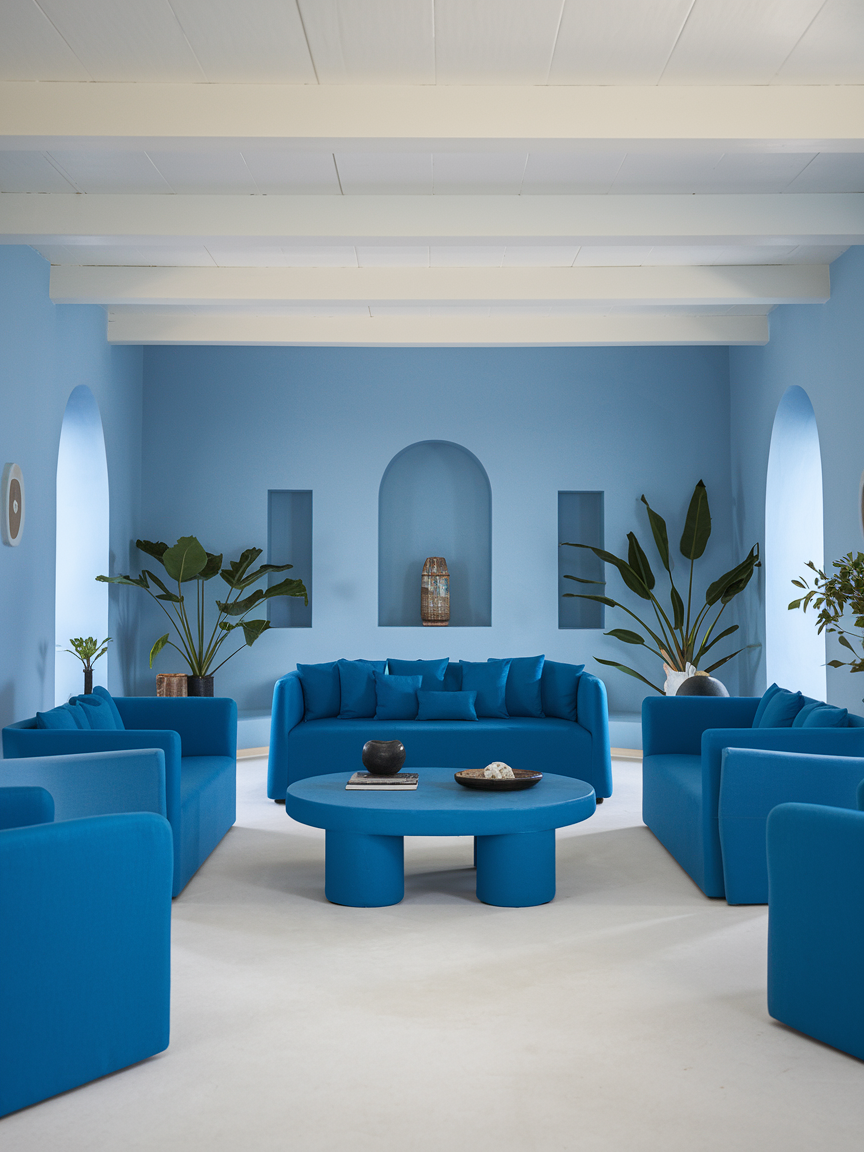
Minimalist styling allows blue to become the defining feature without competing with excessive decoration. Choose a few impactful elements, such as a blue sofa, artwork, rug, or pair of accent chairs, and let them stand out against a neutral background. Clean-lined furniture and uncluttered surfaces keep the room feeling calm and spacious. Add warmth through natural wood, linen, wool, or other subtle textures rather than filling the space with accessories. The result is a sophisticated living room where blue provides personality while simplicity keeps the overall atmosphere peaceful and inviting.
6. Blue Patterned Wallpaper
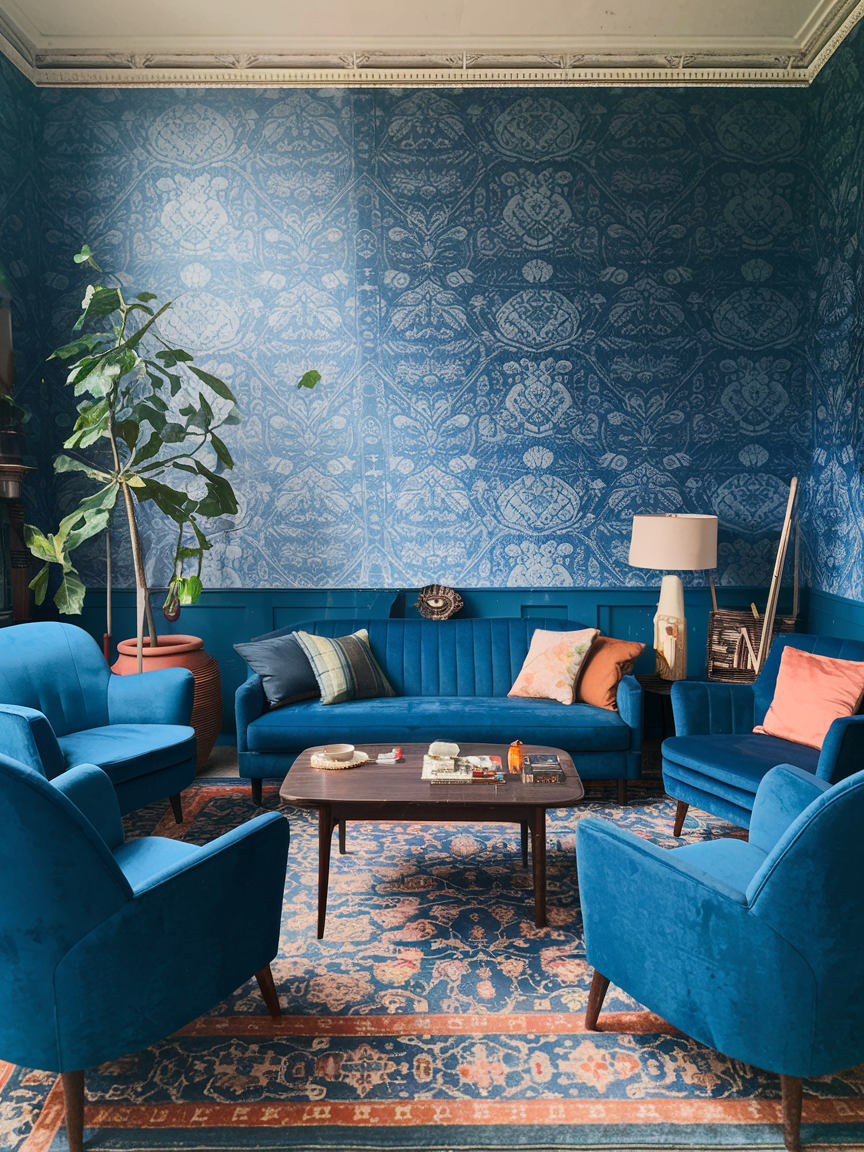
Blue patterned wallpaper can add character and visual movement without requiring numerous decorative accessories. Consider soft florals, subtle geometrics, watercolor-inspired designs, or tonal abstract patterns for a sophisticated appearance. Using a muted or layered blue pattern can create interest without overwhelming the room. An accent wall behind the sofa, fireplace, or shelving unit can provide a natural focal point. Keep surrounding furniture relatively simple so the wallpaper remains the main feature while neutral textiles help balance the overall look.
7. Cozy Blue Sectional Sofa
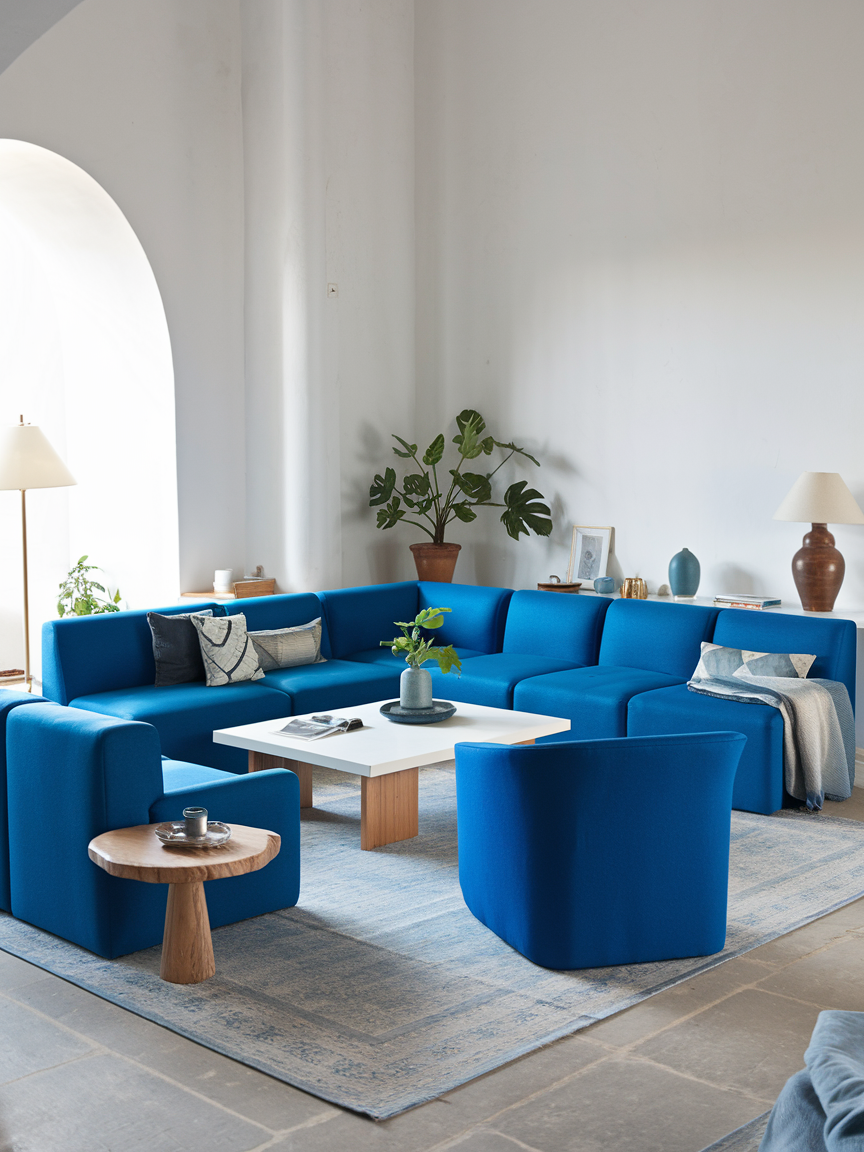
A blue sectional can become a comfortable centerpiece for a family room or spacious living area. Deep navy, slate blue, and denim tones provide a versatile foundation while offering plenty of visual impact. The generous seating is ideal for relaxing, entertaining, or spending time with family. Layer the sectional with textured pillows and soft throws in complementary blue and neutral shades. A warm area rug and wooden coffee table can further balance the coolness of the upholstery, creating a welcoming and functional space.
8. Hotel-Inspired Blue Finishing Touches
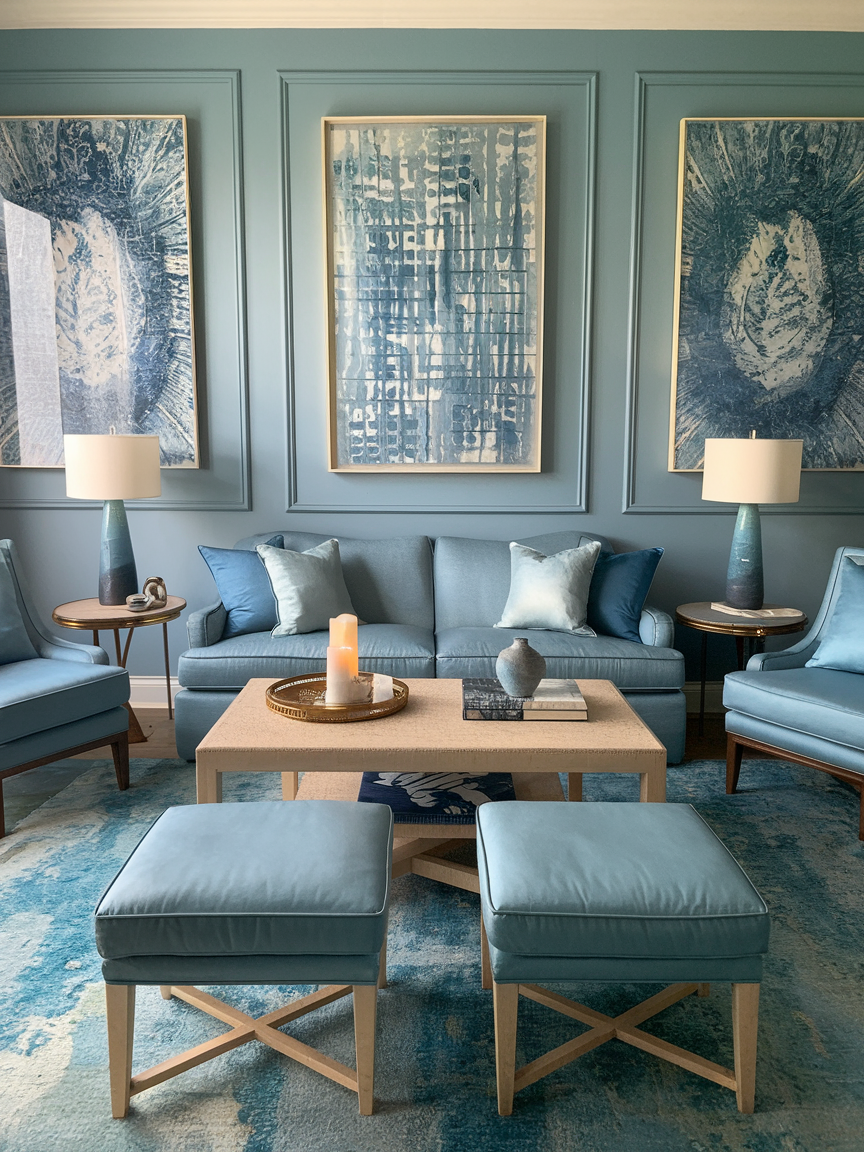
A hotel-inspired living room can combine blue tones with simple, polished styling for an atmosphere that feels comfortable and refined. Coordinate pillows, rugs, throws, and artwork without making every element identical. Keep surfaces relatively uncluttered and choose quality-looking materials with pleasing textures. Soft lighting, plush fabrics, and a well-proportioned furniture arrangement can enhance the sense of comfort. A coffee table styled with a tray, books, candles, or a small vase provides a final decorative touch without making the room feel overly staged.
9. Blue Accent Chairs
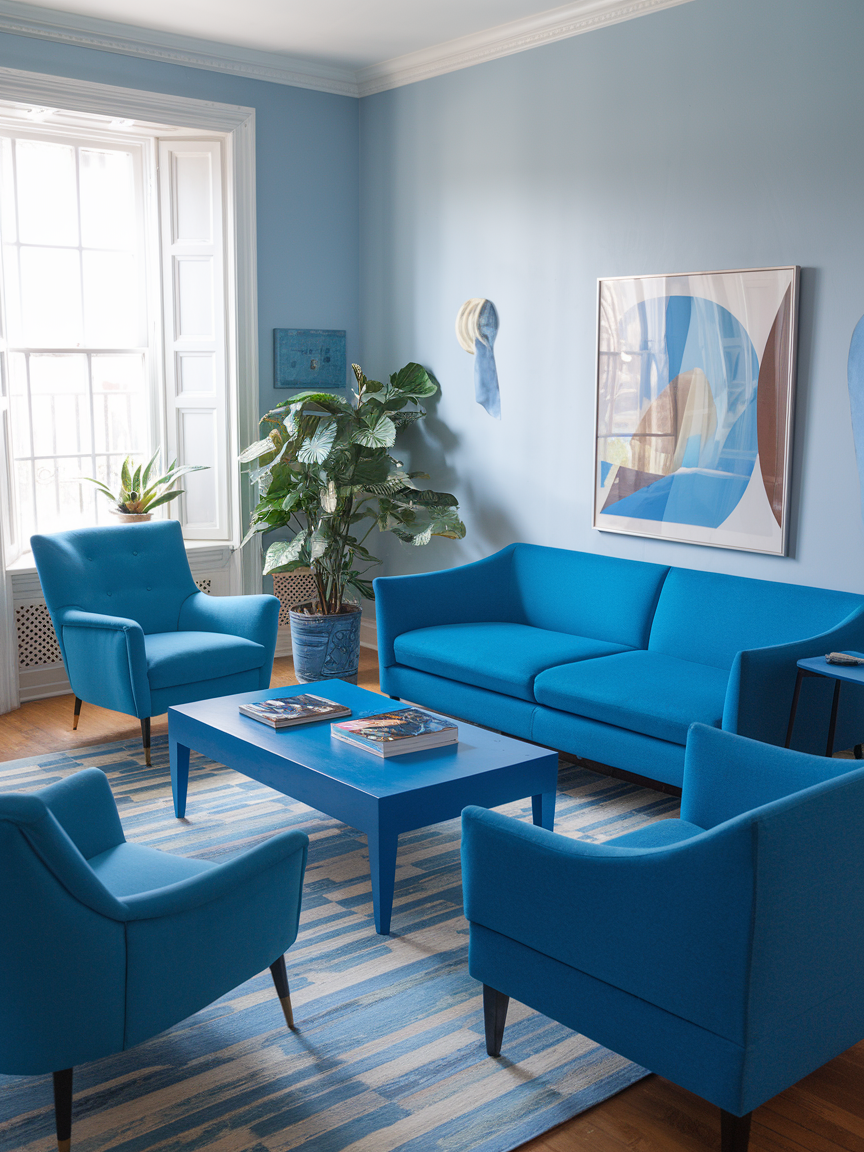
Blue accent chairs provide additional seating while giving the living room another opportunity to introduce color. Choose velvet, linen, boucle, or another tactile upholstery to add comfort and visual interest. Position a pair near the sofa to create a balanced conversation area, or place a single chair beside a window to form a cozy reading nook. You can match the chair to existing blue elements or choose a slightly different shade for contrast. Patterned upholstery can also add personality without requiring a larger commitment.
10. Warm Wood with Blue Elements
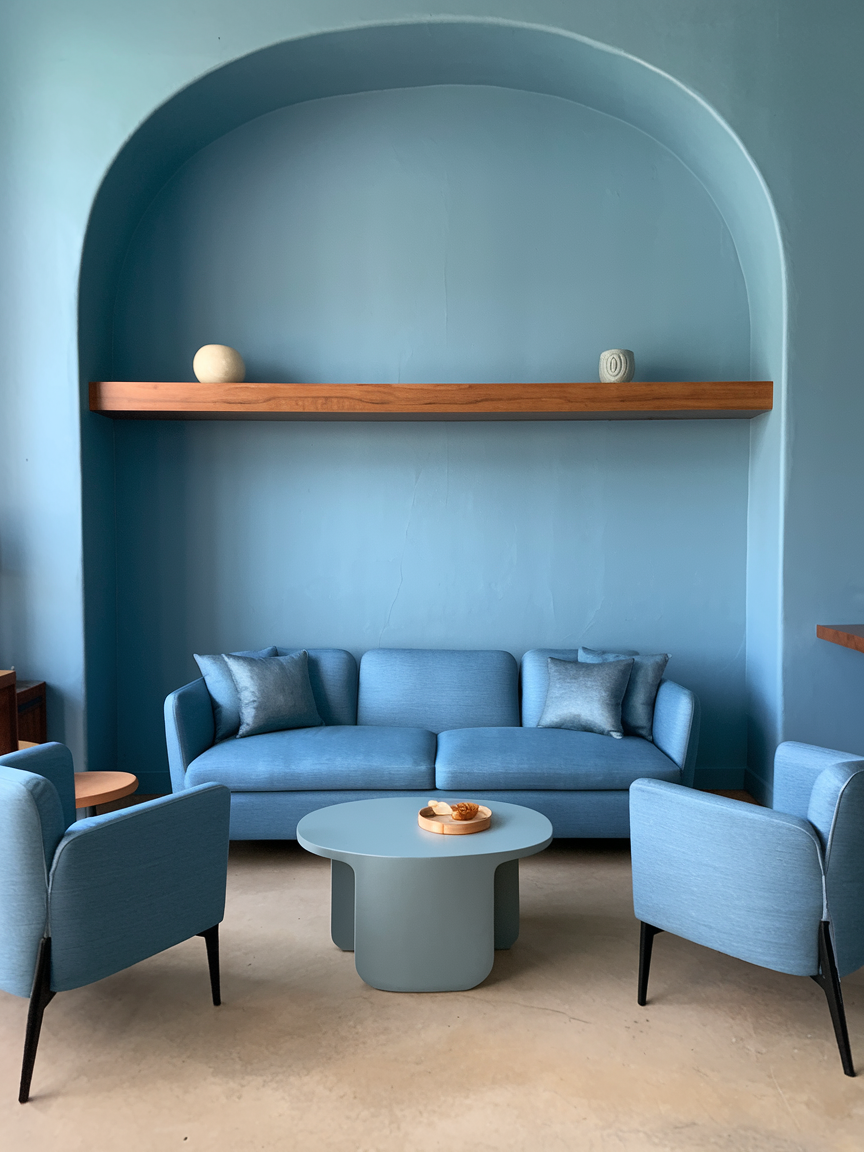
Warm wood is a natural partner for blue, helping balance its cooler appearance. Oak, walnut, reclaimed wood, and other warm finishes can be introduced through coffee tables, shelving, side tables, or flooring. The organic grain adds texture while creating a welcoming contrast against blue walls, upholstery, or accessories. This pairing works beautifully in modern, farmhouse, Scandinavian, and transitional interiors. Together, wood and blue create a relaxed palette that feels timeless and comfortable.
11. Soft Blue Wall Paint
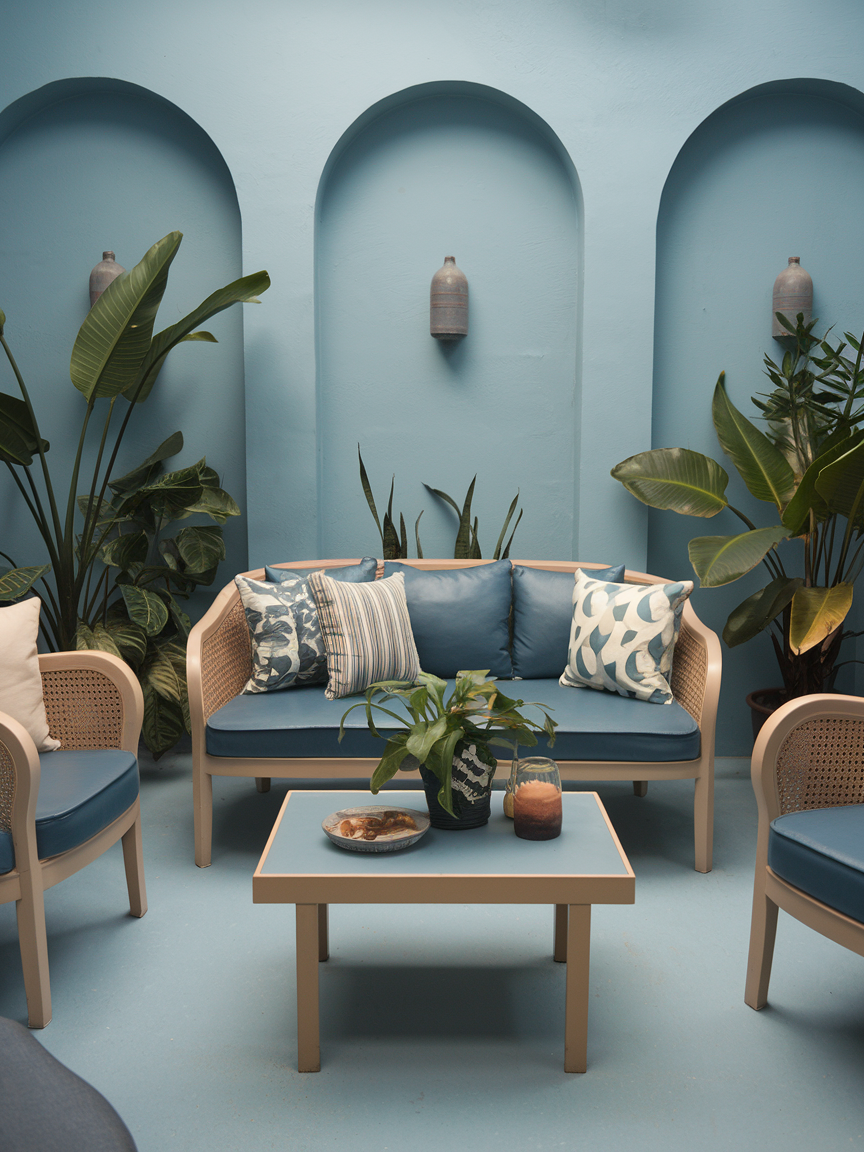
Soft blue walls can instantly give a living room a peaceful and welcoming atmosphere. Shades such as powder blue, misty blue, and pale gray-blue reflect natural light beautifully, helping the room feel open and airy. These gentle tones work well in both compact and spacious interiors, providing a versatile backdrop for different decorating styles. Pair them with neutral upholstery, warm wood furniture, and layered textiles to add warmth and prevent the space from feeling too cool. Blue pillows, throws, and artwork in slightly different shades can introduce subtle depth while keeping the overall look harmonious.
12. Navy Accent Wall
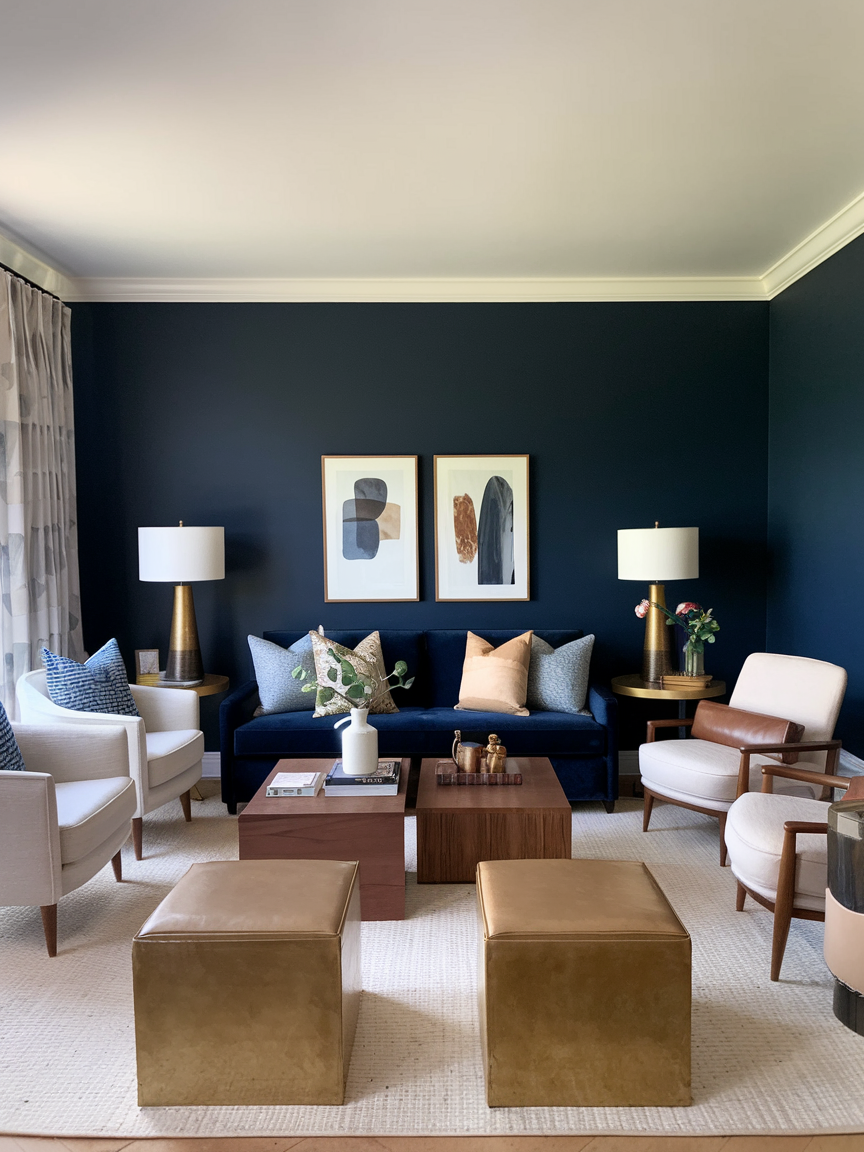
A navy accent wall brings depth and sophistication to a living room without requiring the entire space to embrace a dark palette. Place it behind the sofa, fireplace, or entertainment center to create an instant focal point. Warm materials such as wood, leather, and brass can soften the richness of navy, while light-colored furniture provides refreshing contrast. Layered lighting is also helpful, particularly in the evening, when the dark wall can create a cozy backdrop. This is an effective way to make a bold statement while maintaining a refined and inviting atmosphere.
13. Blue Velvet Sofa
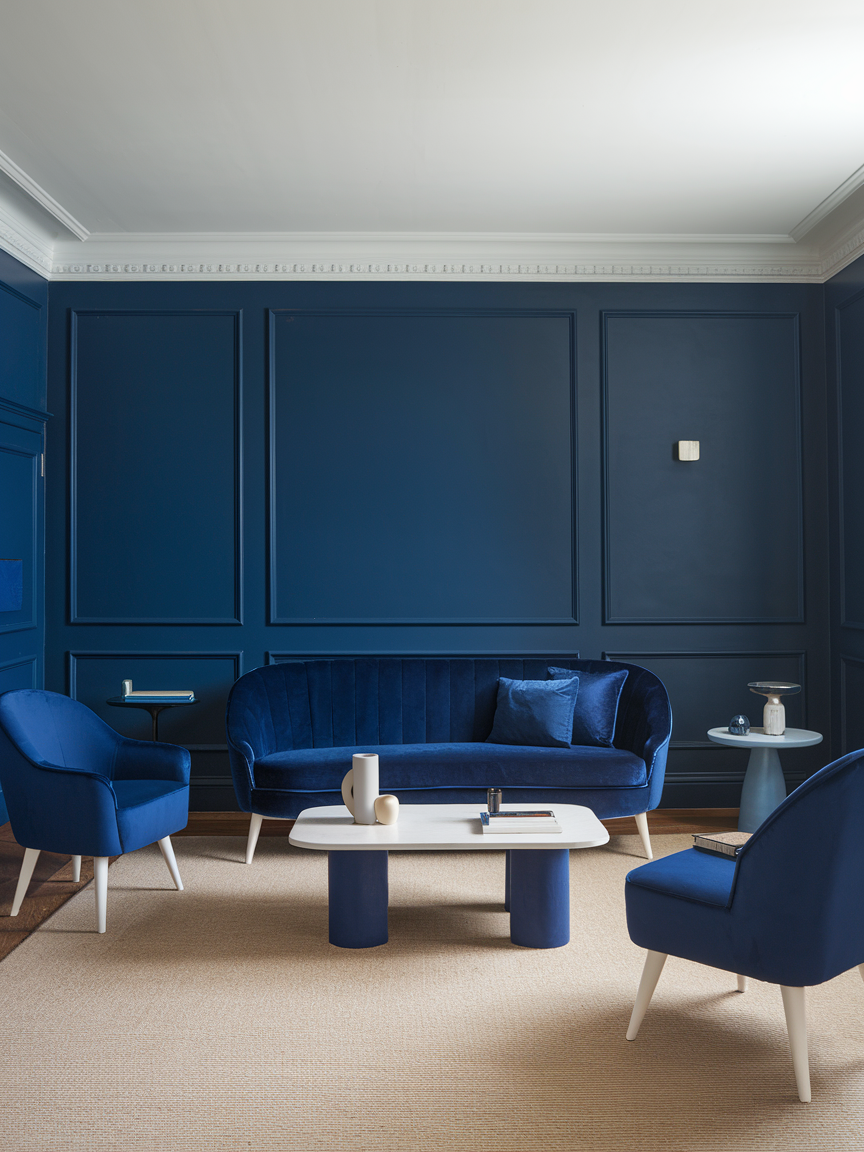
A blue velvet sofa combines luxurious texture with a striking color statement. The soft surface catches the light from different angles, giving shades such as navy, royal blue, and teal extra depth. Because the sofa naturally becomes the centerpiece, balance it with neutral rugs, warm wood tables, and understated accessories. Textured cushions and throws can make the seating area even more inviting. A blue velvet sofa is an excellent choice when you want the living room to feel elegant without sacrificing comfort.
14. Layered Blue Throw Pillows
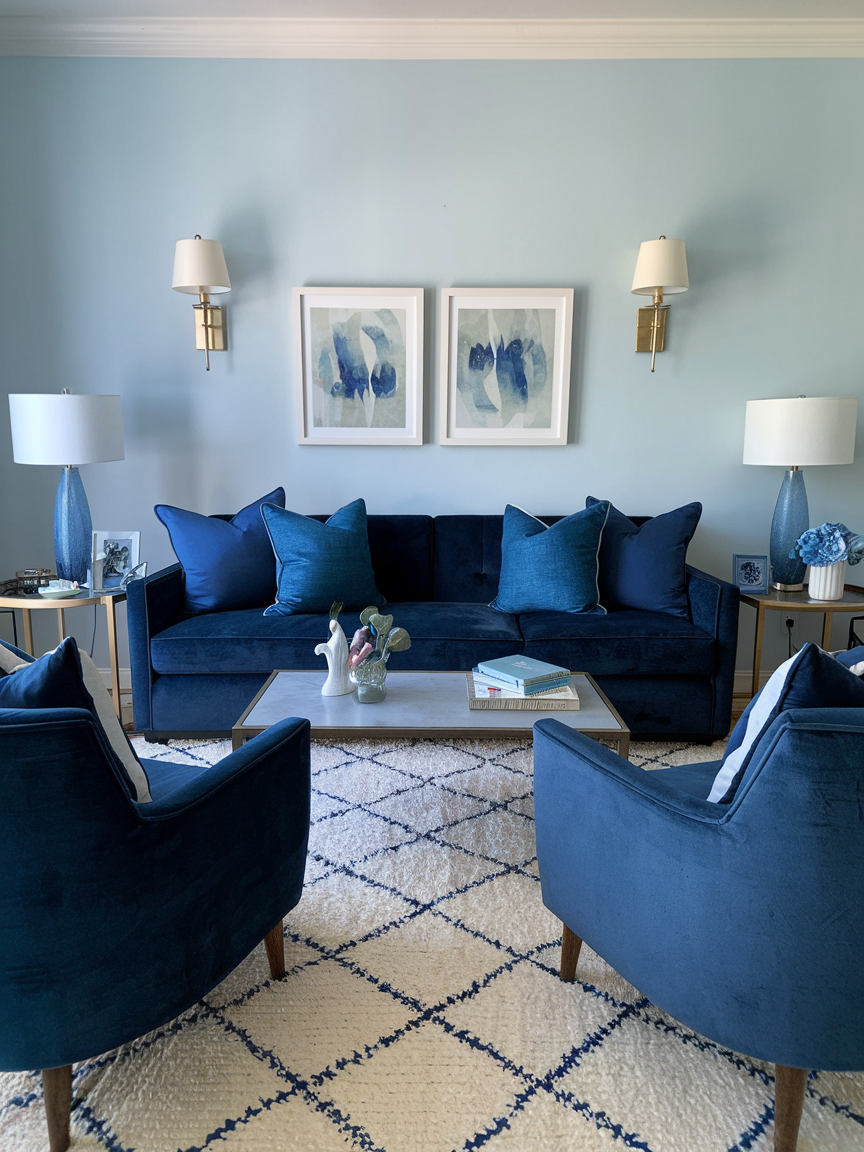
Layering throw pillows in several shades of blue is an easy way to add depth and personality to a living room. Combine tones such as sky blue, denim, slate, and navy rather than relying on a single shade. Mixing fabrics like linen, velvet, cotton, and chunky knits introduces additional texture and makes the seating feel more inviting. Add a few cream, beige, or warm-toned pillows to break up the blue palette. Since pillow covers are easy to change, this approach also provides a simple way to refresh the room throughout the year.
15. Blue and Neutral Color Balance
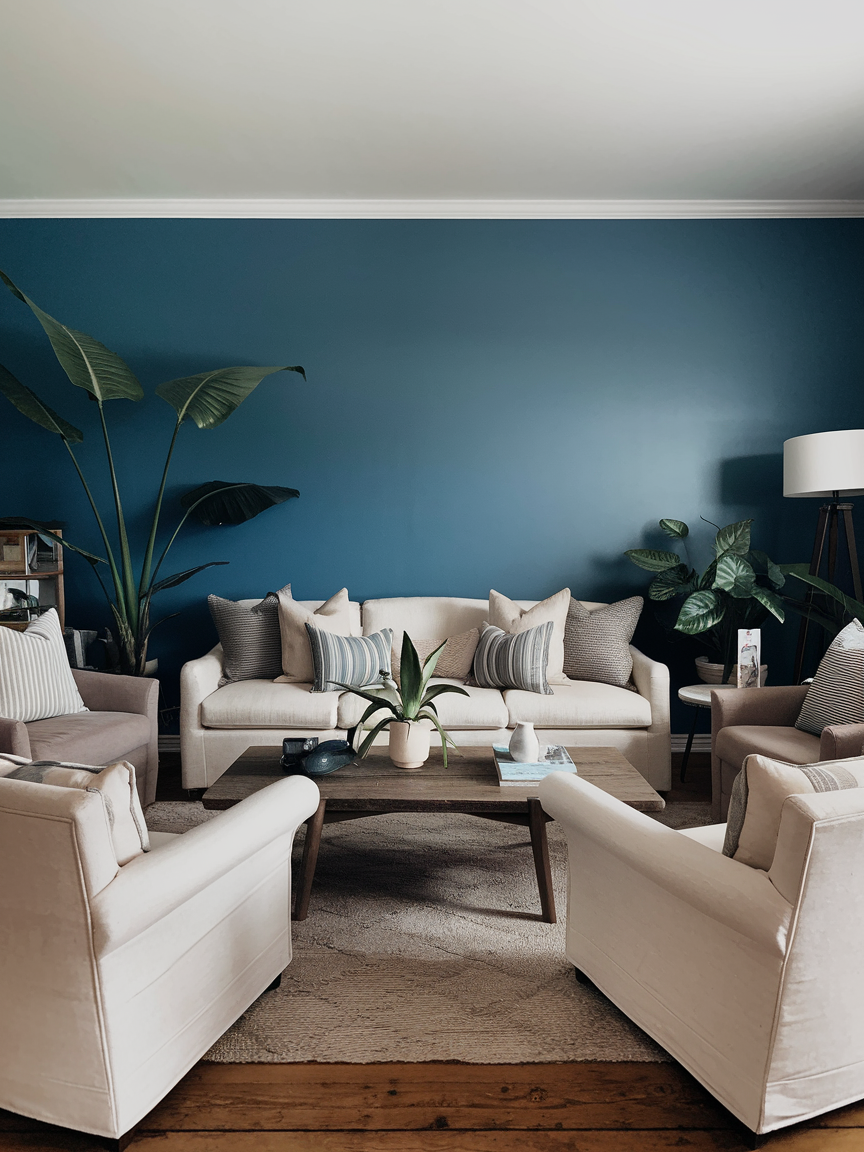
Blue becomes especially versatile when paired with warm neutrals. Cream, beige, soft white, and warm gray can soften the cooler qualities of blue while creating a comfortable and balanced atmosphere. Use neutral upholstery or curtains as the foundation, then introduce blue through pillows, artwork, rugs, or furniture. Natural materials such as wood, jute, and woven textiles add another layer of warmth. This combination can adapt easily to modern, traditional, coastal, and transitional interiors.
16. Blue and Brass Accents
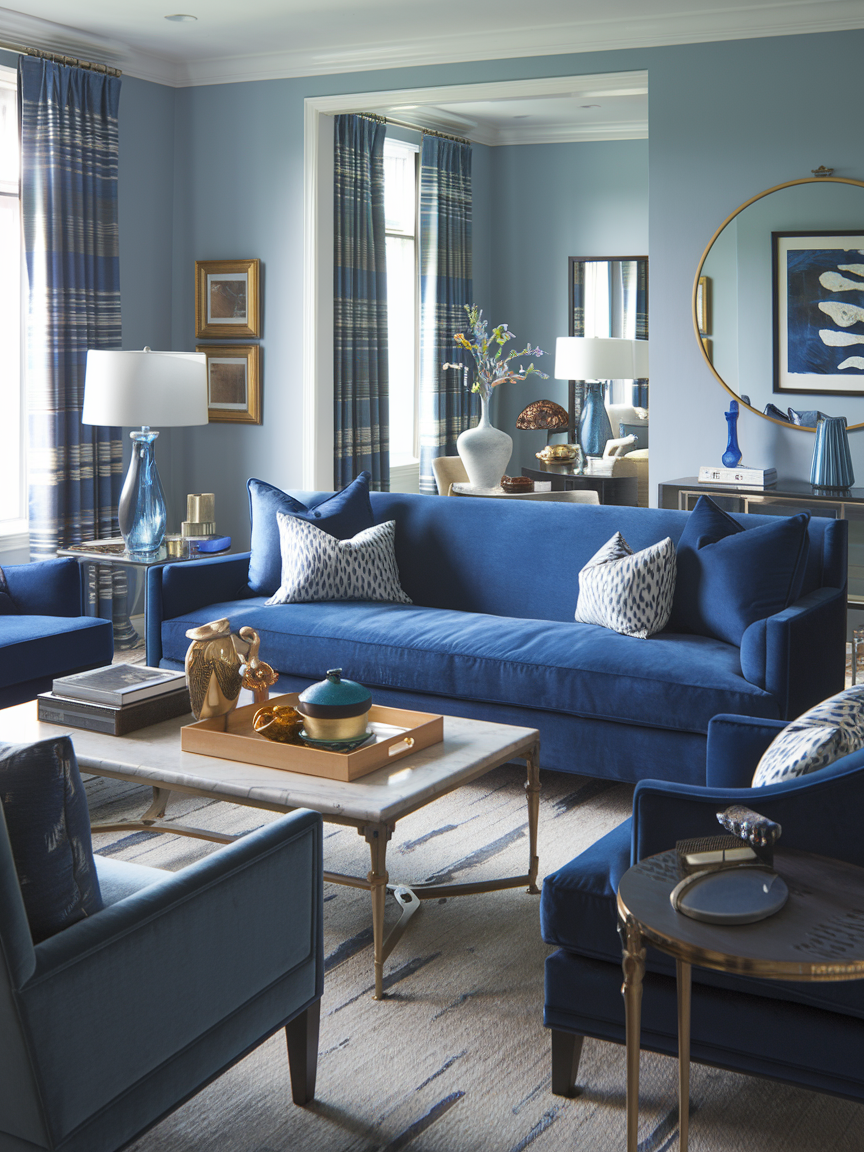
Brass accents bring warmth and a subtle sense of luxury to a blue living room. Consider introducing the metallic finish through table lamps, mirrors, trays, curtain hardware, or small decorative objects. Brass looks particularly striking against deeper shades such as navy, creating a warm contrast that keeps the room from feeling too cool. A few carefully selected pieces are usually enough to make an impact. This pairing suits modern, transitional, classic, and contemporary interiors.
17. Blue Built-In Shelving
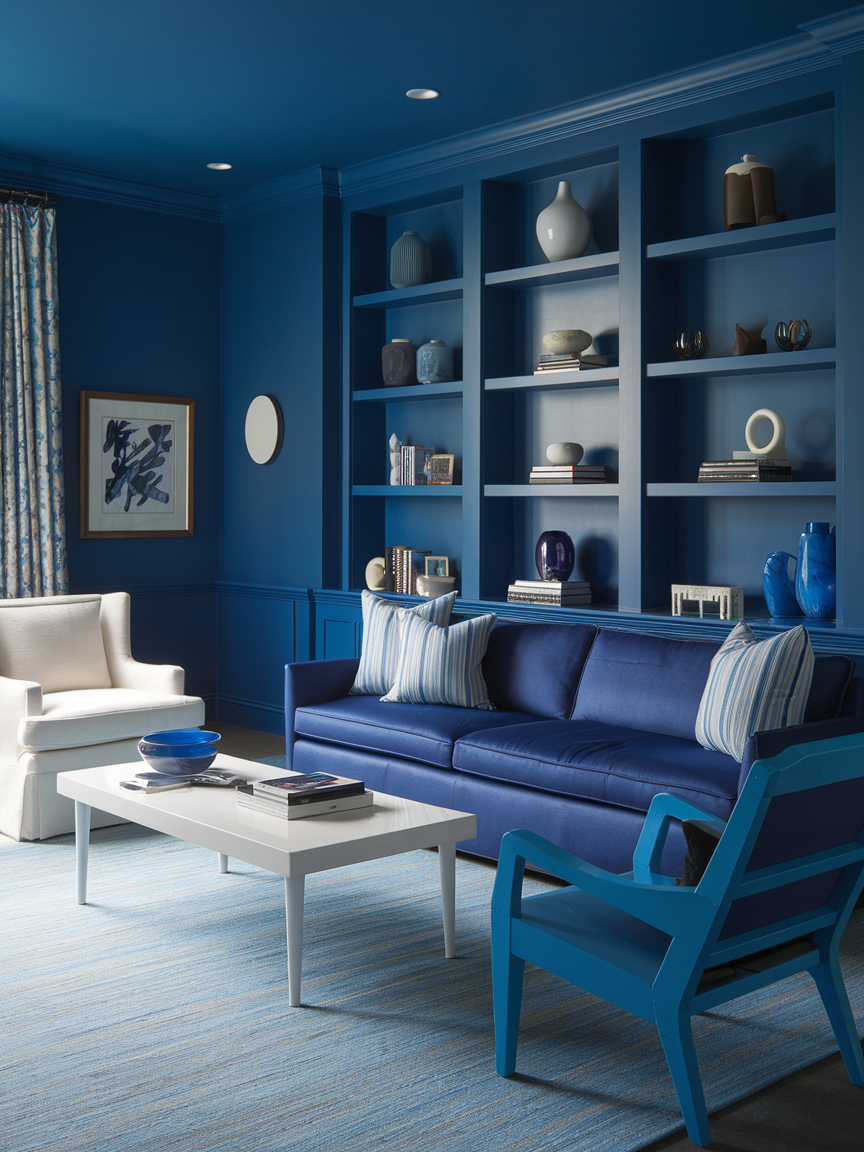
Built-in shelving painted blue can turn ordinary storage into a distinctive architectural feature. Deep navy or muted blue cabinetry provides a dramatic backdrop for books, ceramics, plants, framed artwork, and decorative objects. This idea works especially well around fireplaces, media walls, or recessed areas. Keep the shelves thoughtfully arranged with a mixture of functional and decorative pieces to maintain balance. The result combines useful storage with a strong design statement while keeping the color palette cohesive.
18. Blue and White Classic Combination
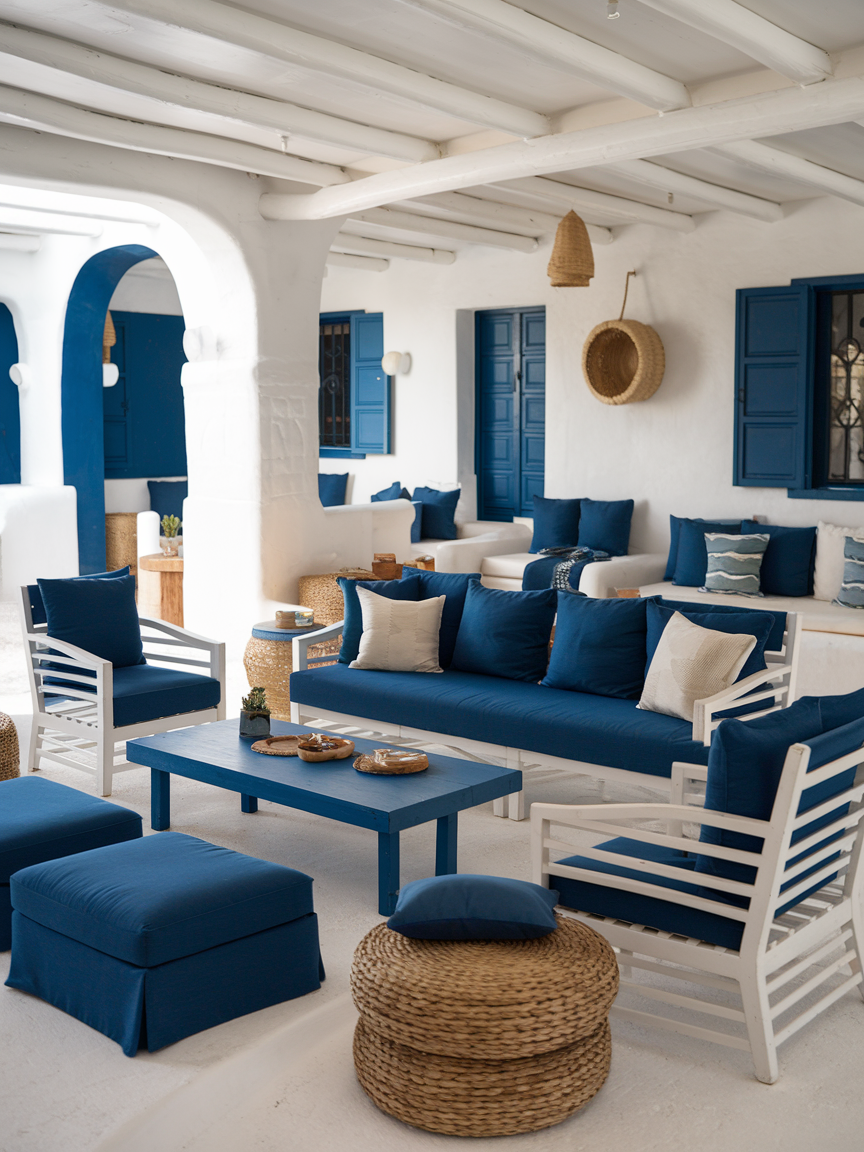
Blue and white create a timeless living room palette that feels fresh, bright, and effortlessly elegant. White walls, upholstery, or curtains can provide an airy foundation, while blue furniture and accessories add depth and personality. The combination works beautifully in coastal, traditional, contemporary, and transitional spaces. Introduce woven baskets, natural wood, linen, or textured textiles to soften the contrast. This classic pairing offers plenty of flexibility while maintaining a clean and welcoming appearance.
19. Blue Fireplace Surround
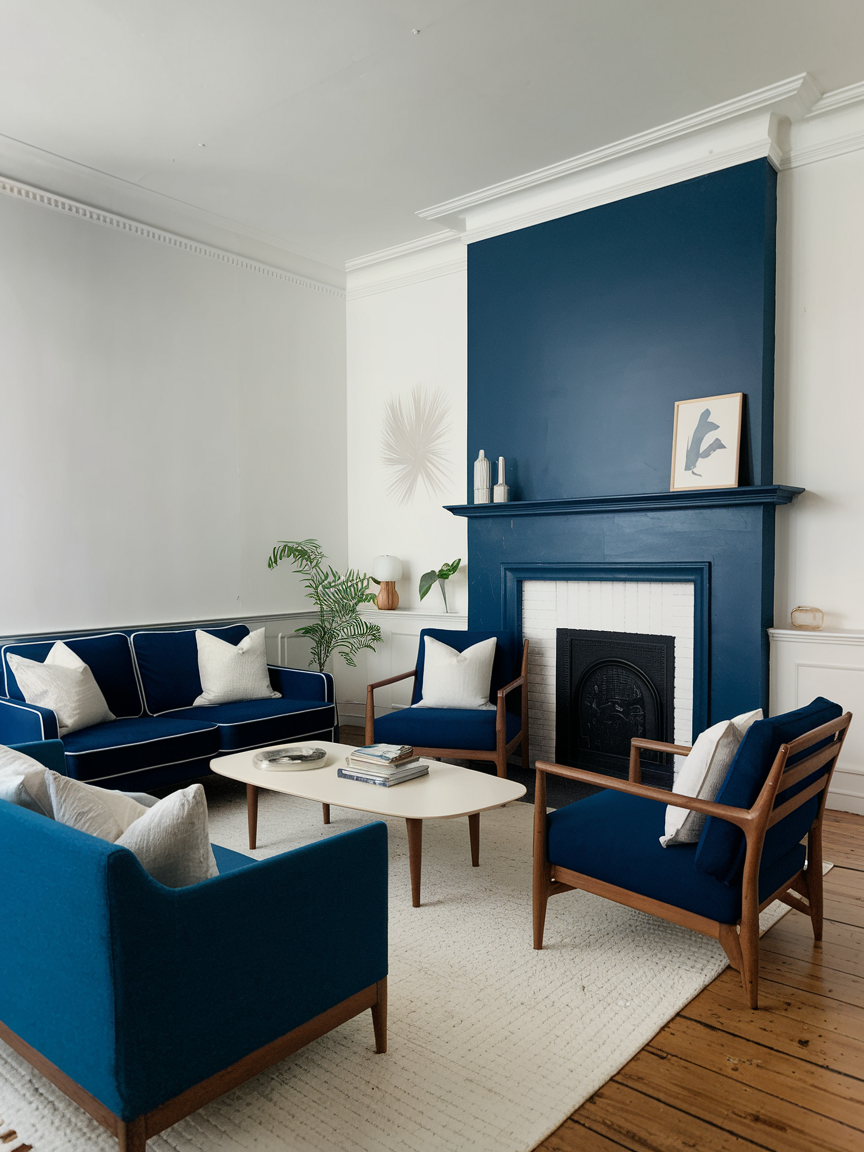
A blue fireplace surround can turn one of the room’s most architectural features into a striking focal point. Navy, smoky blue, and deep teal can add richness while contrasting beautifully with light walls and neutral furniture. Use paint, tile, or another suitable finish to introduce the color, then keep mantel décor relatively simple. Artwork, greenery, candles, or a few sculptural pieces can complete the arrangement. The result is a fireplace that feels distinctive while reinforcing the cozy character of the living room.
20. Seasonal Blue Decor Rotation
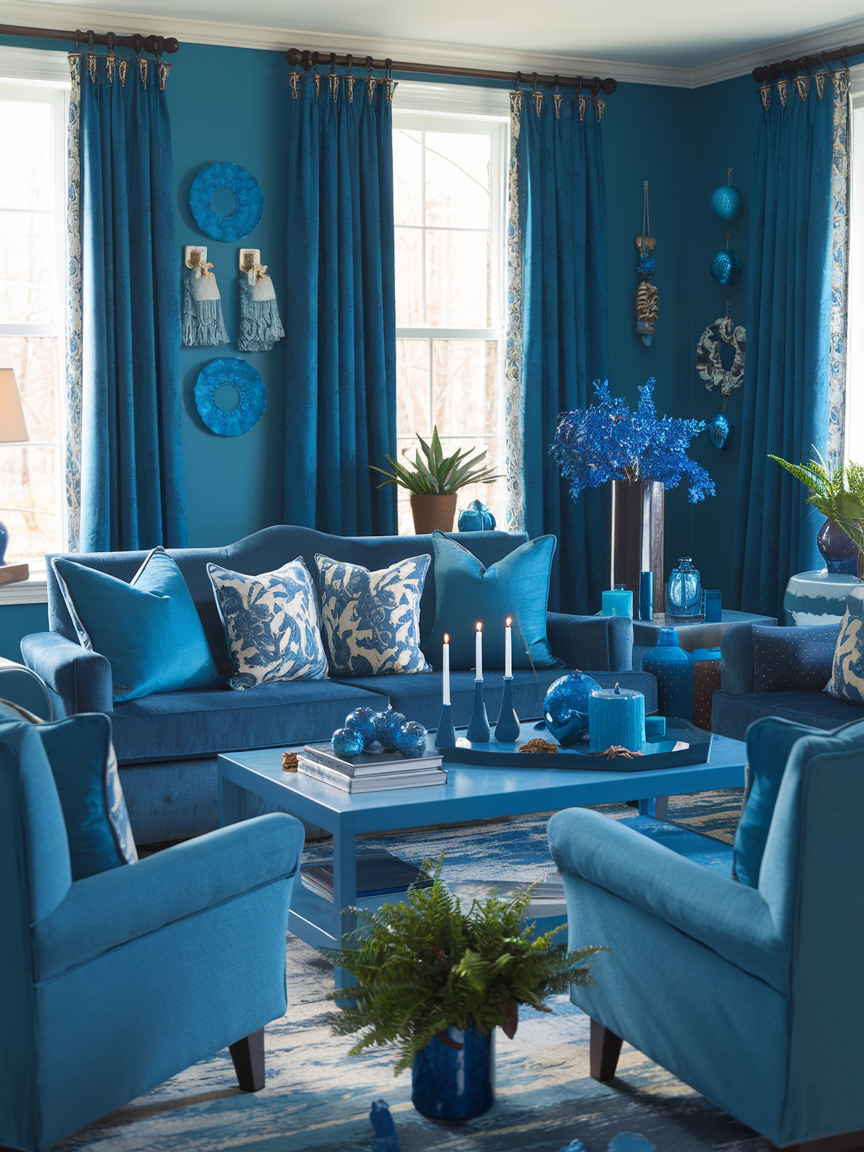
Rotating blue accessories throughout the year allows the living room to change with the seasons while keeping a consistent color foundation. Pale blue and aqua can create a lighter atmosphere during spring and summer, while navy, indigo, and deeper blue-gray tones work beautifully with heavier textiles in fall and winter. Swap pillow covers, throws, vases, and small decorative pieces rather than changing major furniture. This simple strategy keeps the room feeling fresh and gives you flexibility without requiring a complete redesign.
21. Blue Accent Niches or Alcoves
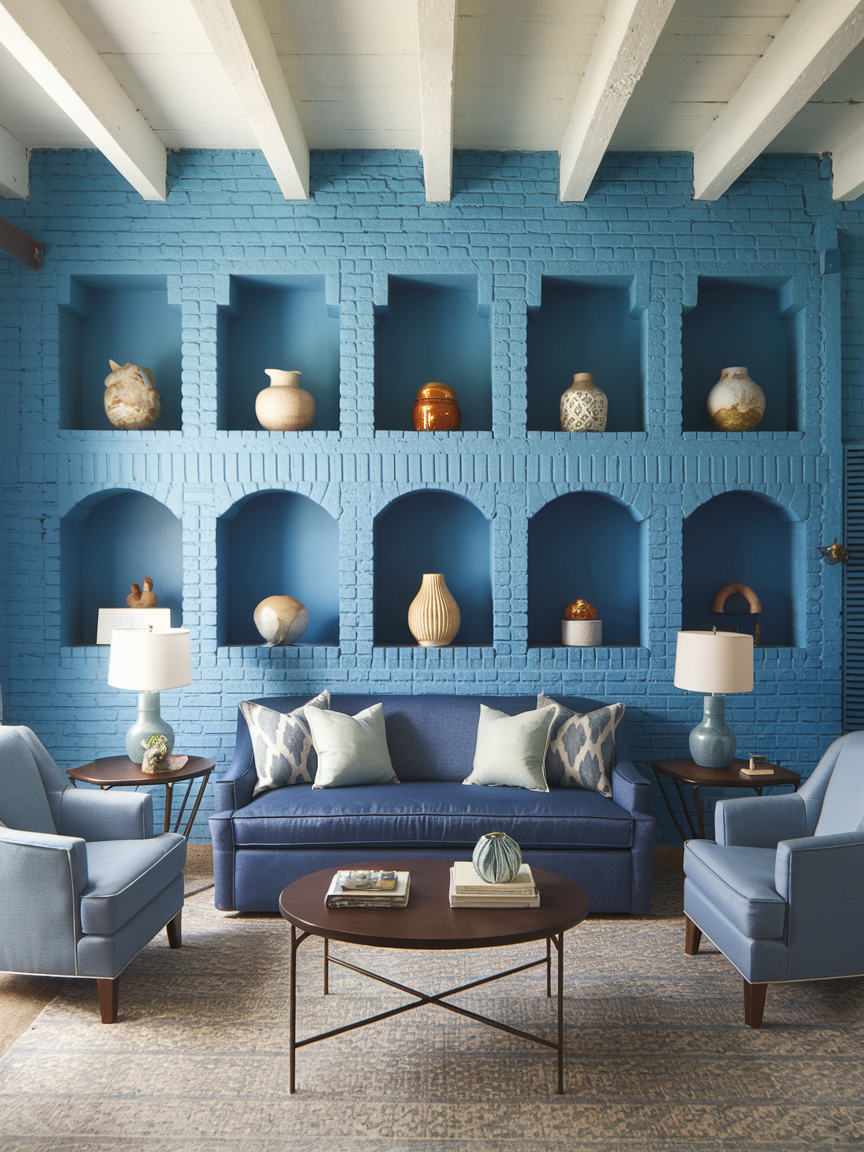
Painting a niche or alcove blue is a subtle way to add color and architectural interest. These smaller spaces naturally attract attention and can be used to highlight books, artwork, ceramics, plants, or other decorative objects. Choose a deeper shade than the surrounding walls for additional contrast, or use a soft blue for a more understated effect. Adding discreet lighting can make the display even more noticeable in the evening. This technique introduces blue in a controlled way while giving an otherwise overlooked architectural feature a new purpose.
22. Blue and Gray Layering
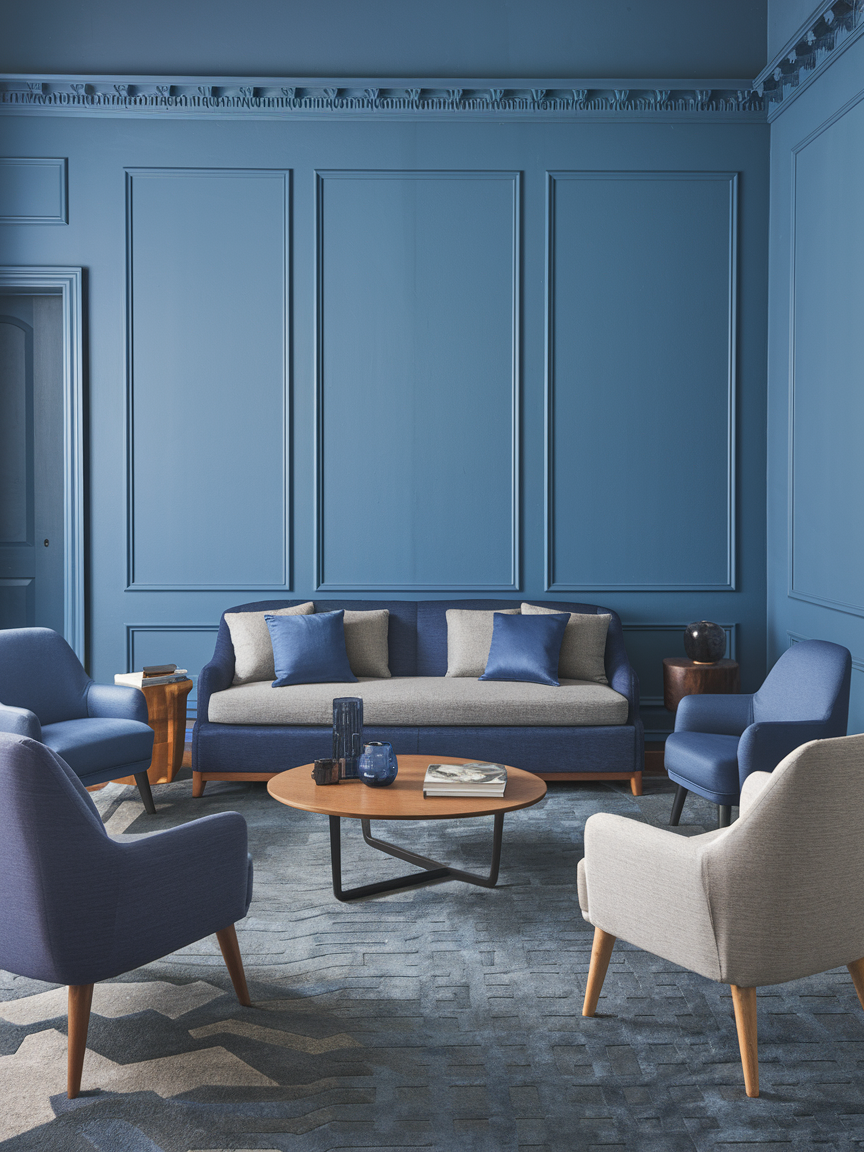
Blue and gray create a sophisticated palette that feels both contemporary and calming. Combine light gray with navy, slate, or medium blue across sofas, rugs, curtains, and decorative cushions. Varying the shades prevents the room from appearing flat, while different fabric textures add dimension. Warm wood, brass, and cozy textiles can introduce additional warmth to the cool color combination. This layered approach creates a polished living room that feels relaxed without losing its elegant character.
23. Blue Decorative Vases
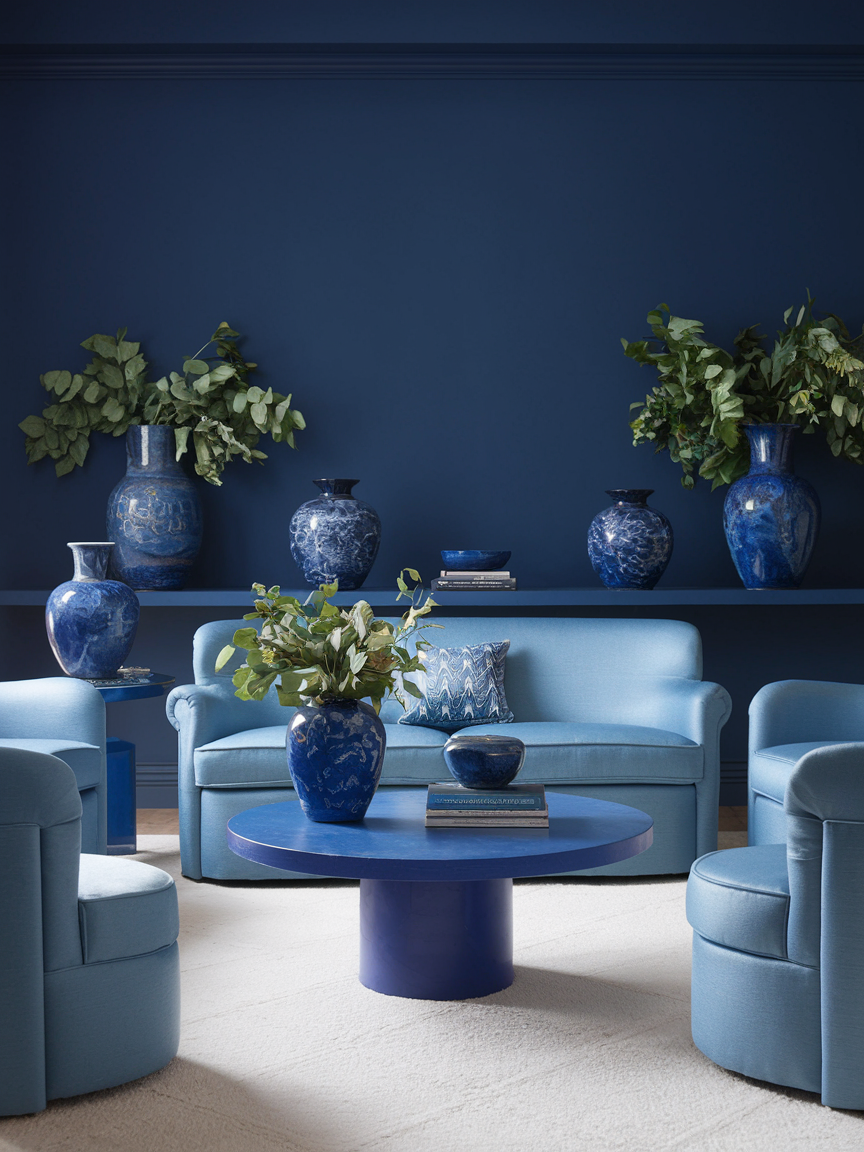
Decorative vases offer a simple way to introduce blue in small, flexible doses. Choose ceramic, glass, or stone vessels in shades ranging from pale blue to cobalt and deep navy. Arrange several vases of different heights and shapes on a console, mantel, coffee table, or open shelf for a more dynamic display. Fill them with greenery, dried branches, or fresh flowers to bring an organic element into the room. Since vases can easily be moved around, they are an effortless way to update the décor whenever you want a subtle change.
24. Blue Ceiling Accent
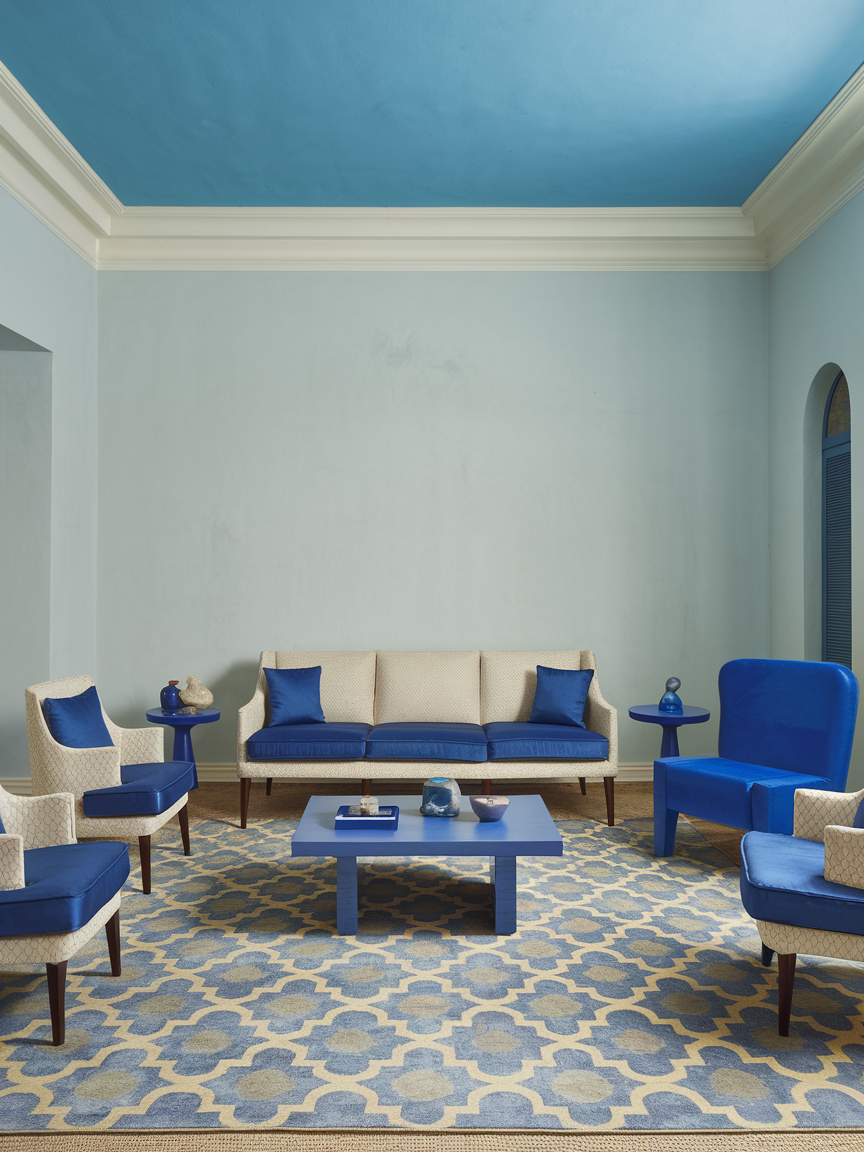
A blue ceiling creates an unexpected design moment while adding depth to the living room. Pale blue or gray-blue can produce a soft sky-inspired effect, while navy and slate create a more intimate atmosphere. Keep the walls and larger furnishings neutral if you want the ceiling to remain the primary feature. Warm lighting can help balance darker shades and make the space feel more inviting. Painting the ceiling blue also draws attention upward, giving the room an additional layer of architectural interest.
25. Blue Upholstered Ottoman
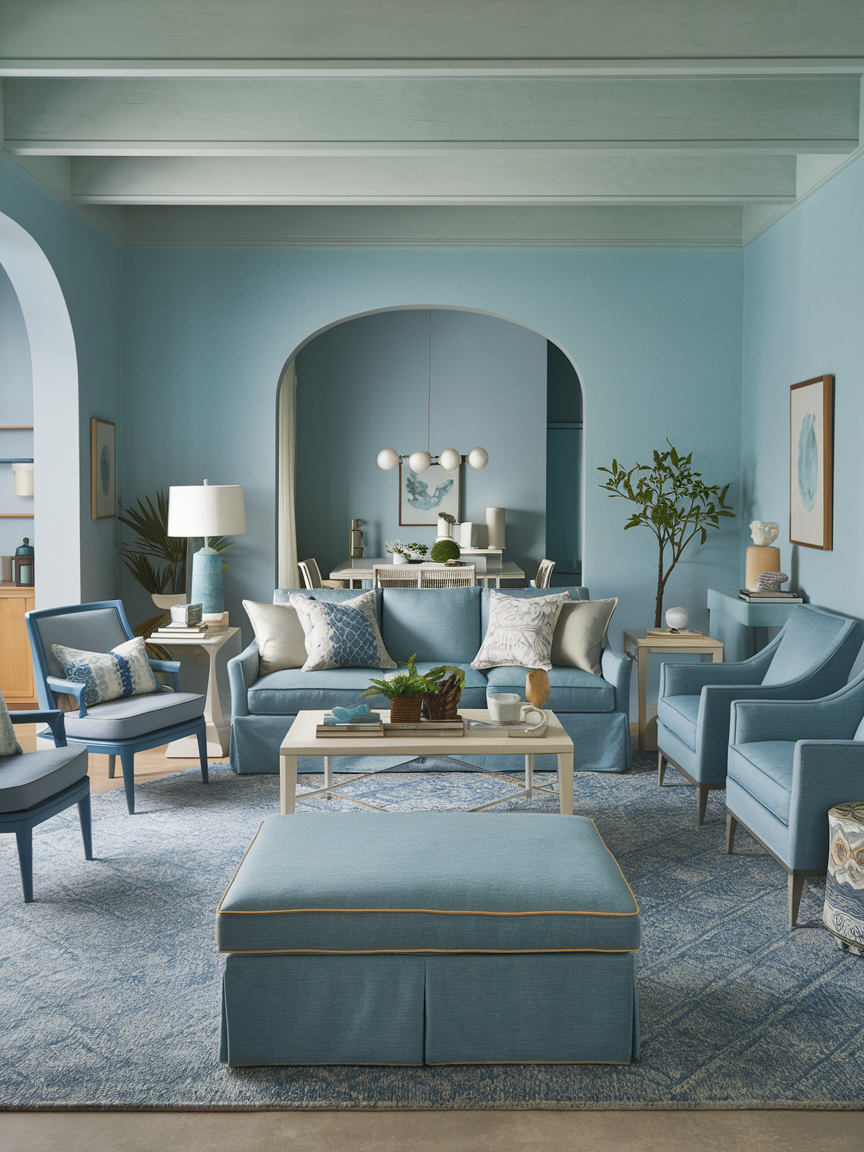
A blue upholstered ottoman can add color, comfort, and versatility to the living room. Use it as a footrest, extra seating, or a casual coffee table by placing a decorative tray on top. Velvet, linen, boucle, and other textured fabrics can make the piece feel especially inviting. Position it in front of a sofa or sectional to create a comfortable lounging arrangement. Matching the ottoman to nearby pillows or artwork can help integrate it naturally into the overall color scheme.
26. Blue and Natural Fiber Textures
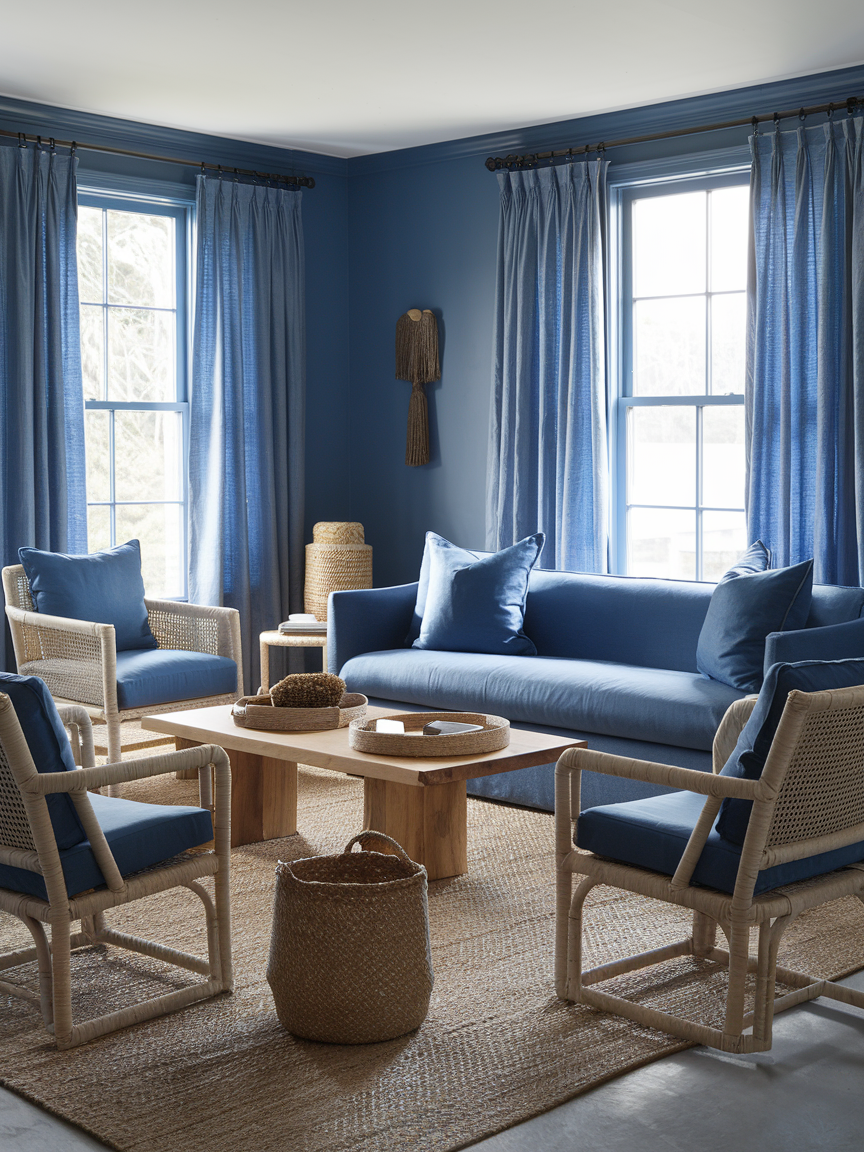
Natural fibers can warm up a blue living room while creating a relaxed, organic atmosphere. Jute rugs, rattan furniture, woven baskets, linen curtains, and other tactile materials provide a pleasing contrast to smooth blue surfaces. Neutral natural fibers also prevent the color palette from feeling too cool or formal. This combination works especially well in coastal, modern organic, transitional, and relaxed contemporary interiors. The mix of blue and natural textures creates a space that feels fresh, grounded, and comfortable.
* The charm of a blue living room comes from its ability to feel both elegant and inviting. Use these inspirations to experiment with shades, textures, patterns, and accents, and create a living room that reflects your style while providing a welcoming retreat for everyday life.