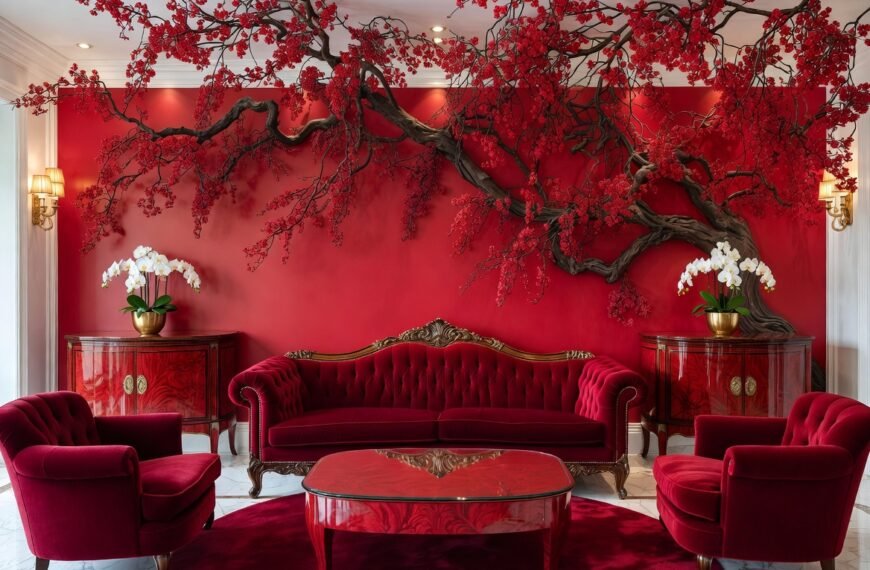
A traditional dining room brings a timeless sense of warmth and elegance to the home, creating a welcoming setting for everyday meals and special gatherings alike. Rich wood finishes, classic furniture, refined lighting, and graceful decorative details can give the space a sophisticated character without making it feel overly formal. The result is a dining area that feels comfortable, inviting, and designed to be enjoyed for years to come.
Thoughtful details can make a traditional dining room feel both beautiful and functional. A solid wood dining table, upholstered chairs, elegant curtains, patterned rugs, classic artwork, and a statement chandelier can establish a polished foundation. Warm neutrals, deep greens, muted blues, earthy tones, and traditional patterns can add depth while complementing natural materials and timeless architectural features.
This collection of traditional dining room ideas explores creative ways to make every gathering feel warm, elegant, and memorable. You’ll find inspiration for dining tables, chairs, lighting, wall colors, rugs, artwork, table settings, furniture, and decorative accents that bring classic character into the home. Let’s explore these inviting dining spaces and discover how traditional design can create a room that feels sophisticated, comfortable, and perfect for gathering!
1. Layered Lighting for Flexibility
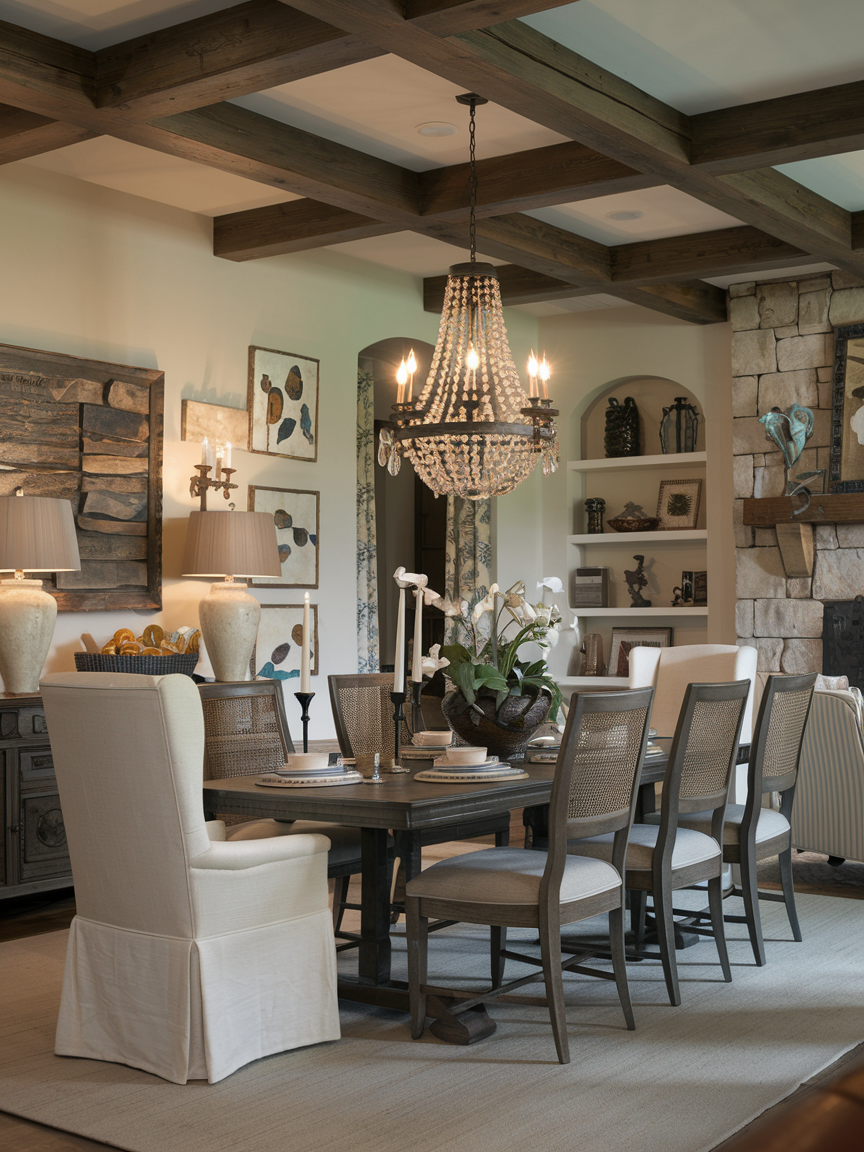
A combination of lighting sources allows a traditional dining room to adapt to different occasions. Start with a central chandelier or pendant for general illumination, then introduce wall sconces, table lamps, or accent lights to create additional layers. Bright lighting can make the room practical for everyday activities, while softer illumination creates a more intimate atmosphere for dinner parties. Dimmers are particularly useful because they allow you to control the intensity throughout the evening. Layered lighting also adds depth to the room by highlighting artwork, architectural details, and decorative displays.
2. Wainscoting and Paneling for Timeless Detail
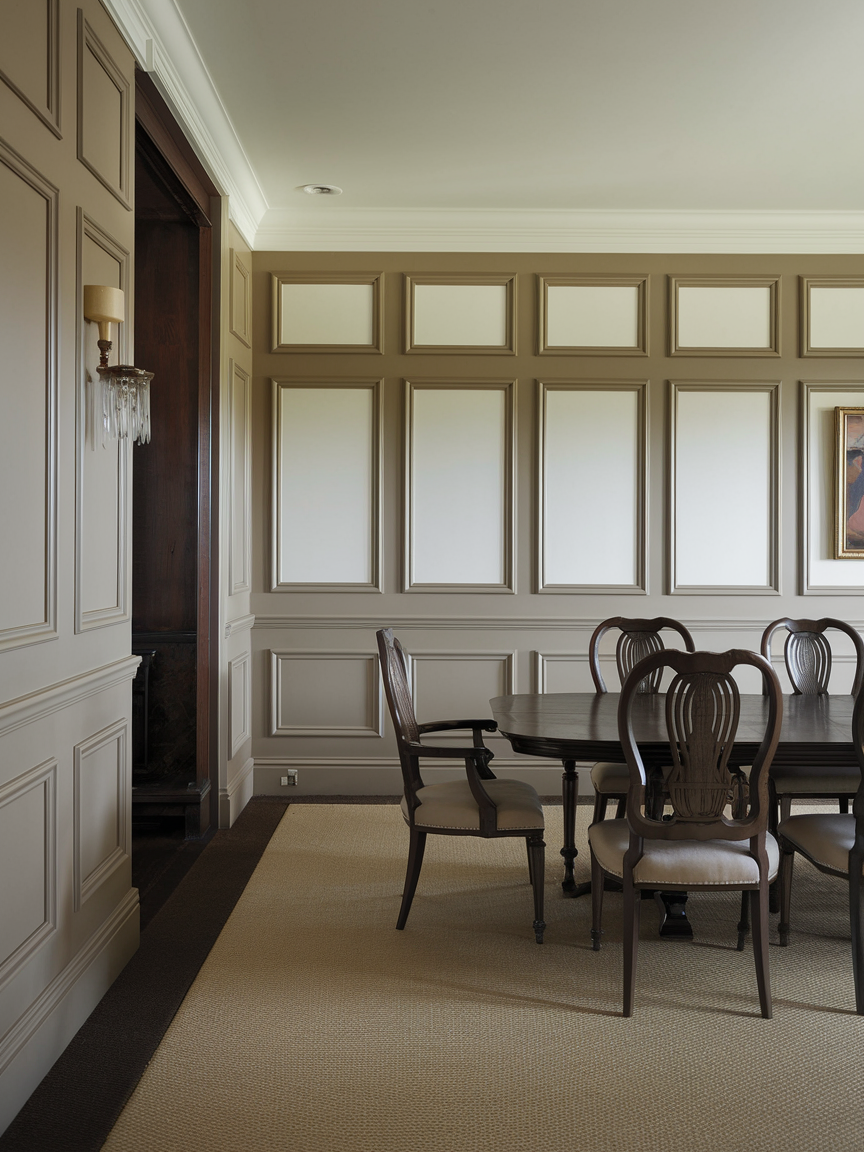
Wainscoting and decorative wall paneling introduce architectural character while reinforcing the classic feel of a traditional dining room. Simple raised panels can provide understated elegance, while more detailed molding creates a formal appearance. Paint the lower portion of the wall in a crisp neutral shade or use a deeper color for added contrast. Paneling can also be paired with wallpaper or decorative paint above it for additional visual interest. These architectural details give the room a sense of craftsmanship and permanence, making even a relatively simple dining space feel more sophisticated.
3. Large Mirrors to Brighten and Expand the Room
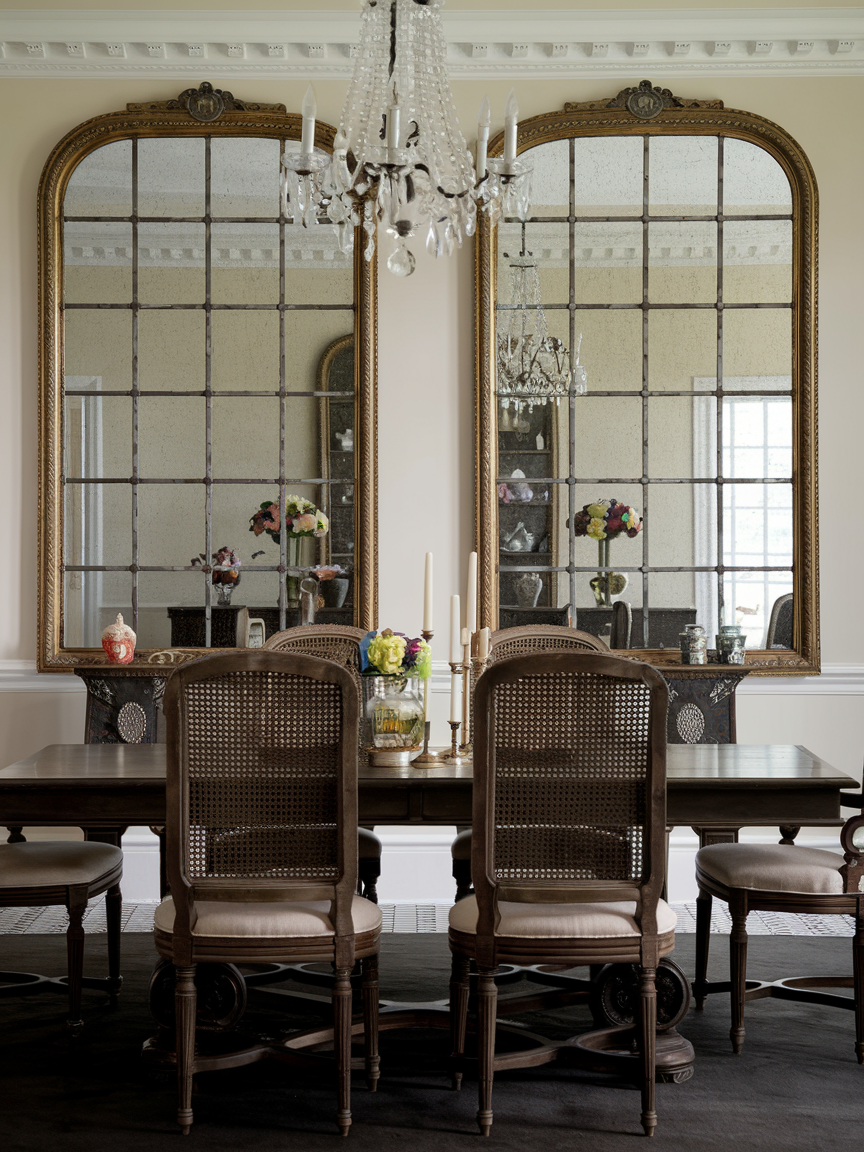
A large decorative mirror can add light, depth, and elegance to a traditional dining room. Position one above a sideboard or buffet to create a strong focal point, or place it opposite a window to reflect natural light. Ornate gold frames, carved wood surrounds, and antique-inspired finishes complement traditional furniture particularly well. Mirrors can also reflect the glow of chandeliers and candles, creating additional sparkle during evening gatherings. Choose a substantial design that feels proportionate to the wall and surrounding furniture so the mirror becomes an intentional part of the room rather than an afterthought.
4. Antique Sideboards for Storage and Style
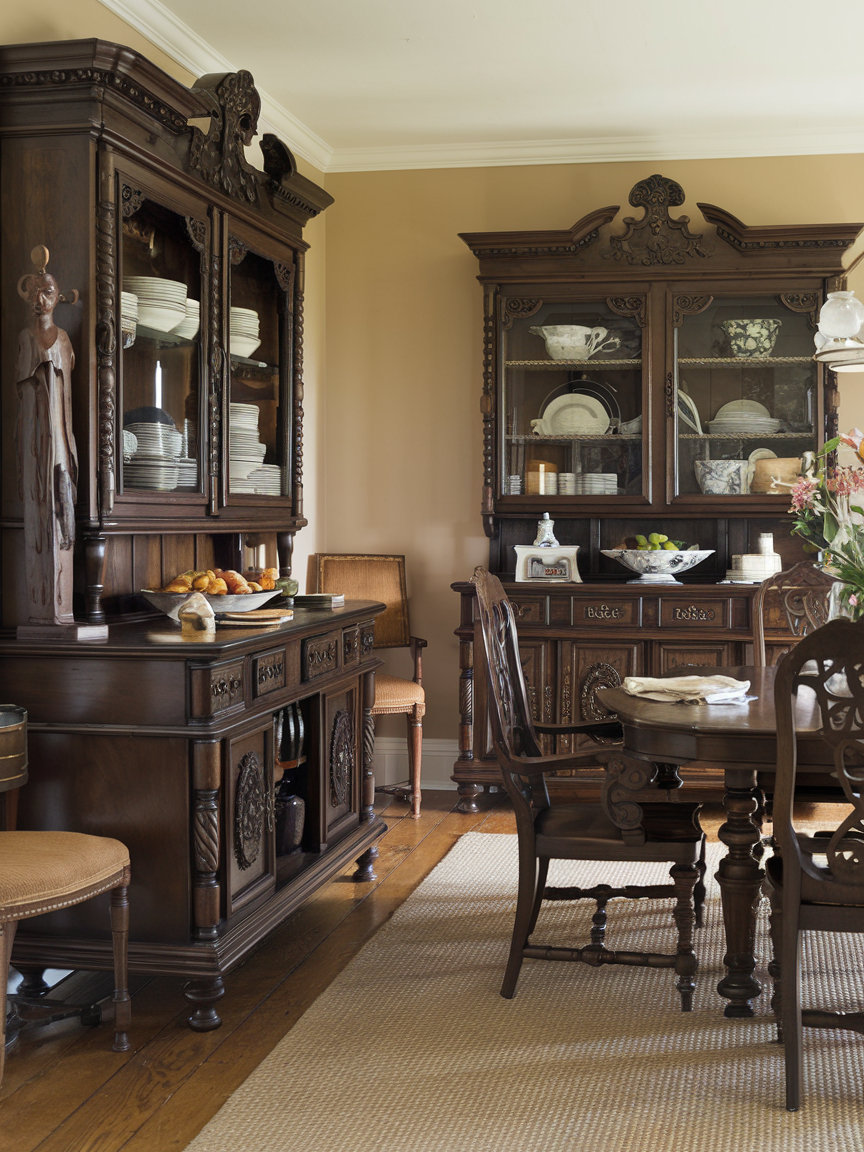
An antique sideboard can add both practical storage and timeless character to a dining room. Use its cabinets and drawers to organize linens, serving dishes, tableware, and other entertaining essentials. The surface provides another styling opportunity for flowers, lamps, candles, artwork, or seasonal decorations. Look for carved details, turned legs, aged finishes, or traditional hardware if you want a strong vintage presence. A sideboard can also serve as a convenient buffet during larger gatherings, keeping food and serving pieces accessible without crowding the main dining table.
5. Built-In Shelving for Display and Storage
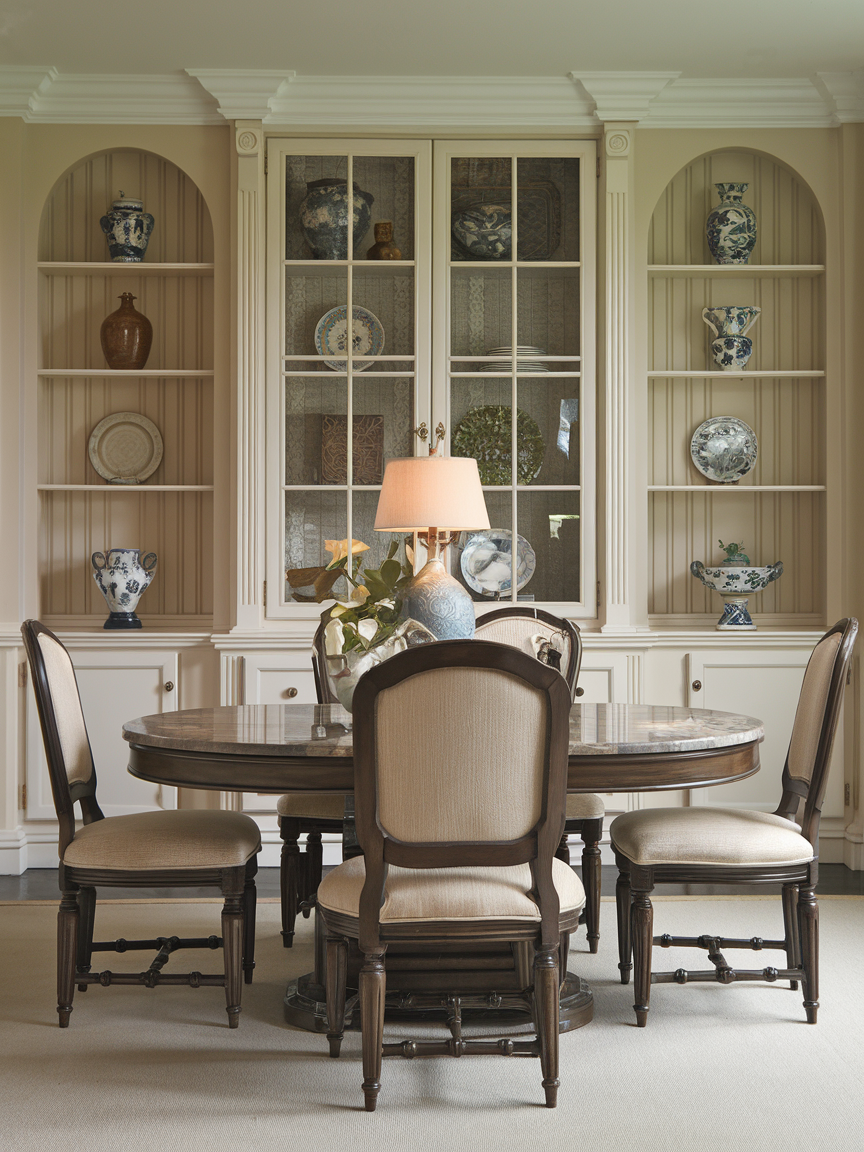
Built-in shelving can provide a seamless combination of storage and display space in a traditional dining room. Glass-front cabinets are ideal for showcasing china, glassware, and serving pieces, while open shelves can hold artwork, books, ceramics, and decorative objects. Painted built-ins can blend into the walls for a refined appearance, while natural wood finishes provide additional warmth. Because built-ins are designed specifically for the room, they often create a more intentional and established look. They are especially useful for keeping entertaining essentials organized while making treasured pieces part of the decor.
6. A Fireplace for Cozy Gatherings
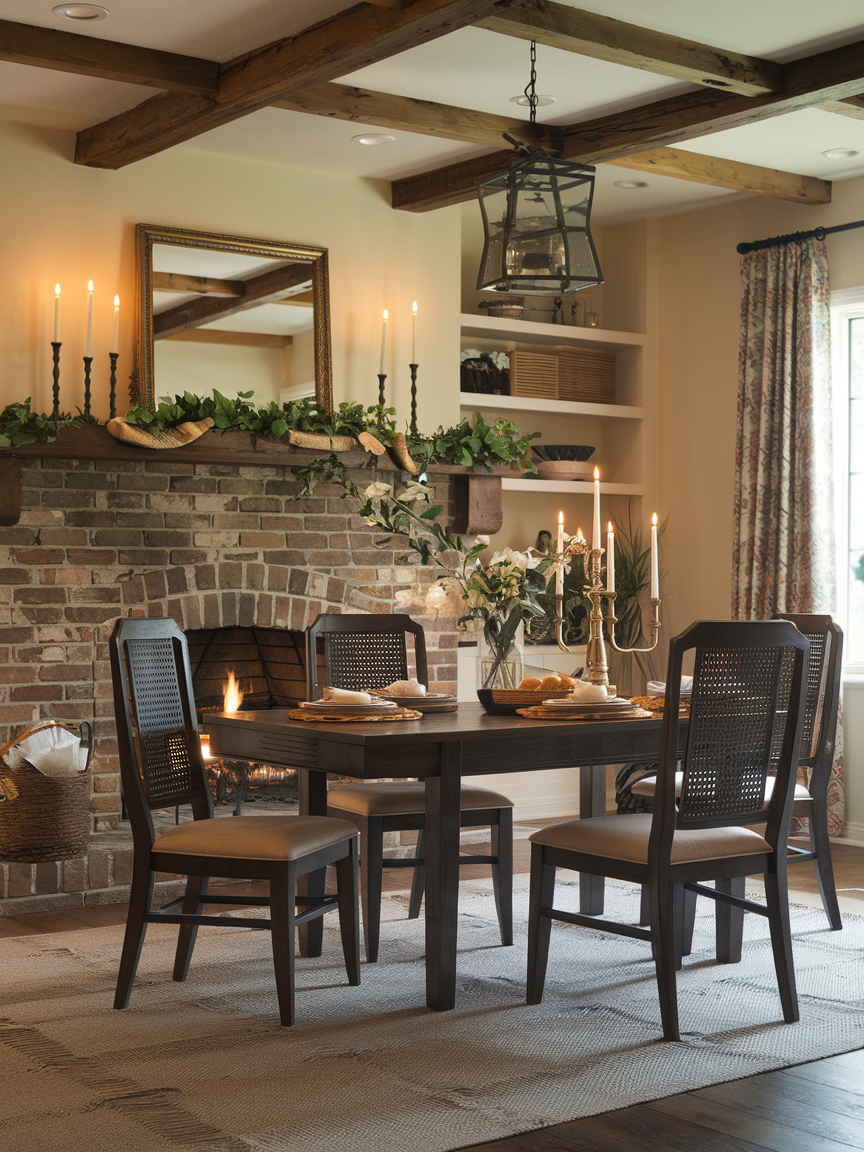
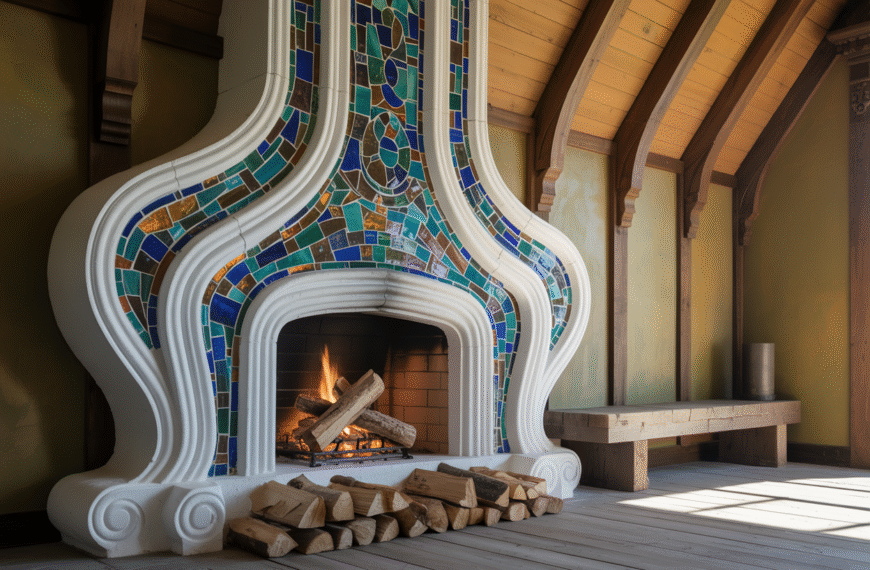
A fireplace can give a traditional dining room an especially warm and inviting focal point. The architectural presence of the mantel creates a natural area for displaying artwork, mirrors, candles, greenery, or seasonal decorations. A classic stone, brick, or carved wood surround can complement traditional furniture beautifully. Even a nonworking fireplace can provide the same visual impact by serving as a decorative centerpiece. During colder months, the combination of firelight, elegant table settings, and comfortable furnishings can make the dining room feel especially suited to long, memorable gatherings.
7. Fine China Cabinets That Show Off Treasures
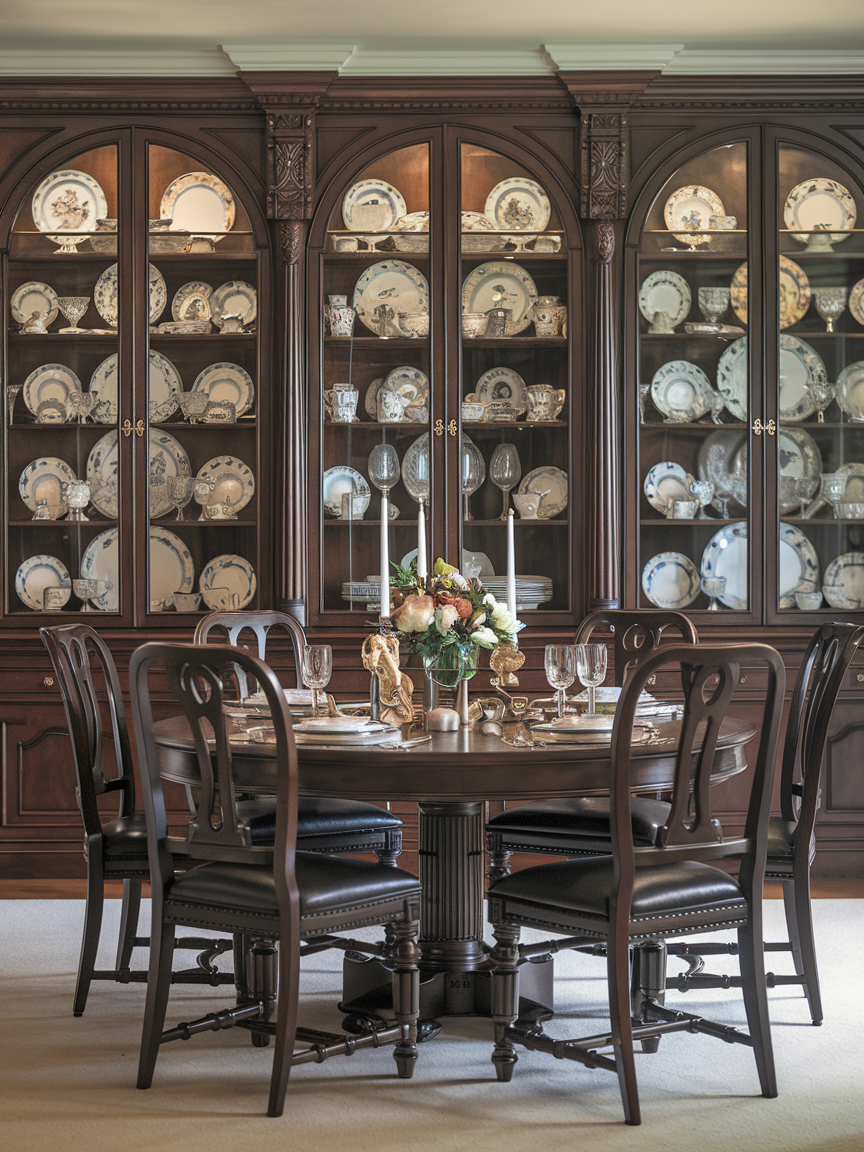
A china cabinet combines practical storage with the display opportunities that suit traditional dining rooms so well. Glass-front doors allow you to showcase beautiful dishes, glassware, serving pieces, and treasured collections while keeping them protected. Choose a cabinet with classic molding, paneled doors, or a rich wood finish to complement the rest of the furniture. The interior can be arranged by color, collection, or function to keep the display looking organized. Even when filled with everyday pieces rather than heirlooms, a well-styled china cabinet can give the dining room a sense of history and character.
8. Candlelight for That Romantic Glow
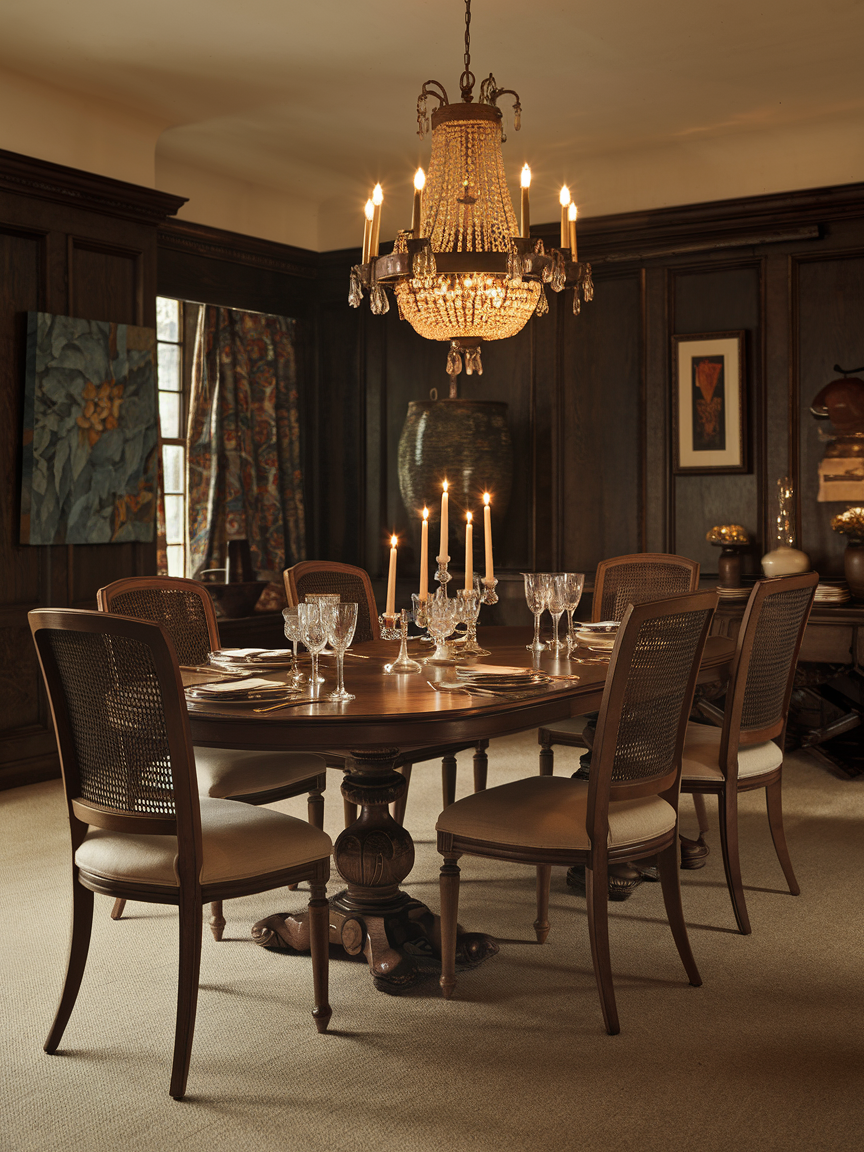
Candlelight brings a softer, more intimate quality to a traditional dining room. Arrange taper candles in elegant holders, place a candelabra at the center of the table, or group smaller votives along a sideboard or mantel. The warm glow creates an inviting atmosphere that works particularly well for evening meals and special occasions. Candleholders can also serve as decorative accents when the candles are not lit. Combine different heights and finishes while keeping the arrangement balanced so the table remains practical for conversation and dining.
9. Heavy Drapes for Drama and Warmth
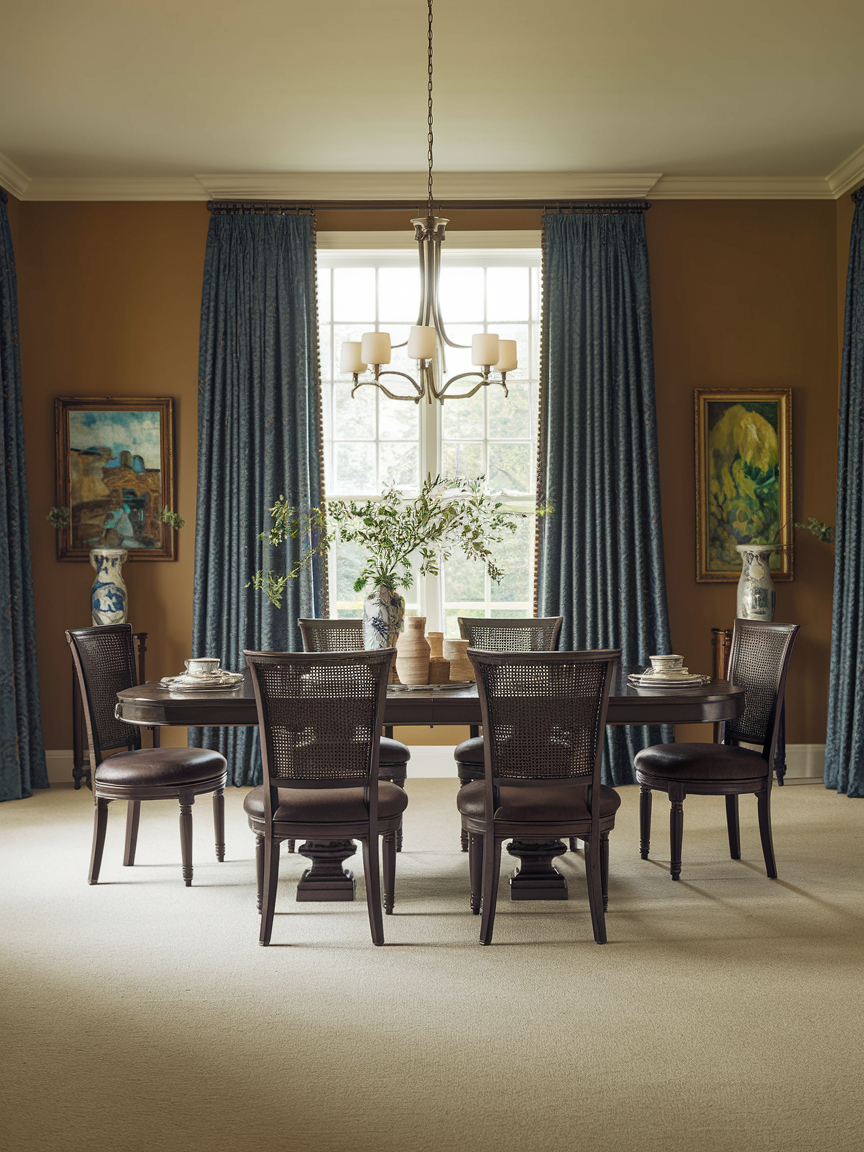
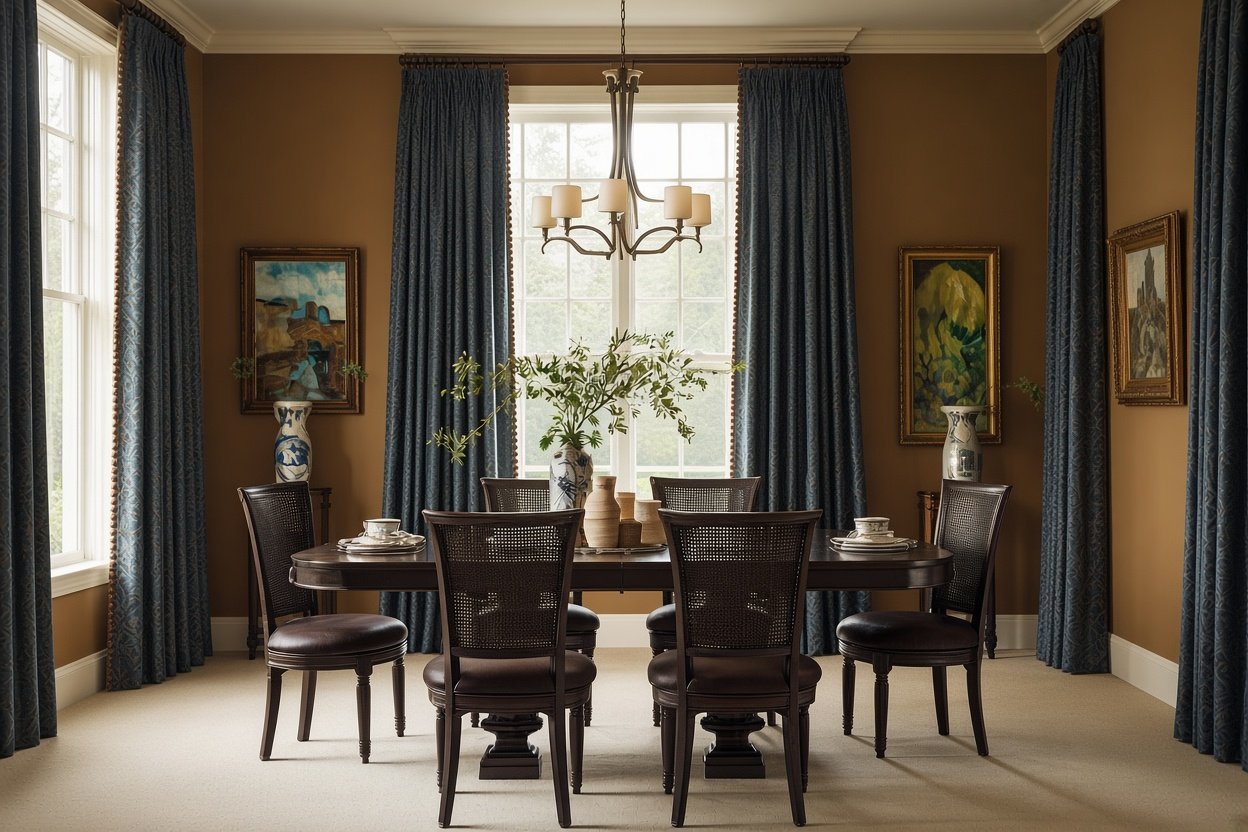
Floor-length drapes can give a traditional dining room a sense of grandeur while making the space feel warmer and more private. Velvet, silk, linen blends, and brocade fabrics all offer different interpretations of classic elegance. Choose curtains that coordinate with the wall color, upholstery, or rug without necessarily matching them exactly. Generous fabric can also soften the room acoustically, which is useful during larger gatherings. Mounting the curtain rod higher and wider than the window can further enhance the proportions of the room and create a more polished, finished appearance.
10. Classic Wooden Dining Table as the Heart of the Room
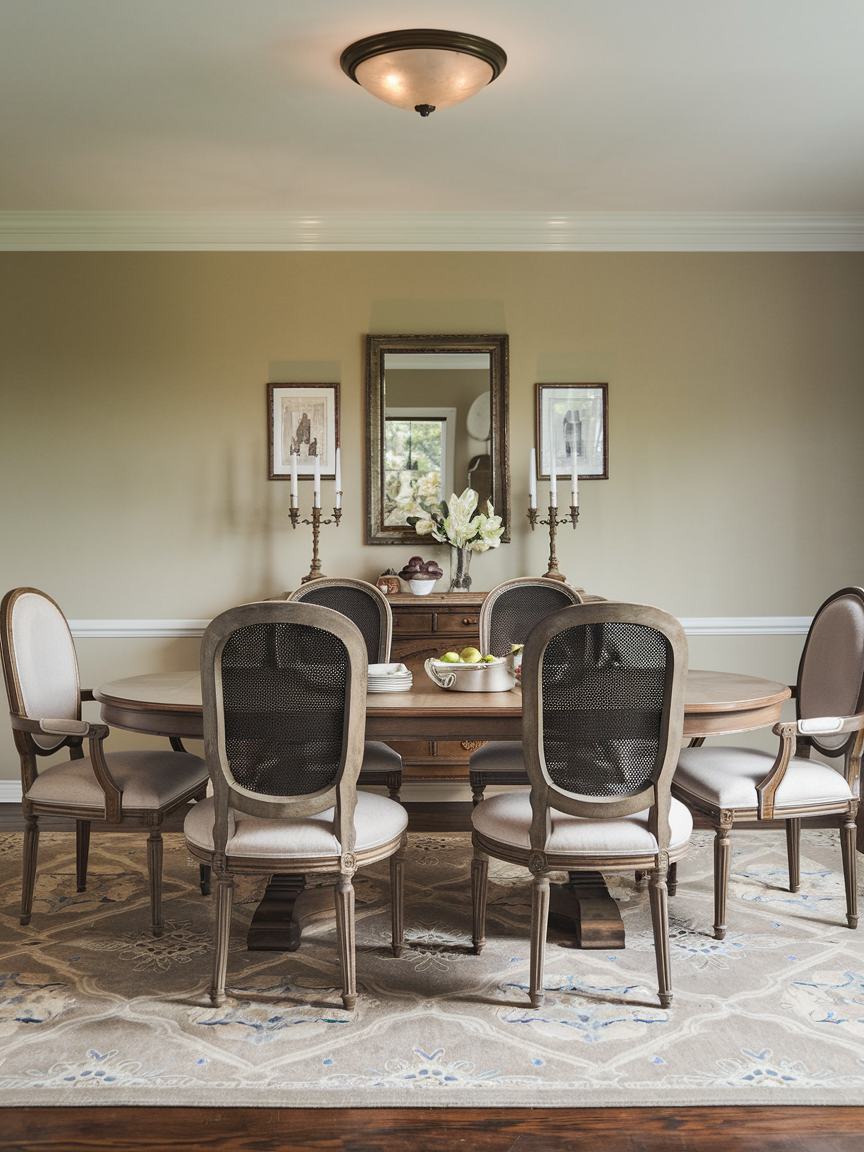
A solid wooden dining table provides an ideal foundation for a traditional dining room. Rich mahogany, warm oak, walnut, and beautifully aged finishes all bring natural warmth and a sense of permanence to the space. Choose a substantial table with classic proportions if you want a more formal appearance, or select a slightly weathered finish for a relaxed interpretation of traditional style. Pair it with matching chairs for a coordinated look or introduce upholstered seating for additional comfort. A beautiful wooden table can become the centerpiece around which meals, celebrations, and everyday conversations naturally unfold.
11. Elegant Chandeliers That Steal the Show
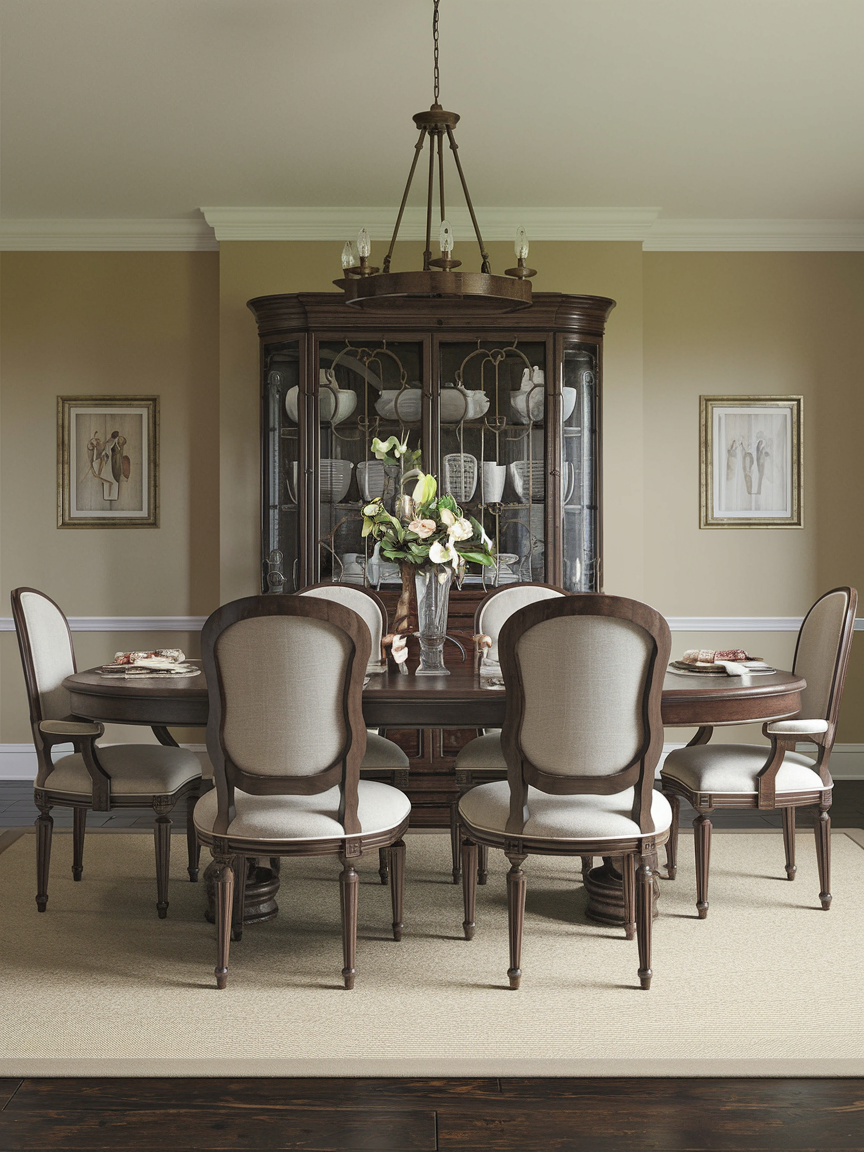
A chandelier can instantly establish the mood of a traditional dining room while providing an elegant source of illumination. Crystal designs bring sparkle and refinement, candle-style fixtures evoke old-world charm, and wrought-iron chandeliers can create a more substantial architectural presence. Choose a fixture that is appropriately scaled to the table so it feels balanced within the room. Hanging it at the right height is equally important, allowing the light to illuminate the dining area without obstructing views across the table. A well-chosen chandelier can serve as both functional lighting and a memorable decorative centerpiece.
12. Rich Color Palettes for Instant Warmth
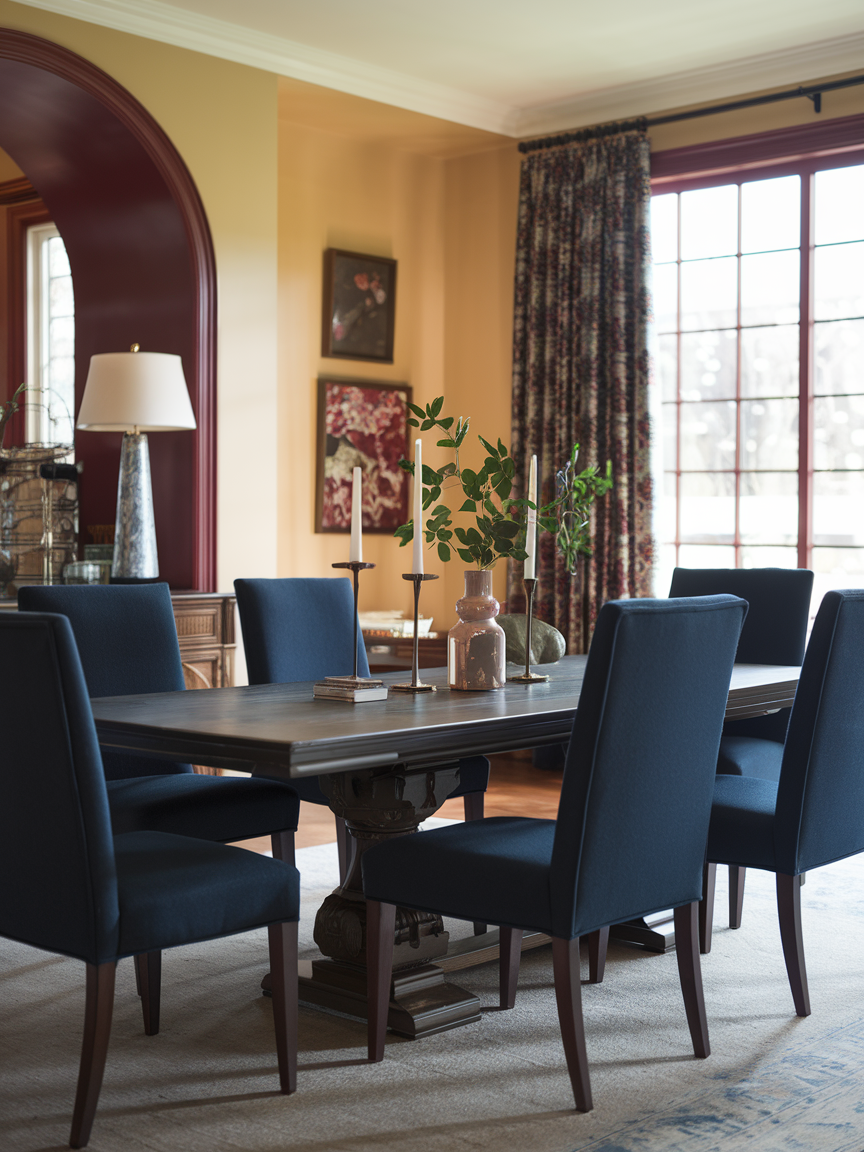
Traditional dining rooms often benefit from colors that create depth and warmth. Deep navy, forest green, burgundy, warm taupe, and creamy ivory can all complement classic wood furniture beautifully. Darker shades can make a dining area feel intimate and dramatic, while lighter neutrals provide a softer backdrop for ornate furniture and decorative details. Consider using a rich color on the walls and balancing it with lighter upholstery or artwork. A carefully selected palette helps establish the atmosphere of the room and gives the traditional furnishings a cohesive setting.
13. Formal Dining Chairs with Upholstered Comfort
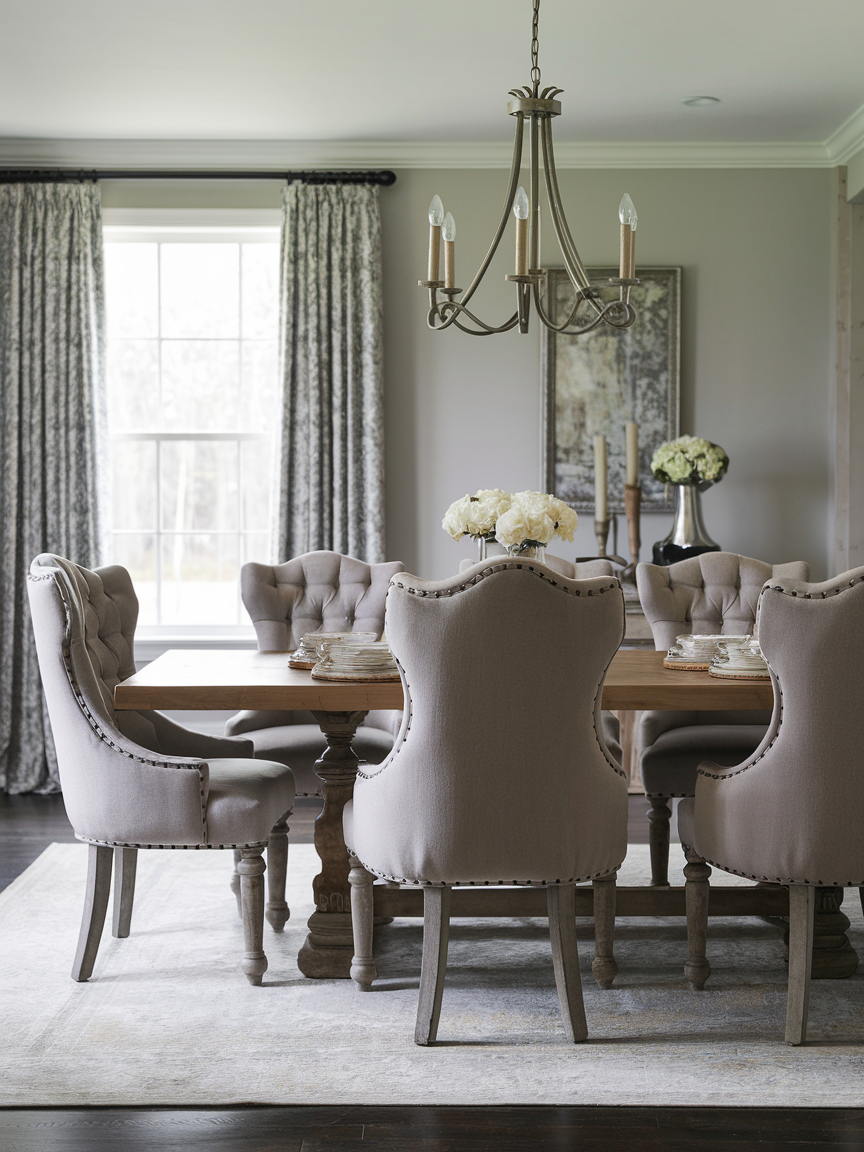
Comfortable seating is essential when a dining room is designed for long meals and lingering conversations. Upholstered dining chairs bring softness to the traditional setting while adding another opportunity to introduce color and texture. Velvet, linen, damask, and patterned fabrics can all work beautifully with classic furniture. Details such as tufted backs, turned legs, piping, or nailhead trim can enhance the traditional character. For a cohesive arrangement, coordinate the upholstery with the curtains, rug, or wall color while allowing the chairs to retain enough visual interest to complement the dining table.
14. Statement Rugs That Anchor the Space
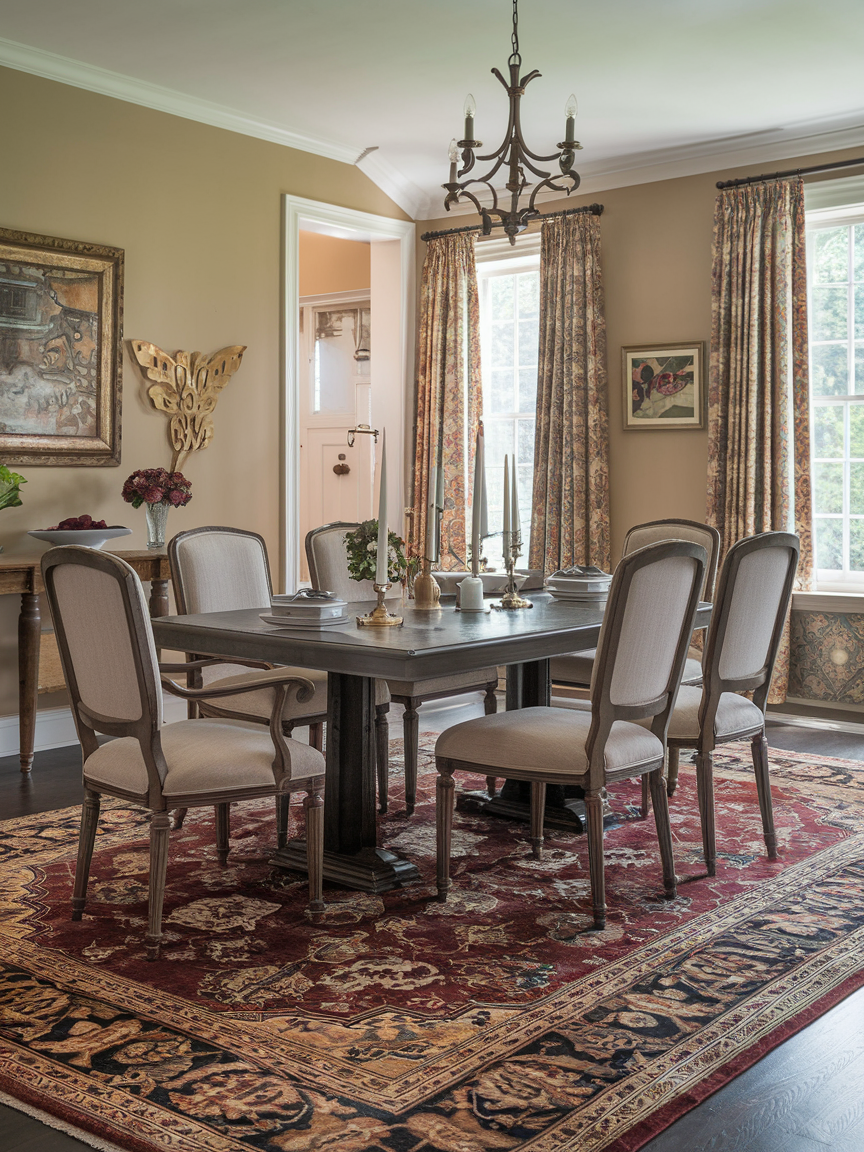
A well-sized area rug can visually anchor the dining table and bring warmth beneath the entire seating arrangement. Traditional rooms often look especially beautiful with Persian-inspired, Oriental, or vintage-patterned rugs featuring rich colors and intricate motifs. Make sure the rug extends far enough beyond the table to accommodate chairs even when they are pulled out. This prevents chair legs from catching on the edges and makes the dining area more comfortable to use. A thoughtfully chosen rug can also connect the room’s furniture, wall colors, and accessories into one cohesive composition.
15. Traditional Artwork That Tells a Story
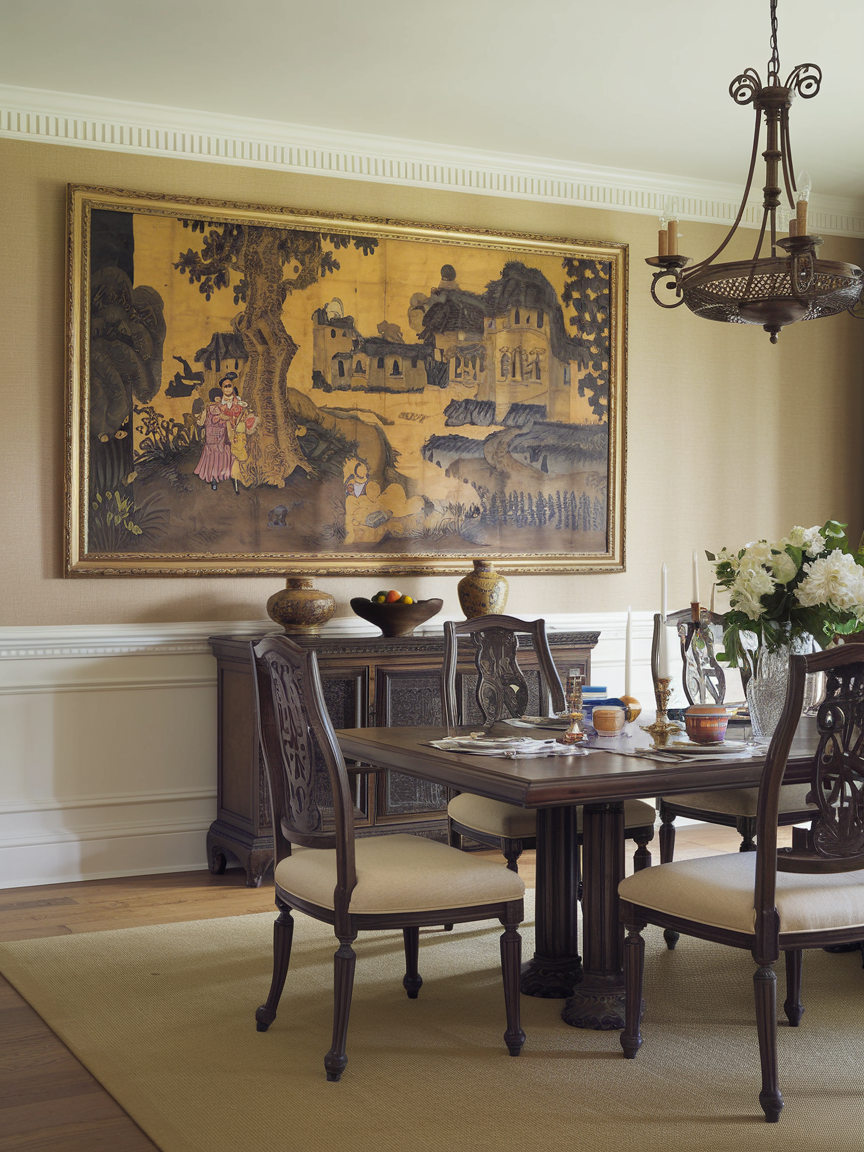
Traditional artwork can bring personality and visual depth to the dining room while reinforcing its classic character. Landscapes, still-life paintings, botanical studies, portraits, and vintage-inspired prints are all natural choices. A large framed painting above a sideboard can become the main focal point, while a collection of smaller works can create an elegant gallery arrangement. Look for frames in wood, gold, or other traditional finishes to connect the artwork with the surrounding furniture. Meaningful artwork can make the dining room feel more personal and established rather than simply decorated.
16. Decorative Ceiling Details for Added Charm
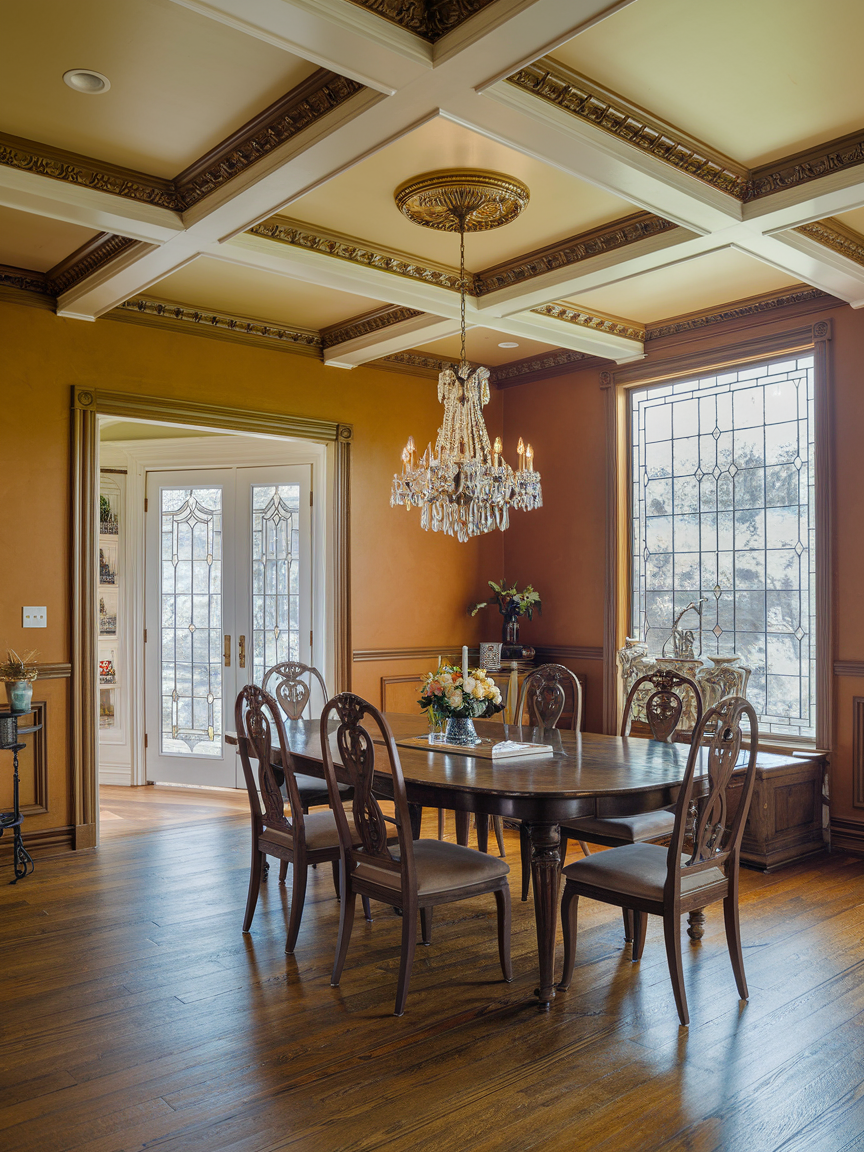
The ceiling offers another opportunity to enhance the architectural character of a traditional dining room. Coffered ceilings, decorative molding, ceiling medallions, and exposed beams can add depth and visual interest overhead. A ceiling medallion paired with a chandelier creates a particularly classic combination, while beams can bring warmth to a more relaxed traditional setting. These details do not have to be elaborate to make an impact. Even simple crown molding around the perimeter can give the room a more finished appearance and strengthen the connection between the walls, lighting, and architectural style.
17. Mix of Textures for Layered Sophistication
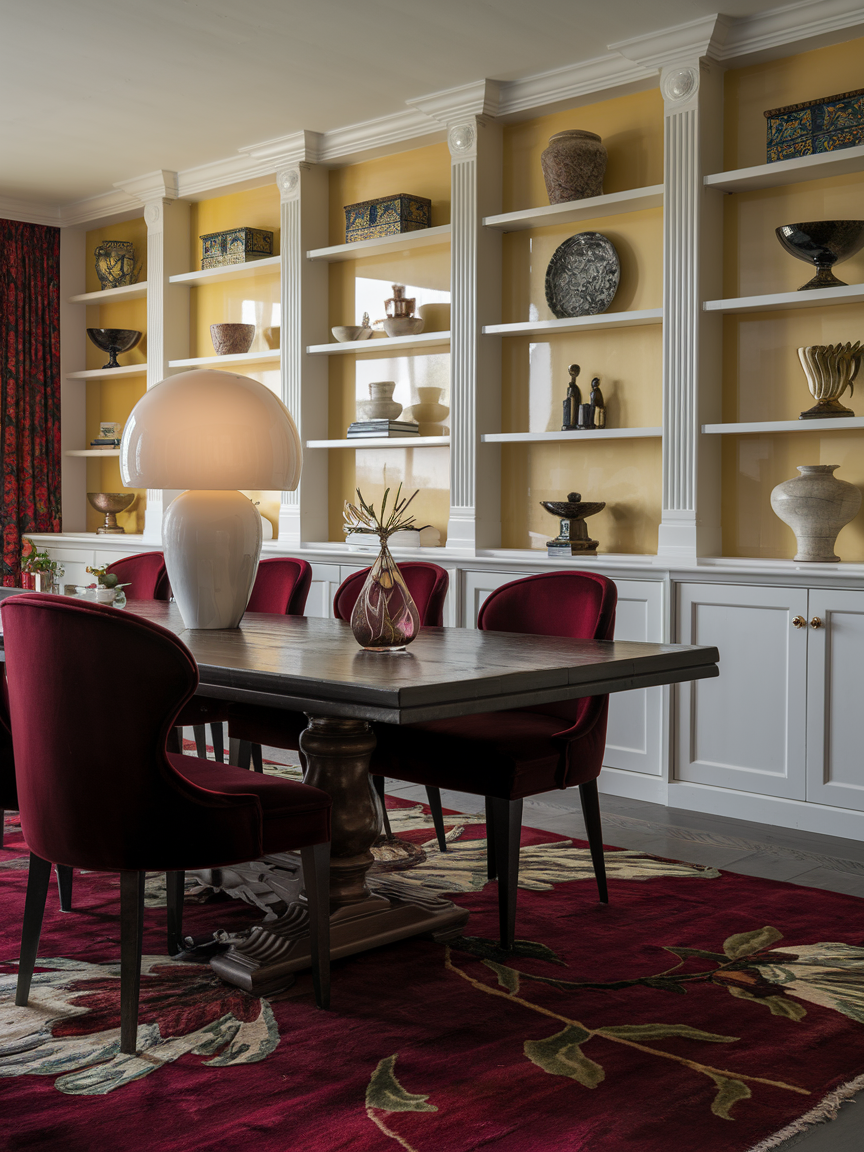
Combining different materials keeps a traditional dining room from feeling flat or overly uniform. Pair polished wood with soft velvet, woven textiles with smooth ceramics, glossy finishes with aged metal, and flowing curtains with richly patterned rugs. Texture adds depth even when the color palette remains restrained. Consider repeating a few materials throughout the room to create cohesion while introducing enough variation to keep the design interesting. The result is a dining space that feels rich and layered without losing the timeless simplicity that makes traditional interiors so appealing.
18. Seasonal Décor to Keep Things Fresh
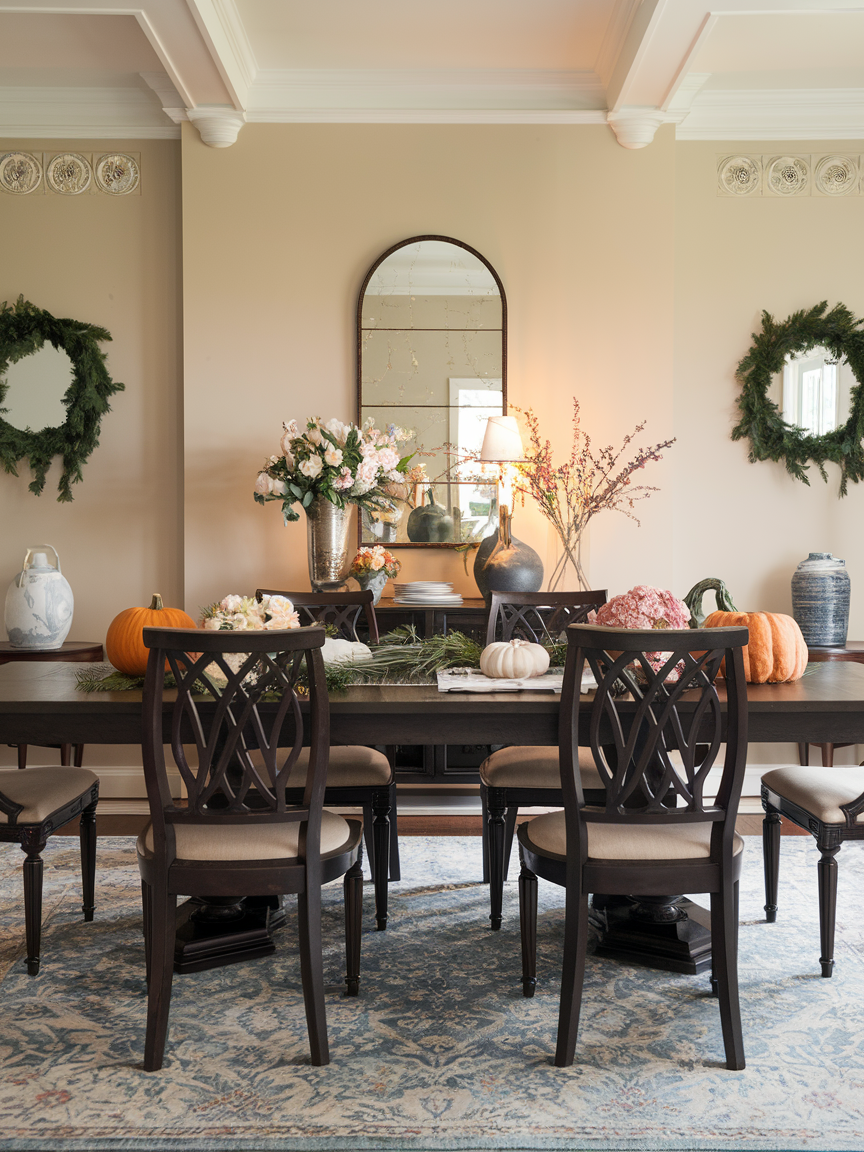
Seasonal decorating provides an easy way to refresh a traditional dining room throughout the year. Evergreen branches, candles, and richer textiles can bring warmth during winter, while spring can introduce soft florals and fresh greenery. Autumn is ideal for warm-toned arrangements, pumpkins, and natural textures, while summer can benefit from lighter fabrics and breezier centerpieces. Keep the seasonal additions thoughtfully edited so they complement rather than overwhelm the existing decor. A traditional dining room provides a beautiful, timeless backdrop that can evolve naturally as the seasons change.
19. Grand Buffets for Larger Gatherings
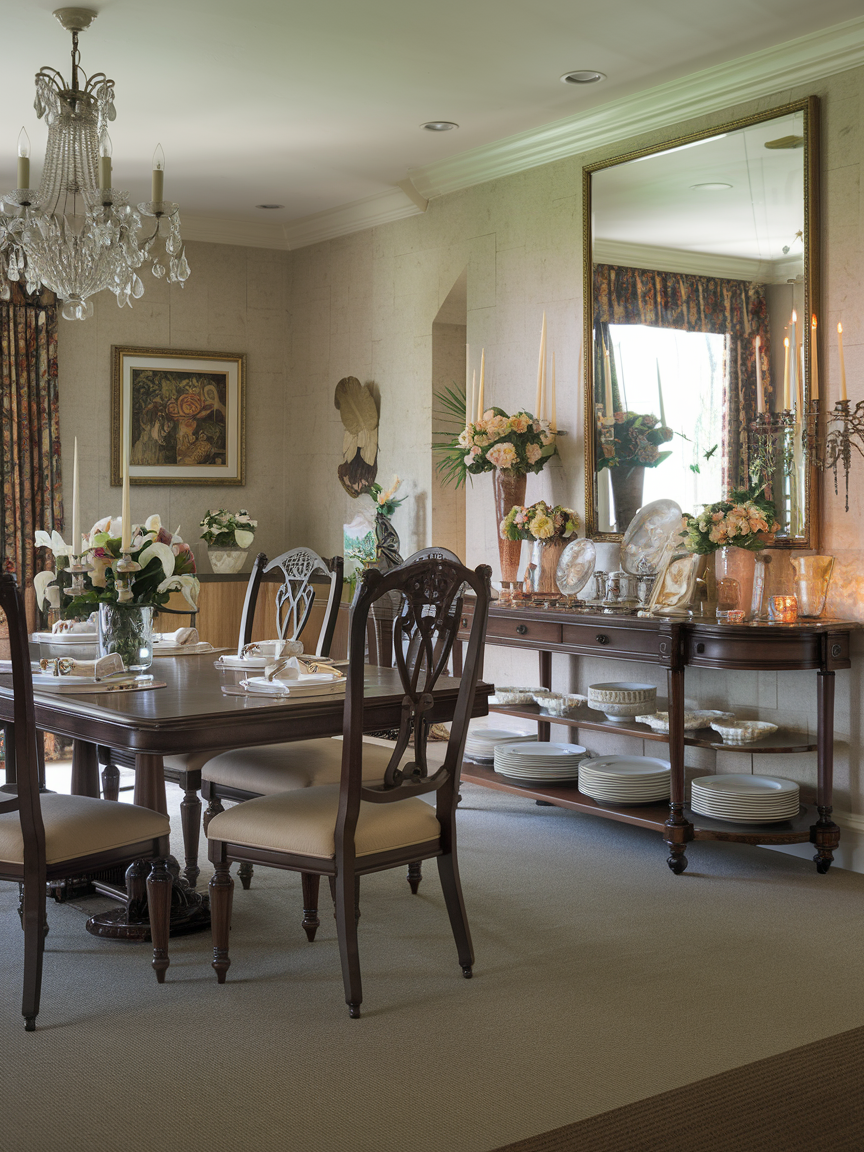
A generous buffet or sideboard can make hosting easier while contributing to the elegant appearance of the dining room. Use it to arrange serving dishes, drinks, desserts, or additional tableware during larger gatherings. Keeping food on a separate surface leaves more room on the dining table for place settings and conversation. When the buffet is not being used for entertaining, style it with a large mirror or artwork, flowers, lamps, or decorative accessories. This gives the furniture a purpose beyond storage and turns it into an important part of the room’s overall composition.
20. Symmetry for a Balanced Look
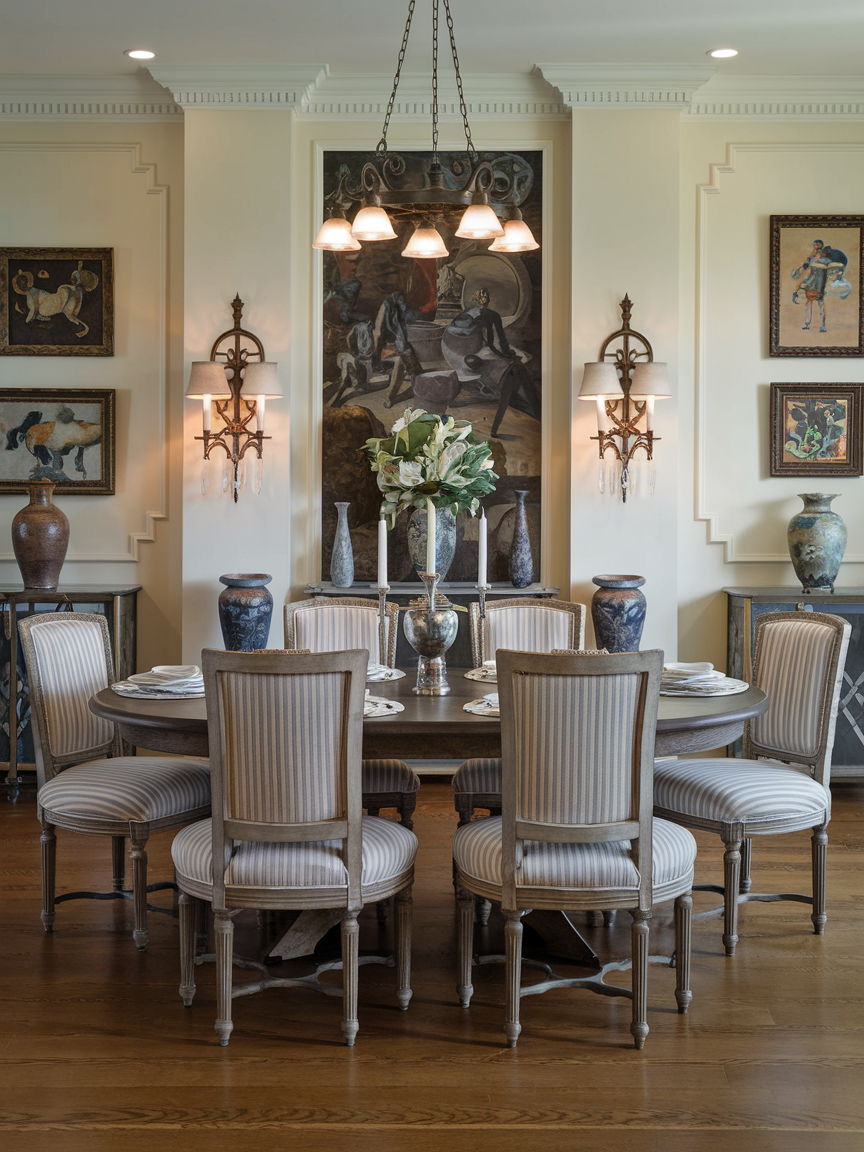
Symmetry is a classic design principle that works particularly well in traditional interiors. Create balance by placing matching chairs around the table, identical lamps on a sideboard, paired sconces on either side of artwork, or matching decorative objects around a centerpiece. Symmetrical arrangements naturally create a sense of order and formality. You do not need to make every element perfectly identical, however. Repeating shapes, colors, or proportions can achieve a similar effect while allowing the room to retain a more relaxed personality.
21. Traditional Centerpieces That Steal Attention
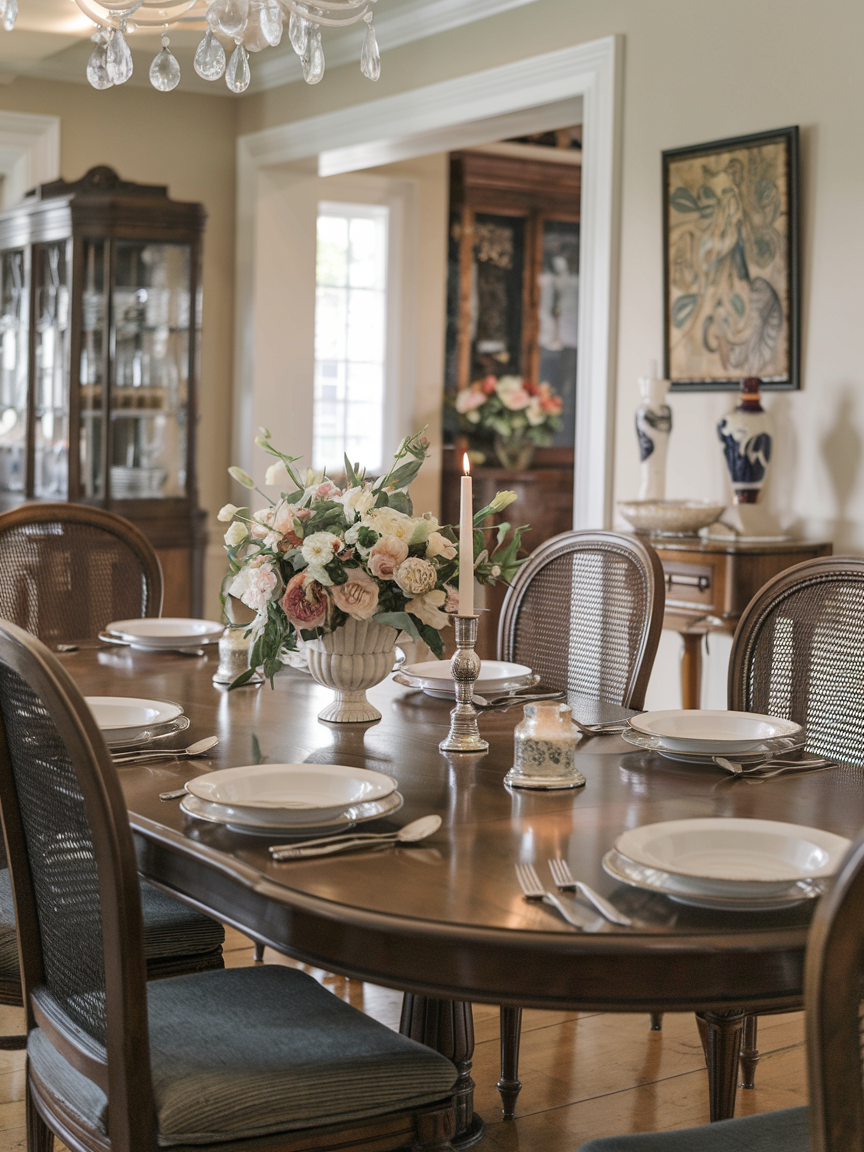
A thoughtfully chosen centerpiece gives the dining table a clear focal point. Fresh flowers arranged in a classic vase, a bowl filled with seasonal fruit, an elegant candelabra, or a collection of candles can all work beautifully. Keep the scale appropriate so guests can comfortably see across the table. For special occasions, create a more elaborate arrangement using greenery and seasonal details. Everyday meals call for something simpler. The ability to change the centerpiece throughout the year makes it an easy way to refresh the dining room while preserving its traditional character.
22. Vintage-Inspired Wallpaper for Extra Character
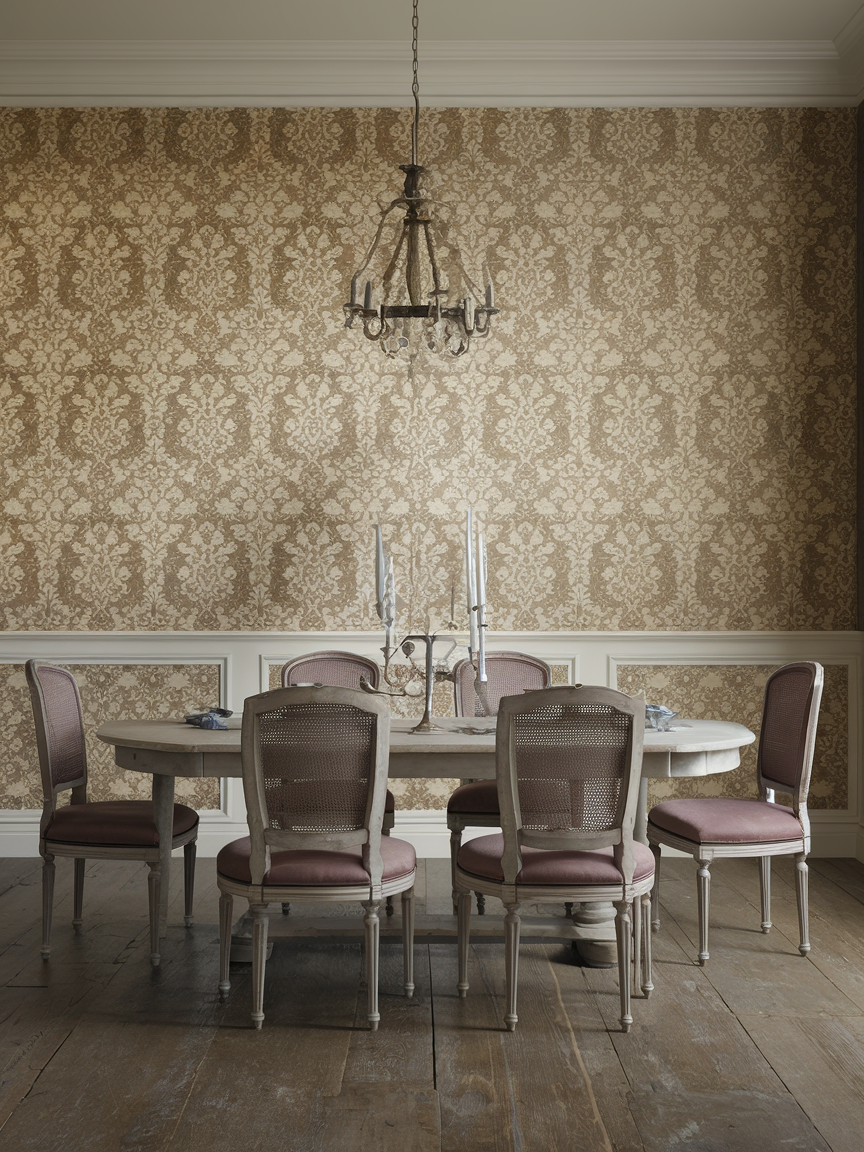
Wallpaper can add pattern, depth, and personality to a traditional dining room. Damask motifs, delicate florals, botanical prints, toile patterns, and subtle textures all complement classic furnishings. Use it throughout the room for a more immersive look or apply it to a single wall to create a focal point. Richer patterns can create a dramatic dining atmosphere, while smaller-scale prints keep the space feeling lighter. Pair patterned walls with simpler upholstery and furniture so the room feels layered rather than overwhelming.
* The lasting appeal of traditional dining rooms comes from their ability to combine elegance, comfort, and character in one welcoming space. Use these inspirations to explore different colors, materials, furniture styles, and decorative details, and create a dining space that feels timeless, inviting, and uniquely yours.