Designing a dining room that feels both inviting and stylish often comes down to the thoughtful use of color, and orange is one of the most powerful shades for creating that balance. Warm, expressive, and full of personality, orange brings an instant sense of comfort while still feeling bold and visually engaging. From soft terracotta and clay hues to deeper burnt orange tones, this color offers endless possibilities for crafting a dining space that feels both relaxed and refined.
When used intentionally, orange can transform an ordinary dining room into a space that feels layered, welcoming, and full of character. The key lies in pairing it with complementary elements like natural wood, soft textiles, warm metals, and balanced lighting. These combinations help ground the color, ensuring it enhances the space rather than overwhelming it. Whether introduced through walls, furniture, or subtle accents, orange has a unique ability to create a cozy atmosphere while maintaining a polished, elevated look.
This collection of ideas explores how to incorporate orange in ways that feel sophisticated and livable. Let’s explore how orange can bring depth, charm, and a welcoming glow to your home!
1. Artwork with Orange Hues
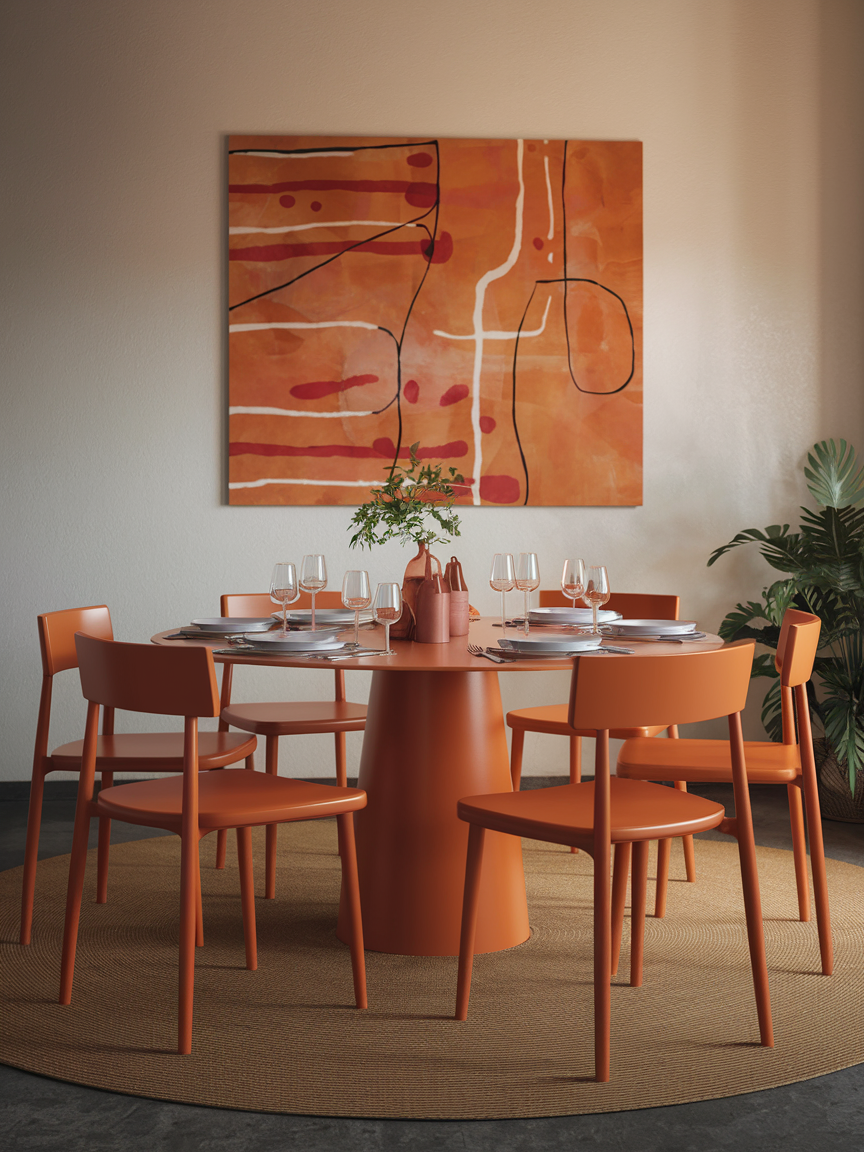
Artwork featuring orange tones is a versatile and elegant way to introduce warmth without making permanent changes to your space. Whether you choose abstract pieces, botanical prints, or modern illustrations, artwork allows you to layer different shades of orange in a controlled and artistic way. Framing plays an important role—black, wood, or metallic frames can elevate the overall look and tie the piece into your decor. Strategically placing artwork above a sideboard or along a focal wall helps ground the design. This approach adds personality and depth while keeping the dining room flexible and easy to refresh over time.
2. Terracotta Pendant Lighting for Ambiance
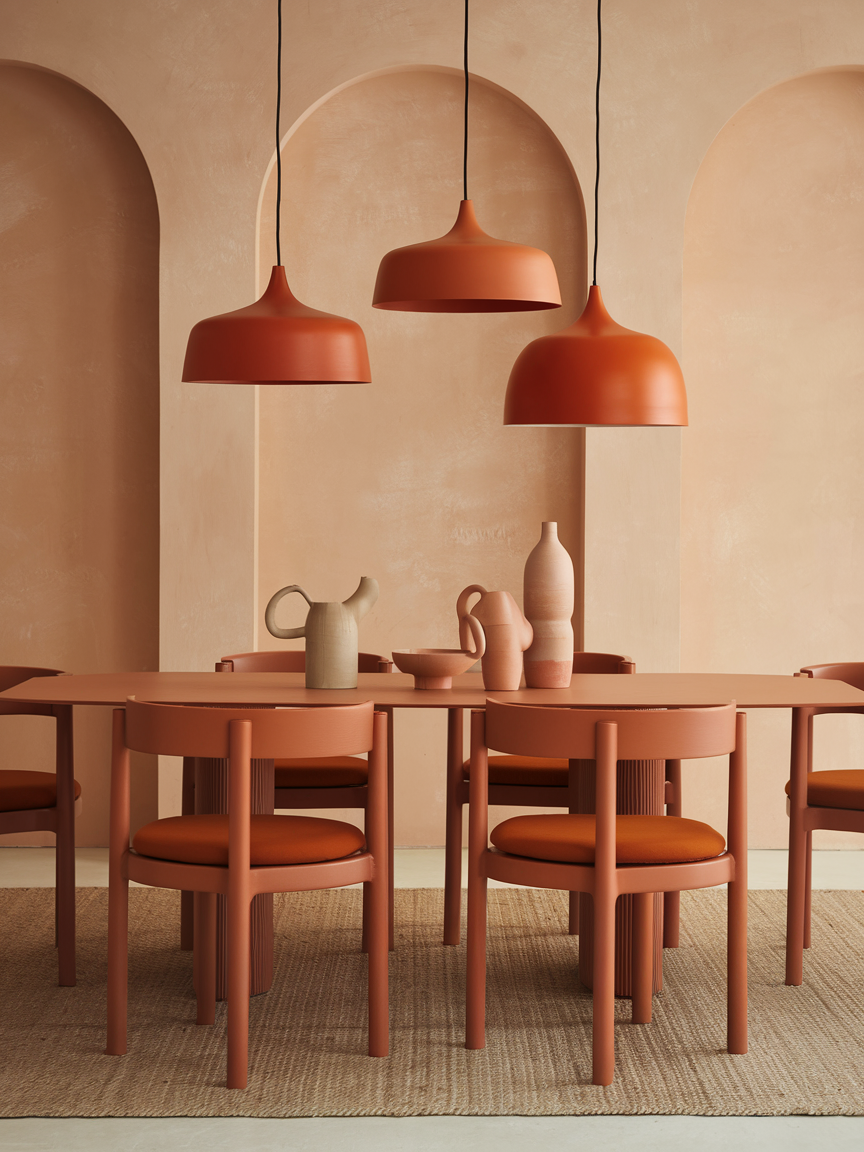
Pendant lighting in terracotta or warm orange tones adds both functionality and atmosphere to your dining room. These fixtures cast a soft, flattering glow that enhances the cozy feeling of the space, especially during evening meals. Even when turned off, their color contributes to the overall palette, acting as a subtle decorative element. Choosing simple, modern shapes ensures the lighting feels chic rather than overly ornate. When paired with neutral furniture and natural textures, orange-toned lighting creates a warm, inviting environment that feels both stylish and comfortable.
3. Patterned Orange Wallpaper
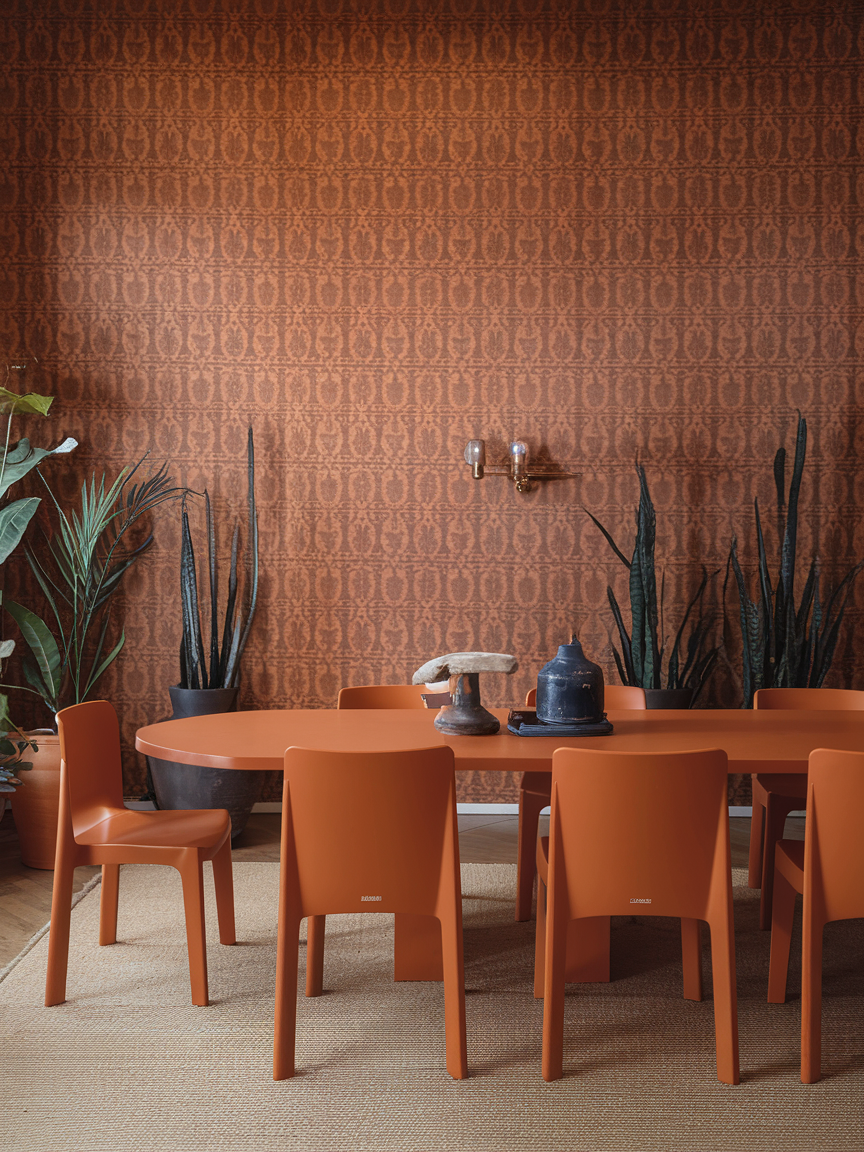
Orange-toned wallpaper adds personality and visual intrigue, transforming plain walls into a design feature. Patterns such as botanical prints, geometric shapes, or subtle textures bring depth and movement to the space. This approach allows you to introduce color and pattern simultaneously without relying on multiple decor elements. Keeping furniture simple ensures the wallpaper remains the focal point. The result is a dining room that feels vibrant, stylish, and thoughtfully designed.
4. Orange Floral Centerpieces
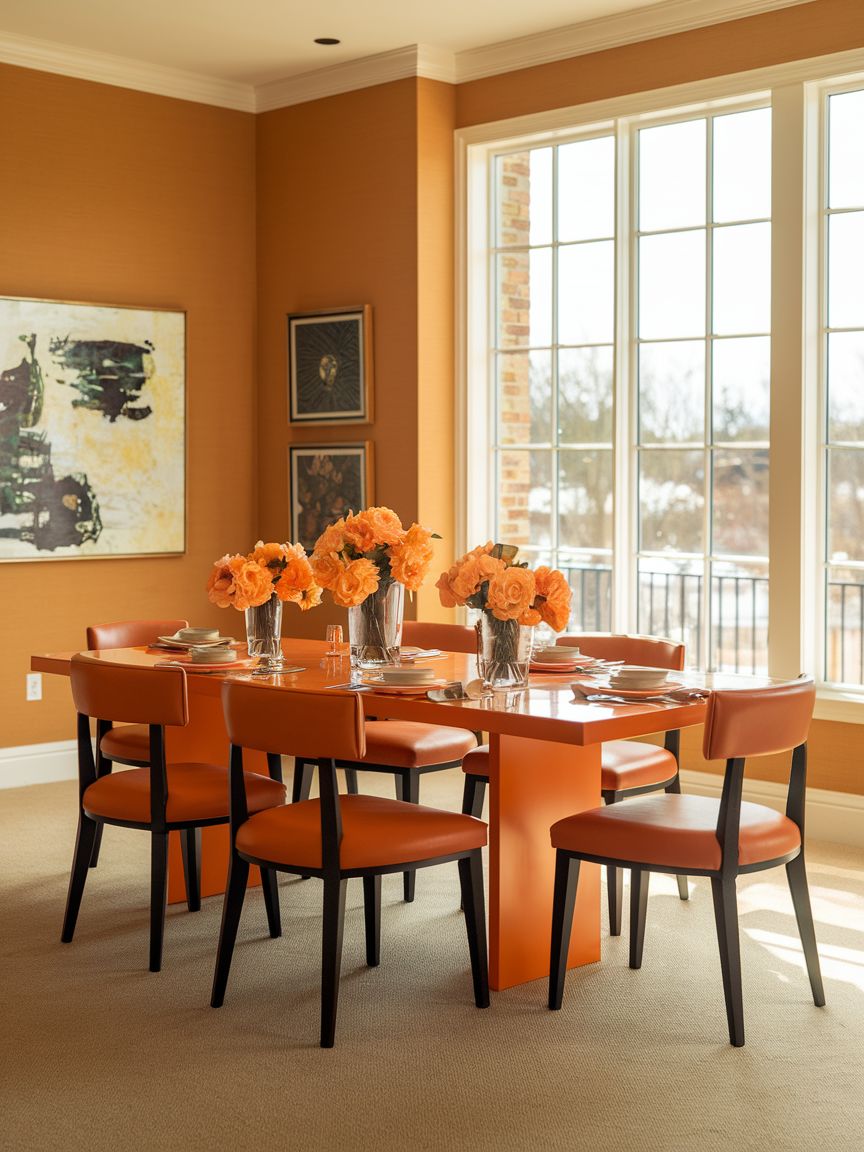
Floral centerpieces in orange hues bring freshness and vibrancy to your dining table. Whether using fresh blooms, dried arrangements, or faux flowers, these pieces add color and texture while creating a welcoming focal point. Seasonal flowers enhance the cozy atmosphere, making the space feel connected to nature. Pairing them with neutral table settings ensures the look remains elegant and not overly busy. This simple addition elevates everyday dining while making special occasions feel even more inviting.
5. Orange Leather Dining Chairs
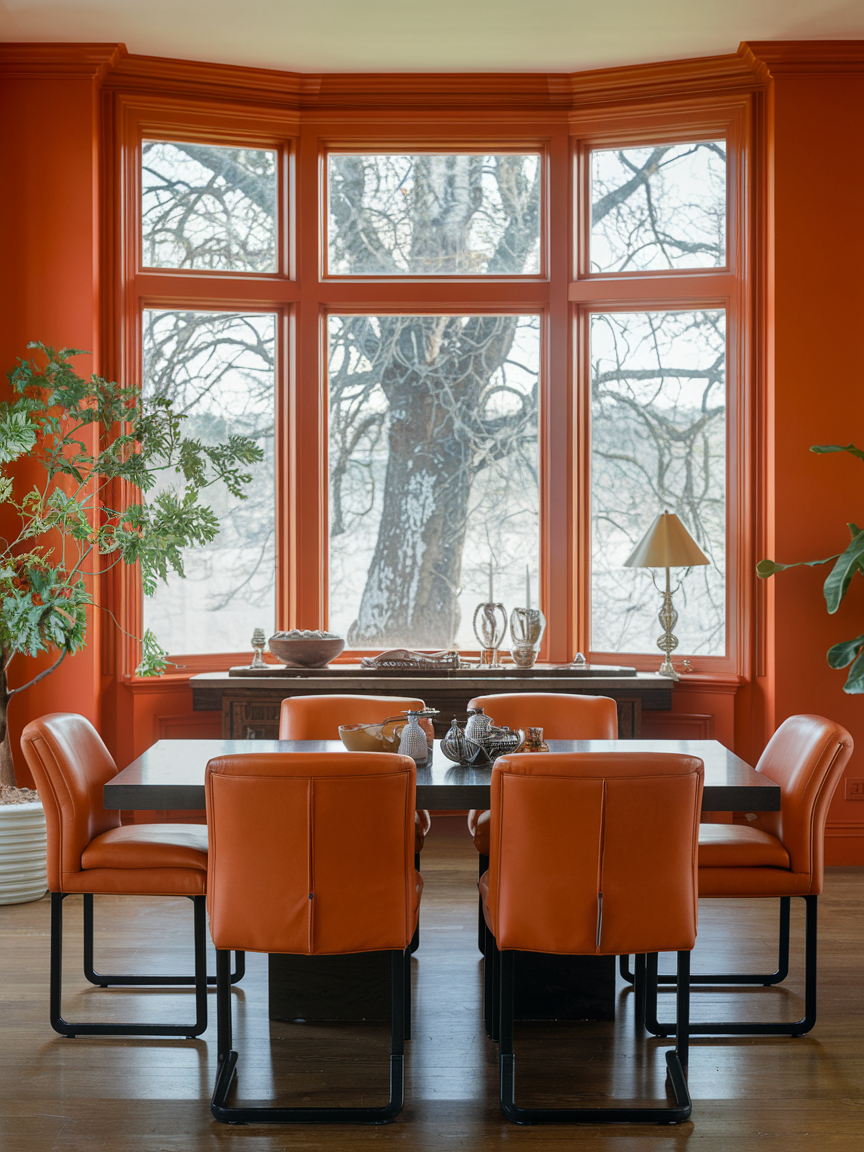
Leather dining chairs in warm orange tones bring a refined sense of luxury while maintaining a welcoming, lived-in feel. The natural texture of leather adds depth and richness that fabric alone often cannot achieve, making the chairs feel substantial and timeless. Shades like tan, caramel, or burnt orange work beautifully with a variety of materials, including dark wood, marble, or matte metal finishes, creating a layered and sophisticated look. Over time, leather develops a unique patina that enhances its character, giving your dining space an evolving charm that feels personal and authentic. To keep the overall design balanced, pair these chairs with neutral table settings and subtle decor accents, allowing their color and texture to stand out without overwhelming the room. This combination creates a dining area that feels both elevated and comfortable, perfect for everyday use as well as special gatherings.
6. Orange Ceramic Decor for Subtle Warmth
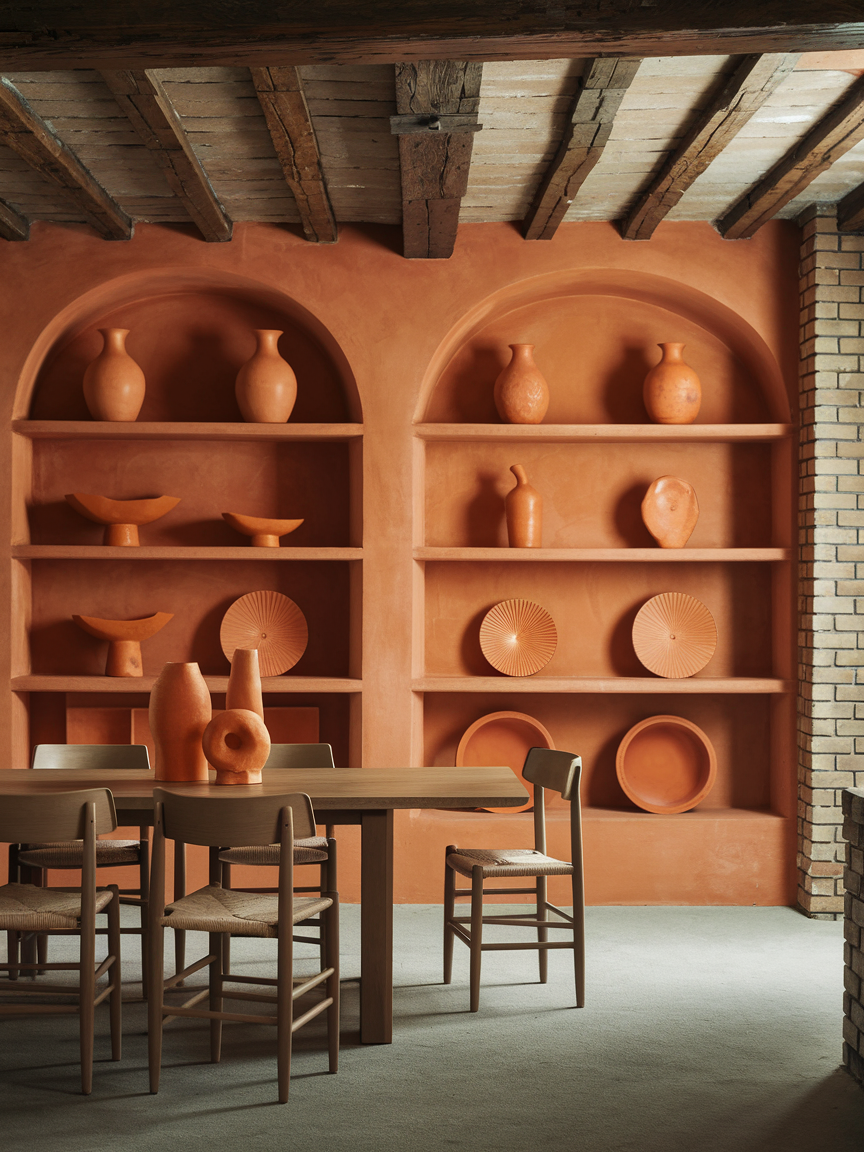
Decorative ceramics in orange hues bring texture, character, and a handcrafted feel to your dining room. Pieces like vases, bowls, and sculptural objects add warmth without requiring large design changes. Their varied finishes (such as matte, glazed, or slightly textured) introduce visual interest while maintaining a cohesive look. Grouping a few items together creates a curated display, while mixing them with neutral tones keeps the arrangement balanced. This layered styling approach makes everyday decor feel intentional, elevating the space with subtle yet impactful details.
7. Pairing Orange with Dark Wood
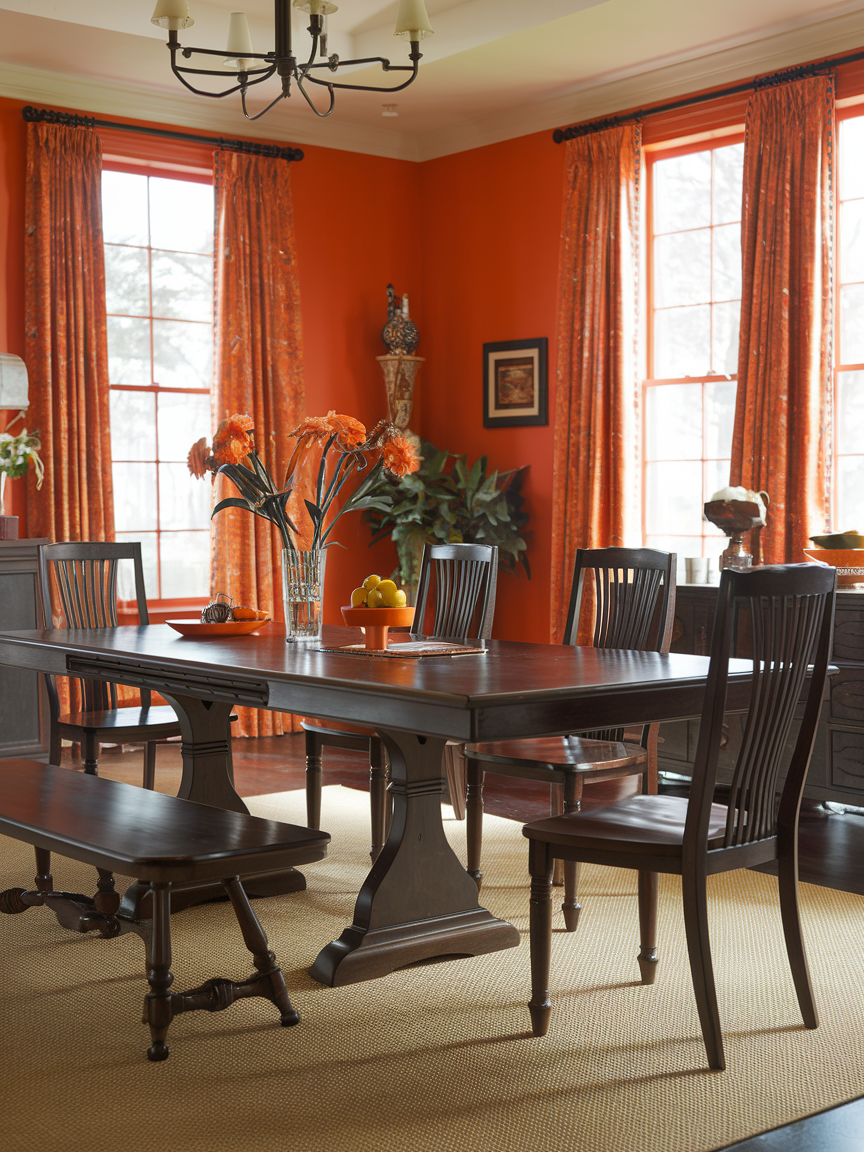
The combination of orange tones and dark wood furniture creates a rich, sophisticated dining room aesthetic. The warmth of orange enhances the depth of darker finishes, resulting in a cozy yet elegant atmosphere. This pairing works particularly well in traditional or transitional spaces, where classic elements meet modern color choices. To avoid the room feeling too heavy, incorporate lighter accents such as neutral upholstery, glass decor, or soft lighting. This contrast adds balance while maintaining the overall warmth and refinement of the space.
8. Muted Orange Wall Paneling
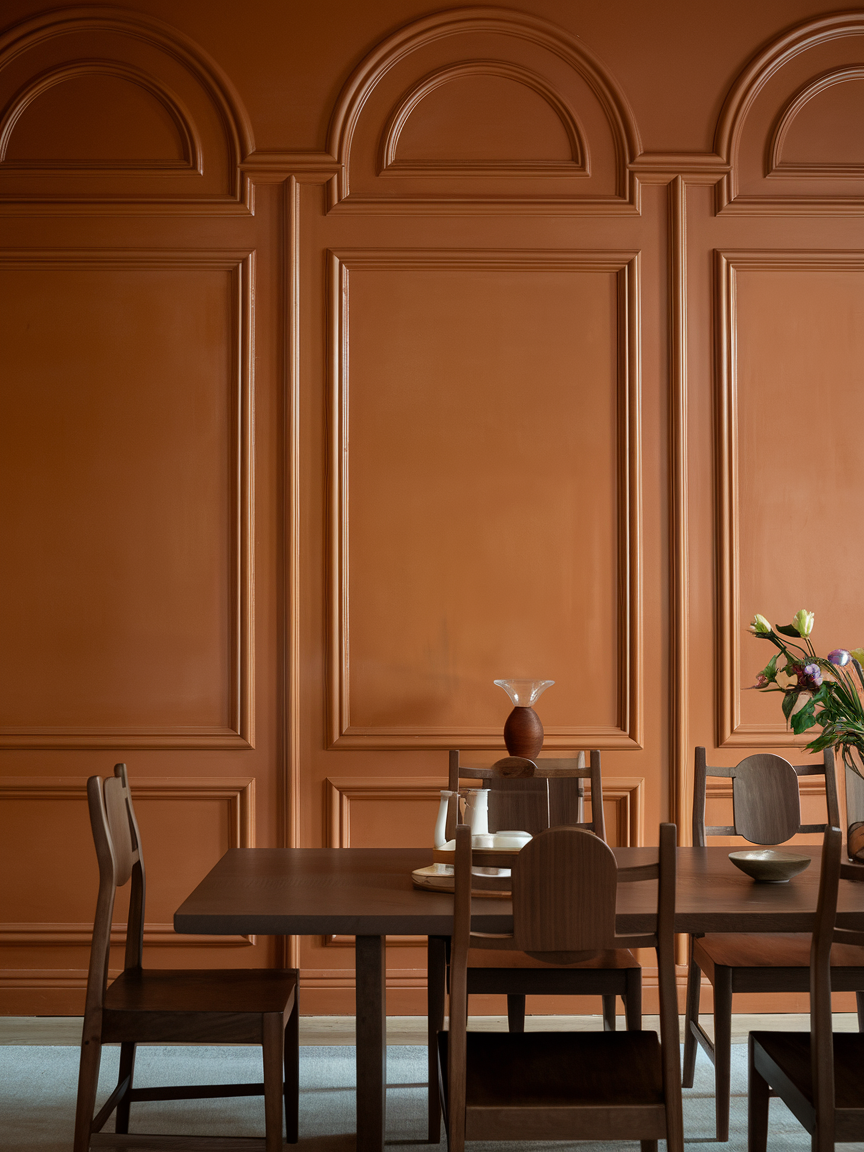
Wall paneling painted in muted orange tones introduces both color and architectural interest to your dining room. The added texture creates depth, making the space feel more layered and thoughtfully designed. Softer shades ensure the look remains elegant rather than overpowering, especially when paired with neutral furniture and minimal decor. Paneling works across various styles, from classic to contemporary, offering timeless appeal. Combined with warm lighting, it creates a cozy backdrop that enhances the dining experience while maintaining a polished aesthetic.
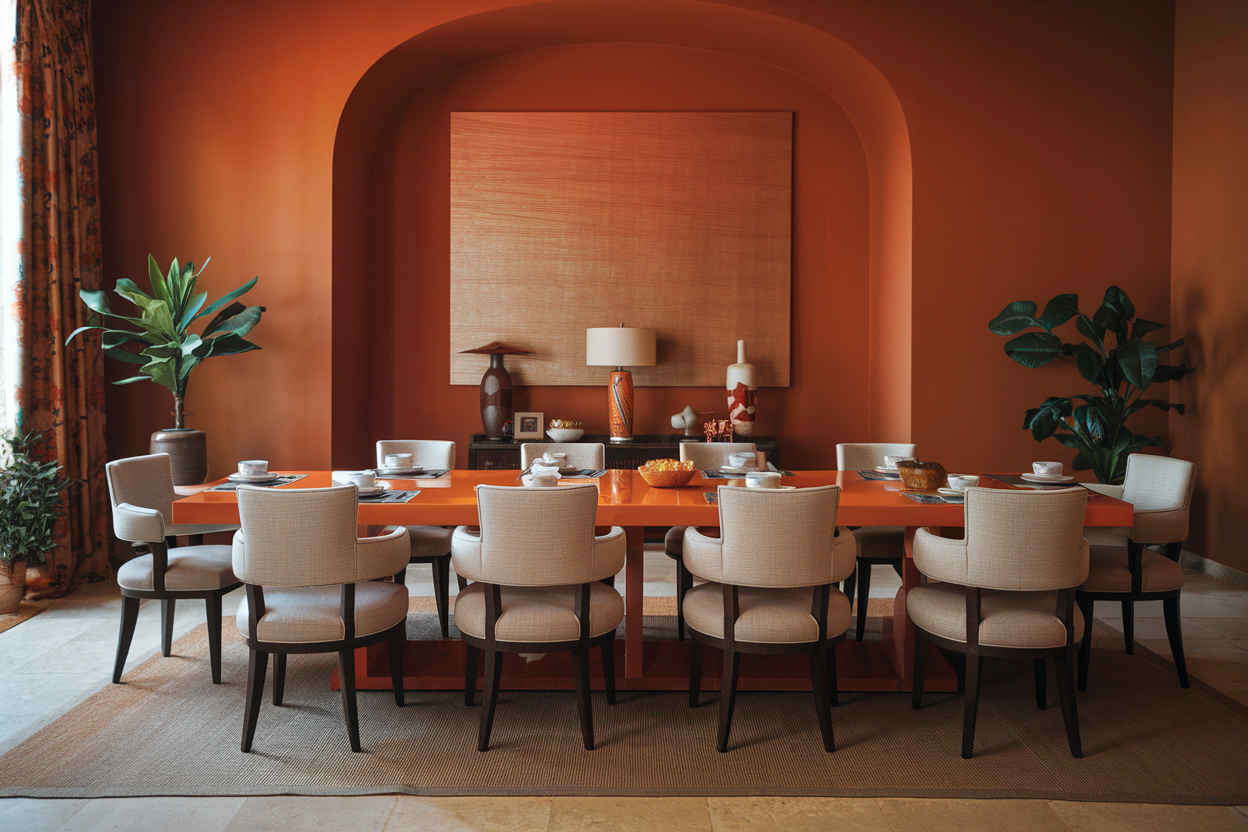
9. Warm Terracotta Walls for a Grounded Base
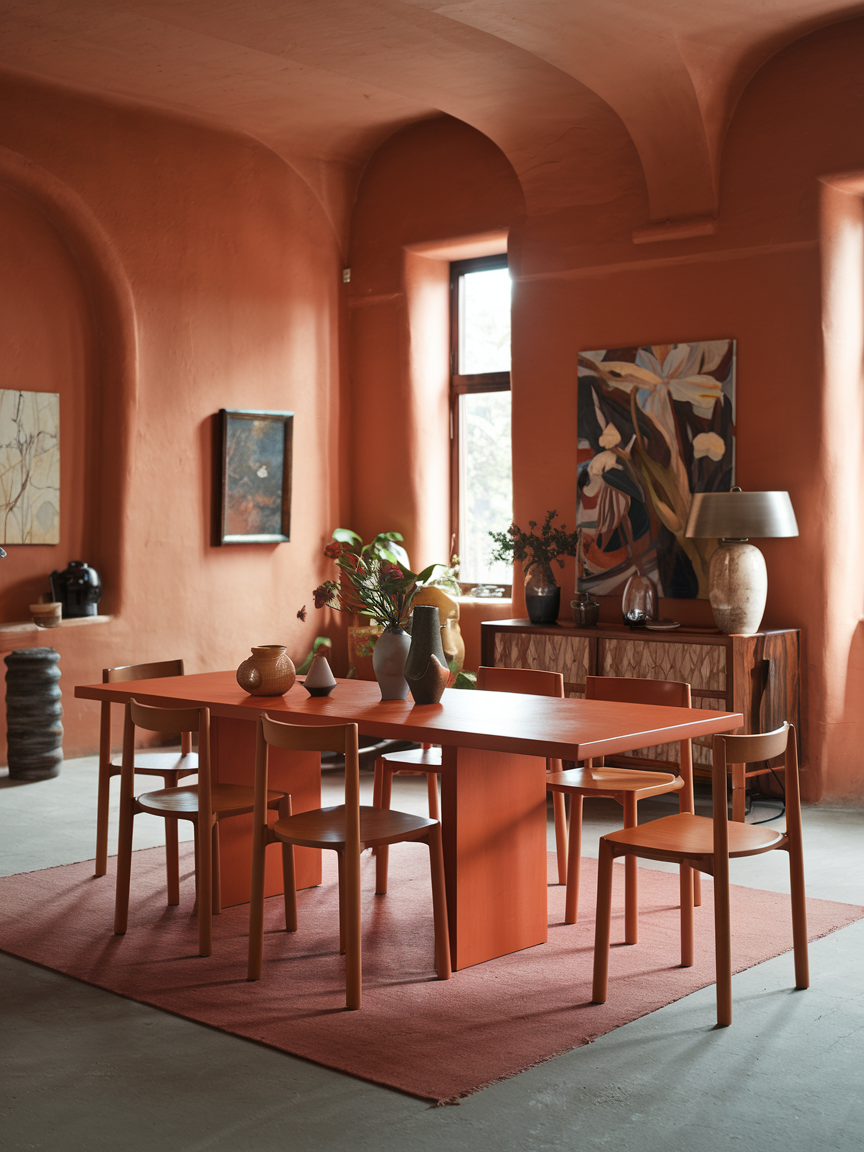
Terracotta walls offer a beautifully balanced way to introduce orange into your dining room, bringing warmth without overwhelming the space. Their earthy undertone creates a calming, grounded atmosphere that feels both timeless and inviting. This shade works especially well when paired with natural materials like wooden dining tables, woven rugs, and linen upholstery, enhancing the organic feel of the room. Throughout the day, terracotta subtly shifts in appearance depending on lighting—soft and muted in daylight, then warm and cocooning in the evening. To maintain a chic aesthetic, keep decor minimal and focus on clean silhouettes, allowing the wall color to act as the main visual statement while supporting a cohesive, elegant design.
10. Burnt Orange Chairs for a Bold Statement
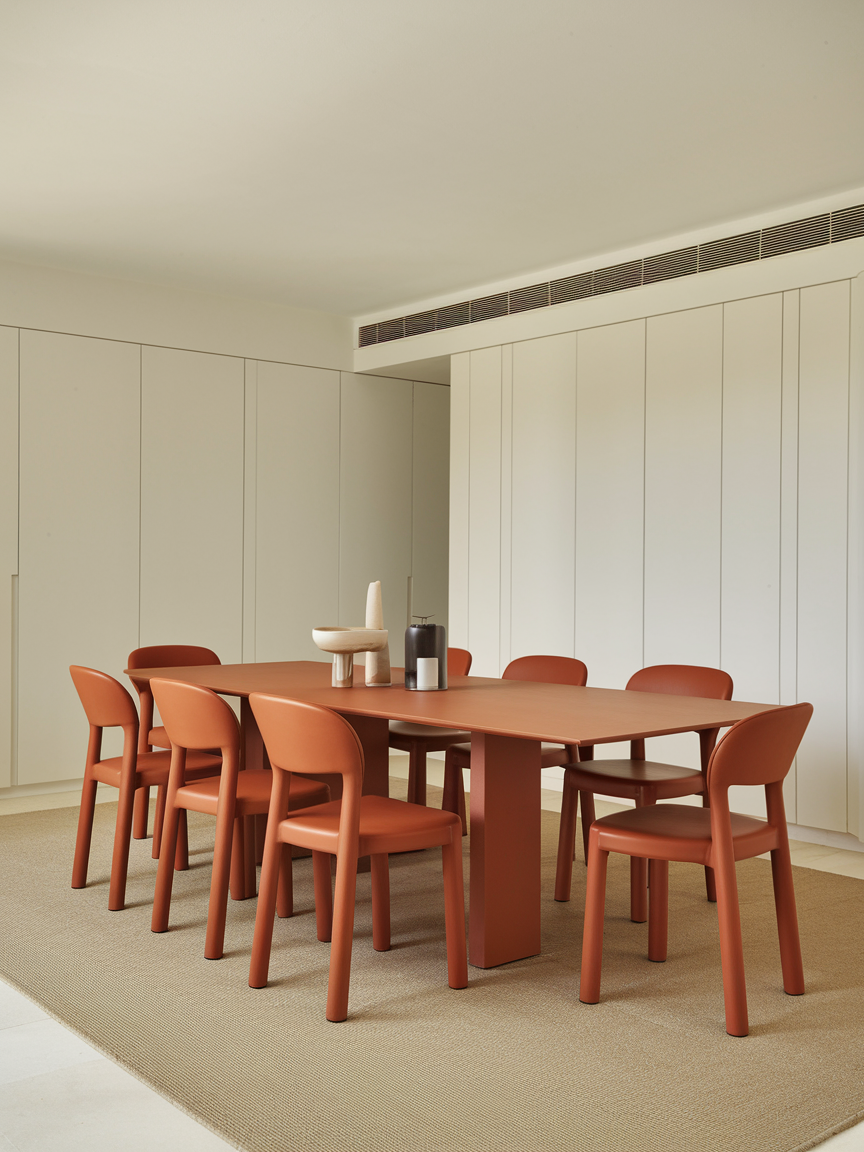
Burnt orange dining chairs instantly introduce richness and depth, making them a striking focal point within a neutral dining space. This deeper variation of orange feels sophisticated rather than loud, especially when paired with materials like dark wood, marble, or matte black finishes. Upholstered chairs enhance comfort while adding texture, making long meals feel more relaxed and enjoyable. To create a harmonious look, repeat the burnt orange tone in subtle ways—through ceramics, artwork, or textiles—so the color feels intentional rather than isolated. This approach ensures the chairs stand out while still blending seamlessly into the overall design, resulting in a space that feels curated, stylish, and thoughtfully composed.
11. Balancing Orange with Neutral Tones
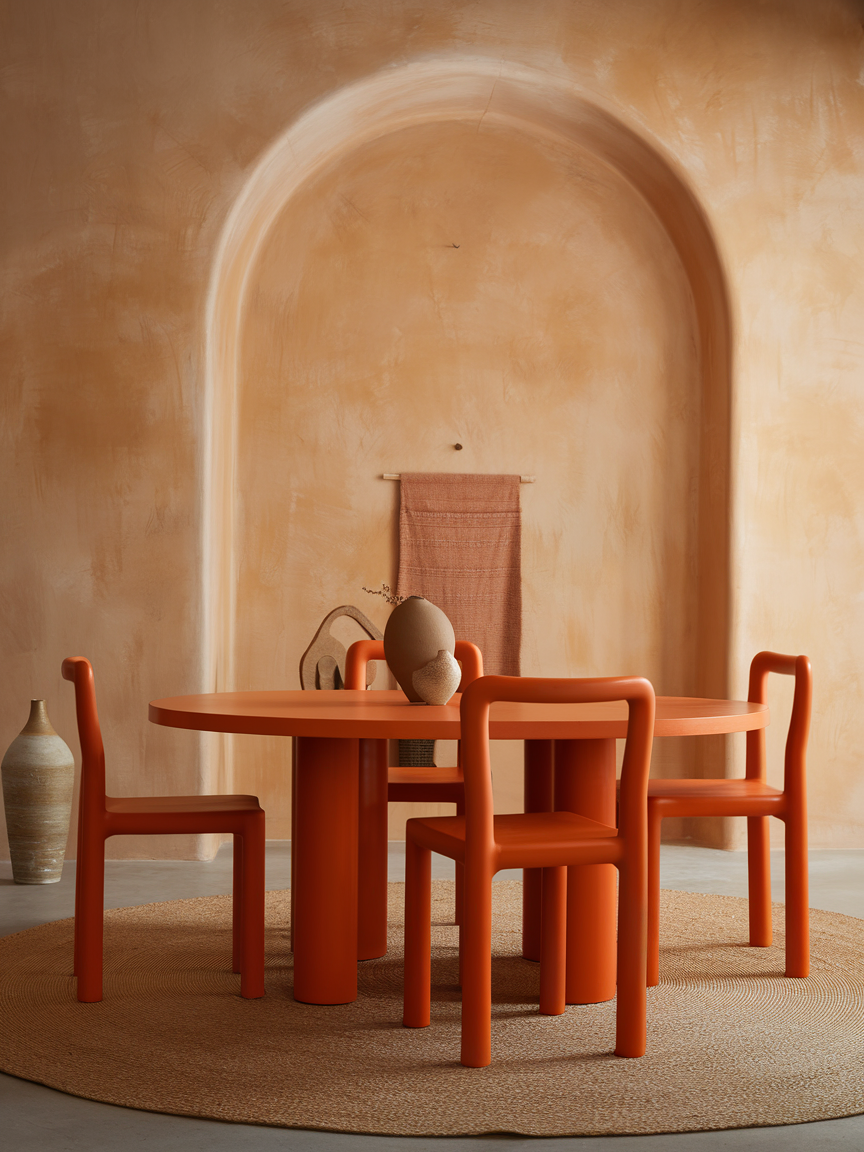
Combining orange with neutral shades like beige, cream, or soft gray is one of the most effective ways to create a cozy yet refined dining room. Neutrals provide a calming backdrop that allows orange accents to shine without overwhelming the space. This balance is especially beneficial in smaller dining areas, where too much color can feel heavy or visually crowded. Layering textures, such as soft fabrics, natural wood, and matte ceramics, adds dimension while keeping the palette cohesive. The result is a dining room that feels warm, inviting, and versatile, allowing you to update accessories over time without needing a full redesign.
12. Textured Orange Rugs for Warmth Underfoot
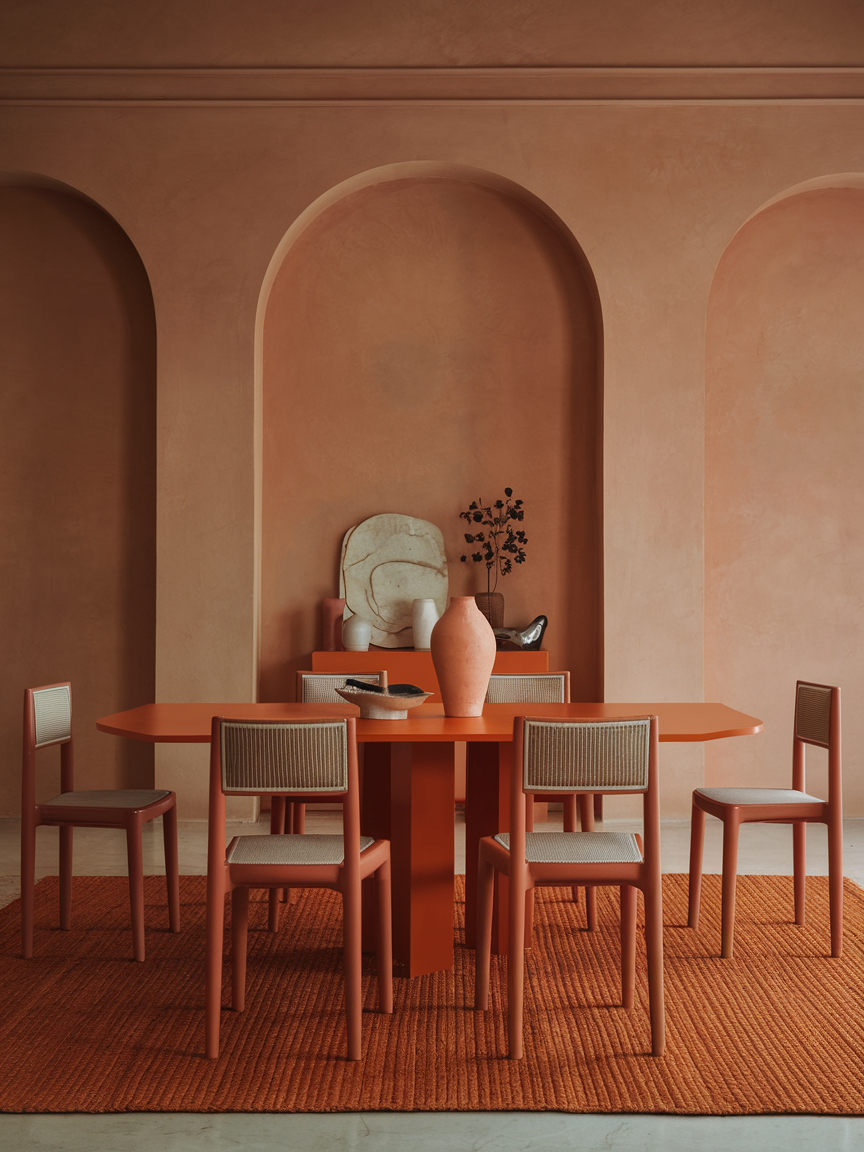
An orange-toned rug beneath your dining table does more than just add color, it anchors the entire space and creates a sense of comfort and structure. Choosing a textured or patterned rug, such as woven or slightly distressed designs, adds visual interest and depth without overpowering the room. Earthy shades like rust or clay are especially practical, as they disguise wear while maintaining a stylish appearance. In open-concept homes, a rug helps define the dining zone, making it feel intentional and cozy. When paired with simple furniture and neutral surroundings, the rug becomes a subtle statement piece that enhances both function and style.
13. A Refined Orange Accent Wall
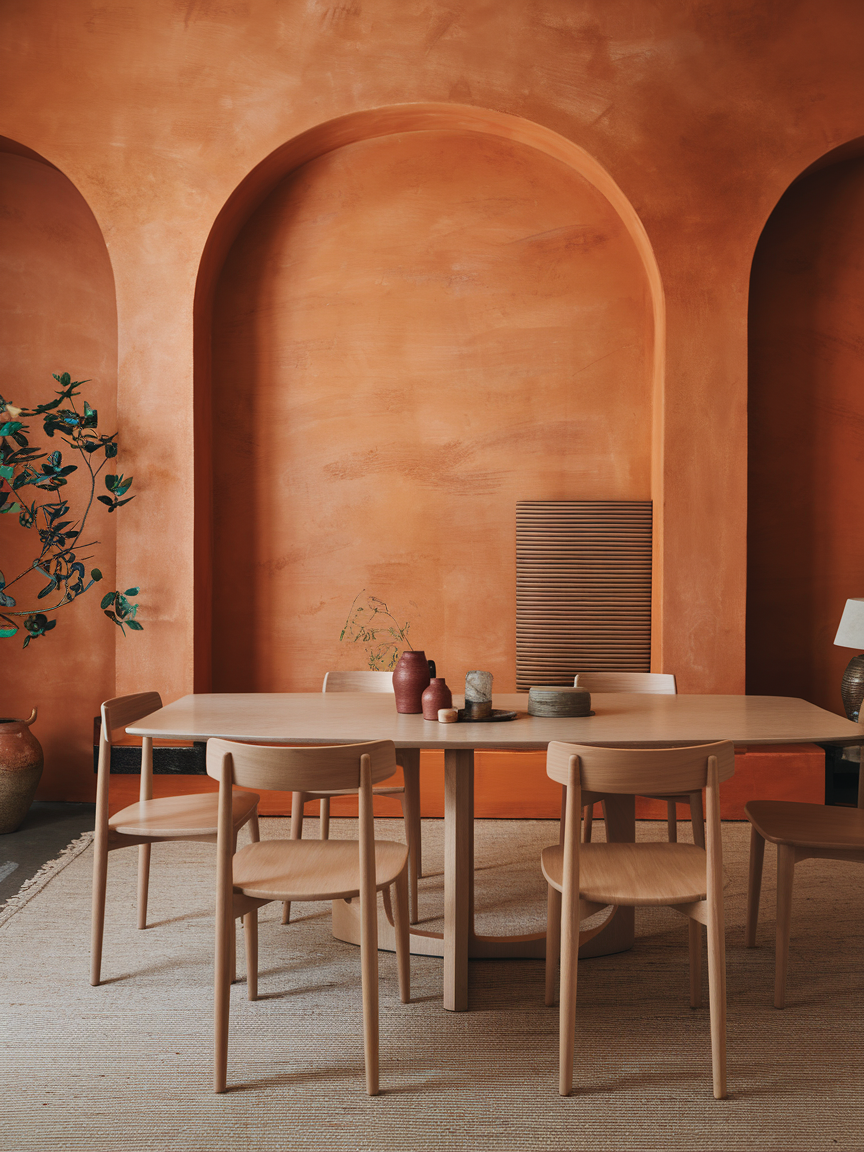
An orange accent wall provides a bold yet controlled way to introduce color into your dining room. Opting for a muted or earthy shade ensures the look remains sophisticated rather than overwhelming. Placing the accent wall behind the dining table or a sideboard helps anchor the space visually, creating a natural focal point. To maintain balance, keep surrounding walls neutral and decor understated, allowing the color to stand out without competing elements. This approach adds depth and warmth while preserving a clean, polished aesthetic that feels both modern and inviting.
14. Upholstered Orange Dining Benches
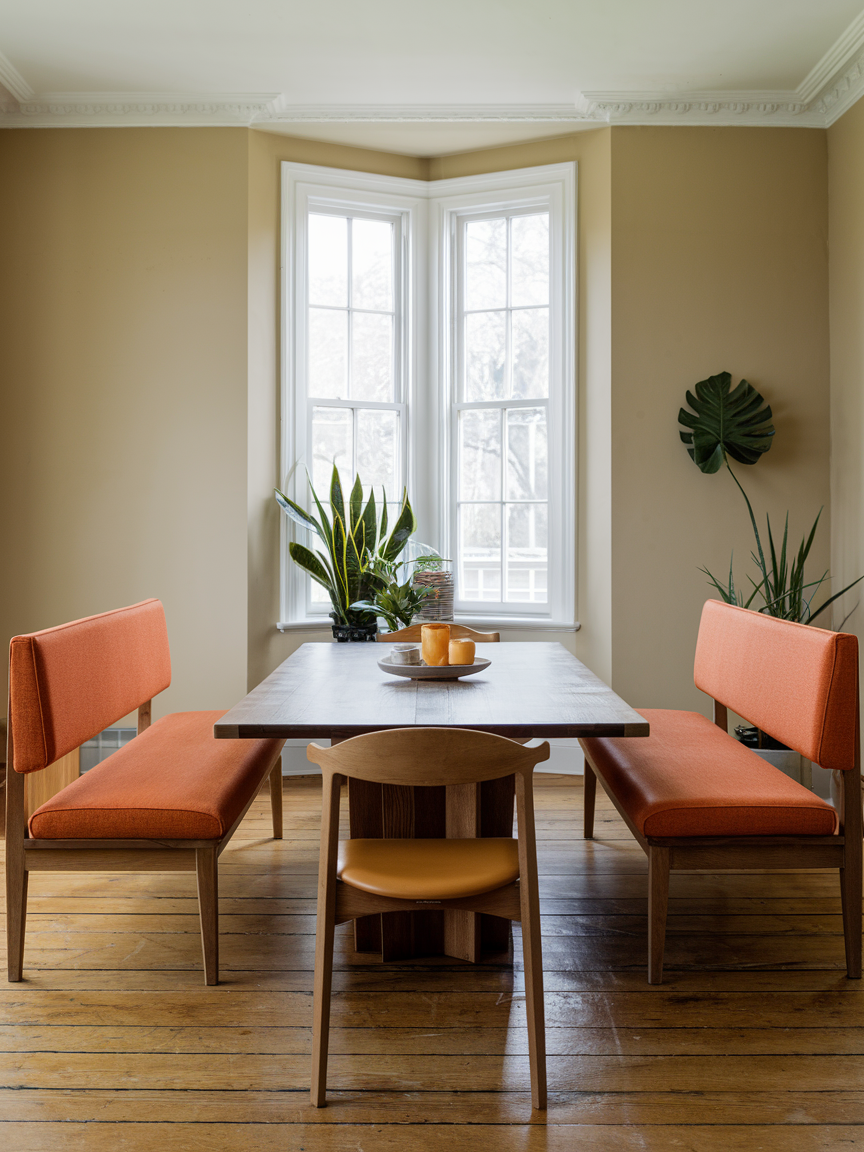
An upholstered bench in an orange tone adds a relaxed and welcoming element to your dining room. It softens the overall look while introducing color in a comfortable and approachable way. Benches encourage a more casual seating arrangement, perfect for family meals or gatherings. Choosing high-quality fabrics with subtle textures enhances the design while ensuring durability. Paired with neutral chairs or a wooden table, the bench creates a balanced composition that feels cozy, functional, and effortlessly stylish.
15. Layering Multiple Orange Tones
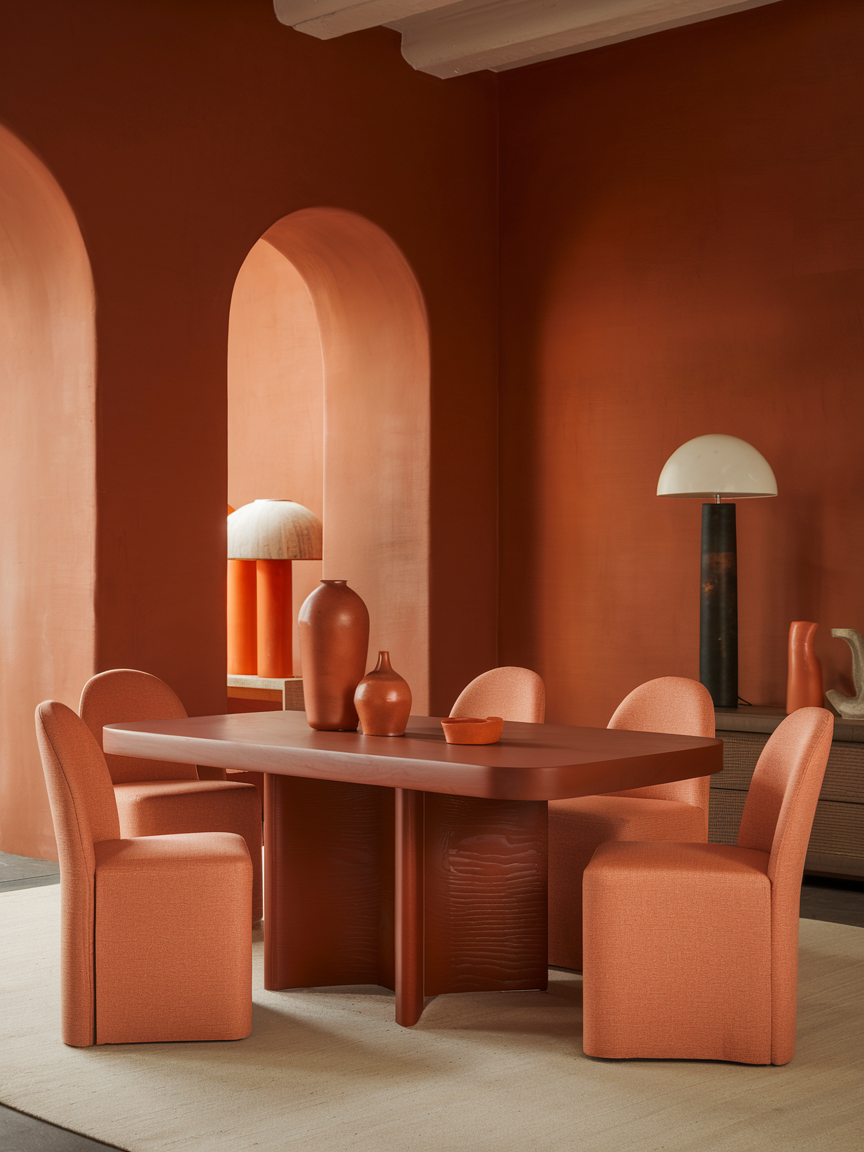
Layering different shades of orange, such as peach, terracotta, rust, and burnt orange, creates a rich and dynamic visual effect. This approach prevents the space from feeling flat while maintaining a cohesive palette. Incorporating these tones through various materials like textiles, ceramics, and artwork adds depth and interest. Neutral elements help break up the color, ensuring the room feels balanced rather than overwhelming. This technique is especially effective for creating a warm, inviting dining room with a curated, designer feel.
16. Orange Paired with Brass Accents
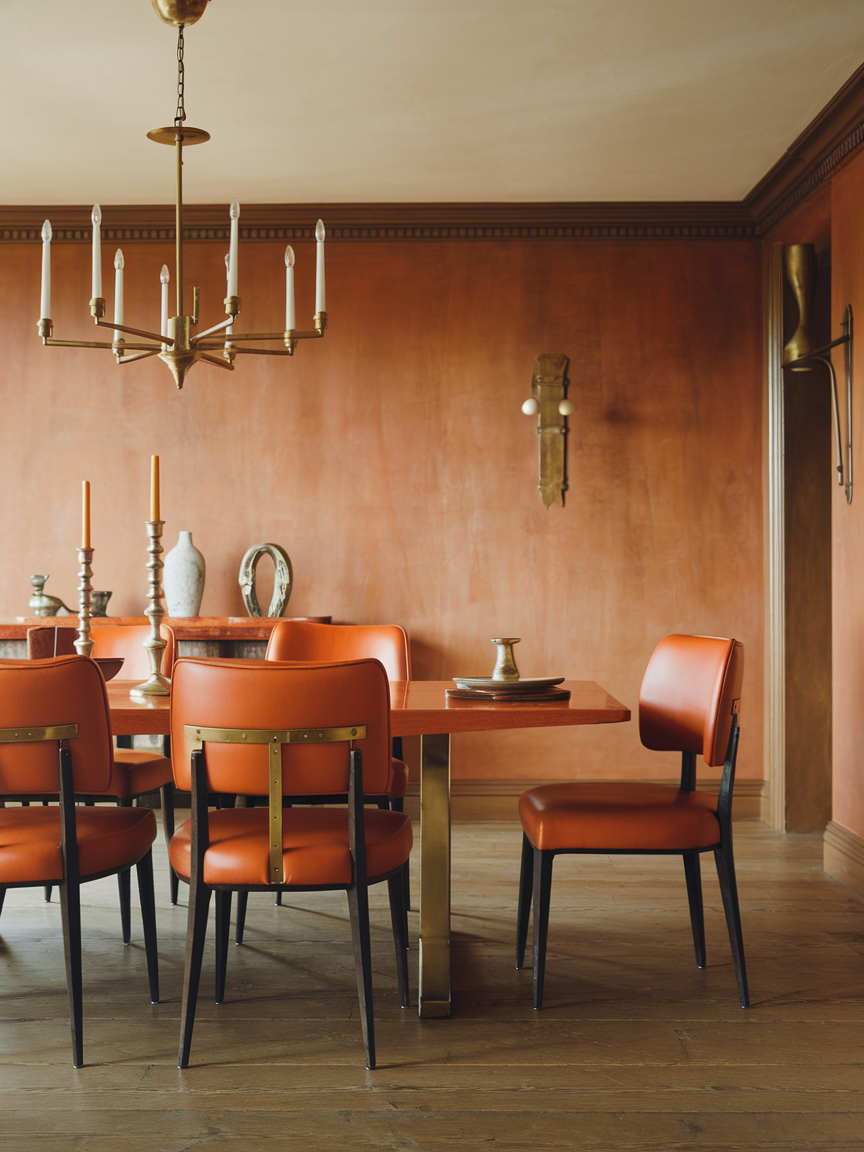
Pairing orange with brass accents introduces a touch of luxury and refinement to the dining room. Brass elements, such as lighting fixtures, hardware, or decor, reflect warm tones and enhance the richness of orange hues. The metallic finish adds contrast and visual interest without overpowering the space. To keep the look balanced, limit brass to a few key features, allowing the orange elements to remain the primary source of warmth. This combination creates a polished and timeless aesthetic.
17. Subtle Orange Wall Art
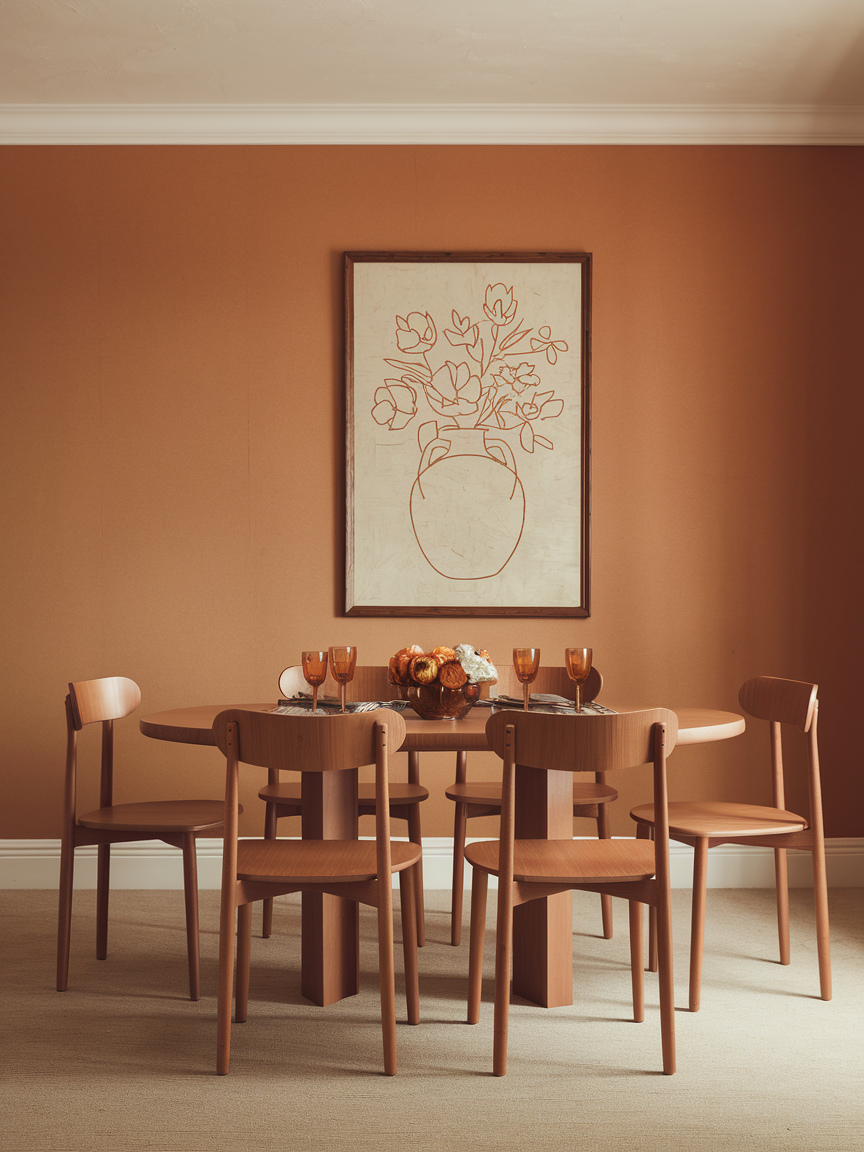
Wall art featuring subtle hints of orange offers an elegant way to introduce warmth without dominating the overall design. Pieces with soft brushstrokes, abstract compositions, or muted botanical elements allow the color to blend seamlessly into the space while still adding visual interest. This approach is ideal for those who prefer a more understated aesthetic but still want to incorporate the inviting energy of orange. Carefully chosen frames, such as thin black lines, warm wood, or brushed metallic finishes, can enhance the artwork while tying it into the rest of the decor. Placement is equally important, positioning artwork above a sideboard or along a main wall helps anchor the room and create a cohesive focal point. By layering subtle tones and refined details, this method brings a sense of quiet sophistication that enhances the dining room without overwhelming its calm, curated atmosphere.
18. Layered Warm Lighting
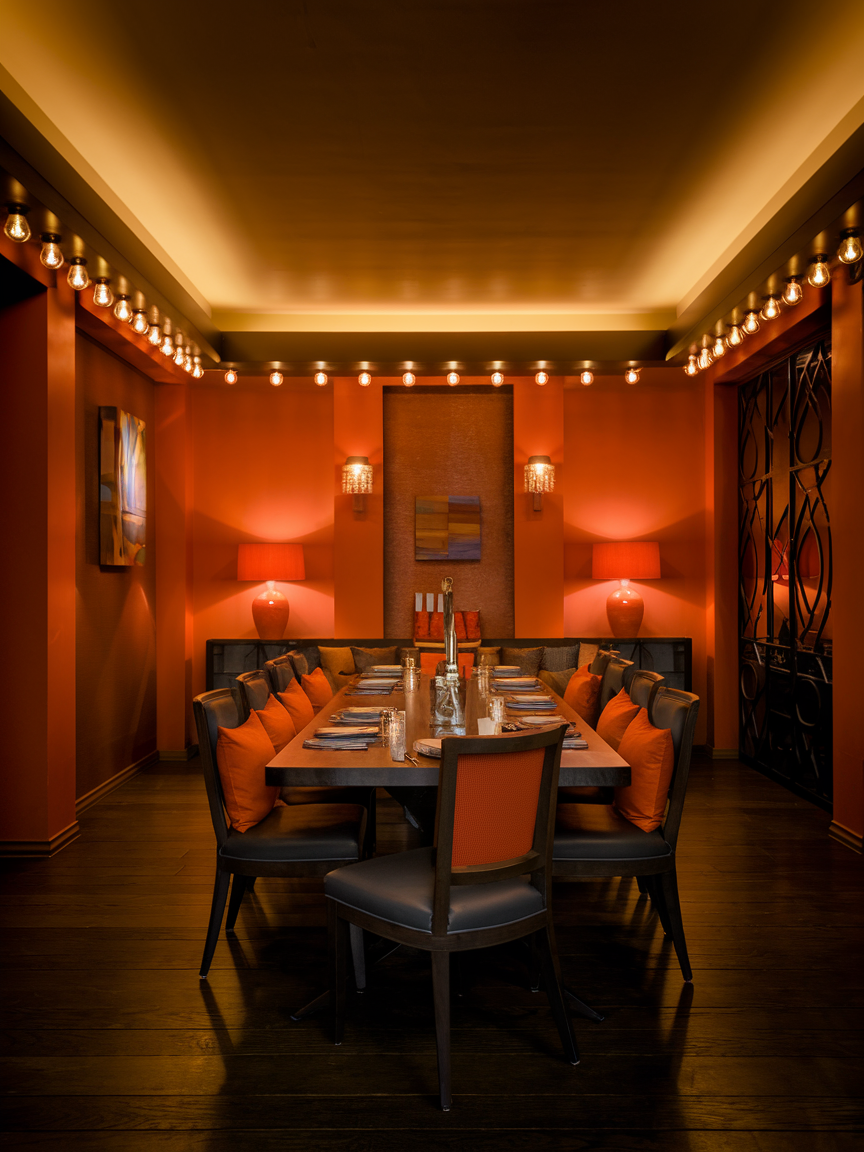
Layered lighting is essential for bringing out the full richness of orange tones while creating a cozy and adaptable dining environment. By combining multiple light sources, such as overhead pendants, wall sconces, and table lamps, you can build depth and dimension throughout the space. Warm-toned bulbs are particularly effective, as they enhance the natural warmth of orange hues, making the room feel more inviting and intimate, especially during evening meals. Dimmers add another level of flexibility, allowing you to shift from bright, functional lighting during the day to a softer, more ambient glow at night. Thoughtful placement ensures that each area of the room feels intentional, highlighting key features like artwork, furniture, or architectural details. When done well, layered lighting not only improves functionality but also elevates the overall mood, transforming the dining room into a space that feels both elegant and welcoming at any time of day.
19. Displaying Orange Tableware
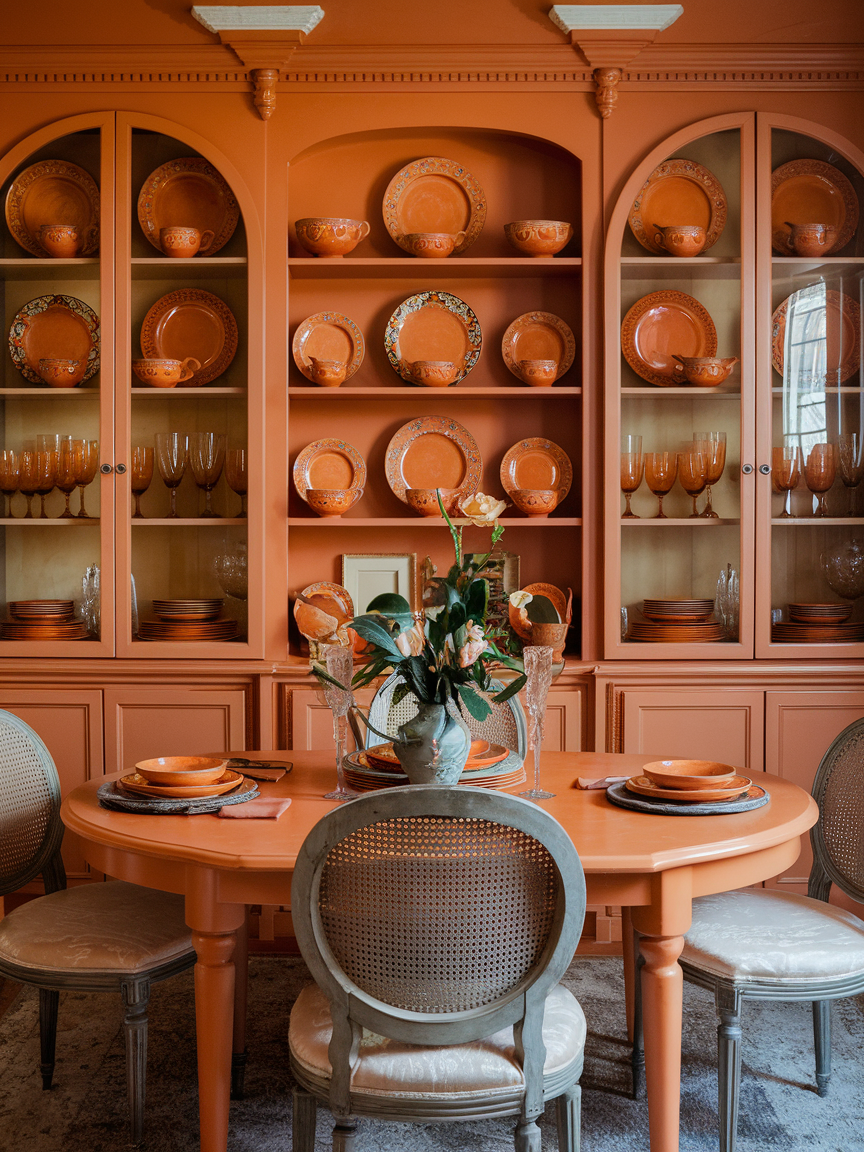
Displaying orange tableware as part of your decor is a creative way to combine functionality with visual appeal. Items such as plates, bowls, mugs, and glassware in warm tones can be arranged on open shelves, inside glass-front cabinets, or even styled directly on a sideboard to create a curated, lived-in look. Mixing different shades of orange with neutral pieces helps maintain balance while adding depth and variety to the display. The key is thoughtful arrangement—grouping items by color, size, or shape creates a cohesive composition that feels intentional rather than cluttered. This approach also allows you to showcase personal style, whether through handmade ceramics, vintage finds, or modern designs. Beyond aesthetics, having tableware on display makes it easily accessible for everyday use, reinforcing the idea that beautiful objects can also be practical. The result is a dining space that feels warm, personalized, and effortlessly stylish.
20. Minimal Orange Accents in Modern Spaces
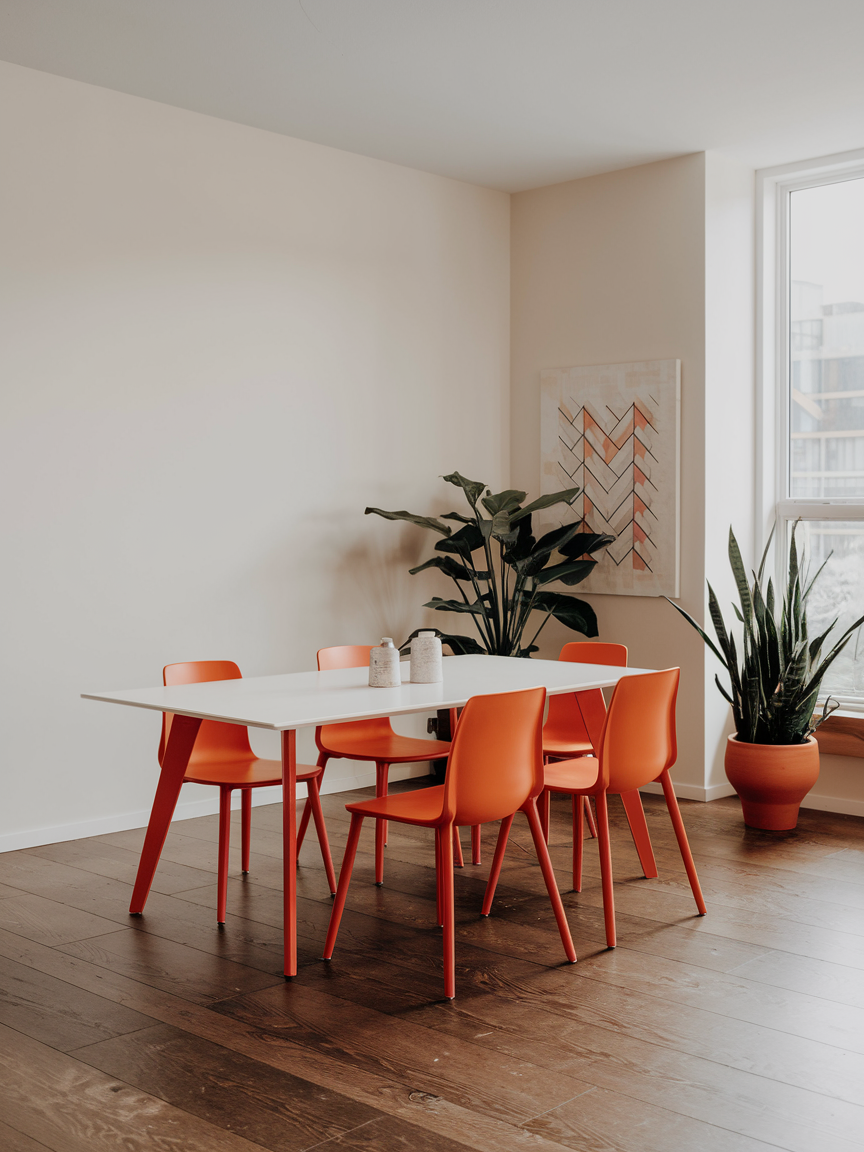
In modern dining rooms, a minimalist approach to orange can create a strong yet refined impact. A single statement piece, such as a chair, artwork, or decor item, introduces warmth without disrupting the clean lines of the space. Neutral tones and sleek furniture provide the perfect backdrop, allowing the accent to stand out. Thoughtful placement ensures each element feels intentional, resulting in a design that is both simple and visually striking.
21. Orange and Green for Natural Harmony
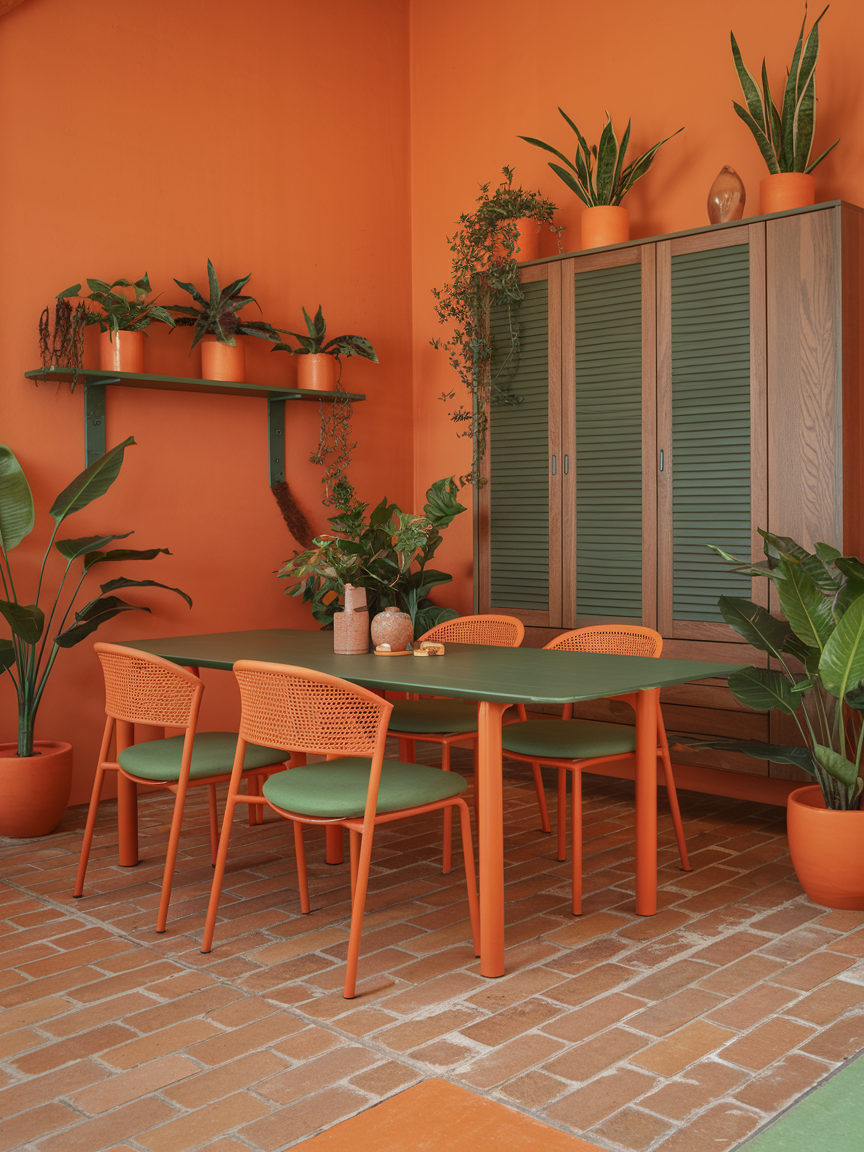
Combining orange tones with greenery creates a balanced and refreshing dining environment. The warmth of orange contrasts beautifully with the coolness of green, resulting in a space that feels lively yet calming. Plants add texture and movement, softening the overall look while enhancing the natural aesthetic. Keeping planters simple ensures the focus remains on the color combination. This pairing brings a sense of vitality and connection to nature into your dining room.
22. Rust-Colored Curtains for Softness
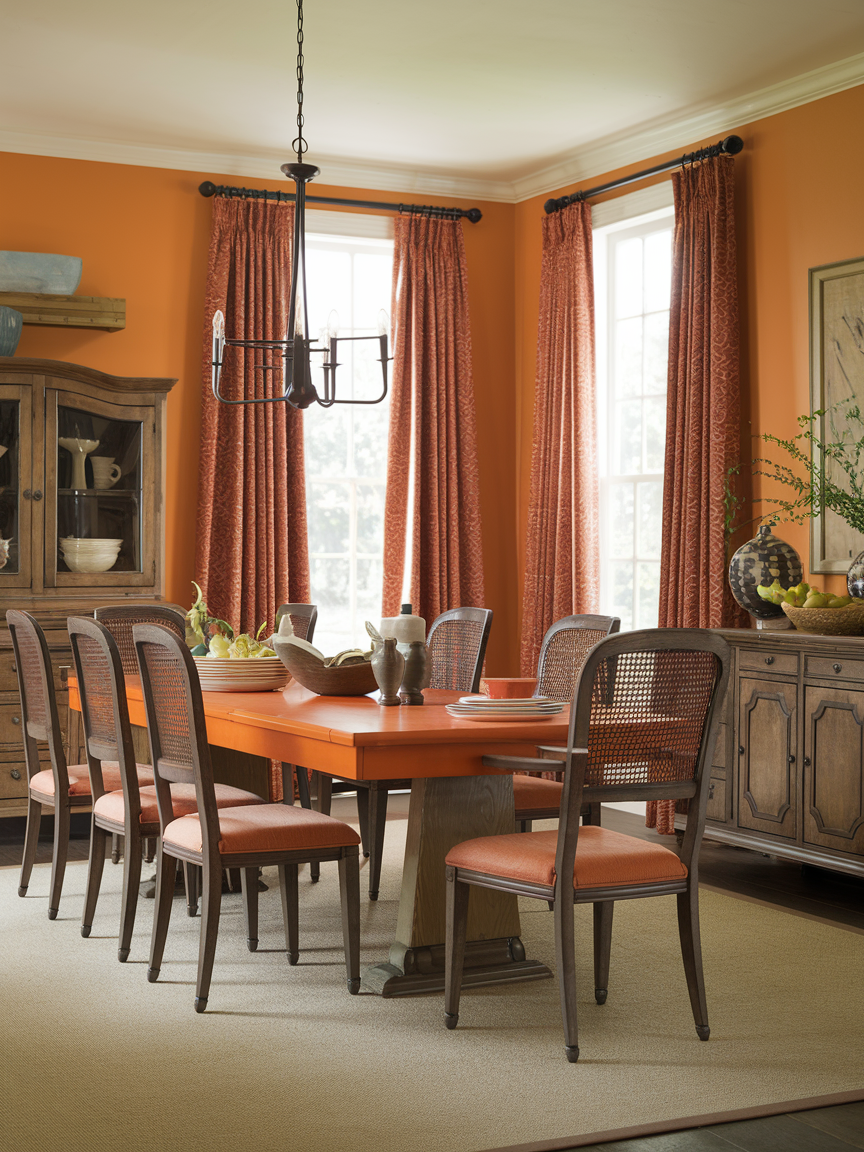
Curtains in rust or burnt orange tones add a soft, elegant layer to your dining room. They frame windows beautifully while contributing to the overall warmth of the space. Fabric curtains also improve acoustics, making conversations feel more intimate. Choosing the right material—lightweight for an airy feel or heavier for a formal look—allows you to tailor the ambiance. Paired with neutral decor, they enhance comfort without overwhelming the room.
23. Statement Sideboards with Orange Accents
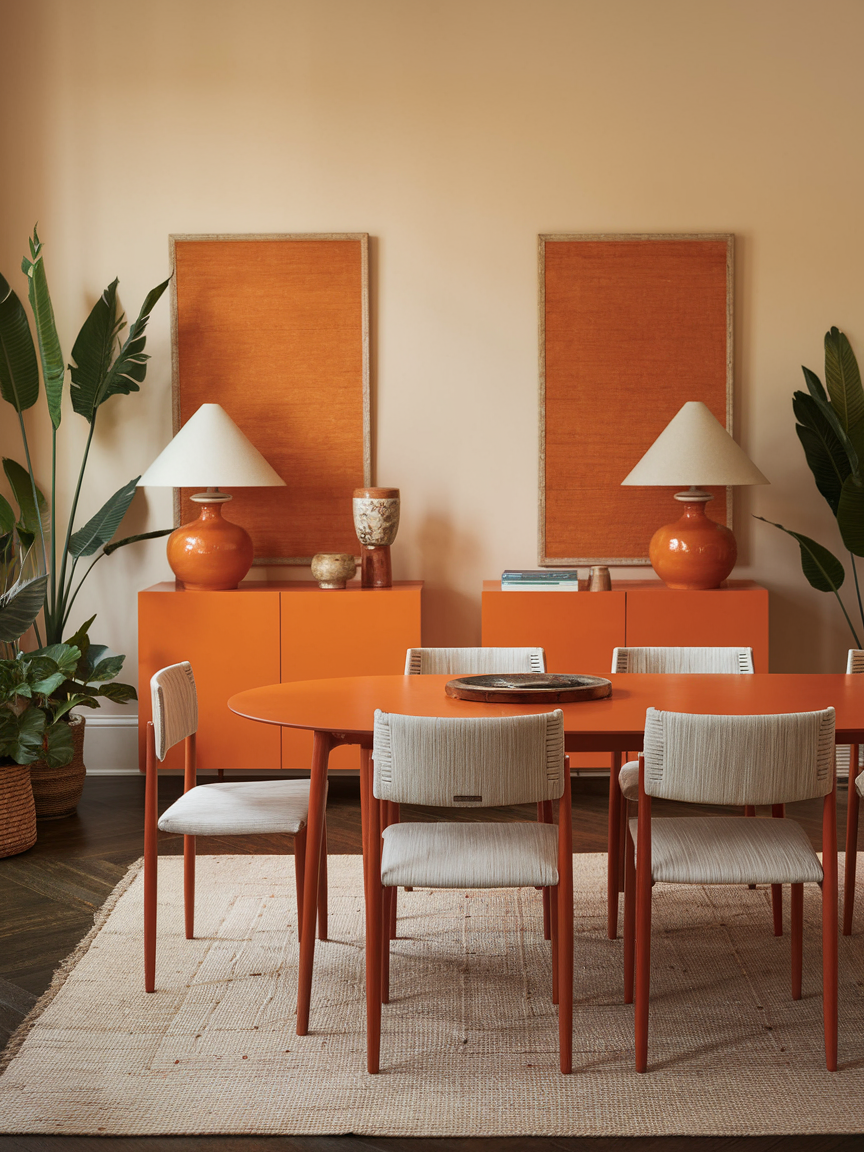
A sideboard featuring orange tones can serve as both a practical storage solution and a design focal point. Whether painted in a muted shade or styled with orange decor, it adds personality and warmth. Sideboards provide space for tableware and decorative items, helping keep the dining area organized. Keeping surrounding elements simple ensures the piece stands out without dominating the space.
* Now it’s your turn to bring these ideas into your own dining room and explore the warmth and versatility of orange. By layering textures, balancing tones, and thoughtfully placing accents, you can create a space that feels both cozy and refined—perfect for everyday living and memorable gatherings alike.