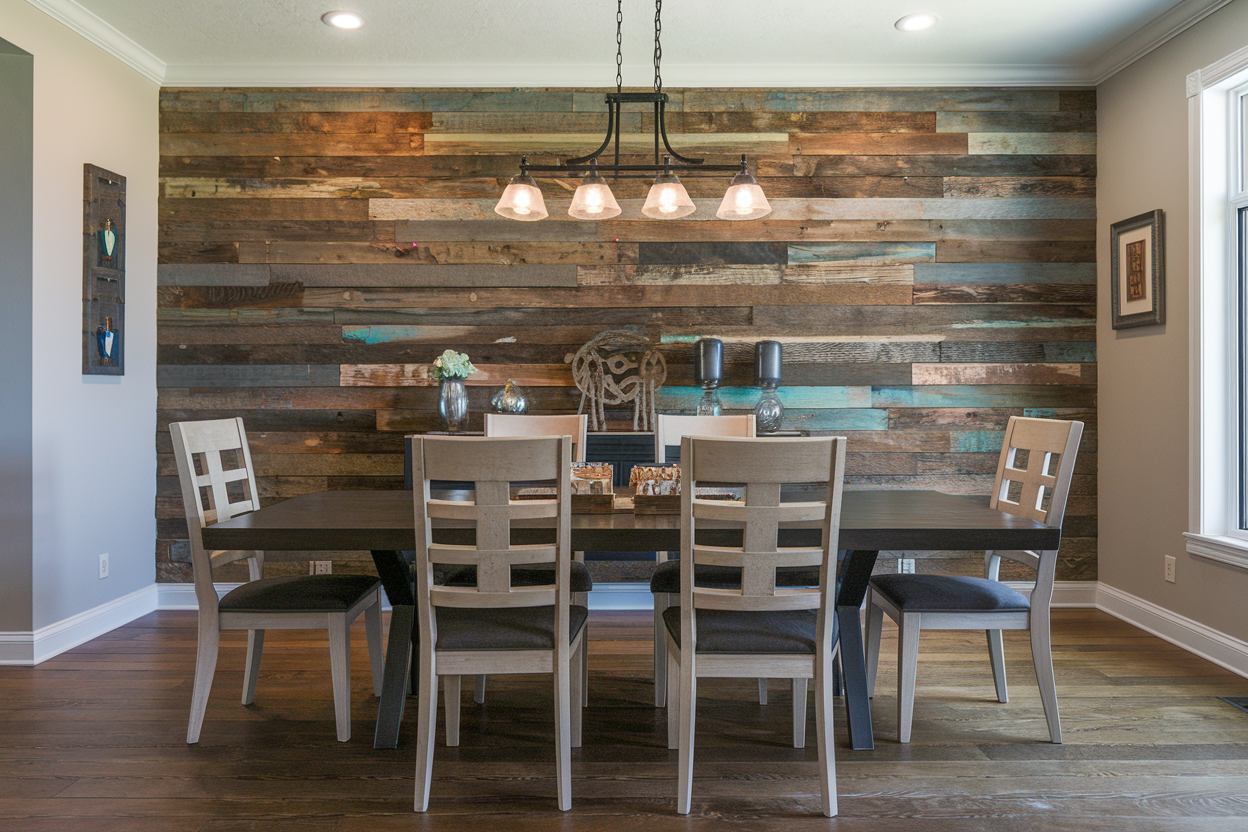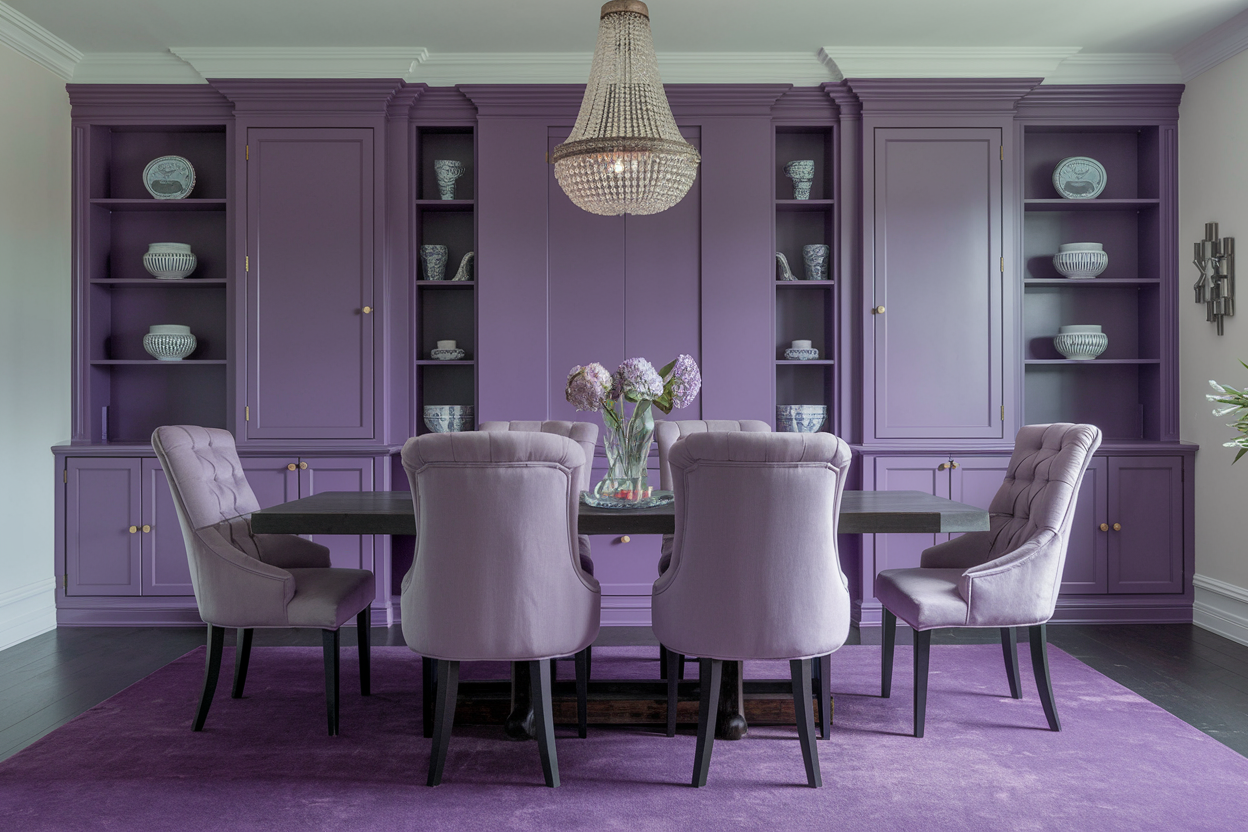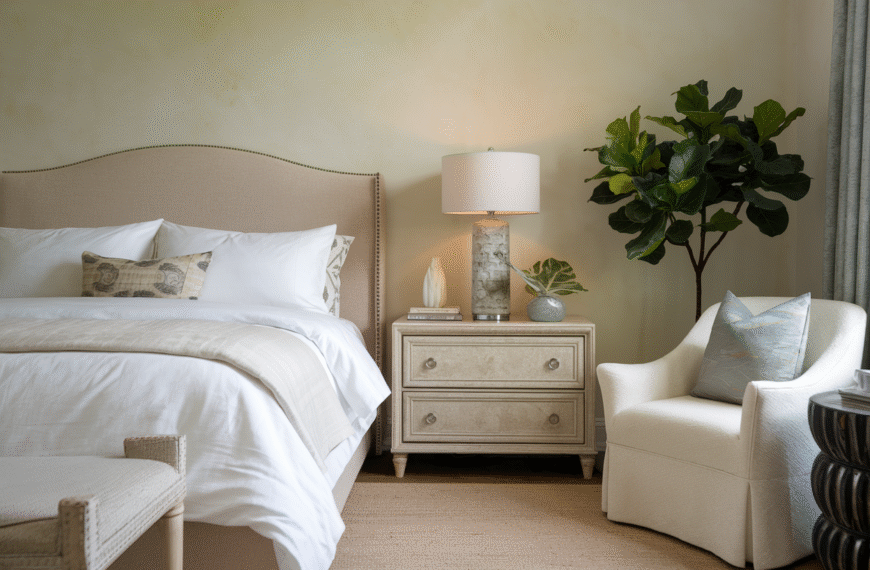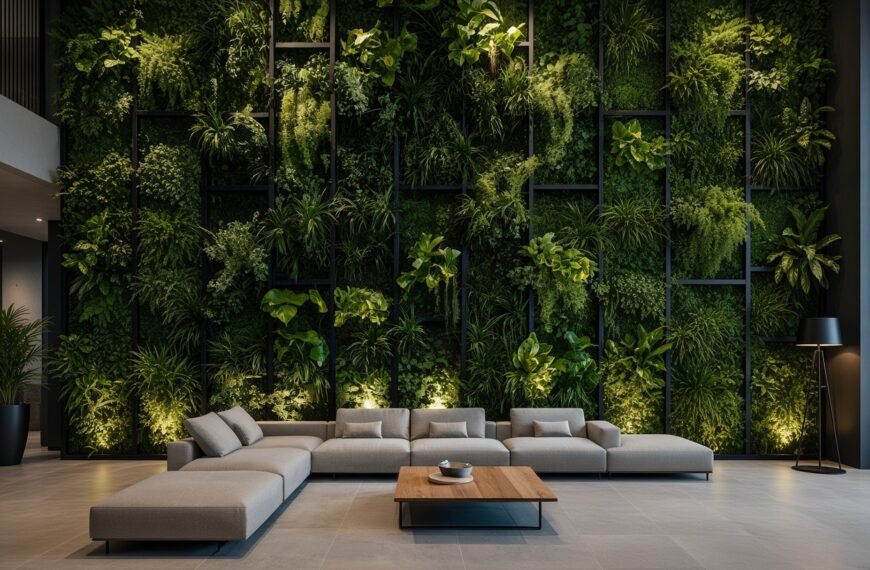
Kitchen accent walls are one of the easiest and most effective ways to refresh the heart of your home without committing to a complete renovation. A well-designed accent wall can instantly add personality, texture, and visual depth, transforming an ordinary kitchen into a stylish and inviting space. Bold paint colors, patterned tile, natural wood, exposed brick, and creative wall treatments all have the power to create a stunning focal point that enhances the entire room.
A thoughtfully planned kitchen accent wall blends beauty with practicality, ensuring the design complements cabinetry, countertops, and overall kitchen style. Texture and material choices play an important role in shaping the atmosphere, while lighting helps highlight details and create dimension throughout the space. Subtle modern finishes can create a clean and sophisticated look, while more dramatic patterns and colors bring energy and character into the kitchen.
This collection showcases accent wall ideas designed to give kitchens a fresh, updated appearance full of style and personality. Let’s explore these eye-catching kitchen accent wall ideas and discover how to give your kitchen a fresh new look filled with charm, creativity, and modern appeal!
1. Create Interest with Two-Tone Pain
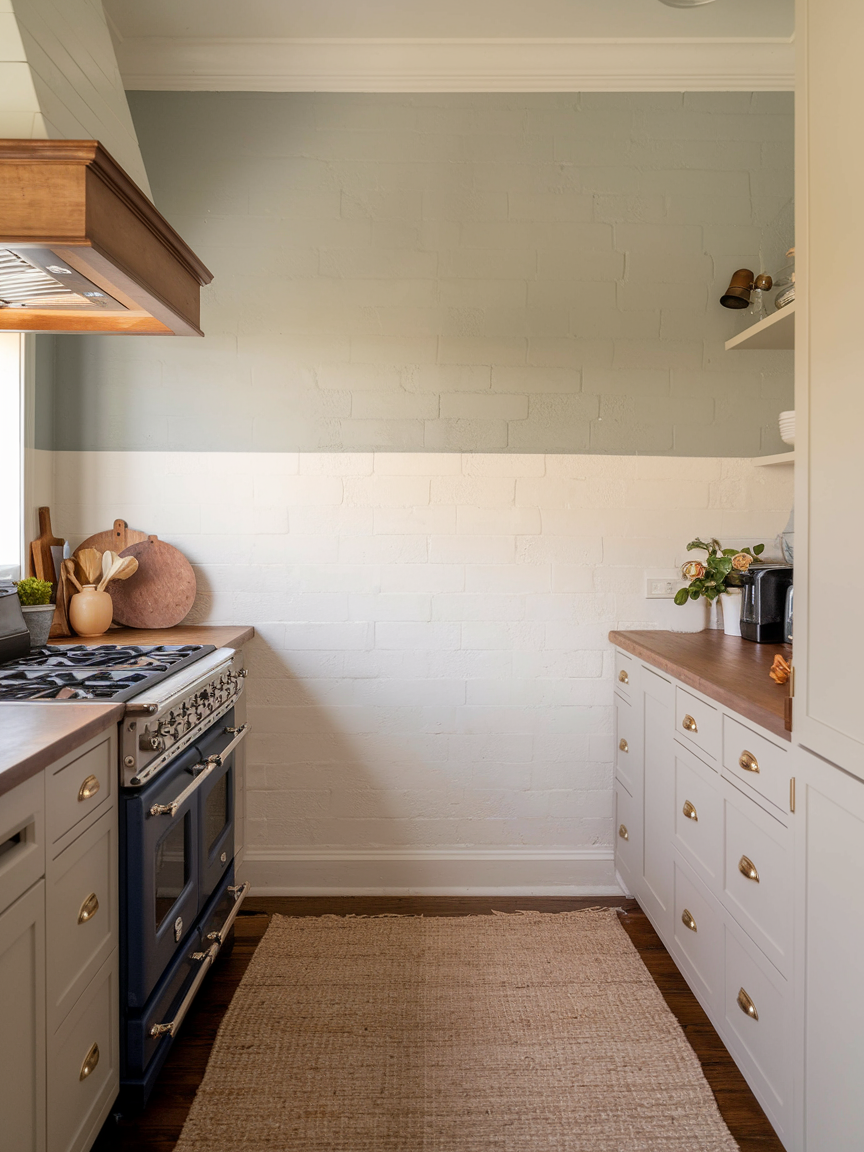
A two-tone accent wall is a simple yet creative way to add depth and structure to the kitchen using only paint. Dividing the wall horizontally or vertically with complementary shades like white and sage or beige and gray creates subtle architectural detail without adding extra materials. Clean lines keep the design looking modern and polished, while matte finishes help soften the overall appearance. This idea works especially well behind breakfast areas or open shelving, where the color contrast can naturally stand out.
2. Install a Patterned Tile Panel
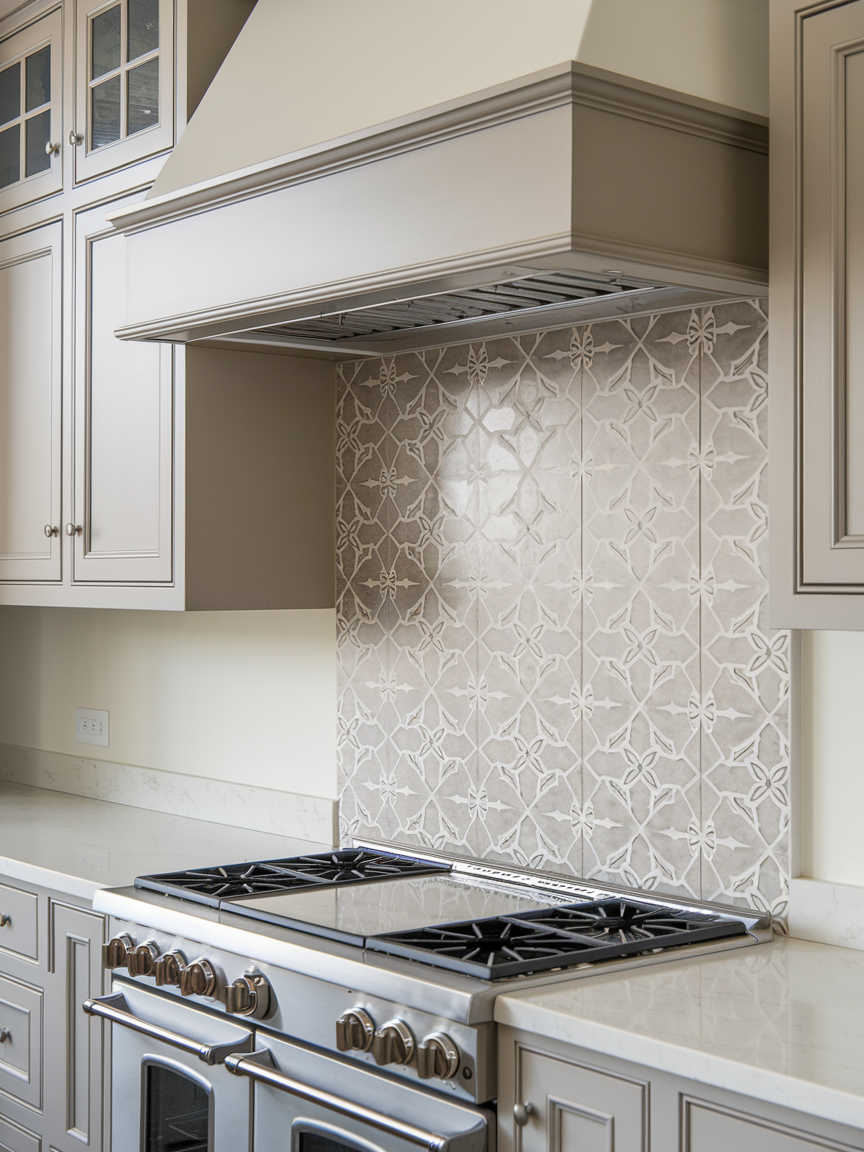
A patterned tile panel creates a stylish focal point without covering the entire kitchen wall. Geometric, Moroccan-inspired, or subtle floral patterns add personality and texture while still feeling balanced and refined. This feature works beautifully behind the stove or sink, where tile naturally belongs. Keeping the surrounding walls and cabinetry simple allows the patterned section to stand out without overwhelming the kitchen. Besides looking beautiful, tile is also durable, moisture-resistant, and easy to clean for everyday use.
3. Keep It Soft with Pastel Colors
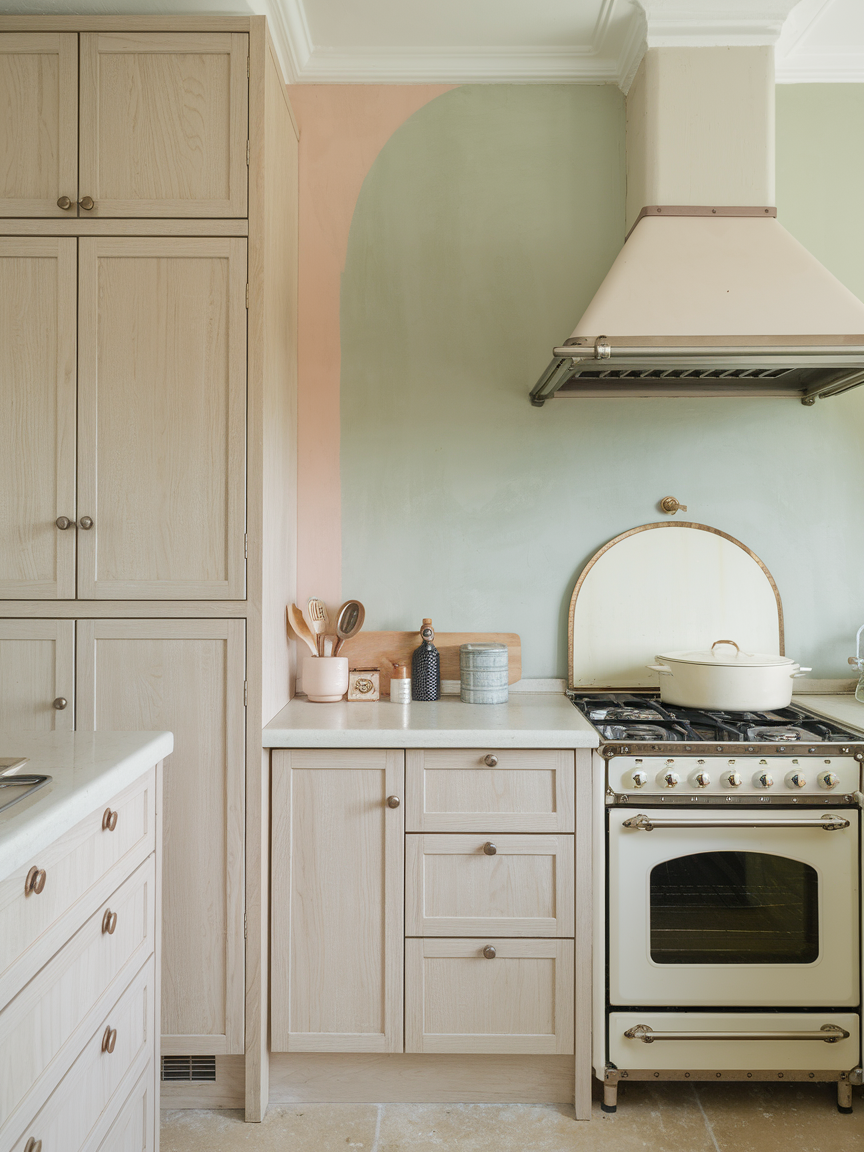
Soft pastel accent walls introduce gentle color while keeping the kitchen calm, bright, and welcoming. Shades like blush pink, powder blue, pale sage, or soft lavender create subtle contrast against white cabinetry and light wood finishes without overwhelming the space. Matte finishes enhance the soft appearance while helping light reflect gently throughout the room. Adding small decorative accents in matching tones helps tie the design together beautifully and creates a kitchen that feels fresh, airy, and thoughtfully styled.
4. Paint Exposed Brick White
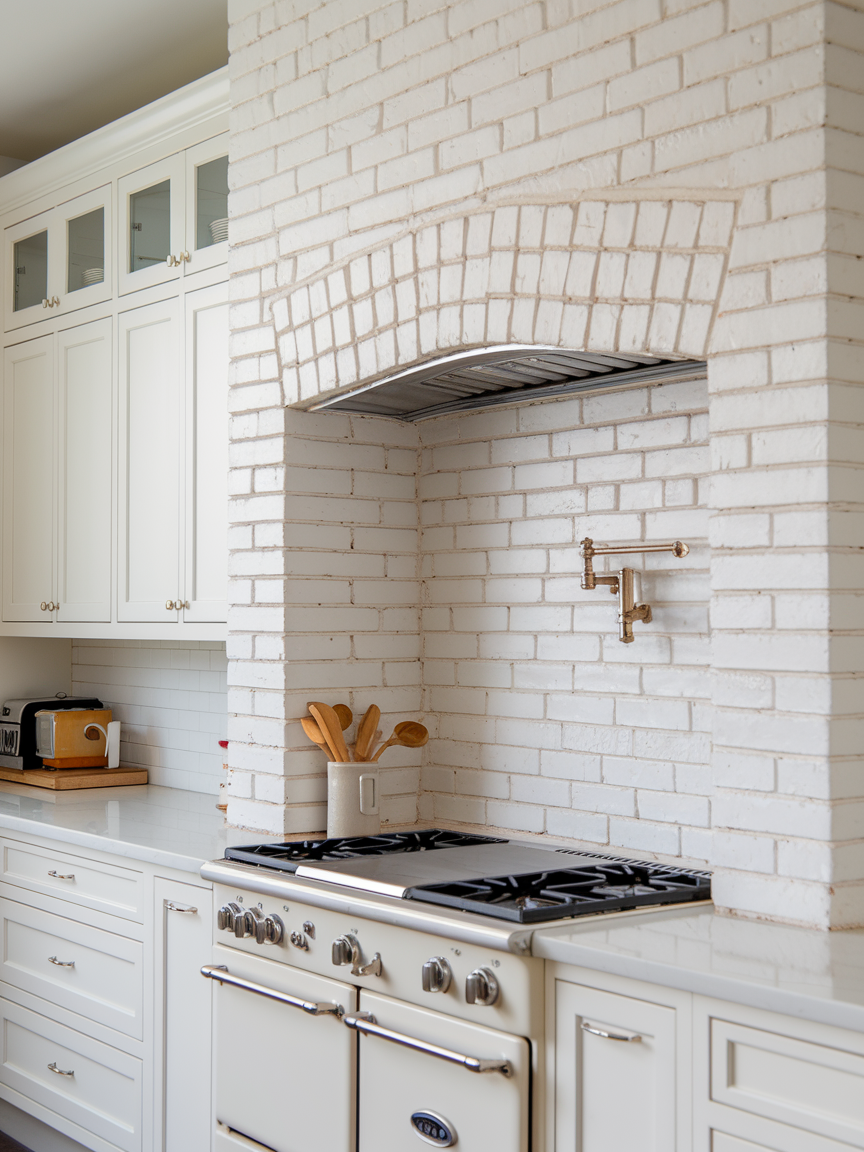
Painting exposed brick white is a great way to preserve texture while giving the kitchen a brighter and more modern appearance. The white finish softens the rustic feel of traditional brick and blends beautifully with contemporary cabinetry and clean-lined décor. The natural texture still adds depth and character, but the lighter color keeps the space airy and fresh. This idea works especially well in loft-style kitchens or homes with industrial architectural details that need a softer touch.
5. Use Herringbone Tile for Subtle Pattern
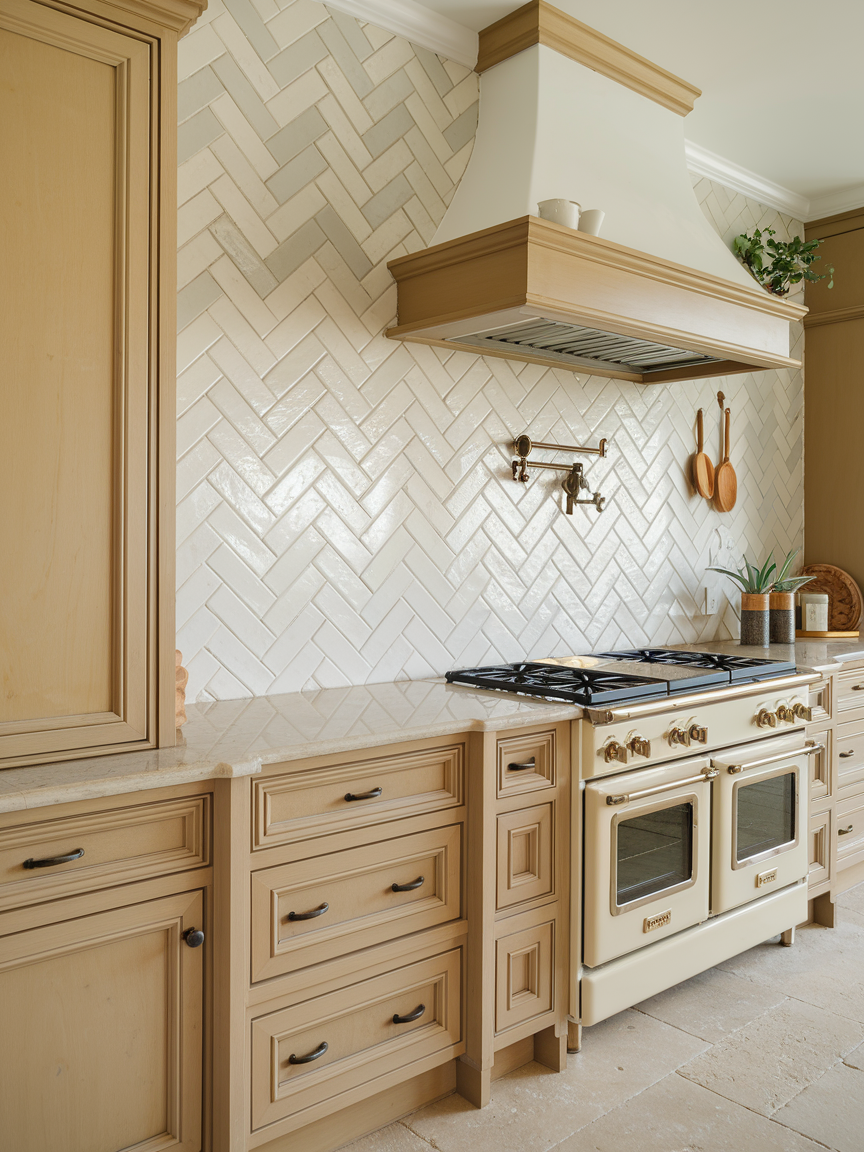
Herringbone tile layouts add movement and elegance while keeping the kitchen design timeless and refined. Simple rectangular tiles arranged diagonally create visual interest without relying on bold colors or busy patterns. White, cream, or soft gray tiles work especially well because they keep the look bright and versatile. This accent wall idea is perfect behind a stove or sink, where the pattern naturally becomes a stylish focal point while still remaining practical and easy to clean.
6. Style a Floating Shelf Accent Wall
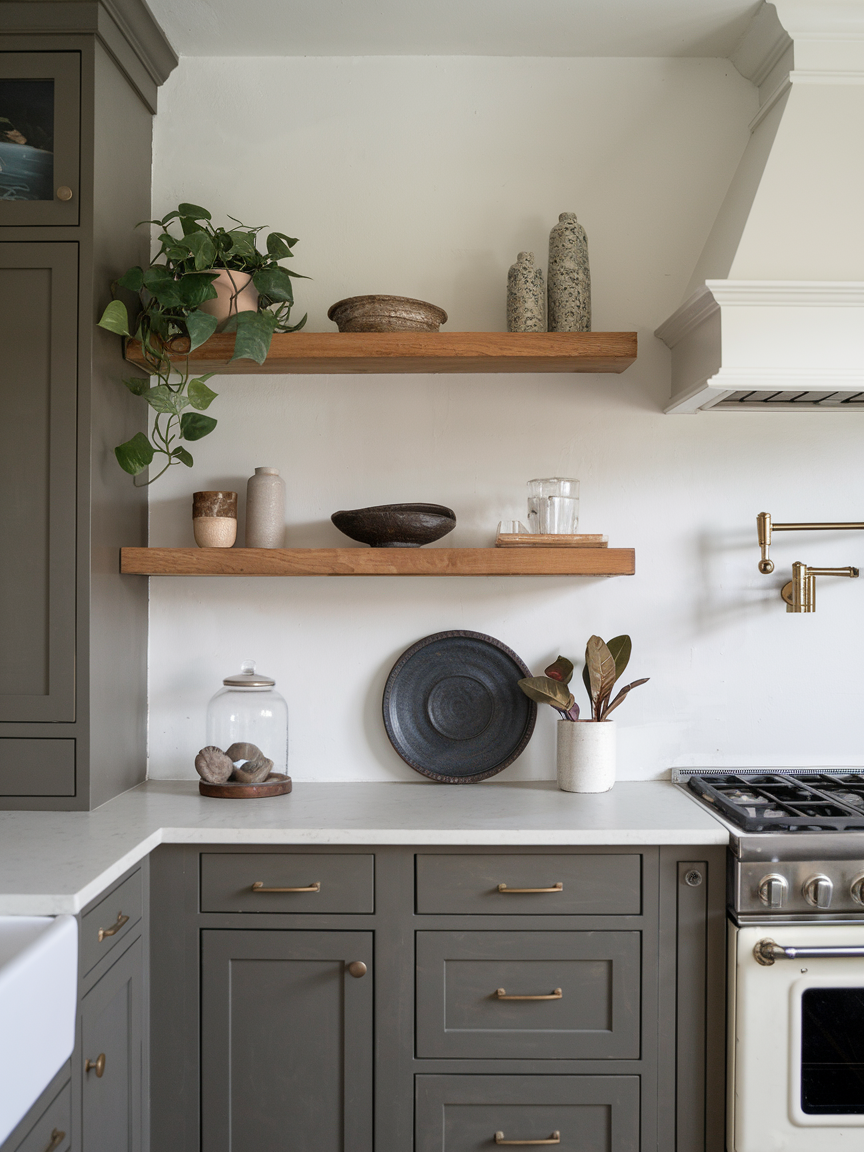
Floating shelves can transform a plain wall into a warm and functional design feature. Wooden or metal shelves styled with ceramics, cookbooks, glass jars, or small plants create a layered and curated appearance that adds personality to the kitchen. Keeping the color palette cohesive helps the display feel organized instead of cluttered. This idea not only enhances vertical storage but also allows decorative pieces to become part of the overall kitchen design while maintaining a clean and open atmosphere.
7. Add Timeless Texture with Shiplap
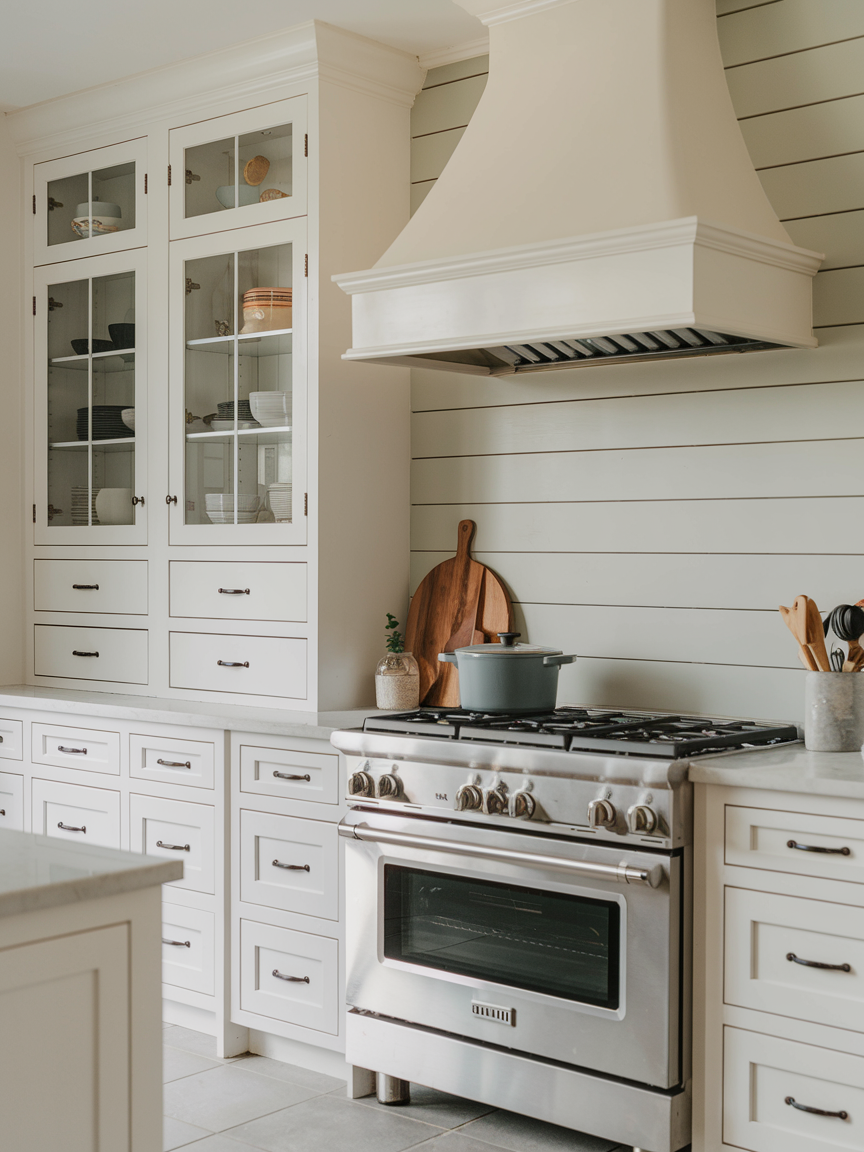
A shiplap accent wall adds subtle texture and classic charm while keeping the kitchen bright and airy. Painted in white, soft gray, or muted sage, shiplap creates gentle shadow lines that bring depth to flat surfaces without feeling too busy. This design works beautifully in farmhouse, coastal, or modern transitional kitchens where warmth and simplicity are important. Installing shiplap behind a breakfast nook or dining corner helps define the area while adding a cozy and welcoming atmosphere.
8. Elevate the Space with Marble
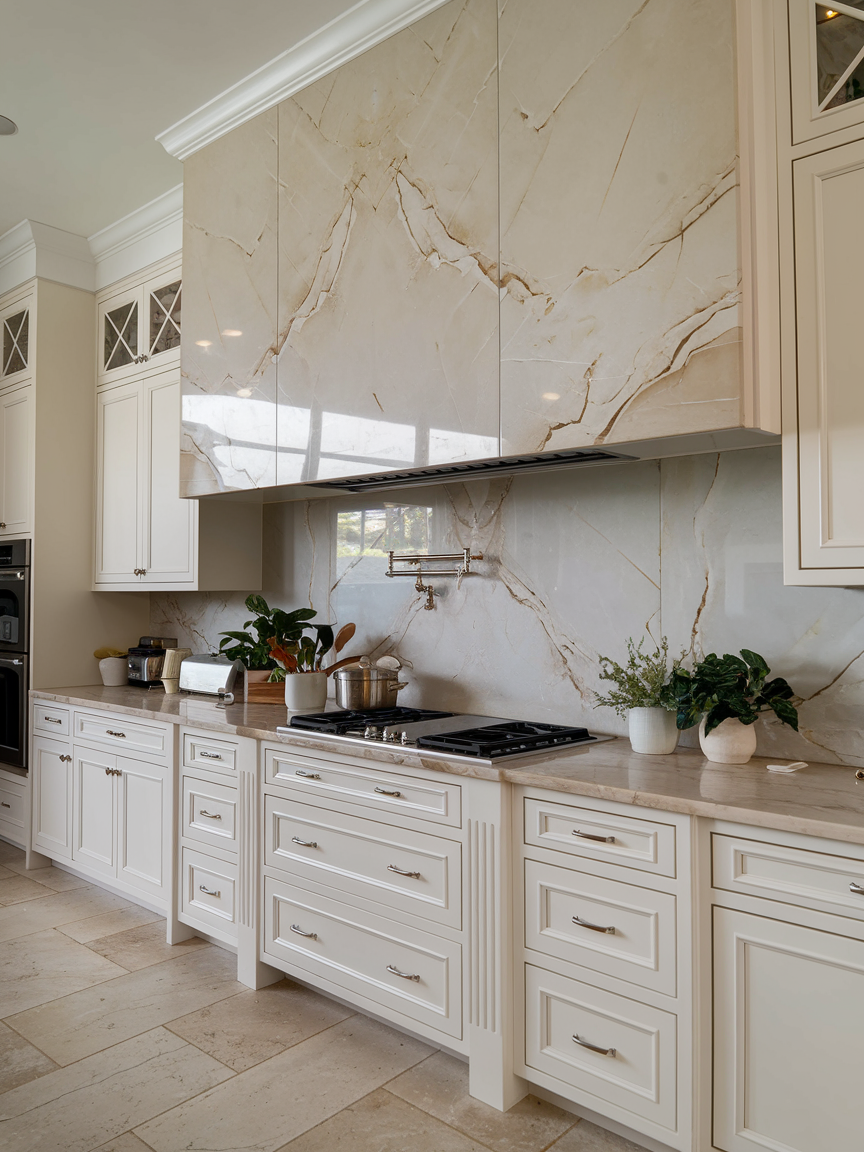
A marble accent wall instantly introduces elegance and sophistication into the kitchen. The natural veining in marble creates organic texture and movement without relying on bold colors or patterns. White or soft gray marble pairs beautifully with wood cabinetry, black fixtures, or gold accents for a refined and timeless appearance. Because the material already makes a strong statement, minimal décor is needed around it. Marble also reflects light beautifully, helping the kitchen feel brighter and more spacious.
9. Paint a Soft Neutral Accent Wall
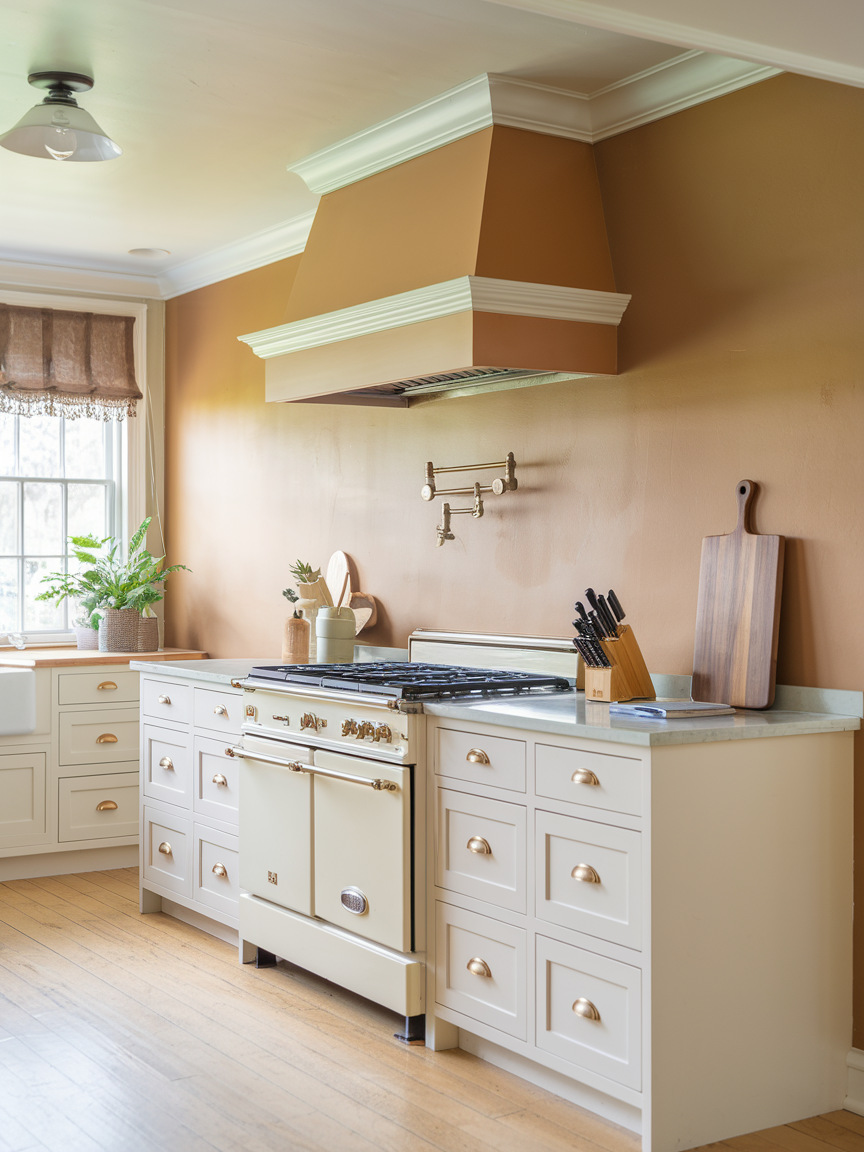
A soft neutral accent wall is a timeless way to refresh a kitchen while keeping the space calm and inviting. Shades like warm beige, greige, taupe, or muted sage add subtle contrast and depth without overpowering cabinetry or countertops. Neutral tones work especially well with white cabinets, marble surfaces, and natural wood finishes because they create a warm and balanced atmosphere. Adding floating shelves, framed art, or decorative lighting helps the wall feel more styled and intentional. Matte or eggshell finishes keep the look soft, modern, and easy to maintain for everyday kitchen use.
10. Extend Subway Tile Beyond the Backsplash
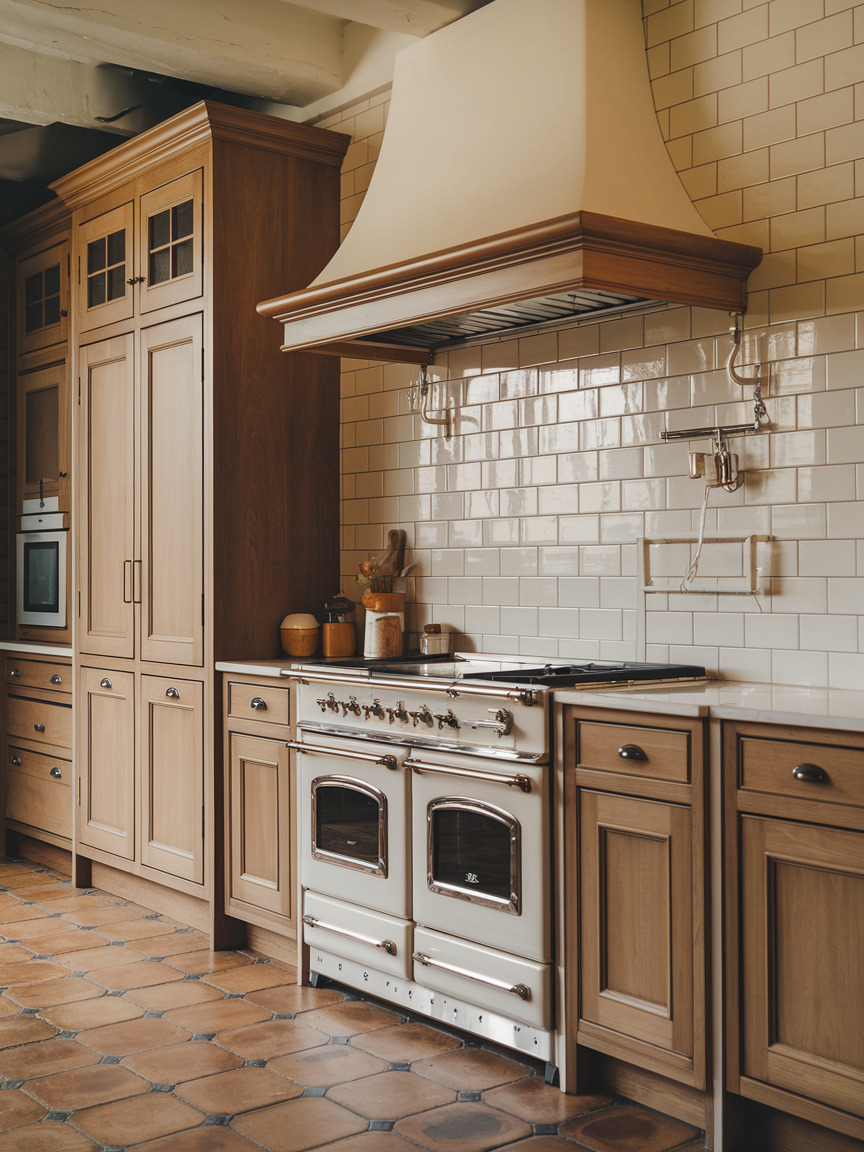
Subway tile becomes far more impactful when extended beyond a standard backsplash into a full accent wall. This design creates a clean and cohesive look that instantly brightens the kitchen while adding timeless charm. White subway tiles reflect natural light beautifully, while cream or soft gray tones add warmth and softness. Contrasting grout can subtly highlight the tile pattern for extra visual interest. Extending tile behind open shelving or breakfast areas creates a polished focal point that feels both stylish and practical since tile is durable, moisture-resistant, and easy to clean.
11. Add Warmth with a Wooden Slat Wall
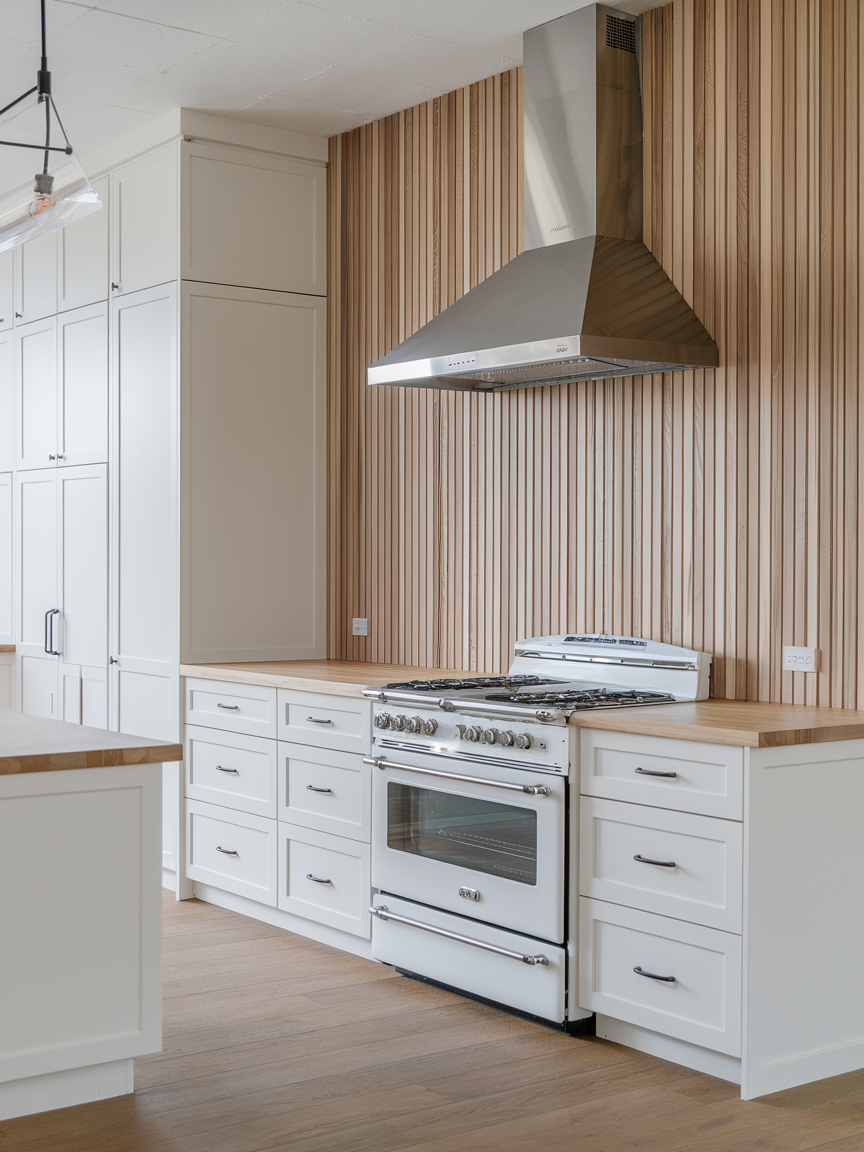
A wooden slat accent wall adds natural warmth and texture while keeping the kitchen feeling modern and uncluttered. Vertical or horizontal slats in oak, walnut, or pine create a soft visual rhythm that pairs beautifully with sleek cabinetry and stone countertops. This design works especially well in Scandinavian or contemporary kitchens where natural materials and simplicity are key. Soft lighting enhances the depth between the slats, giving the wall a more architectural appearance. When paired with neutral décor and black accents, the result feels cozy, sophisticated, and inviting.
12. Try a Functional Chalkboard Wall
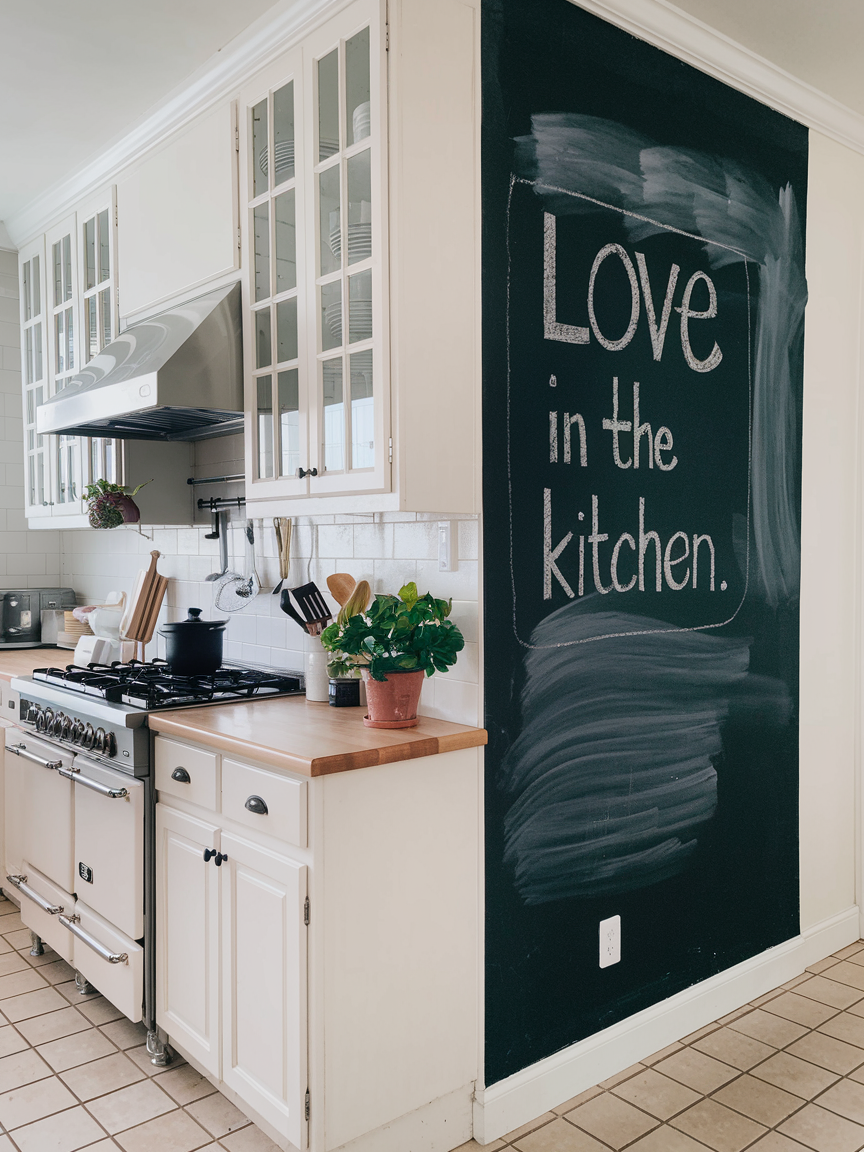
A chalkboard accent wall adds both personality and practicality to the kitchen. Matte black or charcoal chalkboard paint creates bold contrast against white cabinets while providing space for grocery lists, menus, recipes, or fun messages. This feature works especially well near breakfast nooks, pantry doors, or coffee stations, where it naturally becomes part of daily life. Keeping the surrounding décor simple helps the wall stand out without making the kitchen feel cluttered. The changing drawings and notes also give the space a more personal and creative atmosphere.
13. Introduce Rustic Charm with Brick
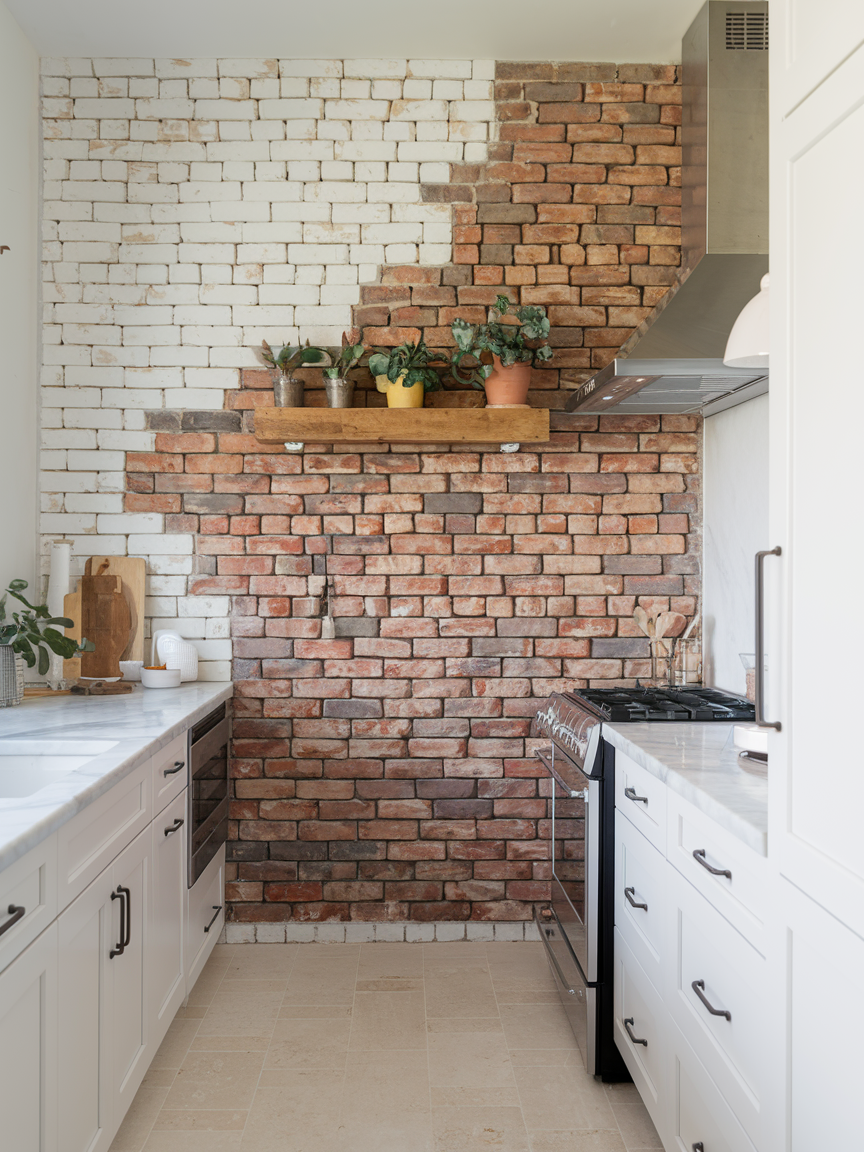
A brick accent wall instantly adds warmth, texture, and timeless character to the kitchen. Exposed red brick creates a rustic and industrial-inspired feel, while whitewashed brick offers a softer and brighter look. The natural texture of brick contrasts beautifully with smooth cabinetry and polished countertops, helping the room feel layered and balanced. Pairing brick with wood shelves, matte black fixtures, or warm metallic accents keeps the design stylish and inviting. Proper sealing also makes the wall durable and easier to maintain in busy kitchen spaces.
14. Use Decorative Panel Molding
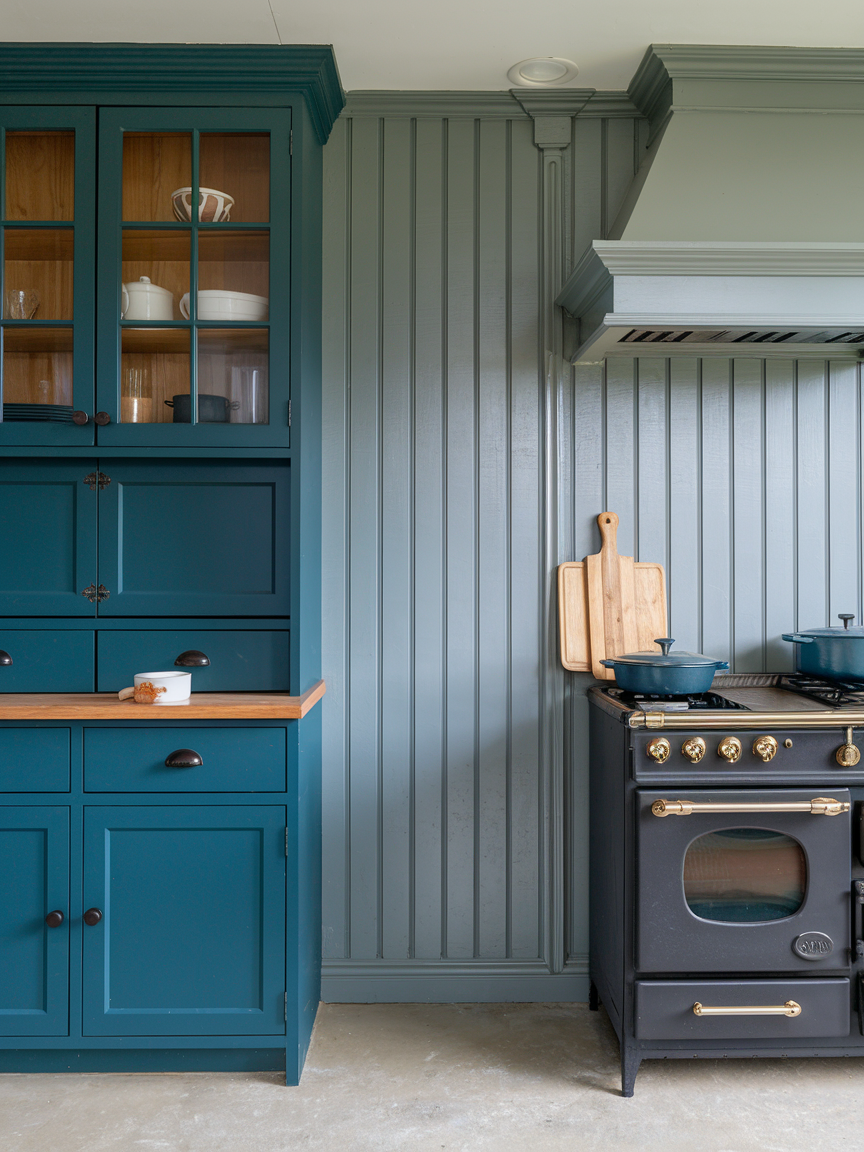
Decorative panel molding is an elegant way to add architectural detail while keeping the kitchen design clean and minimal. Thin trim arranged in rectangular or square patterns creates depth and visual interest without overwhelming the space. Painting the molding the same color as the wall keeps the look soft, cohesive, and modern. This accent wall idea works especially well in kitchens connected to dining areas, where a more refined appearance helps tie the spaces together beautifully.
15. Try a Concrete Finish Wall
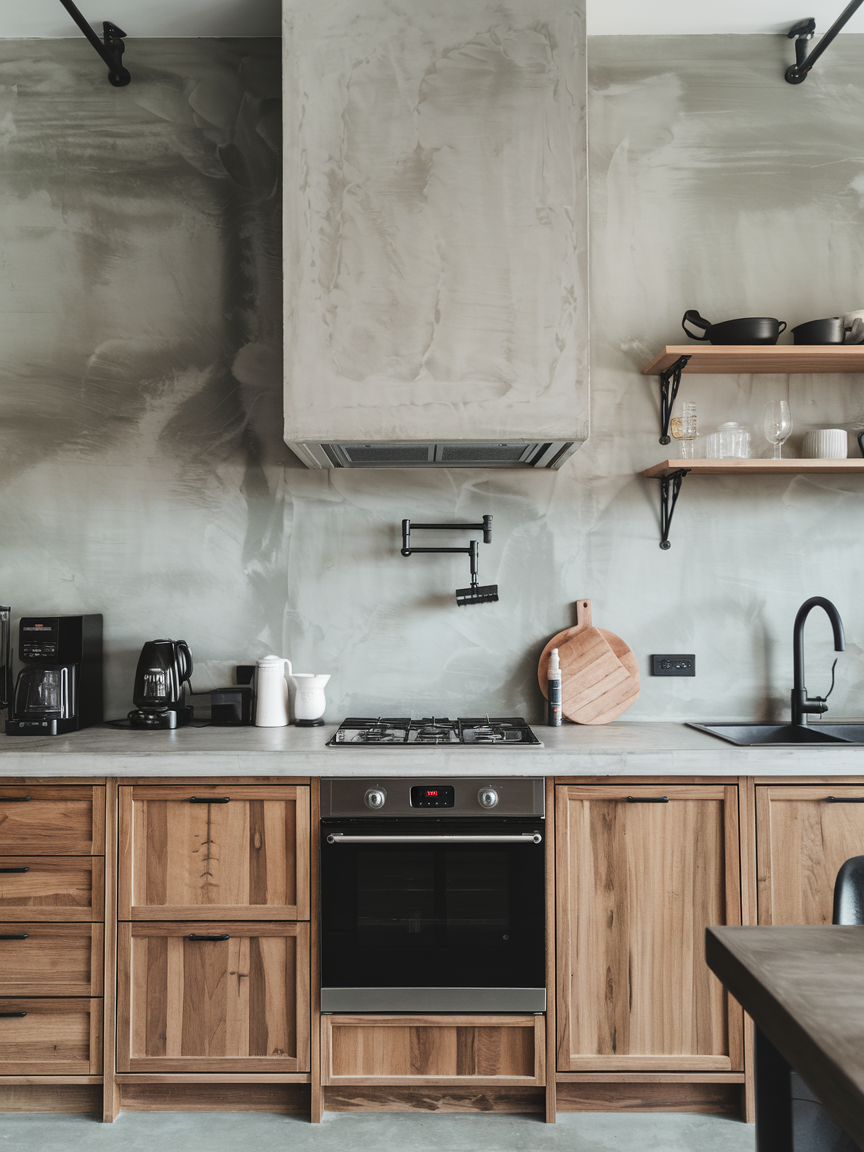
A concrete or microcement accent wall brings sleek industrial character into the kitchen while maintaining a clean and modern aesthetic. The soft gray finish pairs beautifully with wood cabinetry, matte black hardware, and stainless steel appliances. Slight tonal variations within the material create a subtle texture that adds depth without making the wall feel busy. This idea works especially well in contemporary or minimalist kitchens where simplicity and functionality are key design elements.
16. Use Wallpaper with a Delicate Pattern
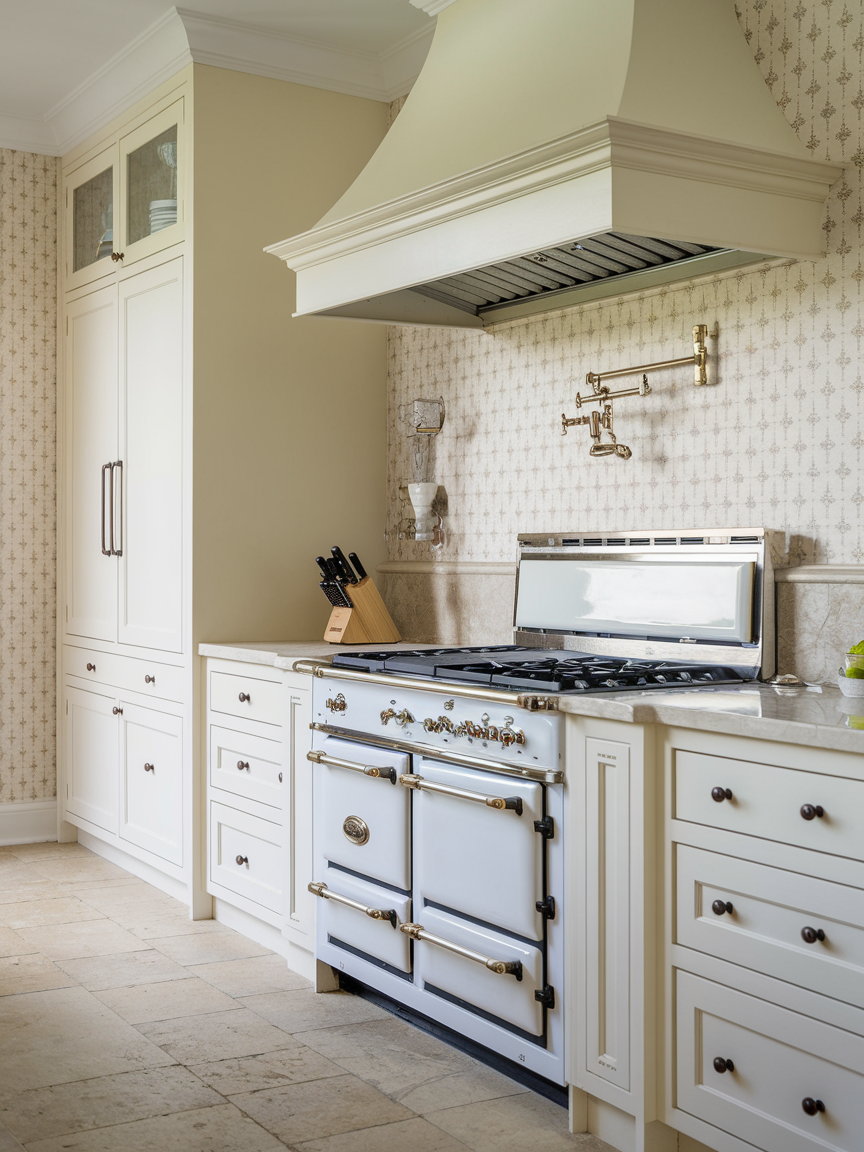
Wallpaper with a soft and understated pattern is a great way to add personality without overwhelming the kitchen. Botanical prints, subtle geometrics, or textured neutral designs create visual interest while keeping the room calm and cohesive. Installing wallpaper on a single wall near a dining nook or shelving area creates a stylish focal point that feels curated and intentional. Peel-and-stick wallpaper also makes it easy to update the look later without major renovation work.
17. Go Bold with Dark Paint
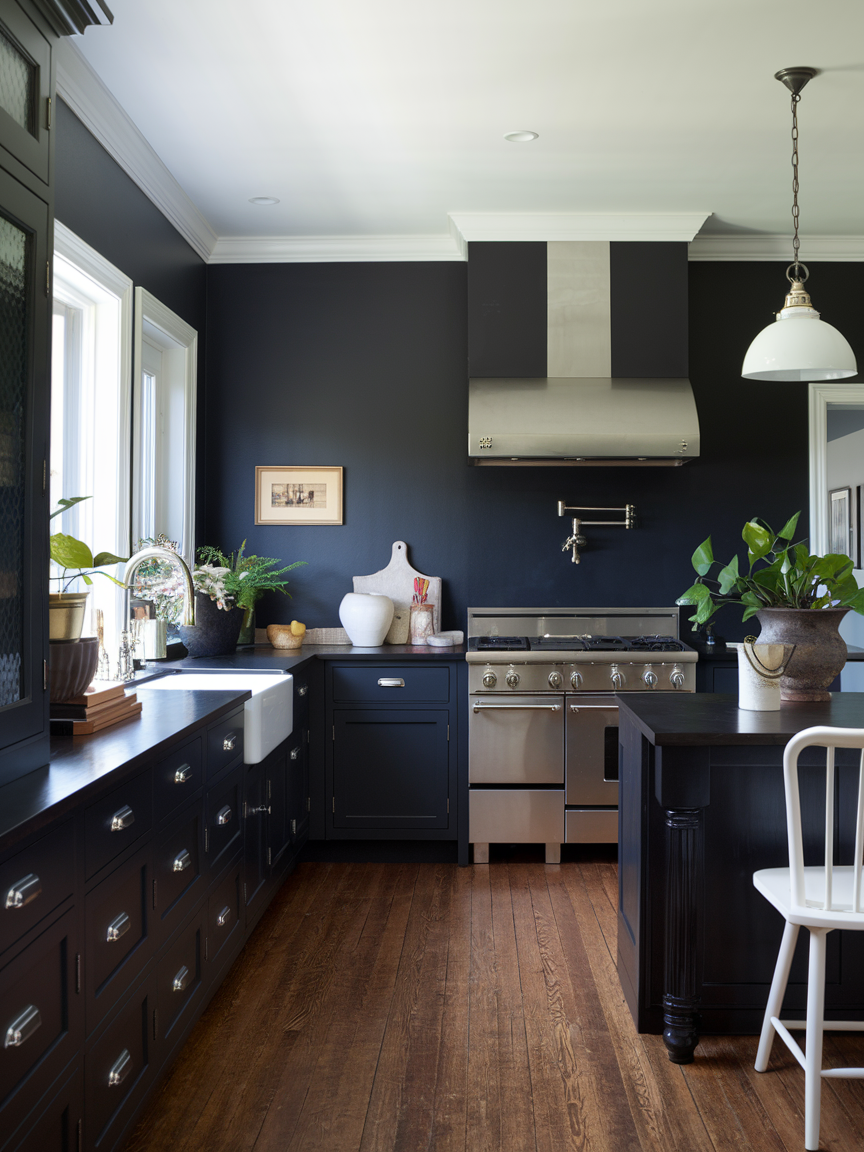
A dark accent wall in charcoal, navy, or deep forest green adds dramatic contrast and sophistication to the kitchen. Rich colors create depth and make lighter cabinetry and décor stand out beautifully. Matte finishes soften the intensity of the darker shade, helping the space feel elegant rather than harsh. This design works especially well in kitchens with plenty of natural light, where the darker tones can create balance and a cozy atmosphere without making the room feel closed in.
18. Add Organic Texture with Plaster
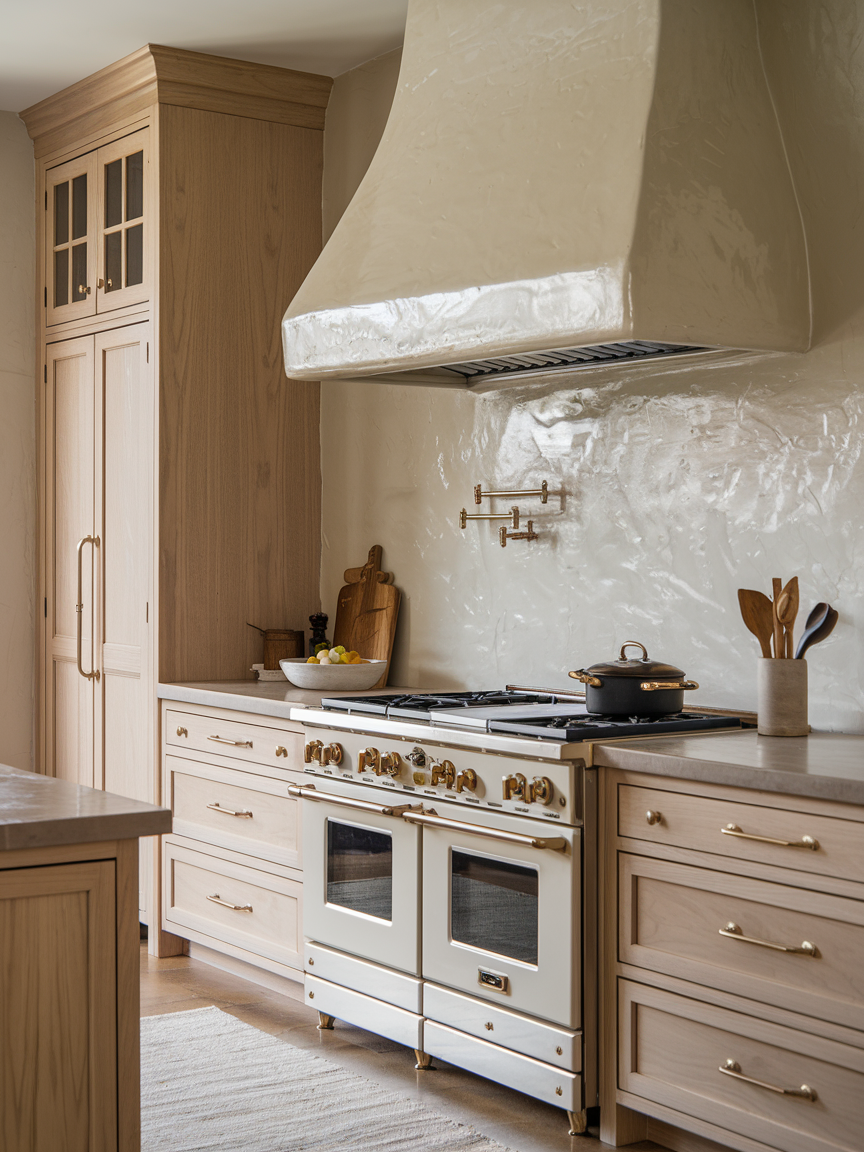
A textured plaster wall adds soft movement and natural depth that instantly makes the kitchen feel more refined and layered. Limewash or Venetian plaster finishes create subtle tonal variations that shift beautifully throughout the day, depending on the lighting. The organic texture pairs especially well with natural wood cabinets, stone countertops, and brass fixtures. Because the wall itself becomes the statement feature, the rest of the décor can remain simple and minimal for a calm and elegant look.
19. Brighten the Space with Mirrors
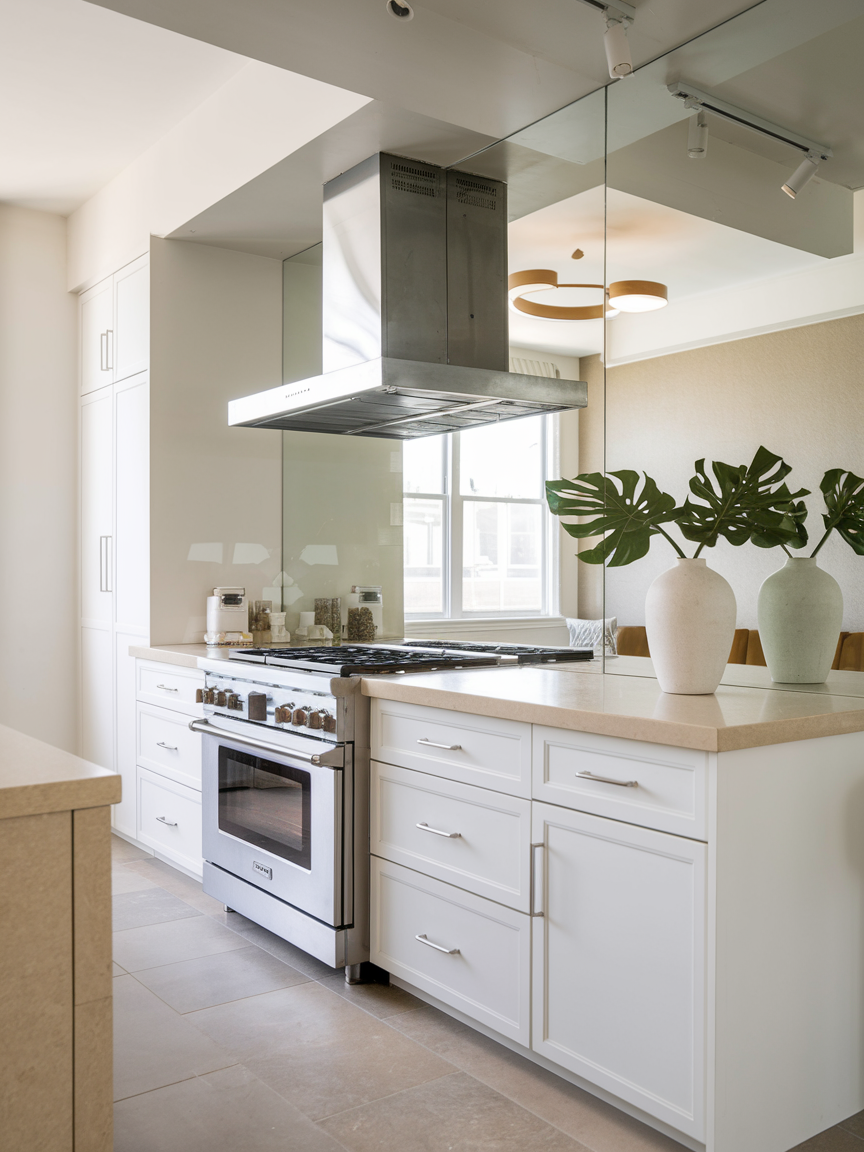
A mirror accent wall instantly makes the kitchen feel brighter, larger, and more open. Mirrors reflect both natural and artificial light, helping smaller kitchens appear more spacious and airy. Large mirror panels or oversized framed mirrors work especially well across from windows or pendant lighting. Slim black, brass, or frameless designs keep the look modern and sophisticated while blending seamlessly with surrounding décor. This idea adds both practicality and elegance without relying on bold color or texture.
20. Try Vertical Tile Stacking
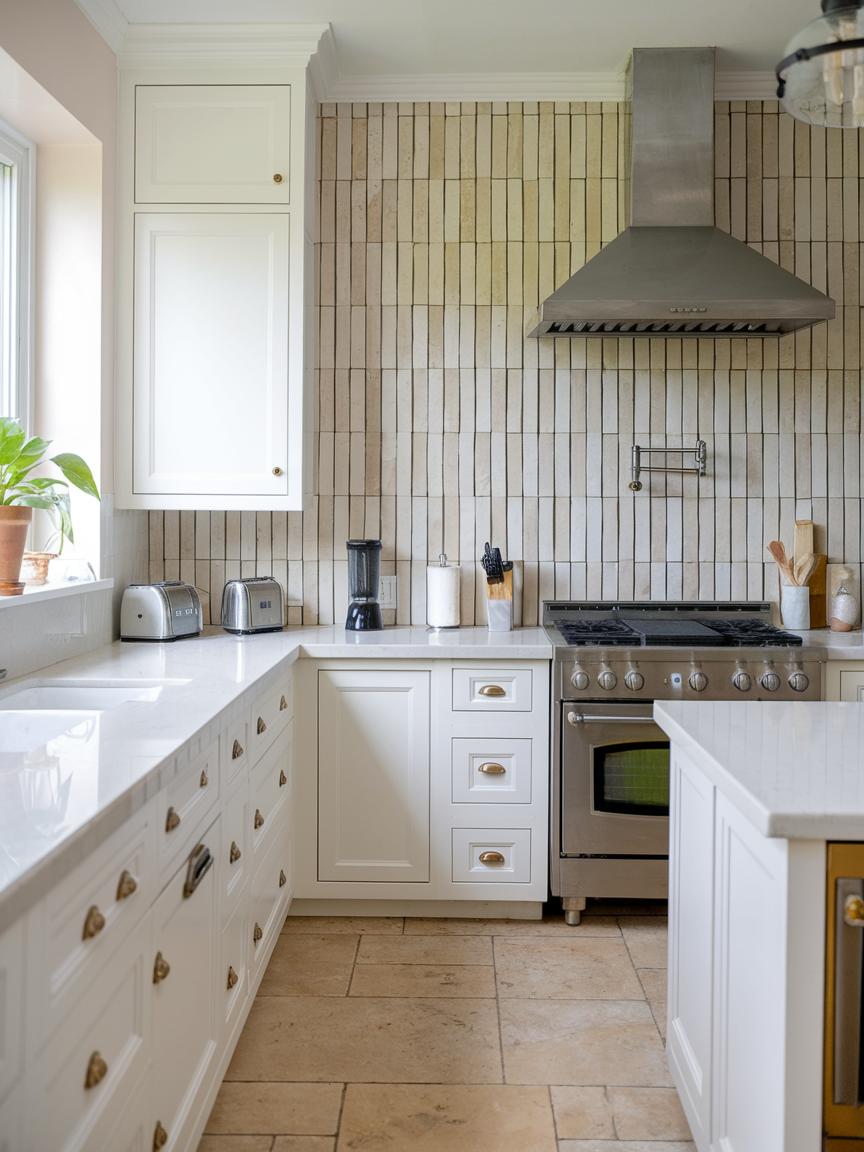
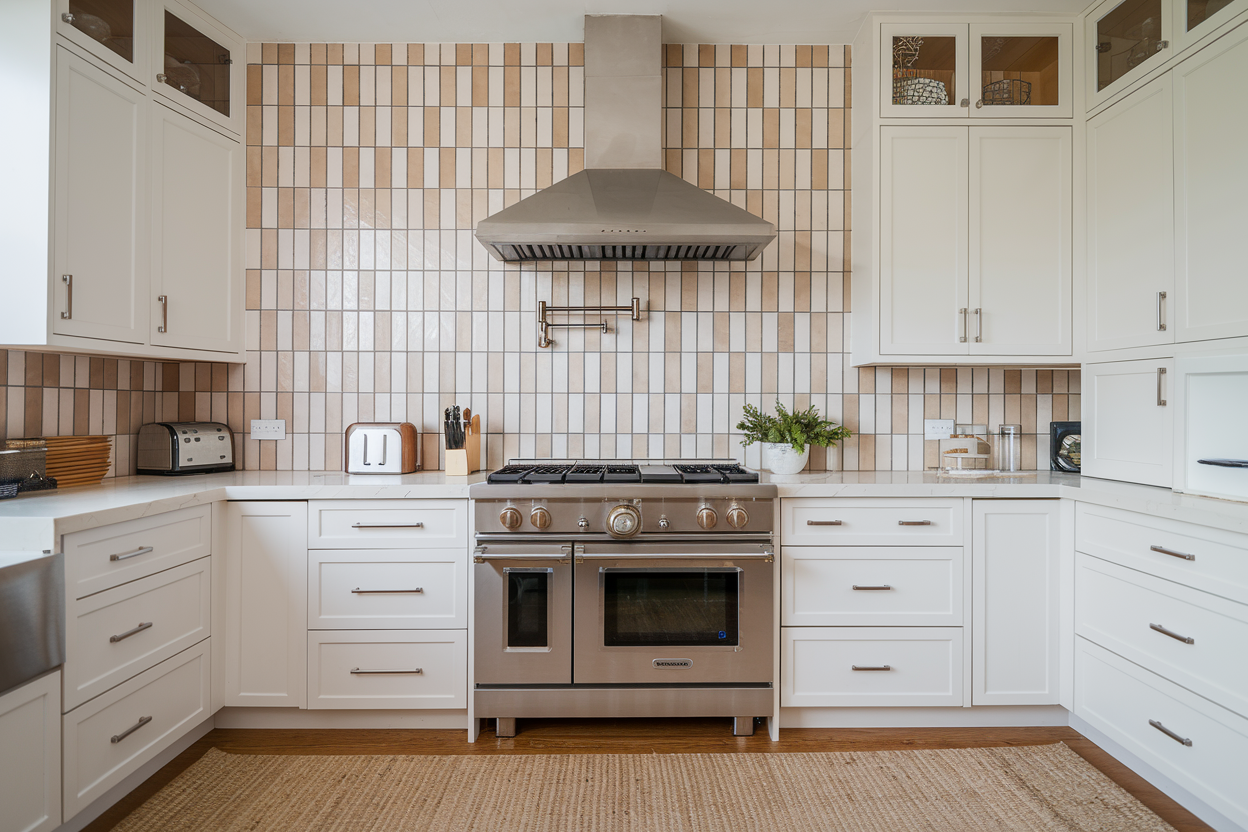
Vertical tile layouts give classic tile designs a fresh and modern update. Stacking rectangular tiles vertically draws the eye upward, making ceilings appear taller, and the kitchen feel more spacious. Neutral shades like white, beige, or muted green help maintain a calm and timeless atmosphere while allowing the tile arrangement itself to become the focal point. Clean grout lines and simple finishes keep the design sleek, polished, and easy to pair with modern cabinetry and countertops.
21. Add Charm with Beadboard
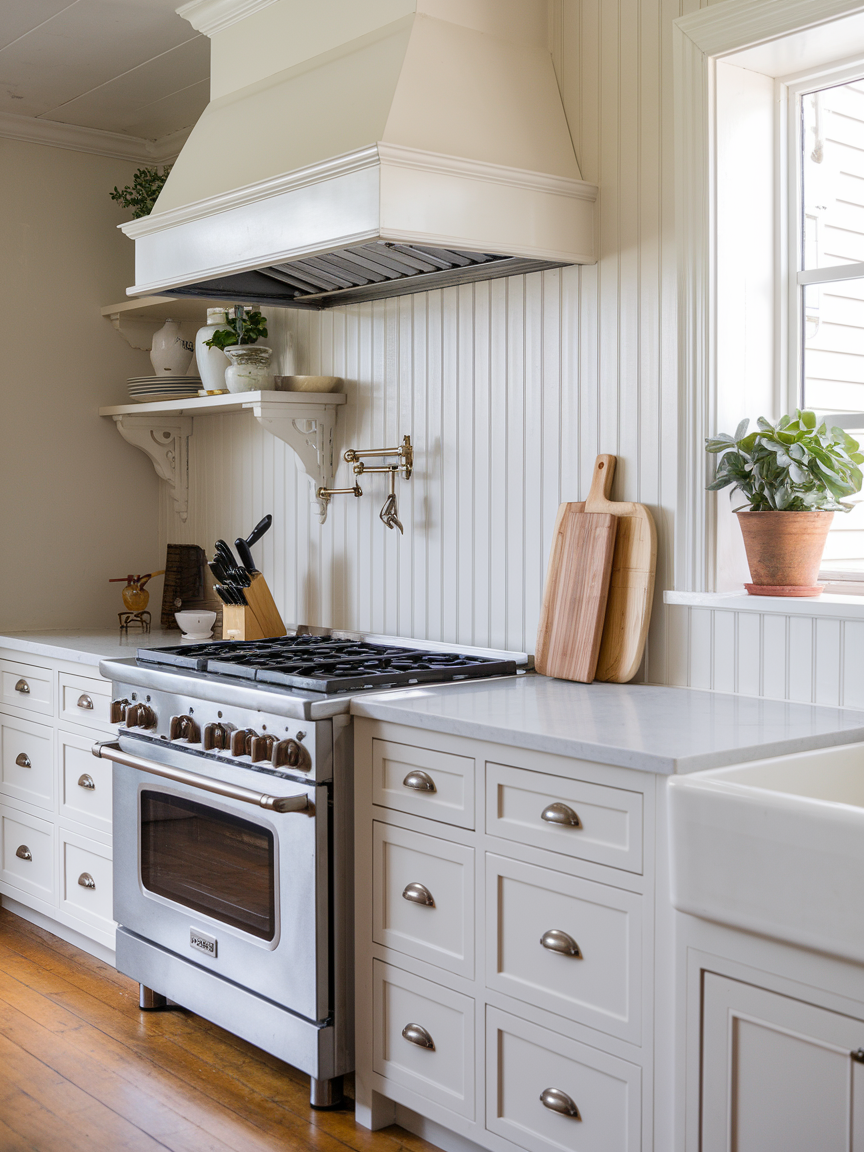
A beadboard accent wall brings cozy texture and timeless charm into the kitchen without making the space feel visually heavy. The narrow vertical grooves create subtle depth while helping the room feel taller and brighter. Painted in white, ivory, or soft gray, beadboard pairs beautifully with both modern and traditional kitchen styles. Installing it behind a breakfast nook or dining area adds warmth and architectural interest while still maintaining a clean and airy appearance.
22. Add Depth with Stone Veneer
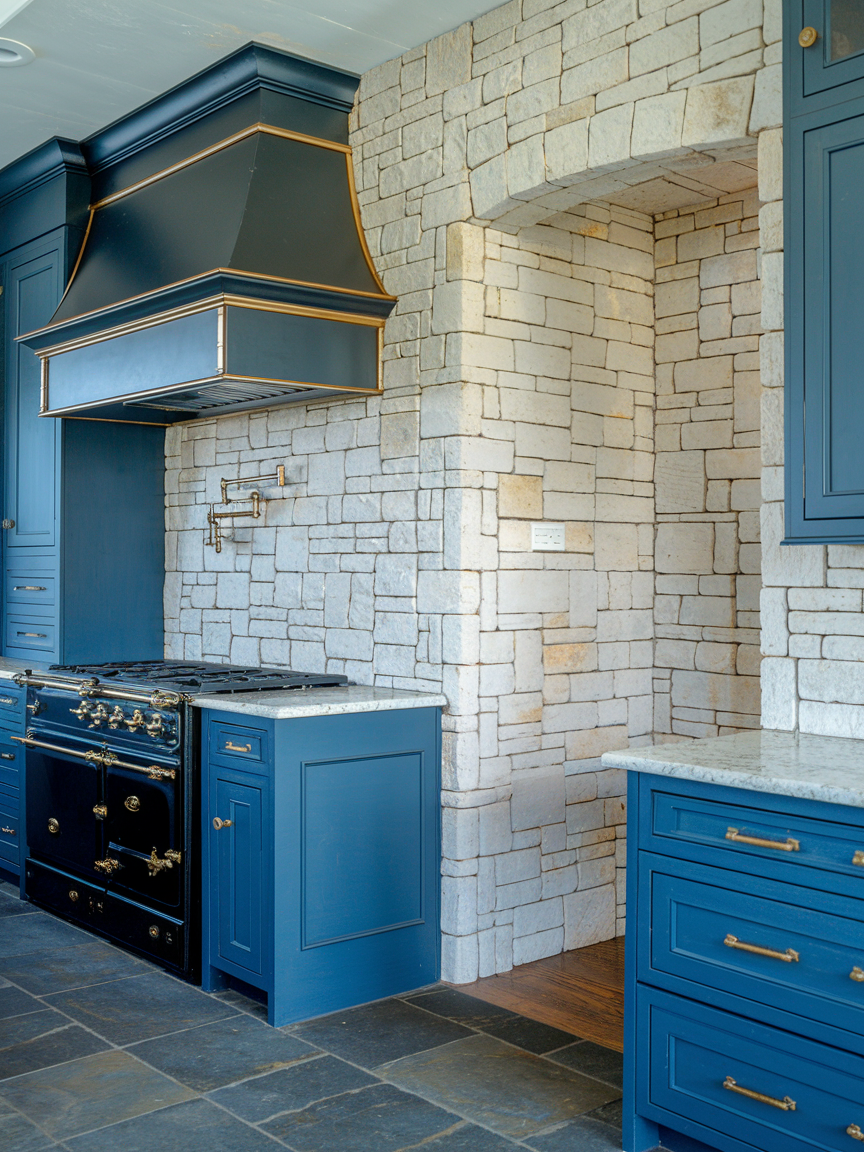
Stone veneer creates the appearance of natural stone while being lighter and easier to install than full stone walls. Soft gray, beige, or warm taupe tones add texture and warmth that instantly make the kitchen feel more grounded and inviting. The layered surface contrasts beautifully with smooth countertops and modern cabinetry, creating a balanced mix of rustic and contemporary design. Proper sealing also helps keep the wall durable and easy to maintain in everyday kitchen environments.
23. Create a Minimal Gallery Wall
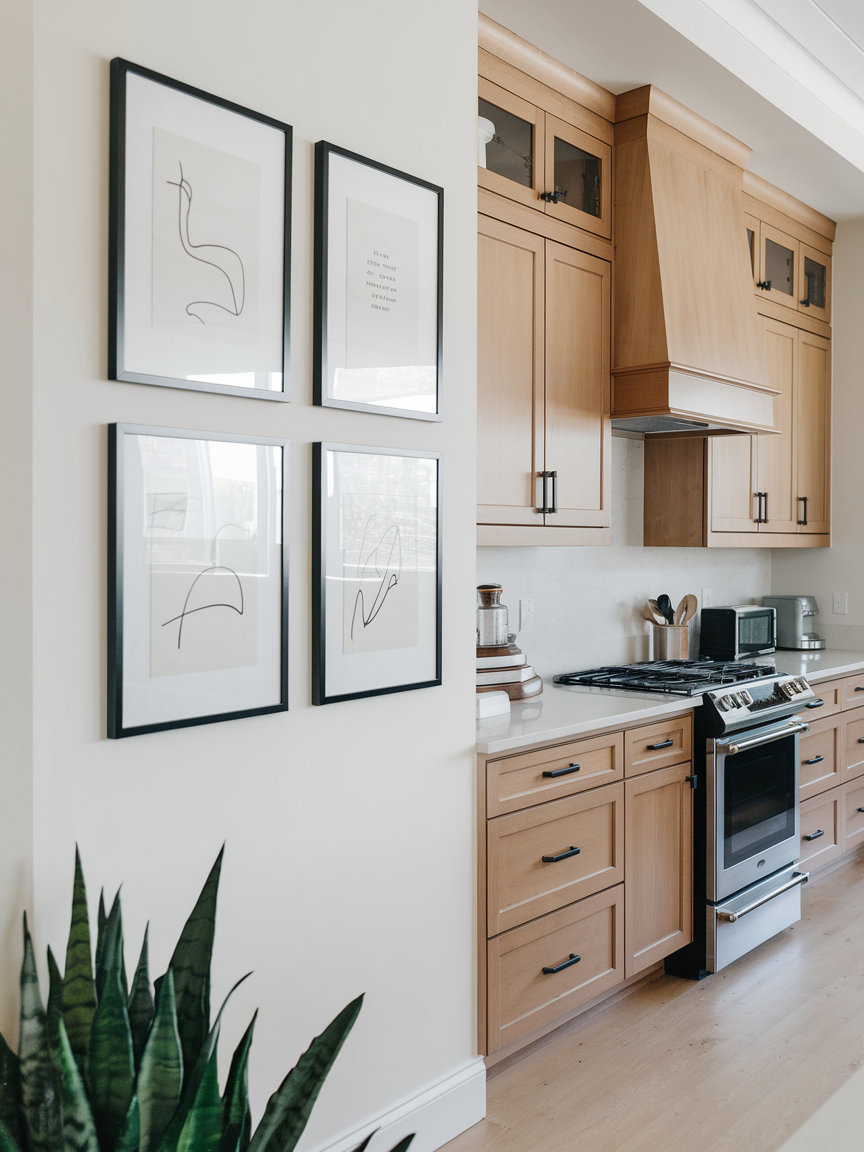
A minimal gallery wall is a simple way to add personality and visual interest without making major structural changes. Black frames, wood frames, or neutral artwork arranged in a clean layout create a curated and stylish accent feature. Botanical prints, food-inspired illustrations, or abstract artwork work especially well in kitchens because they feel cohesive and timeless. Keeping the spacing even and the color palette consistent helps the wall feel organized and polished rather than cluttered.
* The beauty of accent walls lies in their versatility, making them suitable for modern, rustic, farmhouse, industrial, or minimalist interiors alike. Use these Ideas as a guide to create a kitchen that feels fresh, welcoming, and full of character—proving that small design changes can make a lasting visual impact.