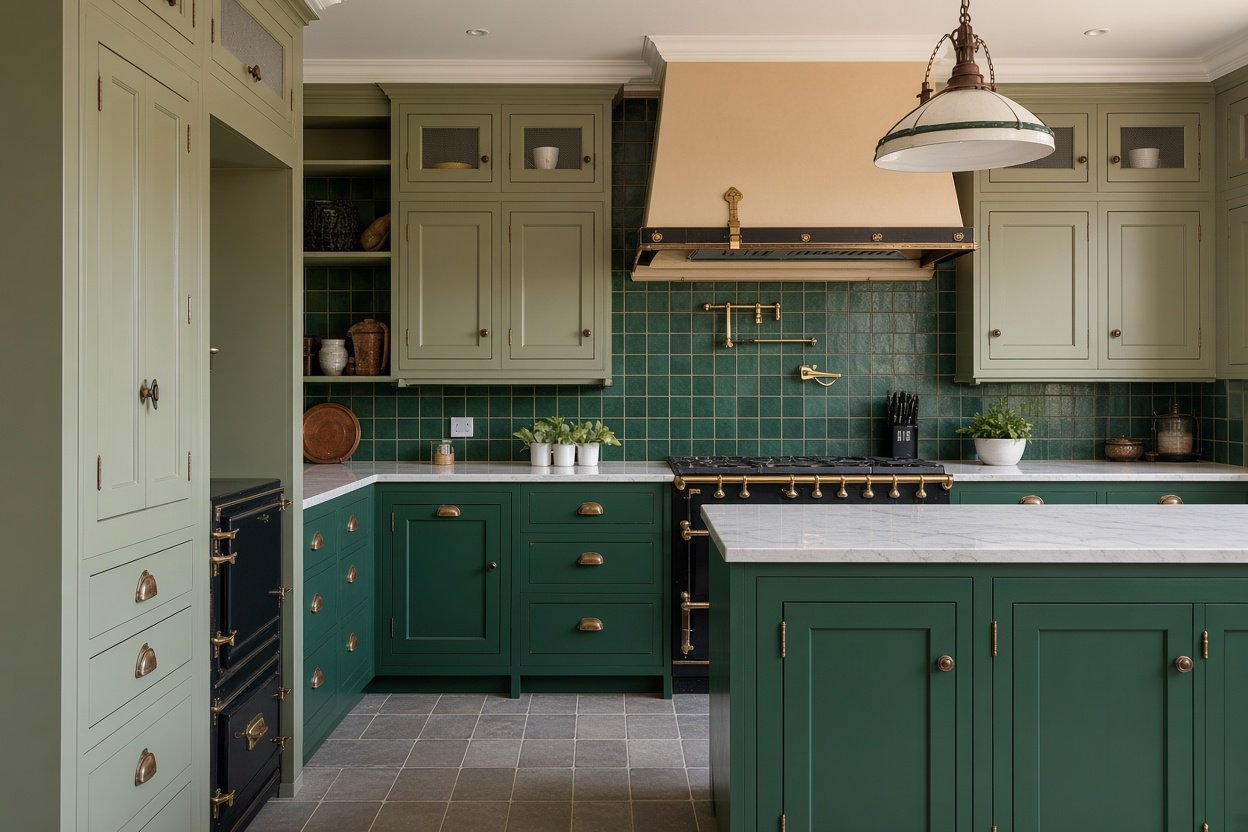
Green can bring a refreshing sense of nature, balance, and character into the kitchen. Soft sage, muted olive, rich emerald, and deep forest shades can each create a different atmosphere, making green a wonderfully versatile choice for cabinetry, walls, islands, and decorative accents. The color can feel calming and welcoming while giving the cooking space a distinctive visual identity.
There are plenty of ways to incorporate green without overwhelming the room. Green cabinets can become a beautiful focal point, while a tiled backsplash or painted accent wall can introduce color in a more subtle way. Natural wood, marble, brass, warm metals, and neutral finishes pair especially well with green, creating a balanced look that feels both stylish and inviting.
Let’s explore these beautiful designs and discover how the right shade of green can create a kitchen that feels fresh, stylish, warm, and full of character!
1. Forest Green for a Cozy, Dramatic Kitchen
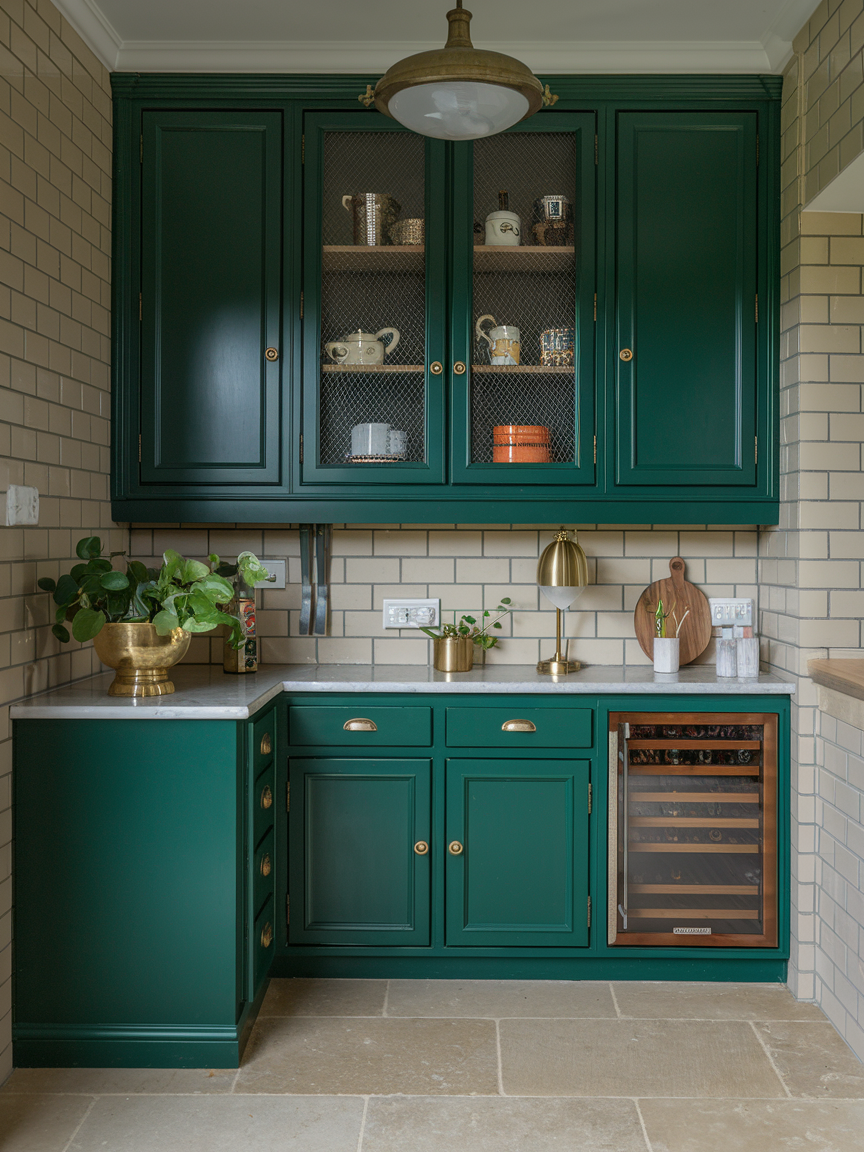
Forest green cabinetry creates a rich and intimate atmosphere that works beautifully in kitchens with warm lighting and natural materials. Its deep tone pairs particularly well with brass hardware, light countertops, wood accents, and cream-colored walls, creating contrast without losing its cozy quality. The darker color can give cabinetry a more substantial presence, making the kitchen feel intentionally designed. Add soft lighting and tactile finishes to balance the richness and create a comfortable setting for cooking and gathering.
2. Green Kitchen Island as a Focal Point
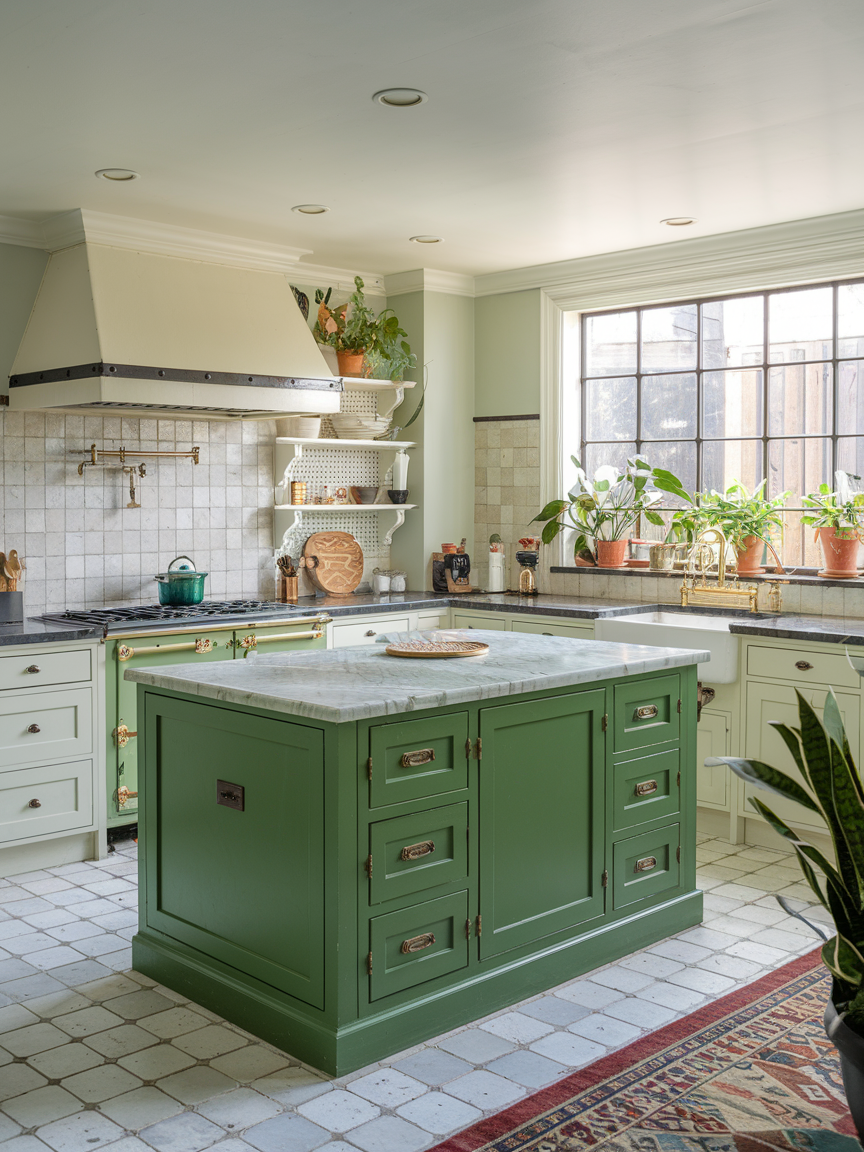
A green kitchen island can introduce a memorable burst of color while allowing the rest of the room to remain neutral. Sage, olive, emerald, or forest green can create an attractive contrast against white, cream, or natural wood cabinetry while naturally drawing attention toward the center of the kitchen. Pair the island with a marble, quartz, or butcher block countertop to add another layer of texture. This approach offers plenty of personality without requiring a complete color transformation.
3. Green Kitchen Accents for Subtle Updates
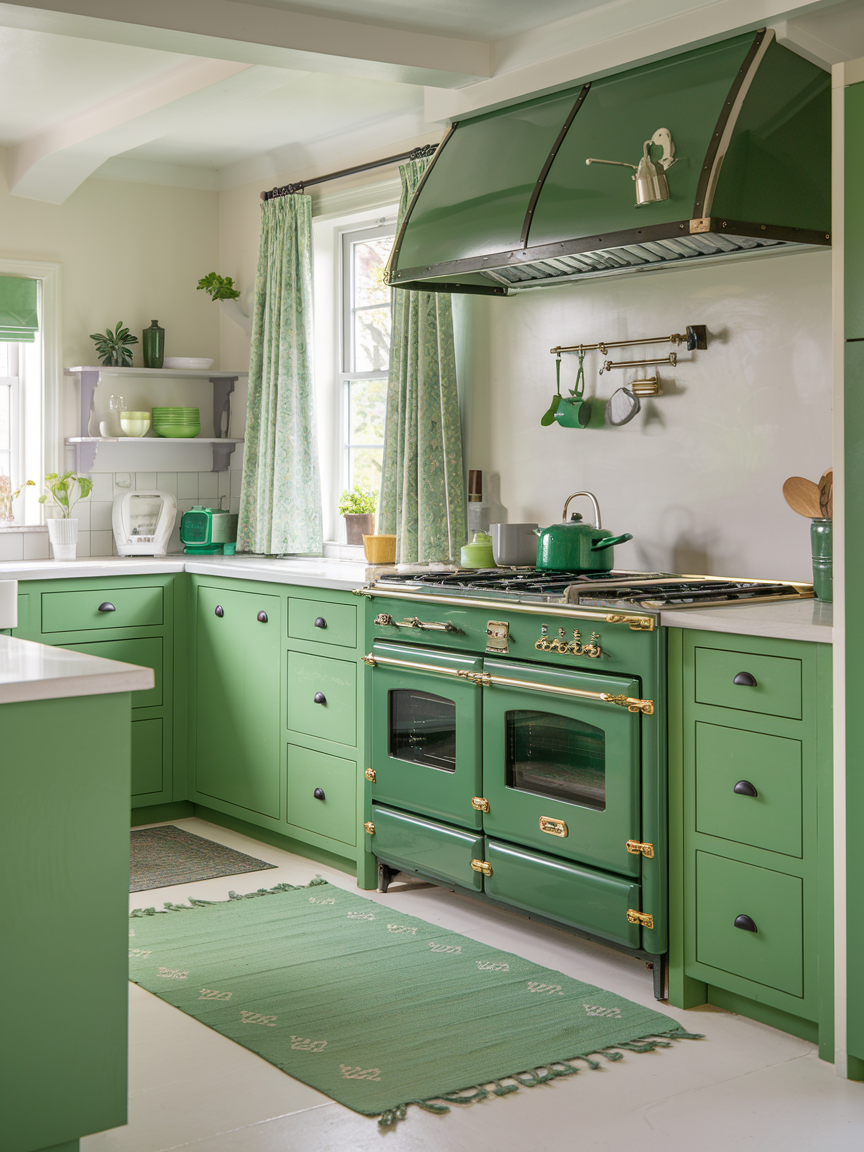
Small green accents are ideal for refreshing a kitchen without making a permanent or expensive change. Bar stools, rugs, curtains, cookware, artwork, small appliances, and decorative ceramics can all introduce different shades of green into the space. This approach allows you to experiment with sage, olive, mint, or deeper tones before committing to larger changes. It is also an easy way to update the kitchen seasonally or gradually build a more colorful design.
4. Green and Brass Hardware Pairing
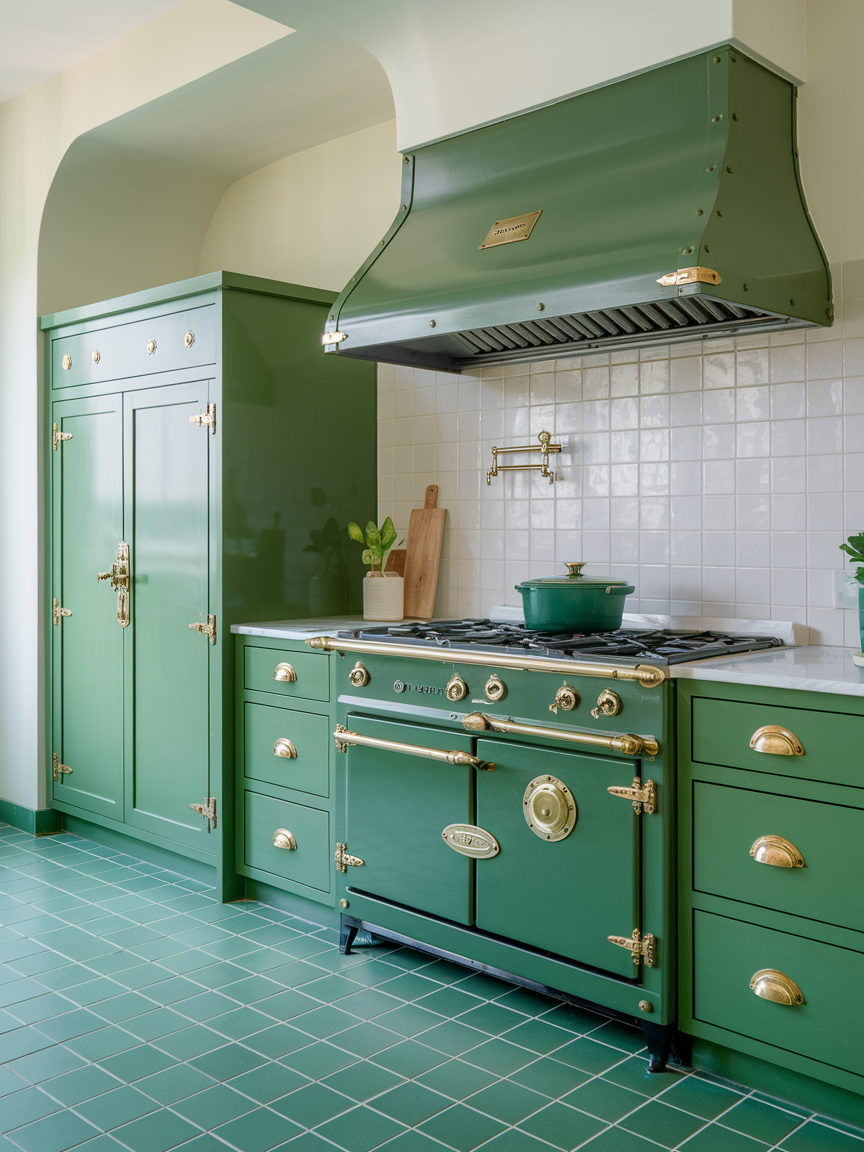
Green cabinetry and brass hardware create a warm combination that can make even a simple kitchen feel more refined. Brass adds a soft metallic contrast that complements everything from pale sage to deep emerald and forest green. Use brass on cabinet pulls, knobs, faucets, or lighting fixtures to create small points of warmth throughout the room. Natural wood and light stone can further balance the palette, resulting in a kitchen that feels polished while remaining inviting.
5. Green Shiplap or Paneling
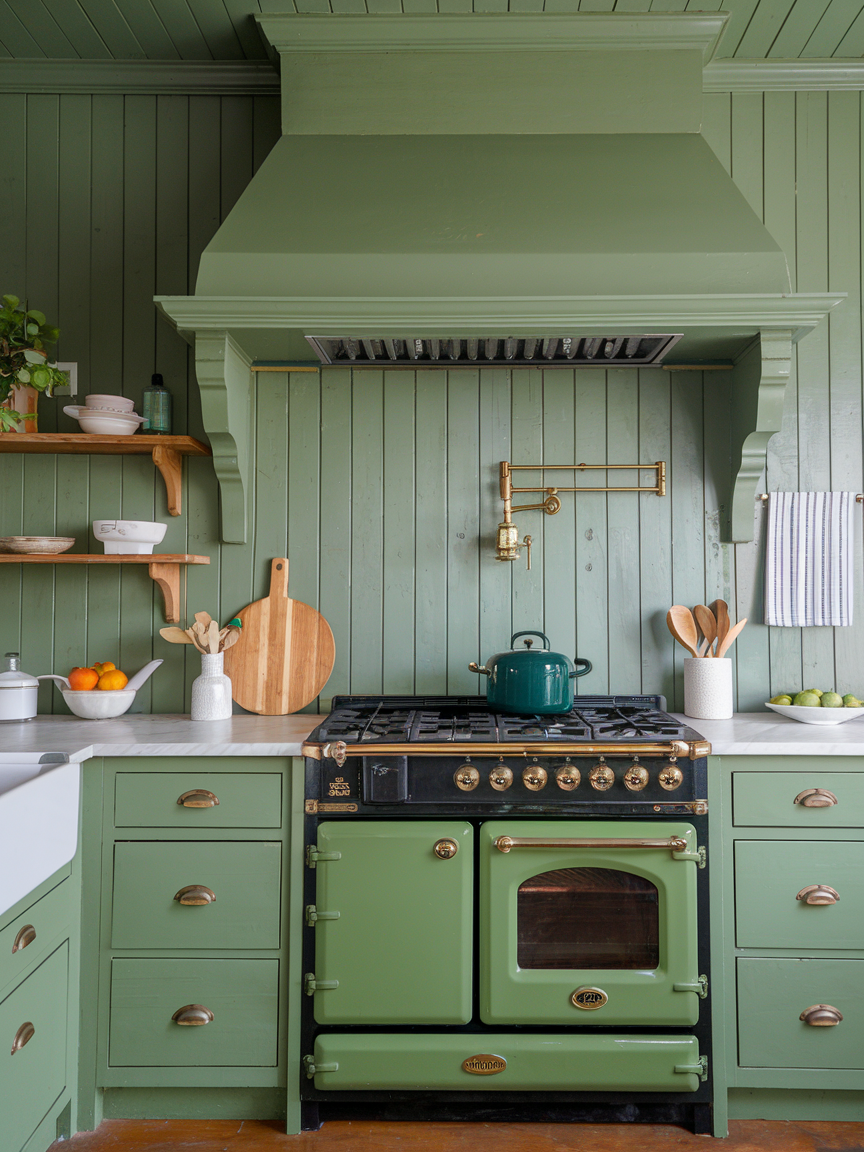
Green shiplap or wall paneling adds architectural texture while bringing color into the kitchen in a cozy and approachable way. Sage, olive, and muted eucalyptus shades work especially well with farmhouse, cottage, transitional, and relaxed modern interiors. Use paneling on an accent wall, kitchen island, breakfast nook, or another defined area to create visual separation within an open layout. Warm wood, open shelving, and soft lighting can further enhance the layered character of the space.
6. Dark Green Lower Cabinets
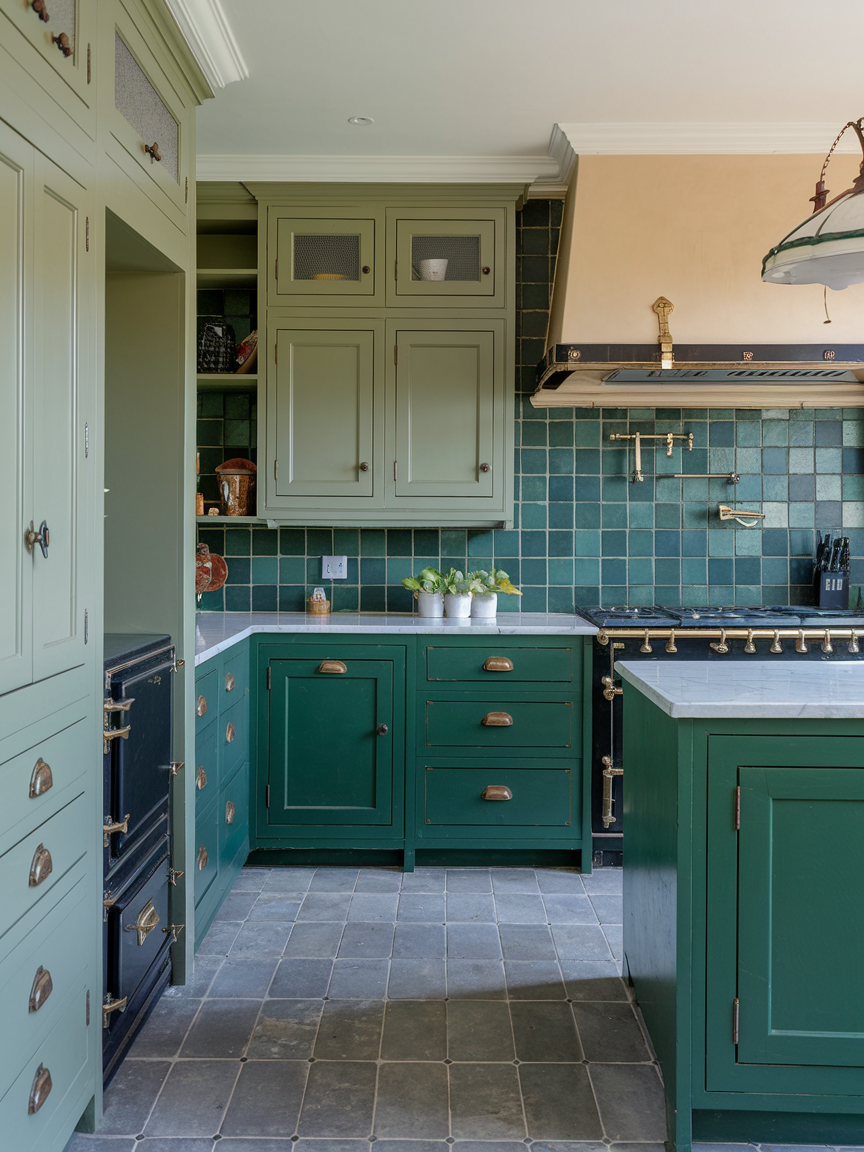
Dark green lower cabinets paired with light upper cabinets create a balanced two-tone design with plenty of depth. Forest, hunter, and deep olive shades can ground the lower portion of the kitchen, while white, cream, or pale green uppers keep the upper half feeling bright. This arrangement works especially well when you want the richness of a dark green without covering the entire room in a deep color. Light countertops and warm hardware can help connect both sections into one cohesive composition.
7. Mint Green for a Light, Fresh Feel
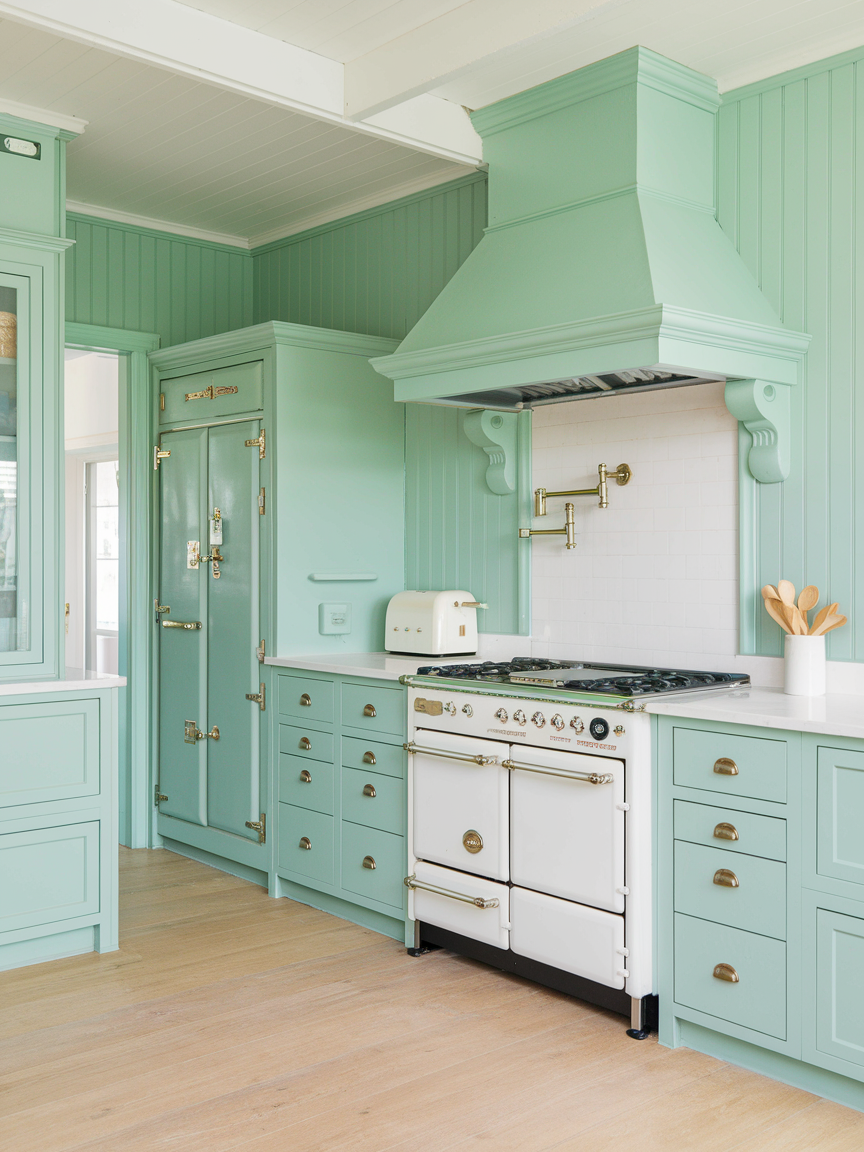
Mint green gives the kitchen a cheerful and refreshing quality that works particularly well in smaller rooms or spaces with limited natural light. Its pale appearance pairs beautifully with white surfaces, light wood, chrome, or simple contemporary fixtures, helping the room maintain a bright and open atmosphere. Mint also has a subtle retro character that can add personality without making the kitchen feel dated. Use it on cabinetry, walls, or small accents for a playful yet polished finish.
8. Green Open Shelving for Visual Warmth
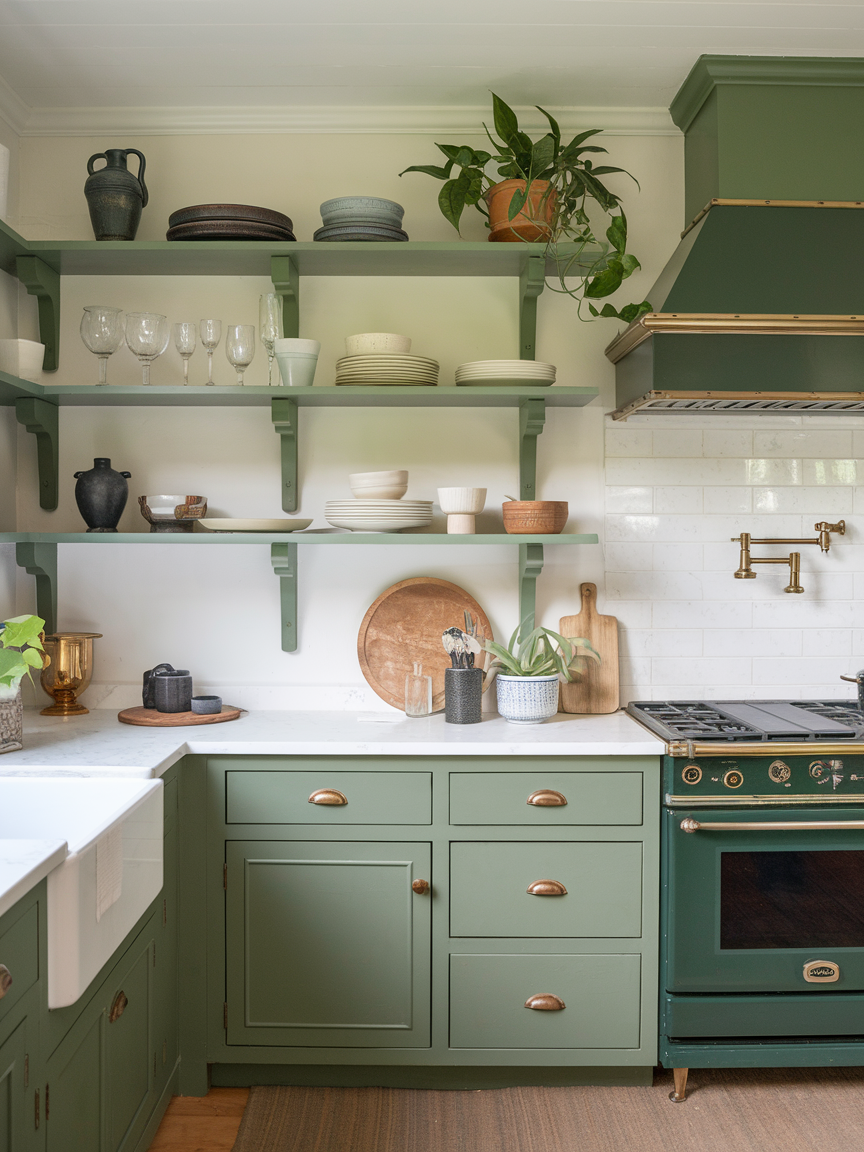
Green open shelving combines practical storage with a colorful decorative element. Painting shelves in a soft or rich green allows dishes, glassware, ceramics, plants, and cookware to become part of the overall design. The color works particularly well against neutral walls or cabinetry, adding warmth without requiring a major renovation. Keep the shelves thoughtfully edited and layer a few different textures to create a relaxed, lived-in appearance without making the display feel cluttered.
9. Green Walls for a Natural Backdrop
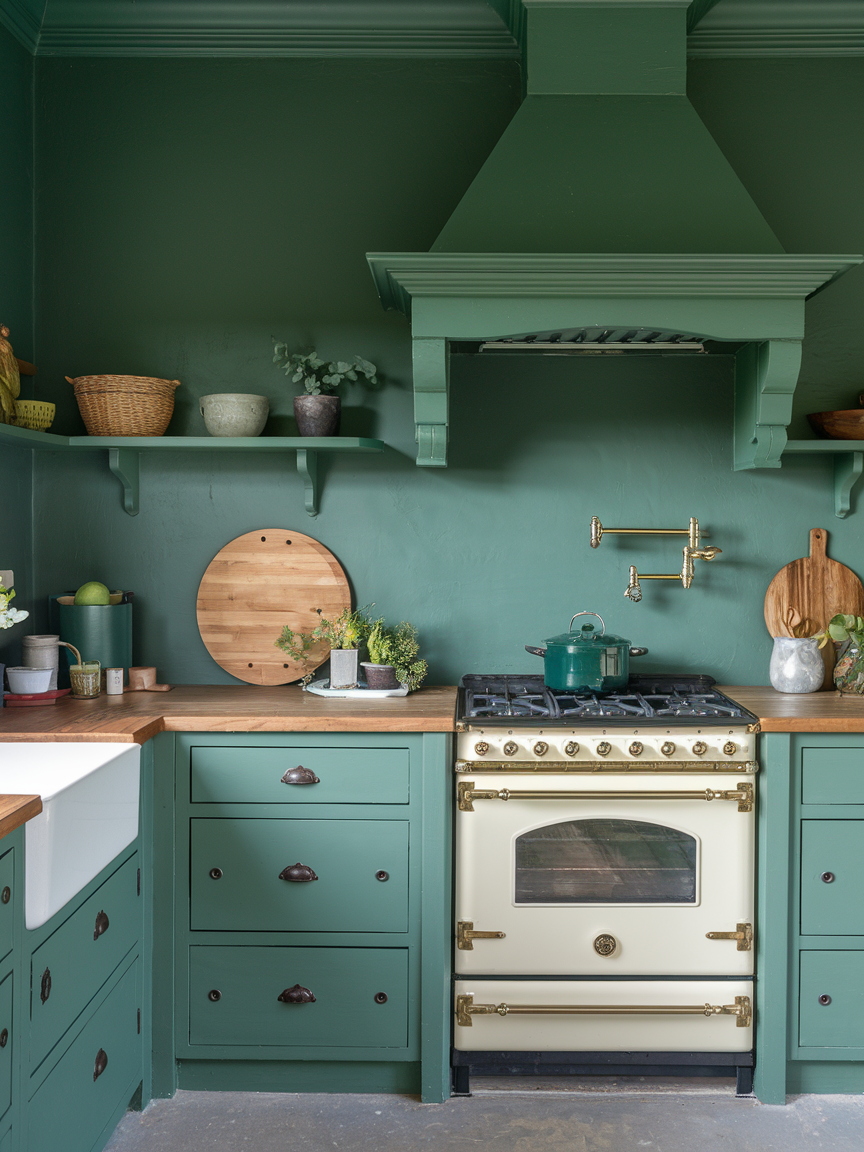
Green walls can refresh a kitchen with relatively little effort, particularly when the existing cabinetry is neutral. Soft sage or eucalyptus tones create a calming backdrop, while deeper greens can introduce contrast and drama behind white, cream, or light wood cabinets. The color pairs naturally with stone, timber, rattan, and other organic materials, helping the entire space feel connected. Painting the walls is also a flexible way to experiment with green without committing to new cabinetry or permanent fixtures.
10. Sage Green Cabinets
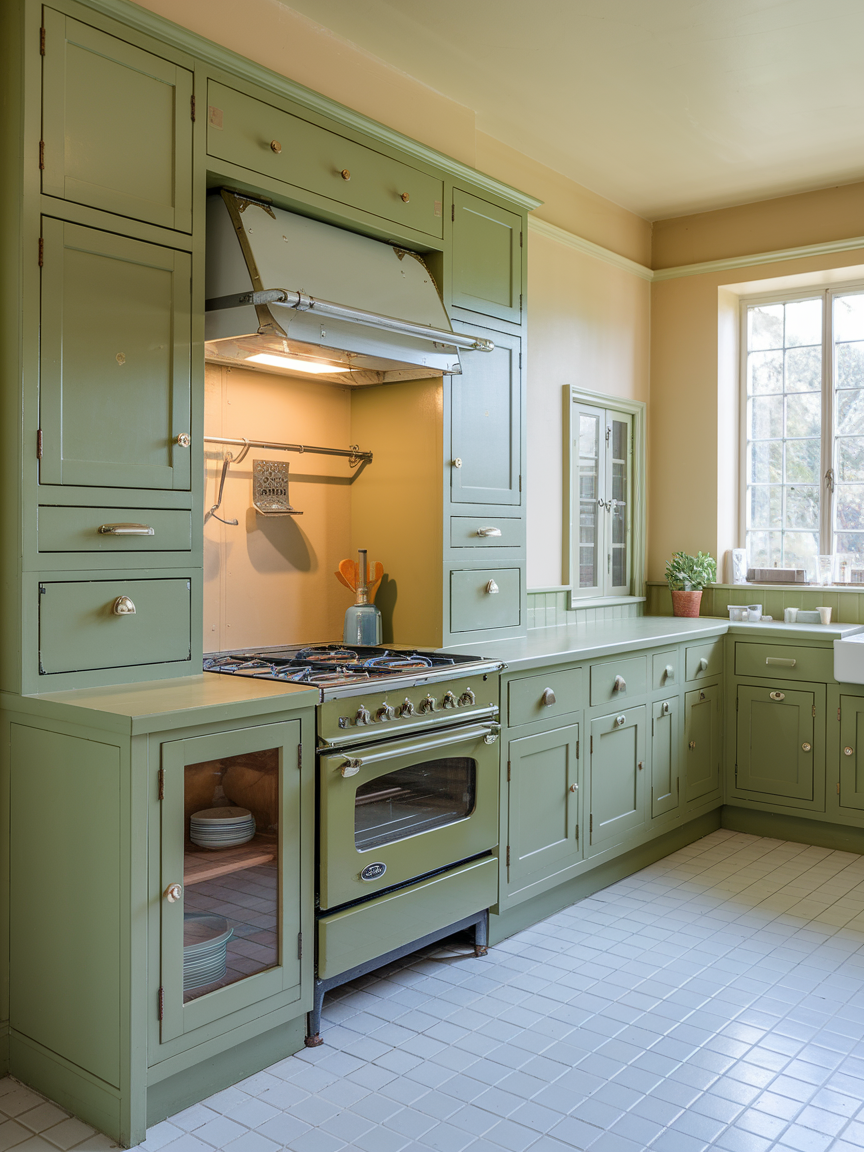
Sage green cabinets offer an easy way to introduce color while maintaining a calm and sophisticated atmosphere. This muted shade works beautifully with white countertops, warm wood, natural stone, and brushed brass hardware, creating a balanced palette that feels both fresh and timeless. Its soft appearance also works well with natural light, helping the kitchen maintain an open and welcoming feel. From modern farmhouse spaces to contemporary interiors, sage green adapts effortlessly to different design styles and can remain appealing long after current trends have changed.
11. Deep Emerald Green for a Bold Statement
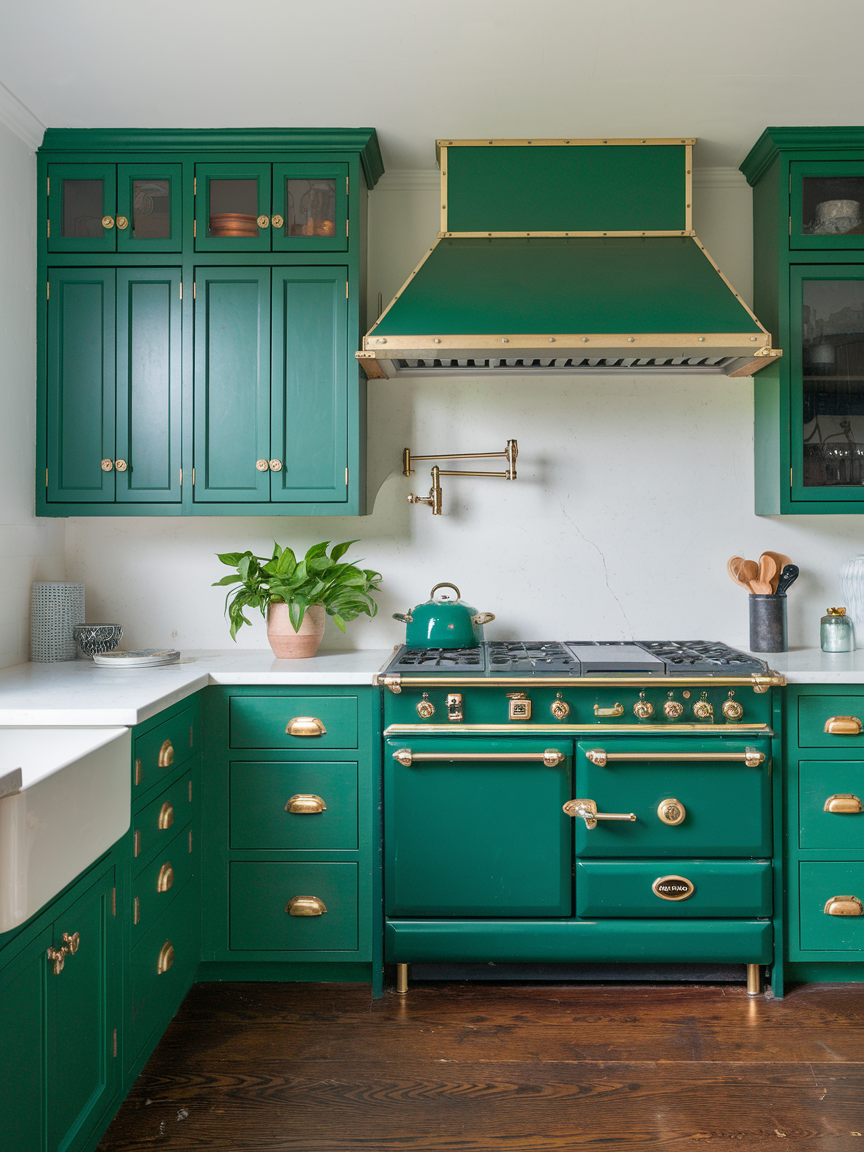
Deep emerald green cabinets or accent walls can give the kitchen an instant sense of richness and drama. The jewel-toned shade works particularly well in rooms with generous natural light, where its depth can be appreciated without making the space feel closed in. Pair emerald with marble countertops, brass hardware, dark wood, or crisp white walls to create contrast and keep the palette balanced. The result is a sophisticated kitchen where green becomes a defining feature without overwhelming the rest of the design.
12. Olive Green for a Warm, Earthy Kitchen
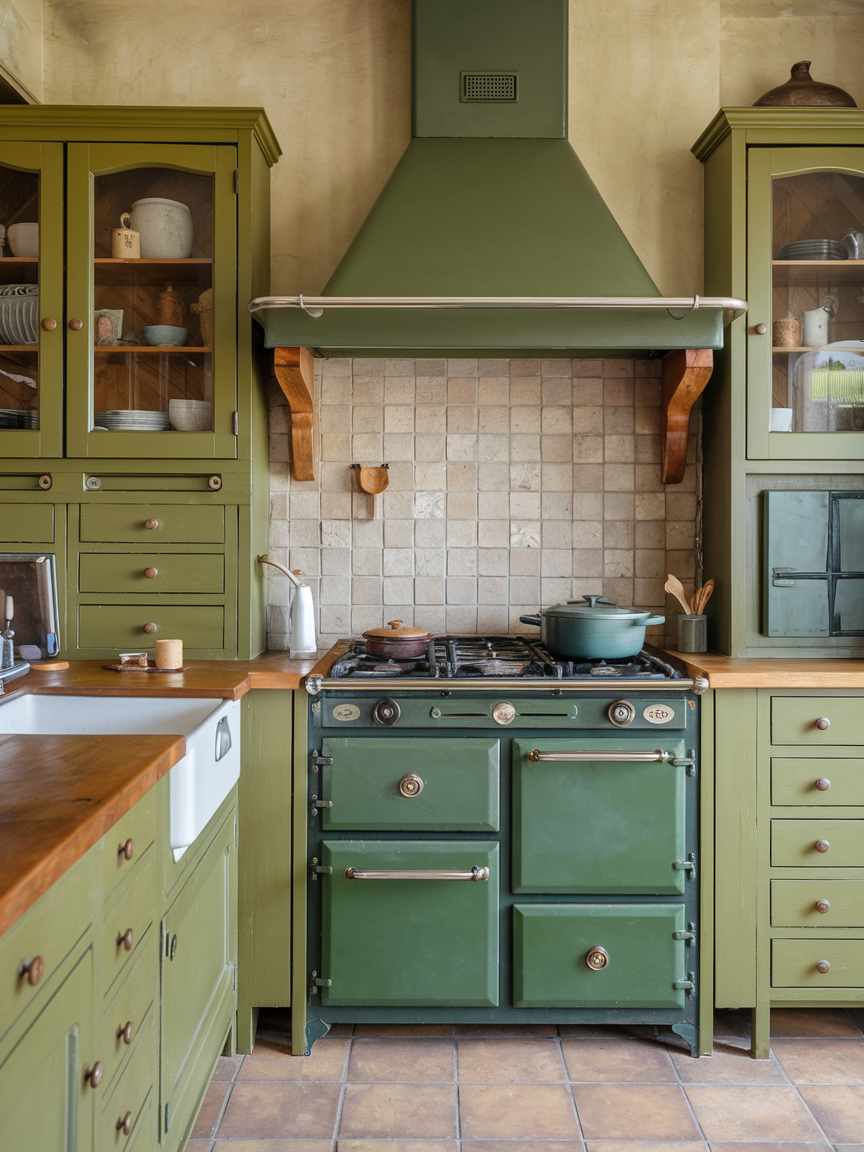
Olive green creates a grounded atmosphere that feels naturally connected to the outdoors. Its muted undertones work especially well with rustic, Mediterranean, farmhouse, and modern organic interiors, particularly when combined with warm wood, stone, terracotta, and woven textures. Olive cabinetry or walls can add personality without becoming too dominant, making this shade a comfortable choice for everyday spaces. Its earthy quality also allows the kitchen to maintain a timeless appearance as decorating preferences evolve.
13. Green Kitchen Backsplash for Subtle Color
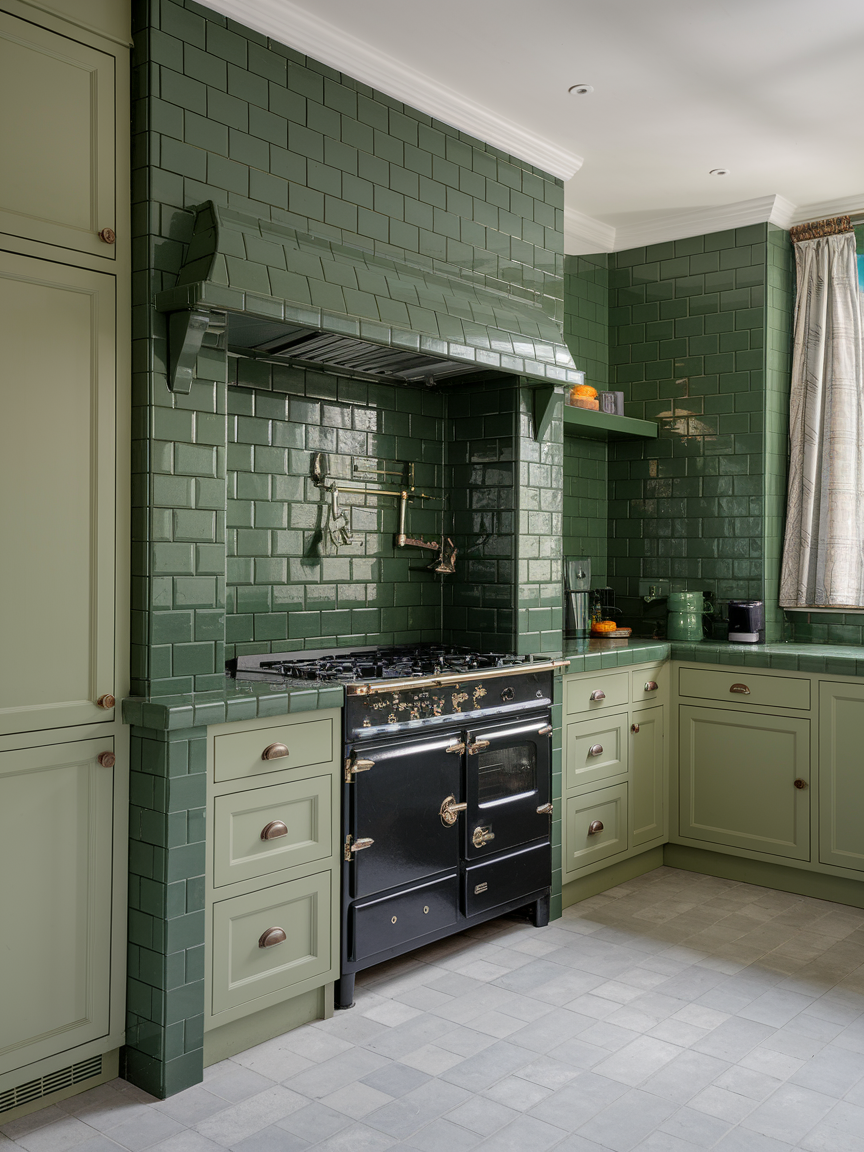
A green backsplash is a simple way to bring personality into the kitchen without covering the entire room in color. Subway tiles, handmade ceramics, glossy zellige tiles, and textured mosaics can all introduce different levels of depth and character. Pale green creates a light and airy impression, while darker shades offer stronger contrast against neutral cabinetry. Glazed tiles can also reflect light across the cooking area, giving the backsplash a subtle glow and making it an attractive focal point.
14. Two-Tone Green and White Cabinets
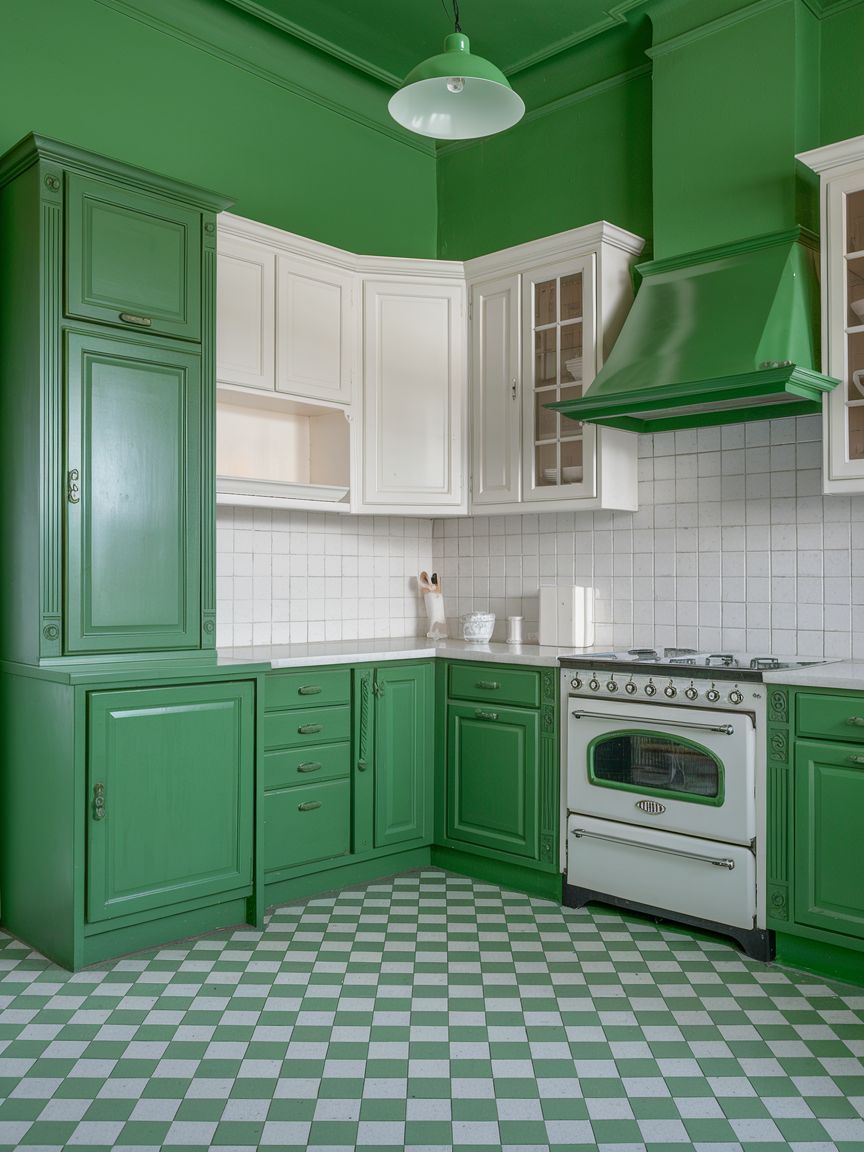
Pairing green lower cabinets with white upper cabinets creates a balanced kitchen that feels colorful without becoming visually heavy. The darker lower section grounds the room, while white cabinetry above keeps the walls bright and open. This combination is particularly useful in smaller kitchens where too much dark color could make the space feel enclosed. Add natural wood, simple hardware, or a light countertop to connect the two tones and create a polished, cohesive finish.
15. Green and Wood Combination
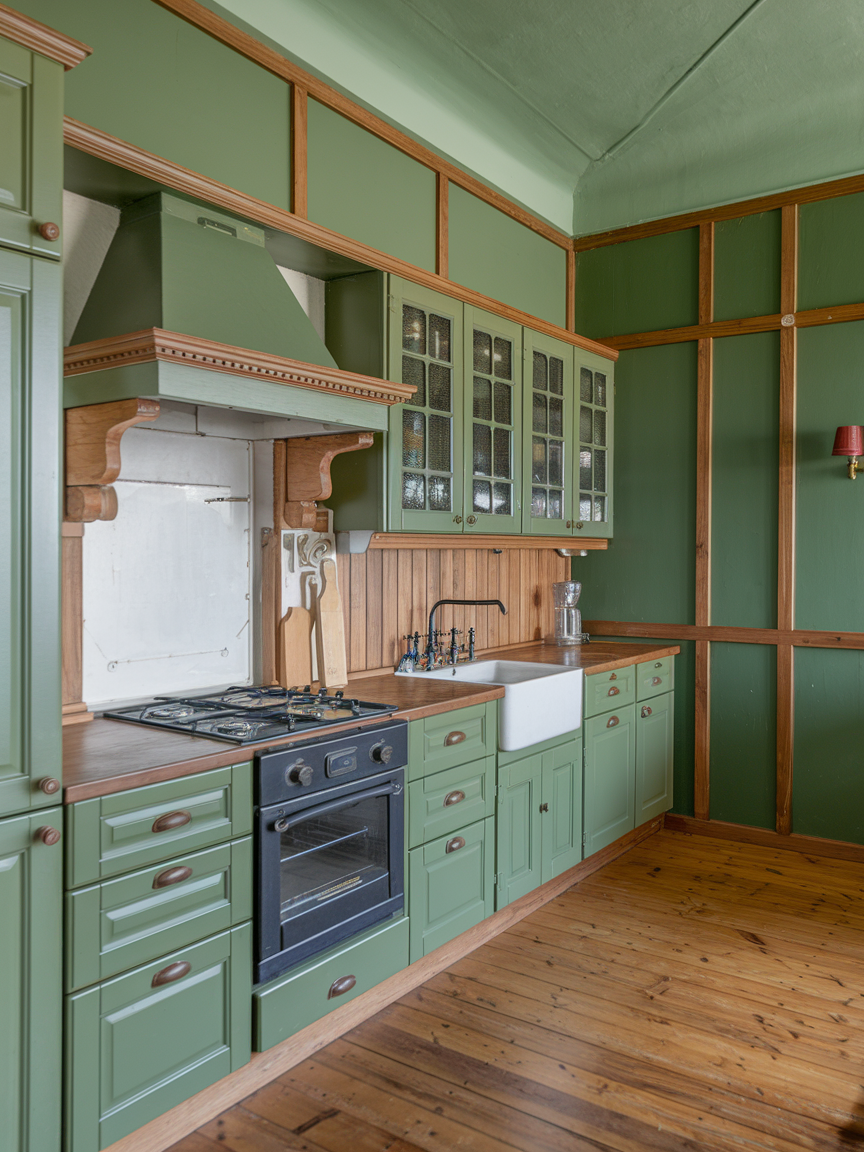
Green and natural wood create a warm, organic combination that works across rustic, Scandinavian, farmhouse, and contemporary kitchens. Green cabinetry brings freshness and depth, while wood countertops, flooring, shelving, or furniture introduce warmth and soften the overall palette. The two materials complement one another naturally, creating a space that feels comfortable rather than overly polished. Add stone surfaces and simple hardware to complete a balanced kitchen that feels inviting and timeless.12. Matte Green Cabinets for Modern Appeal
16. Green Tile Floors for Visual Interest
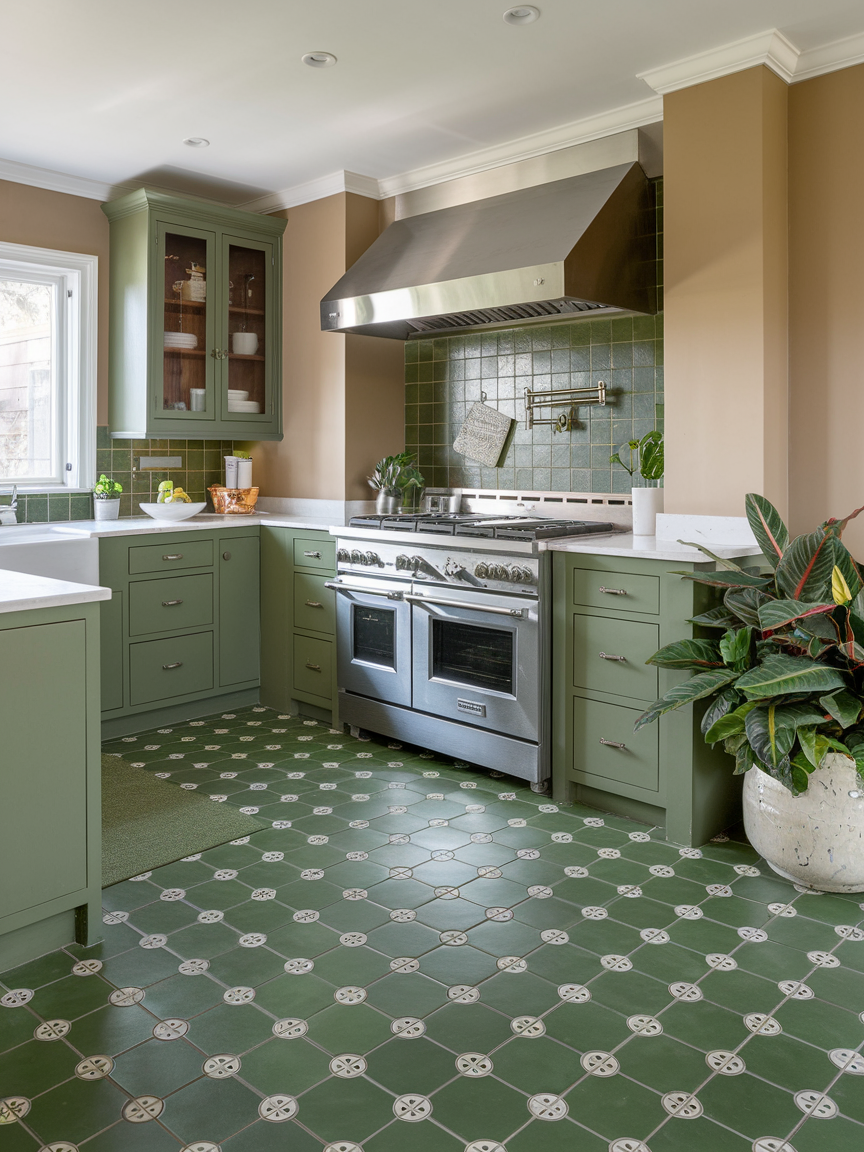
Green tile flooring adds color in an unexpected place while giving the kitchen a distinctive foundation. Solid green tiles can create a refined appearance, while patterned designs introduce more personality and visual movement. The floor works especially well with neutral cabinetry because it allows the green to become a feature without competing with other colorful elements. Durable tile also offers a practical surface for busy kitchens, making this approach both decorative and functional.
17. Green Wallpaper
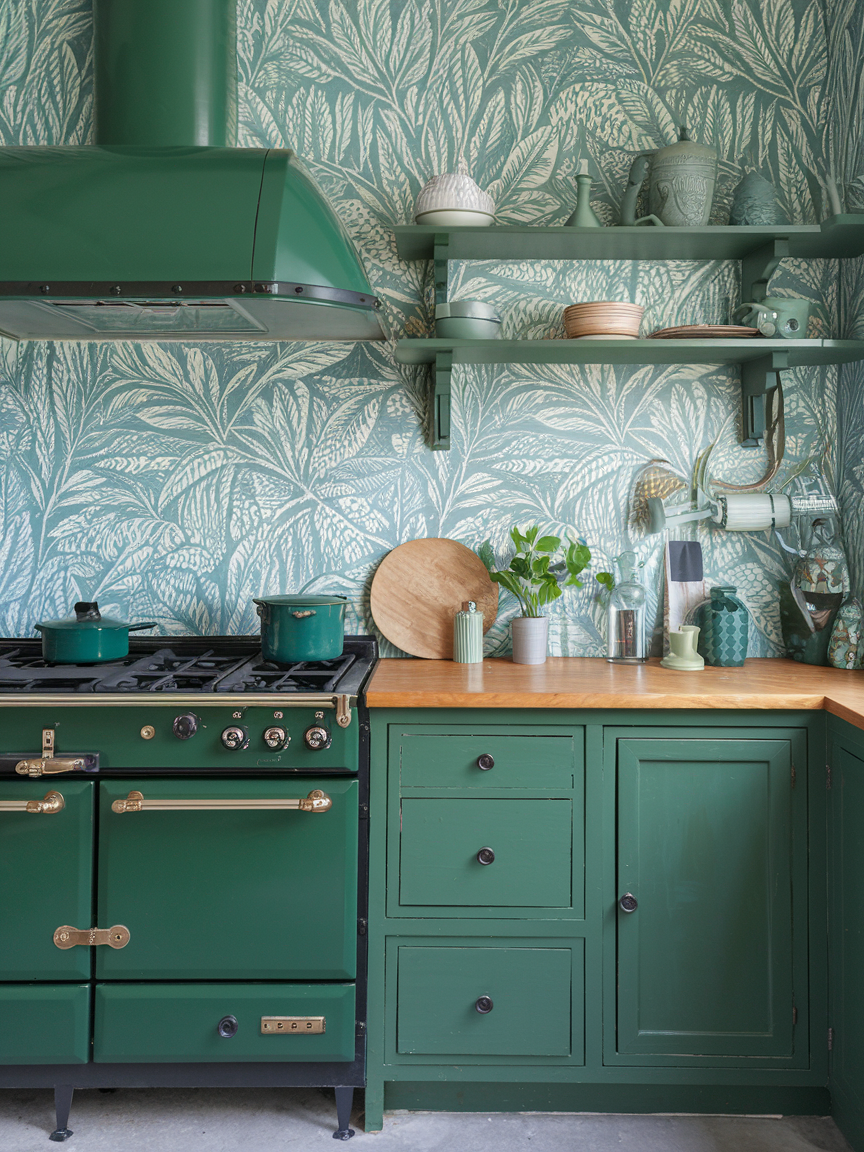
Green wallpaper can add pattern and personality to areas such as breakfast nooks, accent walls, or the space behind open shelving. Botanical motifs reinforce the natural quality of green, while geometric and vintage-inspired designs can create a more distinctive look. Keeping the cabinetry and hardware relatively simple allows the wallpaper to become the main decorative feature without overwhelming the room. Choose a durable, kitchen-appropriate product for areas exposed to moisture and everyday activity.
18. Green Countertop Decor
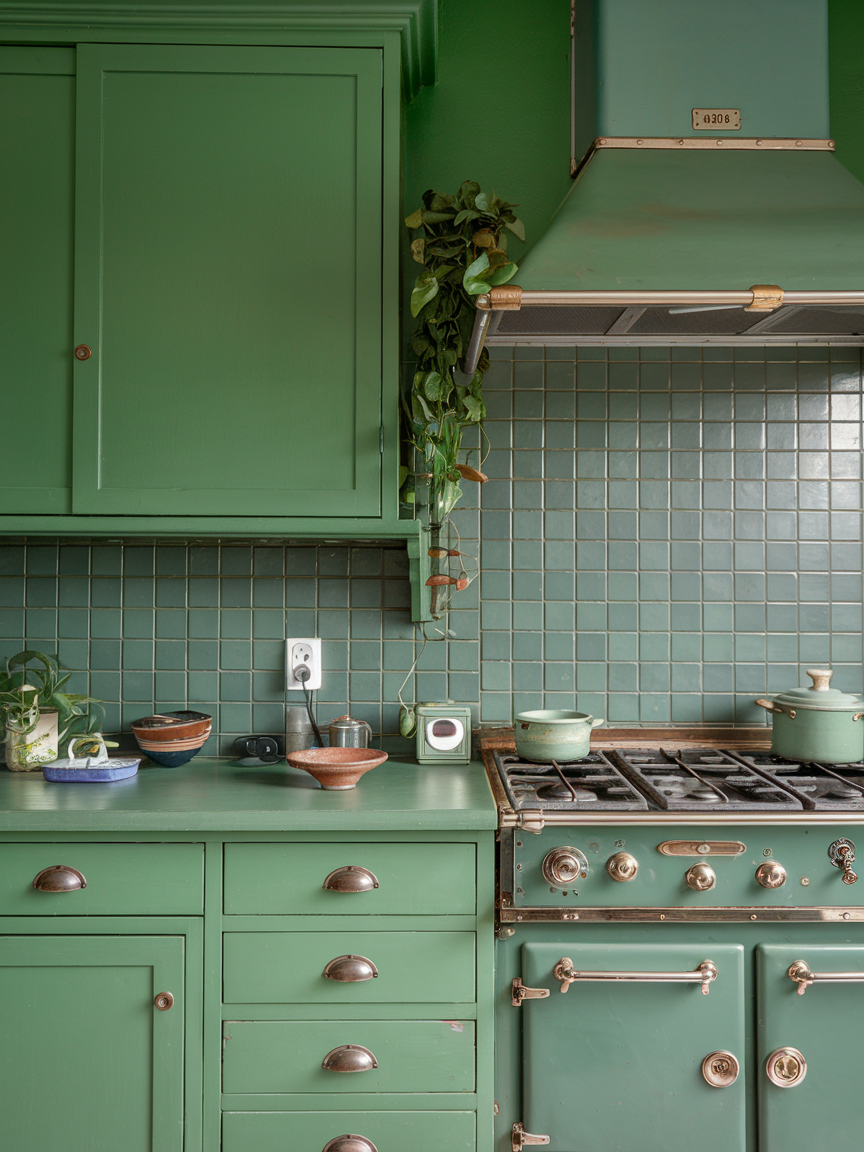
Green countertop accessories provide an easy way to bring color into the kitchen while keeping the changes practical. Potted herbs, ceramic bowls, glass canisters, small appliances, cutting boards, and decorative trays can all introduce subtle green accents. Group a few related pieces together rather than scattering them across every surface to keep the counters organized and visually calm. Natural greenery is especially effective because it reinforces the connection between the color green and the freshness of the outdoors.
19. Layering Multiple Shades of Green
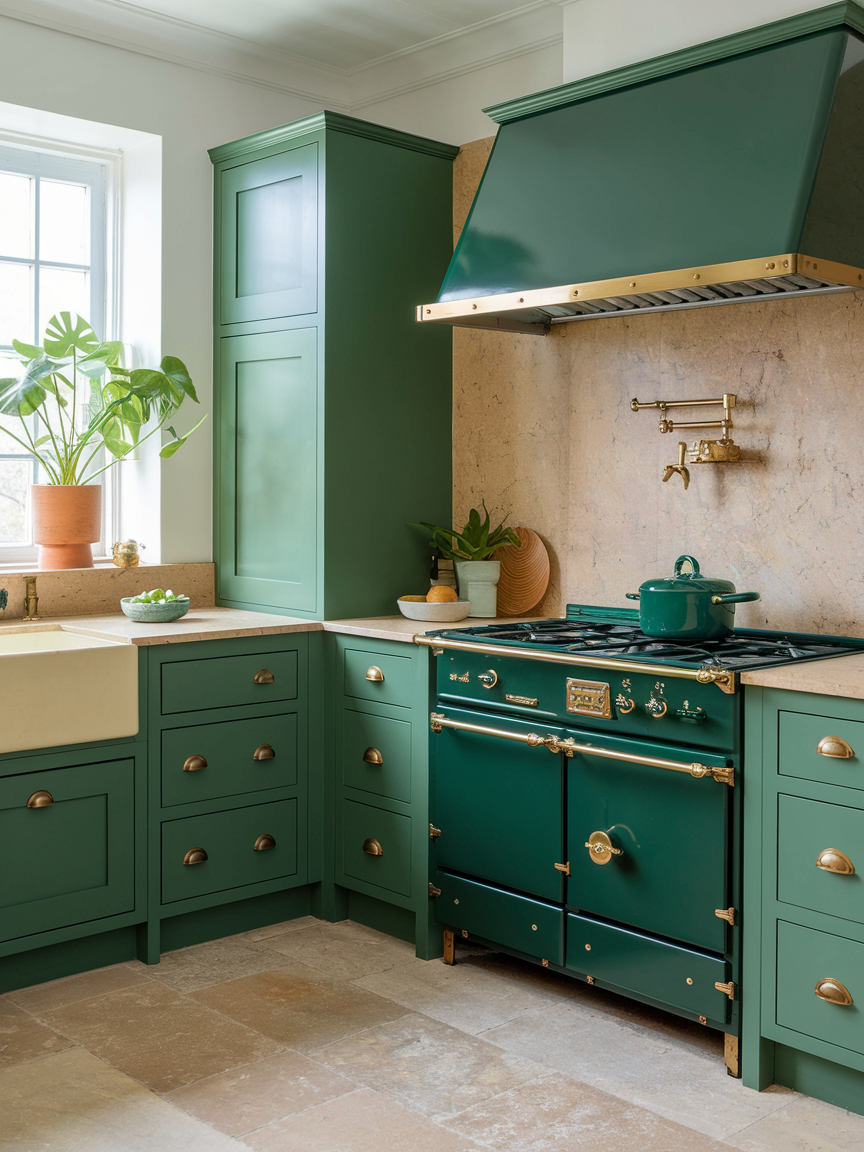
Using several shades of green can give a kitchen a rich and layered appearance without relying on one dominant tone. Combine lighter shades such as sage or pistachio with deeper olive, emerald, or forest accents across cabinetry, walls, textiles, artwork, and plants. Neutral materials such as wood, stone, cream, and metal help anchor the palette and prevent the greens from competing with one another. When each shade appears in a different element, the result feels connected, natural, and thoughtfully curated.
20. Soft Pistachio Green for Retro Charm
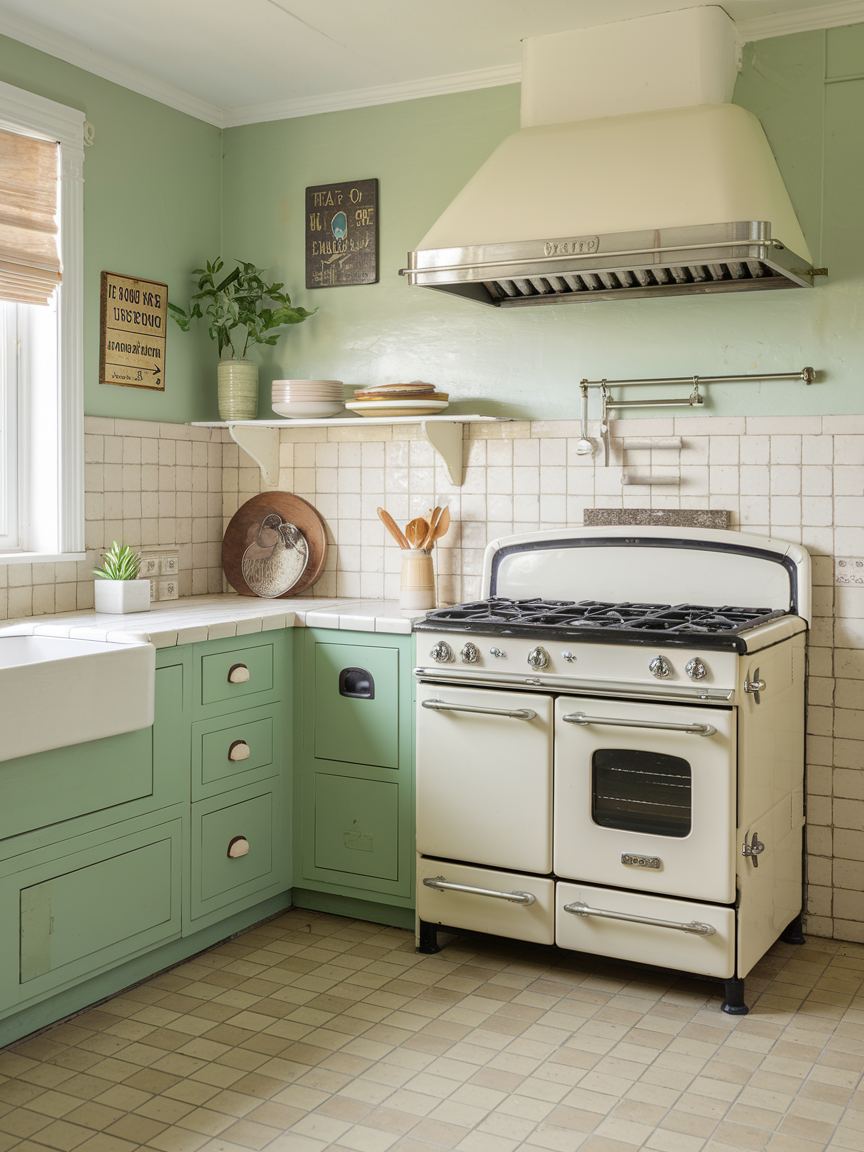
Pistachio green introduces a gentle vintage influence while keeping the kitchen feeling fresh and approachable. This pale shade works beautifully with white appliances, light wood, simple tile, and mid-century-inspired details, creating a cheerful atmosphere without becoming overly colorful. It can be used across cabinetry or introduced through smaller elements for a more subtle effect. The softness of pistachio makes it especially appealing in kitchens designed to feel relaxed, welcoming, and full of personality.
21. Green Ceiling for Unexpected Style
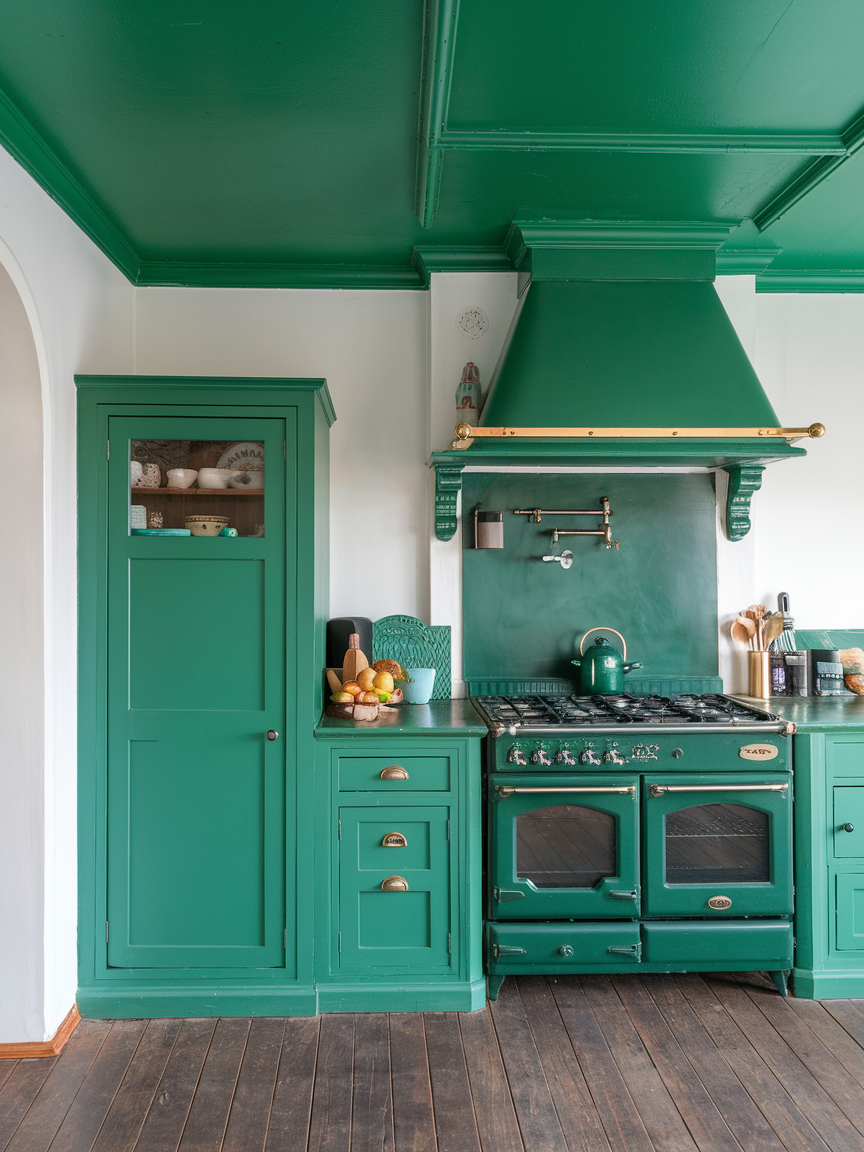
A green ceiling provides an unexpected way to introduce color while keeping the walls and cabinetry relatively neutral. A soft sage or muted green can draw attention upward and add another layer of warmth without visually dominating the kitchen. This technique works particularly well with white walls, light cabinetry, and natural wood, creating an interesting contrast between the ceiling and the rest of the room. It is a creative choice for anyone who wants to experiment with color beyond the usual cabinets and walls.
22. Green Glass Cabinets for Lightness
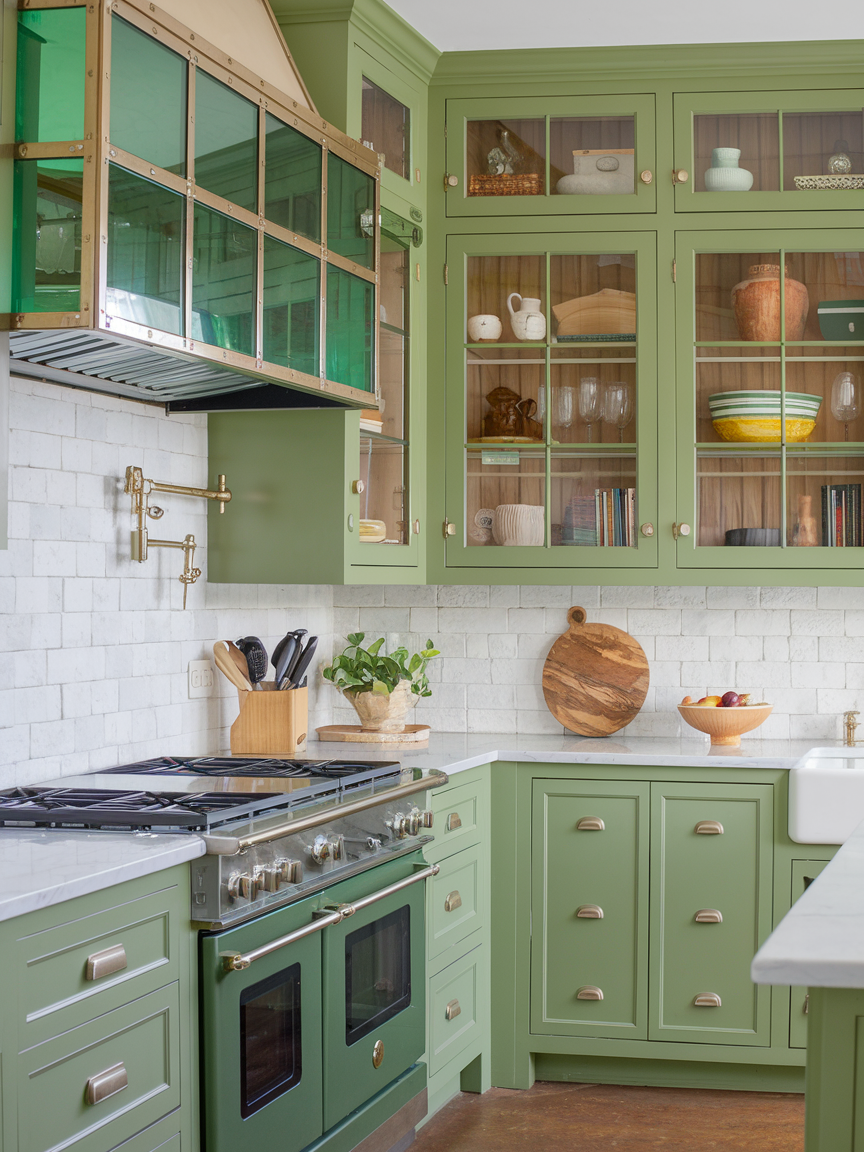
Green glass-front cabinets combine the richness of color with a sense of visual openness. Tinted glass can introduce a subtle green hue while allowing light to pass through, making upper cabinetry feel less solid and heavy. Use these doors to display attractive dishes, glassware, or carefully selected kitchen accessories. The combination of transparent surfaces and green tones creates a distinctive look that feels elegant, airy, and slightly unexpected.
23. Green Marble or Stone Surfaces
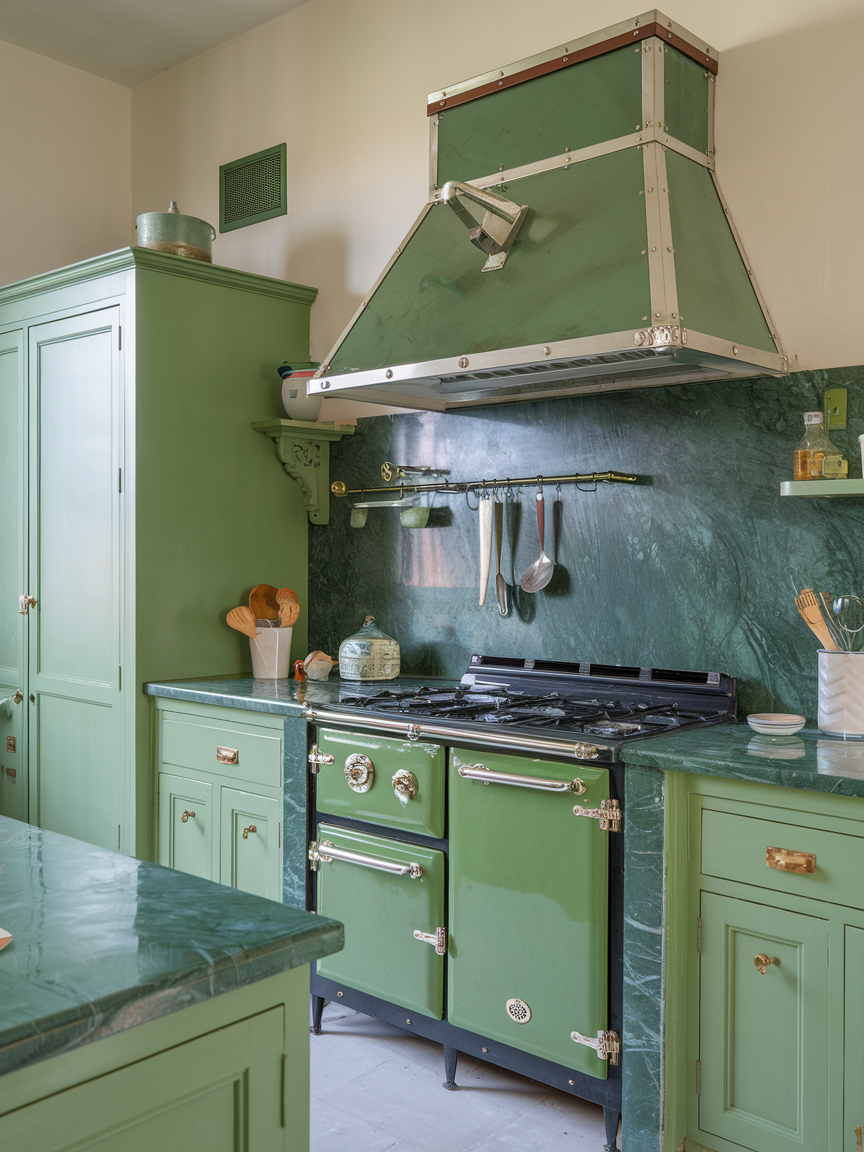
Green marble or natural stone can turn a countertop, backsplash, or feature surface into a striking focal point. Natural veining introduces movement and variation, while the green background creates an earthy connection to nature. Pair a dramatic stone with neutral cabinetry so its patterns remain the star of the design, or use simpler green stone alongside warm wood for a more relaxed effect. The result can feel luxurious while still maintaining the organic beauty associated with natural materials.
24. Green Kitchen Appliances
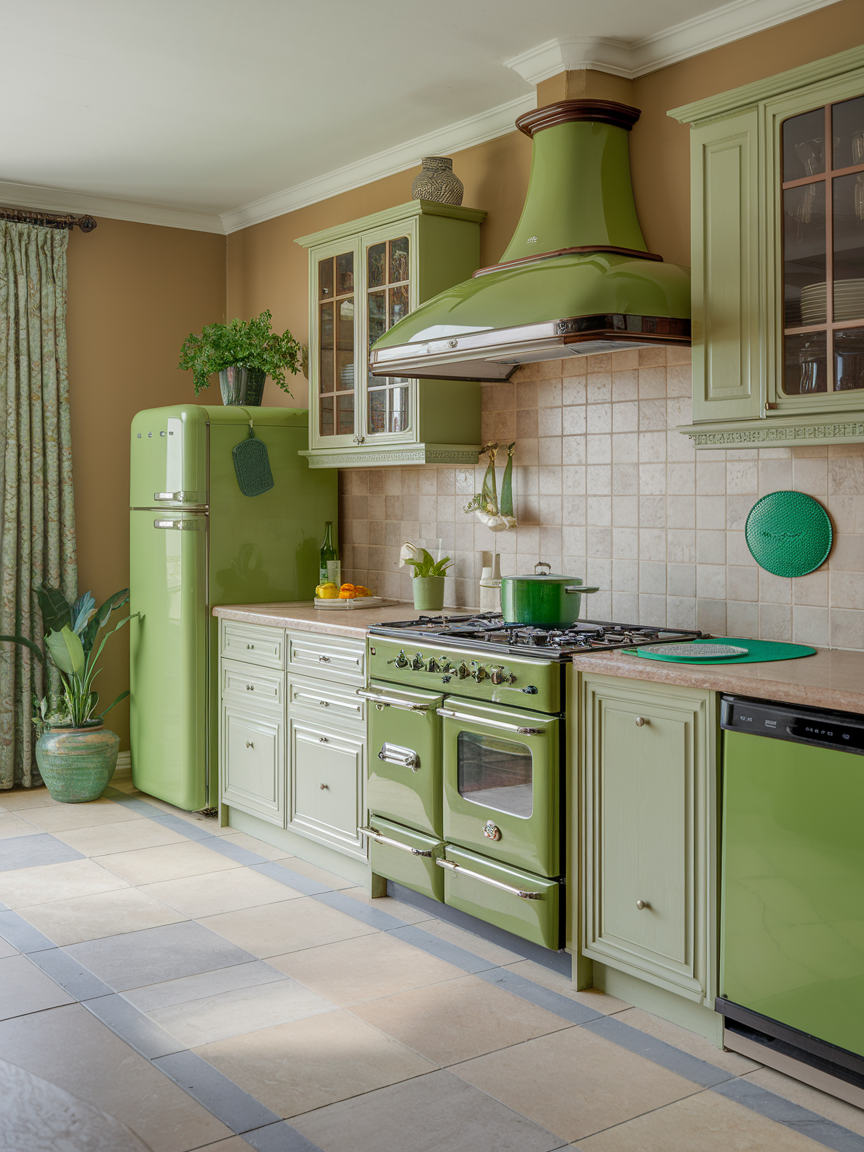
Green appliances offer a creative way to introduce personality without replacing the entire kitchen. A sage or mint refrigerator can bring a light, playful quality, while a forest or emerald range can create a stronger statement against neutral cabinetry. These appliances work especially well as focal points, particularly when surrounded by restrained finishes and simple decor. Coordinate the color with small touches such as cookware, plants, or backsplash details to create a cohesive look without making the kitchen feel overly matched.
* The appeal of a green kitchen lies in its ability to feel fresh, timeless, and full of character. Use these inspirations as a starting point, experiment with different shades and materials, and create a kitchen that feels stylish, inviting, and uniquely yours.