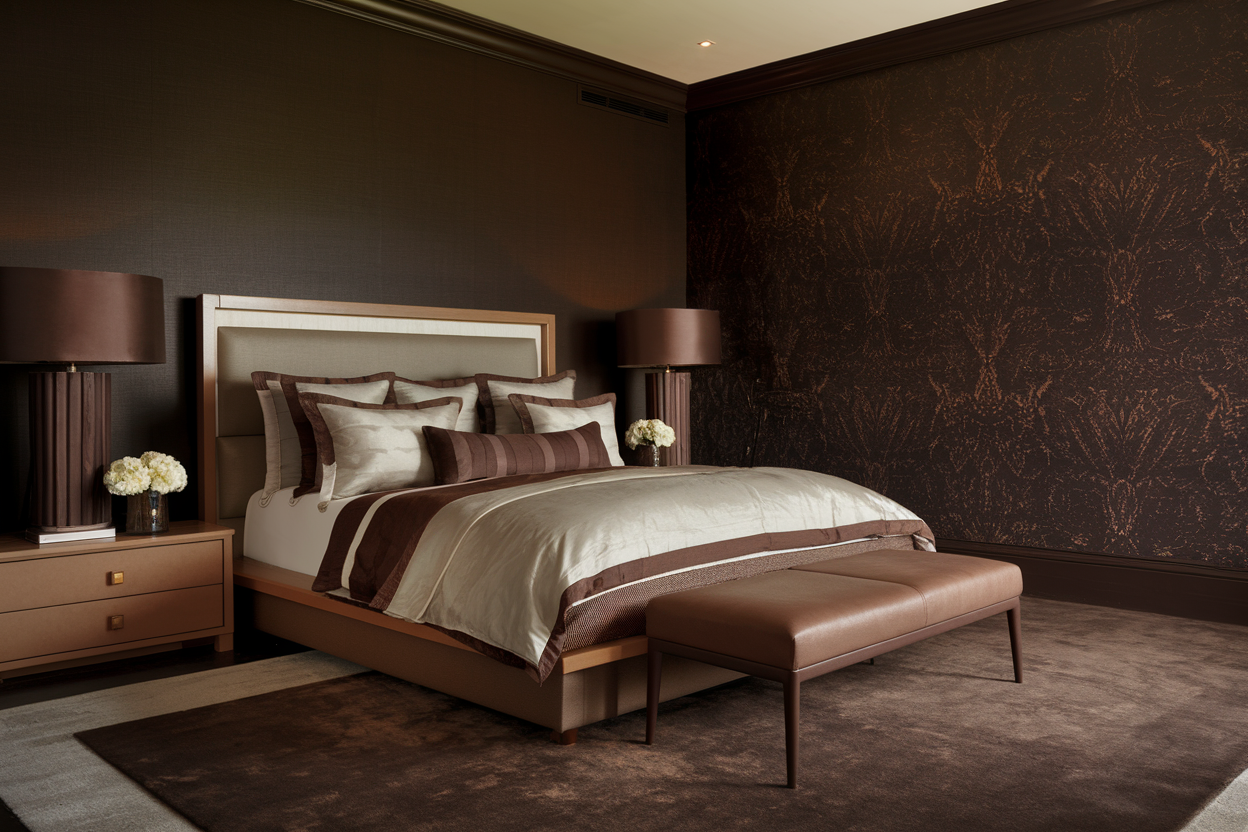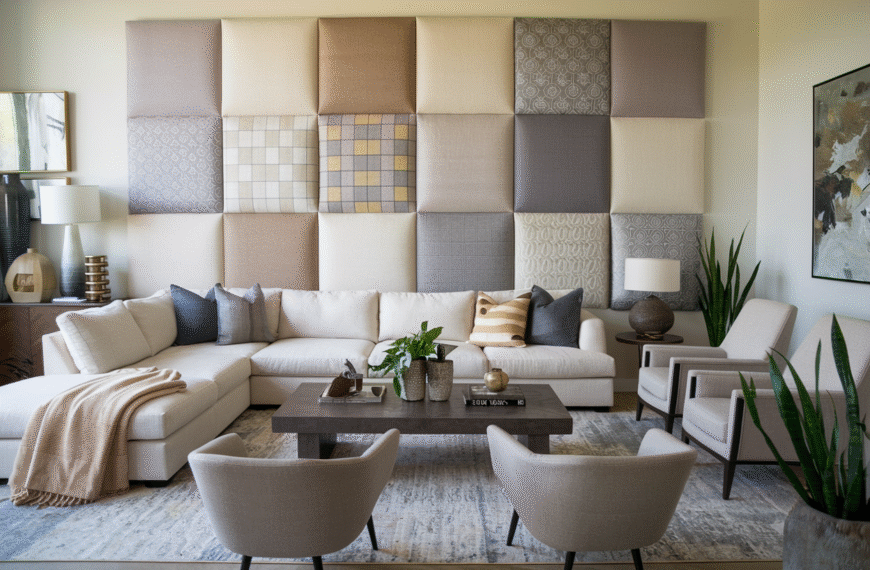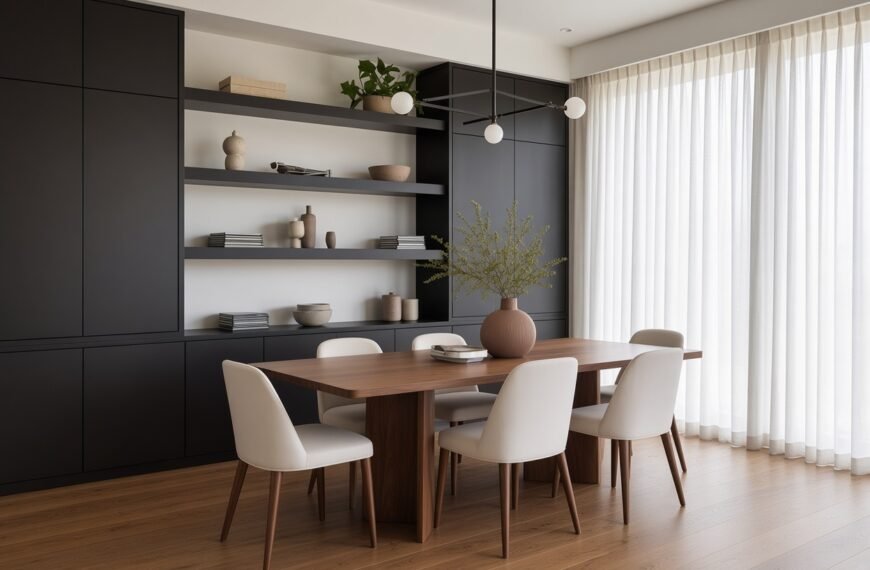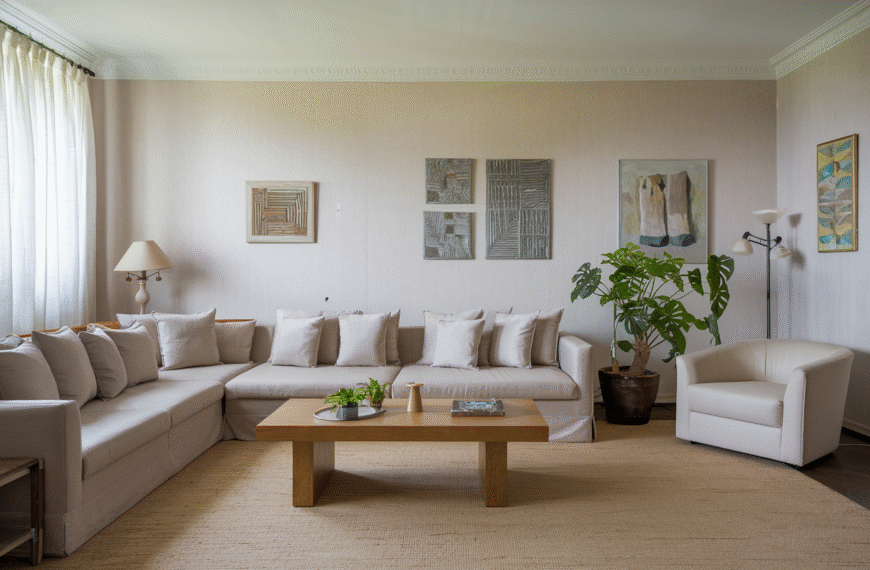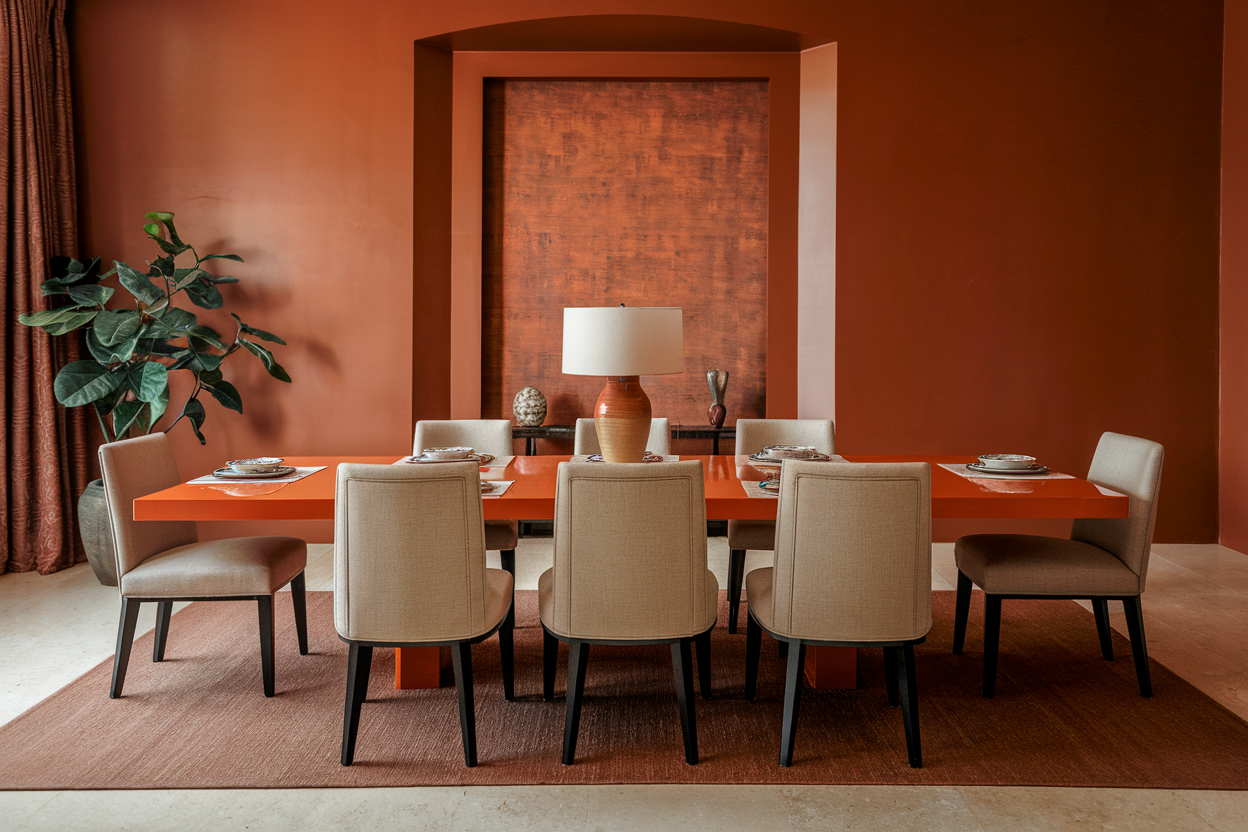
Orange brings warmth, personality, and an inviting glow to dining room interiors, making it a beautiful choice for spaces meant for gathering and connection. This vibrant yet versatile color ranges from soft terracotta and muted clay tones to richer burnt orange shades, each offering a unique way to create a dining area that feels both cozy and stylish. When paired with the right materials and lighting, orange adds depth and charm without overpowering the room.
A thoughtfully designed orange dining room relies on balance to achieve its chic appeal. Textured fabrics, natural wood furniture, warm metallic accents, and soft lighting help ground the color and create a welcoming atmosphere. Orange walls, upholstered chairs, or decorative accessories introduce visual interest while maintaining a sense of comfort and elegance that suits both everyday meals and special occasions.
This curated collection highlights dining rooms that blend warmth with refined design, proving that bold color can still feel sophisticated. The ideas shared here are meant to inspire confident styling choices. Let’s read through these cozy and chic orange dining room decor ideas and discover how thoughtful color use can transform your dining space into an inviting centerpiece of the home!
1. Soft Terracotta Walls for a Warm Foundation
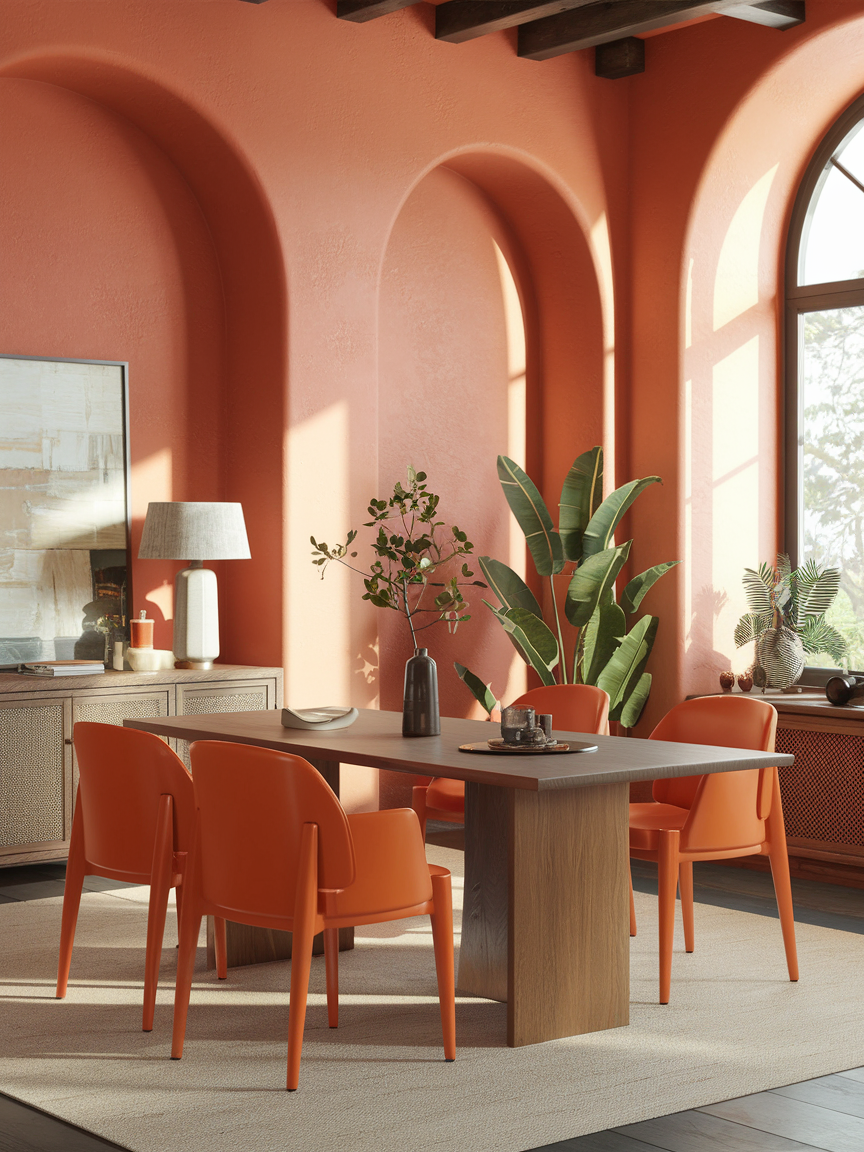
Soft terracotta walls are one of the most timeless ways to introduce orange into a dining room without overpowering the space. Unlike bright orange, terracotta carries an earthy, muted quality that feels grounded and calming. It creates a cozy backdrop that works especially well with wooden dining tables, neutral chairs, and natural textures like linen or woven accents. Terracotta walls also adapt beautifully to different lighting conditions, glowing warmly in the evening and feeling soft and welcoming during the day. To keep the look chic, pair these walls with clean-lined furniture and minimal decor, allowing the color itself to shine. This approach feels intentional rather than trendy, making it ideal for homeowners who want warmth without visual clutter.
2. Burnt Orange Dining Chairs as a Statement
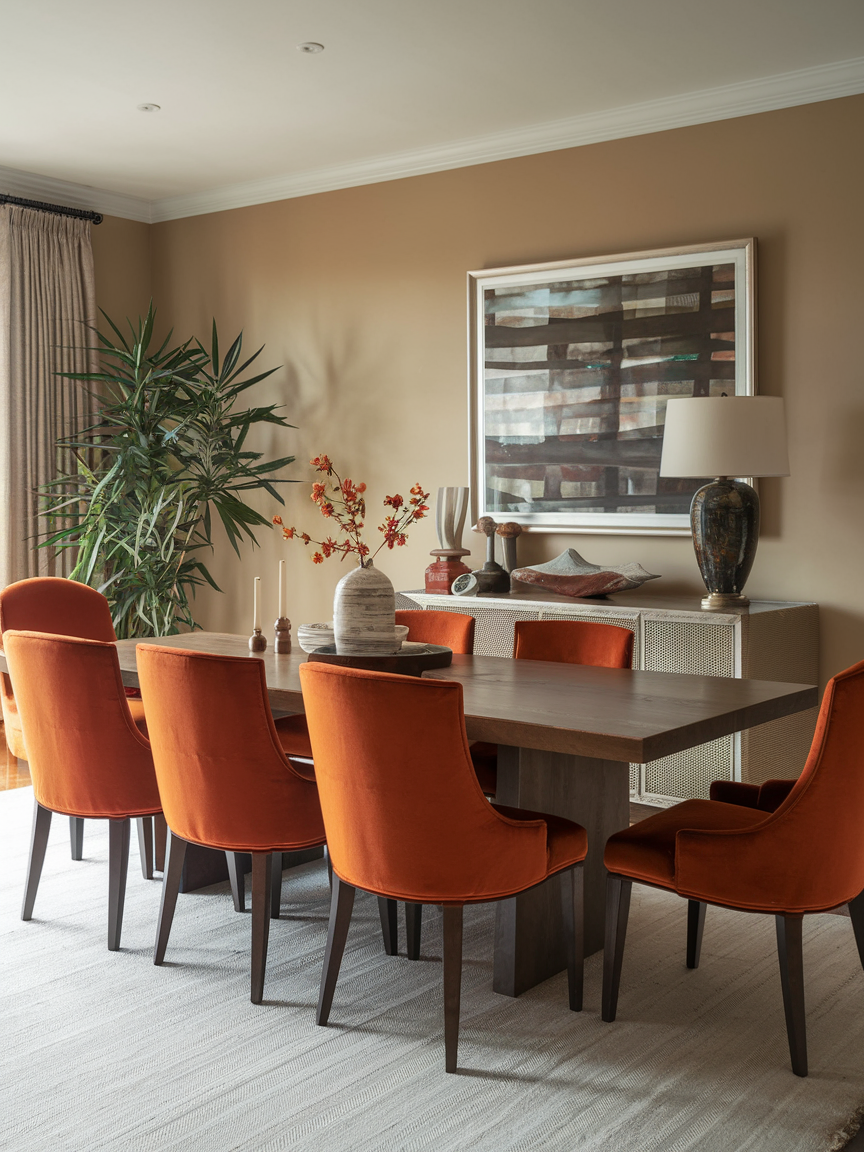
Burnt orange dining chairs are an excellent way to add visual interest while keeping the rest of the room neutral. This deeper, richer shade of orange brings sophistication and depth, especially when paired with wood, marble, or black dining tables. Upholstered chairs in burnt orange velvet or fabric add both comfort and elegance, making long dinners more enjoyable. The color naturally draws attention, so it works well in spaces that need a focal point without additional decor. To maintain a cohesive look, repeat the orange tone subtly elsewhere—perhaps in artwork, table linens, or ceramics. This balance ensures the dining room feels curated and stylish rather than overly bold.
3. Orange and Neutral Color Palette Balance
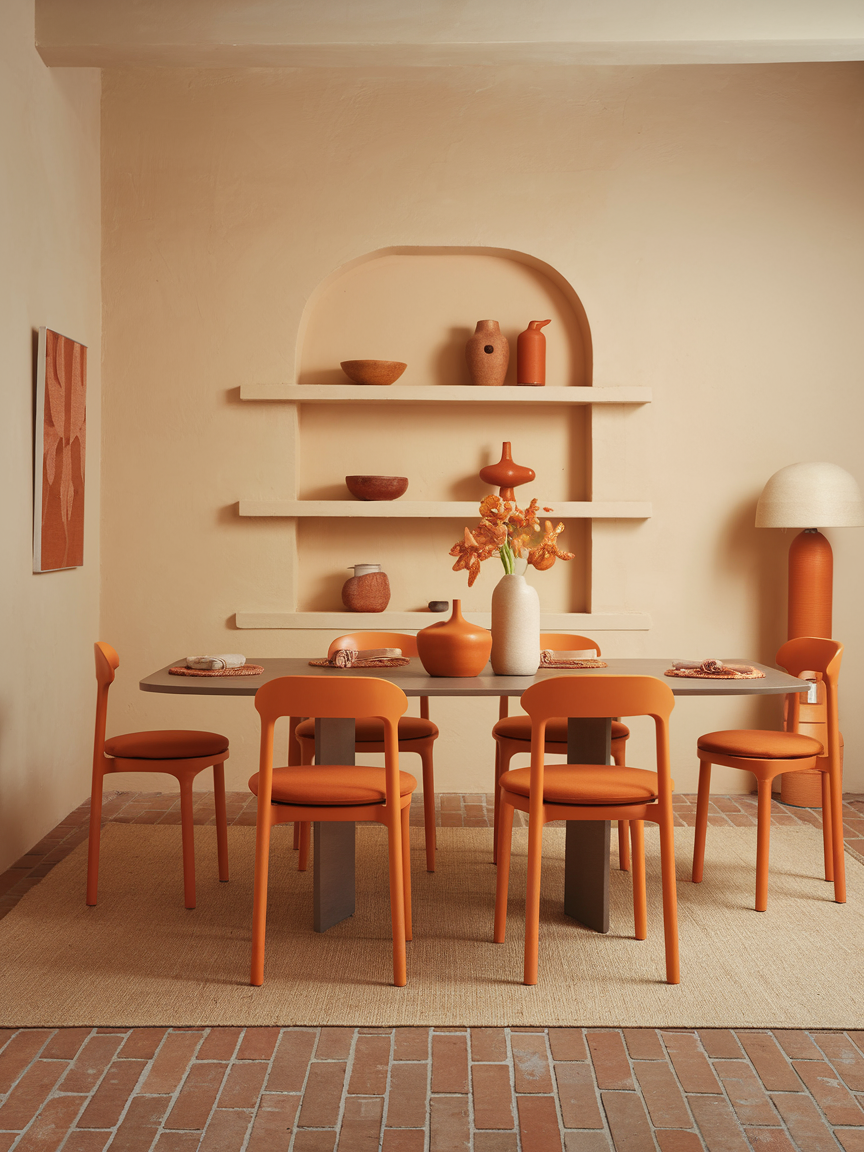
Pairing orange with neutral tones is the key to creating a cozy yet chic dining room. Shades like beige, cream, soft gray, and warm white allow orange accents to stand out without overwhelming the space. This balanced palette works especially well in smaller dining rooms, where too much color can feel heavy. Neutral walls combined with orange decor elements, such as chairs, rugs, or artwork, create a layered look that feels warm and inviting. The contrast also highlights textures, making wood grains, fabric weaves, and ceramic finishes more noticeable. This combination feels timeless and versatile, allowing you to refresh the space easily by swapping accessories without changing the core design.
4. Textured Orange Area Rugs Under the Table
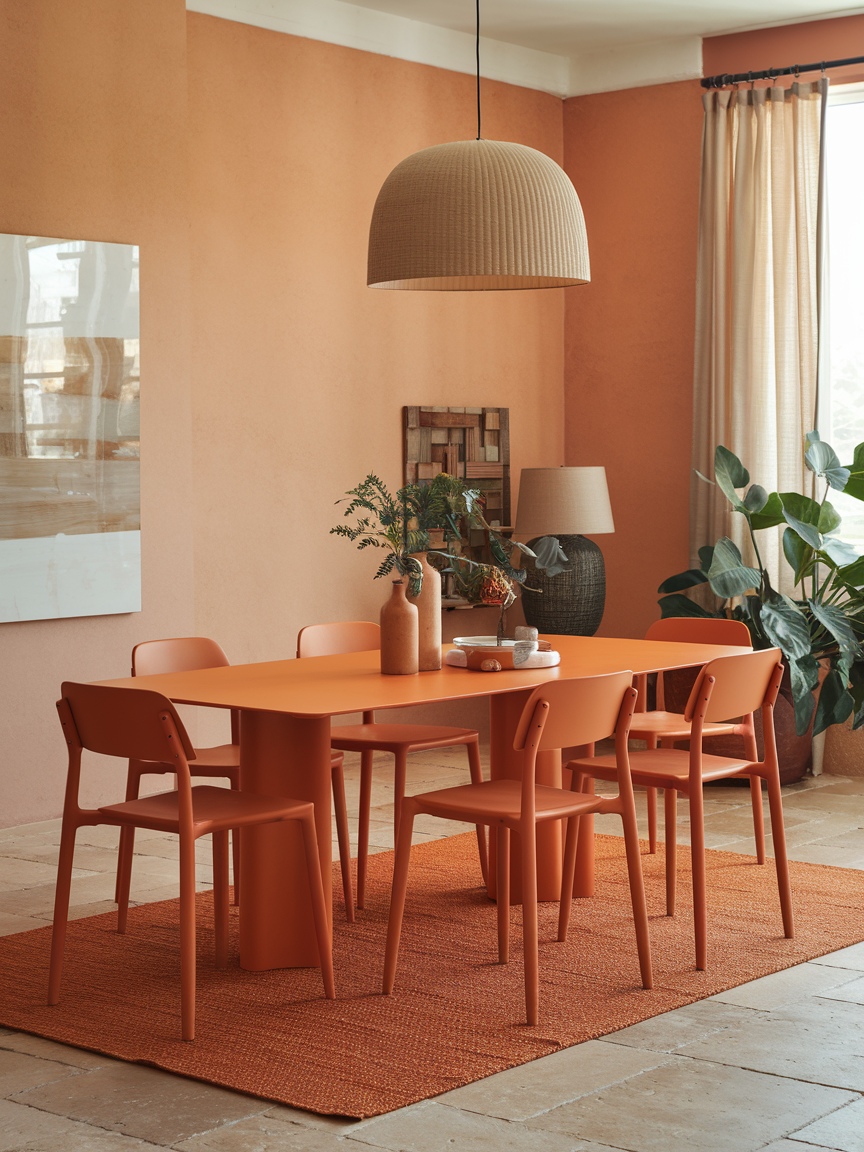
An orange area rug beneath the dining table instantly anchors the room and adds warmth underfoot. Choosing a rug with texture, such as a woven, patterned, or slightly distressed design, adds depth and visual interest without dominating the space. Earthy orange tones like rust or clay work especially well in dining rooms, as they hide wear while still feeling stylish. A rug also helps define the dining area in open-plan homes, creating a cozy zone that feels intentional. When paired with simple furniture and neutral walls, the rug becomes a subtle statement piece that enhances comfort while maintaining a chic, balanced look.
5. Balanced Orange Feature Wall
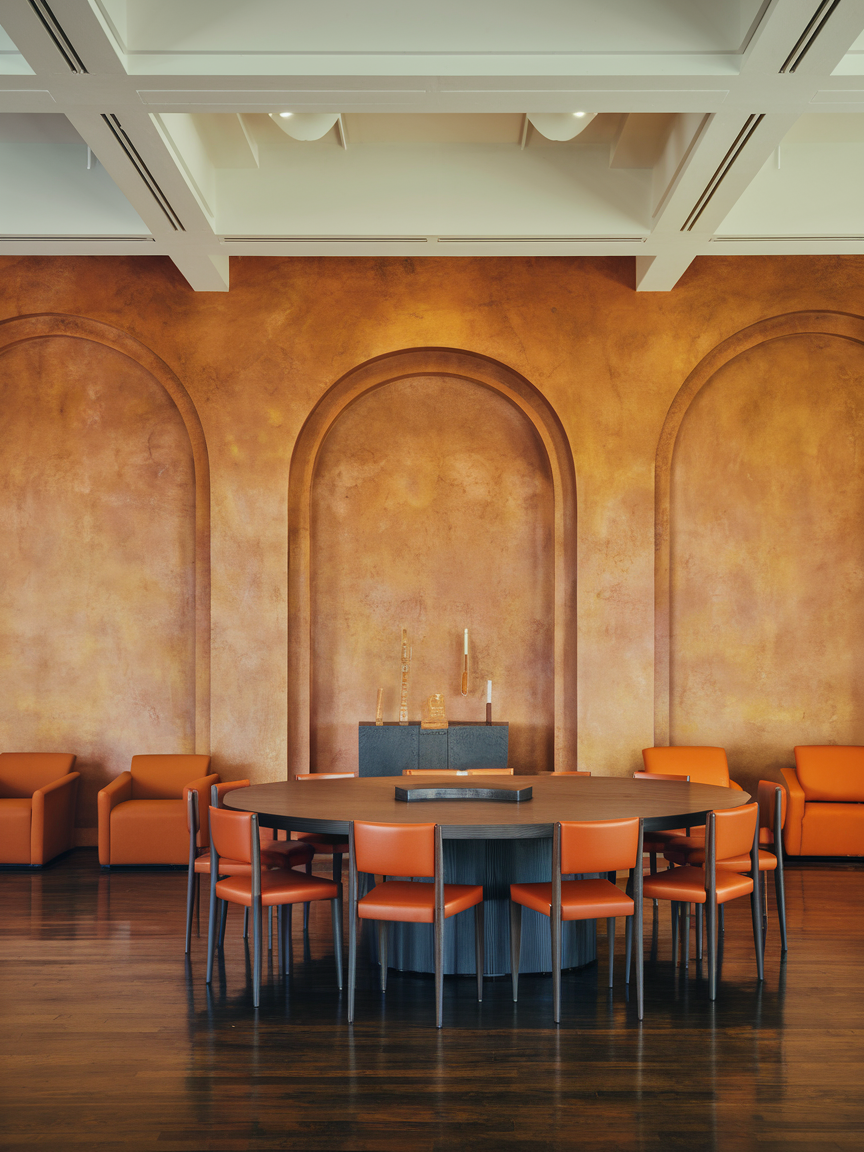
An orange feature wall is a bold yet effective way to introduce color without overwhelming the dining room. Choosing a muted or earthy orange keeps the look sophisticated. The feature wall anchors the space, creating a focal point that adds warmth and depth. To balance the color, keep surrounding walls neutral and decor minimal. This approach allows the orange wall to stand out while maintaining harmony. A well-executed feature wall feels intentional, cozy, and undeniably chic.
6. Orange Artwork as a Chic Focal Point
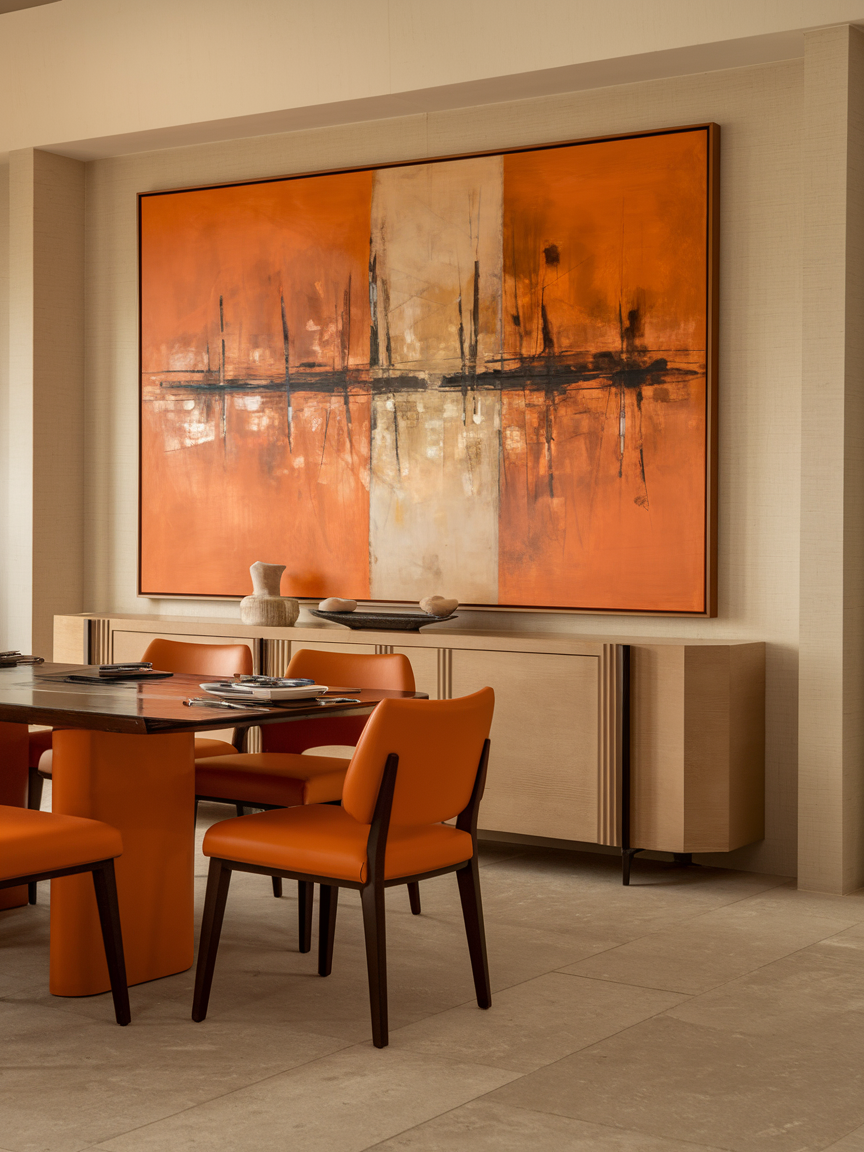
Artwork featuring orange hues can transform a dining room wall into a sophisticated focal point. Abstract paintings, botanical prints, or modern illustrations with touches of orange bring warmth while expressing personal style. This method works well in neutral dining rooms that need a pop of color without adding more furniture or decor. To keep the look chic, choose art with balanced compositions and complementary colors like beige, black, or soft green. Proper placement, such as centering artwork above a sideboard or along the main dining wall, helps ground the space. The result is a curated look that feels thoughtful and refined.
7. Terracotta or Orange Pendant Lighting
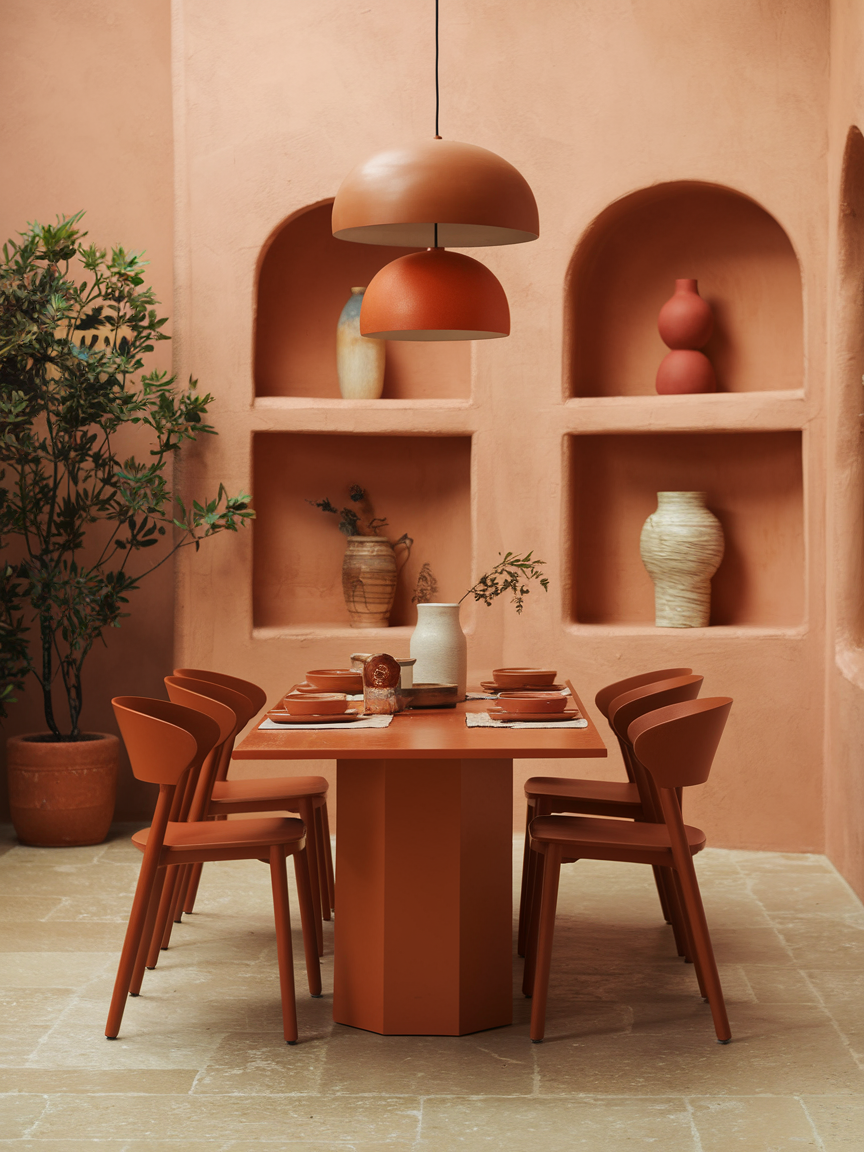
Lighting plays a huge role in how orange decor is perceived, and terracotta or orange pendant lights are both functional and decorative. These fixtures cast a warm, flattering glow over the dining table, enhancing the cozy atmosphere during evening meals. The color of the shade adds subtle warmth even when the light is off, making it a design feature on its own. To keep the space chic, opt for clean shapes and simple materials rather than overly ornate designs. Paired with neutral walls and understated furniture, orange pendant lighting feels modern, inviting, and perfectly balanced.
8. Orange Ceramic Decor on Shelves
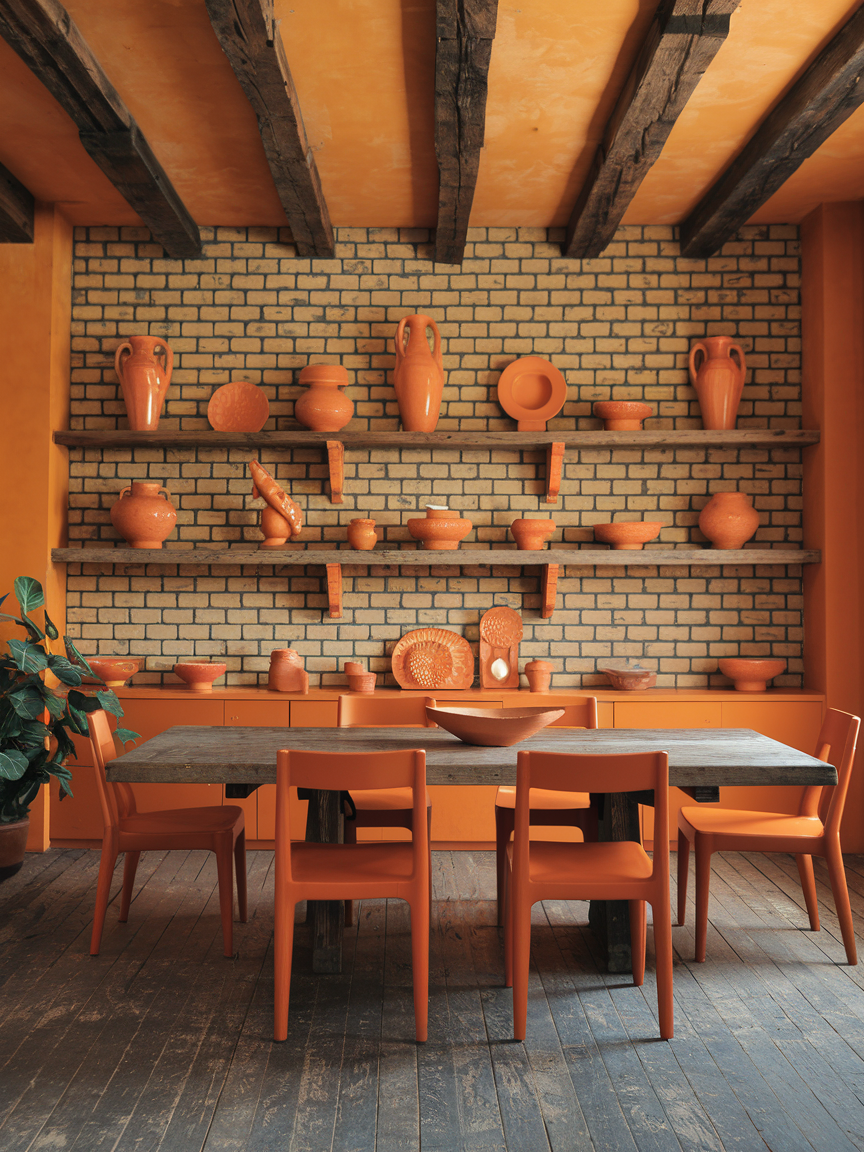
Ceramic decor pieces in orange tones add charm and warmth to dining room shelves or sideboards. Vases, bowls, and sculptural objects bring an artisanal feel that complements both modern and rustic interiors. The beauty of ceramics lies in their texture and finish, which add visual interest without needing bold patterns. Displaying a small collection of orange ceramics together creates cohesion, while mixing them with neutral or natural materials prevents the space from feeling too colorful. This subtle layering approach keeps the dining room cozy and stylish, making everyday decor feel elevated and intentional.
9. Pairing Orange with Dark Wood Furniture
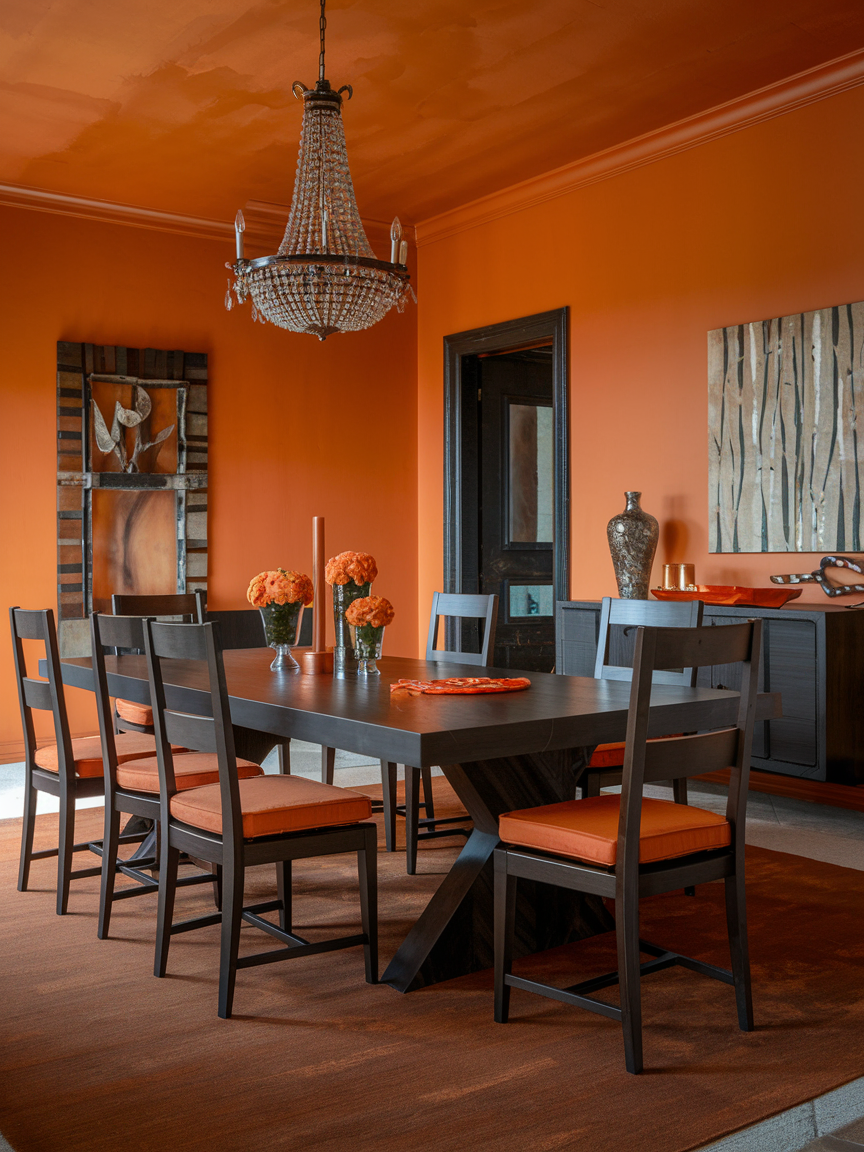
Orange decor paired with dark wood furniture creates a rich, elegant dining room aesthetic. The warmth of orange enhances the depth of dark wood finishes, resulting in a cozy yet refined look. This combination works especially well in traditional or transitional dining rooms, where classic elements meet modern color choices. To keep the space from feeling heavy, incorporate lighter accents such as neutral upholstery, soft lighting, or glass decor. The contrast between dark wood and warm orange tones adds sophistication while maintaining an inviting atmosphere that feels perfect for both casual meals and formal gatherings.
10. Muted Orange Wall Panels for Depth
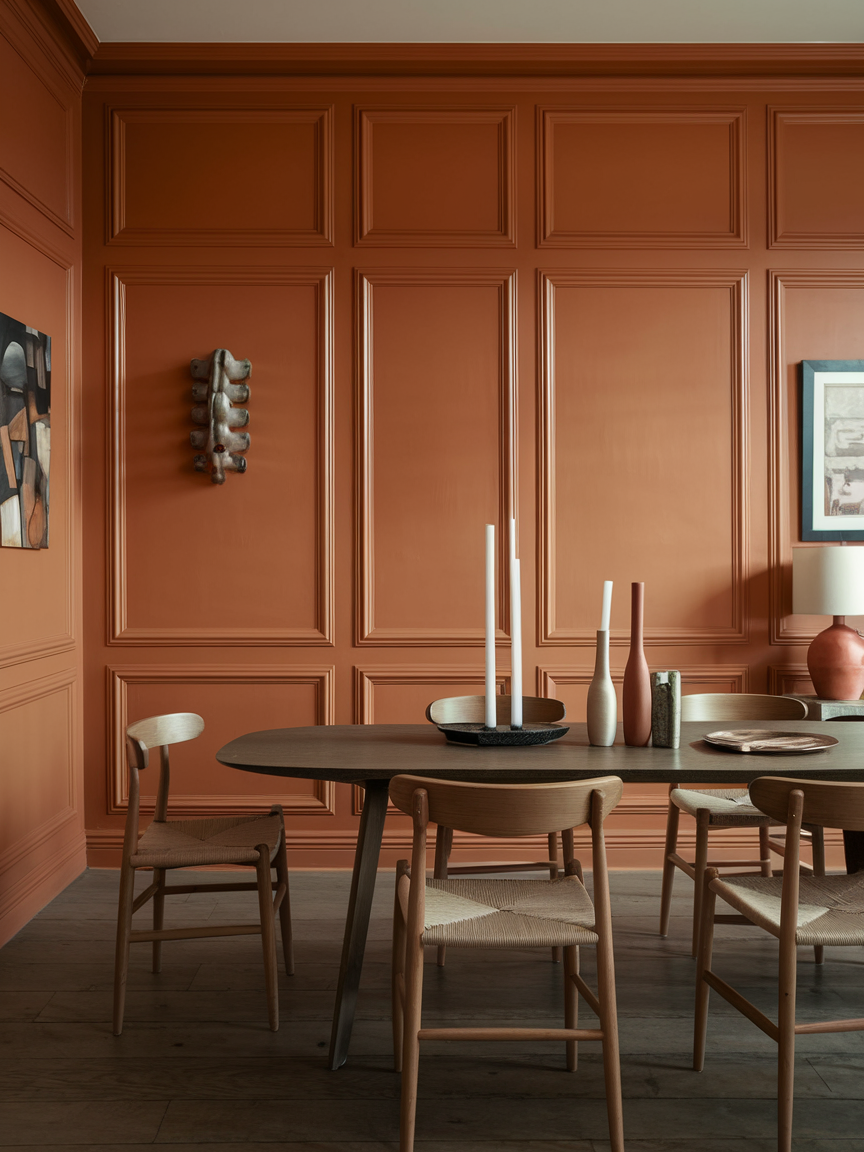
Wall paneling painted in muted orange tones adds architectural interest and warmth to a dining room. This design choice introduces color while also providing texture and dimension, making the space feel thoughtfully designed. Muted shades prevent the room from feeling too bold, especially when paired with neutral furniture and simple decor. Paneling works beautifully in both classic and modern interiors, offering a timeless appeal. When styled with soft lighting and minimal accessories, orange wall panels create a cozy backdrop that feels elegant rather than overwhelming, elevating the dining experience.
11. Orange Upholstered Dining Benches
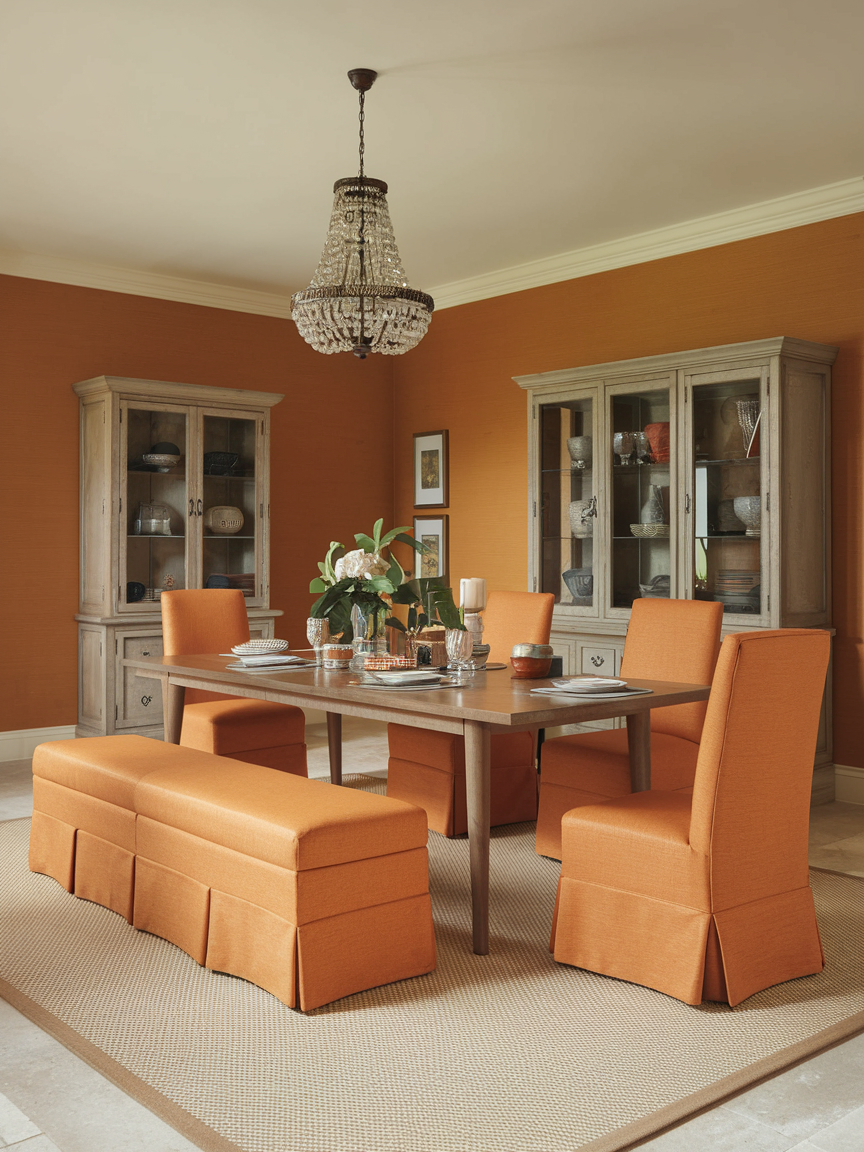
An upholstered dining bench in orange fabric adds both comfort and casual charm to the dining room. Benches encourage a relaxed seating arrangement, making the space feel welcoming and family-friendly. Orange upholstery introduces warmth and color while softening the overall look of the room. To keep things chic, choose high-quality fabrics in solid or subtly textured finishes. Pair the bench with neutral chairs or a wooden table to balance the color. This combination feels cozy yet intentional, perfect for homes that value comfort without sacrificing style.
12. Layering Multiple Shades of Orange
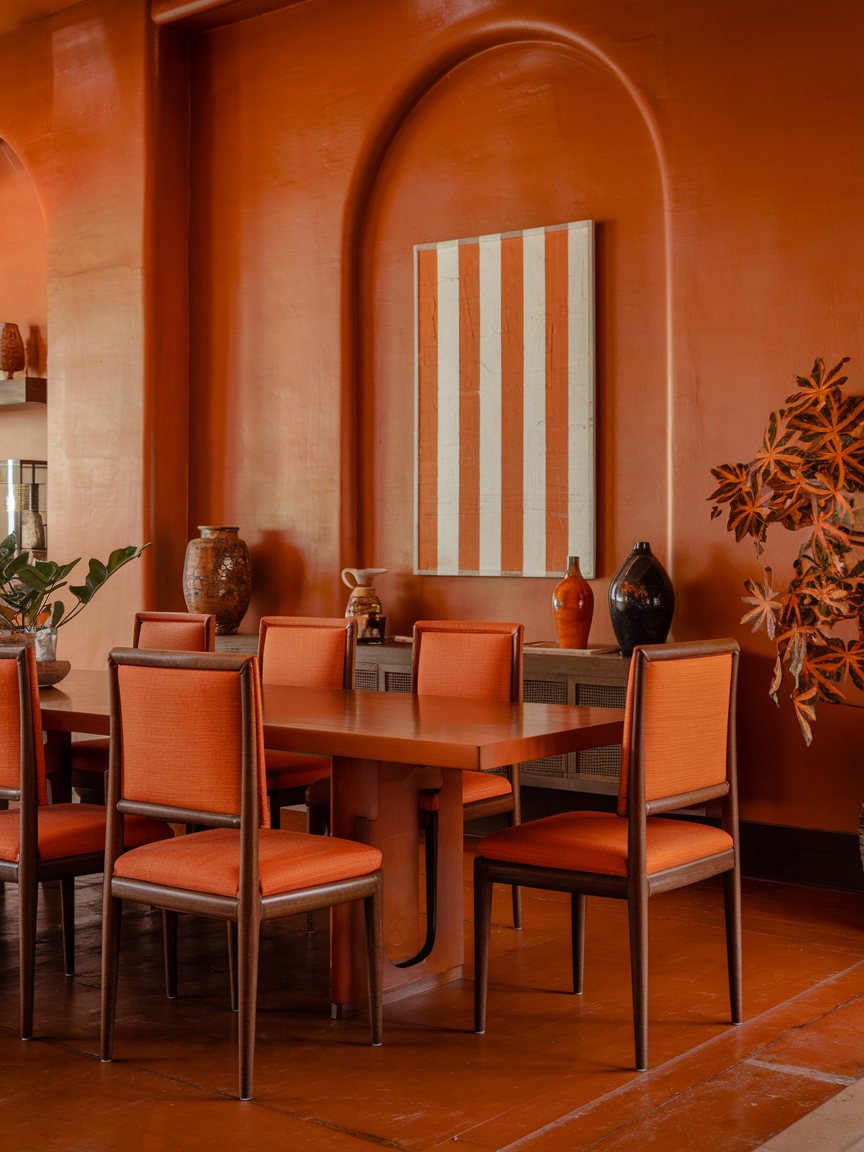
Layering different shades of orange, such as peach, terracotta, rust, and burnt orange, creates a rich, cohesive look in the dining room. This approach adds depth and interest while avoiding a flat or one-dimensional appearance. The key is to vary tones through different materials, such as textiles, ceramics, and artwork. When layered thoughtfully, the room feels warm and inviting rather than overwhelming. Neutral elements act as a visual break, allowing the orange hues to shine. This technique works especially well for eclectic or bohemian-inspired dining rooms.
13. Orange and Brass Accent Pairing
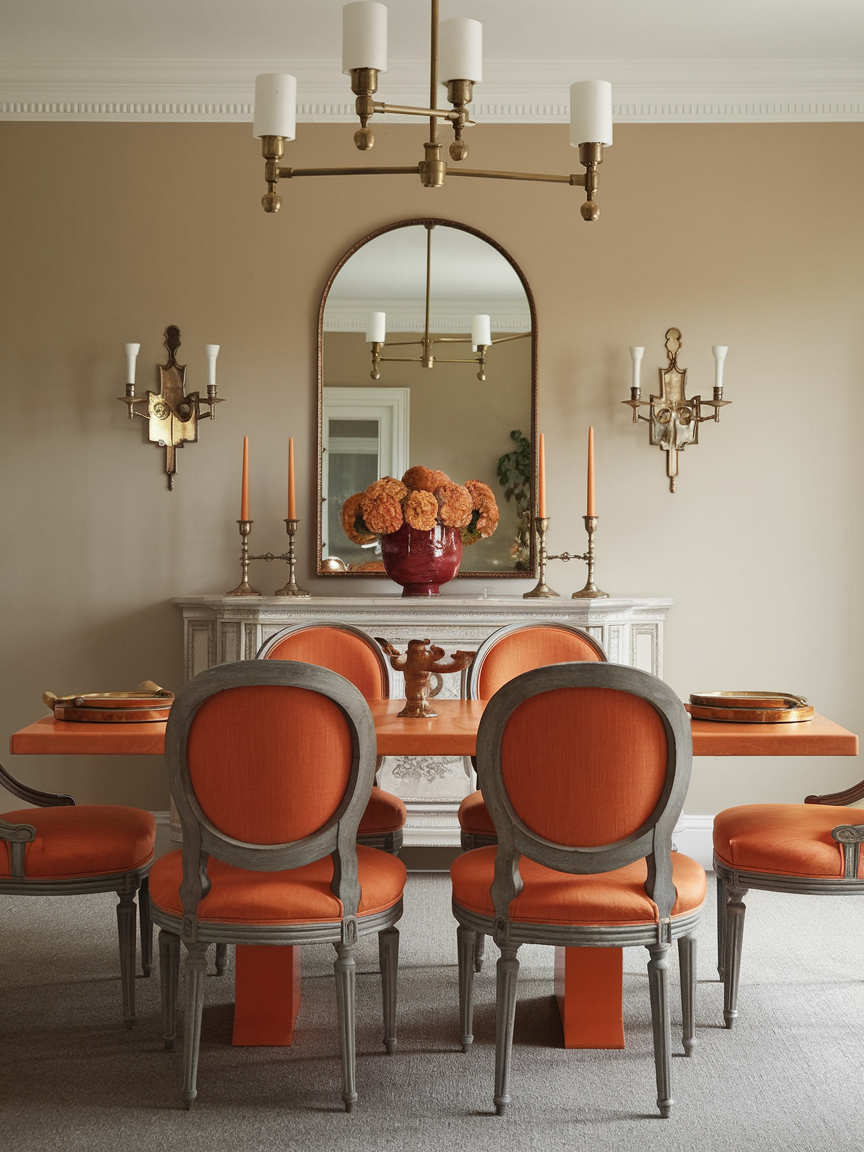
Combining orange decor with brass accents instantly elevates the dining room with a touch of luxury. Brass lighting fixtures, candleholders, or hardware reflect warm tones, enhancing the richness of orange hues. This pairing feels especially chic in dining rooms with neutral walls and classic furniture silhouettes. The metallic sheen adds contrast and sophistication without overpowering the space. To maintain balance, limit brass accents to a few key pieces and allow orange decor to provide the warmth. The result is a cozy yet polished dining room that feels both modern and timeless.
14. Earthy Orange Wallpaper for Character
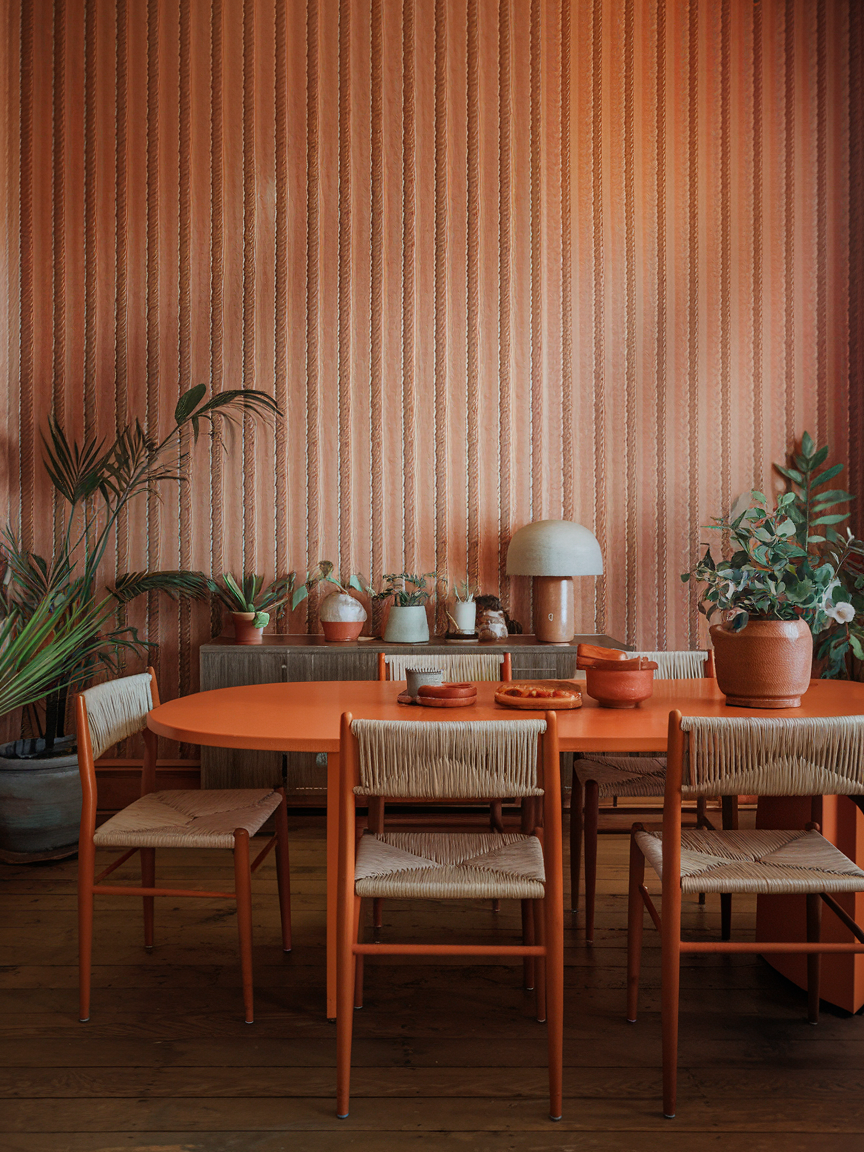
Wallpaper featuring earthy orange tones introduces pattern, texture, and personality to the dining room. Whether it’s a subtle geometric print or a nature-inspired design, wallpaper adds visual interest that paint alone can’t achieve. Orange-based patterns feel warm and inviting, making the dining space more engaging. To keep the look chic, pair wallpaper with simple furniture and minimal decor. This ensures the walls remain the star without overwhelming the room. Earthy orange wallpaper works particularly well in dining rooms where you want to make a statement while maintaining a cozy atmosphere.
15. Orange Floral Centerpieces
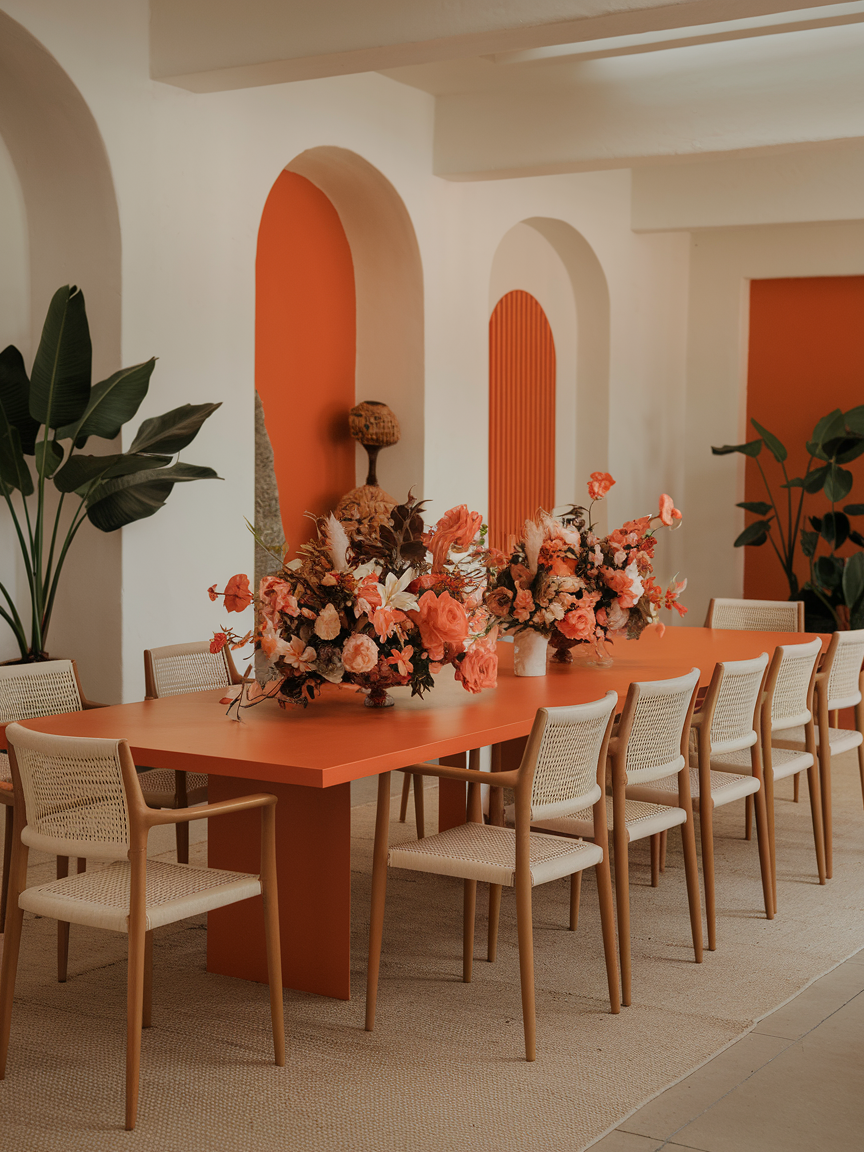
Floral centerpieces in orange hues bring life and freshness to the dining table. Fresh flowers, dried arrangements, or even faux florals in shades of orange add warmth and texture. These centerpieces create a welcoming focal point, especially during gatherings or special occasions. Pairing orange flowers with neutral table settings keeps the look elegant rather than overly colorful. Seasonal flowers like marigolds, dahlias, or dried grasses enhance the cozy feel while adding visual interest. This simple decor choice makes the dining room feel curated and inviting.
16. Minimalist Orange Accents in Modern Spaces
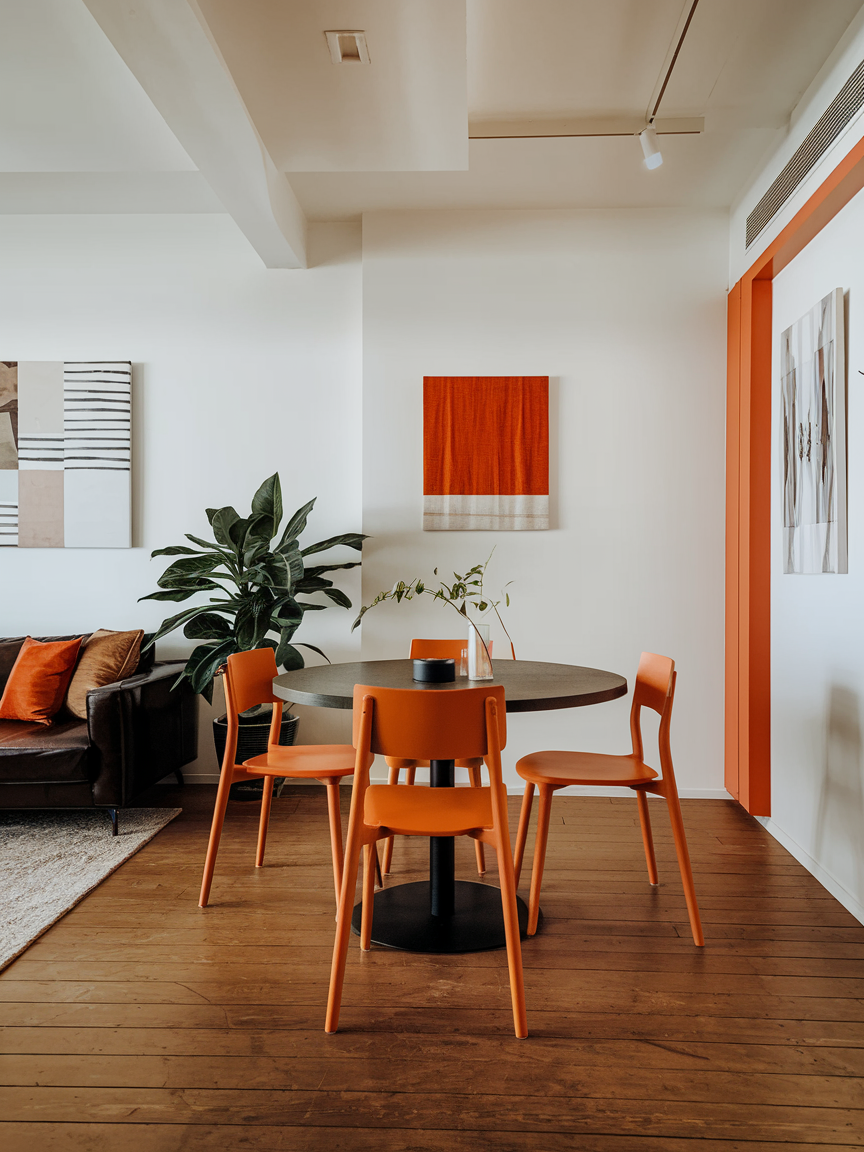
In modern dining rooms, minimalist orange accents can make a strong impact without clutter. A single orange chair, sleek artwork, or simple ceramic piece adds warmth to clean, streamlined interiors. This restrained approach ensures the space remains chic and uncluttered while still feeling welcoming. Neutral walls and modern furniture provide the perfect backdrop for these accents. The key is intentional placement—each orange element should feel purposeful. This style works especially well for contemporary homes that want a touch of color without compromising simplicity.
17. Orange and Green for a Natural Look
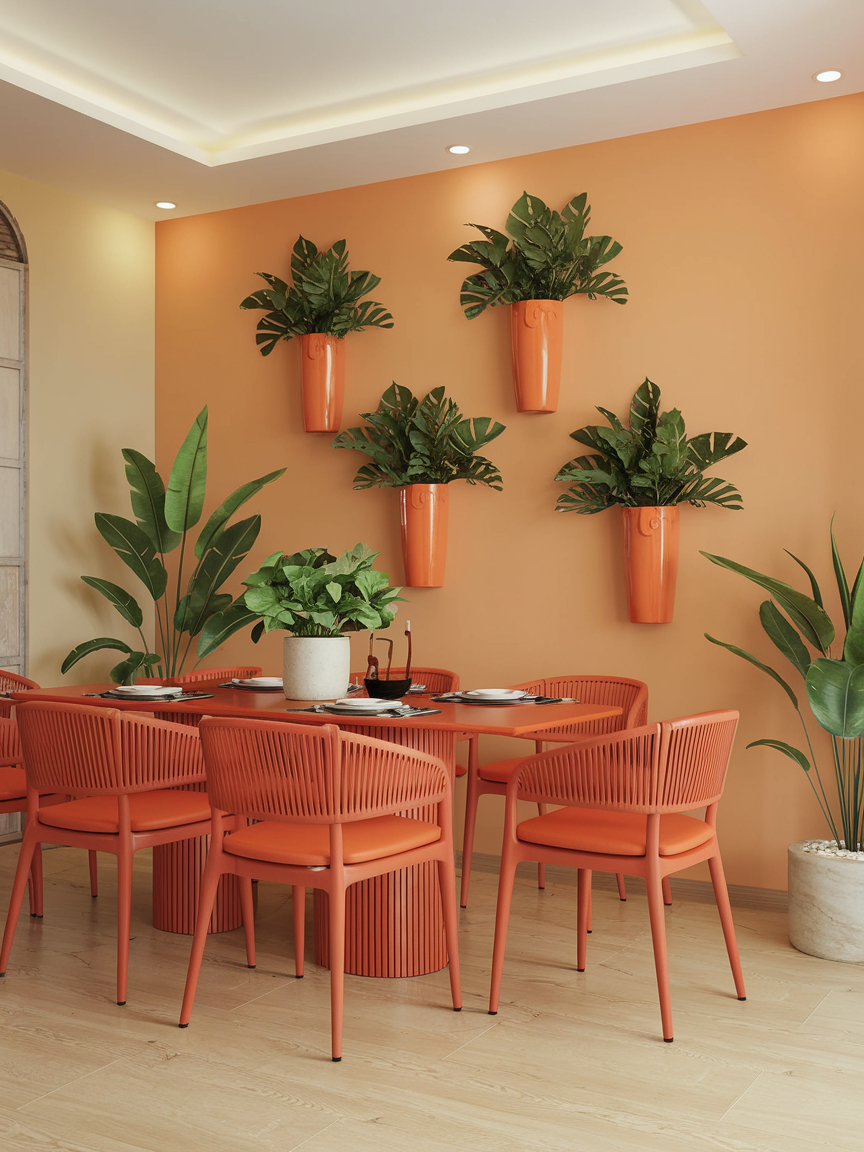
Pairing orange decor with green plants creates a fresh, nature-inspired dining room. The warmth of orange balances beautifully with the coolness of greenery, resulting in a lively yet calming space. Potted plants, herbs, or leafy arrangements soften the room and enhance its cozy atmosphere. This combination feels organic and effortless, making the dining room feel connected to nature. To keep the look chic, choose simple planters and avoid overcrowding. The contrast between orange accents and green foliage adds depth while maintaining harmony.
18. Rust-Toned Curtains for Softness
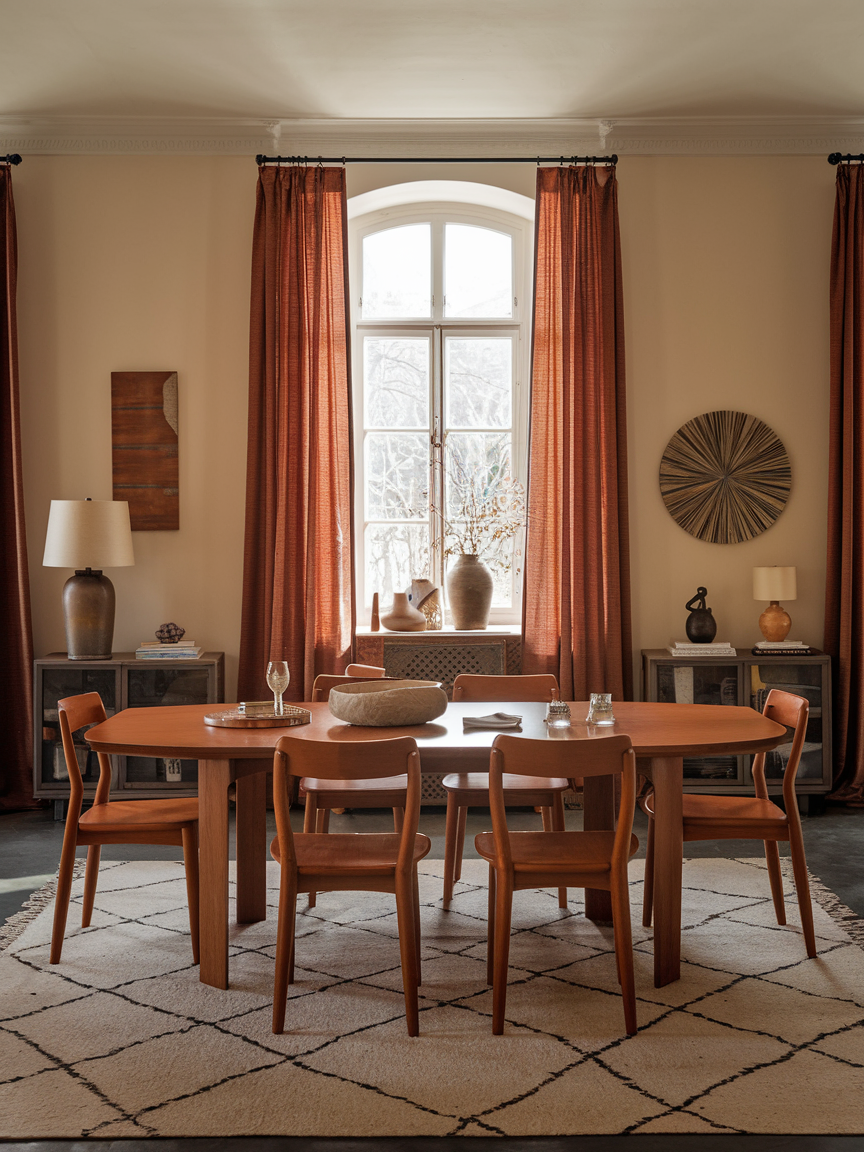
Curtains in rust or burnt orange tones add softness and warmth to the dining room. They frame windows beautifully while contributing to the overall color palette. Fabric curtains also help improve acoustics, making conversations feel more intimate during meals. Choose lightweight materials for a relaxed look or heavier fabrics for a more formal feel. When paired with neutral walls and wooden furniture, rust-toned curtains create a cozy ambiance without overwhelming the space. This subtle addition enhances comfort while maintaining a chic aesthetic.
19. Orange Statement Sideboards
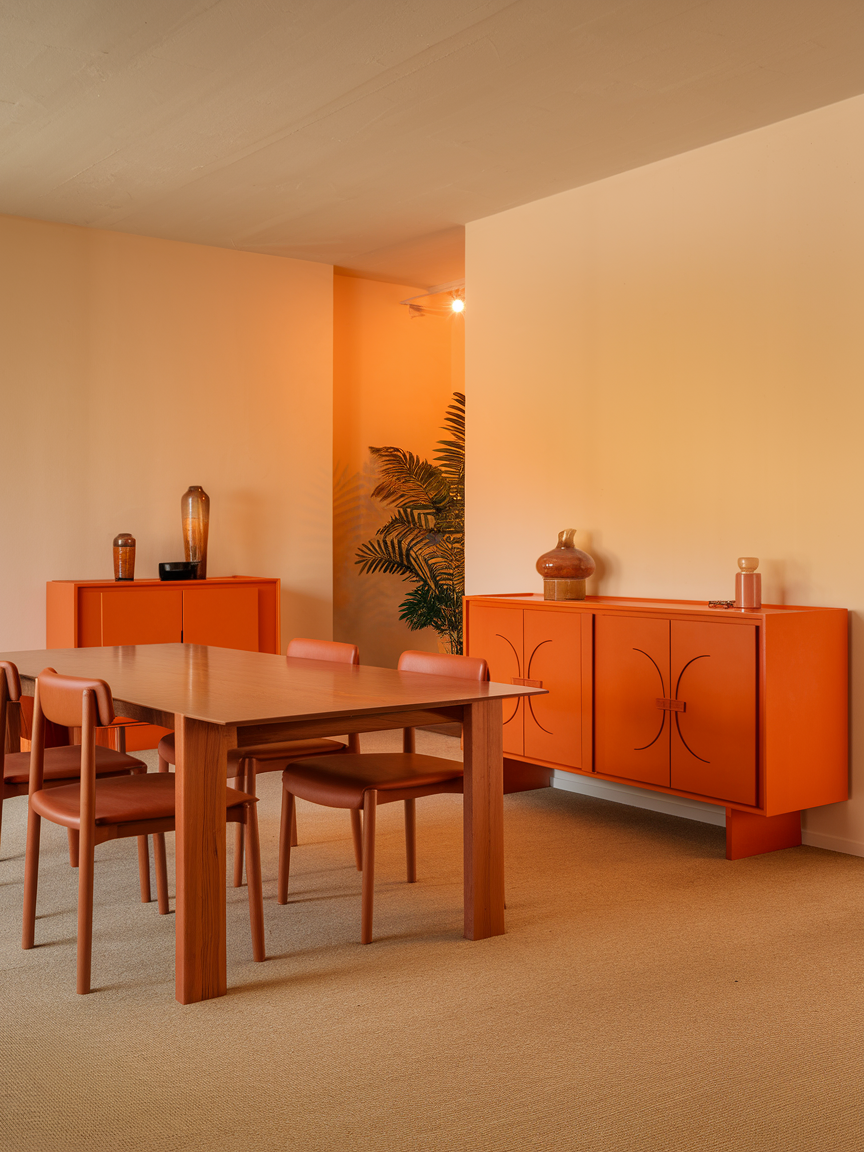
A sideboard styled with orange elements can become both a functional and decorative feature in the dining room. Whether painted in a muted orange shade or accessorized with orange decor, it adds personality and storage. Sideboards provide space for tableware, linens, and decorative accents, making them practical as well as stylish. To keep the look balanced, pair the sideboard with neutral walls and simple artwork. This ensures the orange elements feel intentional and cohesive rather than overpowering.
20. Vintage-Inspired Orange Accents
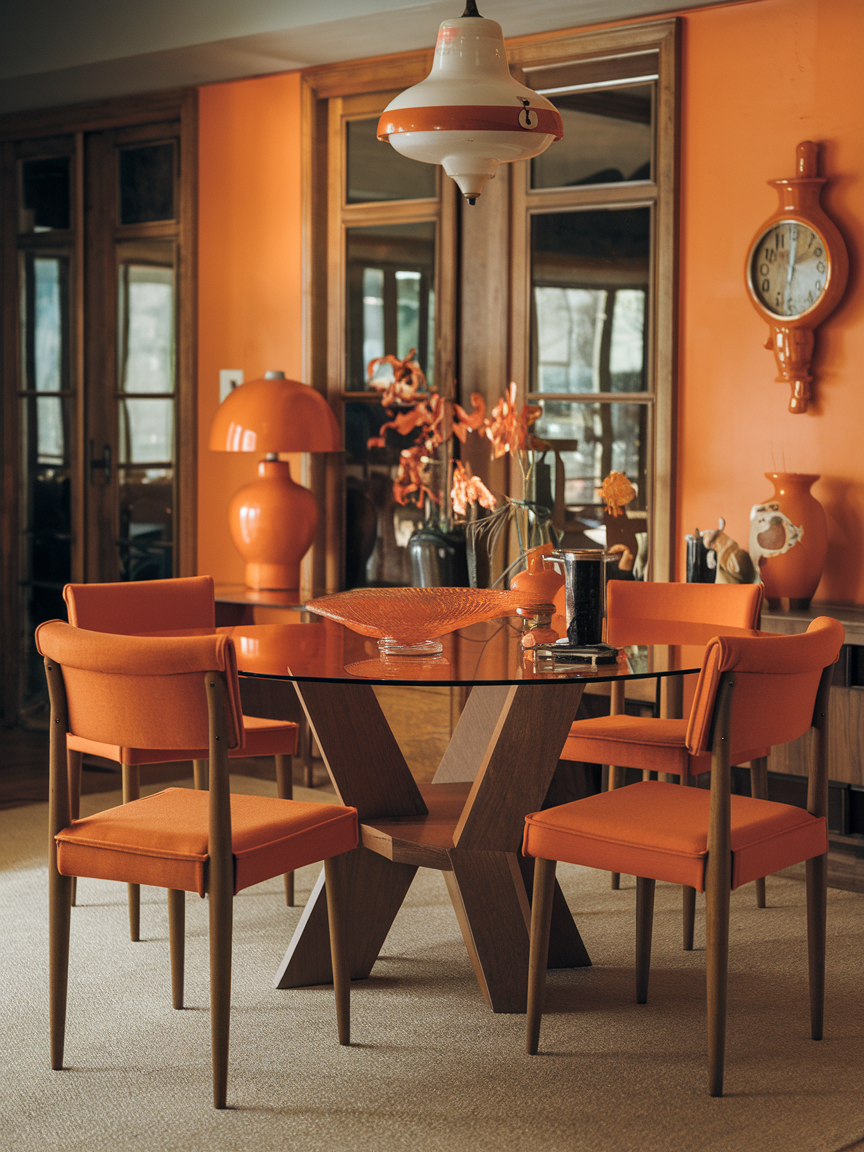
Vintage orange accents bring nostalgia and charm to a dining room. Retro glassware, patterned ceramics, or mid-century decor pieces add character and warmth. These items tell a story, making the space feel personal and inviting. When combined with modern furniture, vintage accents create an eclectic yet chic look. The key is moderation—choose a few standout pieces rather than overcrowding the room. This balance keeps the dining room cozy and stylish, blending old and new seamlessly.
21. Orange Leather Dining Chairs
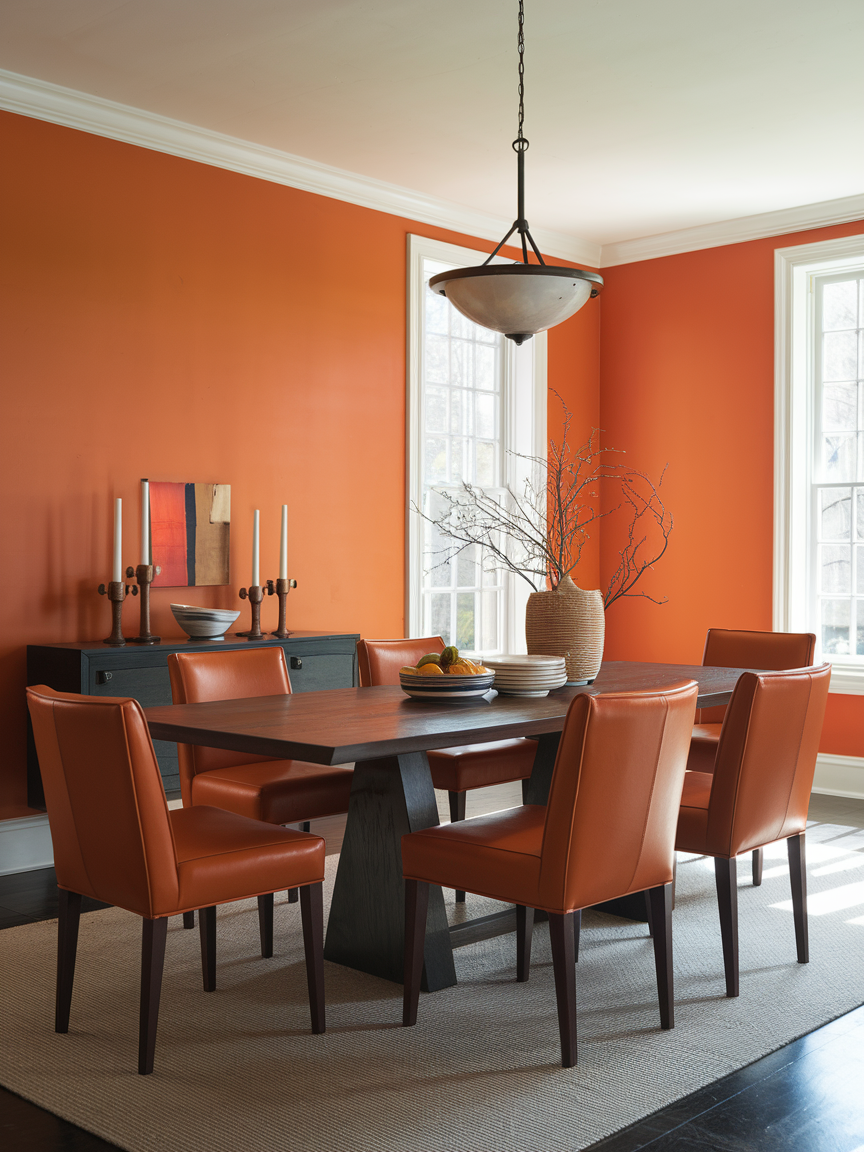
Leather dining chairs in orange or tan tones offer a luxurious yet comfortable seating option. Leather adds texture and durability while bringing warmth to the dining room. Orange-toned leather feels inviting and pairs well with wood, metal, or marble tables. This choice works especially well in dining rooms that aim for a refined, timeless look. Over time, leather develops a patina that enhances its character, making the space feel lived-in and cozy. The result is a dining area that feels both elegant and welcoming.
22. Subtle Orange Wall Art for Elegance
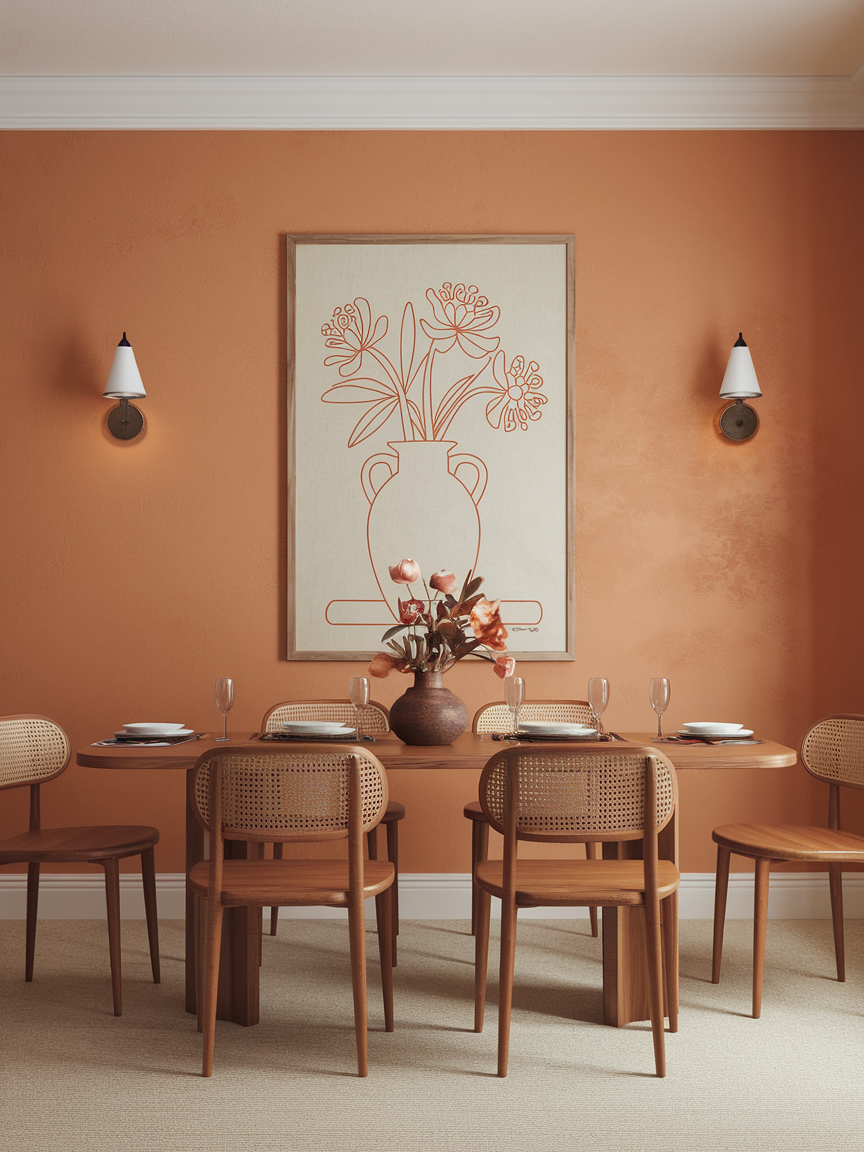
Minimal wall art with hints of orange adds sophistication without overwhelming the dining room. Line drawings, abstract prints, or muted illustrations provide visual interest while maintaining a calm atmosphere. This approach suits those who prefer understated decor but still want warmth. Placing art strategically (above a buffet or along a feature wall) helps anchor the space. Neutral frames keep the look cohesive and chic. These subtle touches enhance the dining room’s personality without dominating the design.
23. Layered Lighting with Warm Bulbs
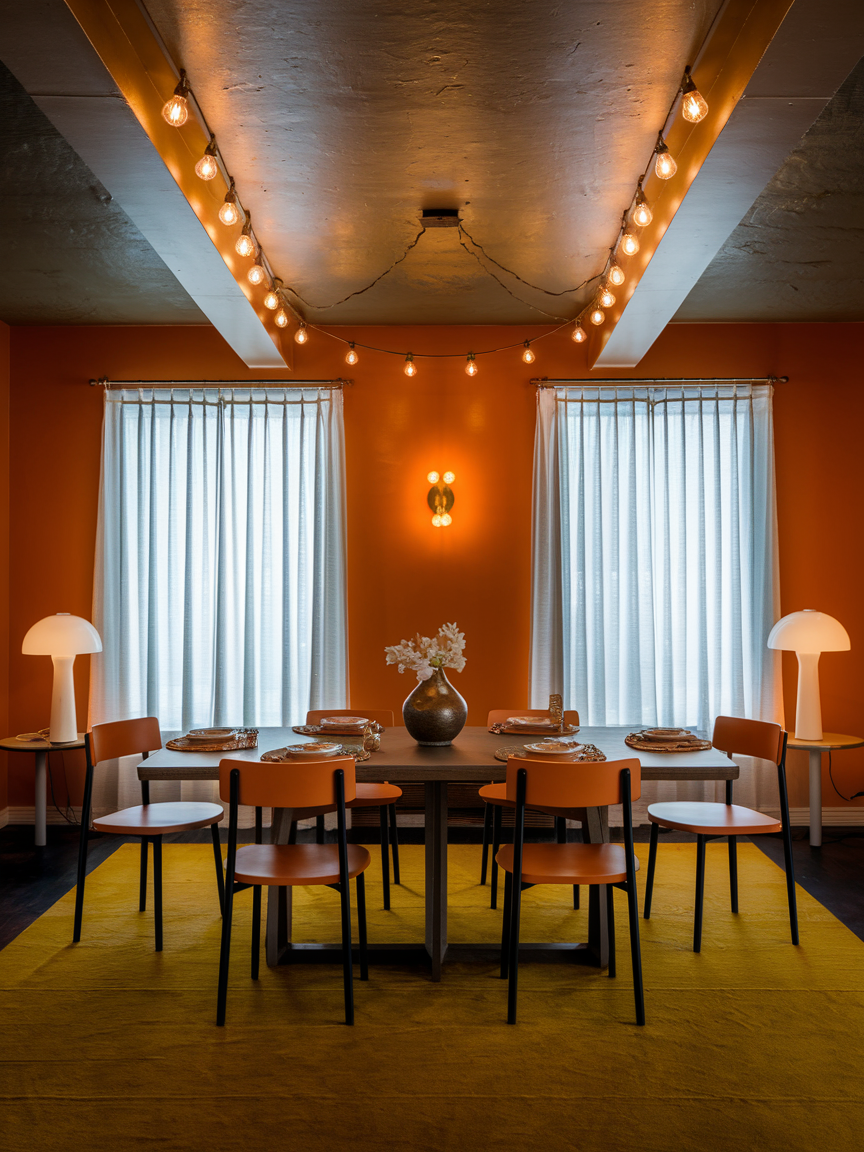
Layered lighting enhances orange decor by amplifying its warmth. Combining overhead fixtures, wall sconces, and table lamps creates depth and flexibility. Warm-toned bulbs complement orange hues, making the space feel cozy and inviting. This lighting strategy allows the dining room to transition seamlessly from daytime brightness to evening intimacy. Thoughtful lighting placement ensures every corner feels intentional. When paired with orange accents, layered lighting elevates the room’s overall ambiance, keeping it chic and comfortable.
24. Displaying Orange Tableware as Decor
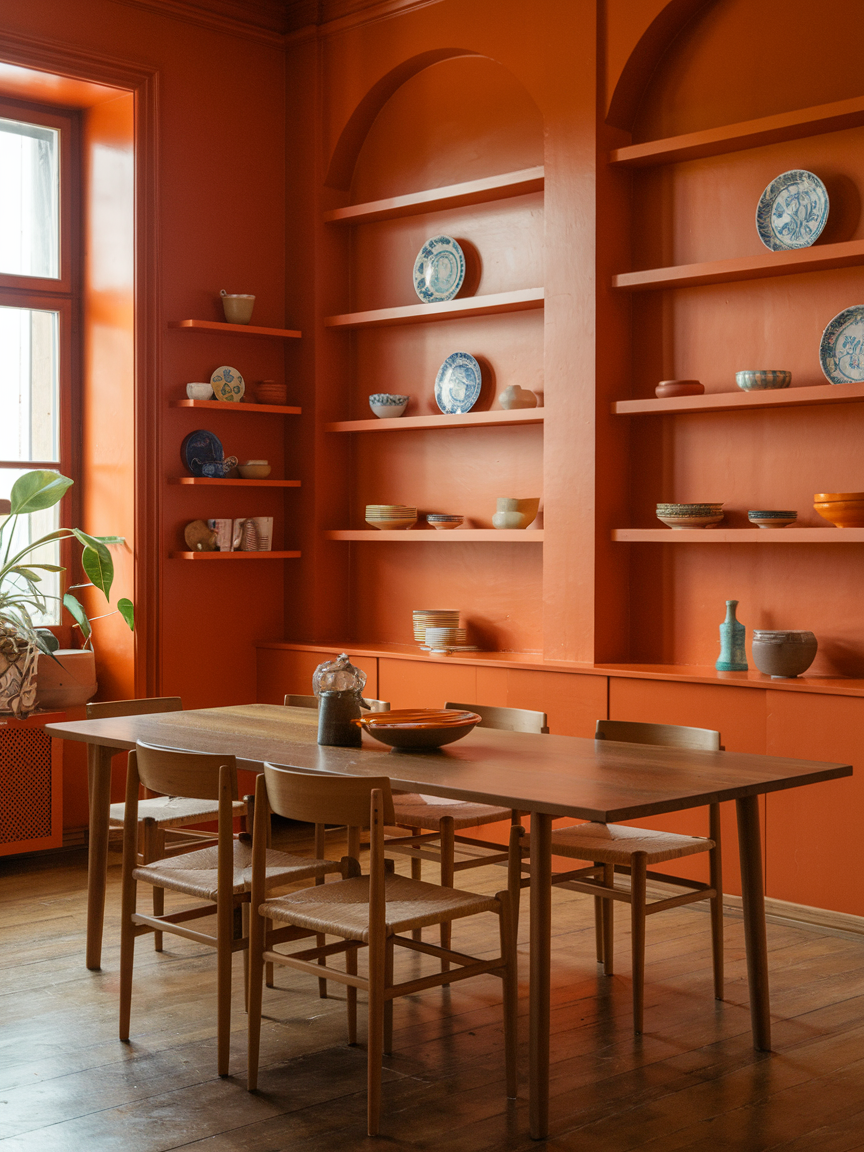
Orange tableware displayed on open shelves or in glass cabinets doubles as functional decor. Plates, bowls, and glassware in warm hues add color while showcasing personal style. This approach works well in dining rooms that favor open storage. Arranging items neatly and mixing them with neutral pieces keeps the display elegant rather than busy. Orange tableware adds charm and warmth, making the dining room feel lived-in and welcoming while remaining stylish.
* Now that you’ve explored these 24 orange dining room decor ideas, it’s time to bring that cozy and chic inspiration into your own space. Start with subtle touches like orange table linens, artwork, or upholstered chairs, or make a bolder statement with painted walls and layered textures—the choice is entirely yours. The result will be a dining room that not only looks warm and stylish but also feels inviting, expressive, and perfectly designed for everyday meals and memorable gatherings alike.