A minimalist living room creates a calm and inviting environment by focusing on simplicity, functionality, and thoughtful design. This style removes unnecessary clutter while highlighting the beauty of carefully selected furniture, textures, and décor pieces. A well-designed minimalist space proves that a room does not need to be filled with many items to feel warm, comfortable, and full of personality.
The appeal of minimalist living room design comes from its ability to combine clean aesthetics with everyday comfort. Neutral color palettes, streamlined furniture, natural materials, and smart layouts work together to create a peaceful atmosphere that feels organized and relaxing. Soft textiles, warm lighting, and subtle decorative accents add character while maintaining the balanced and uncluttered look that defines minimalist interiors.
Let’s dive into these minimalist living room inspirations and discover how simplicity, functionality, and carefully chosen details can create a relaxing space with modern elegance!
1. Use a Patterned Rug for Subtle Contrast
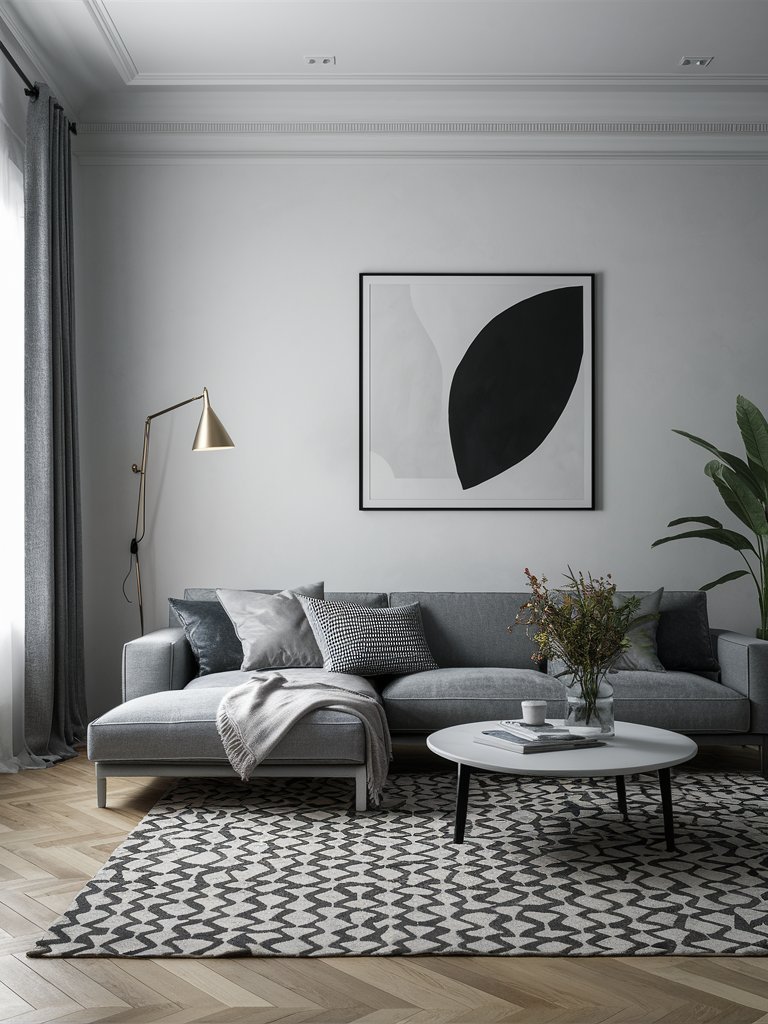
The patterned rug adds just the right amount of detail to this minimalist living room while keeping the overall design balanced. Its geometric pattern creates visual interest and helps define the seating area, giving the room a more grounded and complete appearance. The soft texture adds comfort, while the neutral tones ensure the rug blends naturally with the surrounding furniture. This design choice proves that minimalist interiors do not have to avoid patterns completely. When selected carefully, a simple rug can introduce personality, warmth, and dimension without taking away from the clean aesthetic.
2. Design an Open and Airy Layout
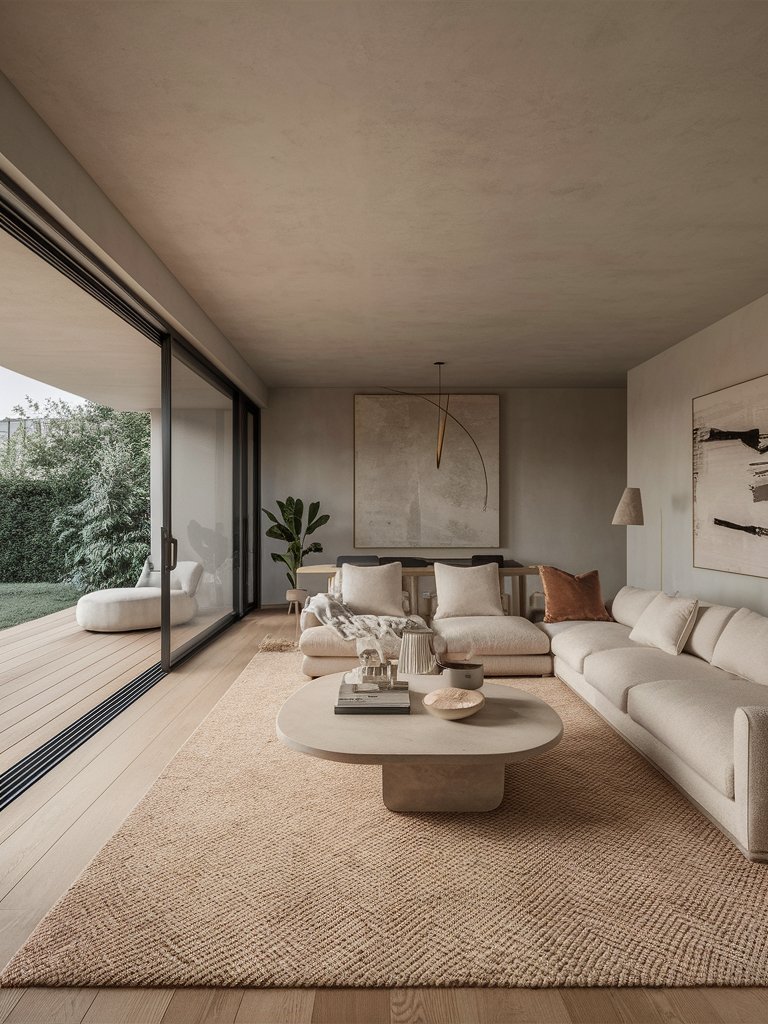
The open layout gives this living room a spacious and peaceful feeling by allowing furniture and decor to breathe. The arrangement creates clear pathways throughout the room, making the space feel comfortable and easy to navigate. Without unnecessary partitions or oversized furniture, natural light can move freely and enhance the bright atmosphere. Each piece has a clear purpose, from the seating area to the decorative accents, creating a balanced environment that feels organized rather than empty. This thoughtful layout demonstrates how minimalist design prioritizes both beauty and practicality in everyday living spaces.
3. Bring Warmth with Organic Decorative Elements
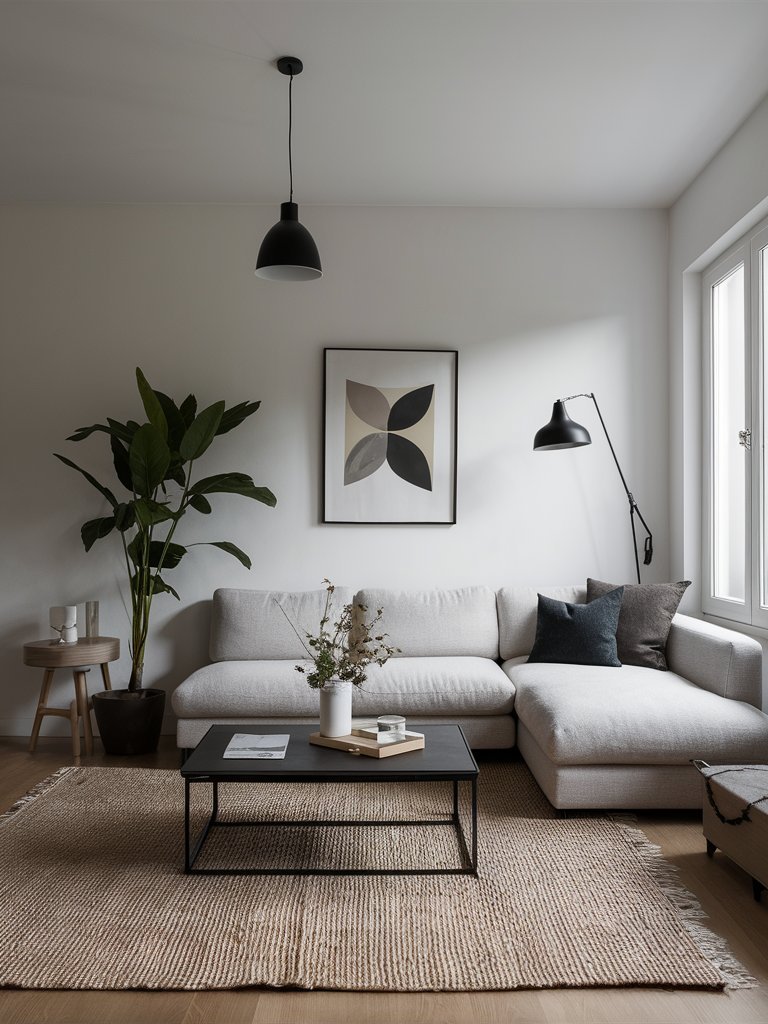
Natural touches help soften the clean appearance of this minimalist living room and make it feel more inviting. A tall indoor plant adds freshness and movement, while dried floral arrangements introduce texture and an earthy charm. These organic details create a beautiful contrast against the simple furniture and neutral colors. By incorporating natural elements, the room gains more personality without losing its peaceful atmosphere. This balance between simplicity and warmth highlights the importance of biophilic details in minimalist design, showing how small additions can make a space feel more comfortable and connected to nature.
4. Create a Flexible Space for Personal Style
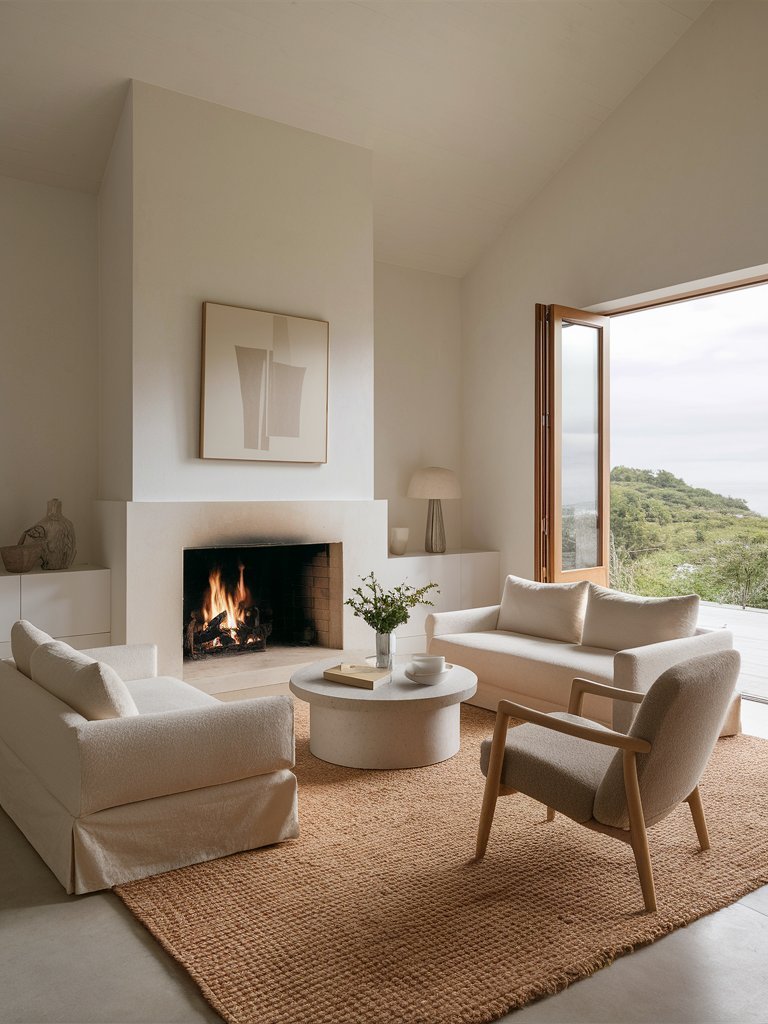
One of the biggest advantages of minimalist design is its ability to adapt to different personalities and preferences. The neutral foundation of this living room allows homeowners to easily add seasonal decorations, colorful cushions, artwork, or personal collections without disrupting the overall harmony. The simple layout also makes it easy to rearrange furniture for different activities, from entertaining guests to enjoying quiet moments. This flexibility ensures that the space can evolve over time while maintaining its elegant appearance. Minimalism provides the perfect canvas for creating a home that feels personal and ever-changing.
5. Design a Relaxing and Welcoming Minimalist Retreat
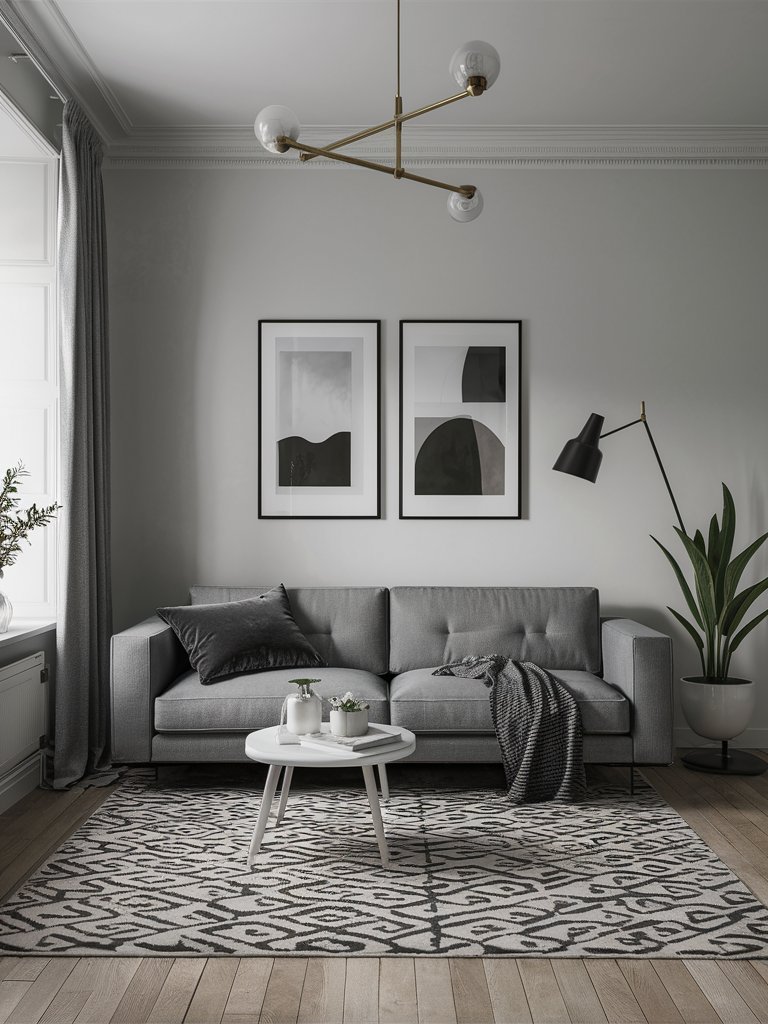
This living room perfectly demonstrates that minimalist design can be both stylish and comfortable. The combination of soft textures, warm lighting, natural materials, and thoughtful furniture placement creates a peaceful environment that feels inviting rather than empty. Every detail contributes to a sense of balance, from the cozy seating arrangement to the connection with nature outside. Whether used for relaxing after a long day, hosting guests, or enjoying quiet moments alone, this space proves that simplicity can create incredible comfort. A well-designed minimalist room offers a timeless retreat where beauty and functionality exist together.
6. Create Comfort with a Streamlined Sectional Sofa
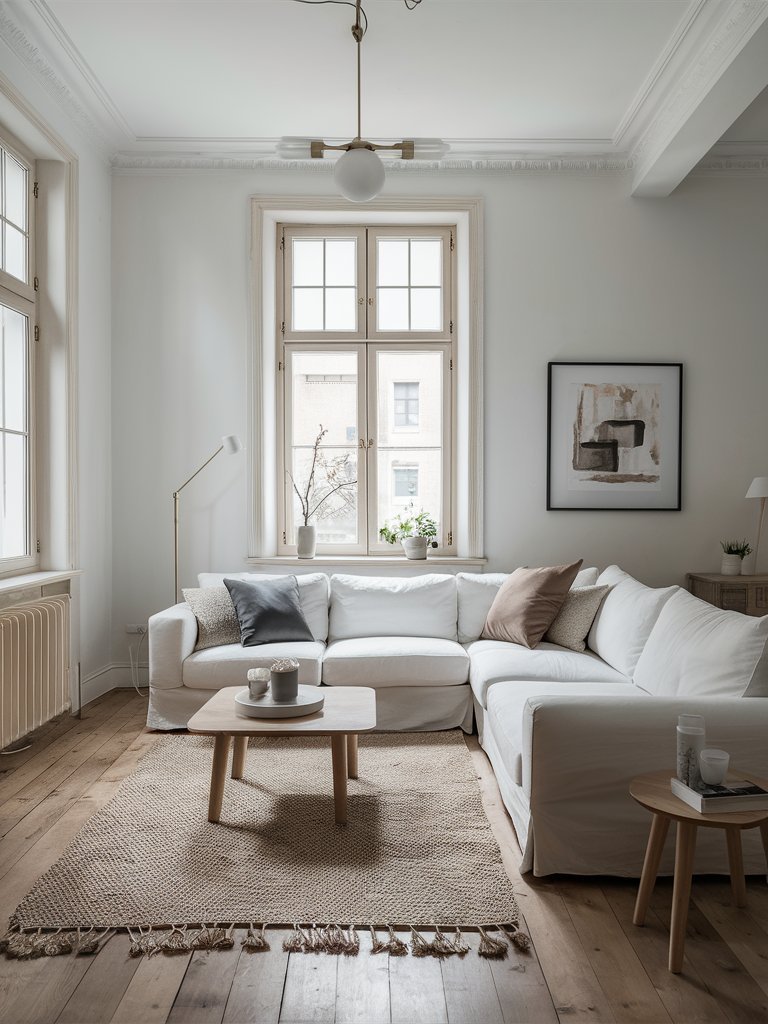
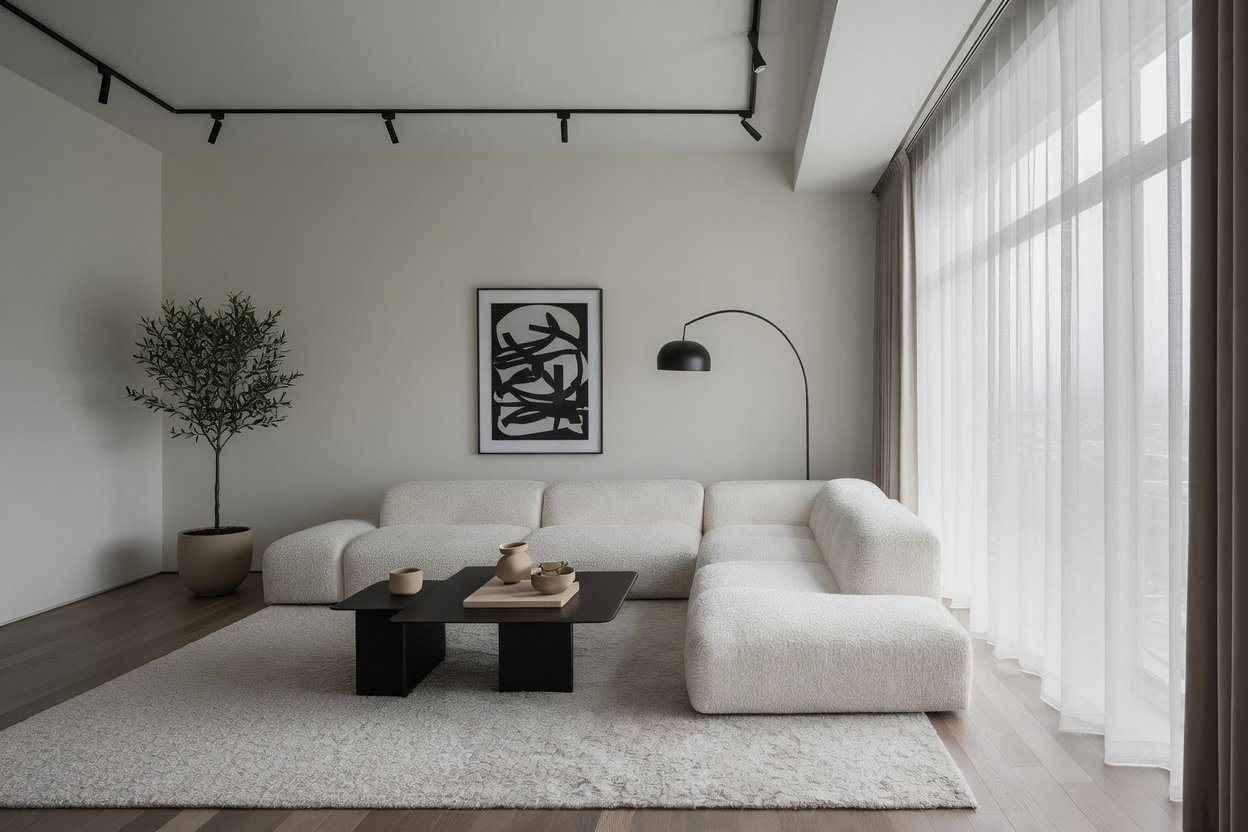
The large white sectional sofa serves as both a practical seating solution and a stylish focal point in this living room. Its generous size provides plenty of space for relaxing, entertaining guests, or spending time with family, while its clean design keeps the room feeling refined. The soft neutral fabric blends beautifully with the rest of the minimalist palette, creating a cohesive and calming look. By combining comfort with simplicity, this sofa demonstrates how larger furniture pieces can work in minimalist interiors when they are carefully chosen and thoughtfully placed.
7. Layer Lighting for a Modern Atmosphere
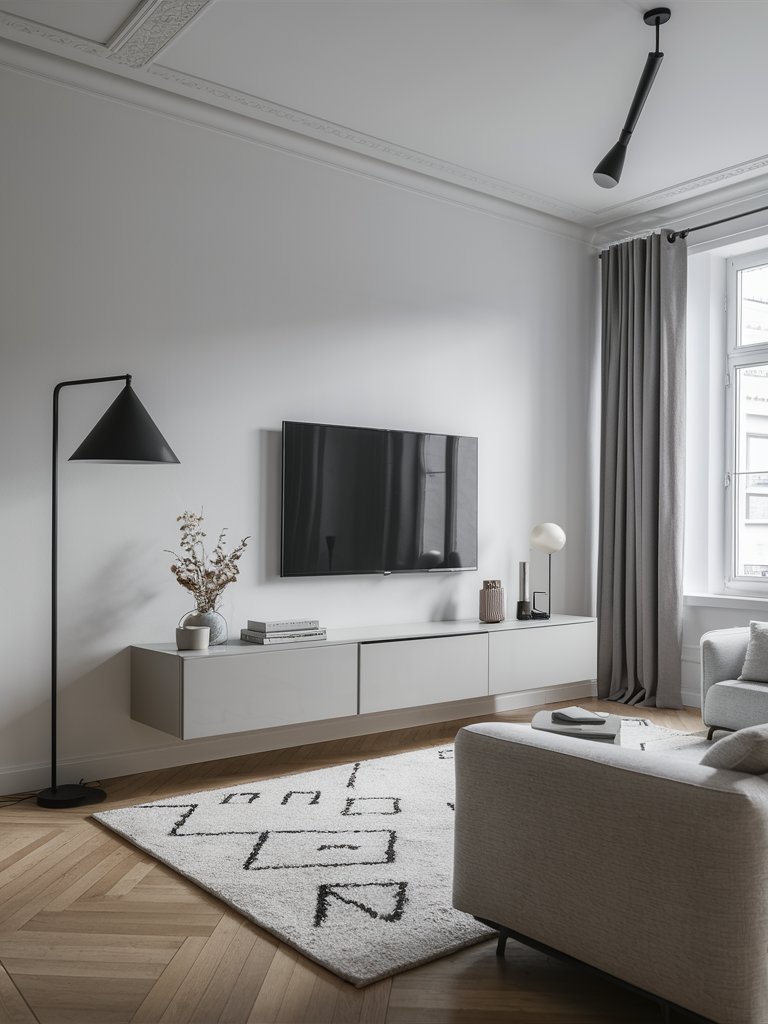
The lighting design in this living room combines functionality and style through a mix of different light sources. A sleek floor lamp, ceiling fixtures, and table lighting work together to create a warm and flexible atmosphere. Each lighting element adds purpose while also contributing to the room’s overall aesthetic. The simple forms and modern finishes complement the minimalist design without becoming distracting. This layered approach allows the space to feel comfortable at any time of day while proving that lighting can serve as both a practical feature and an elegant decorative element.
8. Highlight Unique Architectural Features
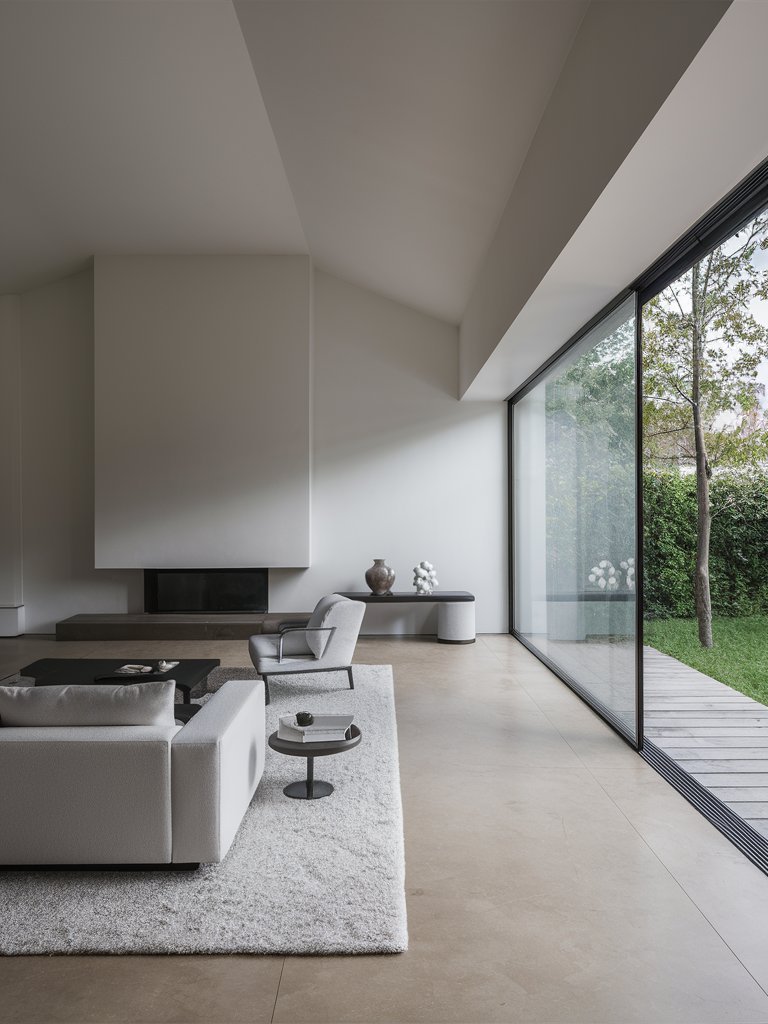
This living room shows how architectural details can become the main decoration in a minimalist space. The dramatic ceiling angles, clean wall surfaces, and impressive height create a striking visual effect without requiring additional accessories. The simple structure allows the architecture to take center stage while emphasizing the beauty of open space and natural light. Large windows further enhance the sense of scale, making the room feel brighter and more expansive. This design approach demonstrates that minimalist interiors can feel luxurious by focusing on thoughtful construction, proportion, and the natural character of the space itself.
9. Create Serenity with Soft Neutral Tones
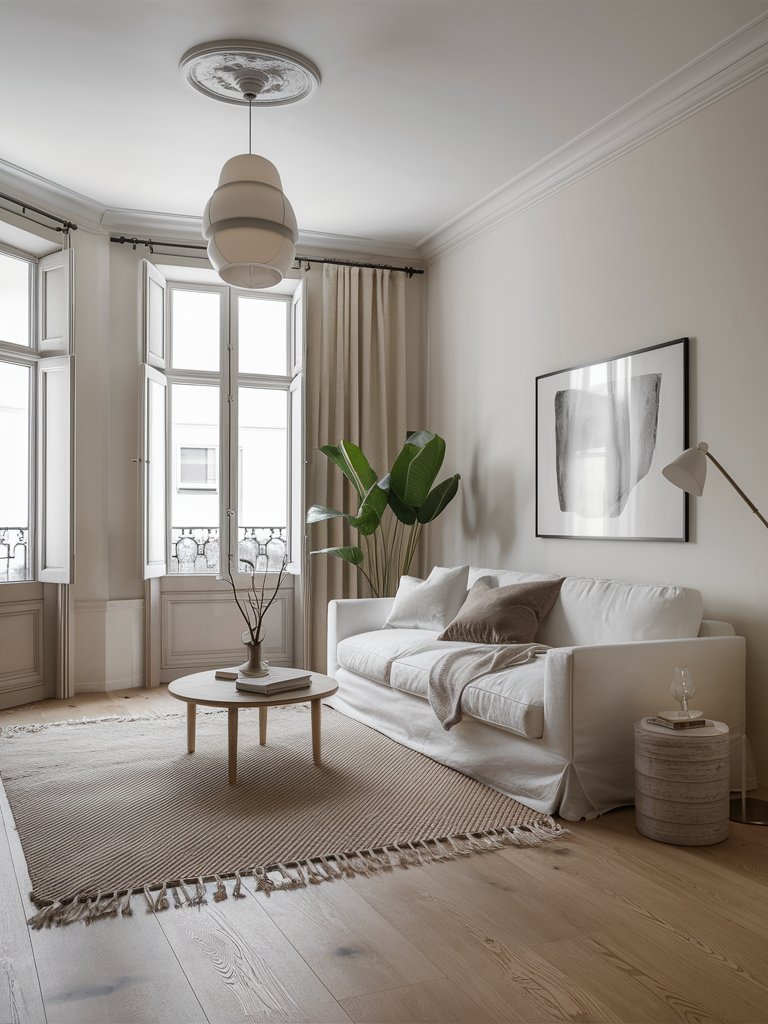
The carefully chosen neutral colors create a peaceful and timeless atmosphere throughout this living room. Soft whites, warm beige shades, and natural wood tones work together to form a calming foundation that feels elegant without being overwhelming. The subtle contrast between different materials adds depth, preventing the space from appearing flat or plain. A woven rug, wooden accents, and textured fabrics introduce warmth while maintaining the minimalist aesthetic. This balanced color approach shows how simple tones can create a sophisticated interior that feels comfortable, inviting, and effortlessly stylish for years to come.
10. Embrace a Calm Neutral Color Scheme
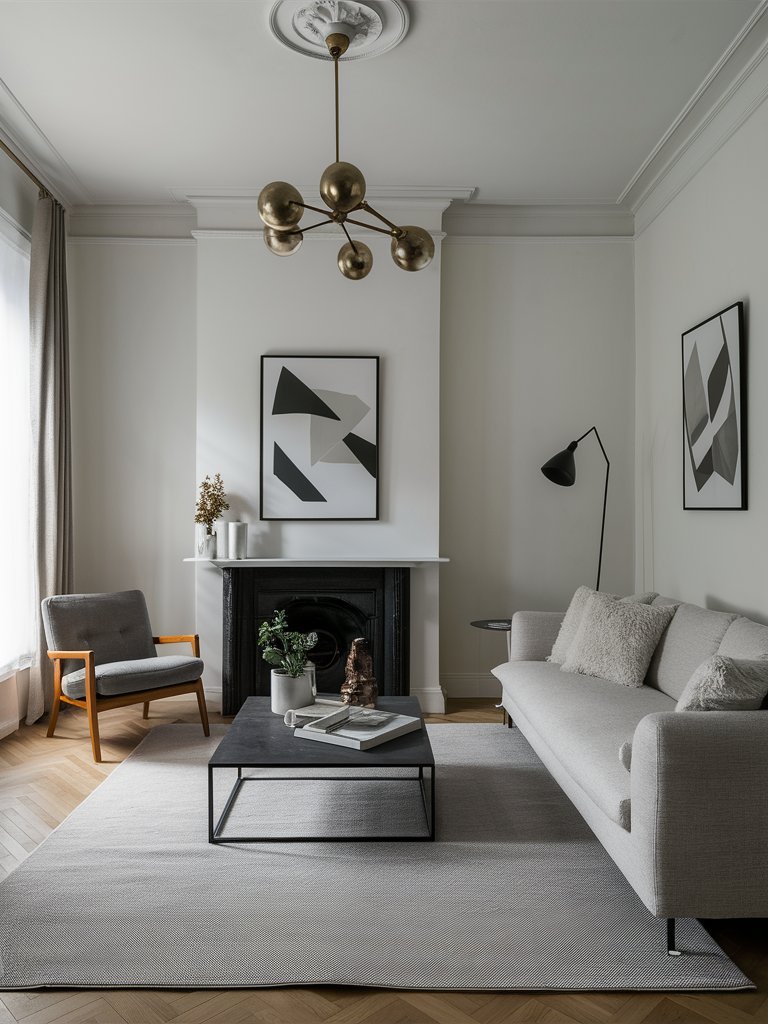
The beauty of this minimalist living room begins with its soft and timeless color palette. Shades of white, gray, beige, and subtle black accents work together to create a peaceful and balanced atmosphere. These understated tones help the space feel open, bright, and effortlessly elegant while keeping visual distractions to a minimum. Instead of relying on bold colors, the design focuses on texture through elements like the plush rug, cozy sofa fabric, and natural finishes. This approach proves that a neutral room can still feel warm, stylish, and full of personality when different materials are layered thoughtfully.
11. Use Negative Space to Create Balance
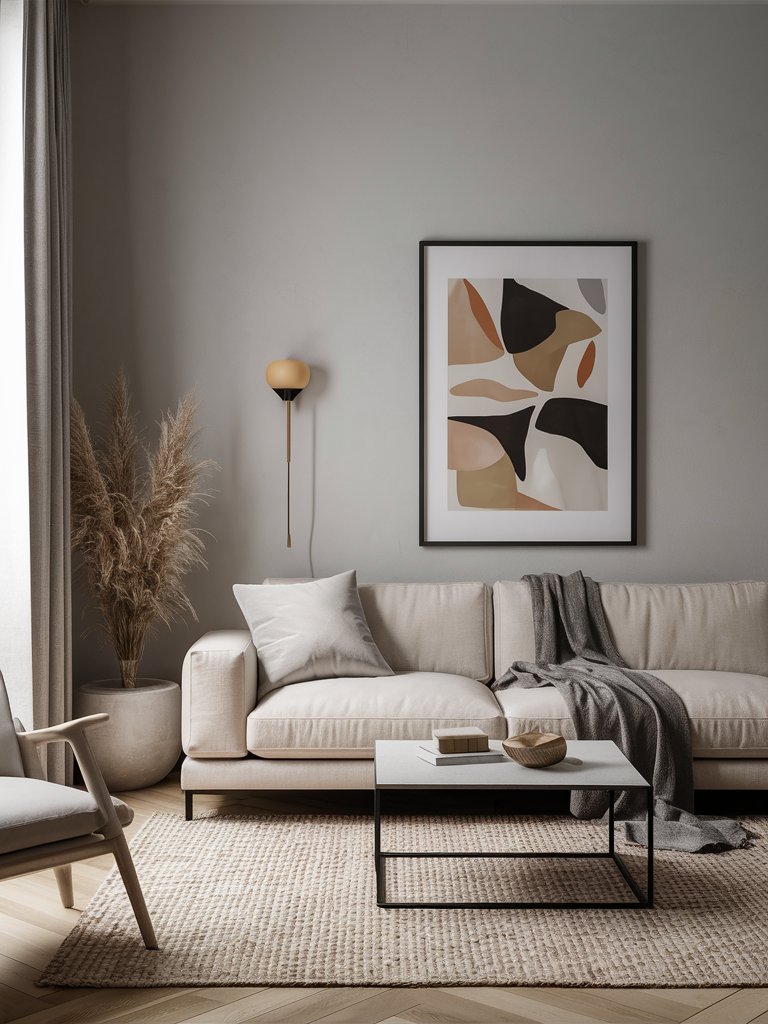
One of the key principles of minimalist design is allowing each element enough room to stand out, and this living room achieves that beautifully. The intentional spacing between furniture pieces creates a sense of openness while preventing the room from feeling crowded. The clear floor area around the coffee table improves movement and allows natural light to flow freely throughout the space. Rather than filling every corner with decorations, the design focuses on a few carefully selected pieces. This thoughtful use of empty space creates a calm environment where simplicity, comfort, and visual balance come together perfectly.
12. Blend Indoor and Outdoor Living
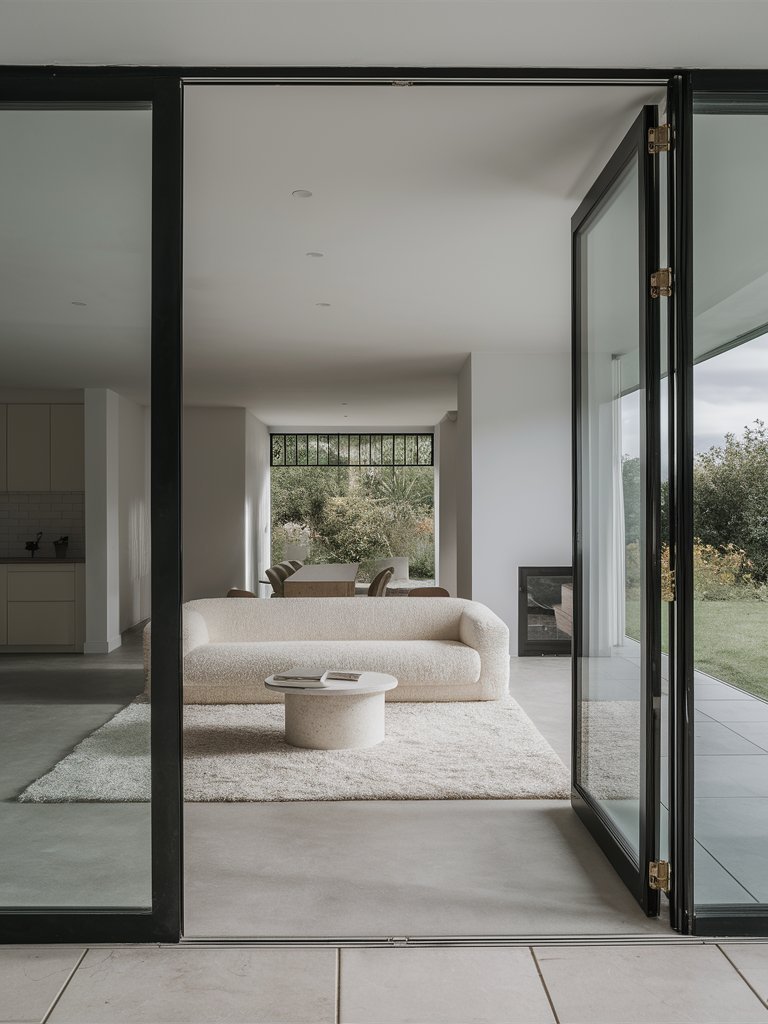
The large glass doors create a seamless connection between the living room and the outdoor area, making nature feel like part of the interior design. Natural light enters the space throughout the day, while the greenery outside adds freshness and tranquility. This connection helps the room feel larger and more peaceful by extending the visual boundaries beyond the walls. The minimalist approach works beautifully here because the surrounding landscape becomes a natural decoration. By embracing outdoor views and organic elements, this design creates a relaxing atmosphere that feels open, harmonious, and connected to nature.
13. Choose a Sculptural Sofa as a Statement Piece
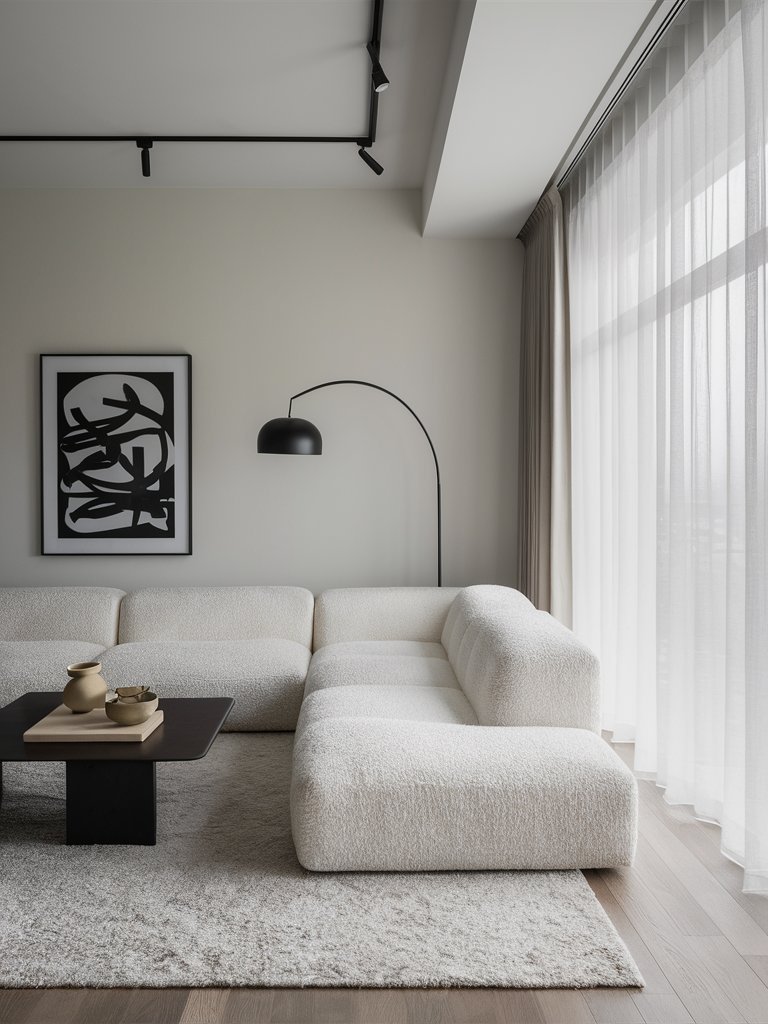
The curved sofa becomes the centerpiece of this minimalist living room, adding both comfort and artistic appeal. Its unique silhouette introduces softness against the clean lines found throughout the space, creating a more balanced and inviting atmosphere. The plush upholstery enhances the cozy feeling while maintaining a refined and modern appearance. Instead of relying on excessive decorations, the sofa itself becomes a design feature that adds personality and elegance. Its neutral color blends seamlessly with the surrounding palette, proving that a single thoughtfully chosen furniture piece can make a strong impact in a minimalist interior.
14. Add Function with Stylish Built-In Shelving
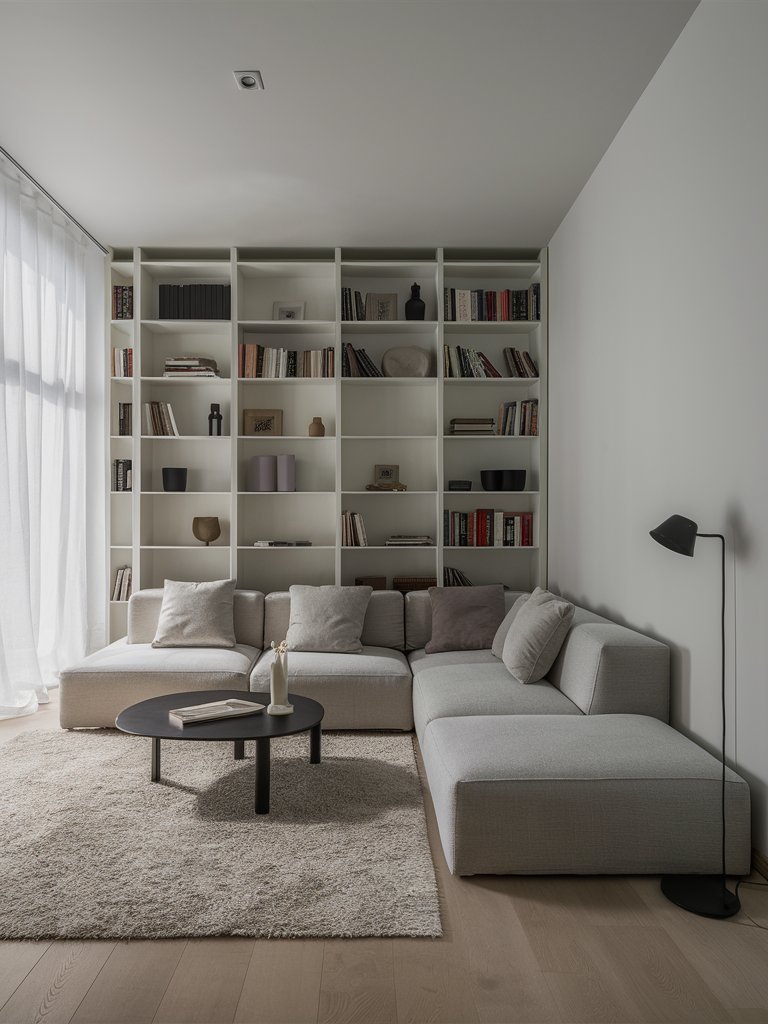
The full-wall shelving unit serves as both a practical storage solution and an eye-catching design feature. Its open shelves provide space for books, artwork, plants, and carefully selected decorative pieces without creating clutter. Instead of displaying too many items, the arrangement focuses on quality and simplicity, which perfectly matches the minimalist philosophy. The shelving also adds personality by allowing homeowners to showcase meaningful objects and change the display over time. This combination of storage and decoration proves that functional elements can become beautiful focal points when designed with intention and balance.
15. Create Warmth with a Minimalist Fireplace
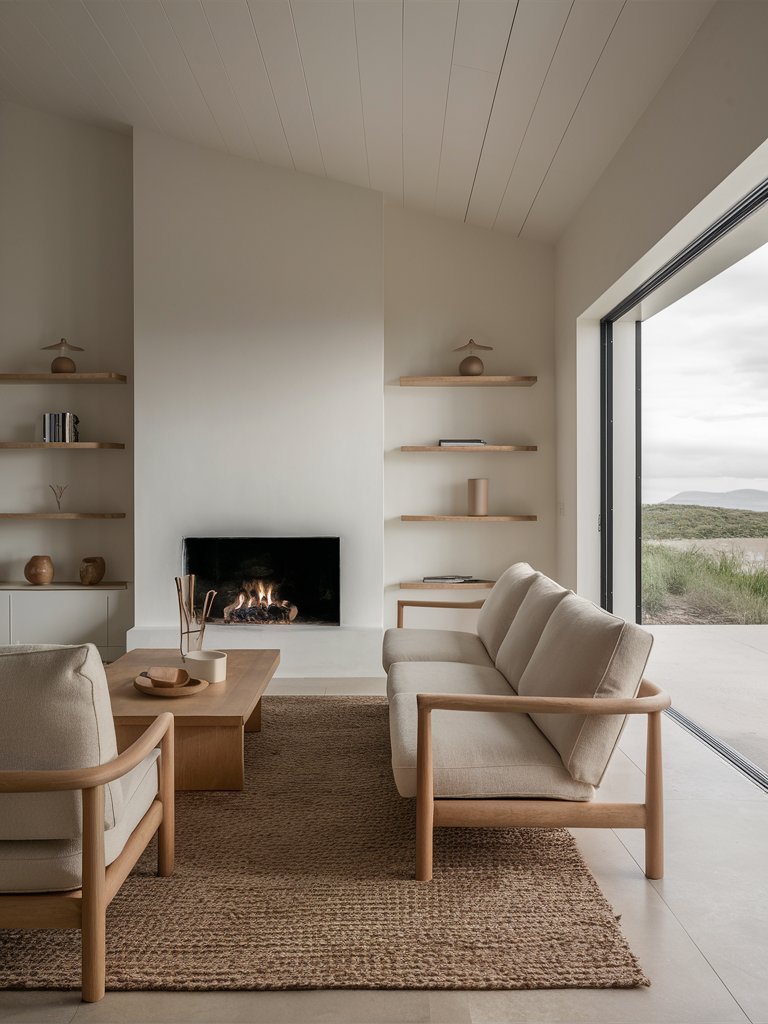
The fireplace becomes the natural centerpiece of this living room, adding warmth and comfort while maintaining a clean aesthetic. Its simple white surround blends effortlessly with the minimalist design, allowing the soft glow of the flames to become the main attraction. The fireplace introduces a cozy element that balances the room’s modern lines and neutral colors. Positioned as a central gathering point, it creates an inviting area for relaxation and conversation. This feature shows how minimalist spaces can still feel warm and welcoming when functional elements are designed with simplicity and elegance in mind.
16. Select Furniture with Purpose
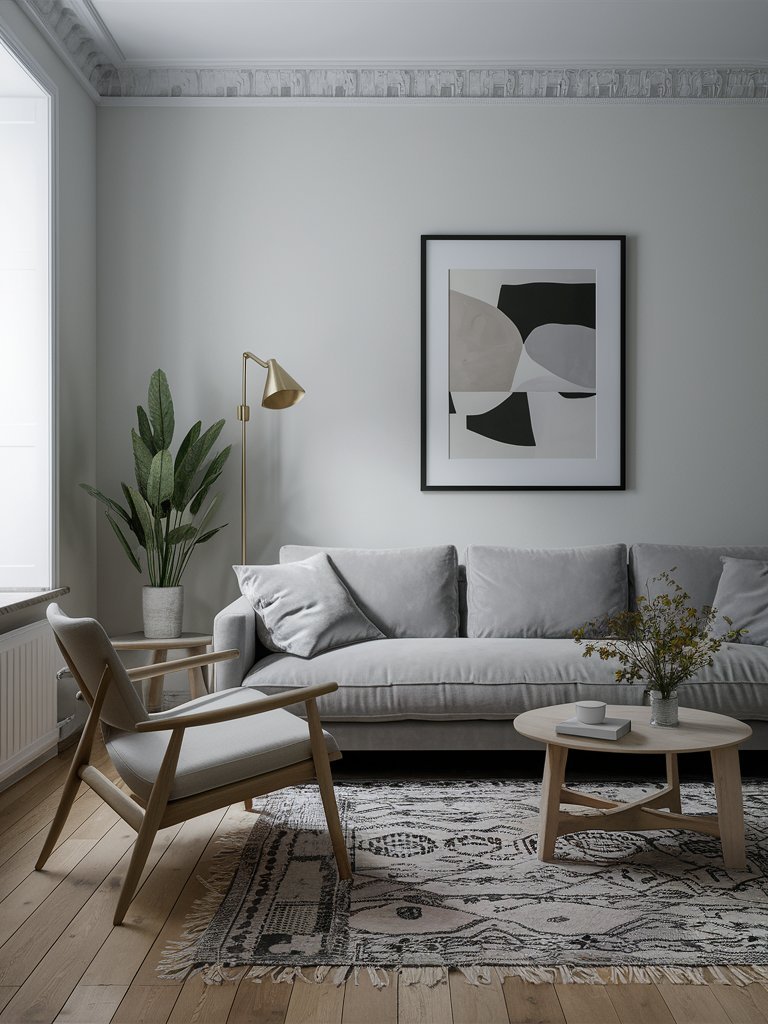
Every furniture piece in this minimalist living room has been chosen with intention, following the idea that less can truly be more. The streamlined sofa, simple armchair, and rounded coffee table create a balanced arrangement that feels functional without overcrowding the space. Each item contributes to the overall design while maintaining clean lines and visual harmony. Natural materials add warmth, preventing the room from feeling too cold or empty. This thoughtful furniture selection proves that a minimalist space does not need many pieces to feel complete, as long as every element serves both a practical and aesthetic purpose.
17. Bring Nature Indoors with Biophilic Design
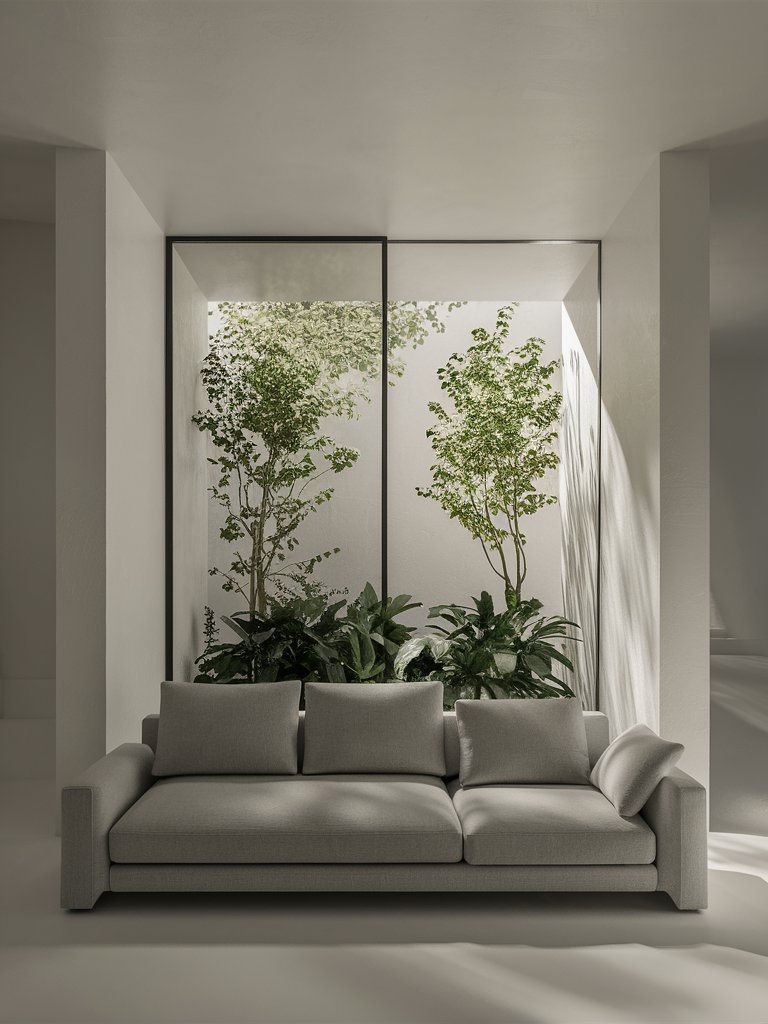
The indoor garden behind the sofa creates a stunning connection between the living room and nature. The lush greenery adds life, texture, and a refreshing contrast to the neutral interior while becoming a beautiful focal point. Floor-to-ceiling glass allows natural light to highlight the plants, creating a peaceful environment that feels fresh and relaxing. This use of biophilic design brings more than visual beauty, as natural elements can help create a calmer and more comfortable living atmosphere. The result is a minimalist room that feels warm, balanced, and connected to the outdoors.
18. Maximize Natural Light for an Open Feel
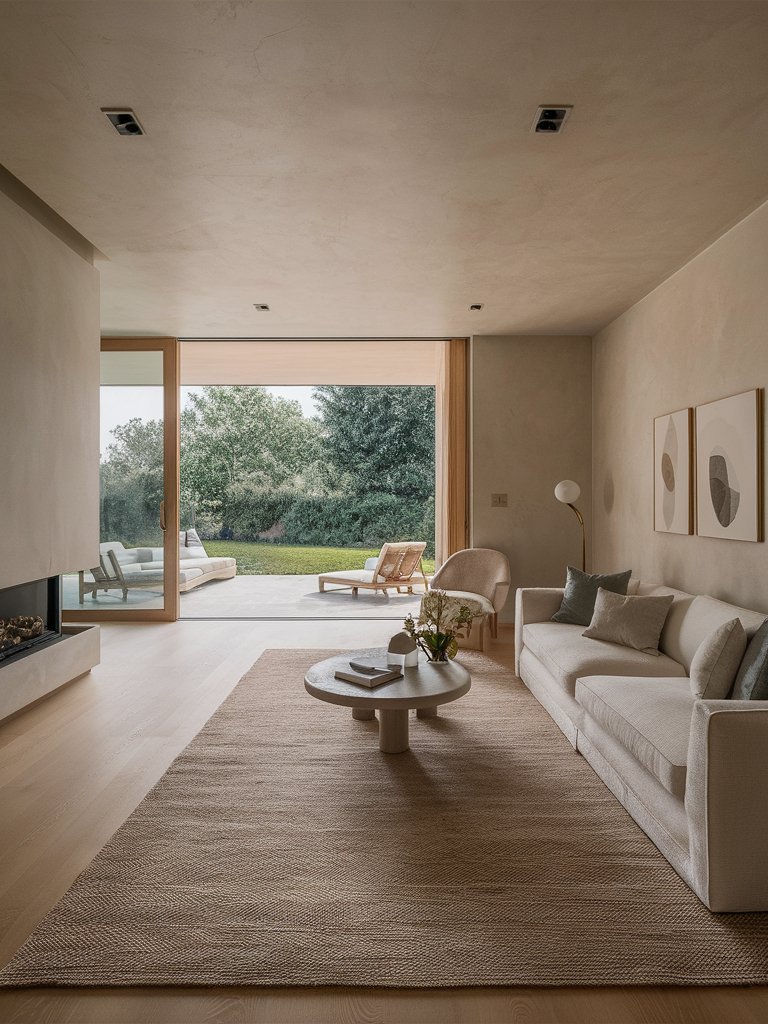
Large sliding glass doors allow sunlight to fill this minimalist living room, creating a bright and welcoming atmosphere. The abundance of natural light enhances the soft colors, highlights the textures, and makes the space appear more spacious. Beyond providing illumination, the glass doors create a strong visual connection to the outdoor surroundings, allowing nature to become part of the interior experience. The changing patterns of light throughout the day add movement and warmth without the need for extra decorations. This design approach perfectly reflects minimalist principles by celebrating simple, natural elements.
19. Connect Spaces with an Open Concept Layout
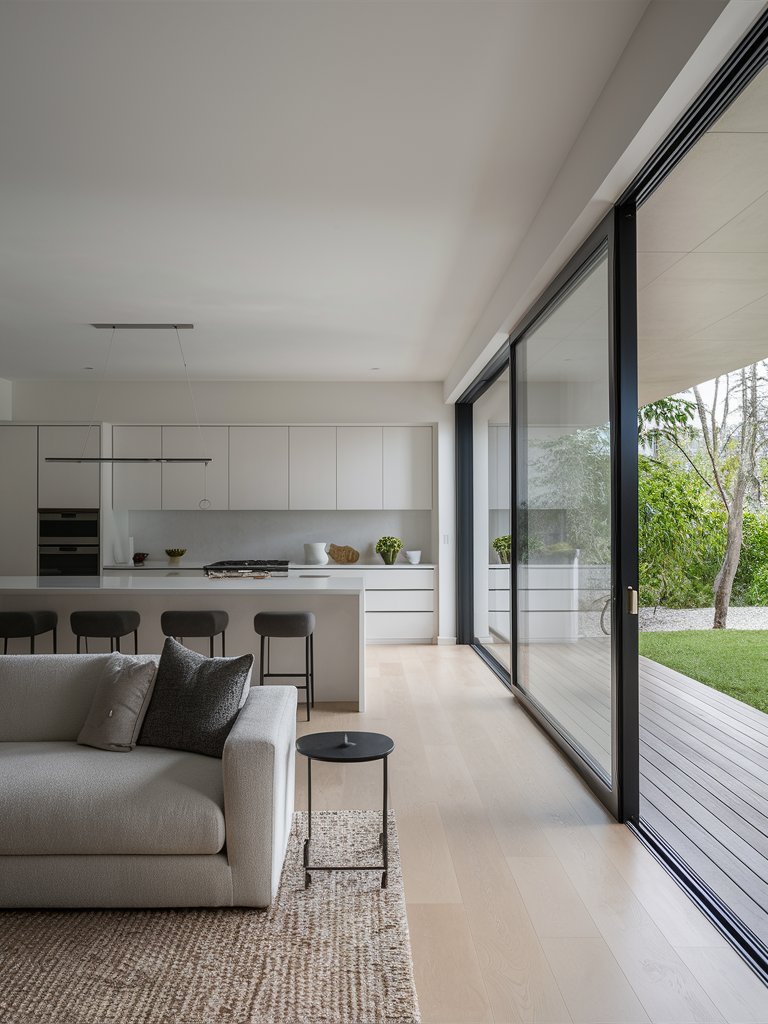
The open-concept design allows the living room, dining area, and kitchen to flow together naturally, creating a spacious and social environment. Removing unnecessary walls helps light travel throughout the home while making the entire area feel larger and more connected. This layout supports modern lifestyles by creating flexible spaces that can be used for relaxing, entertaining, and everyday activities. The minimalist approach keeps the design cohesive by using consistent colors, materials, and simple furniture choices. The result is a harmonious home that feels functional, airy, and perfectly suited for contemporary living.
20. Choose Low-Profile Furniture
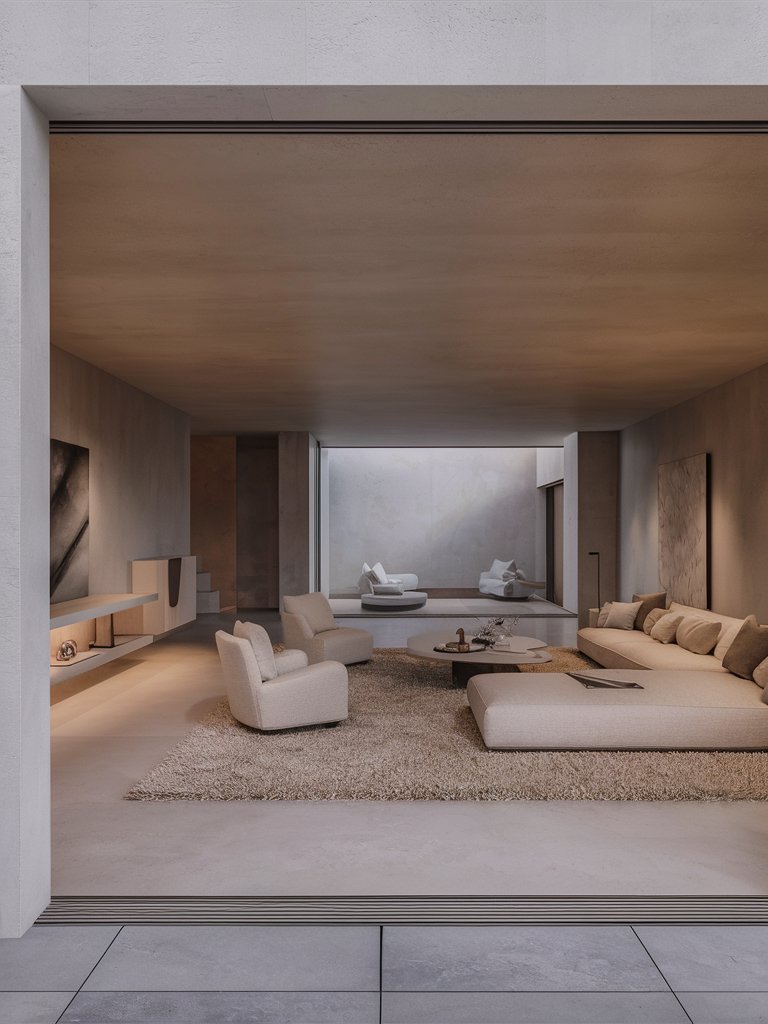
Low-profile furniture helps maintain the open and airy feeling that defines this minimalist living room. The sofa, armchairs, and coffee table feature clean lines and a lower height, allowing the room to feel more expansive and visually balanced. These pieces create a sense of continuity while keeping the focus on the overall design rather than individual objects. The neutral upholstery and simple silhouettes add comfort without overwhelming the space. This approach proves that minimalist furniture can still provide plenty of relaxation while maintaining a sleek, uncluttered appearance.
21. Add Personality with Minimalist Artwork
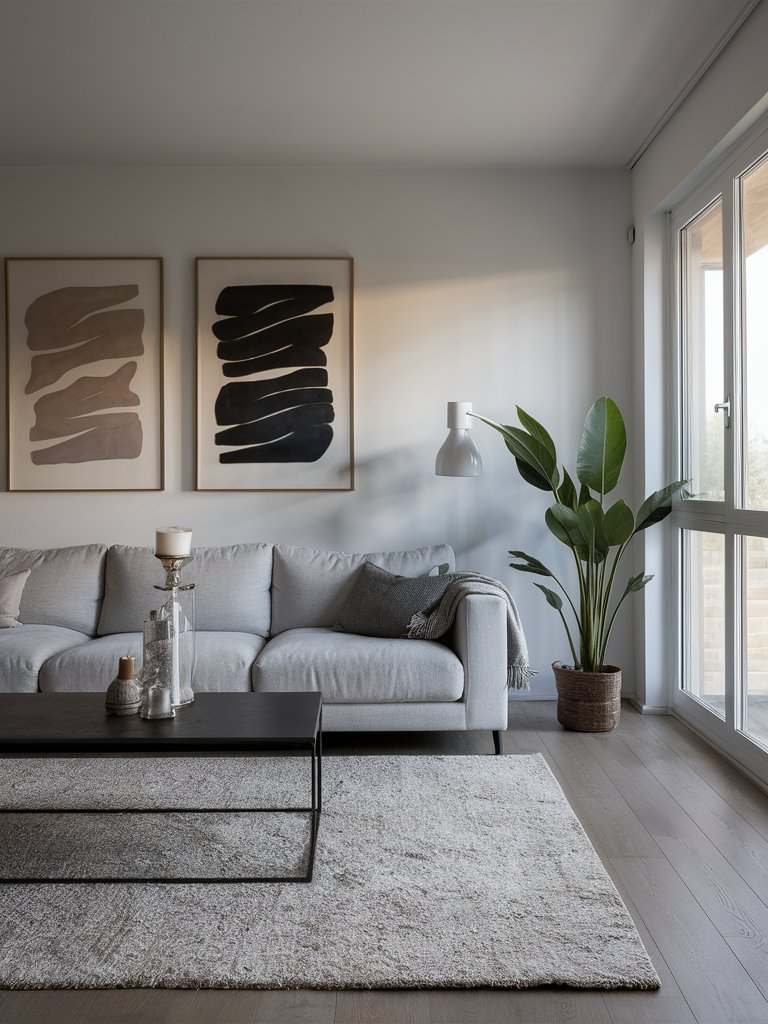
The large abstract artwork above the sofa adds character and visual interest while staying true to the minimalist aesthetic. Its monochromatic tones and flowing patterns create a sophisticated focal point without overwhelming the room’s calm atmosphere. The artwork introduces a sense of personality and creativity, proving that minimalist spaces can still feel expressive. Positioned carefully on the wall, it balances the simplicity of the furniture while adding depth to the overall design. This approach shows how a single meaningful piece of art can elevate a room without creating unnecessary visual clutter.
22. Create a Timeless Minimalist Interior
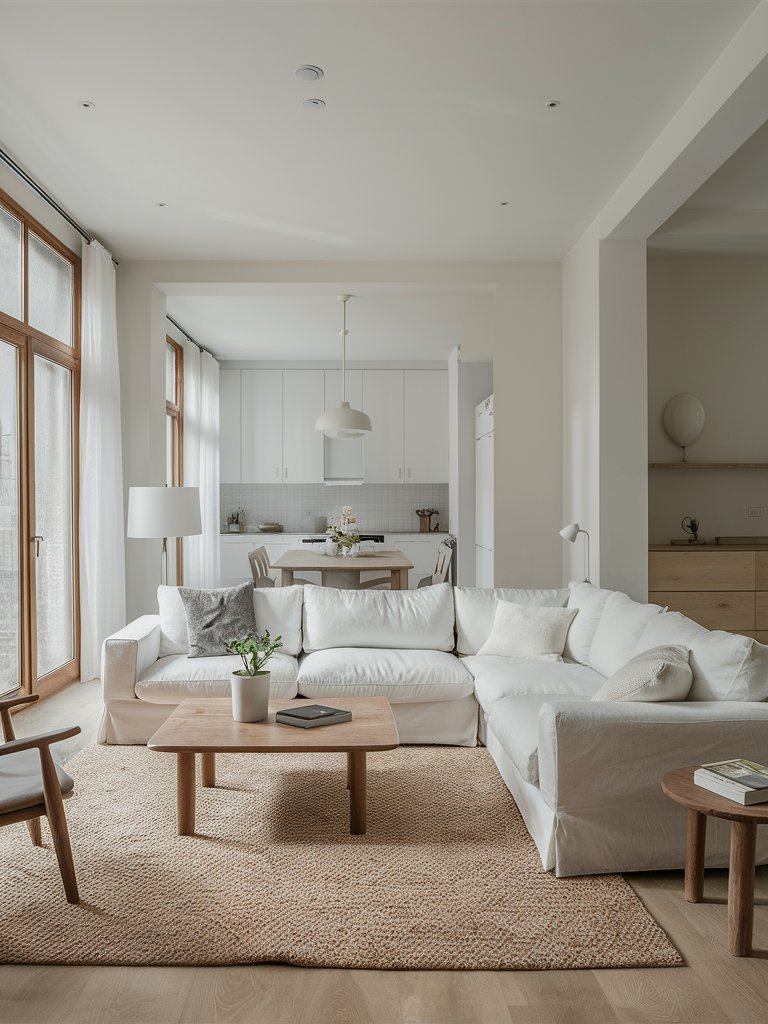
The elegance of this living room comes from its ability to remain stylish beyond changing trends. Clean lines, neutral colors, functional furniture, and natural materials create a design that feels timeless and sophisticated. Instead of focusing on temporary styles, the space prioritizes comfort, simplicity, and quality. The thoughtful combination of textures and natural light prevents the room from feeling plain while maintaining its minimalist character. This timeless approach makes the space easy to adapt over the years, proving that a well-designed minimalist interior can remain beautiful, practical, and relevant for a long time.
23. Add Warmth with Soft Textured Rugs
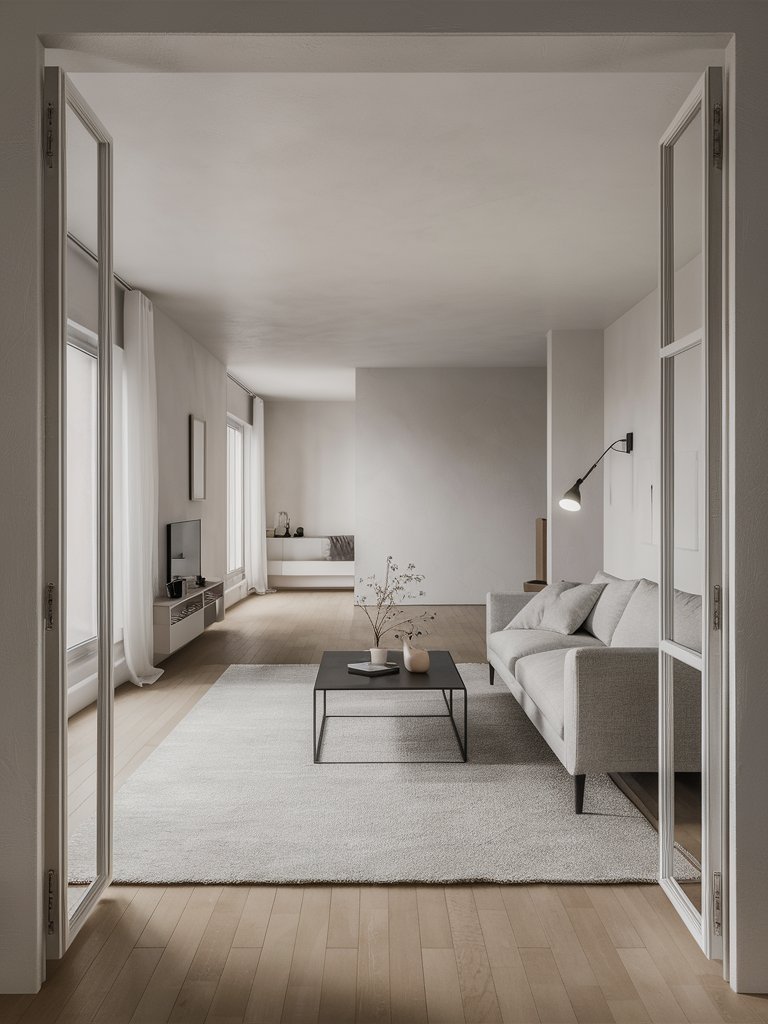
A soft area rug brings comfort and warmth to this minimalist living room while helping define the seating area. Its subtle color and gentle texture create a cozy foundation that balances the sleek surfaces of the furniture and flooring. The rug adds visual depth without taking attention away from the room’s clean design. By introducing a layer of softness, it prevents the minimalist interior from feeling too cold or empty. This simple addition shows how carefully selected textures can make a space feel more inviting while still maintaining a refined and uncluttered appearance.
24. Make an Impact with a Black Leather Sofa
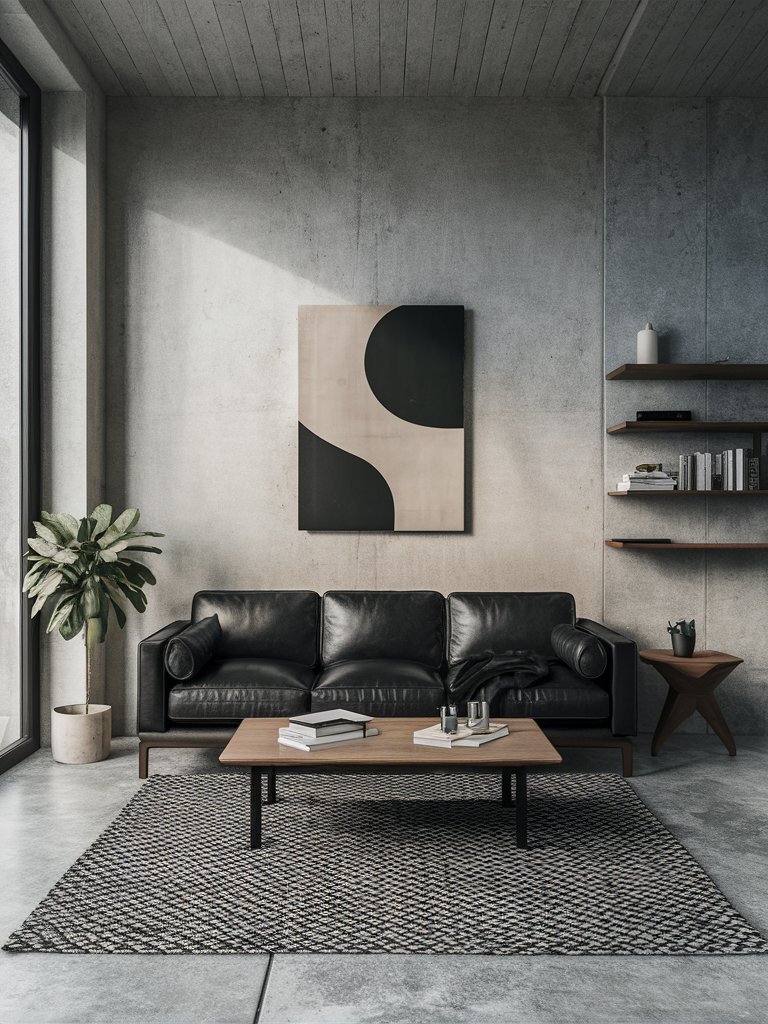
The black leather sofa adds a bold contrast to this minimalist living room while maintaining a sophisticated and modern look. Its structured shape and smooth finish create a strong focal point against the lighter elements throughout the space. The dark tone anchors the room, adding depth and balance without overwhelming the design. The leather material introduces a luxurious texture that complements the natural finishes and simple decor. This statement piece demonstrates how minimalist interiors can include dramatic elements when they are carefully balanced with softer colors and thoughtful styling.
25. Strengthen the Connection to Nature
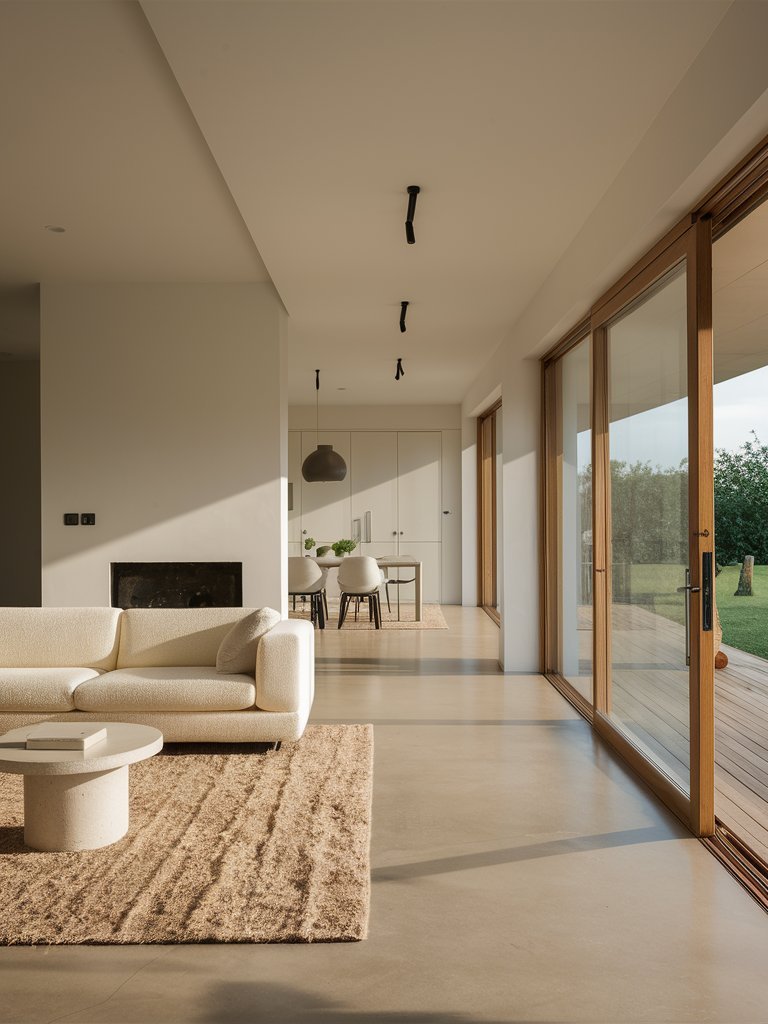
This living room embraces outdoor beauty through its large glass doors and views of surrounding greenery. The natural landscape becomes an extension of the interior, creating a peaceful atmosphere that feels open and refreshing. Wooden details and earthy tones inside the room help strengthen this connection, creating harmony between the built environment and nature. The outdoor deck acts as an additional living area, encouraging a seamless indoor-outdoor lifestyle. This design approach highlights the minimalist idea of focusing on simplicity, natural elements, and creating spaces that support relaxation and well-being.
* The lasting appeal of minimalist living room design comes from its ability to create a stylish environment through simplicity and thoughtful choices. Use these inspirations to transform your living room into a timeless retreat designed for comfort and relaxation.