A modern minimalist bedroom celebrates simplicity through thoughtful design, clean structure, and a calming sense of order. Every element is intentionally chosen, allowing space, light, and material quality to define the atmosphere rather than excessive decoration. The result is a bedroom that feels open, balanced, and deeply restful.
This design style focuses on clarity and restraint, where uncluttered surfaces and soft, neutral palettes work together to create visual calm. Instead of overwhelming detail, subtle textures, natural finishes, and well-proportioned furniture introduce quiet sophistication. Each detail contributes to a space that feels peaceful yet refined.
In this collection, you’ll discover inspiring ways to shape a minimalist bedroom that still feels warm, inviting, and elegant. Let’s explore how simplicity can become the ultimate form of luxury and transform your bedroom into a serene retreat!
1. Floor-to-Ceiling Curtains
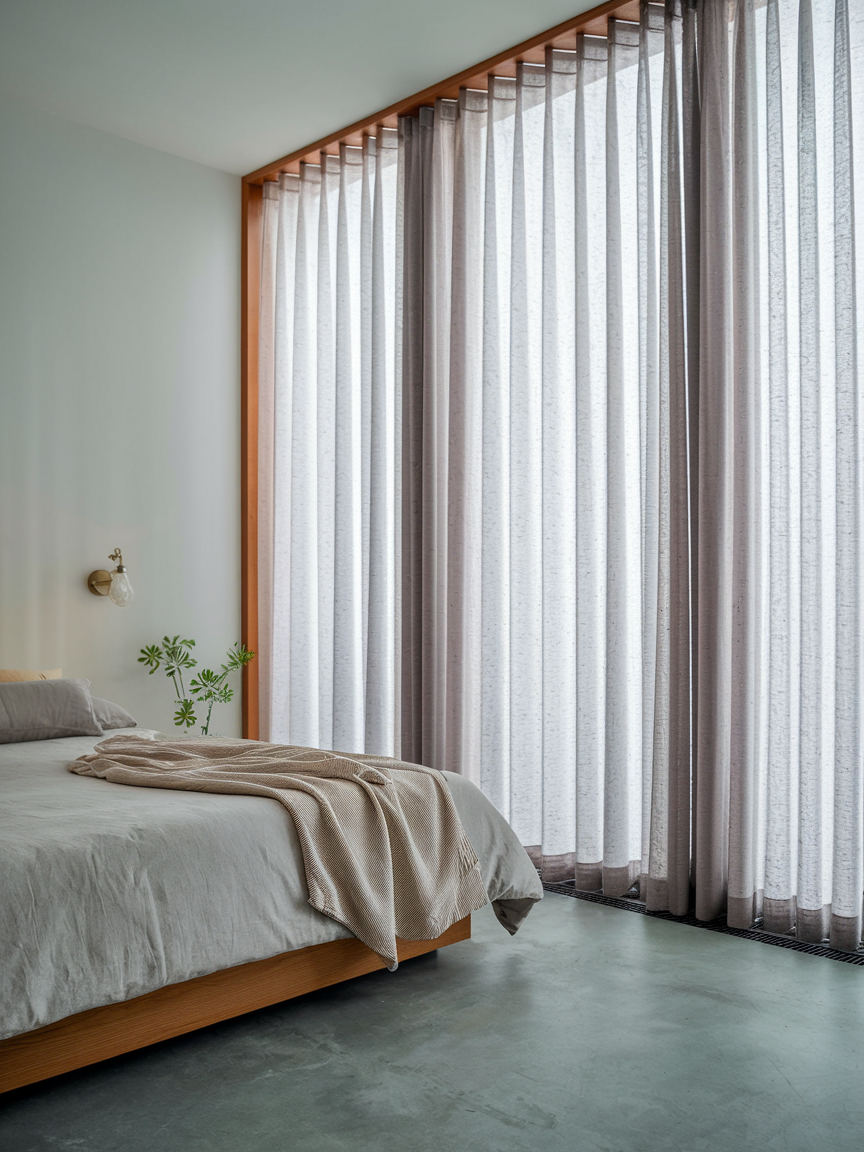
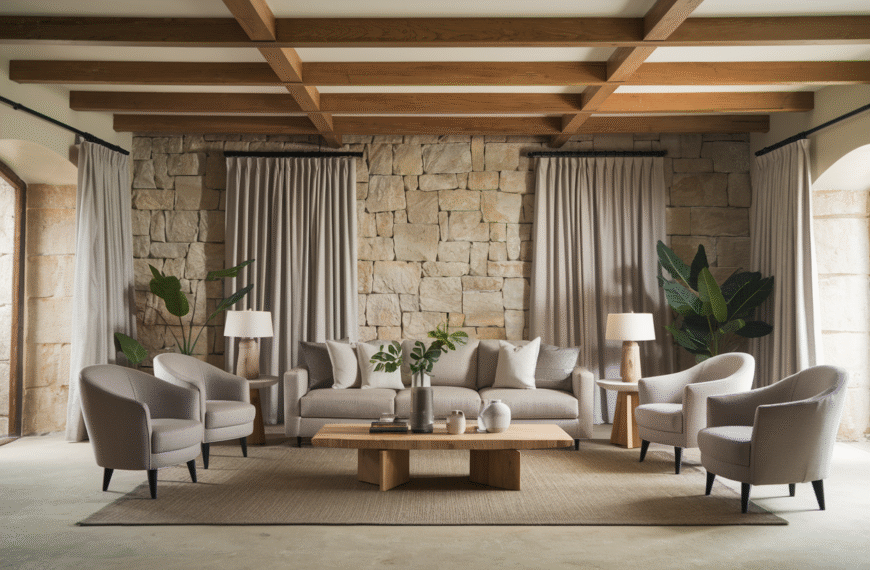
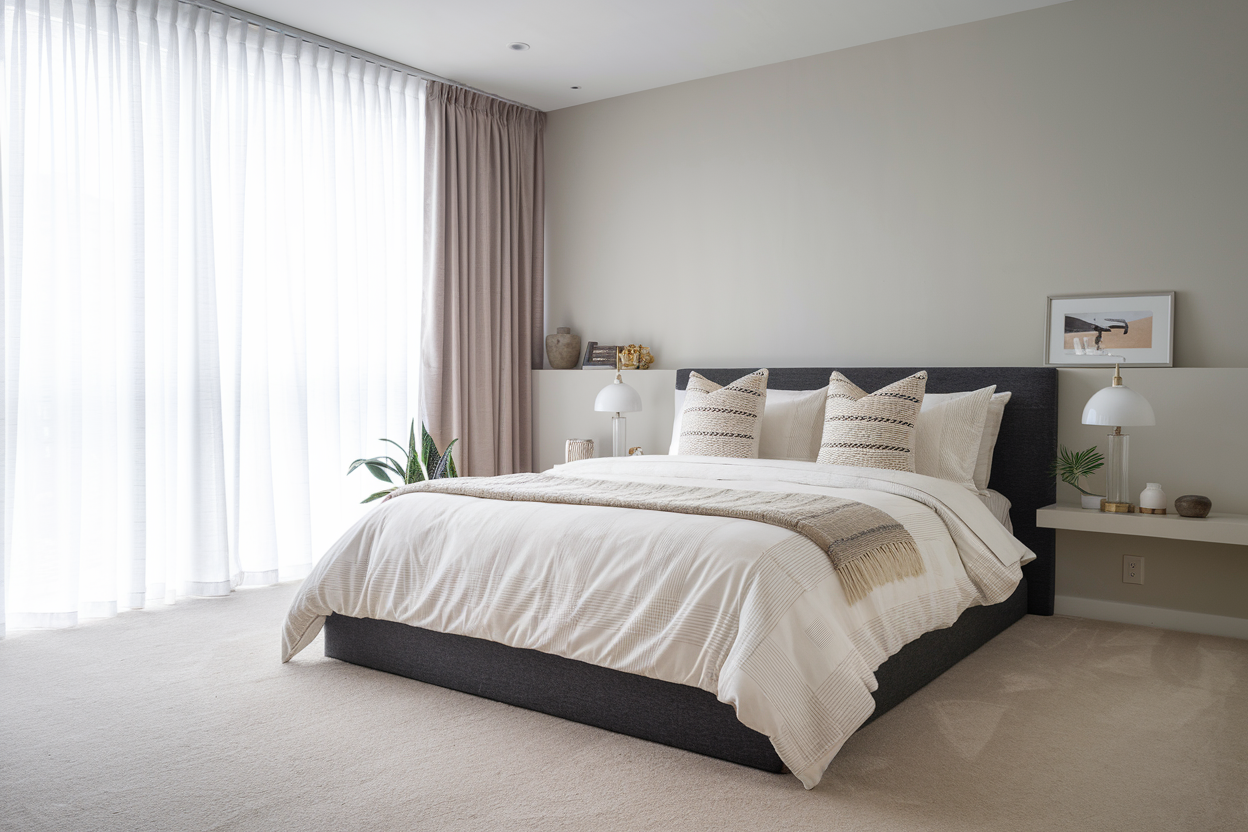
Floor-to-ceiling curtains add softness and vertical drama while preserving a clean aesthetic. Light fabrics like linen or sheer cotton allow natural light to filter gently into the room, enhancing brightness without harshness. Extending curtains from ceiling to floor visually heightens the space, making it feel larger and more elegant. Their flowing movement introduces subtle texture that complements minimalist structure while maintaining an airy, peaceful atmosphere.
2. Natural Wood Accents
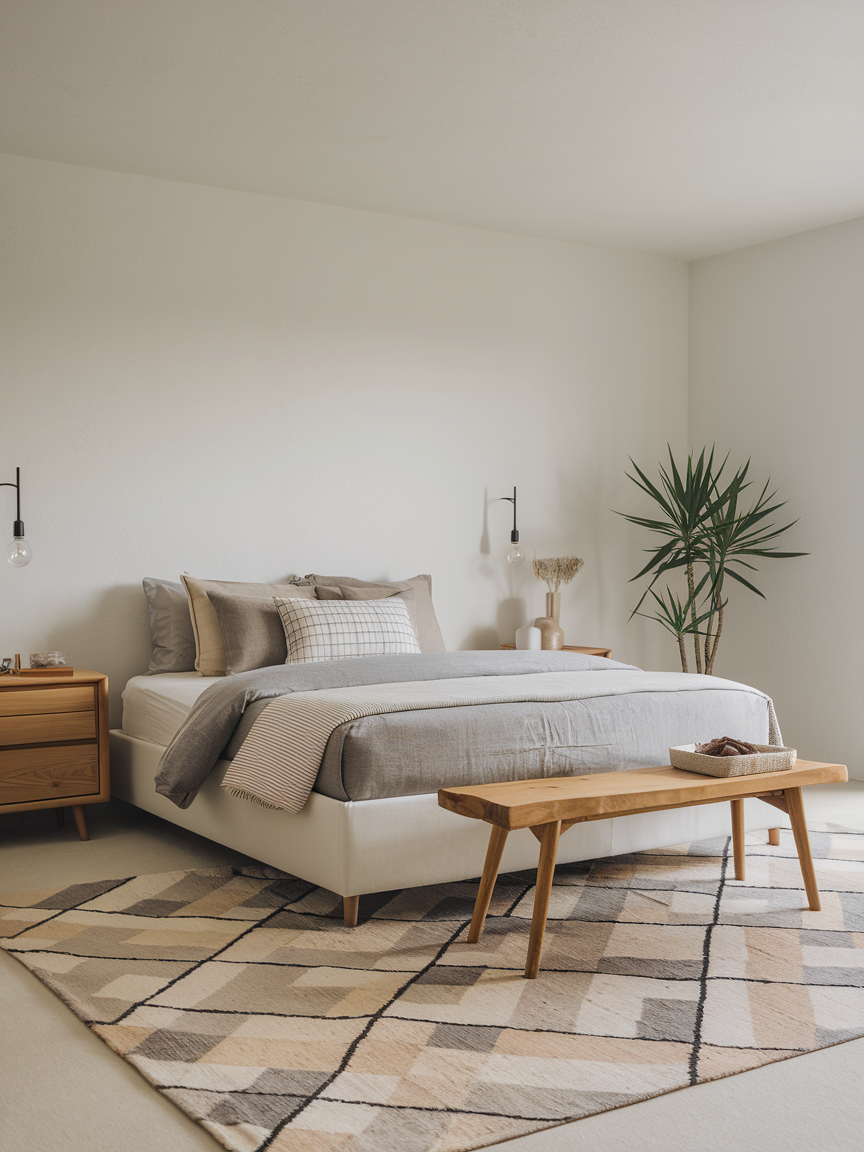
Natural wood accents introduce organic warmth that balances the simplicity of minimalist interiors. Light oak, walnut, or ash finishes bring gentle contrast to neutral spaces while maintaining harmony. Wooden furniture pieces such as nightstands, benches, or shelving add texture without overpowering the design. The natural grain of wood introduces quiet visual interest, grounding the space and enhancing its connection to nature.
3. Minimal Wall Art
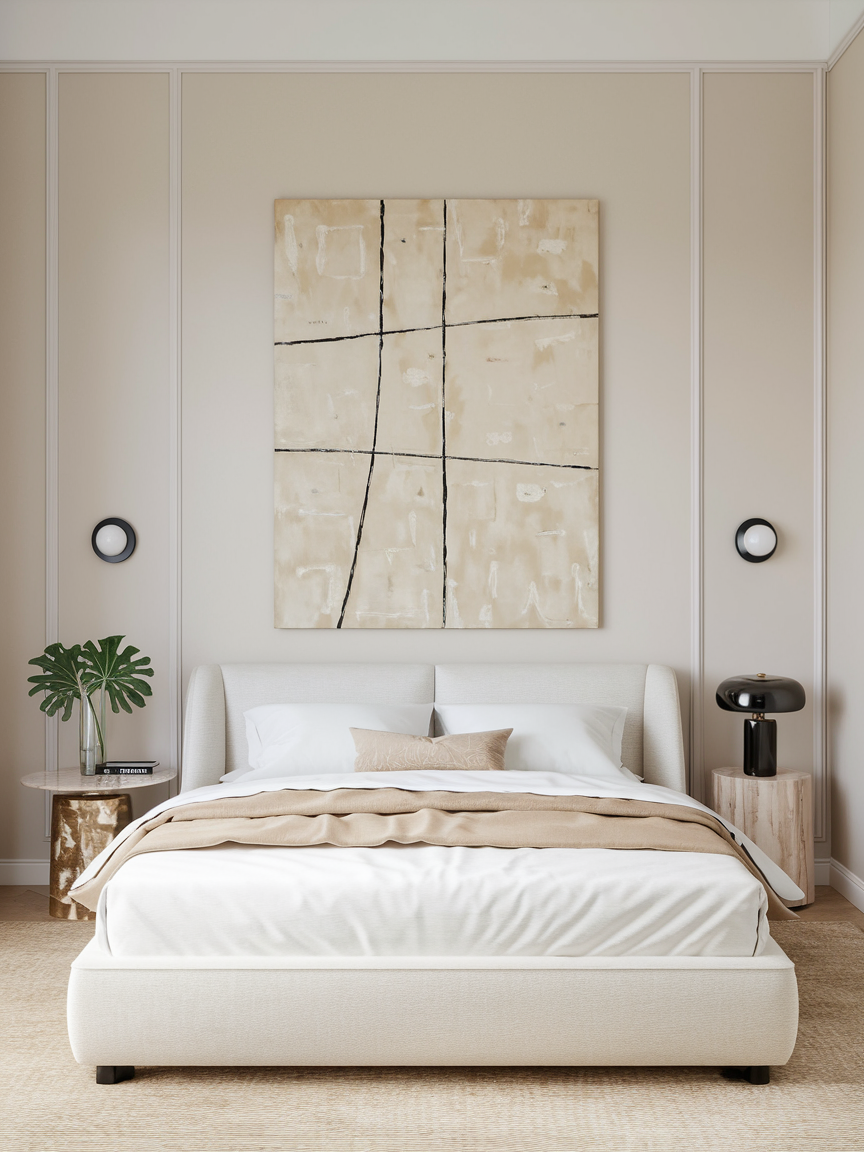
Minimal wall art adds personality without disrupting visual calm. Large-scale abstract pieces, monochrome photography, or soft line drawings work best within minimalist bedrooms. Keeping the number of artworks limited ensures the walls remain uncluttered and serene. Simple framing in wood or matte black enhances cohesion. Thoughtfully placed art acts as a subtle focal point, elevating the room’s style while preserving simplicity.
4. Black Accents
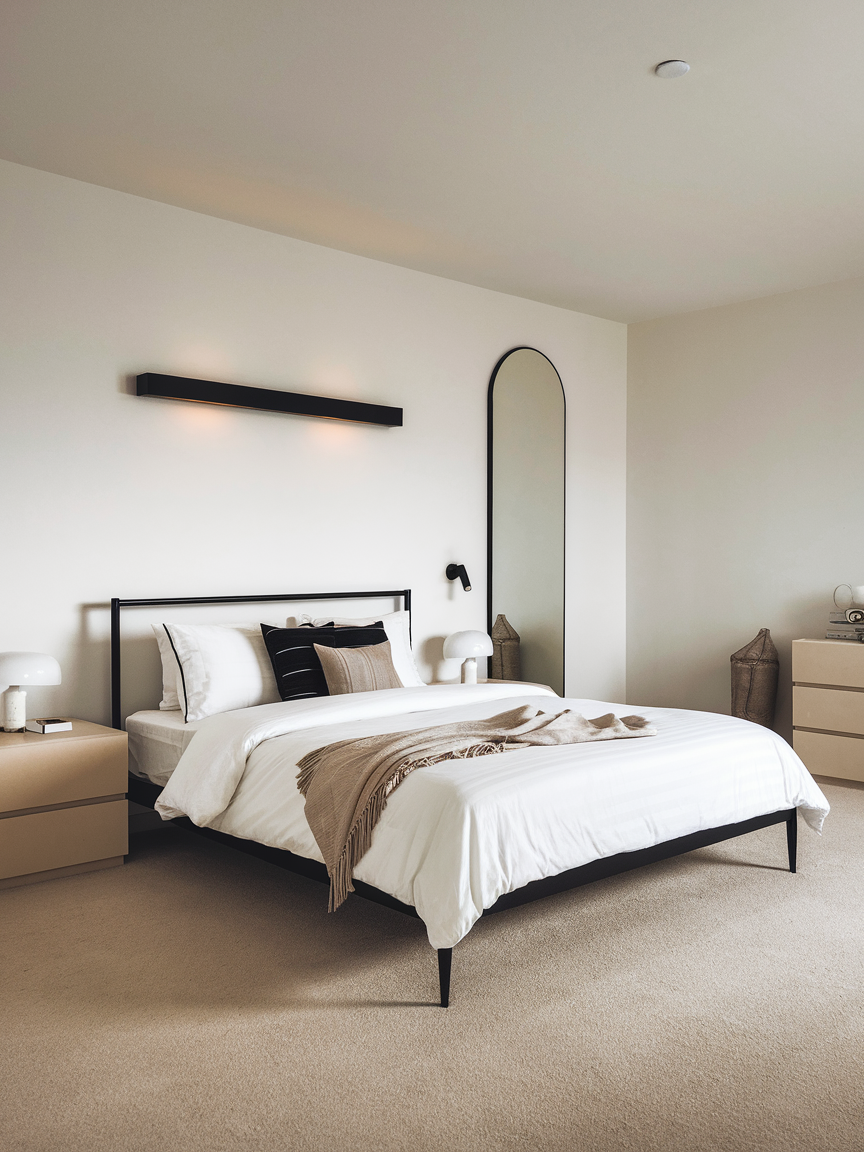
Black accents introduce structure, definition, and quiet sophistication into a soft minimalist palette. When used sparingly, they act as visual anchors that highlight form and architecture without overwhelming the room. Elements such as matte black light fixtures, slim metal frames, or subtle hardware details create contrast against lighter tones like white, beige, and gray. This contrast enhances clarity, making the overall design feel more intentional and refined. The key is restraint—black should appear as a supporting detail rather than a dominant feature. Even small touches, such as a black-framed mirror or a minimal wall sconce, can significantly elevate the composition. When carefully balanced, black accents bring depth and a modern edge while preserving the calm essence of minimalism.
5. Symmetrical Layout
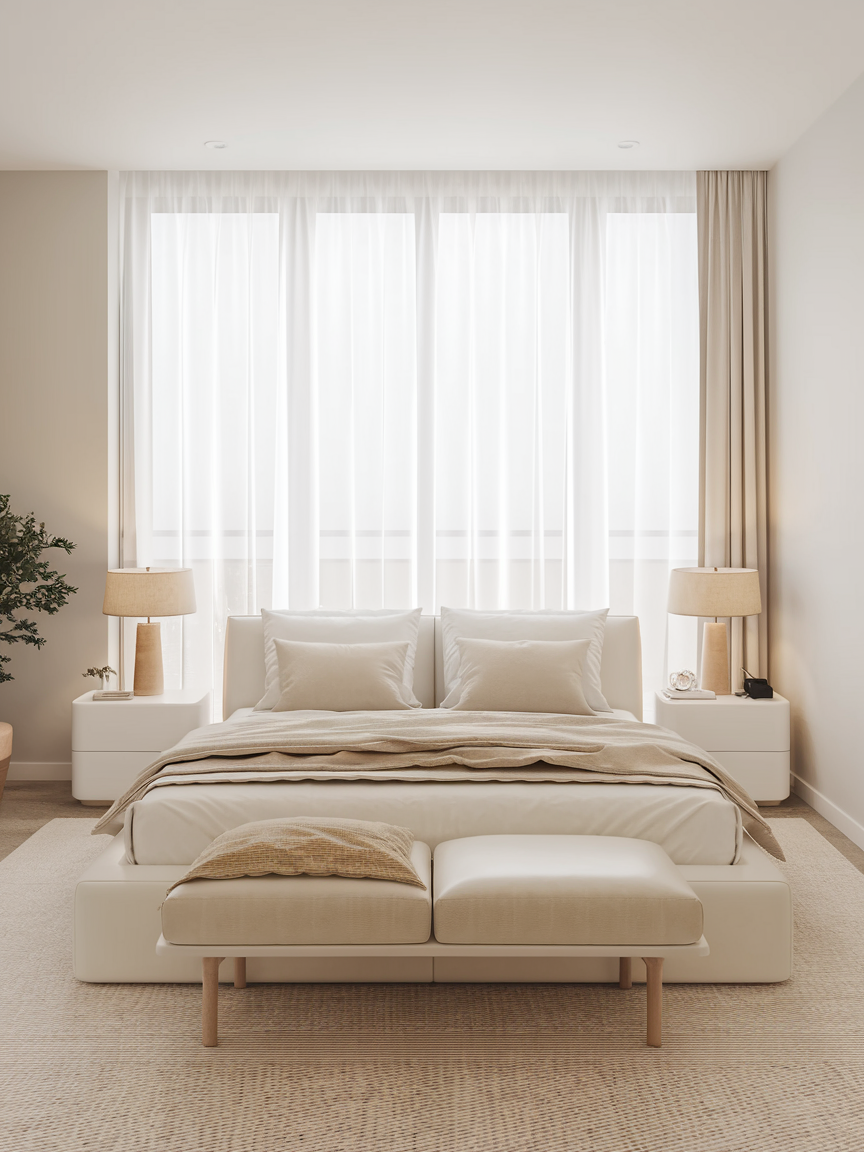
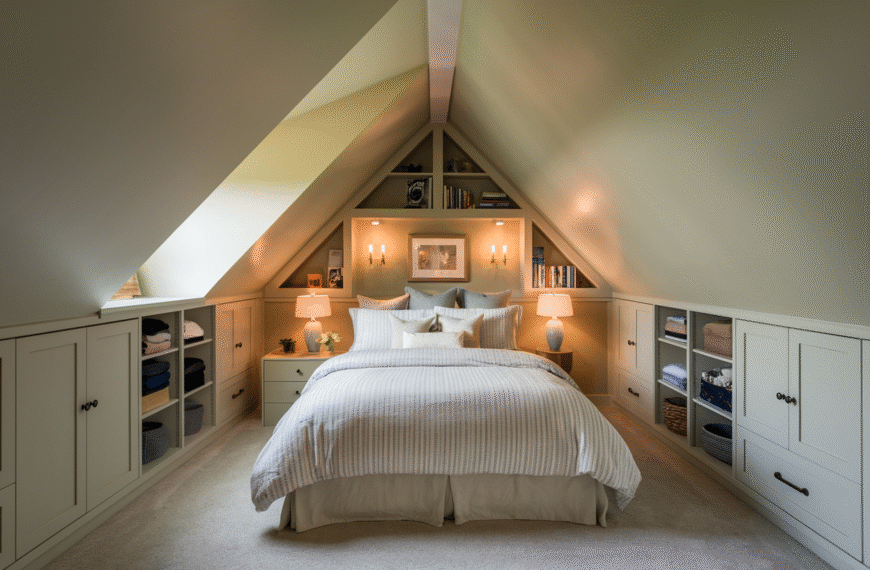
A symmetrical layout brings a natural sense of calm and order to a minimalist bedroom. By mirroring elements on either side of the bed, such as matching nightstands, lamps, or decor, the space feels balanced and visually stable. This structure reduces visual tension and allows the eye to move comfortably across the room. Symmetry works particularly well in minimalist design because it reinforces clarity and simplicity without requiring additional decoration. Even when slight variations are introduced, maintaining overall balance ensures the space remains cohesive. This thoughtful arrangement creates a feeling of intentional design, where every object has a place and purpose, resulting in a bedroom that feels peaceful, composed, and effortlessly elegant.
6. Soft Layered Lighting
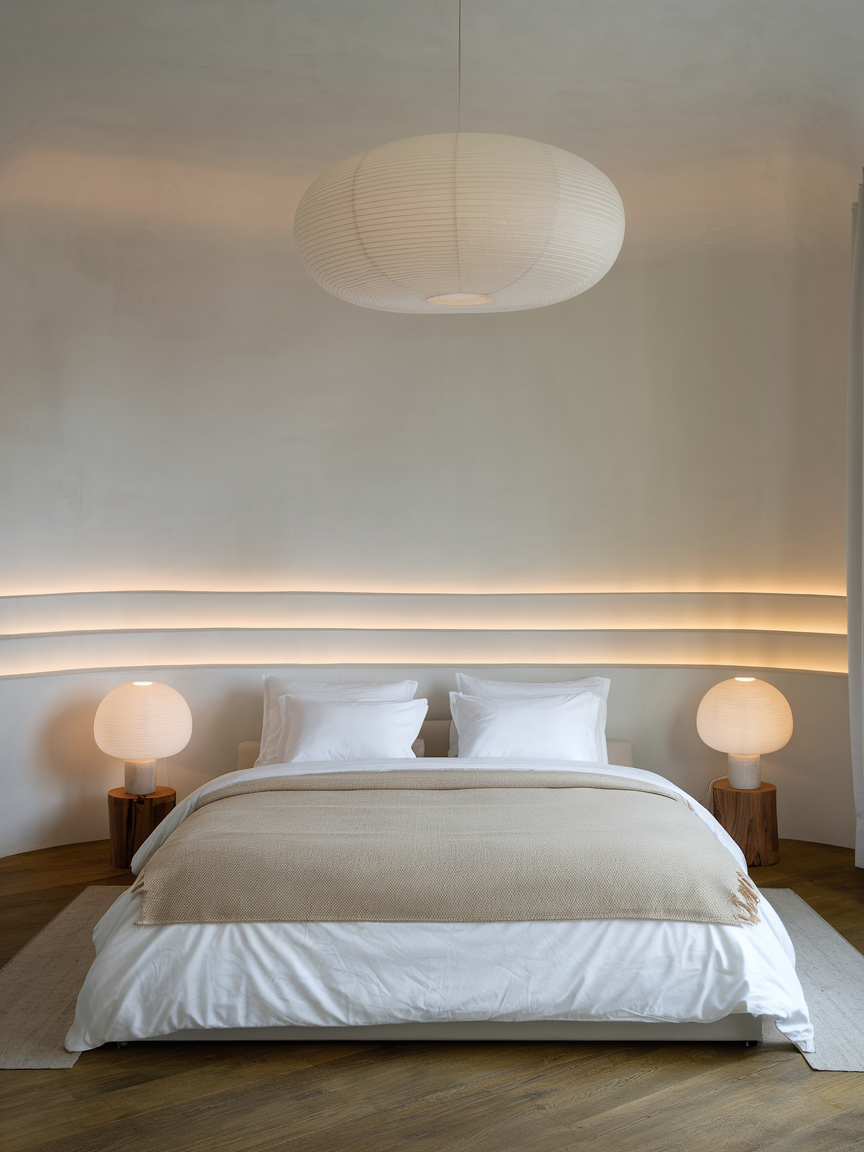
Soft layered lighting elevates a minimalist bedroom by combining multiple light sources to create depth, warmth, and adaptability. Instead of depending on a single overhead fixture, this approach integrates ambient, task, and accent lighting to shape the room’s atmosphere. Recessed ceiling lights provide overall illumination, while bedside sconces or pendants offer focused light for reading or relaxation. Subtle LED accents behind headboards or under furniture add a gentle glow that enhances spatial dimension. Warm light temperatures are essential, as they preserve the cozy, calming feel of the space. Dimmers allow flexibility throughout the day, making it easy to shift from bright functionality to soft evening ambiance. This balanced lighting design ensures the bedroom always feels comfortable, inviting, and visually harmonious.
7. Recessed Shelving
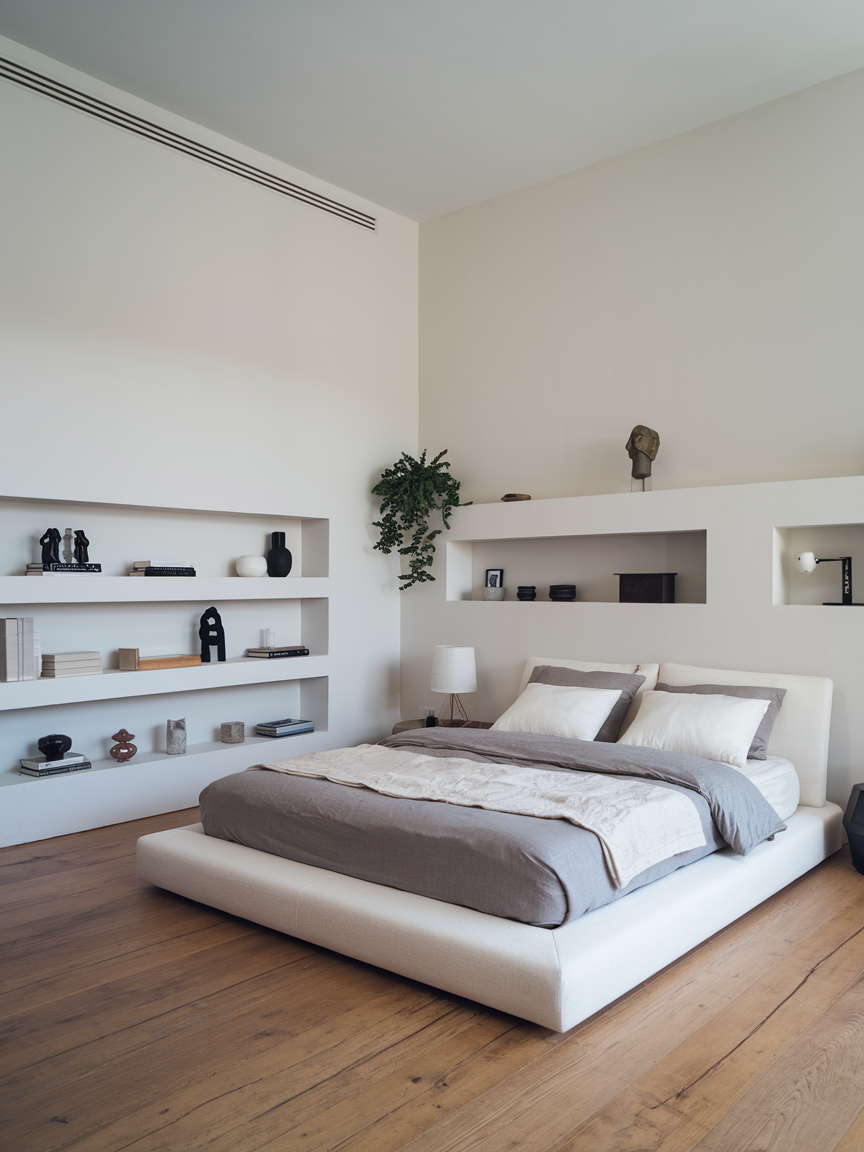
Recessed shelving offers a seamless storage solution that integrates directly into the architecture of a minimalist bedroom. Built into the wall, it eliminates the need for bulky furniture while maintaining clean lines and visual continuity. These shelves provide space for carefully curated items such as books, ceramics, or subtle decorative accents, all displayed in an organized and intentional manner. Keeping styling minimal is essential to preserve clarity and avoid visual clutter. When paired with soft lighting or neutral finishes, recessed shelving becomes both functional and atmospheric. This design approach enhances efficiency while reinforcing a calm, structured environment that aligns perfectly with minimalist principles.
8. Embracing Open Space as a Design Feature
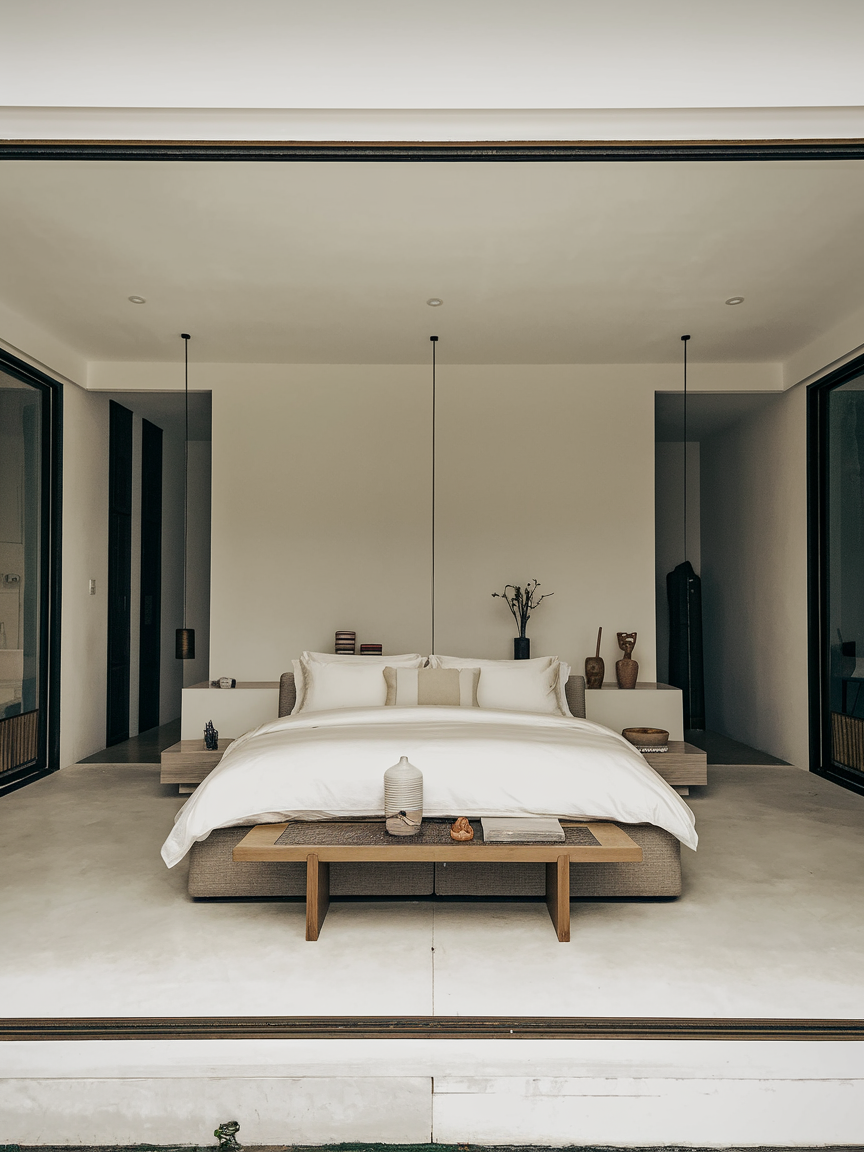
Open space is not empty in minimalist design, it is an intentional and powerful element that defines the entire atmosphere. Allowing breathing room between furniture pieces enhances flow, movement, and visual clarity. This openness prevents the room from feeling crowded or restrictive, instead creating a sense of lightness and calm. Negative space draws attention to the carefully chosen elements within the room, allowing them to stand out more meaningfully. By resisting the urge to overfill the space, the design gains strength through simplicity. The result is a bedroom that feels spacious, balanced, and deeply restful.
9. Integrated Wall Paneling
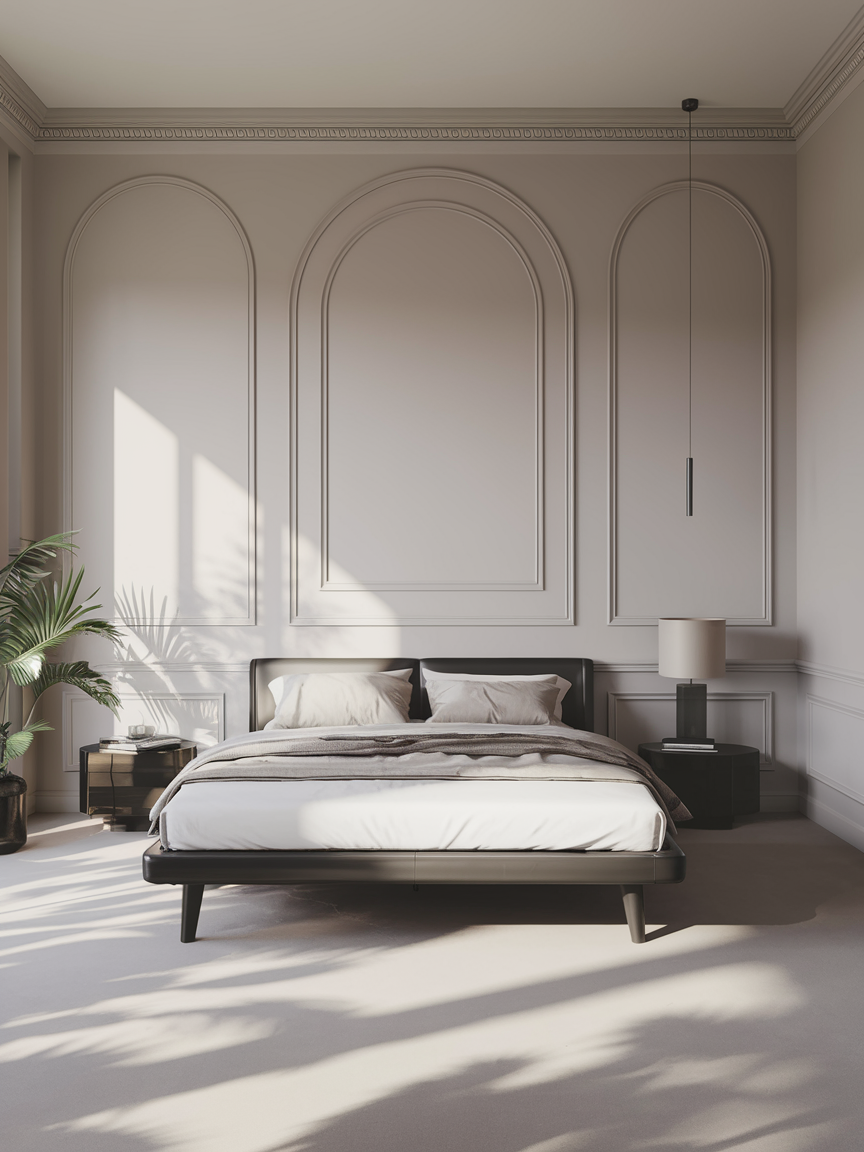
Integrated wall paneling adds architectural depth while preserving the clean simplicity of a minimalist bedroom. When designed in the same color as the walls, it creates subtle dimension through texture and shadow rather than contrast. Simple vertical or geometric panel layouts can frame the bed area, turning it into a quiet focal point without overpowering the space. This technique enhances visual structure while maintaining a seamless aesthetic. The effect is understated yet impactful, offering refinement through detail rather than decoration. Integrated paneling elevates the overall composition while staying true to minimalist principles of restraint and cohesion.
10. Floating Nightstands
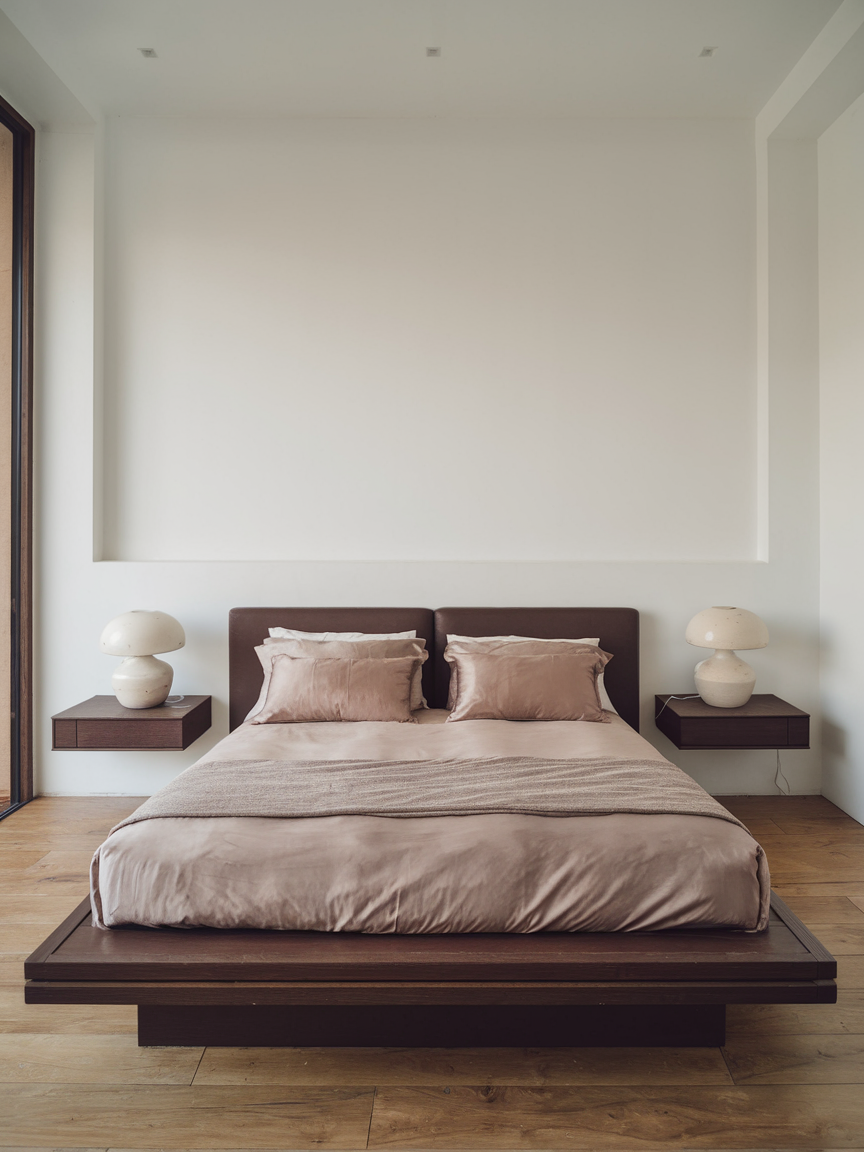
Floating nightstands create a light, airy effect by freeing up floor space and eliminating visual bulk. Mounted directly to the wall, they maintain clean lines and support a streamlined layout. Simple designs in wood or neutral finishes blend seamlessly with the bed and surrounding décor. With minimal styling, they provide functionality without clutter, reinforcing the minimalist principle of intentional design.
11. Soft Ambient Lighting
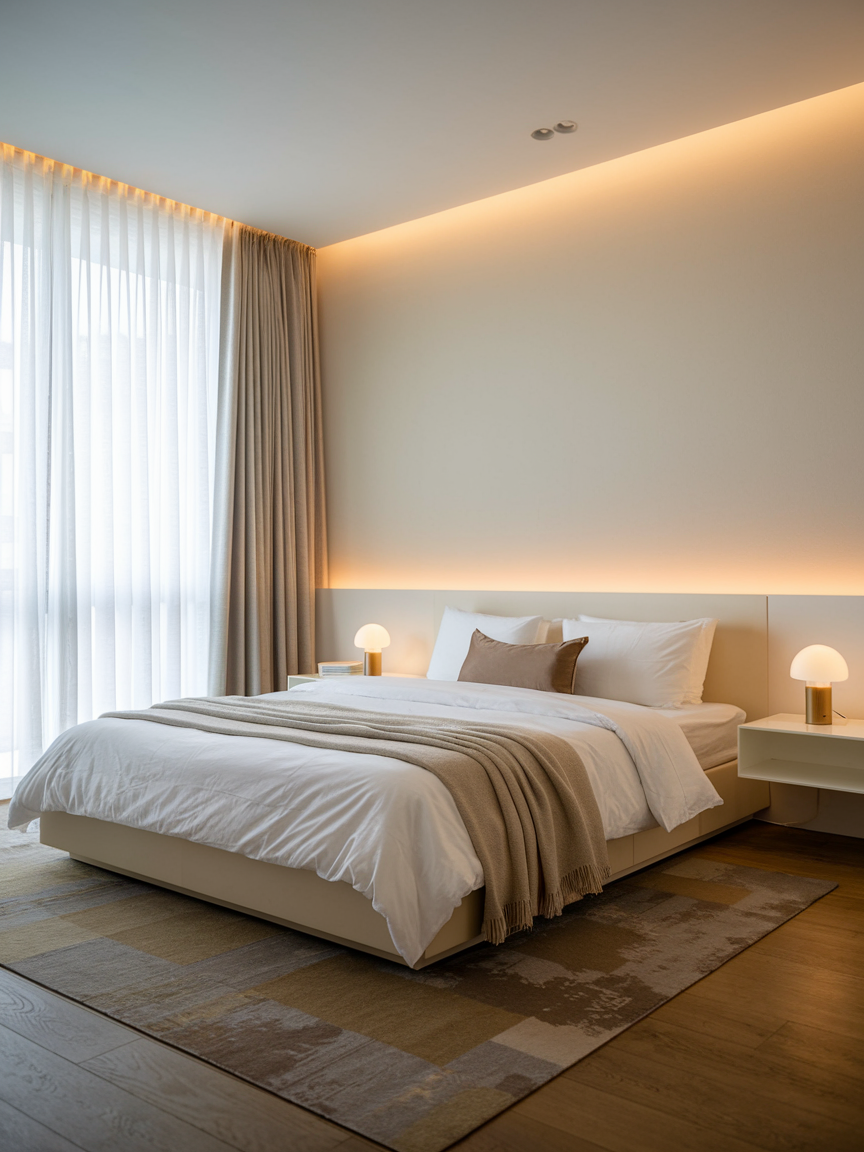
Soft ambient lighting is essential for shaping the mood of a modern minimalist bedroom, transforming it from a simple space into a calming retreat. Instead of relying on harsh overhead lighting, this approach focuses on warm, diffused illumination that gently spreads across the room. Dimmable fixtures, hidden LED strips, and warm-toned bulbs all work together to create a layered glow that feels natural and soothing. This type of lighting enhances textures like linen, wood, and fabric without creating visual noise or sharp contrast. It also allows the bedroom to transition effortlessly from bright, functional mornings to soft, restful evenings. When carefully balanced, ambient lighting becomes invisible yet powerful, defining the emotional tone of the entire space and reinforcing a sense of quiet sophistication.
12. Neutral Area Rug
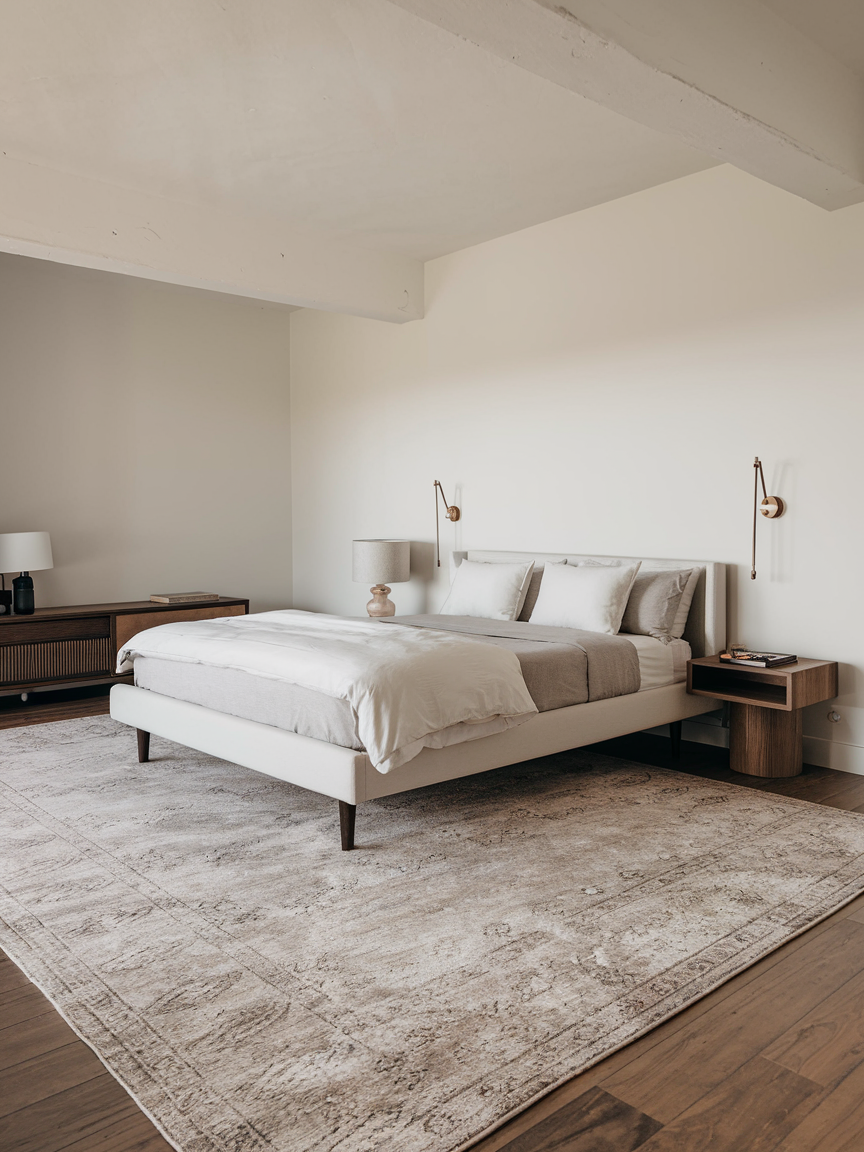
A neutral area rug serves as both a grounding element and a subtle comfort layer within a minimalist bedroom. Positioned beneath the bed or seating area, it visually anchors the furniture while softening the overall layout. Choosing tones like ivory, sand, taupe, or light gray ensures harmony with the rest of the palette. Textured materials such as wool, jute blends, or low-pile weaves introduce gentle variation without disrupting simplicity. Beyond aesthetics, a rug enhances comfort underfoot and helps absorb sound, making the room feel quieter and more restful. It also creates a defined zone within the bedroom, improving spatial balance while maintaining openness. This understated addition strengthens the feeling of warmth and cohesion, proving that even simple elements can significantly elevate minimalist design.
13. Neutral Color Palette
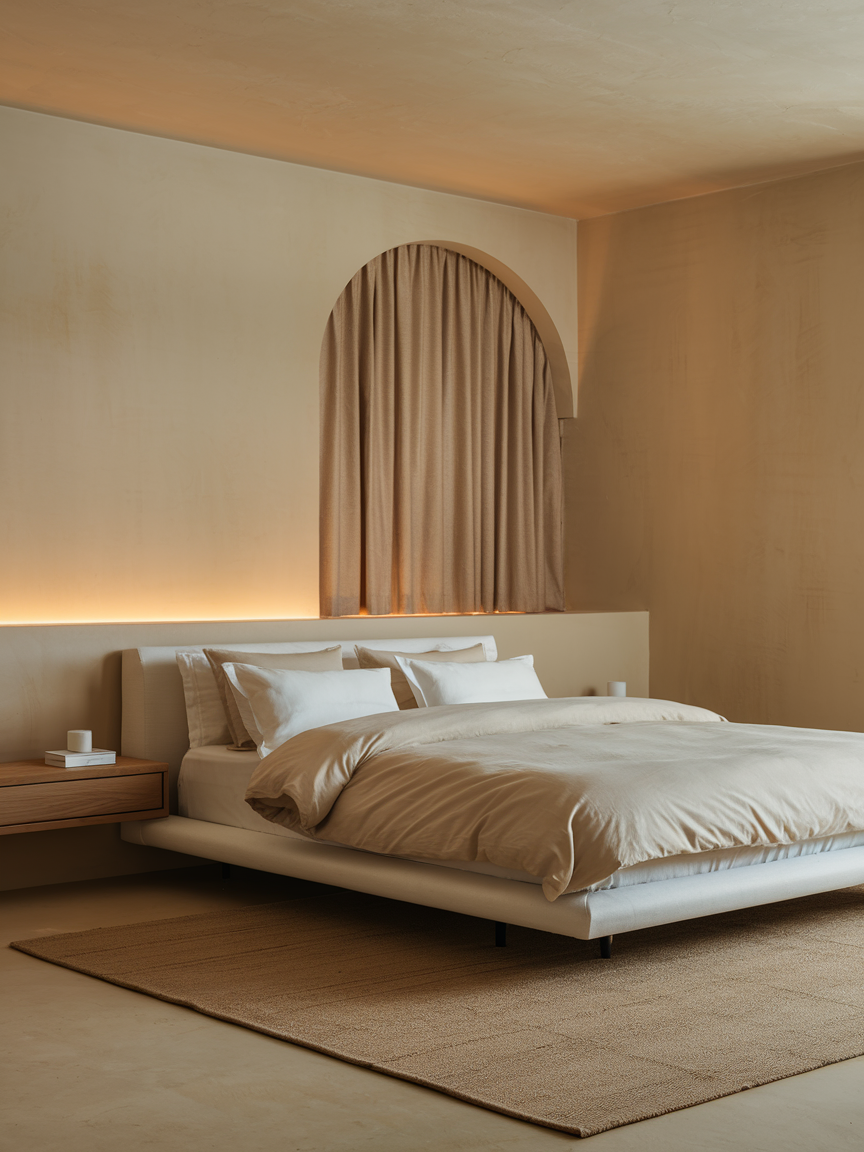
A neutral palette built on warm undertones such as ivory, soft beige, taupe, and greige establishes the foundation of a calming minimalist bedroom. These colors create a gentle visual flow that feels cohesive and soothing without appearing flat or sterile. Layering multiple shades of neutrals across walls, bedding, and furnishings adds subtle depth while preserving simplicity. Natural materials like wood, linen, and stone enhance this warmth, preventing the space from feeling overly rigid. The result is a bedroom that feels naturally balanced, inviting, and timeless, where every color works together to support relaxation and effortless elegance.
14. Low-Profile Platform Bed
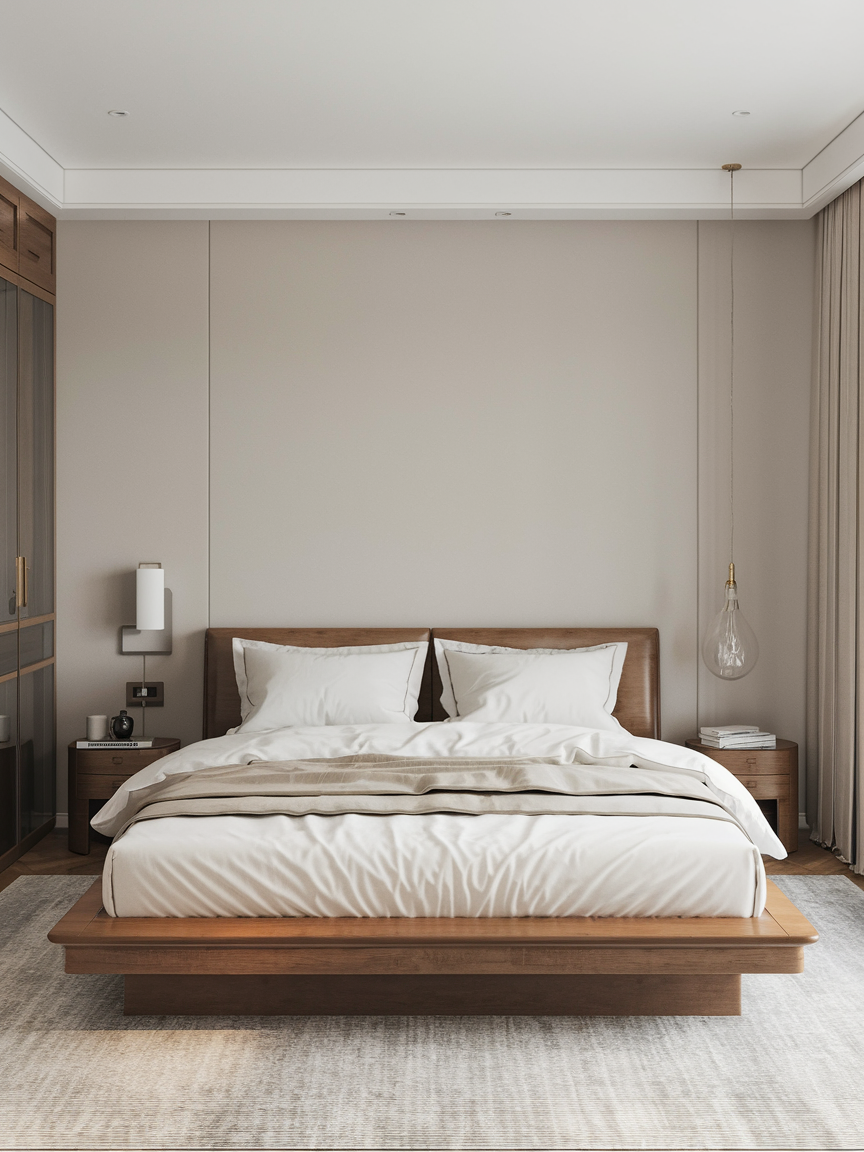
A low-profile platform bed anchors the bedroom with a clean, grounded silhouette that perfectly reflects minimalist principles. Its low height opens up vertical space, making the room feel larger and more breathable. Simple wooden frames or upholstered designs in neutral tones keep the aesthetic calm and uncluttered. Without bulky headboards or decorative excess, the bed becomes a quiet focal point that supports visual balance. Paired with crisp, understated bedding, this design choice enhances spaciousness and reinforces a sense of calm structure and modern elegance.
15. Statement Pendant Lighting
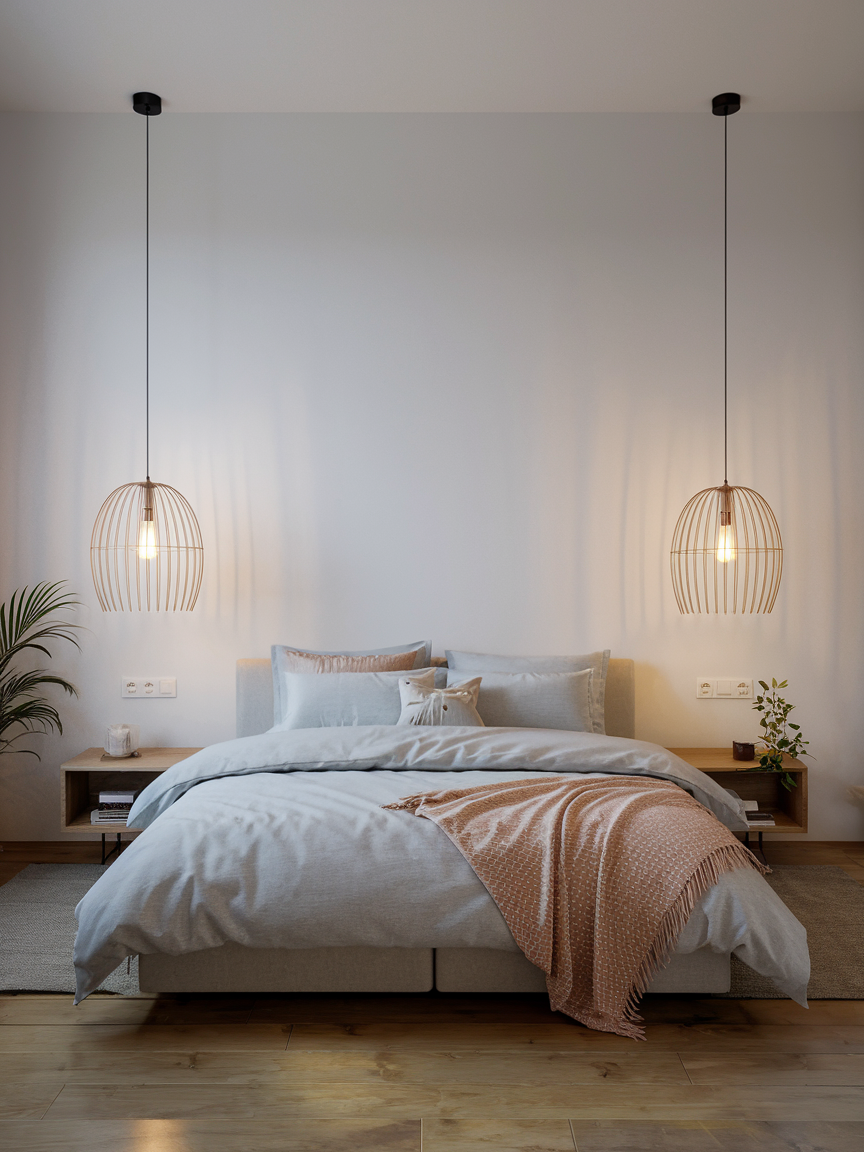
Replacing traditional bedside lamps with pendant lighting instantly modernizes the bedroom while freeing up surface space. Suspended fixtures create a floating effect that feels light, intentional, and visually clean. Choosing simple shapes, matte finishes, or subtle metallic tones keeps the design aligned with minimalist aesthetics. Soft, diffused lighting from above enhances ambiance while maintaining functionality. This approach also allows nightstands to remain uncluttered, reinforcing the idea that simplicity and smart design can coexist beautifully.
16. Layered Textures
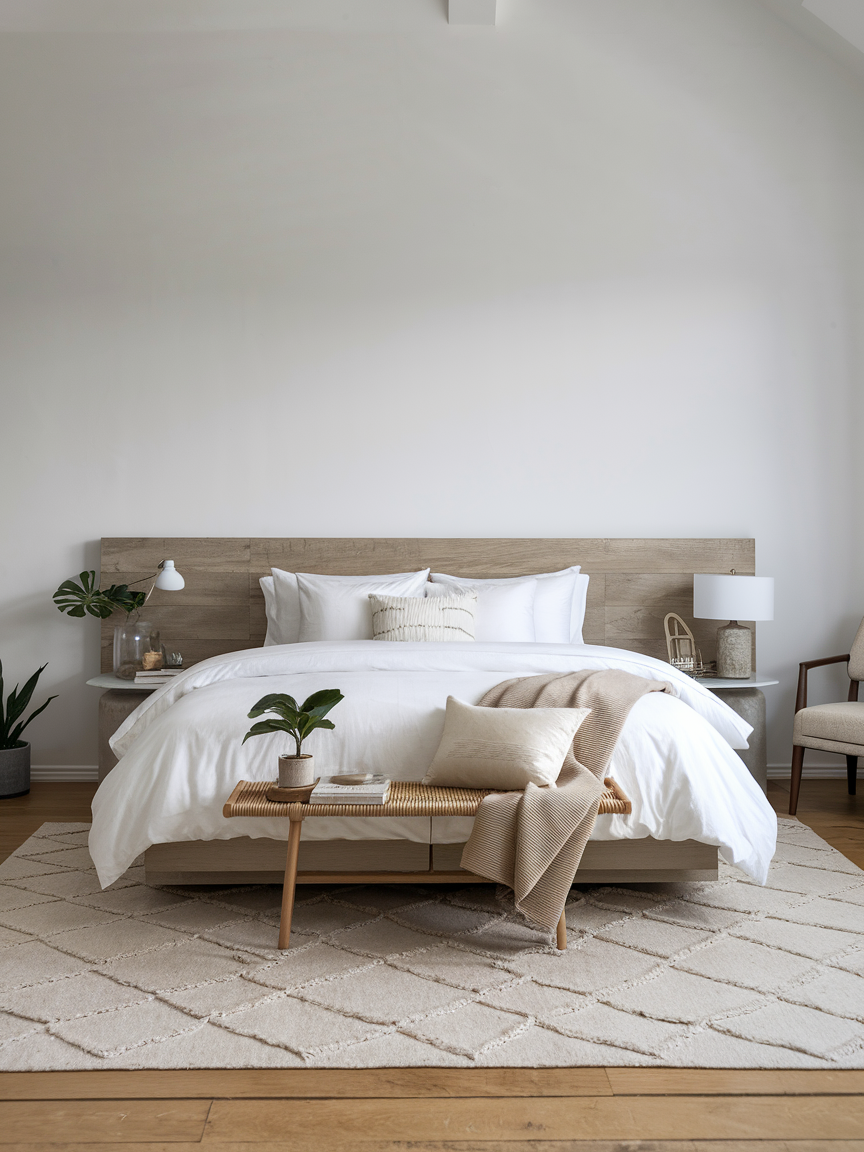
Texture plays a vital role in keeping minimalist bedrooms from feeling cold or empty. Layering materials like linen bedding, wool rugs, knitted throws, and soft upholstery introduces depth while maintaining visual restraint. The key is consistency in tone, ensuring that all textures blend seamlessly within a neutral palette. Matte finishes, natural fibers, and soft tactile surfaces create a sense of comfort without adding visual noise. This balance between simplicity and richness defines a space that feels both serene and inviting.
17. Built-In Storage
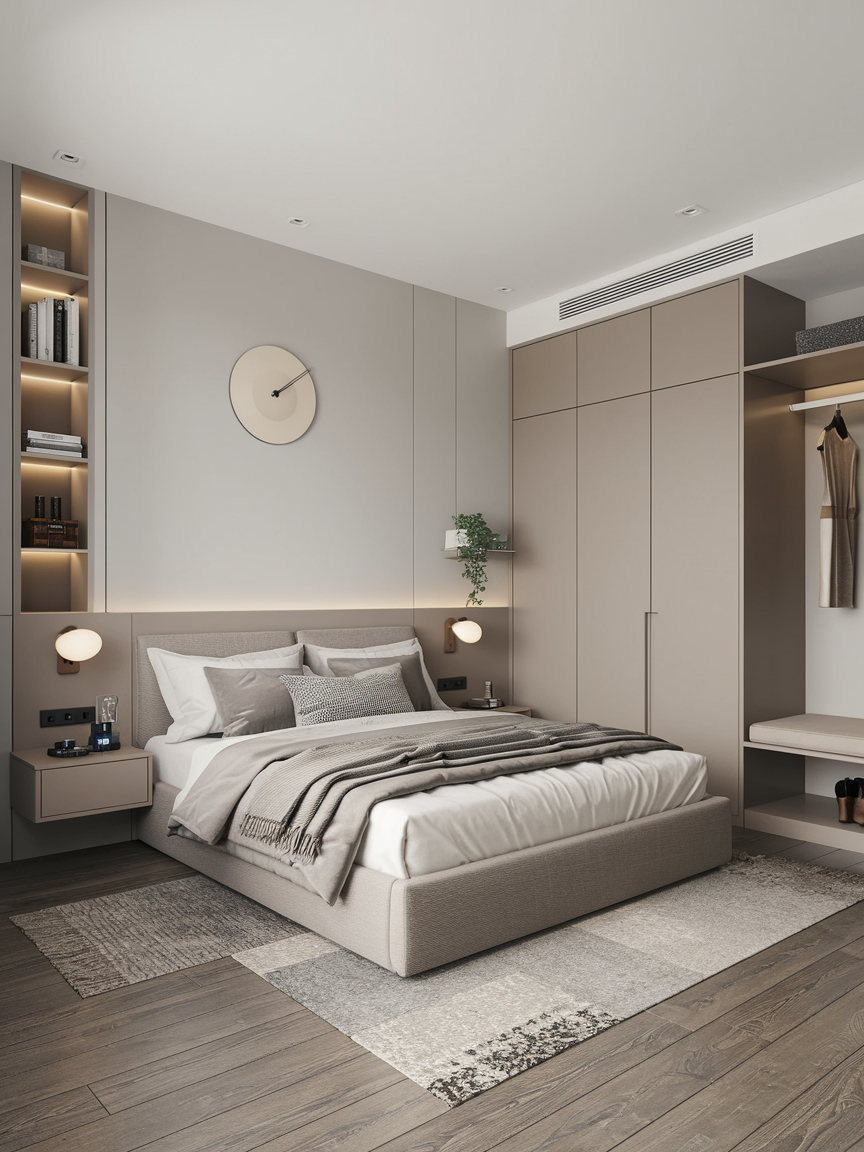
Built-in storage is essential for maintaining a clean, clutter-free minimalist bedroom. Integrated wardrobes, hidden drawers, and recessed shelving allow everyday items to be stored discreetly while preserving smooth architectural lines. When storage blends into the walls or matches the surrounding color palette, the room feels more expansive and cohesive. This seamless design approach ensures that functionality never interrupts visual calm, supporting a lifestyle rooted in order and simplicity.
18. Monochromatic Bedding
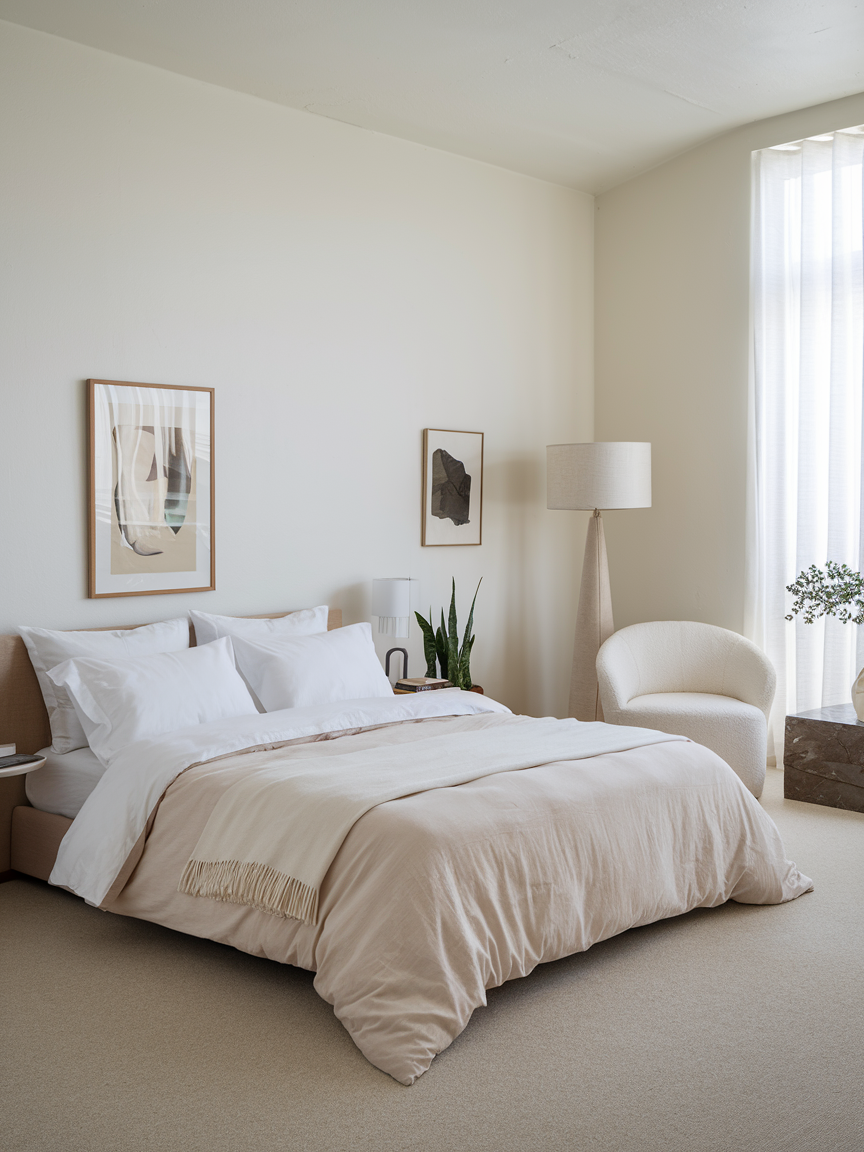
Monochromatic bedding creates a refined and harmonious focal point within a minimalist bedroom. Sticking to one color family, such as soft gray, ivory, or beige, allows subtle tonal variations to add interest without disrupting calmness. Layering different textures within the same shade enhances depth while maintaining unity. The absence of bold patterns keeps the bed visually serene, reinforcing a sense of restfulness and balance that defines minimalist elegance.
19. Upholstered Headboard
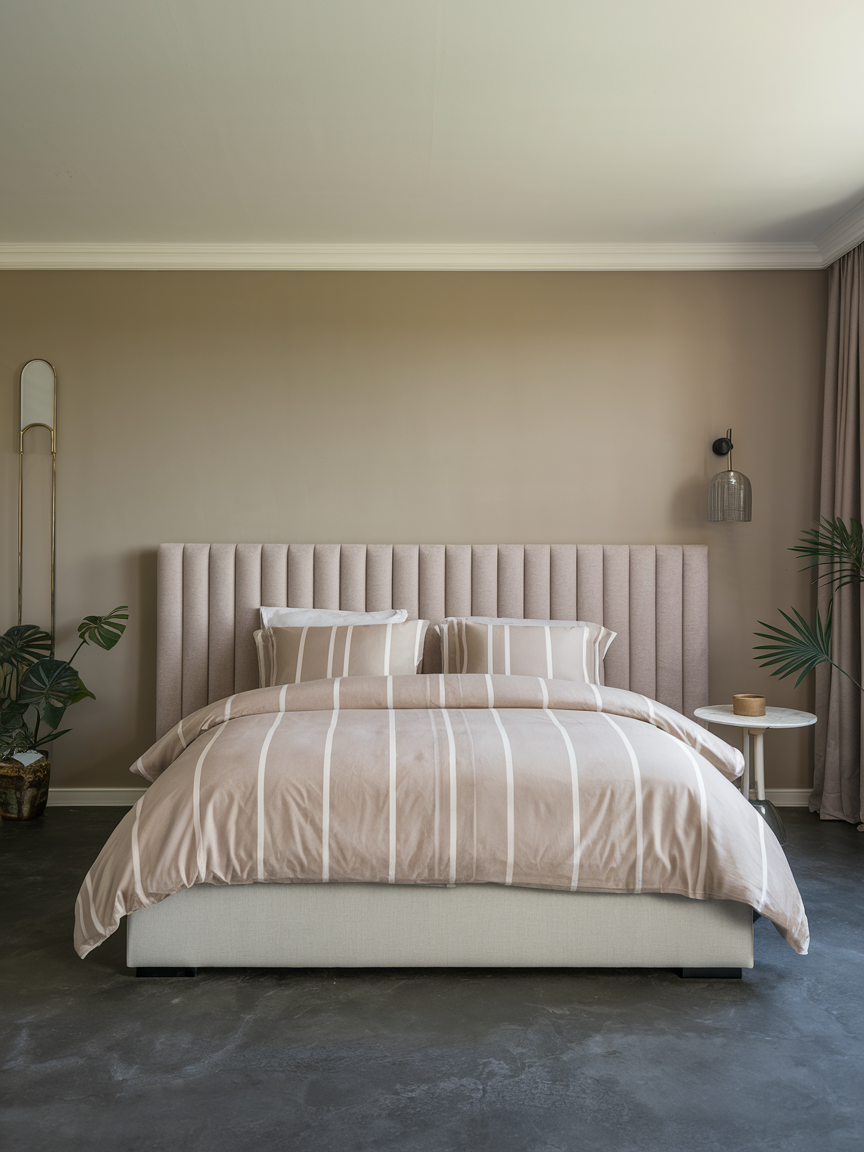
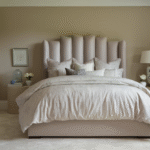
An upholstered headboard introduces softness, comfort, and subtle luxury into a minimalist bedroom without overwhelming its clean structure. Crafted in neutral fabrics such as linen, boucle, or velvet, it provides a tactile contrast to smooth walls and sleek furniture. Its padded surface enhances comfort for reading or relaxing in bed, while its simple silhouette keeps the overall aesthetic restrained. A rectangular or gently curved design works best to preserve minimalism while still acting as a quiet focal point. The headboard also visually anchors the bed, giving the sleeping area a sense of structure and intention. When paired with coordinated bedding and soft lighting, it contributes to a layered yet uncluttered composition that feels both inviting and refined.
20. Hidden Technology for Clean Surfaces
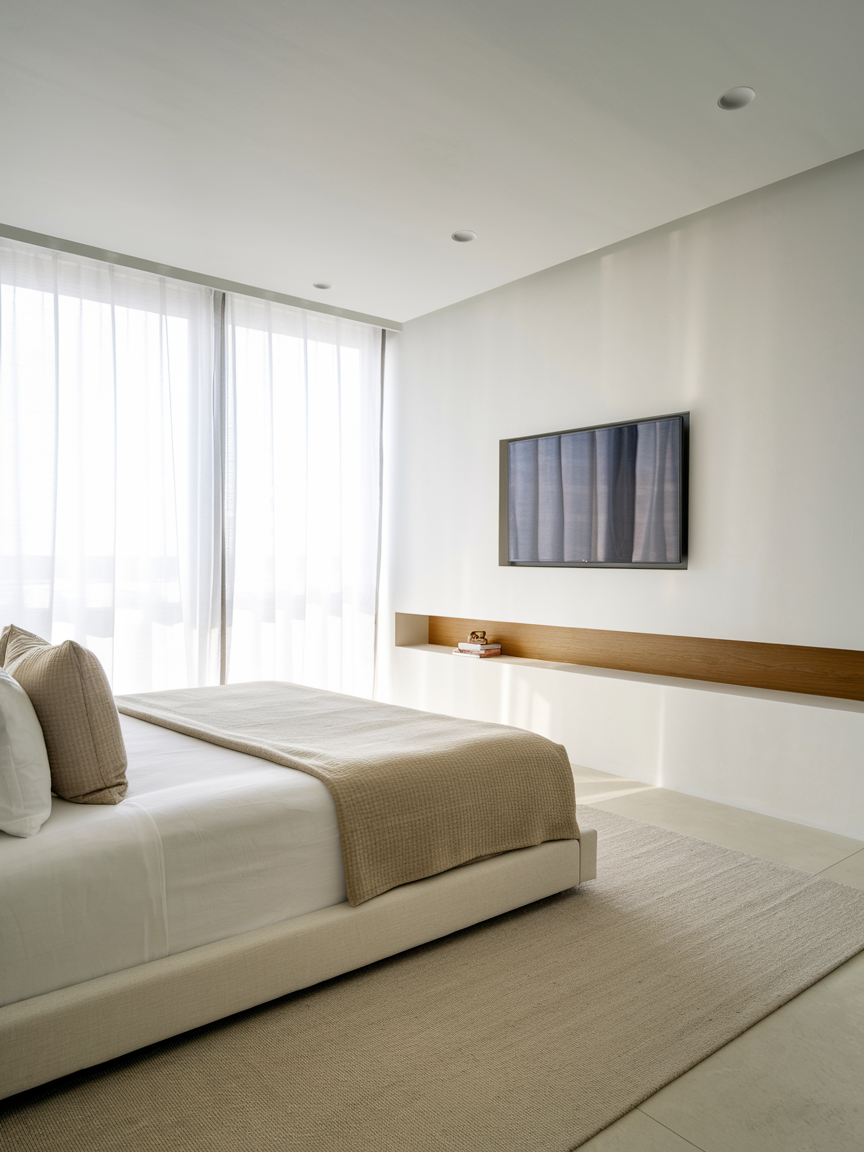
Hidden technology is a key element in maintaining the purity and calm of a minimalist bedroom. By concealing cords, chargers, and electronic devices, the space remains visually uninterrupted and clutter-free. Solutions such as built-in charging drawers, cable management systems, and wall-mounted screens help integrate modern conveniences without disturbing the aesthetic. Even small adjustments, like hiding extension cords behind furniture or using wireless lighting controls, make a noticeable difference in overall clarity. This approach ensures that technology serves the user without dominating the environment. The result is a bedroom that feels more peaceful, organized, and intentional, where every visible detail contributes to a sense of order and relaxation.
21. Accent Chair with Sleek Silhouette
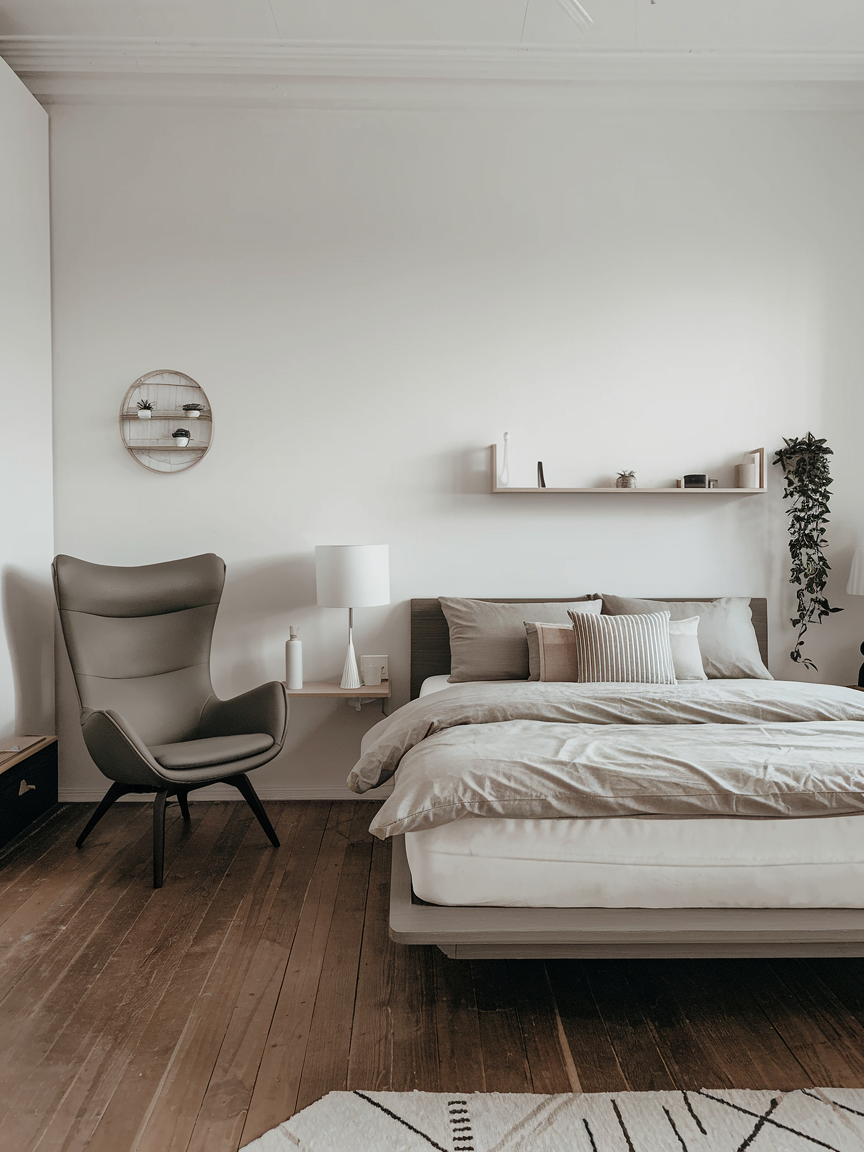
An accent chair with a sleek silhouette adds functional elegance to a minimalist bedroom without disrupting its visual flow. The key lies in choosing a design that is lightweight in appearance, with slim legs, smooth curves, and understated upholstery. Neutral fabrics such as linen, soft cotton, or boucle allow the chair to blend seamlessly into the space while still offering subtle contrast in shape. Positioned thoughtfully, such as near a window or beside a reading lamp, it creates a quiet, purposeful corner for relaxation. Avoiding oversized or overly decorative forms ensures the room maintains its sense of openness. This single well-chosen piece enhances usability while reinforcing balance, proving that even small additions can elevate minimalist interiors when selected with intention.
22. Clutter-Free Nightstand Styling
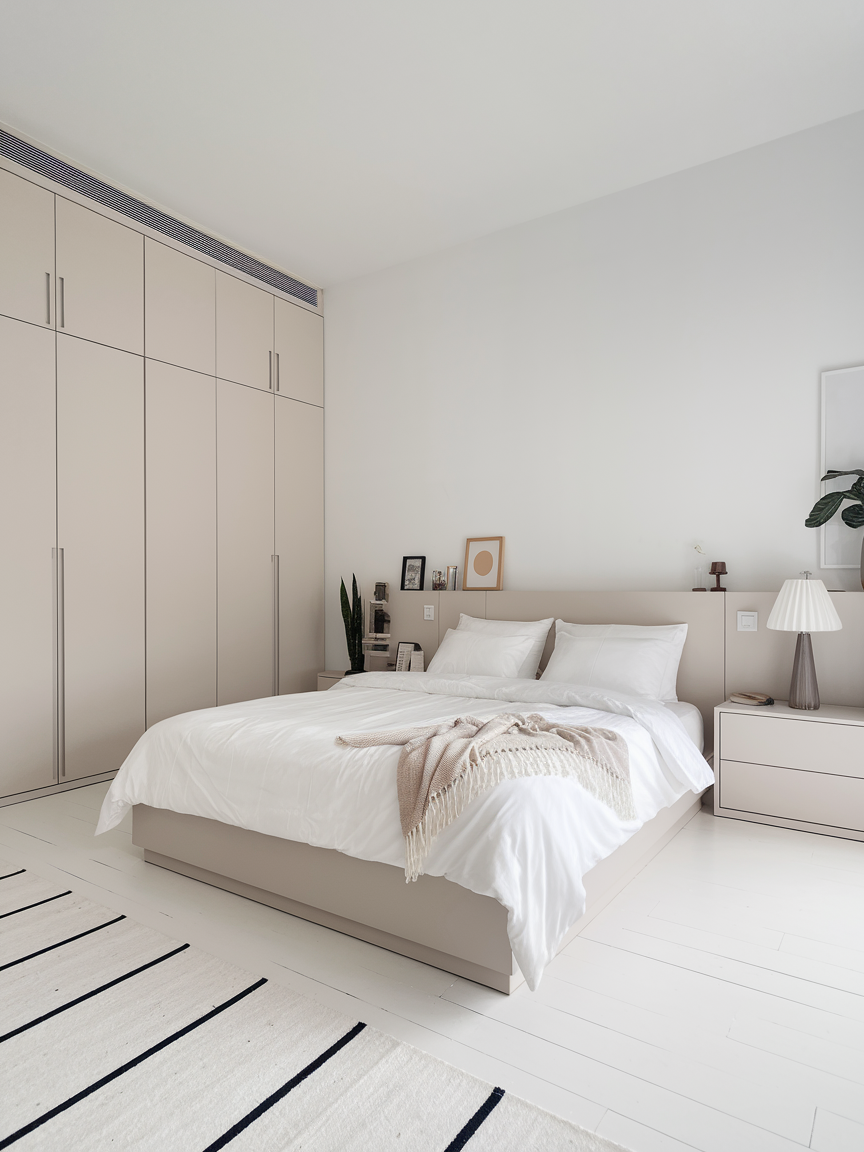
A clutter-free nightstand supports both visual calm and daily functionality in a minimalist bedroom. Only essential items, such as a lamp, a book, or a small decorative object, should be displayed, ensuring the surface remains open and organized. This restraint prevents visual distraction and contributes to a more peaceful sleeping environment. Choosing nightstands with built-in storage can further reduce clutter while maintaining convenience. Thoughtful placement and careful selection of objects ensure every item feels intentional. This simple practice reinforces discipline in design and enhances the room’s overall sense of order and serenity.
23. Soft Fabric Wall Elements
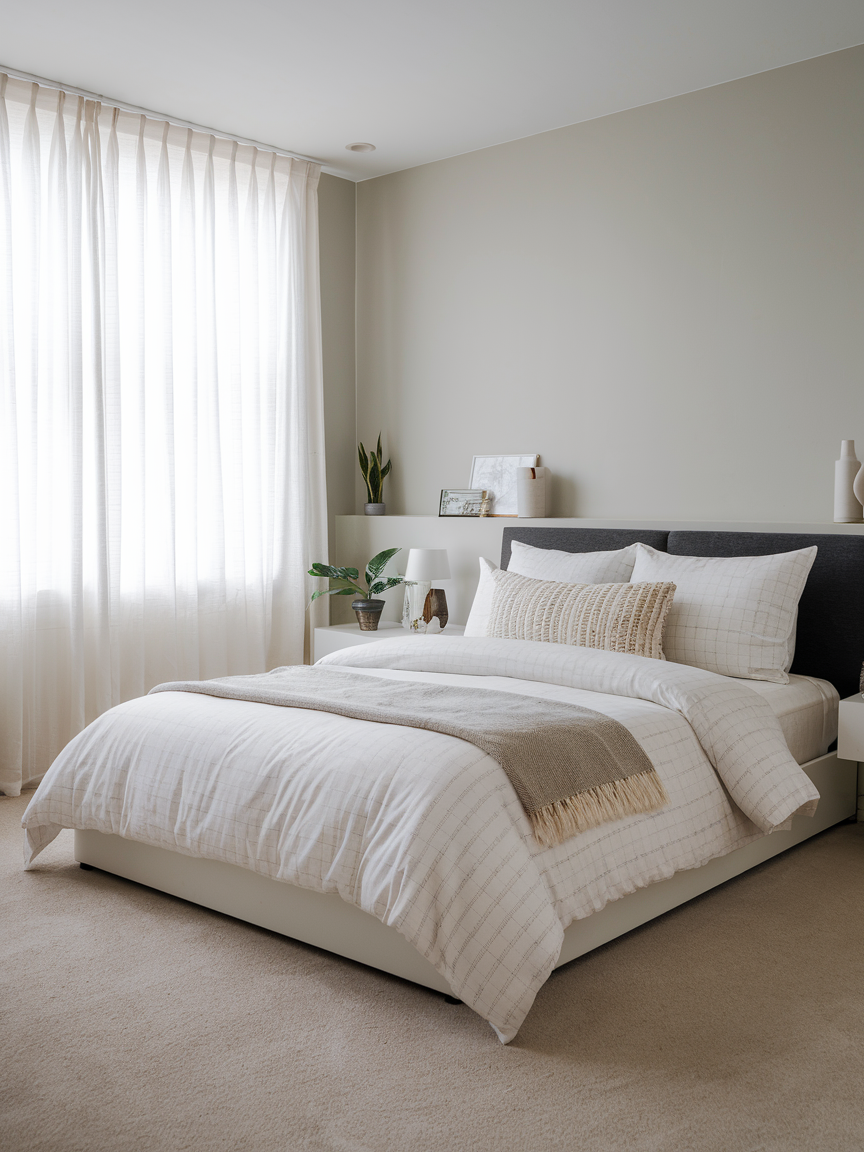
Soft fabric wall elements introduce warmth, texture, and acoustic comfort into a minimalist bedroom without disrupting its clean aesthetic. Upholstered wall panels, fabric headboard extensions, or textile-based art pieces soften hard architectural lines and create a cocoon-like atmosphere. Neutral tones ensure cohesion while maintaining subtle visual interest. These materials also help absorb sound, enhancing the room’s sense of quiet and relaxation. When used sparingly, fabric elements add depth and comfort, transforming the bedroom into a more intimate and restful environment.
24. Timeless Minimalist Foundation
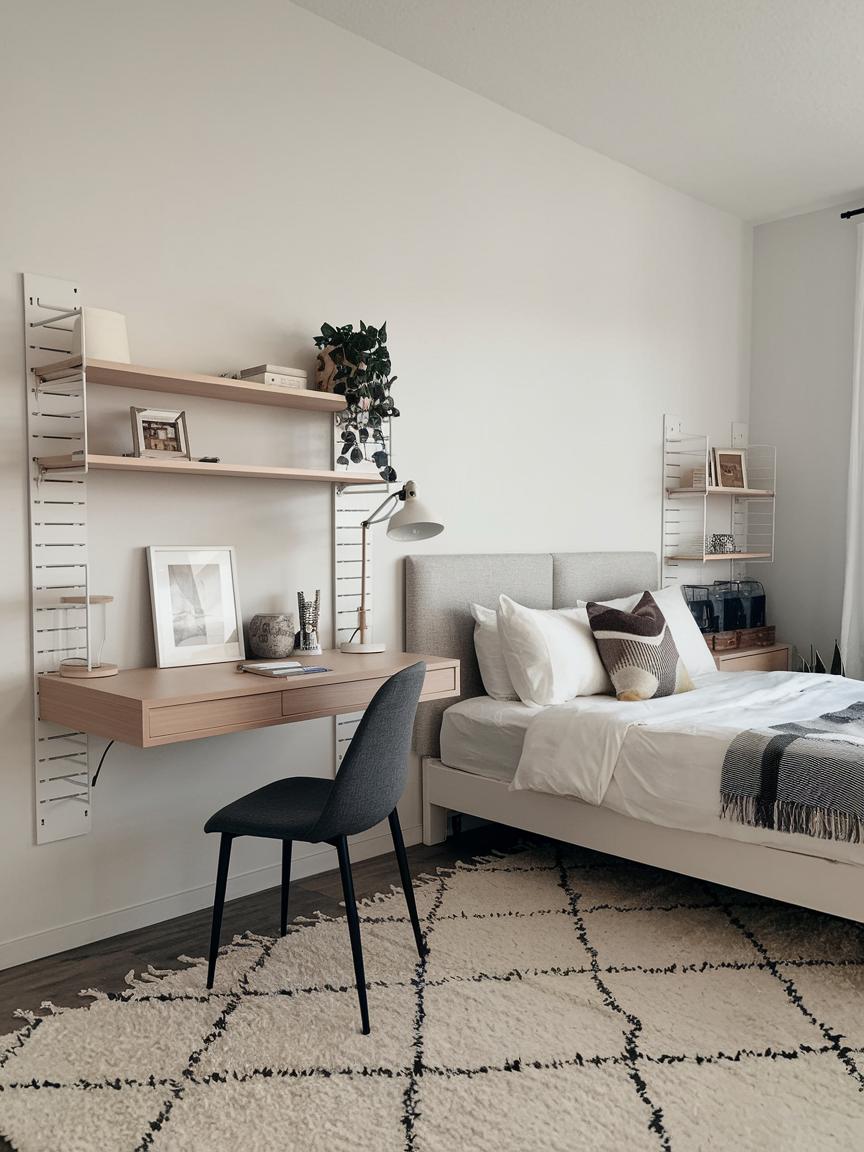
A timeless minimalist bedroom is built on principles of balance, quality, and intentional simplicity. Instead of relying on trends, it focuses on enduring materials, thoughtful proportions, and a restrained color palette that remains relevant over time. Every design choice serves both function and aesthetics, ensuring the space feels cohesive and purposeful. Natural textures, soft lighting, and clean architectural lines work together to create lasting elegance. This foundation allows the bedroom to evolve subtly without losing its identity. The result is a space that remains calm, sophisticated, and effortlessly beautiful for years to come.
25. Indoor Plants
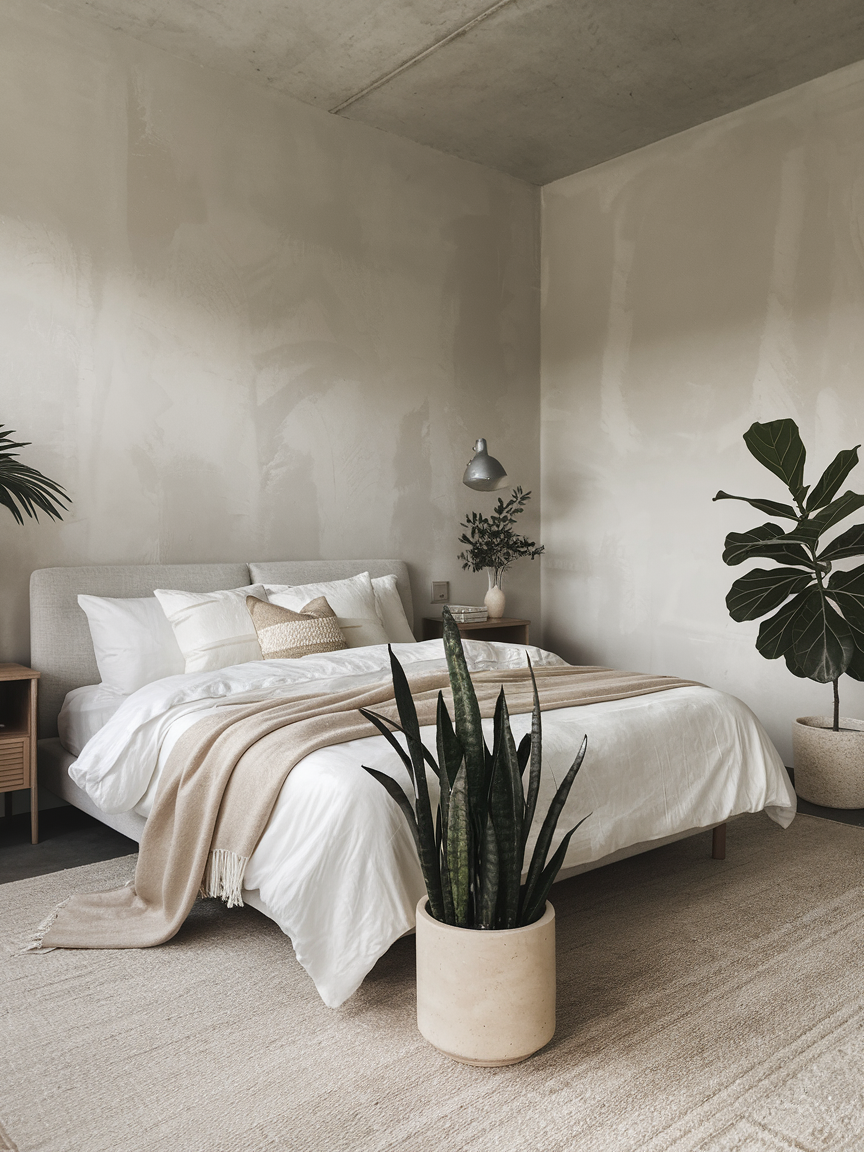
Indoor plants bring a refreshing sense of life and organic softness to a minimalist bedroom without compromising its clean aesthetic. Carefully chosen greenery, such as snake plants, fiddle leaf figs, or olive trees, introduces natural form and subtle movement into the space. Their sculptural shapes contrast beautifully with structured furniture, creating balance and visual interest. Neutral or matte ceramic planters help maintain cohesion with the room’s palette, ensuring the plants feel integrated rather than decorative additions. Limiting the number of plants preserves minimalism while still achieving impact. Even a single well-placed plant can transform the atmosphere, enhancing air quality, improving mood, and reinforcing a calm connection to nature within the bedroom.
26. Soft Beige and White Combination
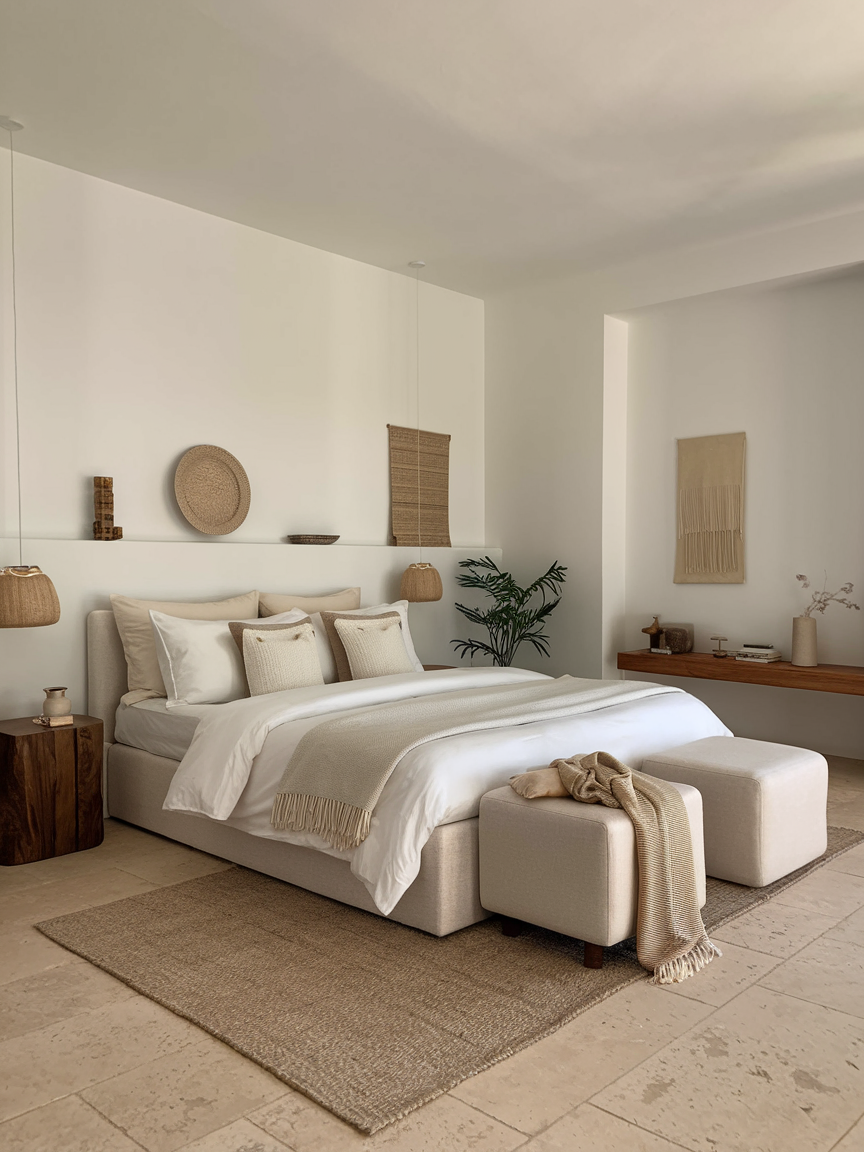
The combination of soft beige and crisp white creates a timeless foundation that feels both airy and warm. White brings brightness, clarity, and a sense of openness, while beige introduces depth and comfort, preventing the space from feeling too stark. Together, these tones form a balanced palette that adapts beautifully to different textures and materials. Layering beige textiles, such as throws, cushions, and rugs, over a white base adds subtle variation and richness. Natural elements like wood and linen further enhance this harmony, reinforcing a grounded, organic feel. This classic pairing supports a minimalist aesthetic while ensuring the bedroom remains inviting, calm, and effortlessly sophisticated over time.
27. Minimal Bench at the Foot of the Bed
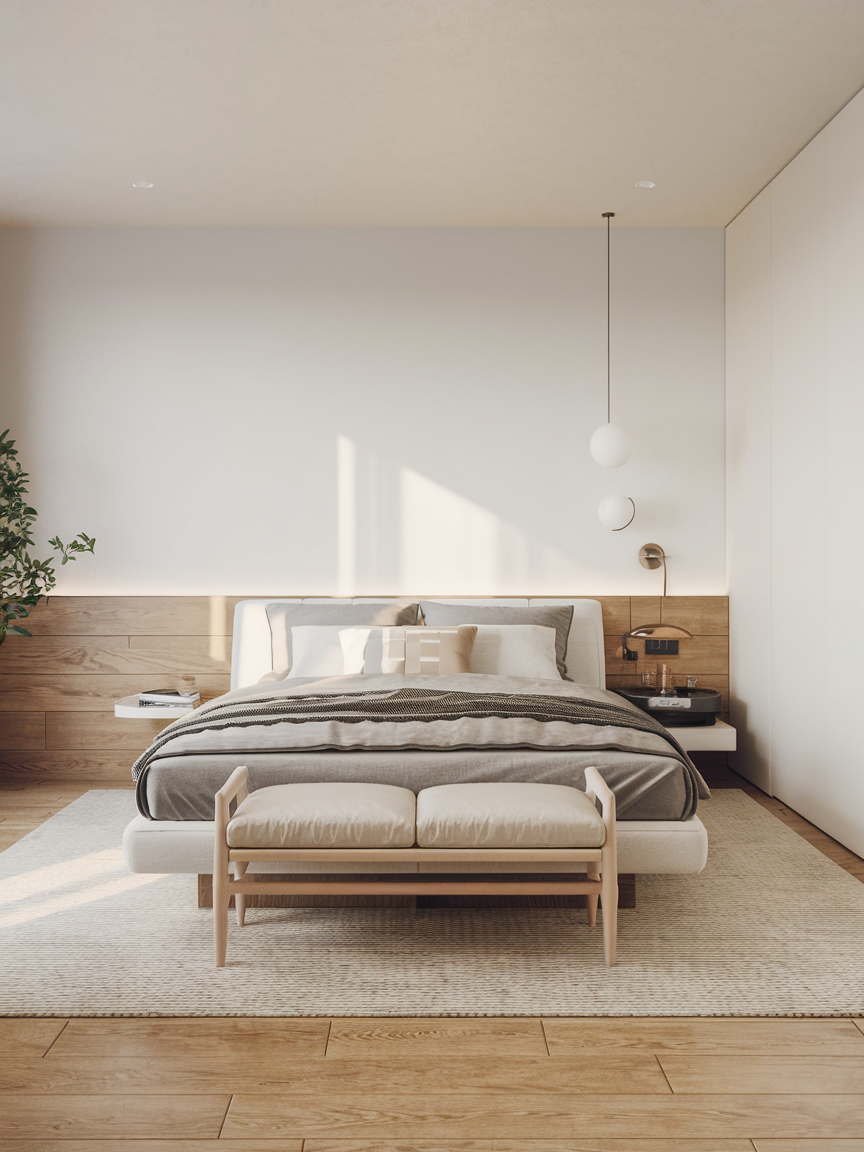
A minimal bench placed at the foot of the bed adds both structure and subtle functionality to a minimalist bedroom. Its streamlined design ensures it complements the space without adding visual weight. Upholstered versions in neutral tones introduce softness, while wooden designs contribute natural warmth and simplicity. Beyond aesthetics, the bench serves practical purposes such as seating, storage for folded textiles, or a resting place for clothing. Its placement naturally anchors the bed within the room, enhancing symmetry and balance. When styled minimally, often with just a folded throw or left bare, it reinforces the idea that restraint and utility can coexist beautifully in elegant design.
* The beauty of minimalist design lies in its ability to create more by using less, allowing space, light, and texture to become the main focus. Use these ideas to shape a restful environment that encourages relaxation, clarity, and a sense of quiet luxury every time you step inside.