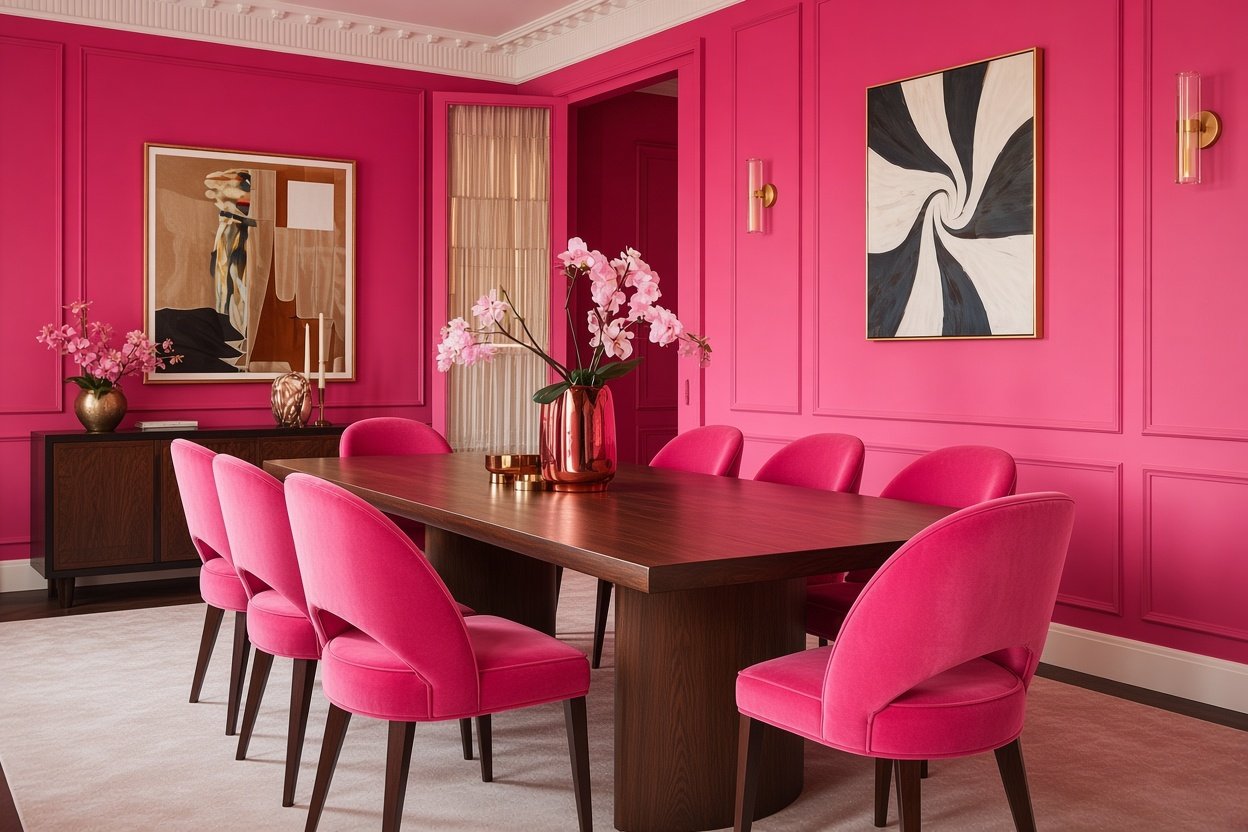
Pink can bring warmth, softness, and personality to the dining room while creating a bright and inviting atmosphere. Blush, dusty rose, muted pink, and deeper rosy tones can each create a different mood, making the color surprisingly versatile for both elegant and casual interiors. Thoughtful use of pink can add character without making the space feel overly sweet or playful.
A balanced pink dining room benefits from complementary colors, textures, and materials. White, cream, beige, warm wood, brass, black, and natural textures can provide contrast and keep the palette feeling sophisticated. Pink walls, upholstered dining chairs, curtains, rugs, artwork, or decorative accessories can each introduce the color at different levels, allowing you to create a look that feels polished and comfortable.
This collection of pink dining room ideas explores beautiful ways to create a bright and stylish space for everyday meals and special gatherings. You’ll find inspiration for wall colors, dining furniture, lighting, textiles, artwork, table settings, and decorative accents that work across a range of interior styles. Let’s explore these charming dining rooms and discover how different shades of pink can create a space that feels fresh, elegant, welcoming, and full of personality!
1. Pink Art Gallery Wall
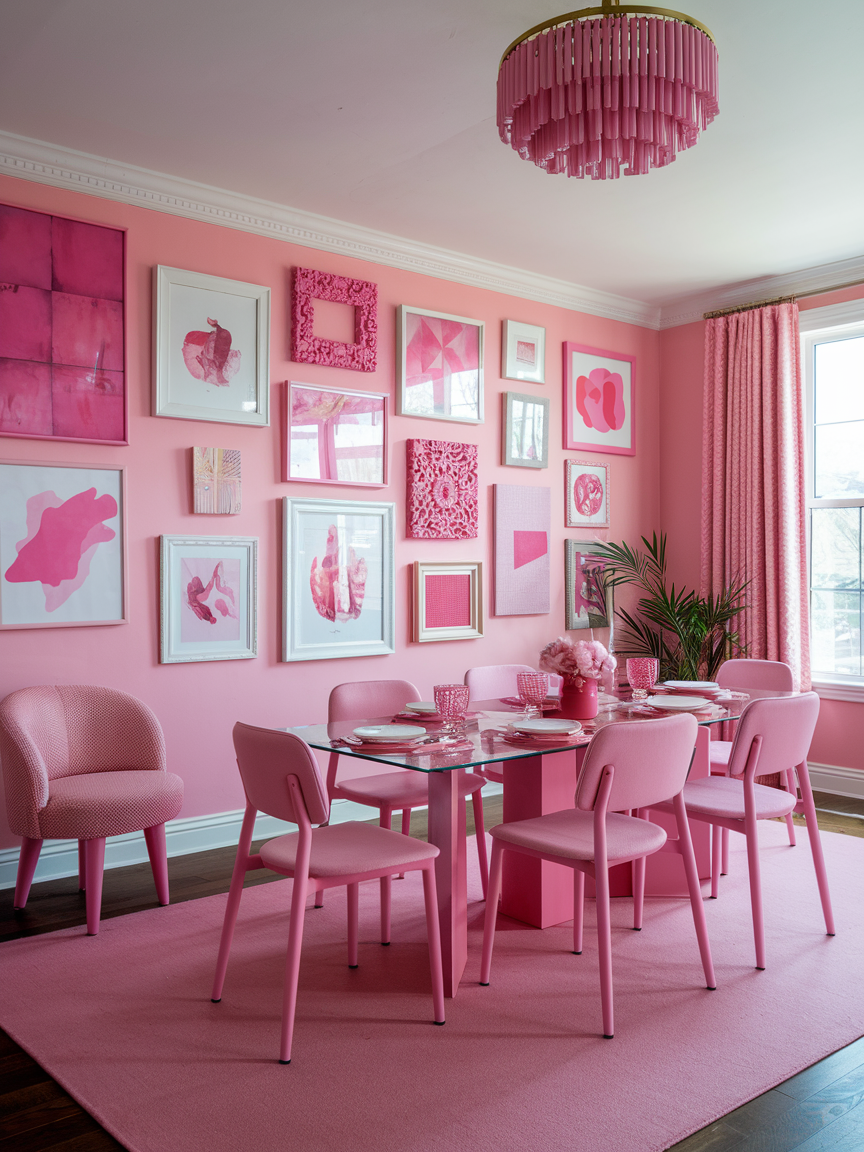
A gallery wall is an easy way to introduce pink while making the dining room feel personal and expressive. Combine artwork that includes blush, coral, rose, or fuchsia with neutral prints and photographs to create a balanced collection. Varying the frame styles, sizes, and orientations can give the arrangement a curated appearance, while keeping a consistent color connection helps the display feel cohesive. Position the gallery above a sideboard or along a prominent wall where it can become a focal point. The artwork can also be updated over time, making this a flexible way to refresh the room.
2. Pink Floral Wallpaper Feature
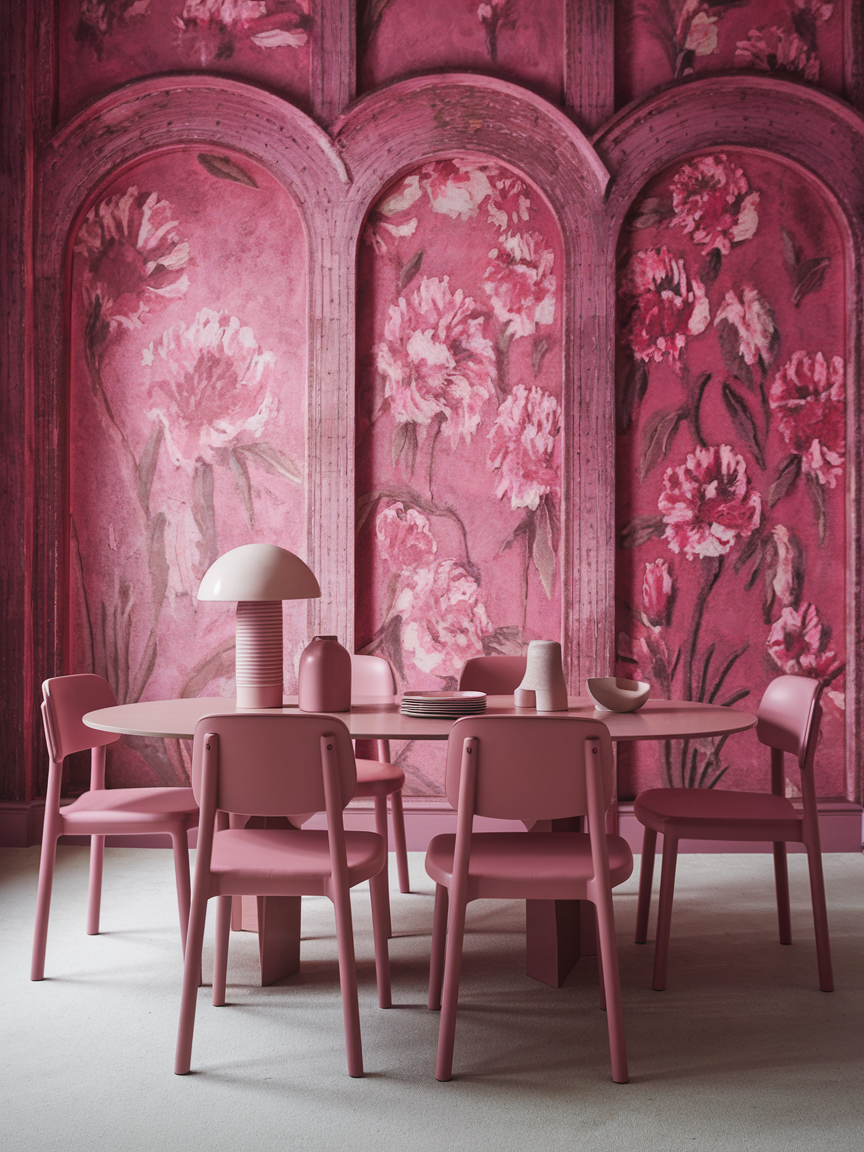
Pink floral wallpaper can give a dining room an instantly charming and expressive character. Delicate botanical motifs create visual movement while bringing warmth and a romantic quality to the walls. For a balanced look, pair patterned wallpaper with simple furniture in cream, white, natural wood, or muted tones. Larger floral designs can create a dramatic statement, while smaller patterns offer a more traditional feel. Fresh greenery, flowers, and natural textures can complement the botanical theme. This approach works particularly well for creating a dining room that feels welcoming, decorative, and full of character.
3. Pink and Gray Modern Contrast
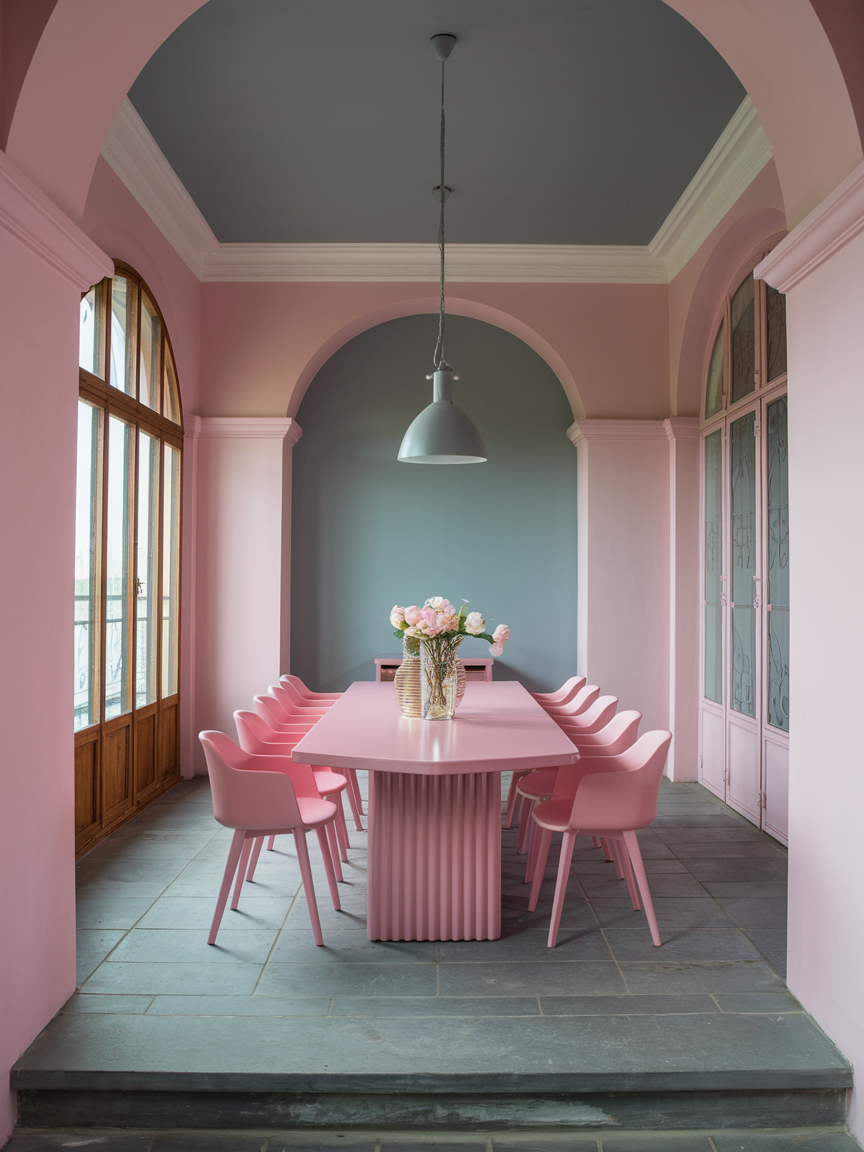
Pink and gray create a refined contrast that works especially well in contemporary dining spaces. Soft pink introduces warmth, while gray adds a cooler, grounded element that keeps the palette sophisticated. You can incorporate gray through the dining table, upholstered chairs, flooring, curtains, or lighting while allowing pink to appear on the walls or in decorative accents. Choose clean-lined furniture and keep accessories carefully edited for a modern finish. This combination is versatile enough to work with both pale blush tones and deeper pink shades, depending on the mood you want to create.
4. Coral Pink for Energy
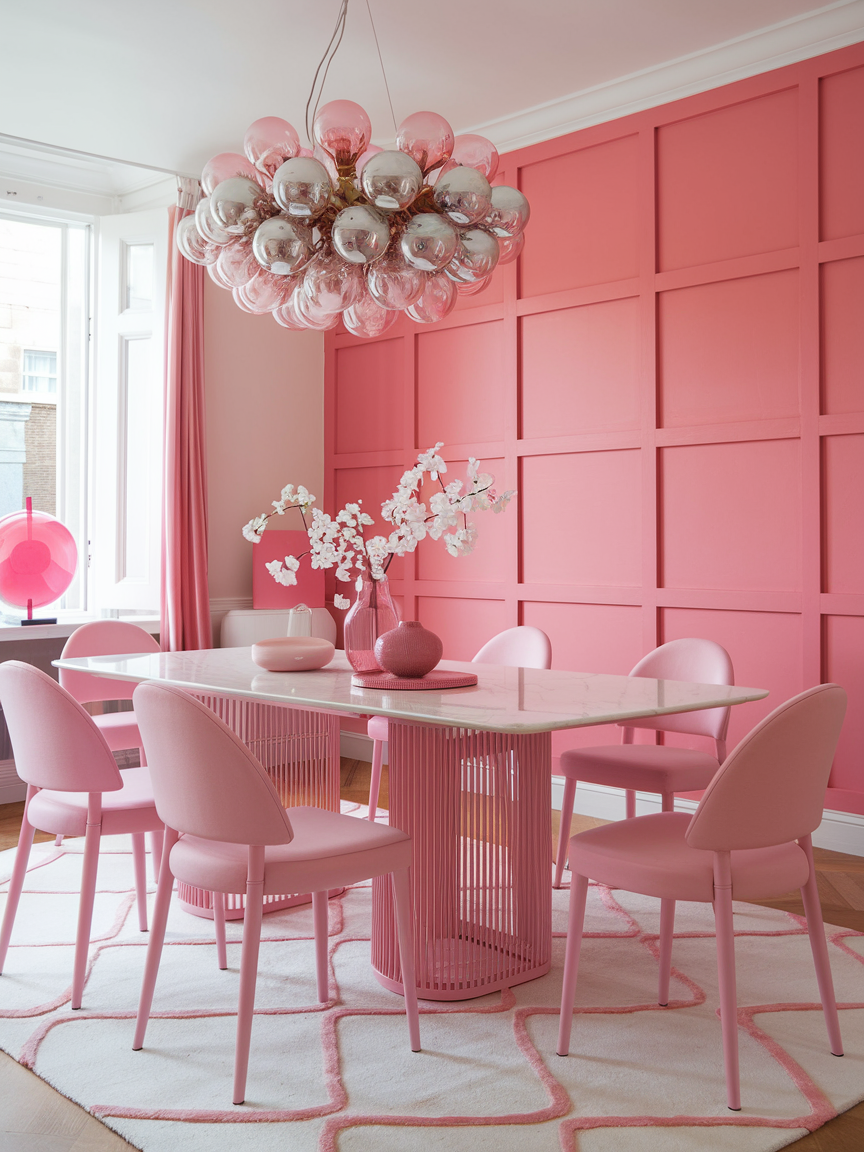
Coral pink brings a warmer and more energetic interpretation of pink into the dining room. Its subtle orange undertones give the shade a sunny, cheerful quality that works especially well in spaces designed for entertaining. Use coral on an accent wall, dining chairs, curtains, artwork, or table accessories, then balance it with cream, beige, natural wood, or soft white. Because the color has plenty of personality, a few carefully chosen accents can have a significant impact. The result is an inviting dining space that feels lively, optimistic, and ready for gatherings.
5. Pink and Beige Neutral Blend
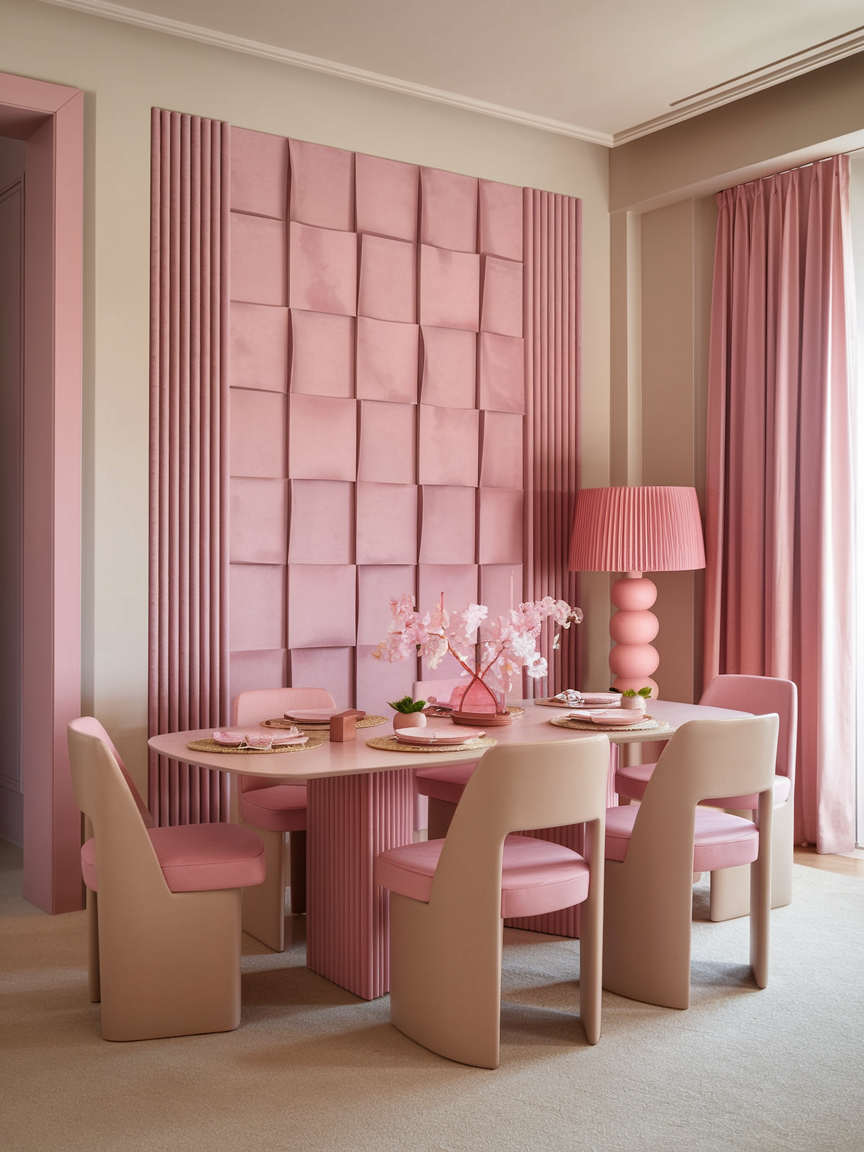
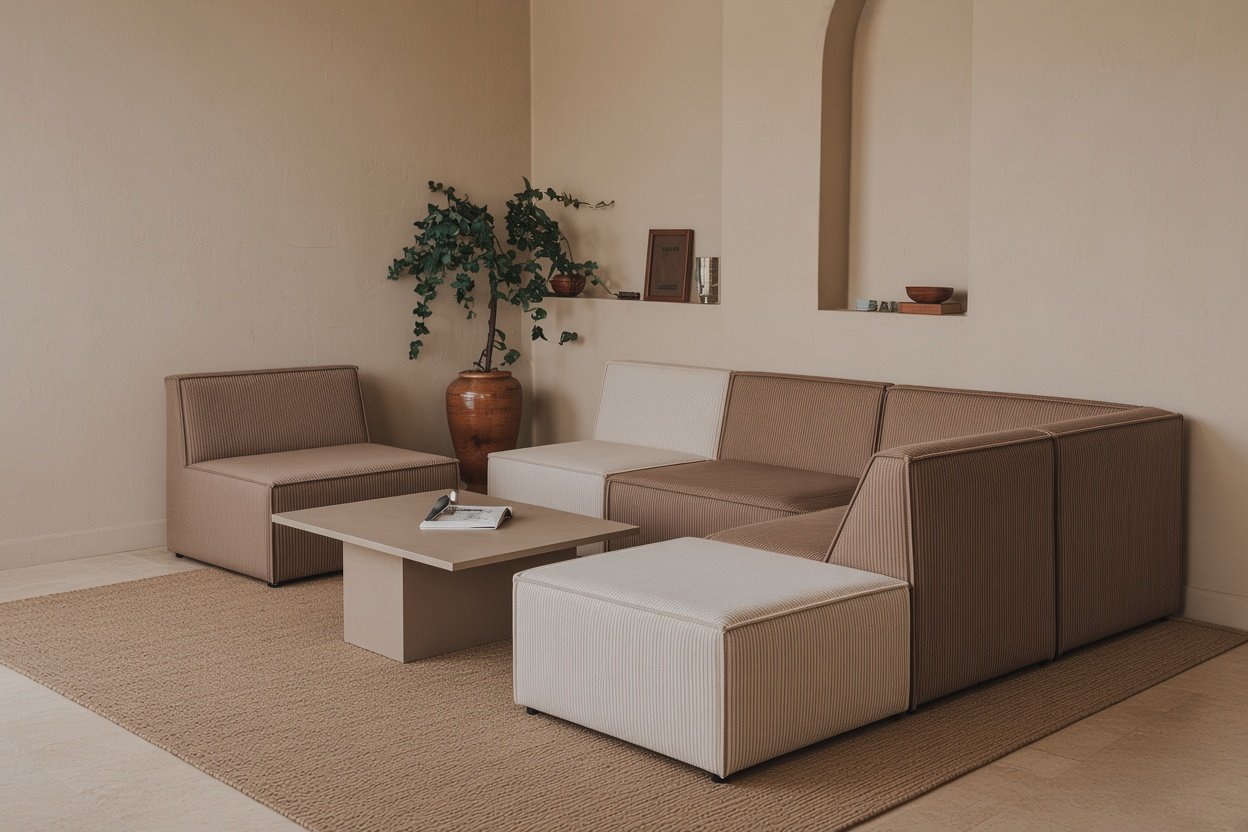
Pink and beige create a gentle palette that feels sophisticated without being overly colorful. Beige furniture, walls, rugs, or curtains can provide a neutral foundation, while blush or dusty pink adds warmth and personality. Layering different natural textures, such as linen, wood, wool, and woven materials, can keep the subdued palette from feeling flat. This combination works particularly well in minimalist, contemporary, and soft traditional interiors. The overall effect is calm and welcoming, making it an excellent choice for a dining room where you want color to play a subtle supporting role.
6. Pink Statement Lighting
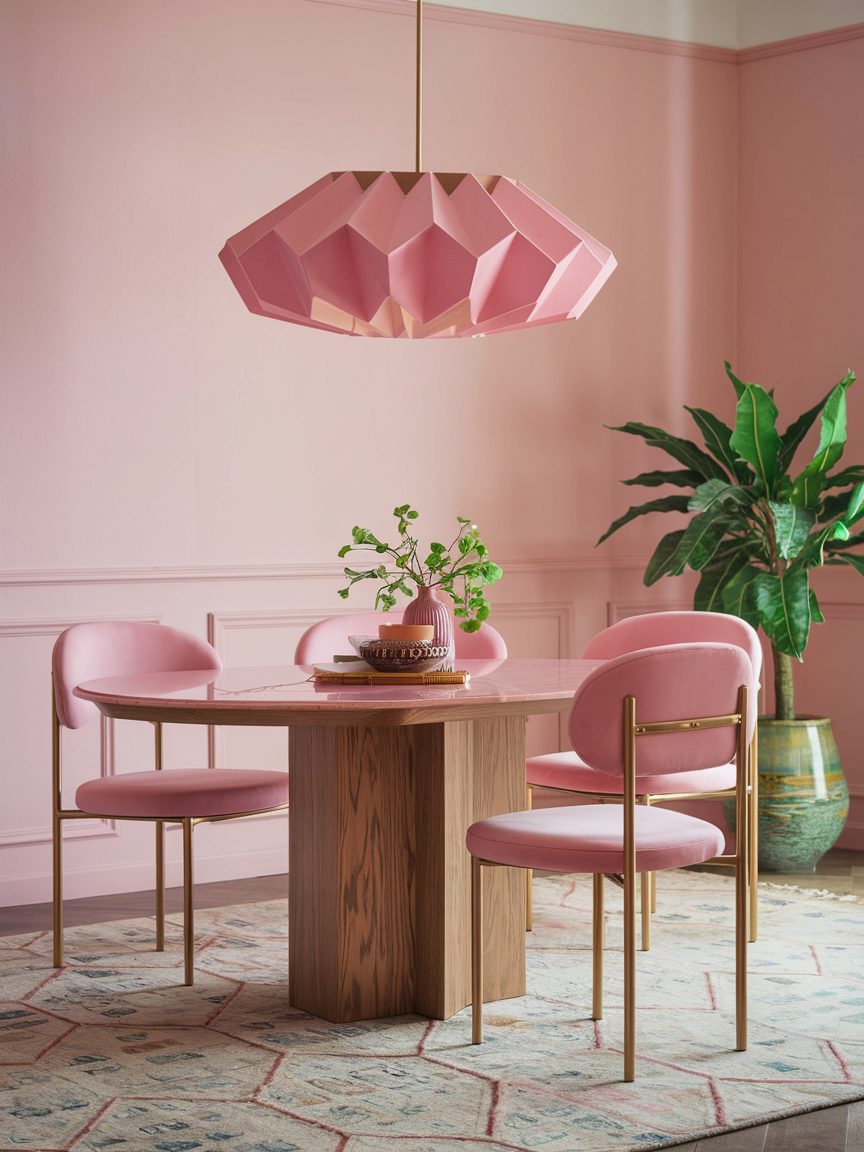
A pink chandelier or pendant can serve as both a practical light source and a distinctive decorative feature. Choose a softly tinted glass fixture for an understated look, or select a more saturated pink design when you want the lighting to become the room’s main focal point. Position the fixture above the dining table so it naturally draws attention to the center of the space. Neutral walls and furniture can help the color stand out, while warm bulbs enhance the inviting atmosphere. This is a flexible way to introduce pink without changing larger, more permanent elements.
7. Pink Upholstered Bench Seating
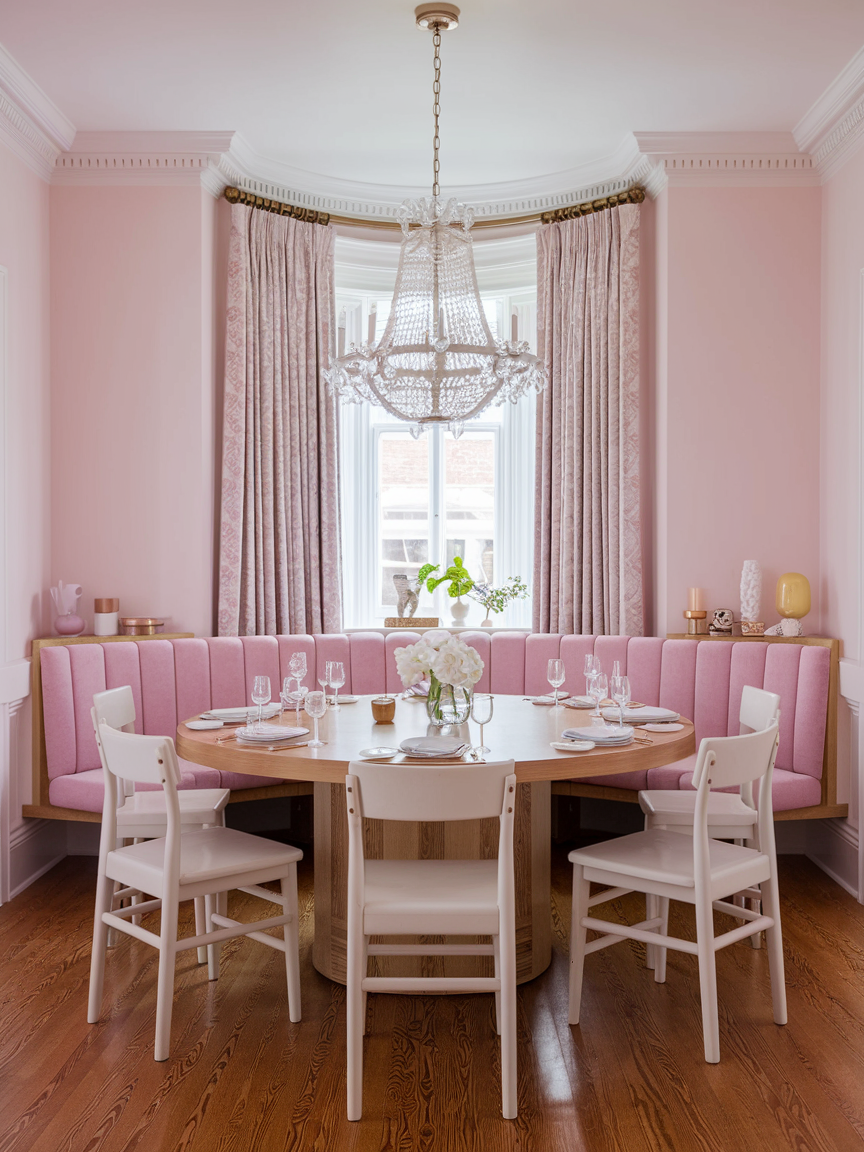
A pink upholstered bench offers a relaxed alternative to traditional individual dining chairs. Its streamlined shape can make the room feel less formal while providing comfortable seating for family meals and casual gatherings. Choose a blush, dusty rose, or muted pink fabric depending on the surrounding palette, and pair it with a simple wood, white, or stone table. A bench can also work particularly well against a wall, helping maximize floor space in a smaller dining area. Add a few cushions for comfort while keeping the overall arrangement clean and uncluttered.
8. Pink and Navy Contrast
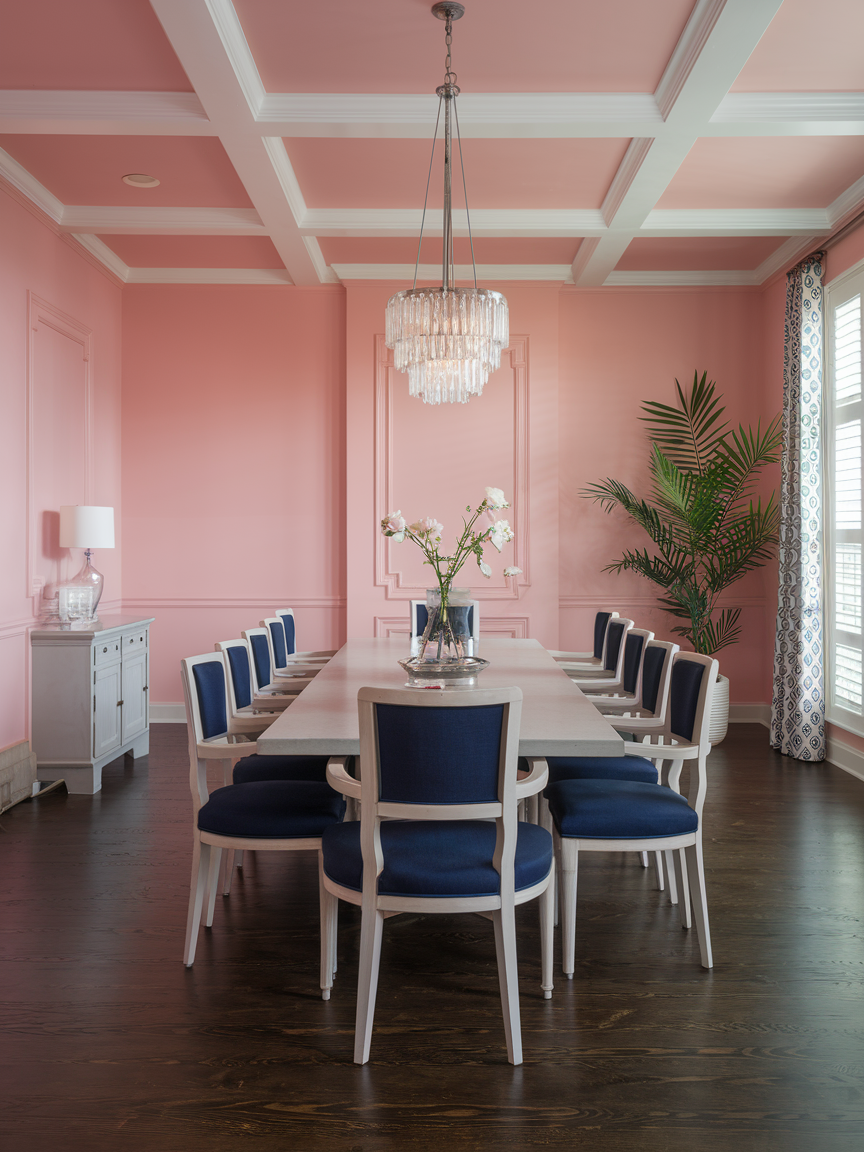
Pink and navy create a rich contrast that gives the dining room both depth and personality. The deep blue acts as a strong foundation, allowing softer pink shades to appear brighter without making the room feel overly sweet. Use navy through walls, dining chairs, curtains, cabinetry, or rugs, then bring in pink through upholstery, artwork, table settings, or accessories. Brass or warm wood can help bridge the two colors and add another layer of warmth. This palette works equally well in traditional and contemporary settings, offering a polished look with plenty of visual interest.
9. Layered Pink Textiles
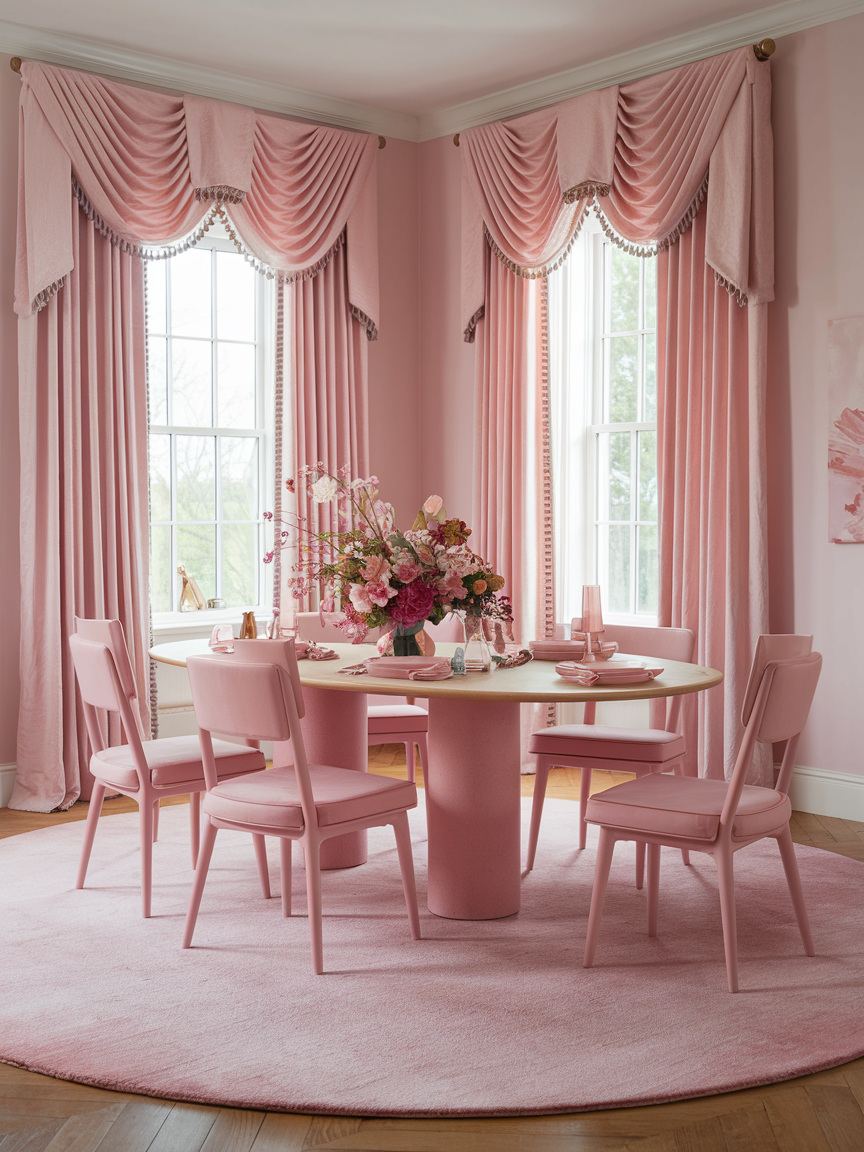
Using several shades and textures of pink throughout the dining room creates depth without requiring a major renovation. Layer blush, rose, mauve, or dusty pink through curtains, rugs, cushions, table linens, and upholstered seating. Mixing materials such as linen, velvet, cotton, and woven fibers prevents the palette from looking flat. Neutral walls and furniture provide a quiet foundation, allowing the different pink tones to stand out naturally. This is also an easy way to experiment with color because textiles can be changed as your style evolves. The finished room feels warm, coordinated, and thoughtfully layered.
10. Pink Ceiling for a Subtle Twist
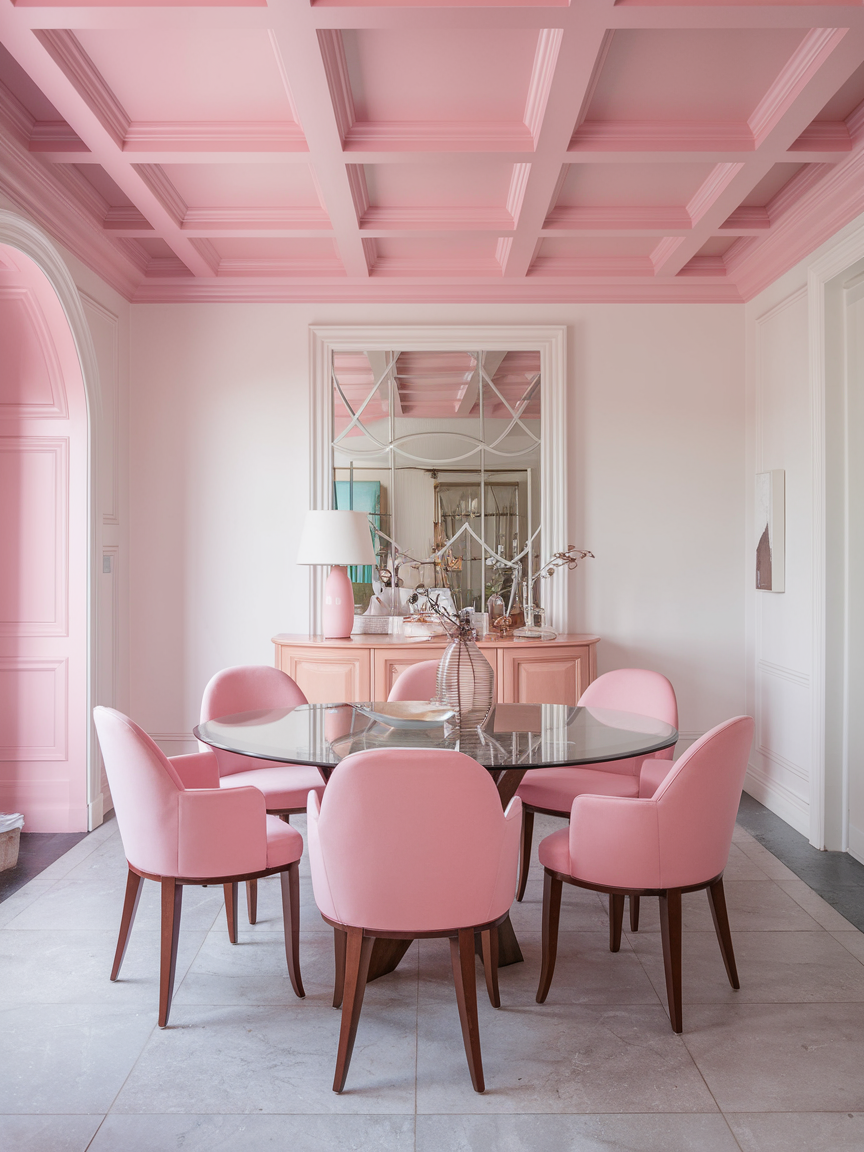
Painting the ceiling pink is an unexpected way to bring color into a dining room while keeping the walls relatively understated. A soft blush or muted rose ceiling can draw attention upward and give the room a gentle sense of warmth. Pair it with white, cream, or neutral walls so the color feels like a deliberate architectural feature. Simple furniture and understated lighting can keep the overall look balanced. This idea is especially effective in rooms with decorative molding or interesting ceiling details, where the pink finish can highlight the architecture in a subtle but memorable way.
11. Soft Blush Walls with White Accents
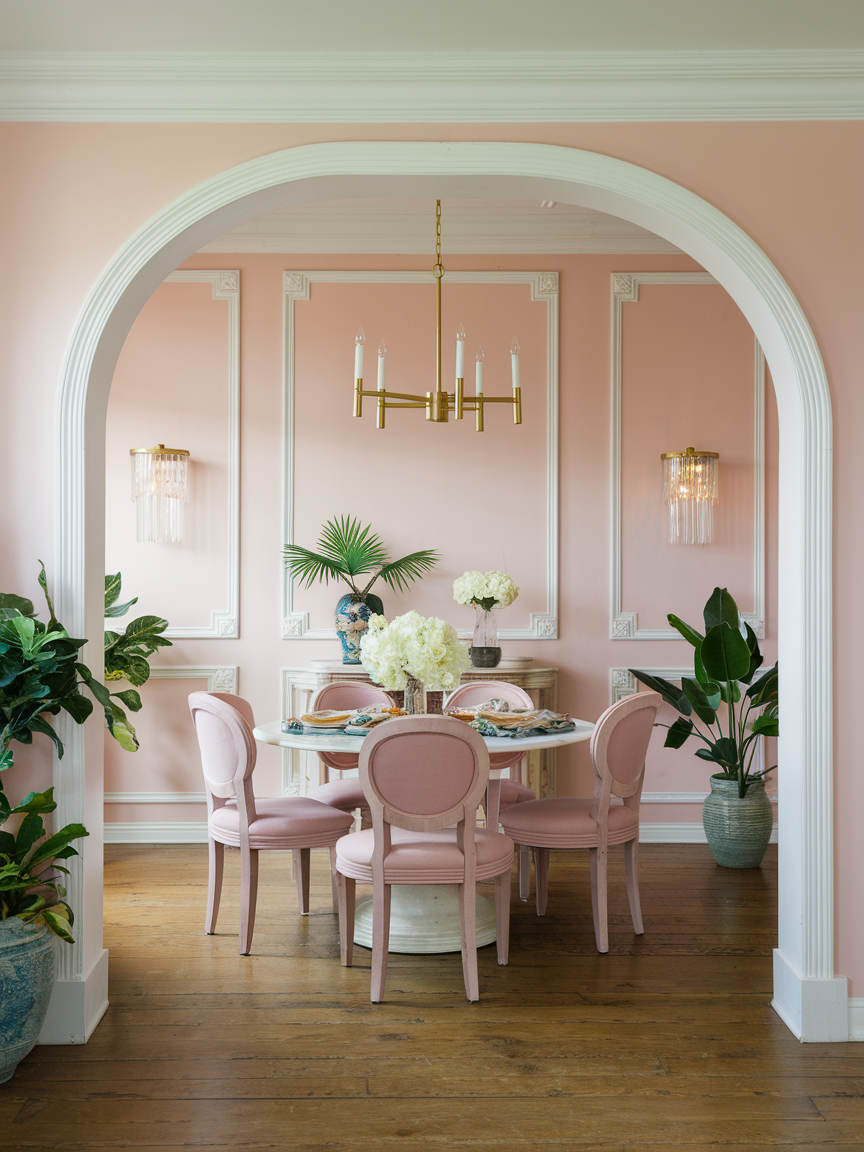
Soft blush walls can give a dining room an airy, welcoming quality while adding just enough color to make the space feel distinctive. Pair the gentle pink backdrop with crisp white furniture, such as a streamlined dining table, classic chairs, or built-in cabinetry, to create a fresh contrast. The combination reflects natural light beautifully, making it especially appealing in smaller dining areas. Introduce a few gold, ceramic, or glass accessories for an elegant finishing touch. Keeping the accents restrained allows the blush walls to remain the star while creating a room that feels cheerful, polished, and comfortable.
12. Pink Velvet Dining Chairs
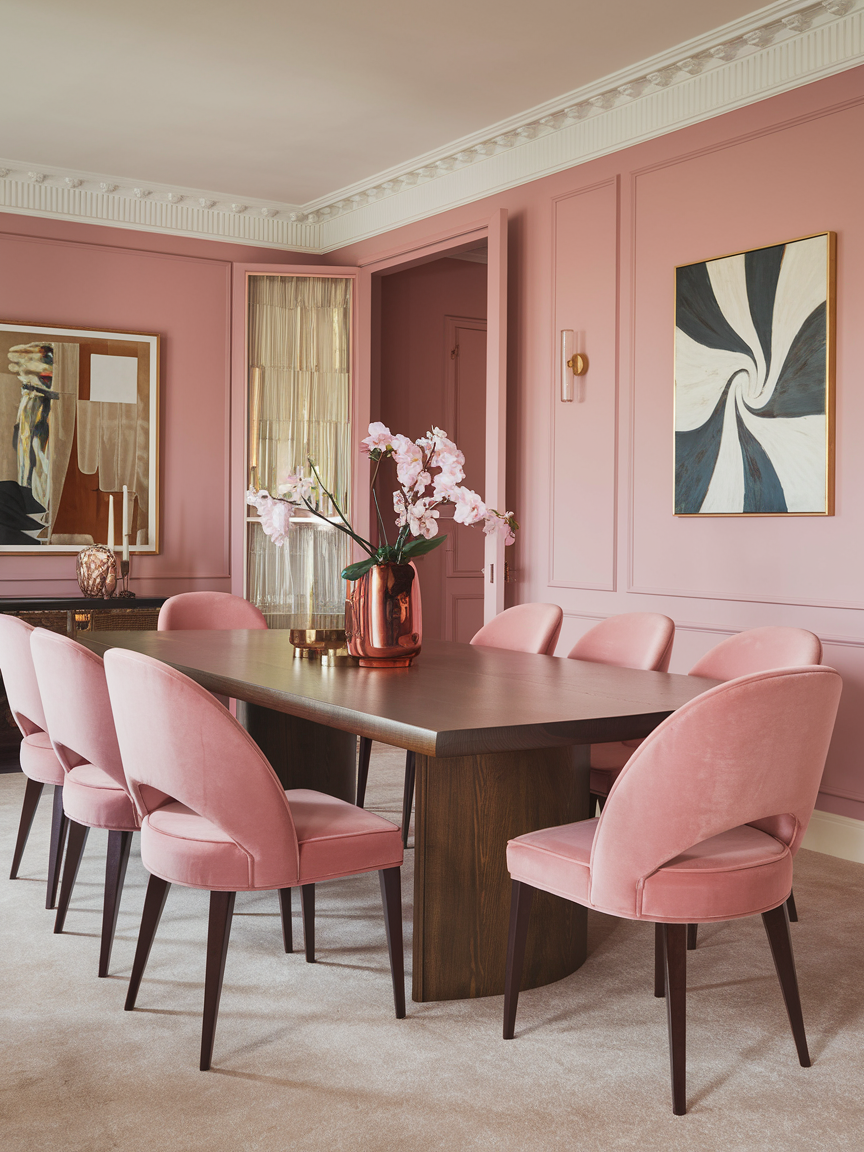
Pink velvet dining chairs bring a luxurious layer of color and texture to the dining room. The soft sheen of velvet catches the light and gives the chairs a rich, dimensional appearance, while the plush upholstery makes long dinners more comfortable. Choose dusty rose or muted blush for a subtle look, or opt for a richer pink when you want the seating to become a stronger focal point. Pair the chairs with a natural wood, white, or marble table to create contrast. A few simple accessories can complete the look without competing with the beautiful texture of the velvet.
13. Dusty Rose and Wood Combination
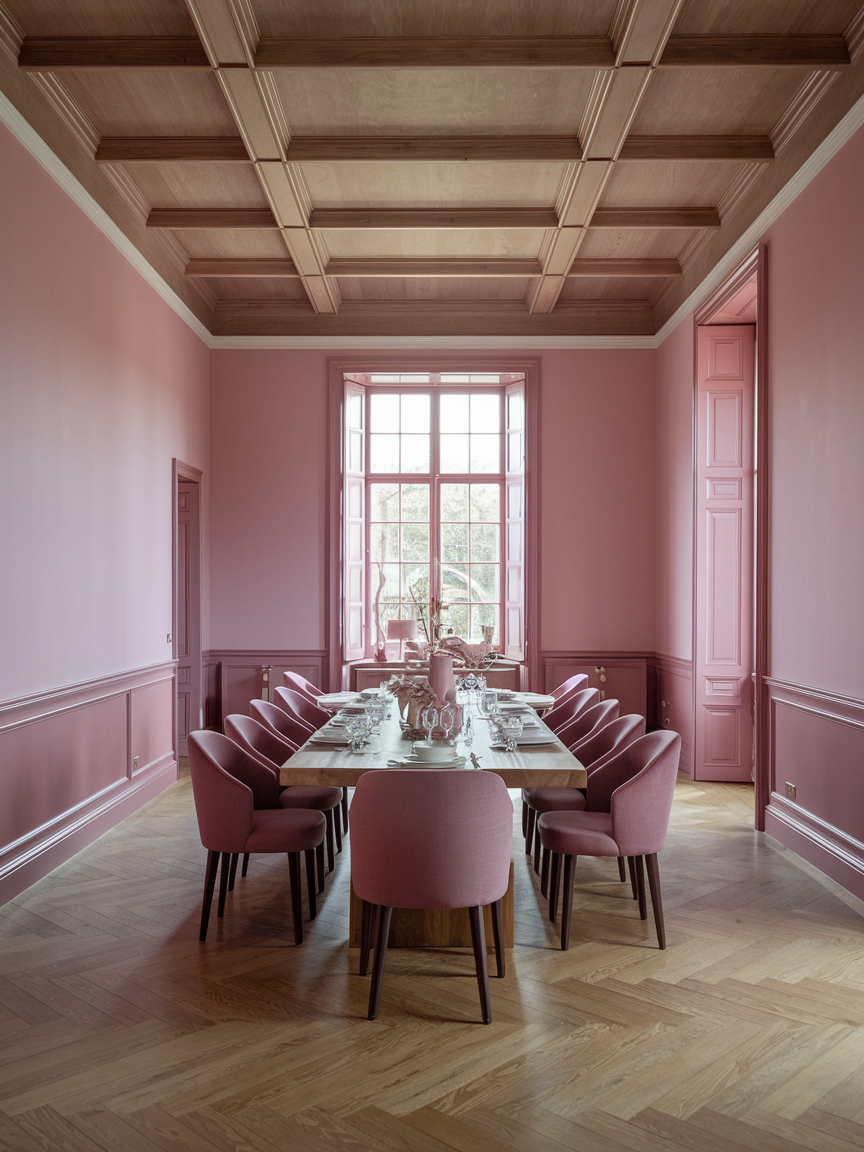
Dusty rose and natural wood make an inviting combination that balances softness with warmth. The organic character of oak, walnut, or reclaimed wood keeps the pink palette from feeling overly sweet, giving the dining room a grounded and sophisticated quality. Use dusty rose on the walls, upholstery, or accessories while allowing the wood to take center stage through the dining table, flooring, or shelving. This pairing fits beautifully into modern rustic, Scandinavian, and relaxed contemporary interiors. Natural textures and understated furnishings can further enhance the sense of warmth, creating a dining room that feels comfortable and timeless.
14. Pink and Gold Glam Dining Room
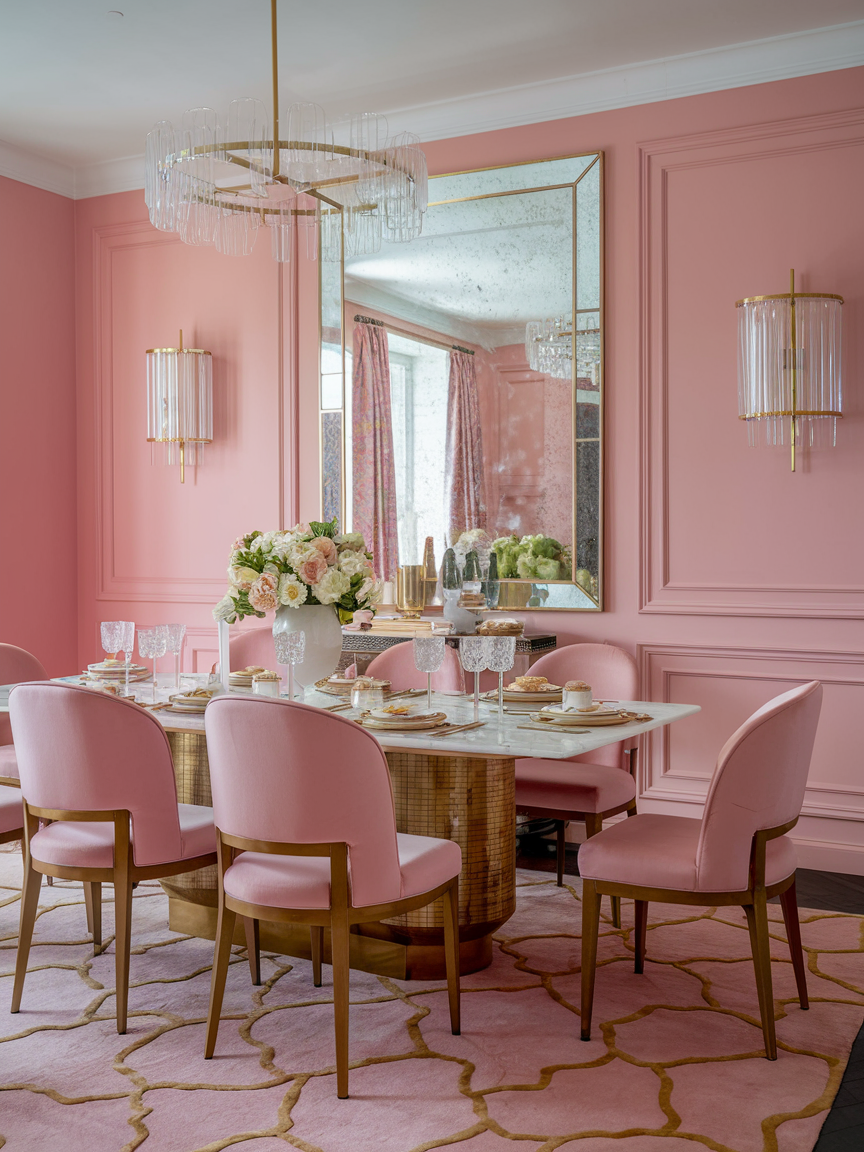
Pink and gold create a glamorous combination that feels elegant without becoming overly formal. Soft blush, rose, or dusty pink provides a warm backdrop, while gold details add a subtle sense of sparkle. Consider using gold for chandelier frames, mirror borders, cabinet hardware, dining table bases, or tableware. Reflective finishes can also help distribute light around the room, giving the space a soft glow during evening meals. Keep the surrounding furnishings relatively simple so the metallic accents feel intentional. The result is a polished dining room with plenty of personality and a sophisticated sense of luxury.
15. Bold Fuchsia Statement Wall
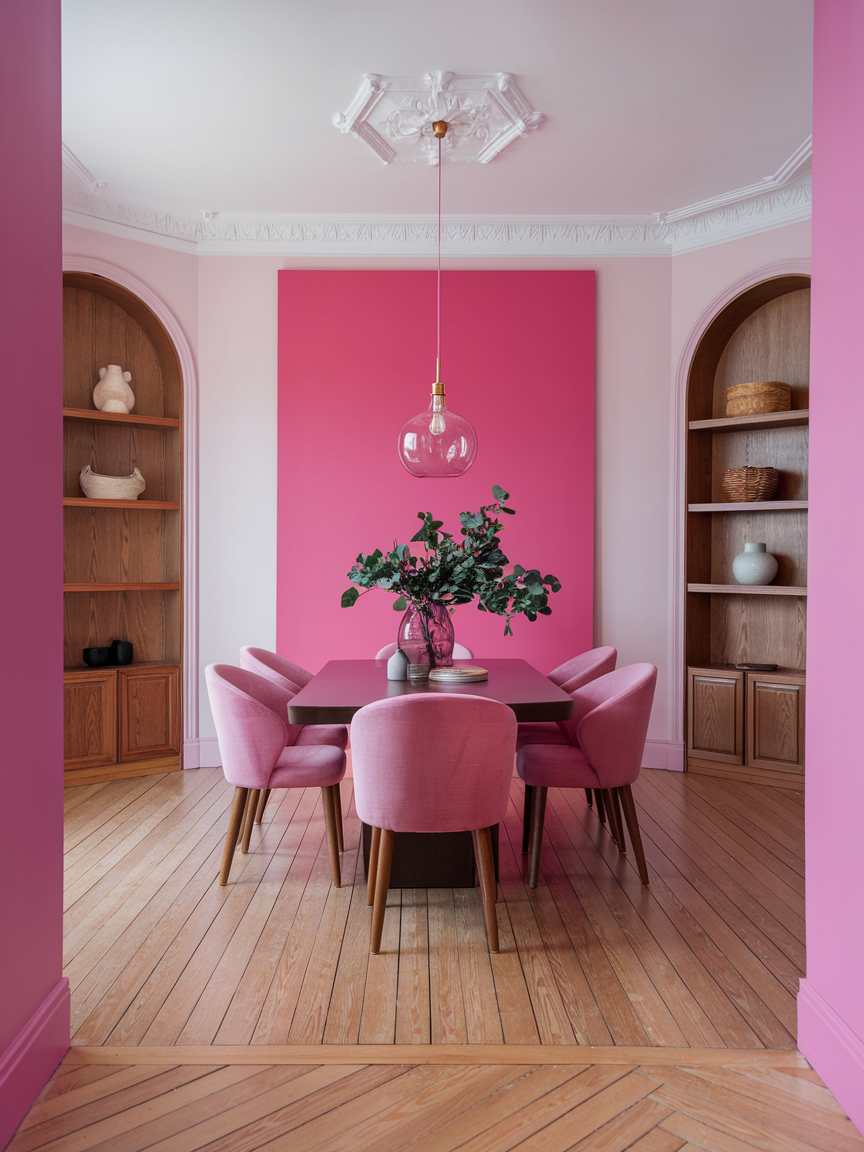
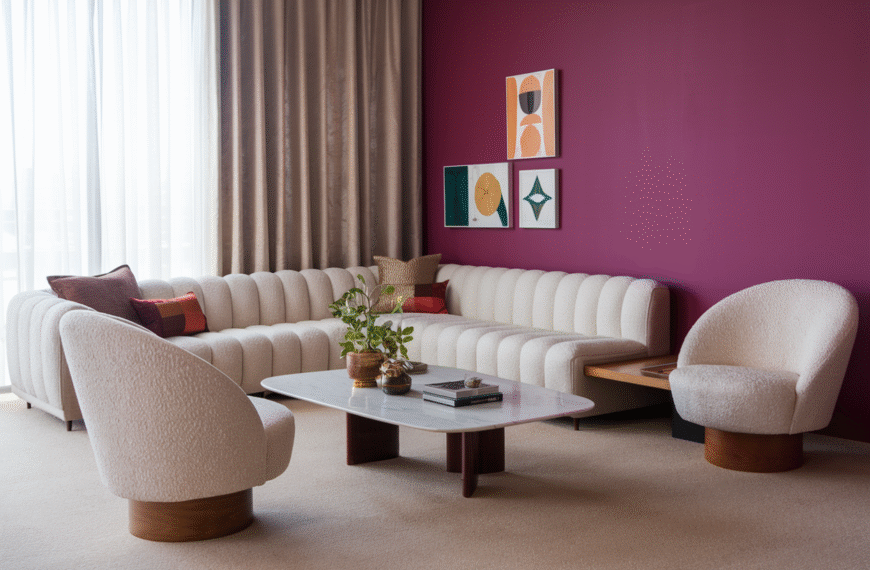
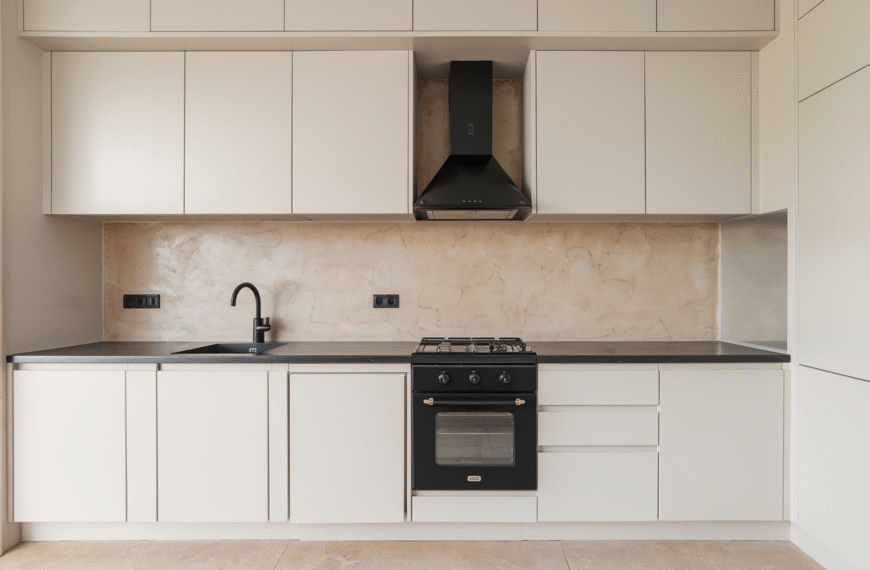
A bold fuchsia wall can completely transform a dining room by introducing energy, drama, and personality. Because the shade is naturally attention-grabbing, it works best as a feature rather than being used throughout the entire room. Balance the vivid wall with neutral furniture in white, cream, natural wood, or soft gray. Simple artwork and understated accessories can help maintain visual harmony while allowing the saturated pink to take center stage. This idea works particularly well for entertaining spaces where you want a lively atmosphere and a memorable design statement.
16. Blush and Marble Elegance
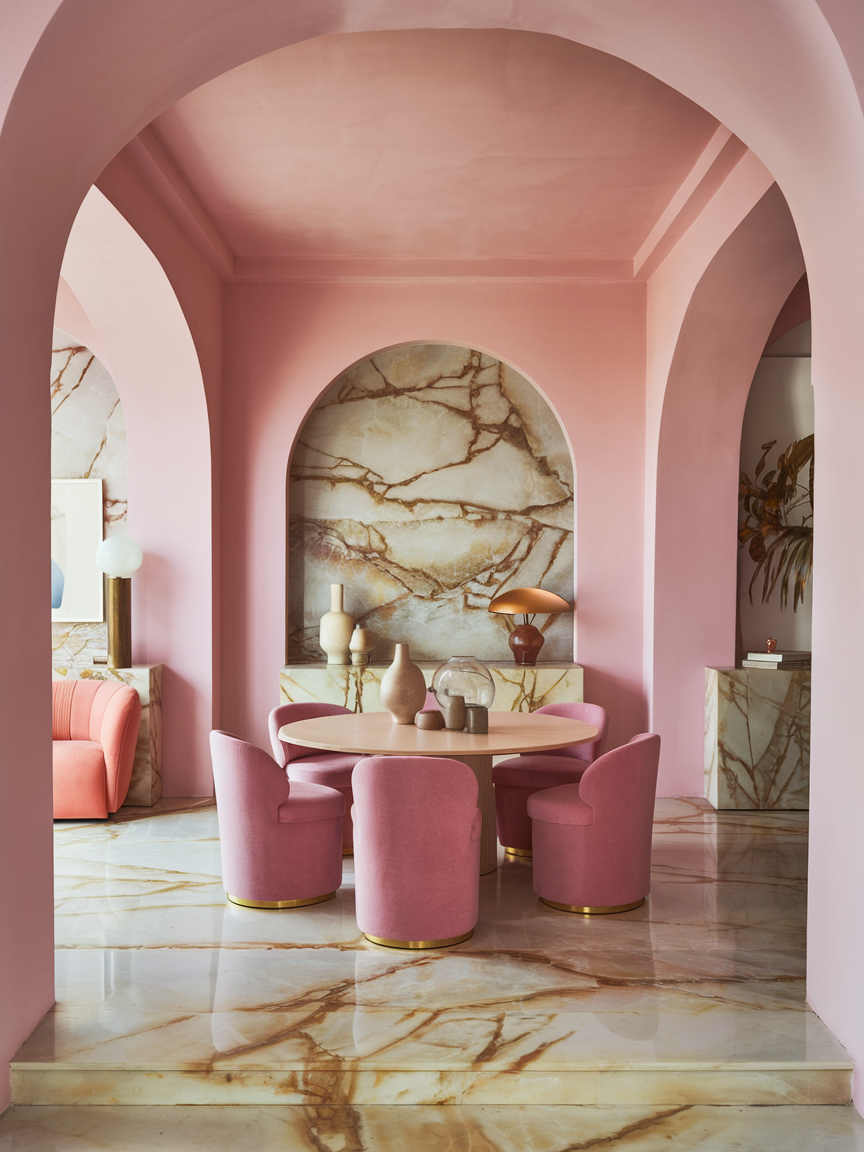
Blush pink and marble create an elegant combination that feels sophisticated yet welcoming. The delicate warmth of pink softens the cool, polished appearance of marble, while the natural veining introduces movement and texture. Use marble for a dining table, console, flooring detail, or serving surface, then incorporate blush through upholstered chairs, walls, curtains, or accessories. Gold or brass accents can add another layer of refinement without overpowering the palette. This pairing works beautifully in both contemporary and classic dining rooms, giving the space a polished appearance while retaining a comfortable atmosphere.
17. Pink Built-In Seating
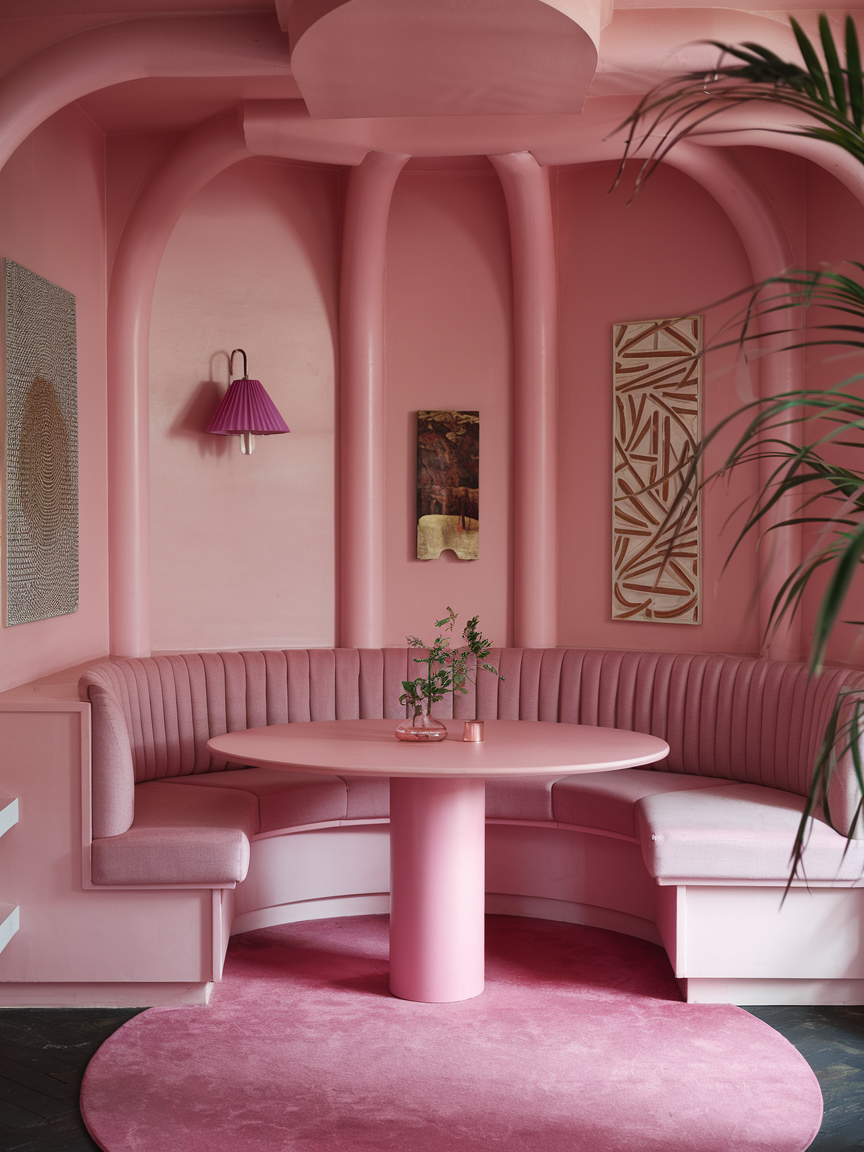
Pink built-in seating can turn an unused corner into a charming and practical dining nook. Upholstered bench seating makes efficient use of available space while providing a comfortable place for family meals, coffee, or casual gatherings. Choose a soft pink fabric for warmth, then pair the seating with a compact round or rectangular table depending on the layout. Cushions and throw pillows can add extra comfort and introduce complementary shades. Built-in storage beneath the bench can also provide a convenient place for table linens, serving pieces, or everyday items, making the arrangement both stylish and functional.
18. Monochromatic Pink Palette
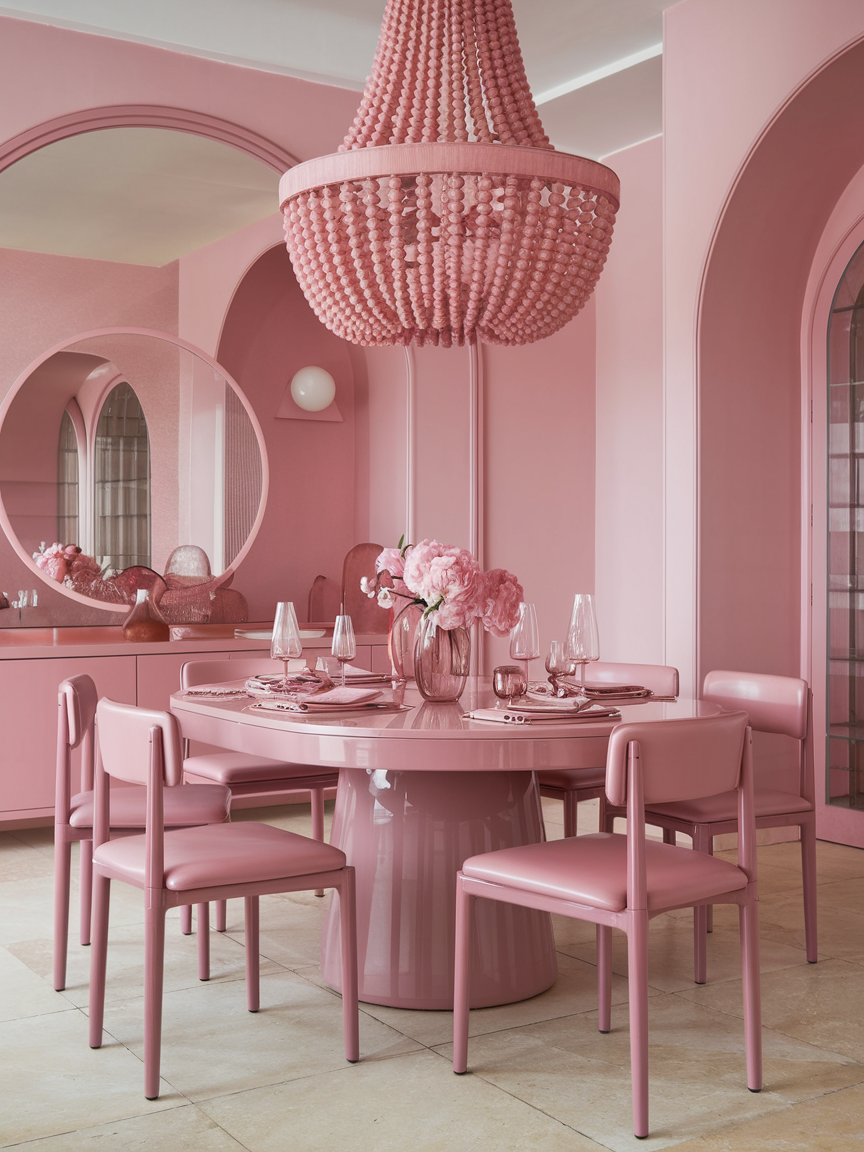
A monochromatic pink dining room can feel surprisingly sophisticated when different shades, textures, and finishes are carefully combined. Layer pale blush with dusty rose, mauve, rosewood-inspired tones, or deeper pink accents to create visual depth. Instead of relying on contrast, vary the materials throughout the room with painted walls, upholstered furniture, glossy ceramics, woven textiles, and polished surfaces. Neutral details can be introduced sparingly to keep the palette from becoming overwhelming. This approach creates a cohesive and immersive interior that feels intentional, warm, and beautifully coordinated.
19. Pink and Black Chic Contrast
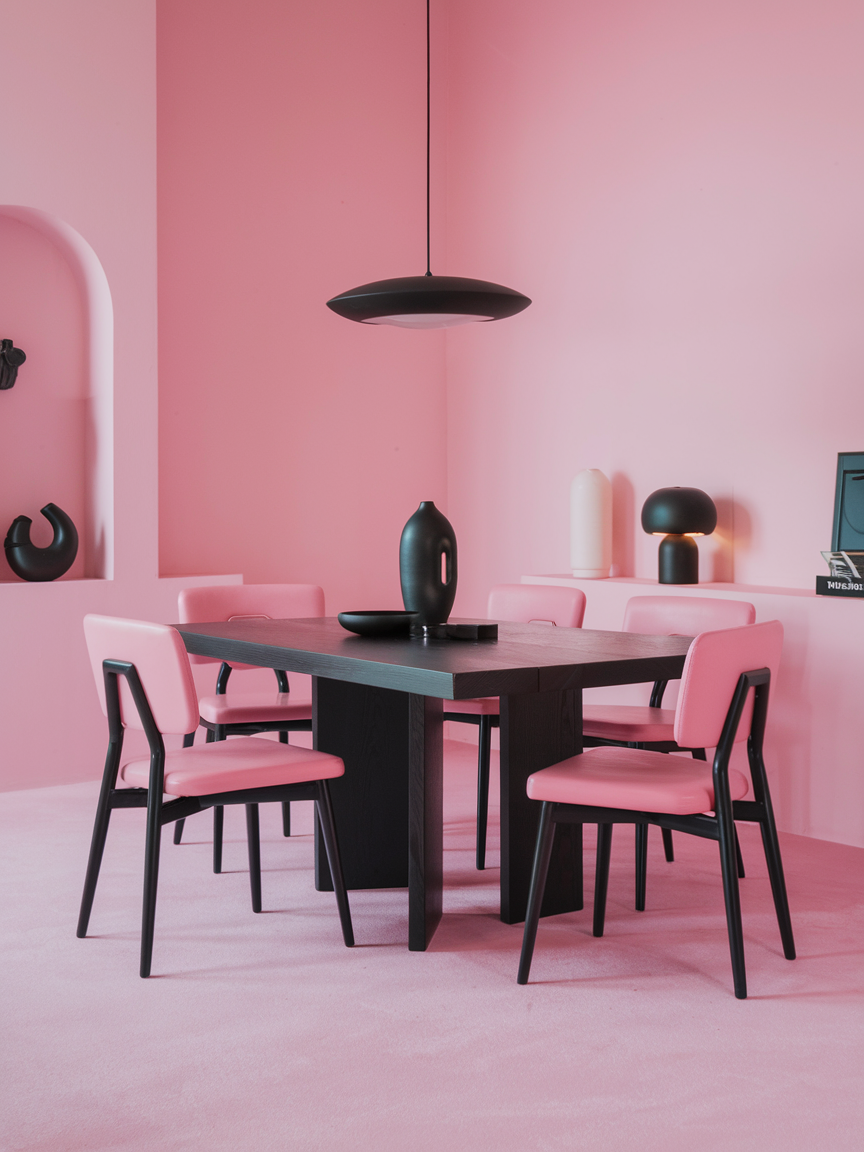
Pink takes on a much bolder personality when paired with black. Use black dining chairs, lighting fixtures, window frames, table legs, or decorative accessories to create strong visual contrast against blush or brighter pink tones. The darker elements ground the room and give the softer color a more contemporary edge. Clean-lined furniture and minimal accessories work particularly well with this palette, especially in modern or urban interiors. The combination can feel dramatic without losing its welcoming quality, making it a great choice for a dining room that needs a confident and stylish focal point.
20. Rose Gold Accents
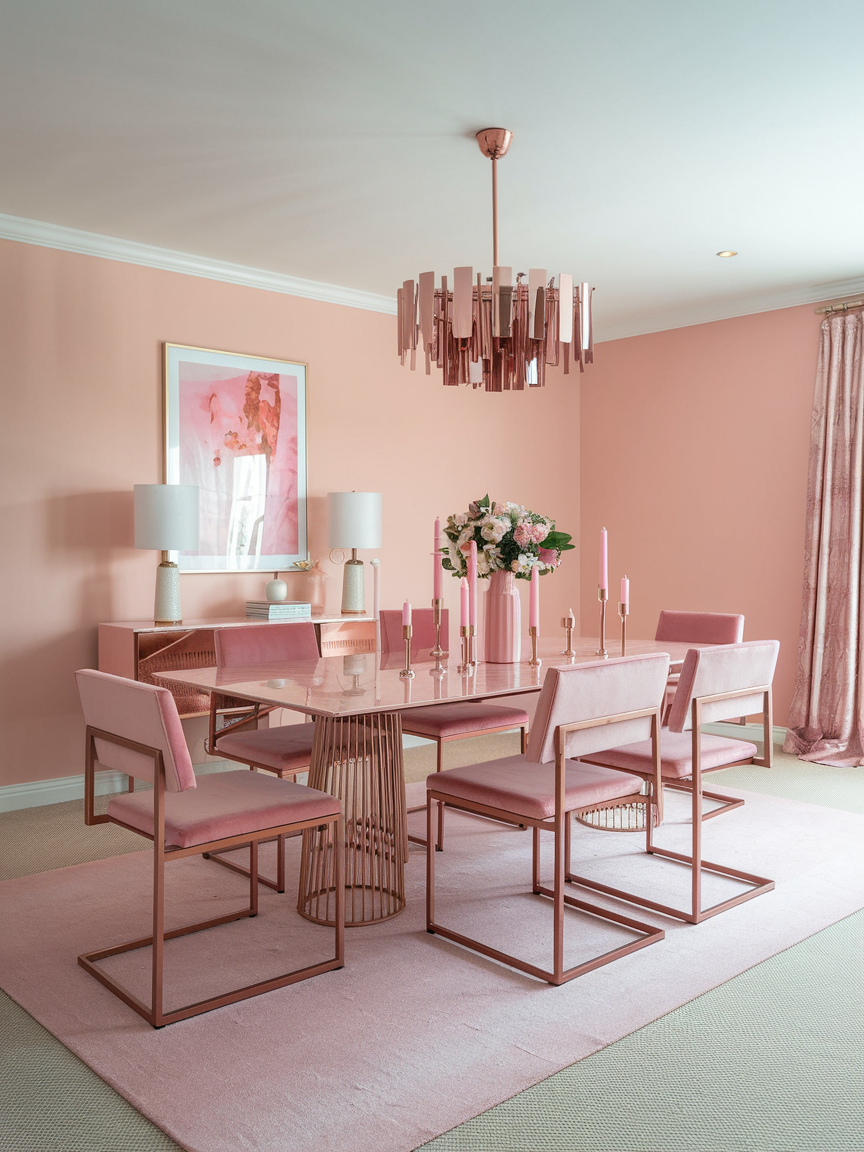
Rose gold provides a natural complement to pink, creating a warm metallic layer that feels elegant and cohesive. Introduce the finish through pendant lights, candleholders, tableware, picture frames, cabinet hardware, or small decorative objects. Because rose gold has a softer appearance than traditional gold, it blends especially well with blush and dusty pink shades. Keep the metallic elements concentrated in a few carefully selected areas so they enhance rather than dominate the room. Paired with neutral furniture and soft fabrics, rose gold can give a pink dining room a polished finish with a subtle hint of glamour.
21. Pink Rustic Charm
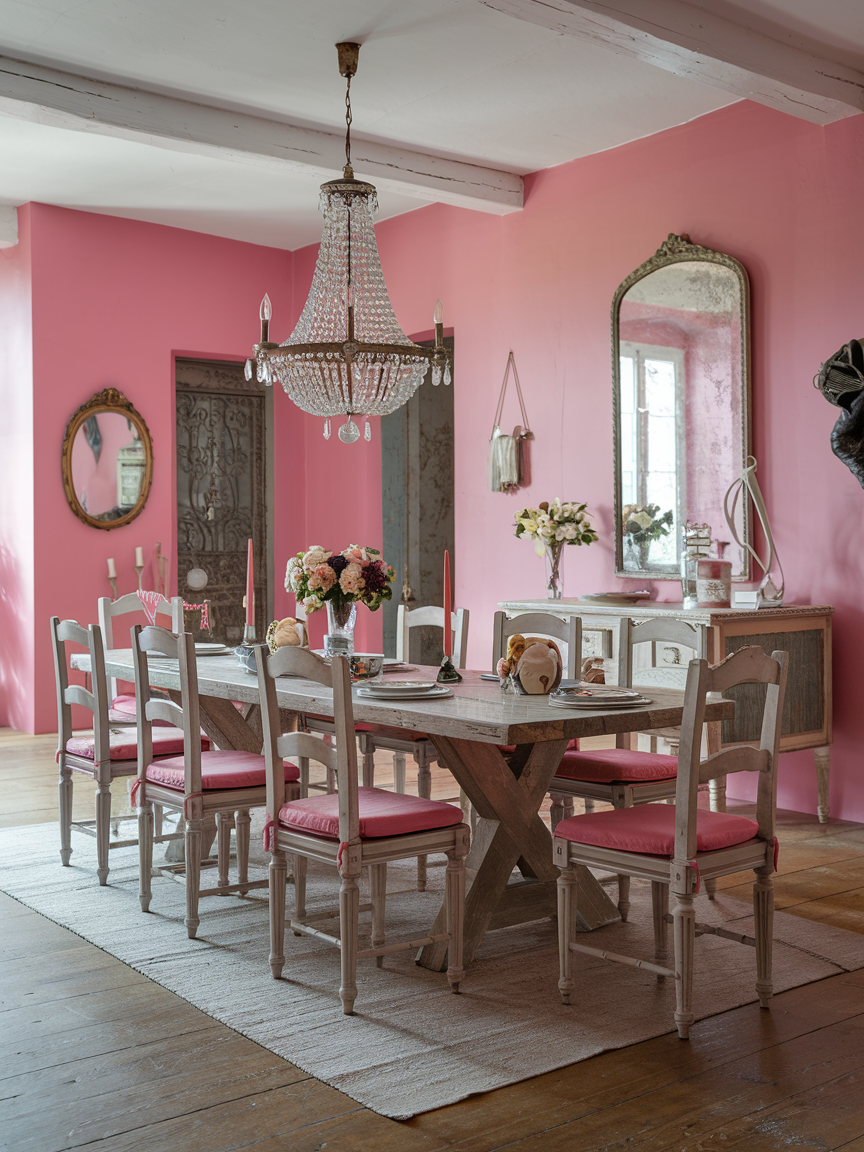
Pink adds a softer dimension to rustic dining rooms, balancing weathered wood and natural materials with a touch of color. Consider dusty rose walls, pink upholstered chairs, floral textiles, or vintage accessories alongside distressed furniture and woven accents. The combination of aged finishes and gentle color creates a comfortable atmosphere with plenty of character. Keep the pink slightly muted to preserve the relaxed rustic quality of the room. Vintage artwork, ceramic pieces, and natural greenery can complete the look, resulting in a dining space that feels charming, lived-in, and welcoming.
22. Pink Glassware and Decor
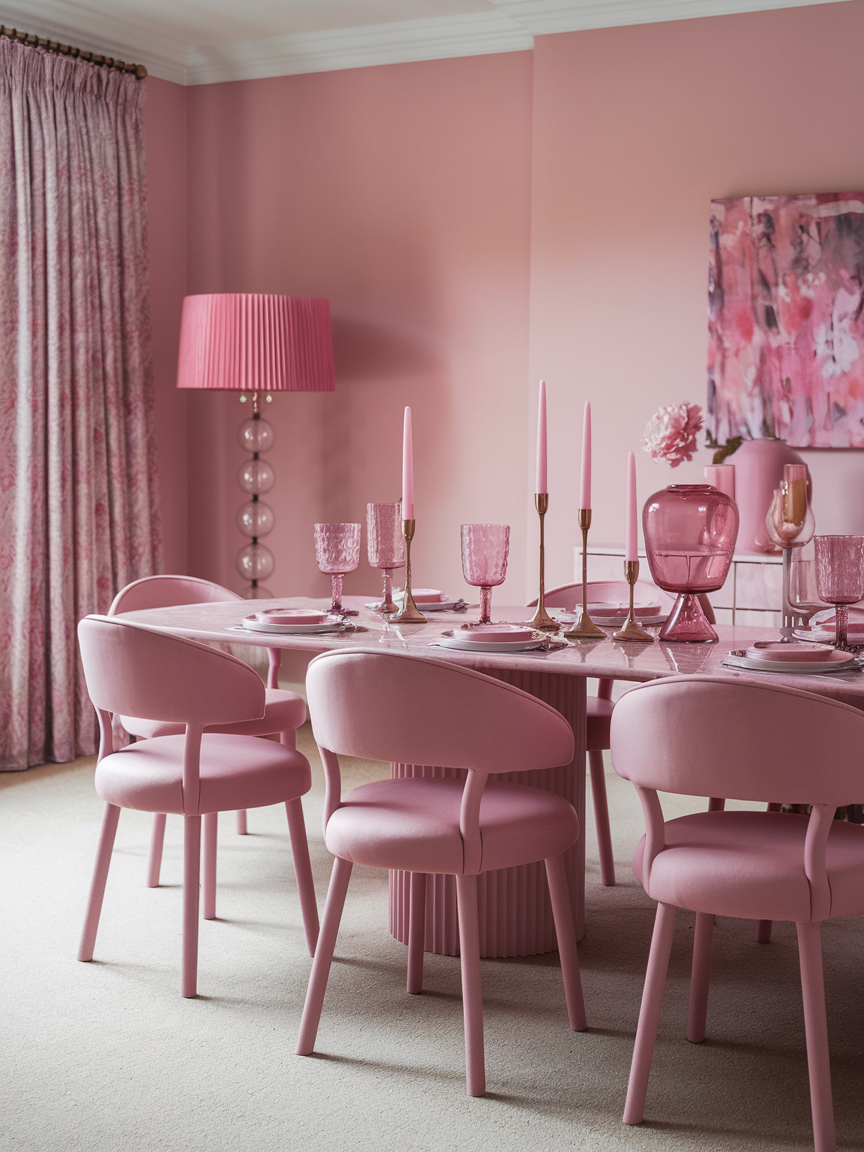
Small pink accessories can make a noticeable difference without requiring a major change to the dining room. Pink glassware, vases, candleholders, serving pieces, and table linens can introduce color while keeping the larger furniture pieces neutral. Glass is especially effective because it catches and reflects natural or artificial light, creating a delicate visual effect. Group a few pieces together on the dining table or sideboard, or spread them throughout the room for a more subtle connection. These accents are also easy to switch out, making them ideal for seasonal decorating and quick updates.
23. Pink and White Classic Combo
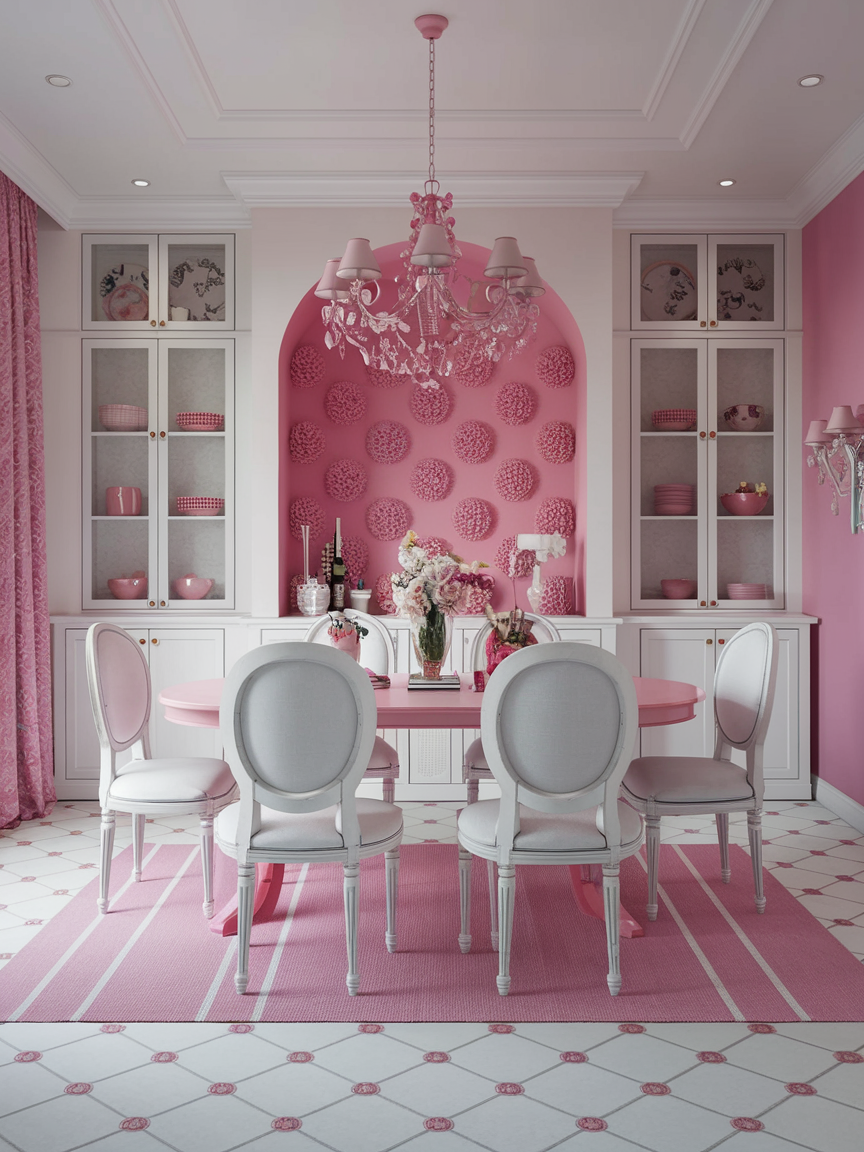
Pink and white create a timeless combination that makes the dining room feel bright, fresh, and inviting. White walls, furniture, or cabinetry provide a clean foundation, while pink introduces warmth through upholstered seating, curtains, artwork, rugs, or decorative accessories. Pale pink can create a delicate traditional look, while brighter shades give the room a more playful character. Add natural wood or subtle metallic finishes to keep the palette from feeling too stark. Because both colors are highly versatile, this combination can adapt easily to traditional, contemporary, cottage, or transitional interiors.
24. Light Pink with Natural Greenery
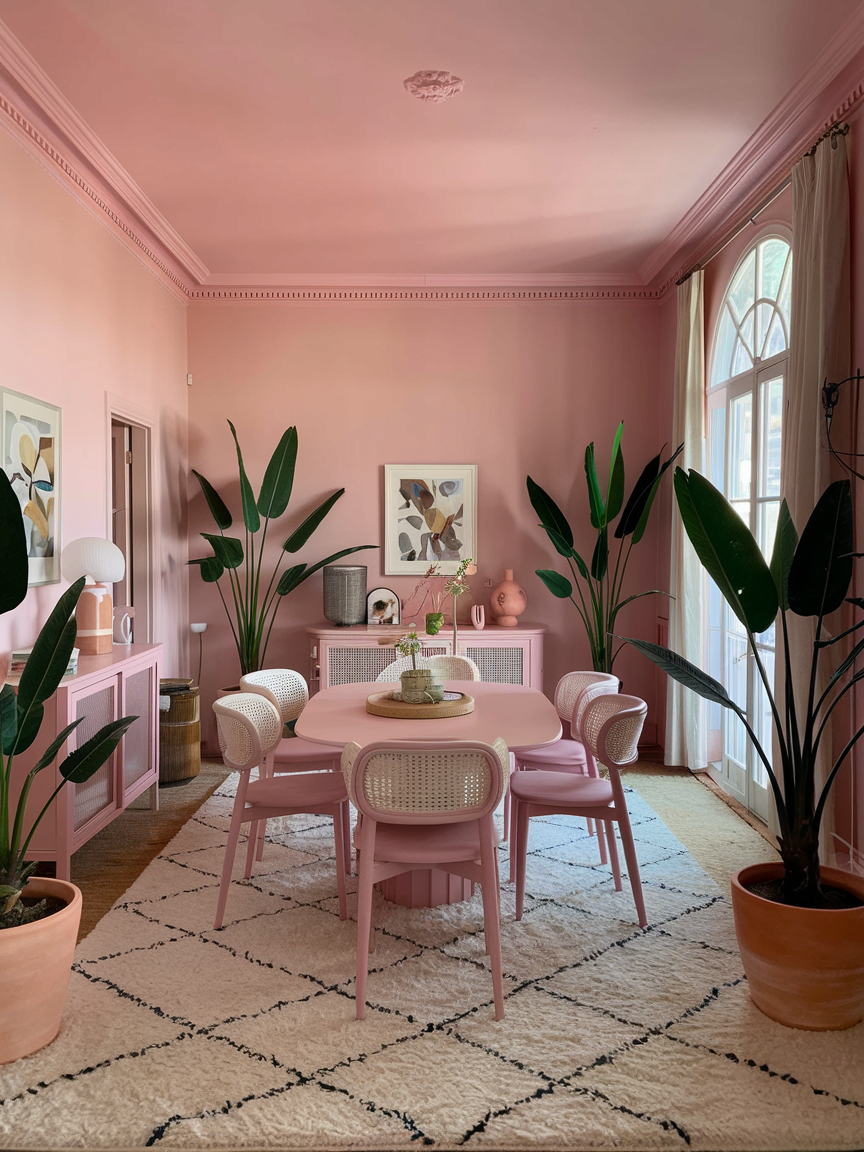
Light pink and greenery create a fresh combination that brings softness and natural energy into the dining room. Potted plants, trailing vines, leafy branches, or seasonal floral arrangements can provide a vibrant contrast against blush walls or pink furniture. Natural greenery works especially well in bright dining spaces where sunlight can highlight the different textures and tones. Complement the palette with wood furniture, woven accents, or simple ceramic planters for an organic finish. The result is a cheerful and relaxed dining room that feels connected to nature while maintaining a refined color scheme.
25. Pink Paneling for Texture
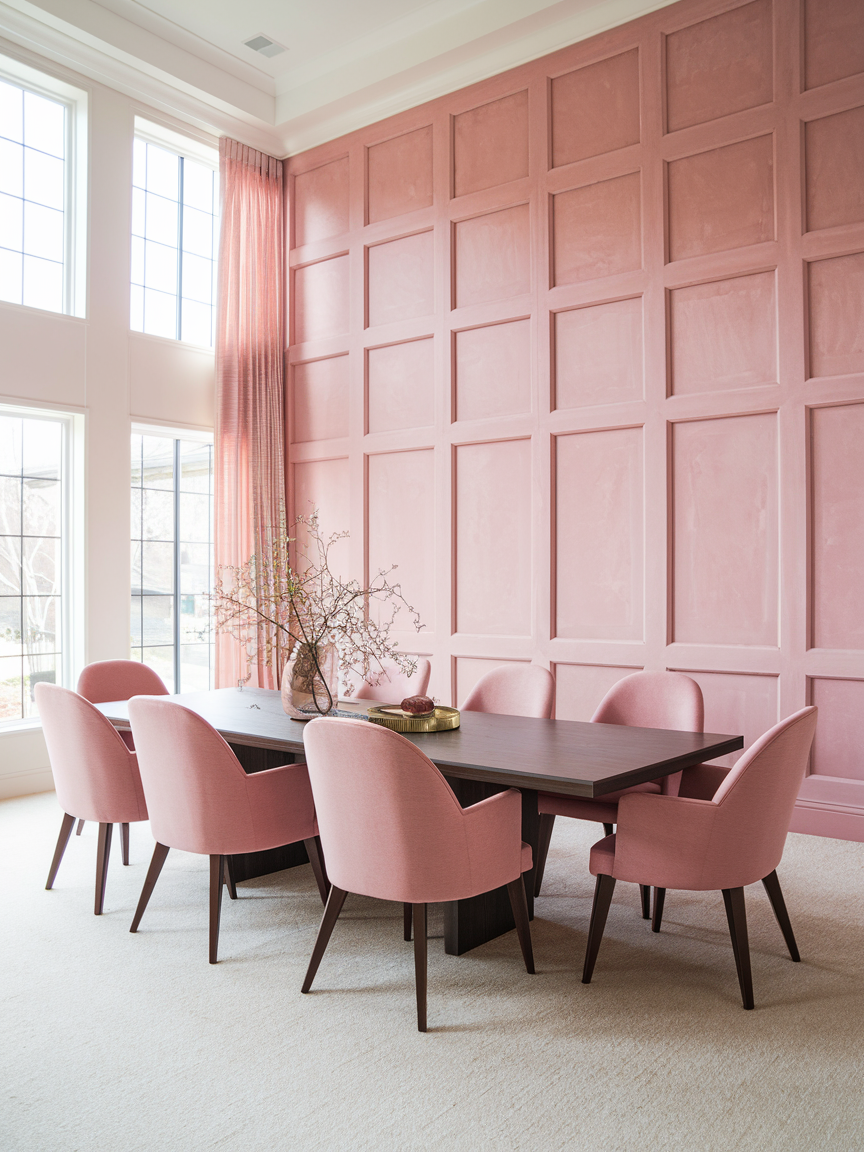
Pink wall paneling combines color with architectural detail, giving the dining room a more layered and finished appearance. Paint traditional wainscoting or raised panels in a soft pink shade to create subtle dimension, or choose a deeper tone for a more dramatic effect. The lines and shadows created by the paneling add interest without requiring additional artwork or decoration. Pair the walls with classic furniture for a traditional atmosphere, or use streamlined pieces for a contemporary interpretation. This idea is an elegant way to introduce pink while giving the room a strong sense of structure.
26. Pink Boho Dining Room
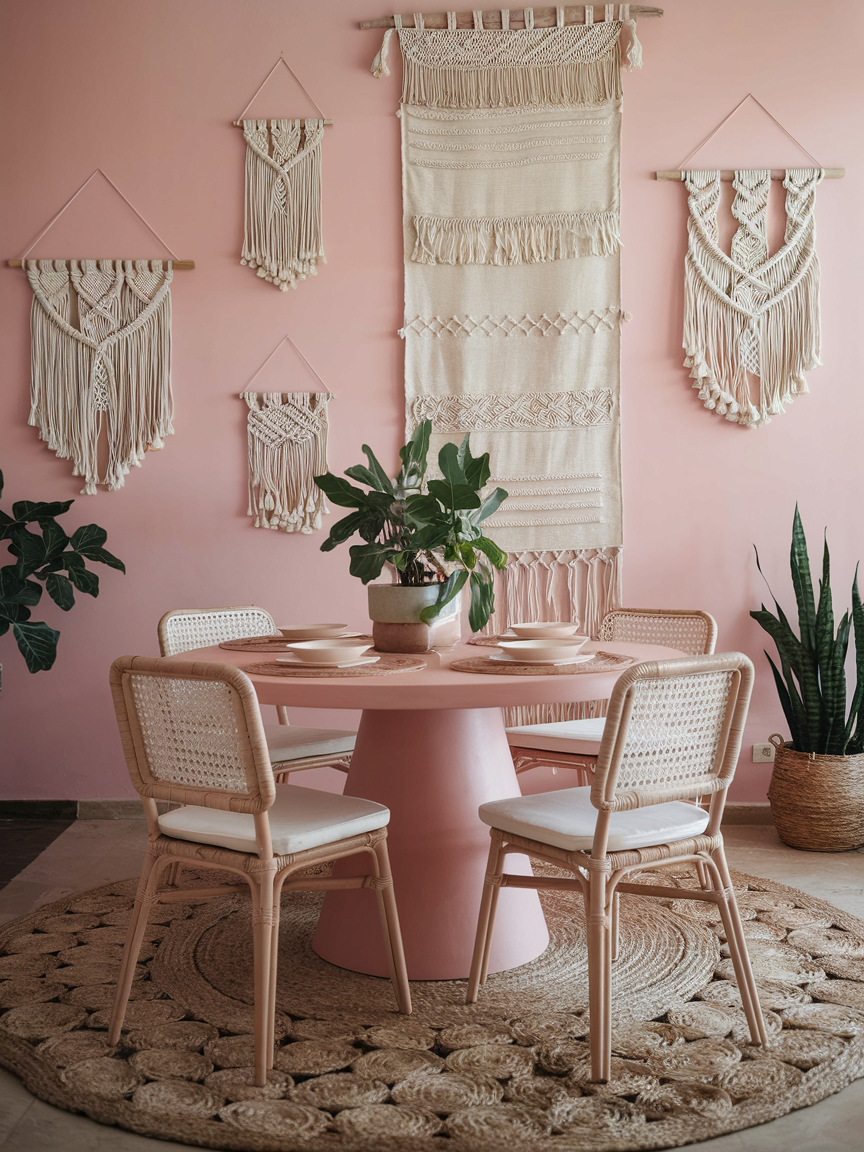
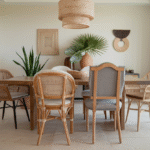
A pink boho dining room combines warm color with relaxed materials and eclectic details. Rattan or cane chairs, woven rugs, macramé, textured ceramics, and layered fabrics can give the space an easygoing character. Mix several pink shades rather than trying to match every element perfectly, allowing the room to feel collected and personal. Natural wood and handmade-looking accessories can soften the palette while reinforcing the bohemian aesthetic. The finished space should feel comfortable rather than overly polished, creating a dining area where casual meals and long conversations naturally fit the atmosphere.
27. Pink Industrial Fusion
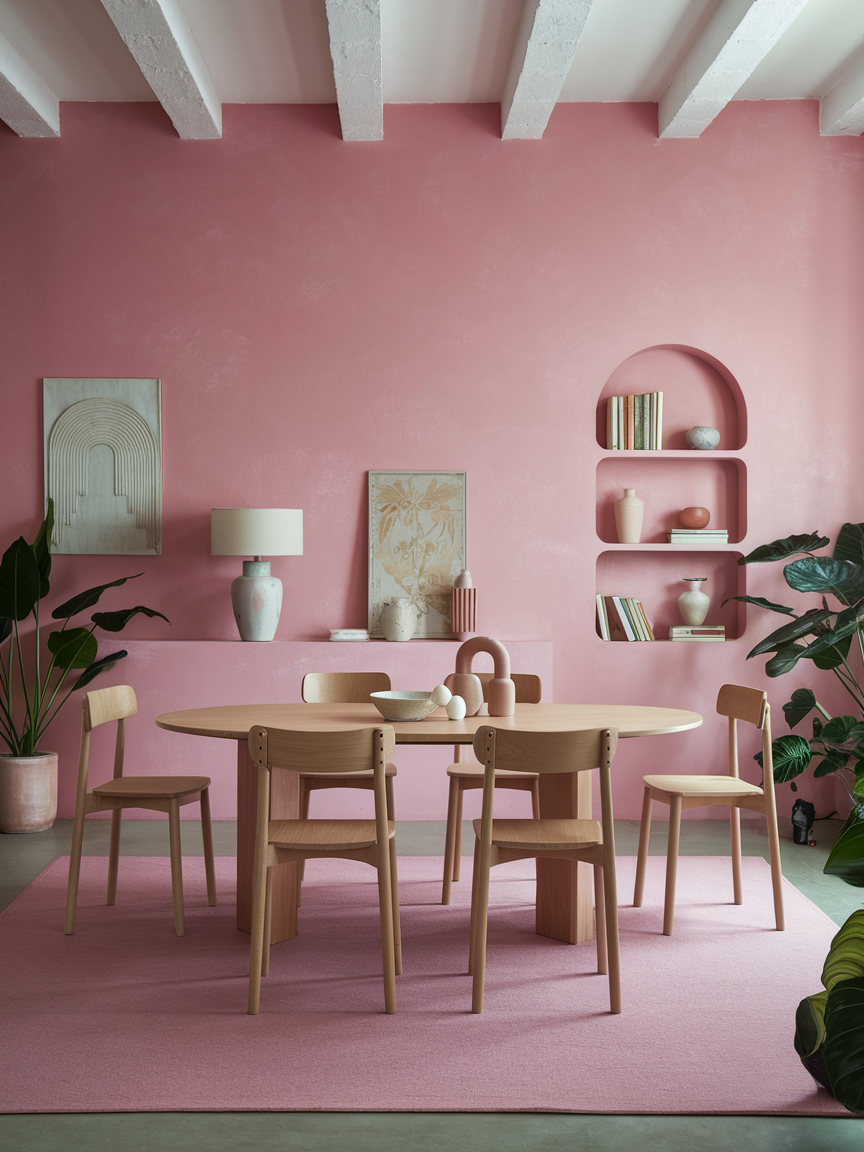
Pink can create an unexpected softness when introduced into an industrial dining room. Exposed brick, concrete walls, dark metal, and simple architectural details provide a rugged foundation, while pink furniture or accessories add warmth and contrast. Consider dusty rose upholstery, a pink feature wall, or colorful artwork against darker industrial finishes. Keeping the furniture streamlined helps maintain the urban character of the space. This combination is particularly effective in loft-style interiors because the contrast between delicate color and raw materials creates a distinctive look that feels modern, creative, and full of character.
* The appeal of a pink dining room comes from its ability to feel both beautiful and inviting. Use these inspirations to experiment with shades, textures, patterns, and accents, and create a dining room that feels bright, stylish, welcoming, and uniquely yours.