Organic modern design brings together the clean lines of contemporary interiors and the warmth of natural materials. Wood, stone, linen, woven textures, earthy colors, and soft organic shapes can create rooms that feel calm and inviting while still looking polished and sophisticated. The result is a home that feels connected to nature without losing its modern character.
Creating an organic modern space is all about finding the right balance between simplicity and warmth. Neutral palettes can provide a peaceful foundation, while natural textures and thoughtfully chosen furniture add depth and personality. Curved silhouettes, indoor plants, handcrafted accents, warm lighting, and uncluttered layouts can further enhance the relaxed atmosphere and make each room feel comfortable and refined.
Let’s explore these stylish interiors and discover how organic modern details can create a home that feels serene, sophisticated, and naturally welcoming!
1. Display More Handmade Ceramics
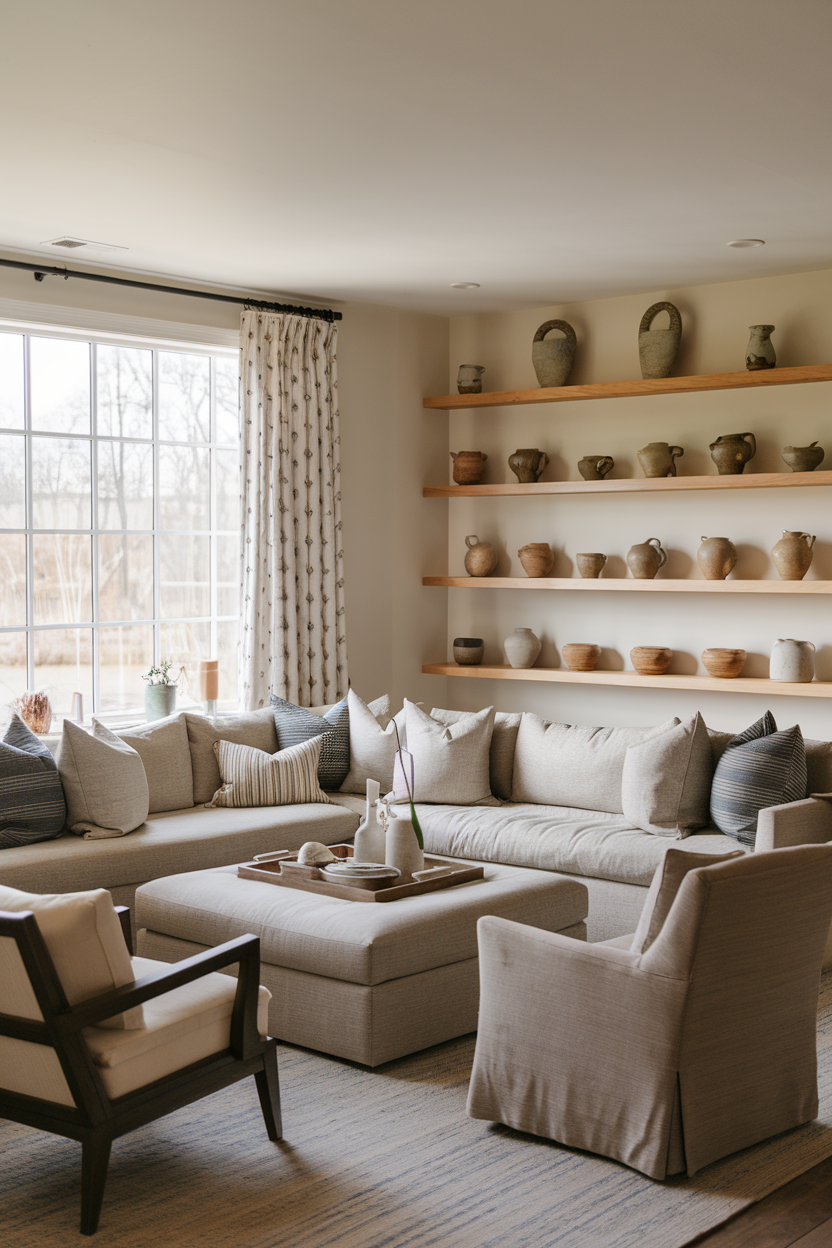
Give everyday spaces a handcrafted touch by incorporating handmade ceramic pieces throughout the home. Speckled mugs, organic-shaped bowls, crackle-glazed vases, and sculptural planters can add personality to shelves, countertops, and dining areas. Look for muted glazes and earthy finishes that complement the surrounding palette. Small variations in shape and color make each item feel distinctive and reinforce the warm, artisanal quality of modern organic decorating.
2. Maximize Natural Light
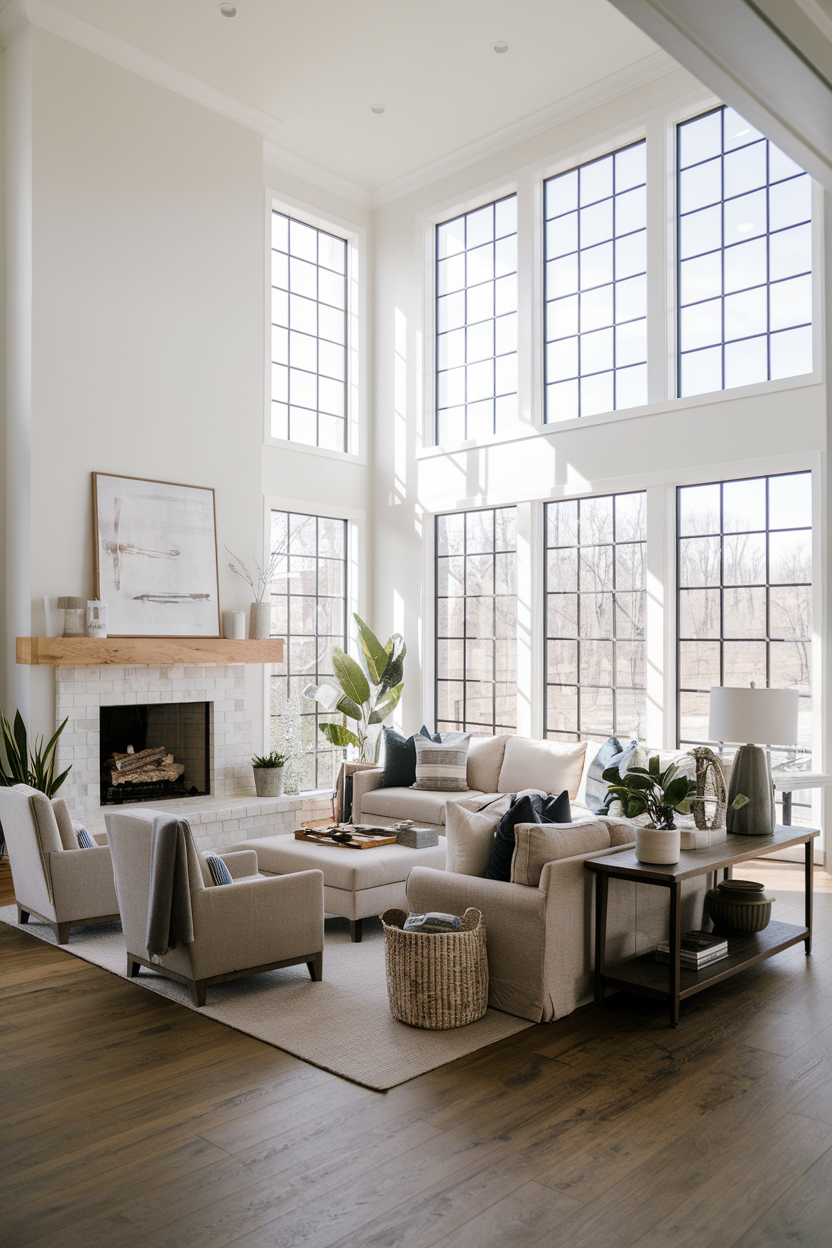
Natural light can completely transform a modern organic interior by highlighting the warmth of wood, the texture of fabrics, and the subtle variations in earthy colors. Keep window treatments simple with sheer linen curtains or lightweight blinds that allow plenty of daylight through. Mirrors can help bounce light into darker areas, while larger windows or skylights can make a room feel especially open and connected to the outdoors. Let the changing daylight become part of the room’s character.
3. Choose Upholstery in Natural Fabrics
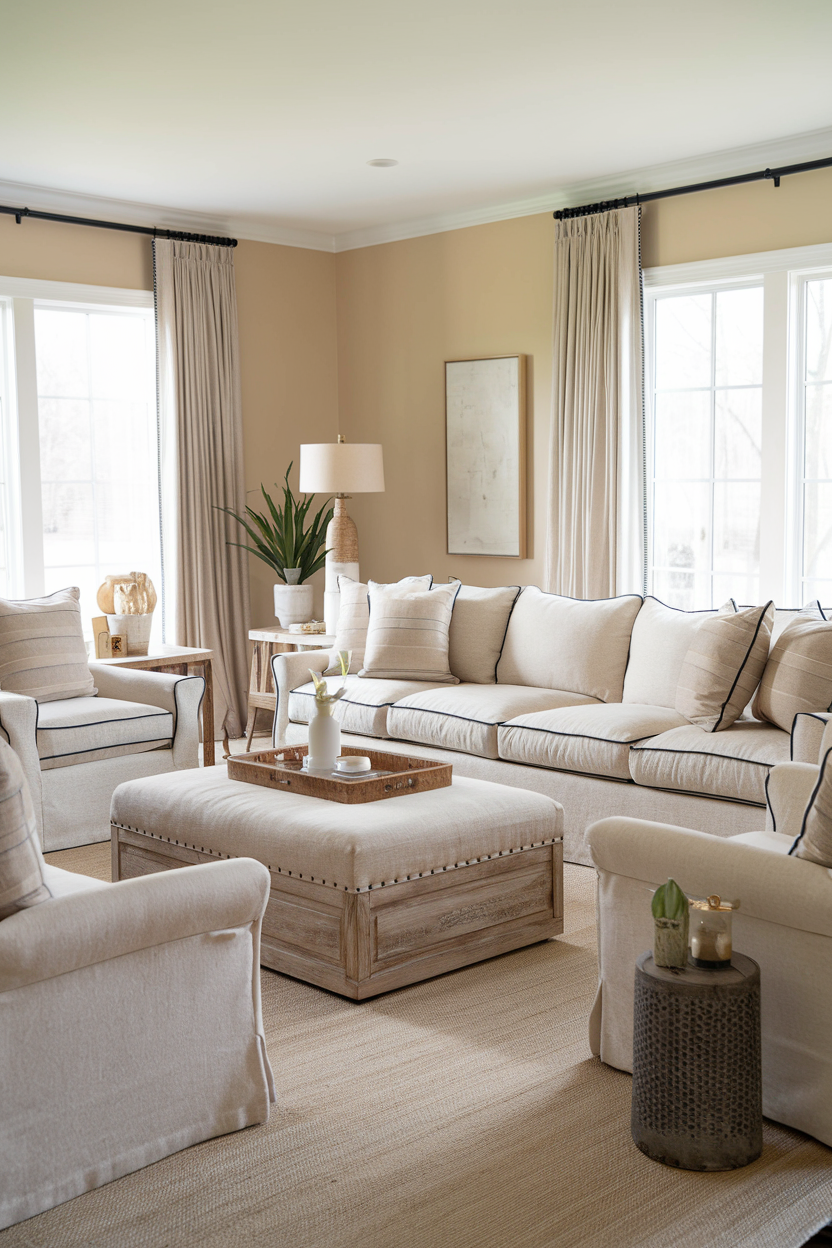
Natural fabrics are a natural fit for relaxed organic interiors. Choose upholstery and cushions made from linen, cotton, hemp, or wool to introduce softness and breathable texture. A linen sofa may develop gentle wrinkles and a softer appearance over time, adding to its relaxed appeal rather than detracting from it. These materials also pair effortlessly with wood, stone, woven fibers, and other earthy finishes, creating a comfortable and cohesive atmosphere.
4. Add Stone
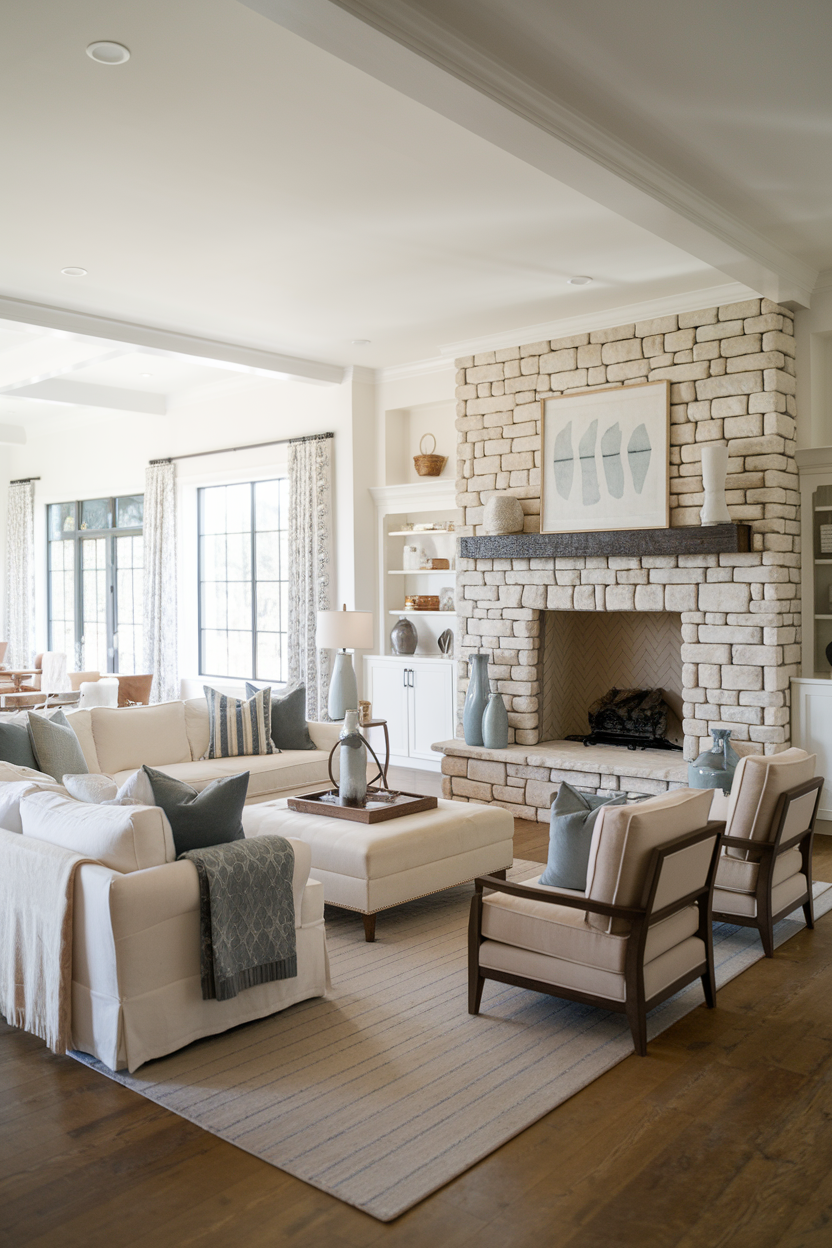
Stone introduces a sense of permanence and natural beauty that works wonderfully alongside warm organic materials. Consider marble, limestone, travertine, or soapstone for countertops, fireplace surrounds, side tables, or decorative accessories. Each slab brings its own veining, texture, and subtle color variations. Pairing cool stone with wool, linen, rattan, or warm wood creates an appealing contrast that keeps the room from feeling too uniform.
5. Introduce Organic-Shaped Mirrors
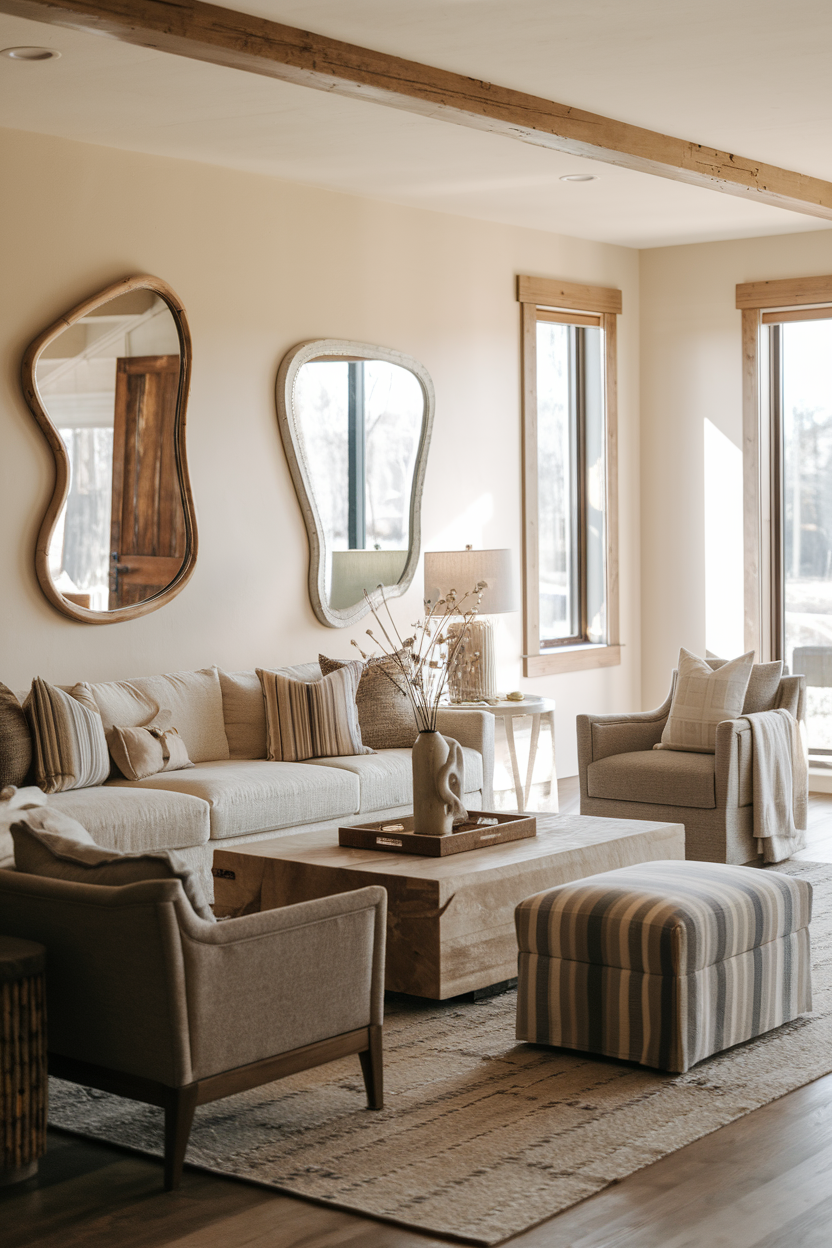
Move beyond traditional rectangular mirrors by choosing designs inspired by the irregular shapes found in nature. Asymmetrical, arched, oval, and softly curved mirrors can add an artistic quality to otherwise simple walls. They also help reflect daylight, greenery, and surrounding textures, making a room feel more open. A fluid-shaped mirror can therefore serve as both a practical feature and a sculptural piece of decor.
6. Use Earthy, Pigmented Plasters
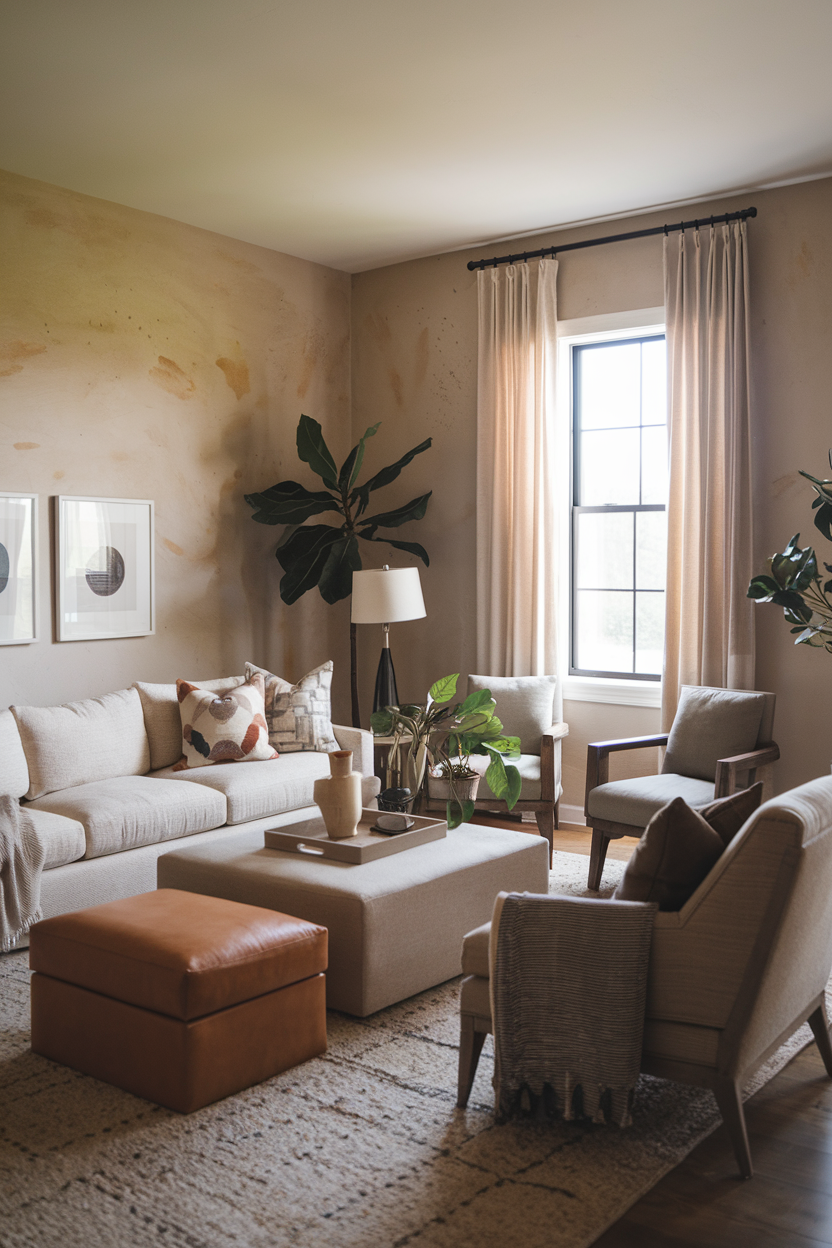
Natural wall finishes can give an interior remarkable depth and subtle variation. Limewash and clay-based plasters create softly textured surfaces that change character as light moves across them. Shades such as warm taupe, terracotta, sandstone, and muted gray work beautifully with wood and natural fibers. The slightly irregular finish adds an artisanal quality, making the walls feel richer and more dimensional than a completely flat painted surface.
7. Add Statement Wooden Furniture
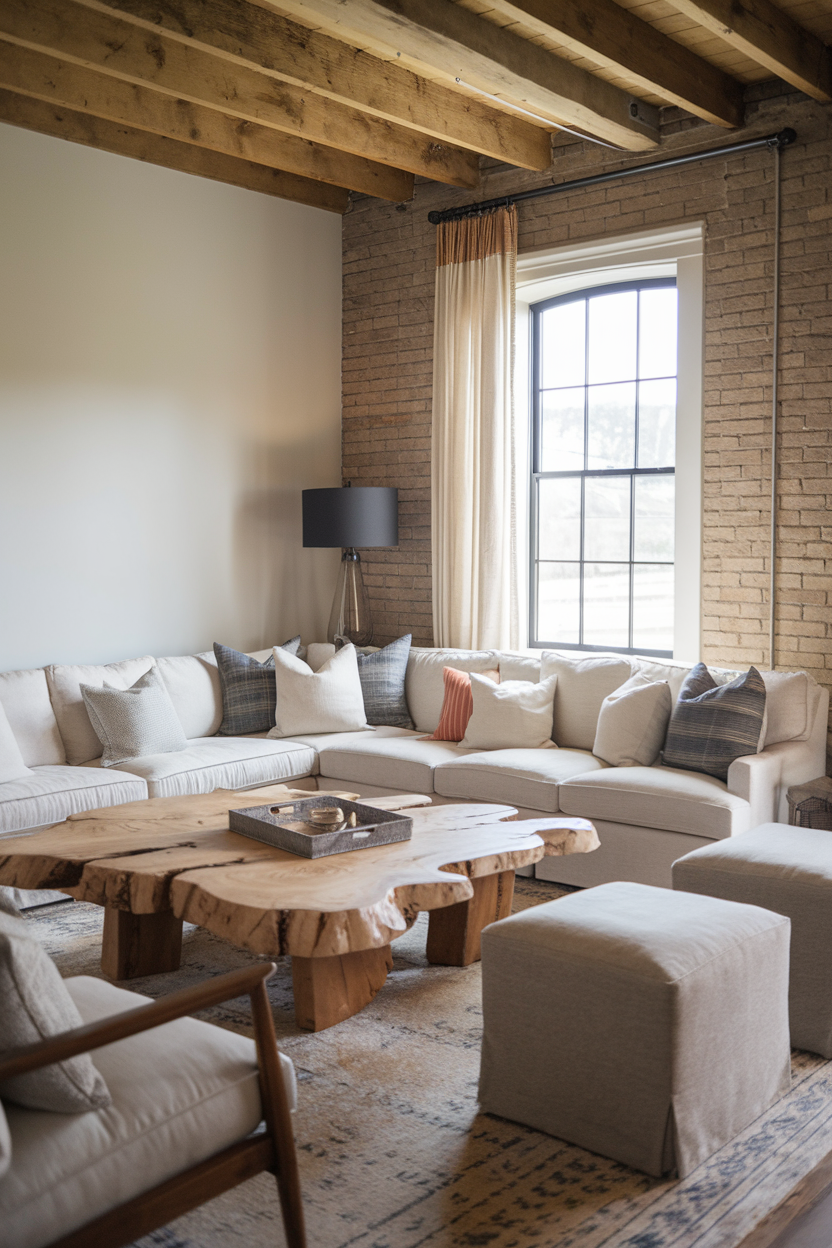
A substantial wooden piece can instantly anchor an organic room. Consider a large solid-wood dining table, chunky stool, sculptural coffee table, or bench made from a thick natural slab. Visible knots, grain patterns, raw edges, and subtle irregularities make these pieces especially striking. Use one as the main focal point and keep the surrounding furnishings relatively simple so the natural beauty of the wood has plenty of room to stand out.
8. Incorporate Natural Linen Textiles
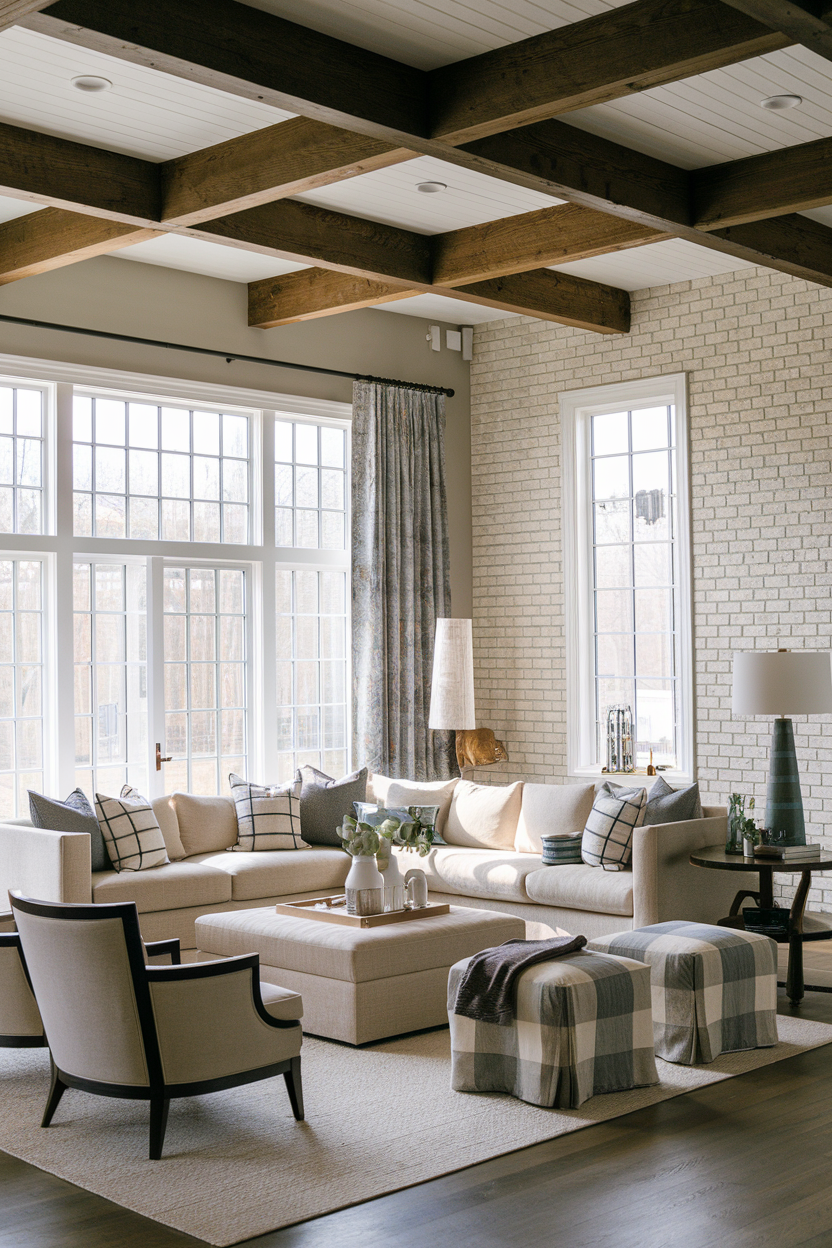
Linen brings an effortlessly relaxed quality to modern organic spaces. Use it for curtains, bedding, table linens, cushions, or furniture slipcovers to introduce softness and subtle texture. Natural shades such as sand, cream, stone, clay, and muted green work particularly well with the material. Its gently rumpled appearance adds to the laid-back character of the room, making linen an easy choice for creating a comfortable yet refined atmosphere.
9. Celebrate the Beauty of Imperfection
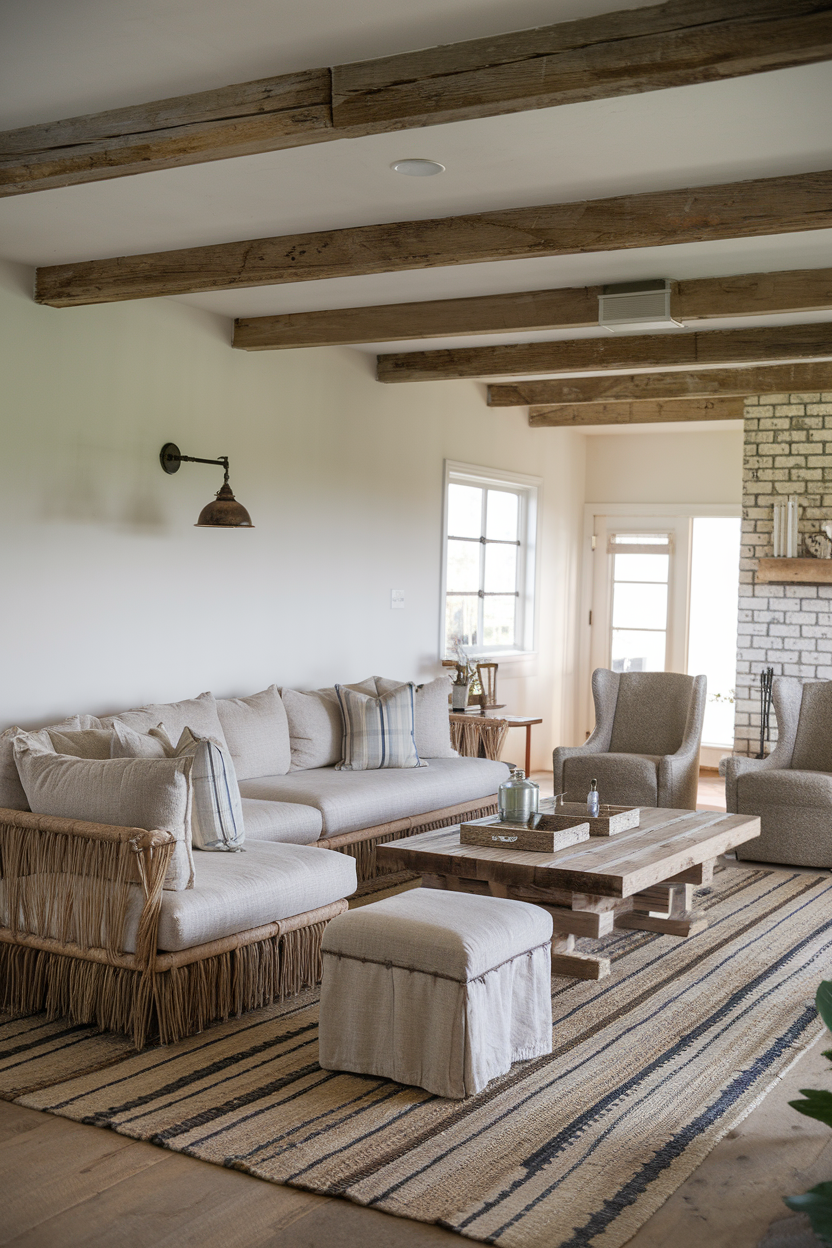
Modern organic design doesn’t require everything to look perfectly polished. Natural variations, uneven surfaces, aged finishes, and handmade details can give an interior much more character. A slightly irregular ceramic vase, weathered wooden stool, or naturally varied rug can become part of the room’s charm. Rather than trying to hide every imperfection, allow these details to contribute to a home that feels authentic, relaxed, and genuinely lived-in.
10. Choose Low-Profile Furniture
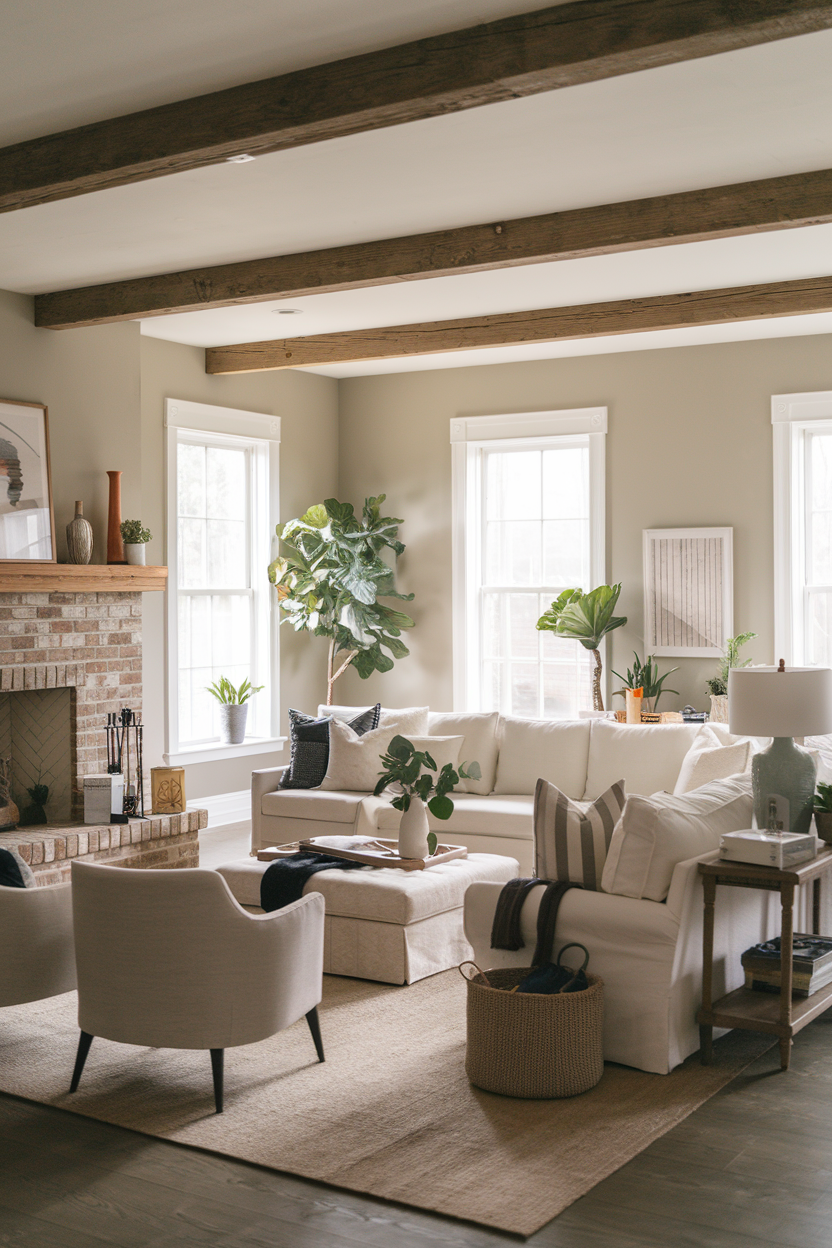
Low-profile furniture can give a room a calmer and more grounded appearance. Consider sofas with lower seats, platform beds, streamlined coffee tables, or floor cushions that keep the visual focus closer to the floor. These pieces work especially well with neutral colors and natural materials, creating a relaxed sense of proportion. The result is an interior that feels spacious, comfortable, and intentionally understated.
11. Layer Natural Textures
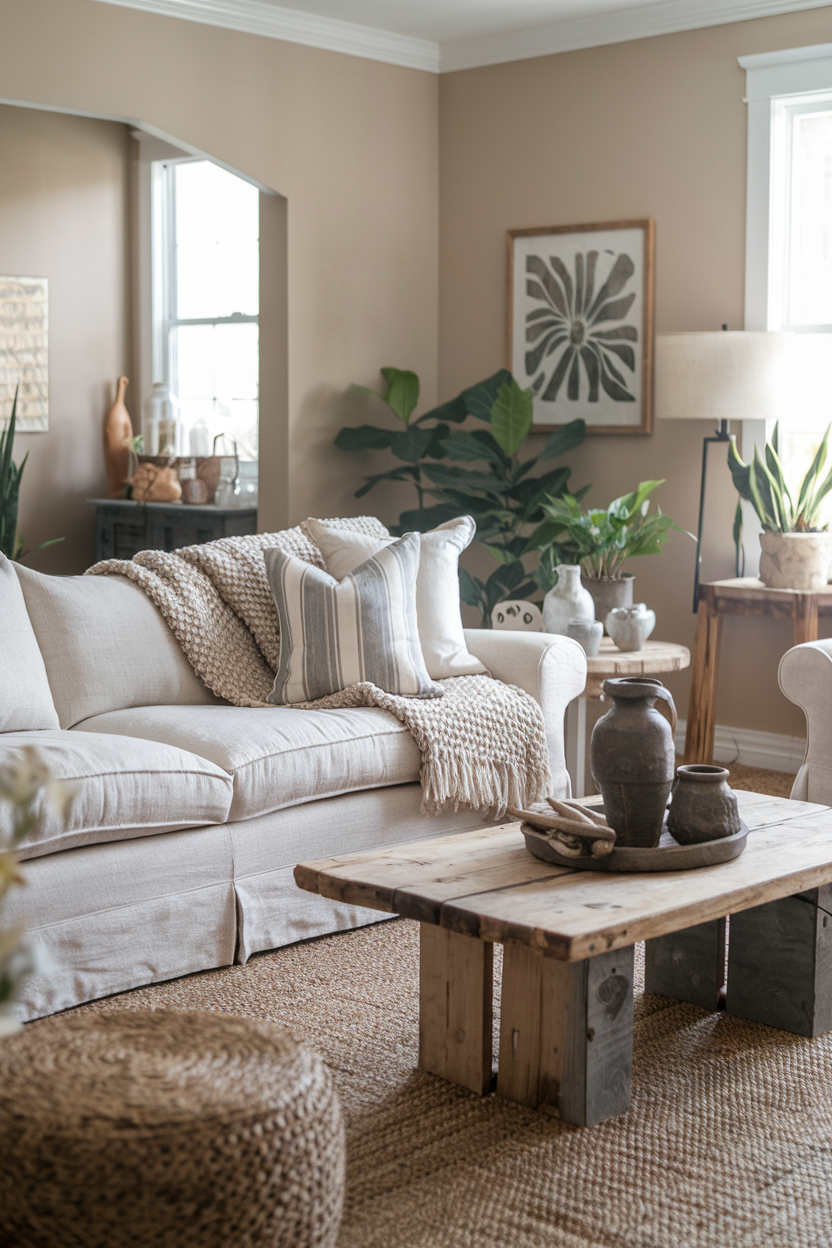
Texture gives a modern organic home its warmth and personality. Combine materials such as raw wood, linen, chunky knits, woven seagrass, wool, and handmade ceramics to create a space that feels rich without looking busy. A linen sofa can be paired with a nubby throw, a jute rug, and handcrafted pottery displayed on a rustic coffee table. The contrast between these surfaces adds visual depth while making the room feel comfortable, tactile, and naturally inviting.
12. Choose an Earthy and Grounding Color Palette
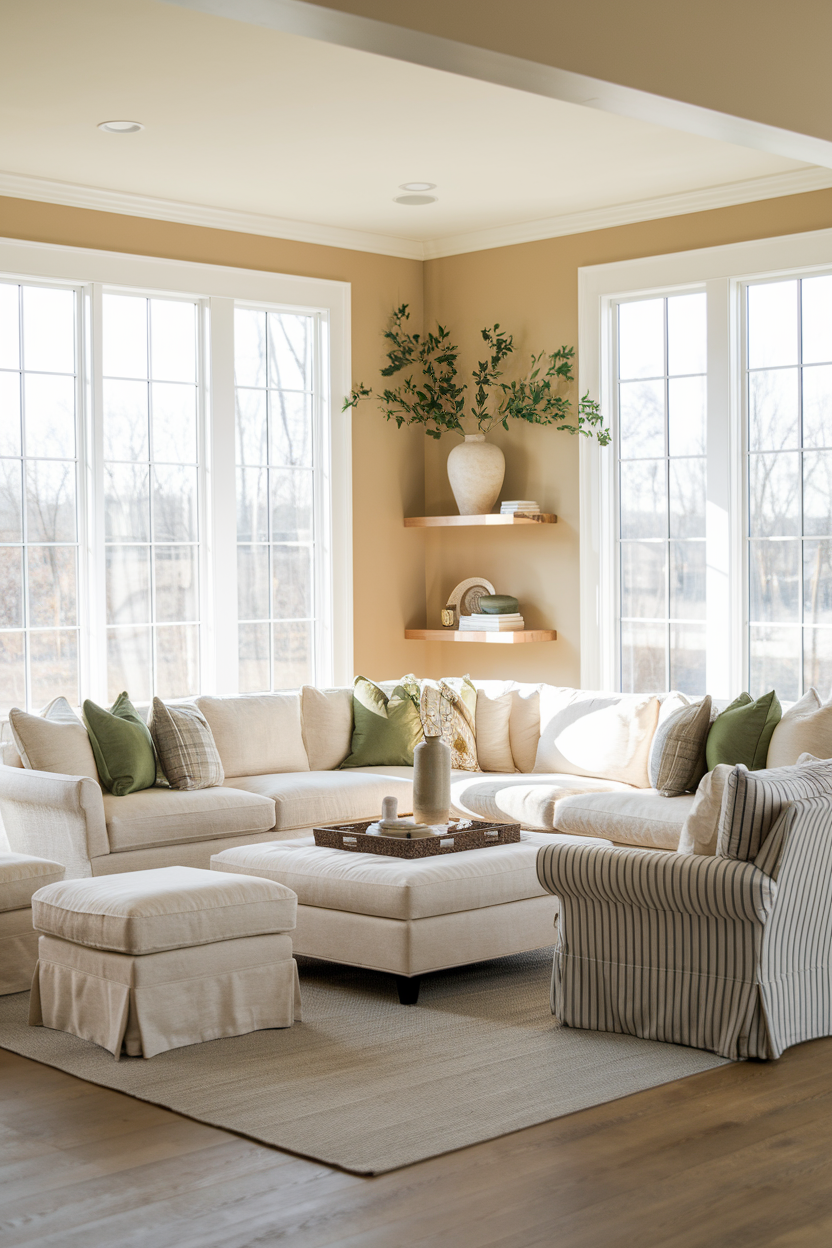
A nature-inspired color palette creates the calm foundation that modern organic interiors are known for. Consider soft beige, warm sand, creamy white, muted clay, mossy green, and stone gray instead of strong contrasts or overly saturated shades. These colors work beautifully together and provide a soothing backdrop for natural materials. Try warm neutral walls with sage cushions and a terracotta vase for a subtle combination that feels relaxed, balanced, and connected to nature.
13. Incorporate Raw Wood Elements
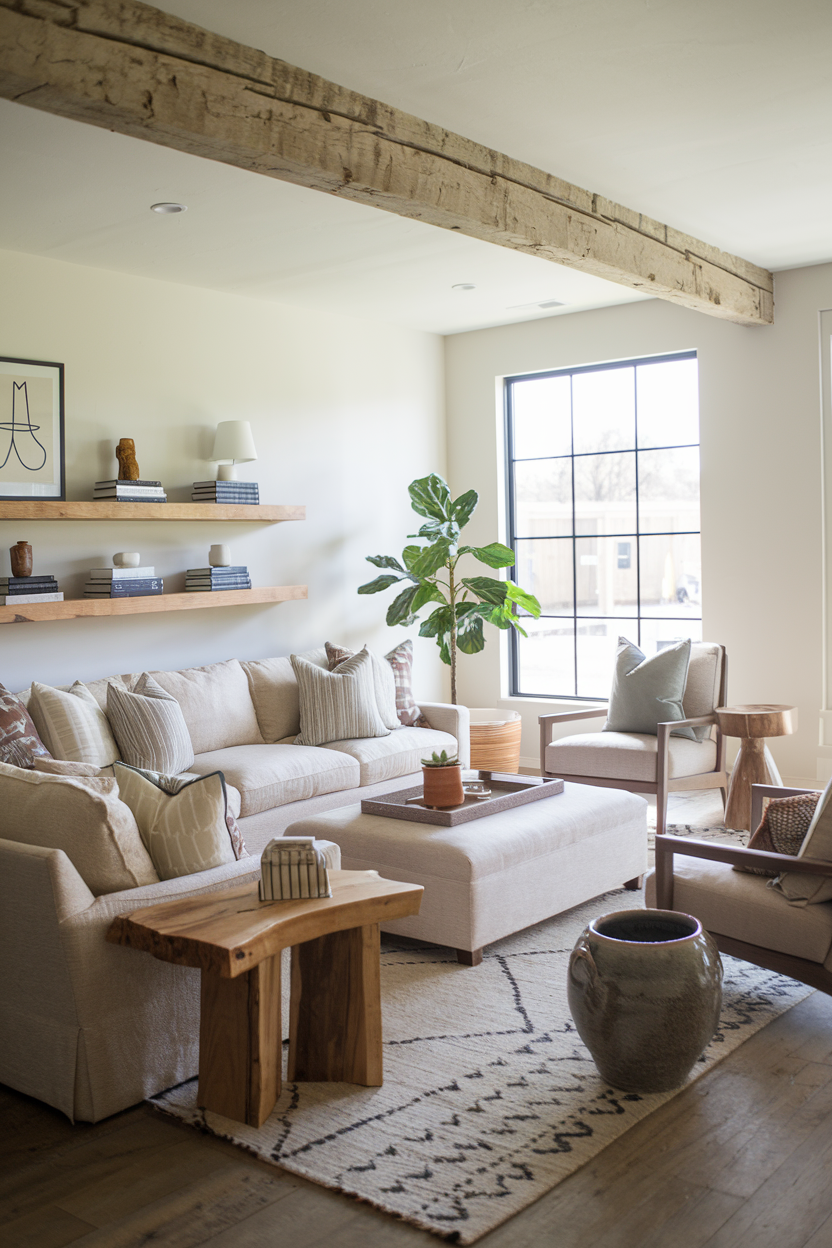
Natural wood brings warmth and character to an organic interior, especially when its authentic grain and imperfections remain visible. A live-edge dining table, vintage oak bench, or exposed ceiling beam can instantly give a room more personality. Don’t worry about every wooden piece matching perfectly. Combining warm walnut with pale ash or rustic pine with crisp white walls can create an interesting balance between natural texture and contemporary simplicity.
14. Use Natural Fiber Rugs
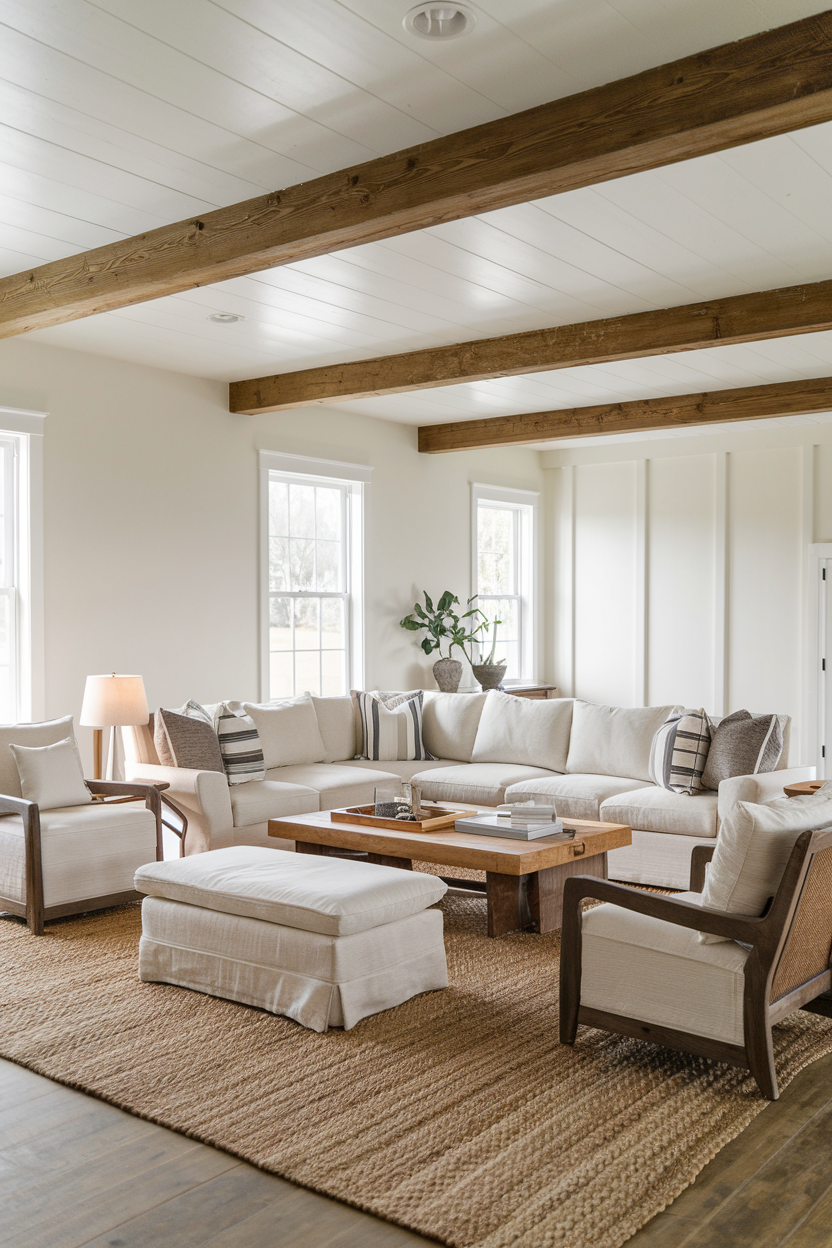
Natural fiber rugs provide texture and warmth while complementing the understated character of organic interiors. Materials such as jute, sisal, wool, cotton, and hemp introduce earthy tones and tactile interest beneath furniture. A large woven jute rug beneath a neutral sofa, for example, can help define the seating area while making it feel more grounded. Their naturally textured appearance also works beautifully with wood, linen, stone, and other organic materials.
15. Display Handmade Ceramics
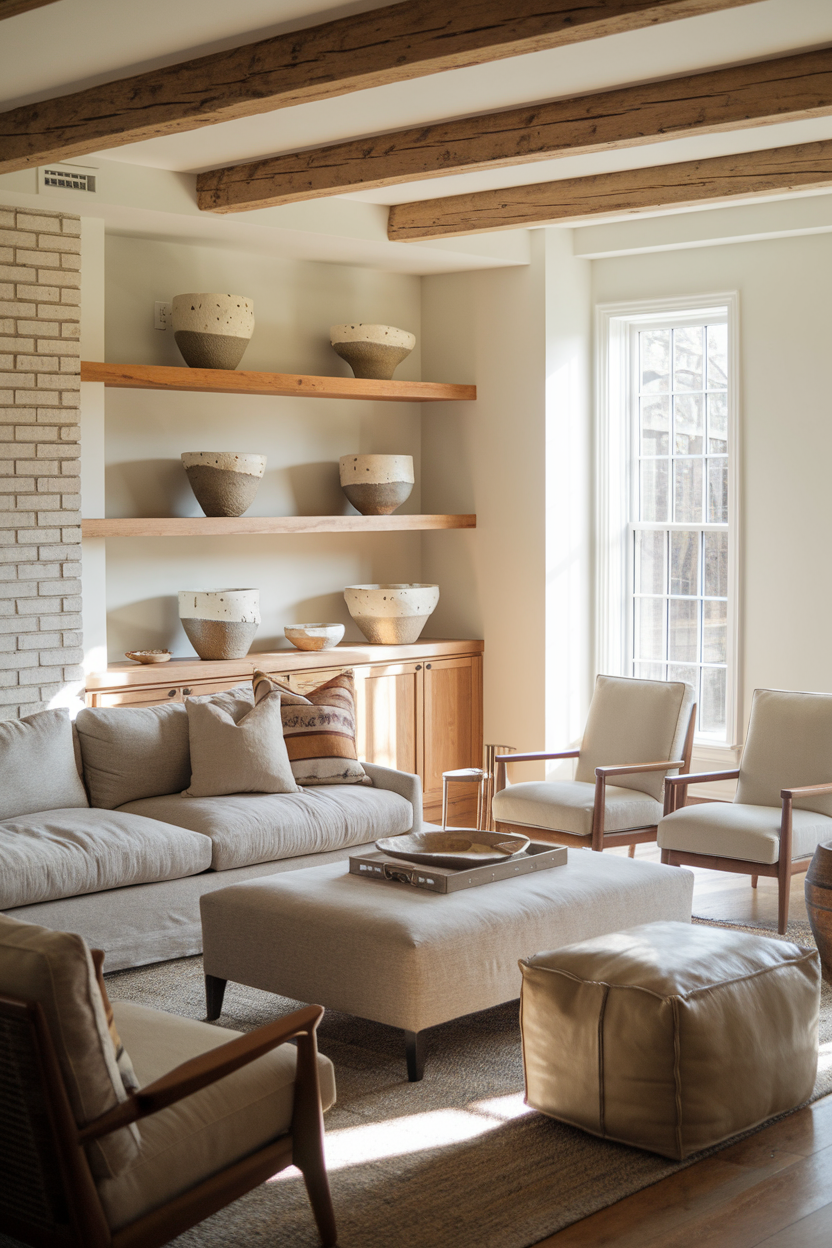
Handmade ceramics can give a room a distinctive sense of craftsmanship. Look for vases, bowls, planters, and cups with irregular rims, subtle glaze variations, speckles, or gently asymmetrical silhouettes. Instead of hiding these pieces away, use them as decorative accents on shelves, countertops, dining tables, or consoles. Their small imperfections make the space feel more personal and add an artisanal quality that mass-produced accessories often lack.
16. Bring the Outdoors In
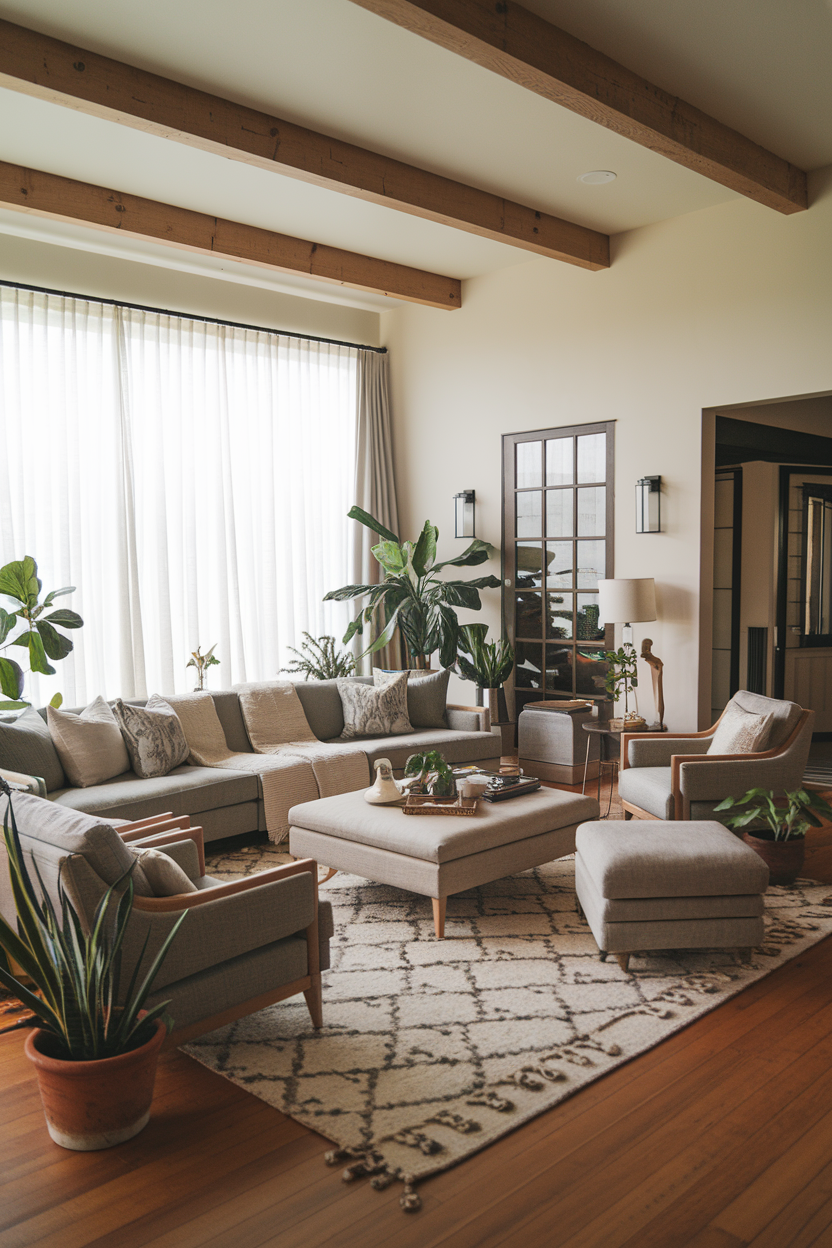
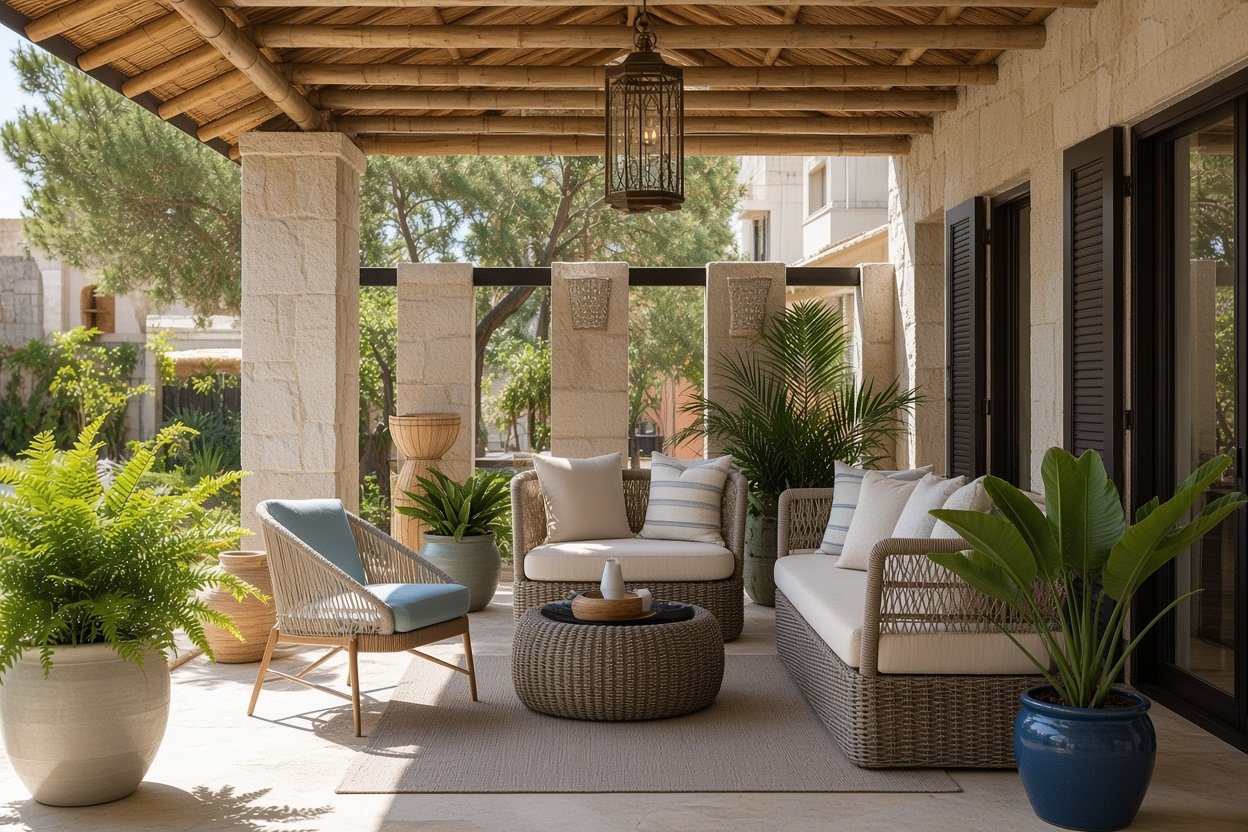
Plants are an easy way to strengthen the connection between an interior and the natural world. Large leafy varieties such as olive trees or fiddle-leaf figs can make a statement, while rubber plants, monstera, and other sculptural greenery add interesting shapes. Smaller herbs in clay pots can bring life to a kitchen or dining area. Beyond their decorative appeal, plants introduce movement, organic color, and a refreshing sense of nature throughout the home.
17. Use Curved Lines
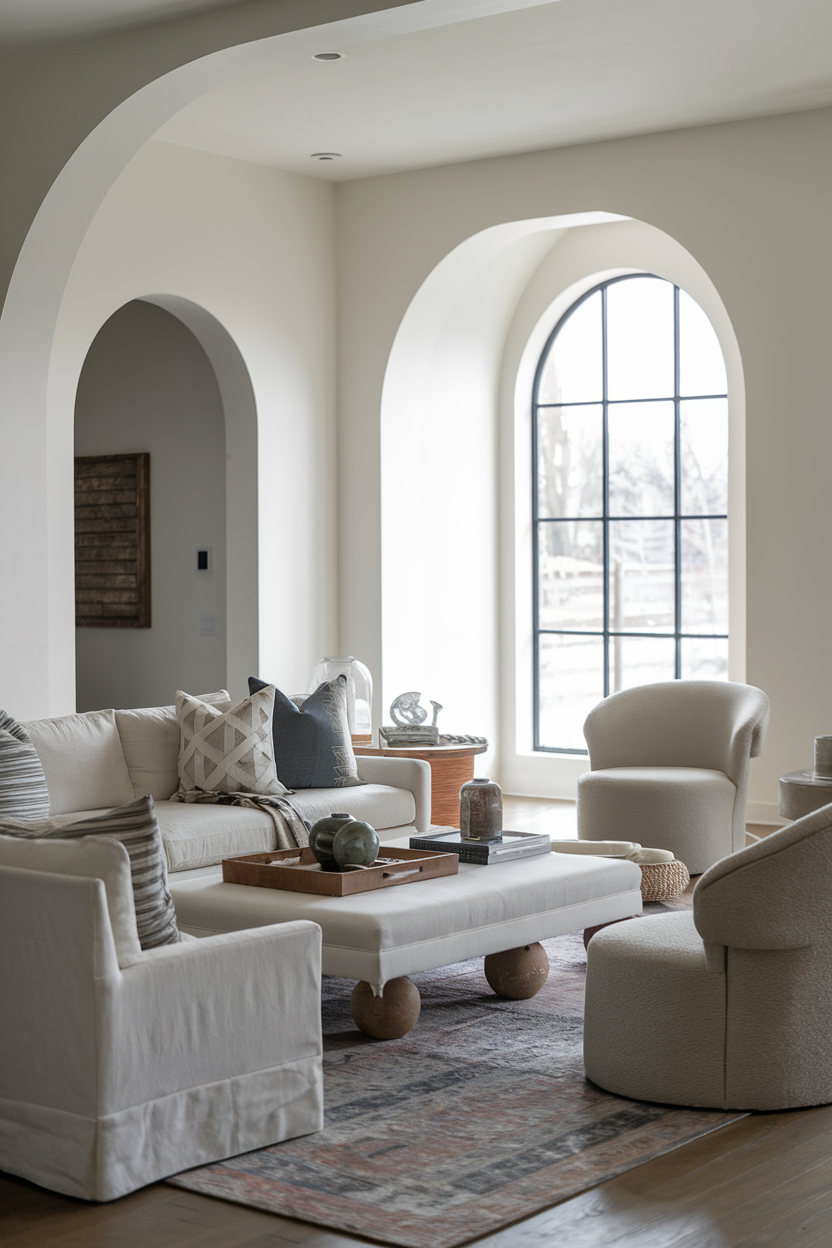
Rounded forms can soften the sharper geometry often found in modern interiors. Introduce curves through arched doorways, oval coffee tables, rounded mirrors, curved chairs, or softly shaped sofas. These forms create a gentler visual flow and can make a room feel more relaxed. Their connection to natural shapes such as stones, hills, and flowing water also reinforces the organic character of the design.
18. Display Woven Baskets
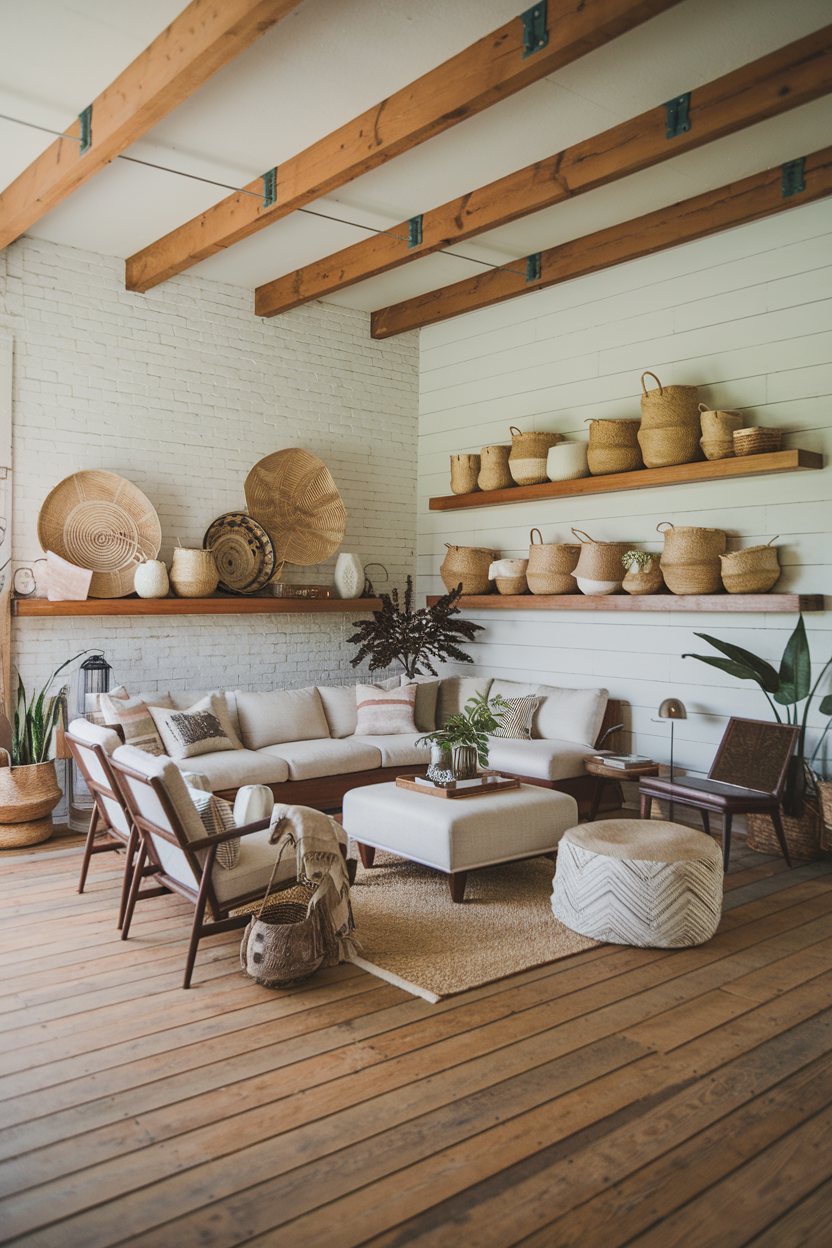
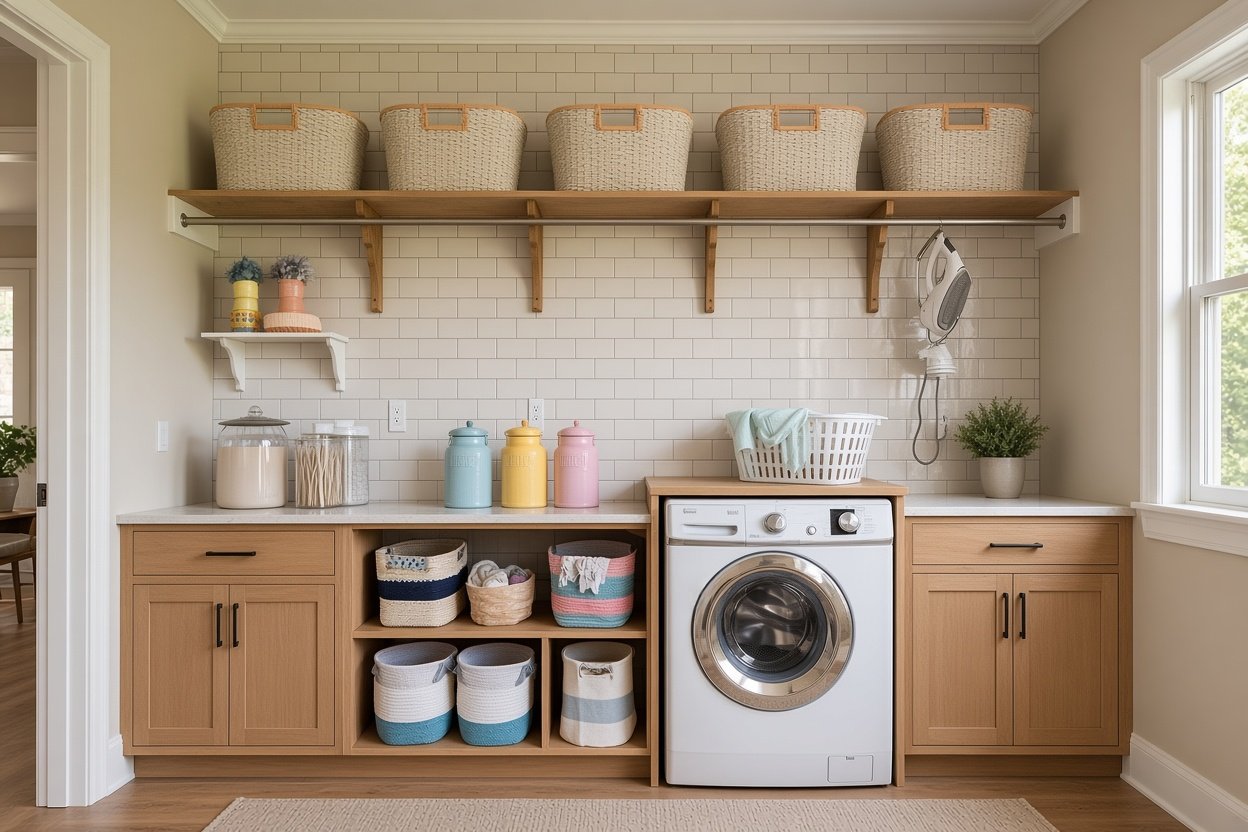
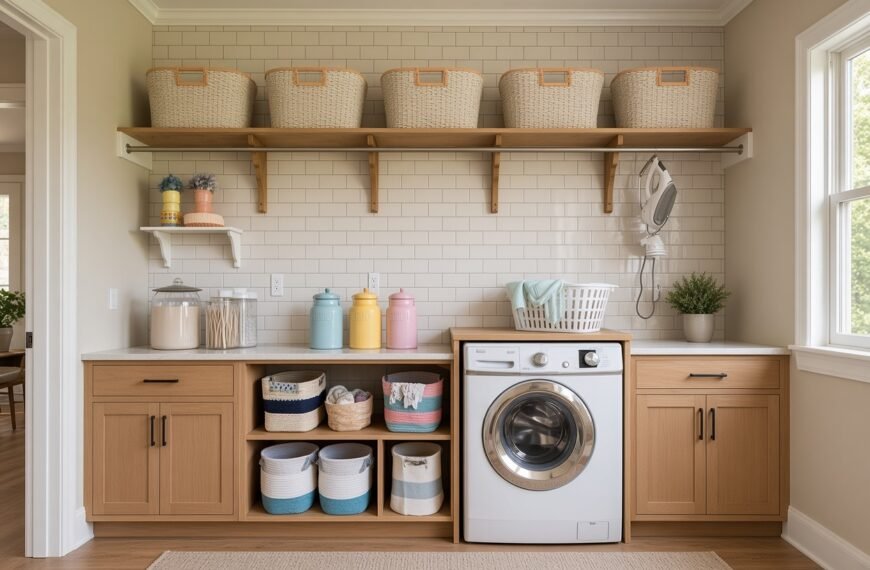
Woven baskets combine practical storage with natural beauty. Rattan, seagrass, bamboo, and jute baskets can hold blankets, toys, magazines, plants, or everyday clutter while adding texture to the room. Try mixing different sizes and shapes rather than hiding every basket away. A few placed beneath a console, beside a sofa, or on open shelving can become attractive decorative elements while keeping the space organized.
19. Mix Smooth and Rough Textures
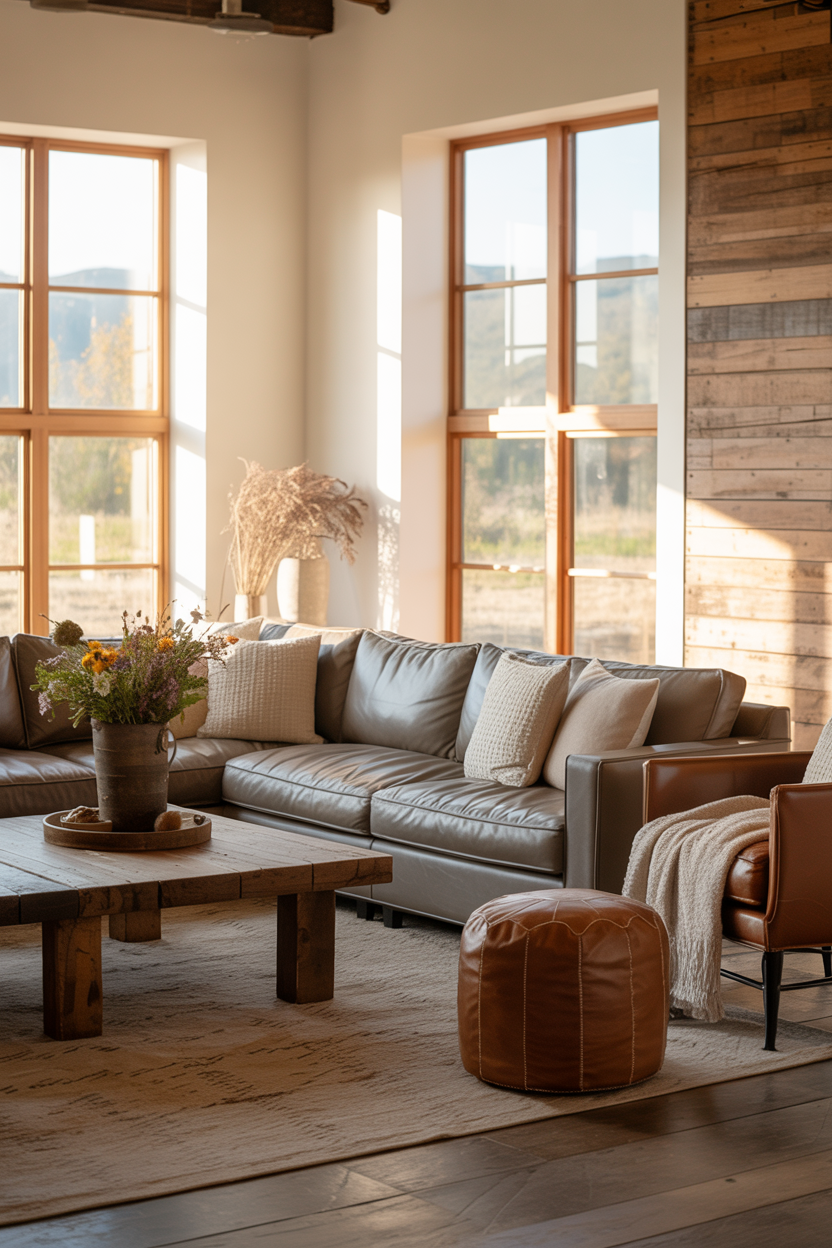
Contrast is essential for creating an organic interior that feels layered rather than flat. Combine rough and smooth finishes to give the room a richer sensory quality. A rustic wood wall can sit behind a soft sofa, polished stone can be paired with a woven basket, or a leather chair can stand over a textured rug. These differences create depth and help the space feel thoughtfully collected without appearing overly decorated.
20. Use Reclaimed or Salvaged Materials
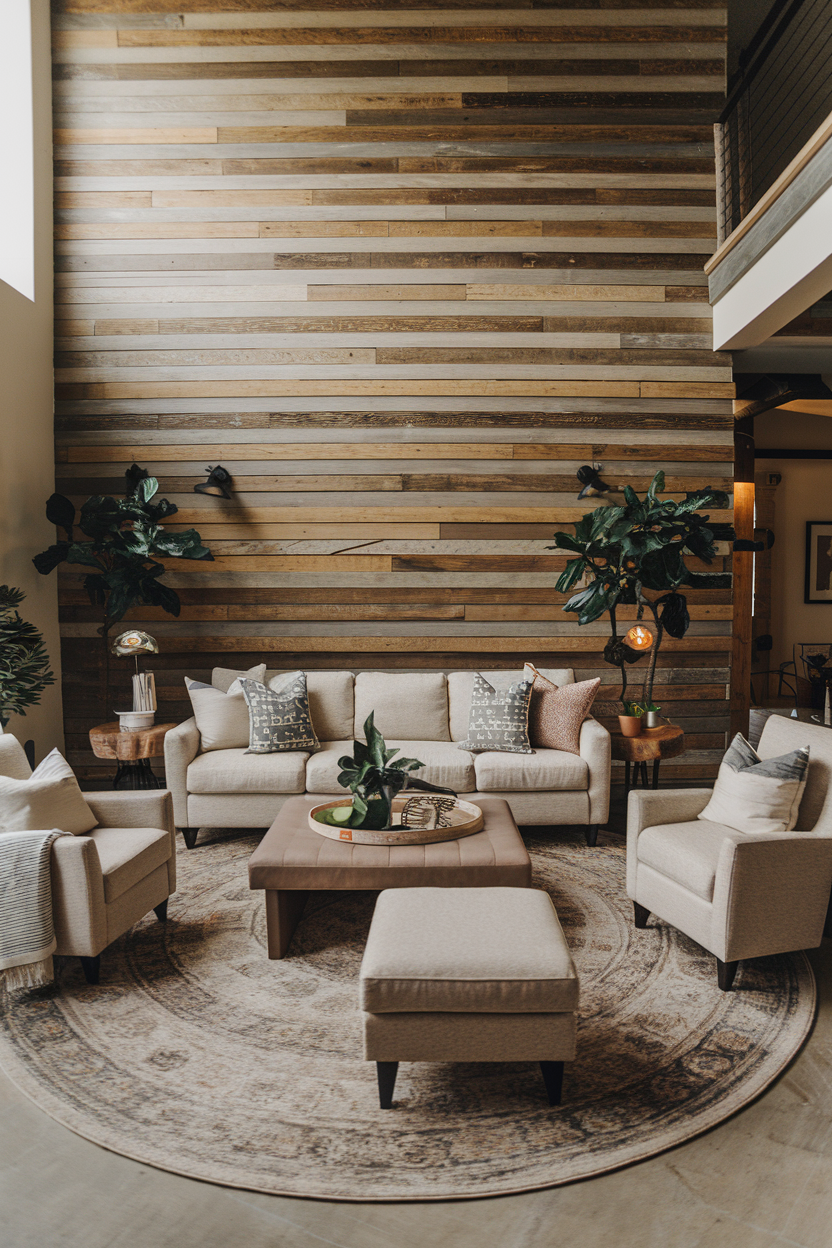
Reclaimed and salvaged materials bring history and individuality into a modern home. An aged wooden table, salvaged stone mantel, antique door, or reclaimed beam can introduce details that simply cannot be replicated in mass-produced pieces. Their weathered surfaces and signs of age create an interesting contrast against newer finishes. Incorporating a few such elements allows the interior to feel more authentic while highlighting craftsmanship and the beauty of materials with a past.
21. Choose Sculptural Lighting
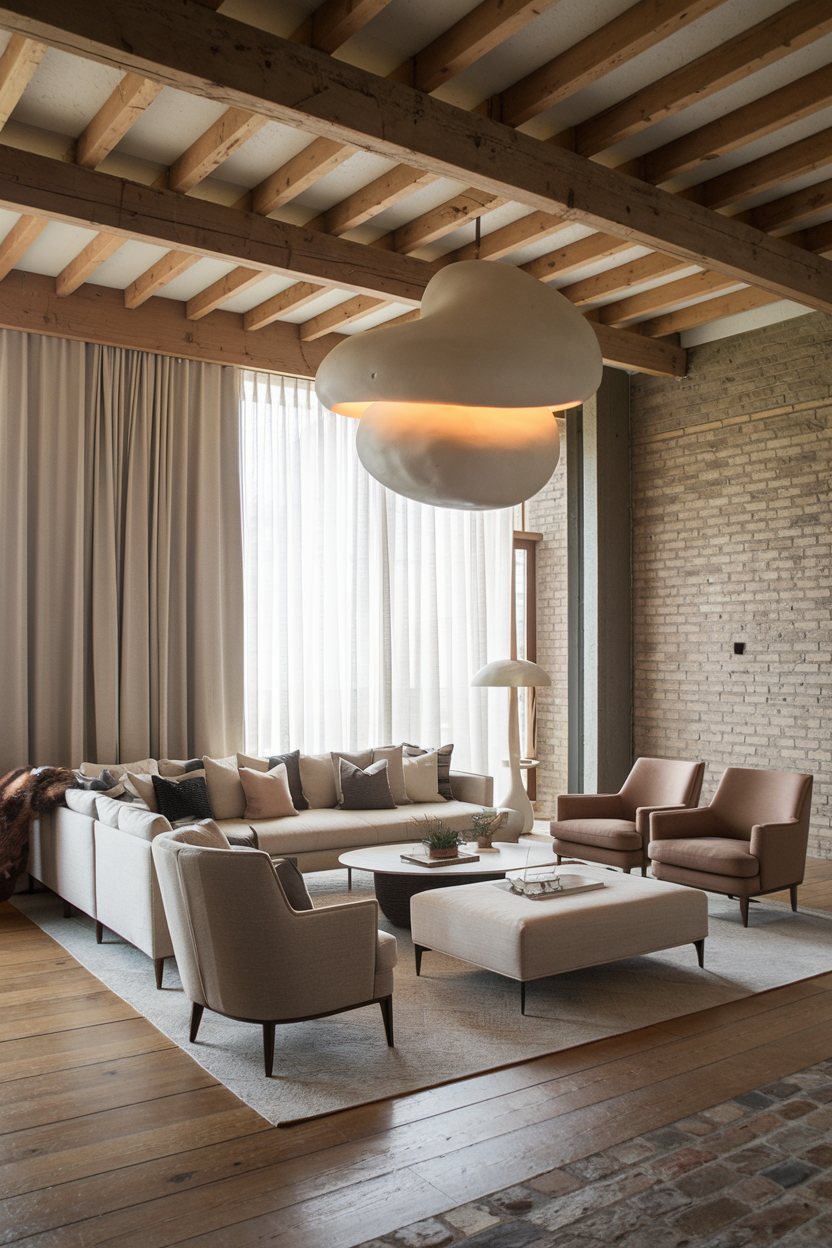
Lighting can become an artistic feature when you choose fixtures with organic shapes and natural materials. Consider ceramic lamps with rounded bases, woven pendants, paper shades, or fixtures inspired by branches and shells. These designs add visual interest even when they are switched off, while diffused light creates a soft atmosphere after dark. Choose forms with gentle curves and tactile finishes to reinforce the calming, nature-inspired character of the room.
22. Install Natural Wood Beams
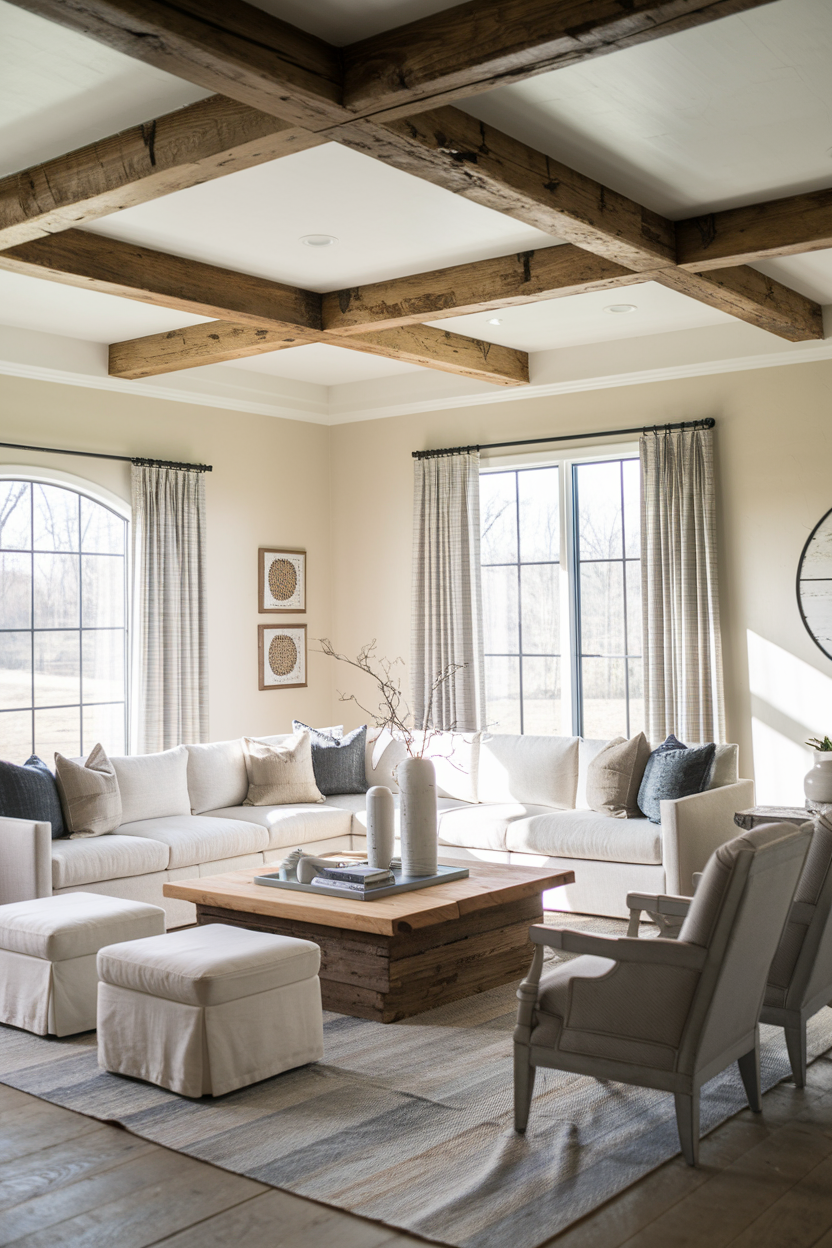
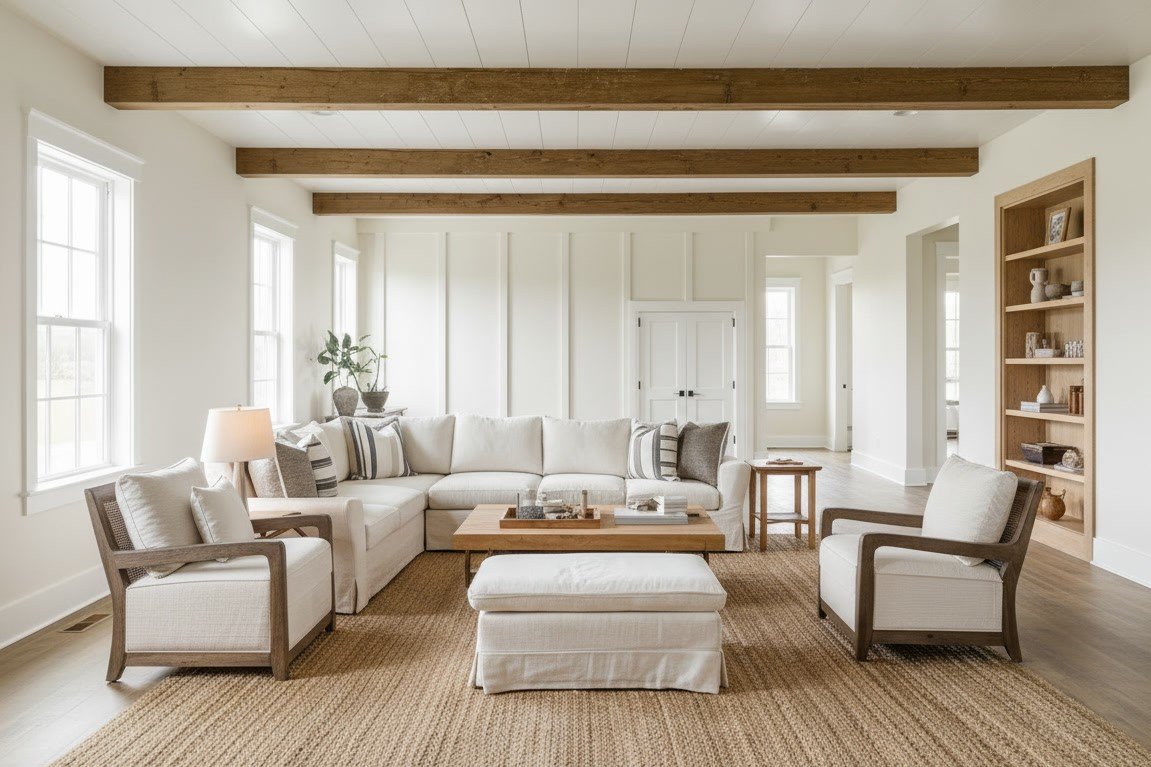
Wood beams can add architectural warmth while emphasizing the natural character of a space. Whether they are original structural elements or added as decorative details, exposed beams bring texture and visual interest to the ceiling. Choose finishes that preserve the wood’s grain and natural variation rather than covering it with a heavy coating. Against pale walls and soft lighting, the contrast creates a welcoming balance between rustic character and modern simplicity.
23. Incorporate Artisan Wall Hangings and Fiber Art
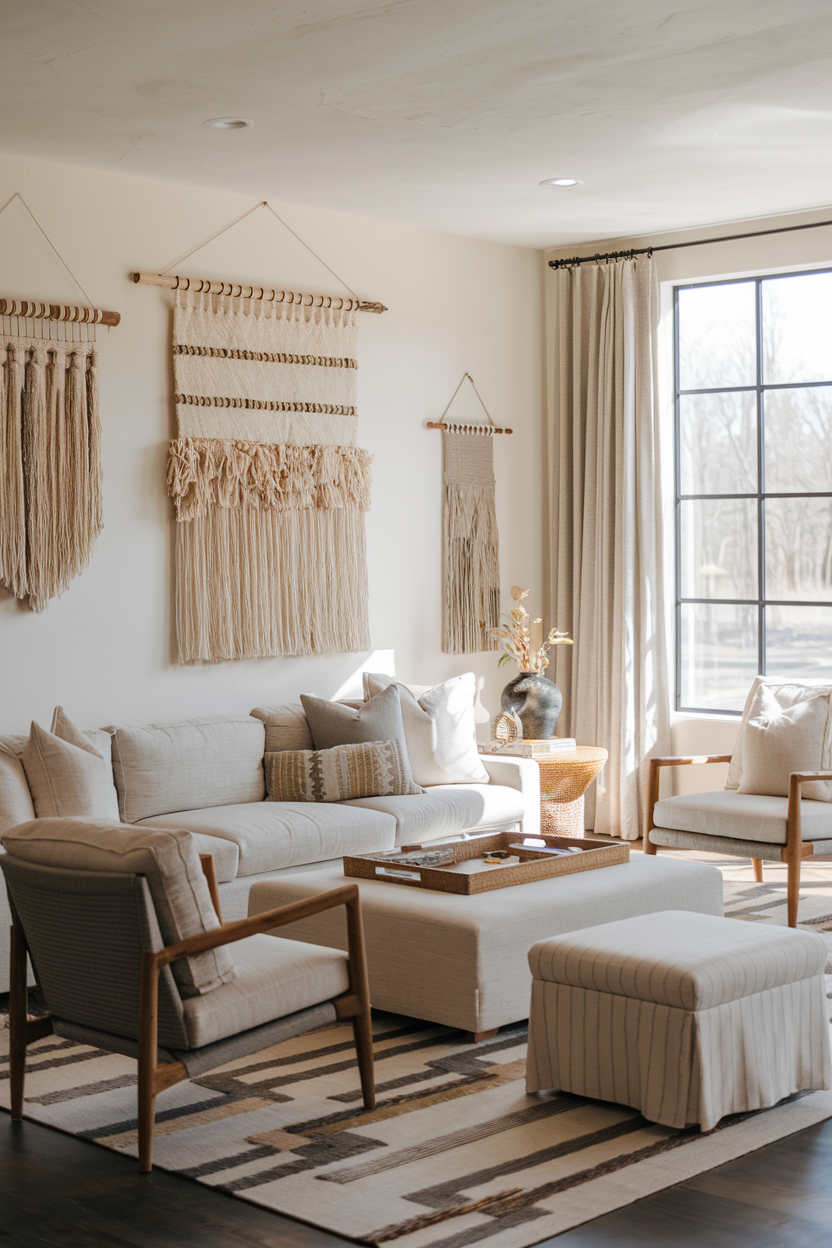
Handwoven wall hangings and fiber art can soften large walls while introducing another layer of natural texture. Macramé, wool tapestries, woven cotton pieces, and jute art all work beautifully within an organic interior. Choose neutral or softly dyed colors and designs with interesting irregularities. These handcrafted pieces provide a warmer alternative to conventional framed artwork and help create a room that feels tactile, personal, and connected to traditional craftsmanship.
24. Add Visual Layers
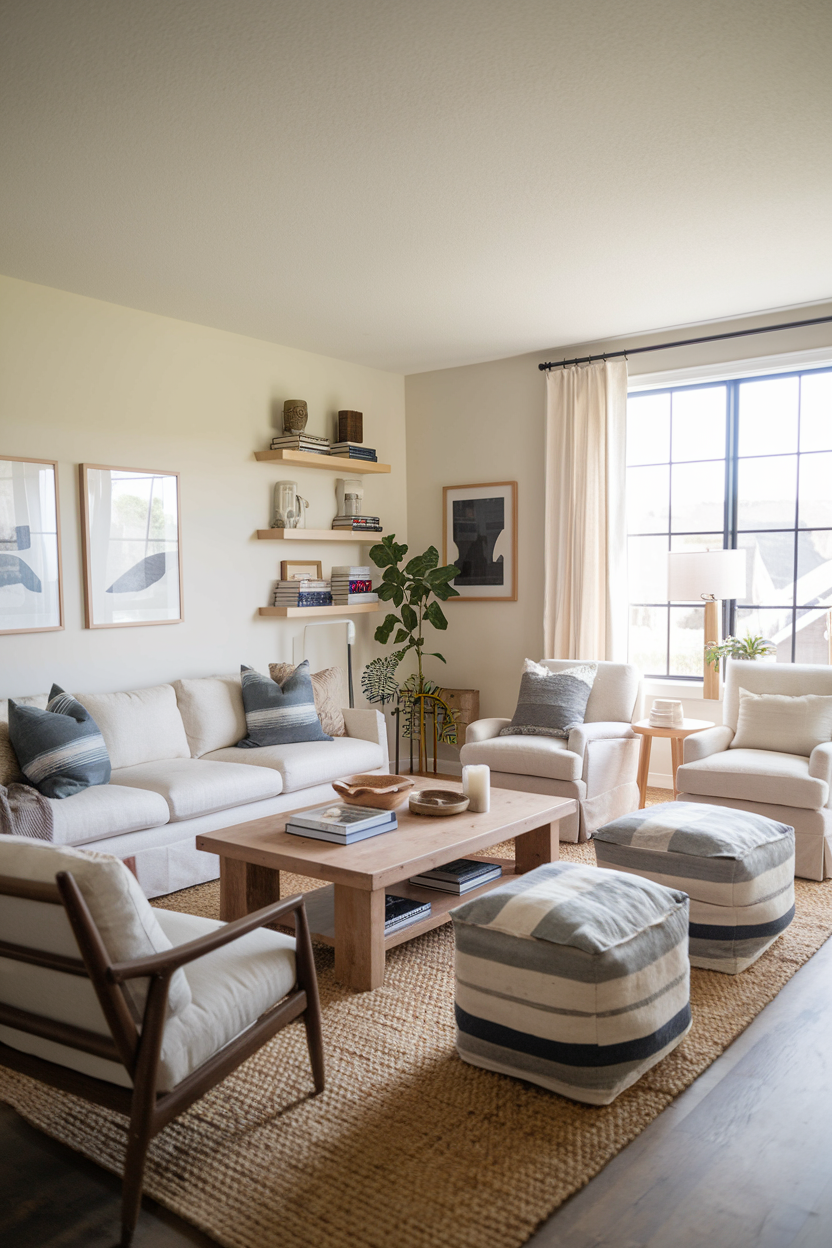
Layering doesn’t have to stop at furniture and accessories. Rugs can be combined to create additional warmth, texture, and visual depth underfoot. Start with a larger flat-weave jute, sisal, or hemp rug and place a softer wool or cotton rug over part of it. The contrast between the coarse natural base and plush upper layer creates a cozy foundation while helping define seating or lounging areas. This technique works especially well with neutral palettes and understated organic furnishings.
25. Keep Decor Minimal
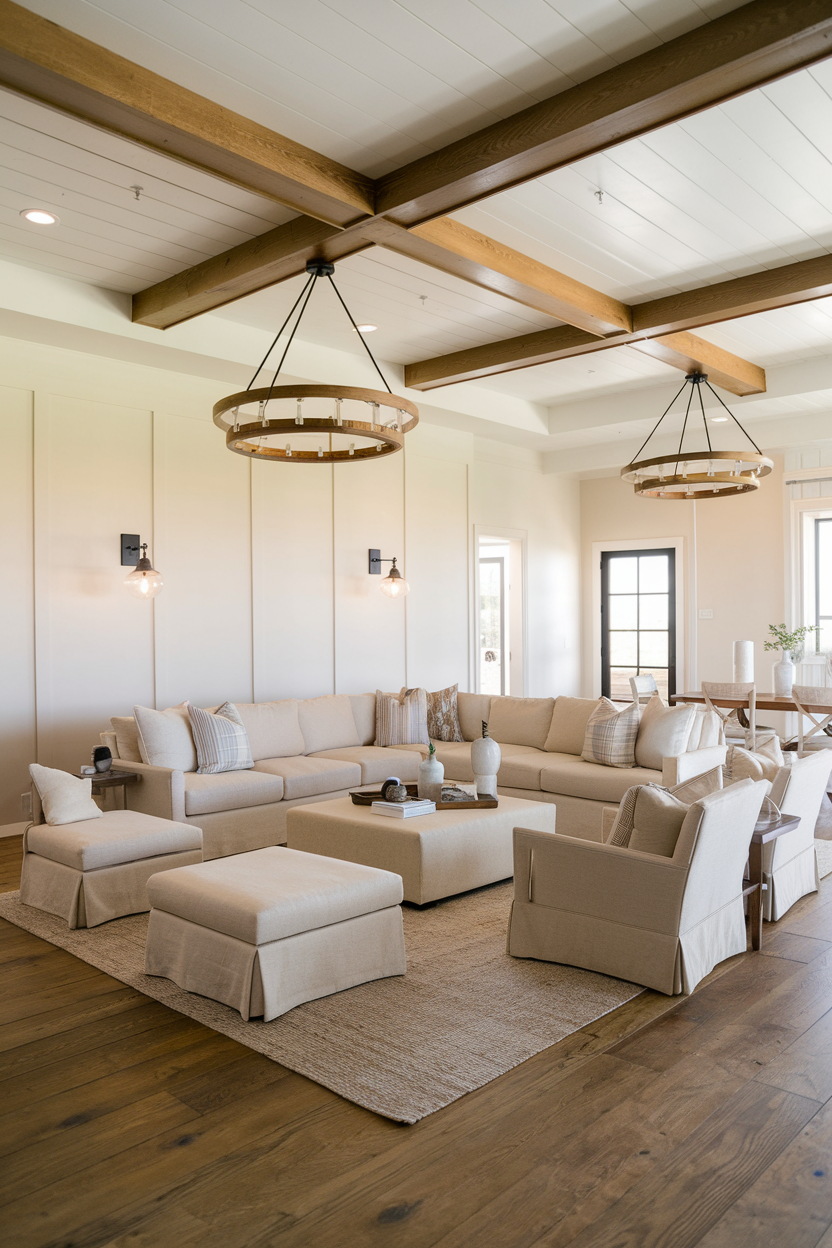
Modern organic interiors benefit from thoughtful restraint. Rather than filling every shelf and surface, choose a smaller collection of objects that have meaning or visual interest. A handmade bowl, vintage vase, sculptural object, or favorite stack of books can make a stronger impression when surrounded by open space. Give each piece room to stand out and keep unnecessary clutter to a minimum. This approach allows natural materials, shapes, and textures to remain the focus.
26. Incorporate Wabi-Sabi Principles
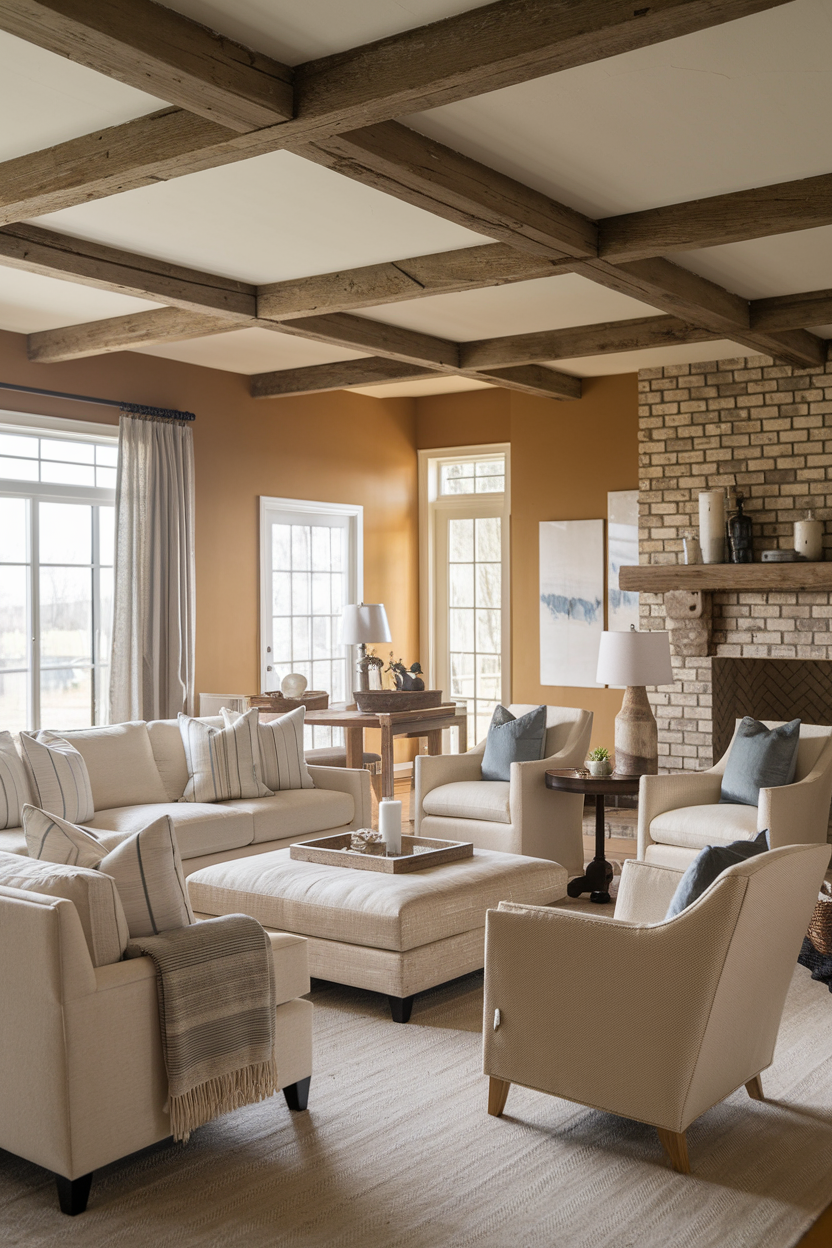
The wabi-sabi philosophy pairs naturally with the modern organic aesthetic by appreciating simplicity, age, and imperfection. Bring this idea into your home through handmade pottery, irregular tiles, weathered wood, or objects that show subtle signs of use. A slightly uneven bowl or naturally aged surface can become a meaningful decorative feature. The goal is not perfection but creating an environment that feels authentic, comfortable, and quietly beautiful.
27. Celebrate Open Space and Negative Space
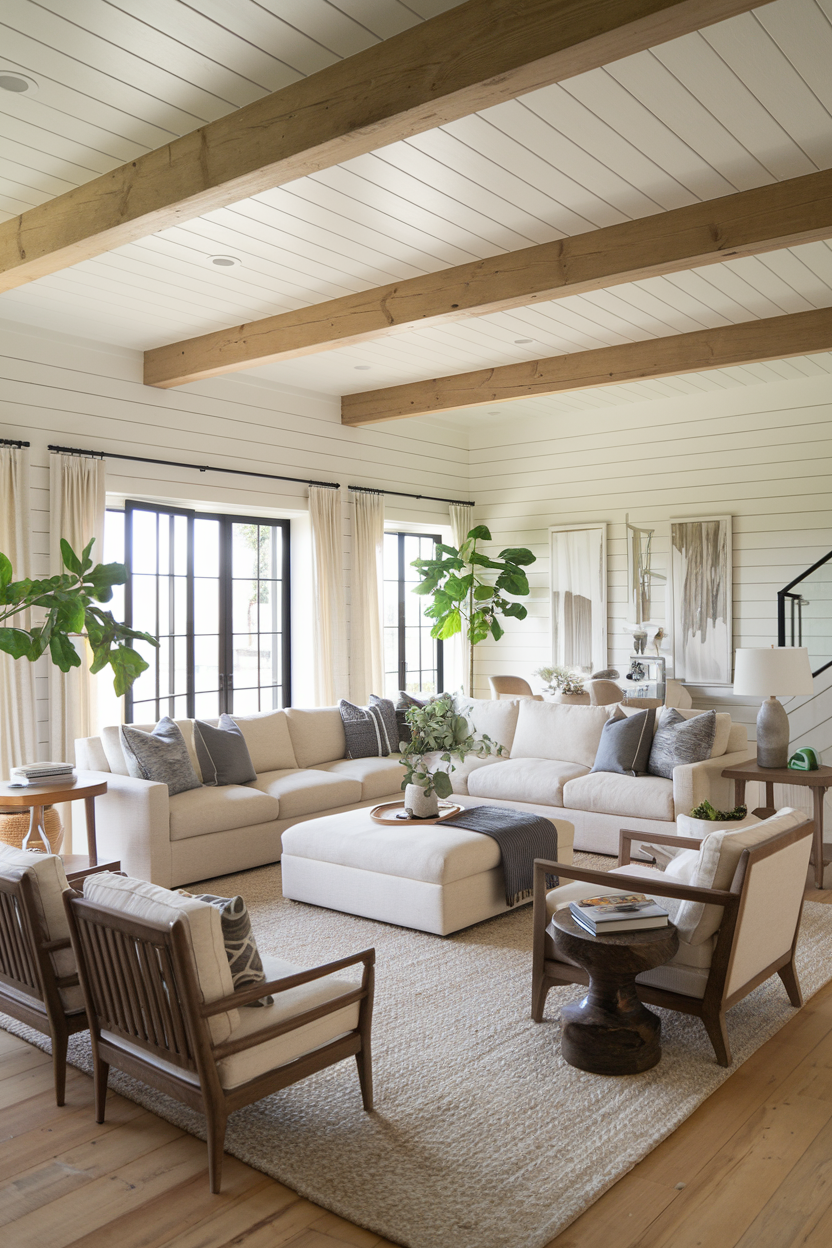
A room doesn’t need to be filled to feel complete. Leaving intentional areas of open space allows furniture and decorative objects to have more visual impact while giving the eye somewhere to rest. Try placing a single bench along an otherwise empty wall or grouping a few objects together on a large console instead of spreading accessories everywhere. This sense of breathing room helps modern organic interiors feel calm, spacious, and carefully considered.
28. Decorate With Dried Botanicals
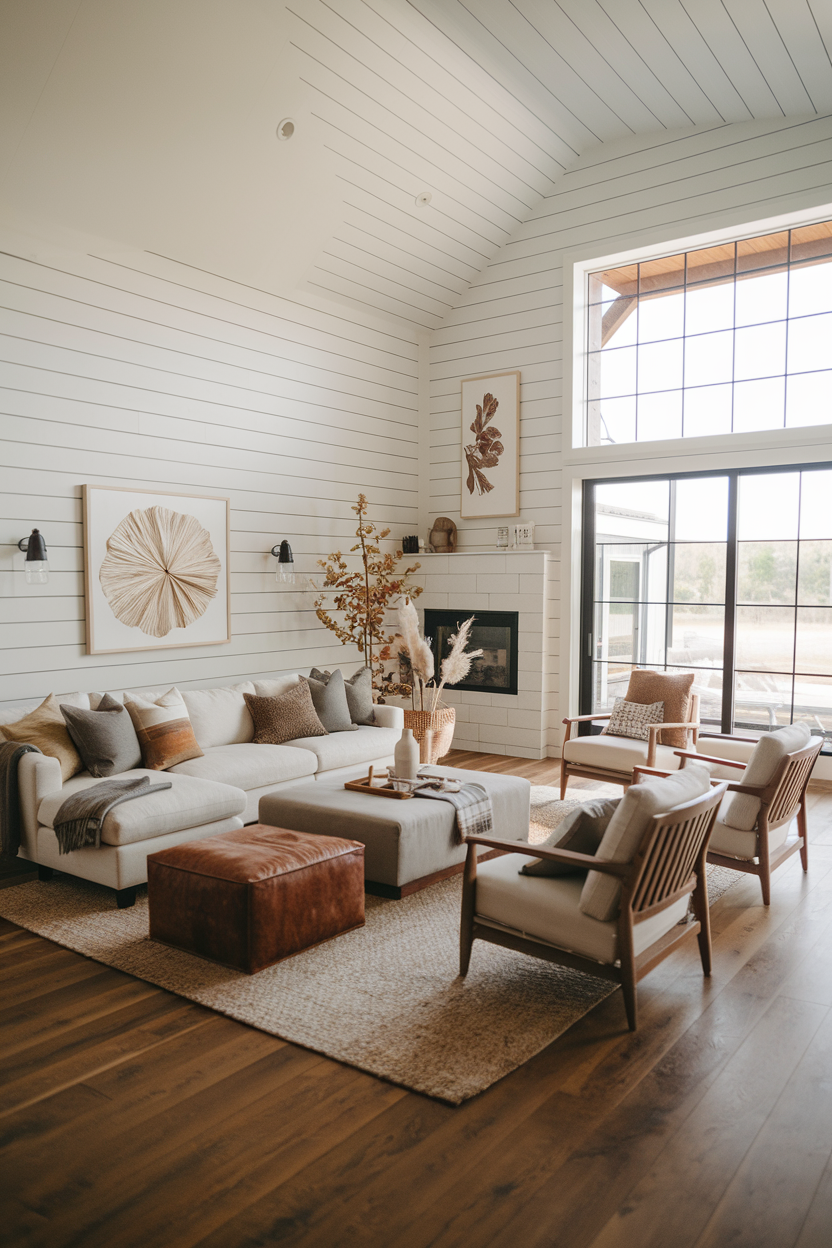
Dried botanicals offer an easy way to introduce natural shapes and earthy color without the upkeep required by fresh flowers. Tall grasses, dried eucalyptus, seed pods, and bare branches can be arranged in ceramic, glass, or stone vessels. Their muted tones work particularly well with neutral interiors, while their sculptural silhouettes add visual interest. Place them on a mantel, dining table, entry console, or bedroom dresser for a simple connection to the outdoors.
* The appeal of organic modern interiors lies in their ability to feel refined without becoming overly formal. Use these inspirations as inspiration, adapt them to your own home, and create rooms that feel inviting, balanced, and timeless.