Dining room shelves can be more than practical storage. Thoughtfully arranged pieces can turn empty shelving into a stylish display that adds personality, warmth, and visual interest to the room. Beautiful ceramics, artwork, books, glassware, plants, and decorative objects can work together to create a space that feels collected without looking cluttered.
Creating a curated shelf arrangement is all about finding the right balance. Mixing different heights, shapes, colors, and textures can give the display depth and keep the eye moving. Natural wood accents can add warmth, while neutral ceramics and simple artwork can create a refined appearance. A few meaningful or vintage pieces can also make the shelves feel more personal and distinctive.
Let’s explore these beautiful ideas and discover how thoughtful shelf styling can create a dining room that feels stylish, welcoming, and beautifully curated!
1. Black-and-White Accents
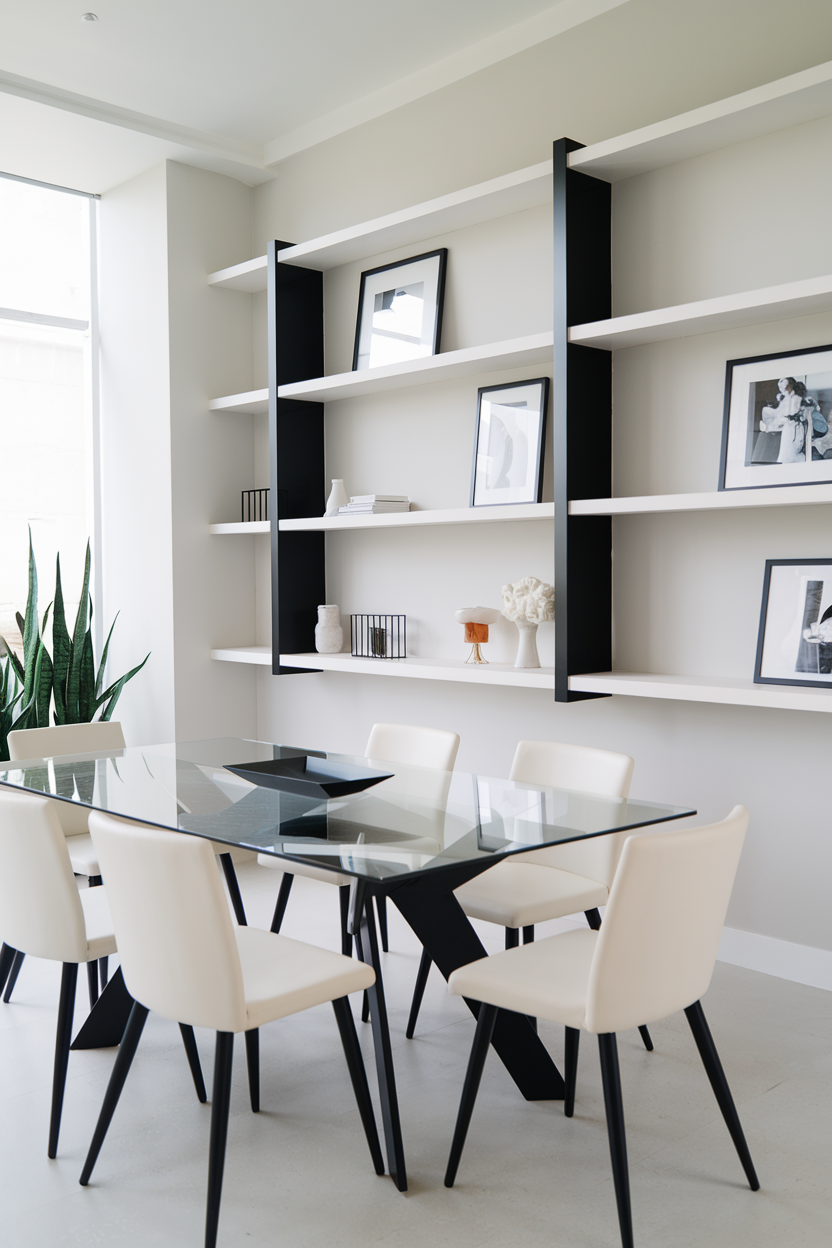
Create a crisp, graphic look by incorporating black-and-white accessories into your shelf styling. Monochrome artwork, white ceramics with black patterns, dark candlesticks, and simple geometric objects can provide striking contrast without overwhelming the room. This classic combination works particularly well in modern, minimalist, transitional, and contemporary dining spaces.
2. Statement Vases
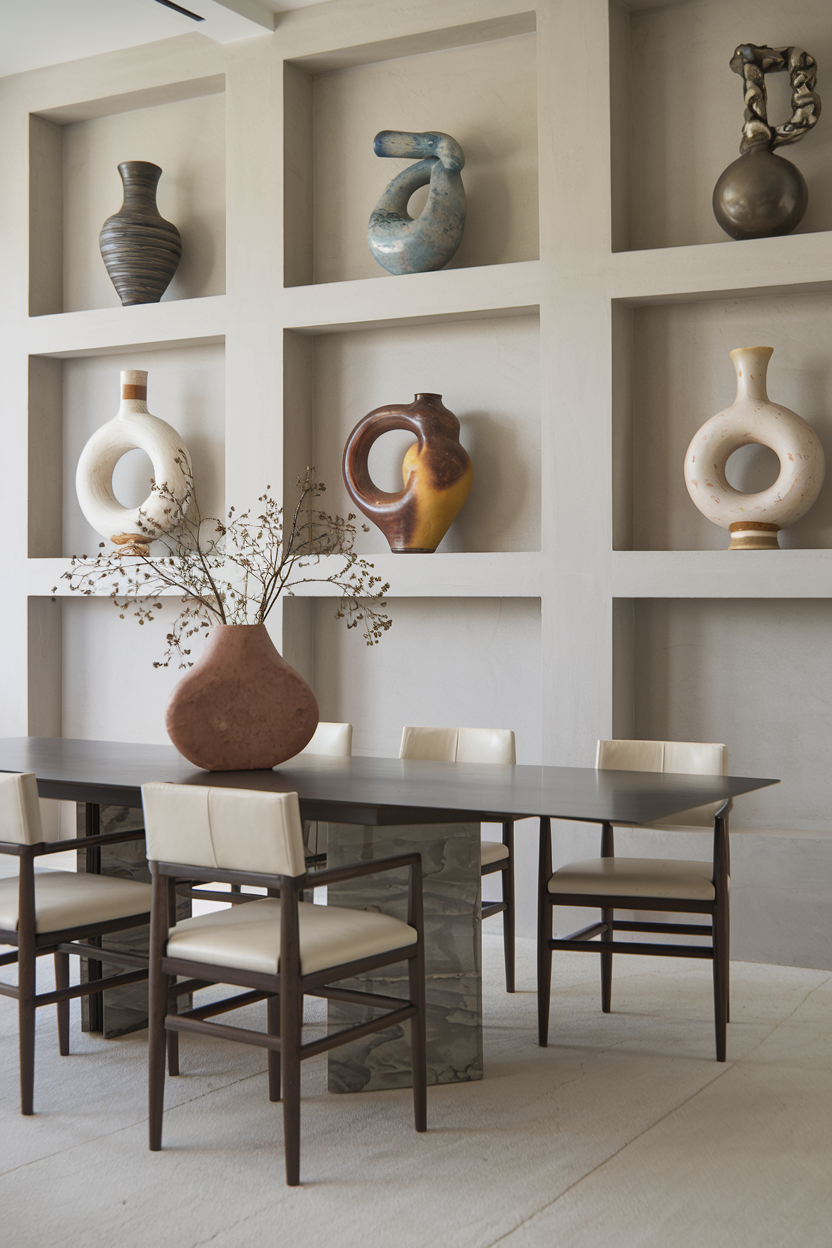
Make a strong visual impact with a few distinctive vases that can stand on their own as sculptural accents. Look for bulbous silhouettes, asymmetrical shapes, dramatic heights, textured ceramics, iridescent glazes, or hand-painted finishes. Give statement pieces enough surrounding space to stand out, and remember that an eye-catching vase can look beautiful even without flowers.
3. Play with Height Variation
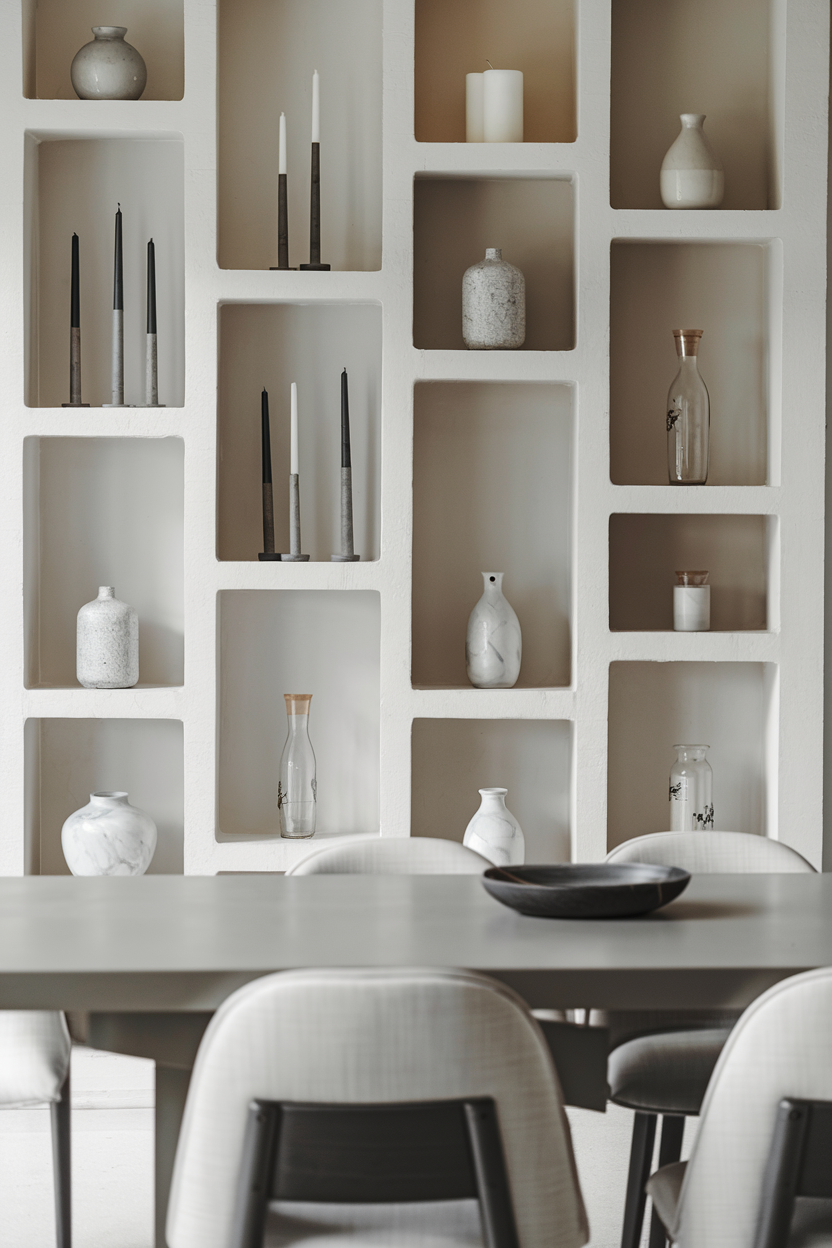
Create a more dynamic shelf arrangement by mixing objects of different heights instead of placing everything along the same visual line. Pair tall candlesticks or carafes with medium-sized jars and shorter bowls or vessels to establish rhythm. This variation naturally guides the eye across the display and prevents the shelves from looking flat or overly uniform.
4. Pop of Green
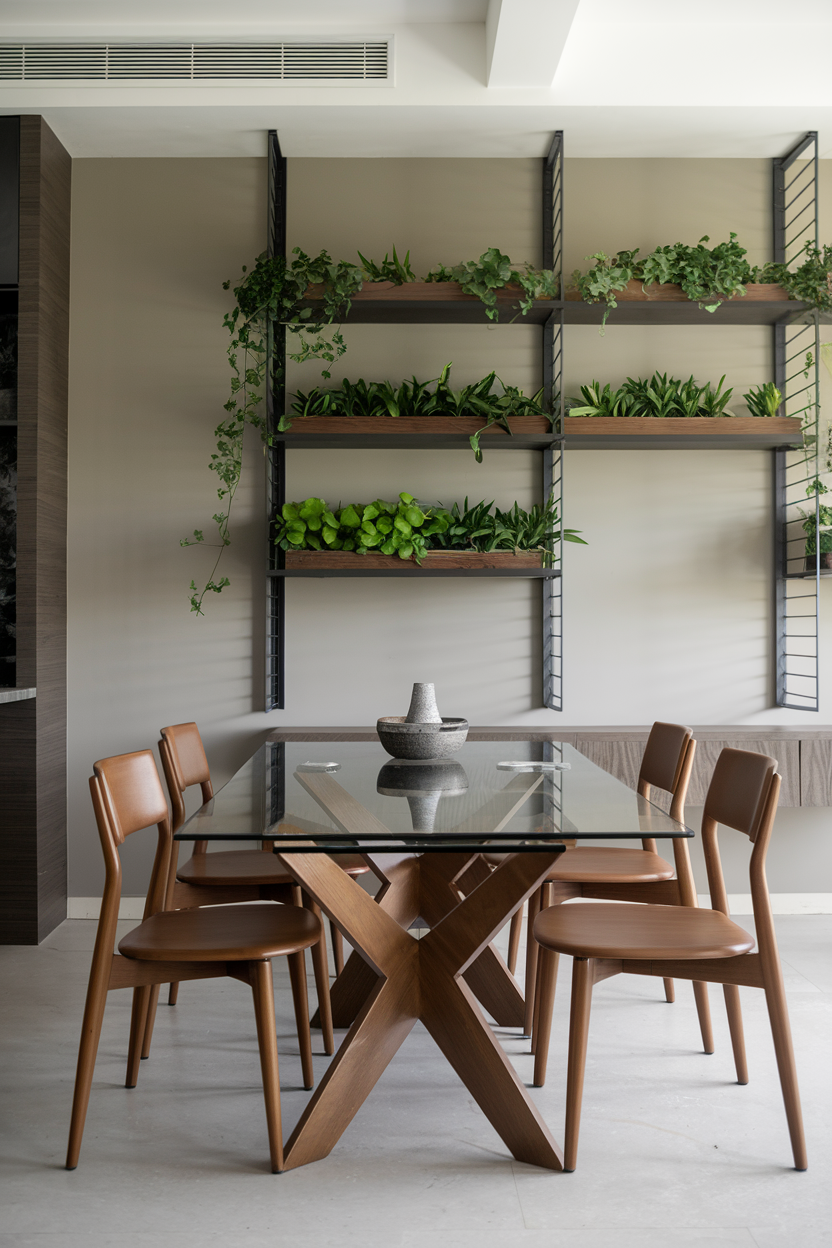
Bring freshness and natural movement to your dining room with greenery. Trailing plants such as pothos or philodendrons can spill gracefully over shelf edges, while small pots of herbs like basil or thyme add a practical touch. Green foliage works especially well against wood, neutral ceramics, and earthy finishes, instantly making the arrangement feel more vibrant and inviting.
5. Create a Story with Vignettes
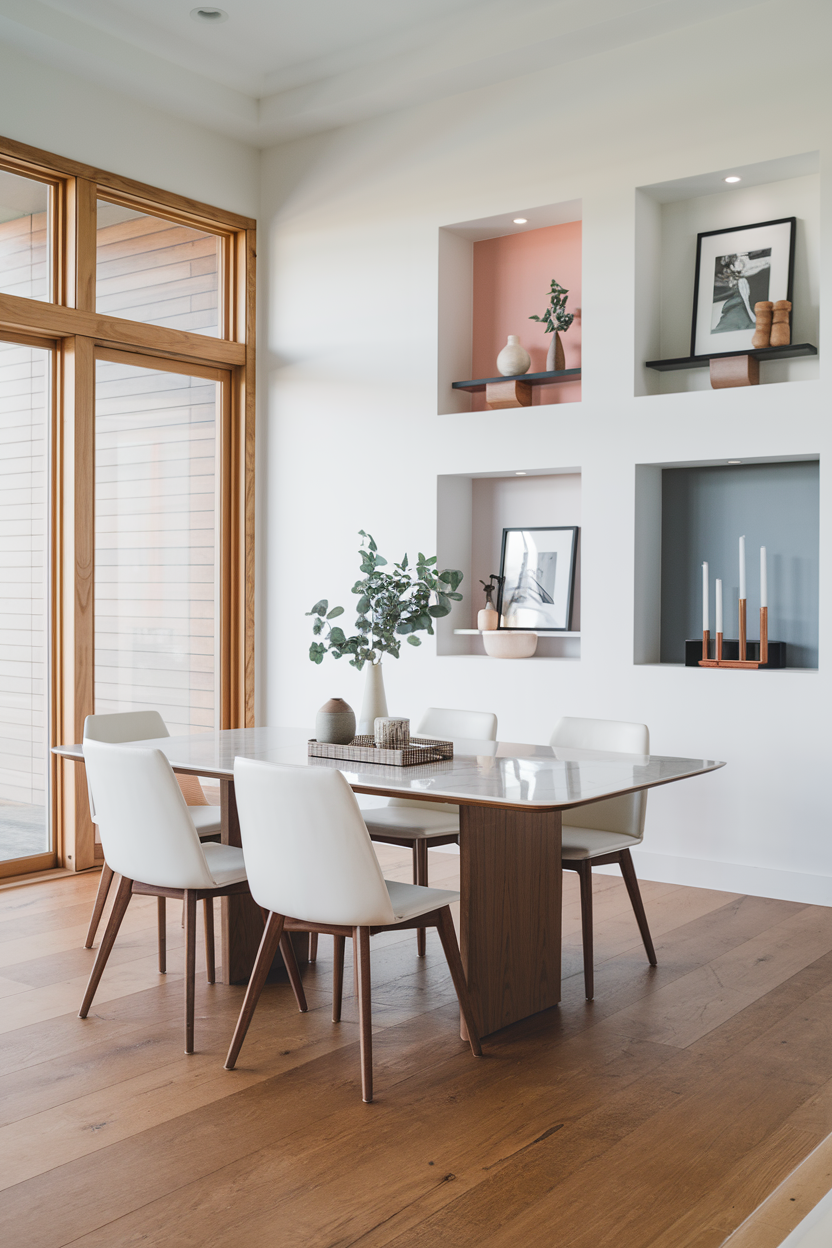
Break your shelves into smaller visual groupings, treating each section as its own decorative vignette. Combine three to five related pieces, such as a framed photograph, candle, small plant, and ceramic object, using complementary colors and shapes to connect them. Grouping accessories in odd numbers often creates a relaxed composition while allowing each little arrangement to contribute to the larger design.
6. Use Transparent Elements
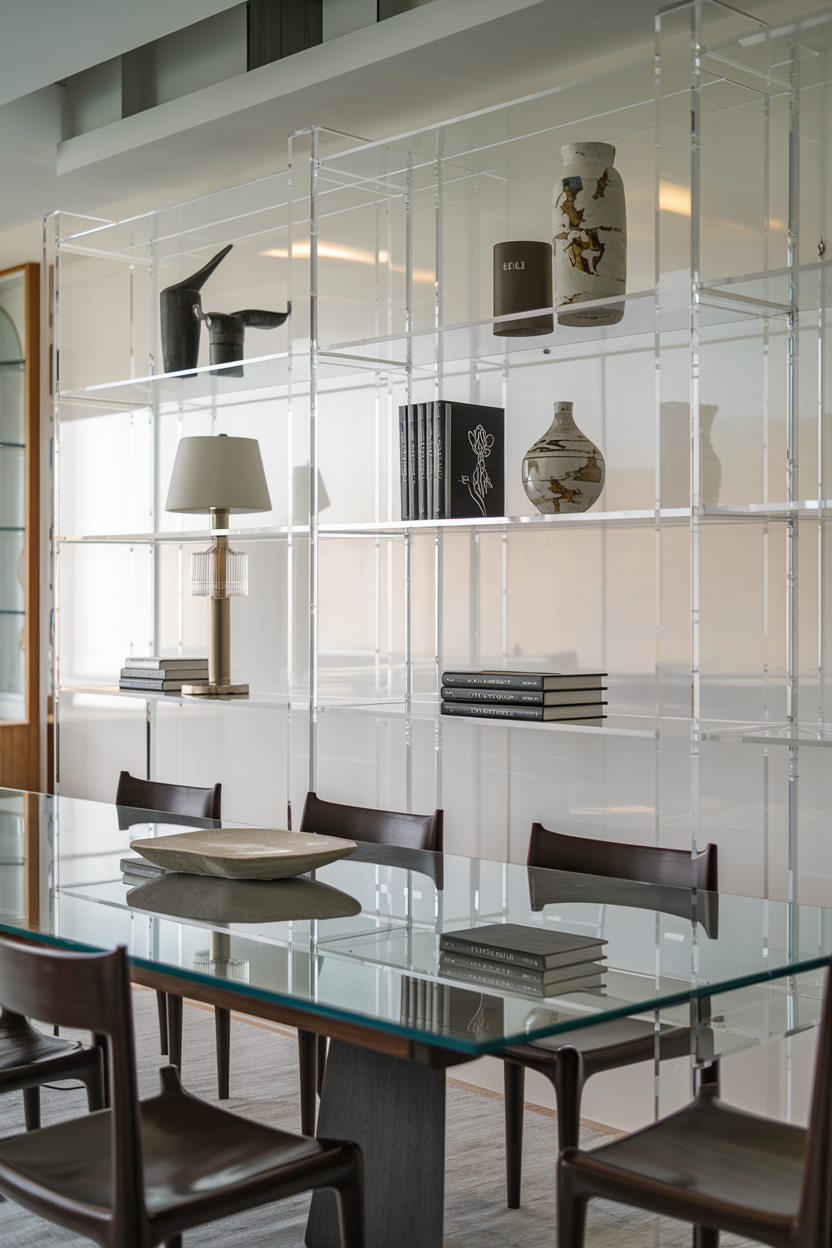
Glass and acrylic accessories can make shelves feel lighter and more spacious by reducing visual heaviness. Clear bowls, translucent vases, acrylic boxes, and delicate glass objects allow light to pass through while adding subtle sophistication. These transparent elements work especially well when mixed with heavier materials such as wood, stone, or dark ceramics, creating a balanced and airy display.
7. Mix Open and Closed Storage
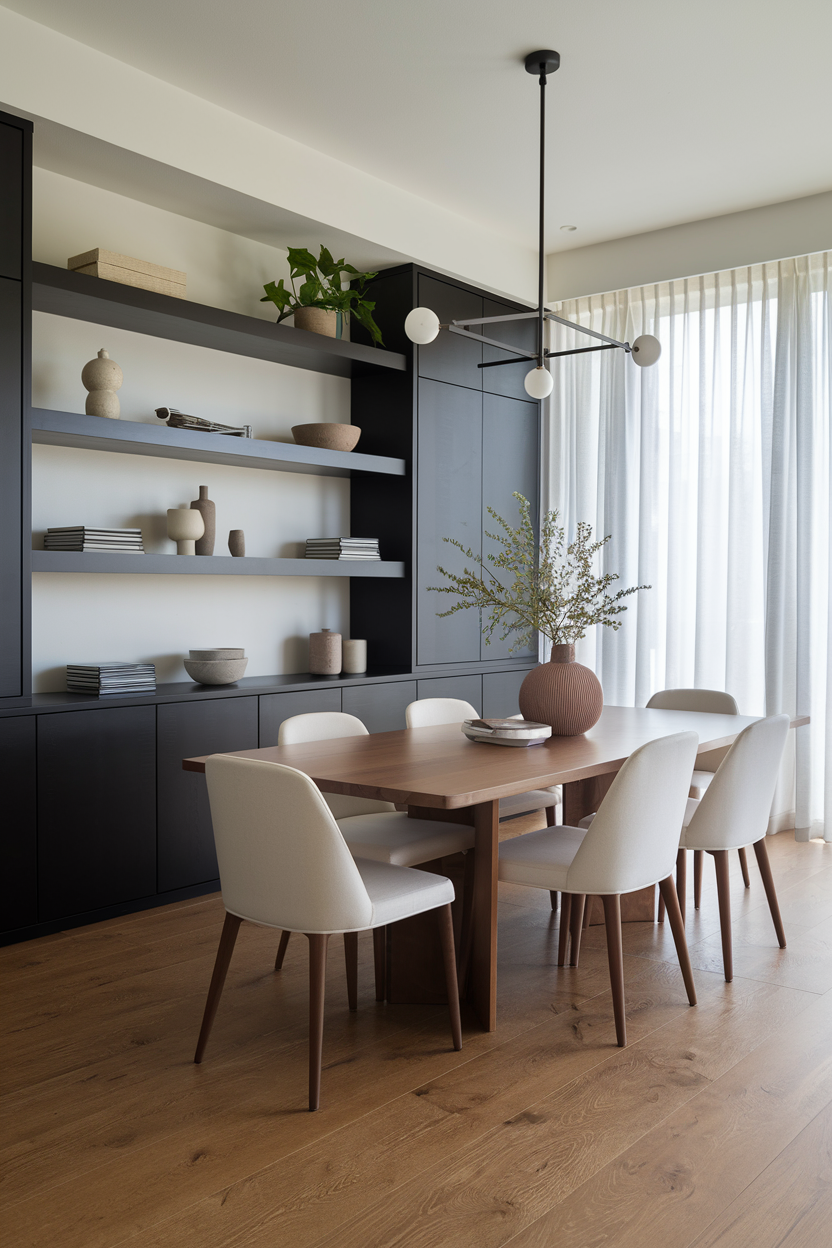
Combine open shelving with closed cabinets, drawers, or attractive baskets to balance decoration with everyday practicality. Use open sections to showcase ceramics, artwork, glassware, and other beautiful objects, while less attractive essentials such as table linens and extra serveware can stay hidden. This approach keeps the dining area organized while giving you plenty of room to express your personal style.
8. Add Greenery for Life and Freshness
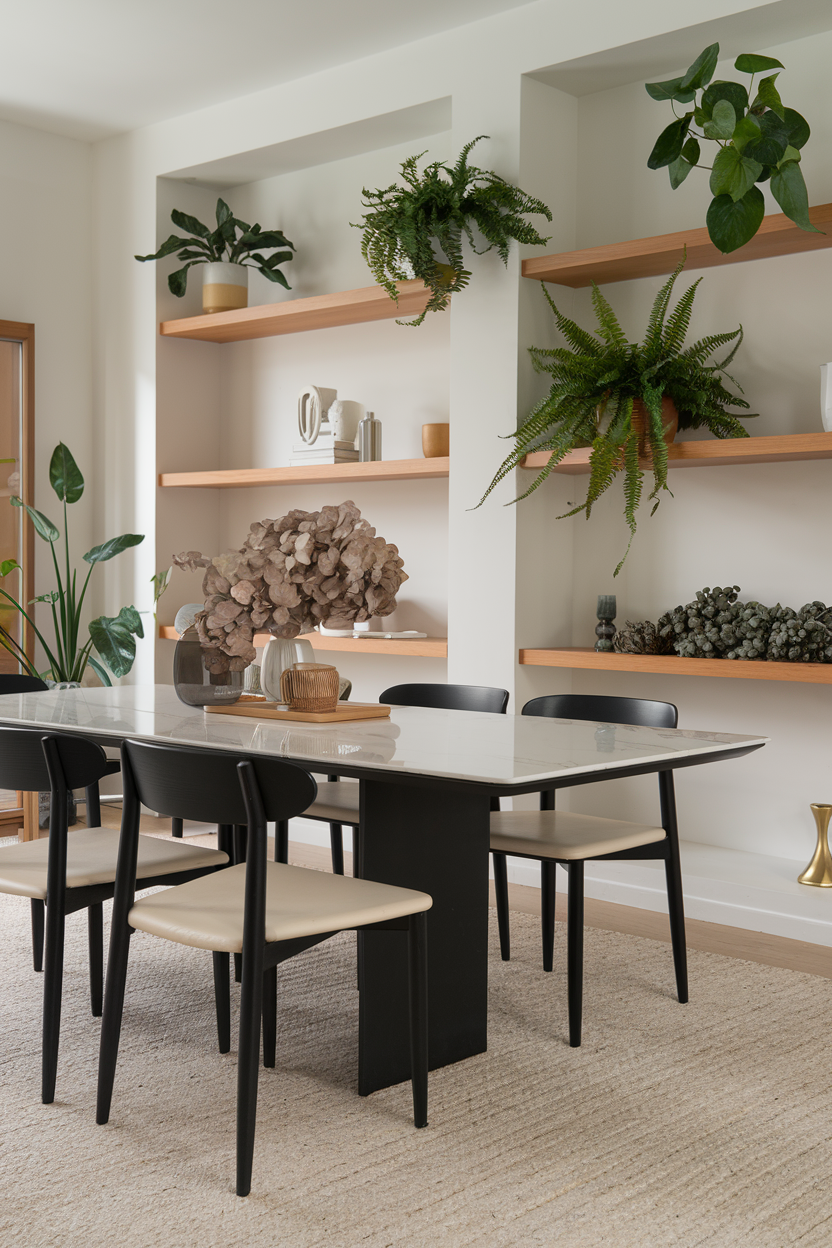
Houseplants, fresh herbs, dried branches, and faux greenery can soften the harder lines of dining room shelving and introduce a natural element. A trailing pothos, compact fern, or bundle of dried eucalyptus adds texture and movement without taking up too much space. Greenery also pairs beautifully with wood, ceramic, stone, and woven materials, helping the display feel warm and welcoming.
9. Use Metallic Accents
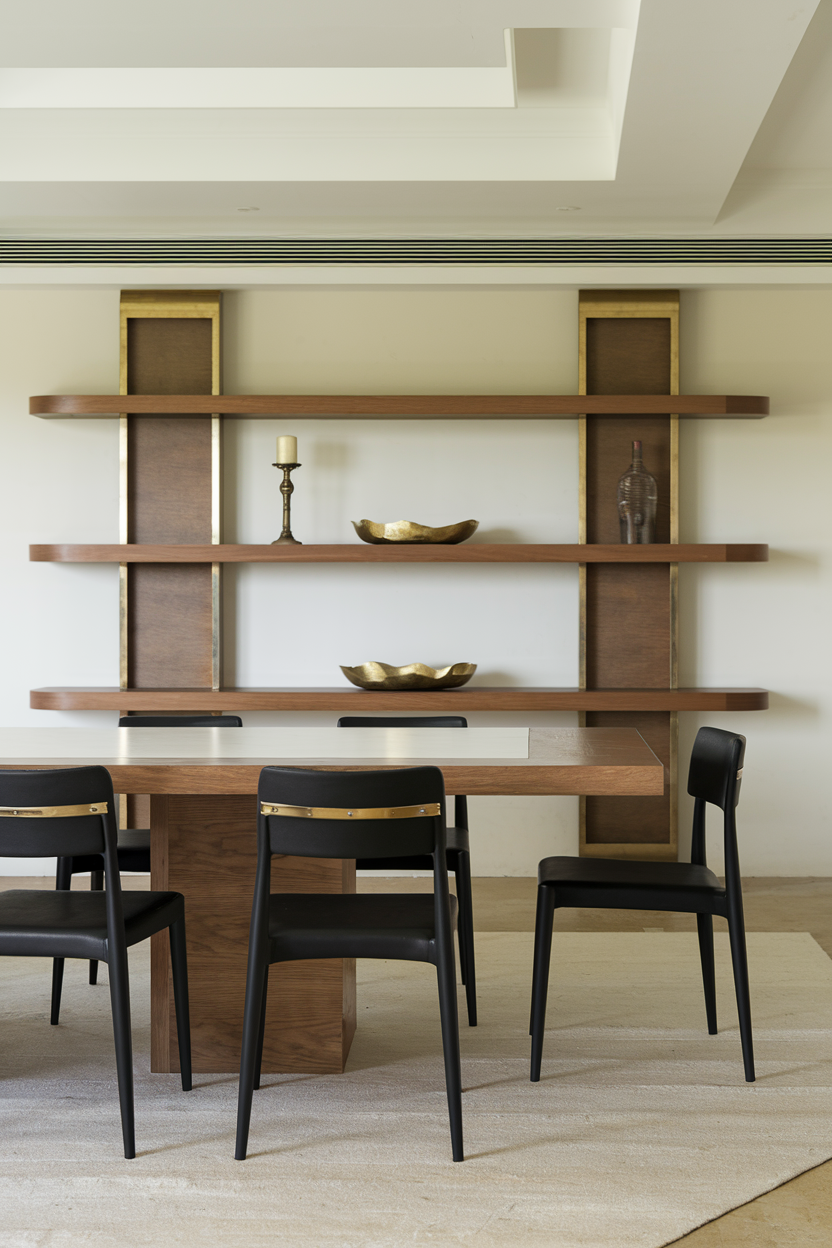
Introduce a touch of elegance with metallic details such as brass candlesticks, gold-edged trays, copper cups, or sculptural metal objects. These finishes catch ambient light and create subtle focal points without requiring large decorative pieces. You can mix different metals for a more collected look, but repeating a chosen finish elsewhere in the dining room helps maintain visual cohesion.
10. Incorporate Personal Mementos
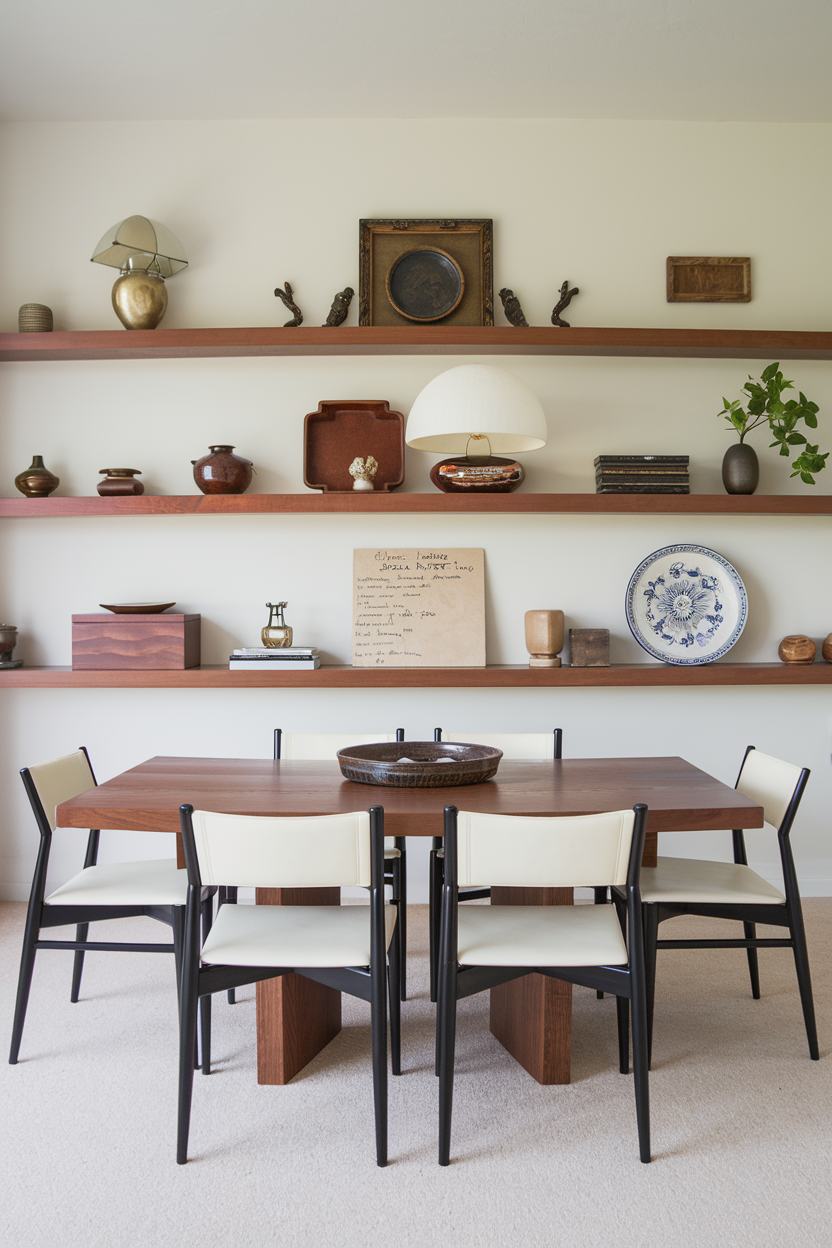
Give your shelves a meaningful character by displaying objects that have personal significance. Heirloom serving pieces, handwritten recipes, travel souvenirs, or cherished family items can transform an ordinary display into a reflection of your experiences. Mixing sentimental objects with more decorative pieces keeps the arrangement authentic and prevents it from feeling overly staged.
11. Layered Ceramics for a Curated Feel
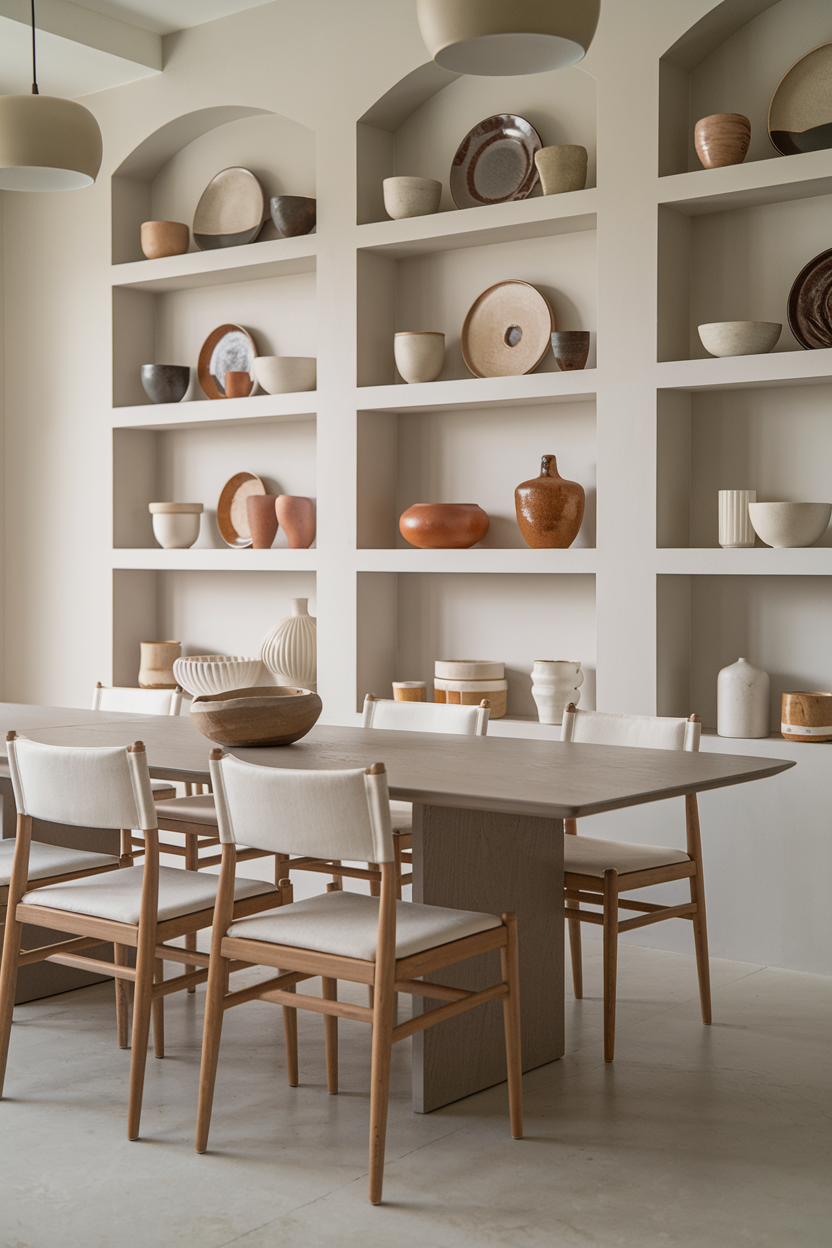
Create depth on your dining room shelves by arranging ceramics in layers rather than placing everything side by side. Nestle smaller bowls in front of larger platters, or lean flat plates behind upright vases to build dimension. Combining matte and glossy finishes adds subtle contrast, while a neutral palette keeps the arrangement cohesive. The result feels thoughtfully collected, giving your shelves an elegant, gallery-inspired character.
12. Artfully Placed Framed Prints
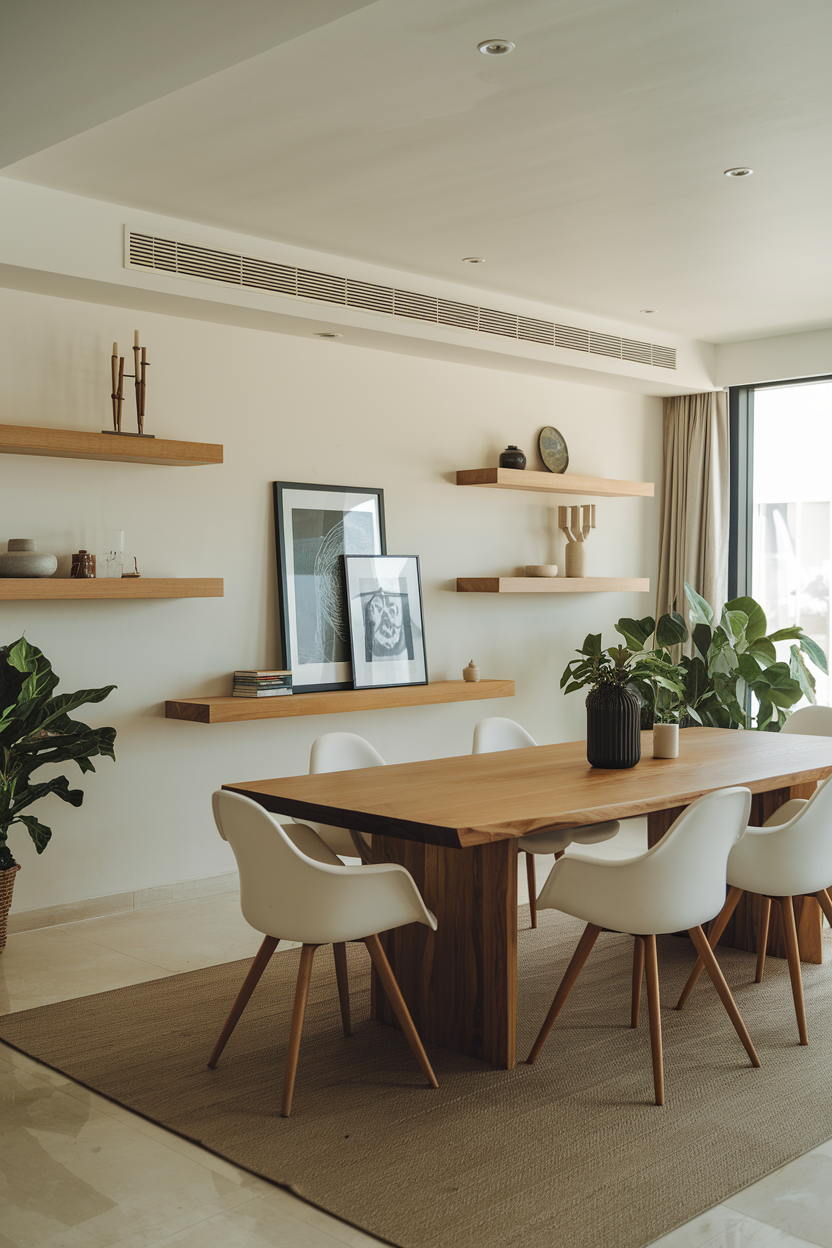
Bring artwork into your dining room by leaning framed prints against the back of your shelves instead of hanging them on the wall. This relaxed arrangement adds depth while creating an intentionally layered look. Botanical illustrations, black-and-white photography, abstract line drawings, or handwritten recipes can complement the room while adding personality and a sense of personal storytelling.
13. Show Off Your Glassware
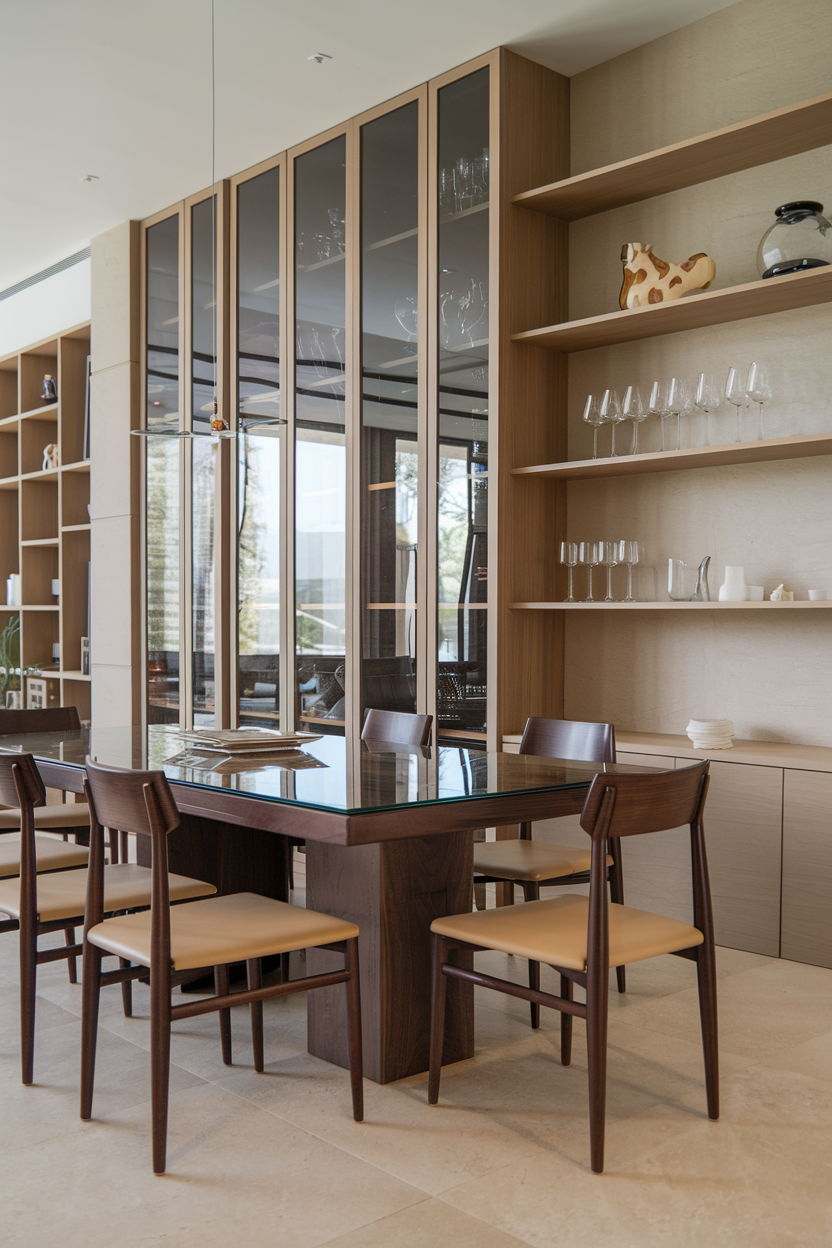
Turn beautiful glassware into part of your shelf decor by arranging wine goblets, vintage tumblers, and distinctive cocktail glasses in attractive groups. Organize pieces by color, such as clear, amber, green, or smoky tones, or vary their heights to create visual movement. The glass catches and reflects light, adding a refined sparkle while keeping frequently used pieces conveniently accessible.
14. Display a Collection for a Personal Narrative
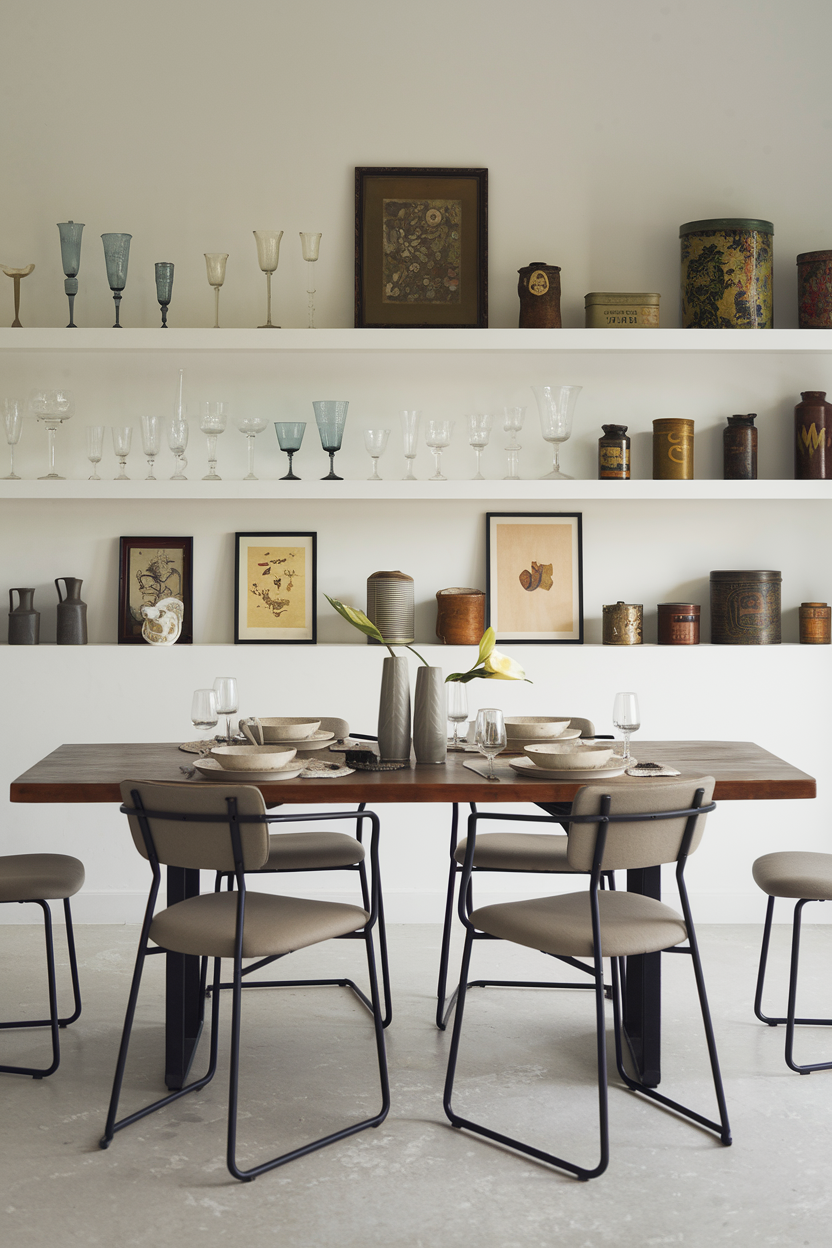
Use your shelves to showcase a collection that reflects your interests and adds a sense of history to the dining room. Vintage glassware, antique tins, miniature artworks, ceramics, or other collected objects can become an engaging focal point when grouped by color, size, or theme. Displaying related pieces together creates a stronger visual impact while telling a story about your personal taste.
15. Stack Cookbooks
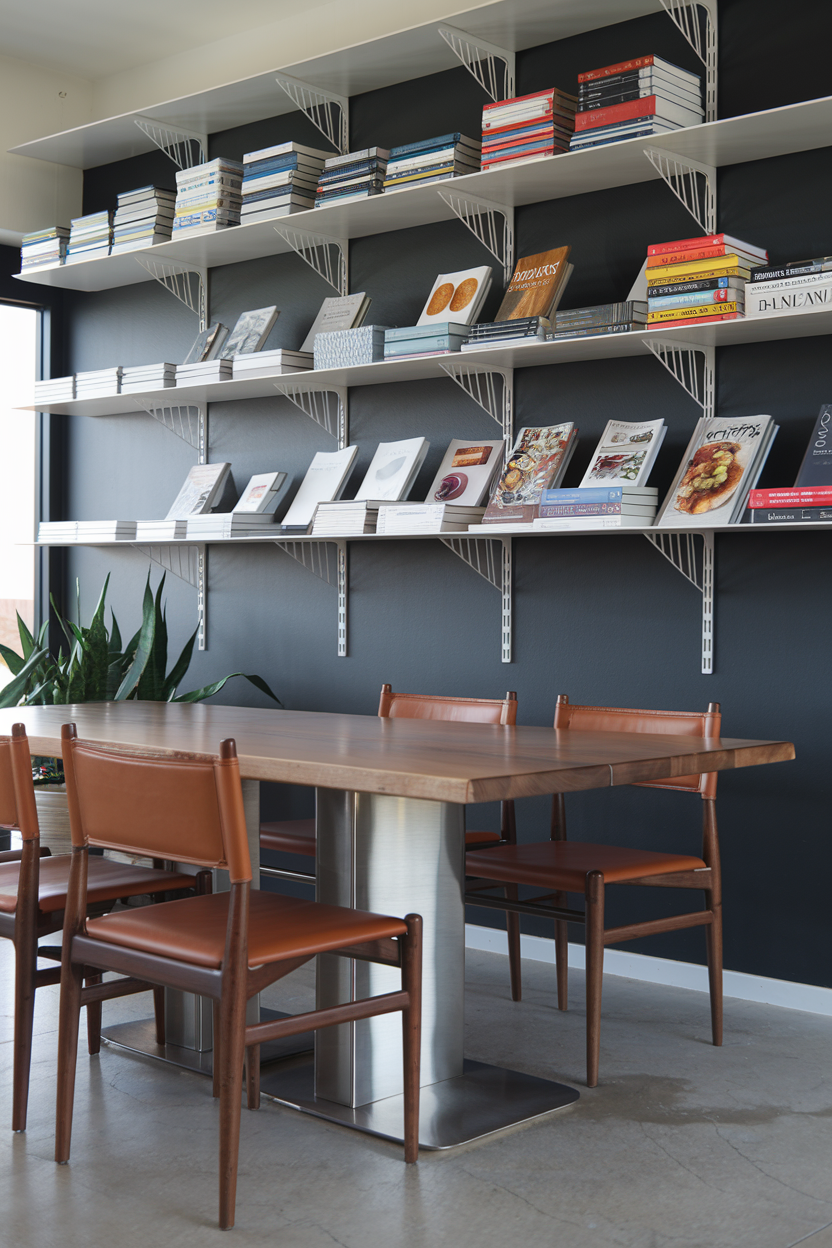
Beautiful cookbooks can serve as both useful reading material and attractive shelf accessories. Stack several horizontally to create a sturdy visual base for candles, small vases, bowls, or other decorative pieces. Choose books with covers and spines that complement your dining room’s colors, and mix different sizes to create a more relaxed and naturally layered arrangement.
16. Mix in Unexpected Materials
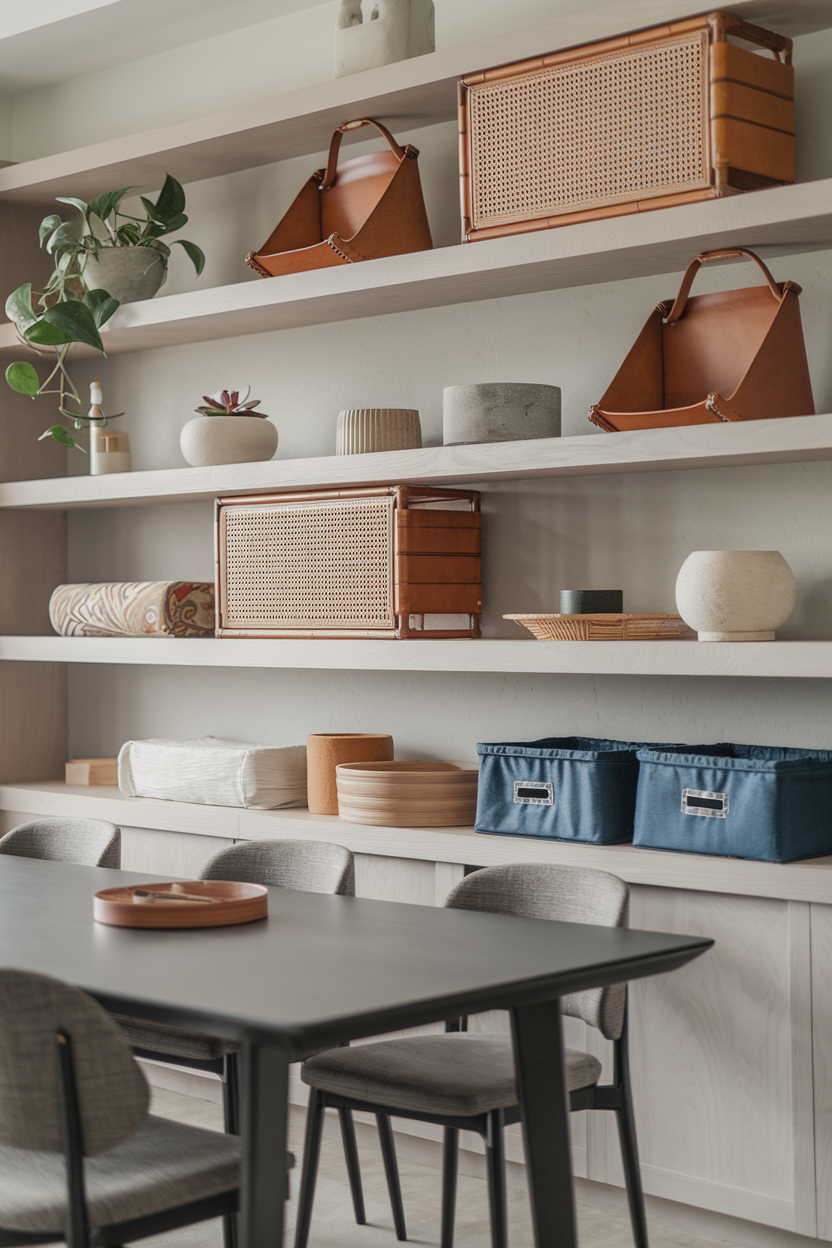
Add visual interest by introducing materials beyond the usual ceramics, glass, and wood. Leather trays, concrete planters, rattan boxes, fabric-covered storage, or stone accessories can provide unexpected texture and make your shelves feel more eclectic. Combining contrasting materials gives the display a tactile quality while helping it feel collected and personal rather than overly coordinated.
17. Add Layered Art
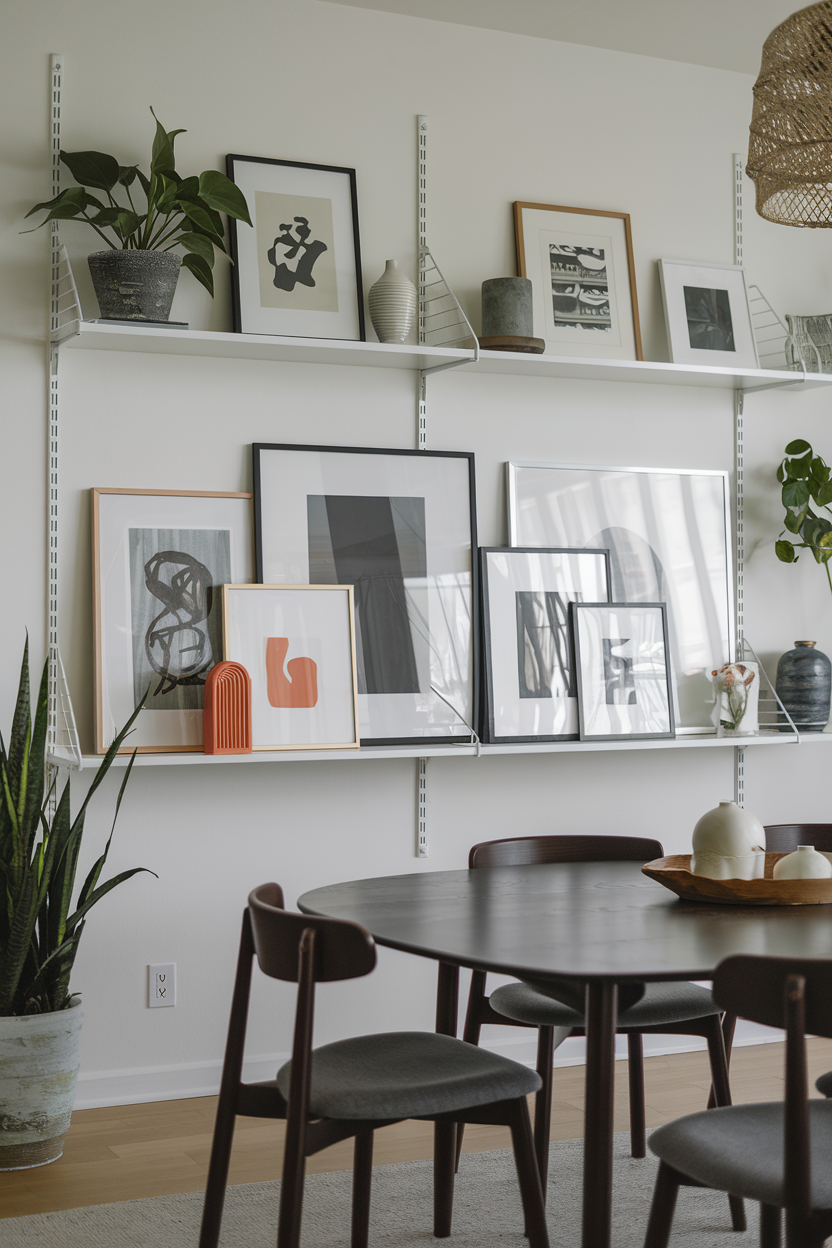
Create a casual gallery effect by leaning framed artwork against the back of your shelves and layering pieces at different depths. Place larger prints behind smaller ones, then mix photographs, sketches, abstract artwork, vintage finds, or delicate illustrations for variety. This technique adds dimension and allows you to change the arrangement easily whenever you want to refresh the space.
18. Keep Negative Space
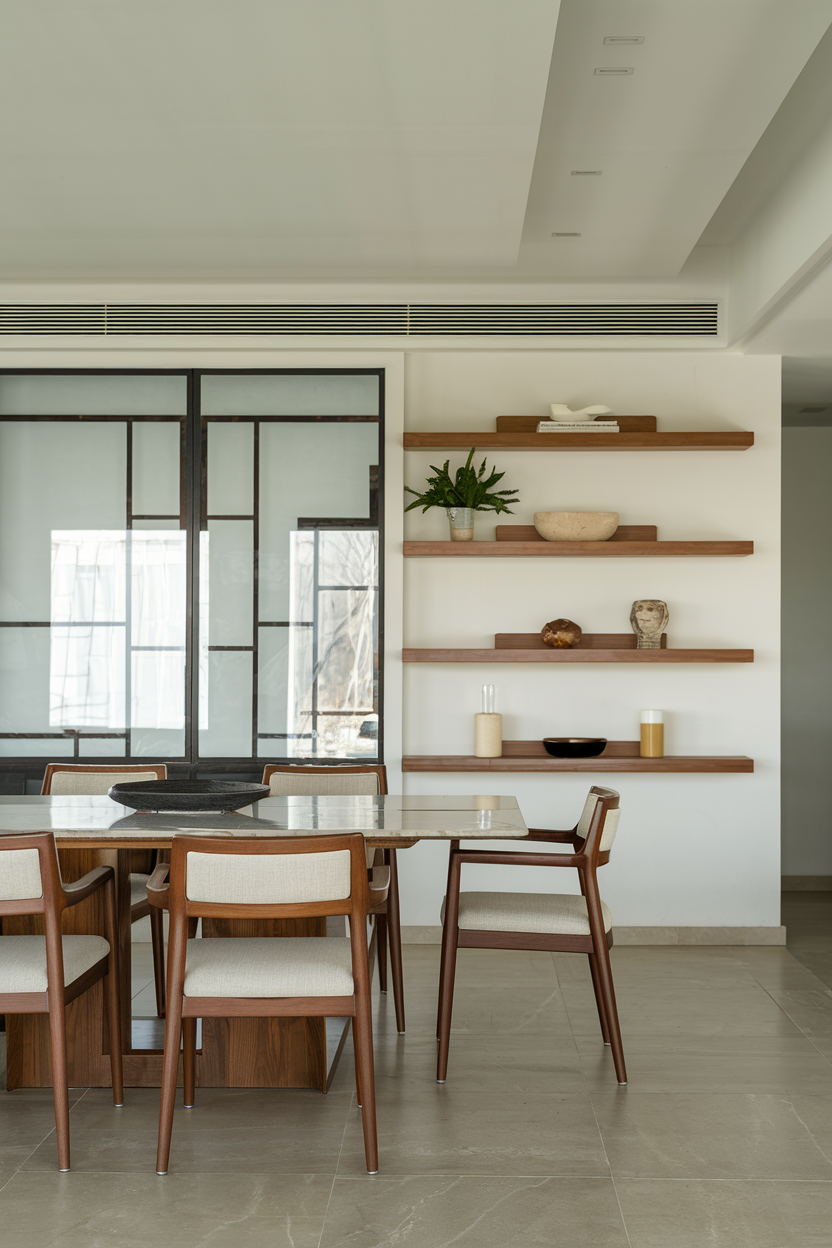
Resist the temptation to fill every available section of your shelves. Leaving intentional gaps between objects gives each piece room to stand out, allows the eye to rest, and creates a lighter overall composition. Negative space is especially useful when displaying several decorative items because it prevents the arrangement from feeling crowded and helps the dining area maintain a calm, polished atmosphere.
19. Baskets and Woven Pieces
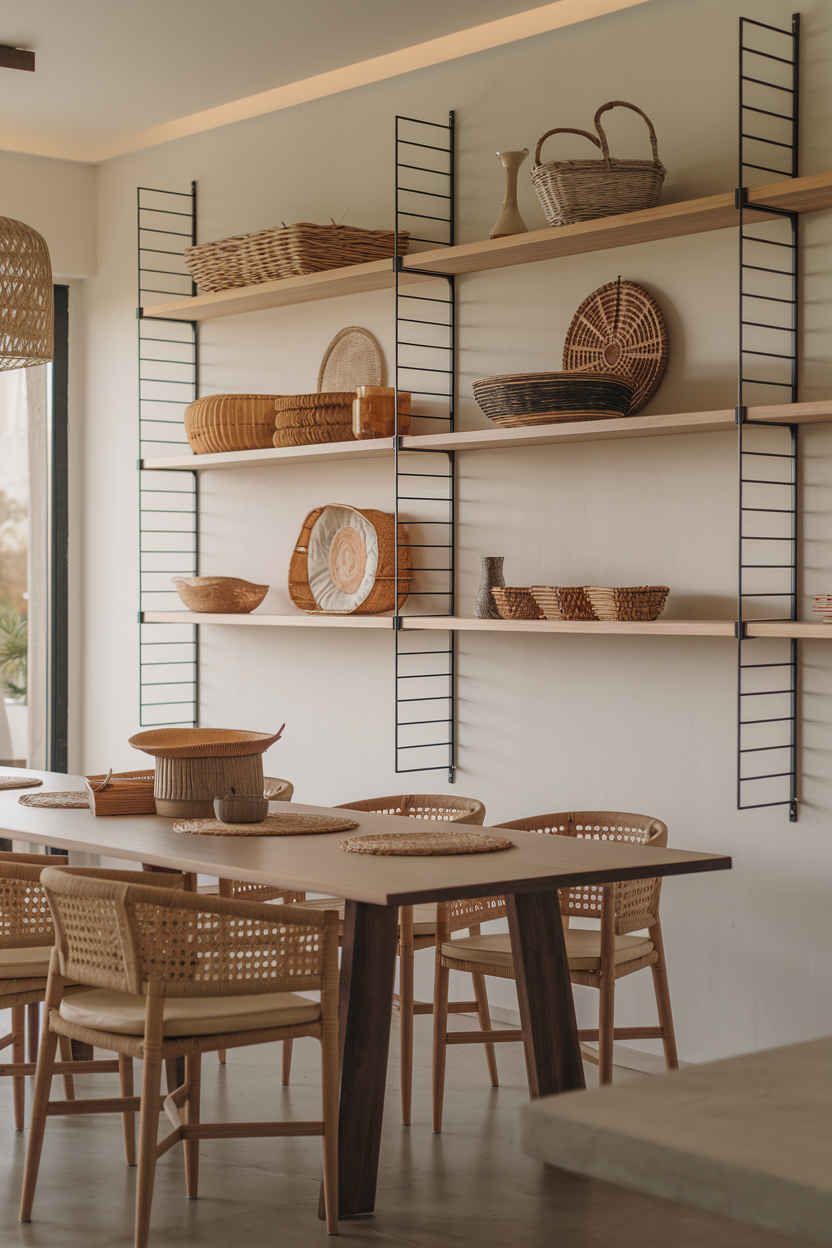
Add warmth and texture with woven baskets, rattan bowls, or natural-fiber trays. These organic materials create a pleasing contrast against polished ceramics, glass, and metal accents while making the shelves feel more relaxed. Use woven pieces to store napkins, small dishes, or seasonal accessories, giving your display both decorative appeal and practical function.
20. Books with Style
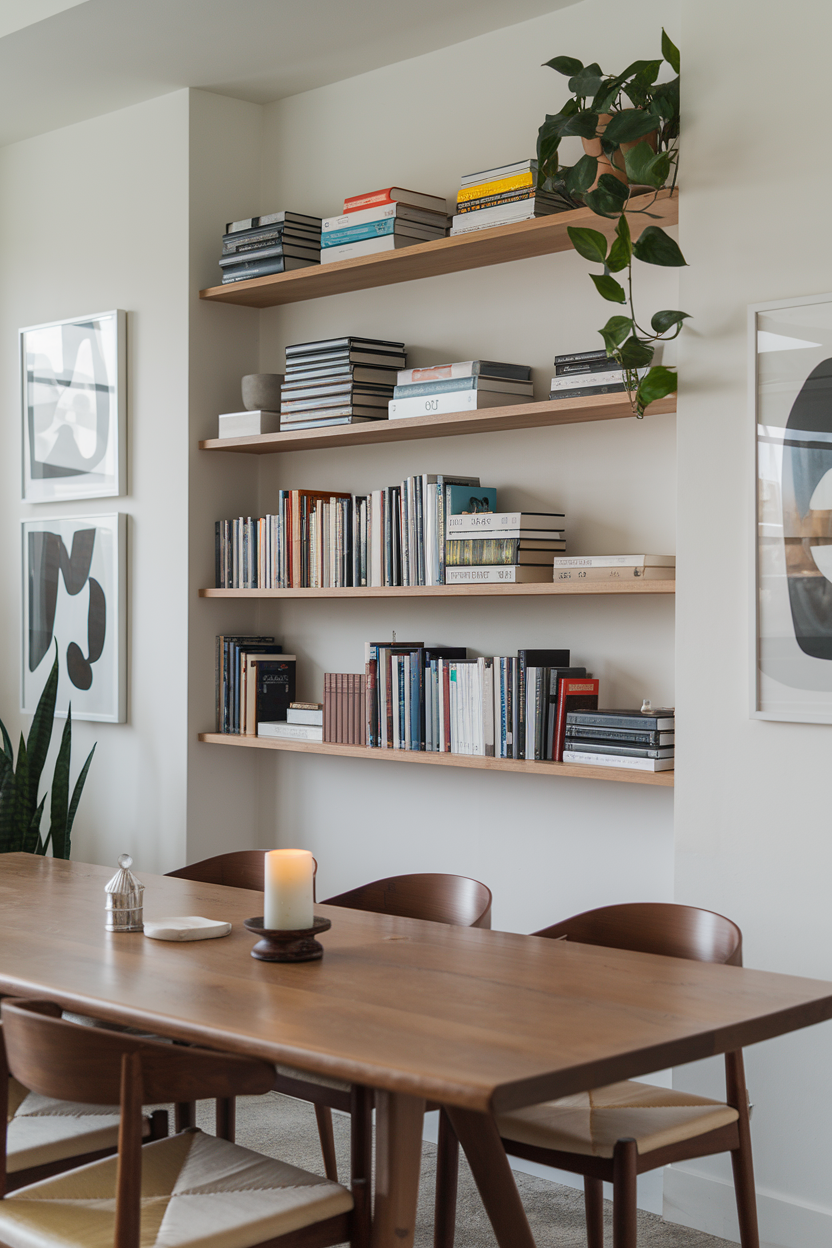
Decorative books can add height, structure, and personality to your dining room shelves. Stack culinary, design, or art books horizontally and use them as platforms for candles, small vases, or decorative objects. Removing dust jackets can reveal attractive cloth covers, while vintage cookbooks and beautifully illustrated volumes can reinforce the overall style and character of the dining space.
21. Seasonal Switch-Ups
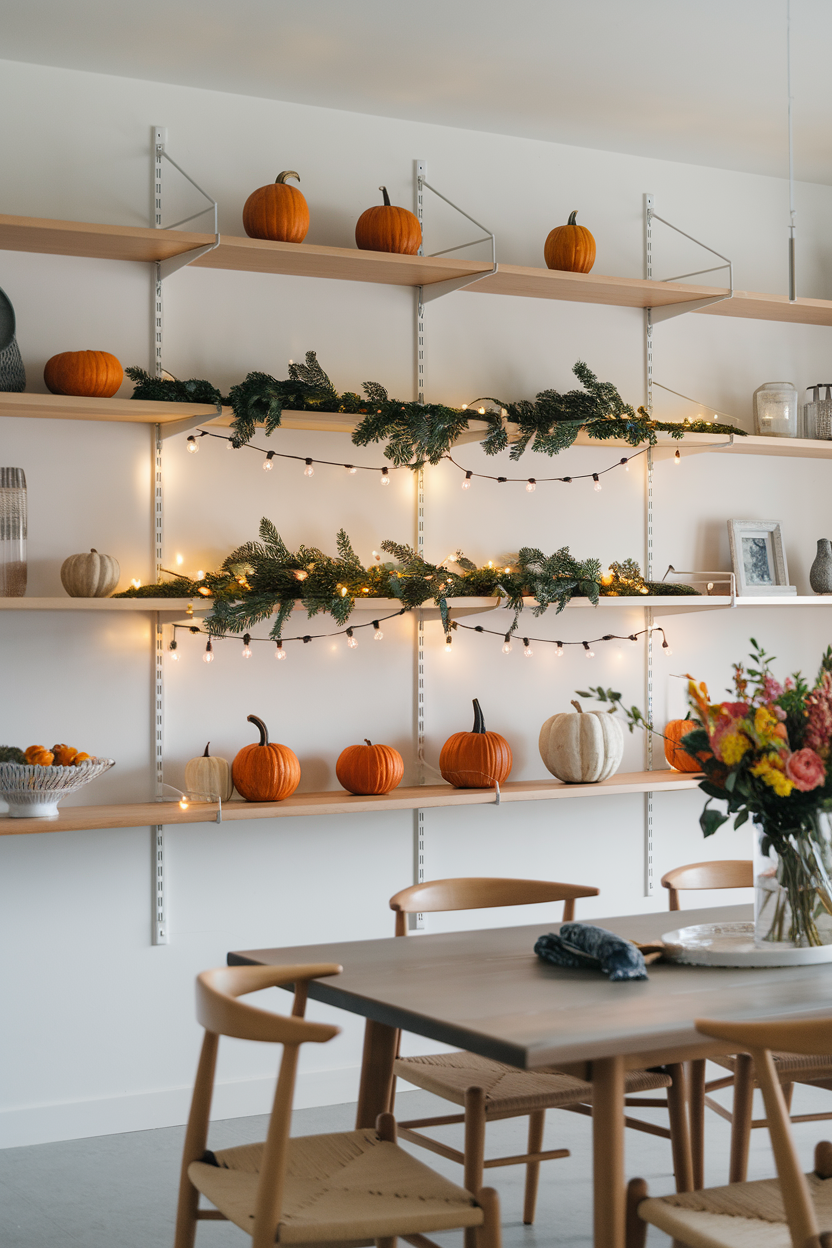
Keep your dining room shelves feeling fresh throughout the year by rotating small decorative pieces with the seasons. Spring can bring fresh flowers and soft pastel ceramics, while autumn might call for miniature pumpkins, warm-toned accessories, or copper accents. Simple seasonal changes add variety and help your decor reflect the atmosphere of each time of year without requiring a complete redesign.
22. A Hint of Glamour
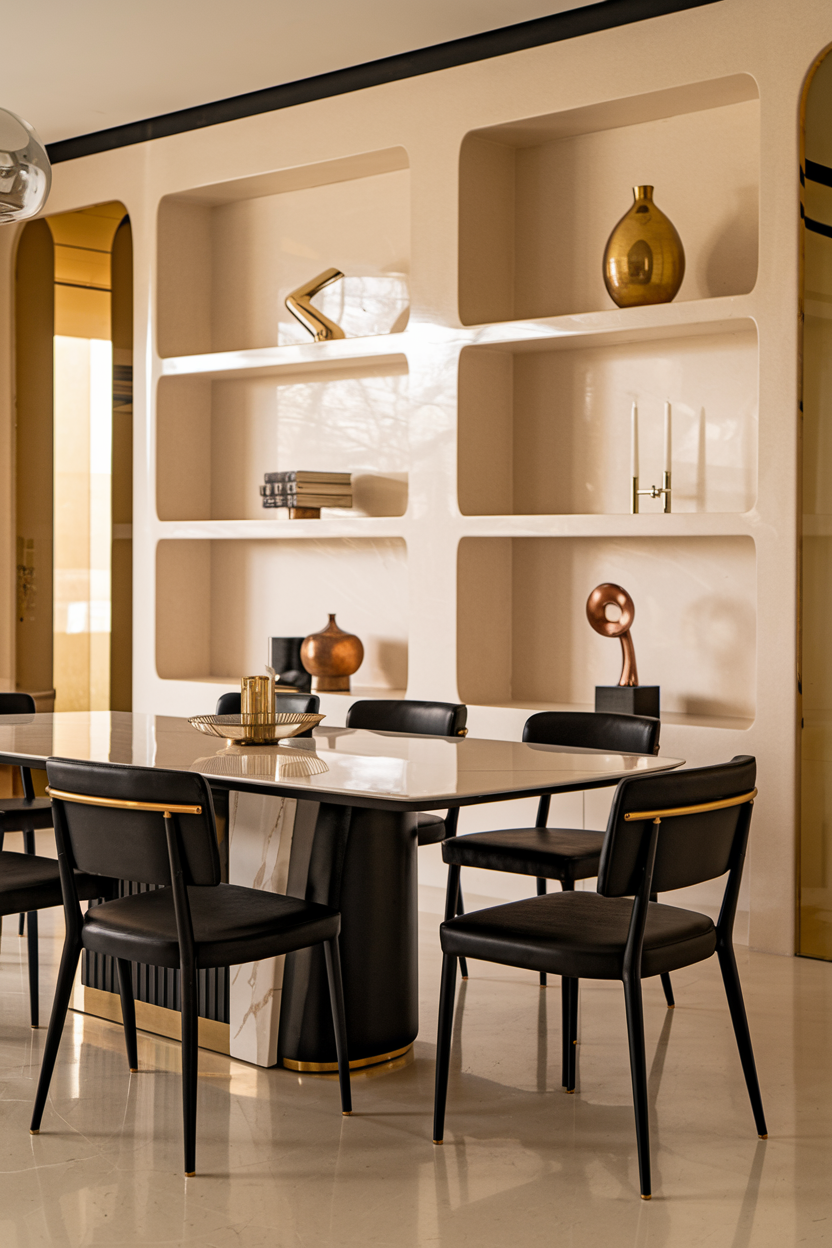
Warm metallic finishes such as gold, brass, and copper can give dining room shelves a subtle touch of glamour. Combine candleholders, vases, or sculptural accents with natural materials like wood and stone to keep the arrangement balanced and inviting. Metallic surfaces reflect light beautifully, adding warmth, depth, and a refined sparkle without making the space feel overly formal.
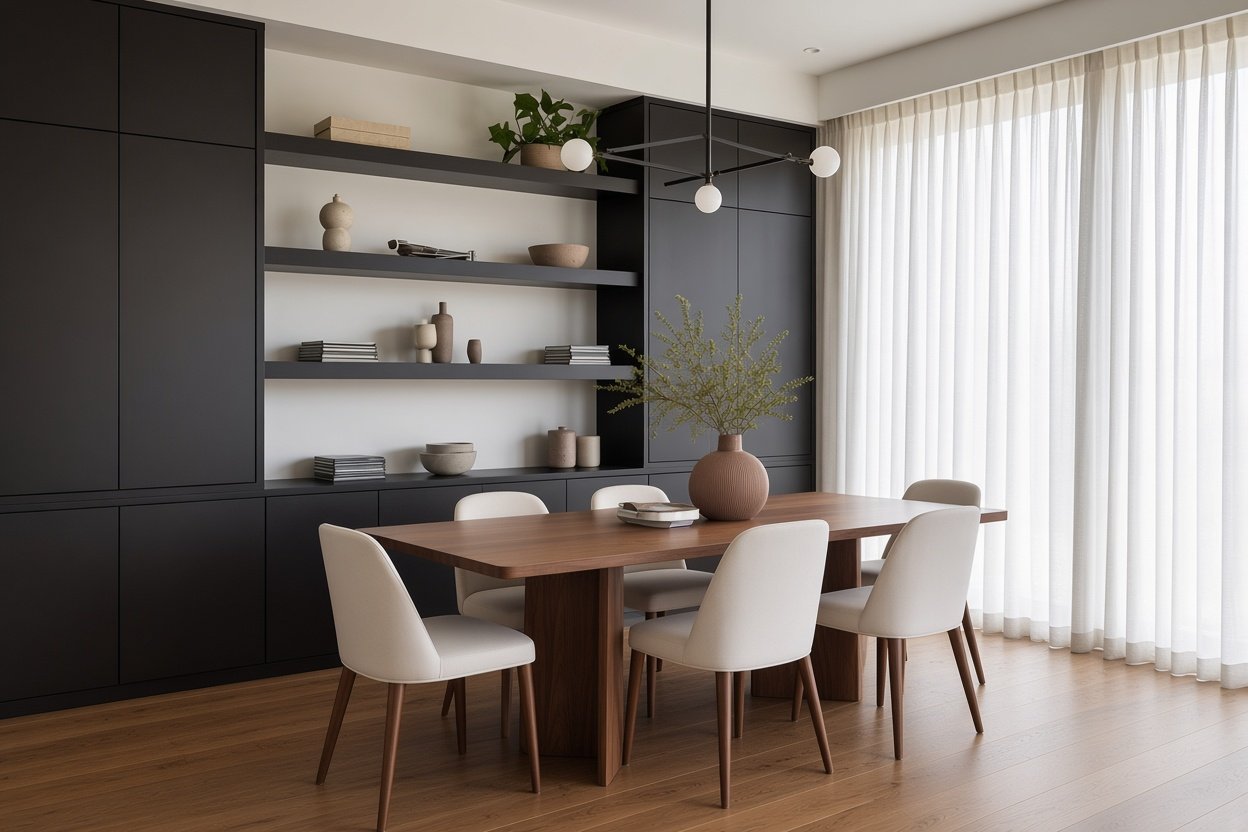
23. Go Monochrome
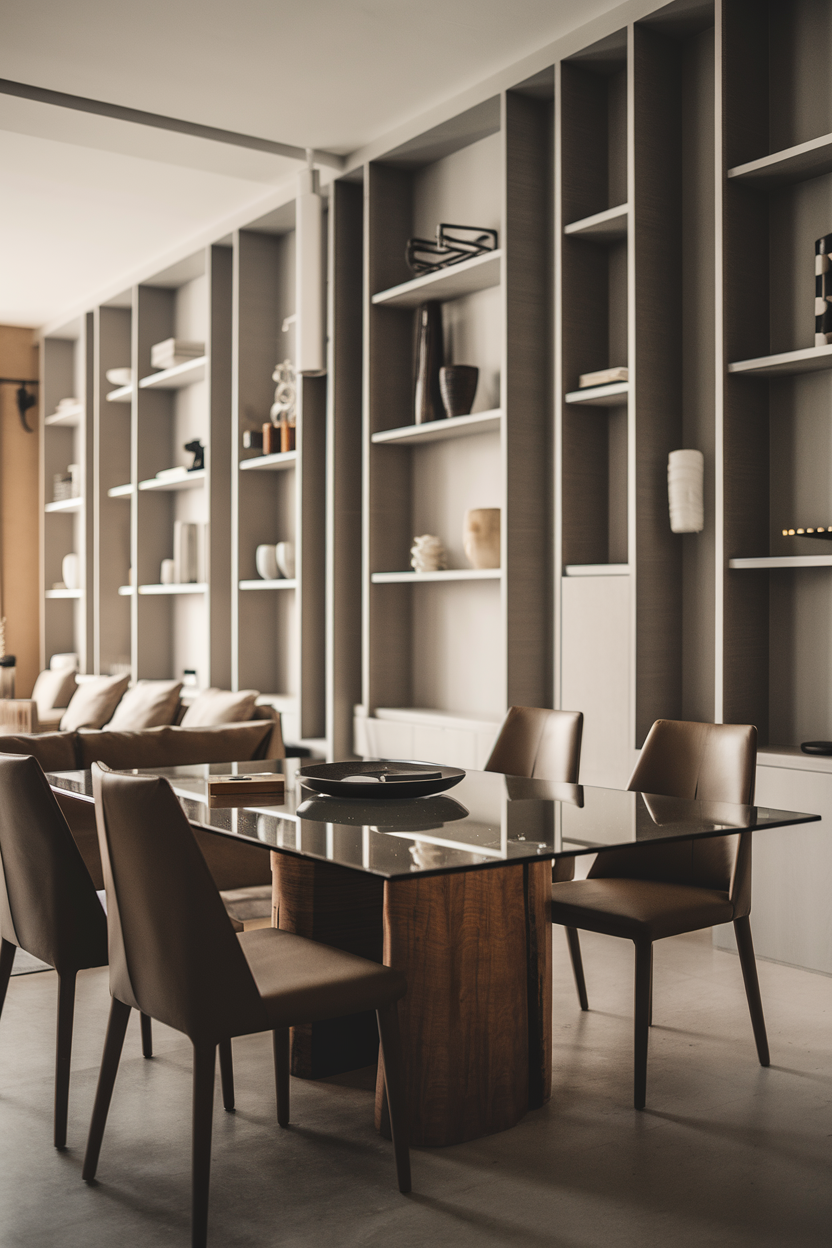
A monochromatic shelf arrangement creates a cohesive and sophisticated appearance by working within one carefully chosen color family. Try an all-white display, layers of earthy taupe, or a dramatic charcoal palette, then introduce variety through different textures, shapes, and finishes. Keeping the colors consistent allows the details of each object to stand out while maintaining a calm and intentional overall look.
24. Highlight a Statement Piece
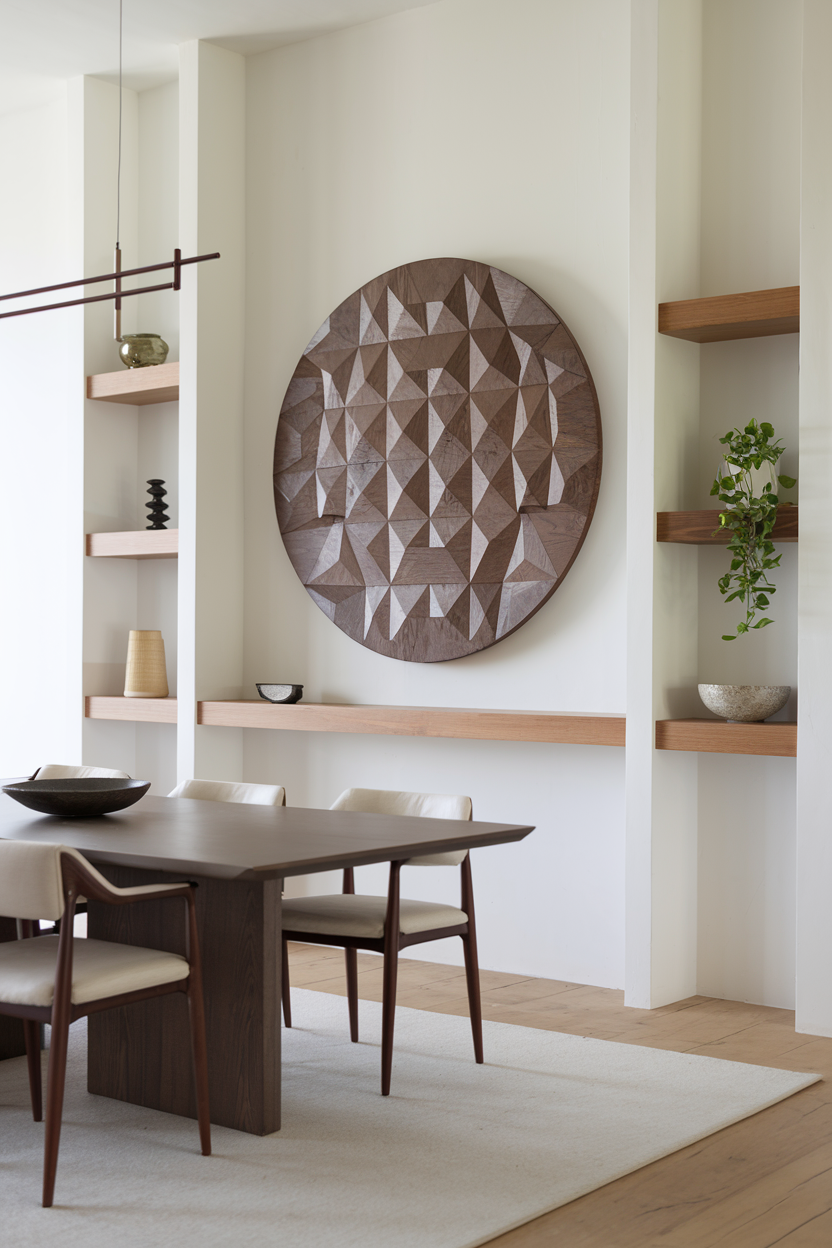
Give your shelf arrangement a clear focal point by choosing one standout object to anchor the display. An oversized bowl, dramatic sculpture, distinctive framed artwork, or vintage treasure can serve as the centerpiece, while smaller accessories support rather than compete with it. Allowing the main piece to take visual priority creates a curated arrangement that feels balanced instead of cluttered.
25. Play with Height to Guide the Eye
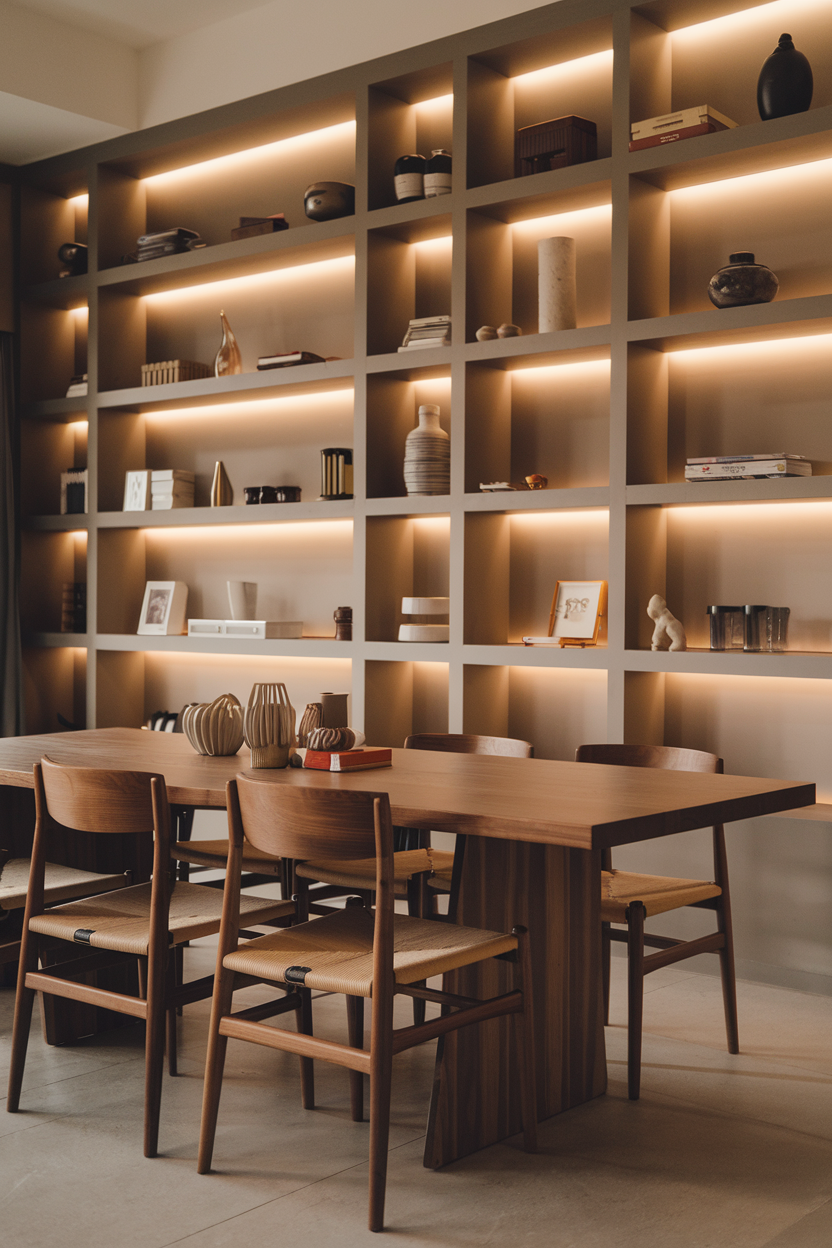
Use a combination of tall, medium, and low accessories to create a natural visual rhythm across your shelves. Tall vases can provide vertical emphasis, books can add medium-level layers, and small bowls or decorative objects can fill lower spaces. This variation guides the eye through the display while keeping the arrangement balanced and visually engaging.
26. Use Shelf Risers or Pedestals
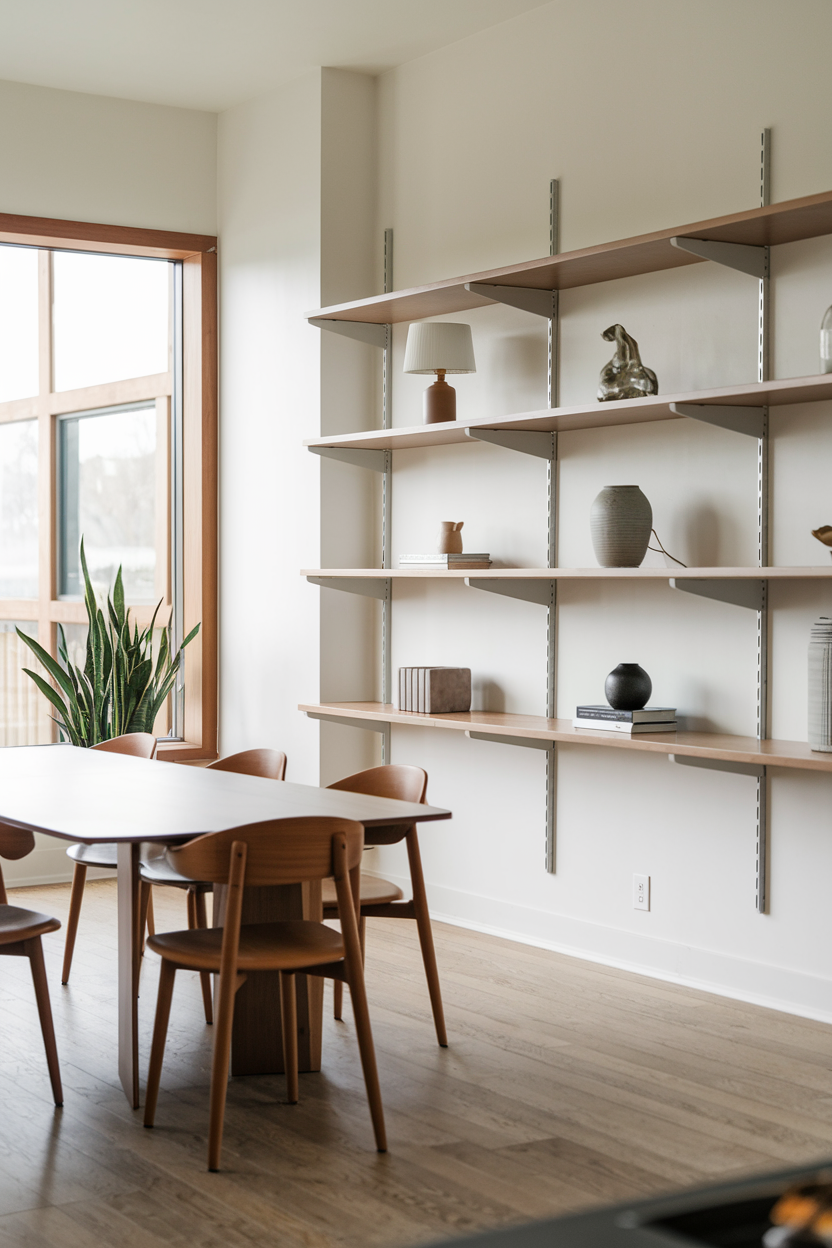
Shelf risers, small platforms, and decorative pedestals make it easier to introduce different levels into your display. They are particularly useful on deeper shelves where objects can otherwise disappear behind one another. Elevating a favorite bowl, vase, or sculpture gives it greater visibility and creates a clear hierarchy within the arrangement.
27. Lean Into Symmetry
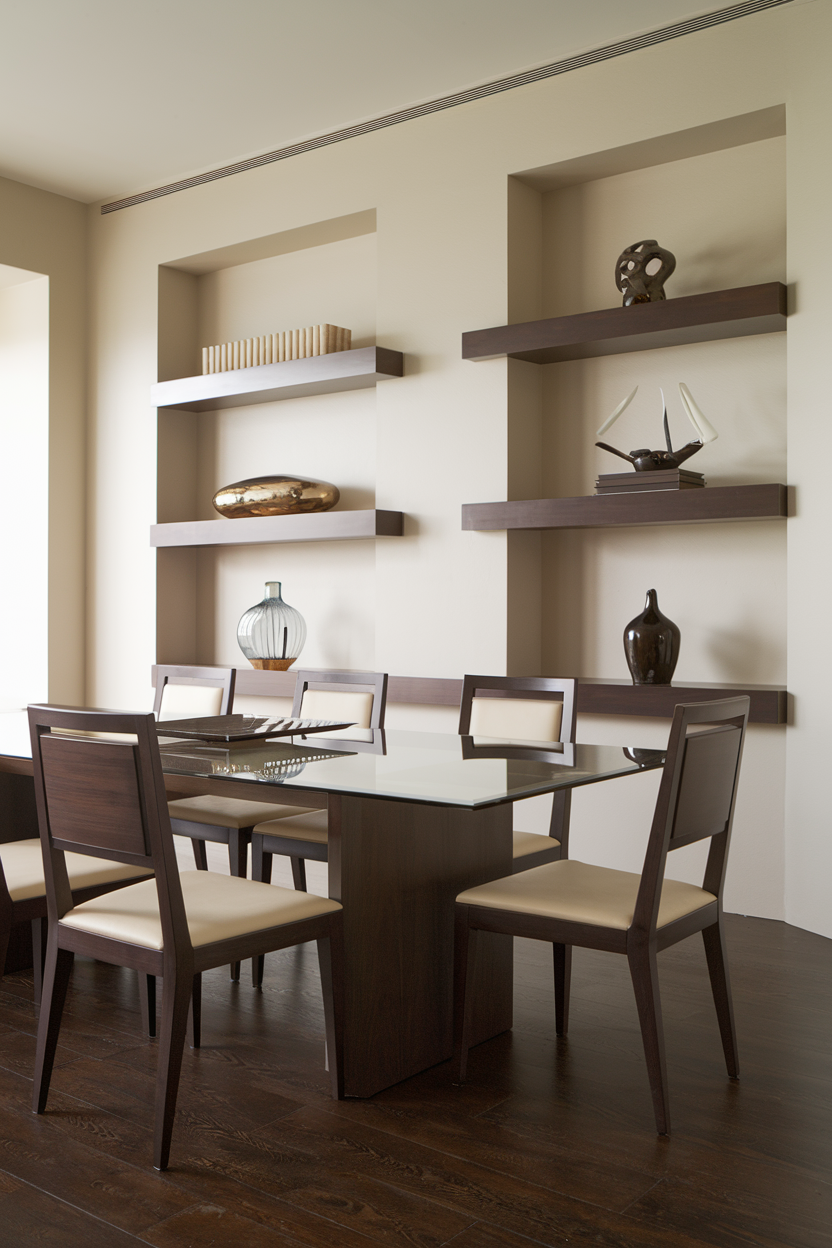
Symmetrical styling can give dining room shelves a polished and orderly appearance. Try placing matching or similar objects on opposite sides, such as pairs of vases, candlesticks, decorative bowls, or bookends. This balanced approach works especially well in formal dining spaces, although combining symmetry with a few subtle variations can keep the display from feeling too rigid.
28. Show Off Artisan Ceramics
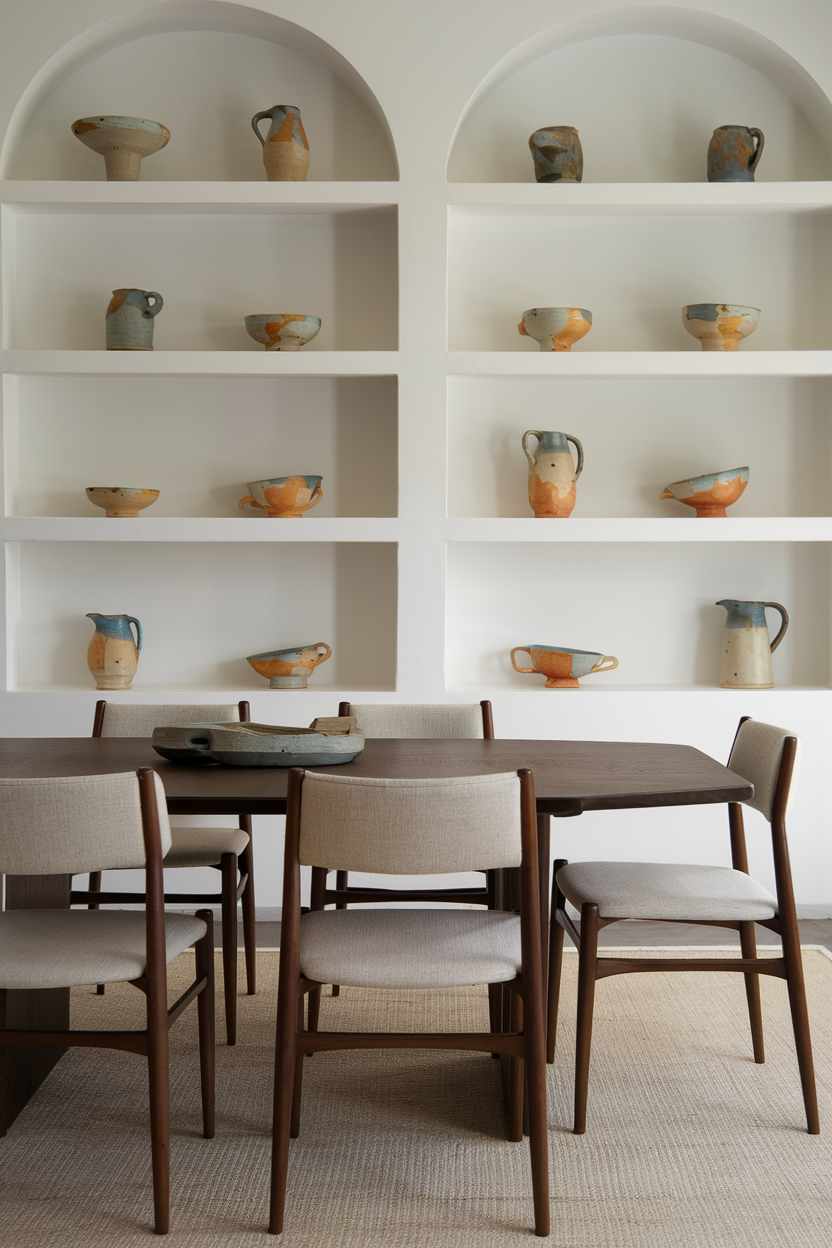
Handcrafted ceramics can bring warmth, texture, and individuality to dining room shelves. Bowls, pitchers, mugs, and vases with natural glazes or subtle imperfections create an authentic, collected appearance that mass-produced pieces often lack. Mix different shapes and complementary tones to showcase the beauty of craftsmanship while giving the shelves a relaxed yet sophisticated character.
29. Create a Color Story
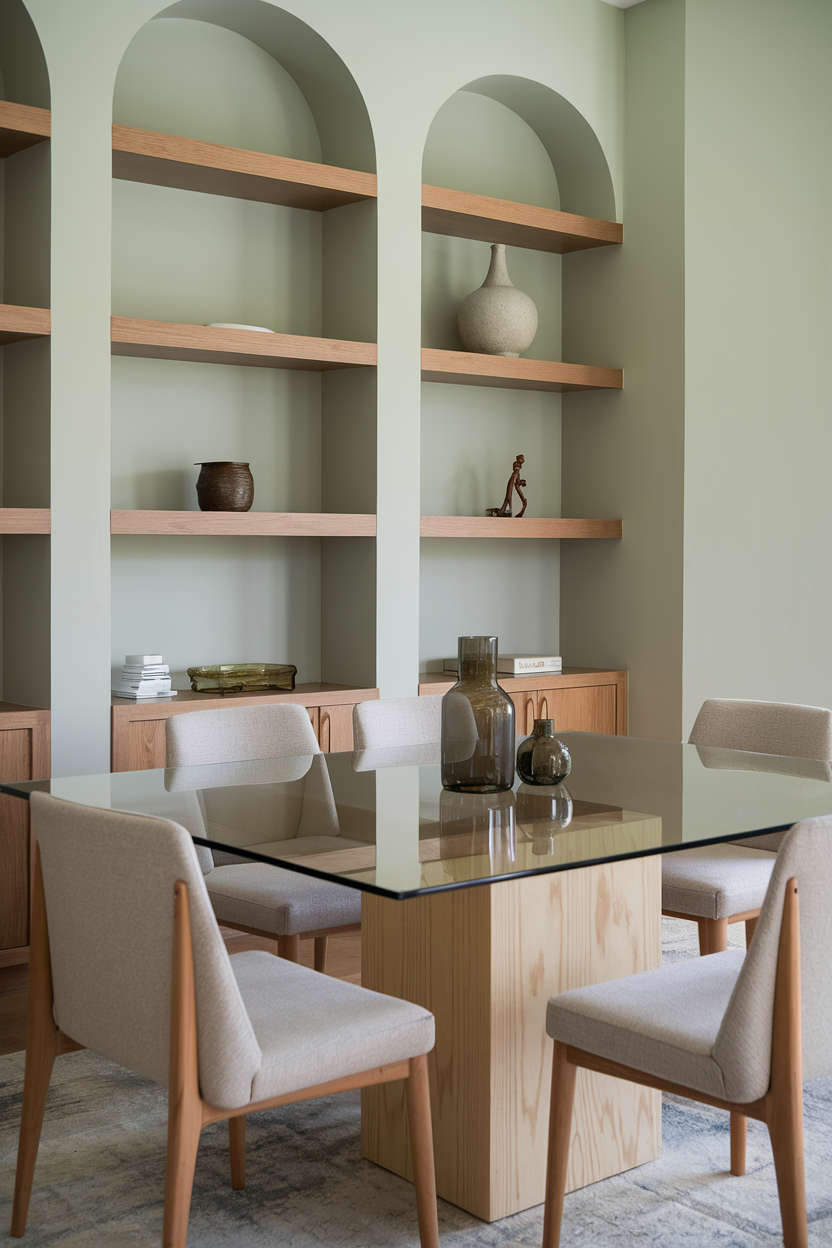
Build a cohesive display by selecting shelf accessories that connect with the colors already present in your dining room. For example, sage-colored glassware, artwork, or textiles can echo soft green walls, while complementary shades can introduce controlled bursts of contrast. Repeating a few colors throughout the arrangement creates visual continuity and makes individual pieces feel intentionally connected.
30. Use Mirrors or Reflective Objects
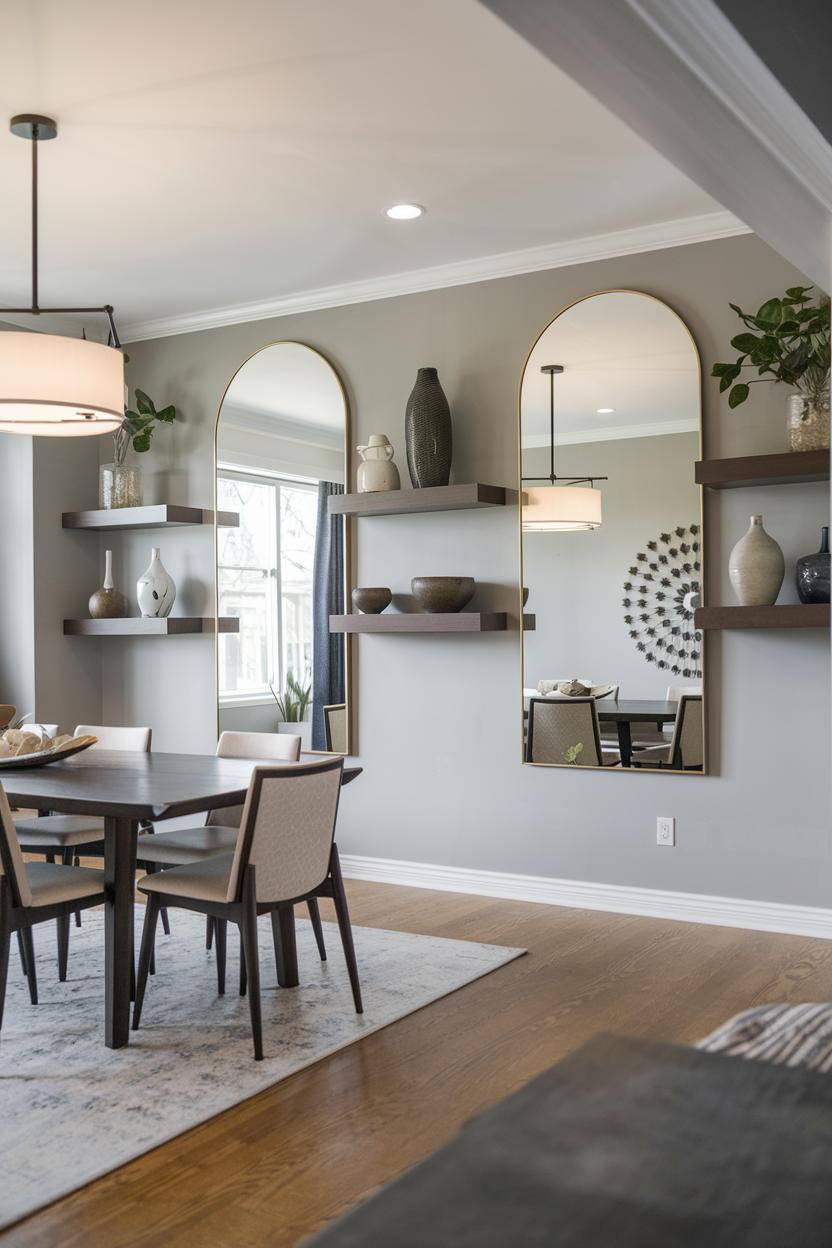
Reflective surfaces can help brighten a dining room while adding depth to your shelves. Small mirrors, mirrored trays, polished silver candleholders, or glossy decorative objects can bounce light around the room and create a sense of openness. Position them where they can catch natural or artificial light, particularly in smaller dining areas that could benefit from a brighter, airier atmosphere.
31. Add a Pop of Color
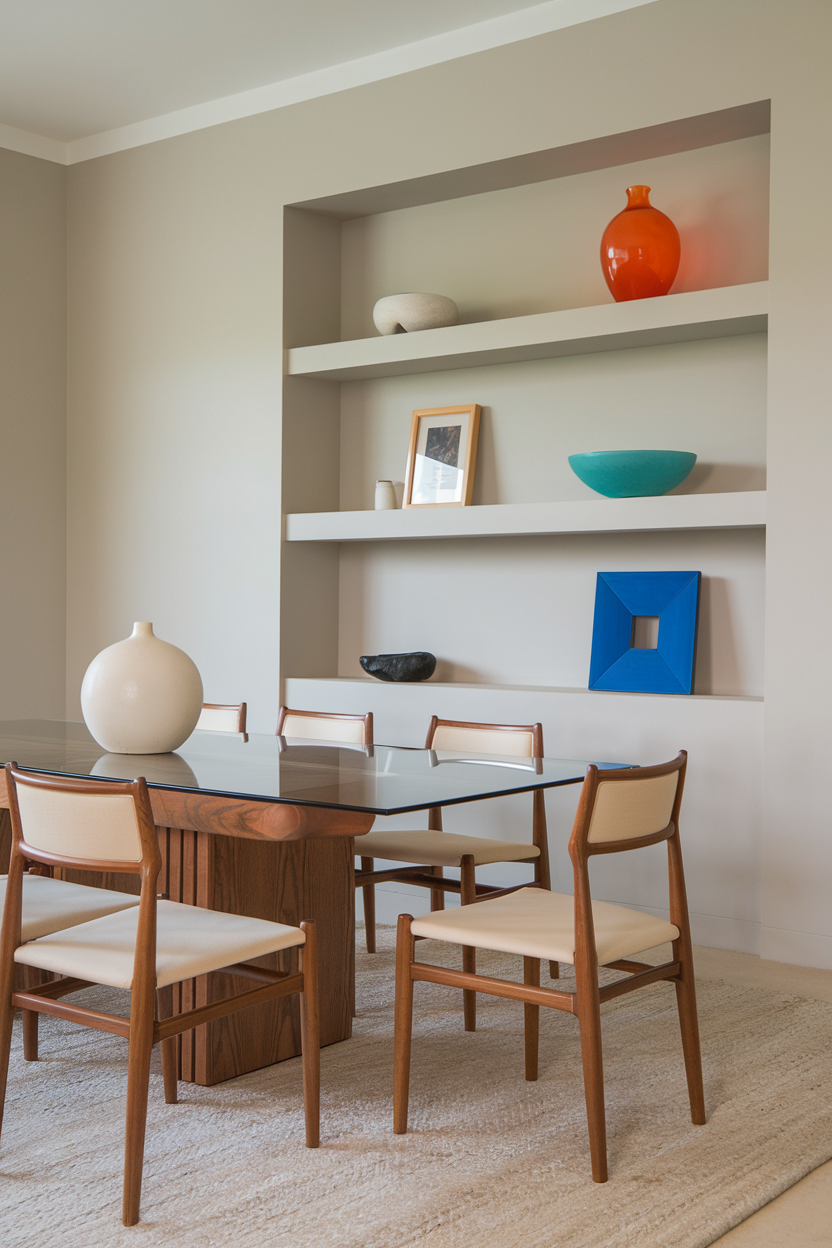
Give neutral shelves more personality with one or two bold accents in a vibrant shade. A vivid orange vase, turquoise bowl, cobalt blue frame, or richly colored ceramic can instantly draw attention and energize the display. Keeping the brighter colors limited allows them to act as intentional focal points rather than overwhelming the rest of your carefully styled arrangement.
* The beauty of dining room shelf decor lies in its ability to combine function, style, and personality. Use these inspirations as a starting point, experiment with different arrangements, and create shelves that make your dining room feel stylish, warm, and uniquely yours.