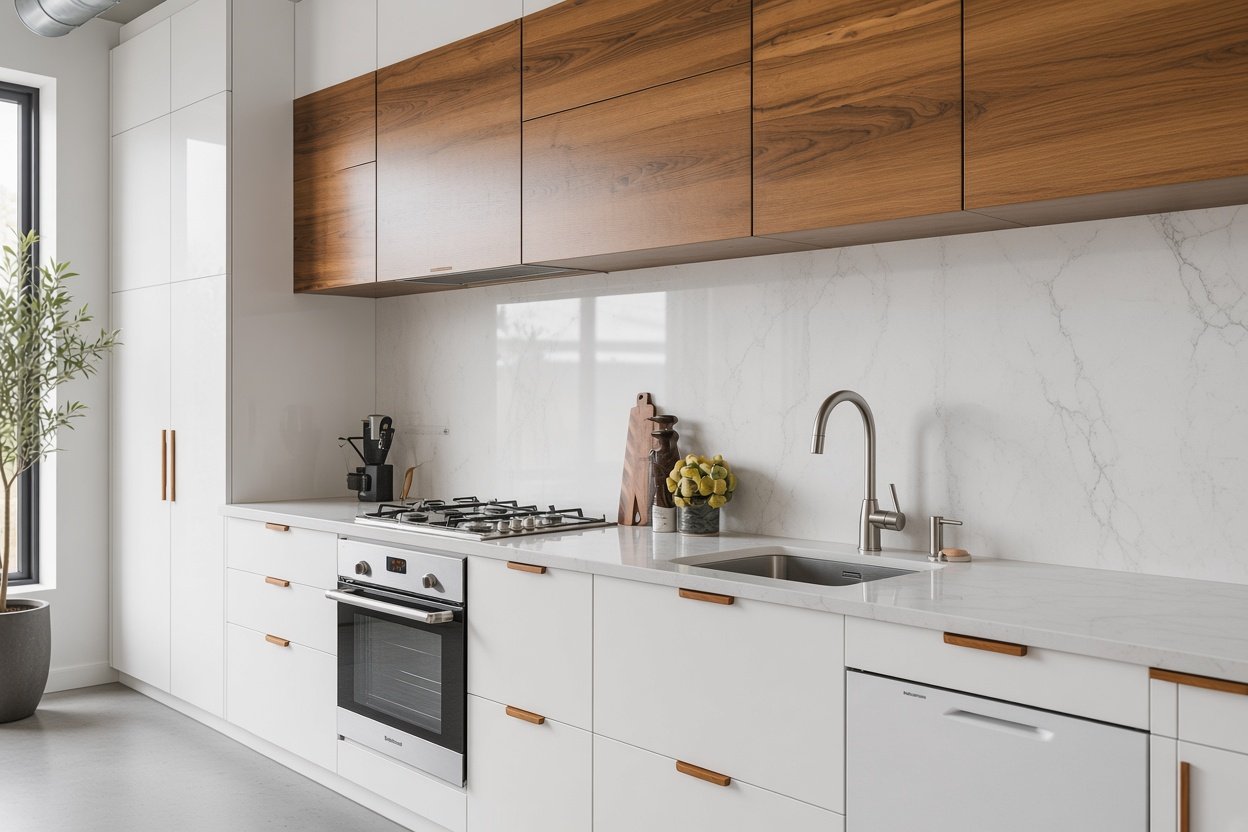
White and wood kitchens offer a beautiful balance of brightness, warmth, and timeless style. Crisp white cabinetry and clean surfaces help create an open, airy atmosphere, while natural wood introduces texture and an inviting organic feel. This versatile combination works beautifully across modern, farmhouse, Scandinavian, and transitional interiors, making it easy to create a kitchen that feels fresh, elegant, and comfortable for everyday living.
The secret to a stunning white and wood kitchen lies in combining materials and finishes that complement one another. White cabinets paired with butcher block countertops, warm oak flooring, wooden kitchen islands, or open timber shelves can create depth without making the space feel busy. Thoughtful details such as brass hardware, marble backsplashes, pendant lighting, woven accessories, and indoor plants can add personality while maintaining a bright and harmonious look. The right balance of light and natural textures also helps the kitchen feel welcoming throughout the day.
This collection of 31 stylish white and wood kitchen ideas offers inspiration for creating a bright and beautiful home. Let’s explore these inspiring designs and discover how white finishes and natural wood can transform your kitchen into a fresh, functional, and effortlessly beautiful space!
1. Wood-Framed Range Hood
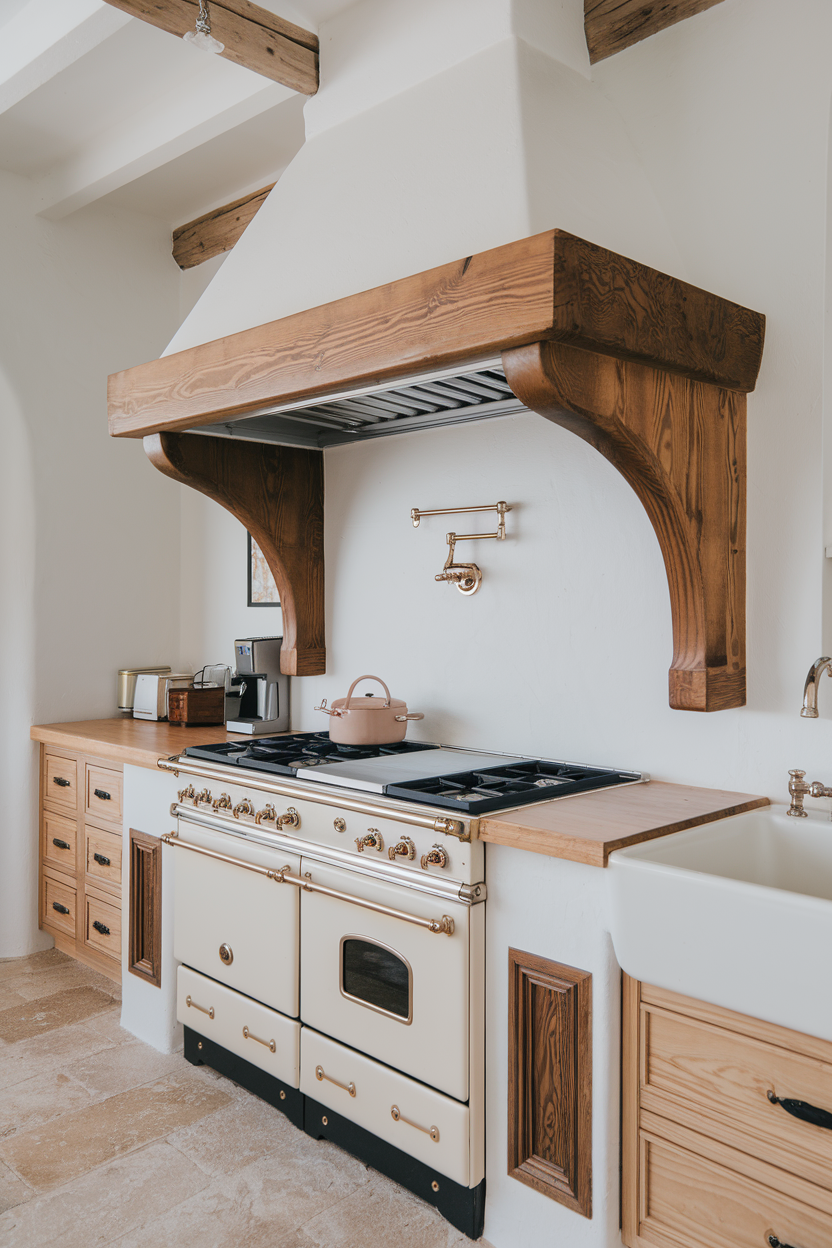
Turn an everyday kitchen feature into a striking focal point with a wooden range hood surround. Against white cabinetry and a light backsplash, the timber adds architectural interest and draws attention to the cooking area. A smooth oak surround creates a contemporary appearance, while reclaimed wood introduces farmhouse character and texture. You can match the finish to your kitchen island or choose a slightly different shade to create subtle contrast. Keep the surrounding cabinetry relatively simple so the range hood remains the main attraction. The result is a kitchen that feels more custom-designed, with a warm focal point that balances the clean white surfaces.
2. White Cabinets and Wood-Lined Drawers
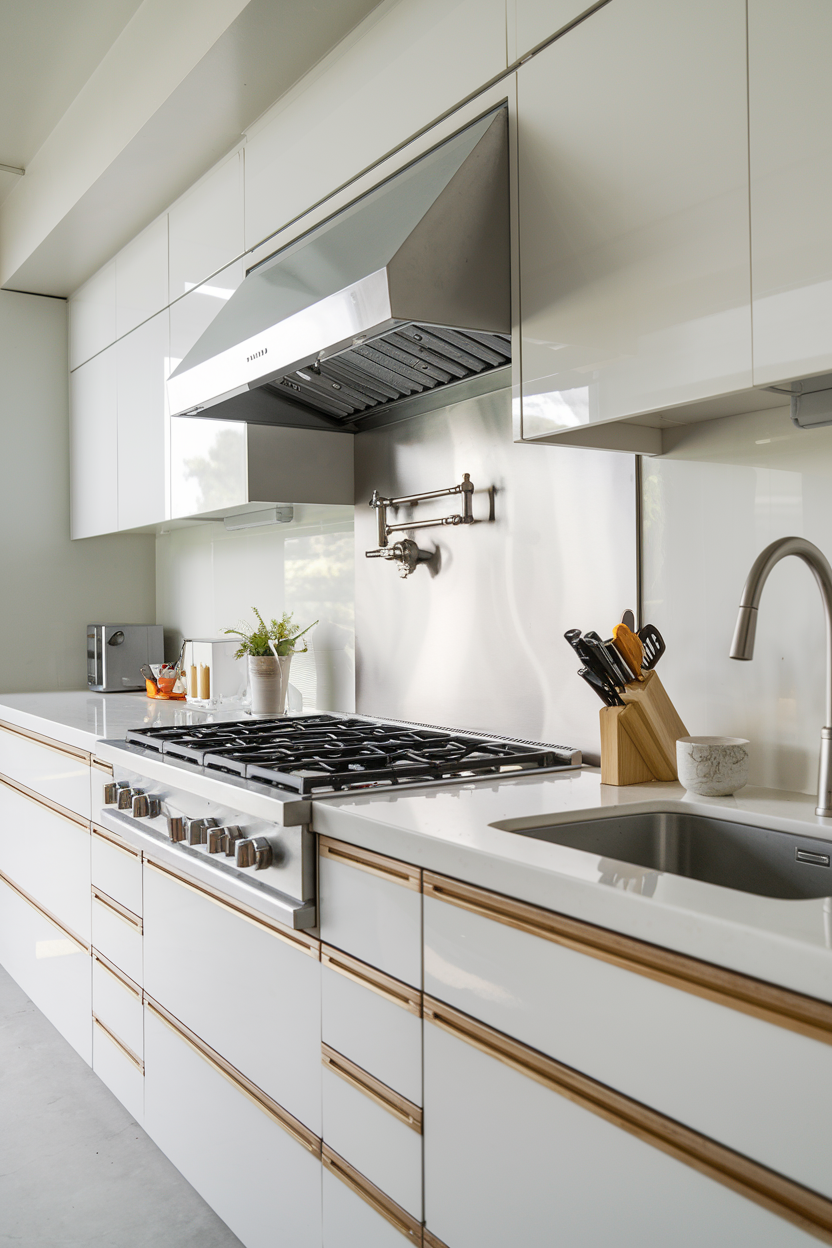
Bring an unexpected touch of craftsmanship to your kitchen with white cabinets that reveal beautiful wooden interiors when opened. The contrast between the clean exterior and the natural grain inside creates a subtle detail that makes everyday storage feel more special. Pale wood interiors provide a light, contemporary appearance, while deeper tones create a richer finish. You can extend the idea to utensil organizers, pull-out trays, and pantry drawers for a consistent look throughout the kitchen. Although these details are not always visible, they contribute to a more considered design and make the cabinetry feel thoughtfully customized.
3. White Marble with Wood Accents
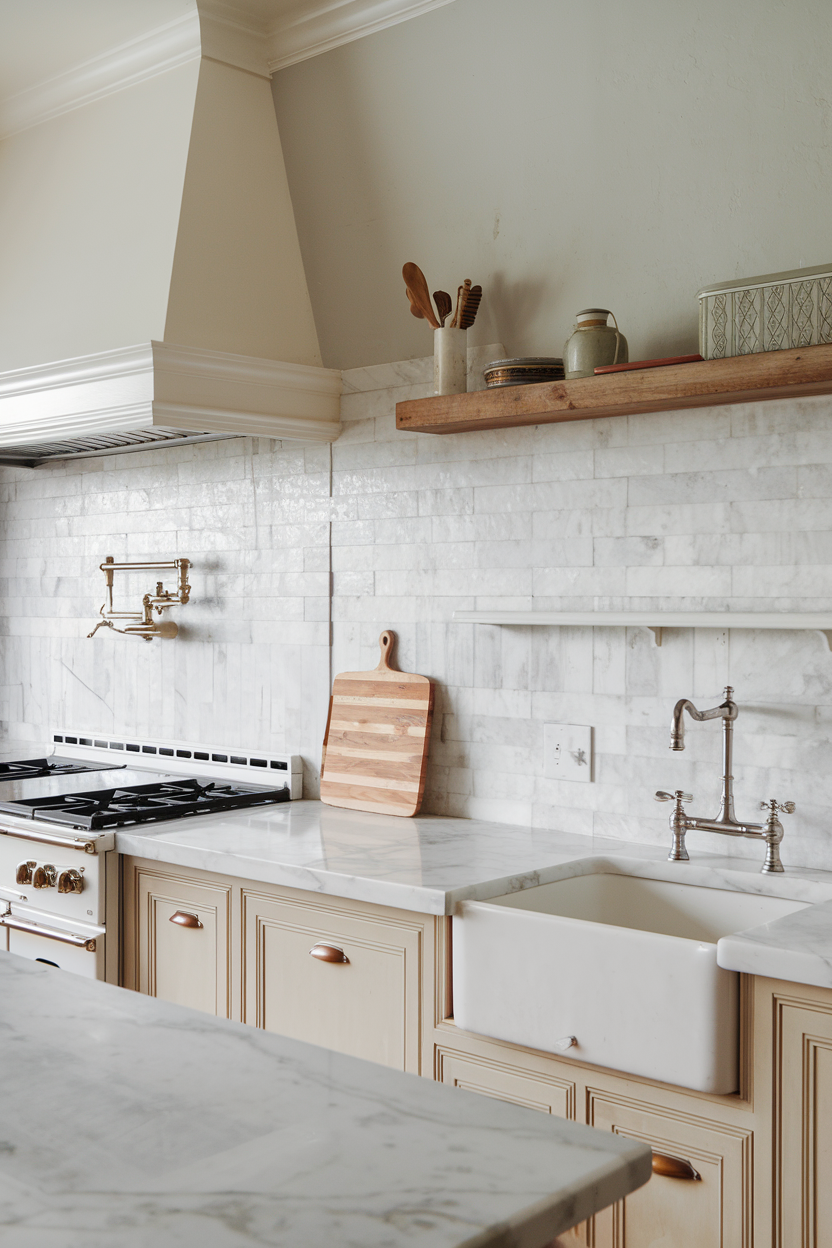
Combine the luxurious appearance of white marble with the natural warmth of wood for a kitchen that feels elegant without becoming overly formal. Marble countertops and backsplashes create a bright, polished foundation, while wooden stools, cutting boards, and floating shelves introduce texture and softer tones. The contrast between the cool stone and warm timber makes the room feel more balanced and visually interesting. If genuine marble is outside your budget, consider marble-look quartz or porcelain for a similar aesthetic. Finish with simple accessories and understated lighting to preserve the refined appearance while keeping the kitchen comfortable enough for everyday use.
4. Wooden Ceiling Beams
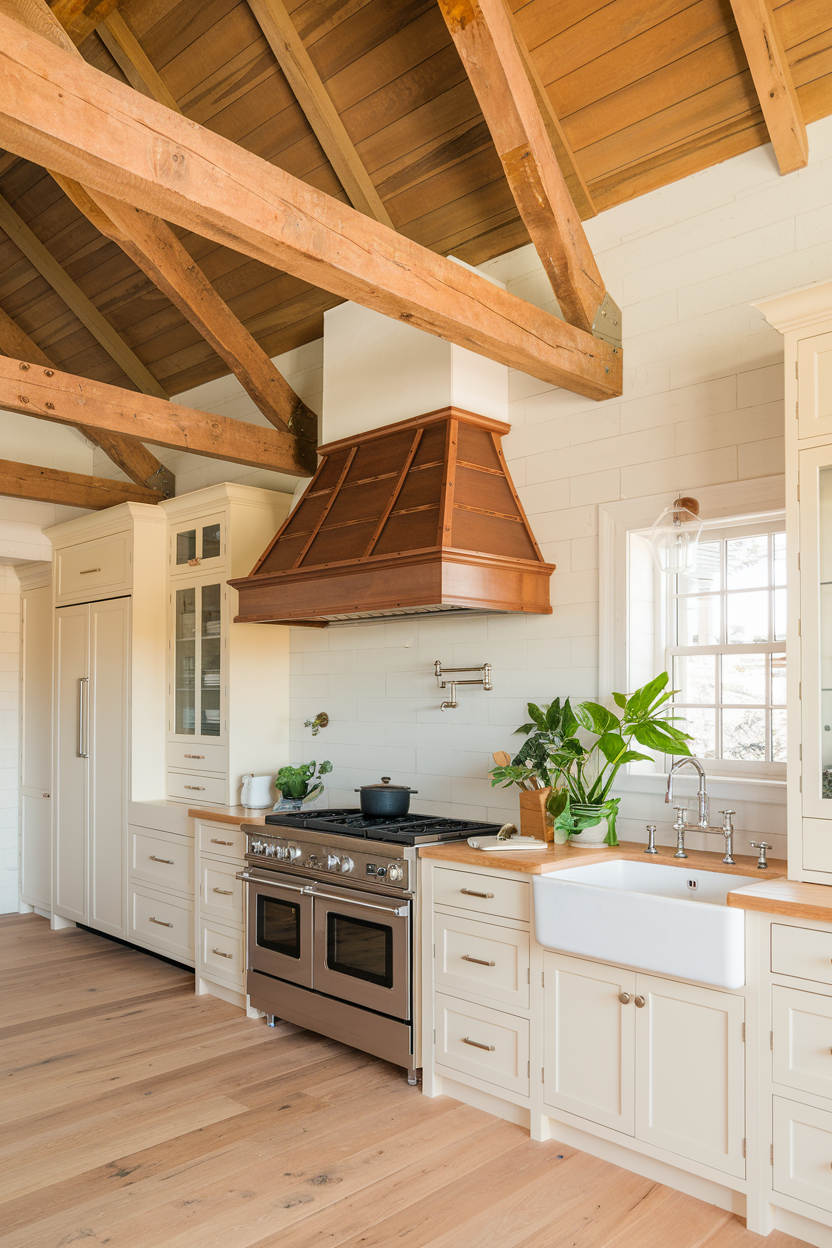
Give your kitchen architectural character with exposed wooden ceiling beams set against white walls and cabinetry. The natural timber draws attention upward, creating a sense of structure and bringing warmth to rooms with high or vaulted ceilings. Reclaimed beams are ideal for rustic and farmhouse interiors, while smooth, carefully finished timber suits contemporary spaces. Keeping the surrounding surfaces white helps the beams stand out without making the kitchen feel too dark or heavy. You can echo the ceiling material through wooden stools, countertops, or shelving to create a cohesive design that feels intentional rather than overly coordinated.
5. White Walls and a Wood-Framed Mirror or Chalkboard
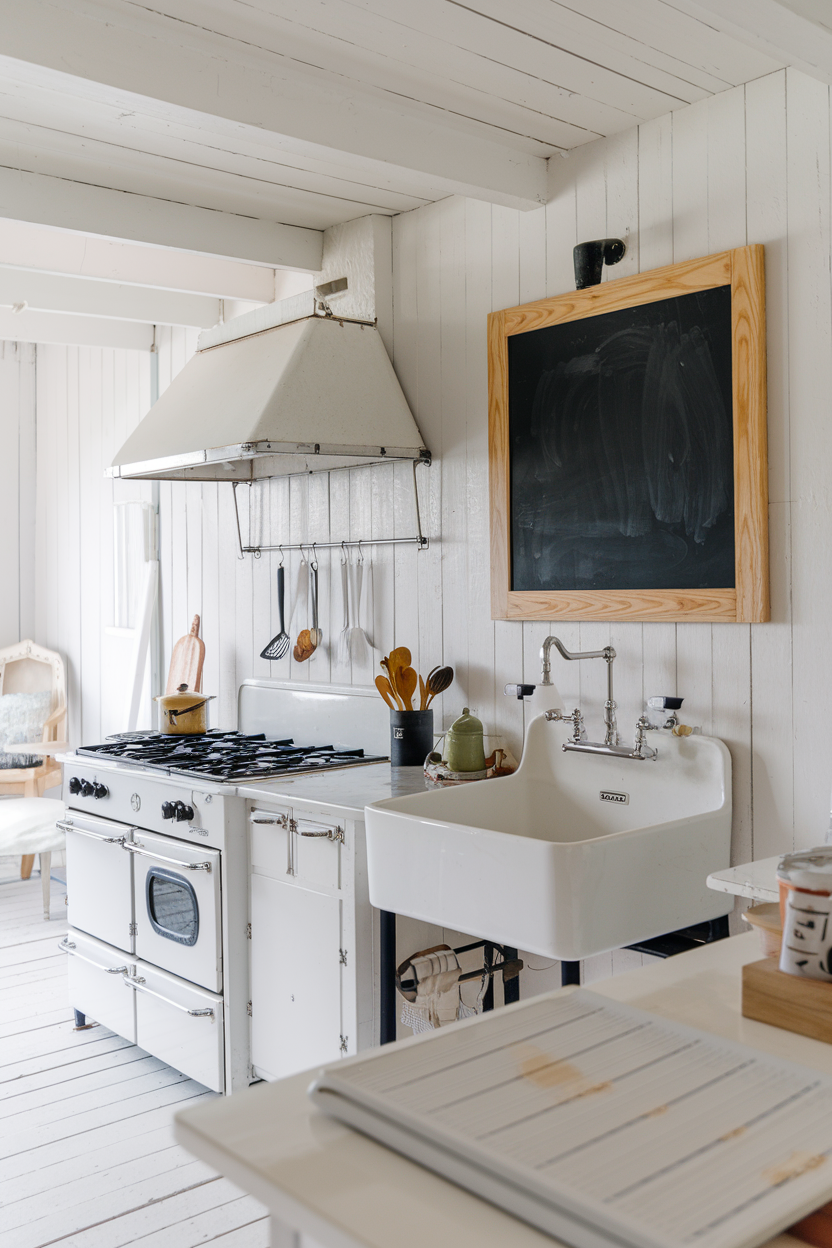
Introduce both practicality and character with a wood-framed mirror or chalkboard against white kitchen walls. A mirror can reflect natural light and create the impression of a more spacious room, making it especially useful in smaller kitchens or breakfast areas. A chalkboard, on the other hand, offers a convenient place to write shopping lists, meal plans, or family reminders. Wooden frames soften the appearance of these functional accessories and connect them with other natural finishes in the kitchen. Choose a frame style that suits your interior, from rustic reclaimed timber to smooth, minimalist oak. This small addition can make an everyday space feel more personal and thoughtfully decorated.
6. White Range with Wood Cabinet Surround
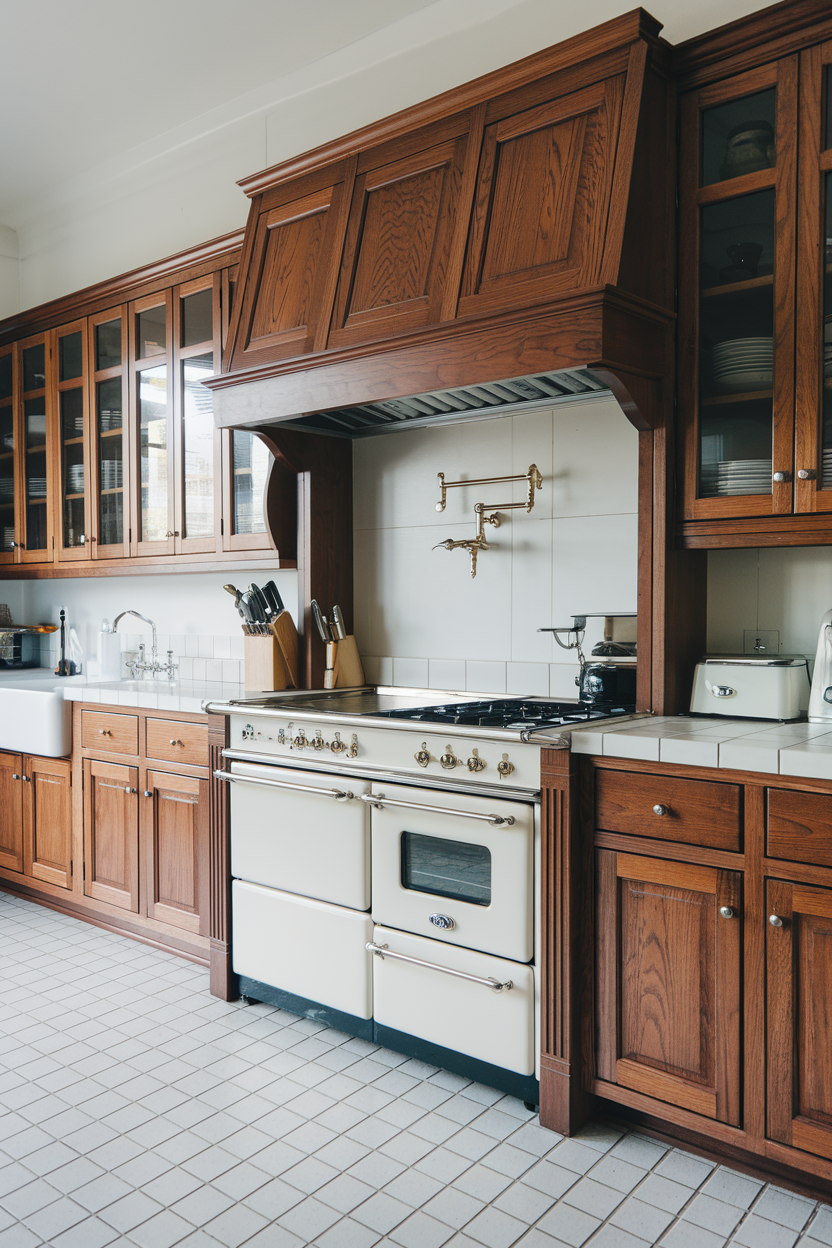
Highlight your cooking area by pairing a white range with surrounding wooden cabinetry. The lighter appliance stands out against the natural timber, creating a focal point that feels distinctive without introducing a bold color. Pale oak cabinets offer a fresh, contemporary appearance, while walnut or other darker finishes create a more dramatic contrast. A simple white backsplash can help connect the appliance to the rest of the kitchen, while understated hardware keeps the overall design cohesive. When planning the layout, choose cabinetry and finishes suitable for the heat and clearances required around the range. The result is a functional cooking area that combines clean lines with the warmth of natural materials.
7. Wood Ceiling in a White Kitchen
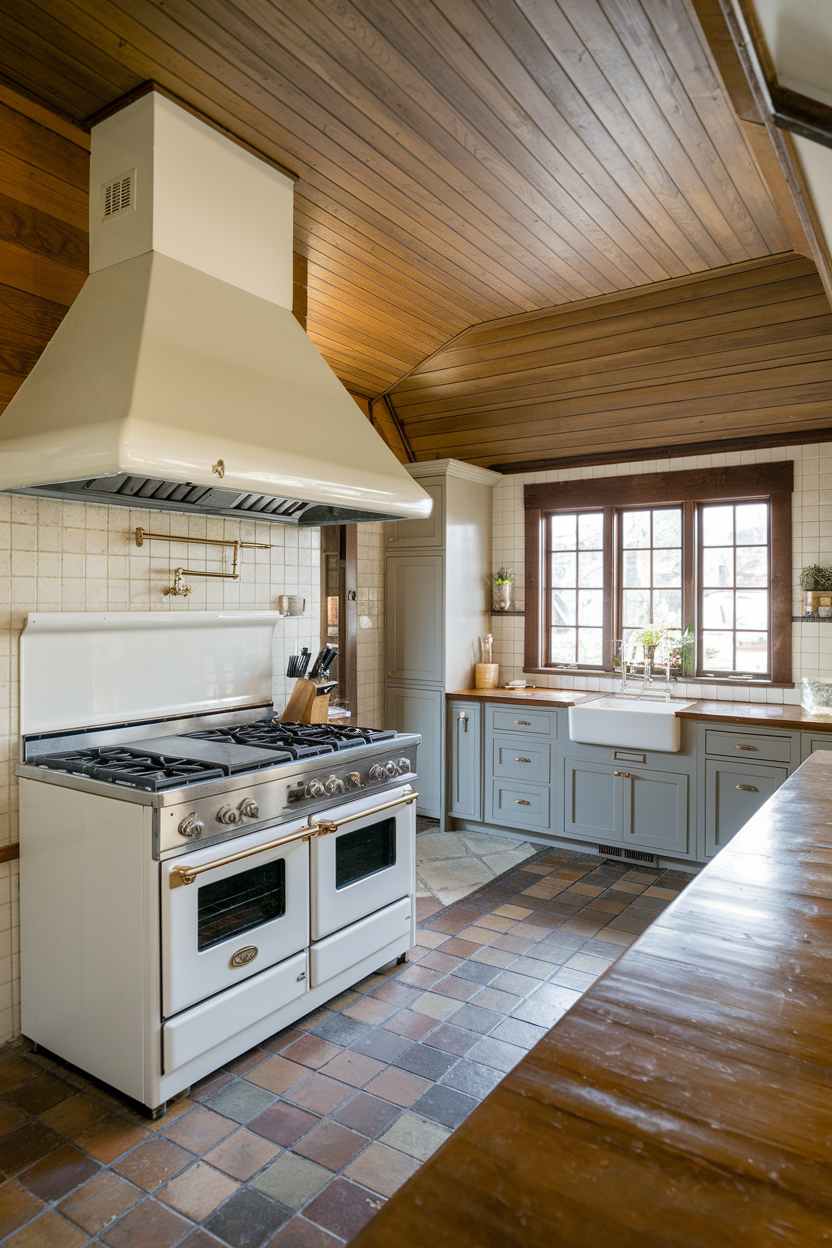
Add warmth overhead by introducing a wooden ceiling into an otherwise white kitchen. This design choice creates visual interest without occupying valuable floor or counter space, making it particularly effective in minimalist interiors. Pale timber planks can make the room feel relaxed and airy, while darker wood introduces a more dramatic, intimate atmosphere. You might also consider a partially wood-clad ceiling to define the kitchen area in an open-plan home. White cabinets and light countertops help maintain a balanced appearance, preventing the overhead timber from dominating the room. The combination creates an inviting space with a distinctive architectural feature.
8. White Kitchen with Wooden Bench Seating
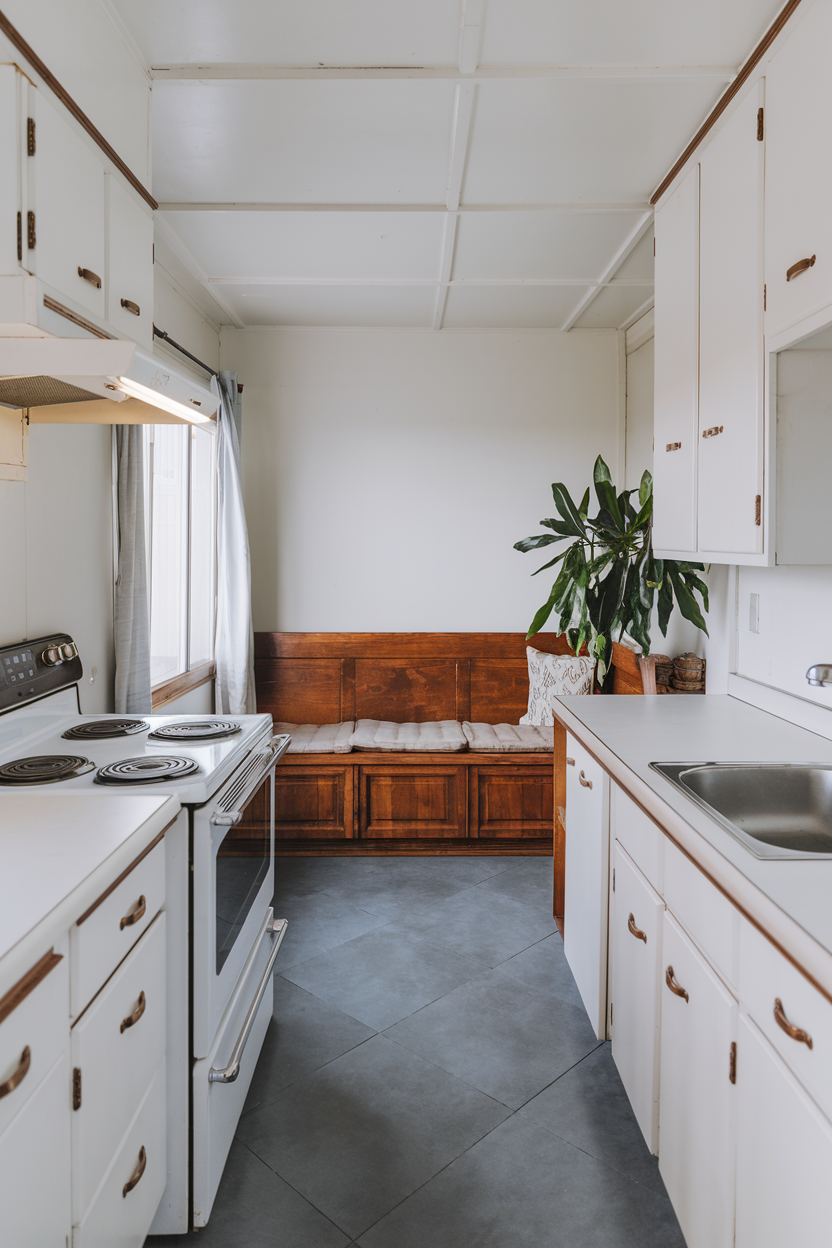
Create a charming breakfast nook by pairing a white kitchen with a built-in wooden bench. The timber base introduces warmth and gives the seating area a cozy, furniture-like quality, while white walls and cushions keep the space feeling bright. A simple wooden bench can work beautifully beneath a window, along a dining wall, or beside a compact kitchen table. Add neutral cushions, soft linen upholstery, and a few textured accessories to make the seating more comfortable. This arrangement is particularly useful in smaller kitchens because built-in benches can make efficient use of corners and awkward spaces while providing a welcoming place for everyday meals.
9. Matte White Appliances with Wooden Cabinetry
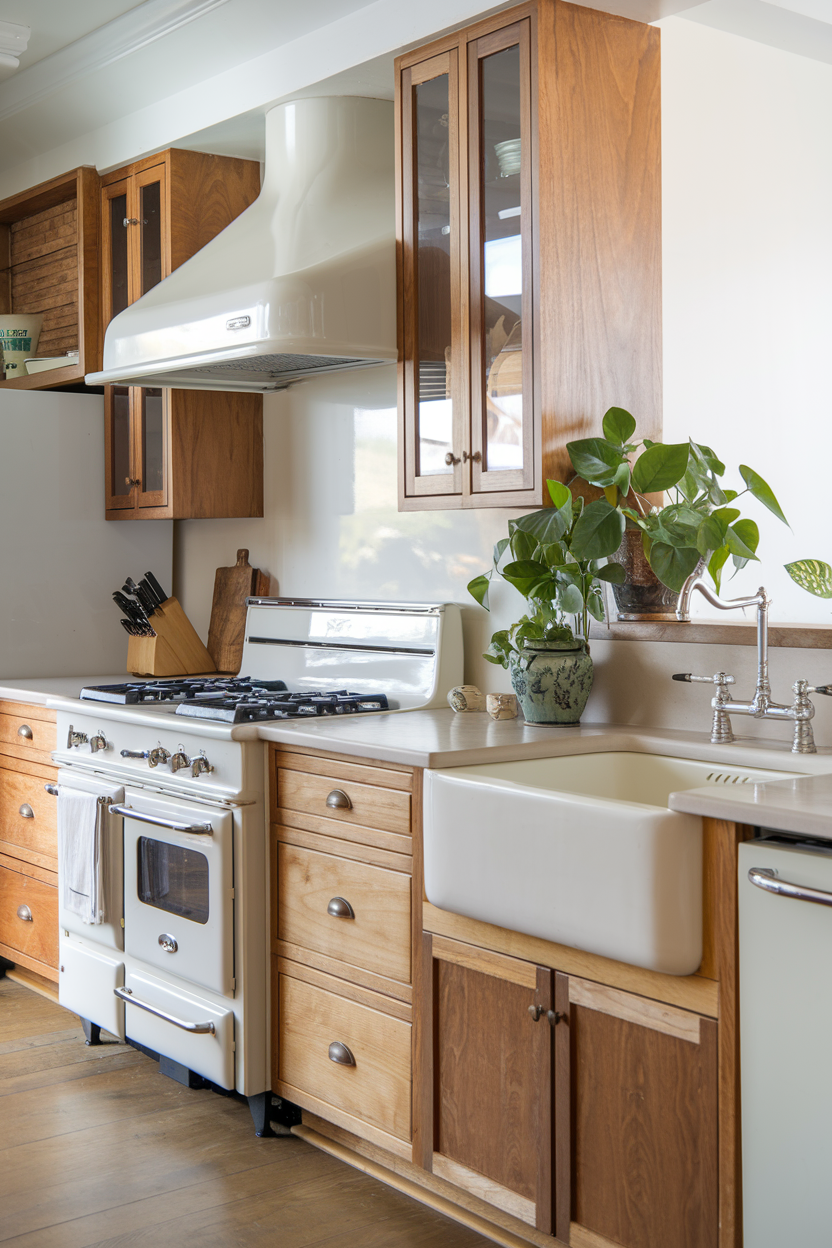
Create a soft, contemporary aesthetic by pairing matte white appliances with natural wooden cabinetry. Unlike highly reflective finishes, matte surfaces offer a subtle appearance that blends beautifully with pale walls and understated countertops. Wooden cabinets add the texture and warmth needed to keep the kitchen from feeling too uniform. Light oak works particularly well in Scandinavian-inspired interiors, while medium and dark wood tones introduce a richer, more dramatic effect. Choose streamlined handles and simple lighting to maintain the clean look. This combination is especially appealing if you prefer a modern kitchen that feels calm, functional, and welcoming rather than overly glossy.
10. White Tile with Wooden Floating Shelves
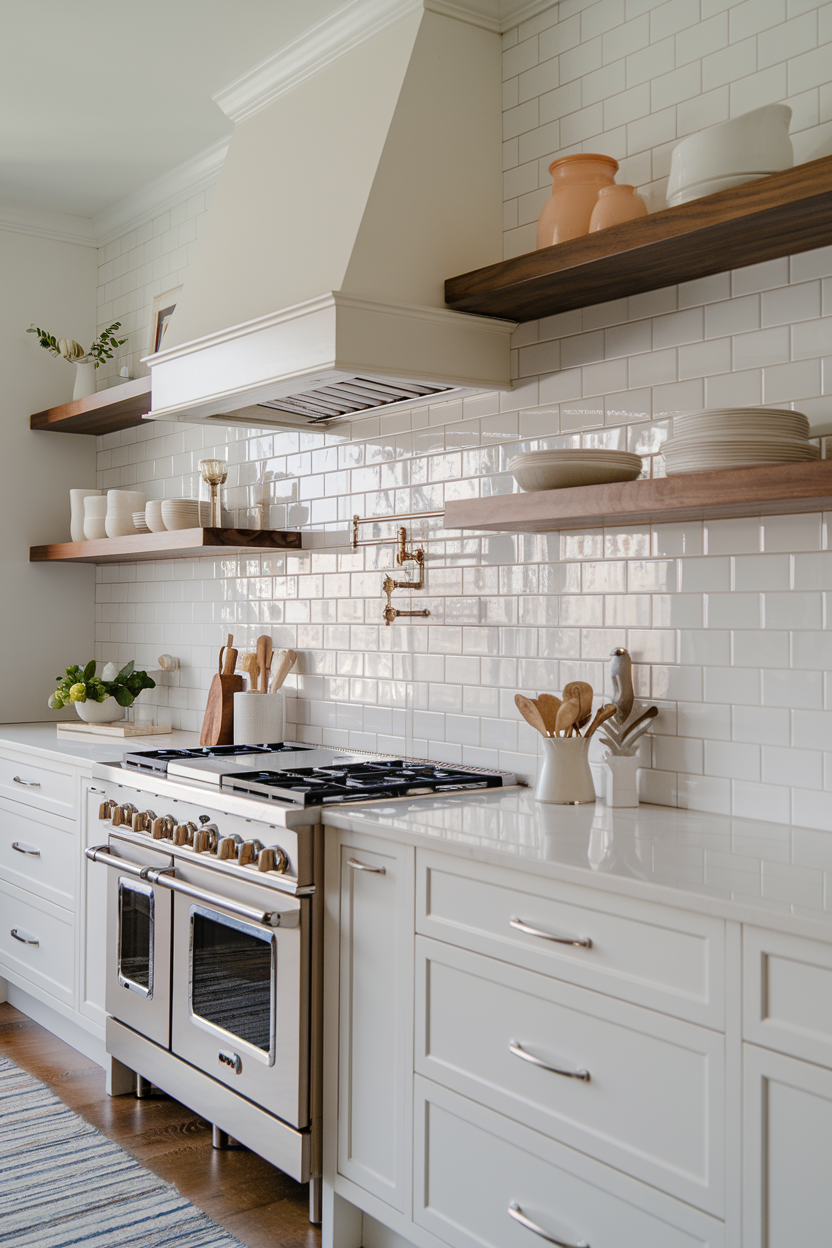
Refresh a classic white-tile backsplash with wooden floating shelves that provide both storage and decoration. White subway tiles create a bright, timeless backdrop, while the shelves introduce natural color and break up the repetitive lines of the tile. Use them to store frequently reached-for spices, arrange everyday dishes, or display a few favorite ceramics and small plants. Light wood creates a fresh, casual look, while darker timber adds contrast and sophistication. For the best result, leave some breathing room between displayed objects so the shelves remain visually appealing and easy to maintain.
11. White Cabinets with Natural Wood Countertops
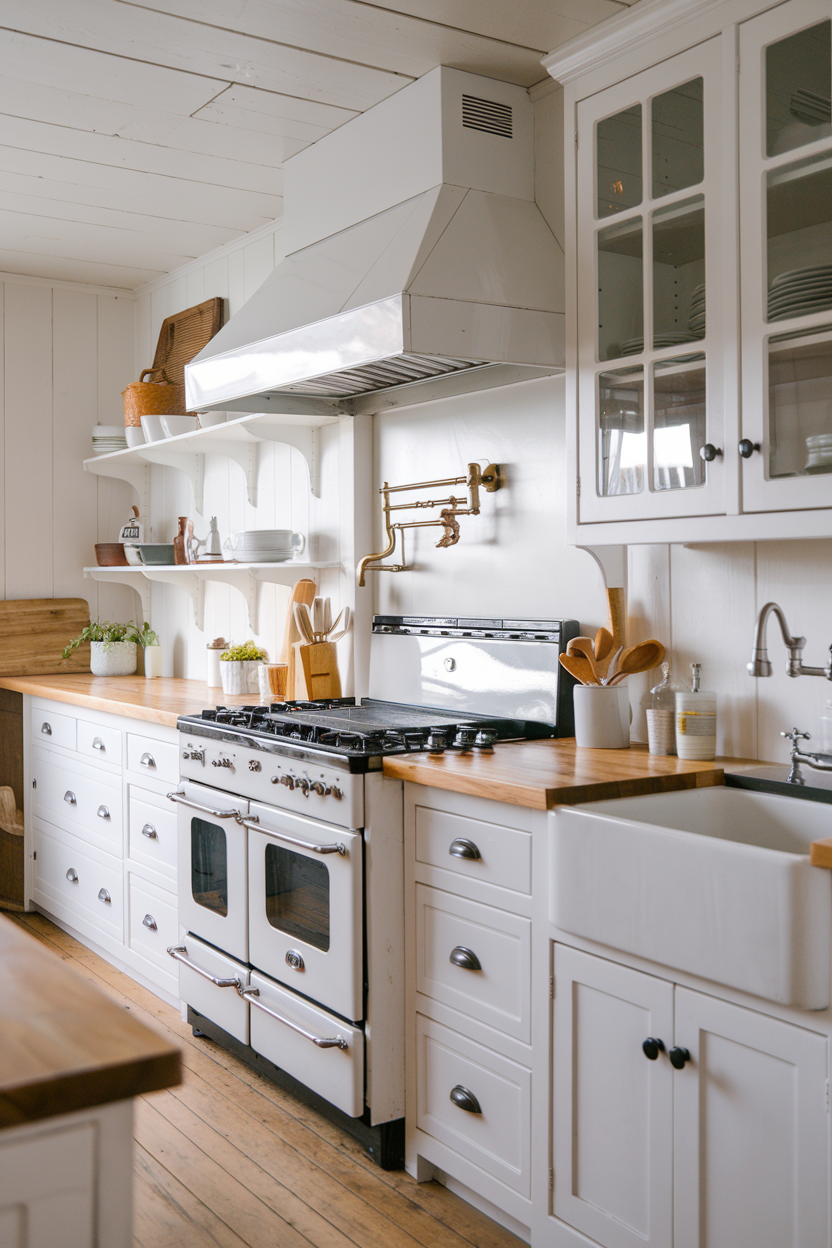
Create a welcoming kitchen by pairing crisp white cabinets with natural wood countertops. The bright cabinetry keeps the room looking fresh and spacious, while the warm tones and distinctive grain patterns of wood introduce an organic element. Butcher block surfaces work particularly well in farmhouse, Scandinavian, and transitional kitchens, adding character without sacrificing functionality. You can choose light oak for a soft, airy appearance or rich walnut for a more sophisticated contrast. Complete the look with simple hardware and a few natural accessories to create a kitchen that feels both practical and beautifully curated.
12. Warm Wood Floors with All-White Everything
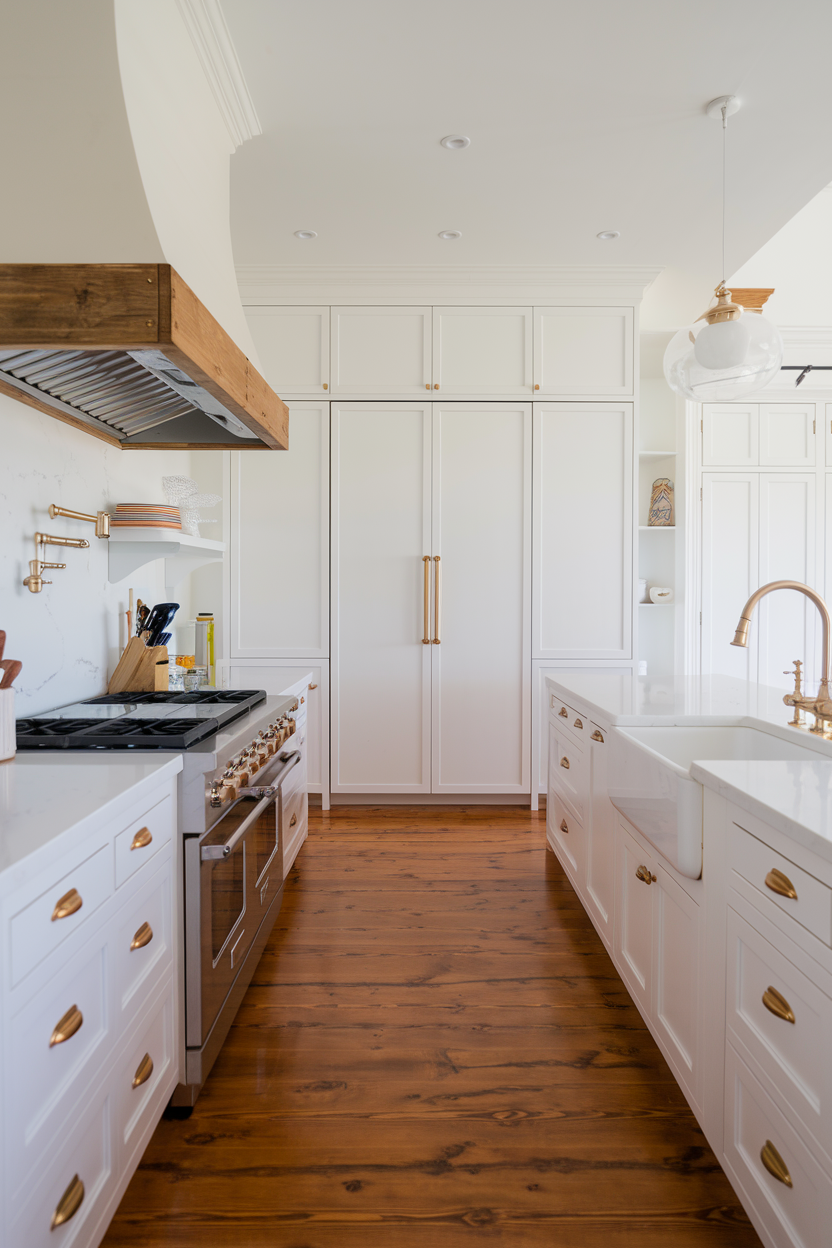
Give an all-white kitchen a cozy foundation with warm wooden flooring. Wide-plank oak floors are especially appealing because their natural grain and golden undertones soften the brightness of white cabinets, walls, and countertops. This combination creates a clean, uncluttered atmosphere without making the room feel cold or sterile. It also works beautifully in open-plan homes, where continuous wood flooring can connect the kitchen with adjoining living and dining areas. Add woven baskets, linen window treatments, or wooden dining chairs to reinforce the natural aesthetic while keeping the overall design light and timeless.
13. Wood-Lined Niche in a White Wall
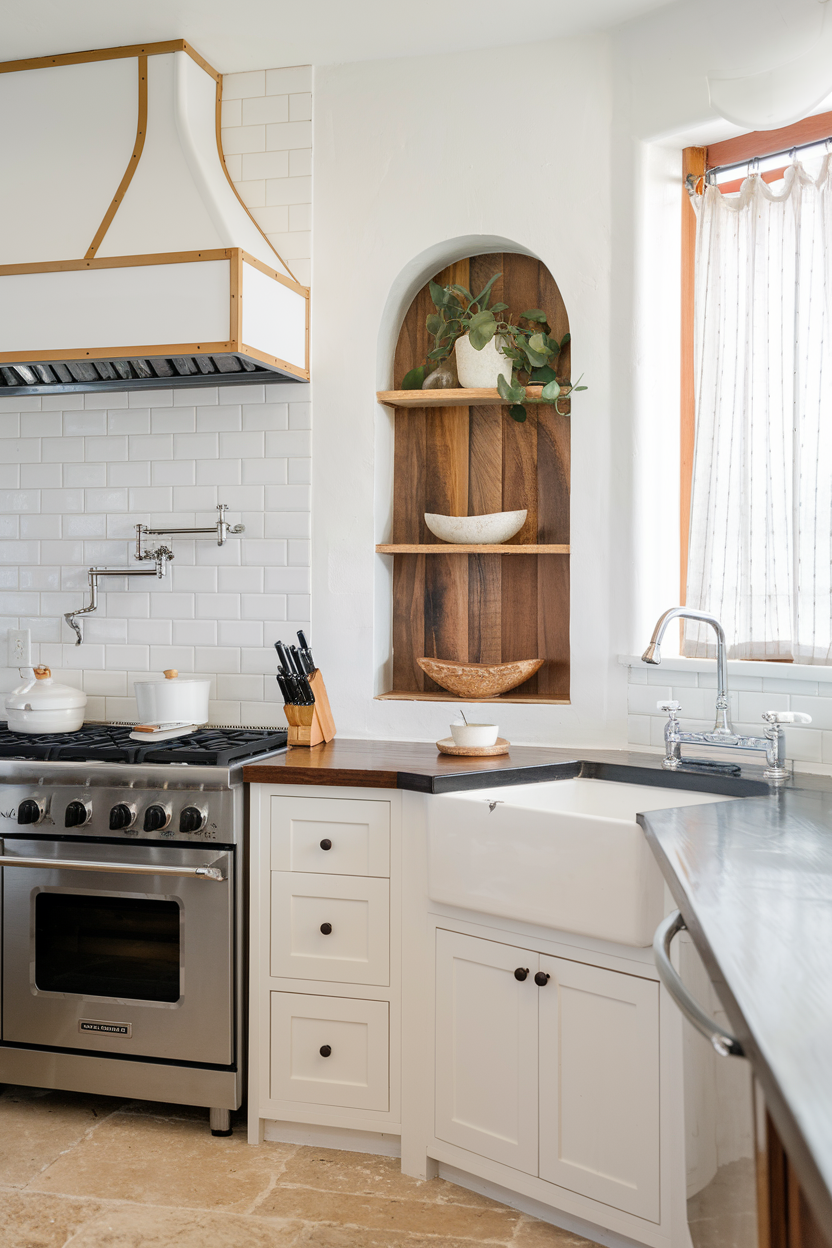
Create a small but striking design feature by lining a recessed kitchen niche with natural wood. The contrast against white walls gives the niche visual depth and makes whatever you place inside stand out. Use the space to display cookbooks, decorative bowls, pottery, or a few everyday kitchen essentials. A wooden-lined niche can also provide a practical location for frequently used items without extending into the room. Light oak creates a subtle, contemporary look, while walnut offers a richer accent. Consider adding discreet lighting to highlight the grain and make the recess more visually appealing, especially in kitchens with limited natural light.
14. White and Wood Herringbone Backsplash
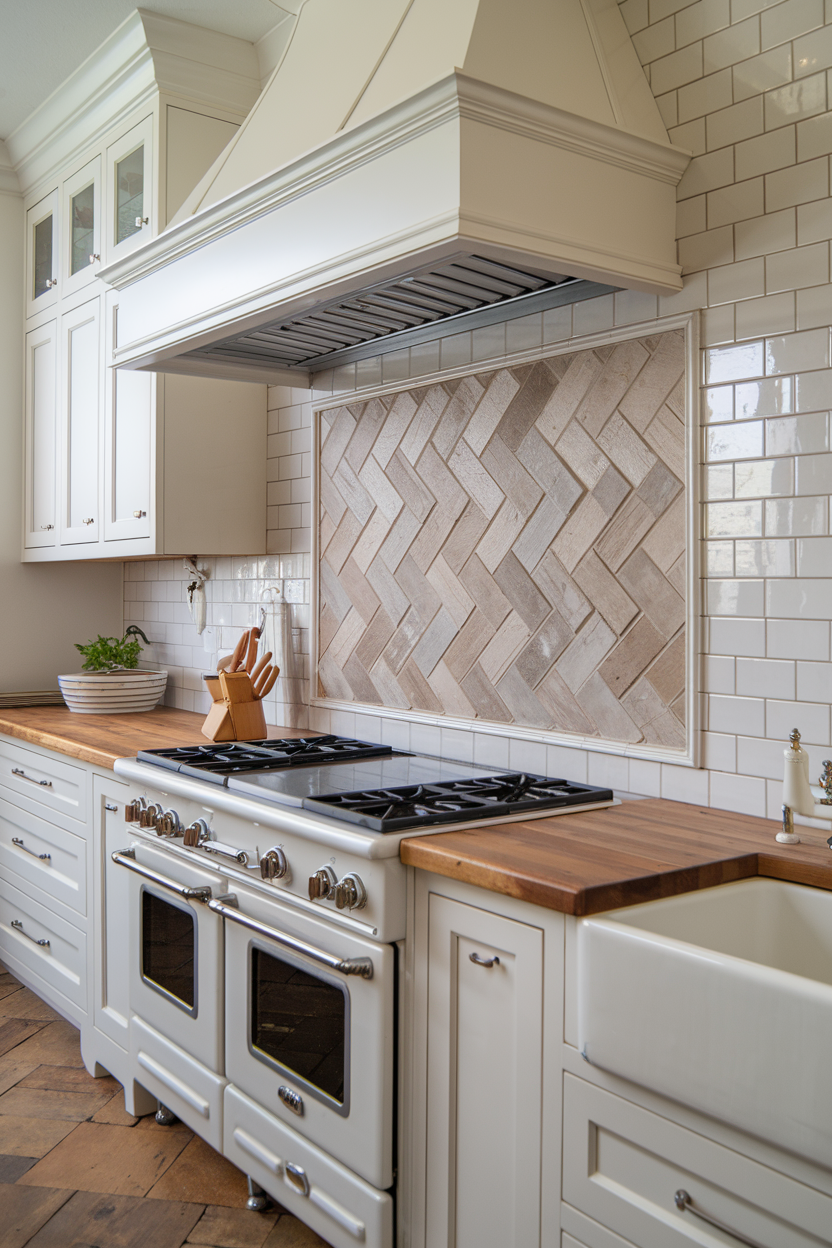
Introduce pattern and craftsmanship with a backsplash inspired by the herringbone layout. Combining white tiles with wood-look tiles or suitable wooden elements creates movement while maintaining a calm, natural color palette. The angled arrangement adds visual interest without relying on bright colors or elaborate decoration. You can use the pattern behind the stove as a focal point or extend it across the main countertop wall for a more unified effect. For areas exposed to water, grease, and heat, durable wood-look porcelain tiles are often a practical choice. Pair the backsplash with simple white cabinetry and restrained accessories to keep the overall design balanced.
15. White and Wood Combo Pendant Light
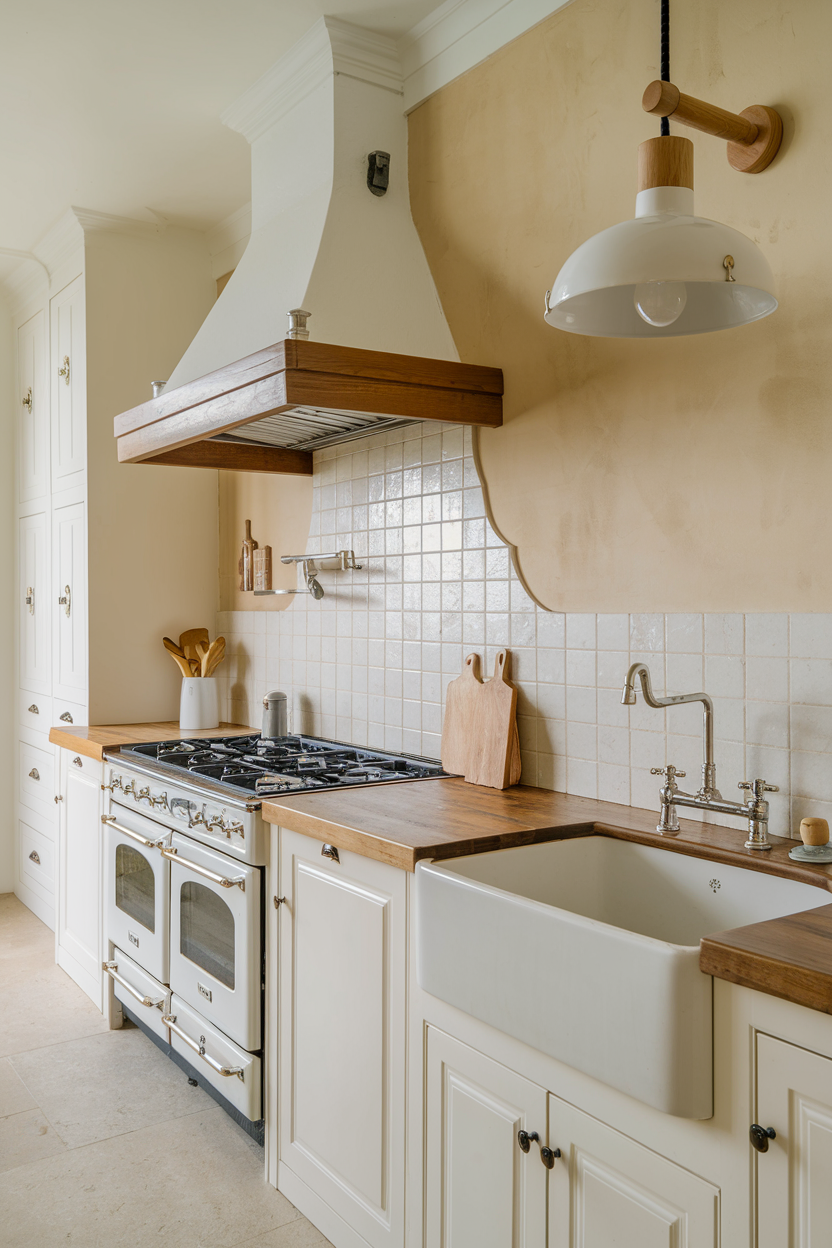
Bring your white-and-wood kitchen scheme together with pendant lighting that combines both materials. White shades help distribute light while maintaining a clean appearance, and wooden accents introduce a natural detail that connects the fixture to the rest of the room. Hang a single pendant over a compact island or arrange a coordinated pair or trio above a larger countertop, depending on the space. Rounded shades create a softer, more relaxed look, while geometric designs suit contemporary kitchens. Beyond their decorative appeal, well-positioned pendants provide useful task lighting and help define the island as a central area for cooking, dining, and socializing.
16. Wooden Cutting Boards Displayed as Decor
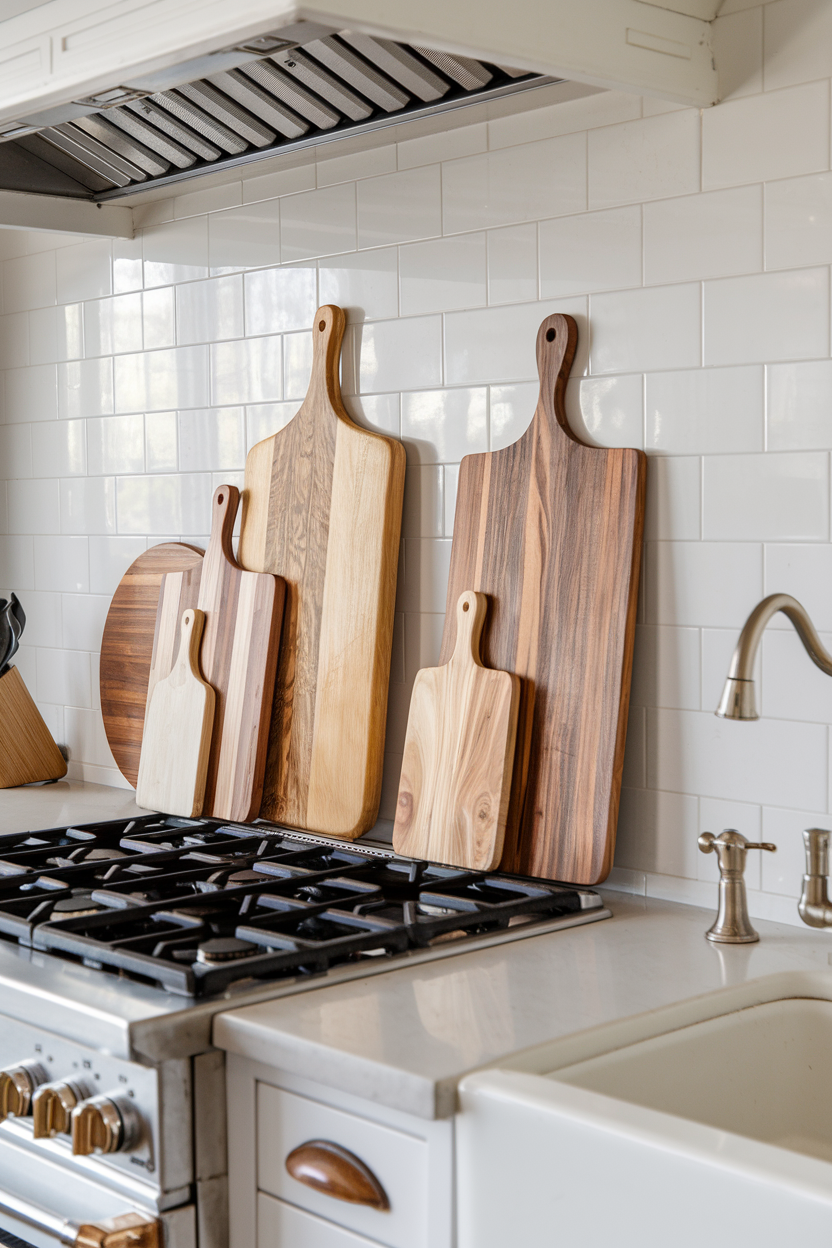
Turn everyday kitchen tools into attractive decorations by displaying wooden cutting boards against a white backsplash. Their varied shapes, warm tones, and distinctive grain patterns add an organic element to the room while keeping frequently used items within easy reach. Layer boards of different sizes against the wall or arrange them on an open shelf for a casual, collected appearance. You can complement the display with a ceramic utensil holder, a small potted herb, or a neutral vase. Keep the arrangement simple to avoid visual clutter, and make sure displayed boards are clean and completely dry before storing them against the wall.
17. White and Wood Slab Cabinets
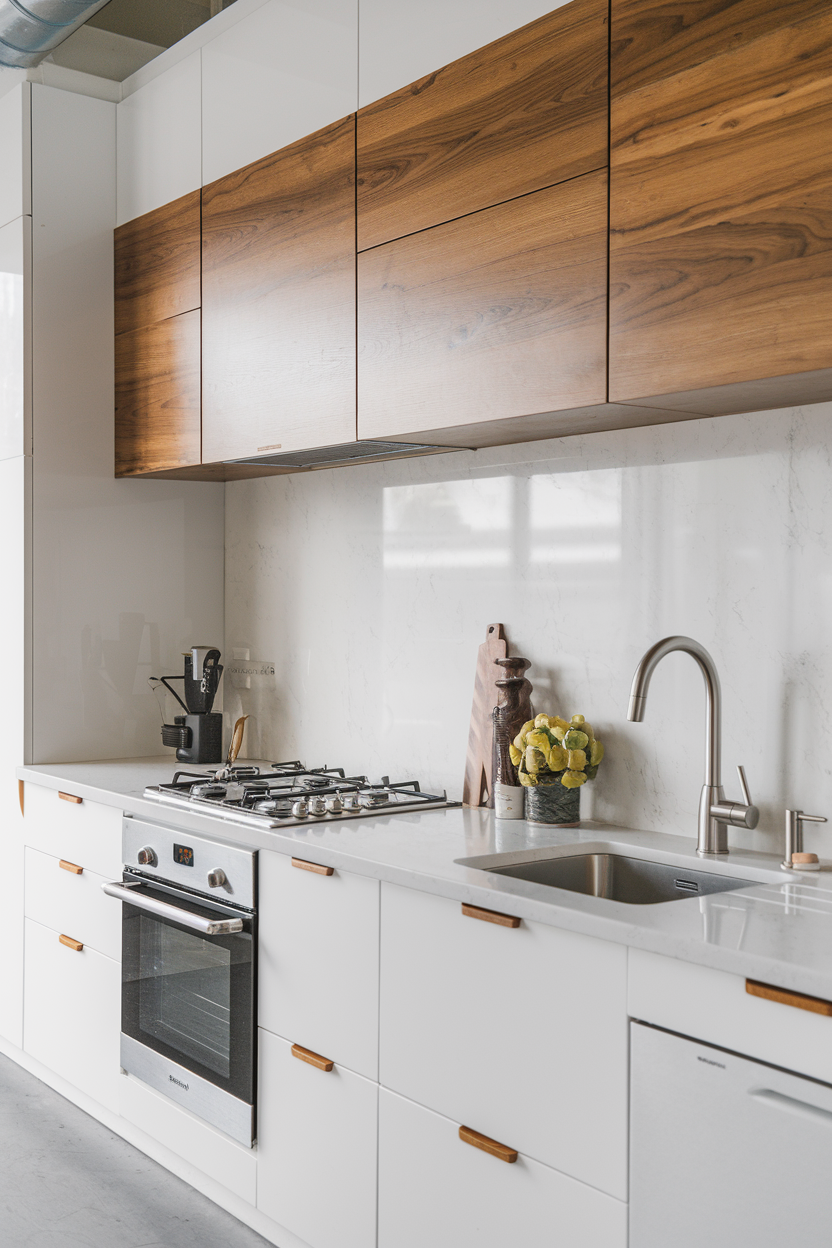
Achieve a sleek, modern aesthetic with flat-panel cabinets that combine white finishes and natural wood. The smooth fronts create a streamlined appearance, while the timber introduces enough texture to prevent the minimalist design from feeling flat. Consider using white cabinets along the upper walls and wood finishes on the lower cabinets, or create a contrasting bank of wooden cabinetry beside a white island. Handleless doors and discreet hardware can reinforce the clean lines. This combination works particularly well in Scandinavian, contemporary, and mid-century-inspired interiors, where natural materials and simple forms are central to the overall design.
18. Wooden Drawer Fronts in a White Base
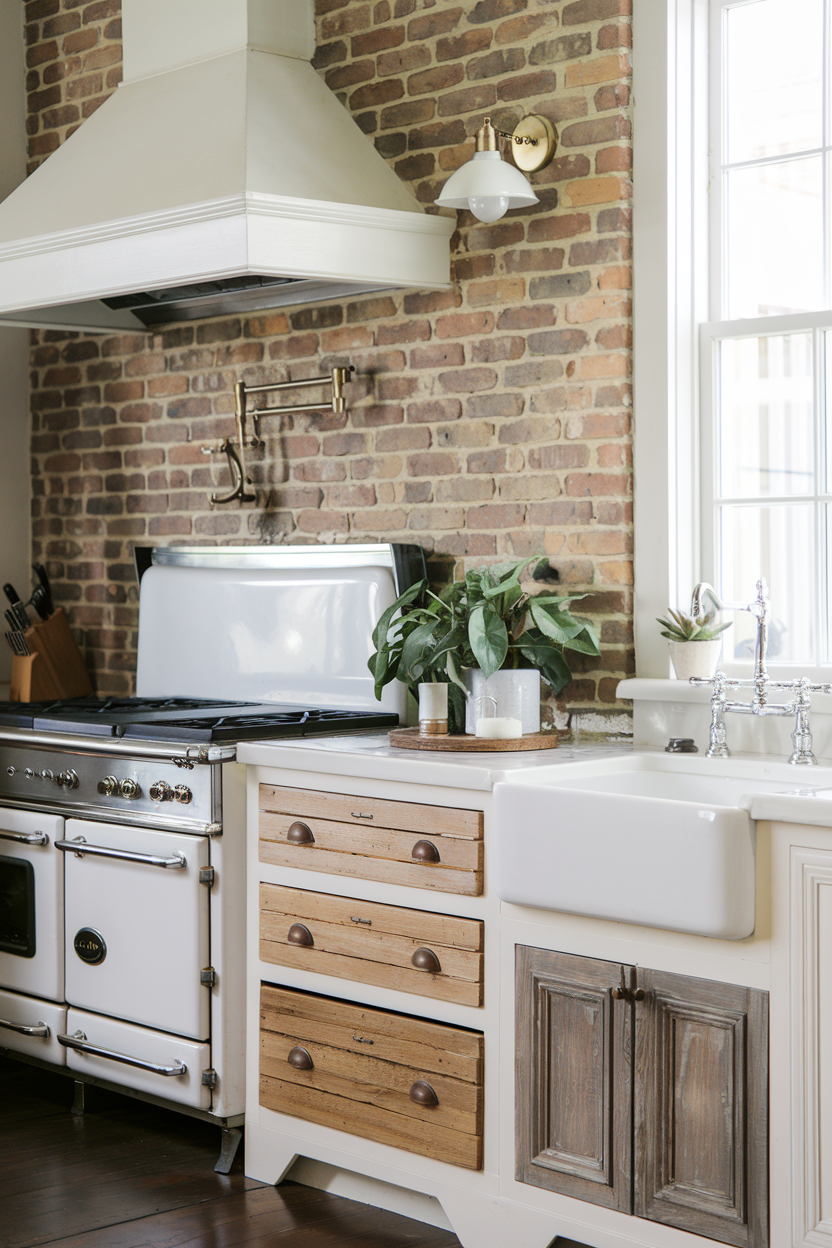
Add a subtle design twist to white cabinetry by incorporating wooden drawer fronts in selected sections. Rather than replacing every cabinet door, this approach uses small areas of contrasting timber to create visual interest and a more customized appearance. Wooden drawers can be particularly effective beneath a countertop, within an island, or in a dedicated storage section. Light oak keeps the design fresh and understated, while darker wood creates a stronger contrast. Repeat the same finish elsewhere in the kitchen, perhaps through open shelving or bar stools, to make the detail feel intentional. It is a simple way to experiment with mixed materials without committing to a major redesign.
19. Two-Tone Cabinets
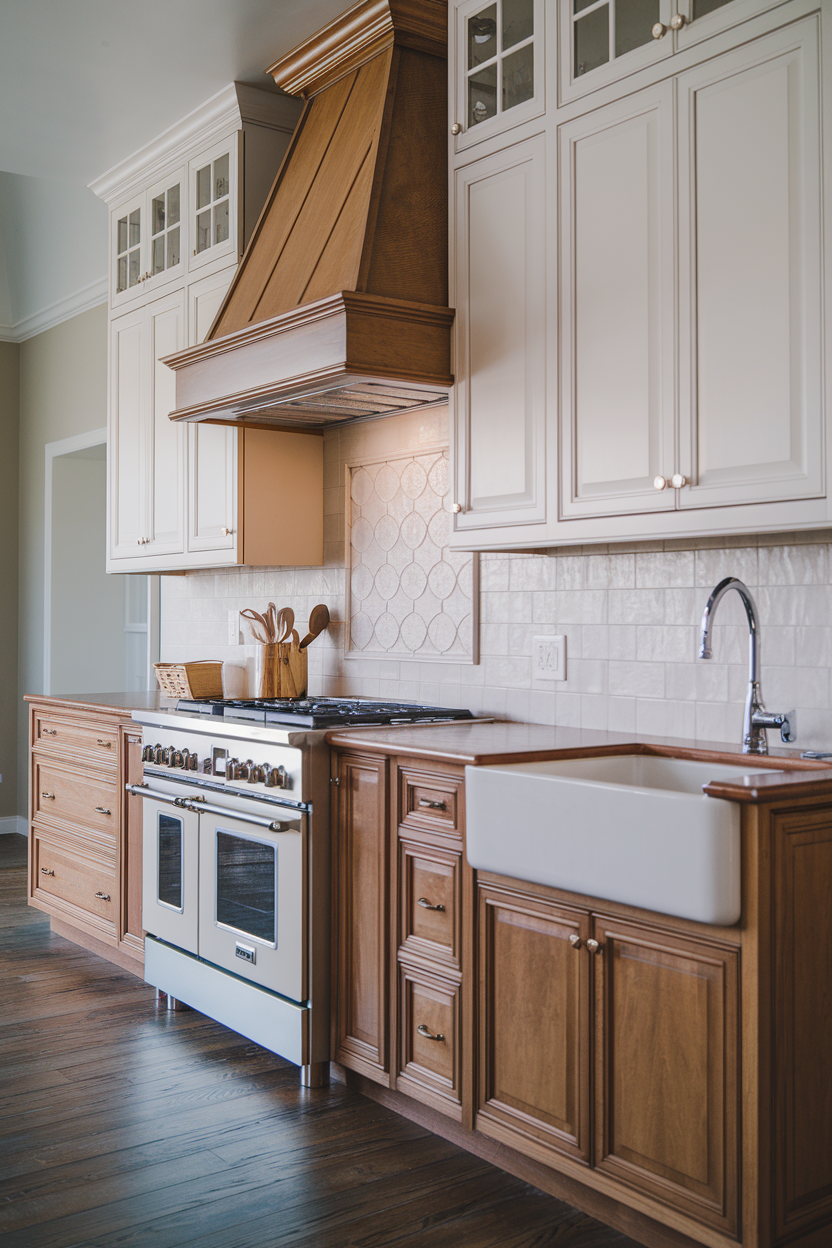
Bring depth and personality to your kitchen by combining white upper cabinets with wooden lower cabinets. The white surfaces reflect light and make the room feel open, while the wood introduces warmth and gives the cabinetry a more substantial appearance. Light ash and oak create a relaxed, contemporary atmosphere, whereas walnut adds richness and sophistication. This arrangement is particularly useful when you want to introduce contrasting materials without making the entire kitchen feel visually busy. Finish the design with a neutral backsplash, understated hardware, and complementary countertops for a balanced look that feels modern yet enduring.
20. White Shiplap Walls and Wood Shelving
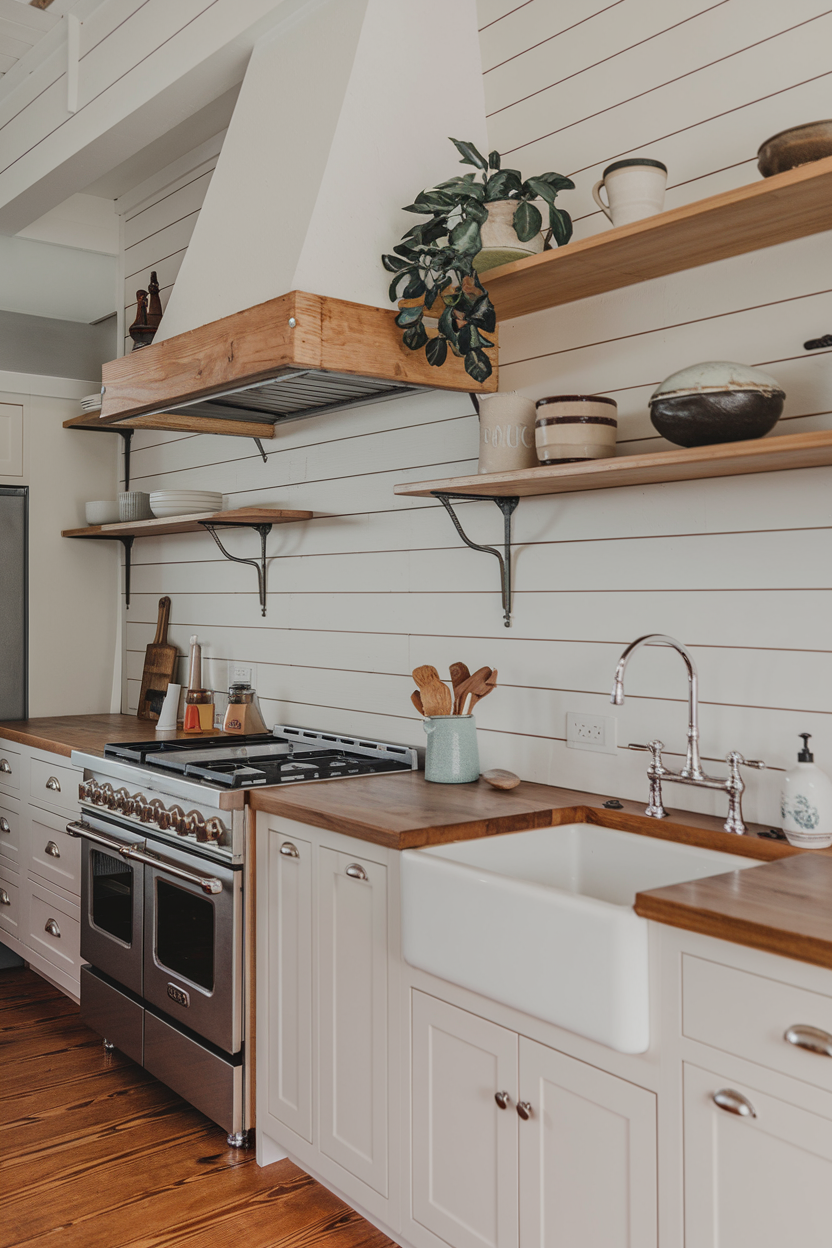
Introduce farmhouse charm with white shiplap walls and natural wood floating shelves. The horizontal lines of the shiplap add subtle texture, while wooden shelving creates a warm contrast against the bright background. This combination is ideal for displaying everyday essentials, such as ceramic mugs, glass jars, cookbooks, and small potted herbs. Choose reclaimed timber for a rustic appearance or smooth oak for a cleaner, more contemporary finish. Keeping the displayed items thoughtfully arranged prevents the shelves from looking cluttered and allows each material to stand out. The result is a relaxed, personalized kitchen with plenty of visual character.
21. Wood Island in a White Kitchen
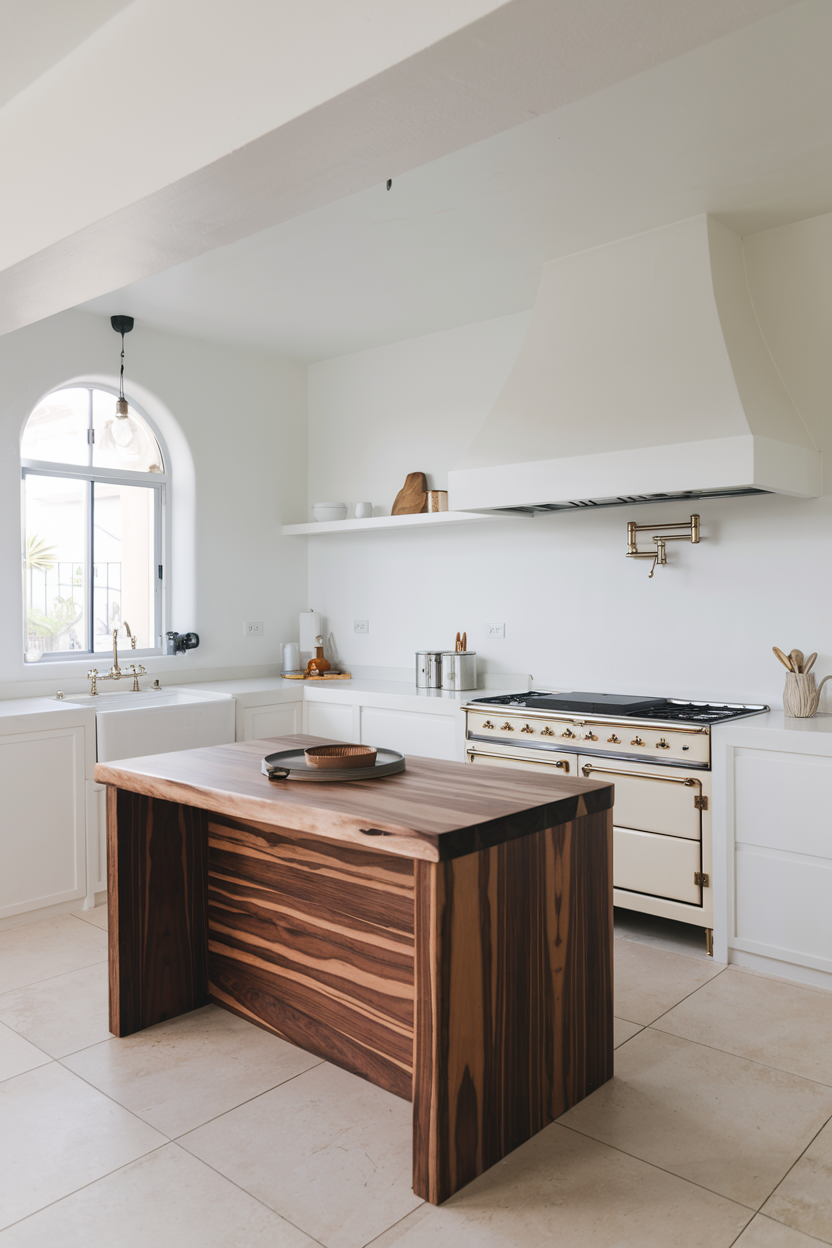
Make your kitchen island the centerpiece of the room by choosing a natural wood finish against an otherwise white backdrop. A wooden island adds depth and creates a welcoming gathering spot for meal preparation, casual breakfasts, and conversations with family and friends. Pale oak offers a fresh, Scandinavian-inspired look, while darker walnut creates a striking contrast with white cabinets and countertops. For additional character, consider decorative paneling, distinctive hardware, or pendant lights that complement the wood grain. This simple material change can transform an ordinary kitchen layout into a more inviting space without introducing bold colors or elaborate decorations.
22. Wooden Pantry Door
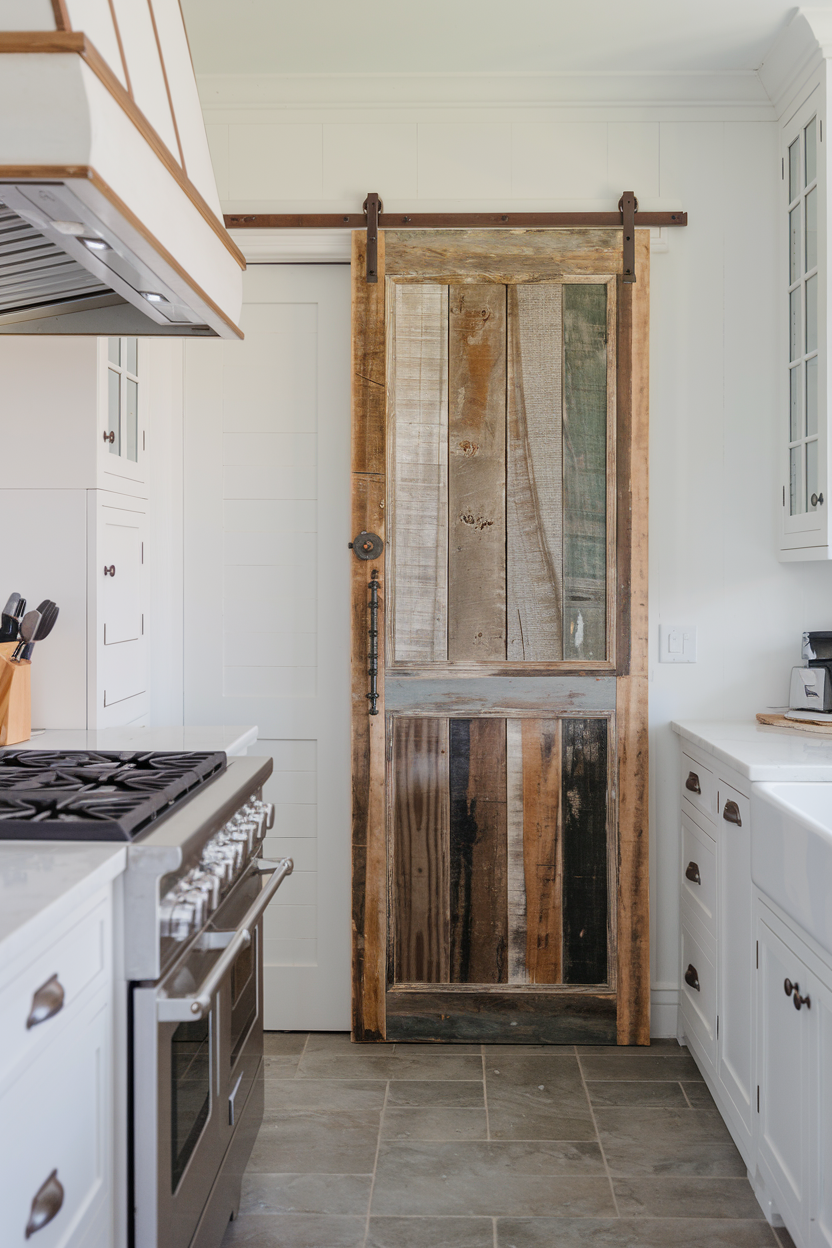
Add warmth and character to a white kitchen with a wooden pantry door. The natural grain provides an appealing contrast against bright walls and cabinets, creating a focal point without requiring an elaborate renovation. A reclaimed timber door introduces rustic charm, while a smooth oak or walnut design offers a more refined appearance. Consider sliding barn-style hardware if you want to emphasize a farmhouse aesthetic, or choose a simple hinged door for a cleaner look. Coordinating the door with nearby shelves, stools, or flooring helps the different elements feel connected. This practical feature can become one of the most distinctive details in the room.
23. White Cabinets and Wooden Backsplash
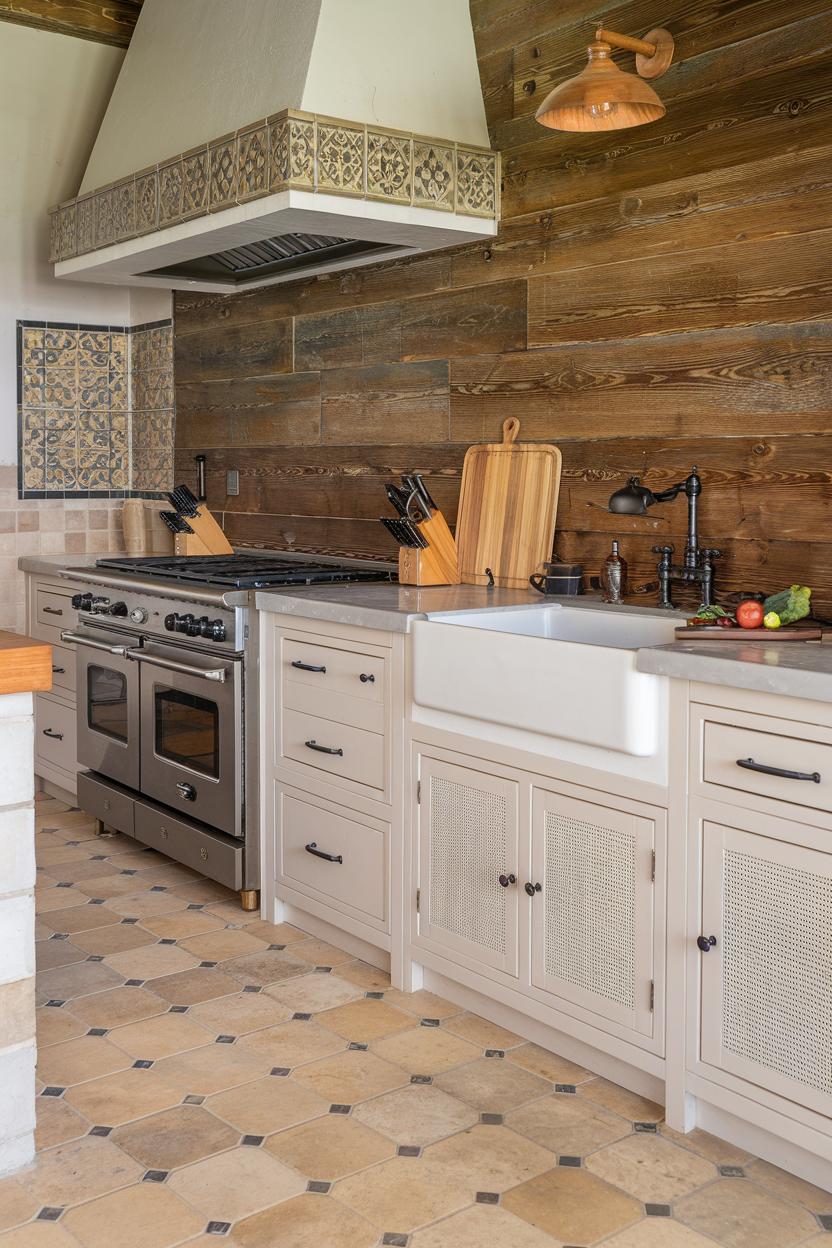
Give your kitchen an unexpected twist by pairing white cabinetry with a wood backsplash. While tile and stone are traditional choices, wood introduces a softer texture and an earthy appearance that can make the space feel more inviting. Vertical timber slats create a contemporary feature, while carefully arranged wooden panels offer a more rustic effect. Because backsplashes are exposed to moisture, grease, and heat, select an appropriate material and protective finish for the intended location. Wood-look porcelain tiles can also provide a similar aesthetic with easier maintenance. Keep the remaining finishes relatively simple to let this distinctive combination become the highlight of your kitchen.
24. White Walls and Wood-Framed Windows
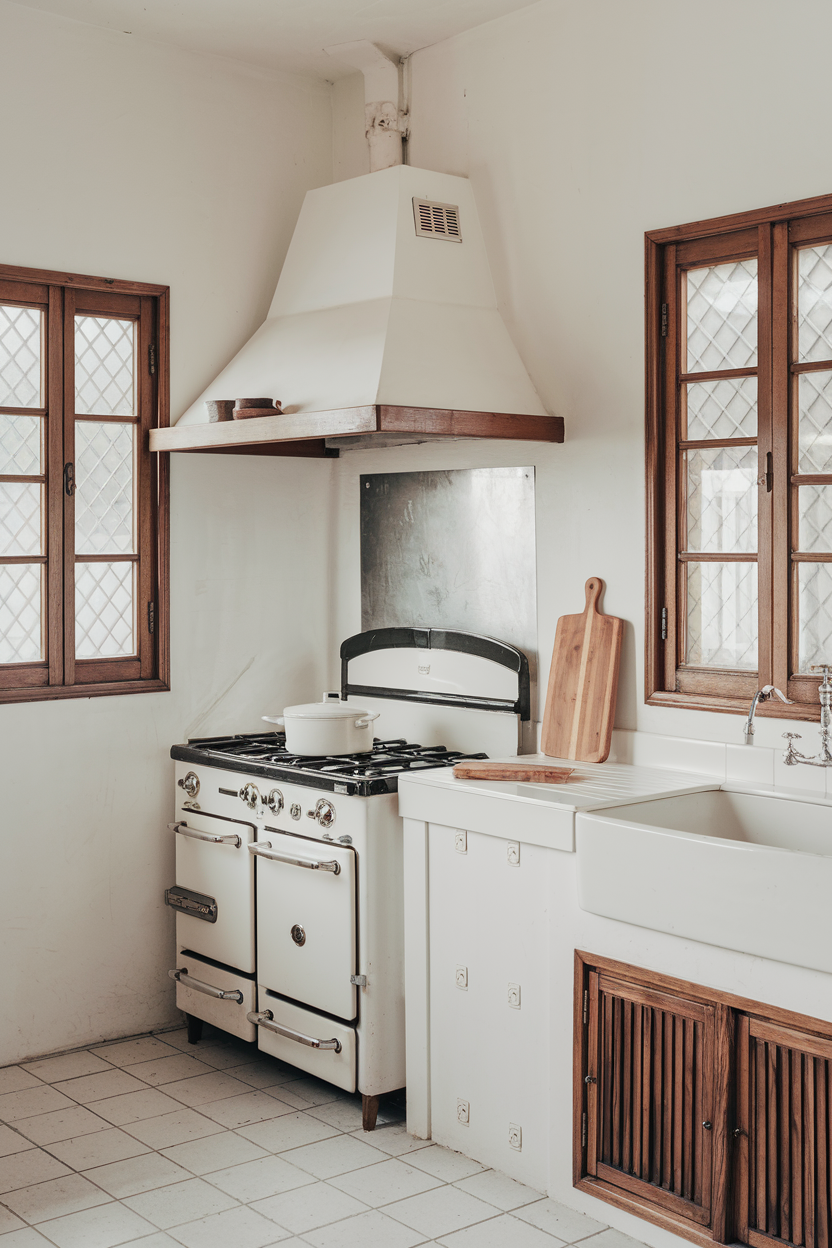
Highlight natural light and outdoor views by surrounding your kitchen windows with wooden frames against white walls. The timber creates a defined border that draws attention to the window while introducing a warm architectural detail. This combination works especially well in kitchens overlooking gardens, courtyards, or leafy outdoor spaces, where the natural tones complement the scenery. Light oak offers a subtle, airy finish, while darker wood creates a more dramatic outline. Pair the windows with simple white curtains or leave them uncovered to maximize daylight. The result is a bright, inviting kitchen that feels connected to the outdoors.
25. White Beadboard with Wooden Accents
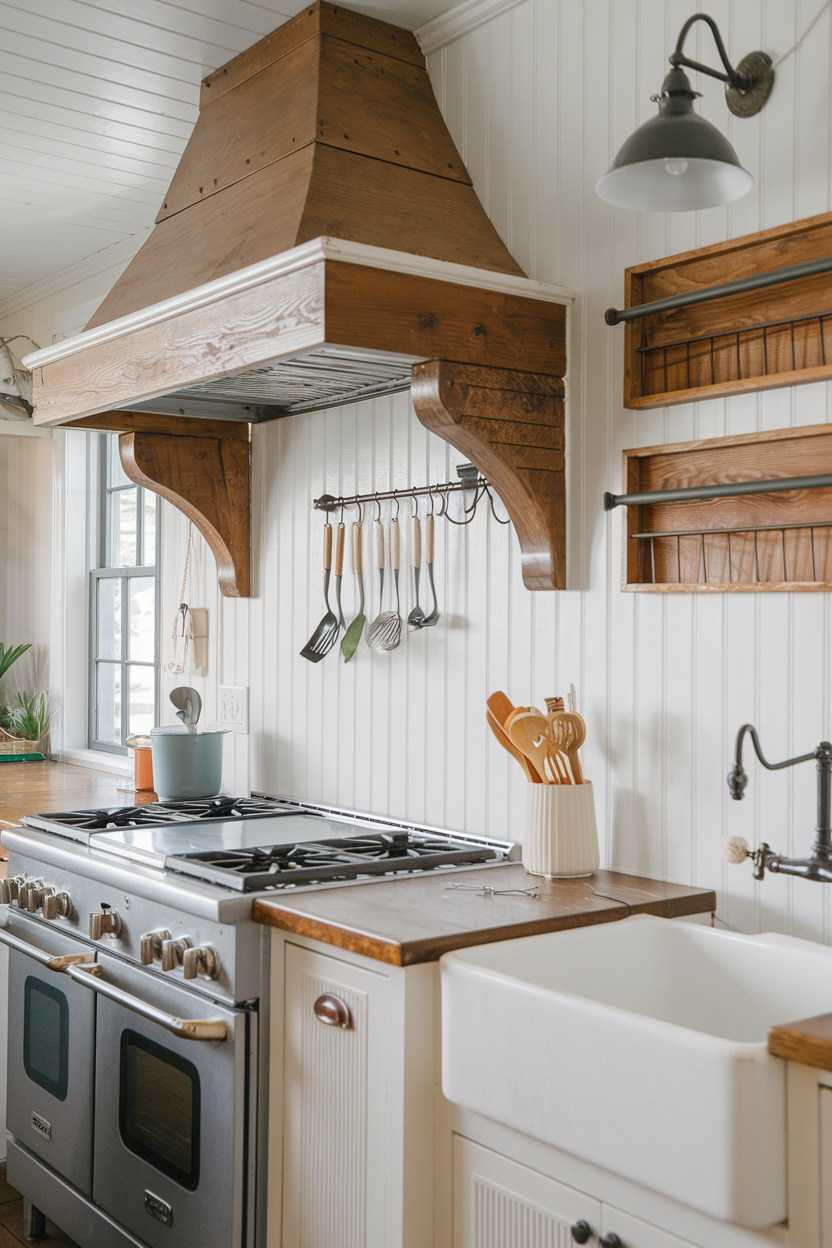
Bring a touch of cottage charm to your kitchen with white beadboard walls or cabinet panels complemented by natural wood accents. The narrow grooves create subtle texture, giving plain white surfaces more depth and character. Wooden utensil holders, floating shelves, countertops, or a timber range hood add warmth and prevent the traditional detailing from feeling overly sweet. This combination works beautifully in farmhouse, coastal, and country-inspired kitchens, but it can also feel fresh in a modern home when paired with simple hardware and uncluttered surfaces. Choose light wood for a relaxed atmosphere or deeper tones for a richer, more traditional finish.
26. White Kitchen with Wood-Framed Art
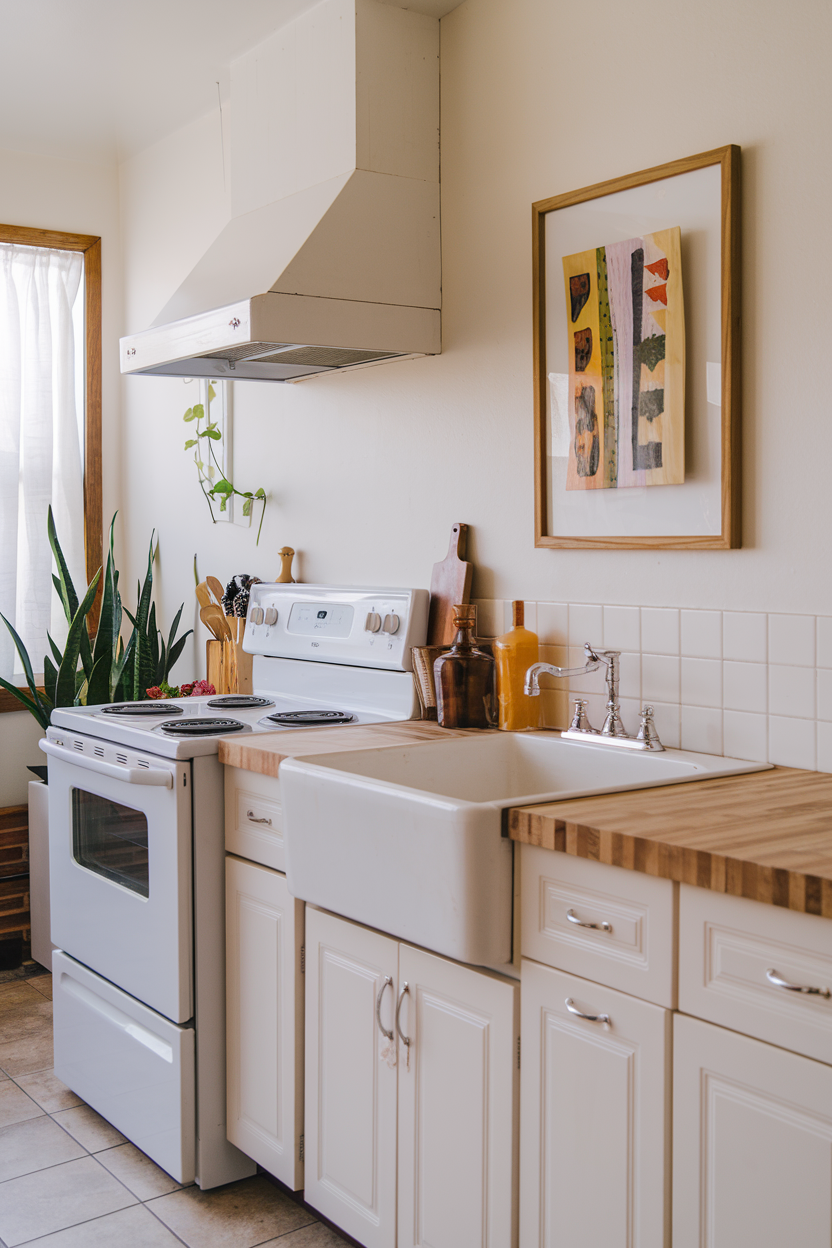
Personalize your white kitchen with artwork displayed in natural wooden frames. The frames provide small touches of warmth, while the artwork introduces color, personality, and a sense of individuality. Botanical illustrations, vintage food prints, minimalist sketches, and landscape paintings are all attractive choices for a kitchen setting. Arrange a single statement piece on an empty wall or create a small gallery using frames in complementary wood tones. Keep artwork away from areas exposed to excessive heat, steam, and cooking splashes to protect it over time. This simple decorating idea can make a plain kitchen feel more lived-in without requiring permanent changes to the cabinetry or walls.
27. Wood-Topped White Rolling Cart
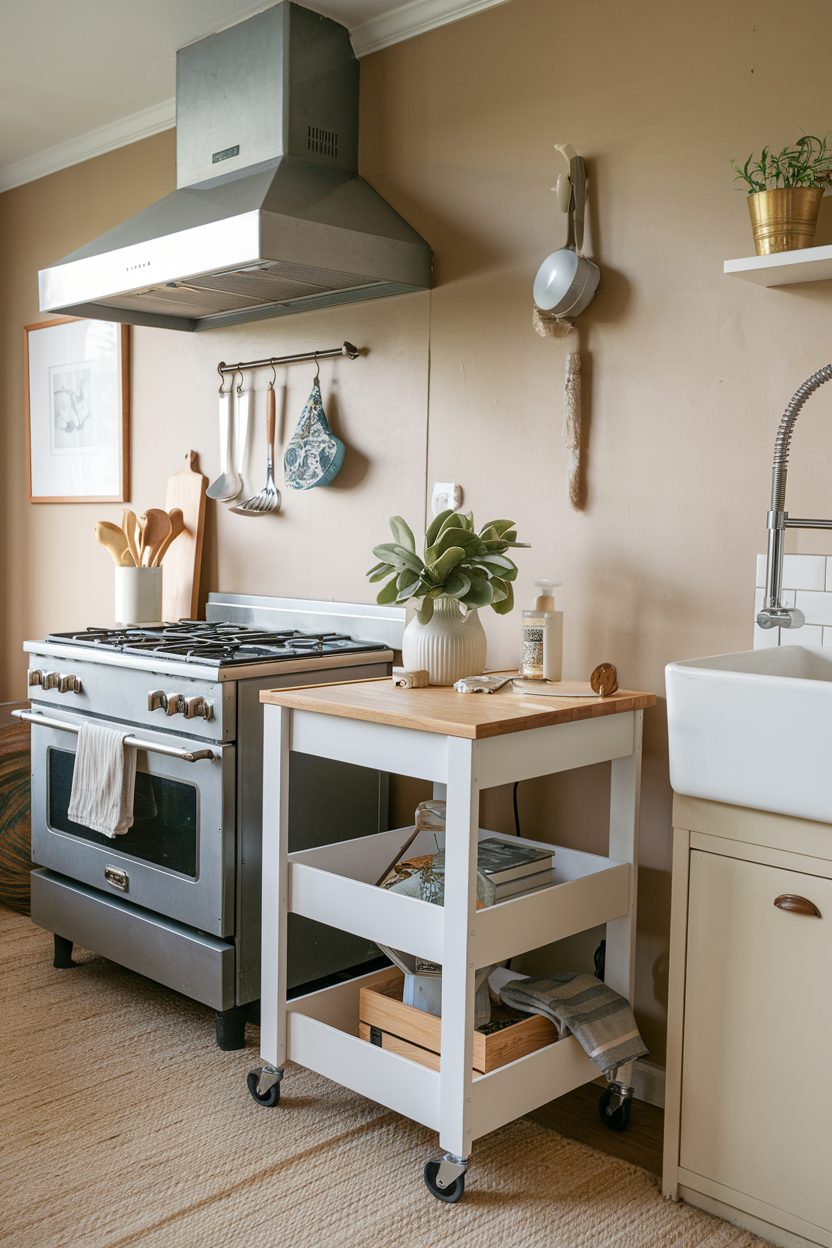
Make a compact kitchen more flexible with a white rolling cart topped with natural wood. The bright base blends easily with existing cabinetry, while the timber surface introduces warmth and provides a useful area for food preparation, serving, or storing frequently used items. Depending on its size, the cart can function as a small auxiliary island, a coffee station, or a mobile storage unit. Open shelves or baskets underneath offer additional room for kitchen essentials. Choose locking wheels for greater stability and a countertop finish suitable for its intended use. When extra floor space is needed, simply move the cart out of the way.
28. Wood-Framed Openings
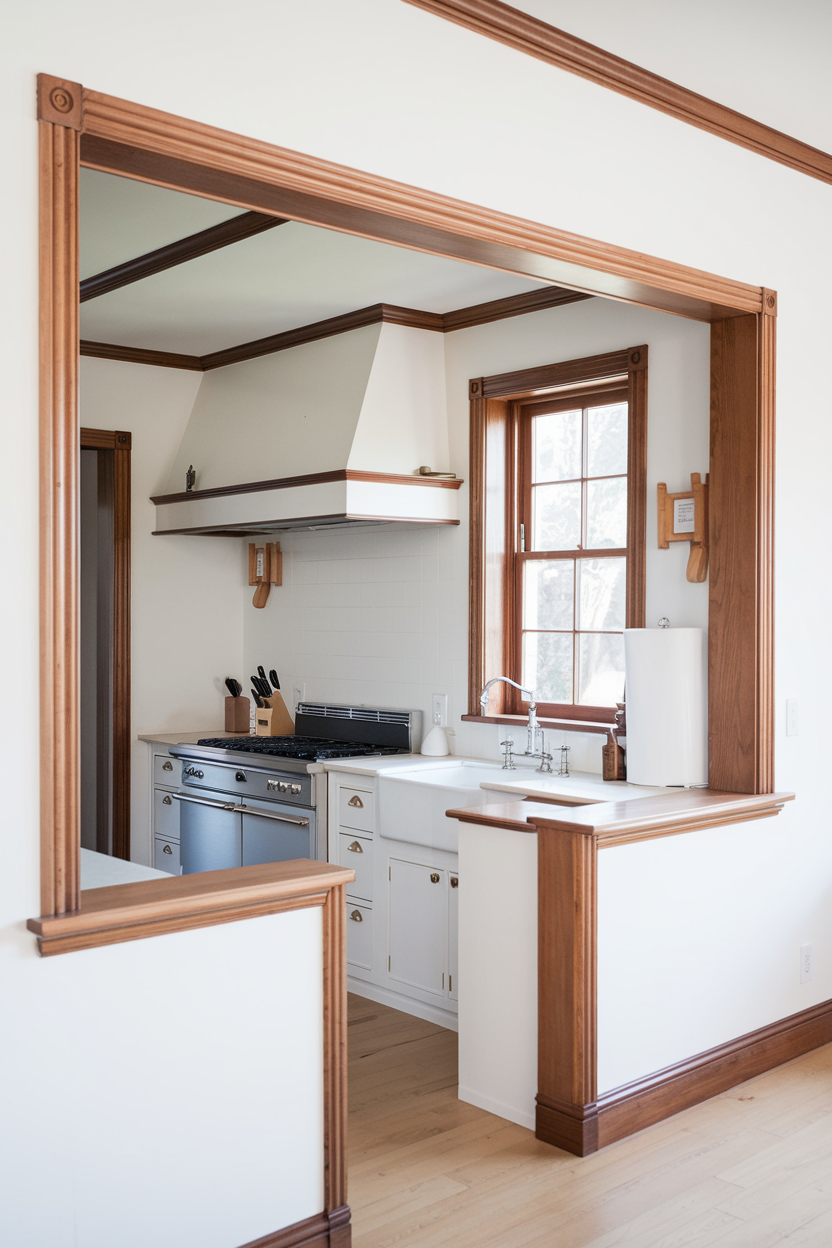
Define the architectural features of your kitchen with wooden trim around doorways, interior openings, or pass-throughs. Against white walls, the timber creates a subtle outline that adds structure without relying on contrasting paint colors. Choose smooth, narrow frames for a contemporary interior or thicker, more textured wood for a rustic or traditional space. This detail can also help visually connect the kitchen with neighboring rooms that feature wooden flooring or furniture. By repeating the material in a few carefully chosen locations, you can create a cohesive interior that feels thoughtfully designed without adding unnecessary decorative elements.
29. Wooden Stools at a White Island
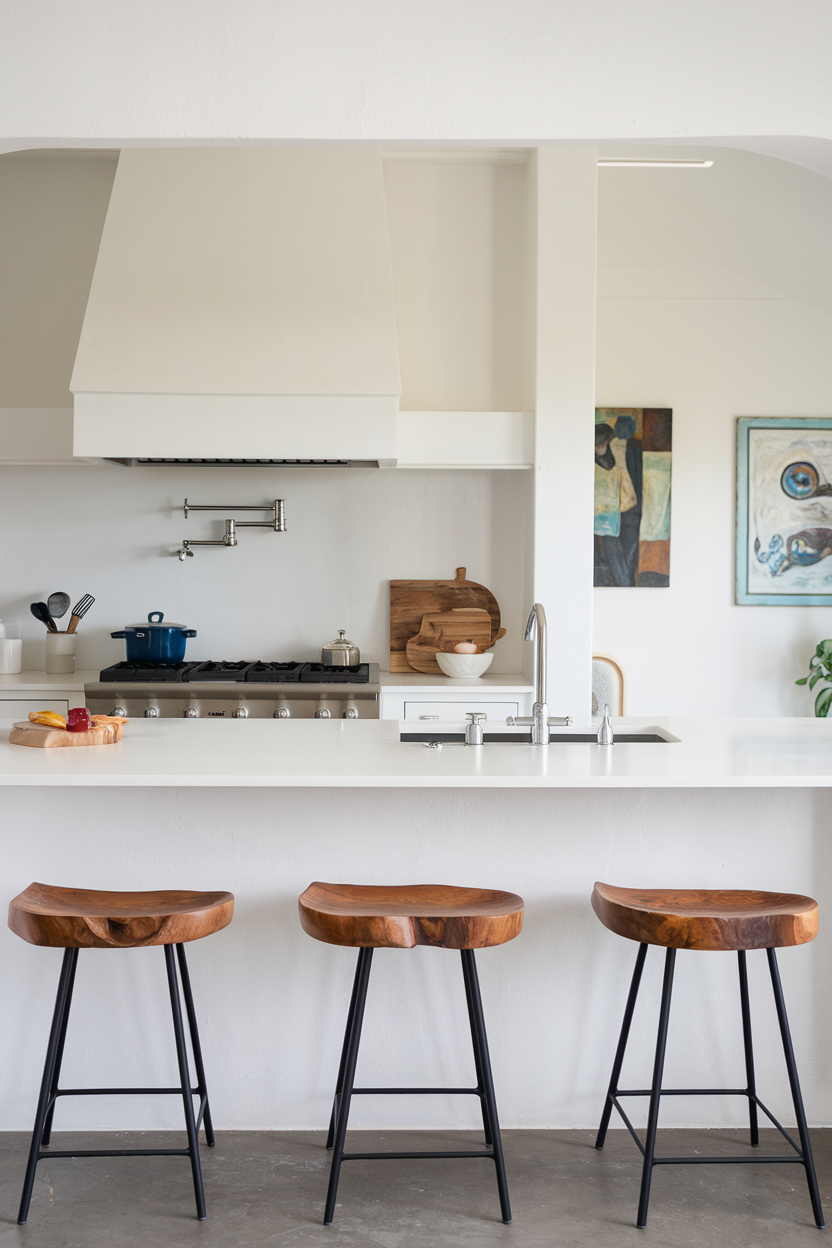
Complete your white kitchen island with wooden bar stools that introduce warmth, texture, and practical seating. The natural material softens the bright cabinetry and helps the island feel like a comfortable gathering place rather than simply a food preparation surface. Streamlined oak stools work well in Scandinavian and mid-century modern kitchens, while rustic timber designs create a more relaxed farmhouse atmosphere. For extra comfort, choose stools with supportive backs or upholstered seats in neutral fabrics. Make sure the height and spacing suit your island so the seating remains functional. These simple additions can make everyday breakfasts, quick lunches, and conversations in the kitchen feel more enjoyable.
30. White Cabinets with Wood-Framed Glass Fronts
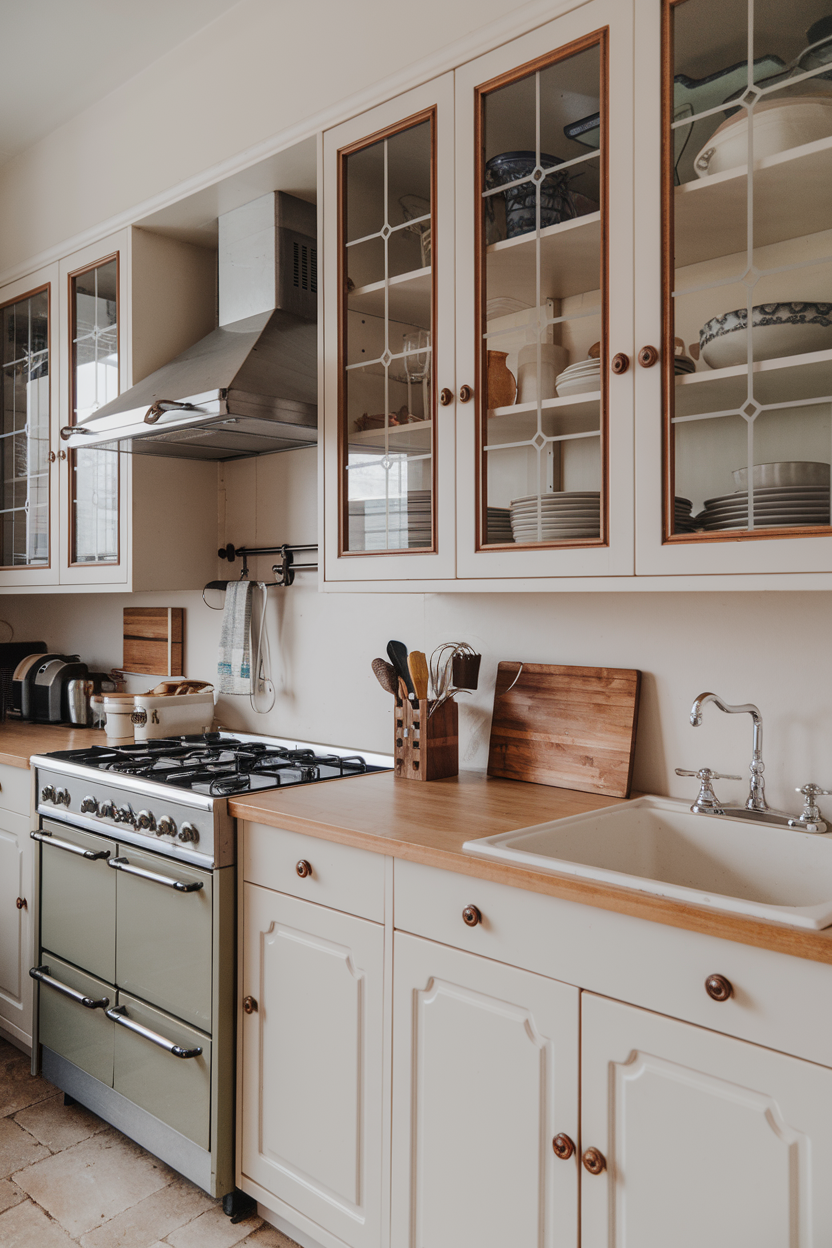
Combine the light appearance of white cabinetry with the warmth of wood-framed glass doors. The glass panels provide an opportunity to display attractive dinnerware, glassware, and carefully arranged accessories, while the wooden frames introduce a subtle handcrafted detail. This combination feels especially elegant when used on a few upper cabinets rather than throughout the entire kitchen. Clear glass creates an open, airy appearance, while textured or ribbed glass offers a little more visual privacy. Choose a timber finish that complements your other wooden elements to create a unified design. The result is a layered, sophisticated kitchen that balances display and storage beautifully.
31. Open White Shelves with Wooden Supports
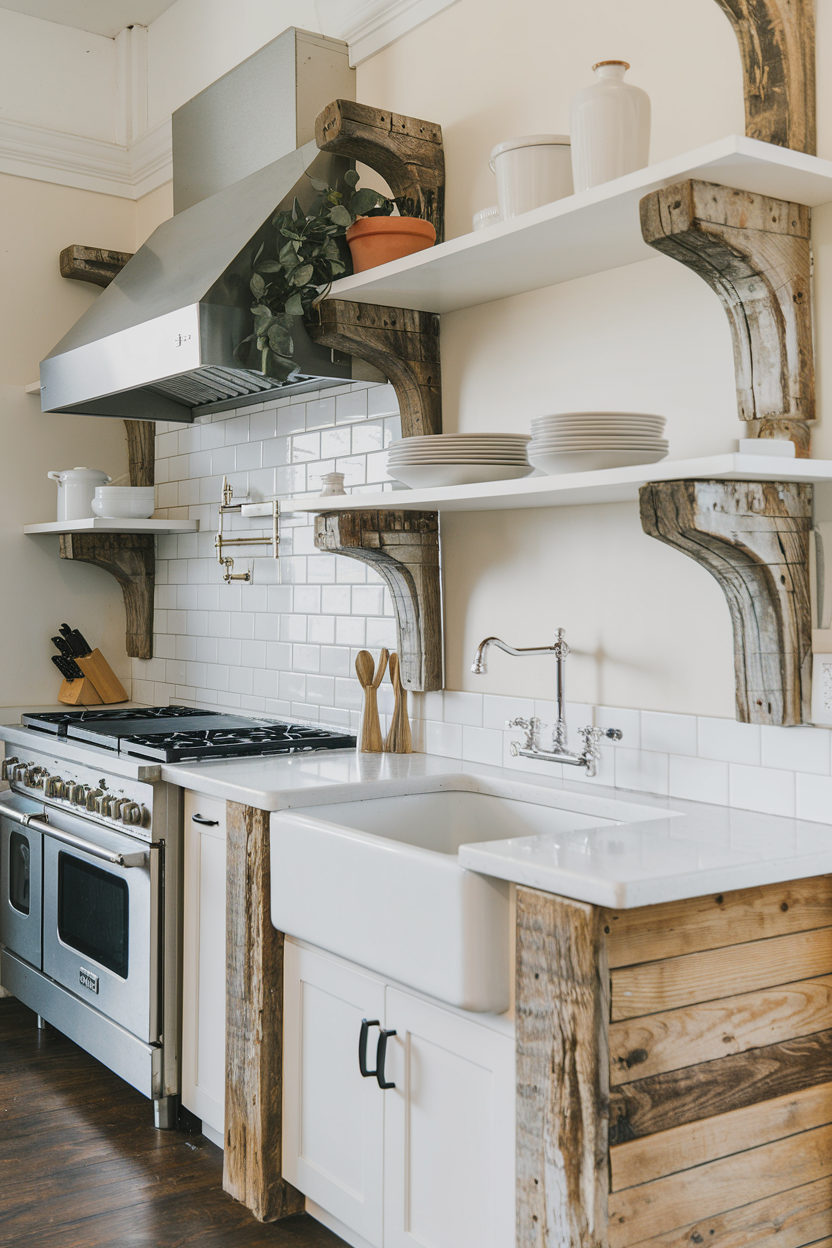
Give simple white open shelving a more distinctive appearance by incorporating wooden supports or decorative corbels. The combination adds depth and creates a pleasing contrast between the clean shelves and the natural texture of the timber. Chunky wooden brackets suit farmhouse and cottage-inspired kitchens, while slimmer supports can work in more contemporary spaces. Use the shelves to display everyday dishes, cookbooks, small plants, or decorative ceramics. Matching the supports to nearby countertops or furniture helps tie the design together. This approach is an easy way to introduce warmth and architectural detail without changing your existing cabinets or investing in an extensive kitchen makeover.
* The lasting appeal of white and wood kitchen design lies in its ability to feel fresh, welcoming, and effortlessly elegant. Use these inspirations to discover your favorite finishes, experiment with different wood tones, and find a design that complements your home’s character.