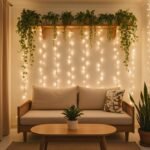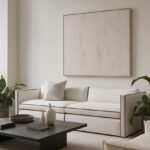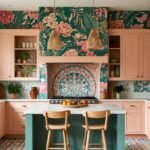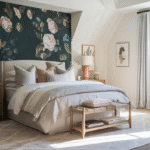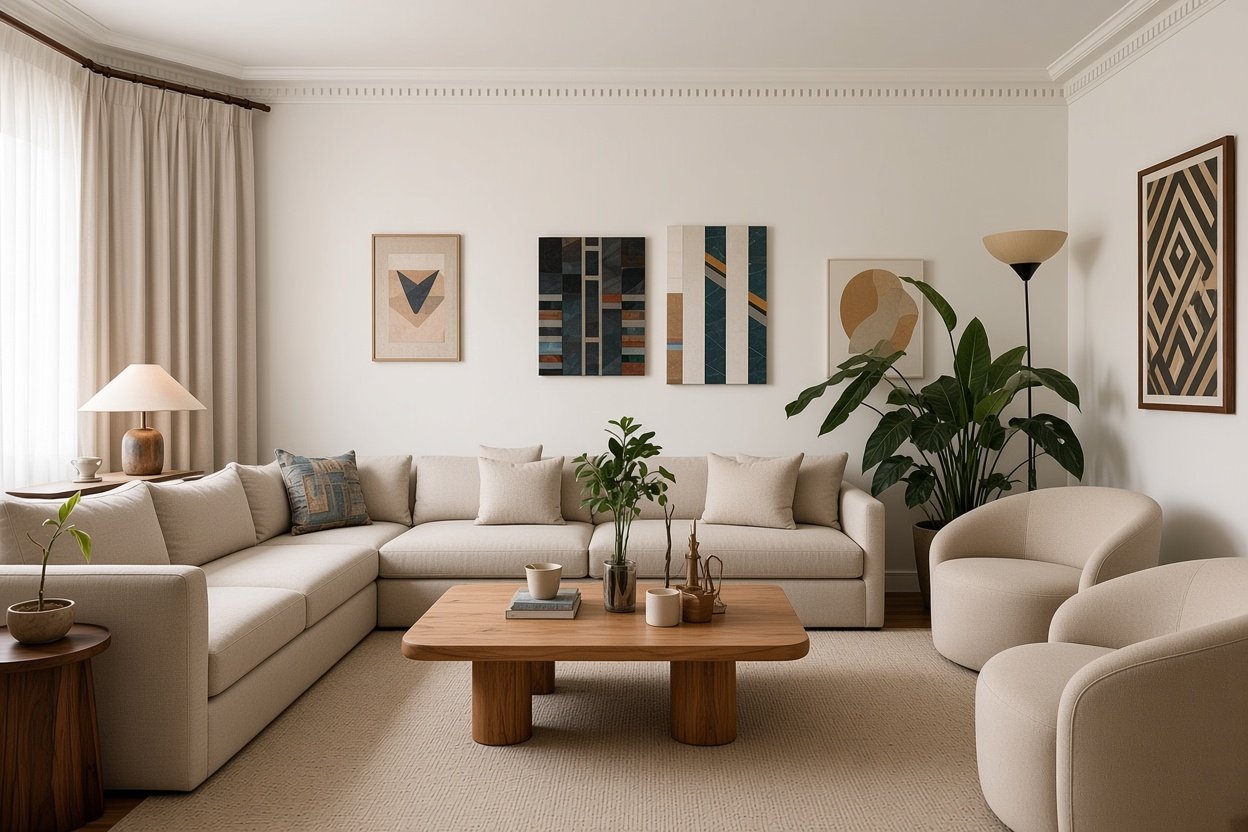
Decorating your living room walls thoughtfully can make a remarkable difference in how spacious and inviting the room feels. The right wall decor adds personality, creates visual interest, and helps draw the eye around the space without making it feel crowded. Mirrors, carefully arranged artwork, floating shelves, light-colored finishes, and well-placed decorative accents can all help create the illusion of a larger room. Even a small living room can feel brighter and more open when its walls are styled with creativity and purpose.
The secret to making a living room appear larger lies in choosing wall decorations that enhance light, emphasize height, and maintain a balanced look. Large mirrors can reflect natural light, while vertical artwork and floor-to-ceiling shelves draw attention upward. Light paint colors, subtle patterns, streamlined gallery walls, and minimalist displays can also prevent the room from feeling visually overwhelming. Combining these elements with thoughtful furniture placement and uncluttered surfaces helps create a harmonious interior that feels both spacious and stylish.
This collection of 26 brilliant wall decorating ideas explores creative ways to make your living room appear larger while expressing your personal style. Let’s explore these practical and stylish ideas and discover how a few thoughtful changes can transform your living room into a brighter, more open, and beautifully inviting space!
1. Create a Vertical Gallery Wall
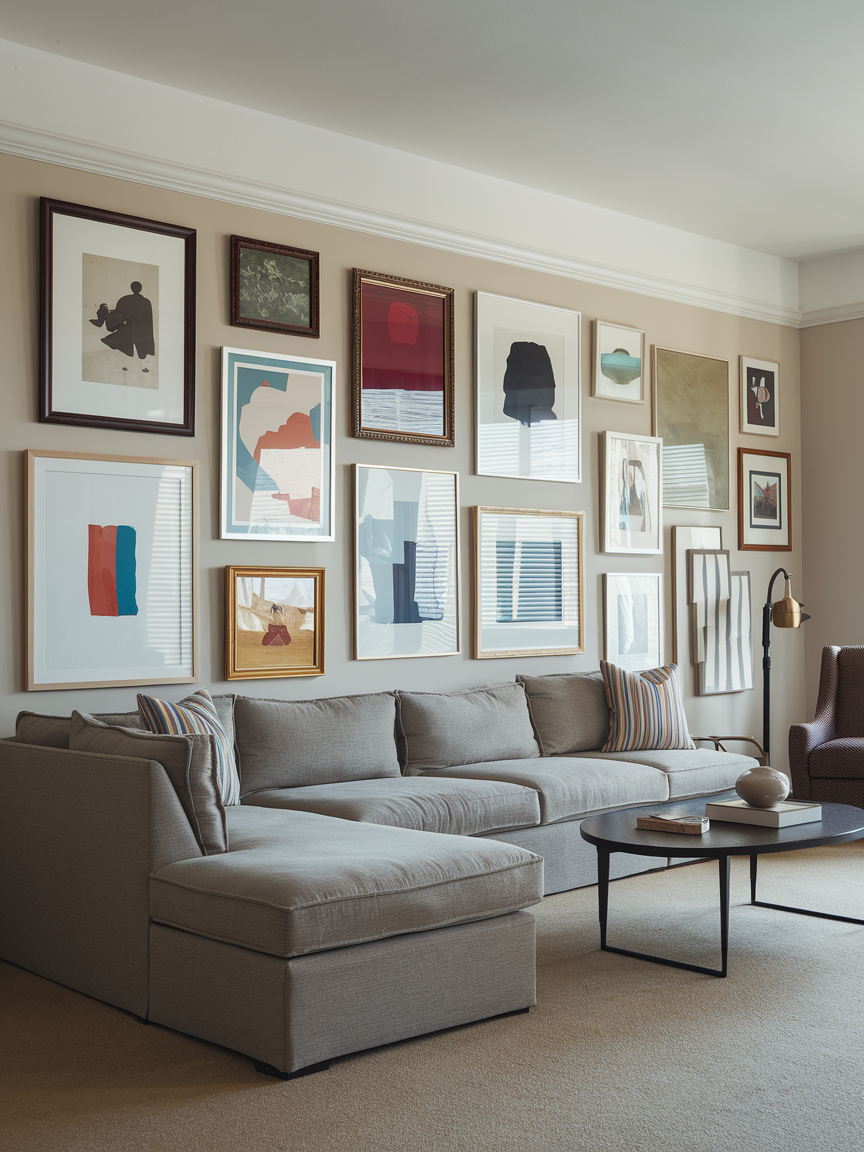
A vertical gallery wall is an excellent way to decorate a small living room while emphasizing its height. Arrange framed photographs, illustrations, or prints in a tall composition that guides the eye upward rather than spreading the artwork across the entire wall. This technique works especially well beside a sofa, in a narrow corner, or on a wall with limited horizontal space. For a cohesive result, use frames with similar finishes or artwork that shares a consistent color palette. Leave enough space between the pieces to prevent the arrangement from feeling crowded. The finished display adds personality and visual interest while making the walls appear taller.
2. Introduce a Soft Accent Wall
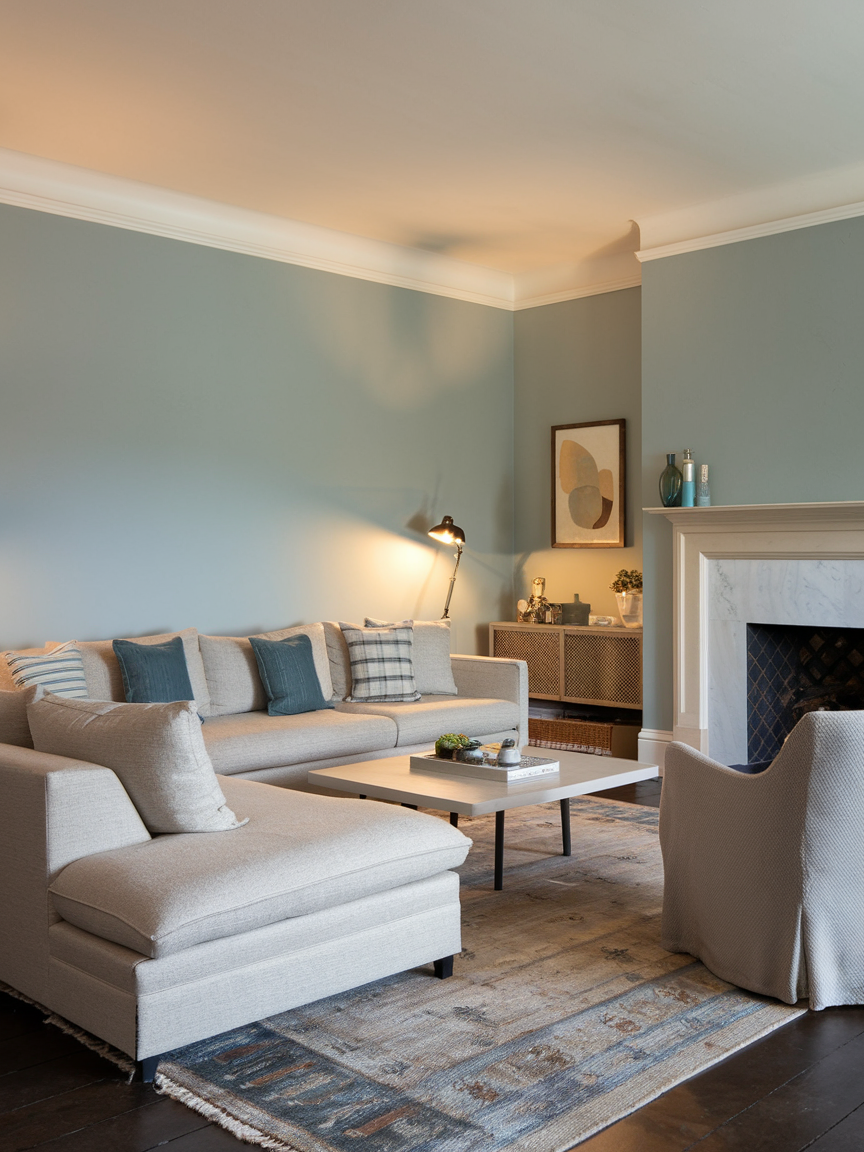
An accent wall can add depth and personality to a small living room without overwhelming the overall design. Choose a gentle color such as muted sage green, dusty blue, pale taupe, or soft gray to create subtle contrast against the remaining walls. This approach works particularly well behind a sofa, around a fireplace, or on a wall that deserves extra attention. A carefully chosen accent color helps establish a focal point while adding dimension to the interior. To preserve the feeling of openness, coordinate the accent wall with light-colored furniture, understated artwork, and simple accessories. The result is a room that feels more interesting without appearing visually crowded.
3. Add Vertical Paneling or Shiplap
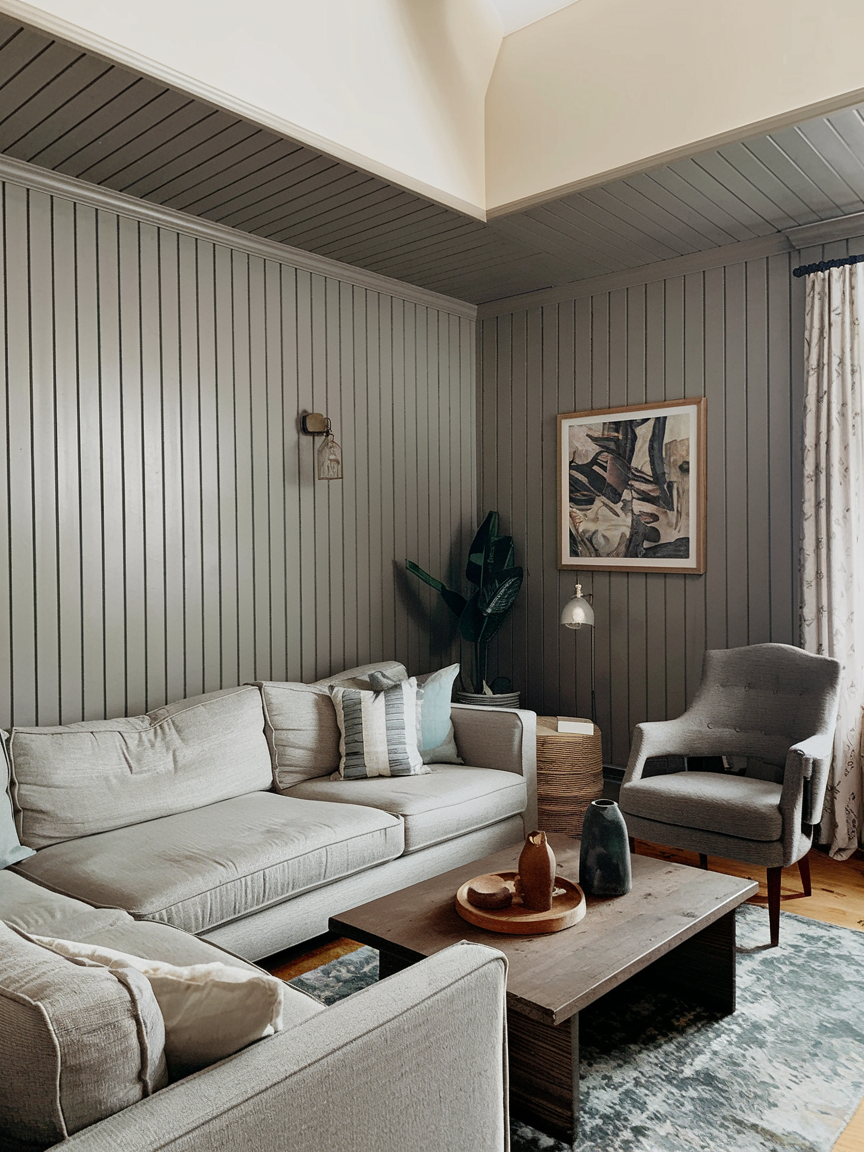
Vertical wall paneling is a stylish way to introduce texture while making a small living room appear taller. Designs such as beadboard, narrow wood slats, and vertical shiplap naturally guide the eye upward, emphasizing the height of the walls. This can be particularly beneficial in rooms with low ceilings or limited architectural detail. For a bright and contemporary finish, paint the panels white, warm beige, or another soft neutral shade. If you prefer a cozier atmosphere, natural wood paneling can introduce warmth without sacrificing visual interest. Keep the surrounding decor relatively simple to let the wall treatment stand out.
4. Hang Curtains Higher and Wider
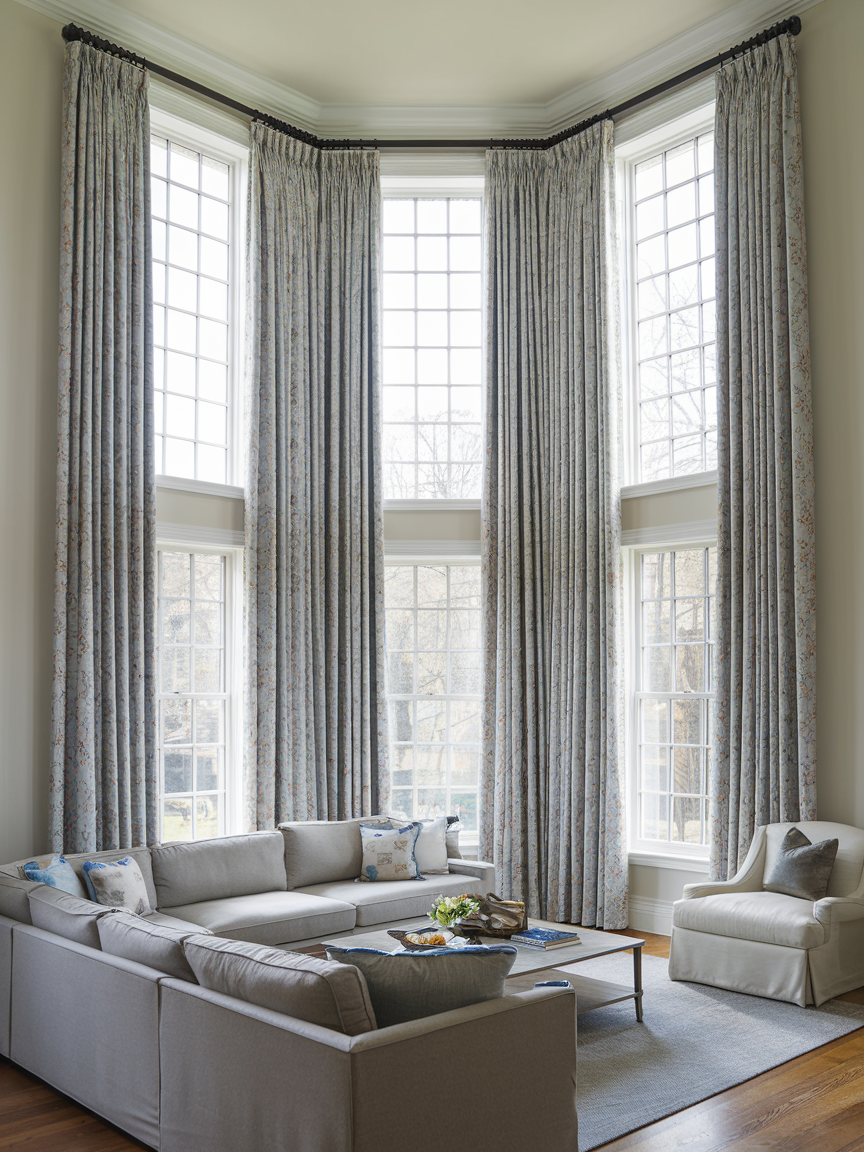
A simple adjustment to your curtain placement can dramatically change how spacious your living room appears. Mount the curtain rod close to the ceiling rather than directly above the window frame, and extend it beyond both sides of the window. This arrangement makes the windows appear taller and wider while allowing more natural light to enter when the curtains are open. Choose lightweight fabrics such as linen or sheer cotton in soft, neutral colors to maintain an airy feeling. Long curtains that gently reach the floor can also create an elegant, uninterrupted vertical line, helping the entire room feel taller and more refined.
5. Install a Slim Wall-Mounted TV Unit
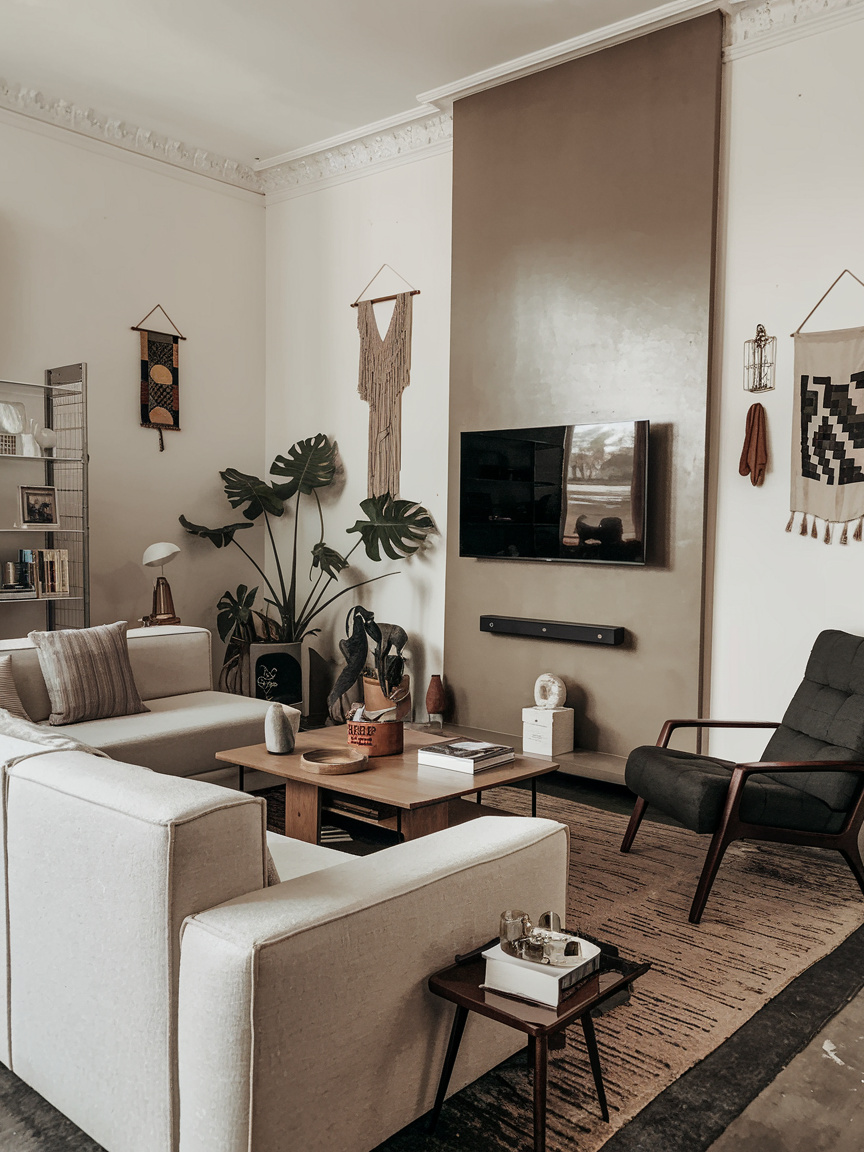
A bulky entertainment center can take up valuable floor space and make a small living room feel cramped. A slim, wall-mounted TV unit offers a more streamlined alternative by keeping the television and selected storage elements off the floor. Floating cabinets or narrow shelves can hold media devices, books, and a few decorative objects without dominating the wall. Choose a finish that coordinates with your interior, such as light oak, white, or a neutral shade that blends with the walls. Concealing cables and limiting visible accessories will further improve the appearance. This setup creates a cleaner focal point and helps the living room feel more organized and spacious.
6. Decorate with a Minimalist Wall Clock
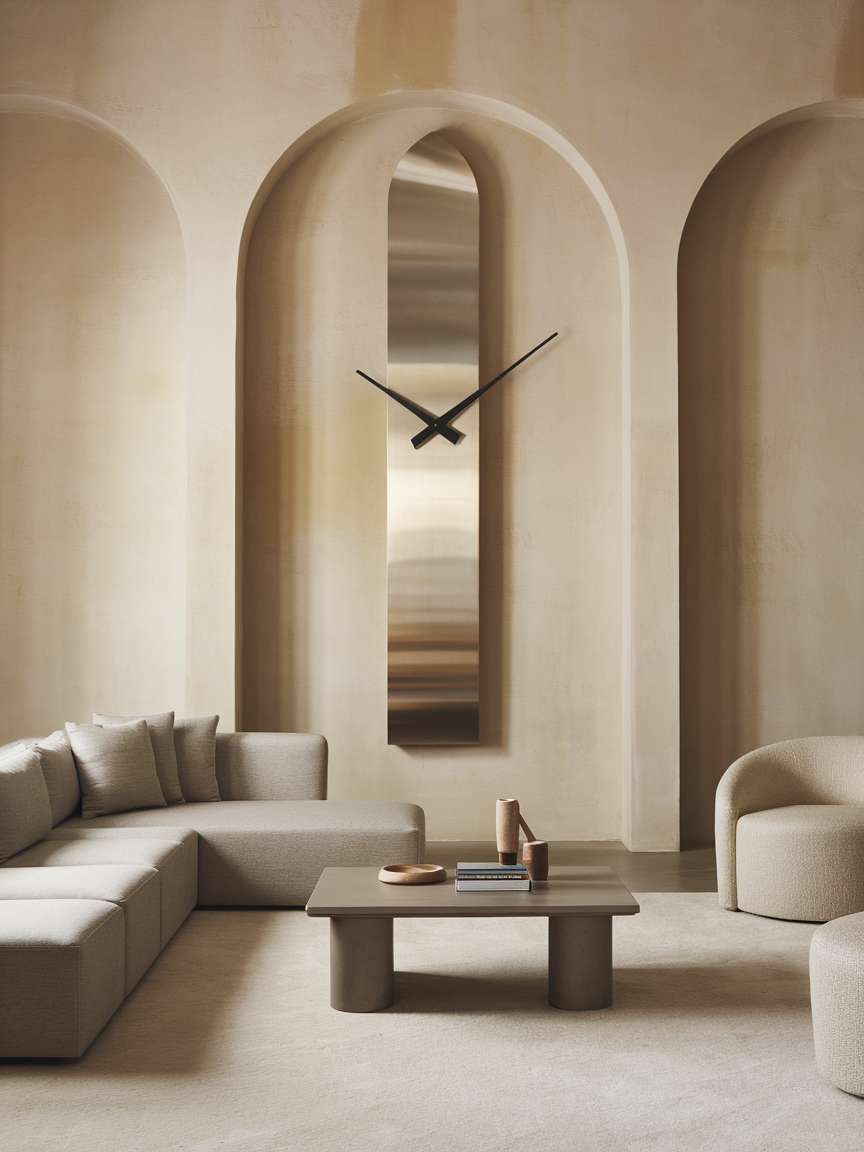
A minimalist wall clock can provide both practical timekeeping and understated decoration in a small living room. Look for a design with clean lines, a simple face, and a frame that complements your existing decor. Slim metallic finishes, natural wood, and monochromatic designs can all work beautifully without adding unnecessary visual weight. Place the clock above a console, near a seating area, or on an otherwise empty wall where it can serve as a subtle focal point. Avoid surrounding it with too many competing accessories. A thoughtfully chosen clock adds character and function while keeping the room’s overall design simple, balanced, and uncluttered.
7. Use Vertical Stripes to Add Height
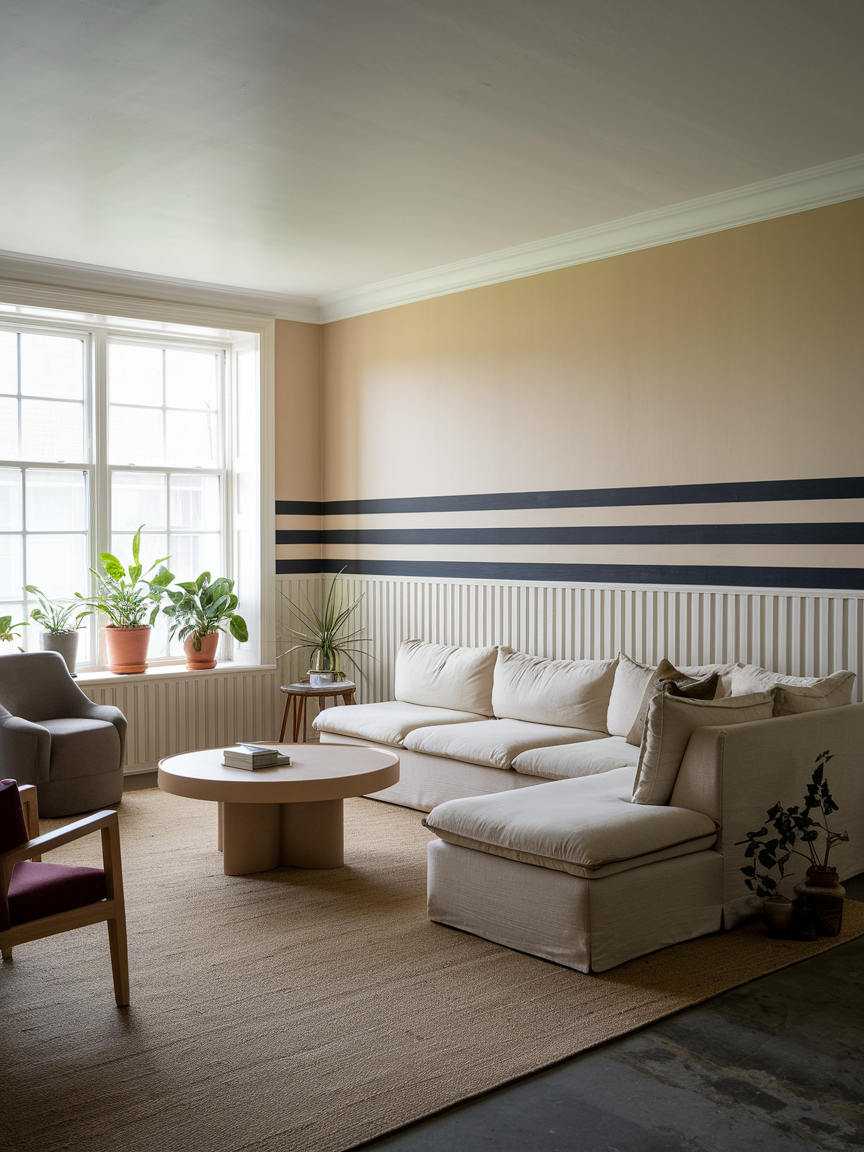
Vertical stripes can make a small living room appear taller by directing attention toward the ceiling. This effect can be achieved with striped wallpaper, painted lines, or narrow decorative wall panels. For a subtle and sophisticated result, choose stripes in two closely related shades, such as warm white and pale beige. This creates visual interest without making the walls feel too busy. Vertical patterns are especially helpful in rooms with low ceilings or short wall sections that need a little extra emphasis. Pair striped walls with simple furniture and understated accessories to maintain a balanced interior that feels taller, brighter, and more open.
8. Furnish the Room with Transparent Pieces
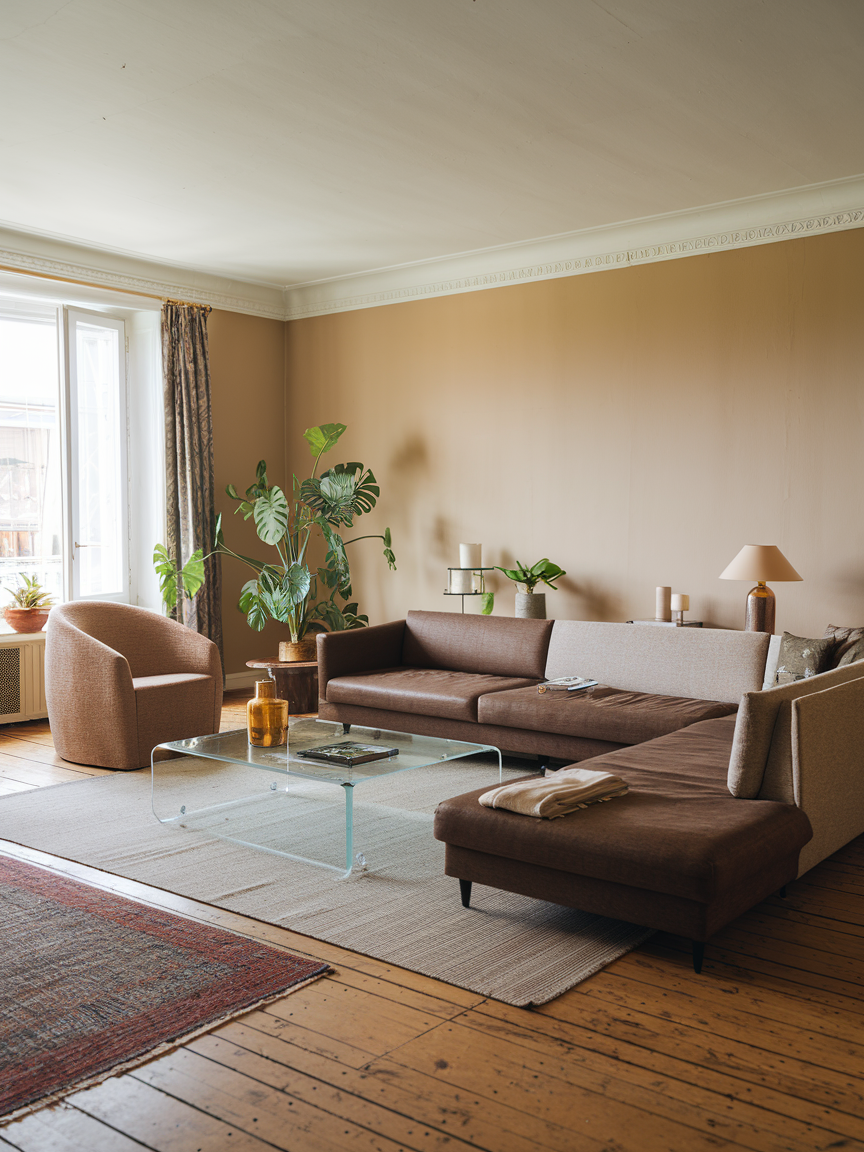
Transparent furniture can make a noticeable difference in a small living room by reducing the amount of visual space occupied by individual pieces. A clear acrylic side table, glass coffee table, or transparent accent chair allows you to see through the furniture instead of having another solid surface interrupt the view. This helps maintain an open sightline and makes the arrangement feel less crowded. Transparent pieces also work well with many decorating styles, from contemporary and minimalist to glamorous and eclectic. Pair them with a soft area rug, comfortable seating, and carefully chosen accessories to create a practical living room that feels airy without losing its personality.
9. Choose Low-Profile Wall-Mounted Furniture
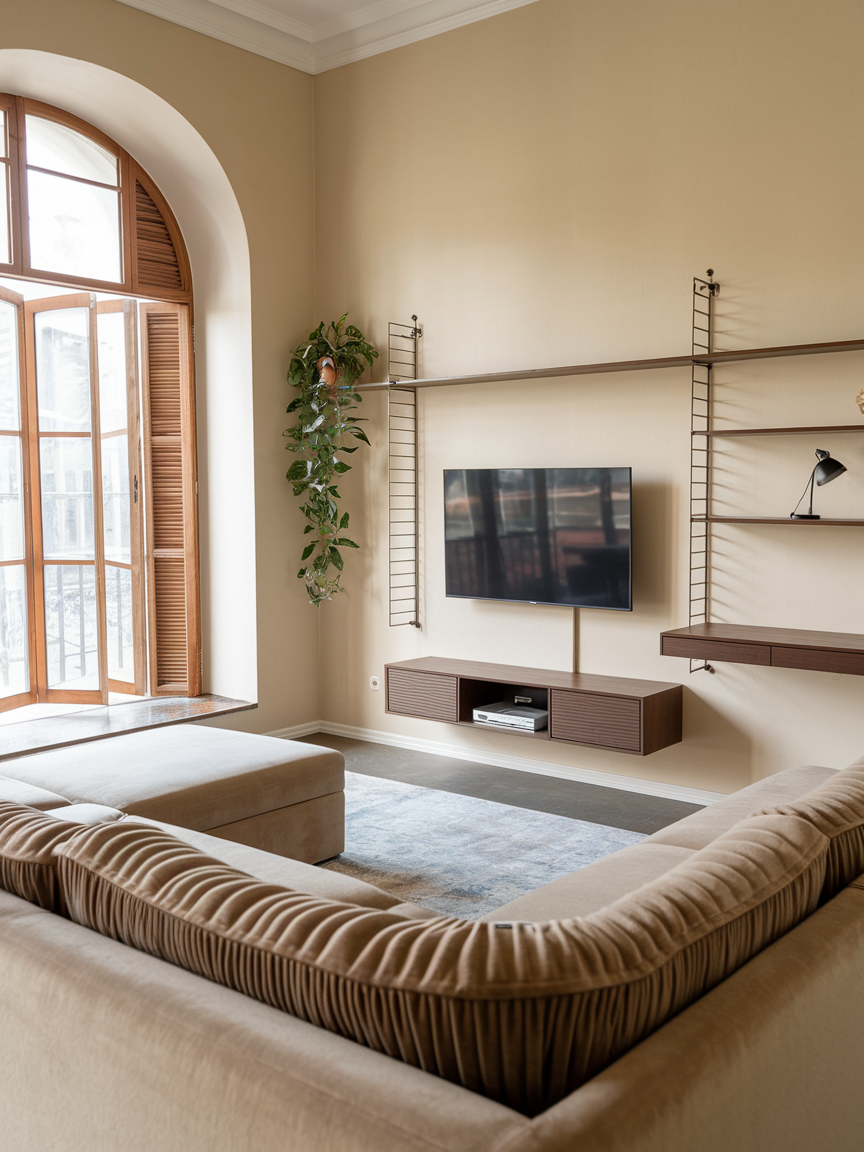
Furniture that occupies less visual space can make a compact living room feel significantly more open. Consider wall-mounted shelves, floating consoles, and compact desks instead of bulky pieces that dominate the room. These designs keep more of the floor visible, creating a lighter appearance and making the layout feel less crowded. Low-profile furniture also helps maintain clear sightlines across the room, allowing the walls and decorative features to stand out. Select simple shapes and finishes that coordinate with the surrounding interior. By combining practical functionality with streamlined design, you can create a living room that feels comfortable without sacrificing valuable space.
10. Decorate with Glass or Acrylic Accents
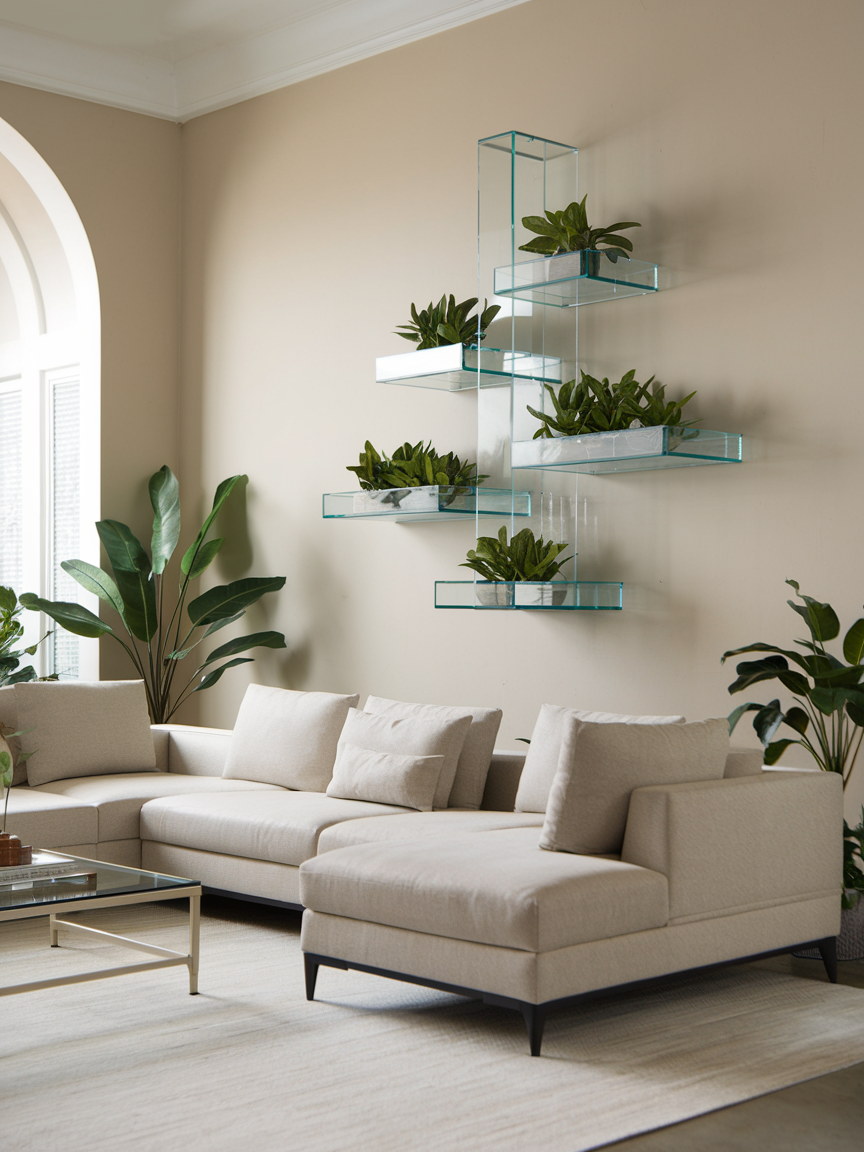
Transparent materials are useful for decorating small living rooms because they provide style without adding much visual weight. Glass shelves, acrylic wall accessories, and clear decorative frames allow the eye to move freely through the space, helping the interior feel less crowded. These materials also complement modern and minimalist interiors, where simplicity and openness are important design elements. Consider pairing transparent accents with light-colored walls, subtle metallic details, or natural wood finishes for a balanced look. Rather than filling the walls with numerous decorations, select a few carefully chosen pieces that add character while preserving the room’s bright and uncluttered appearance.
11. Use Decorative Mirrors as Wall Art
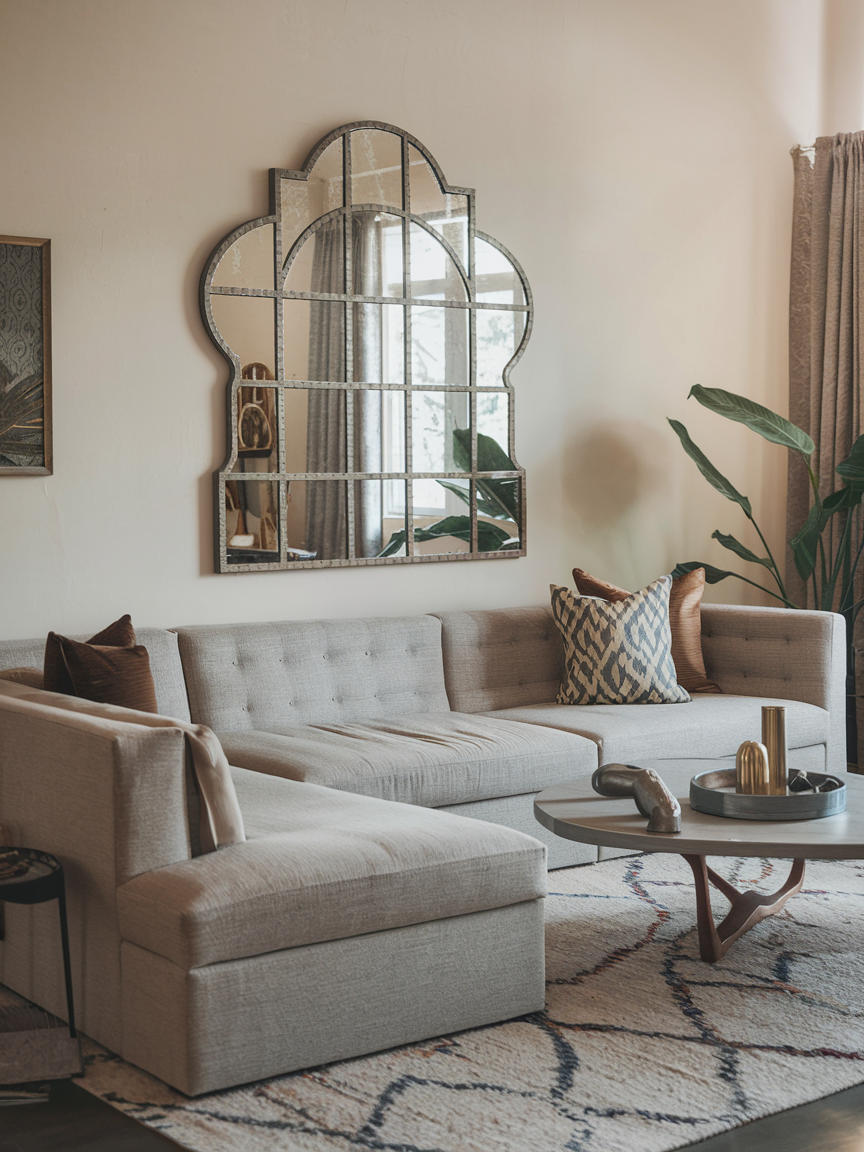
Mirrors can serve as beautiful decorative features while helping a small living room feel brighter and more spacious. Instead of choosing a purely functional design, look for a mirror with an interesting silhouette, an elegant frame, or an artistic arrangement. Round mirrors soften a room filled with straight lines, while arched designs can introduce a sense of architectural character. Place your chosen mirror where it can reflect a window, a light fixture, or an attractive part of the interior. This creates visual depth and adds dimension to the room. A single statement mirror can often provide more impact than several smaller decorations competing for attention.
12. Hang a Large Mirror
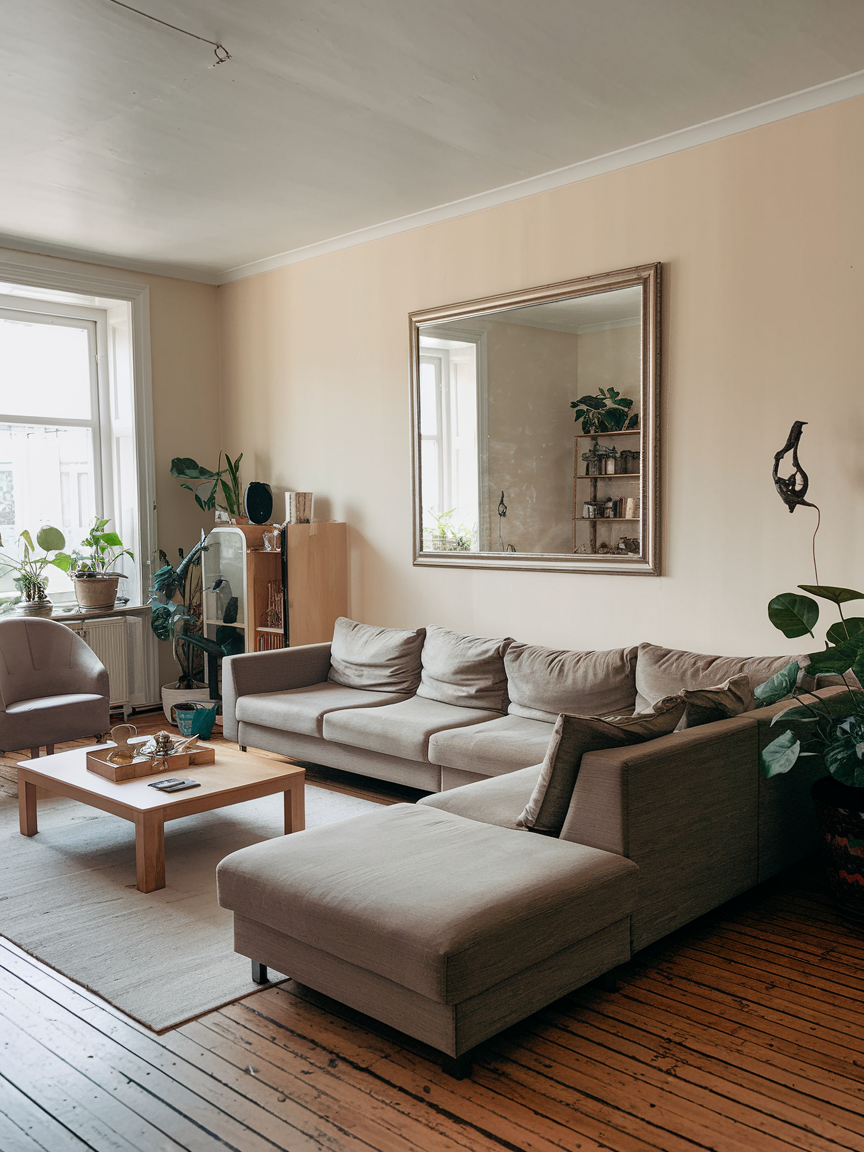
A large mirror can instantly transform the look and feel of a small living room by creating the illusion of extra space. Its reflective surface bounces natural and artificial light around the room, making the interior appear brighter and more open. For the best results, position the mirror opposite a window or near a light source to maximize its effect. Choose a frameless design or one with a thin, understated frame to maintain a clean, uncluttered appearance. Beyond its practical benefits, a generously sized mirror can also become an elegant focal point that enhances your living room’s overall style.
13. Paint the Walls in Light Colors
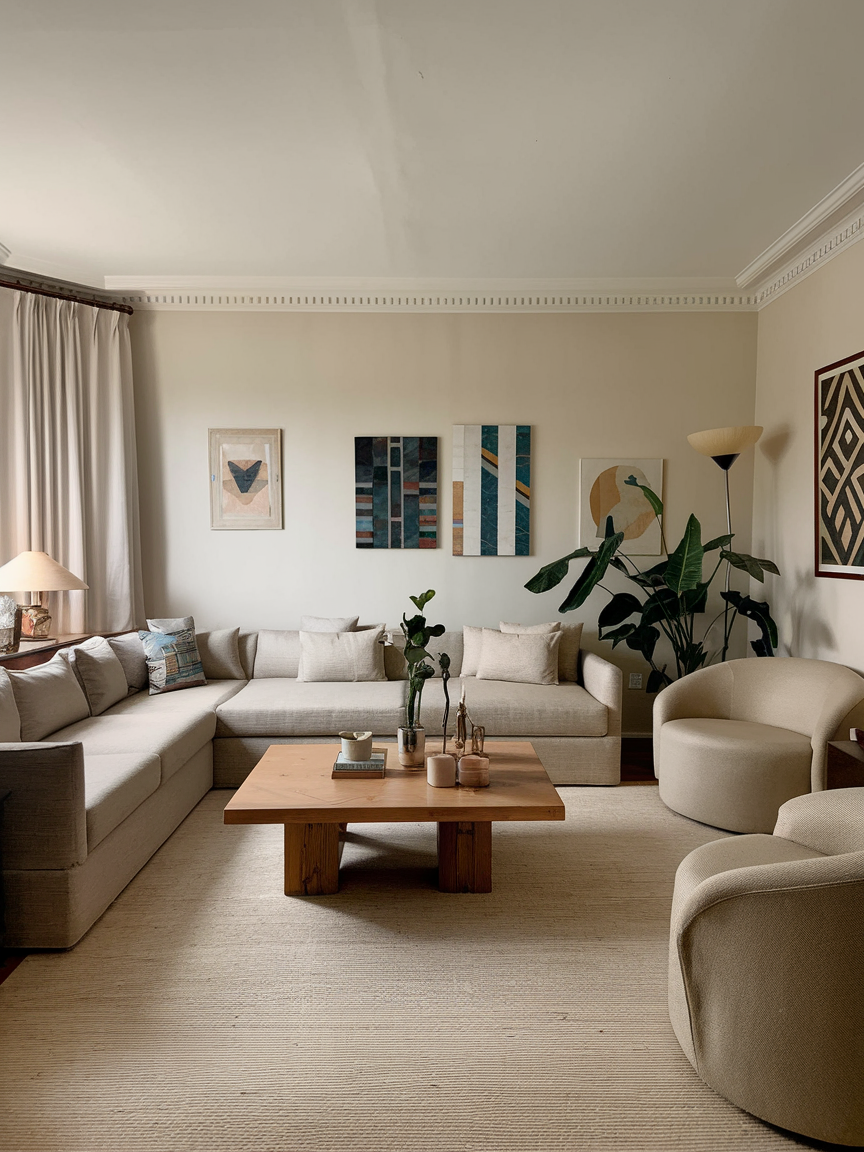
Light-colored walls are a simple yet effective way to make a compact living room feel more spacious. Shades such as warm white, pale gray, soft blue, and creamy beige help reflect light, creating a bright and airy atmosphere. Unlike darker colors, which can absorb light and make walls feel closer, lighter hues give the room a more open appearance. Pair your chosen wall color with light curtains, neutral upholstery, and natural textures for a harmonious look. This approach works particularly well in living rooms with limited natural light, helping the entire space feel fresher and more inviting.
14. Install Floating Shelves
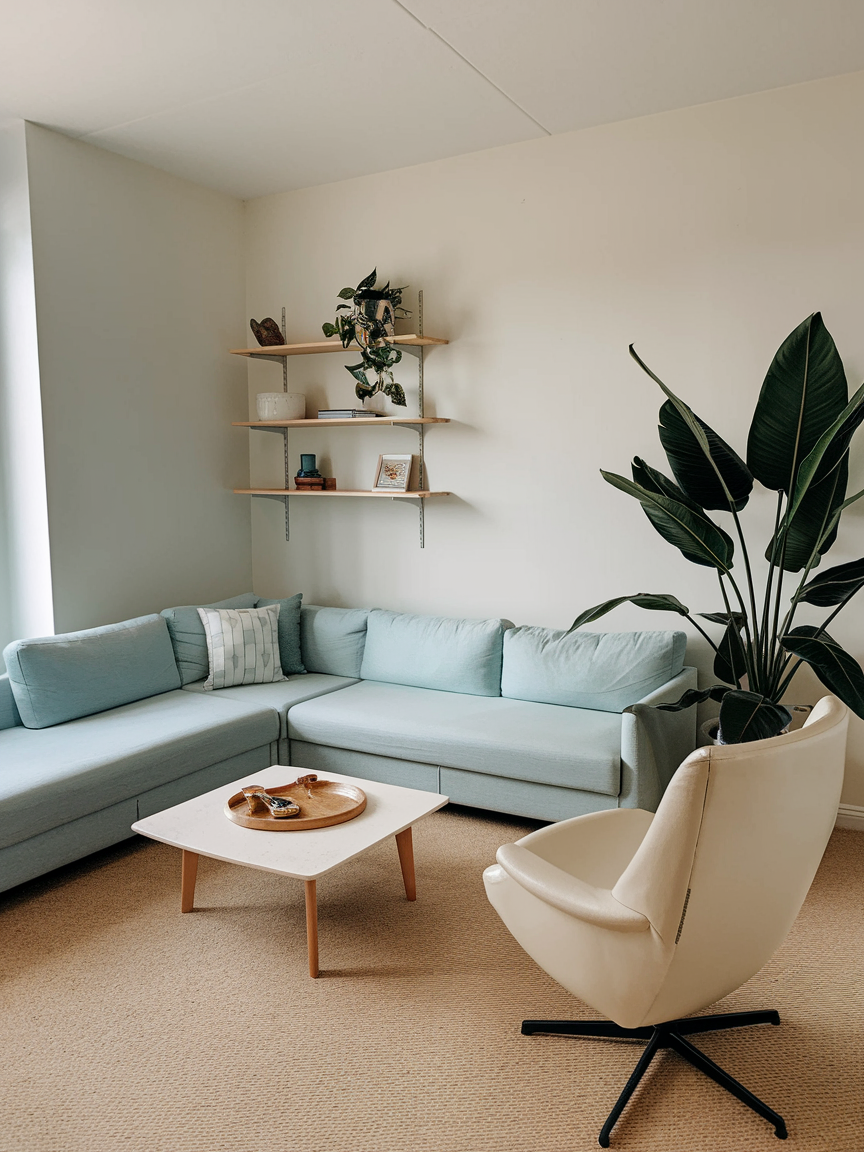
Floating shelves provide practical storage and decorative display space without making a small living room feel crowded. Mounted directly onto the wall, they eliminate the need for bulky storage furniture and leave more of the floor visible. Use them to arrange a few favorite books, small potted plants, framed photographs, or carefully selected decorative objects. For a spacious appearance, choose slim shelves that complement your wall color and avoid filling every available inch. A thoughtfully arranged display adds personality and functionality while maintaining the light, uncluttered atmosphere that small living rooms need.
15. Choose Slim and Minimalist Wall Art
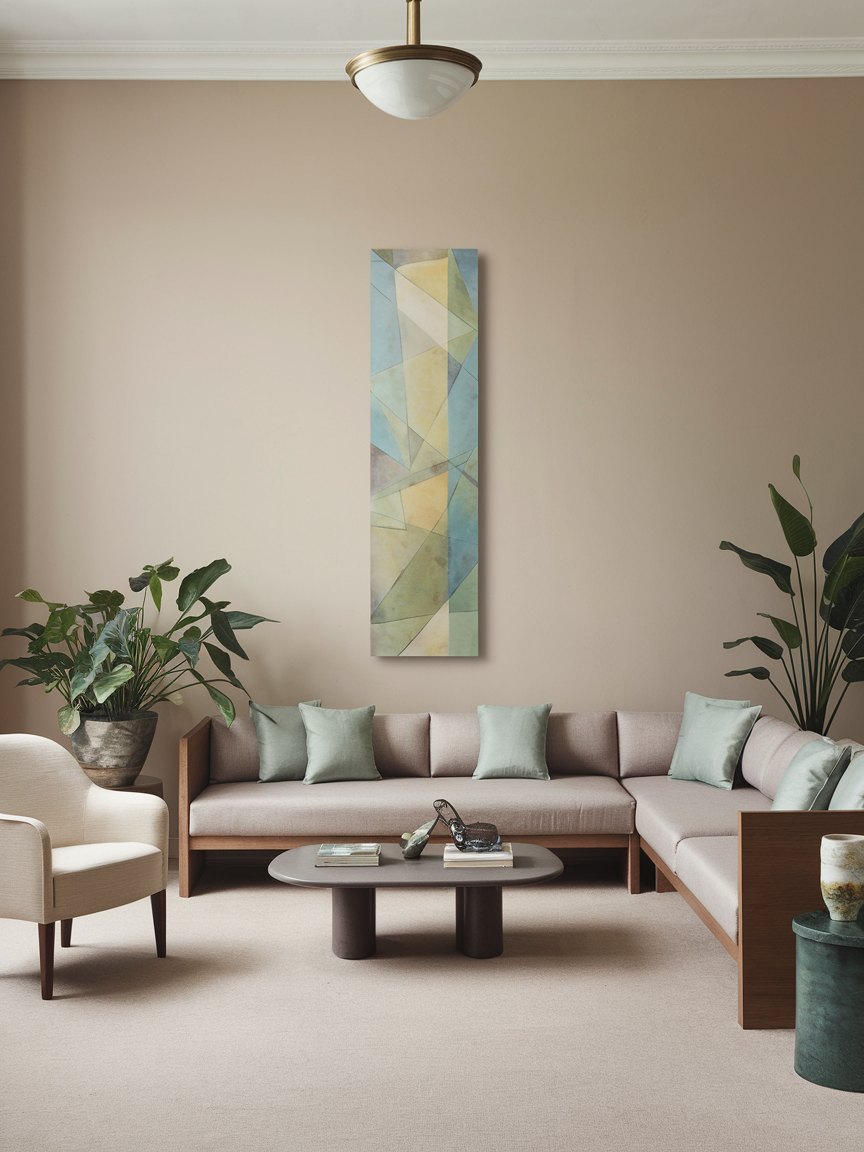
The right artwork can enhance a small living room without making its walls feel overcrowded. Instead of using numerous heavy frames or oversized decorative pieces, consider minimalist prints, delicate illustrations, or artwork with simple frames. Vertical compositions are particularly useful because they draw attention upward and create the impression of taller walls. You can also arrange several smaller pieces in a neat, coordinated display for a polished appearance. Keep the colors and subject matter consistent with your interior palette so the artwork complements the room rather than competing with its other design elements.
16. Create a Monochromatic Color Scheme
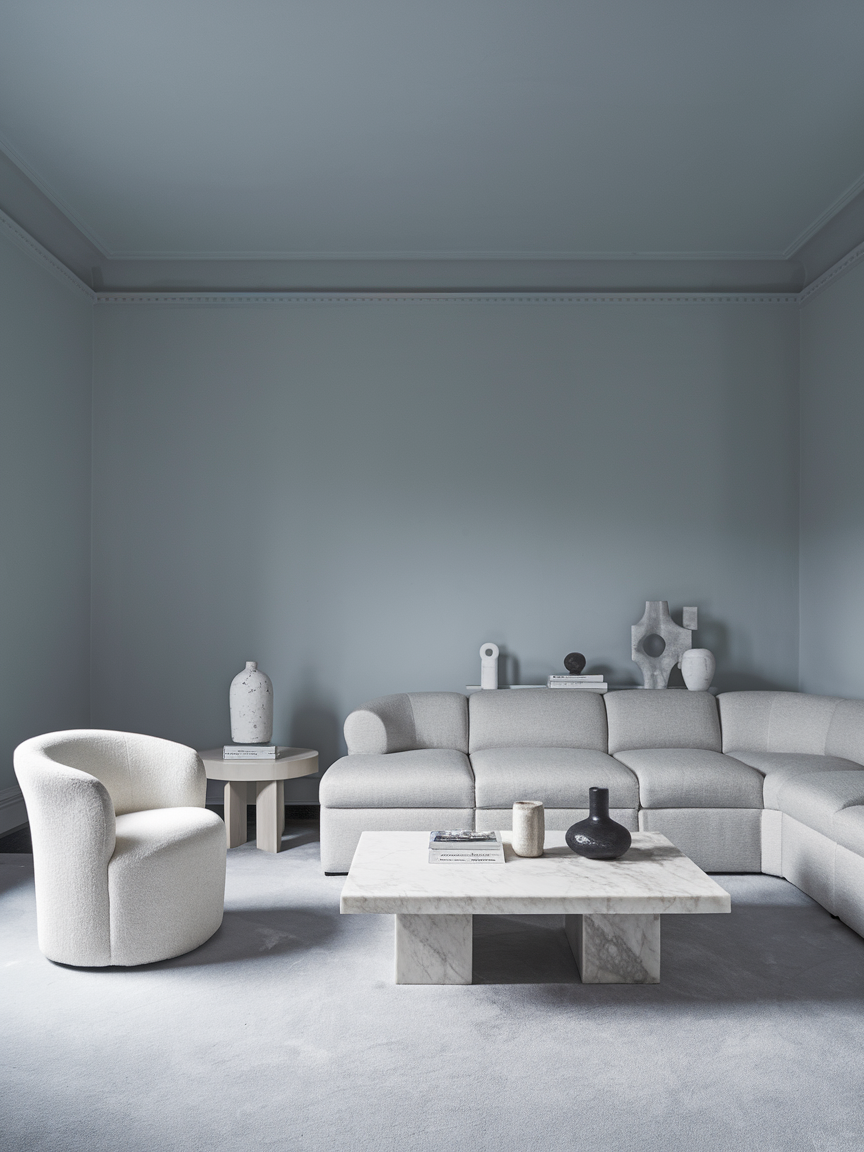
A monochromatic palette can make a small living room feel more cohesive and visually spacious. By combining different shades of the same color, such as ivory, cream, and warm beige, you create a smooth transition between the walls and surrounding decor. This reduces strong visual interruptions and helps the room feel more unified. You can introduce depth through contrasting textures, including linen curtains, woven accessories, wooden furniture, and soft upholstery. The result is a sophisticated interior that feels calm and inviting without appearing flat or overly plain. A consistent color scheme also makes it easier to incorporate decorative accents without overwhelming the space.
17. Install a Statement Wall Sconce
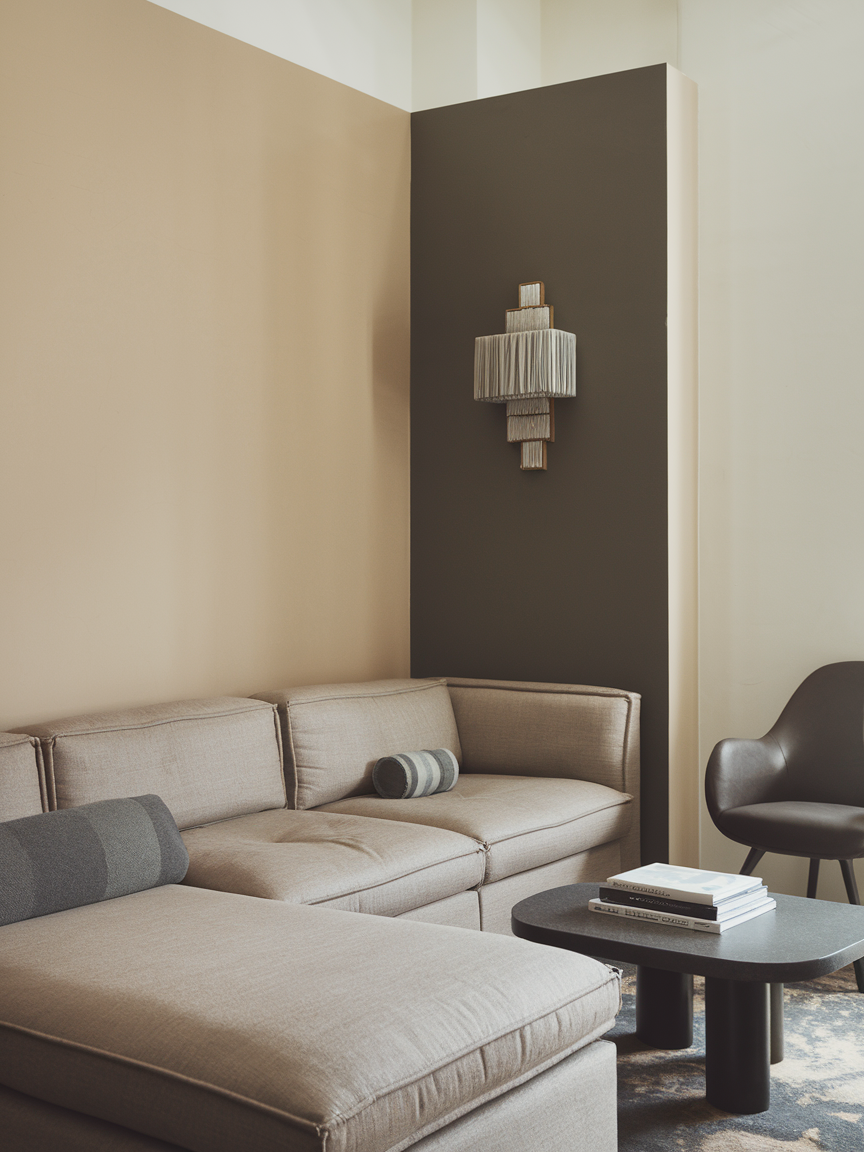
A distinctive wall sconce can introduce character and useful lighting without taking up valuable floor or tabletop space. Position it above a reading corner, beside a decorative mirror, or near a favorite piece of artwork to create an attractive focal point. Upward-facing sconces can emphasize the height of the wall, while fixtures that cast light in multiple directions help brighten the surrounding area. Choose a streamlined design in brushed brass, matte black, or another finish that complements your decor. Warm lighting is particularly effective for creating a welcoming atmosphere, allowing your small living room to feel both stylish and comfortable after sunset.
18. Experiment with Reflective Wall Finishes
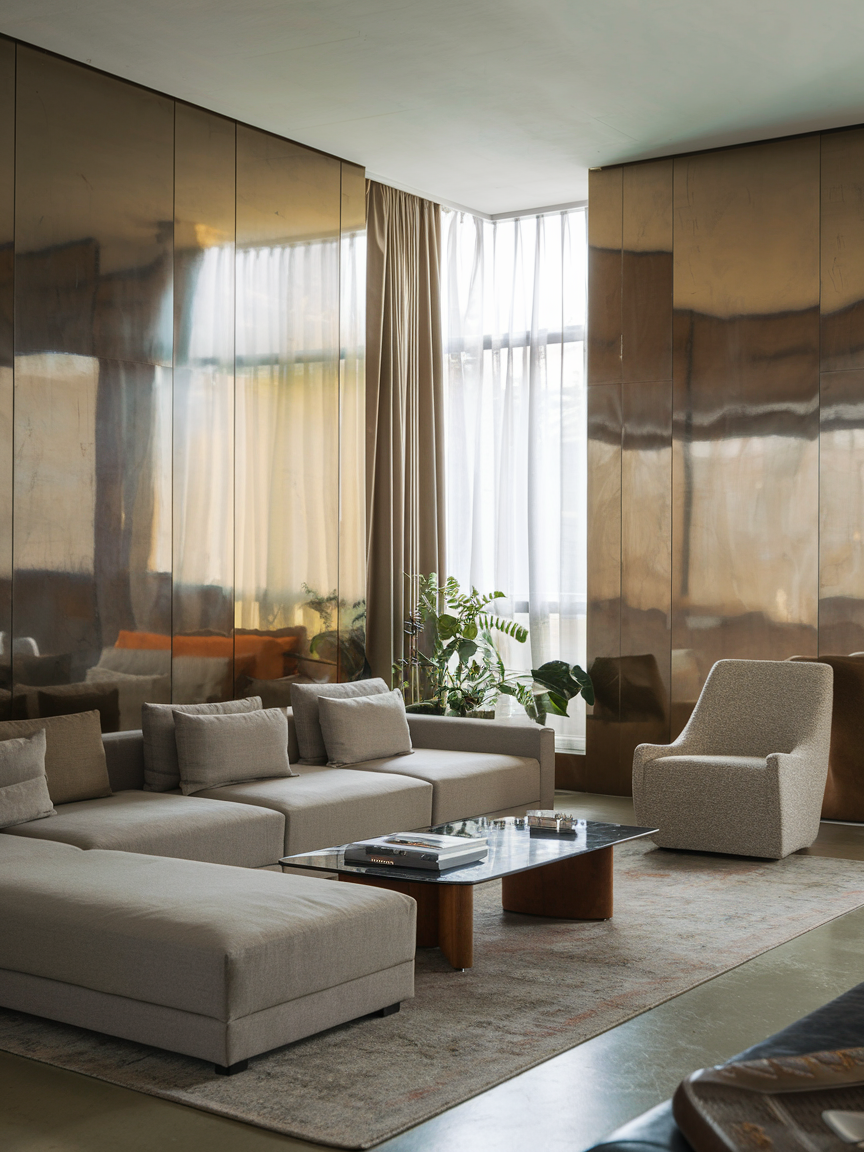
Reflective finishes can help brighten a small living room by allowing light to bounce across the walls. Options include satin or semi-gloss paint, glossy decorative panels, and subtly metallic wallpaper. These finishes can introduce a refined touch while making the interior feel lighter and more dynamic. Consider using a reflective surface on one feature wall or in a small decorative area rather than covering every wall with a high-shine finish. Too much gloss can create distracting reflections, especially in rooms with strong lighting. Balance reflective materials with matte paint, soft fabrics, and natural textures to achieve an elegant space that feels inviting rather than overly polished.
19. Install Tall & Narrow Bookcases
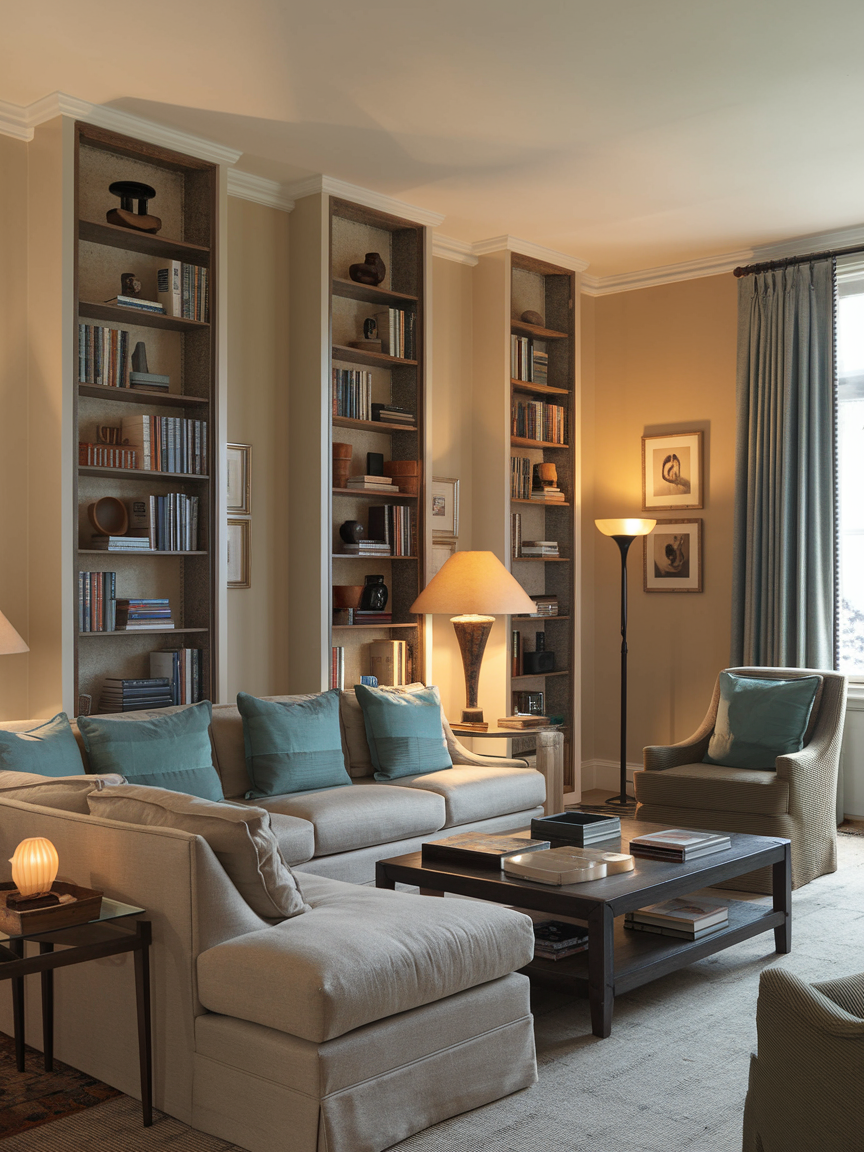
Tall, narrow bookcases make excellent additions to small living rooms because they take advantage of vertical space instead of spreading across the floor. A floor-to-ceiling shelving unit can provide generous storage for books, plants, framed pictures, and decorative accessories while keeping the overall footprint relatively small. Open shelving is especially useful when you want to maintain a light appearance and avoid the heaviness of large cabinets. Arrange items in small, balanced groups and leave some shelves partially empty to prevent the display from becoming cluttered. Choosing a bookcase in a color similar to the walls can also help it blend into the room, creating a more seamless and spacious look.
20. Save Space with Wall-Mounted Lighting
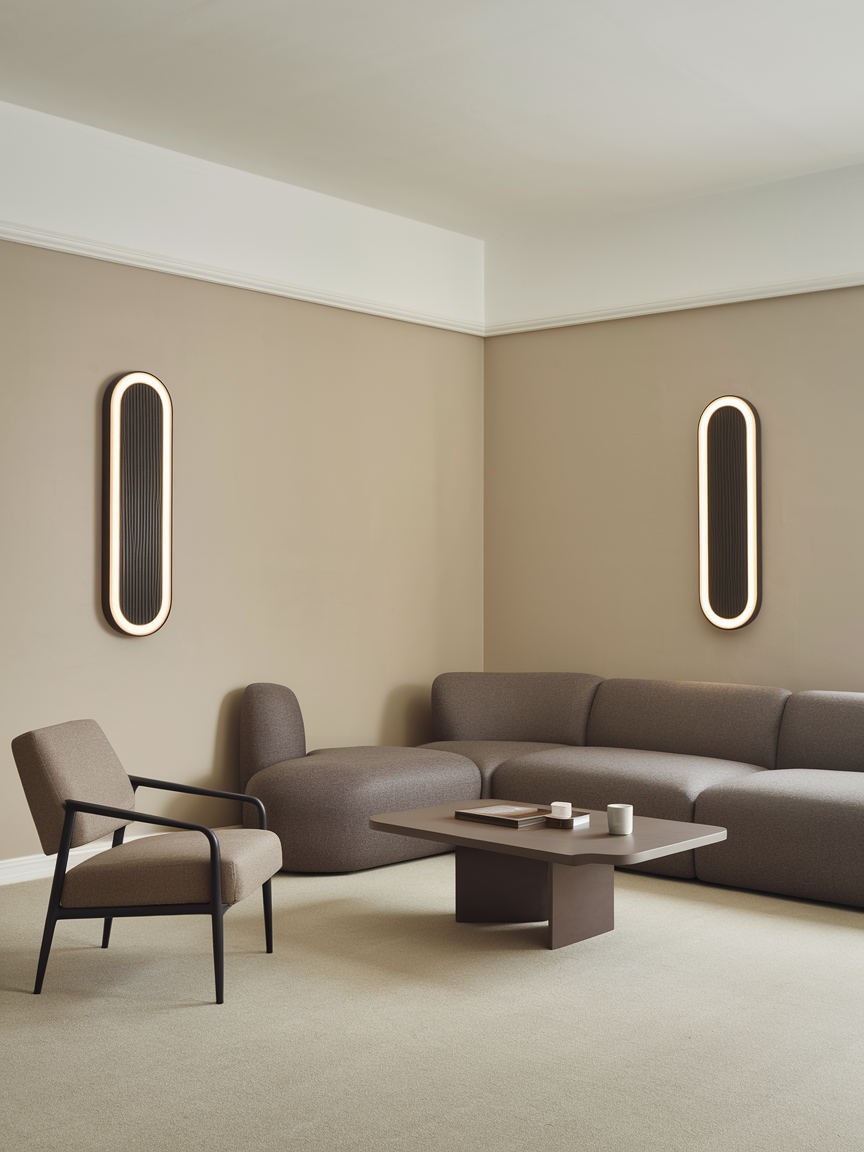
Wall-mounted lighting is a smart alternative to bulky floor lamps and table lamps in a compact living room. Sconces, swing-arm reading lights, and adjustable wall fixtures provide useful illumination while freeing up surfaces for other essentials. They can also highlight artwork, illuminate a reading nook, or create a warm glow around a sofa. For added flexibility, consider dimmable fixtures that allow you to adjust the brightness throughout the day. Choose designs that complement your interior without projecting too far into the room. When positioned thoughtfully, wall-mounted lights combine practical functionality with decorative appeal, helping your living room feel organized, comfortable, and visually open.
21. Make the Most of Open Shelving
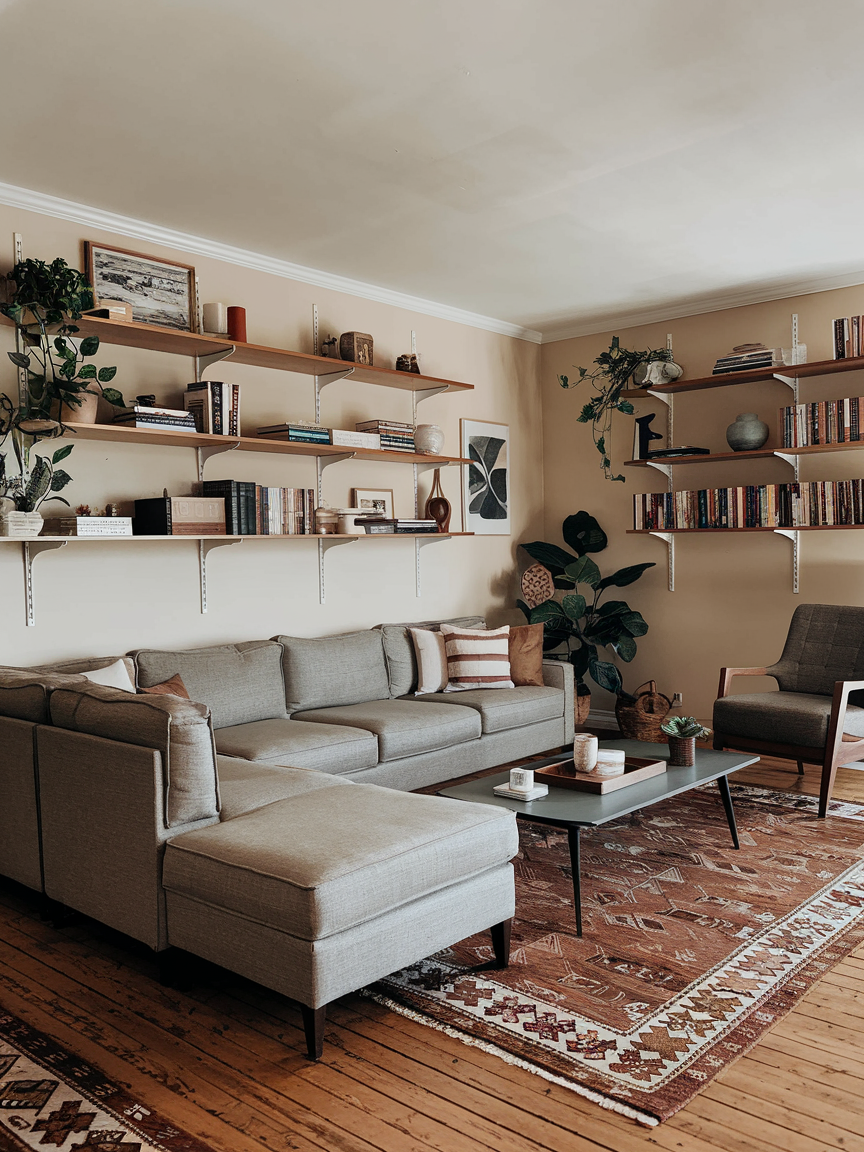
Open shelving provides a useful combination of storage and decoration without the heavy appearance of large enclosed cabinets. Wall-mounted shelves can hold books, small plants, framed photographs, and favorite collectibles while keeping the floor area clear. Because the wall remains partially visible between the objects, the arrangement can feel lighter than a solid storage unit. The secret is to edit your display carefully rather than filling every shelf from end to end. Mix objects of different heights, group similar colors together, and leave a few empty spaces for visual breathing room. A well-organized shelving arrangement adds personality and practical storage while helping a small living room maintain an airy appearance.
22. Use Horizontal Lines to Widen the Room
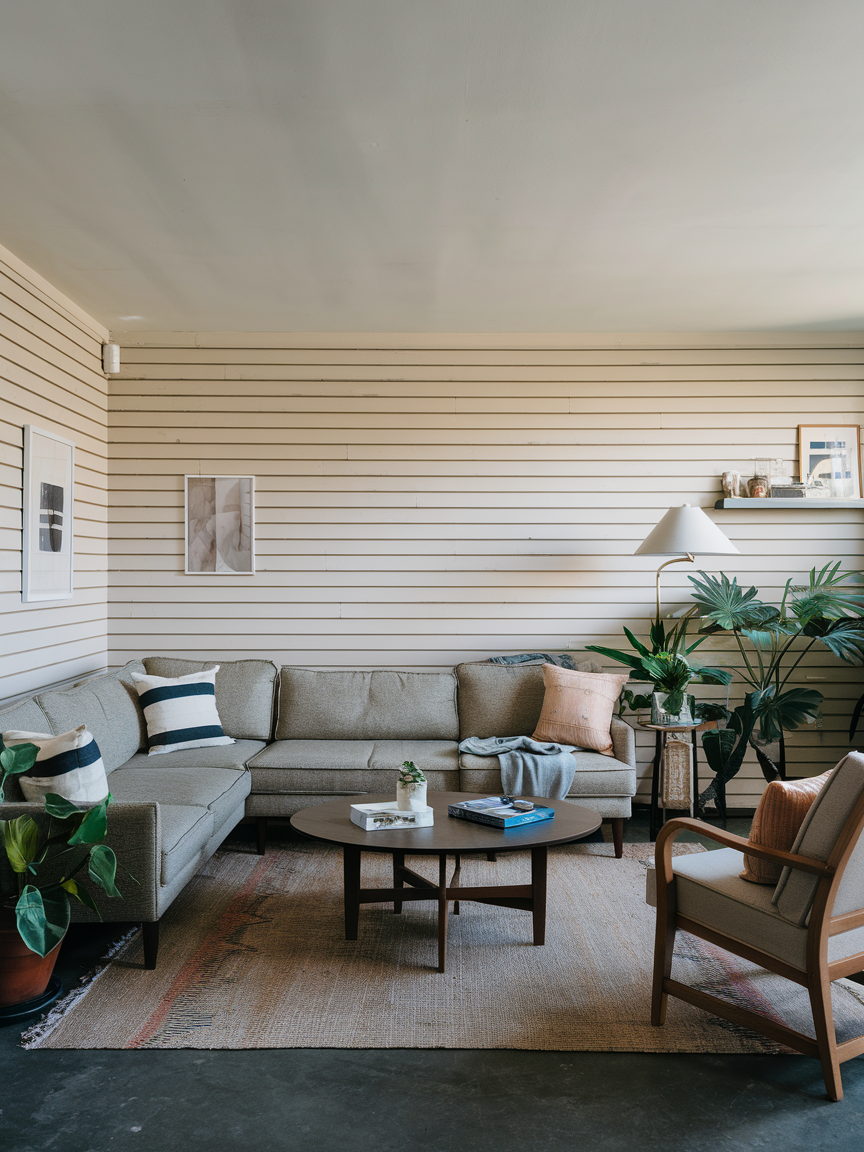
Horizontal lines can help a narrow living room appear wider by drawing attention across the space. You can introduce this effect with horizontally striped wallpaper, painted bands, elongated wall panels, or a low-profile decorative feature. Light and subtle colors are often the best choice because they add visual movement without overwhelming the room. Horizontal wood slats can also create a contemporary accent wall while introducing warmth and texture. For a cohesive look, coordinate the wall treatment with the proportions of your sofa and other furniture. Used thoughtfully, horizontal detailing can make a narrow interior feel more balanced and expansive while adding a distinctive design element.
23. Balance the Scale of Your Wall Decor
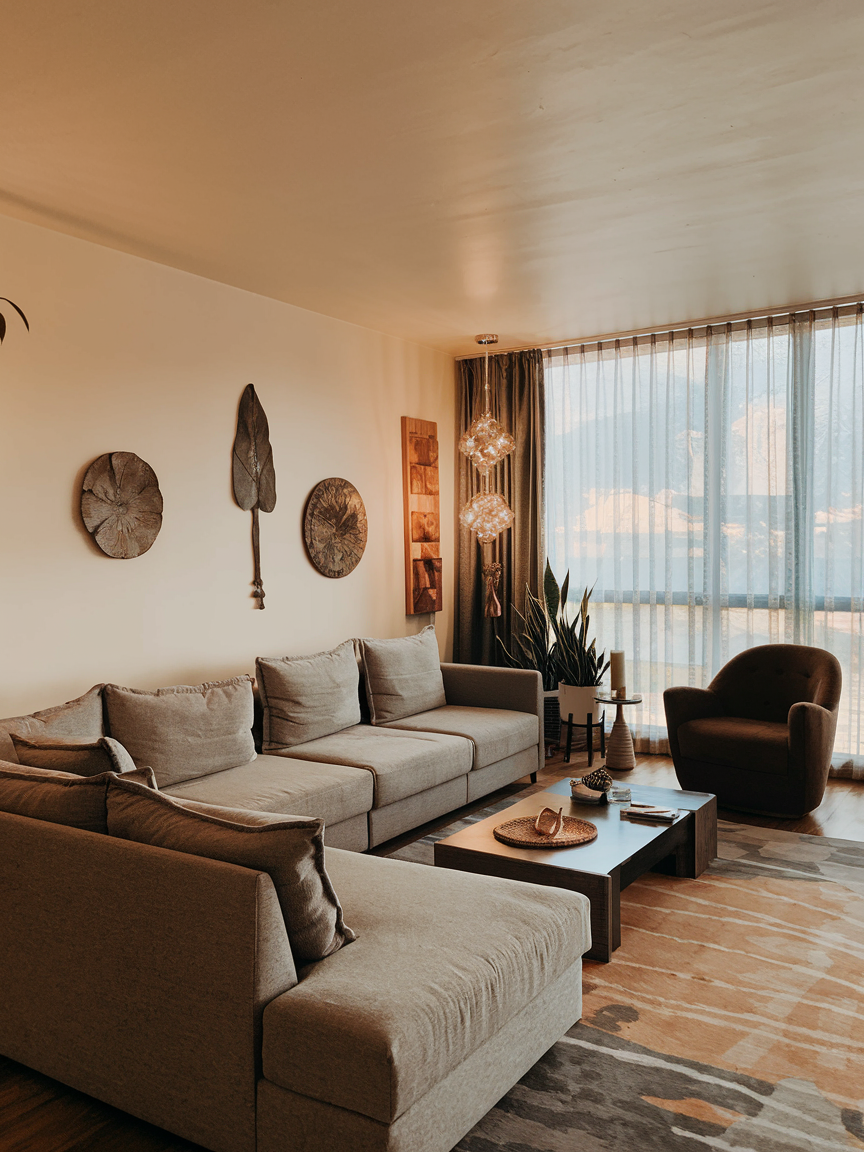
Choosing the right proportions for wall decorations can help a small living room feel more thoughtfully designed. Although it may seem natural to use only small accessories in a compact space, one well-chosen oversized mirror, statement artwork, or decorative clock can create a stronger focal point than a collection of tiny objects. Larger pieces help establish visual structure and can make a wall feel more intentional. The key is to balance the statement item with plenty of surrounding space rather than filling every available surface. Consider the size of your sofa, the height of your ceilings, and the width of the wall before choosing a piece that complements the room.
24. Embrace Neutral Wall Decor
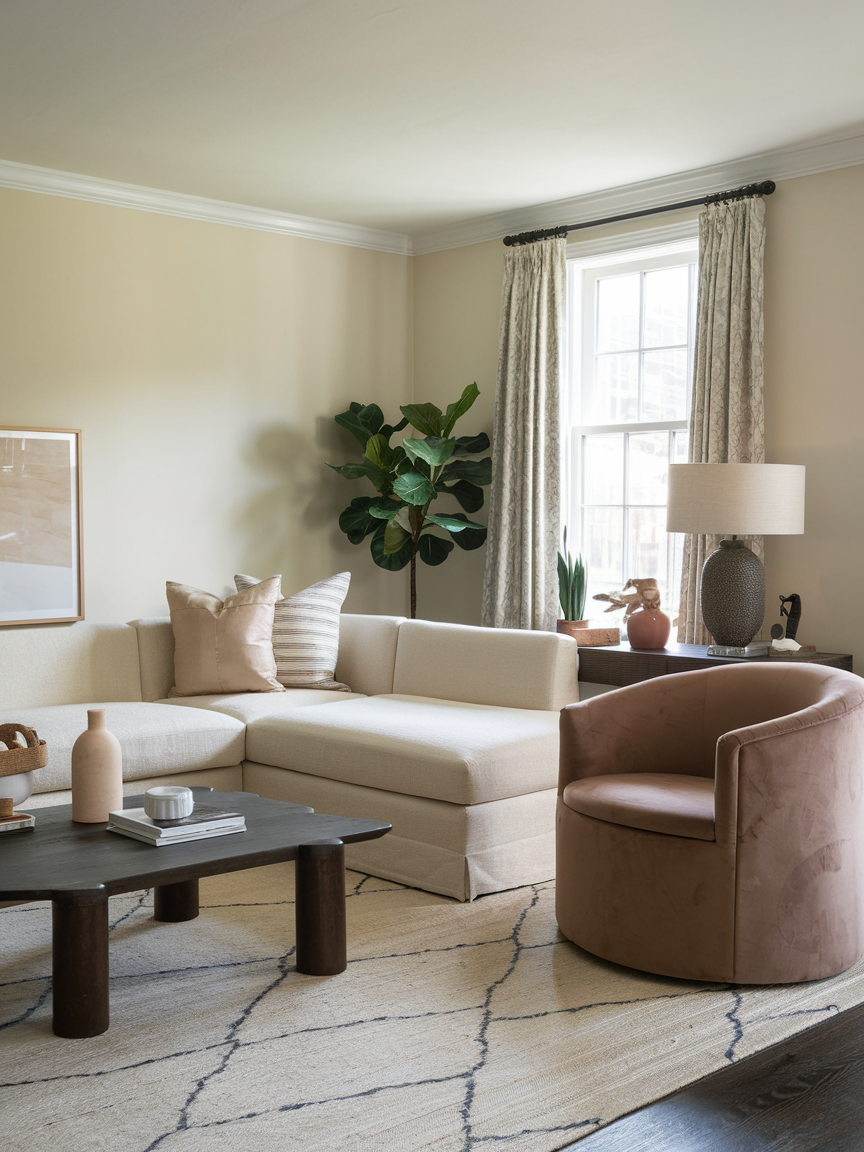
Neutral colors are ideal for creating a calm and spacious atmosphere in a small living room. Shades such as ivory, sand, beige, warm gray, and soft taupe provide a subtle backdrop that works beautifully with natural light. Using similar tones across your walls, artwork, and decorative accessories helps the room feel connected rather than divided into separate visual sections. To keep the design from looking dull, introduce different textures through woven wall hangings, wooden frames, linen fabrics, or ceramic decorations. You can also add small touches of green, blue, or terracotta for contrast. This combination creates a welcoming interior that feels bright, balanced, and timeless.
25. Add Floating Desks and Consoles
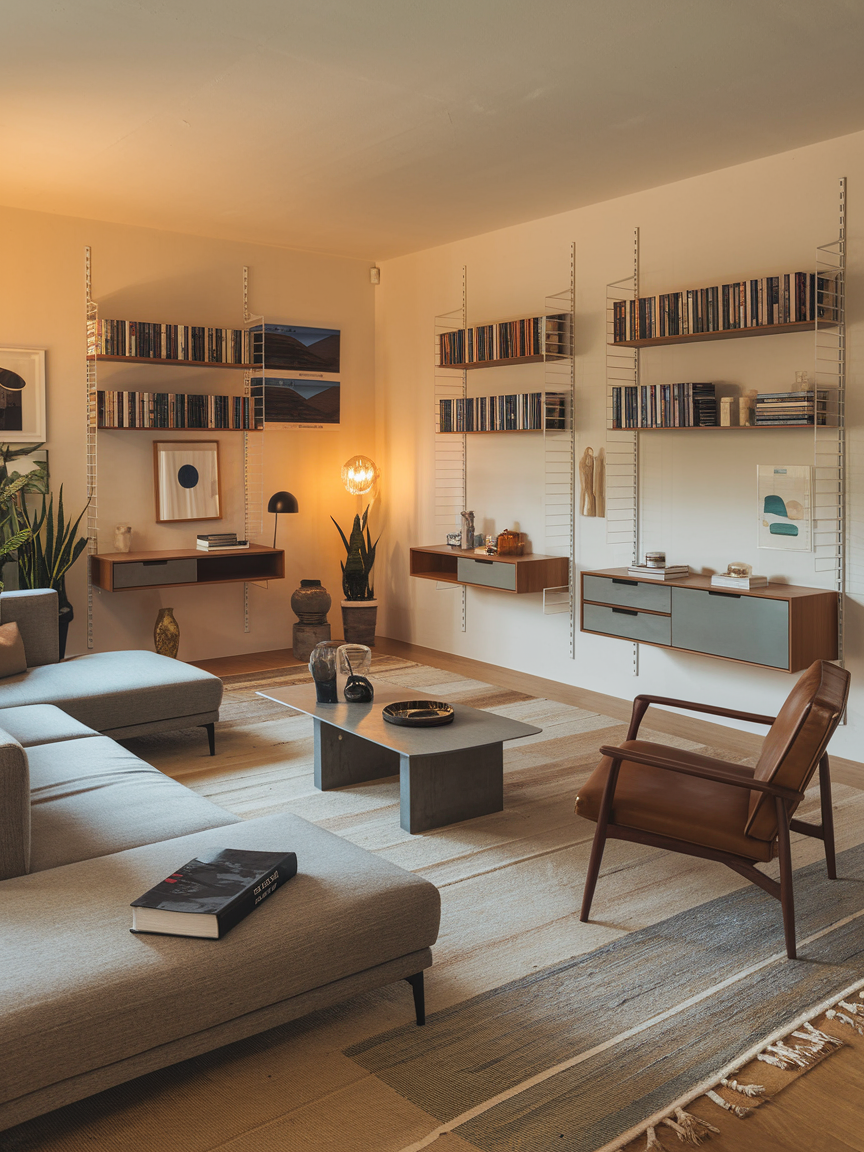
Floating desks and consoles offer a practical way to introduce extra functionality without making a small living room feel crowded. Attached directly to the wall, these pieces eliminate the need for bulky legs and leave more of the floor visible. A narrow floating console can sit beneath a mirror or artwork, while a compact wall-mounted desk can create a convenient work area in an unused corner. Choose a streamlined design with discreet storage to keep everyday essentials organized. Avoid placing too many accessories on the surface, as a simple arrangement helps preserve the feeling of openness. These space-conscious pieces are particularly useful in multipurpose living rooms where every inch matters.
26. Arrange Wall Art in a Grid
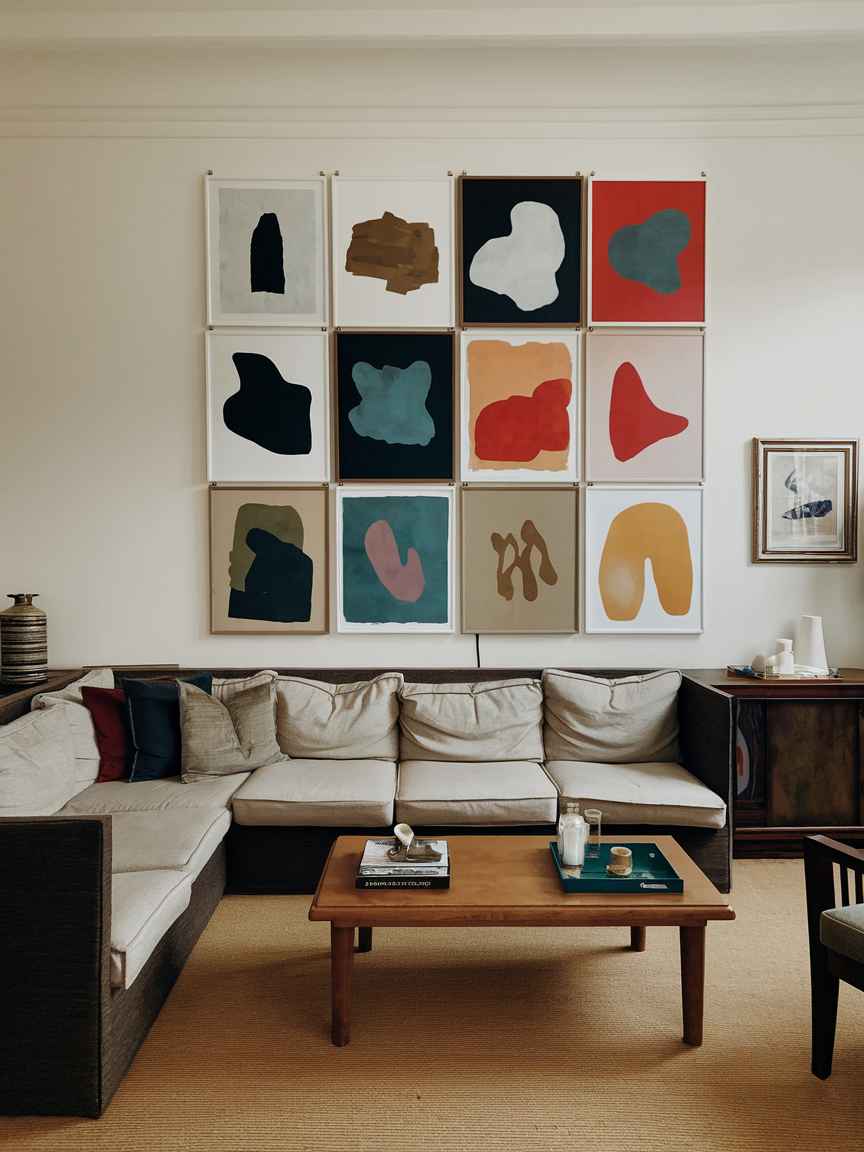
A grid-style gallery wall creates a clean, organized appearance that can make a small living room feel more balanced. Arrange several similarly sized photographs, prints, or illustrations in evenly spaced rows and columns. The consistent layout gives the wall a sense of order, preventing the display from appearing scattered or chaotic. For a polished finish, choose matching frames and artwork that shares a complementary color scheme. A grid of black-and-white photographs, for example, can look striking against white or beige walls. Keep the arrangement proportionate to the furniture below it and leave some open wall space around the display to ensure the room feels intentional rather than overcrowded.
* The most effective wall decorating ideas bring together visual appeal, functionality, and a thoughtful use of space. Use these inspirations to refresh your walls, experiment with different arrangements, and select decorative pieces that complement your furniture and overall color scheme.