A small living room can be just as stylish, comfortable, and functional as a larger space with the right design approach. Smart layouts, multifunctional furniture, and thoughtful décor choices make it possible to maximize every square foot without sacrificing comfort or personality. A well-planned living room feels open, inviting, and perfectly suited to everyday life, regardless of its size.
Creative design solutions help transform compact spaces into beautiful gathering areas. Light color palettes, clever storage, space-saving furniture, layered lighting, and carefully selected accessories work together to create the illusion of a larger room while maintaining warmth and character. Every design element plays an important role in making the space feel balanced, organized, and welcoming.
This collection showcases small living room ideas that combine practicality with timeless style. Let’s explore these small living room ideas and discover how creative layouts, functional furniture, and stylish details can help you make every inch count!
1. Anchor the Space with a Statement Rug
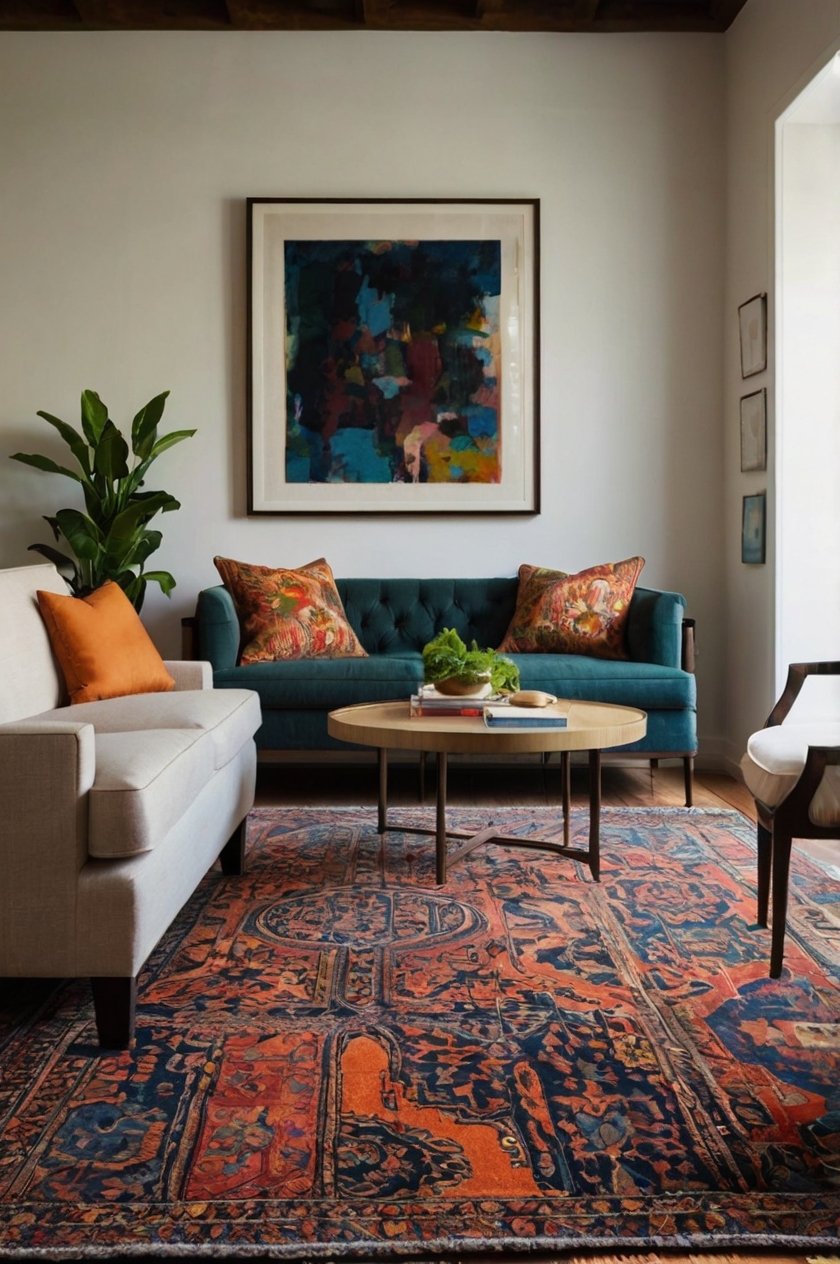
The right rug can completely transform the look and feel of a small living room by giving the furniture arrangement a clear sense of purpose. Instead of choosing a rug that’s too small, select one large enough to fit beneath at least the front legs of your seating pieces. This creates a unified layout that makes the room appear larger and more intentional. Bold patterns, rich textures, or eye-catching colors can introduce personality without adding unnecessary clutter. A statement rug also softens hard flooring, improves comfort underfoot, and visually connects your sofa, chairs, and coffee table into one cohesive design. With the right proportions and style, a rug becomes the foundation that ties the entire room together.
2. Keep the Design Clean and Minimal
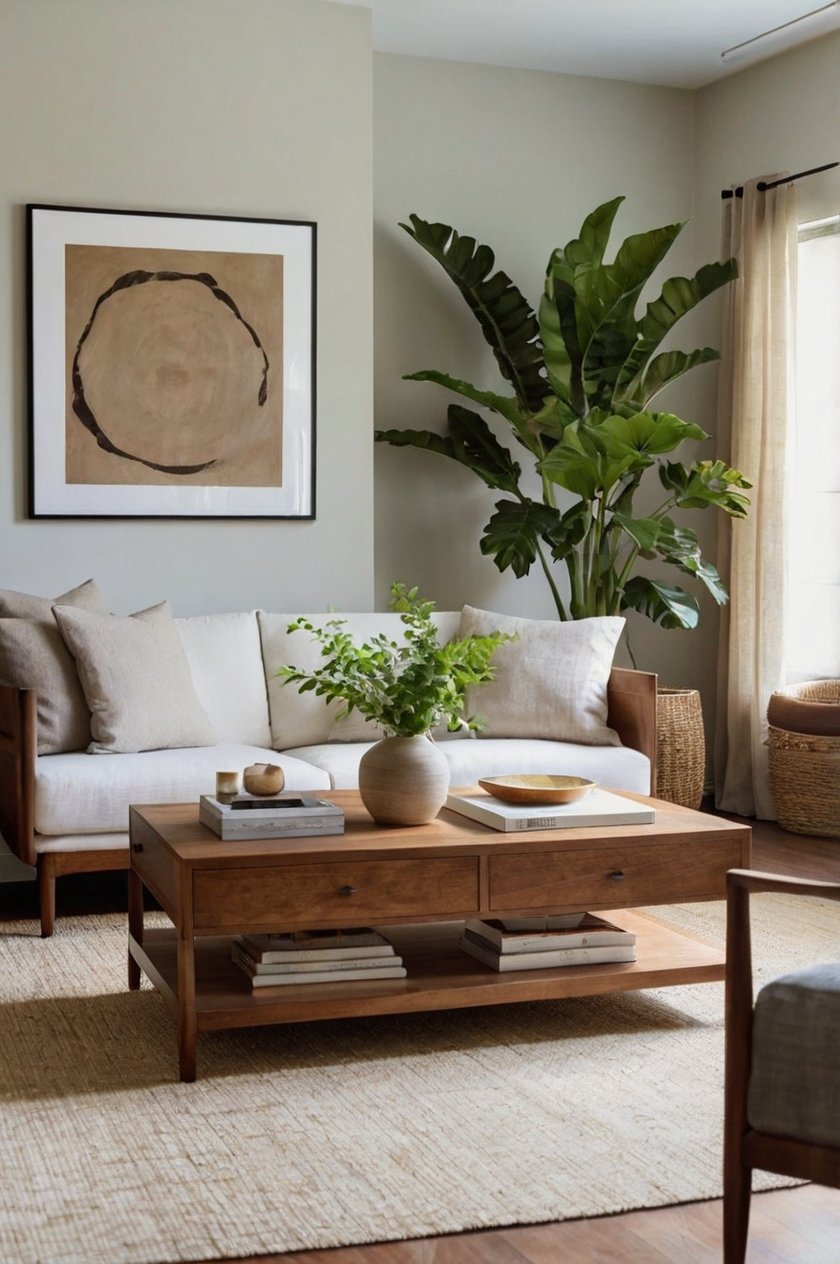
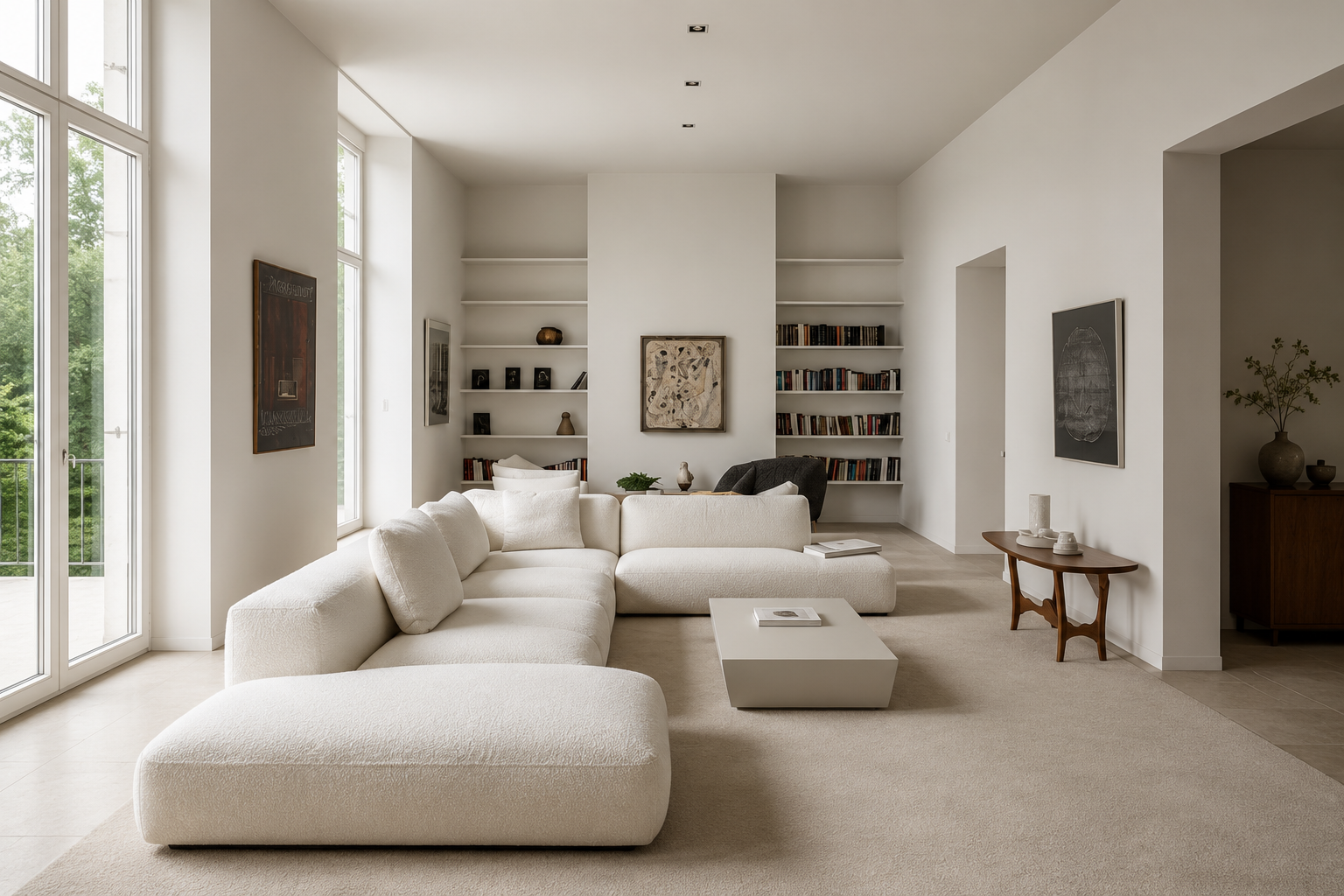
A thoughtfully edited living room often feels much larger than one filled with excessive furniture and accessories. Focus on choosing pieces that serve both a practical and decorative purpose while avoiding anything that doesn’t contribute to the overall design. Clean lines, uncluttered surfaces, and a restrained color palette help create a calm environment where each element has room to shine. Instead of filling shelves with numerous small decorations, display only a few carefully selected items such as a favorite vase, framed artwork, or a healthy houseplant. Hidden storage solutions can further reduce visual clutter by keeping everyday necessities out of sight. A minimalist approach doesn’t mean sacrificing warmth or personality. It simply encourages thoughtful decorating that makes every square foot feel more open, functional, and inviting.
3. Embrace Minimalist Decor
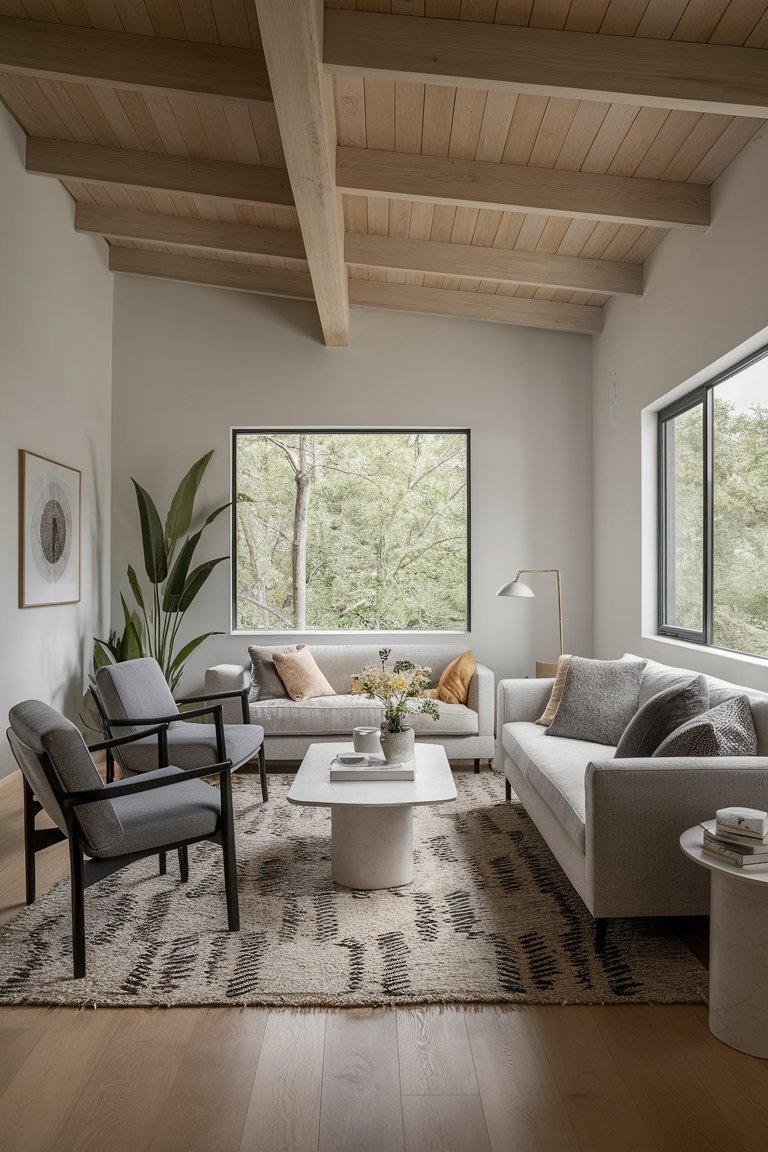
A minimalist decorating style helps a small living room feel clean, organized, and more spacious. Focus on a few meaningful decor pieces instead of filling every surface with accessories. Choose furniture with simple lines and avoid unnecessary ornaments that can make the room feel crowded. A carefully selected vase, framed artwork, or indoor plant is often enough to add character. By giving each item room to stand out, your living room will feel calmer, brighter, and easier to enjoy every day.
4. Try a Monochromatic Color Scheme
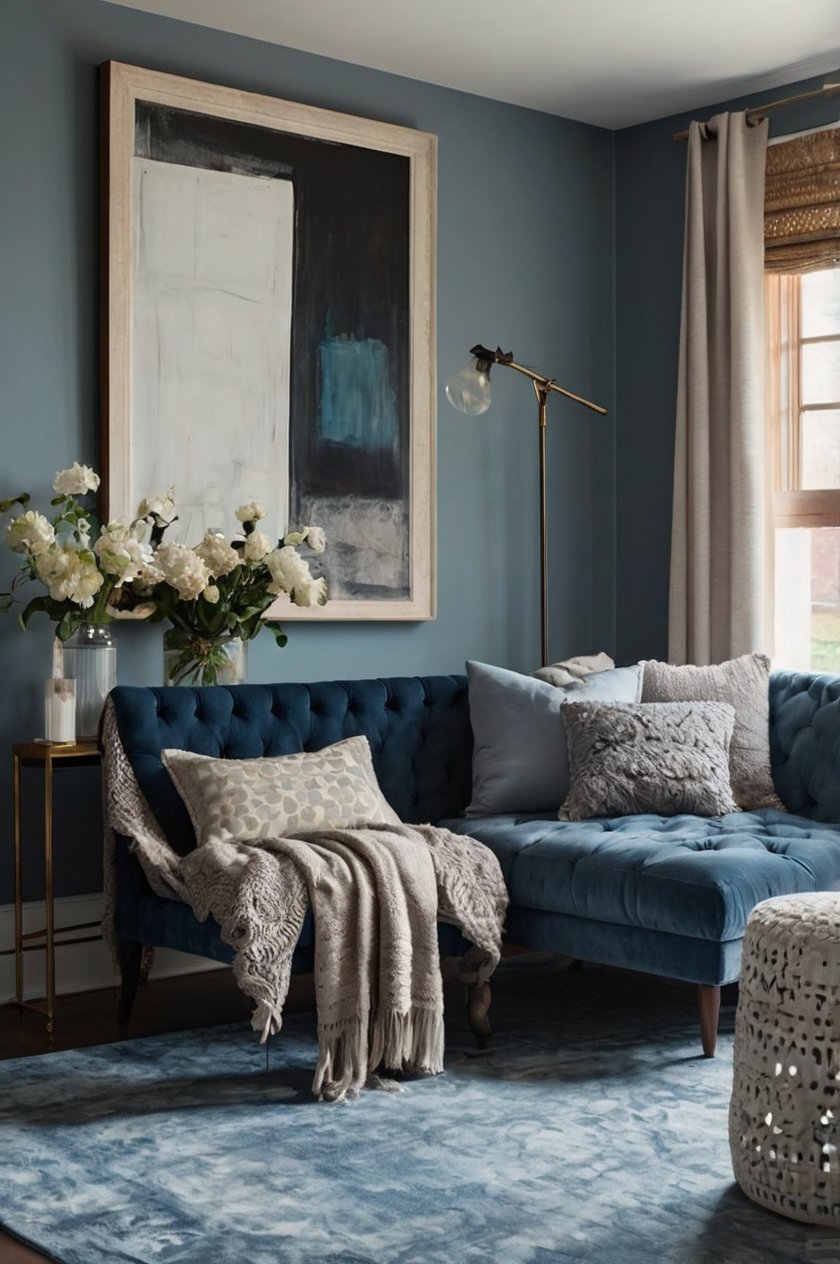
Decorating with different shades of the same color creates a seamless look that makes a small living room appear larger. Soft grays, warm beiges, or muted blues work especially well for achieving a calm and cohesive atmosphere. Introduce variety through different materials and textures, such as velvet cushions, woven baskets, or textured rugs, rather than adding multiple contrasting colors. This approach keeps the design visually connected while adding enough depth to prevent the room from feeling flat.
5. Choose an L-Shaped Sofa
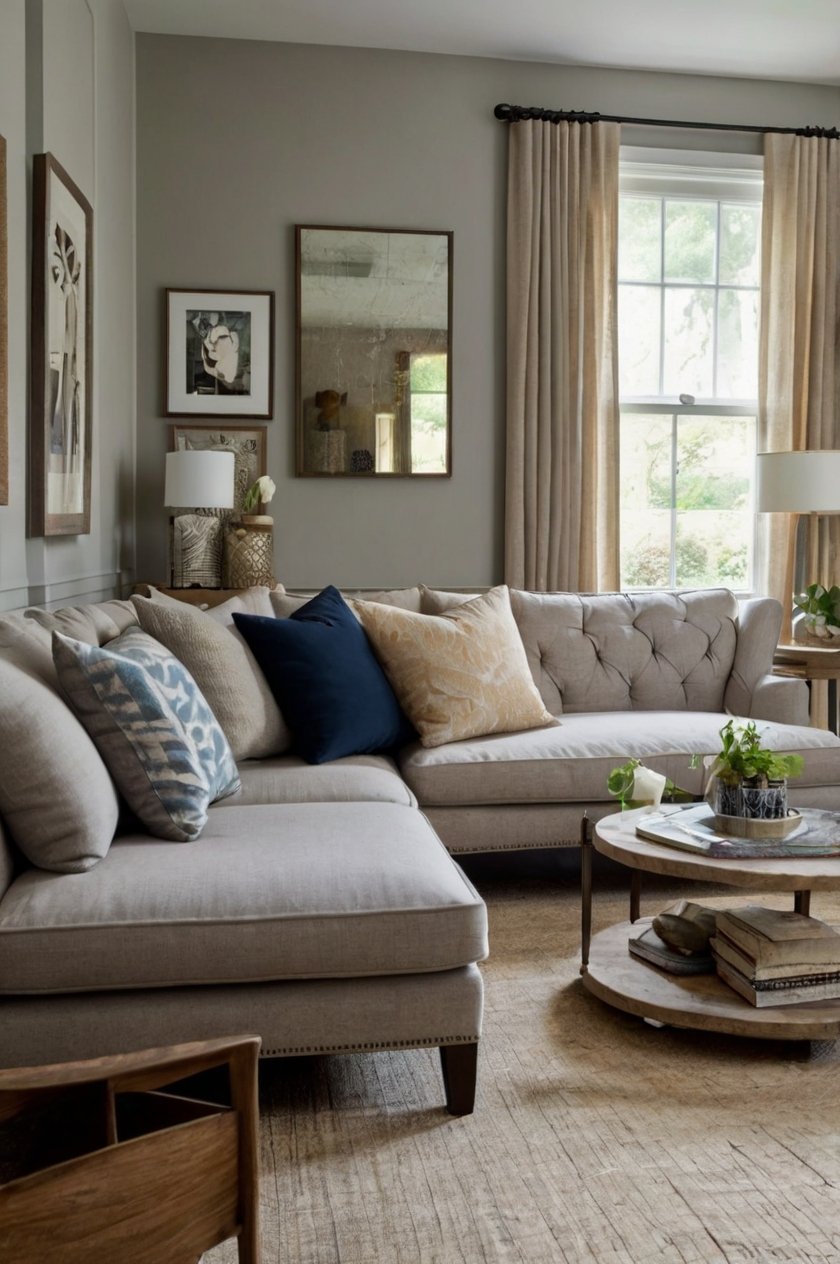
An L-shaped sofa is an excellent choice for making the most of a compact living room. Tucking it neatly into a corner maximizes seating while leaving more open floor space in the center of the room. This arrangement creates a comfortable conversation area without making the layout feel crowded. Pair the sofa with a compact coffee table and a few decorative accents to complete the space. It’s a practical solution that combines comfort, function, and efficient use of every corner.
6. Design a Statement Ceiling
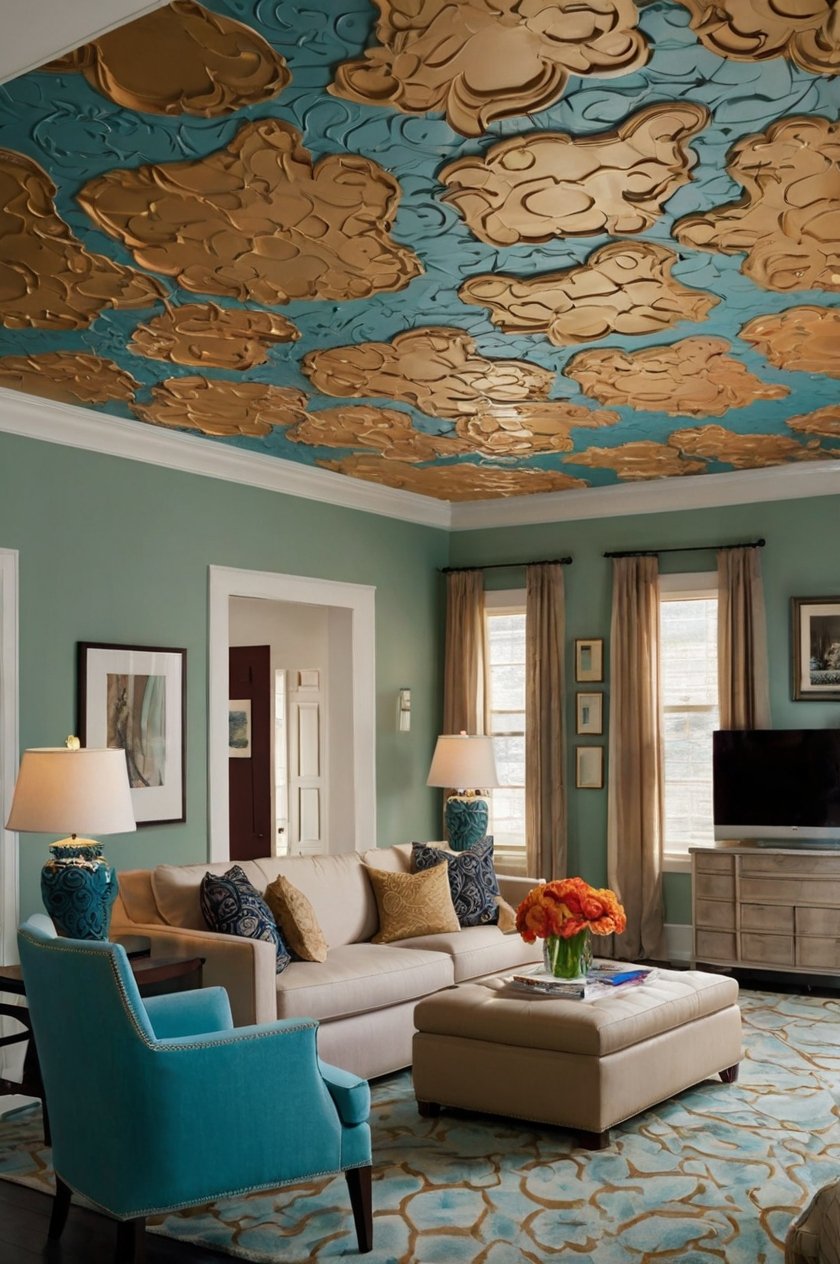
A decorative ceiling can add personality while drawing attention upward, making your living room feel taller. Consider painting the ceiling a soft contrasting color, adding wood beams, applying wallpaper, or installing decorative molding for extra visual appeal. Since the ceiling is often overlooked, enhancing it creates a surprising focal point without occupying any floor space. This simple design feature gives the room more character while adding depth and dimension to the overall interior.
7. Mount the TV on the Wall
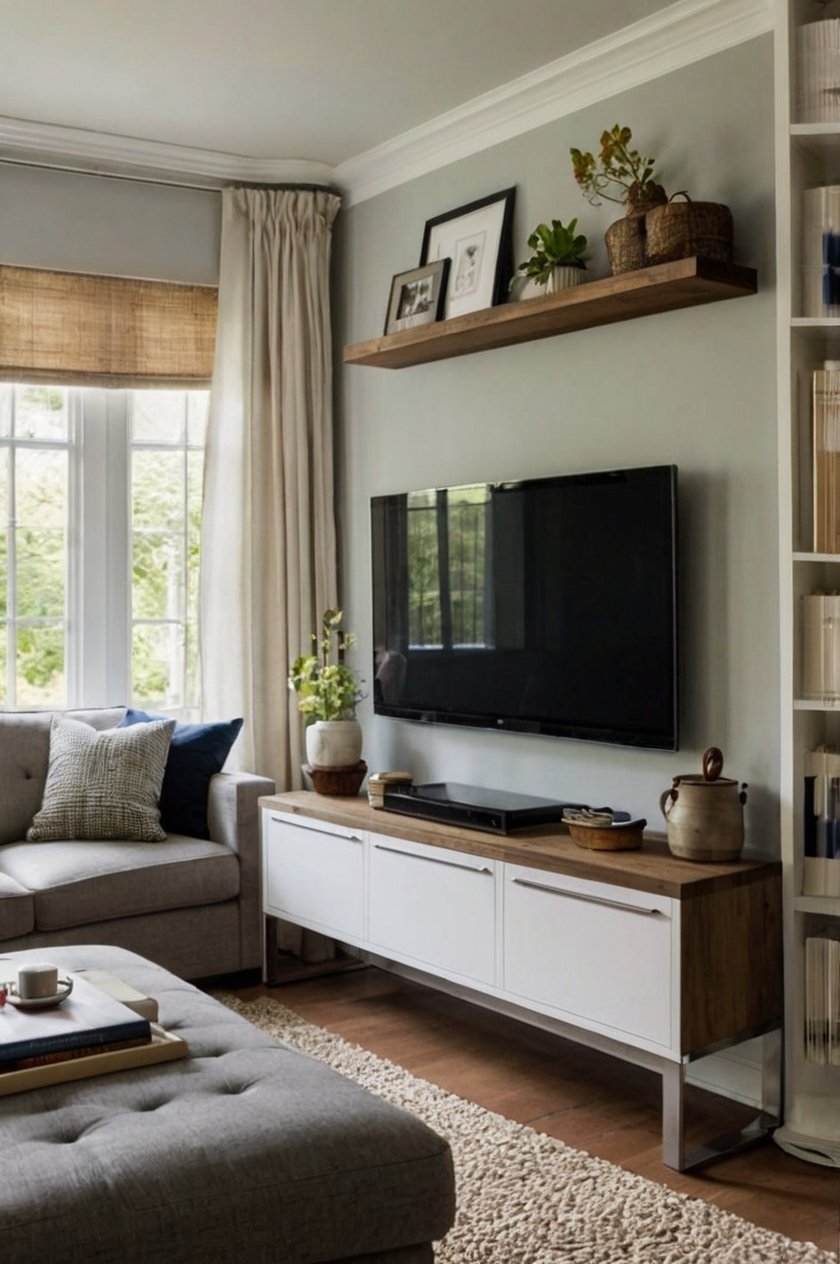
Wall mounting your television instantly creates a cleaner and more spacious living room. Removing a bulky TV stand frees up floor space and allows for a more flexible furniture arrangement. A floating shelf beneath the television can provide storage for media devices while maintaining a streamlined appearance. This setup also keeps cables organized and gives the room a modern, uncluttered look. It’s a practical upgrade that improves both style and functionality in a compact space.
8. Layer Different Textures
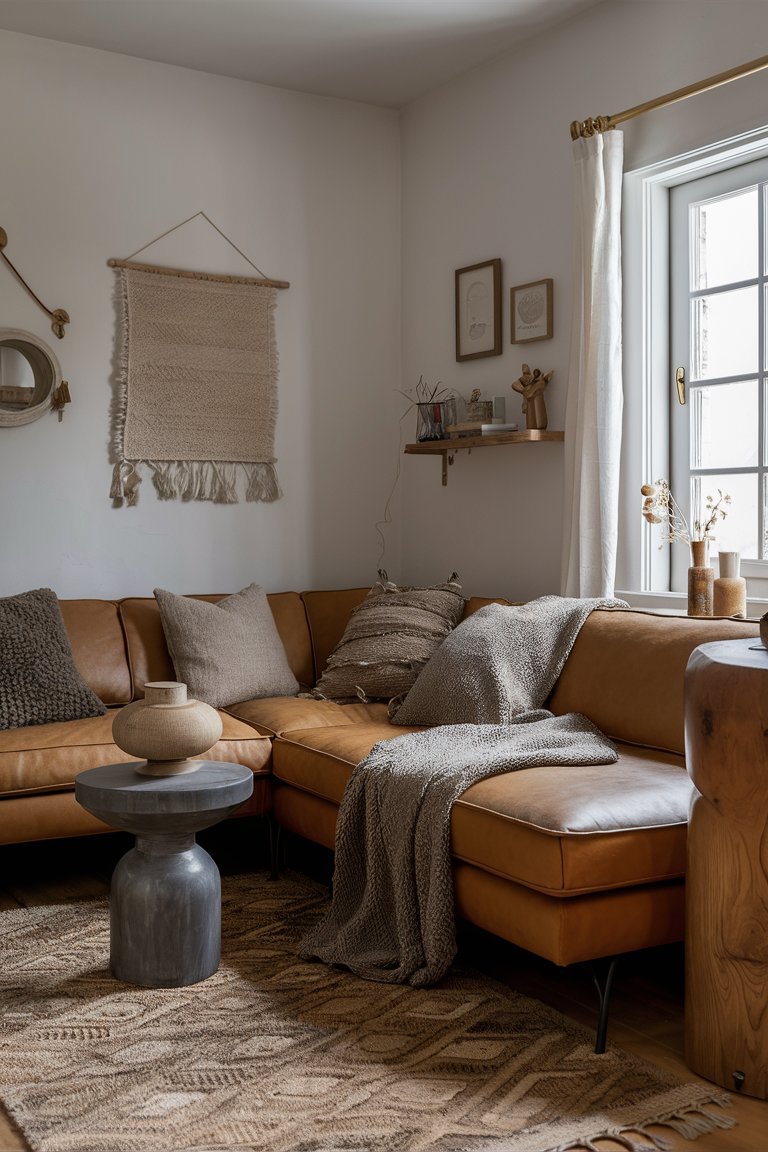
A small living room doesn’t need lots of decor to feel inviting. Mixing different textures adds depth and warmth while keeping the design simple. Pair a soft area rug with linen cushions, a knitted throw, and a wooden coffee table to create a balanced look. Adding materials like leather, rattan, glass, or metal introduces subtle contrast without making the room feel busy. Texture helps every element stand out, giving the space a cozy, thoughtfully designed appearance that feels both stylish and comfortable.
9. Choose Low Profile Furniture
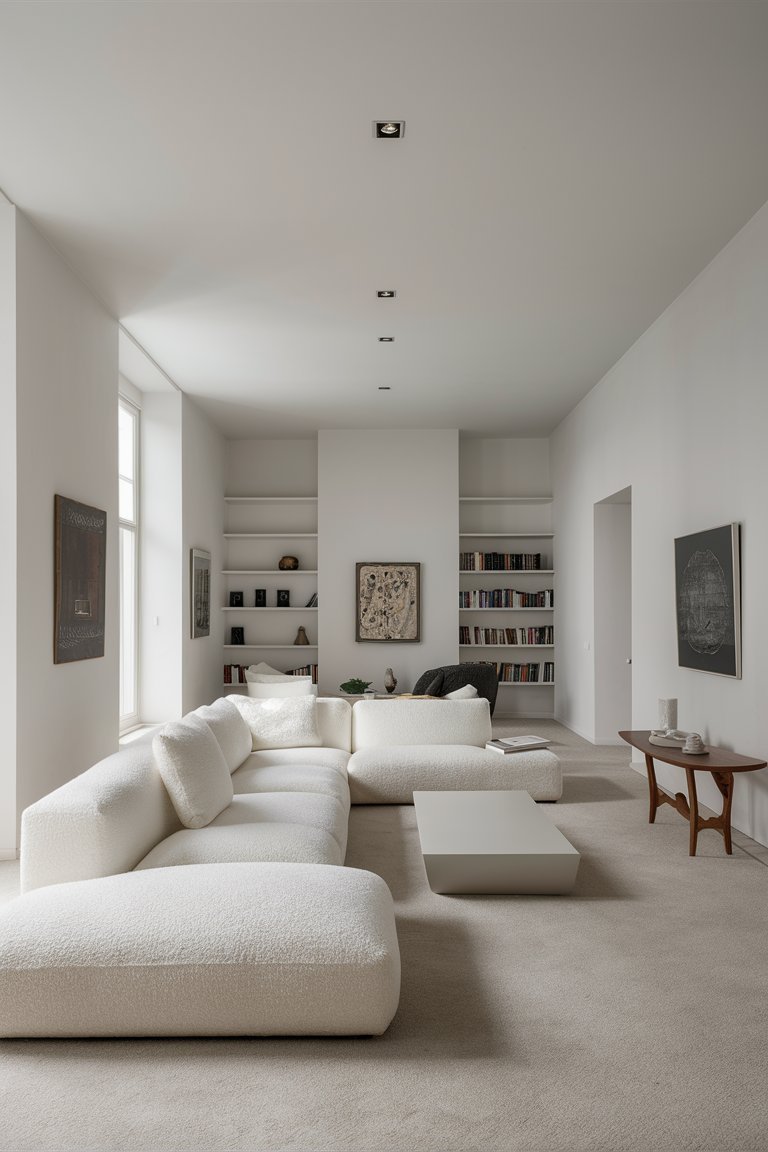
Low-profile furniture creates the illusion of higher ceilings by leaving more open space above each piece. Sofas and chairs with lower backs naturally make the room feel taller and less crowded. Pair them with slim coffee tables or minimalist side tables to maintain a light, airy atmosphere. This style also works beautifully in modern and contemporary interiors where clean lines are the focus. Combined with good lighting and light-colored walls, low-profile furniture helps even the smallest living room feel more spacious.
10. Opt for Multi-Functional Furniture
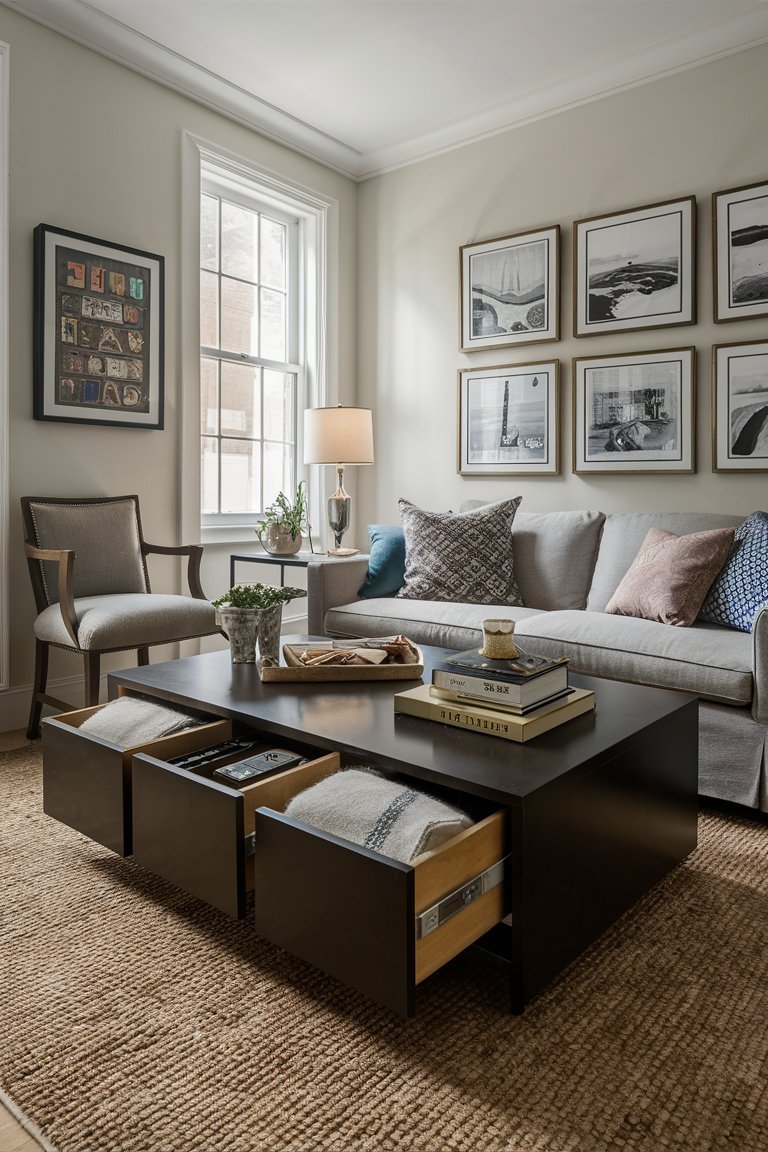
Making every piece of furniture work harder is one of the smartest ways to maximize a small living room. Instead of filling the space with separate items for seating, storage, and entertaining, choose designs that combine several functions into one. A storage ottoman can hold extra blankets while serving as a footrest, and a coffee table with hidden compartments keeps everyday essentials neatly tucked away. Sleeper sofas are another excellent investment if your living room occasionally doubles as a guest room. Even side tables with drawers or lift-top surfaces can provide valuable storage without increasing visual clutter. By selecting furniture that performs multiple roles, you can enjoy a room that feels organized, practical, and comfortable while making the most of every square foot available.
11. Use Light Colors to Brighten the Room
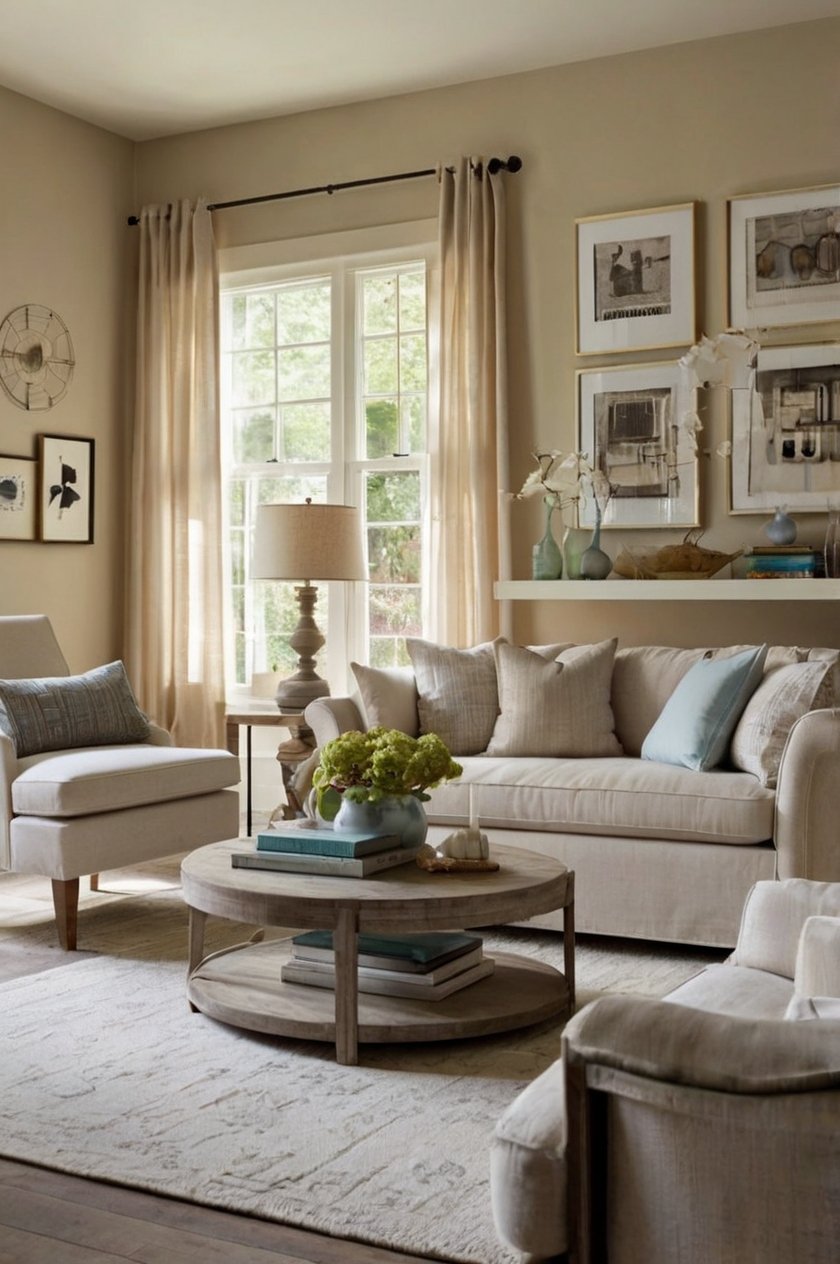
A light color palette is one of the easiest ways to make a compact living room feel larger than it really is. Soft shades like white, cream, warm beige, pale gray, and muted taupe reflect natural light throughout the space, creating an airy and welcoming atmosphere. Painting the walls in lighter tones also helps blur visual boundaries, making the room appear more expansive. Continue the look with furniture upholstered in neutral fabrics for a seamless appearance that feels calm rather than crowded. Once the foundation is in place, introduce personality through colorful throw pillows, artwork, or decorative accessories. These small pops of color create visual interest while allowing the bright backdrop to remain the star, giving your living room a fresh and spacious feel.
12. Define Spaces with Area Rugs
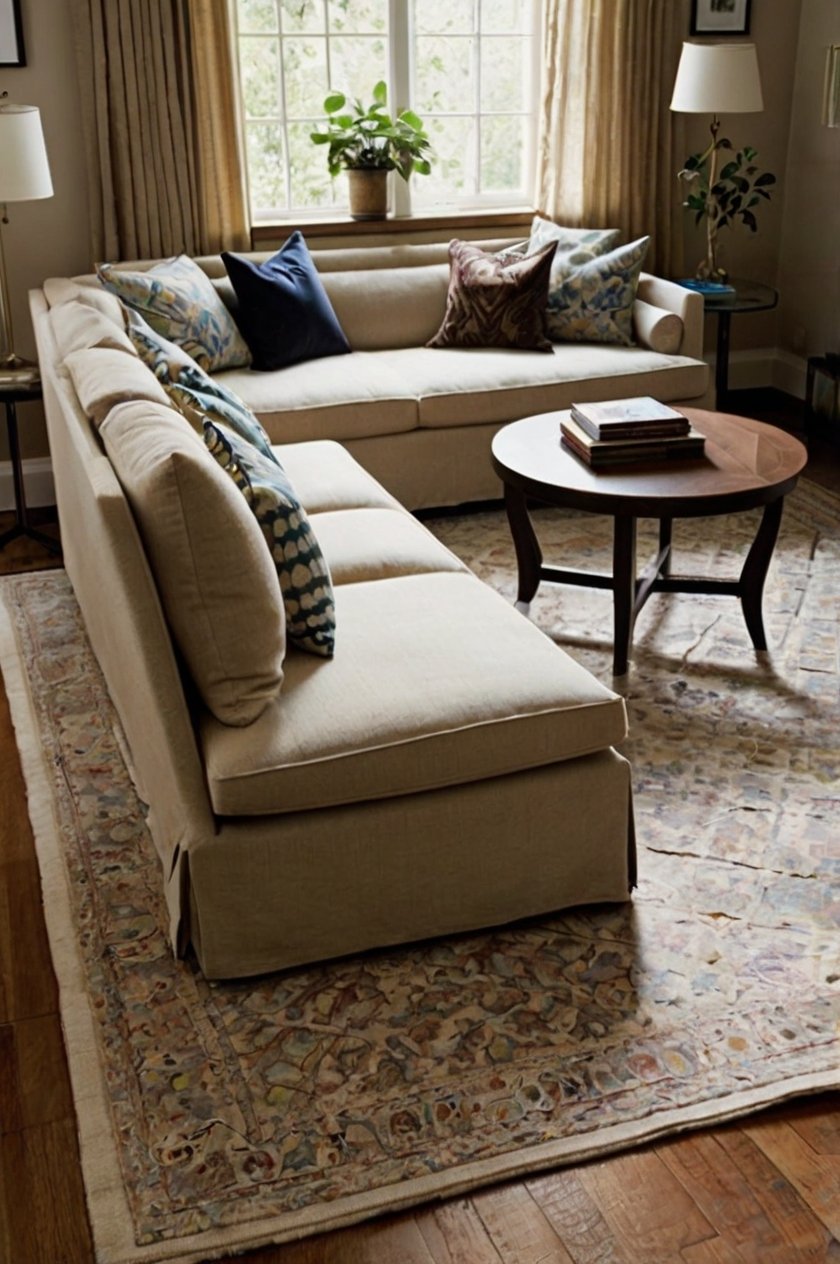
Area rugs can help organize a small living room by visually separating different zones. Place a rug beneath the seating area to create a cozy conversation space, or use another rug to highlight a reading corner or workspace. Choosing rugs that complement each other in color and style keeps the room looking cohesive rather than divided. Along with adding warmth and texture, rugs give the layout more structure and make the entire space feel thoughtfully arranged.
13. Incorporate Hidden Storage
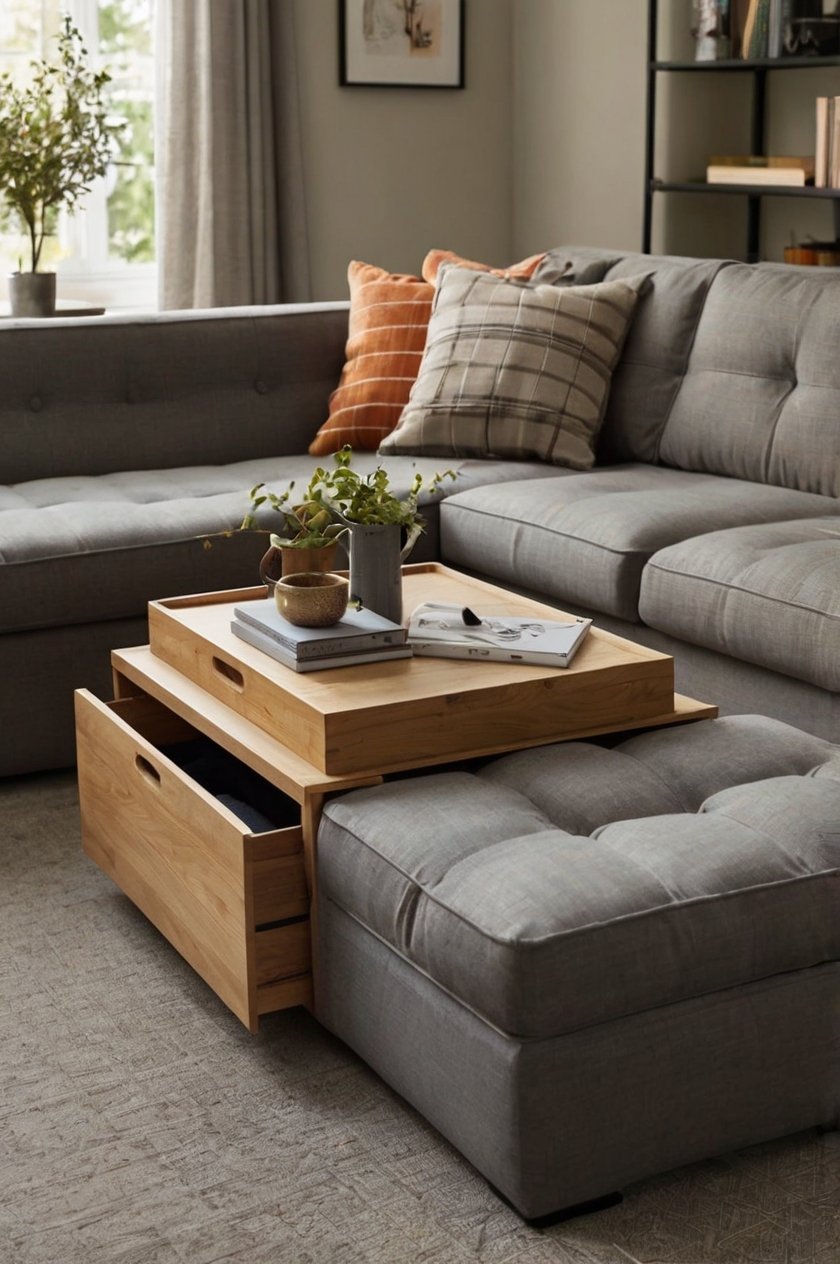
Keeping clutter out of sight is essential in a small living room, and hidden storage makes that task much easier. Choose furniture with built-in compartments, such as storage ottomans, lift-top coffee tables, or sofas with concealed drawers. These pieces provide convenient places to store blankets, magazines, remote controls, and other everyday essentials while maintaining a clean appearance. By reducing visible clutter, hidden storage helps your living room feel larger, more organized, and easier to enjoy every day.
14. Add Bold Accent Colors
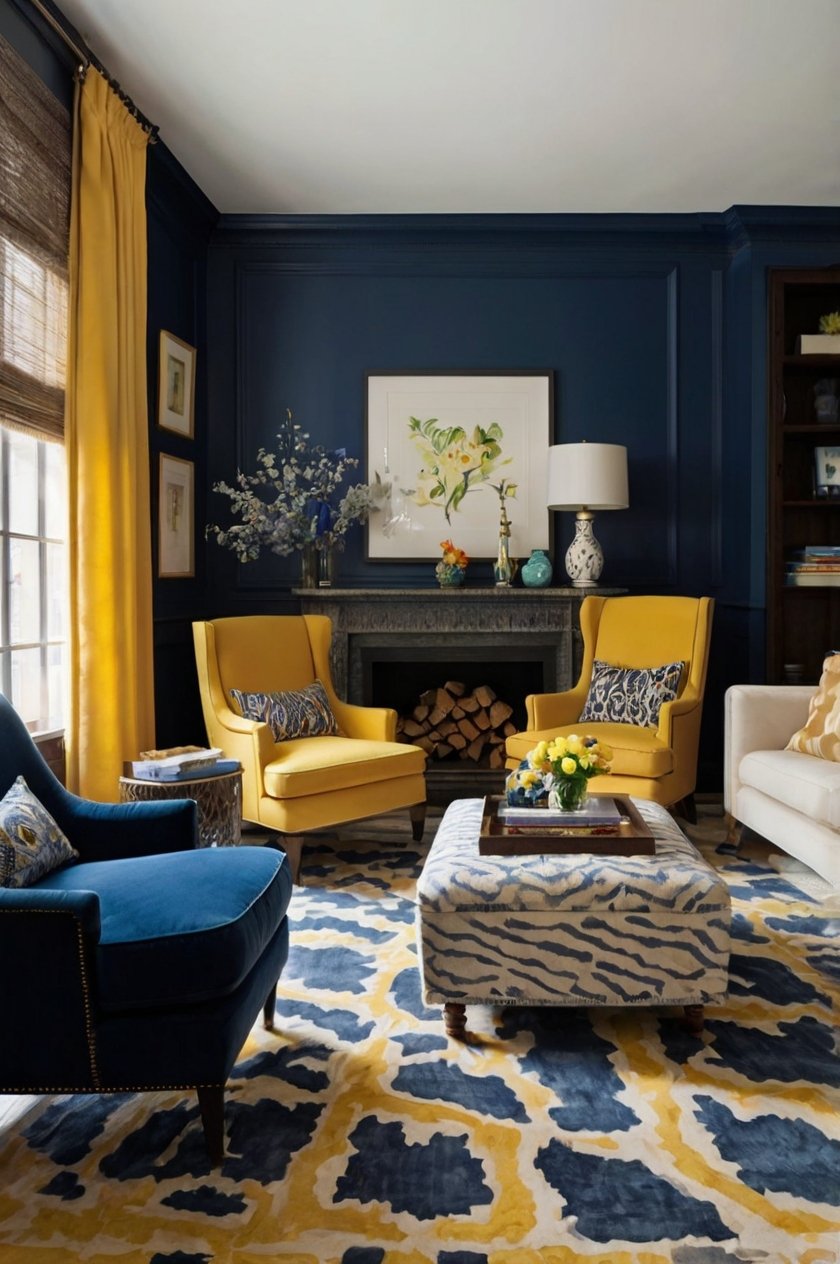
A few bold accents can give your living room personality without overwhelming the space. Choose one or two standout colors, such as navy blue, emerald green, or mustard yellow, and repeat them through cushions, artwork, vases, or a single accent chair. Keeping the larger furniture neutral allows these colorful details to shine while maintaining an open feel. Small touches of color create contrast, bring energy into the room, and make the overall design feel more polished.
15. Hang Curtains Higher
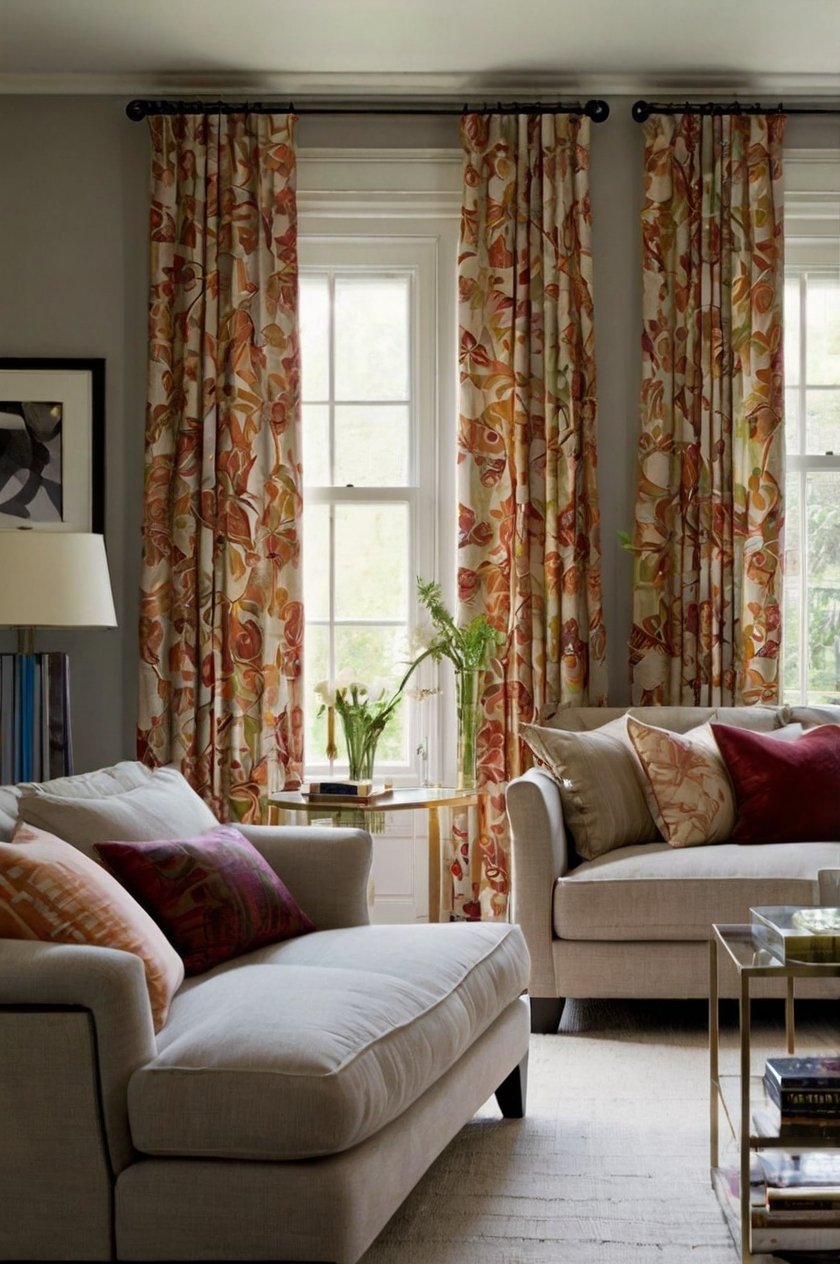
Mounting curtains closer to the ceiling is an easy trick that makes a living room appear taller. Long curtains create strong vertical lines that naturally draw the eye upward, giving the illusion of extra height. Choose lightweight fabrics in soft, neutral colors to let plenty of sunlight filter into the room. This combination keeps the space bright while adding a touch of elegance. Even small windows can feel larger when framed with full-length curtains hung well above the window frame.
16. Keep the Floor Visible
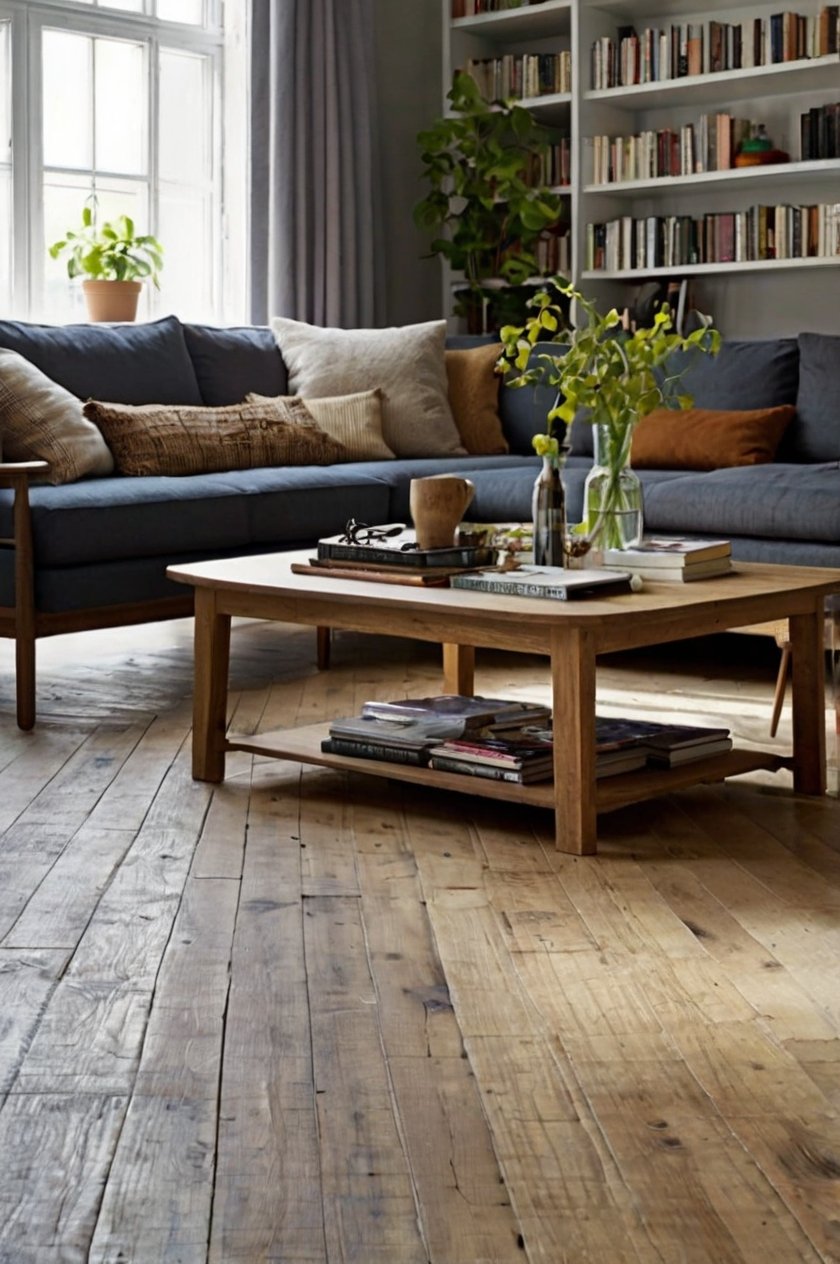
Showing more of the floor helps a small living room feel less crowded. Furniture with raised legs allows light to flow underneath, creating an open and airy appearance. Avoid placing unnecessary items directly on the floor, and keep walkways clear to improve both function and visual balance. Slim furniture, neatly arranged decor, and thoughtful storage solutions all contribute to a cleaner layout. The more visible floor space you have, the larger your living room will appear.
17. Make the Most of Vertical Space
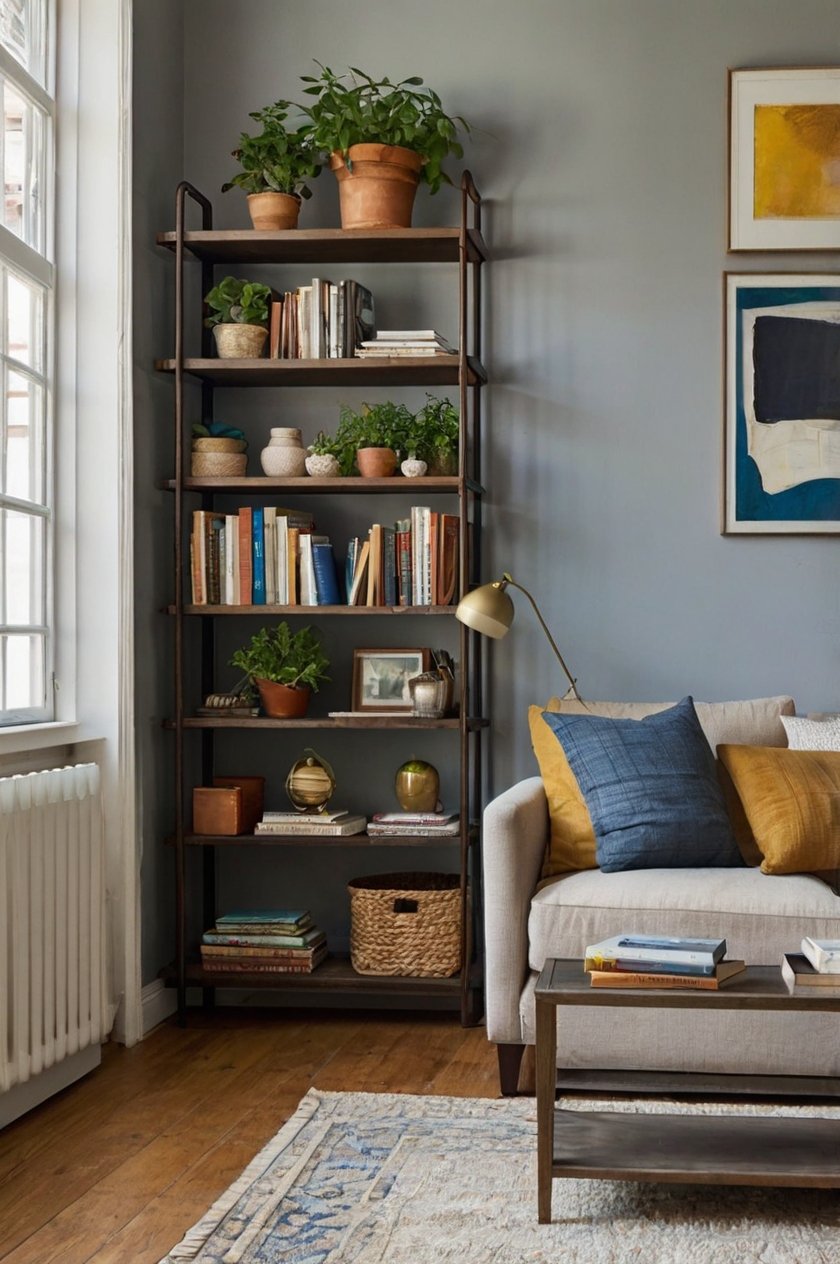
Limited floor space doesn’t have to limit your storage options. Looking upward instead of outward allows you to add function without making the room feel cramped. Floating shelves, tall bookcases, and wall-mounted cabinets take advantage of unused wall space while leaving the floor open for movement. Display favorite books, framed photos, decorative objects, or indoor plants to create an attractive arrangement that also serves a practical purpose. Extending shelving closer to the ceiling naturally draws the eye upward, giving the illusion of taller walls and a more spacious interior. Carefully styling your shelves with a balance of decorative pieces and everyday essentials keeps the display from looking cluttered while adding personality and depth to the living room.
18. Choose Streamlined Furniture Designs
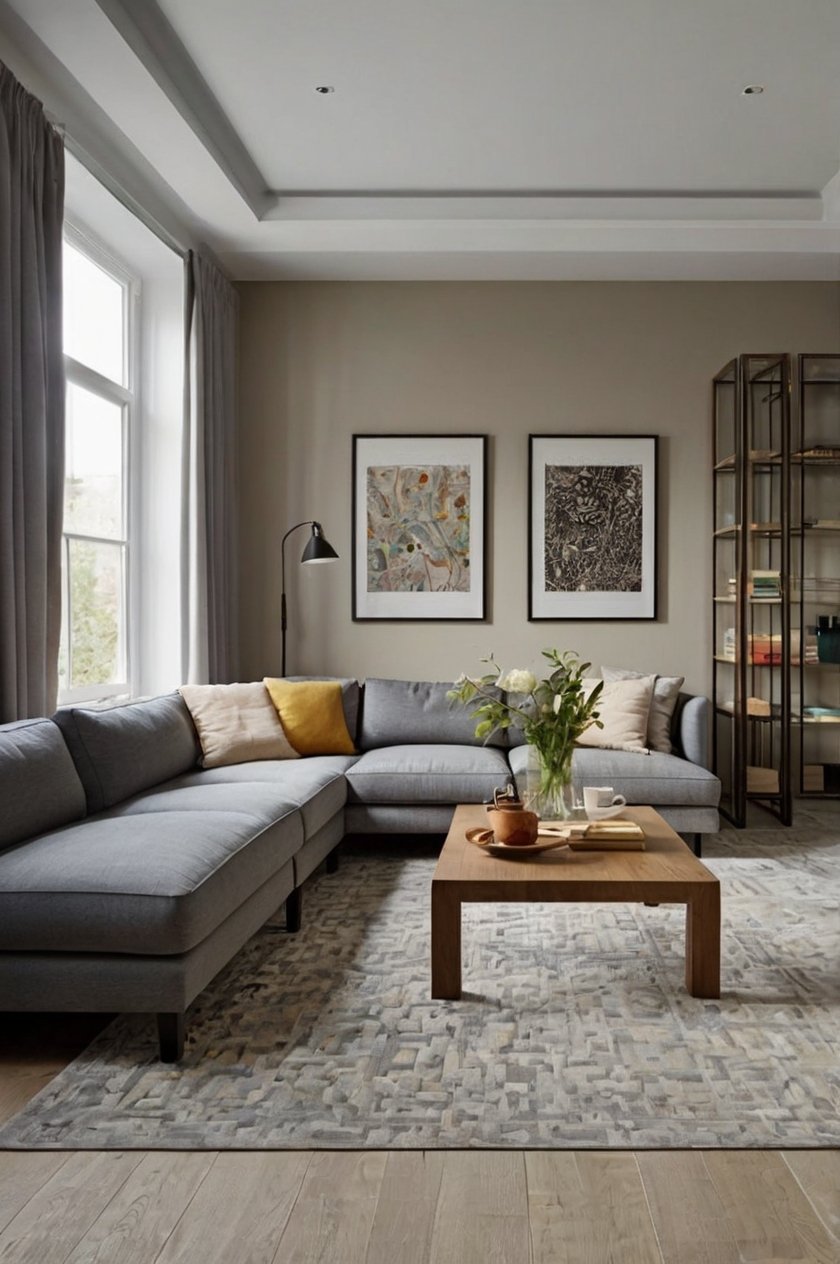
Furniture with clean lines and simple silhouettes helps a small living room feel open and balanced. Oversized sofas with bulky arms or thick frames can quickly dominate the room, making it appear smaller than it actually is. Instead, look for pieces with slimmer profiles, narrow arms, and raised legs that create a lighter visual footprint. Coffee tables with slender metal frames or glass tops also contribute to an airy atmosphere because they don’t interrupt the flow of the room. Streamlined furniture leaves more visible floor space and allows natural light to travel freely throughout the area. The result is a layout that feels comfortable, modern, and easy to navigate without sacrificing functionality or style.
19. Install Built-In Storage
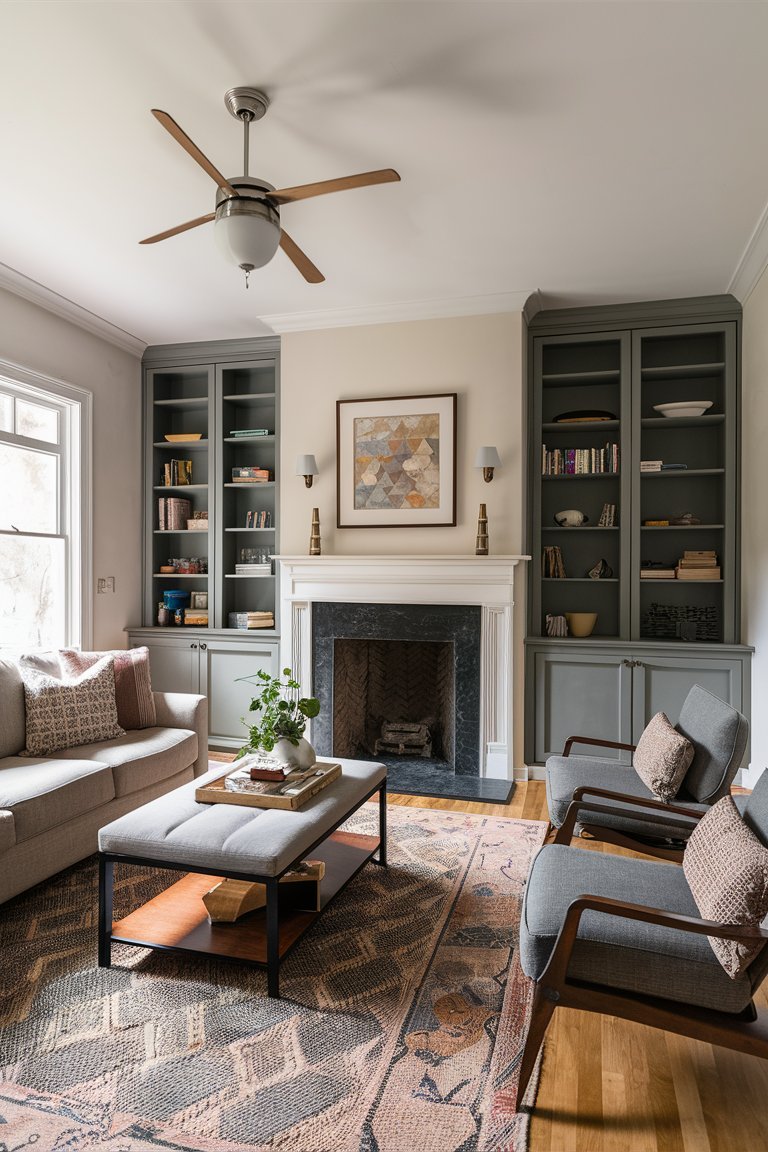
Built-in storage makes excellent use of every available inch while maintaining a clean, custom appearance. Shelves around a fireplace, cabinets beneath windows, or storage units fitted into awkward corners provide valuable space without adding bulky furniture. These features keep books, electronics, and everyday essentials neatly organized while blending seamlessly into the room’s design. Since everything has its own place, the living room stays tidy and feels much larger than it actually is.
20. Incorporate Transparent Furniture
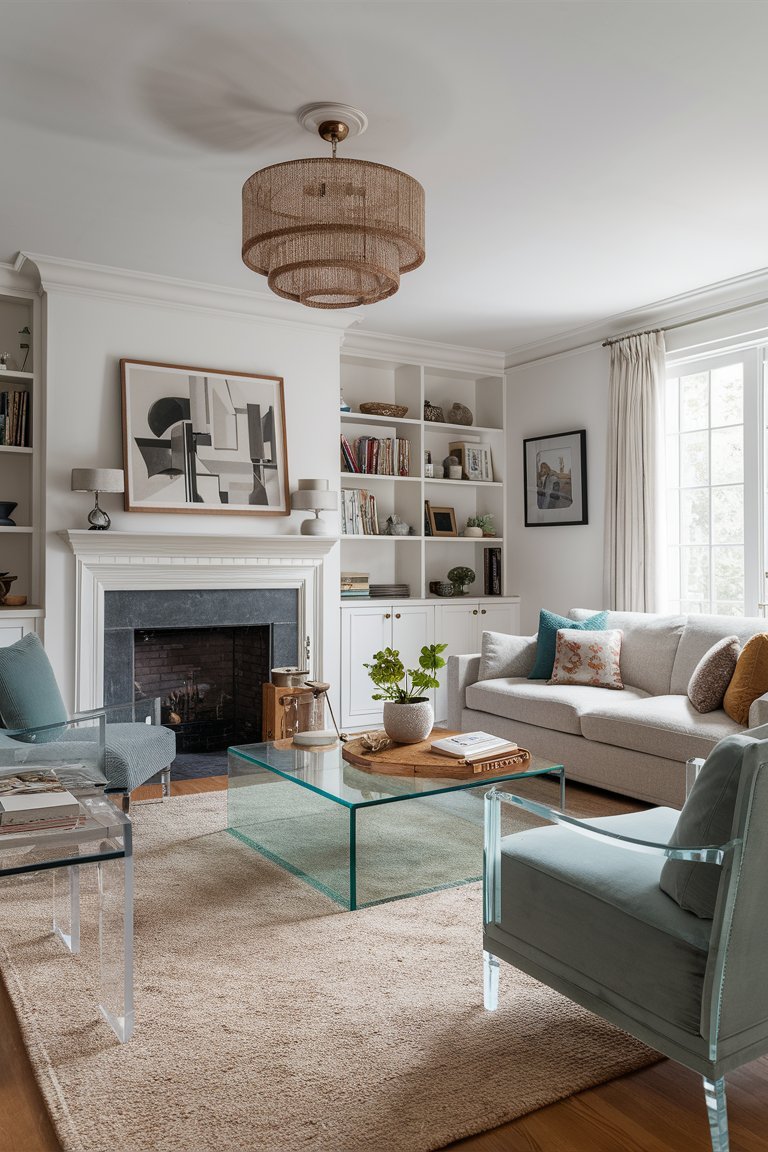
Glass and acrylic furniture can visually lighten a small living room because they allow light to pass through instead of blocking it. A clear coffee table or acrylic side chair provides the function you need without making the room feel crowded. These transparent pieces blend effortlessly with nearly any decorating style while keeping the overall layout open and airy. Pair them with soft textiles and warm wood accents to create a balanced design that’s both modern and welcoming.
21. Use Floating Furniture
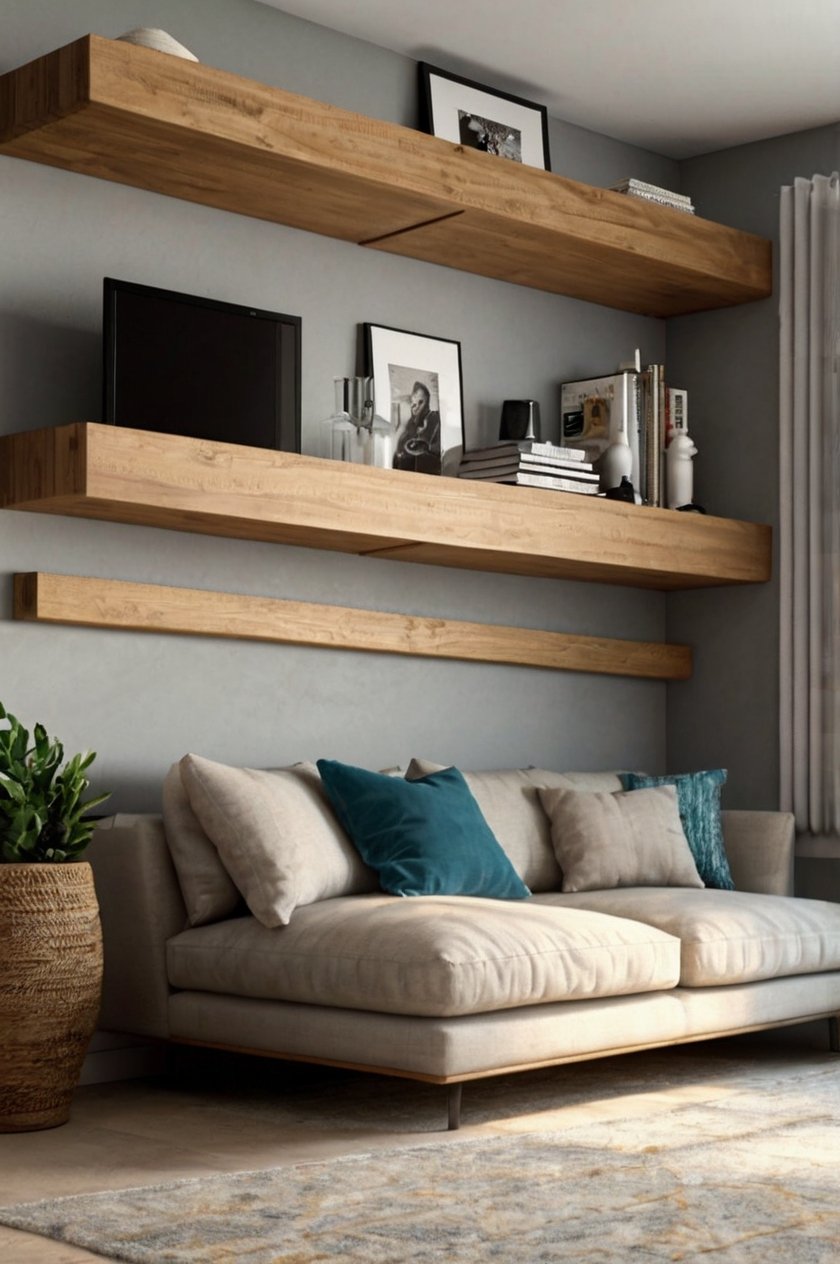
Wall-mounted furniture is an easy way to free up valuable floor space. Floating shelves, media consoles, and storage cabinets create a clean, streamlined appearance while providing plenty of room for books, decorative accessories, and electronics. Keeping furniture off the floor also makes cleaning easier and gives the room a more spacious feel. This simple upgrade works especially well in modern living rooms where uncluttered surfaces help create a bright and organized environment.
22. Create a Strong Focal Point
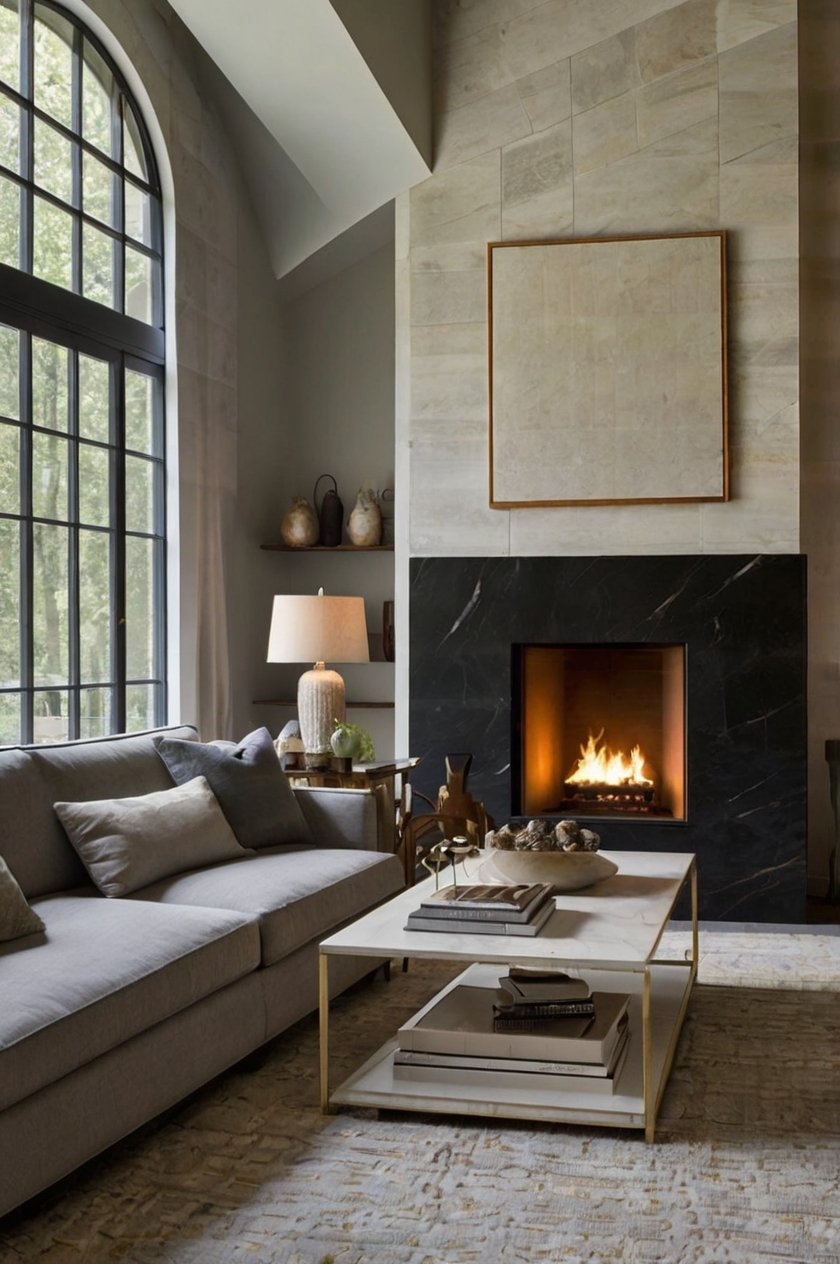
Every well-designed living room benefits from a clear focal point that naturally draws attention. This could be a large piece of artwork, a stylish fireplace, a statement light fixture, or even a beautifully designed accent wall. Having one main feature helps organize the rest of the room and prevents the space from feeling visually chaotic. Once the focal point is established, arrange your furniture around it to create a layout that feels balanced, welcoming, and intentionally designed.
23. Stick to a Neutral Color Palette
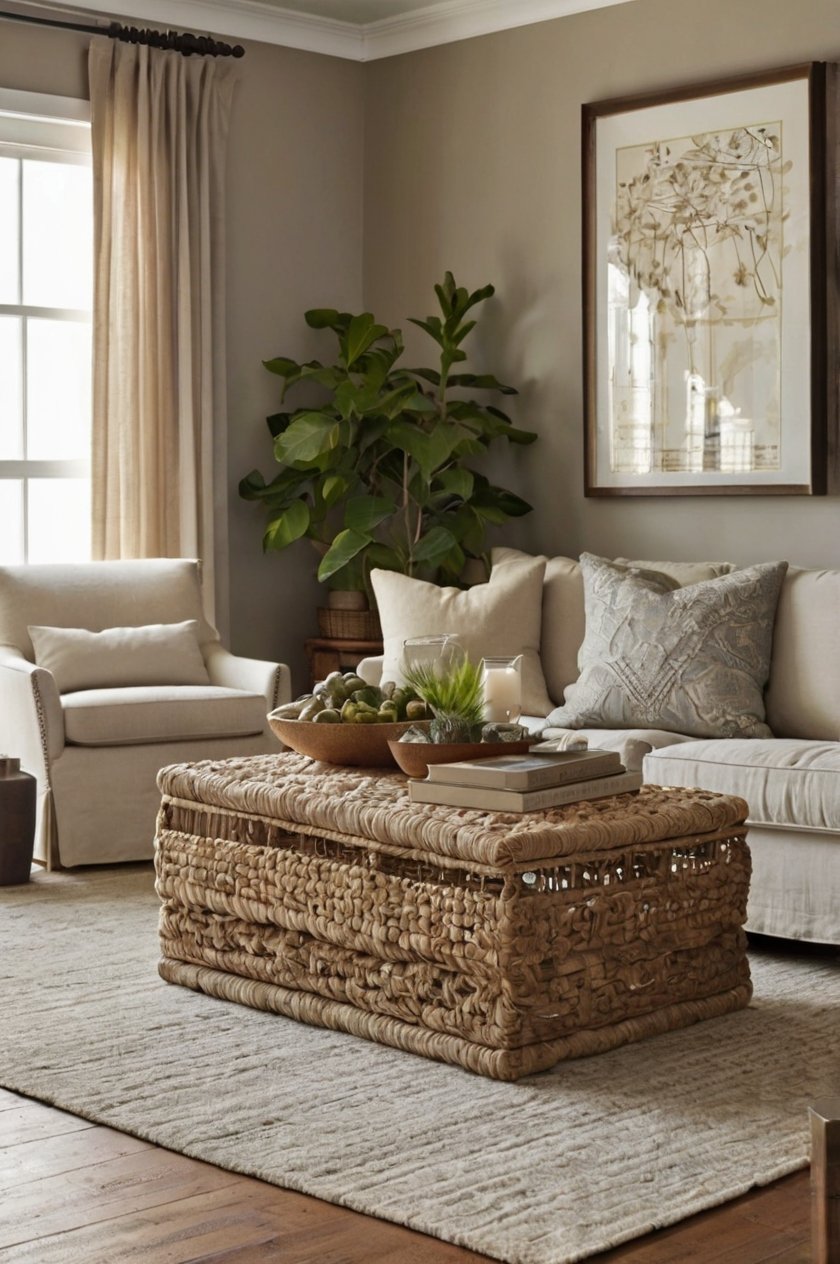
A neutral color palette is a timeless choice for making a small living room feel brighter and more spacious. Soft shades like white, beige, light gray, and warm cream reflect light and create a calm, open atmosphere. Using similar tones on walls, furniture, and larger decor pieces helps the room feel cohesive instead of crowded. Add warmth through textured pillows, woven baskets, or natural wood accents to keep the design from feeling flat. This simple approach creates a relaxing space that’s easy to update with seasonal accessories.
24. Decorate with Indoor Plants
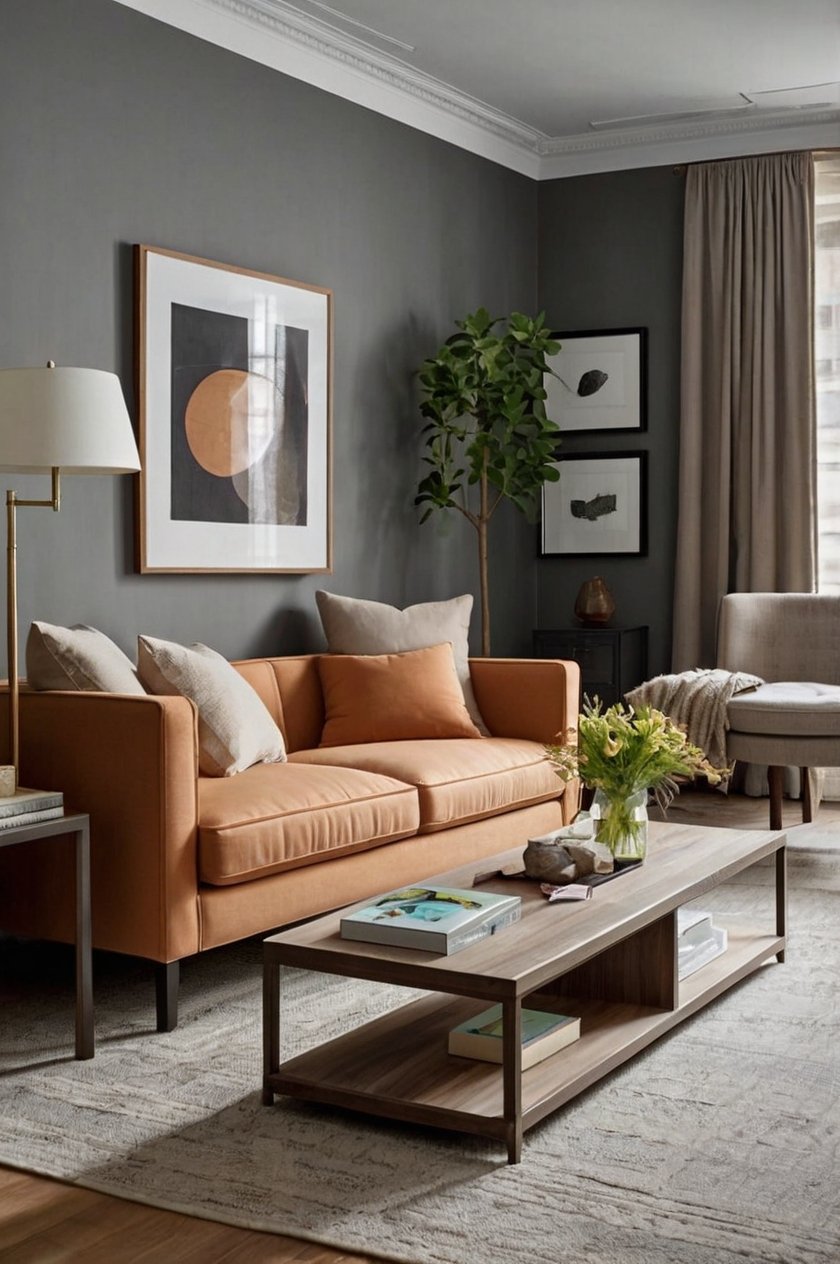
Indoor plants bring color, texture, and freshness to a small living room without overwhelming the design. Choose compact varieties such as pothos, snake plants, or succulents that thrive indoors and require minimal maintenance. Hanging planters, wall-mounted pots, or slim plant stands help introduce greenery while preserving valuable floor space. A few well-placed plants can soften the room’s overall look, improve its atmosphere, and make the space feel more vibrant and welcoming.
25. Display One Large Statement Artwork
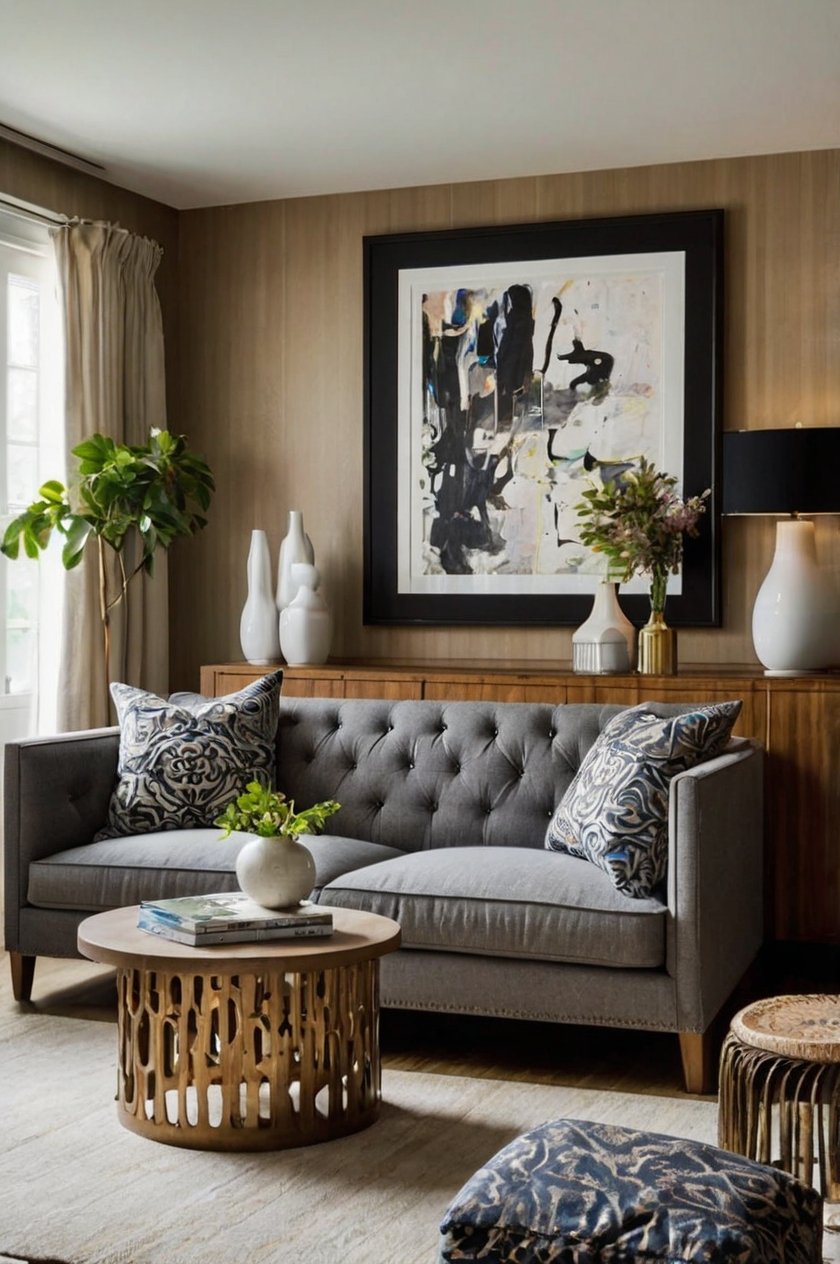
A single oversized piece of artwork can make a bigger impact than several small decorations. Large wall art creates a clear focal point, adds personality, and keeps the room from feeling visually cluttered. Choose a piece that complements your color palette and decorating style, whether it’s an abstract painting, a landscape, or a modern print. Placing one bold artwork above the sofa or fireplace helps anchor the space while giving the living room a polished and thoughtfully designed appearance.
26. Install Sliding Doors
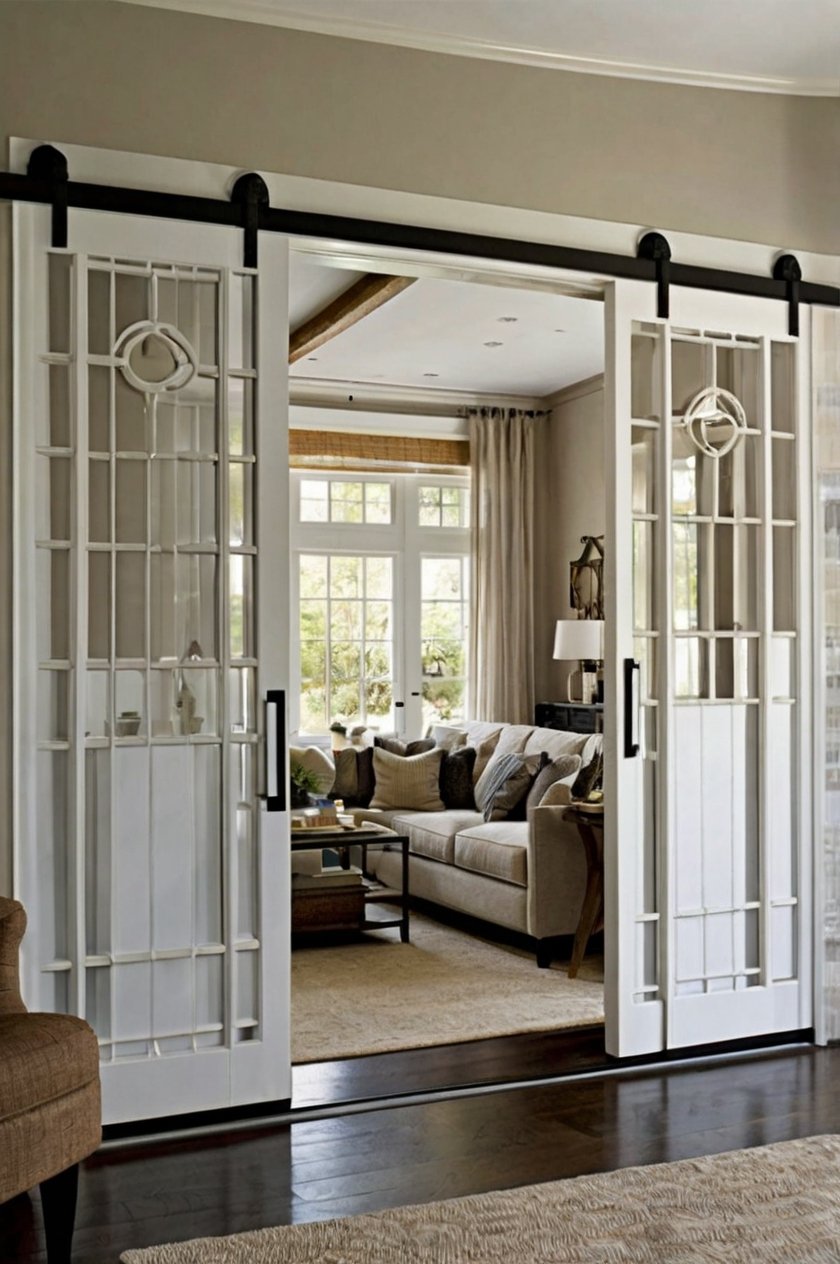
Sliding doors are a practical upgrade that helps save valuable floor space in a small living room. Unlike traditional swing doors, they don’t require extra clearance to open, making furniture placement much more flexible. Pocket doors or barn-style designs can also add a modern architectural feature while improving the flow between adjoining rooms. This simple change creates a cleaner layout and makes the space feel more open, especially in compact homes or apartments.
27. Layer Your Lighting
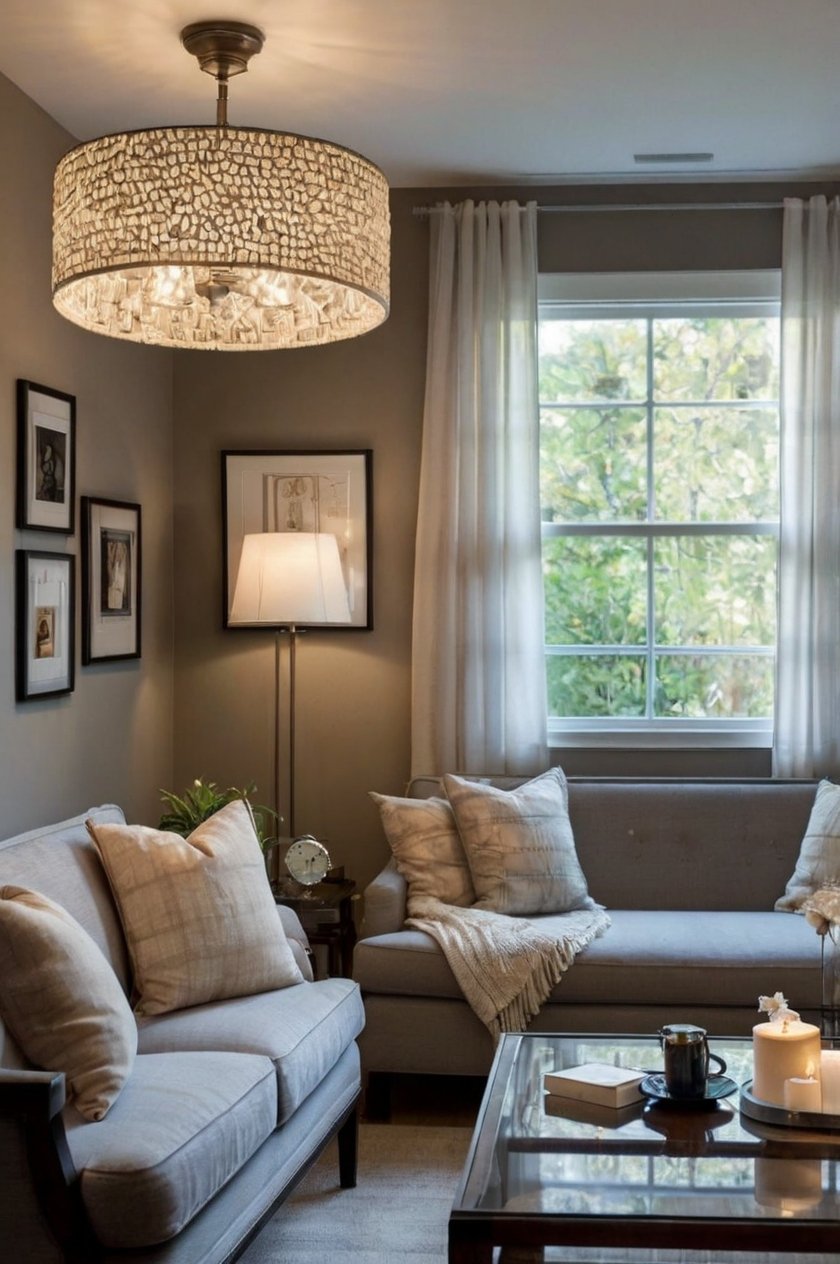
Good lighting can completely change the feel of a small living room. Instead of relying on one ceiling fixture, combine floor lamps, table lamps, and wall sconces to create multiple layers of light. This adds warmth, reduces harsh shadows, and makes the room feel more inviting. Dimmable lighting offers even greater flexibility by allowing you to adjust the brightness throughout the day. A well-lit space always feels more comfortable, spacious, and welcoming.
28. Add Built-In Seating
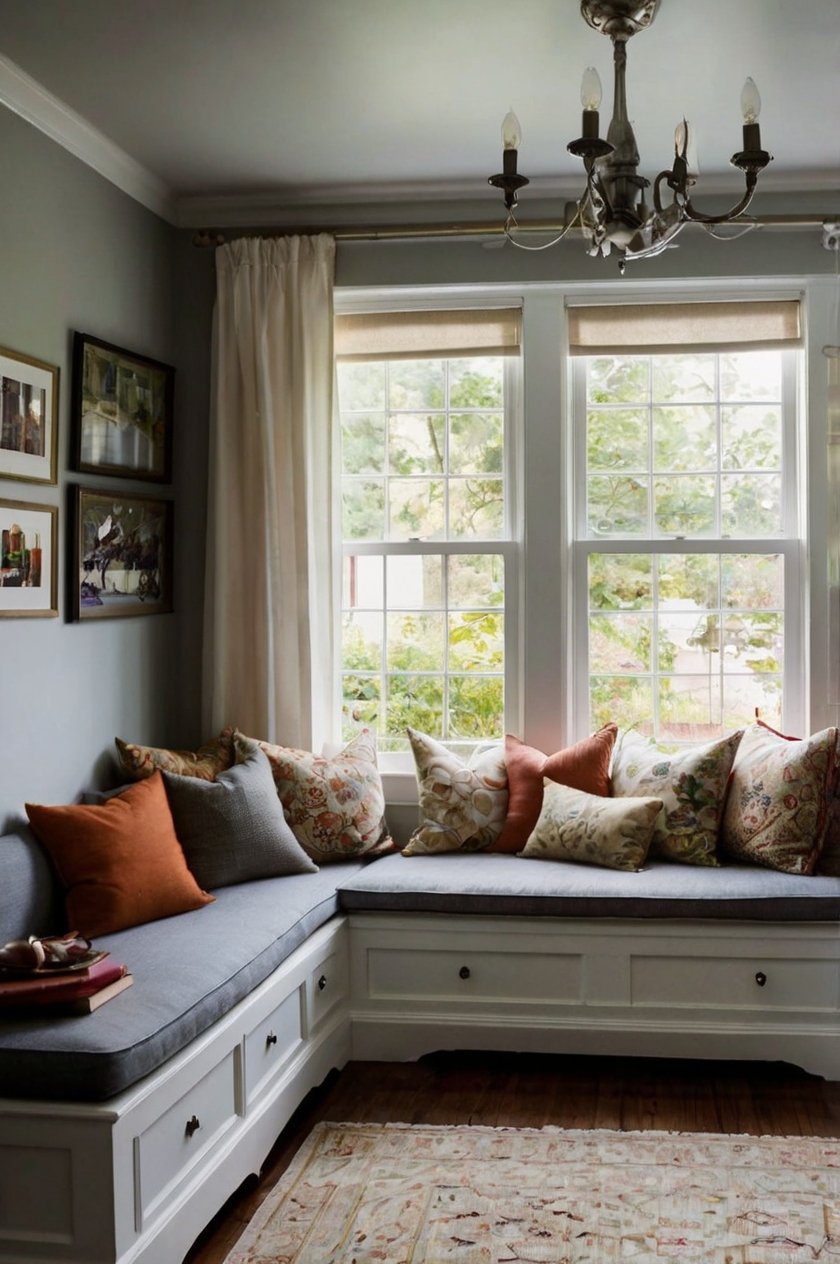
Built-in seating is a smart way to increase both comfort and storage in a compact living room. A window bench or custom seating tucked into a corner provides extra places to sit without taking up unnecessary space. Adding drawers or hidden compartments underneath creates convenient storage for blankets, books, or games. This type of seating also gives the room a custom, well-planned appearance while making every inch of the layout more functional.
29. Create a Gallery Wall
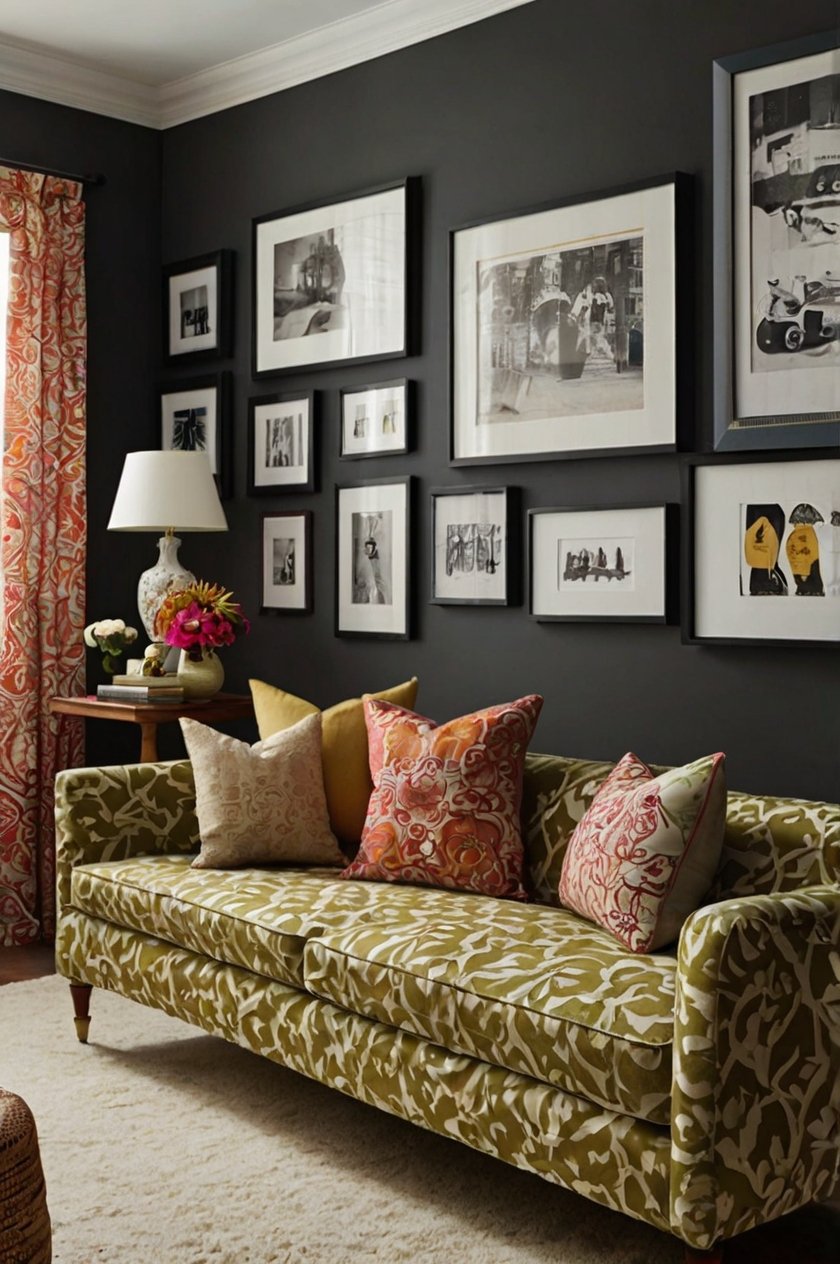
A gallery wall is a stylish way to add personality without using valuable floor space. Arrange framed artwork, family photos, or decorative prints in a layout that complements your living room’s style. Keeping the frames within a similar color palette creates a cohesive look, while mixing sizes adds visual interest. A thoughtfully designed gallery wall can become the room’s focal point and make blank walls feel more inviting. It also allows you to showcase your personal style in a creative and space-efficient way.
* The charm of small living room design comes from making every inch feel both functional and inviting. Let these inspirations help you maximize your layout and create a living room that is as practical as it is stylish.