A shabby chic kitchen brings together vintage charm, soft colors, and cozy details to create a space that feels warm, welcoming, and full of personality. This timeless decorating style celebrates the beauty of weathered finishes, antique-inspired accessories, distressed wood, and delicate decorative accents. Soft pastels, creamy whites, floral patterns, and rustic textures work beautifully together, giving the kitchen a lived-in elegance that feels both nostalgic and effortlessly inviting.
Creating a charming shabby chic kitchen is all about combining old-fashioned character with practical design. Distressed cabinets, farmhouse sinks, open shelving, vintage hardware, delicate curtains, and rustic wooden furniture can add layers of warmth and visual interest. Decorative ceramics, fresh flowers, woven baskets, and soft lighting bring even more personality to the space, while thoughtful storage and functional layouts ensure the kitchen remains comfortable for everyday cooking and gathering.
Let’s explore these lovely designs and discover how to create a shabby chic kitchen that blends timeless elegance, rustic beauty, and everyday comfort!
1. Distressed Wood Accents
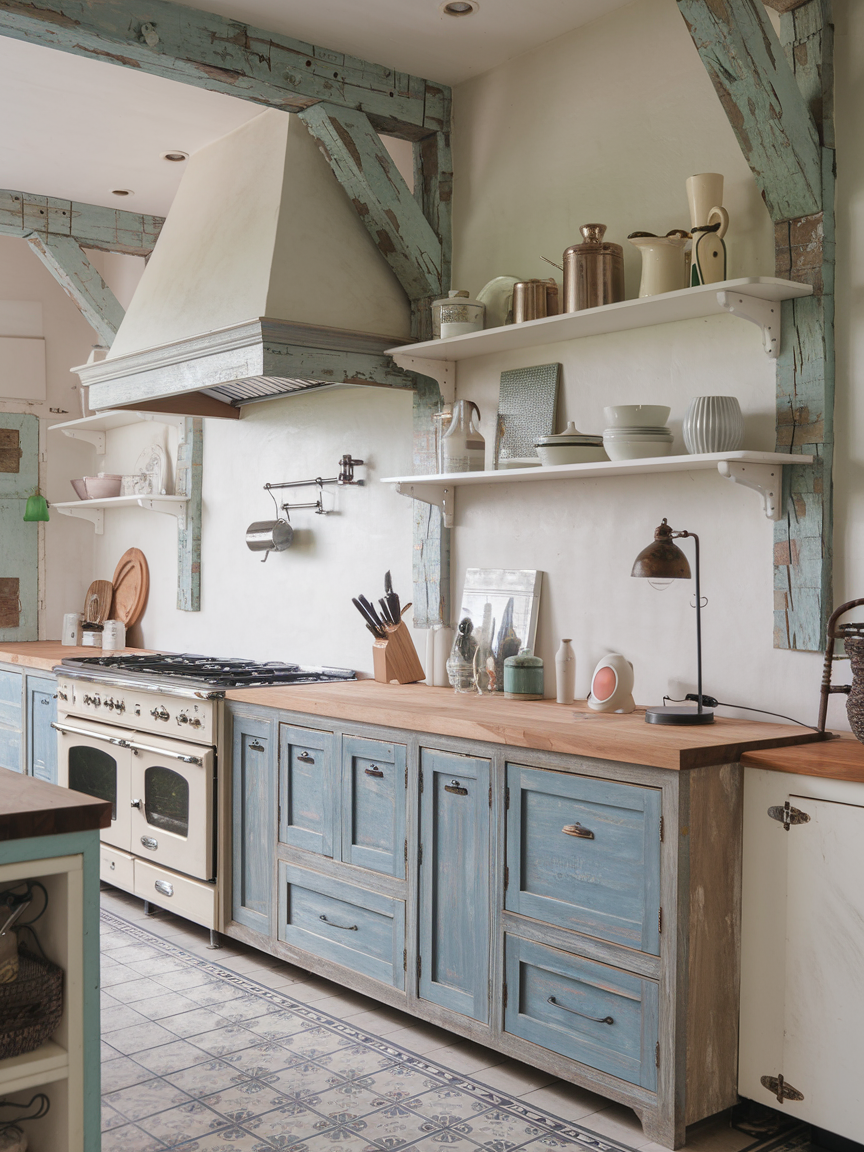
Distressed wood introduces the rustic character that makes shabby chic kitchens so appealing. Weathered wooden shelves, reclaimed beams, and island panels with gently worn finishes bring natural texture and a sense of history into the room. These elements look particularly beautiful alongside white cabinetry, faded pastels, and delicate vintage accessories. Rather than appearing overly polished, distressed wood celebrates the beauty of natural grain, subtle scratches, and aged surfaces. You can incorporate this material through open shelving, decorative ceiling beams, or a rustic kitchen island. The combination of weathered timber and softer decorative details creates a comfortable balance between rustic simplicity and romantic elegance, making the kitchen feel warm, authentic, and inviting.
2. Worn Wooden Floors
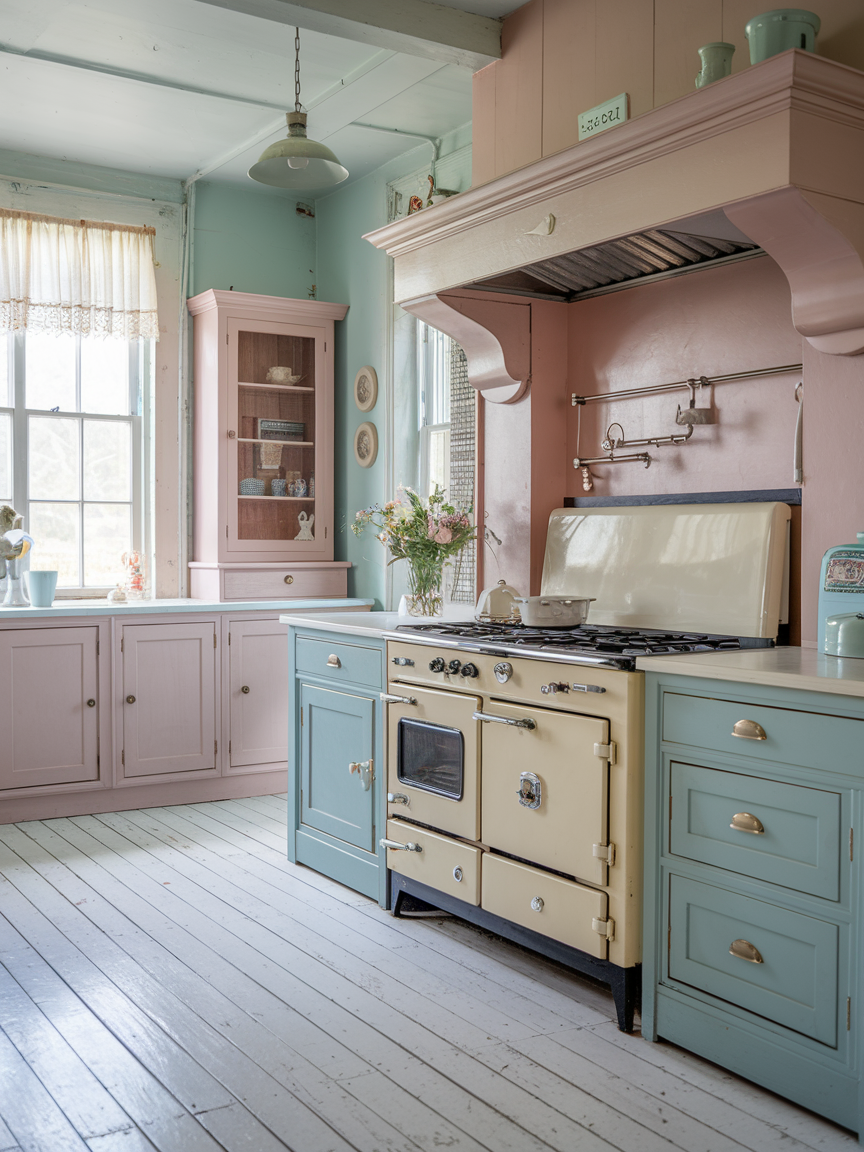
Worn wooden floors give a shabby chic kitchen a grounded, rustic foundation. Whitewashed oak, weathered pine, and lightly distressed timber introduce natural texture while creating a relaxed atmosphere. Their subtle imperfections add character and prevent the space from feeling too formal or carefully coordinated. Pale wood flooring works particularly well with white cabinets, pastel accents, and vintage furniture, while warmer timber tones provide a beautiful contrast against cooler colors. If original wooden floors are not available, consider engineered wood with a gently aged finish. A durable, kitchen-appropriate surface is important because this room experiences frequent spills and heavy foot traffic. When paired with soft textiles and antique-inspired accessories, wooden flooring helps create a welcoming kitchen that feels timeless and comfortable.
3. Farmhouse Sinks
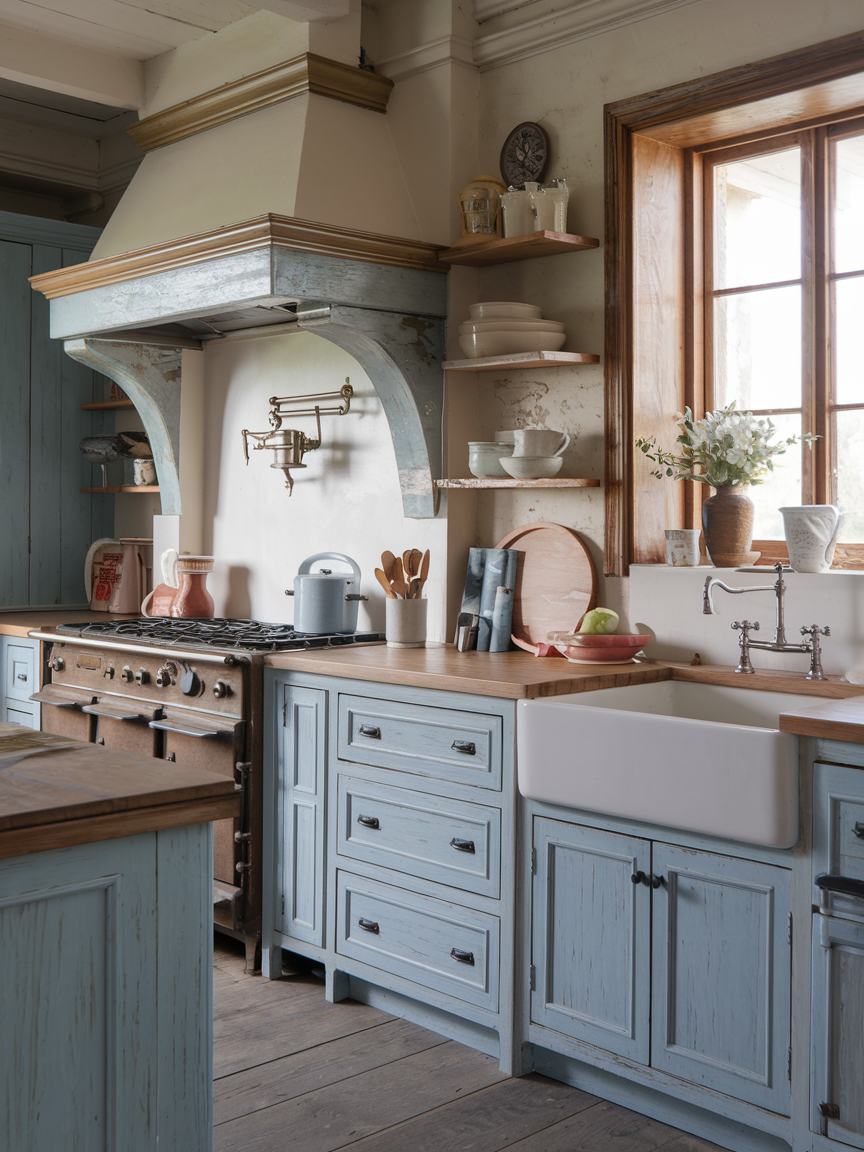
A farmhouse sink is an excellent choice for a shabby chic kitchen because it combines everyday practicality with traditional character. Its deep basin and distinctive front panel create an attractive focal point, especially when paired with white cabinetry, wooden countertops, and vintage-style faucets. Classic white porcelain and fireclay finishes complement the soft, romantic palette associated with this design style. For additional charm, consider an aged brass or brushed nickel faucet that coordinates with the cabinet hardware. The generous basin is useful for washing large pots, preparing vegetables, and handling everyday kitchen tasks. Surround the sink with simple floral curtains, ceramic soap dispensers, or a small vase of fresh flowers to complete the look. The result is a functional workspace with plenty of cottage-inspired personality.
4. Open Hutch Displays
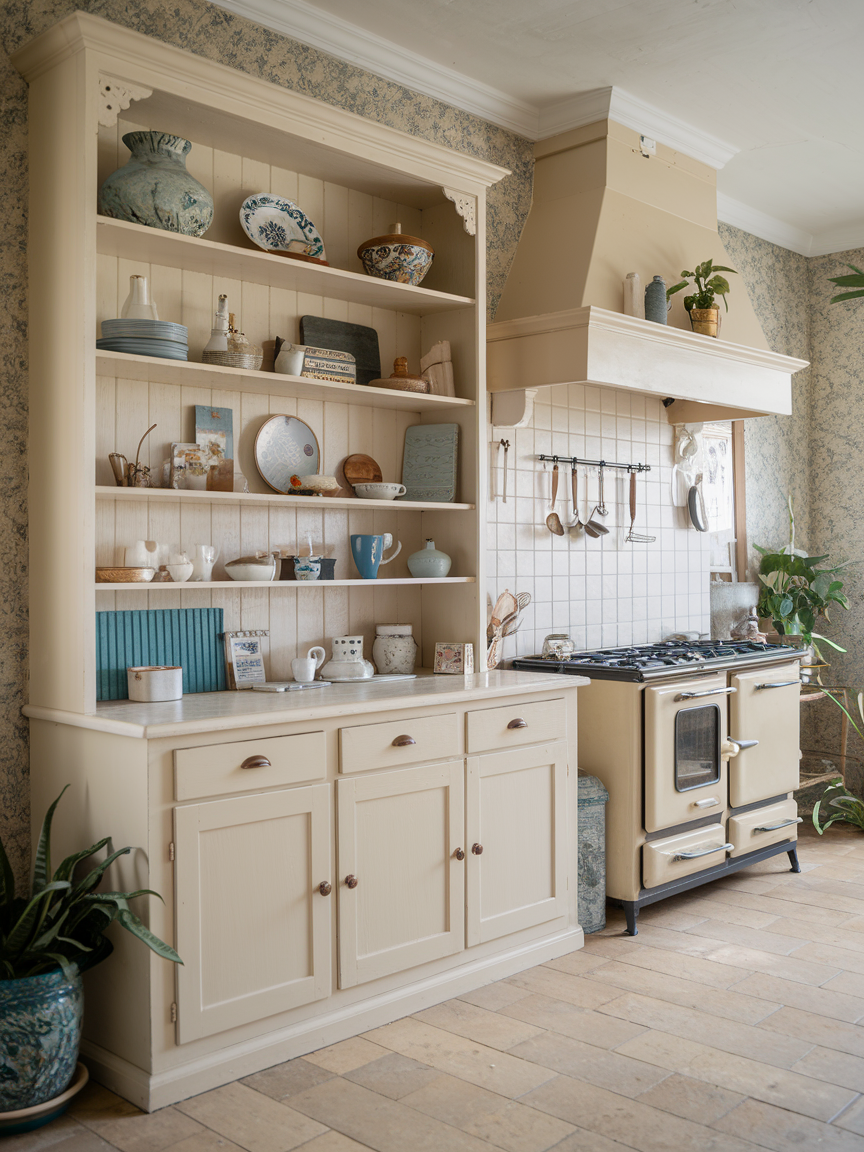
An open hutch is a charming addition to a shabby chic kitchen, offering storage space while providing a beautiful place to display treasured collections. Choose a vintage wooden hutch with a distressed white finish, or update an existing cabinet with pale paint and antique-inspired hardware. Arrange porcelain plates, glass jars, ceramic pitchers, and vintage serving bowls across its shelves. For a layered appearance, place larger pieces toward the back and smaller objects near the front, allowing each item to remain visible. You can also incorporate a few decorative accents, such as framed botanical prints or small woven baskets, to add texture and personality. Keep the display organized by grouping items according to color, material, or purpose. An open hutch combines the usefulness of traditional kitchen storage with the nostalgic charm of a thoughtfully curated collection.
5. Pastel and Floral Rugs
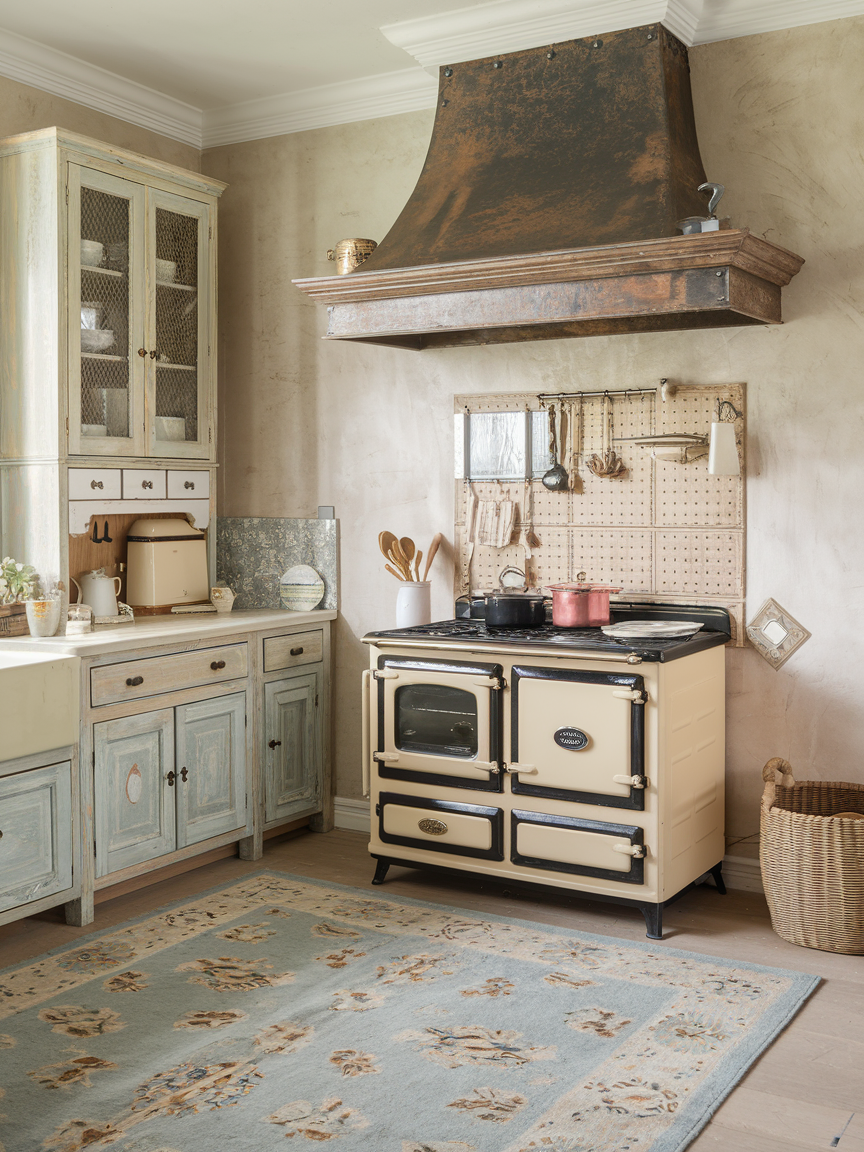
Pastel and floral rugs offer an easy way to introduce softness and decorative detail into a shabby chic kitchen. A pale blue runner, a faded rose-patterned mat, or a rug featuring muted sage and cream tones can complement the cabinetry while making the room feel more comfortable. Place a runner along a frequently used walkway or choose a smaller rug to soften the area in front of the sink. Traditional floral patterns work especially well with vintage accessories, while lightly distressed designs create a more understated appearance. To maintain a balanced look, select a rug that echoes one or two colors already present in the kitchen rather than introducing too many new shades. Prioritize washable materials, nonslip backing, and easy maintenance to ensure the rug remains practical in a busy cooking space. This finishing detail adds warmth and helps bring the entire shabby chic design together.
6. Floral Accents
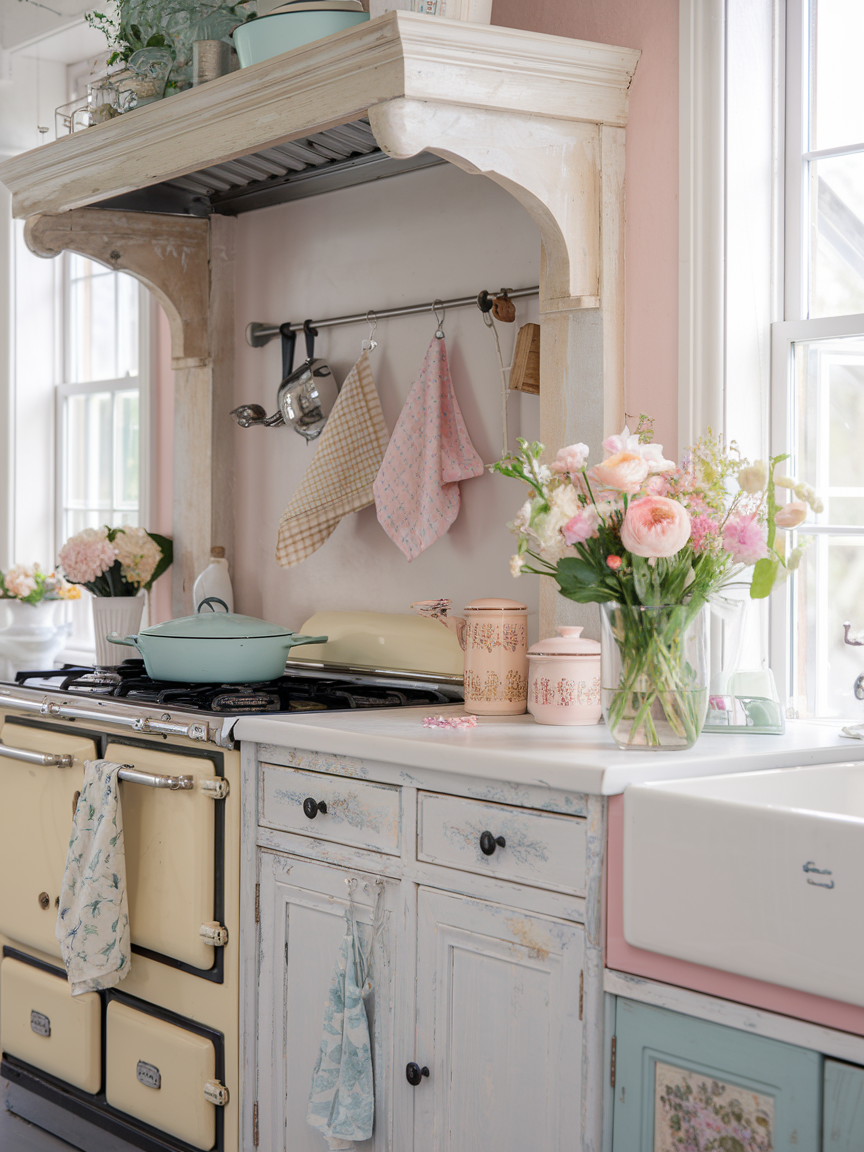
Floral accents are a natural fit for shabby chic kitchens because they introduce softness, color, and a touch of romance. Fresh flowers arranged in an antique pitcher can brighten a countertop, while floral tea towels, patterned oven mitts, and botanical prints bring subtle decorative interest. Choose blooms and patterns in gentle shades such as blush pink, cream, pale yellow, and dusty lavender to complement the kitchen’s existing palette. Small arrangements of roses, daisies, or seasonal flowers can add life without occupying too much workspace. If fresh flowers are not practical, consider realistic faux stems or botanical artwork instead. For a balanced appearance, repeat floral motifs in just a few places rather than covering every surface with patterns. These delicate details help create a cheerful, welcoming kitchen with plenty of vintage personality.
7. Wooden Countertops
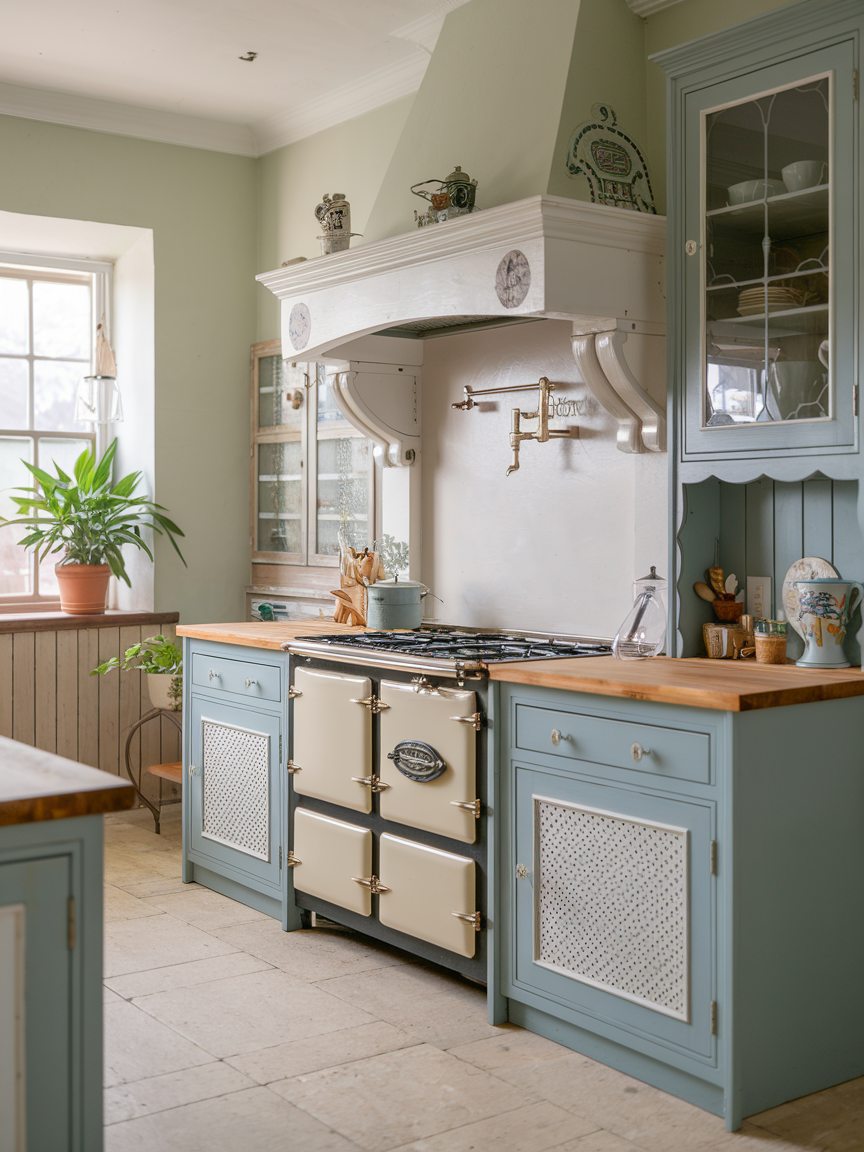
Wooden countertops bring natural warmth to shabby chic kitchens, creating a beautiful contrast against pale cabinets and delicate decorative details. Butcher block, oak, and other suitable timber surfaces introduce organic grain patterns that make the kitchen feel less formal and more inviting. Honey-colored wood pairs especially well with white cabinetry, while lighter finishes complement pastel pink, sage green, and powder blue. You can carry the material throughout the room or use it selectively on a kitchen island to create a subtle focal point. Because kitchen countertops must withstand moisture, spills, and frequent cleaning, choose an appropriate finish and maintain the surface according to the manufacturer’s recommendations. Combine the wood with ceramic accessories, linen textiles, and vintage hardware for a cohesive look that balances everyday practicality with rustic elegance.
8. Soft Linen Curtains
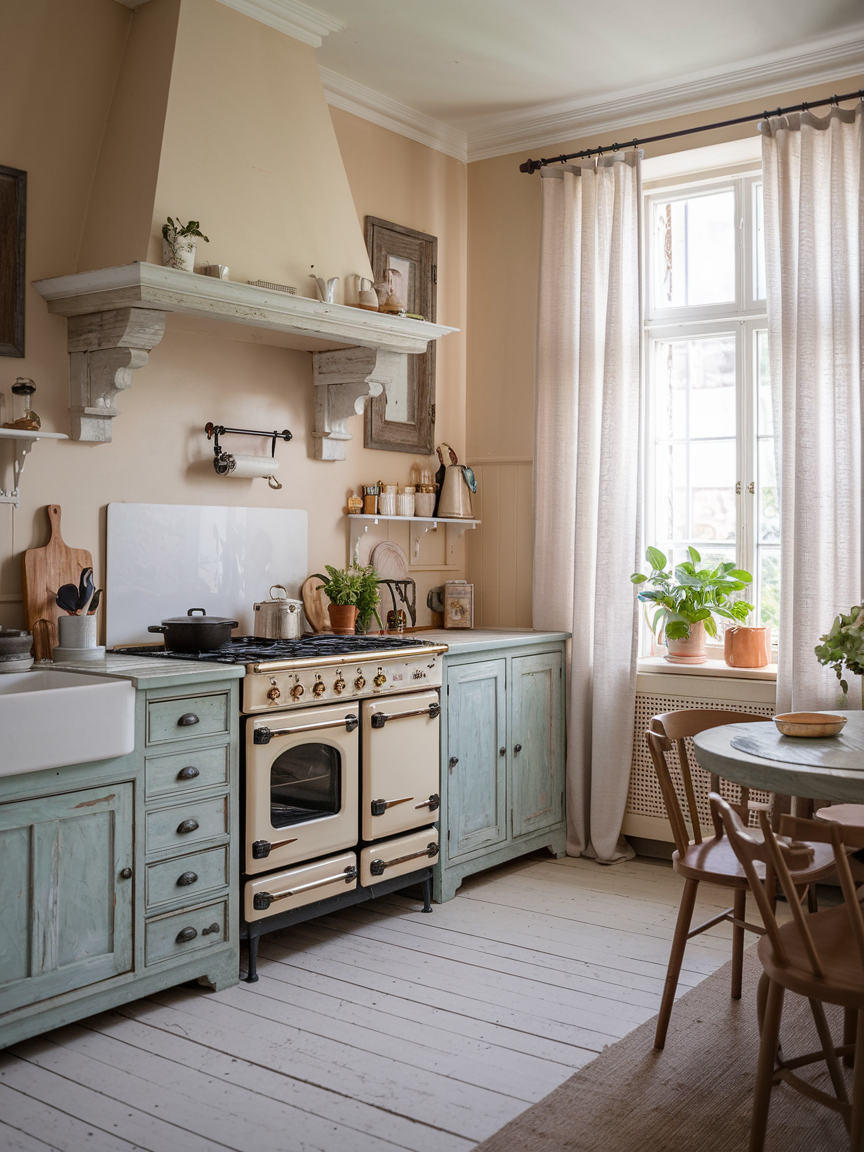
Soft linen curtains introduce an effortless sense of warmth and lightness to a shabby chic kitchen. Their natural texture and gently flowing appearance soften the harder surfaces of cabinets, countertops, and appliances. Choose shades such as ivory, oatmeal, pale blush, or muted sage to complement the rest of the room. For a more decorative look, consider subtle stripes, tiny floral prints, or delicate embroidered details. Café curtains are particularly suitable for kitchen windows because they provide privacy while allowing daylight to enter through the upper portion of the glass. You can also use simple linen panels to soften a glass door or conceal an open storage area. These understated textiles make the kitchen feel more relaxed and intimate without adding unnecessary visual clutter.
9. Antique Hardware
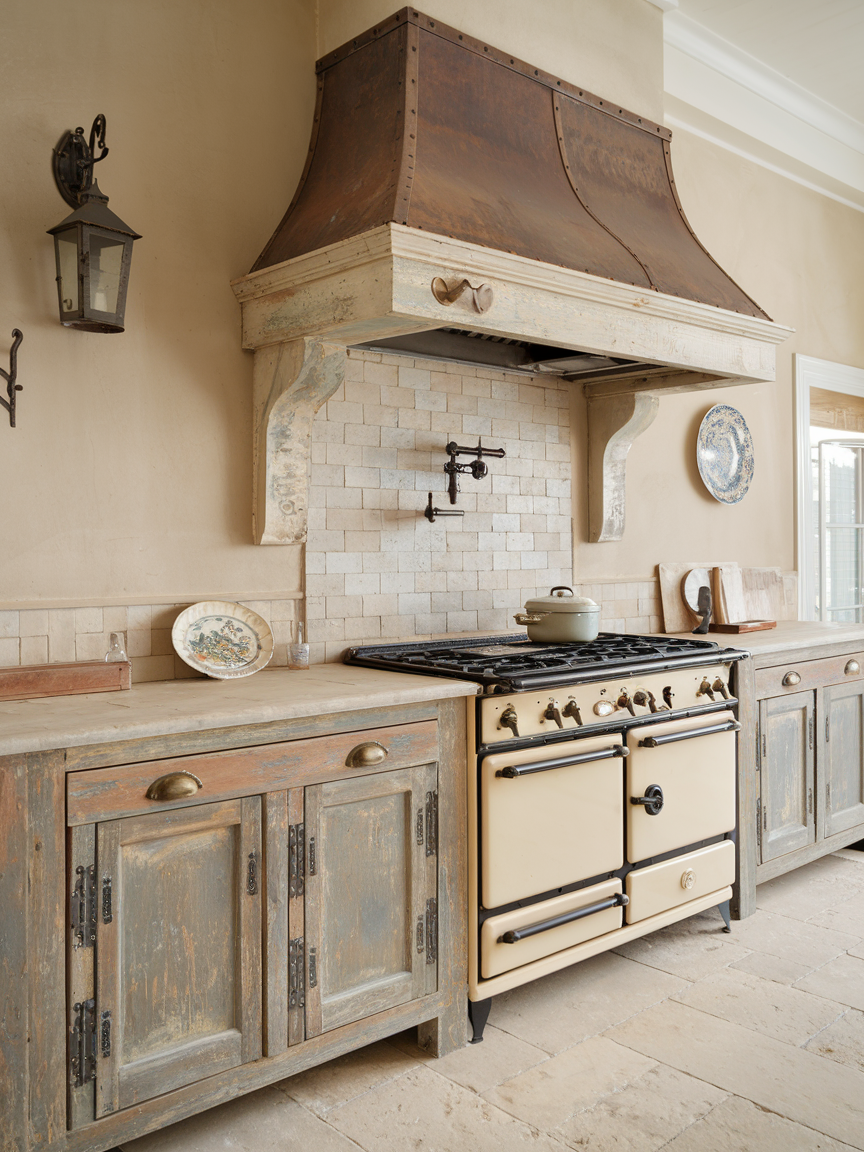
Small details can make a remarkable difference in a shabby chic kitchen, and antique-inspired hardware is an easy way to introduce vintage character. Replace ordinary cabinet handles with aged brass pulls, ceramic knobs, or traditional iron fittings that complement the cabinetry. White or pastel cabinets look especially attractive with delicate floral ceramic knobs, while darker distressed finishes pair beautifully with weathered metal. You can create a coordinated appearance by choosing hardware with similar finishes throughout the kitchen, or embrace a collected aesthetic by mixing complementary vintage designs. Before making a selection, consider the shape and scale of your cabinets to ensure the hardware is comfortable to use. These modest updates can give existing cabinetry a completely different personality without requiring a major renovation.
10. Open Pot Racks
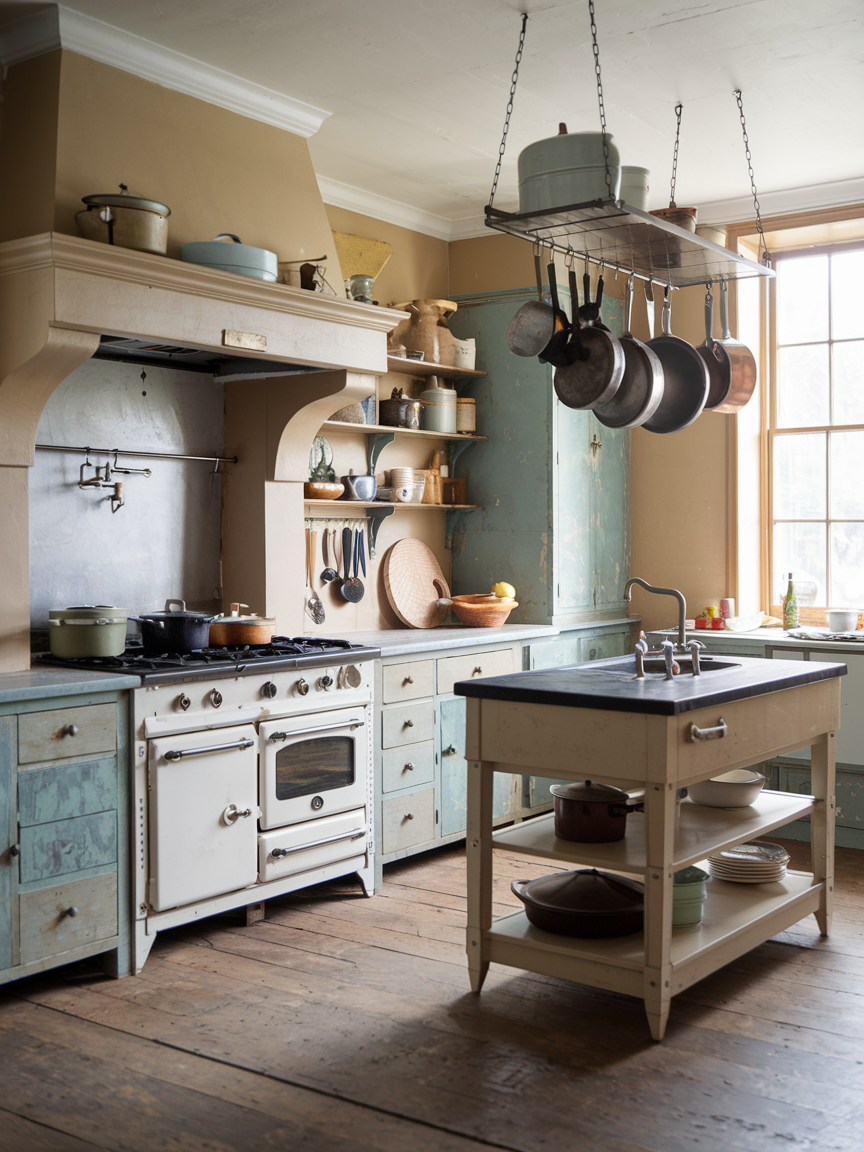
Open pot racks combine practical storage with the decorative appeal of traditional kitchens. A wall-mounted rack or hanging rail allows you to display copper pans, enamel cookware, and well-loved metal utensils while keeping frequently used items accessible. Choose a finish that complements the kitchen’s other details, such as aged brass, blackened iron, or weathered wood. In a shabby chic interior, the cookware itself can contribute to the overall design, particularly when it features classic shapes or gently worn finishes. Position the rack near the cooking area for convenience, but make sure it does not obstruct movement or create a hazard. By turning everyday cookware into part of the décor, you can create a kitchen that feels organized, personal, and ready for home cooking.
11. Faded Pastel Cabinets
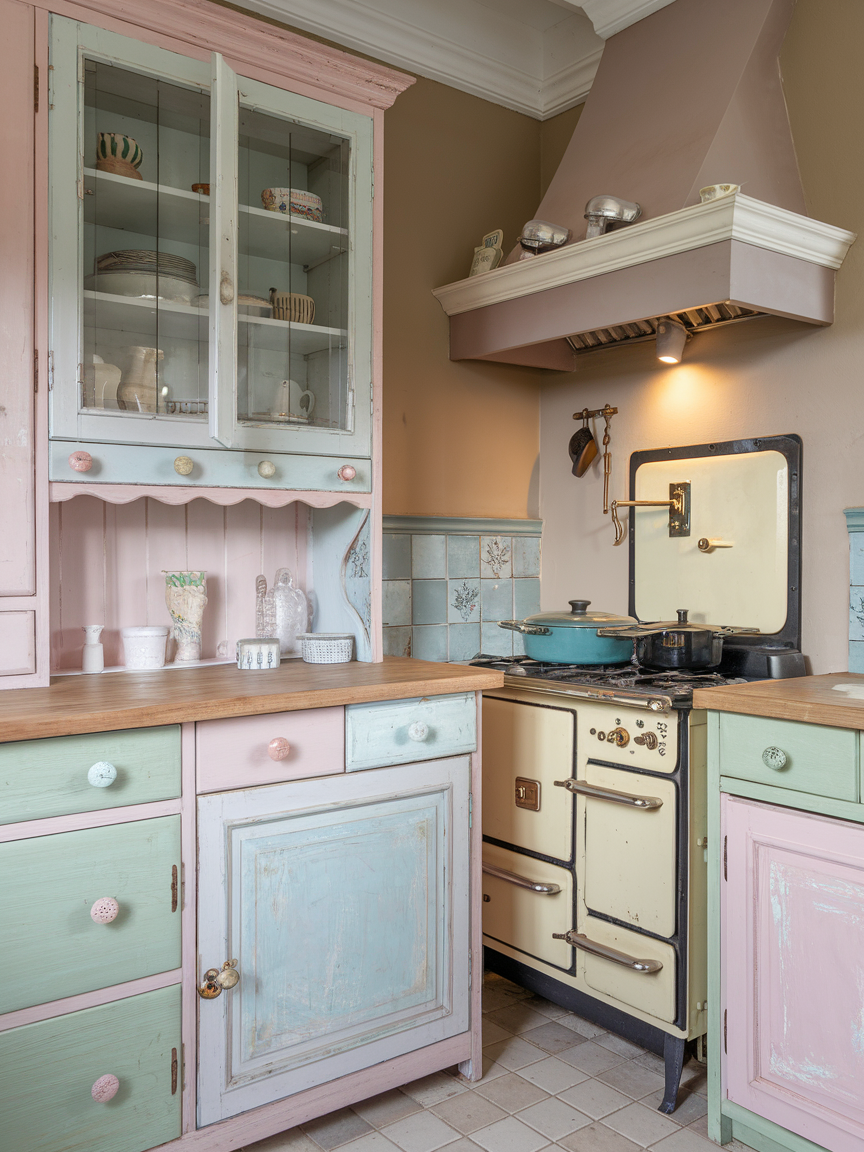
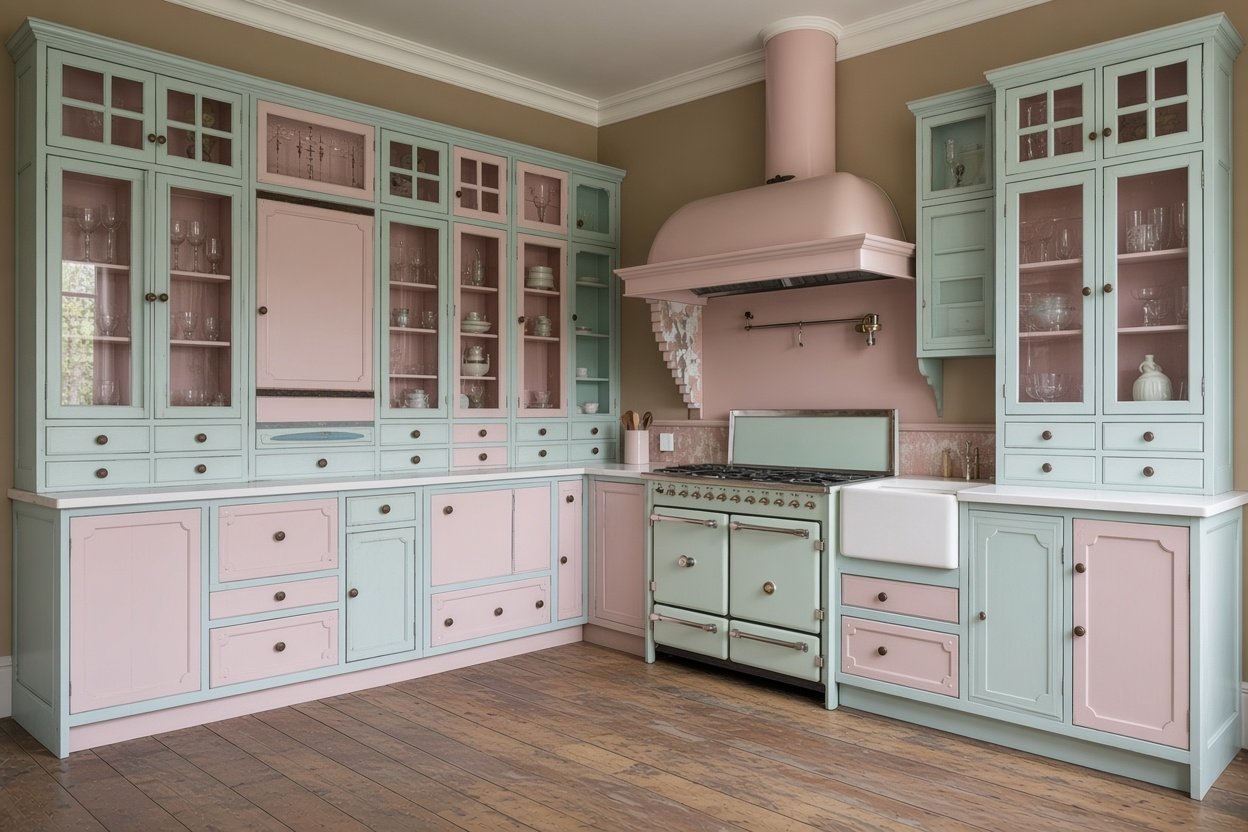
Faded pastel cabinets bring a delicate, romantic charm to a shabby chic kitchen. Shades such as dusty pink, pale mint, powder blue, and creamy sage create a soothing atmosphere that feels both elegant and welcoming. To enhance their vintage appeal, pair these soft colors with distressed wooden countertops, antique-inspired handles, and warm neutral walls. Slightly weathered finishes can make the cabinetry feel as though it has been part of the home for generations. The beauty of this approach lies in its gentle imperfections, which give the kitchen personality without sacrificing style. Whether you choose pastel colors for every cabinet or use them on a single island, the result is a cheerful, timeless space that feels wonderfully lived-in.
12. Open Shelving with Vintage Dishes
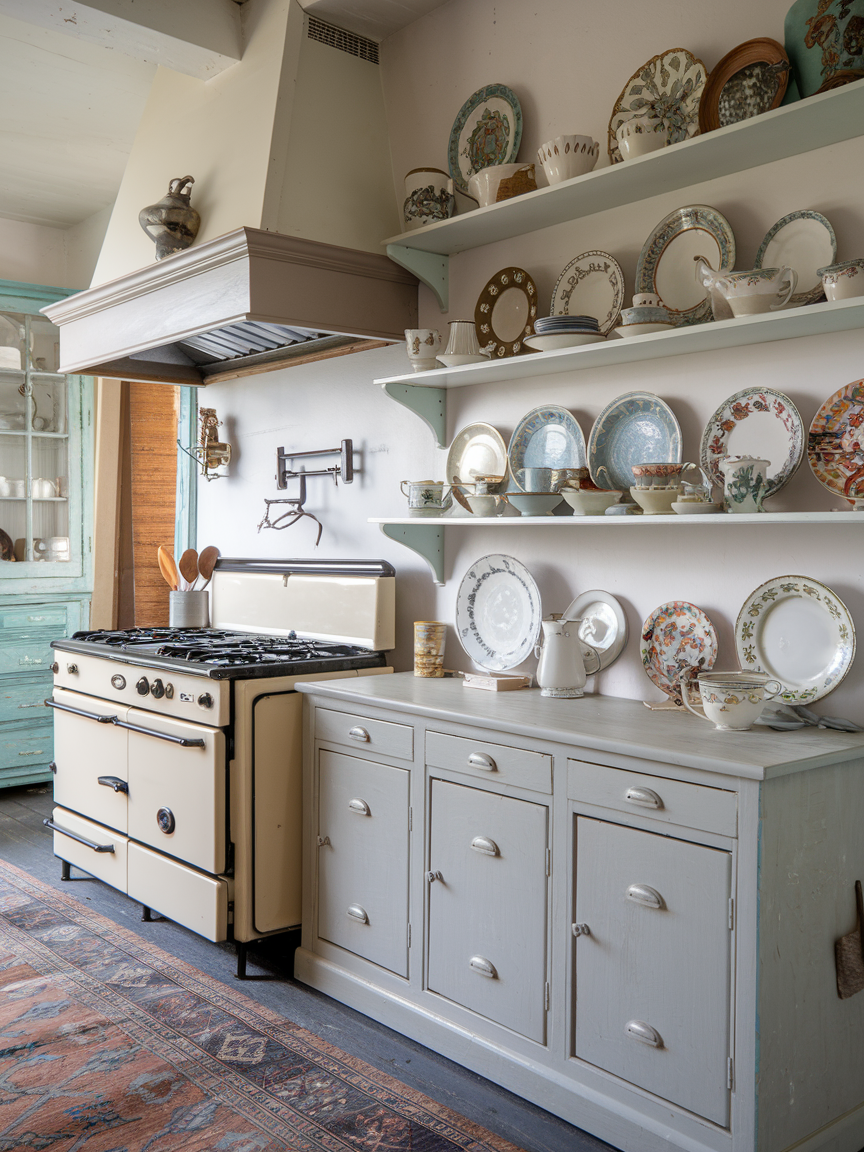
Open shelving offers a charming way to display vintage dishware while keeping everyday essentials within easy reach. Imagine rows of delicate porcelain plates, floral teacups, ceramic bowls, and mismatched serving pieces arranged against a softly painted wall. Wooden shelves with a slightly weathered finish enhance the nostalgic atmosphere, while carefully grouped collections keep the display from looking cluttered. You can mix practical kitchenware with a few decorative treasures, such as antique pitchers or small framed prints. This arrangement allows your favorite pieces to become part of the kitchen’s overall design rather than remaining hidden behind cabinet doors. The result is a personalized space that feels relaxed, collected, and full of old-fashioned charm.
13. Floral Backsplashes
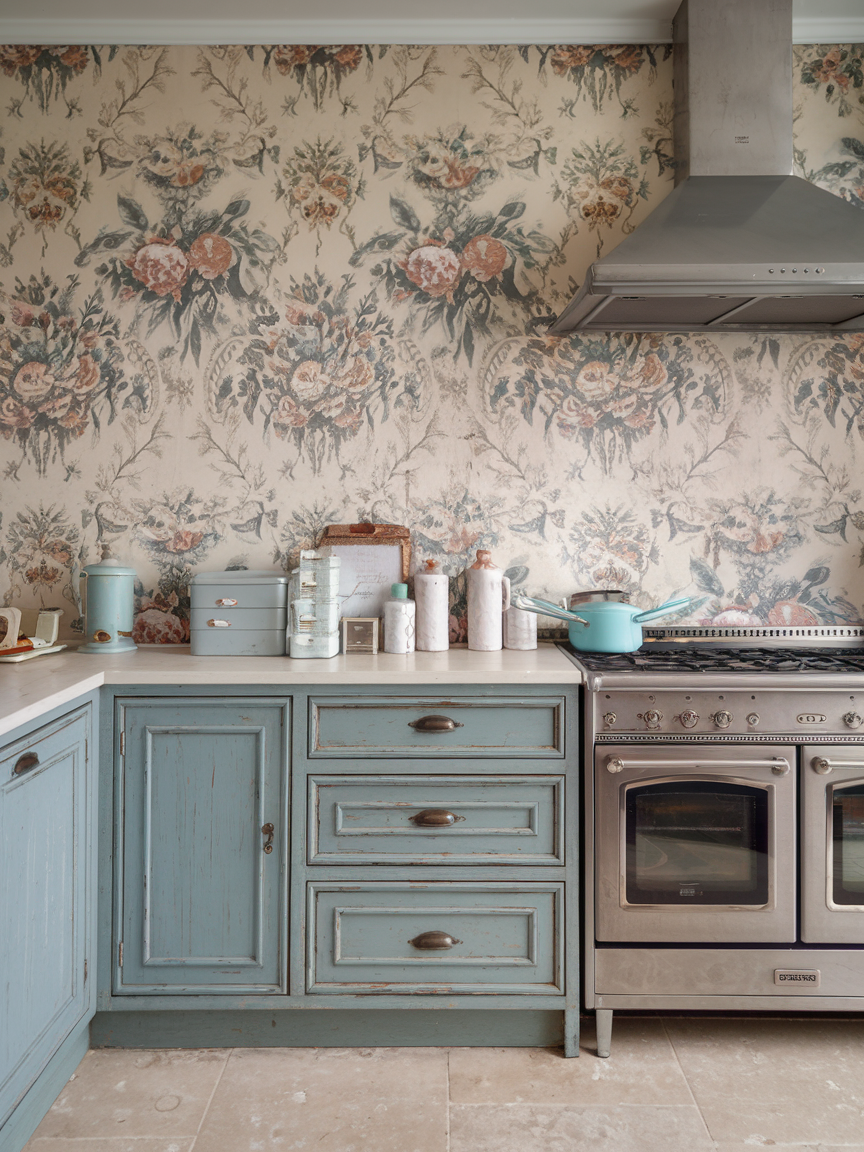
A floral backsplash adds a romantic touch to a shabby chic kitchen, introducing delicate patterns that complement the style’s soft colors and vintage character. Consider ceramic tiles decorated with small roses, muted botanical prints, or faded blue and pink blossoms against a creamy background. These patterns pair beautifully with white cabinetry, distressed wood, and antique-inspired accessories. For a more understated appearance, choose subtle floral motifs that create visual interest without overwhelming the room. A patterned backsplash can also become the focal point of an otherwise simple kitchen, bringing personality to the area behind the stove or sink. Along with protecting the walls from everyday splashes, this decorative feature gives the space a graceful, cottage-inspired atmosphere.
14. Vintage Pendant Lighting
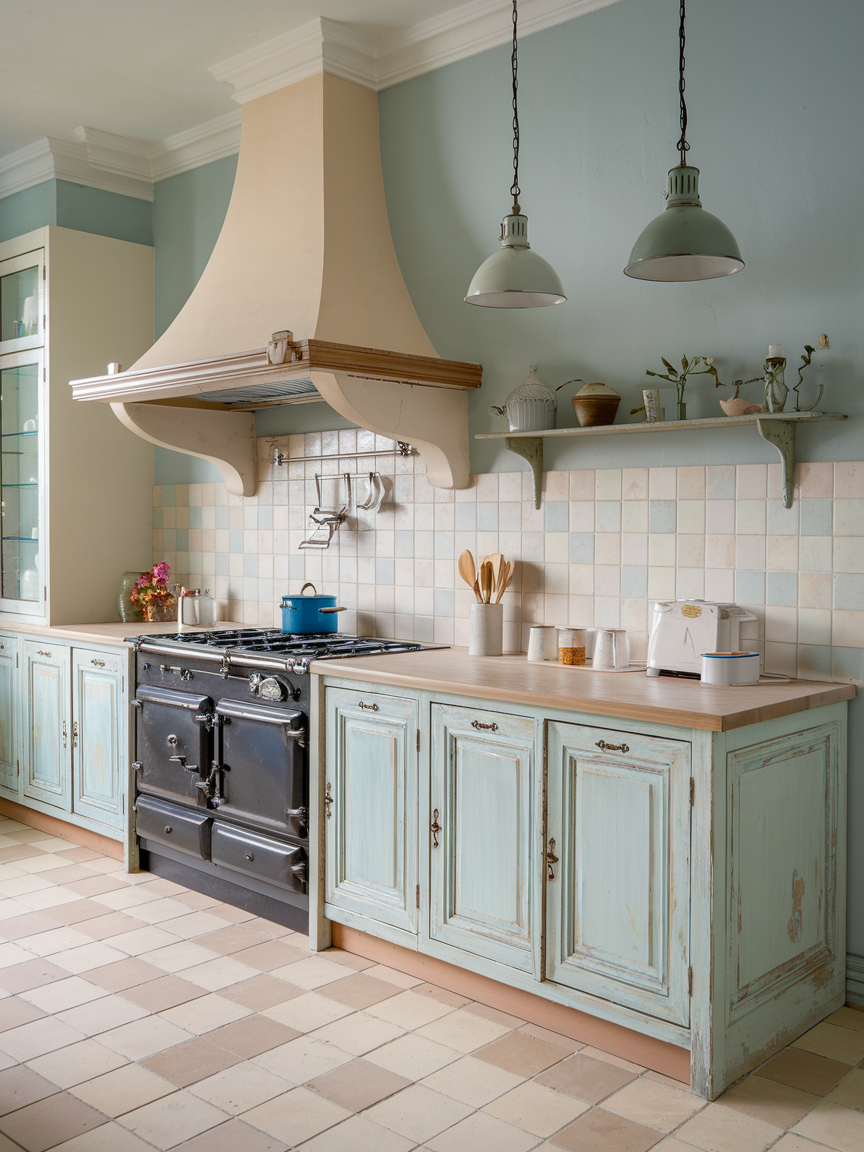
Vintage pendant lights can transform a simple kitchen into a cozy, character-filled space. Look for fixtures featuring aged brass, distressed metal, frosted glass, or delicate decorative details that complement shabby chic interiors. Hang a pair above the kitchen island or position a single pendant over a small breakfast table to create a warm, inviting focal point. For a more romantic look, consider fixtures inspired by antique lanterns or traditional French country homes. Their gentle illumination works beautifully with pastel cabinetry, natural wood, and creamy wall colors. Choose bulbs that provide comfortable, warm lighting while ensuring sufficient brightness for cooking and food preparation. The combination of practical illumination and timeless design makes vintage pendants a lovely finishing touch.
15. Mason Jar Storage
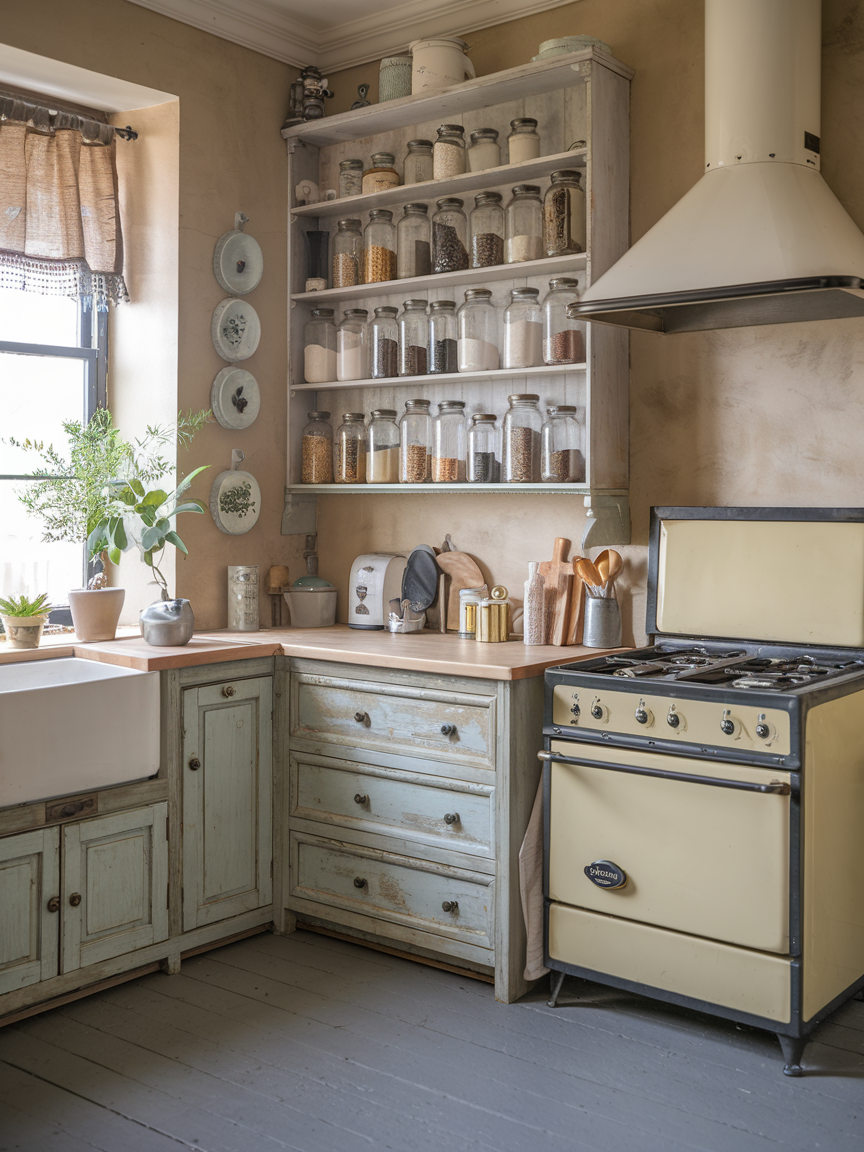
Mason jars offer a simple and affordable way to organize a shabby chic kitchen while maintaining its vintage-inspired charm. Their clear glass bodies make it easy to identify ingredients such as flour, rice, oats, pasta, and dried beans. Smaller jars can hold wooden spoons, measuring tools, or other frequently used utensils. Arrange them on reclaimed wood shelves, inside an open hutch, or along a neatly organized countertop to create a cohesive display. For additional character, use traditional metal lids, handwritten-style labels, or pieces of natural fabric secured around the jar lids. Keep food storage containers clean, dry, and properly sealed to protect their contents. With their understated appearance and practical functionality, mason jars turn everyday organization into an attractive part of your kitchen design.
16. Vintage Rug
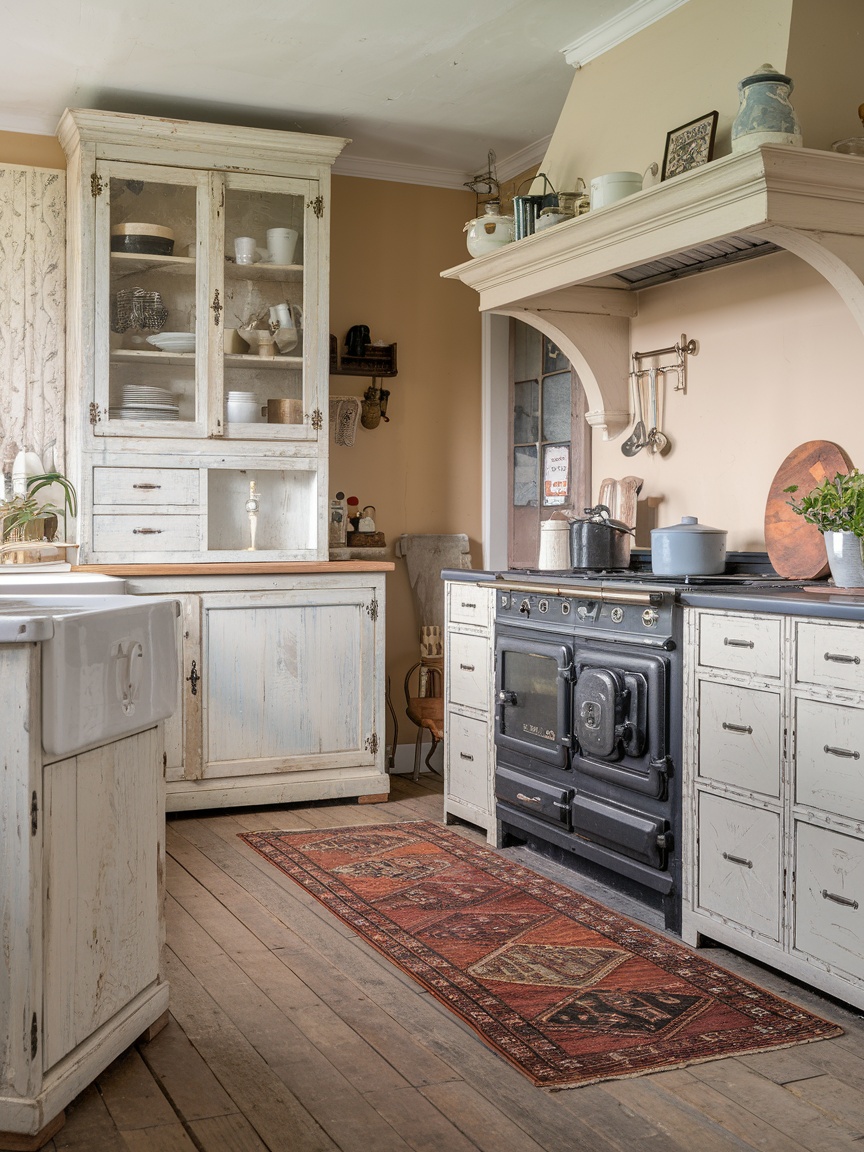
Vintage rugs add softness, color, and visual depth to a shabby chic kitchen. A faded floral runner beside the sink or a distressed-pattern rug near the kitchen island can introduce warmth while breaking up large areas of wood, tile, or stone flooring. Look for designs featuring muted reds, dusty blues, soft greens, or washed-out neutrals that complement the kitchen’s existing palette. Traditional Persian-inspired patterns and delicate floral motifs both work well with the style’s collected, lived-in character. In a busy kitchen, choose a washable or easy-to-clean rug with a non-slip backing to make maintenance more manageable. Position rugs away from open flames and areas where they might create a tripping hazard. These thoughtful additions make the room feel softer and more inviting while adding another layer of personality.
17. Chalkboard Wall
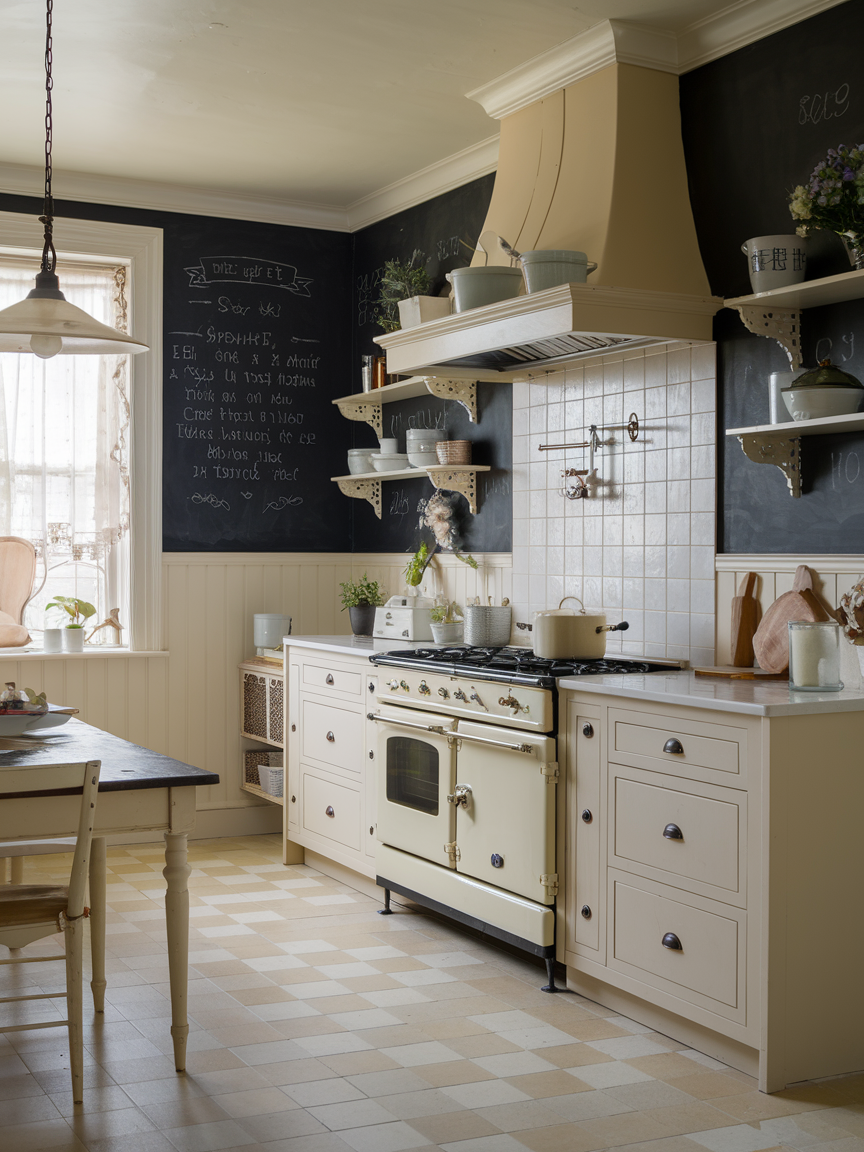
A chalkboard wall introduces a practical and creative element to a shabby chic kitchen. Its dark, matte surface creates an appealing contrast against pale cabinetry, creamy walls, and weathered wooden accents. Use it to write grocery lists, record favorite recipes, leave messages for family members, or display seasonal illustrations. If covering an entire wall feels too dramatic, try a smaller chalkboard panel framed in distressed wood. This approach provides the same vintage-inspired character without dominating the room. You can also personalize the display with handwritten menu ideas, simple botanical sketches, or a rotating list of weekly meals. Keep the surrounding décor relatively simple so the chalkboard remains easy to read. The combination of functionality and personal expression gives the kitchen a relaxed, lived-in atmosphere.
18. Open Shelving with Decorative Accessories
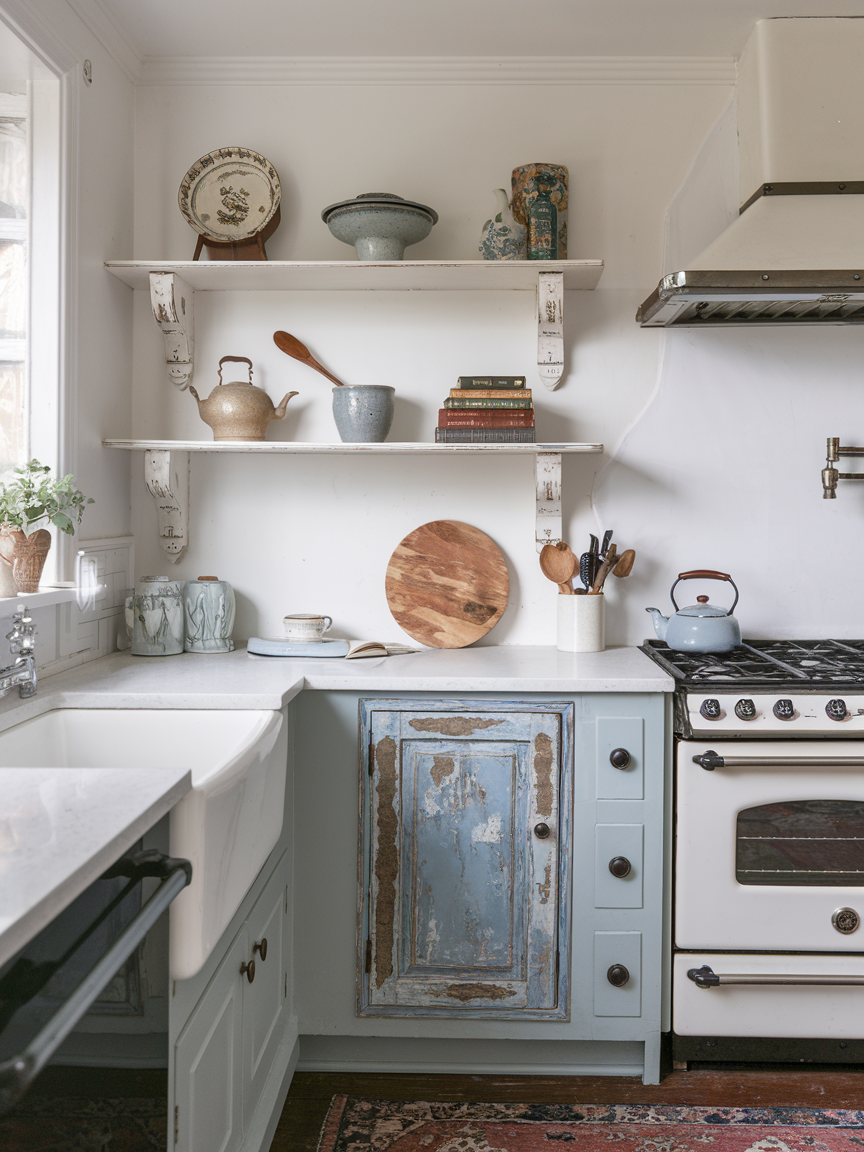
Open shelves can become beautiful displays when practical kitchen items are mixed with carefully selected decorative accessories. Arrange everyday plates beside vintage cookbooks, ceramic pitchers, small framed prints, and miniature potted herbs. Reclaimed wood or softly painted shelves with slightly distressed edges provide a suitable backdrop for these collected treasures. To keep the arrangement visually appealing, vary the height of the objects and leave enough empty space between groups. Repeating a few colors, such as ivory, pale blue, and sage green, helps different pieces feel connected even when they come from different collections. Remember to keep frequently used items within easy reach and reserve higher shelves for less practical decorations. This approach creates a kitchen that feels personal, layered, and effortlessly charming.
19. Reclaimed Wood Shelving
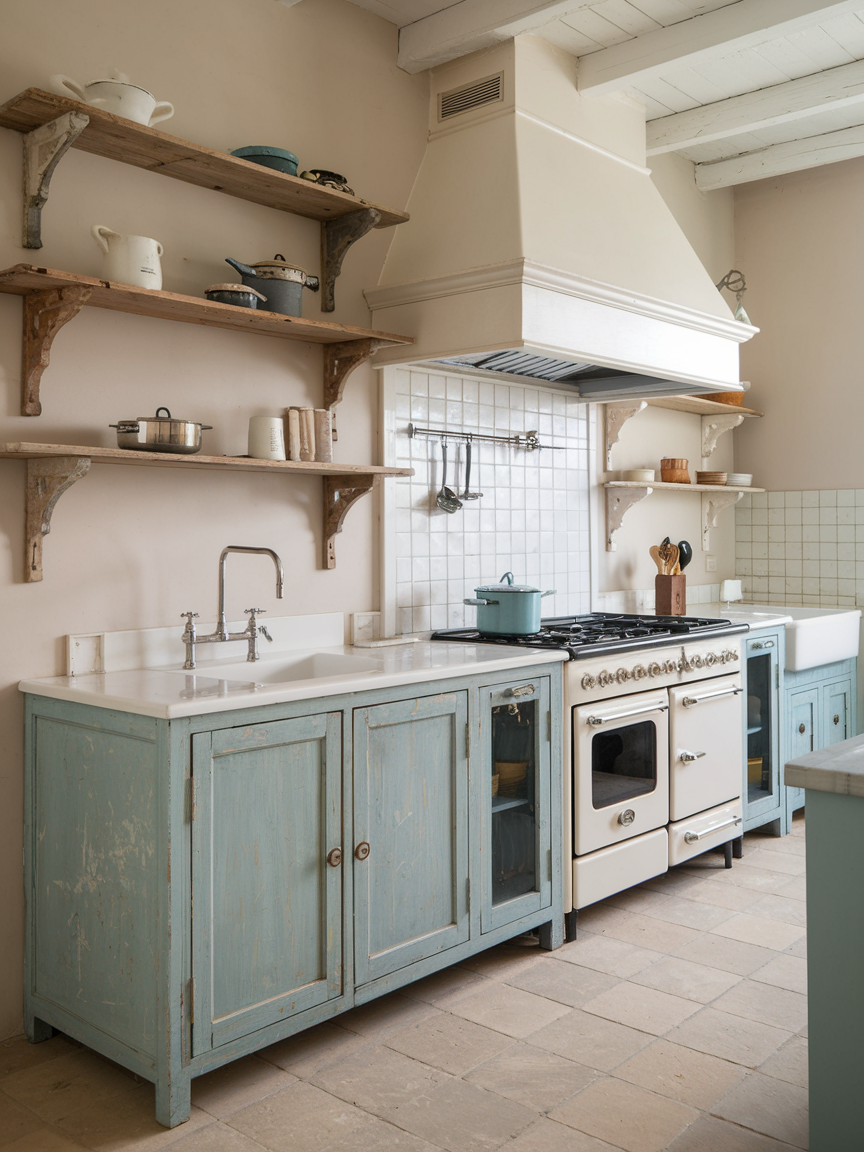
Reclaimed wood shelving adds rustic authenticity and a sense of history to a shabby chic kitchen. The natural grain, varied coloring, and weathered appearance of reclaimed timber create an interesting contrast against smooth walls and softly painted cabinets. Install a few sturdy shelves above the countertop to display ceramic dishes, vintage glassware, cookbooks, or small pots of herbs. For a cohesive look, pair the wood with simple metal brackets in an aged finish or choose floating shelves for a cleaner appearance. Because kitchen shelving must support everyday items safely, make sure the wood is suitable for indoor use, properly prepared, and securely mounted. Leaving some open space between displayed objects helps the arrangement feel relaxed rather than crowded. These shelves combine useful storage with the warm, handmade character that defines shabby chic interiors.
20. Soft Pastel Wall Colors
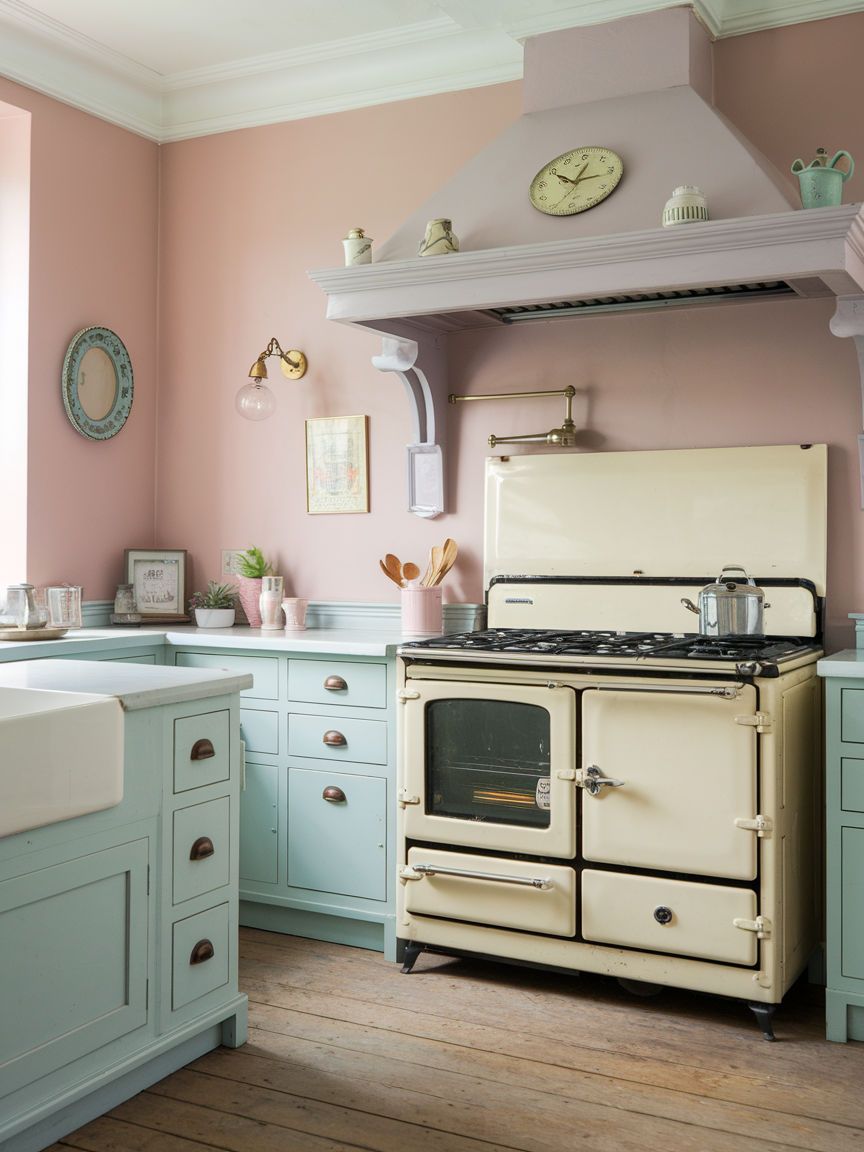
Soft pastel walls create a soothing backdrop for the layered textures and vintage details of a shabby chic kitchen. Blush pink, pale mint, powder blue, muted lavender, and warm cream can all introduce color while keeping the room light and inviting. These gentle shades work particularly well with white cabinetry, natural wood, and antique-inspired accessories. If you prefer a more understated interior, consider using a barely tinted neutral rather than a noticeably colorful pastel. Before painting the entire room, test a few samples under different lighting conditions because natural and artificial light can change how a color appears. You can also use a slightly deeper shade on a feature wall to create dimension without overwhelming the space. The right wall color helps unify the kitchen’s decorative elements while preserving its relaxed, romantic character.
21. Porcelain and Ceramic Accessories
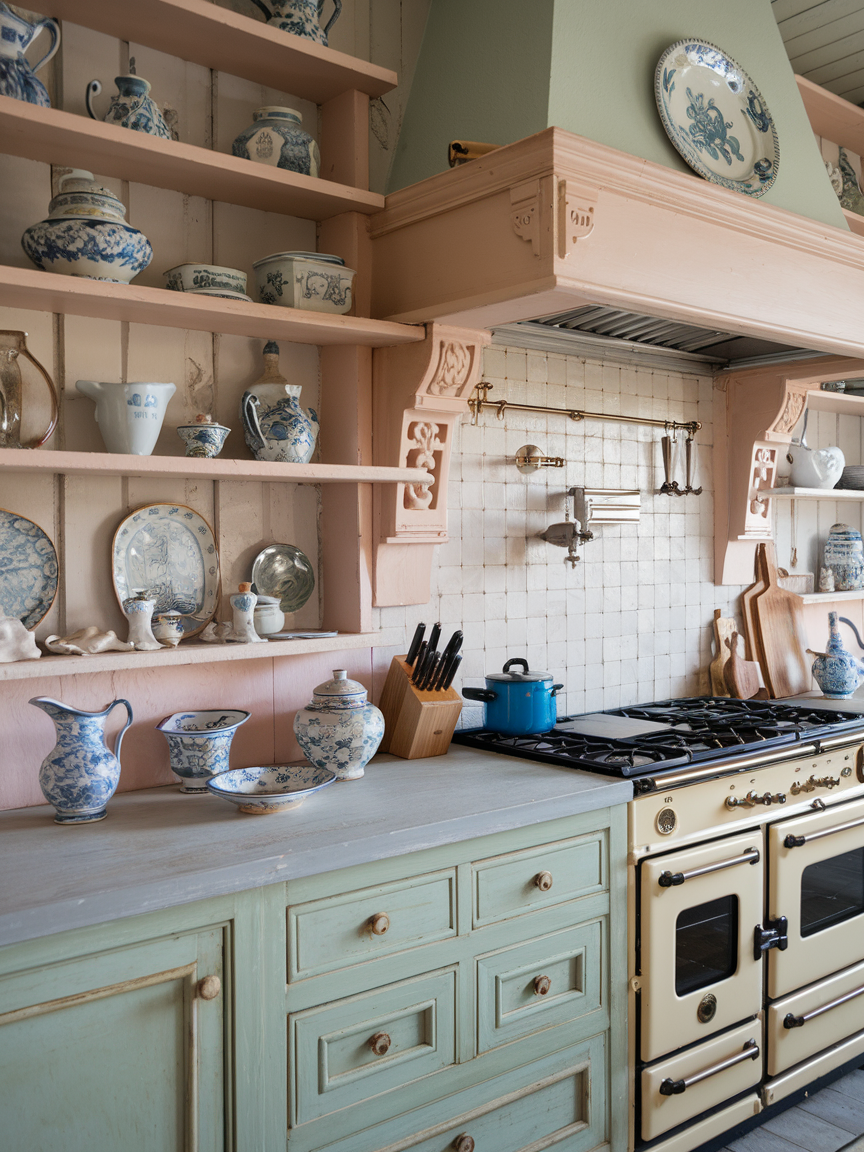
Porcelain and ceramic accessories bring delicate texture and timeless appeal to a shabby chic kitchen. Vintage-inspired pitchers, floral teacups, decorative bowls, and glazed canisters can serve as both useful household items and attractive display pieces. Choose creamy white ceramics for a classic appearance, or introduce subtle shades of blue, blush, and sage to complement pastel cabinetry. Hand-painted patterns and slightly irregular shapes add personality, making the collection feel more authentic than a set of perfectly matching accessories. Arrange a few pieces on open shelves, place a ceramic utensil holder beside the stove, or use a decorative pitcher as a vase for seasonal flowers. Mixing different shapes and finishes creates visual interest, while a consistent color palette keeps the arrangement harmonious. These small details help make the kitchen feel thoughtfully collected and welcoming.
22. Vintage Lighting Fixtures
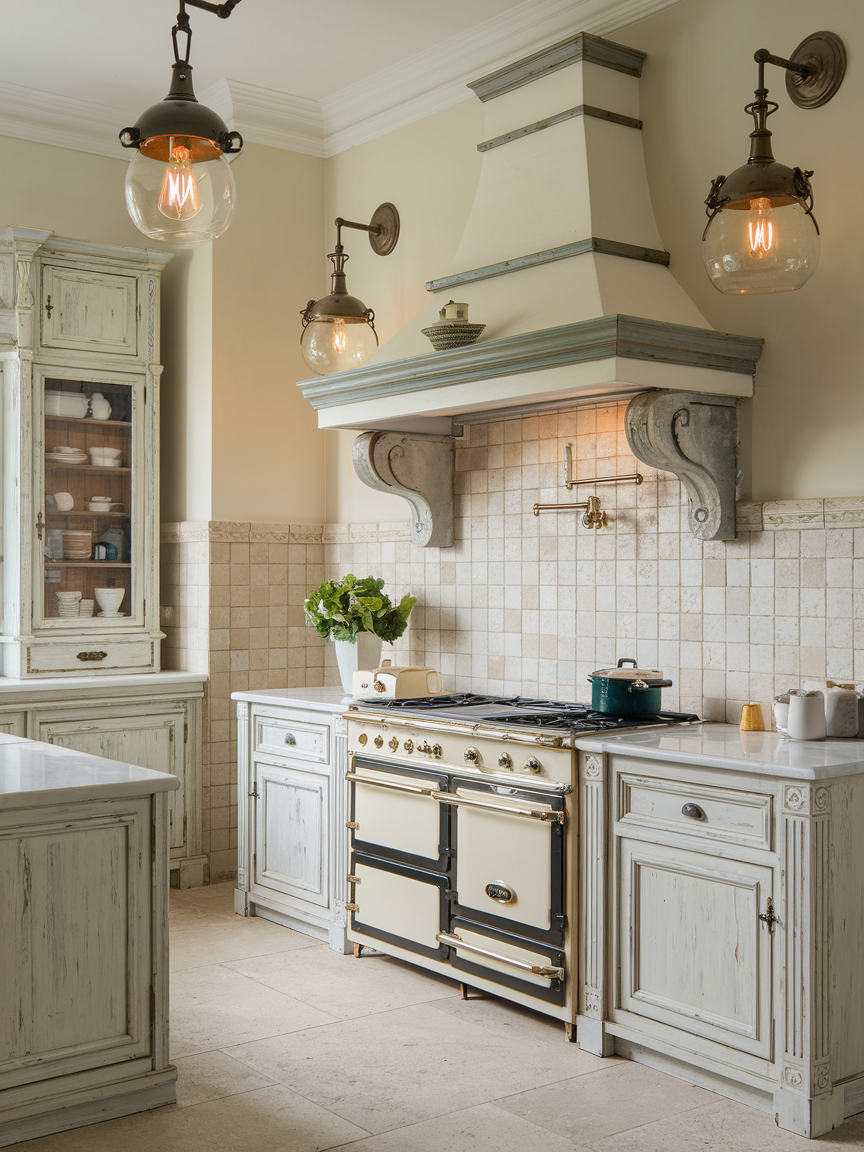
Vintage lighting fixtures bring character and atmosphere to a shabby chic kitchen while helping define different functional areas. Consider traditional wall sconces, antique-inspired lantern pendants, or a small chandelier above a breakfast nook. Finishes such as aged brass, weathered iron, and softly polished nickel work beautifully with distressed furniture and pastel cabinetry. Glass shades can help distribute light throughout the room, while decorative fixtures add visual interest even when switched off. For the best results, layer different types of lighting rather than relying on a single ceiling fixture. Combine general illumination with focused task lighting above countertops and softer lighting over dining areas. This approach creates a comfortable environment for cooking, entertaining, and enjoying everyday meals while reinforcing the kitchen’s nostalgic appeal.
23. Woven Baskets
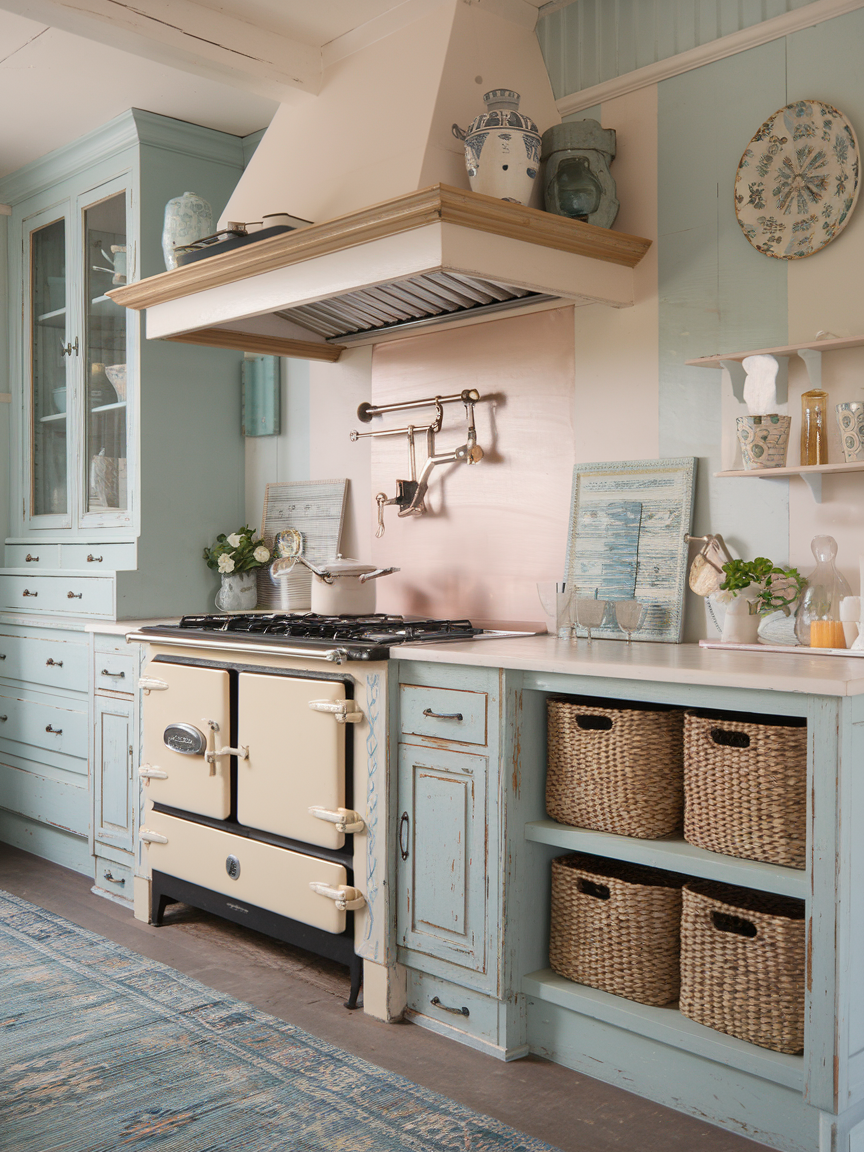
Woven baskets bring natural texture and practical storage to a shabby chic kitchen. Made from materials such as wicker, rattan, or seagrass, they introduce a handcrafted quality that complements distressed wood and soft pastel colors. Use larger baskets to organize tea towels, linens, or pantry supplies, while smaller ones can hold fruit, packaged snacks, or everyday accessories. Baskets placed on open shelves can conceal less attractive items while keeping them easy to reach. Their natural tones also help balance painted cabinetry and decorative patterns, preventing the kitchen from feeling too delicate or overly coordinated. For a polished arrangement, choose baskets in a few complementary sizes and repeat them throughout the room. Keep them away from excessive moisture and clean them regularly to preserve their appearance.
24. Personal Vintage Touches
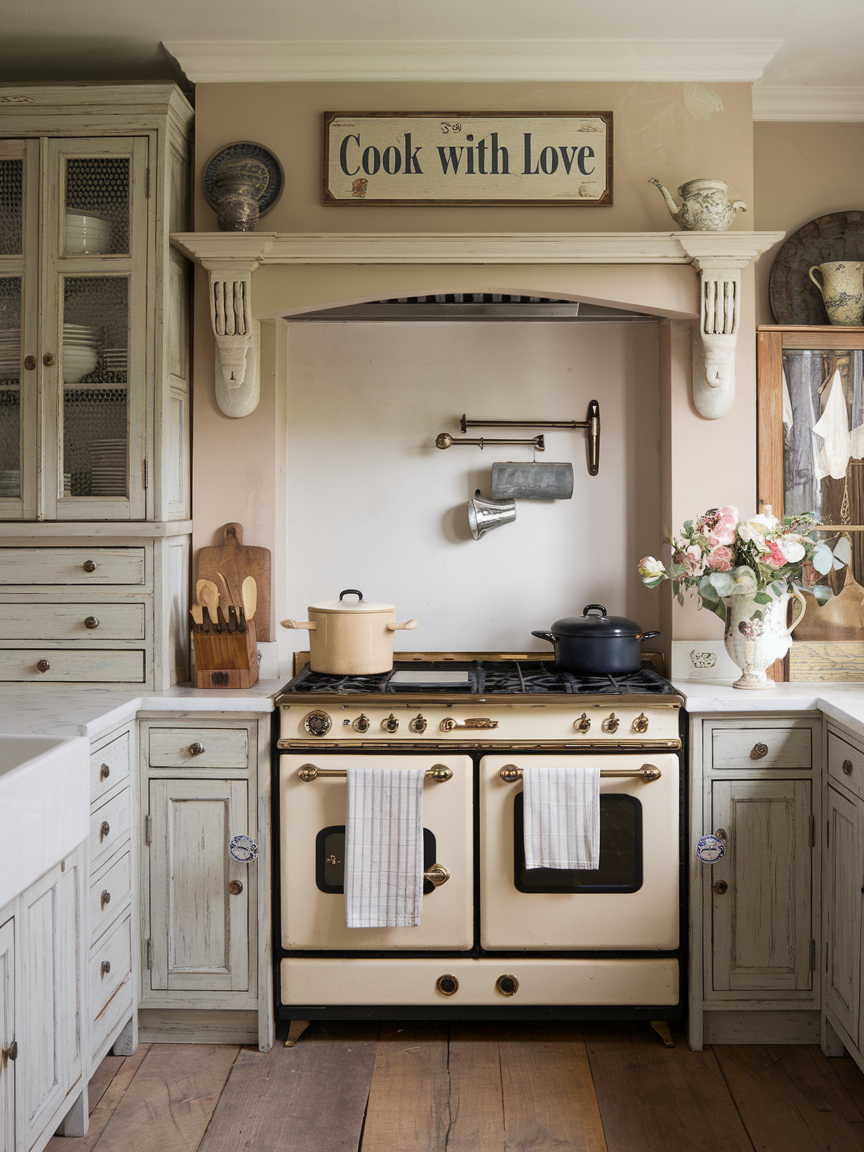
Personal vintage touches give a shabby chic kitchen a sense of history that cannot be recreated with matching furniture alone. Display a treasured family teapot, an inherited serving dish, an antique kitchen scale, or a framed recipe passed down through generations. Even small objects can become meaningful decorative features when arranged thoughtfully on shelves or countertops. You might also hang a collection of vintage prints, display old wooden utensils in a ceramic crock, or use a favorite heirloom as the centerpiece of an open hutch. The goal is not to fill every available space with antiques but to select pieces that tell a story and reflect your personality. Mixing sentimental objects with modern essentials creates an authentic, comfortable kitchen that feels collected over time rather than decorated all at once.
* The lasting appeal of shabby chic kitchen decor lies in its ability to make a home feel personal, cozy, and full of character. Use these inspirations to experiment with colors, textures, furniture, and accessories, and create a kitchen that reflects your personality while offering a warm and charming place to cook, gather, and make lasting memories.