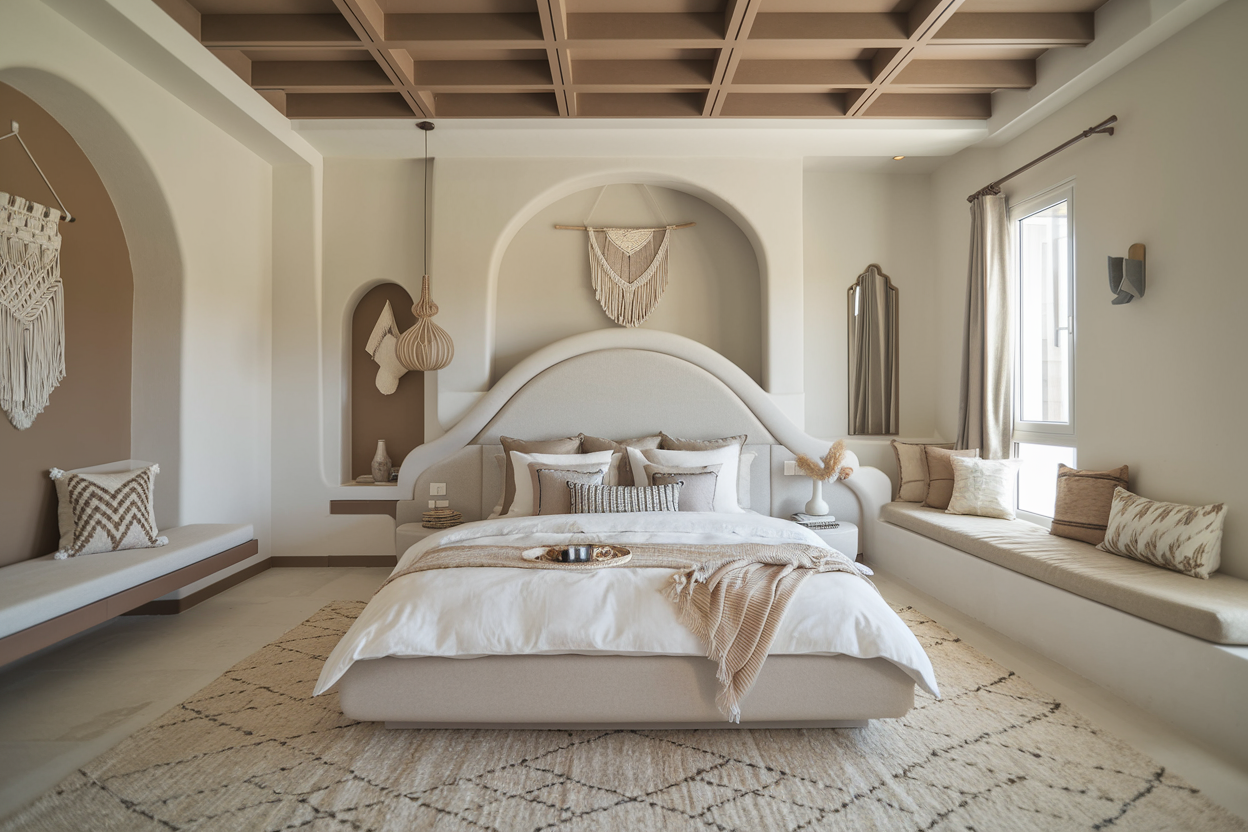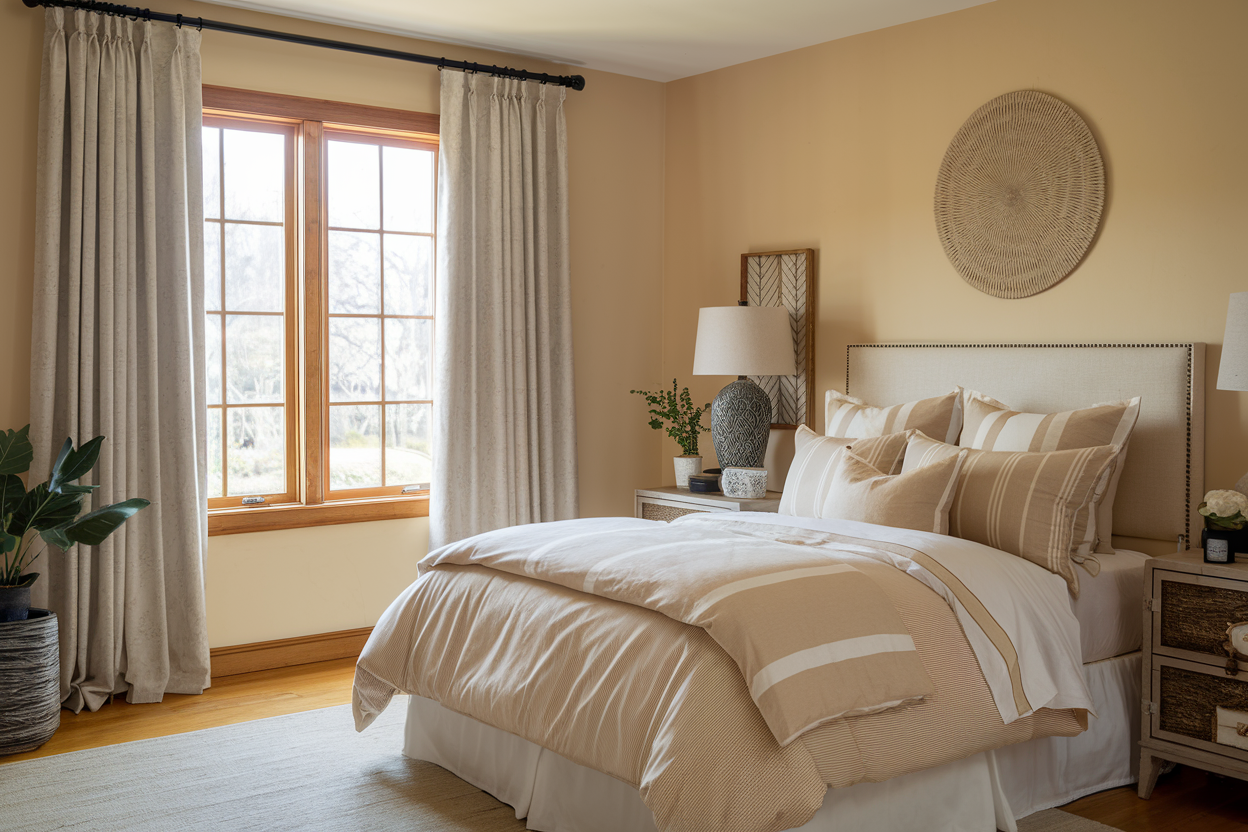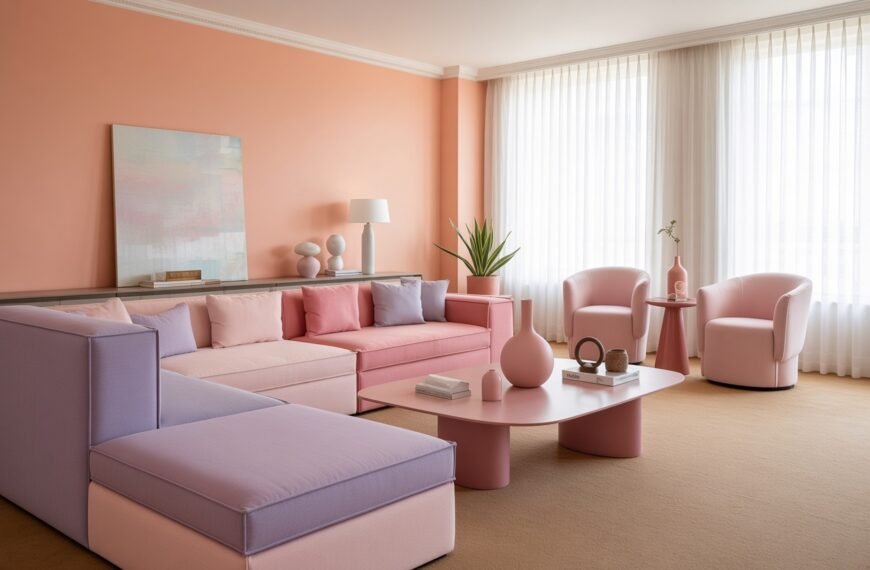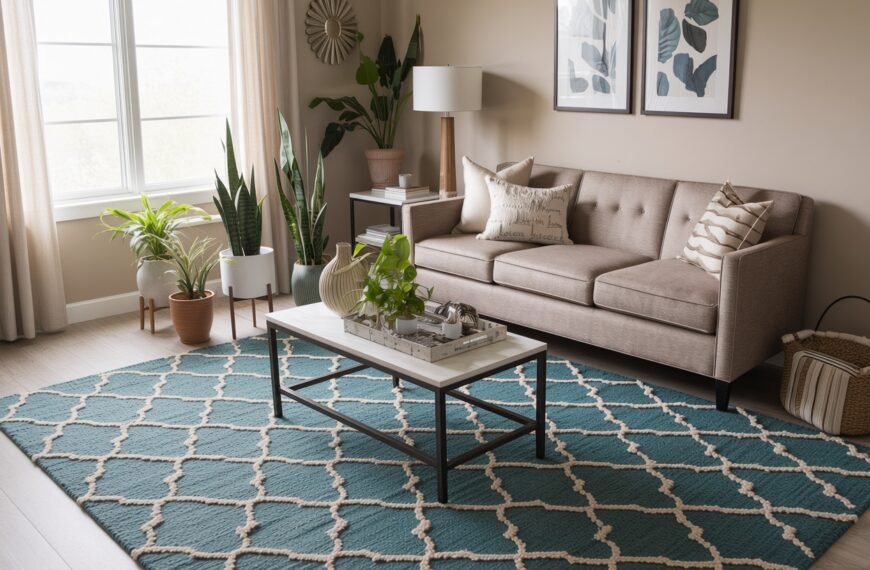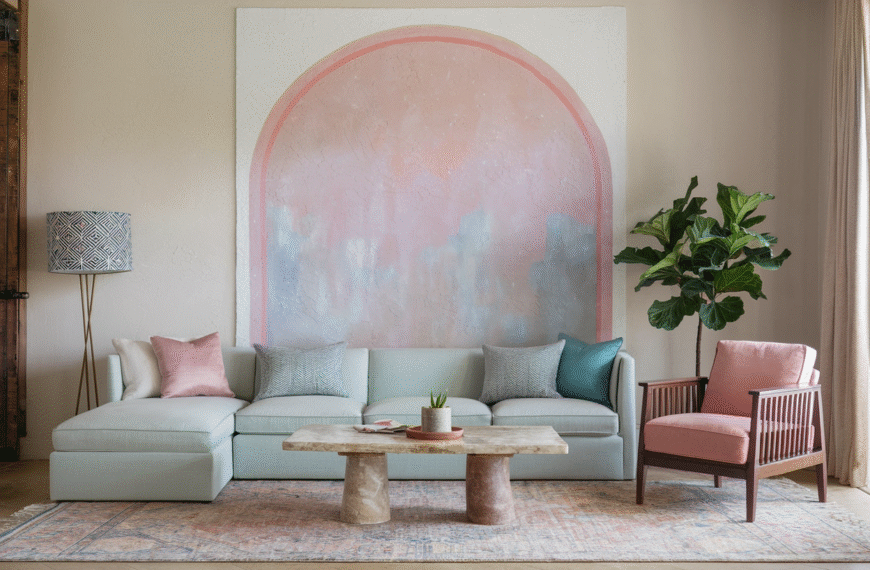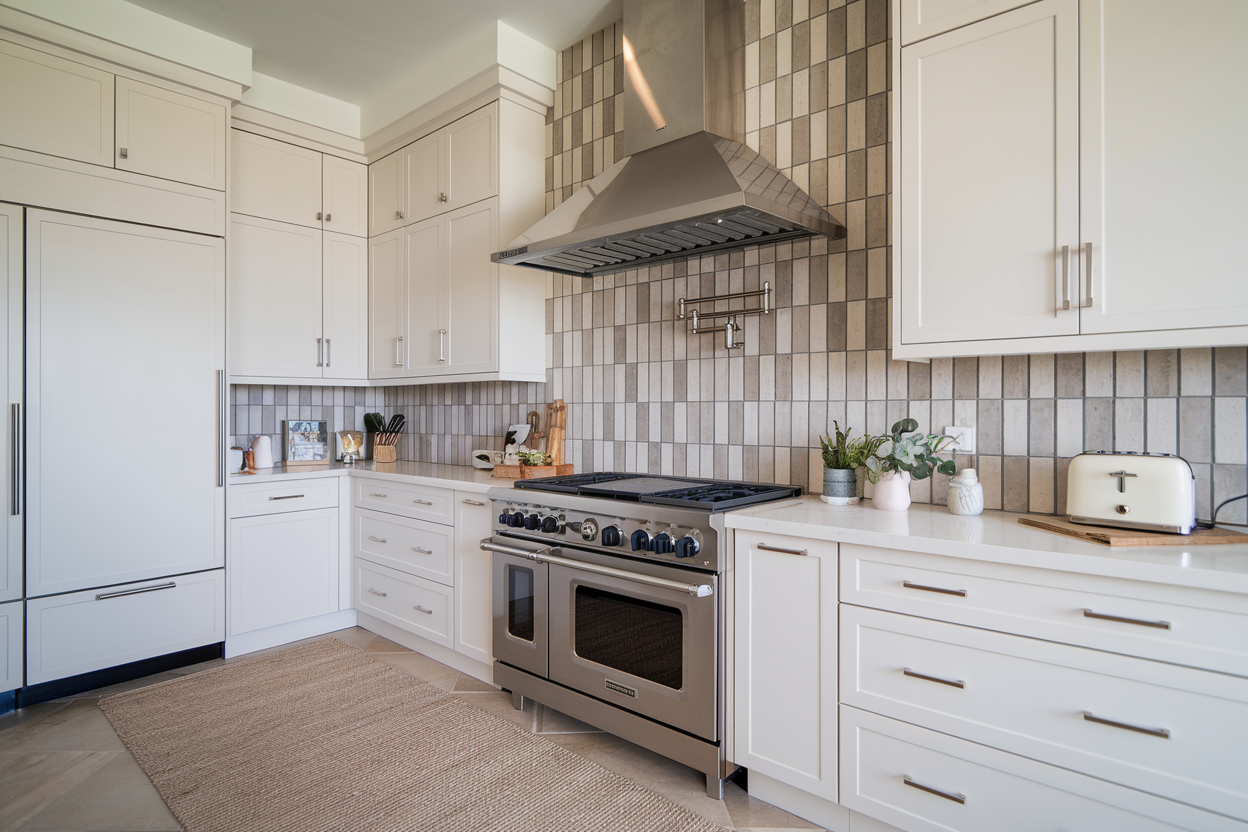
An accent wall can completely transform the look and feel of a kitchen, adding personality and visual interest without requiring a full renovation. A single bold feature has the power to define the space, creating a focal point that enhances both style and function. Thoughtful design choices turn ordinary kitchen walls into standout elements that reflect creativity and character.
Creative kitchen accent walls go far beyond a simple coat of paint. Textured tile, patterned wallpaper, exposed brick, wood paneling, or striking color contrasts can all introduce depth and dimension. Lighting, open shelving, and decorative details further highlight the feature wall, ensuring it feels cohesive rather than overpowering.
This thoughtfully selected collection highlights imaginative ways to transform your kitchen using one striking focal point. Every concept reveals how a carefully designed accent wall can instantly energize and redefine the room’s atmosphere. Let’s take a closer look at these inspiring accent wall ideas and see how a single statement design can elevate your kitchen!
1. Soft Neutral Painted Accent Wall
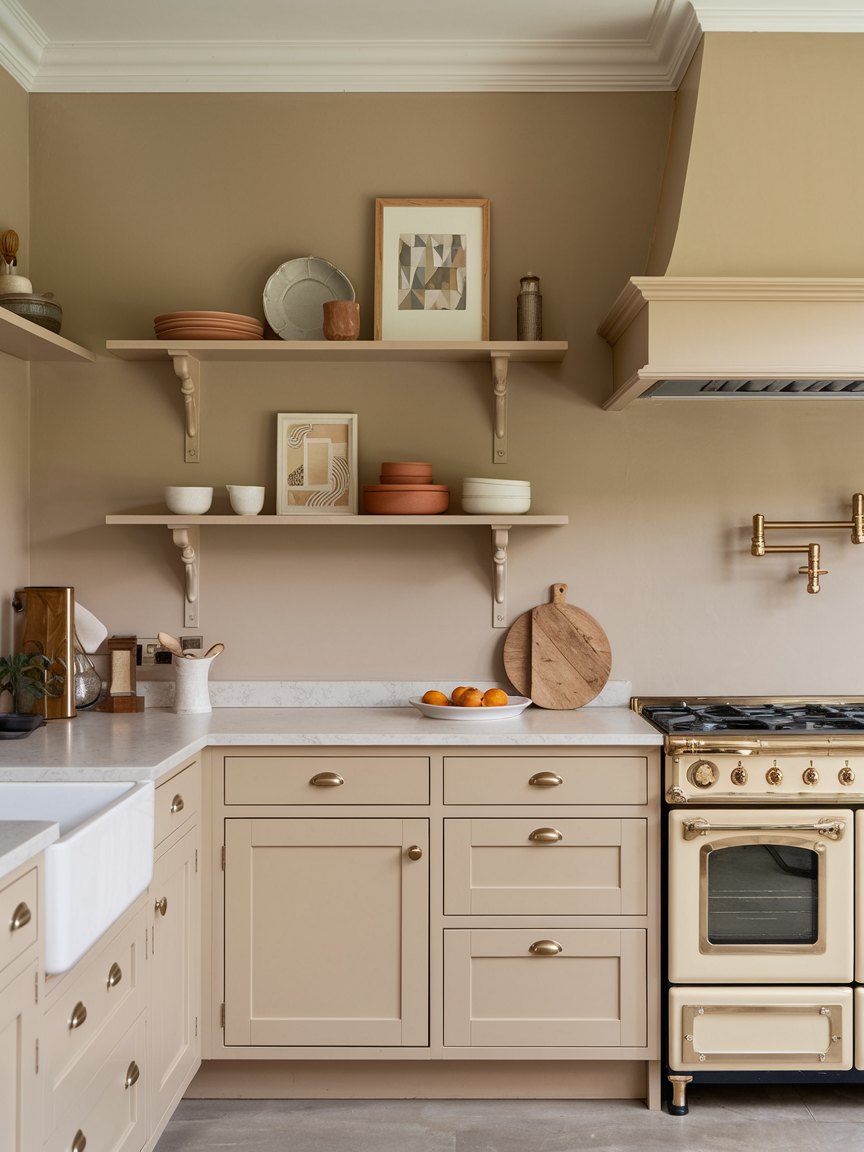
A soft neutral painted accent wall is one of the simplest and most timeless ways to refresh a kitchen. Shades like warm beige, muted taupe, soft sage, or light greige create subtle contrast while maintaining harmony with cabinetry and countertops. This approach works especially well in kitchens dominated by white or light wood finishes, as it adds depth without overpowering the space. The beauty of a neutral accent wall lies in its versatility, allowing decor elements like floating shelves, framed art, or open storage to stand out. Matte or eggshell finishes provide a refined look while remaining easy to clean. By choosing a calm and understated tone, you enhance visual warmth and dimension, proving that even the simplest paint choice can make a meaningful impact.
2. Classic Subway Tile Feature Wall
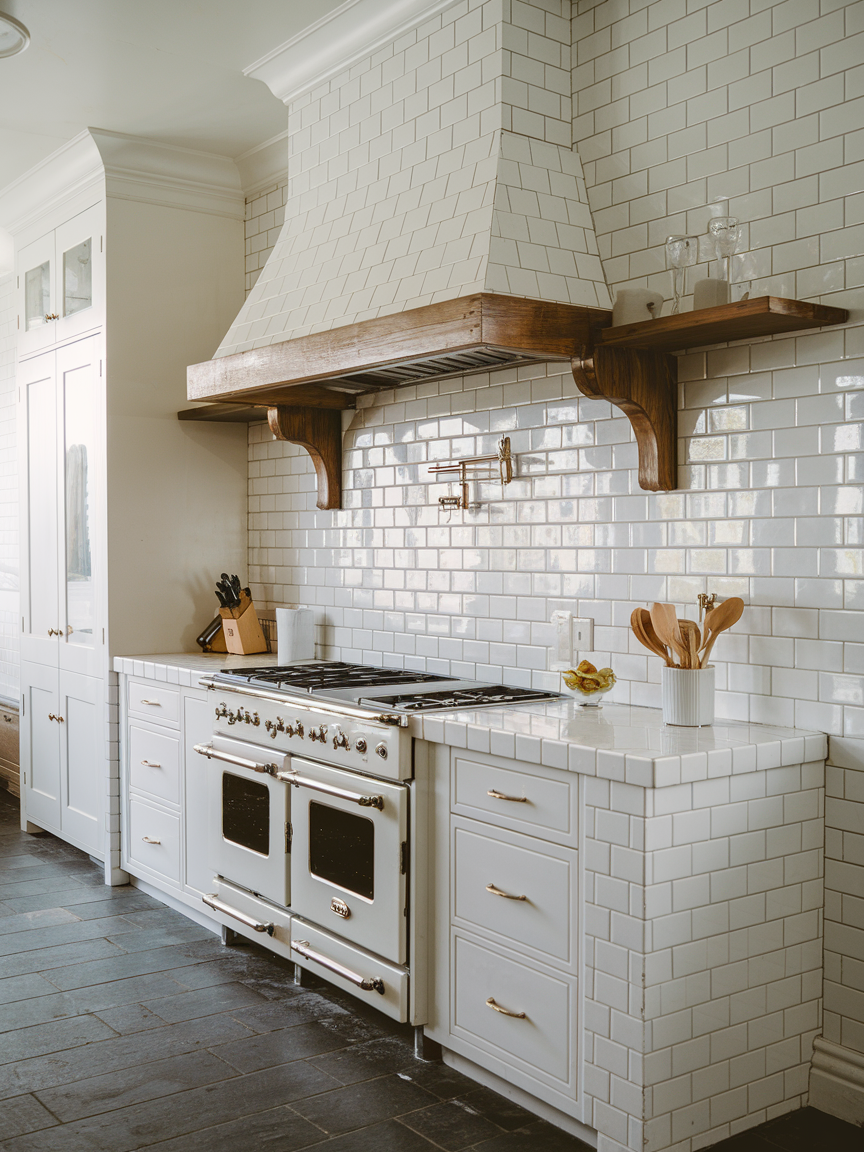
A subway tile accent wall offers a clean and polished look that never feels outdated. While subway tile is often used for backsplashes, extending it to create a full accent wall behind open shelving or a dining nook adds cohesion and charm. White tiles keep the space bright and airy, while light gray or cream tones introduce softness. Choosing contrasting grout can subtly highlight the tile pattern for added interest without overwhelming the design. The reflective surface enhances natural light, making smaller kitchens feel more spacious. This idea is both practical and stylish, as tiles are durable, easy to maintain, and resistant to moisture. A simple subway tile wall proves that classic materials can still feel fresh and modern in today’s kitchens.
3. Wooden Slat Accent Wall
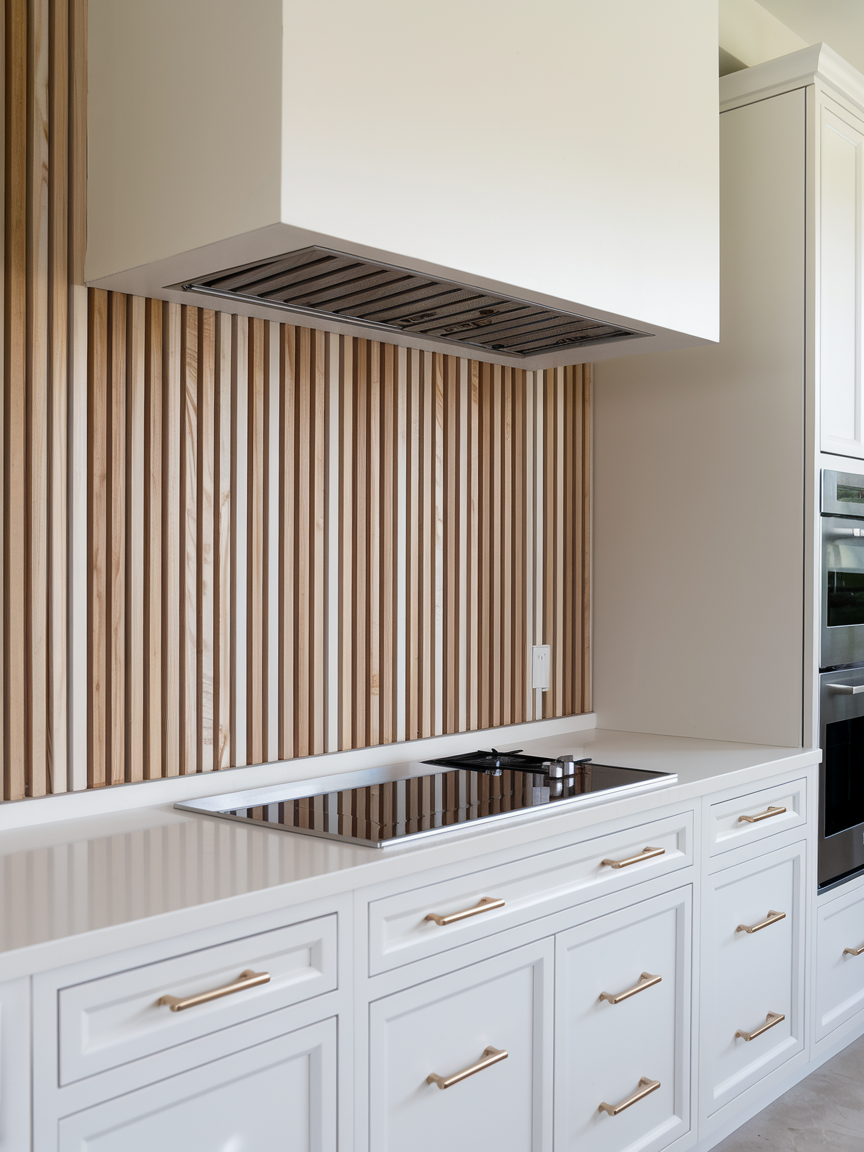
A wooden slat accent wall brings warmth and texture into the kitchen while maintaining a minimalist aesthetic. Vertical or horizontal wood slats in light oak, walnut, or natural pine create a gentle visual rhythm without feeling busy. This design works beautifully in modern or Scandinavian-inspired kitchens where simplicity and natural elements are key. The subtle shadows between slats add depth, especially when paired with soft lighting. To keep the look simple, choose clean lines and consistent spacing between each panel. Wood adds an inviting atmosphere that balances sleek cabinetry and stone countertops. When sealed properly, it can withstand kitchen humidity while offering long-lasting beauty. This approach combines functionality and style in a refined yet approachable way.
4. Chalkboard Paint Wall
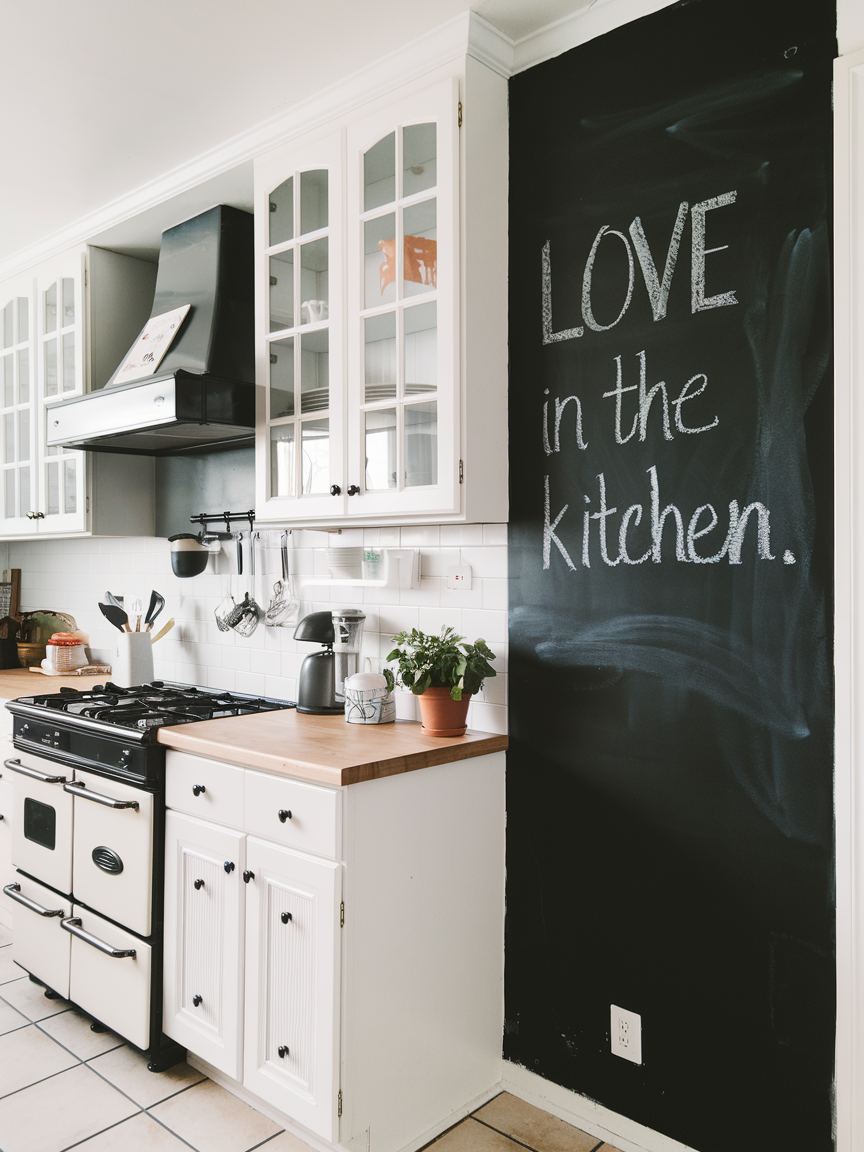
A chalkboard accent wall introduces personality and function into the kitchen without complicated installation. Using matte black or deep charcoal chalkboard paint creates a bold yet practical feature where grocery lists, menus, or inspirational quotes can be displayed. In modern kitchens, this wall works well near a breakfast area or pantry door. The dark tone contrasts beautifully with white cabinetry, adding drama while remaining simple in execution. Keeping surrounding decor minimal ensures the space feels intentional rather than cluttered. This accent wall evolves over time as messages change, adding dynamic character to the room. It is an affordable and creative solution for homeowners who want a distinctive kitchen feature that remains easy to update and maintain.
5. Brick-Style Accent Wall
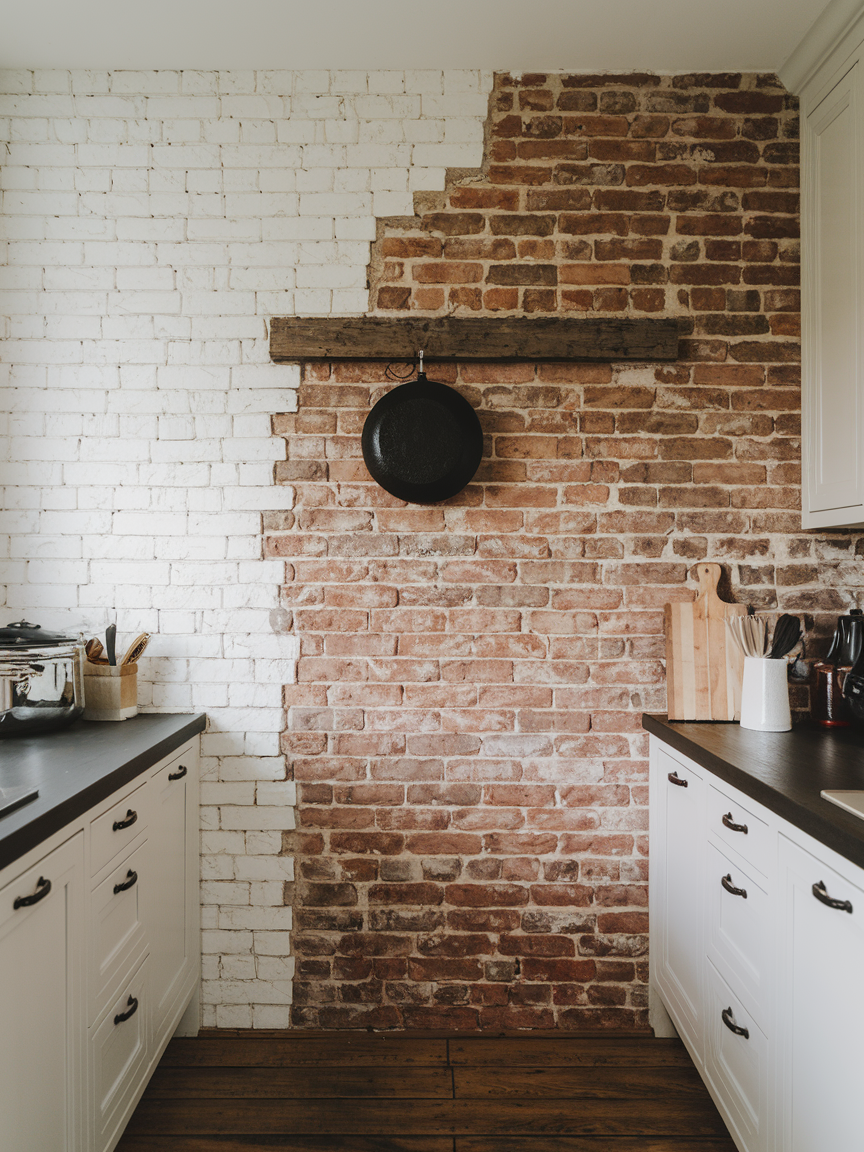
A brick-style accent wall adds texture and subtle rustic charm while still maintaining a simple design. Whether using real brick, brick veneer, or brick-pattern wallpaper, this feature introduces natural character without overwhelming the kitchen. Whitewashed brick keeps the space feeling bright and modern, while exposed red brick offers warmth and contrast. The uneven texture adds dimension against smooth cabinetry and polished countertops. Pairing brick with minimalist decor ensures balance between rustic and contemporary elements. Proper sealing protects the surface from grease and moisture, making it suitable for kitchen environments. A brick accent wall provides visual interest through texture rather than bold color, creating a timeless and understated focal point.
6. Two-Tone Paint Division
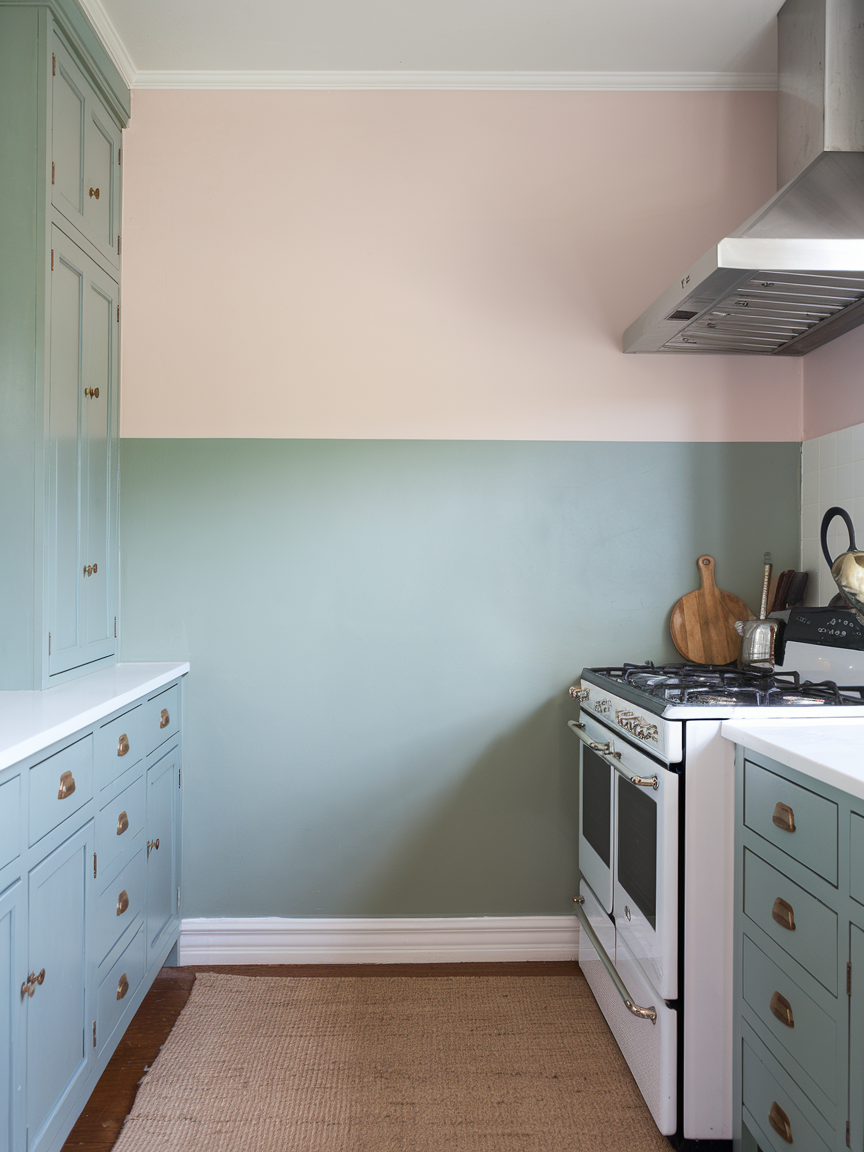
A two-tone painted accent wall creates subtle architectural interest using only color. Dividing the wall horizontally or vertically with complementary shades, such as white paired with soft gray or sage, adds depth without introducing additional materials. Clean, straight lines maintain a crisp and modern feel. This idea works particularly well behind dining areas or open shelving, enhancing the layout visually. Matte finishes prevent glare and contribute to a smooth, cohesive look. The simplicity of paint makes this an accessible update while still feeling thoughtfully designed. Two-tone walls add quiet sophistication, proving that a carefully chosen color combination can elevate a kitchen with minimal effort.
7. Patterned Tile Panel
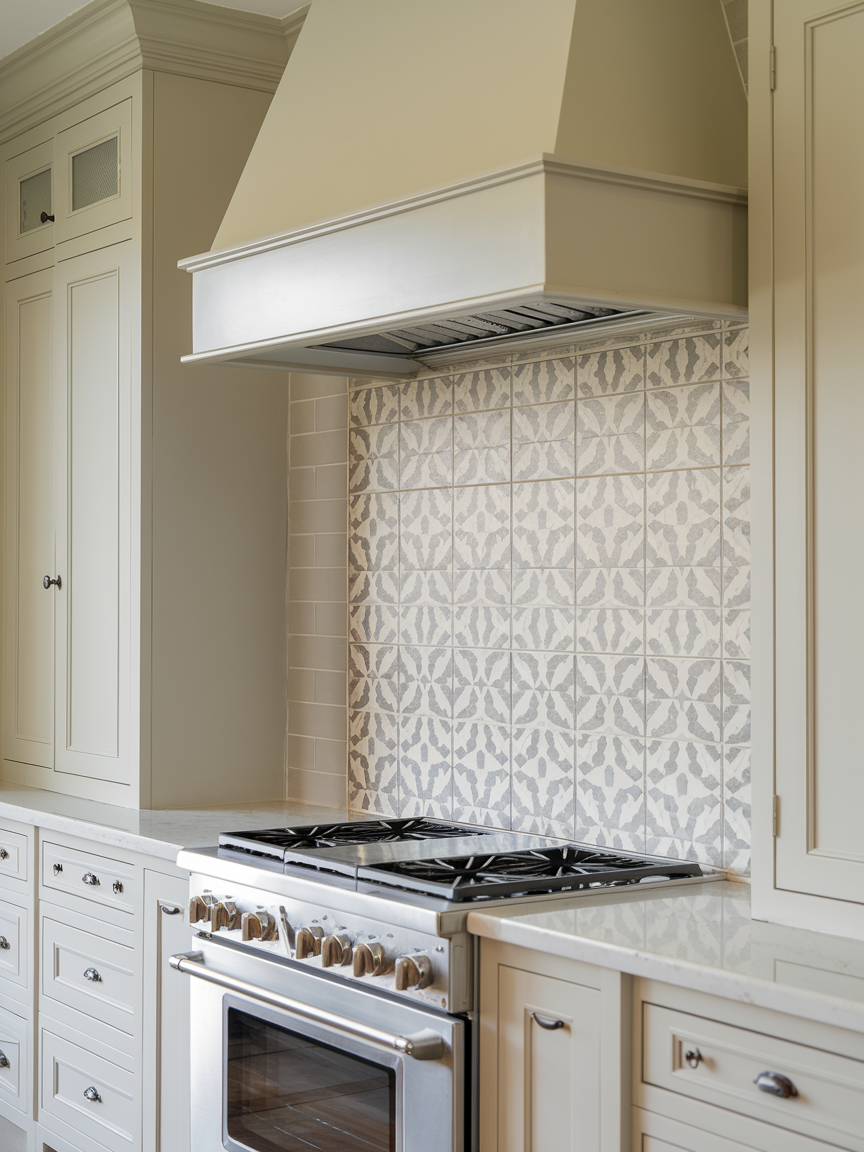
Instead of covering an entire wall, installing a patterned tile panel in a defined section creates a focused accent that feels intentional and simple. Choose subtle geometric or Moroccan-inspired patterns in neutral tones to maintain balance. This feature works well behind a stove or sink area where a backsplash naturally belongs. Keeping the surrounding walls neutral prevents the pattern from overwhelming the space. The tile adds personality and visual texture while remaining practical and easy to clean. A contained patterned panel introduces character without complicating the overall kitchen design.
8. Floating Shelf Display Wall
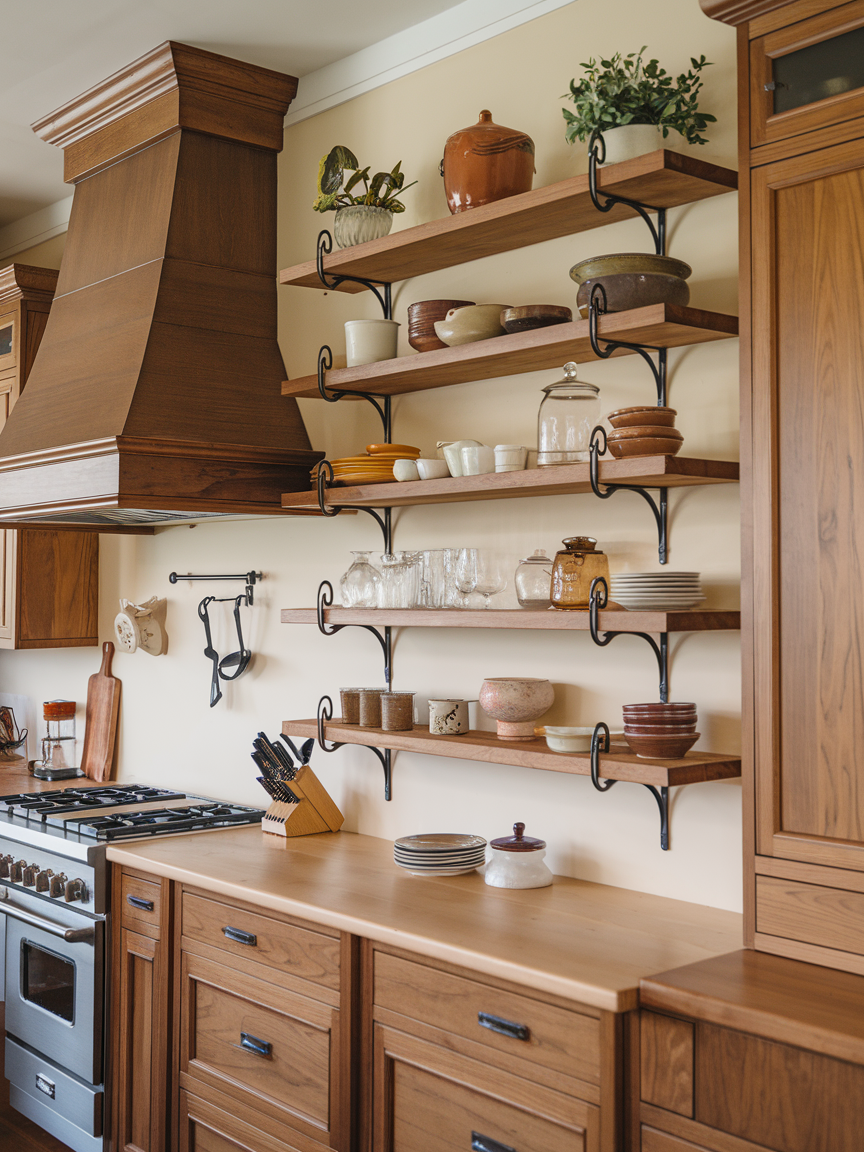
A simple accent wall can be created by installing floating wooden or metal shelves against a neutral background. The shelves themselves become the visual feature when styled with cohesive decor such as ceramic dishes, glass jars, or small plants. Maintaining a consistent color palette ensures the arrangement feels curated rather than cluttered. This idea enhances vertical space while adding warmth and functionality. The wall remains simple in structure, but the layered styling introduces depth and charm.
9. Shiplap Accent Wall
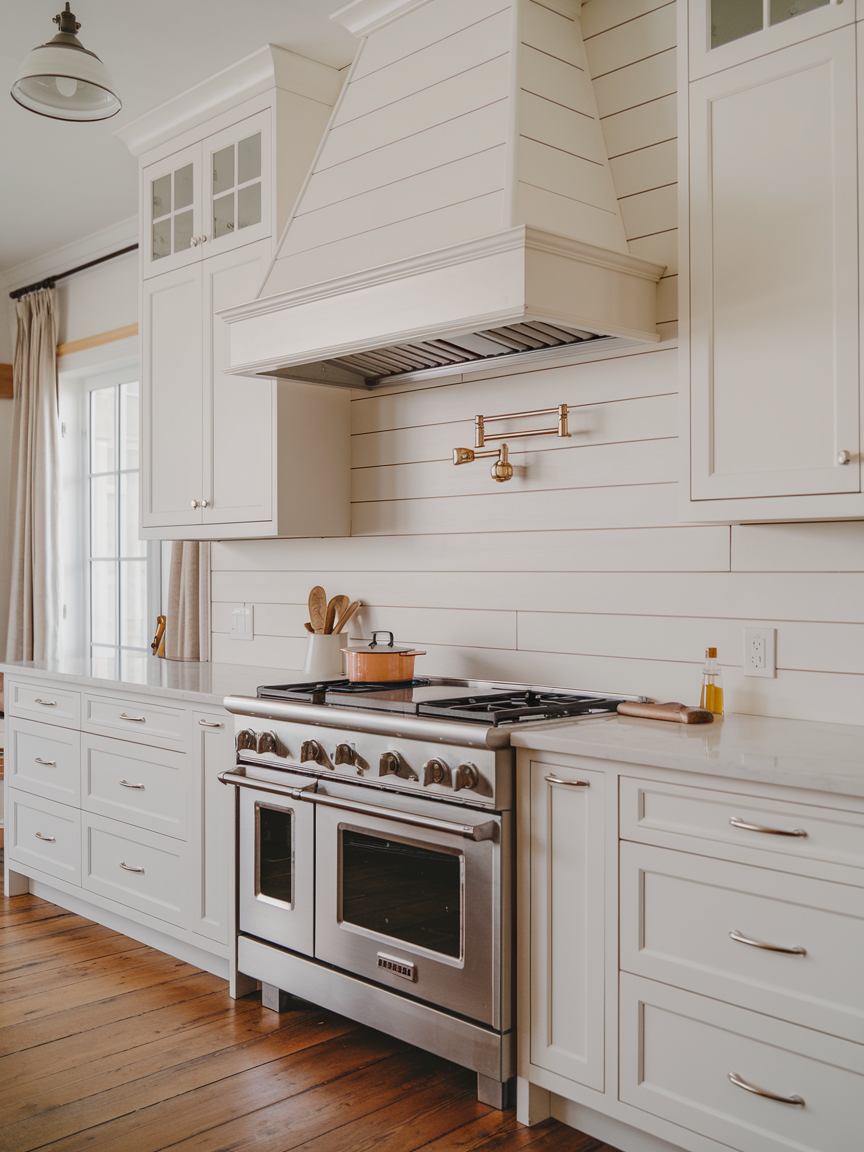
A shiplap accent wall offers subtle texture and timeless charm while keeping the overall kitchen design simple and clean. Painted in white, soft gray, or muted sage, shiplap adds depth through its horizontal lines without overwhelming cabinetry or appliances. This style works beautifully in farmhouse, coastal, or modern transitional kitchens where warmth and simplicity are priorities. The narrow gaps between panels create gentle shadow lines that bring dimension to flat surfaces. Installing shiplap behind a breakfast nook or along a dining wall can define the space without introducing bold color or heavy materials. When paired with minimal decor and warm lighting, the result feels inviting yet refined. Proper sealing ensures durability against moisture, making it both practical and aesthetically pleasing for everyday kitchen use.
10. Marble Slab Feature Wall
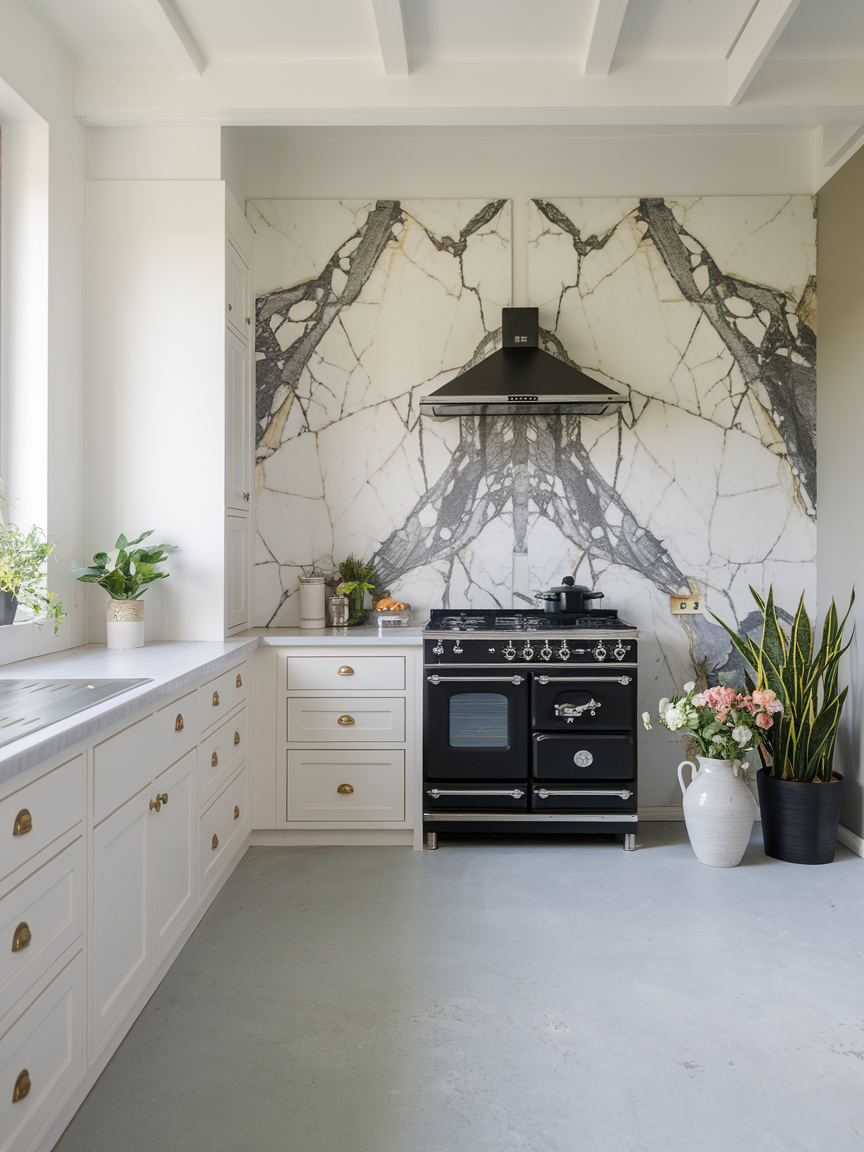
A marble slab accent wall introduces understated luxury while maintaining a simple and cohesive look. Instead of intricate patterns or bold colors, the natural veining in marble provides organic visual interest that feels elegant and timeless. Installing a slab behind the stove or along a dining wall creates a sophisticated focal point without clutter. Soft gray or white marble complements most cabinetry finishes, from crisp white to deep navy or warm wood tones. The smooth surface reflects light, making the kitchen feel brighter and more spacious. Because marble already carries natural patterning, it requires minimal additional decoration. This simplicity allows the material itself to shine while enhancing the overall refinement of the kitchen environment.
11. Vertical Panel Molding Accent
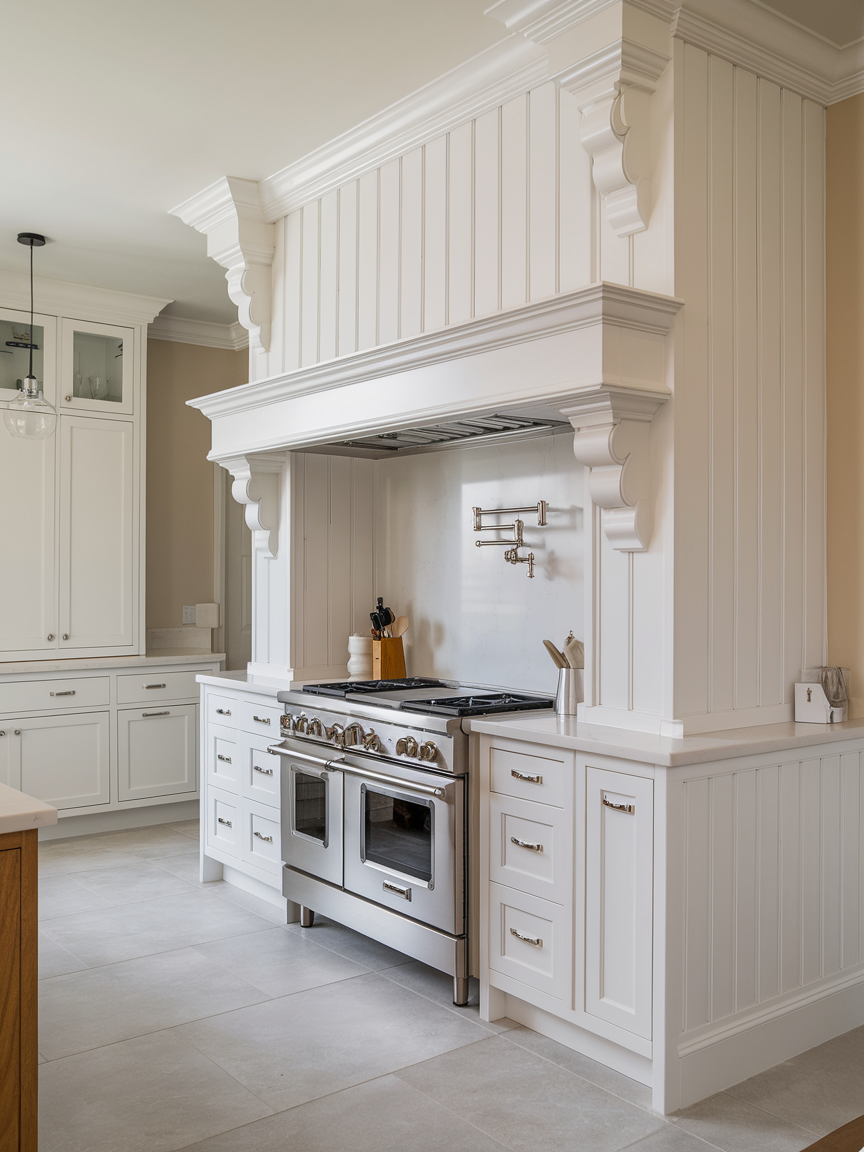
Simple panel molding can dramatically elevate a kitchen wall without adding visual heaviness. Thin trim pieces arranged in clean rectangular or square patterns create subtle architectural detail while keeping the space minimal. Painting the molding the same color as the wall ensures a soft, cohesive look rather than high contrast. This idea works especially well in kitchens that open into dining areas, adding elegance without overwhelming the space. The gentle shadows created by the trim introduce depth and dimension while preserving simplicity. When paired with modern lighting and streamlined furniture, panel molding provides a refined backdrop that feels classic yet updated, offering timeless charm with minimal effort.
12. Concrete Finish Accent Wall
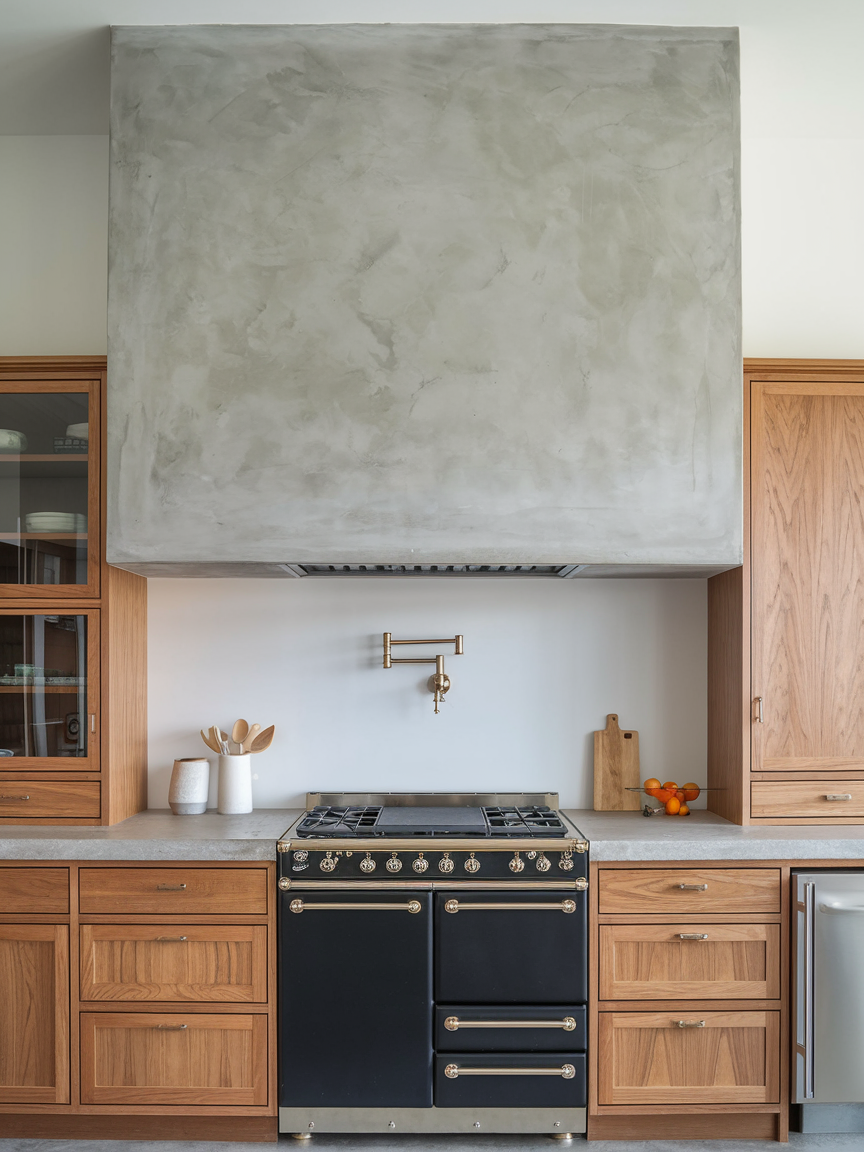
A smooth concrete or microcement accent wall brings modern industrial character into the kitchen while maintaining a clean and simple aesthetic. The soft gray tone pairs beautifully with wood cabinetry, matte black fixtures, and stainless steel appliances. Unlike heavily textured industrial walls, a polished concrete finish feels refined and subtle. The slight tonal variations within the material create depth without bold patterns or colors. This approach works particularly well in contemporary kitchens with minimalist styling. Because concrete is durable and easy to maintain when sealed properly, it provides both practicality and modern appeal. The understated texture enhances the kitchen’s visual interest while keeping the overall design streamlined and balanced.
13. Wallpaper with Subtle Pattern
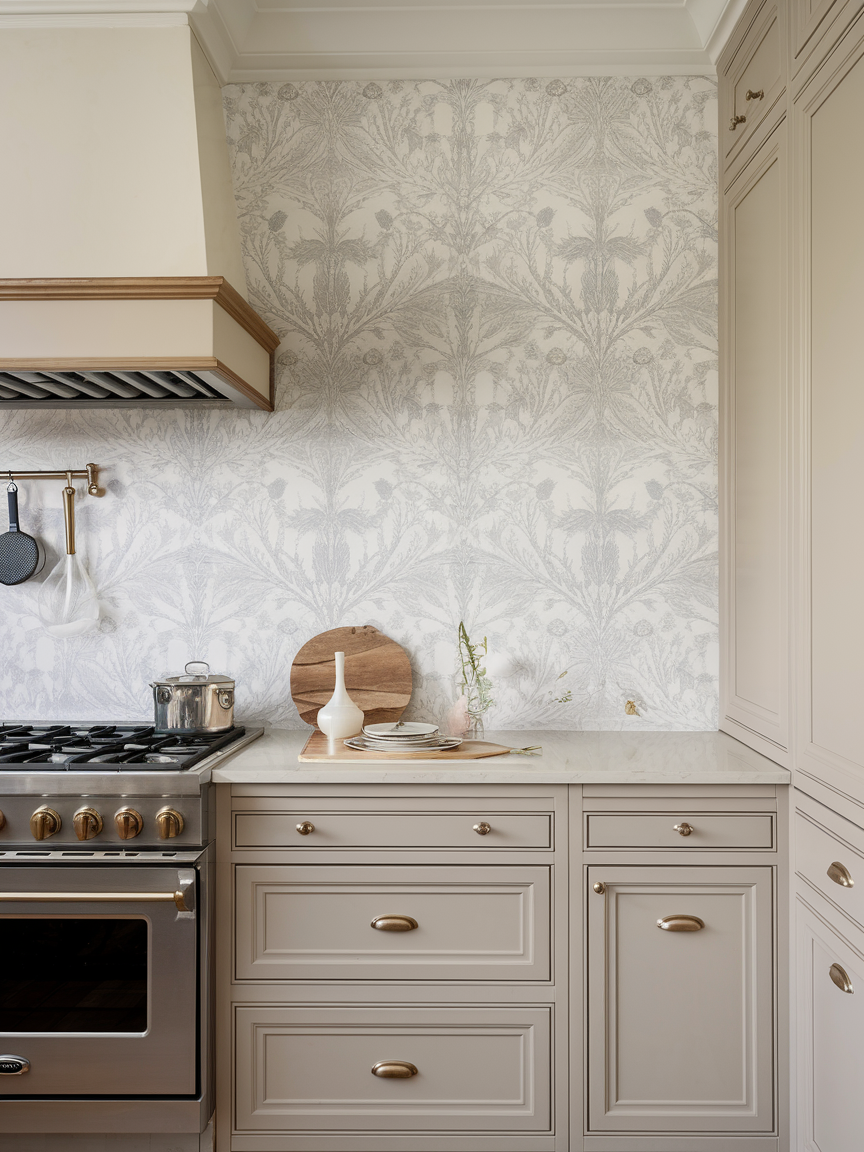
Using wallpaper with a delicate, understated pattern is a simple way to add personality without overwhelming the kitchen. Choose designs with soft geometrics, botanical motifs, or textured finishes in neutral tones to maintain harmony. Installing wallpaper on a single wall—such as near a dining area or open shelving—creates a focal point that feels curated rather than busy. Modern peel-and-stick options make installation and updates easier, offering flexibility for changing tastes. Keeping surrounding cabinetry and decor minimal ensures the pattern remains elegant and refined. This approach allows the kitchen to feel fresh and stylish while preserving a clean, cohesive aesthetic.
14. Dark Paint Accent for Contrast
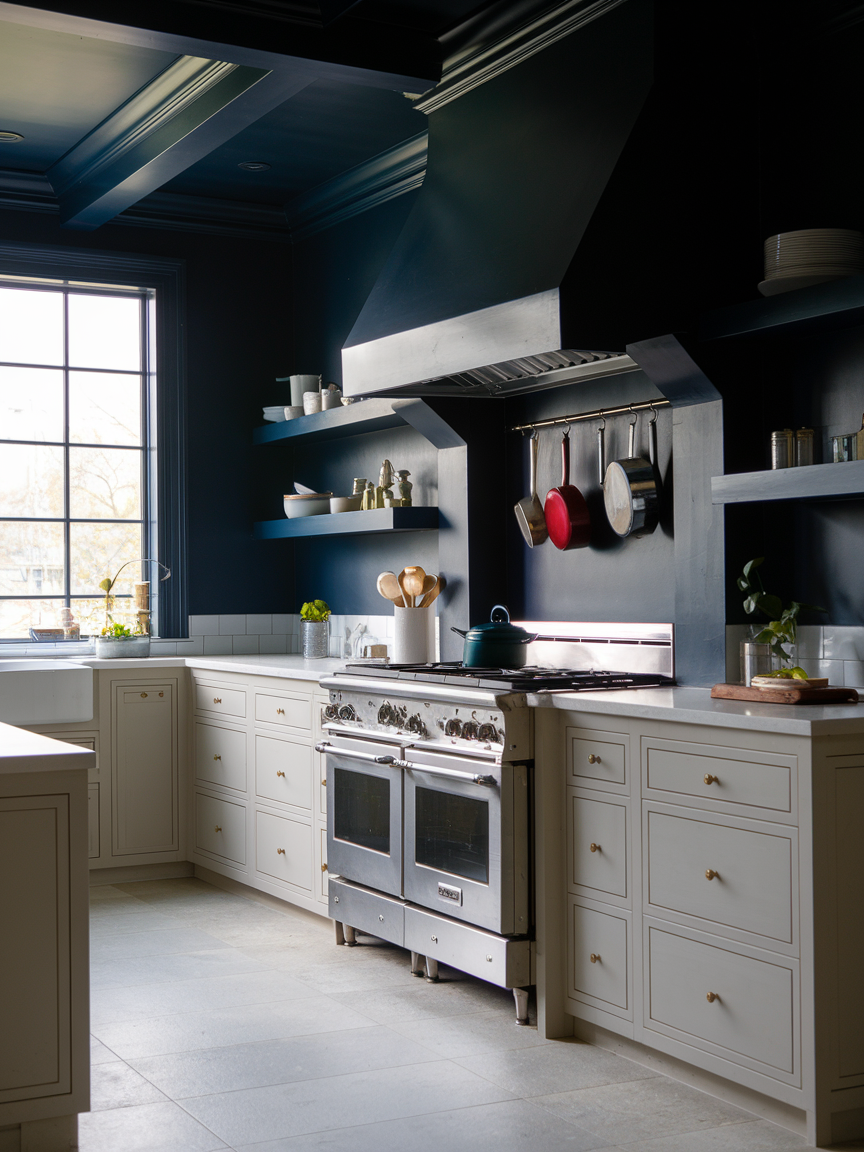
A deep charcoal, navy, or forest green accent wall can add dramatic contrast while remaining simple in execution. Dark tones create depth and sophistication, especially in kitchens dominated by white or light cabinetry. The richness of the color provides a bold yet elegant backdrop for floating shelves or framed art. Matte finishes soften the intensity and prevent glare from kitchen lighting. When styled minimally, a dark accent wall feels intentional and refined rather than heavy. This approach is particularly effective in larger kitchens with ample natural light, as the darker shade enhances visual balance and creates a cozy yet modern atmosphere.
15. Textured Plaster Finish
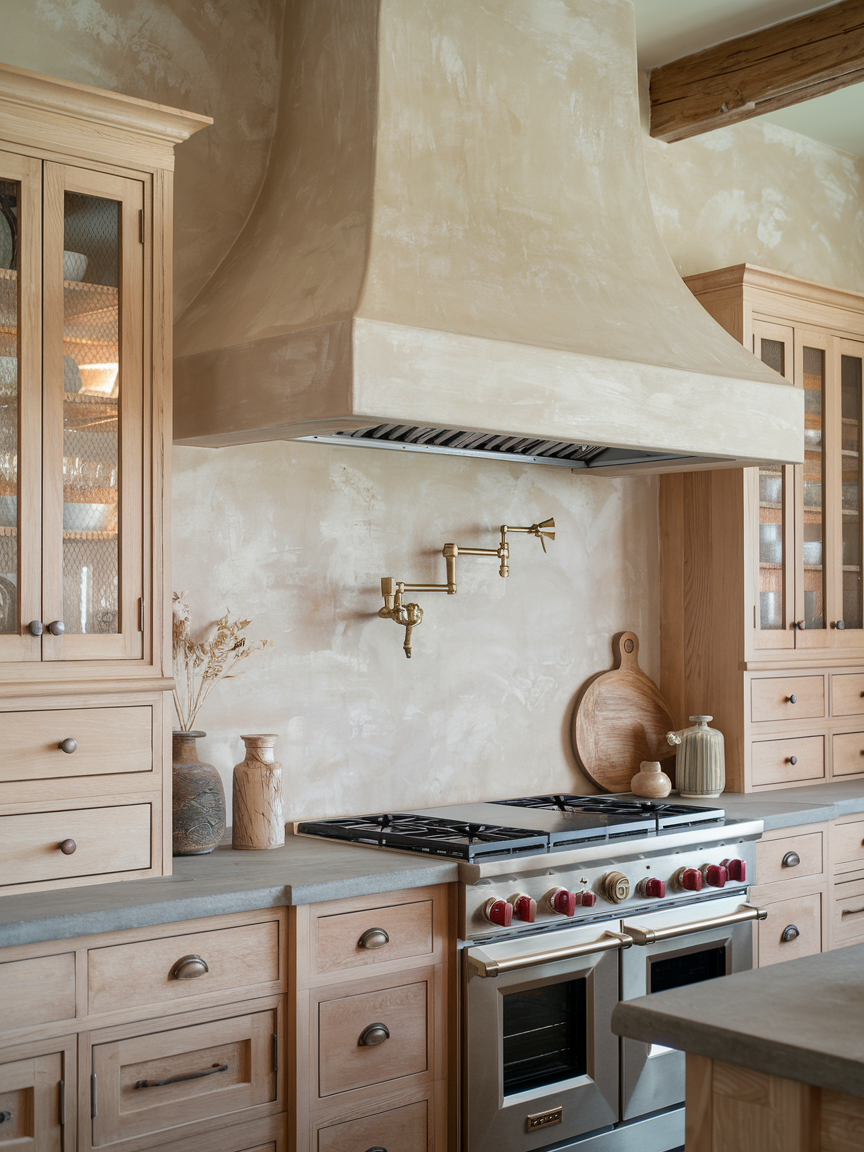
A textured plaster accent wall introduces subtle movement and dimension while maintaining a neutral color palette. Limewash or Venetian plaster finishes create soft tonal variations that feel organic and sophisticated. The delicate texture catches light differently throughout the day, giving the wall a dynamic yet understated appearance. This style pairs beautifully with natural wood cabinets, brass hardware, and stone countertops. Because the texture itself serves as the feature, additional decor can remain minimal. The result is a kitchen that feels layered and elegant without relying on bold color or busy patterns.
16. Open Brick Painted White
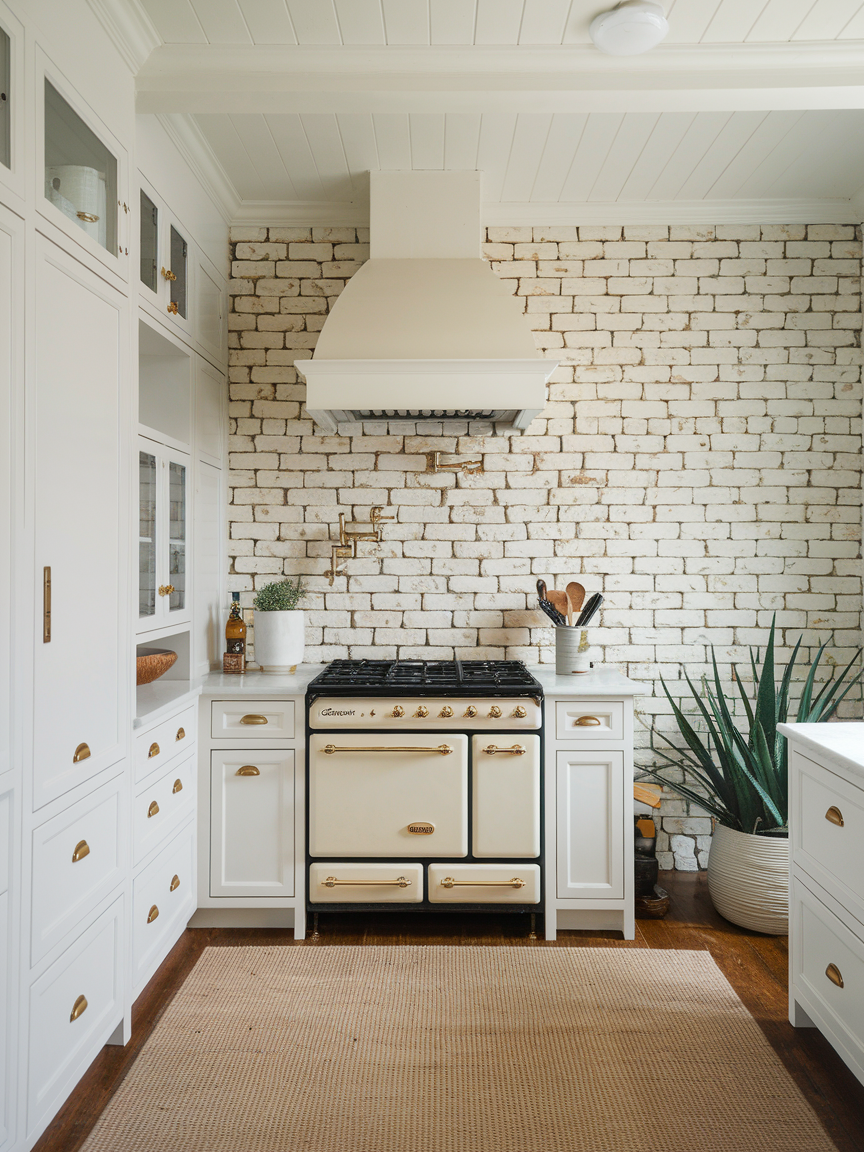
Painting an exposed brick wall white simplifies its appearance while preserving texture and character. The white finish brightens the space and blends seamlessly with modern cabinetry, creating a balanced look between rustic and contemporary. The brick’s natural unevenness adds depth without introducing strong color contrast. This solution works well in loft-style kitchens or homes with architectural character. Sealing the brick ensures durability and easier maintenance. The combination of texture and a clean color palette keeps the accent wall simple, airy, and timeless.
17. Herringbone Tile Accent
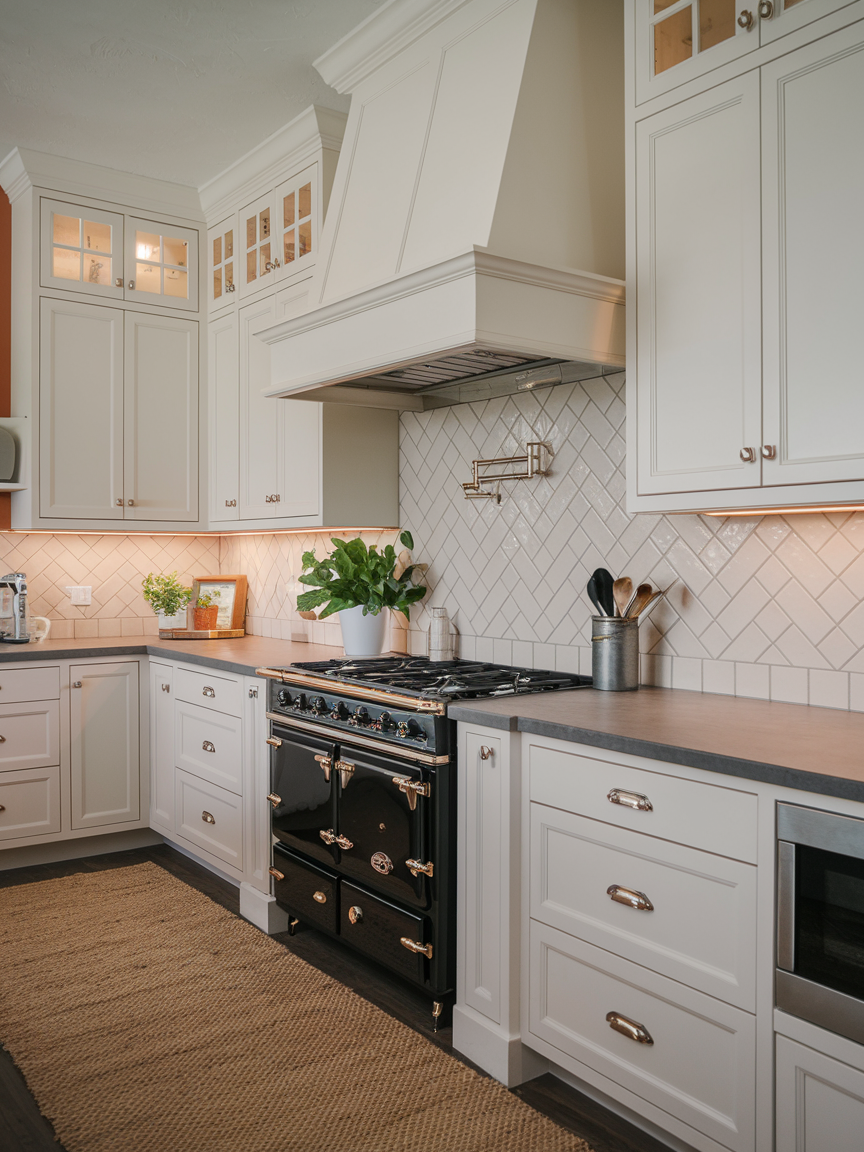
A herringbone tile arrangement adds a subtle pattern while keeping materials classic and understated. Using simple rectangular tiles in white, cream, or soft gray maintains a refined appearance. The diagonal layout introduces visual interest without overwhelming the space. This design works beautifully behind a stove or sink area where a backsplash naturally belongs. The pattern elevates the wall without requiring bold colors. Combined with streamlined cabinetry and minimal decor, a herringbone accent wall feels polished and intentional.
18. Wood Panel Half Wall
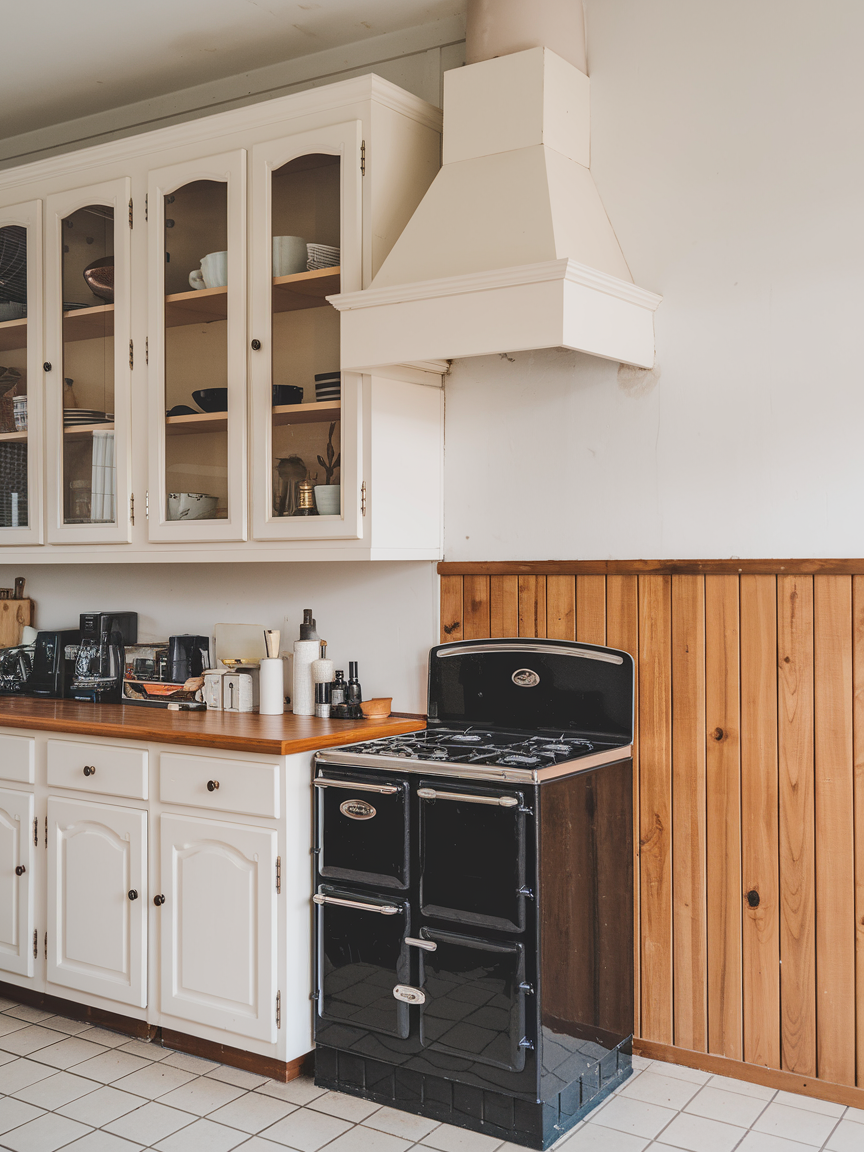
Installing wood panels on the lower half of a wall creates architectural interest while keeping the upper portion simple and light. This approach adds warmth and structure without covering the entire wall surface. Painted panels in white or soft neutral tones maintain a cohesive look, while natural wood introduces organic texture. The half-wall treatment defines dining areas within open kitchens. This balanced design feels clean and elegant while adding subtle character.
19. Stone Veneer Accent
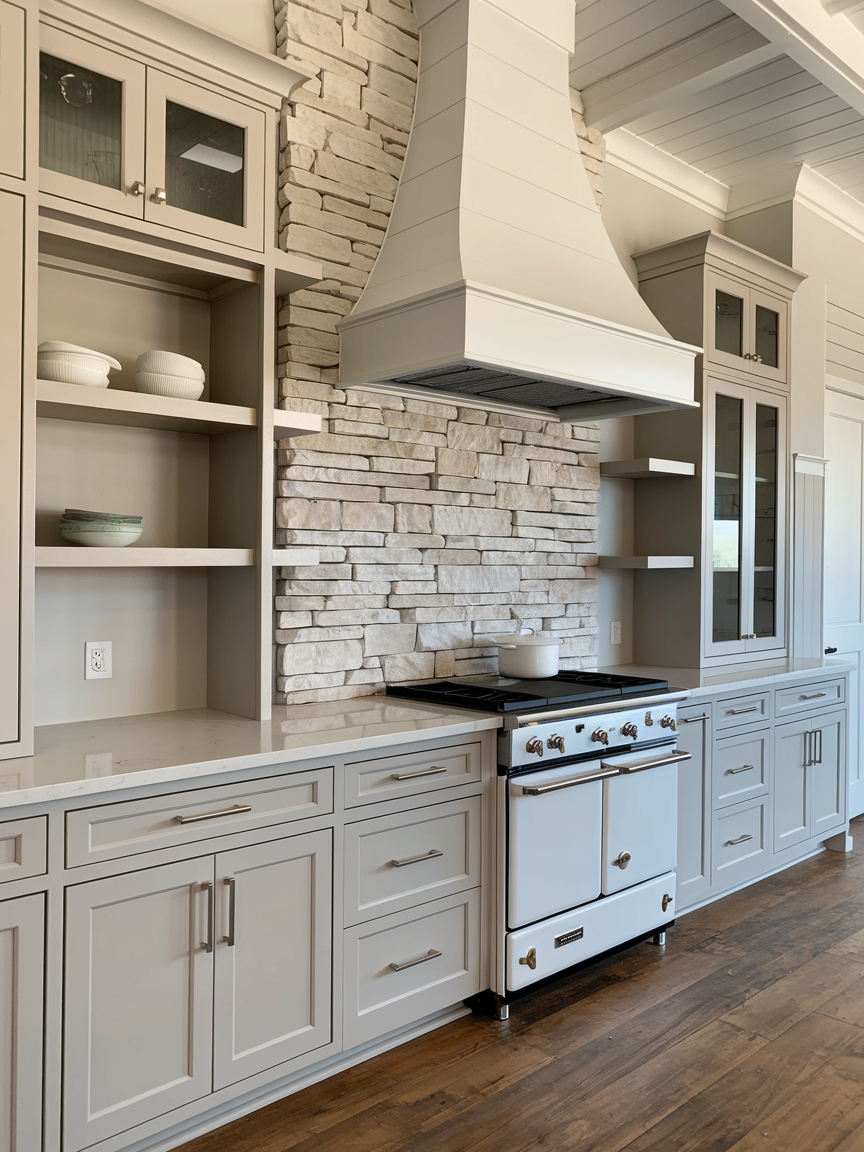
Stone veneer offers the look of natural stone with easier installation and lighter weight. Soft gray or beige tones maintain a simple and cohesive aesthetic. The texture adds depth without a bold pattern. Installed behind a dining nook or kitchen island, it creates a grounded focal point. Proper sealing ensures durability and easy cleaning. This idea enhances warmth and character while remaining refined.
20. Minimal Gallery Wall
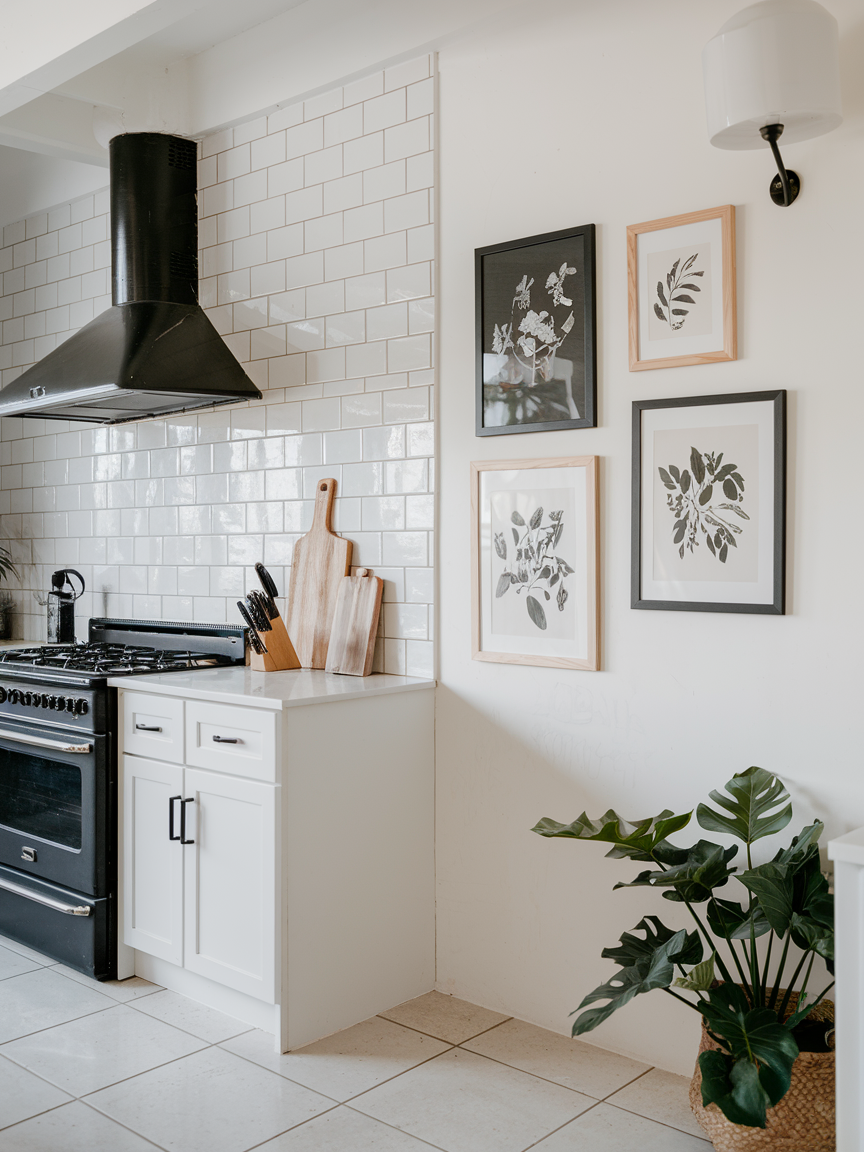
A curated gallery wall with simple black or wood frames can serve as an understated accent. Choose cohesive artwork such as botanical prints or food-inspired illustrations. Keeping spacing consistent ensures the display feels organized rather than cluttered. This approach personalizes the kitchen without altering structure or materials.
21. Mirror Accent Wall
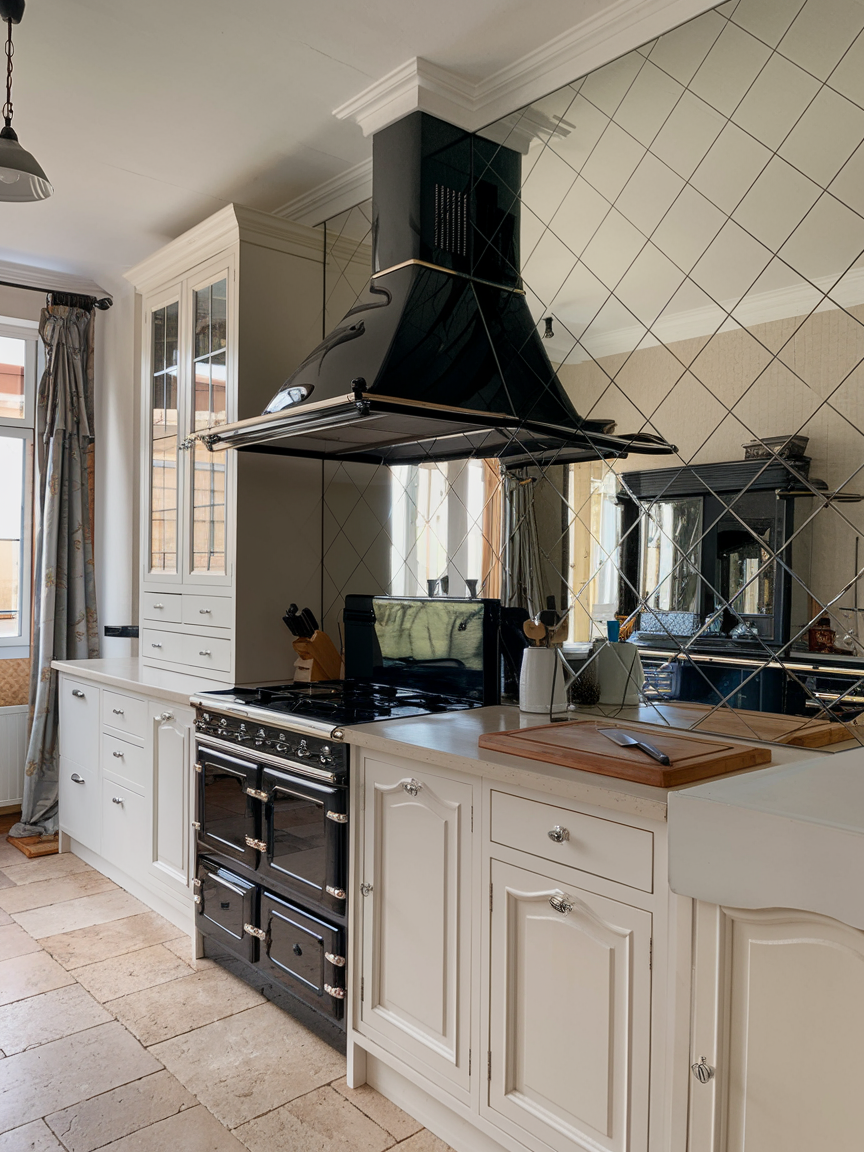
A mirror accent wall is a simple way to make a kitchen feel brighter and more spacious without adding bold colors or heavy materials. Large mirror panels or a single oversized framed mirror can reflect natural light, helping small or narrow kitchens feel more open. This works especially well when placed across from a window or light fixture, allowing brightness to bounce throughout the room. Choosing slim black, brass, or frameless edges keeps the look modern and cohesive with existing finishes. To avoid visual clutter, keep surrounding decor minimal and clean. The reflective surface adds depth by subtly mirroring cabinetry and textures, creating a layered effect. With thoughtful placement and styling, a mirror accent wall becomes both practical and decorative, enhancing elegance while maintaining a simple and refined kitchen design.
22. Vertical Tile Stack
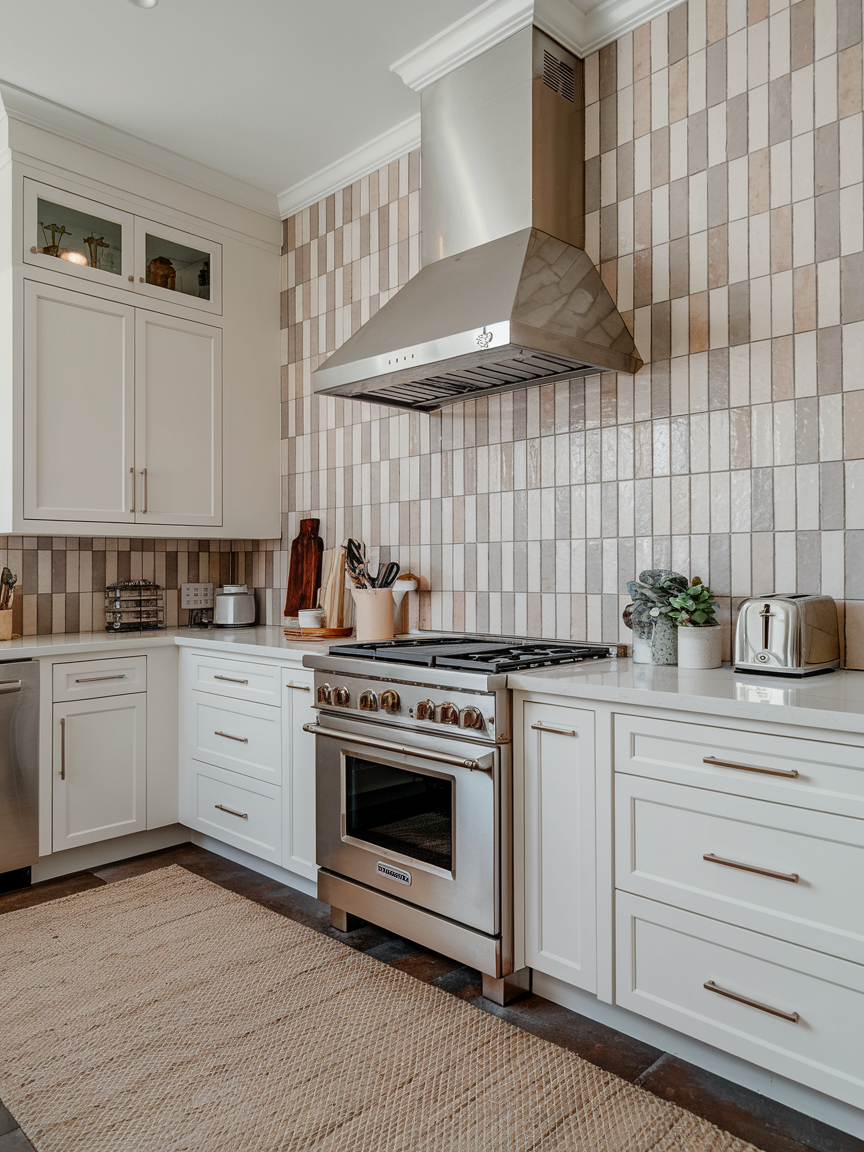
A vertical tile stack accent wall refreshes classic tile design while keeping the overall kitchen look clean and simple. By arranging rectangular tiles vertically instead of horizontally, the design draws the eye upward and makes ceilings appear taller. Neutral tones such as white, soft gray, beige, or muted green help maintain a calm and cohesive atmosphere. Clean grout lines provide structure without introducing busy patterns, allowing the layout itself to become the feature. This style works beautifully behind a stove or sink where a backsplash naturally extends into a focal point. When paired with streamlined cabinetry and uncluttered countertops, vertical tiles add subtle architectural interest. The result is a modern yet timeless accent wall that enhances depth and dimension without overwhelming the kitchen’s overall design.
23. Beadboard Accent Wall
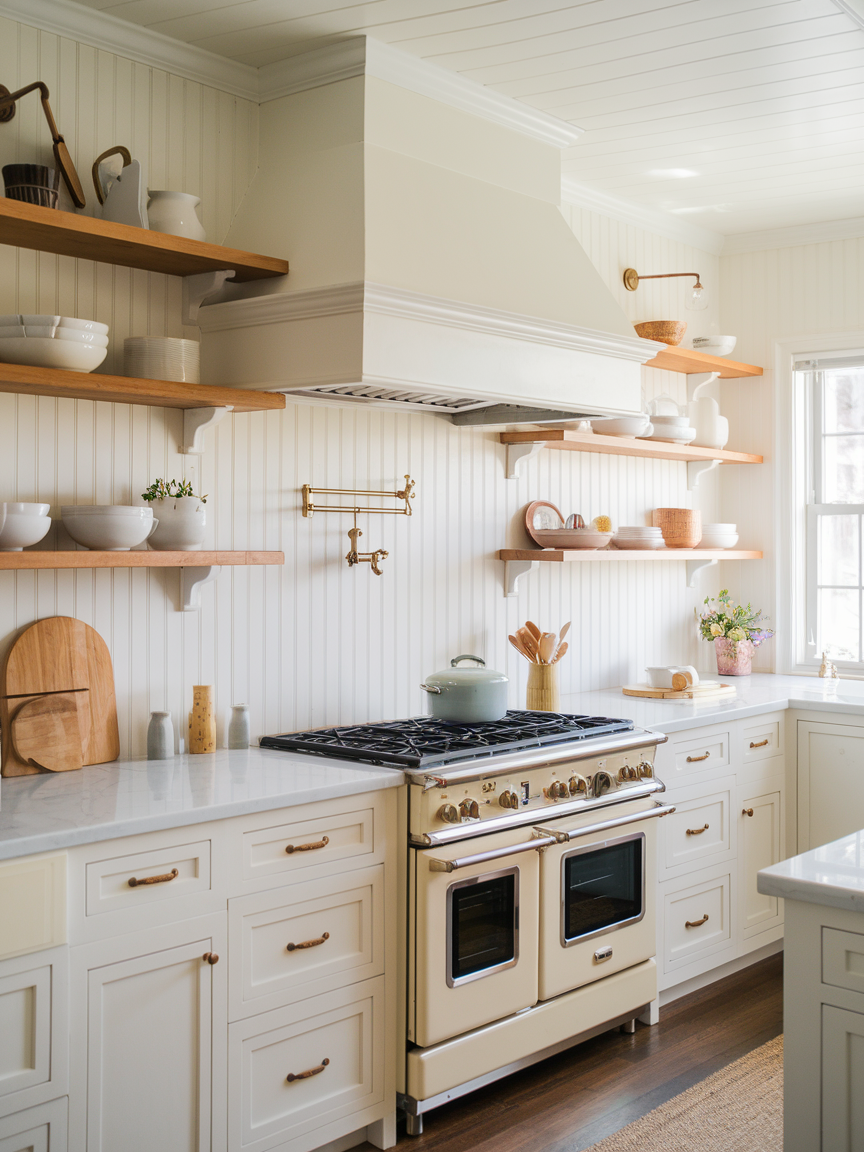
A beadboard accent wall adds gentle texture and classic charm while keeping the kitchen bright and simple. Its narrow vertical grooves create subtle depth that enhances flat walls without feeling busy. Painted in white, ivory, or soft gray, beadboard maintains an airy look that complements both traditional and modern kitchens. Installing it behind a breakfast nook or dining area adds architectural detail without introducing bold color. The vertical lines also help smaller kitchens feel slightly taller. When styled with warm wood accents and minimal decor, beadboard creates a cozy yet refined atmosphere. Proper sealing ensures durability in humid kitchen conditions, making it both functional and decorative. This simple wall treatment proves that understated texture can bring warmth and personality to a space without complicating the overall design.
24. Matte Black Feature Wall
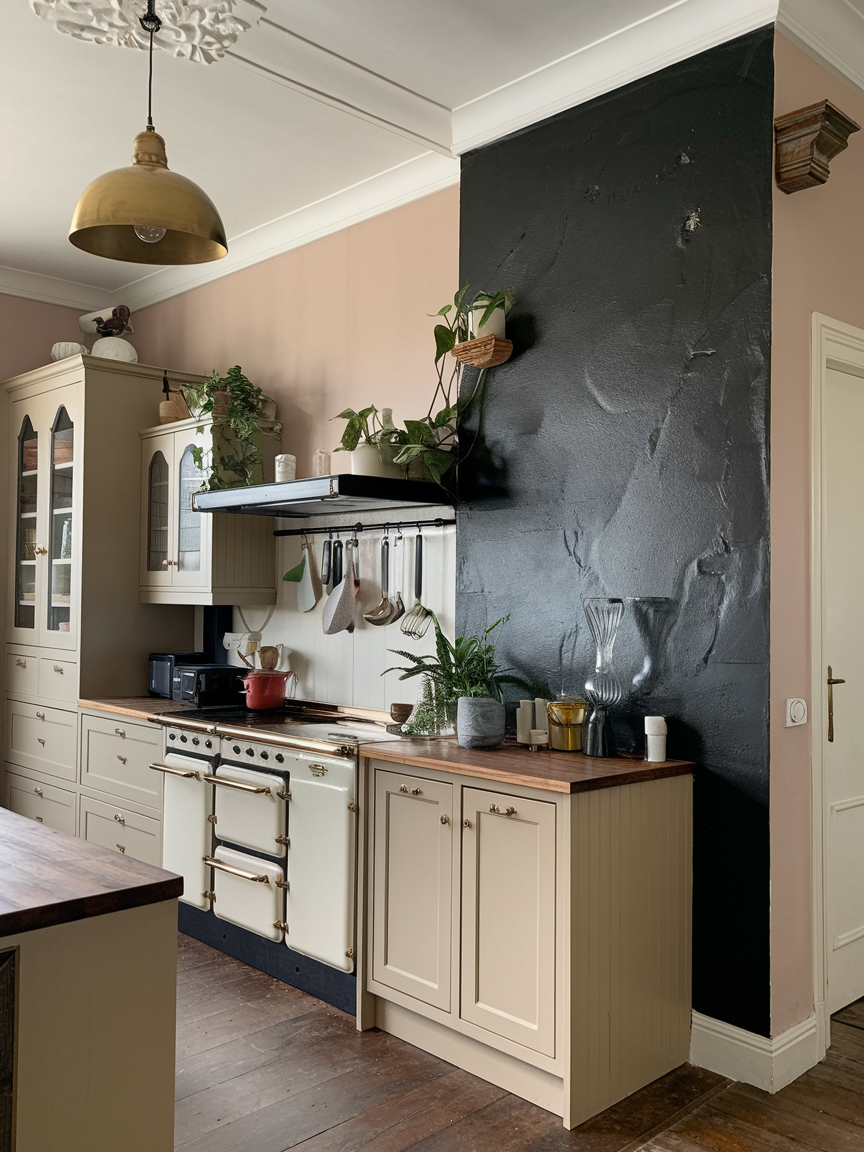
A matte black feature wall introduces bold contrast while remaining simple through the use of a single, solid color. In kitchens with white or light cabinetry, black adds depth and sophistication without requiring complex materials. The matte finish softens the intensity, creating a modern and elegant backdrop rather than a harsh look. This accent wall works especially well behind open shelving, allowing light-colored dishes and decor to stand out beautifully. Adequate lighting keeps the space balanced and prevents it from feeling too dark. Pairing black with brass fixtures, natural wood, or marble surfaces enhances warmth and cohesion. By keeping accessories minimal, the wall becomes a strong yet refined focal point that elevates the kitchen’s overall aesthetic.
25. Soft Pastel Accent Wall
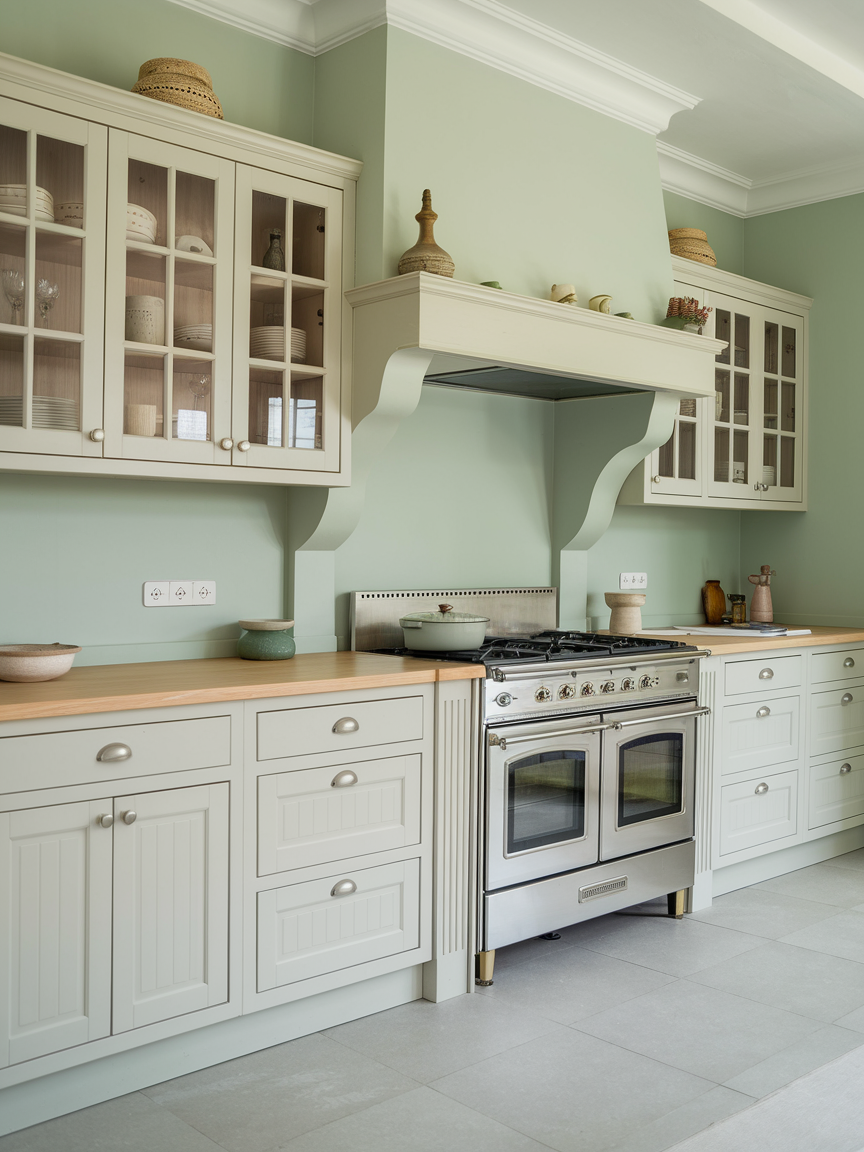
A soft pastel accent wall introduces gentle color while preserving a calm and airy kitchen atmosphere. Shades like blush, pale blue, or light sage provide subtle contrast against white or light wood cabinetry. Unlike bold hues, pastels reflect light softly, helping the space feel open and welcoming. Matte finishes enhance the smooth appearance and prevent glare from overhead lighting. To maintain cohesion, small decor elements such as ceramics or textiles can echo the chosen shade. This approach adds personality without overwhelming countertops or cabinetry. The result is a fresh and inviting kitchen that feels thoughtfully styled, proving that even delicate color choices can create noticeable visual impact while keeping the design simple and elegant.
* Inspired by these 25 creative kitchen accent wall ideas? Take the next step by choosing a design that fits your space and personality. A carefully planned accent wall can instantly add dimension and charm, leaving you with a kitchen that feels both inviting and visually impactful.