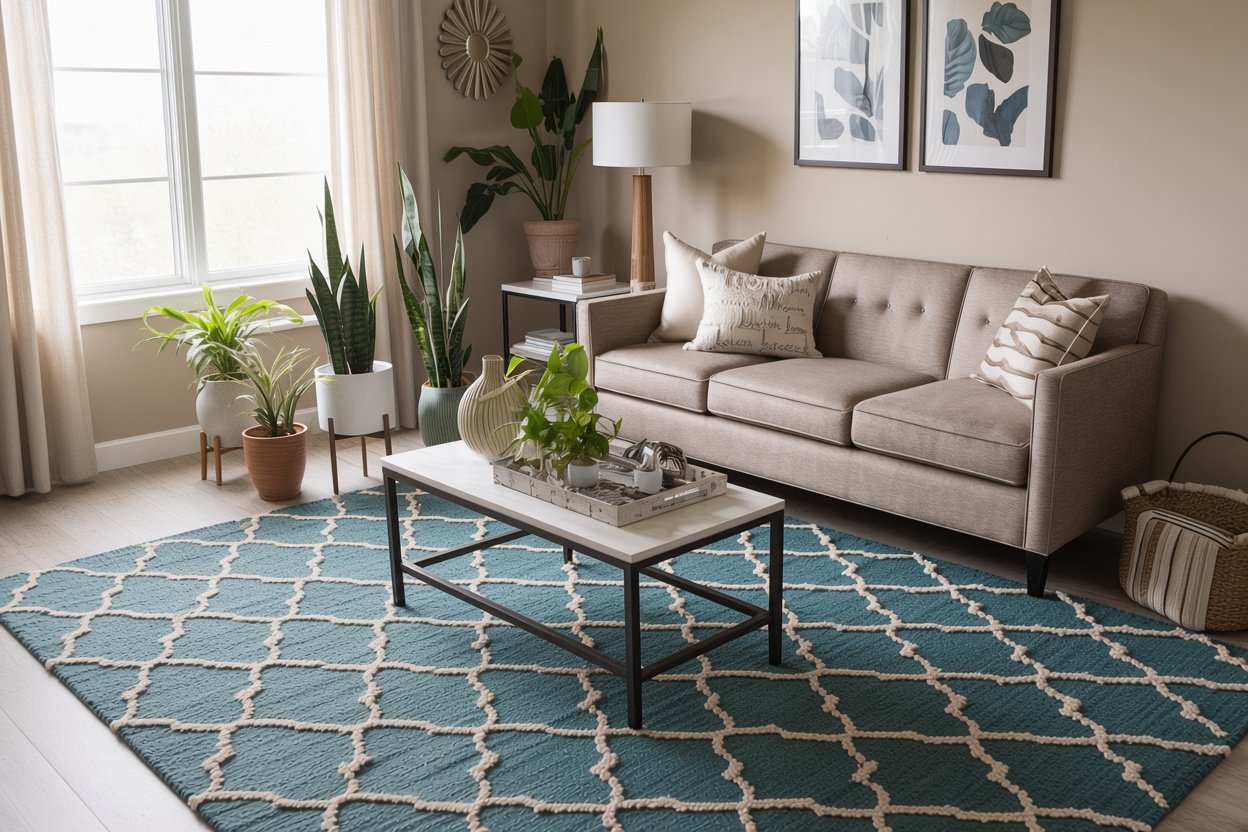
A cozy living room rug can make a remarkable difference in how a space looks and feels. Beyond adding softness underfoot, a well-chosen rug brings warmth, texture, and visual interest while helping tie the furniture and decor together. Plush wool rugs, natural jute designs, vintage-inspired patterns, and soft neutral styles can each create a welcoming atmosphere that makes the living room feel more comfortable and inviting.
Choosing the right rug involves considering the room’s size, color palette, furniture arrangement, and overall decorating style. Warm earthy tones, layered textures, subtle patterns, and rich colors can add depth and personality without overwhelming the space. A properly sized rug can also help define the seating area, anchor the sofa and coffee table, and create a more cohesive look. Pairing the rug with cozy throws, decorative cushions, natural wood, and soft lighting can make the entire room feel even more relaxing.
This collection of cozy living room rug ideas explores beautiful ways to create a warm and welcoming home. Let’s explore these inviting spaces and discover how the right rug can transform your living room into a comfortable, stylish, and beautifully coordinated retreat!
1. Rugs With Tassels or Fringe
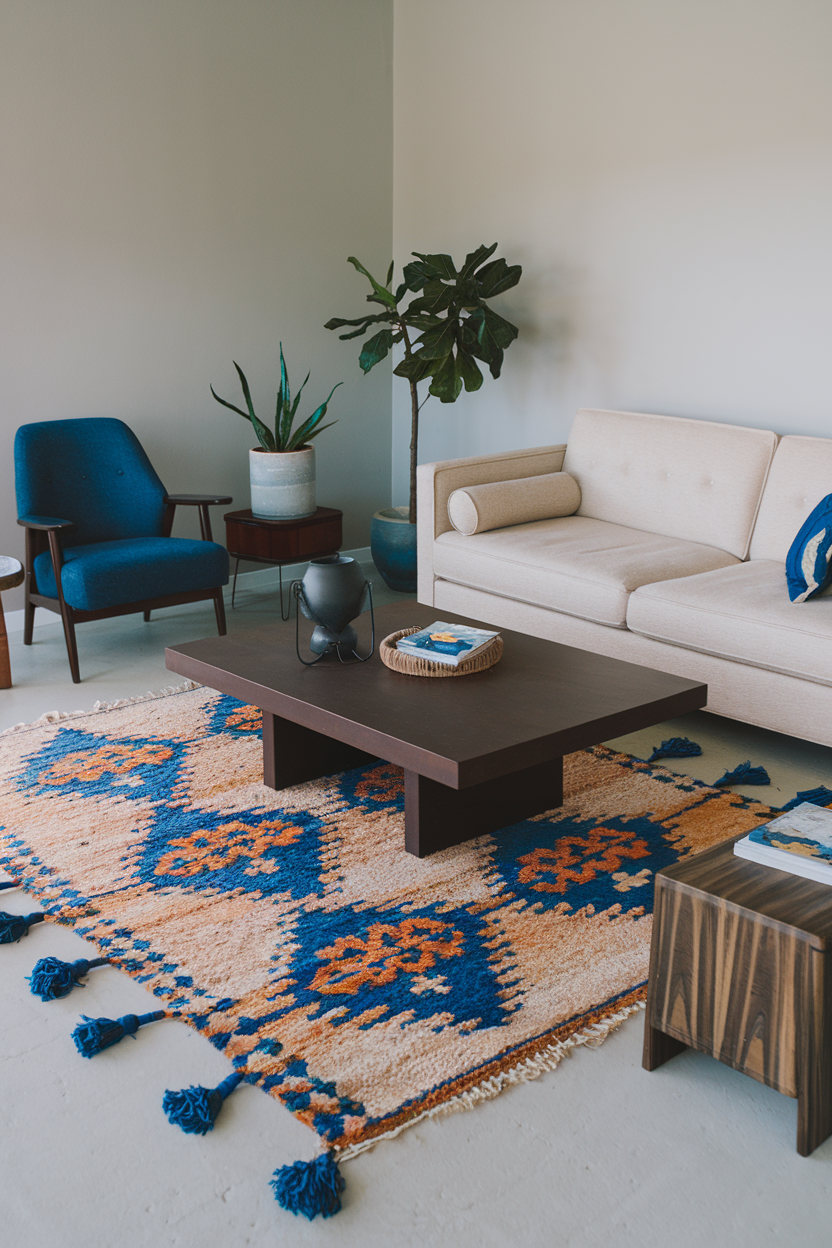
Rugs with tassels or fringe add a handcrafted detail that gives your living room a relaxed and decorative finish. The small fabric accents along the edges create movement and texture, making these rugs especially suitable for bohemian, coastal, rustic, and eclectic interiors. Fringe can also soften the appearance of a rectangular rug by introducing a looser, more organic outline. Choose a neutral woven design for an understated look or a colorful patterned rug if you want the edges to complement a more expressive centerpiece. These details pair beautifully with linen sofas, woven baskets, natural wood, and textured cushions. When choosing a fringed rug for a busy living room, consider how easily the edges can be maintained and whether the fringe will interfere with nearby furniture or foot traffic.
2. Bold Floral Prints
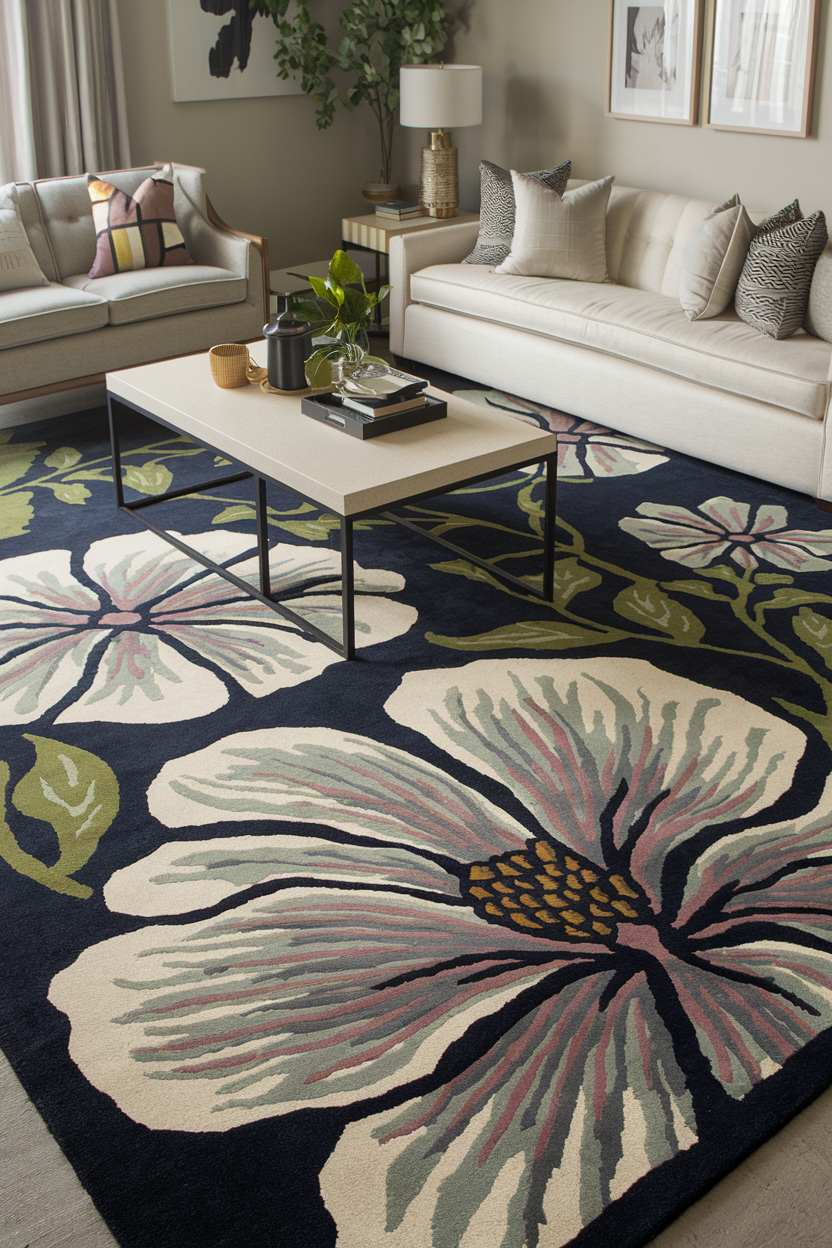
A floral rug with oversized blooms and expressive colors can transform an ordinary living room into a vibrant, garden-inspired retreat. Large petals, leafy branches, and painterly botanical patterns introduce organic shapes that soften the straight lines of furniture and architectural details. Depending on the color palette, a floral design can feel romantic, playful, sophisticated, or dramatically artistic. Saturated reds and pinks create a lively focal point, while softer botanical shades offer a more delicate appearance. Floral rugs work especially well with solid-colored sofas, simple curtains, and natural wood accents that allow the pattern to remain prominent. For a cohesive look, repeat one or two colors from the rug in your cushions, artwork, or decorative accessories.
3. Striped Rugs in Bright Tones
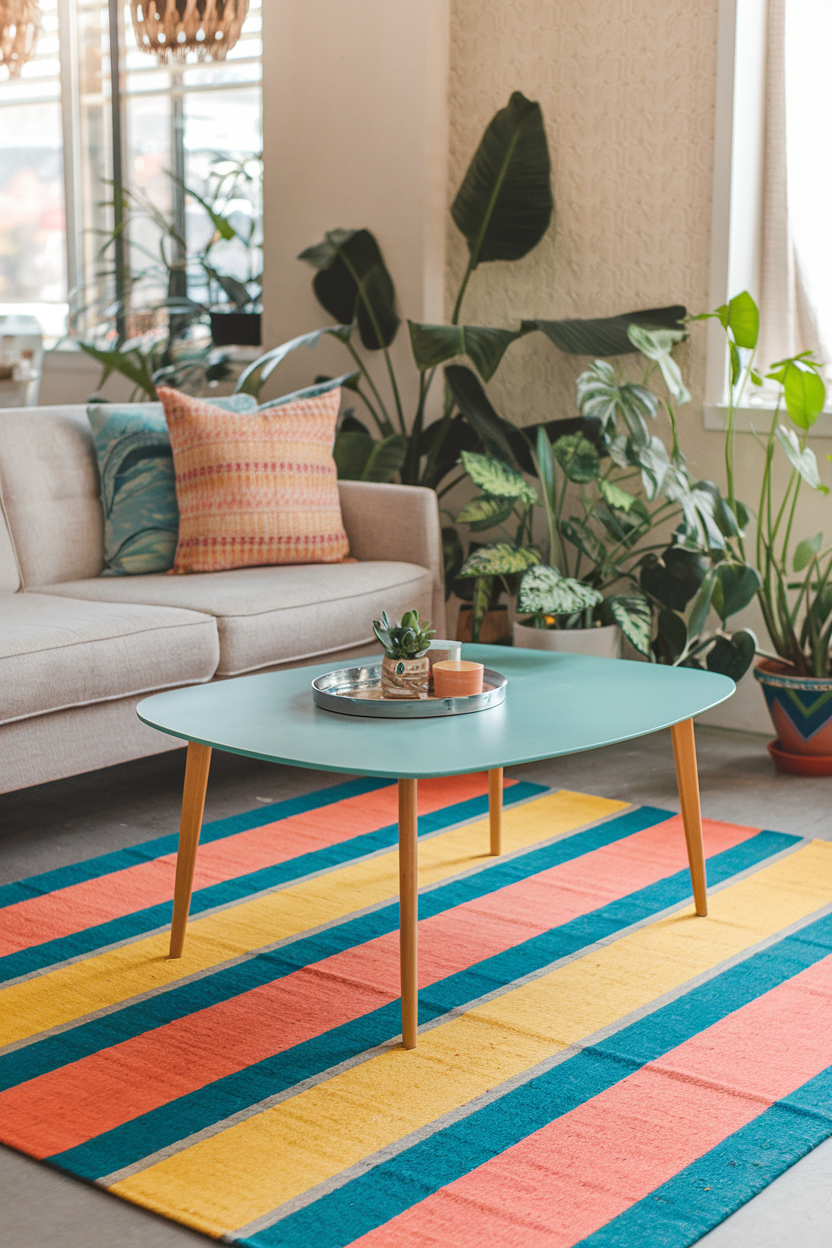
Brightly striped rugs add movement, cheerful color, and a sense of rhythm to your living room floor. Combinations of teal, sunny yellow, coral, green, and blue can make the space feel energetic without requiring a complete decor makeover. Stripes also influence how a room is perceived visually, with their direction helping emphasize the length or width of a space. A rug with narrow stripes creates a different effect from one featuring broad, dramatic bands, so choose a pattern that suits your furniture arrangement. These designs complement coastal interiors, casual family rooms, and contemporary spaces filled with natural light. Pair the rug with neutral upholstery to highlight its colors, or repeat selected shades through cushions and artwork for a coordinated finish.
4. Textured Wool Rug
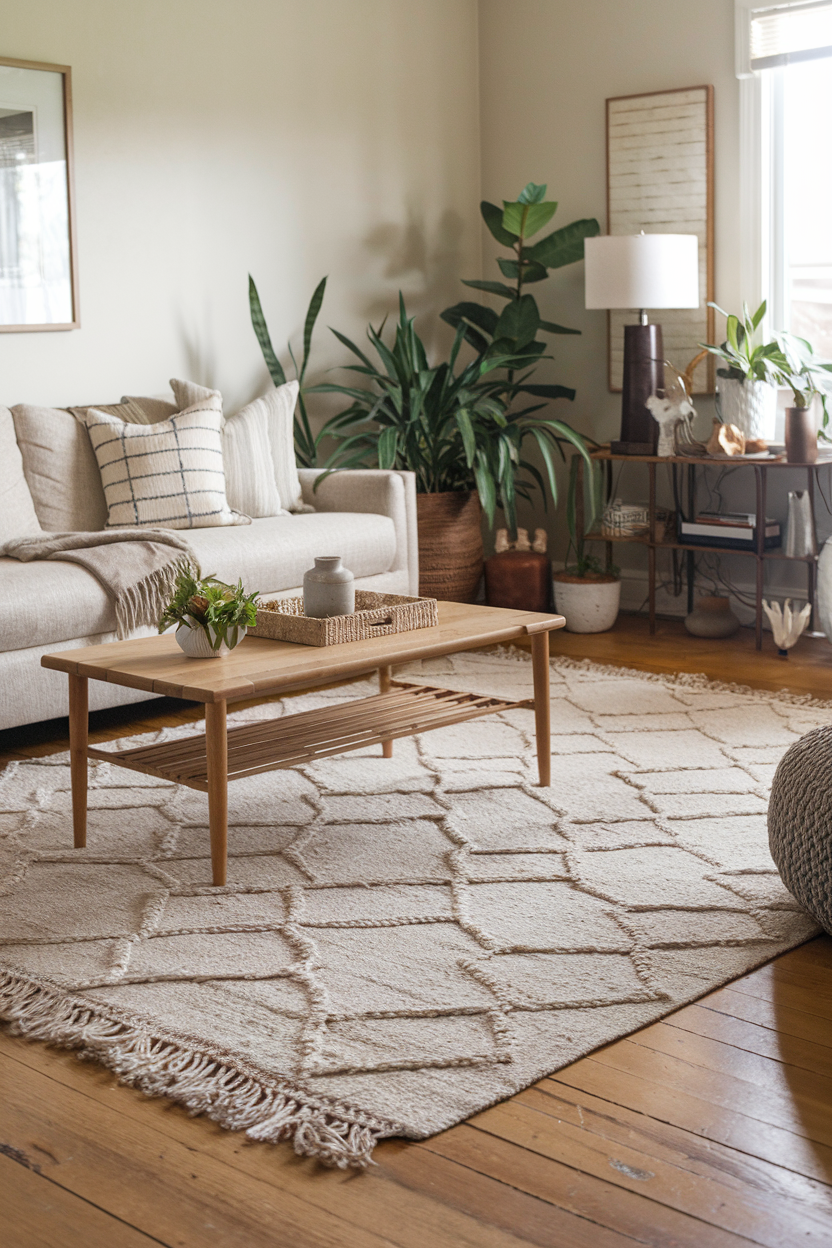
Textured wool rugs add warmth and dimension to a living room through their tactile surfaces and carefully crafted details. Instead of relying on bright colors or busy prints, these rugs use raised patterns, chunky loops, woven variations, or sculptural finishes to create visual interest. Cream, oatmeal, gray, and warm beige are particularly versatile choices because they complement a wide range of furniture styles. Wool also provides a naturally comfortable surface underfoot, making it an appealing option for cozy seating areas and relaxing family spaces. Pair a textured wool rug with smooth leather upholstery, polished wood, or a glass coffee table to create an attractive contrast between materials. The combination feels understated yet luxurious, offering a refined way to make your living room more inviting.
5. Ombre Rug
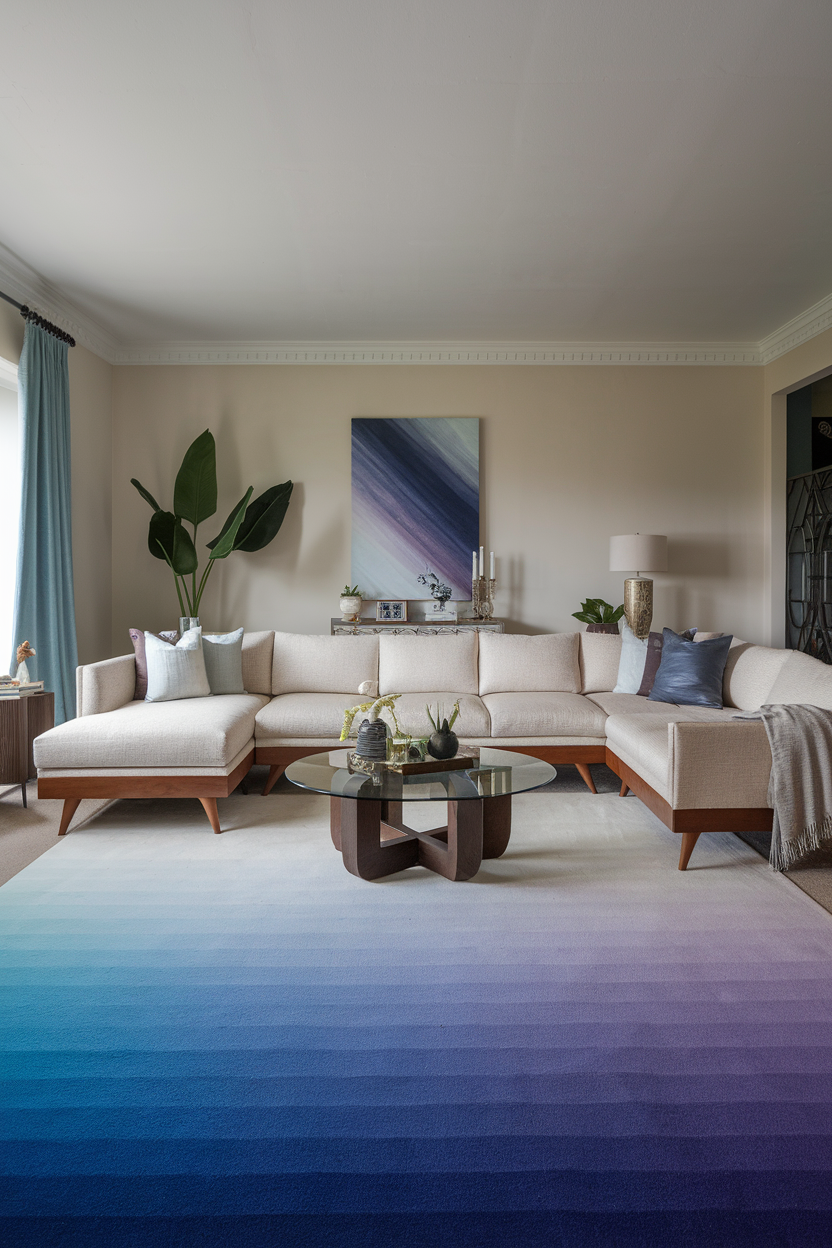
Ombre rugs create a graceful visual effect through gradual transitions between different shades of color. A design might fade from deep navy to pale blue, blend warm terracotta into cream, or move from soft gray to ivory. These gentle transitions add depth and movement without the strong contrast of traditional geometric patterns. Ombre rugs are particularly appealing in minimalist, contemporary, and coastal living rooms where a subtle decorative element can make the space feel more complete. Their blended colors also provide an easy way to connect different furnishings, especially when the room includes several shades of the same color family. Pair an ombre rug with simple upholstery and understated accessories to preserve its soft, sophisticated appearance.
6. Distressed Rug
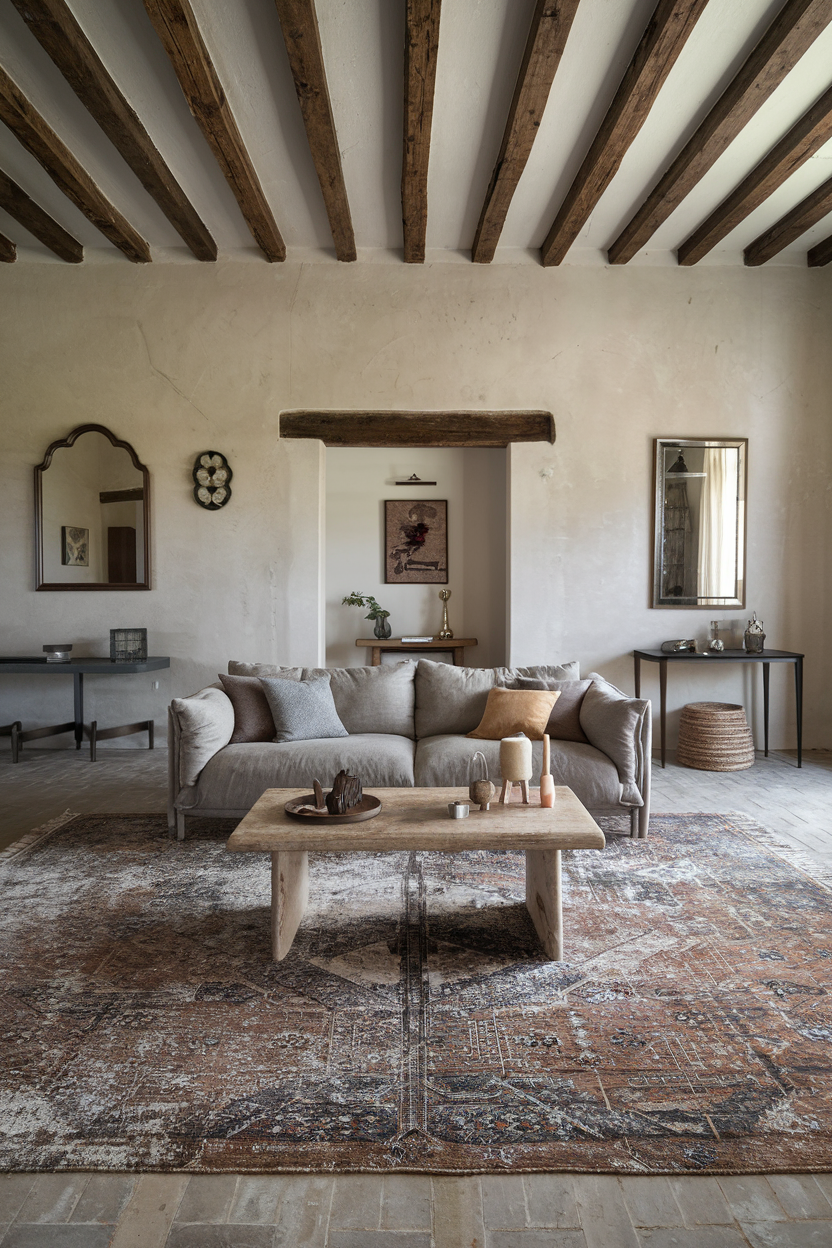
Distressed rugs bring an appealing sense of age and character to a living room through faded patterns, softened colors, and deliberately weathered finishes. Their worn-in appearance can make a newly furnished space feel more established, especially when paired with natural wood, vintage accessories, or textured upholstery. Popular color combinations include muted blue and beige, faded red and ivory, and soft gray with warm brown accents. These rugs work well in farmhouse, rustic, industrial, and eclectic interiors, where a little visual imperfection adds authenticity. They can also soften the appearance of sleek contemporary furniture by introducing a more relaxed decorative element. Choose a distressed pattern that complements your existing palette to create a balanced room with plenty of warmth and personality.
7. Circular Rug
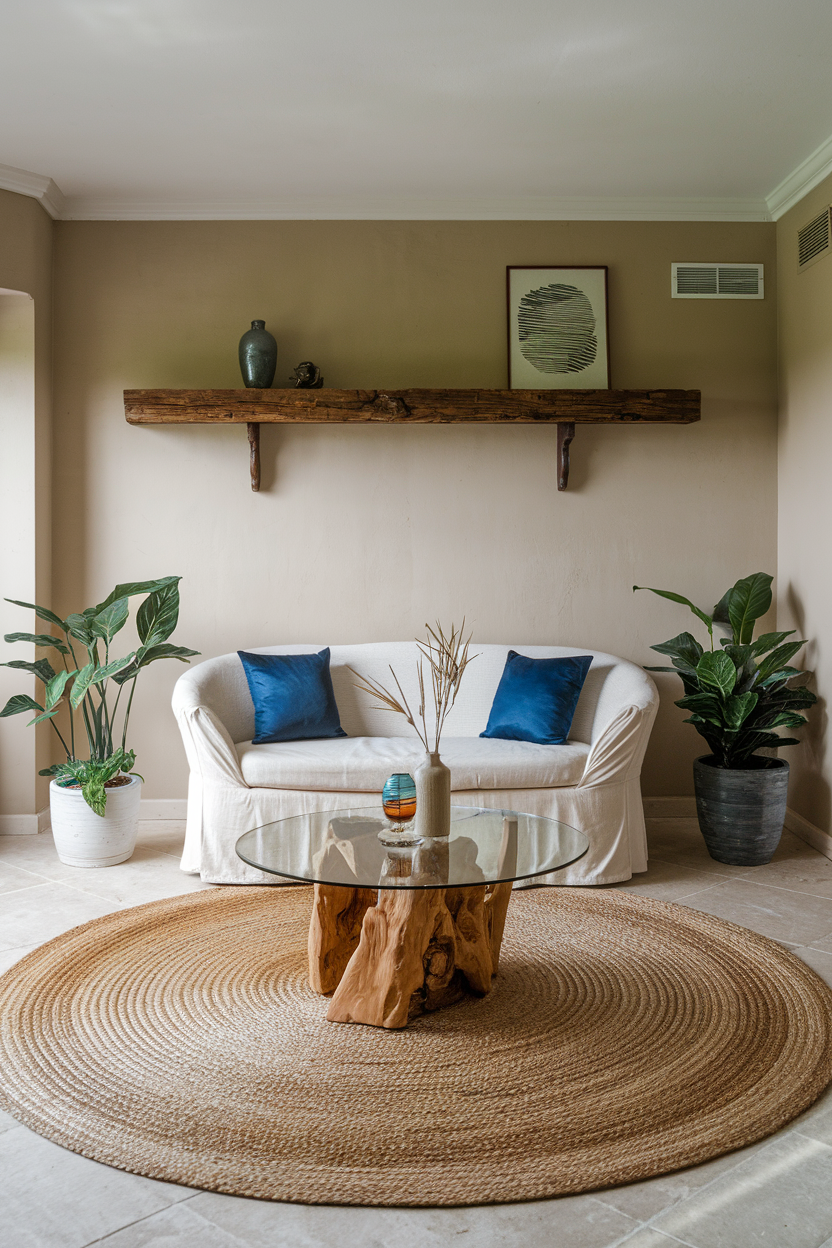
Circular rugs offer a refreshing alternative to conventional rectangular floor coverings, introducing softer lines and a more organic sense of movement. Their rounded shape works particularly well in compact seating areas, reading corners, and spaces featuring curved furniture. A round rug beneath a circular coffee table can create a harmonious arrangement, while one placed beneath a small accent chair helps establish a cozy spot for reading or relaxing. Circular designs can also soften a room filled with angular sofas, straight-edged cabinets, and rectangular architectural features. Choose a size that allows the main furniture pieces to relate comfortably to the rug rather than appearing disconnected from it. Whether you prefer a simple neutral design or a bold patterned version, a circular rug adds a distinctive finishing touch.
8. Abstract Watercolor Rug
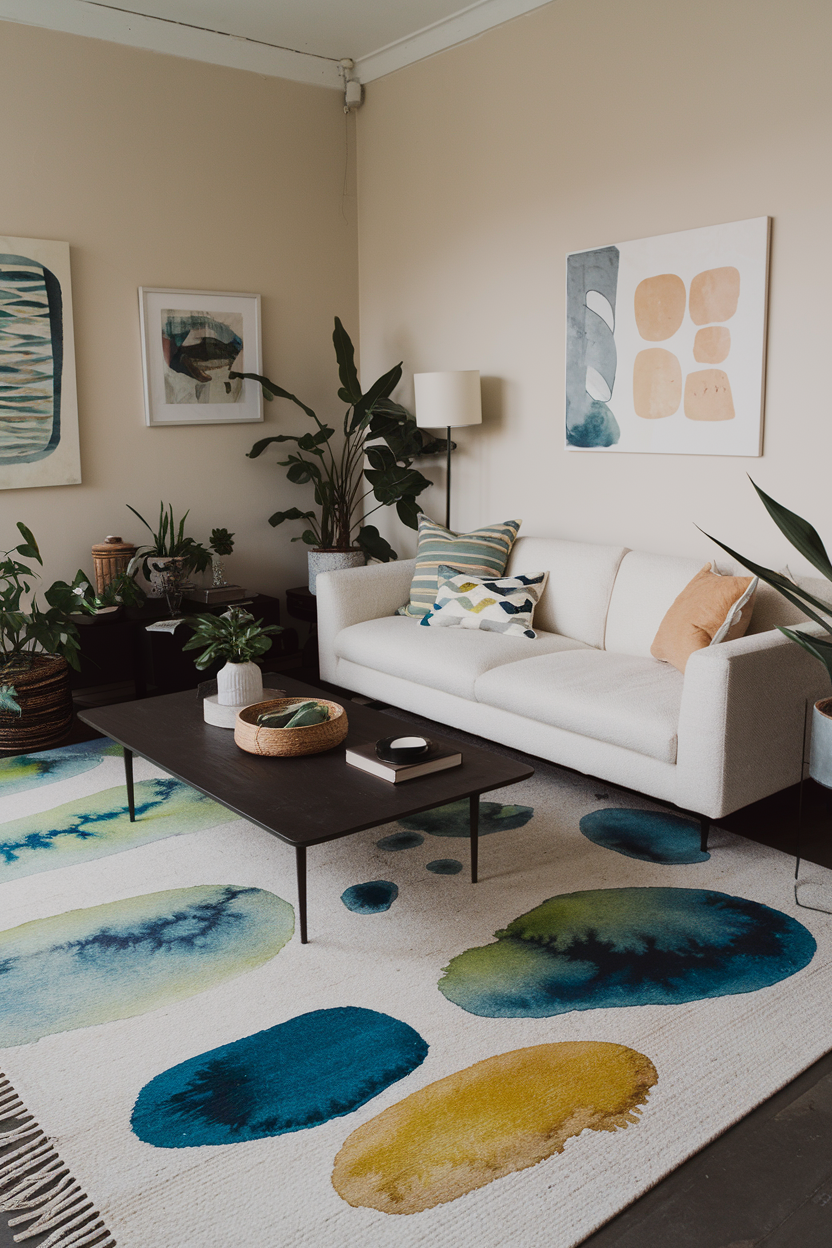
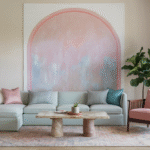
Abstract watercolor rugs bring the expressive quality of painted artwork to your living room floor. Their soft color transitions, blurred edges, and freeform patterns create a fluid appearance that feels artistic without relying on rigid geometric shapes. Designs may combine dusty pink with gray, blue with ivory, or several earthy tones that blend together like a watercolor painting. This style works beautifully in contemporary, transitional, and creative interiors where a distinctive rug can connect different colors and materials. Because watercolor patterns tend to have a softer visual structure, they pair well with both streamlined modern furniture and more traditional silhouettes. Treat the rug as a piece of functional art by keeping surrounding accessories relatively simple and allowing its colors to influence the rest of your decorating scheme.
9. Bold Geometric Patterns
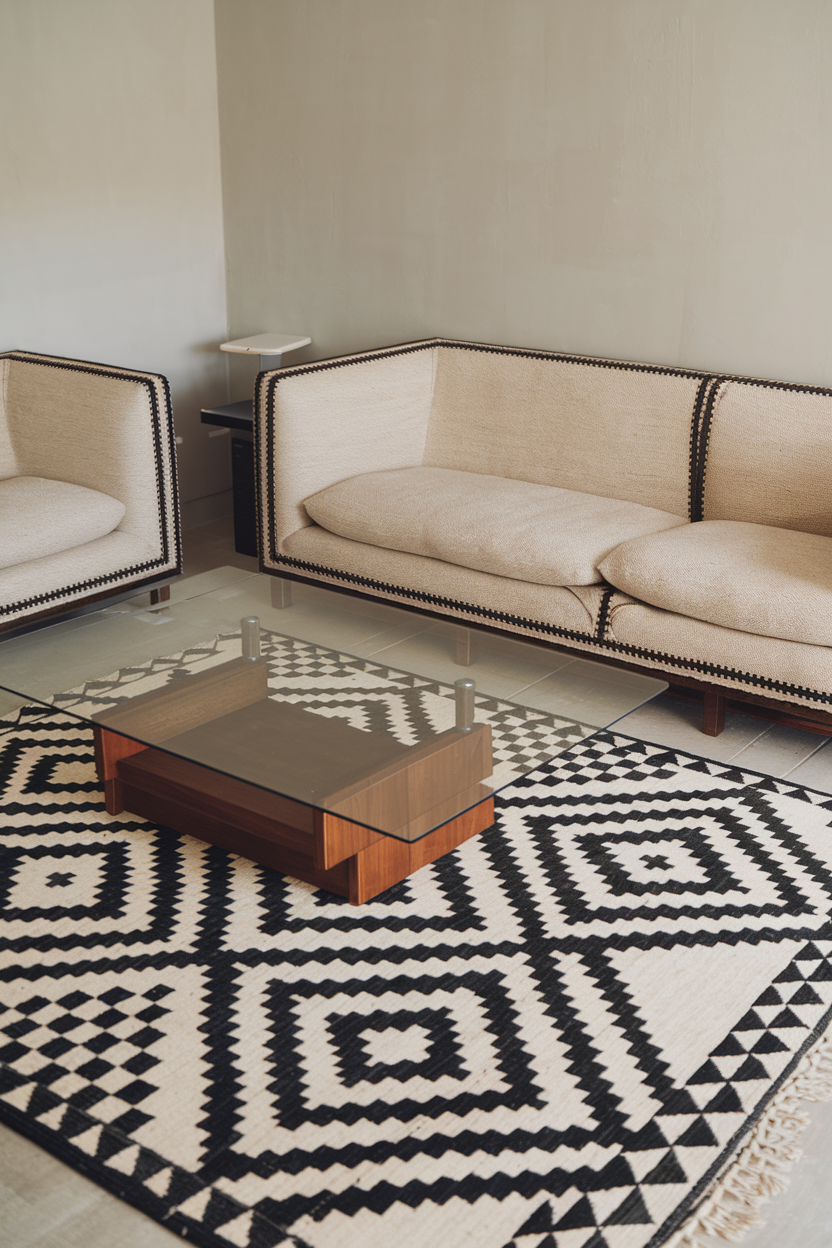
Geometric rugs introduce a contemporary edge through repeating diamonds, triangles, hexagons, abstract grids, and angular compositions. Their structured patterns create visual energy while giving the living room a sense of organization and definition. Choose contrasting shades for a dramatic statement or a more restrained combination of neutrals for a sophisticated modern look. Geometric rugs work particularly well beneath streamlined sofas, sculptural coffee tables, and furniture with clean architectural lines. They can also help define a seating area in an open-plan home by creating a clear visual boundary between the living room and adjacent spaces. To avoid overwhelming the design, balance the rug’s pattern with simpler upholstery and accessories that allow its shapes to remain the main attraction.
10. Overdyed Rug
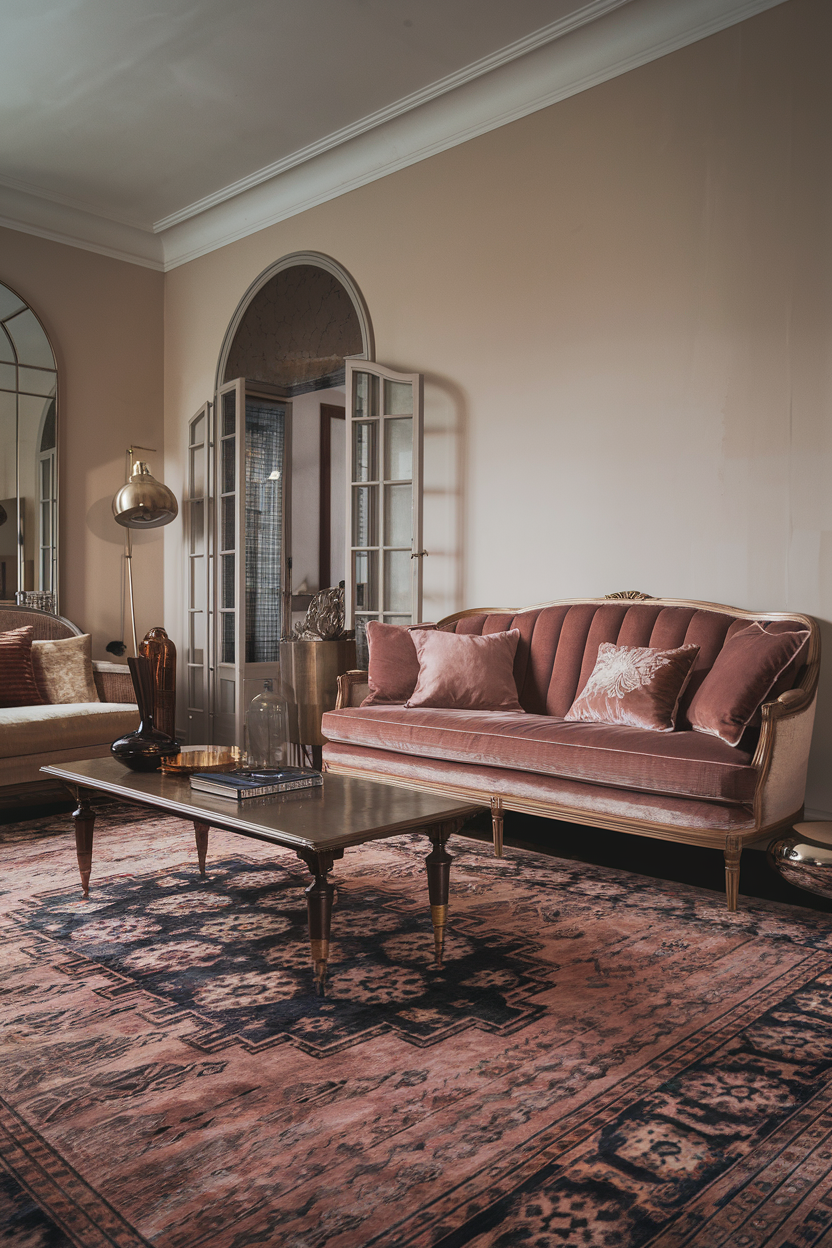
Overdyed rugs offer a bold interpretation of traditional rug designs by combining familiar patterns with rich, saturated colors. Shades such as emerald green, deep magenta, sapphire blue, and vibrant turquoise create a dramatic foundation that immediately attracts attention. The underlying motifs often remain faintly visible beneath the intense color, giving the rug a distinctive appearance that blends old-world character with contemporary style. These designs look particularly striking in rooms featuring velvet sofas, metallic accessories, dark wood furniture, or modern lighting. In a neutral living room, an overdyed rug can supply nearly all the color needed to make the space feel complete. Choose complementary accents rather than competing patterns to preserve its luxurious and expressive character.
11. Colorful Boho Rug
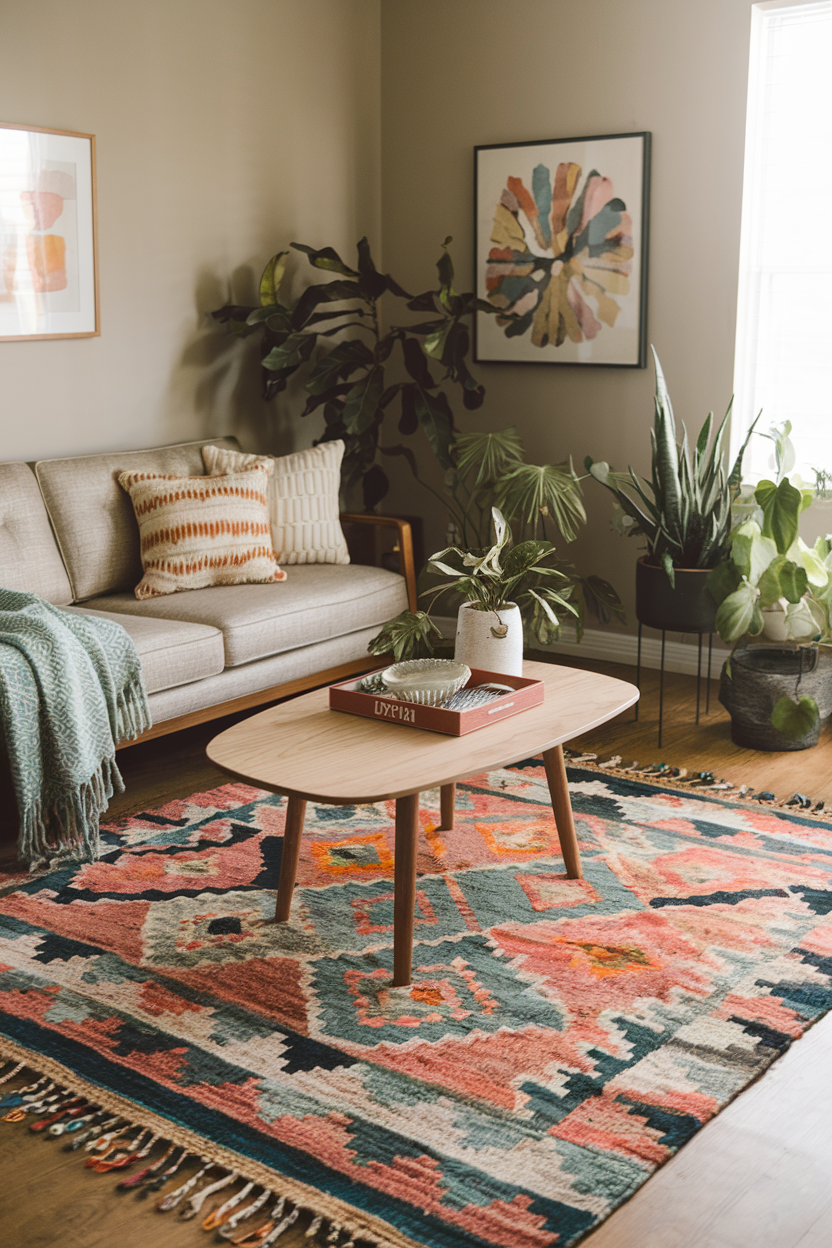
Colorful boho rugs bring instant personality to a living room through their intricate patterns, vibrant shades, and artistic combinations of geometric and tribal-inspired motifs. Blending warm terracotta, deep blue, mustard yellow, and earthy neutrals creates a relaxed atmosphere that feels inviting and full of character. These rugs look especially beautiful alongside natural materials such as rattan, jute, woven baskets, and macramé wall hangings. Even a simple living room with neutral sofas and understated furniture can feel more expressive with a richly patterned rug underfoot. Layering different textures and complementary colors helps create a collected, lived-in aesthetic that celebrates individuality without making the space feel overly coordinated.
12. High-Contrast Black and White Rug
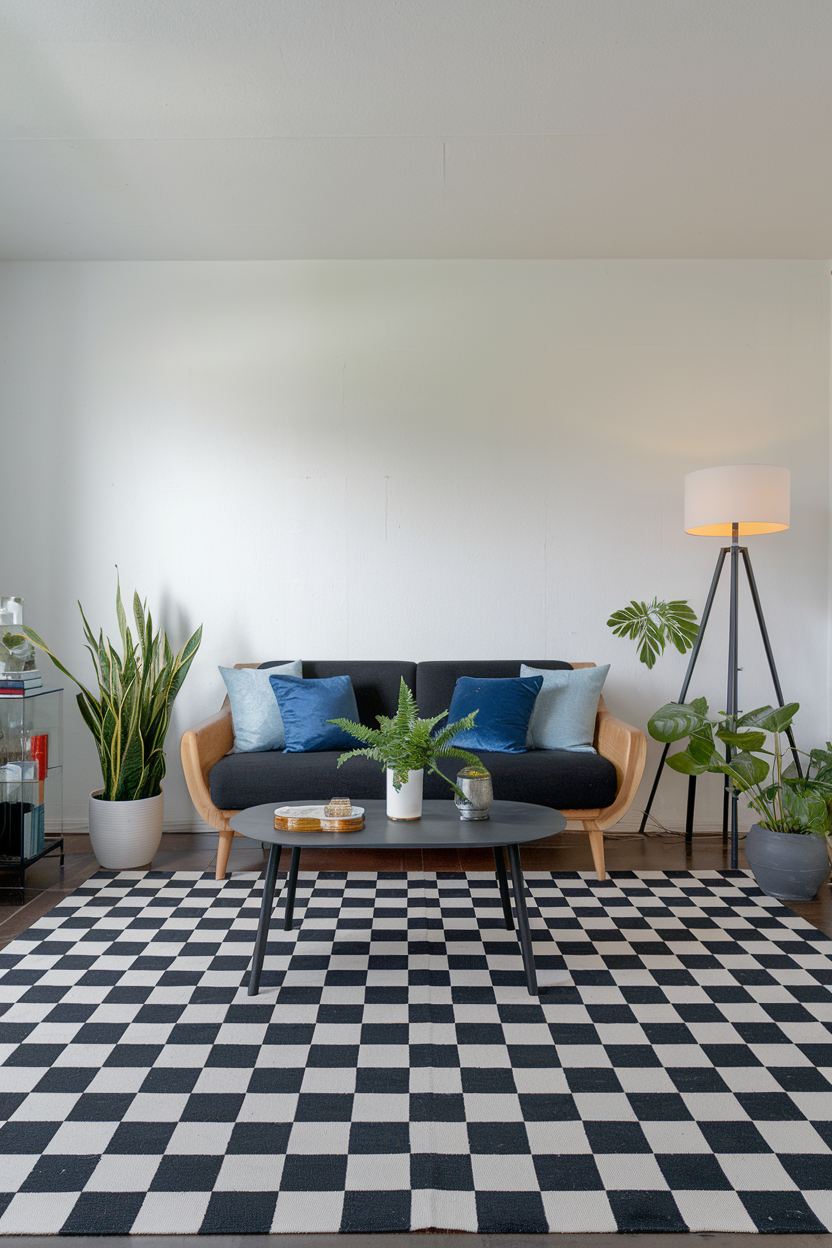
A black and white rug introduces striking contrast and contemporary sophistication to your living room. Whether you prefer bold stripes, oversized geometric shapes, or intricate monochrome patterns, this timeless color combination creates a strong visual foundation for the rest of your decor. The dark and light tones work beautifully against neutral upholstery, natural wood furniture, and minimalist accessories. In a predominantly white room, a graphic rug can become the defining feature that adds depth and personality. Alternatively, you can use it to balance colorful cushions, artwork, or accent chairs. Its versatile palette makes it suitable for modern, Scandinavian, industrial, and eclectic interiors that benefit from a little extra visual drama.
13. Muted Pastel Rug
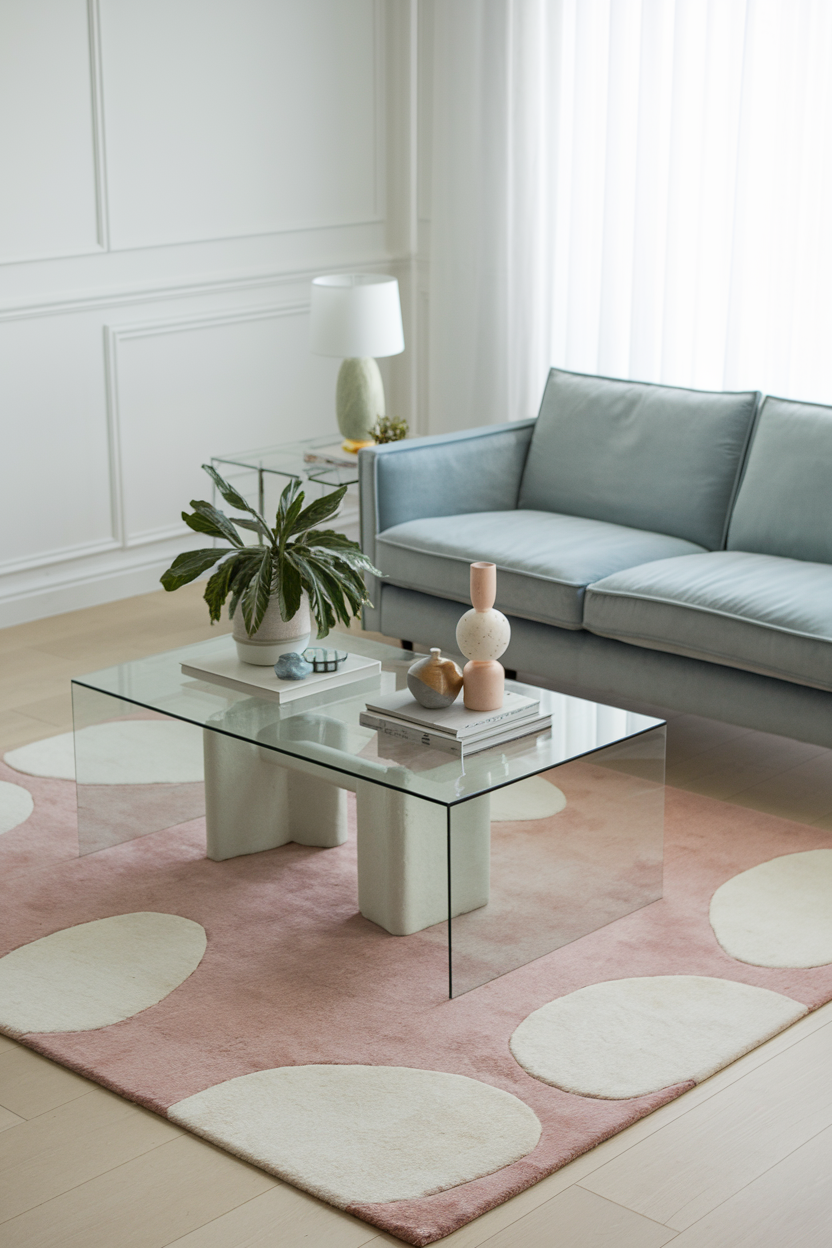
Muted pastel rugs offer a gentle way to introduce color while maintaining a peaceful and airy living room atmosphere. Shades such as dusty pink, powder blue, pale lavender, and soft sage green bring subtle charm without overwhelming the surrounding decor. These delicate hues pair beautifully with white walls, light oak flooring, cream upholstery, and sheer curtains. A pastel rug can also soften a room filled with darker furniture by creating a lighter visual transition between different elements. Choose a design with understated patterns for a minimalist interior or a slightly more colorful option for a playful, contemporary look. The result is a welcoming living space that feels fresh, balanced, and effortlessly elegant.
14. Vintage-Inspired Oriental Rug
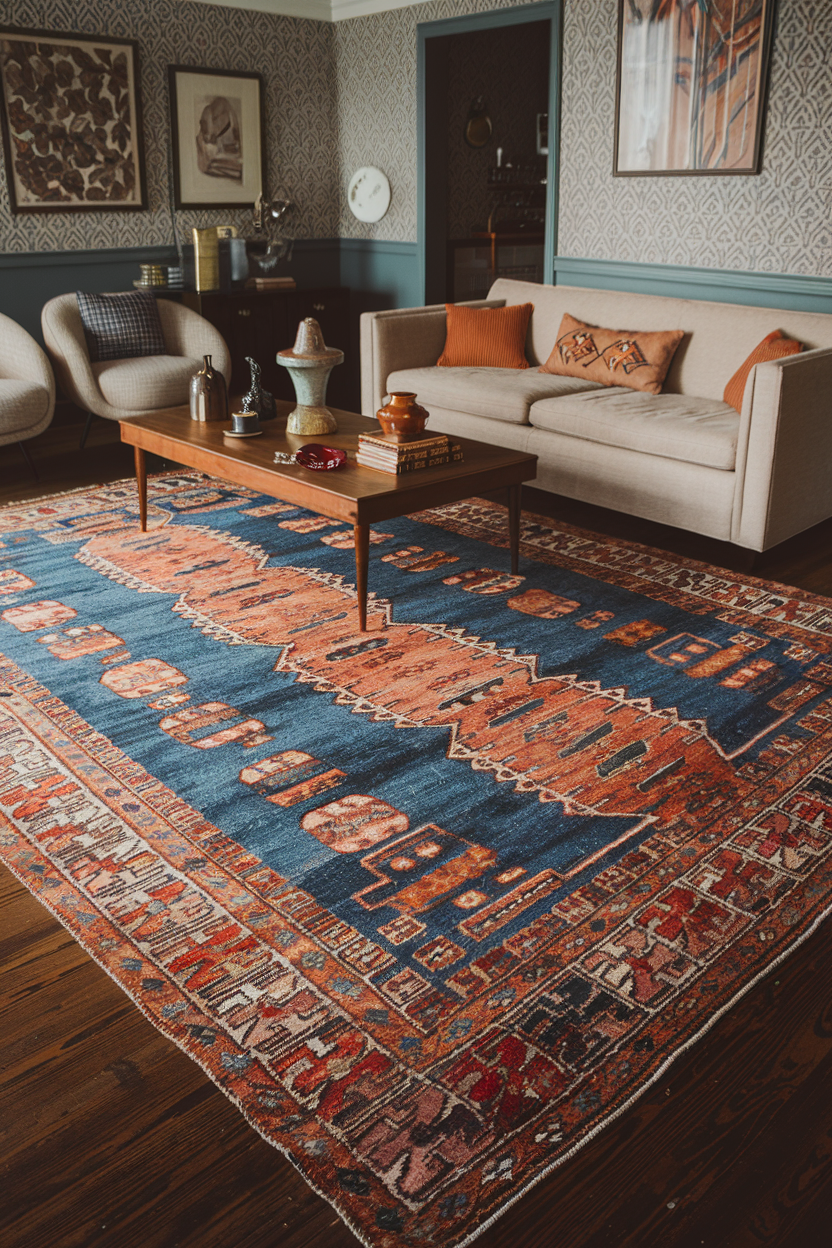
Vintage-inspired Oriental rugs introduce timeless beauty through their intricate motifs, rich color combinations, and gently weathered finishes. Their traditional patterns often feature deep reds, faded blues, muted greens, and warm gold tones that bring depth and character to a living room. These rugs work surprisingly well in contemporary interiors, where their detailed designs create an appealing contrast against clean-lined furniture. They also complement rustic wooden tables, leather sofas, antique accessories, and traditional upholstery. A vintage-style rug placed beneath a coffee table can anchor the seating arrangement while making the room feel more established and inviting. Its slightly aged appearance adds visual history and a collected quality that feels both sophisticated and comfortable.
15. Multi-Colored Patchwork Rug
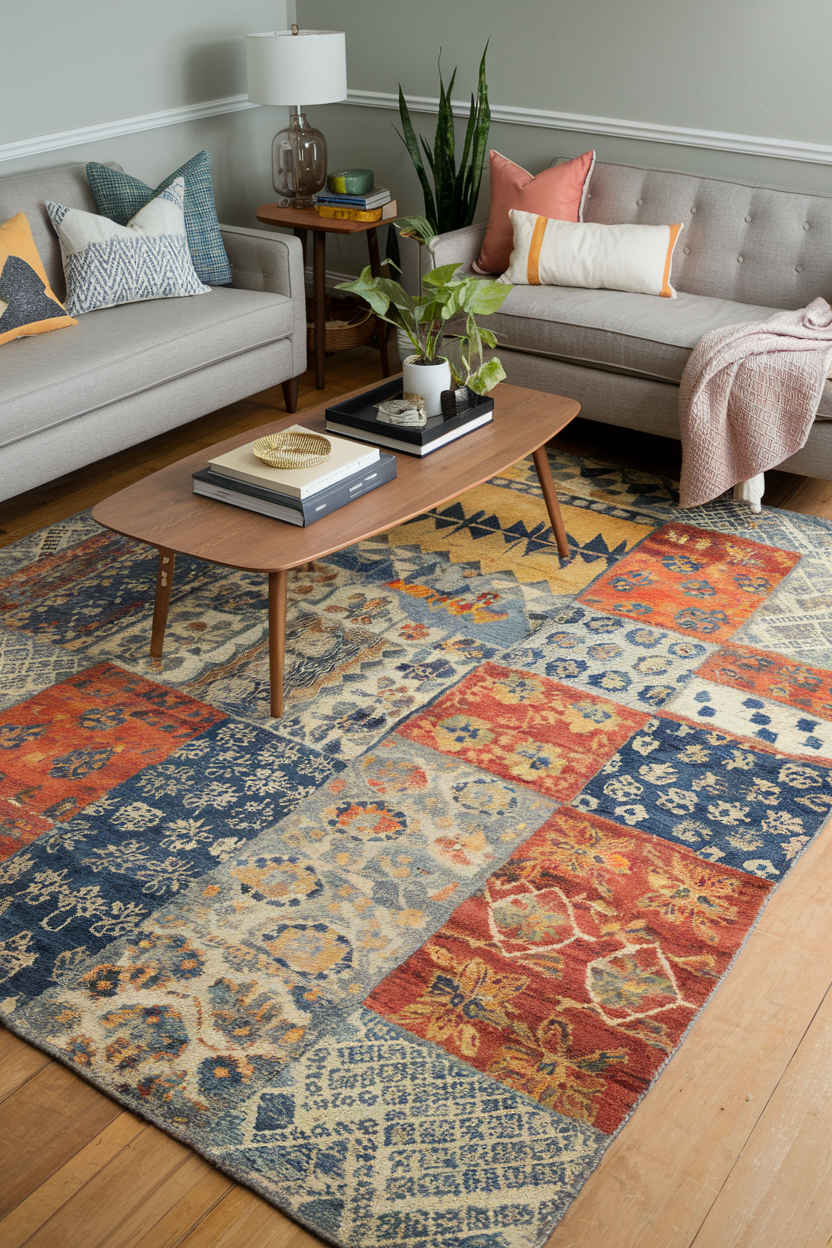
Multi-colored patchwork rugs create a distinctive focal point by combining different patterns, textures, and shades into one expressive design. Their individual sections may resemble vintage textiles, faded Oriental motifs, geometric prints, or decorative fabric pieces assembled into a cohesive composition. This variety makes them particularly appealing in eclectic and maximalist living rooms, where mixing different design influences is part of the charm. A patchwork rug can connect colorful artwork, patterned cushions, and furniture from different periods without requiring every element to match perfectly. To maintain balance, consider pairing a visually busy rug with a simple sofa or understated walls. This approach allows the intricate design to shine while giving the entire living room a creative, layered appearance.
16. Natural Fiber Rugs With a Twist
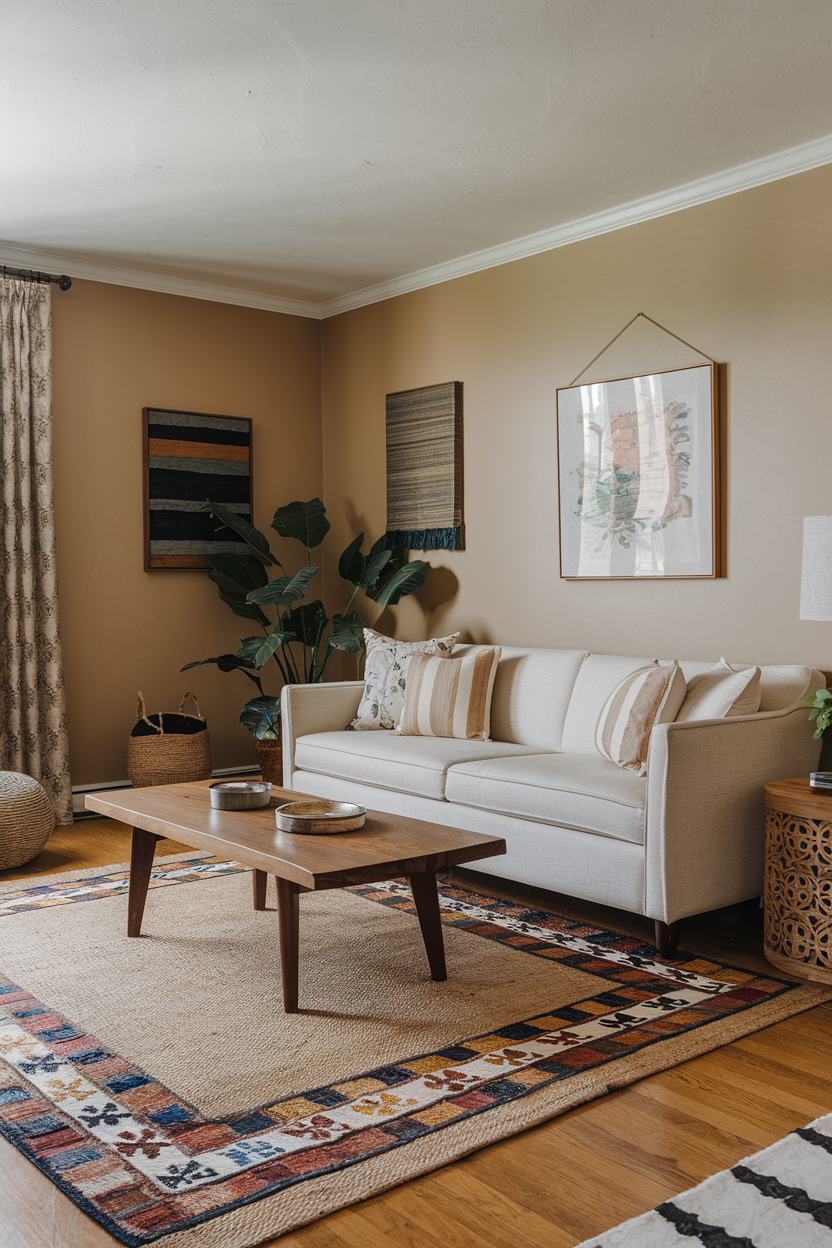
Natural fiber rugs made from jute, sisal, or similar materials bring earthy texture and an organic atmosphere to your living room. Designs featuring colored borders, contrasting woven sections, or subtle decorative motifs add an artistic touch without losing the understated appeal of natural fibers. Their warm tones work beautifully with wooden furniture, linen upholstery, indoor plants, and other nature-inspired accessories. A jute rug with a dark border can introduce definition beneath a neutral sofa, while a patterned version offers a more distinctive focal point. These rugs are particularly suitable for coastal, farmhouse, bohemian, and Scandinavian interiors. For additional comfort and visual depth, consider layering a smaller patterned rug over a larger natural fiber base.
17. Moroccan Trellis Rug
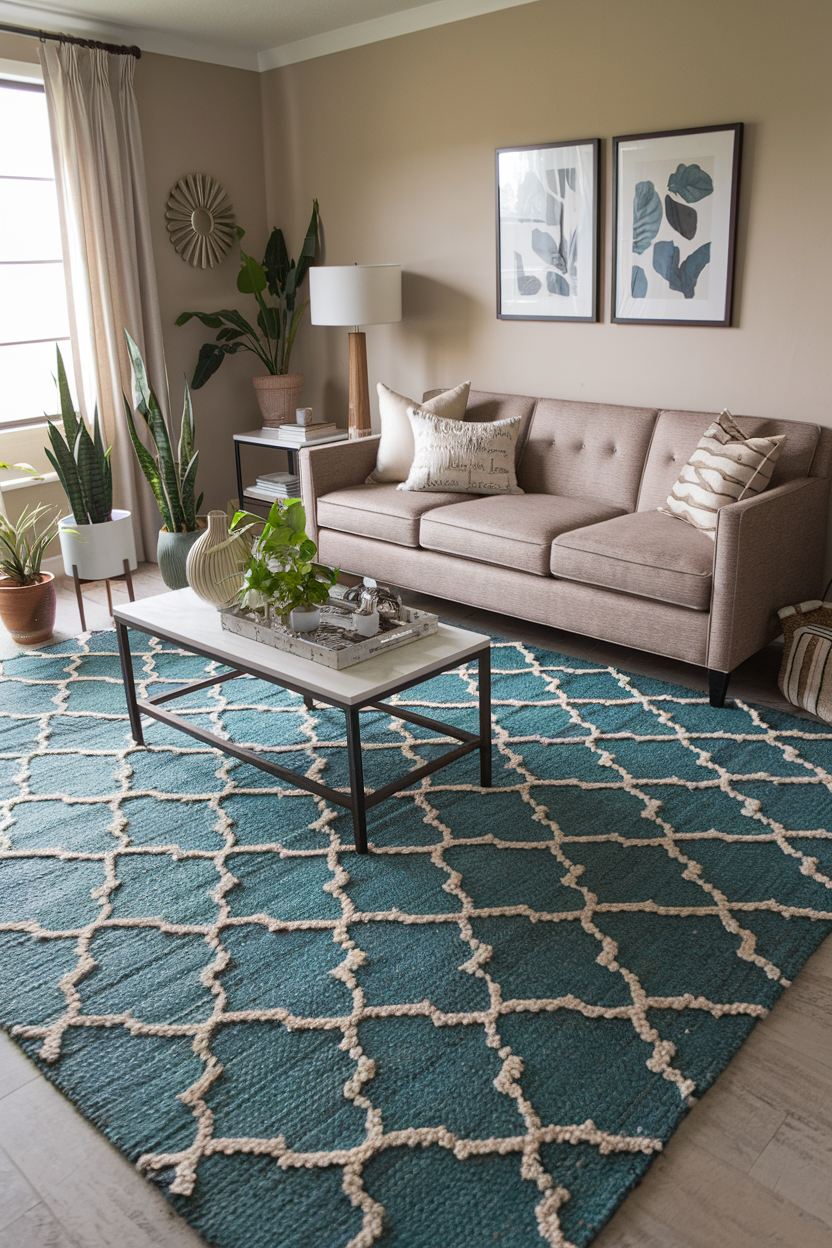
Moroccan trellis rugs bring a graceful combination of geometric structure and relaxed, globally inspired style to a living room. Their repeating diamond or lattice patterns create a pleasing visual rhythm that works well with both contemporary and bohemian decor. Although traditional versions often feature neutral backgrounds and contrasting lines, colorful variations in teal, mustard, raspberry, or terracotta can make the design feel more vibrant. A trellis rug looks beautiful beneath a simple sofa, alongside rounded accent chairs, or in a living room decorated with woven accessories and natural wood. Its repeating pattern adds interest without feeling excessively complicated, making it a practical choice for homeowners who want a decorative floor covering that remains versatile and easy to coordinate.
18. Scandinavian Neutrals
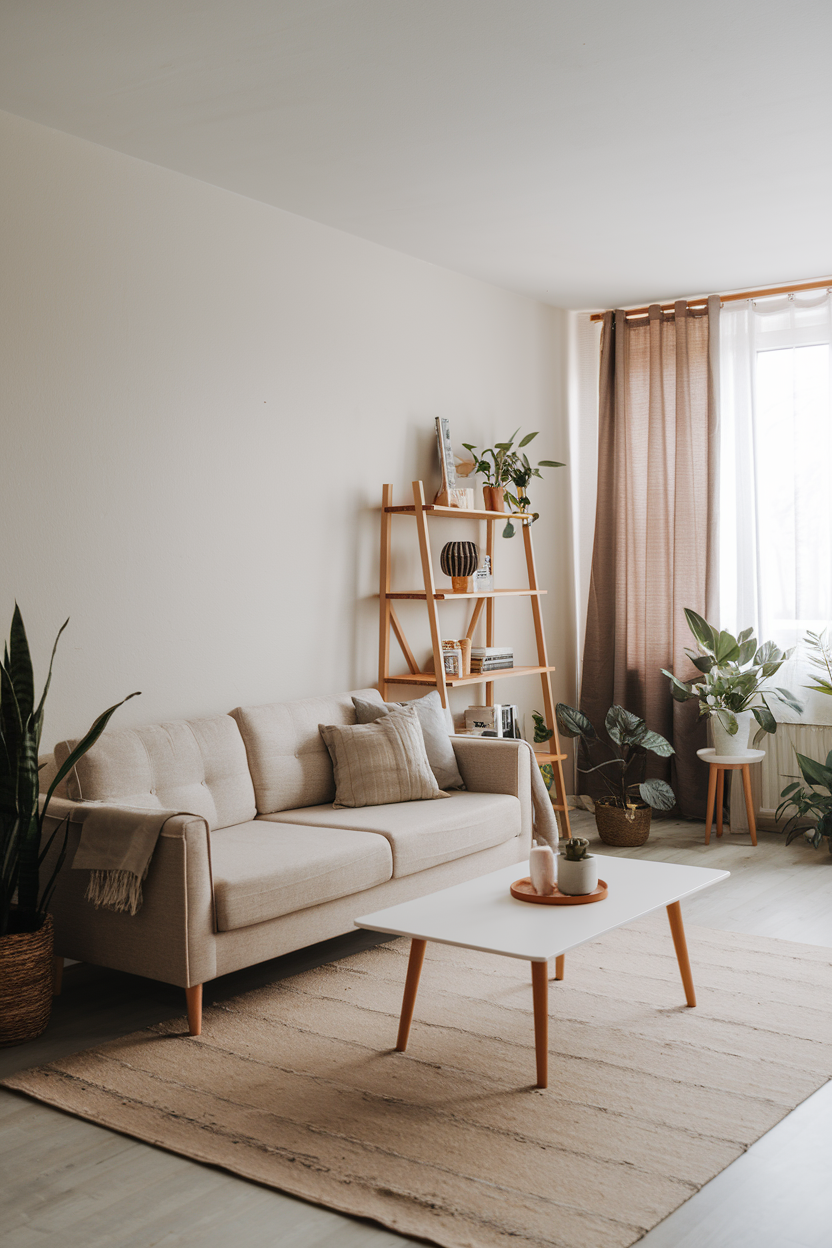
Scandinavian-inspired rugs focus on simplicity, natural textures, and a restrained color palette that encourages a calm living room atmosphere. Cream, pale gray, warm taupe, and soft beige create a light foundation that pairs effortlessly with blond wood furniture, white walls, and understated decorative accessories. Rather than relying on elaborate designs, these rugs often feature subtle stripes, delicate geometric details, or gently textured surfaces. Their quiet appearance allows architectural features and carefully selected furnishings to take center stage. A neutral Scandinavian rug is especially effective in smaller living rooms because it helps maintain a consistent visual flow without introducing strong contrasts. Layer it with cozy throws, linen cushions, and natural materials to create a welcoming space that feels relaxed, bright, and thoughtfully designed.
19. Rainbow-Hued Rug
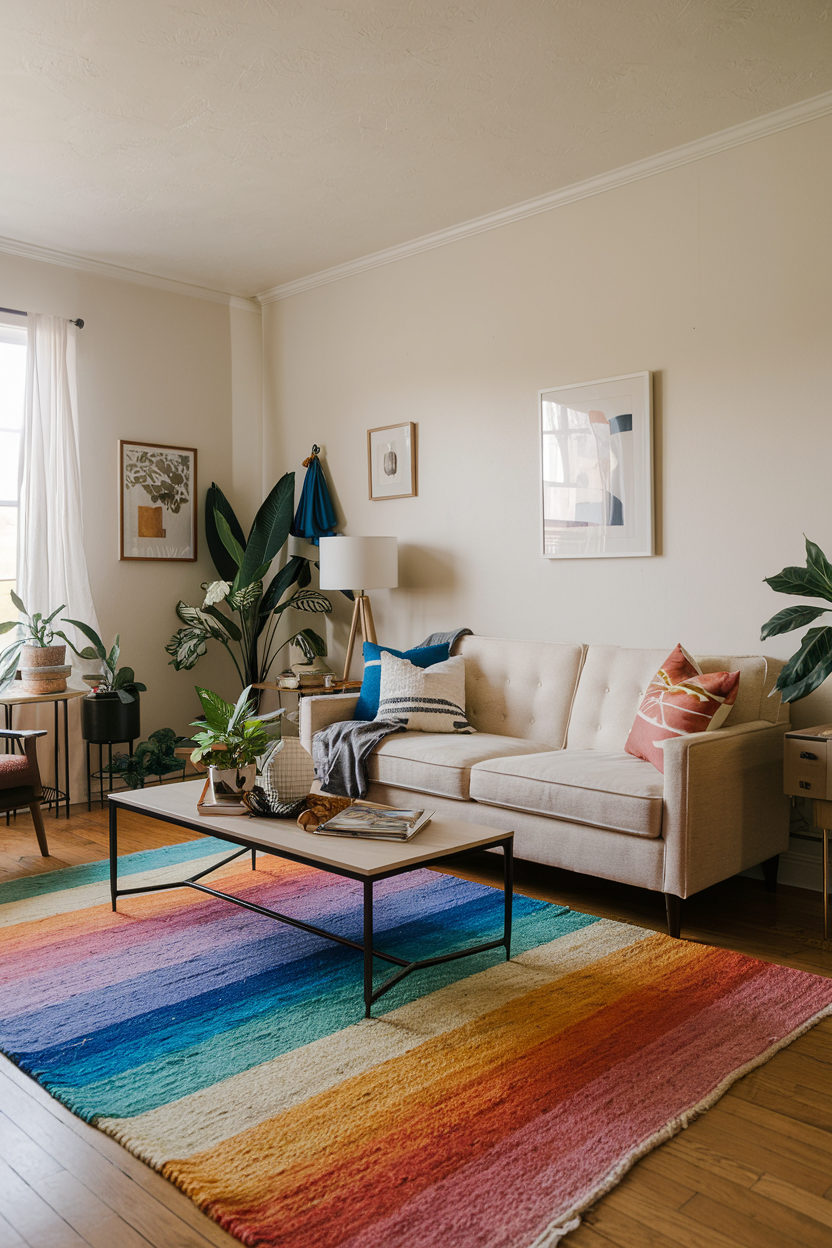
Rainbow-hued rugs bring a playful burst of color that can instantly change the mood of your living room. Featuring multiple shades arranged in stripes, abstract patterns, curved bands, or artistic color transitions, these designs celebrate creativity and individuality. A vibrant rainbow rug makes an especially effective centerpiece in a room with white walls and neutral furniture, allowing the colors to stand out without competing with too many other decorative elements. For a more expressive interior, coordinate the rug with colorful cushions, sculptural accessories, or modern artwork. You can also choose a softer rainbow palette featuring muted pastels for a gentler effect. Whichever style you prefer, this cheerful design creates an energetic atmosphere that makes the living room feel distinctive and full of life.
20. Mid-Century Modern Motifs
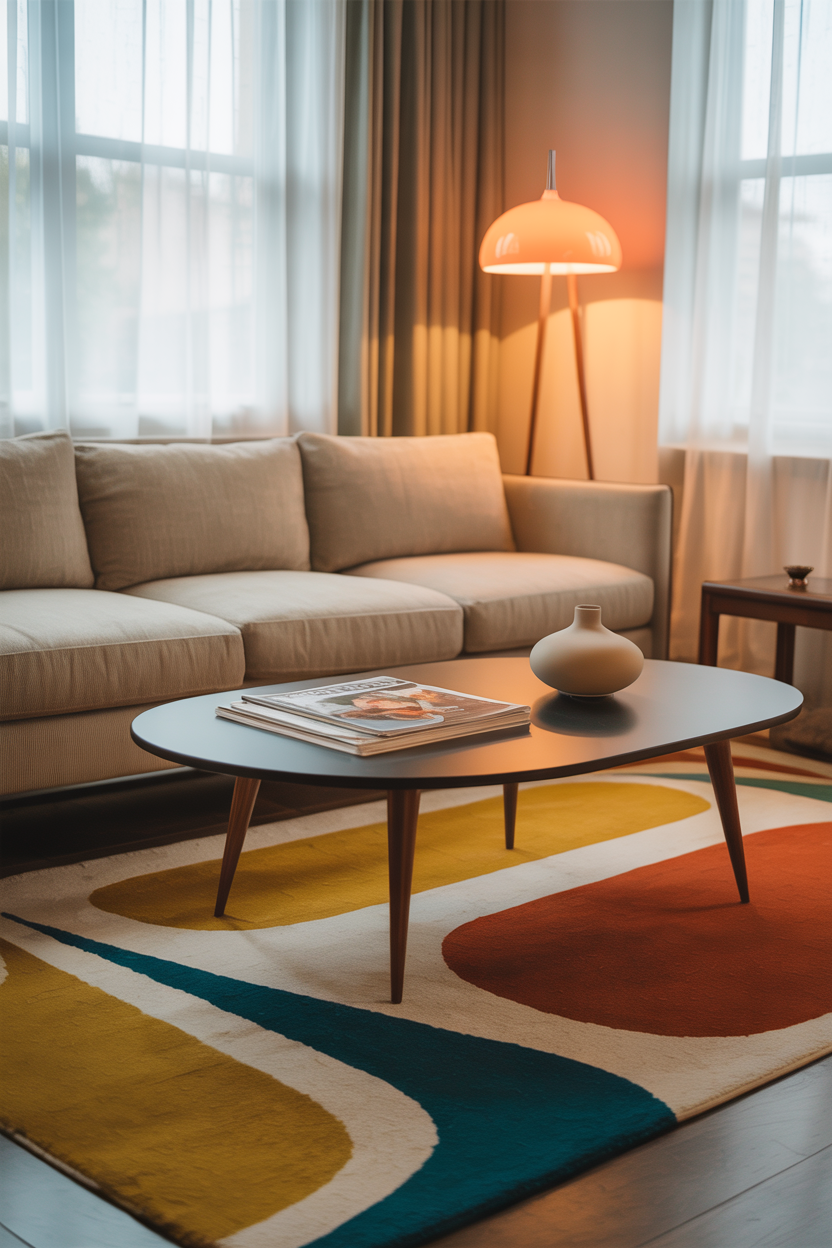
Mid-century modern rugs capture the playful geometry and distinctive color combinations associated with retro-inspired interiors. Look for abstract curves, atomic-inspired shapes, asymmetrical lines, and combinations of mustard yellow, burnt orange, teal, olive green, and warm brown. These patterns complement the tapered wooden legs, streamlined silhouettes, and sculptural lighting commonly found in mid-century furniture. A retro rug can also bring personality to a more contemporary living room by introducing a subtle nostalgic element without making the space feel dated. Pair it with a simple sofa, a walnut coffee table, and a few carefully selected vintage accessories to create a balanced look. The result is a living room that feels stylish, expressive, and connected to the enduring appeal of classic modern design.
21. Custom-Made or Handcrafted Rug
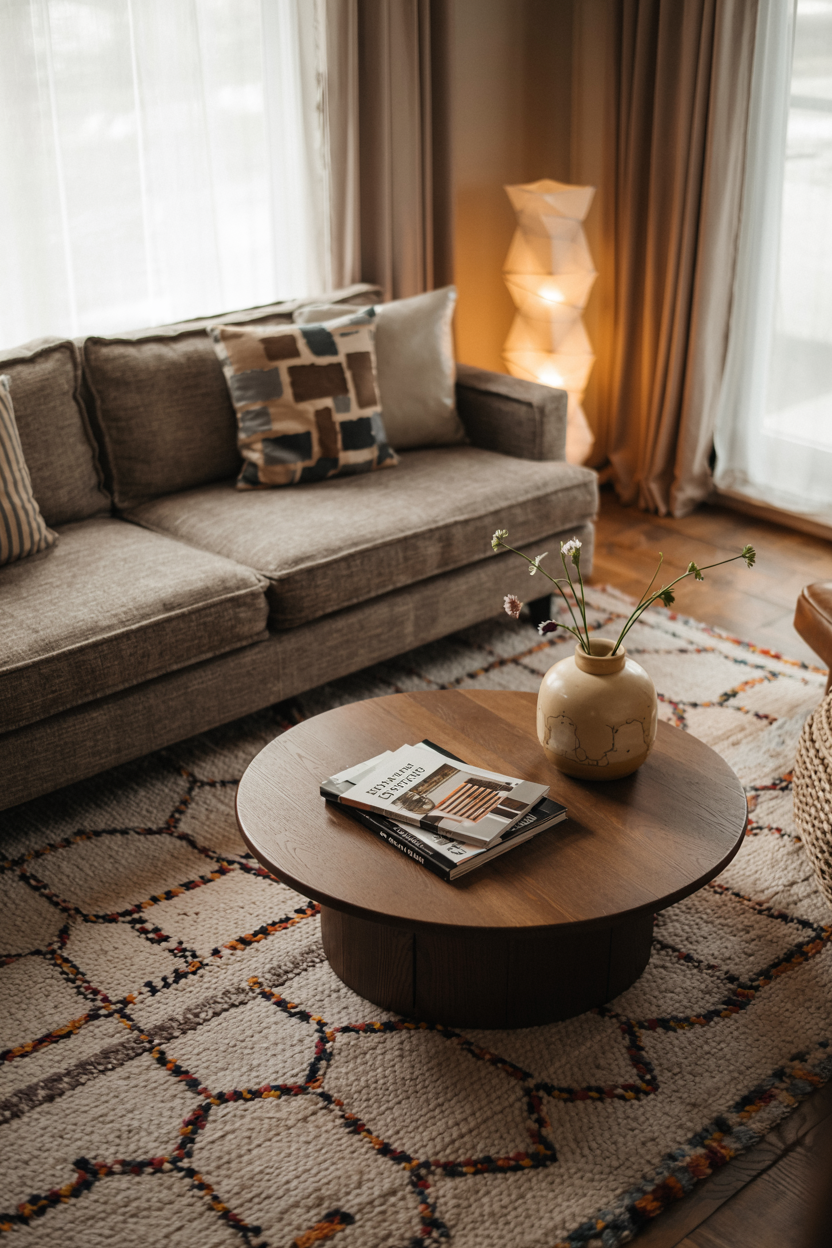
Custom-made and handcrafted rugs offer an opportunity to create a living room centerpiece that reflects your individual taste and practical needs. Depending on the maker, you may be able to choose the dimensions, colors, materials, patterns, and finishing details to suit your furniture arrangement perfectly. This flexibility is especially useful for unusually shaped rooms, oversized seating areas, or interiors that require a specific color combination. Handmade designs can also introduce subtle variations in texture and pattern that give the rug a distinctive character. Before commissioning one, discuss durability, cleaning requirements, production time, and budget with the maker. A thoughtfully designed rug can become a meaningful part of your home, bringing together the room’s colors, textures, and furnishings in a way that feels personal and intentional.
22. Playful Graphic Prints
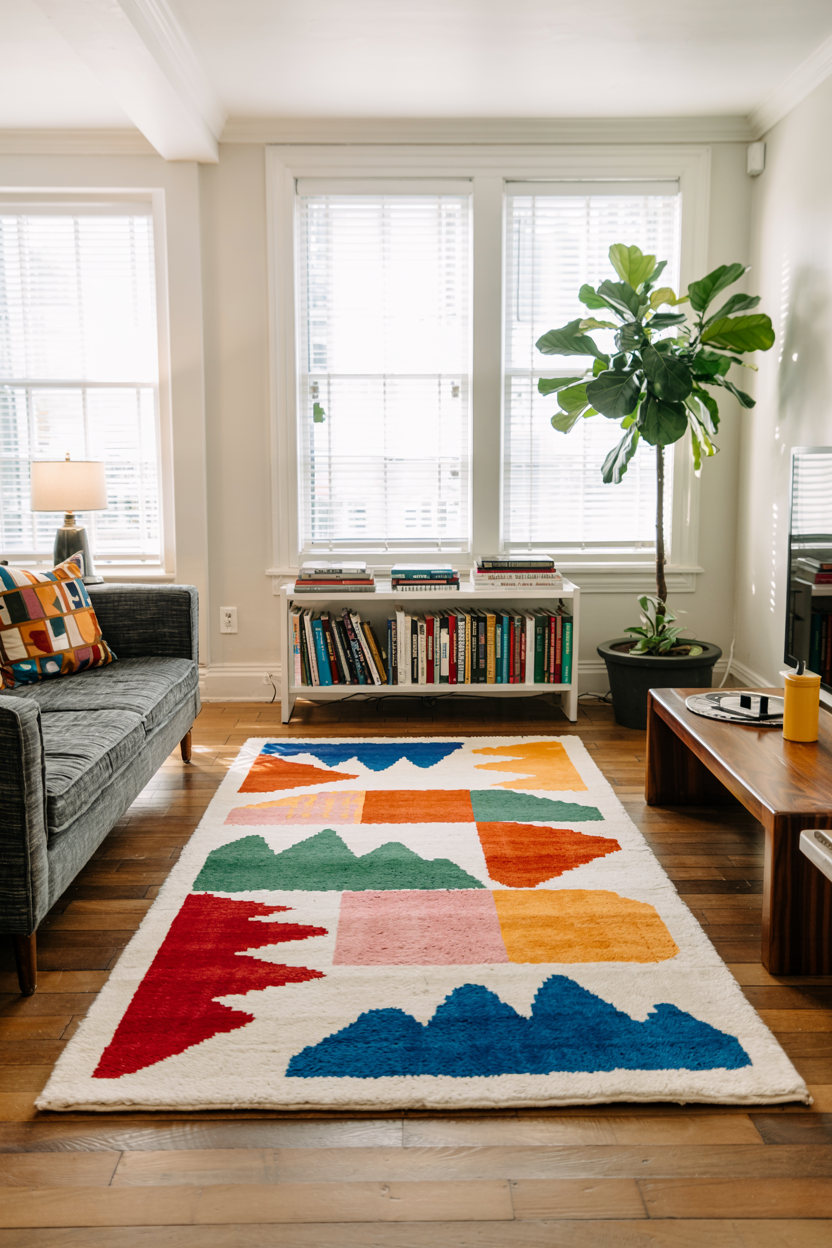
Graphic-print rugs add a bold, creative personality to living rooms through illustrated motifs, abstract symbols, pop-art influences, and expressive patterns. Some designs feature oversized shapes or colorful compositions, while others incorporate lettering or playful visual references. These rugs are particularly effective in contemporary, eclectic, and youthful interiors where traditional decorating rules can give way to more individual choices. A graphic rug can make a simple sofa arrangement feel more dynamic, especially when paired with modern artwork, sculptural lighting, or colorful accent chairs. To maintain visual balance, choose a few complementary colors from the rug and repeat them elsewhere in the room. The result is an energetic living space that feels expressive and distinctive without requiring every decorative element to make a statement.
23. Southwestern-Inspired Rug
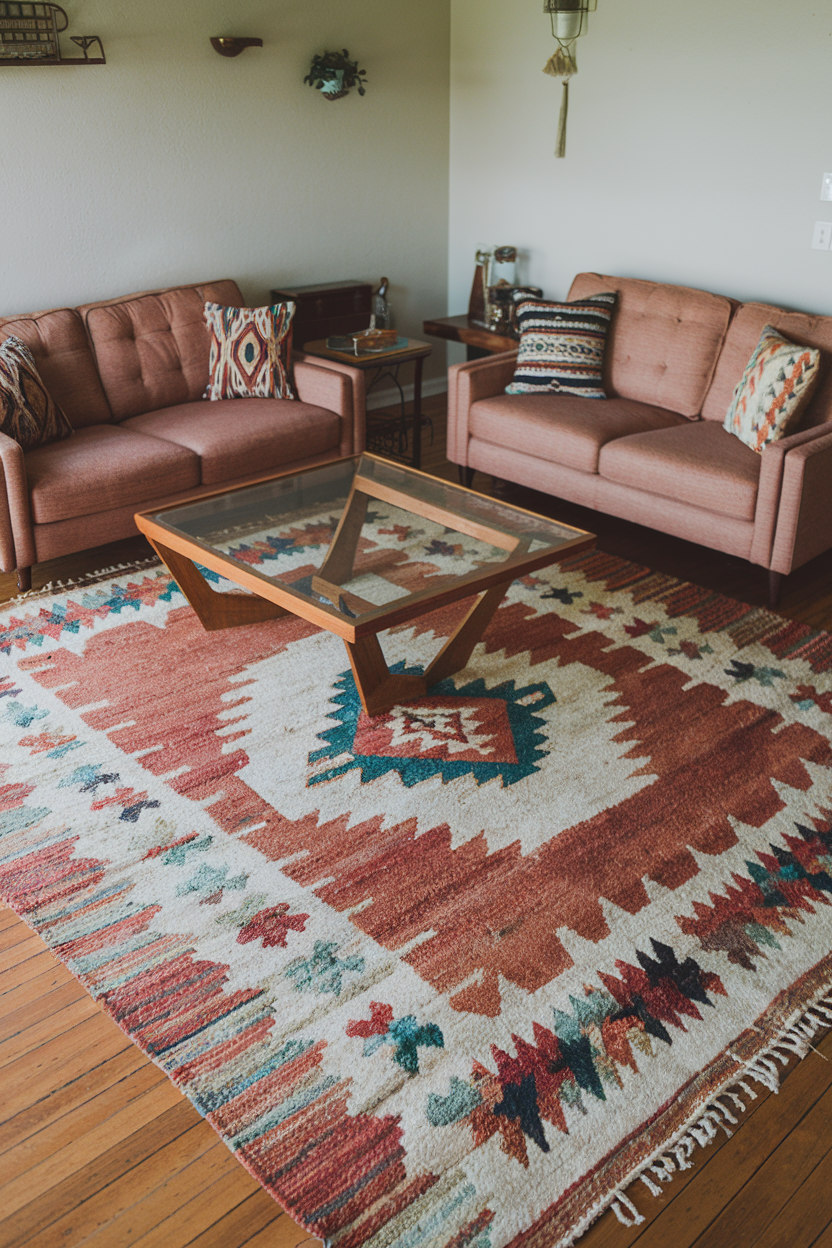
Southwestern-inspired rugs bring earthy colors and distinctive geometric patterns to living rooms influenced by desert landscapes and Western design. Terracotta, rust, sand, cream, and deep teal create a warm palette that pairs beautifully with leather upholstery, reclaimed wood, woven baskets, and handcrafted accessories. Many designs incorporate stepped diamonds, repeating lines, and angular motifs that add structure and visual interest. These rugs are particularly effective in rustic, bohemian, and desert-modern interiors, where natural materials and warm finishes play an important role. For a balanced arrangement, combine the rug with solid-colored furniture and a few decorative pieces that echo its earthy tones. When drawing inspiration from Indigenous design traditions, consider the rug’s cultural origins and choose authentic or respectfully inspired designs rather than treating meaningful motifs as generic decoration.
24. Checkerboard Rug
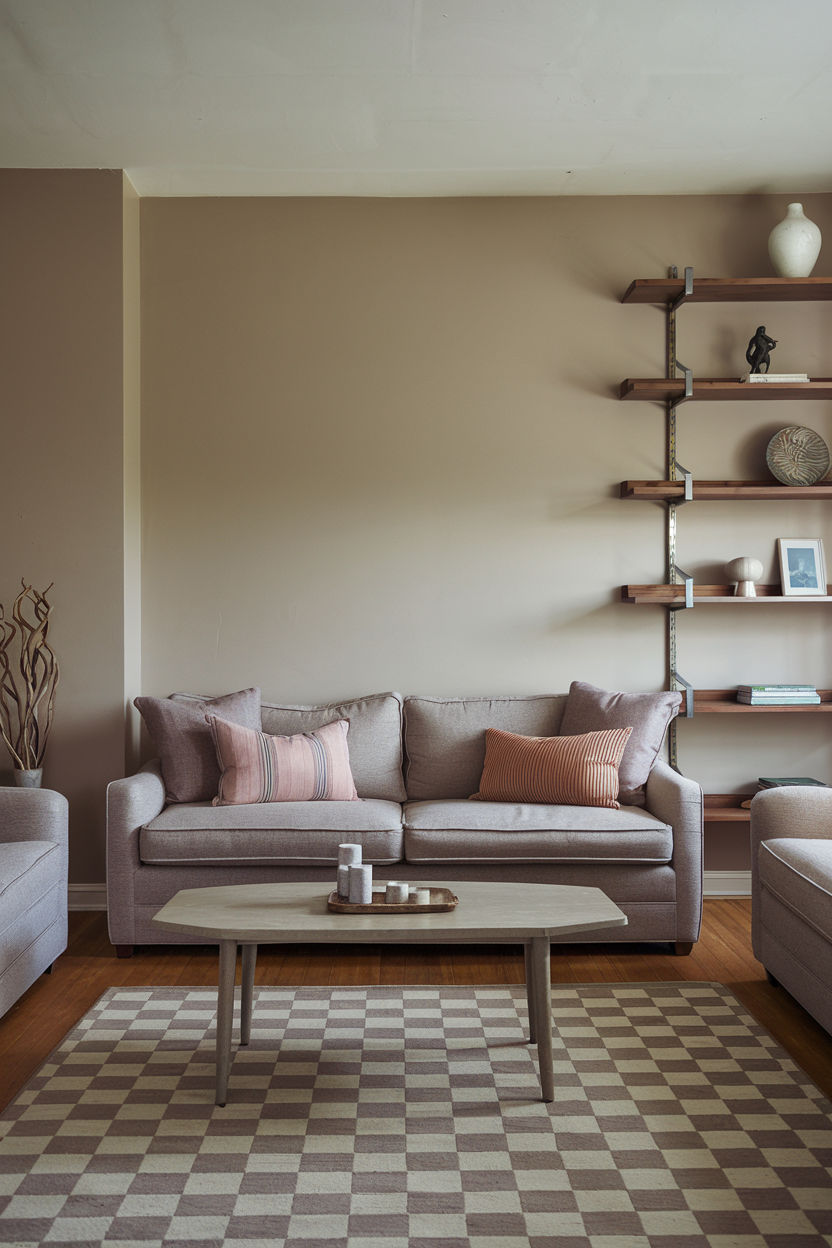
Checkerboard rugs bring graphic definition and a playful retro influence to contemporary living rooms. Their alternating squares create a clear visual pattern that can range from classic black and white to softer combinations of cream and beige, sage and ivory, or brown and caramel. The regular arrangement provides structure, making these rugs an appealing contrast to rounded coffee tables, curved sofas, and sculptural accent chairs. A checkerboard design can also introduce personality into a minimalist room without relying on multiple colors or elaborate motifs. For a sophisticated result, balance the strong pattern with simple upholstery and natural textures. If you prefer a more expressive interior, combine the rug with colorful cushions, contemporary artwork, and decorative accessories that enhance its graphic character.
25. Tropical Leaf Patterns
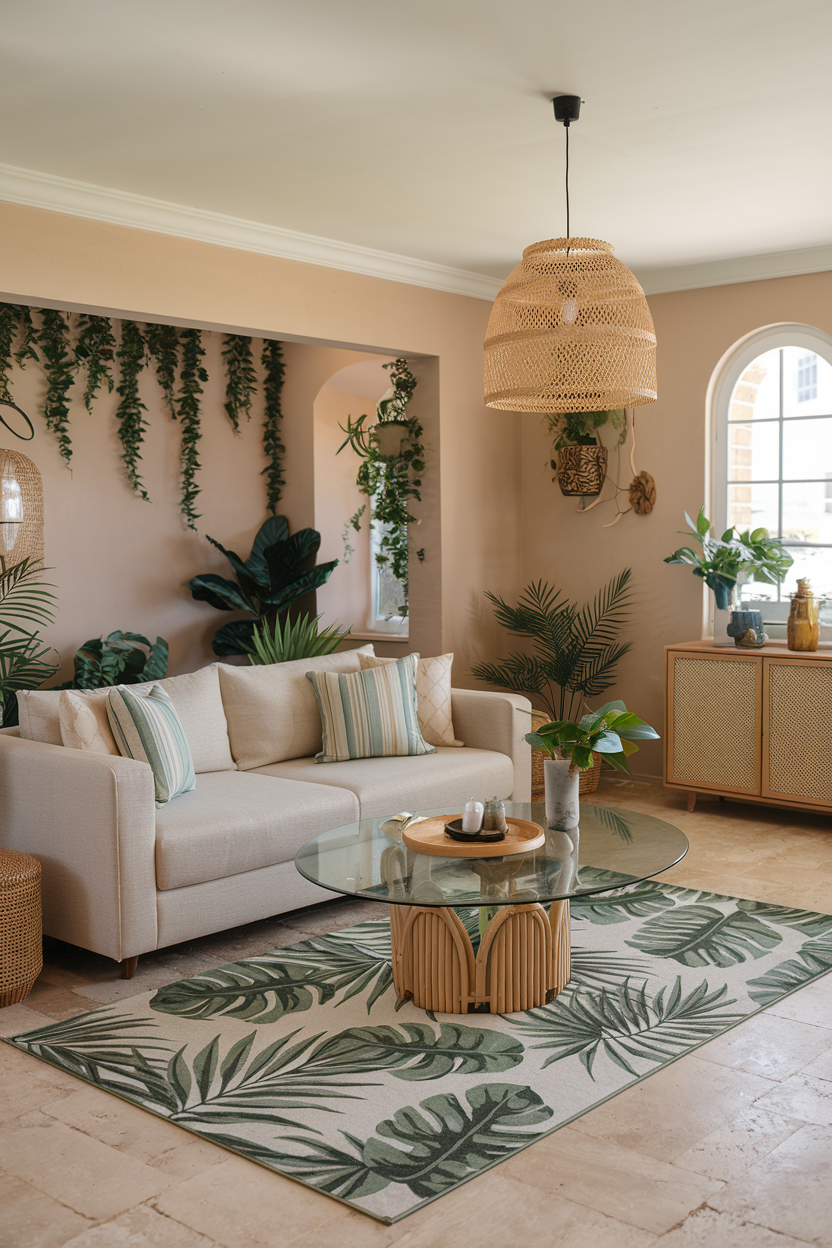
Tropical leaf rugs introduce botanical patterns and a fresh, nature-inspired atmosphere to your living room. Designs featuring palm fronds, banana leaves, oversized foliage, and jungle-inspired illustrations can make the space feel vibrant and relaxed. Depending on the palette, these rugs may evoke a bright coastal retreat or create a dramatic statement with deep green leaves against a darker background. They look especially appealing alongside rattan furniture, wicker accessories, natural wood, and indoor plants. In rooms with neutral walls and simple furnishings, a tropical rug can supply a striking focal point without requiring extensive redecorating. Repeat a few of its colors through cushions or artwork to create a cohesive look, and keep surrounding patterns relatively restrained so the botanical design remains visually prominent.
26. Rugs With Metallic Accents
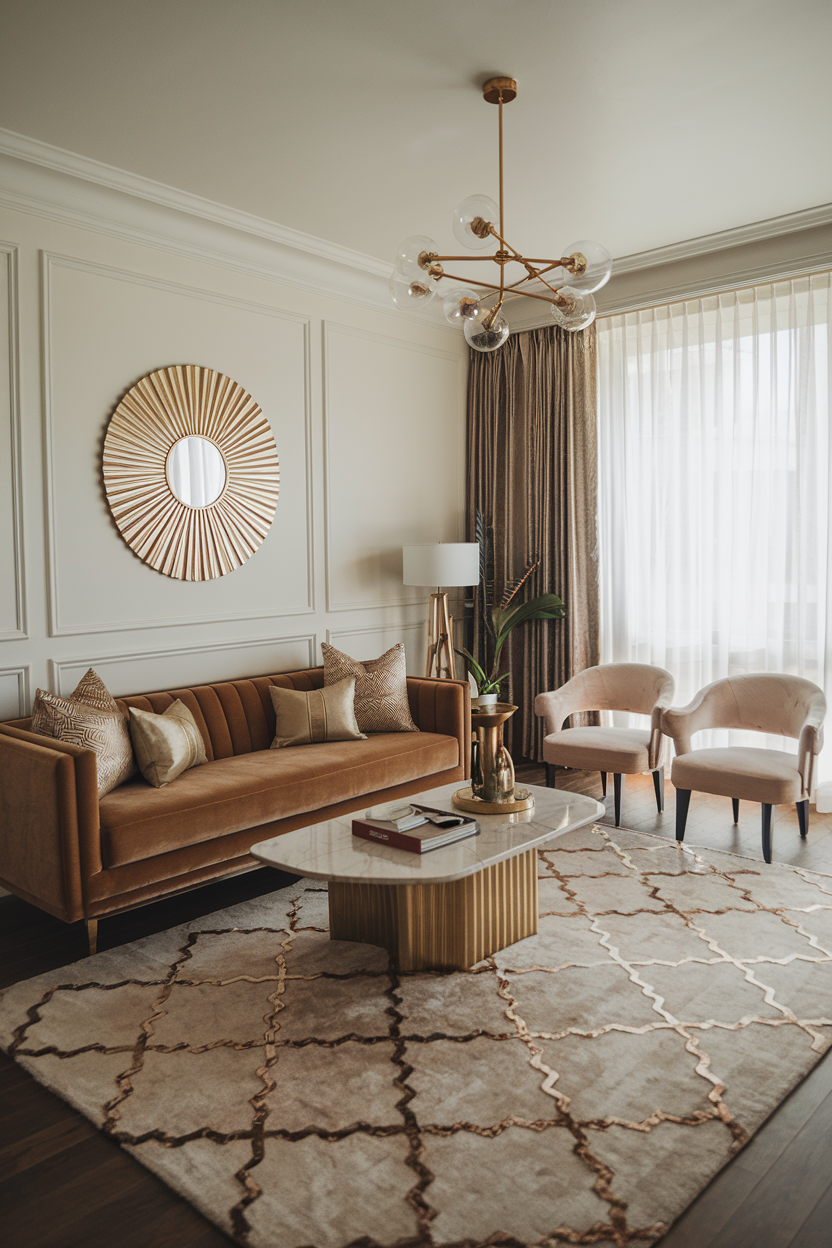
Rugs with metallic accents add a refined touch of glamour through subtle gold, silver, bronze, or champagne-colored details. These shimmering elements may appear in delicate geometric lines, abstract patterns, or intricate decorative motifs that catch the light as you move through the room. Metallic accents work particularly well in modern glam, contemporary, and elegant transitional interiors, especially when paired with velvet upholstery, glass tables, mirrored surfaces, or polished metal lighting. For an understated look, choose a rug with a neutral background and a few delicate metallic details. If you prefer a more dramatic style, select a design with stronger contrast and a richer color palette. The key is to coordinate the metallic finish with a few other elements in the room, creating a sophisticated atmosphere without making the space feel overly ornate.
27. Chevron Pattern Rug
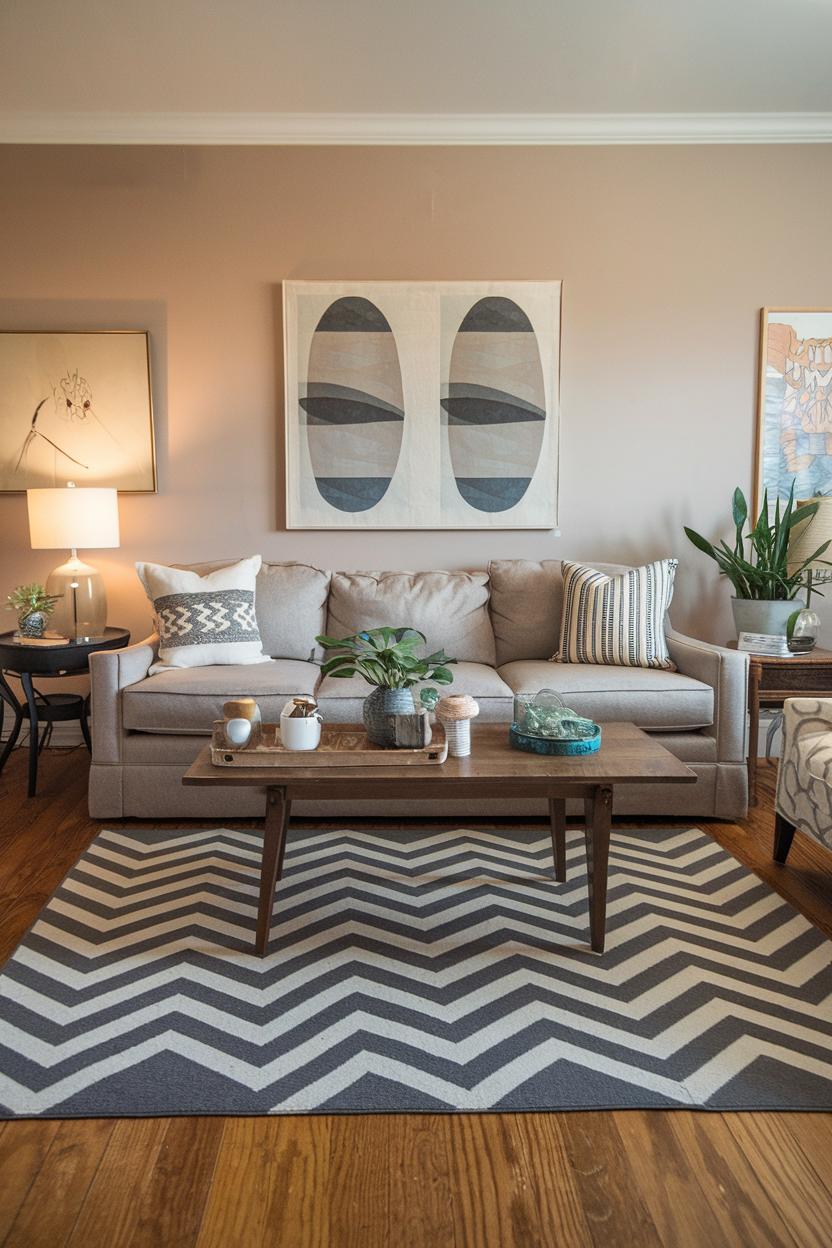
Chevron rugs introduce movement through their distinctive zigzag patterns, making them an attractive option for living rooms that need an extra dose of visual energy. The repeated V-shaped lines create a sense of direction that can complement the straight edges of sofas, shelving, and rectangular coffee tables. Choose a bold color combination for a contemporary statement or a subtle tonal design for a more understated appearance. Chevron patterns work particularly well in modern, transitional, and casual interiors because they feel decorative without being overly elaborate. They can also help anchor a seating arrangement by drawing attention toward the center of the room. For a harmonious look, pair the rug with simple upholstery and accessories that echo one or two of its colors.
28. Faux Fur Accent Rug
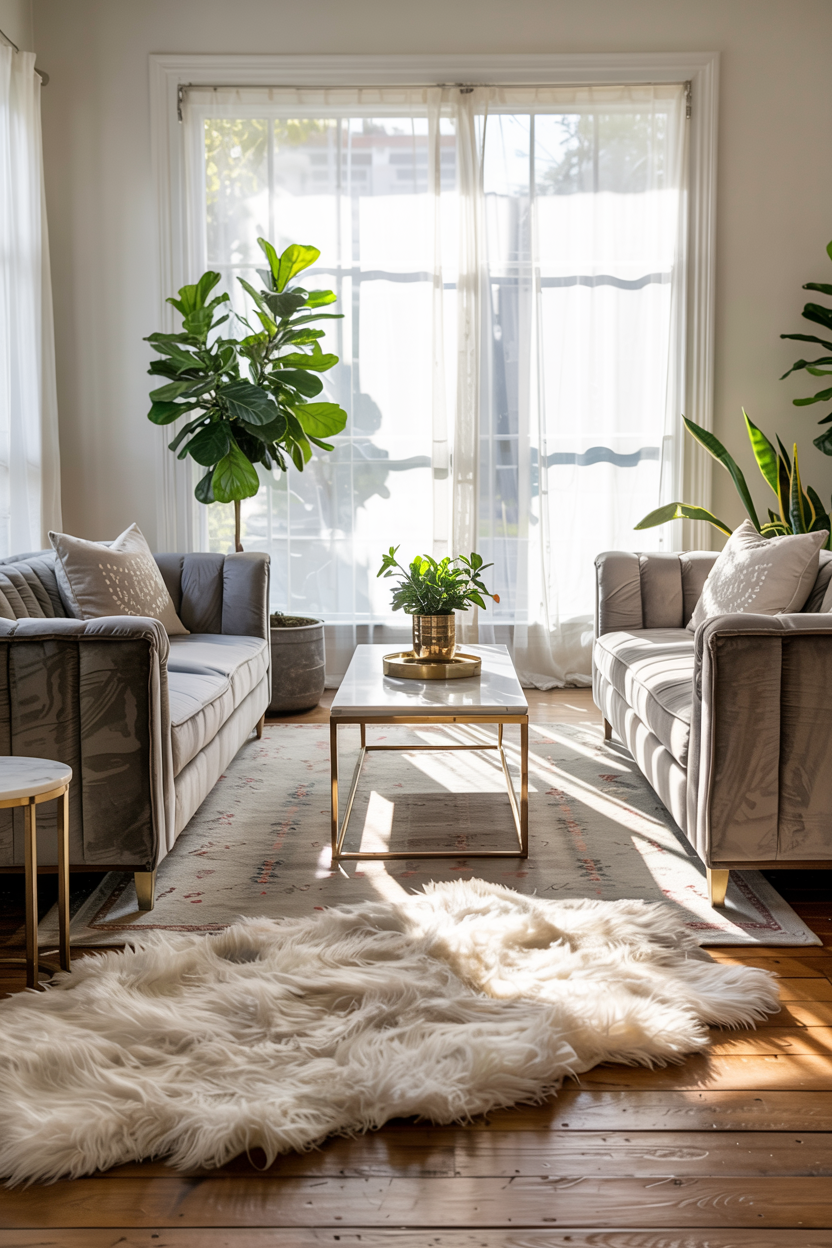
Faux fur rugs introduce softness and a touch of luxury to your living room with their plush texture and inviting appearance. Their fluffy surfaces create an appealing contrast against hardwood flooring, smooth tile, leather furniture, and other hard materials. A small faux fur rug can be placed beside an accent chair, near a fireplace, or beneath a cozy reading nook to make the area feel more comfortable. You can also layer one over a larger woven or neutral rug to introduce extra dimension and texture. White and cream versions suit Scandinavian and glamorous interiors, while darker shades can complement modern or dramatic color schemes. For a balanced arrangement, use faux fur as an accent rather than covering the entire floor with competing textures.
29. Color-Blocked Rug
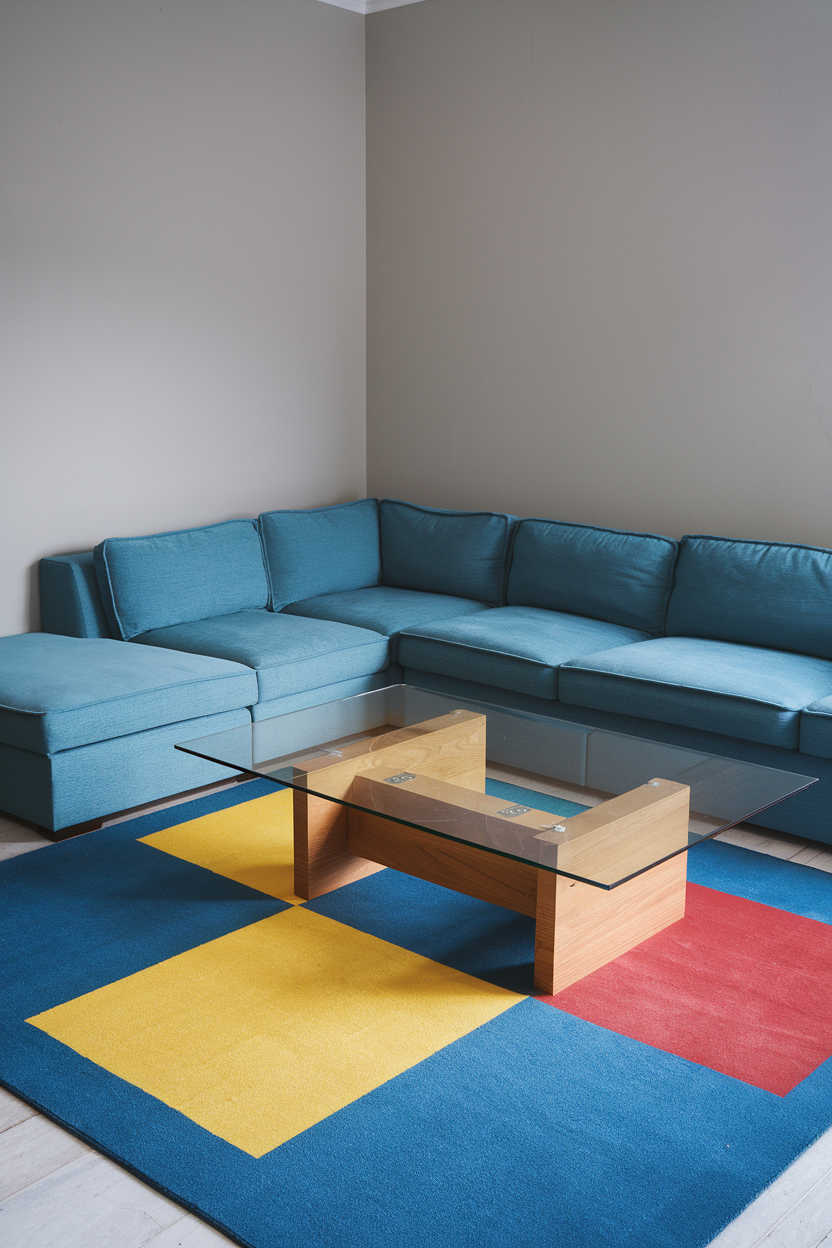
Color-blocked rugs offer a modern, artistic way to introduce several complementary shades into your living room. Their designs feature distinct sections of solid color, often arranged in geometric shapes or oversized abstract compositions. Depending on the palette, the effect can range from subtle and sophisticated to bold and energetic. A rug combining rust, beige, and cream creates a warm foundation, while combinations of blue, green, and mustard can add a more contemporary character. These designs work particularly well with minimalist furniture because their graphic shapes provide visual interest without requiring elaborate accessories. Use the rug to define your seating area, then repeat one or two of its colors in cushions, artwork, or decorative objects to create a cohesive interior.
30. Hand-Knotted Persian Rug
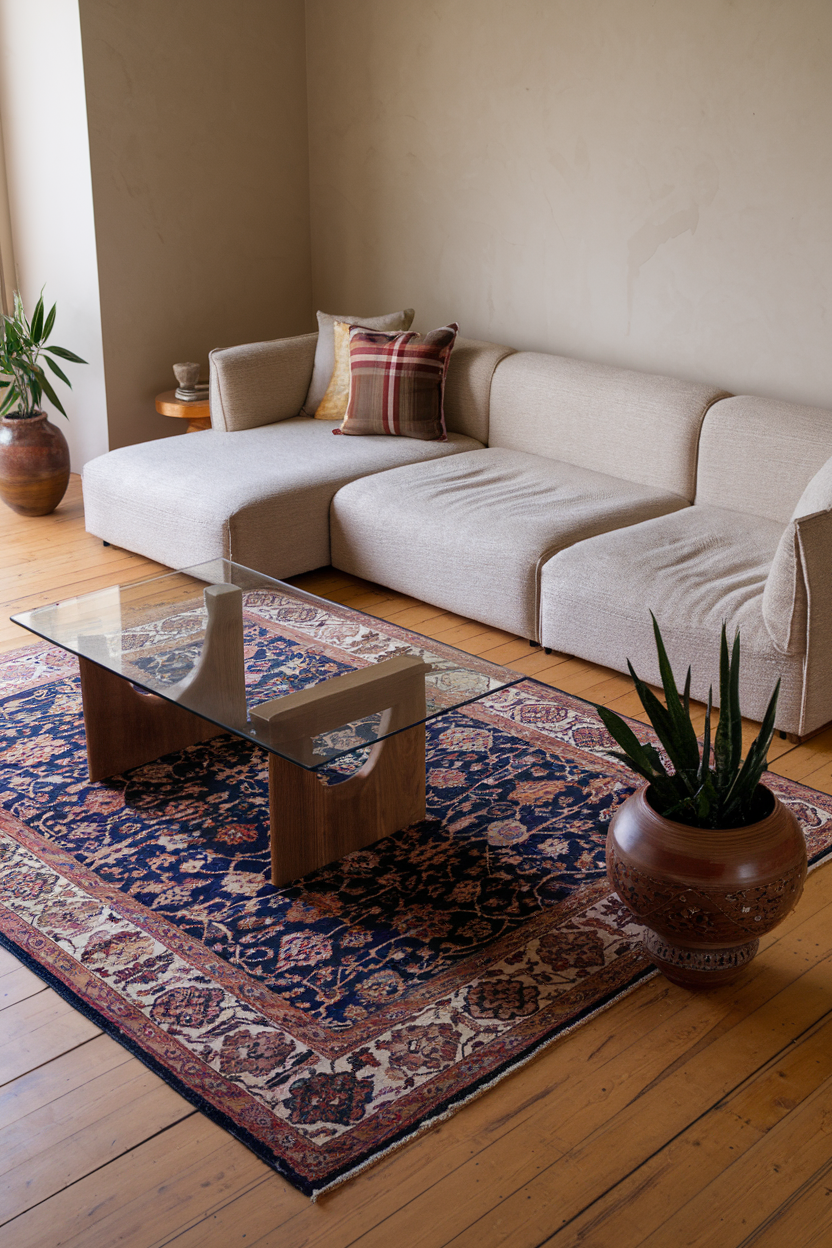
Hand-knotted Persian rugs bring exceptional craftsmanship, intricate detailing, and enduring character to a living room. Their elaborate floral motifs, medallion designs, and richly layered borders often feature combinations of deep red, navy, ivory, and earthy gold. Each rug has its own visual character, making it an appealing choice for interiors that celebrate traditional design and collected furnishings. A Persian rug can anchor a seating arrangement beneath a coffee table or introduce warmth to a room filled with leather furniture, antique pieces, and natural wood finishes. It also creates an interesting contrast in contemporary interiors, where traditional patterns soften clean architectural lines. Because hand-knotted rugs can represent a significant investment, consider their materials, construction, maintenance requirements, and placement before choosing one for your home.
31. Layered Rug
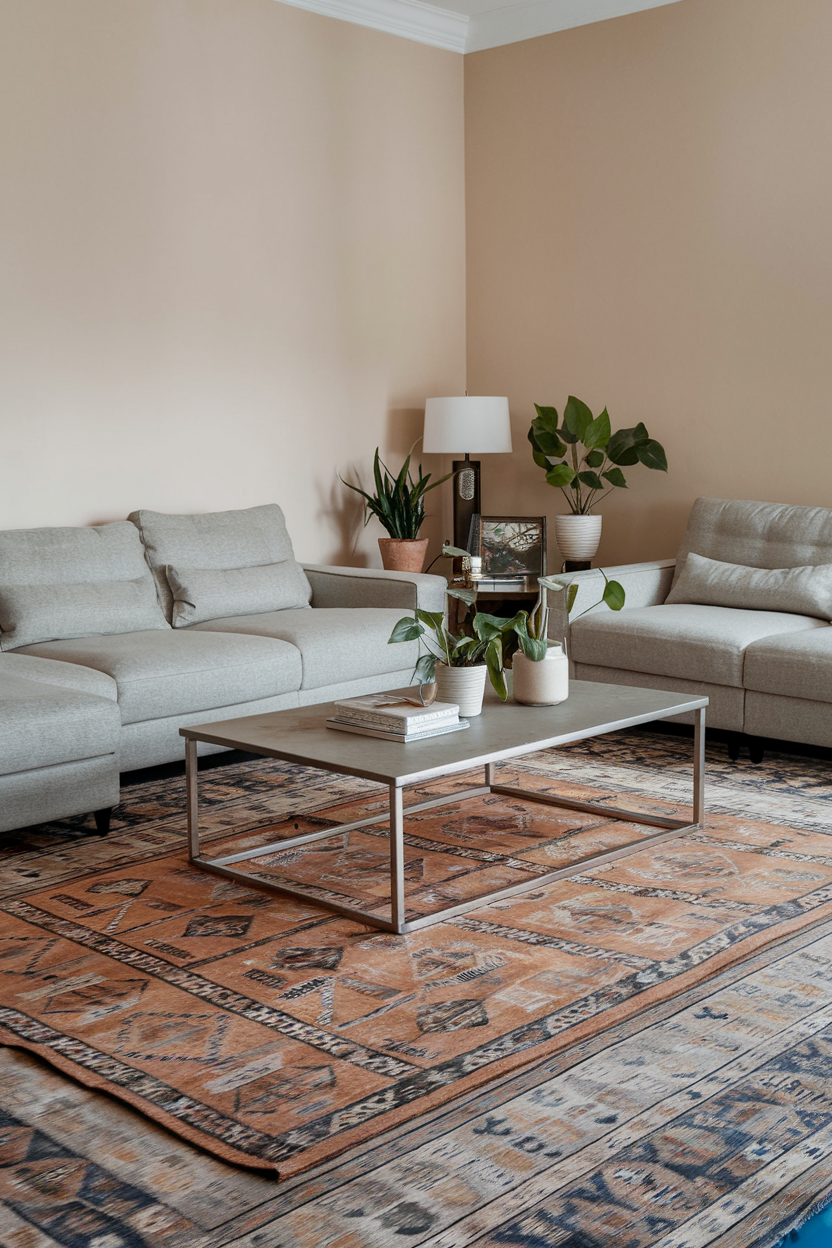
Layering rugs is a creative decorating technique that combines different sizes, patterns, and textures to create a richer living room design. One popular approach is to begin with a large, neutral jute rug and place a smaller vintage kilim or colorful patterned rug on top. The larger piece establishes the foundation, while the smaller rug introduces personality and draws attention to a particular part of the seating area. You can also experiment with contrasting materials, such as a flatwoven base beneath a soft tufted accent rug. For the best result, make sure the layers complement each other in color and proportion rather than competing for attention. Using a suitable rug pad can help prevent slipping, making the arrangement both attractive and practical.
* The appeal of a cozy living room rug lies in its ability to combine everyday comfort with beautiful design. Use these inspirations to find a rug that reflects your personal style, brings your furniture together, and creates a living room that feels warm, comfortable, and welcoming.