A cozy bedroom should feel like a personal sanctuary where comfort, warmth, and relaxation come together. Soft bedding, soothing colors, gentle lighting, and inviting textures can transform an ordinary room into a peaceful retreat from the demands of everyday life. Thoughtful design choices can make the space feel more intimate and welcoming while reflecting your personal style.
Creating a comfortable bedroom is all about layering the right elements to achieve a balanced and relaxing atmosphere. Plush blankets, textured pillows, warm wood furniture, soft rugs, flowing curtains, and ambient lighting can add depth and character without making the room feel cluttered. Neutral shades, earthy tones, muted greens, and soft blues can create a calming foundation, while carefully chosen artwork and decorative accents bring personality to the space.
Let’s explore these comforting designs and discover how simple decorating ideas can transform your bedroom into a warm, peaceful, and stylish retreat you’ll love coming home to!
1. Warm Wood Accents
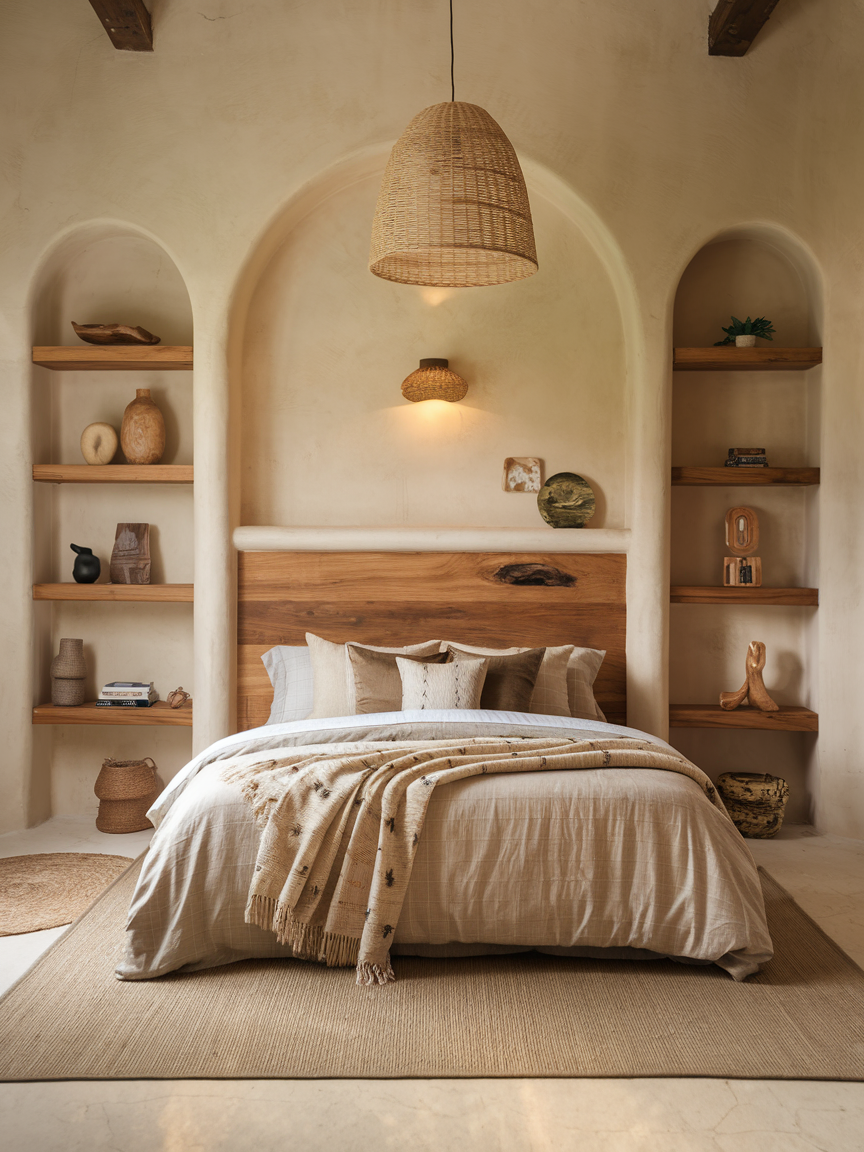
Small wooden accessories can make a noticeable difference in the atmosphere of a bedroom. Picture frames, bedside trays, decorative bowls, and compact stools introduce natural texture without taking up much space. These details work particularly well in rooms decorated with soft neutrals, creamy whites, or muted earthy colors. Light wood creates a fresh Scandinavian-inspired feel, while darker finishes add depth and richness. Try repeating similar wood tones in two or three areas of the room to create a cohesive appearance. For example, a wooden tray on the nightstand can complement a matching frame or the legs of an accent chair. These understated additions bring warmth and character to the bedroom while keeping the overall design simple and balanced.
2. Cozy Window Seats
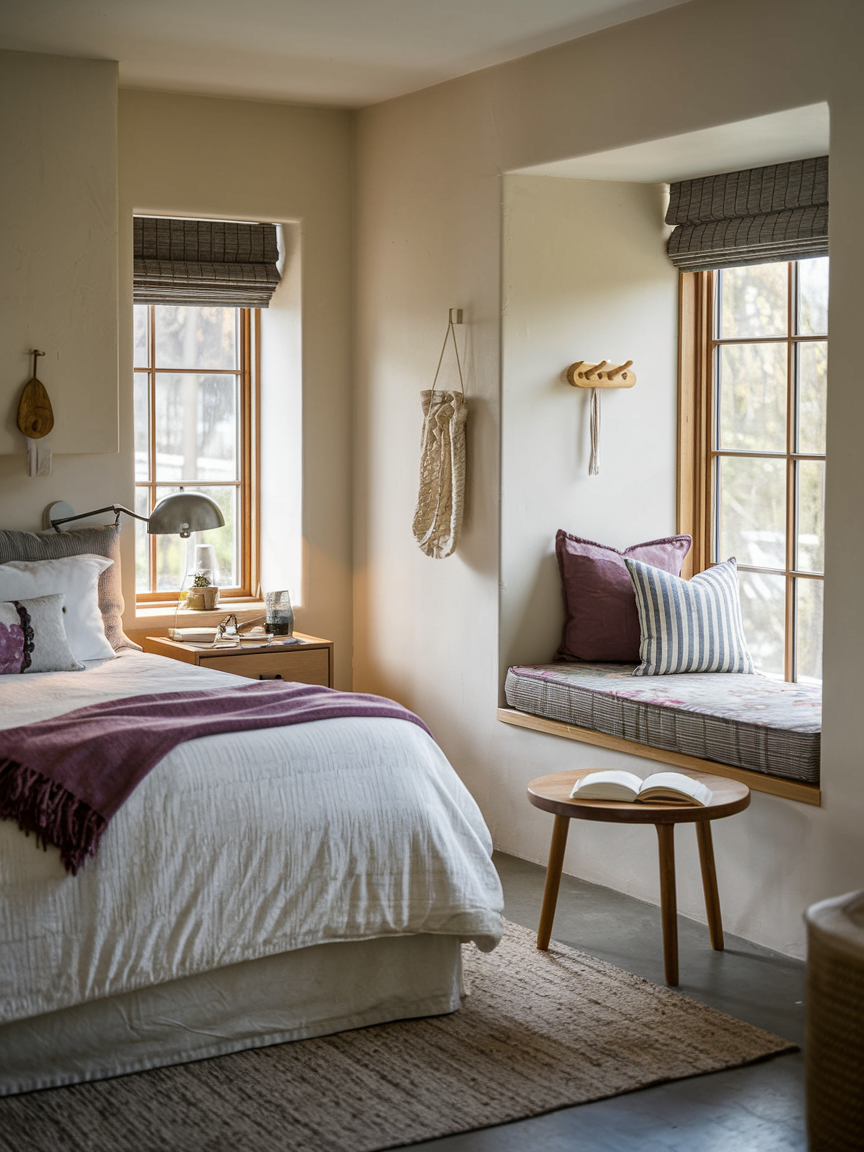
A window seat can turn an unused corner of your bedroom into a charming place to relax. Position a cushioned bench beneath a window and dress it with comfortable pillows and a soft blanket. If space allows, add a small side table where you can place a book, a cup of tea, or your favorite morning drink. Natural light makes this spot especially appealing during the day, while a pleasant outdoor view adds another layer of tranquility. Built-in drawers or storage compartments beneath the seat can provide extra room for blankets and reading materials. Whether you use it for quiet mornings, afternoon reading, or simply enjoying the view, a window seat creates a personal retreat within your bedroom.
3. Natural Wood Furniture

Wooden furniture brings an earthy warmth that helps a bedroom feel grounded and welcoming. A solid wood bed frame, a pair of matching nightstands, or a beautifully grained dresser can introduce natural character without requiring elaborate decoration. Lighter oak and ash create an airy, contemporary look, while walnut and deeper wood tones lend richness and sophistication. These finishes pair especially well with neutral walls, soft bedding, and woven accessories. Mixing different wood tones can also work beautifully when their undertones complement one another. Beyond its appearance, wood offers a timeless quality that suits many interior styles. Incorporating natural wood furniture creates a comfortable balance between visual simplicity, organic texture, and everyday functionality.
4. Warm Textured Curtains
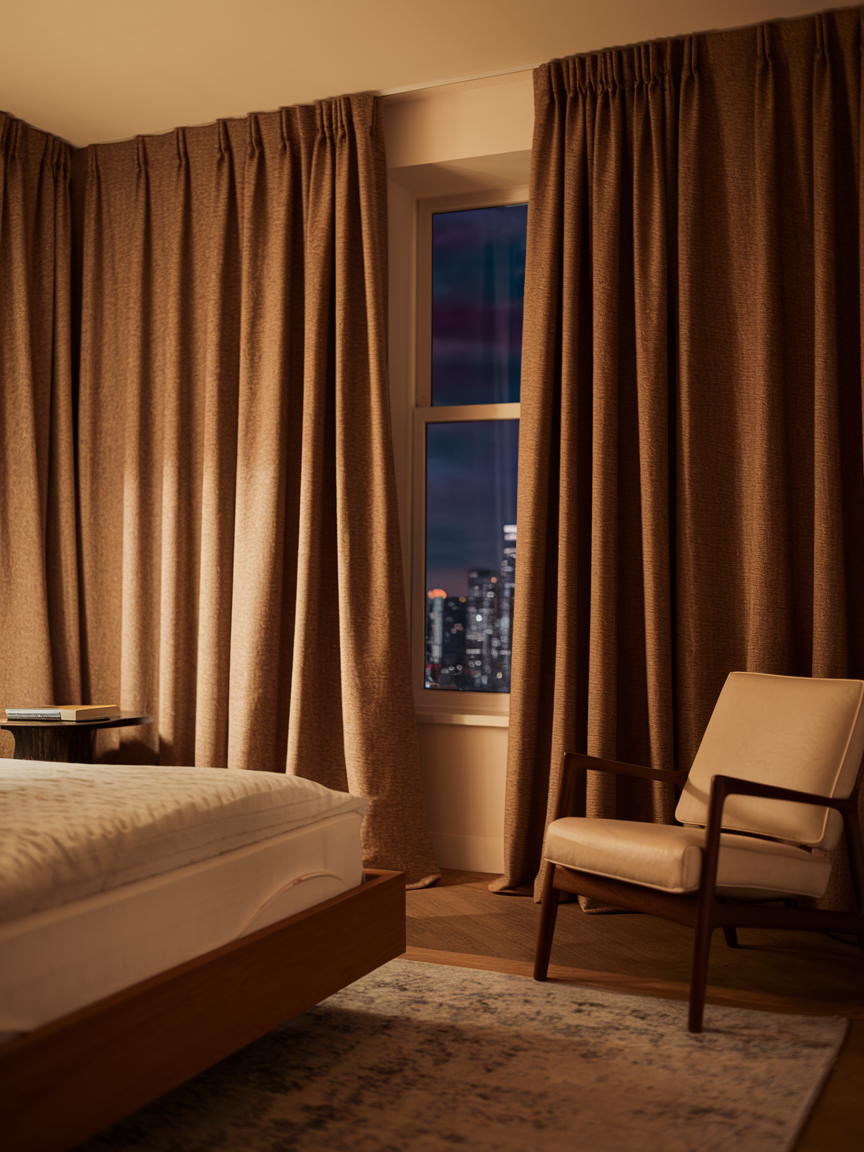
Curtains play an important role in making a bedroom feel private, soft, and comfortable. Choose flowing linen panels for a relaxed appearance or heavier velvet drapes for a richer, more luxurious atmosphere. Warm beige, muted brown, creamy white, and earthy gray are versatile options that complement many bedroom color schemes. Hanging curtains closer to the ceiling can make the windows appear taller, while wider curtain panels create a fuller and more elegant effect. For greater control over natural light, layer sheer curtains underneath thicker drapes. This combination allows daylight to filter gently into the room while providing additional privacy when needed. Beautiful curtains also soften hard architectural lines, helping the entire bedroom feel more intimate and complete.
5. Minimal Clutter
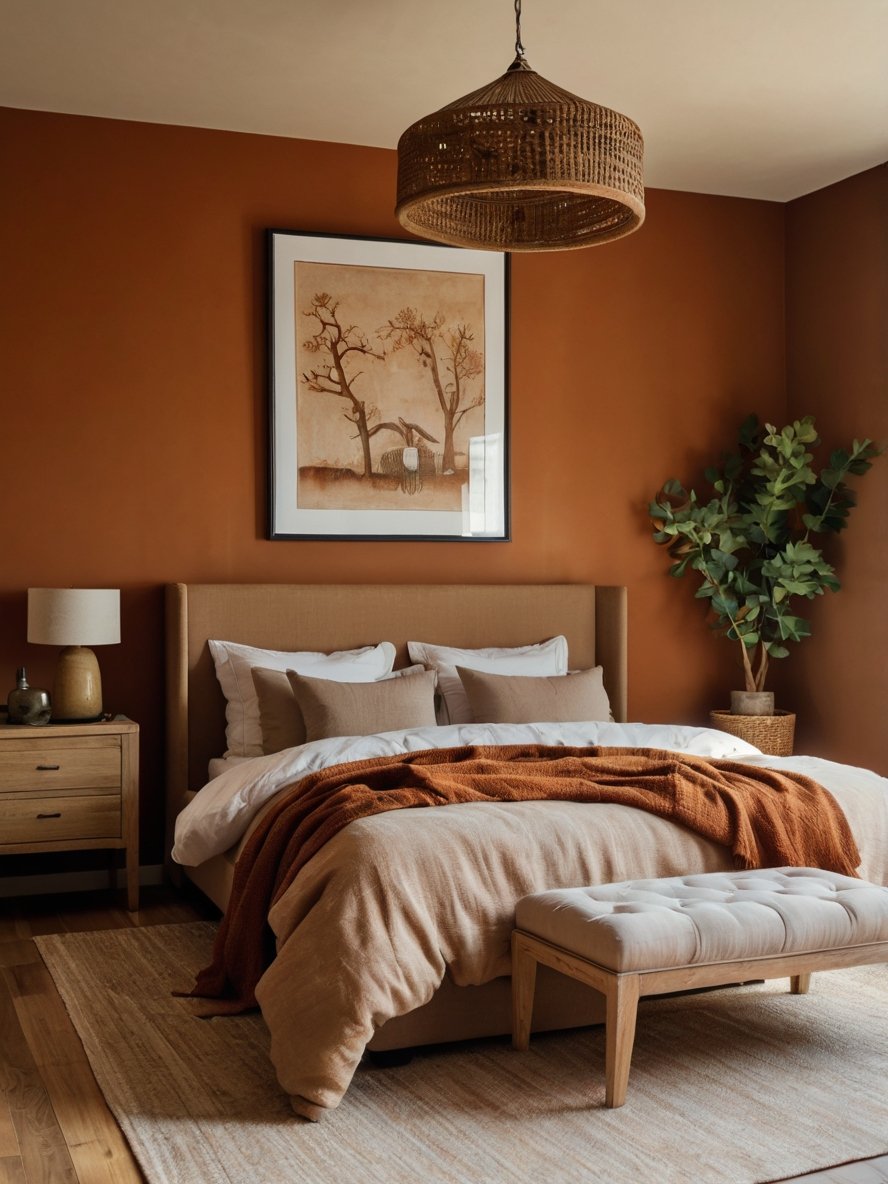
A bedroom feels more restful when everything has a place and unnecessary distractions are kept to a minimum. Start by clearing bedside surfaces, organizing clothing, and removing items that no longer serve a purpose. Baskets, storage boxes, under-bed organizers, and drawer dividers can help keep everyday belongings accessible without making the room look crowded. Keep a few meaningful decorations on display rather than filling every shelf and tabletop. This allows favorite pieces to stand out while preserving a sense of openness. A clutter-free environment also makes cleaning easier and helps the room feel more manageable at the end of a busy day. The goal is not to eliminate personality but to create a balanced space where comfort and organization work together.
6. Layered Wall Art
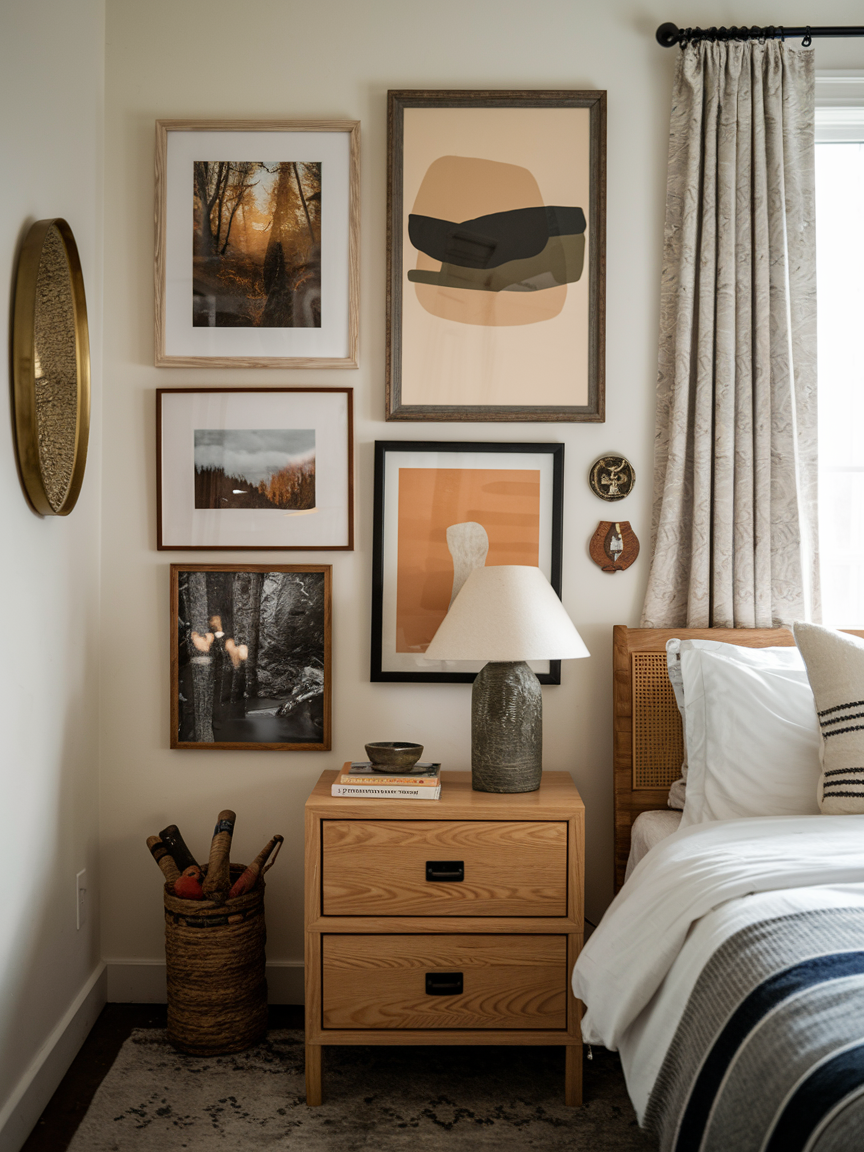
A thoughtfully arranged gallery wall can give your bedroom character while making the space feel more personal. Combine framed photographs, abstract prints, botanical illustrations, or artwork that reflects your interests. For a cohesive appearance, repeat a few colors from the bedding, curtains, or rug throughout the collection. You can keep the frames uniform for a clean, orderly arrangement or mix different sizes and finishes for a more relaxed look. Before hanging anything, arrange the pieces on the floor to experiment with spacing and composition. If you prefer a simpler approach, display two or three larger artworks above the bed or dresser. Well-chosen wall art adds visual depth and personality, helping the bedroom feel complete without relying on excessive decoration.
7. Layered Textiles
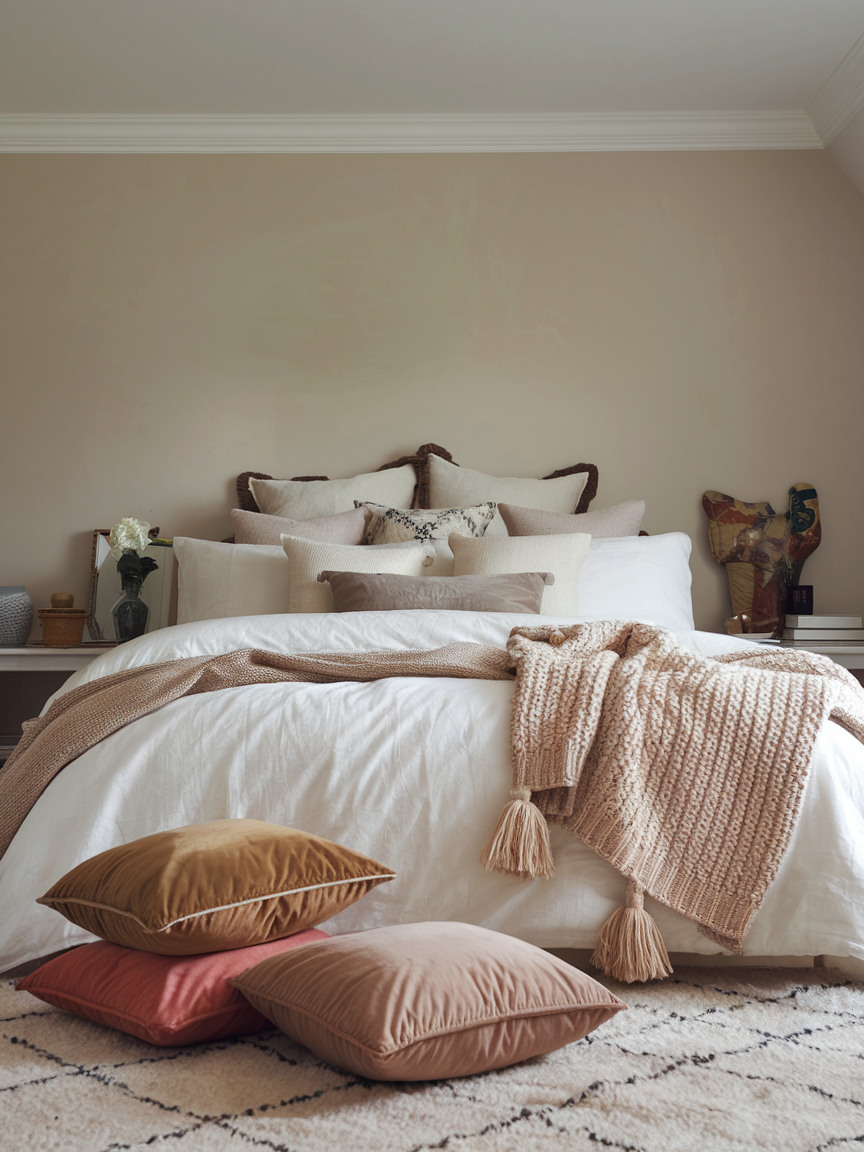
Combining different textiles is an easy way to make a bedroom feel more inviting. Mix crisp cotton sheets with a linen duvet cover, a knitted blanket, velvet cushions, and a soft wool rug to create a variety of textures. The contrast between these materials gives the room depth and makes it feel more carefully styled. You do not need to introduce many colors or patterns to achieve this effect. A restrained palette of complementary shades allows the different fabrics to stand out without competing for attention. Consider carrying the same textures beyond the bed through upholstered furniture, curtains, or decorative cushions. This approach creates a cohesive, tactile environment that feels comfortable in everyday life while maintaining a polished appearance.
8. Personal Memorabilia
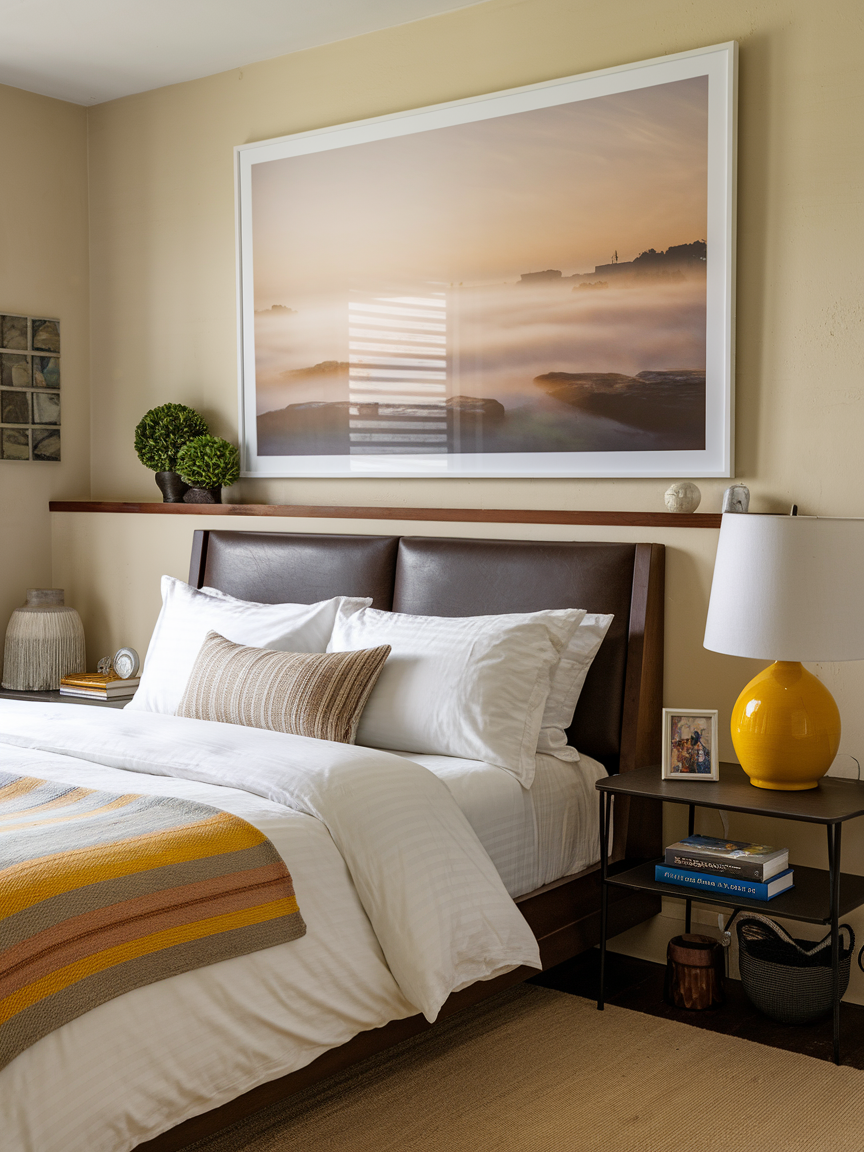
A cozy bedroom should reflect the person who lives in it. Displaying meaningful photographs, favorite artwork, travel souvenirs, or treasured keepsakes can make the space feel more personal than a perfectly styled showroom. Arrange a few favorite objects on a dresser, create a small gallery wall, or place sentimental items on a bedside shelf. The key is to choose pieces that hold genuine meaning rather than filling every available surface with decorations. Mixing personal treasures with complementary colors and natural materials helps maintain a cohesive look. These thoughtful details bring emotional warmth to the room and make it feel familiar, comforting, and uniquely yours. Over time, they turn the bedroom into a space that tells your story.
9. Statement Lighting Fixtures
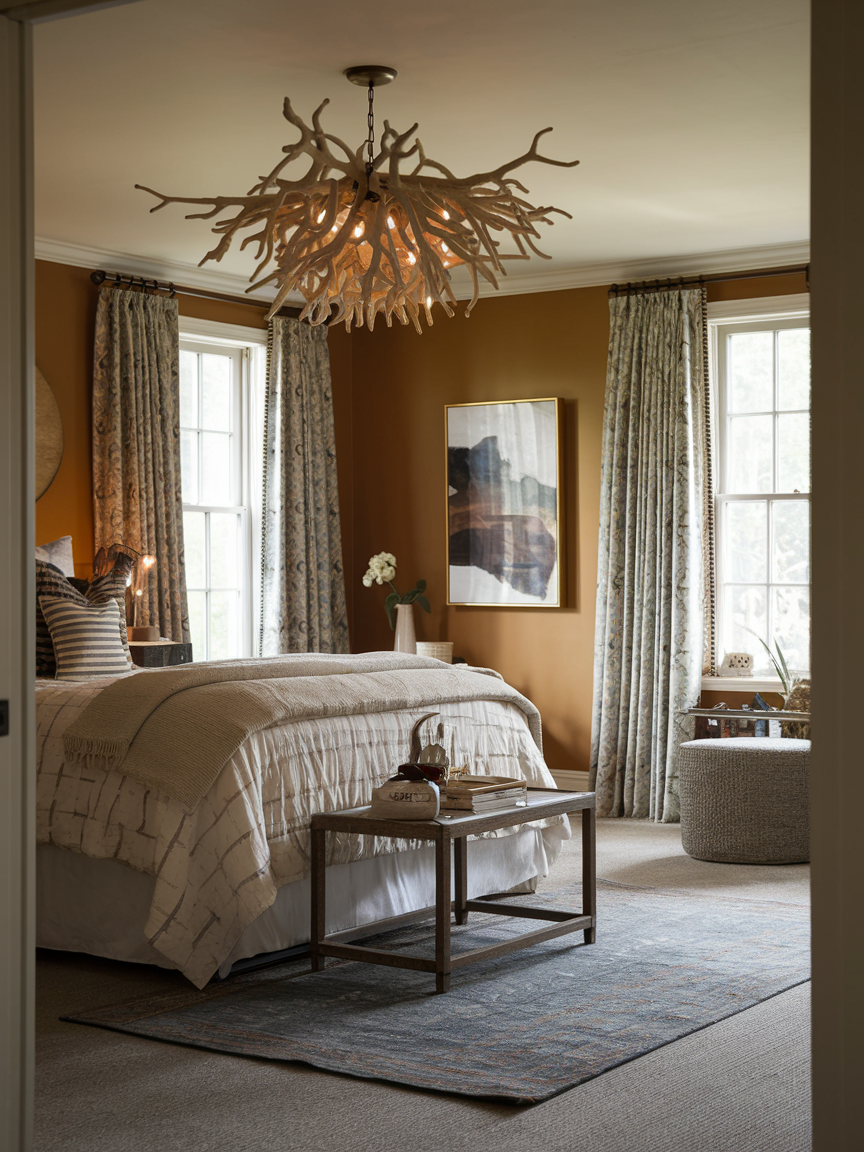
A statement light fixture can become a striking focal point while contributing to the bedroom’s overall warmth. Consider a sculptural pendant, an elegant chandelier, or a modern ceiling light that complements the furniture and architectural style. Brass finishes add a touch of sophistication, while natural materials such as wood and woven fibers create a more relaxed atmosphere. For a balanced design, choose a fixture that suits the room’s proportions rather than overwhelming the space. Its appearance matters, but the quality of illumination is equally important. Pair the main fixture with bedside lamps or wall sconces to create a softer evening atmosphere. The combination of beautiful design and practical lighting helps the bedroom feel polished without sacrificing comfort.
10. Soft Neutral Color Palettes

Soft neutral colors can transform an ordinary bedroom into a peaceful retreat. Shades of creamy white, warm beige, gentle taupe, and light gray create a soothing foundation that feels timeless and welcoming. These colors work beautifully with different decorating styles, from modern minimalism to rustic charm. They also make it easier to introduce contrasting textures, subtle patterns, and decorative accents without making the room feel visually busy. Pair neutral walls with soft bedding, natural wood furniture, and warm lighting to create a harmonious atmosphere. The result is a bedroom that feels bright, airy, and comfortable, making it easier to unwind after a long day.
11. Layered Bedding
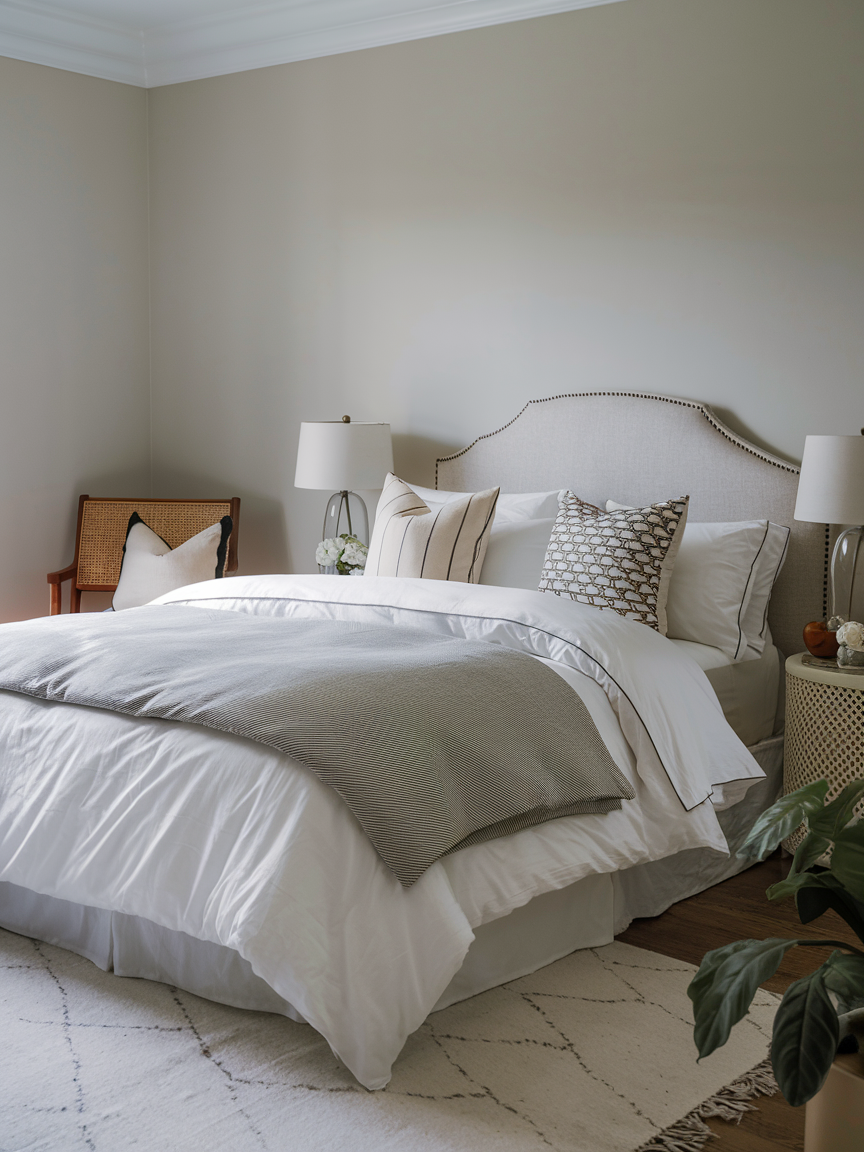
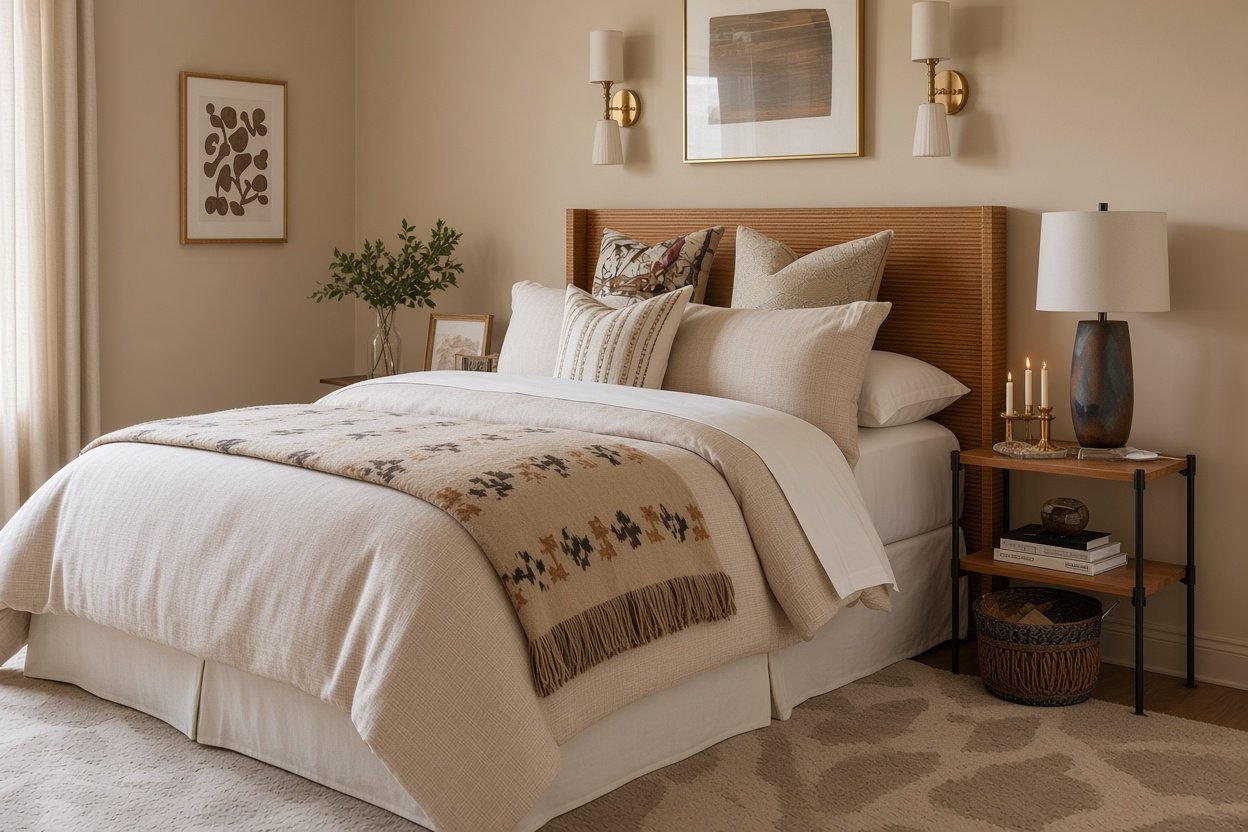
A beautifully layered bed can make the entire bedroom feel more inviting. Start with comfortable sheets, add a fluffy duvet or quilt, and finish with a lightweight blanket folded neatly at the foot of the bed. Decorative pillows in different sizes and textures bring additional depth without making the arrangement look overcrowded. Choose complementary colors to keep everything cohesive, or introduce a subtle pattern for extra personality. Cotton, linen, knitted fabrics, and velvet can all contribute to a luxurious appearance while offering different tactile experiences. Beyond its visual appeal, layered bedding provides flexibility throughout the year, allowing you to add or remove blankets as temperatures change.
12. Plush Rugs
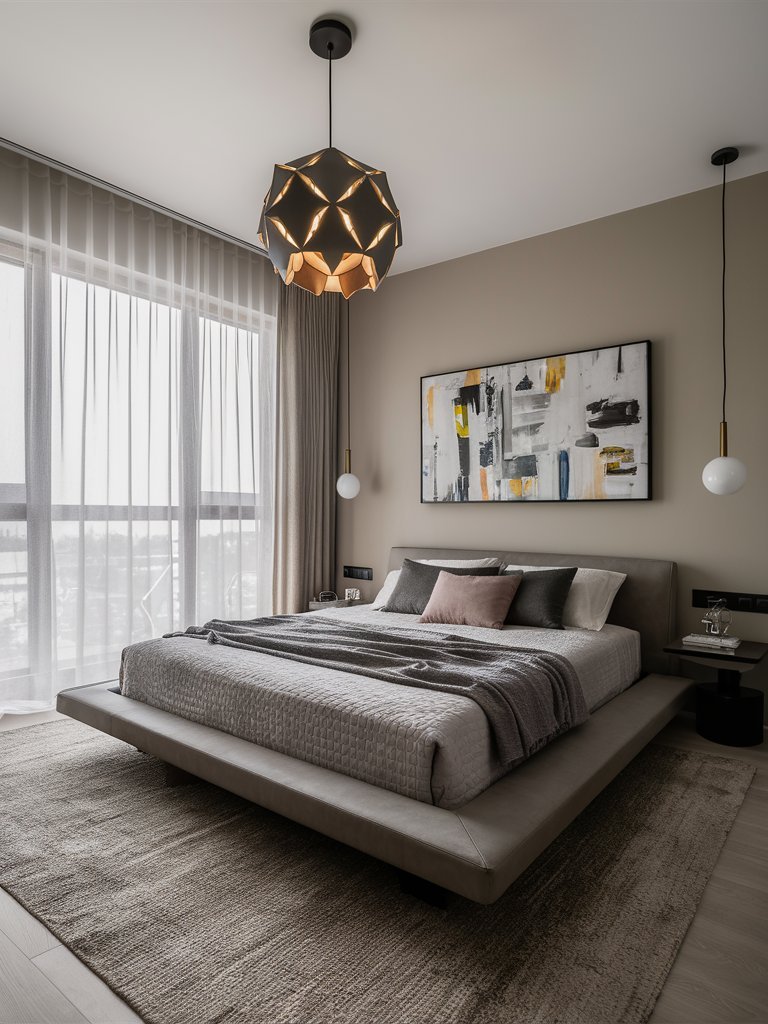
Stepping onto a soft rug first thing in the morning is one of those small comforts that can make a bedroom feel special. A plush rug adds warmth beneath your feet while helping define the sleeping area and connect the furniture visually. Wool, cotton, and other soft-textured materials are excellent choices for creating a welcoming foundation. Consider placing a large rug beneath the bed so that it extends beyond the sides and foot, creating a balanced and finished look. Smaller rugs can work just as well in compact bedrooms or beside the bed. Their textures also help absorb sound, contributing to a quieter, more peaceful atmosphere that encourages relaxation.
13. Ambient Lighting
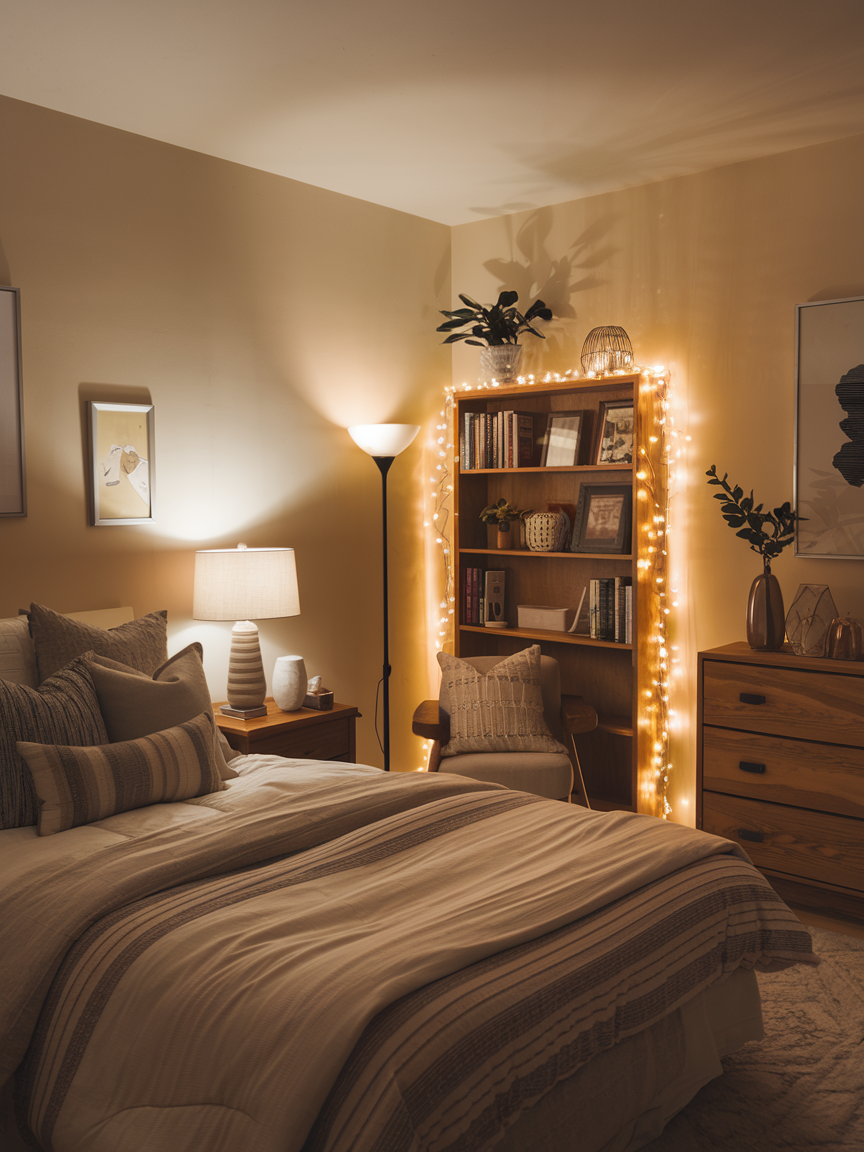
The right lighting can completely change the mood of a bedroom. Rather than depending entirely on a bright overhead fixture, incorporate softer light sources such as bedside lamps, floor lamps, and wall sconces. Warm-toned bulbs create a gentle glow that feels more relaxing in the evening, while dimmable fixtures allow you to adjust the brightness to suit different activities. You can also use subtle accent lighting to highlight artwork, shelving, or architectural details. Combining several light sources makes the room feel more dimensional and comfortable than relying on a single fixture. With thoughtful placement and the right color temperature, even a simple bedroom can become an inviting retreat for reading, resting, and unwinding.
14. Textured Throws and Pillows
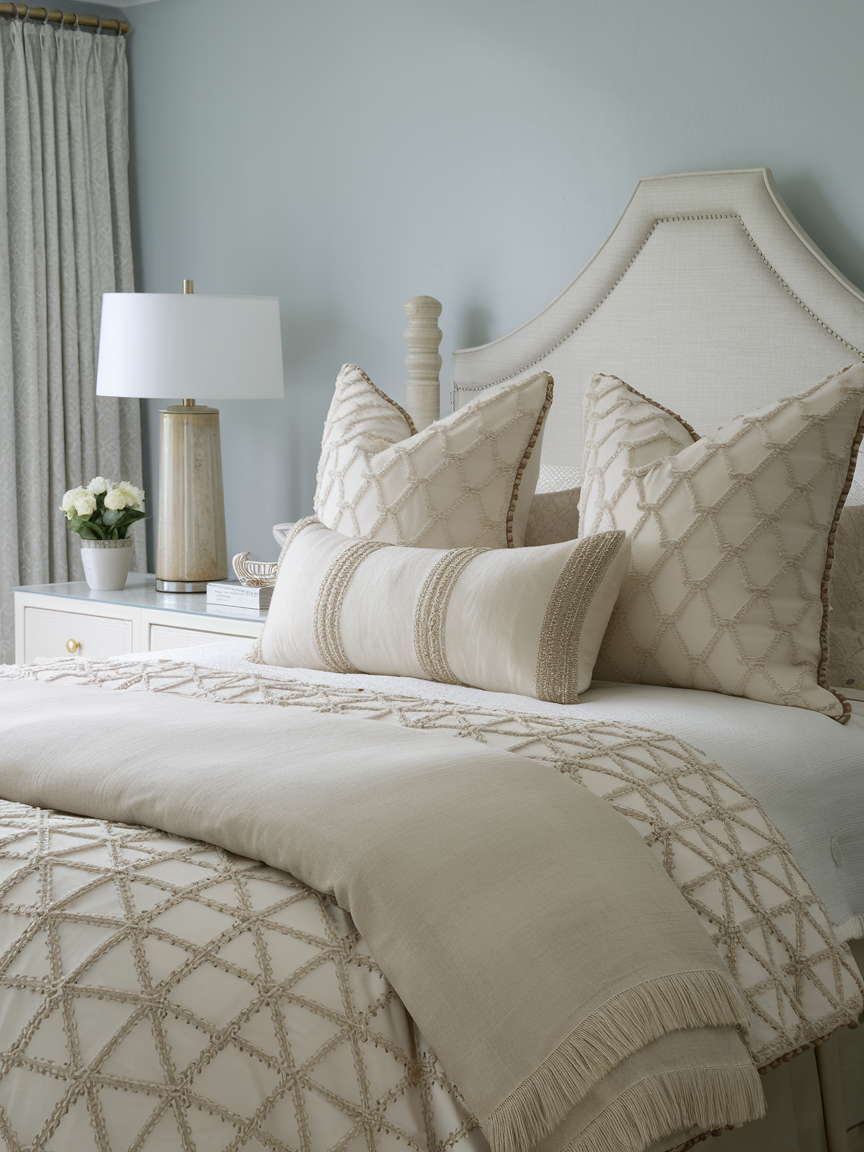
Different textures bring depth and personality to a bedroom while making it feel wonderfully comfortable. Arrange knitted throws, velvet cushions, linen pillows, or faux-fur accents across the bed to create an inviting combination of materials. The contrast between smooth sheets and textured accessories makes the space feel more thoughtfully decorated. Stick to a coordinated color palette if you prefer a calm appearance, or introduce a few contrasting shades to create visual interest. A soft throw is also practical for chilly evenings, while decorative pillows provide extra support when sitting up in bed. These simple accessories can make even an understated bedroom feel warmer, more luxurious, and full of character.
15. Cozy Reading Corners
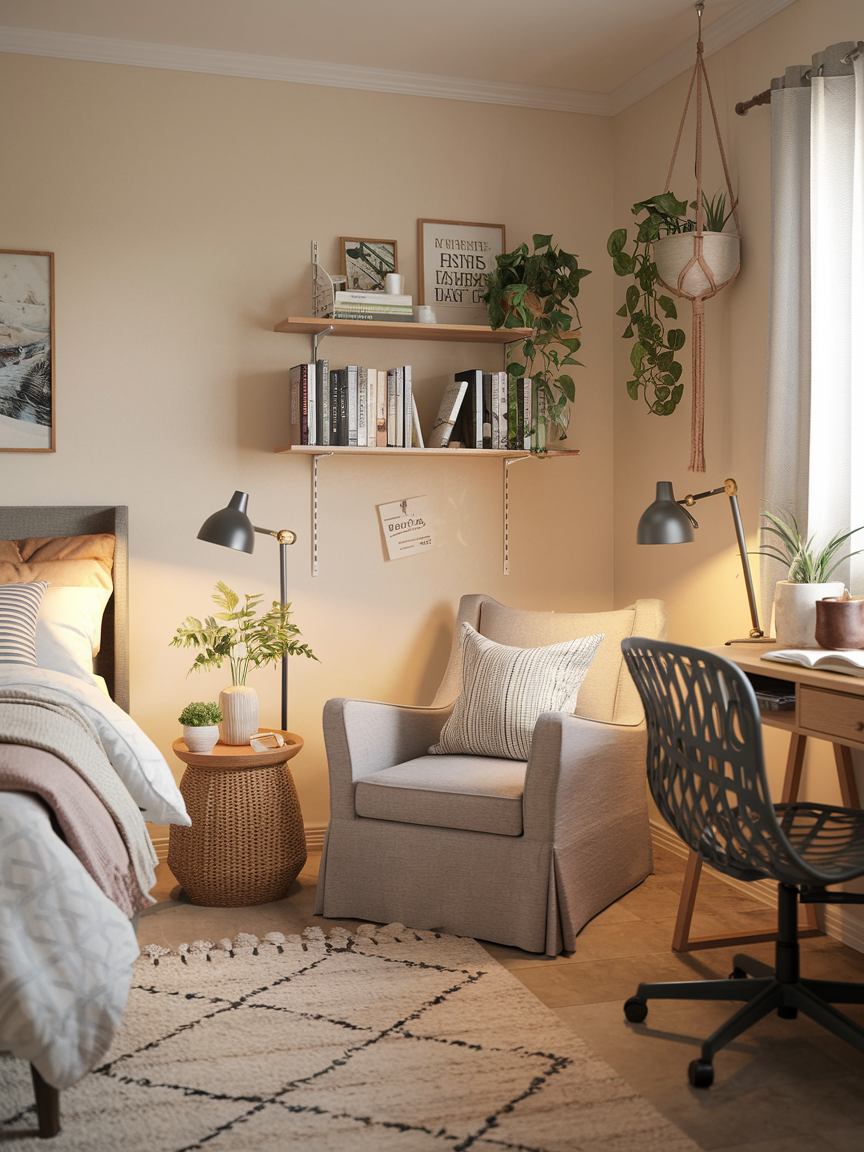
A dedicated reading corner gives your bedroom another comfortable place to unwind. Start with an upholstered armchair, a compact chaise lounge, or a cushioned accent chair that fits the available space. Add a small table for books and other essentials, along with a floor lamp that provides enough light for reading without being too harsh. A soft cushion and a lightweight throw make the arrangement even more inviting. If you have limited floor space, a chair tucked beside a window or in an unused corner can be all you need. Keep the surrounding decor simple so the area feels peaceful rather than crowded. This little retreat offers a welcome alternative to spending every relaxing moment in bed.
16. Neutral Walls with Accent Colors
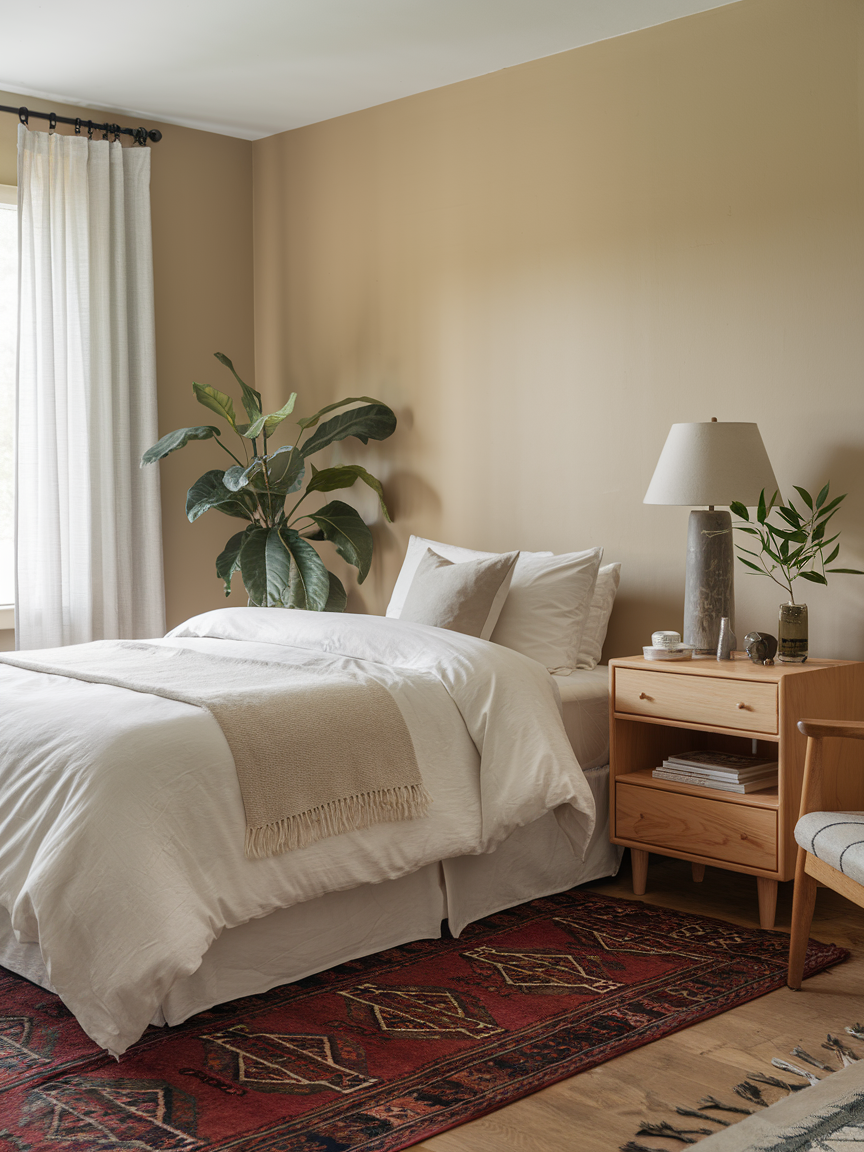
Neutral walls provide a versatile backdrop for creating a bedroom that feels calm without looking plain. Cream, warm white, beige, and light gray work particularly well because they complement a wide range of furniture and decorative styles. Introduce accent colors through cushions, artwork, bedding, or a carefully chosen upholstered chair. Muted sage green, dusty blue, terracotta, and soft blush can add personality while preserving the room’s peaceful atmosphere. You can also repeat one accent shade in several places to create a sense of visual connection. This approach makes it easy to refresh your bedroom whenever your preferences change. Instead of committing to a bold wall color, you can create an expressive yet relaxing space through smaller, flexible details.
17. Layered Lighting
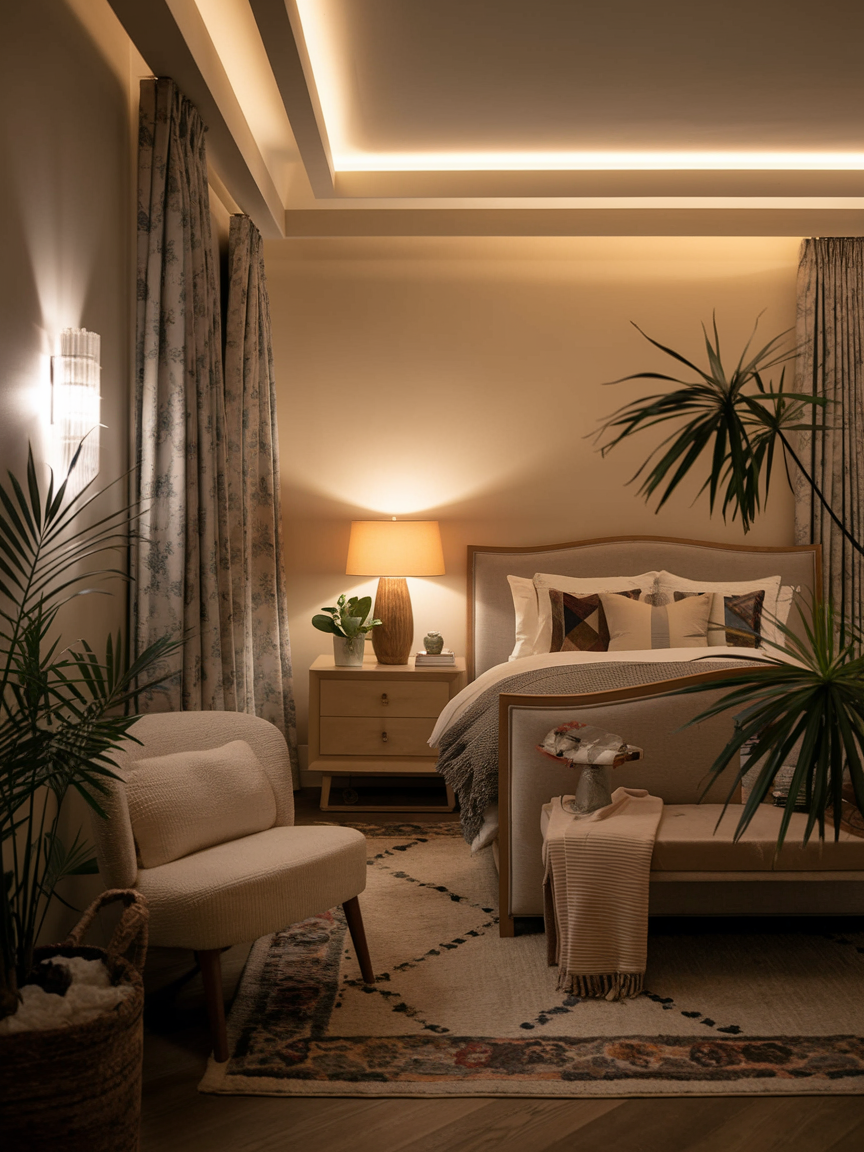
Layered lighting creates a more adaptable bedroom by combining several types of illumination. Begin with general lighting from a ceiling fixture, then add task lighting through bedside lamps or reading lights. Accent lighting, such as LED strips behind a headboard or small lamps on a dresser, introduces depth and highlights selected features. Each source serves a different purpose, allowing you to create the right atmosphere throughout the day. Bright, balanced lighting is useful during morning routines, while softer illumination works better for quiet evenings. Choosing warm bulbs for relaxation areas helps maintain a comfortable mood. By distributing light around the room rather than concentrating it in one place, you can create a bedroom that feels more inviting, functional, and thoughtfully designed.
18. Natural Elements
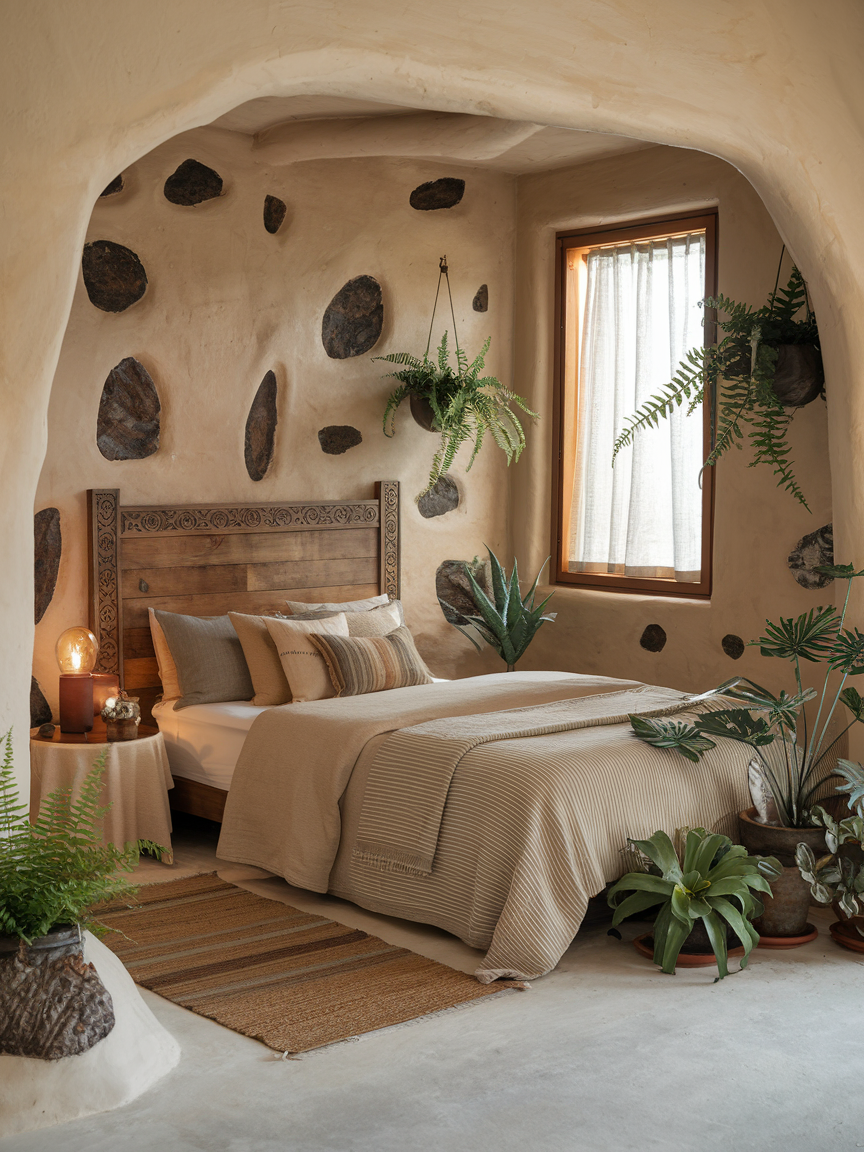
Bringing natural elements into the bedroom creates a refreshing connection to the outdoors. Houseplants, fresh flowers, wooden accessories, woven baskets, and stone-inspired decorations introduce organic shapes and textures that soften the room’s appearance. A leafy plant beside the window can add a lively touch, while a simple vase of seasonal flowers brings color without overwhelming the decor. If maintaining plants is difficult, botanical artwork and natural woven materials offer similar visual appeal. Combine these elements with linen bedding, neutral colors, and gentle lighting to create a harmonious environment. When choosing plants, consider the available daylight and select varieties suited to your conditions. These natural touches make the bedroom feel fresh, grounded, and inviting without requiring a complete redesign.
19. Comfortable Headboards
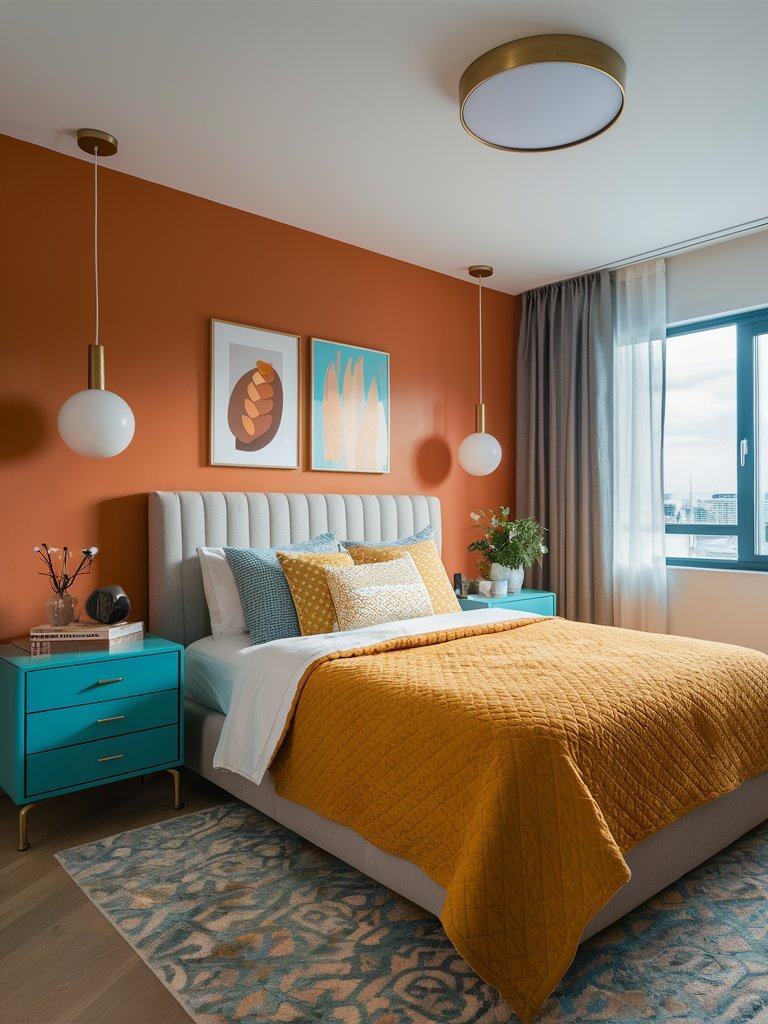
A comfortable headboard adds both visual interest and practical support to the bed. Upholstered designs covered in linen, velvet, or textured fabric create a soft surface for sitting up while reading or watching a movie. A tall headboard can make a strong design statement, whereas a simple, low-profile version suits smaller or more minimalist bedrooms. Choose a color that complements the bedding and surrounding walls for a coordinated appearance. Neutral upholstery blends easily into different decorating schemes, while deeper shades can introduce contrast and sophistication. You can also consider gently curved or channel-tufted designs to bring extra character to the room. A well-chosen headboard anchors the bed visually and helps create a more finished, comfortable sleeping area.
20. Functional Nightstands
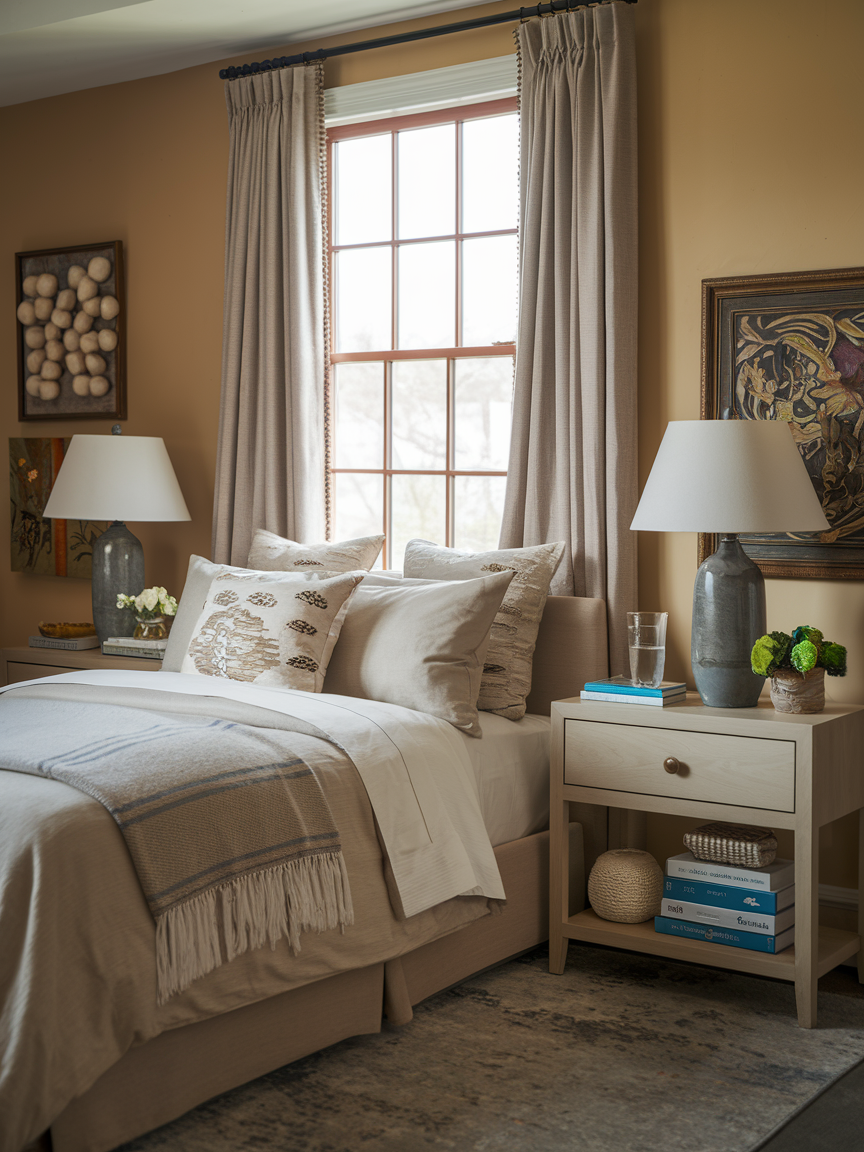
A well-chosen nightstand keeps everyday essentials close at hand while helping the bedroom feel organized. Look for a design with enough space for a lamp, a book, a glass of water, and other items you regularly use. Drawers are useful for concealing smaller belongings, while open shelves provide convenient storage for reading materials or decorative baskets. In compact bedrooms, floating nightstands or narrow tables can offer functionality without taking up too much floor space. Matching nightstands create a symmetrical arrangement, but different designs can also work well when they share similar finishes or proportions. Choose a height that aligns comfortably with the mattress for easier access. A practical bedside setup reduces unnecessary clutter and makes your daily routines feel simpler.
21. Seasonal Bedding
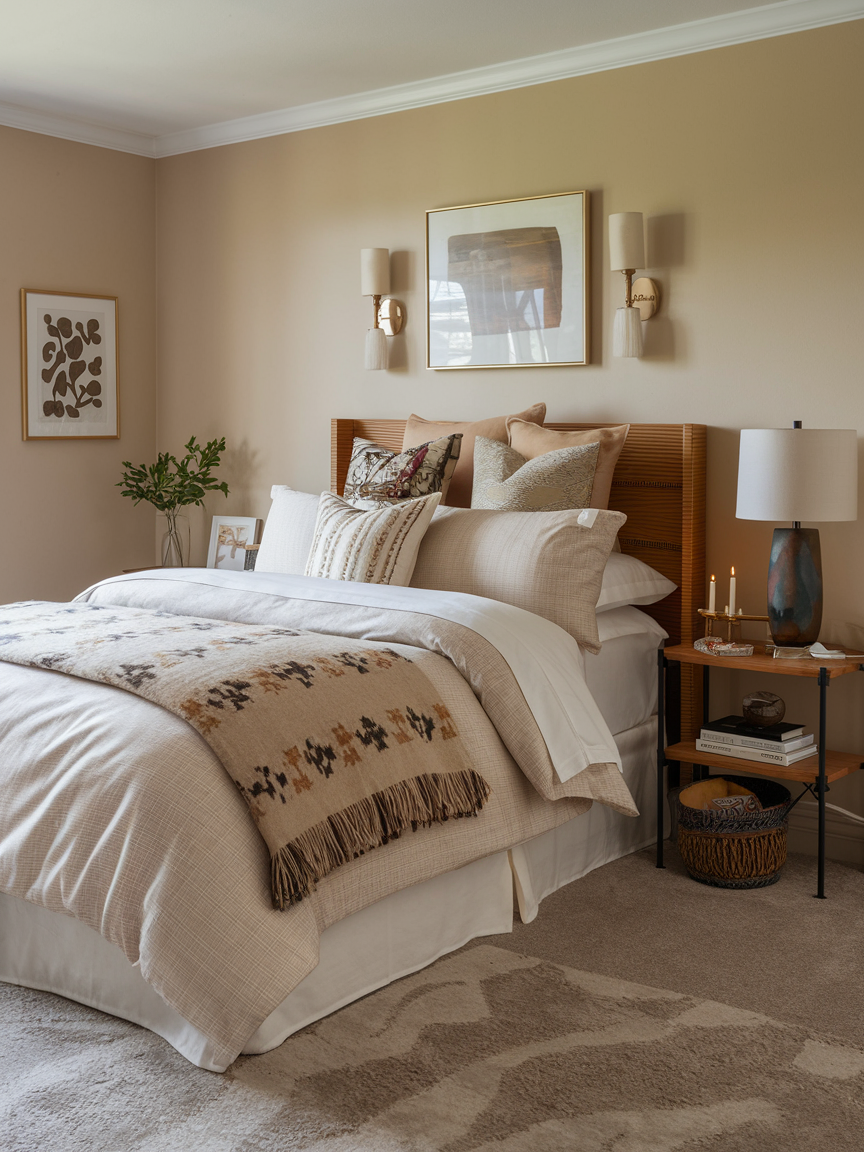
Changing your bedding with the seasons is a simple way to keep your bedroom comfortable throughout the year. Lightweight cotton and breathable linen are useful options for warmer weather, while flannel sheets, thicker quilts, and cozy blankets provide additional warmth during cooler months. Seasonal changes also offer an opportunity to experiment with colors and patterns. Fresh whites, pale blues, and soft greens can create a light, airy appearance in summer, while rust, caramel, and deeper neutrals bring a warmer feeling in winter. You do not need to replace everything each season. Switching pillowcases, adding a different throw, or changing the duvet cover can refresh the room with minimal effort. Choosing bedding suited to the temperature helps balance comfort, appearance, and practicality.
22. Decorative Mirrors
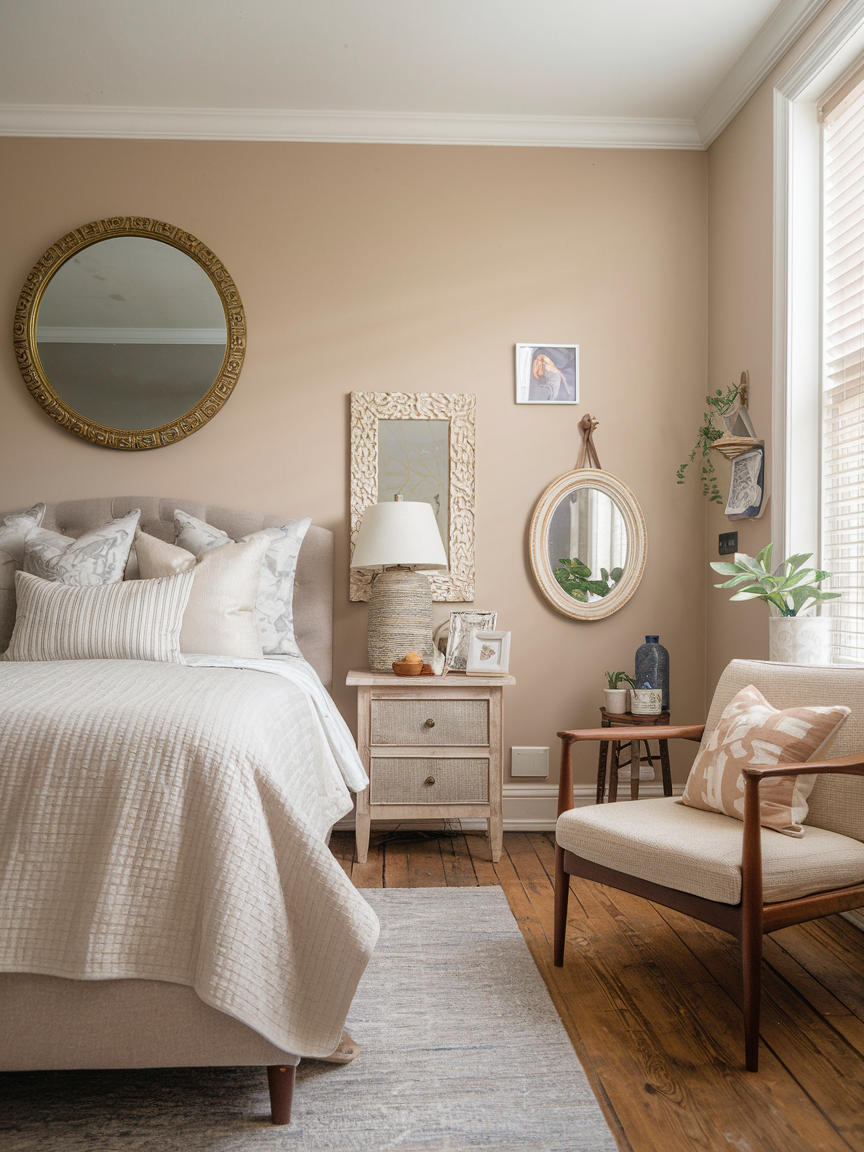
Decorative mirrors can make a bedroom feel brighter, more spacious, and more visually interesting. Positioning a mirror opposite or beside a window can help distribute natural light throughout the room, depending on the layout. A large leaning mirror adds a relaxed, contemporary touch, while a framed mirror above a dresser creates a more traditional arrangement. Choose a frame that complements the existing finishes, such as warm wood, brushed brass, or understated black metal. In smaller bedrooms, mirrors can create an impression of greater depth without occupying much floor space. Avoid placing them where they reflect clutter or unwanted visual distractions. When thoughtfully positioned, a mirror serves as both a practical everyday accessory and an elegant decorative feature.
23. Scented Candles
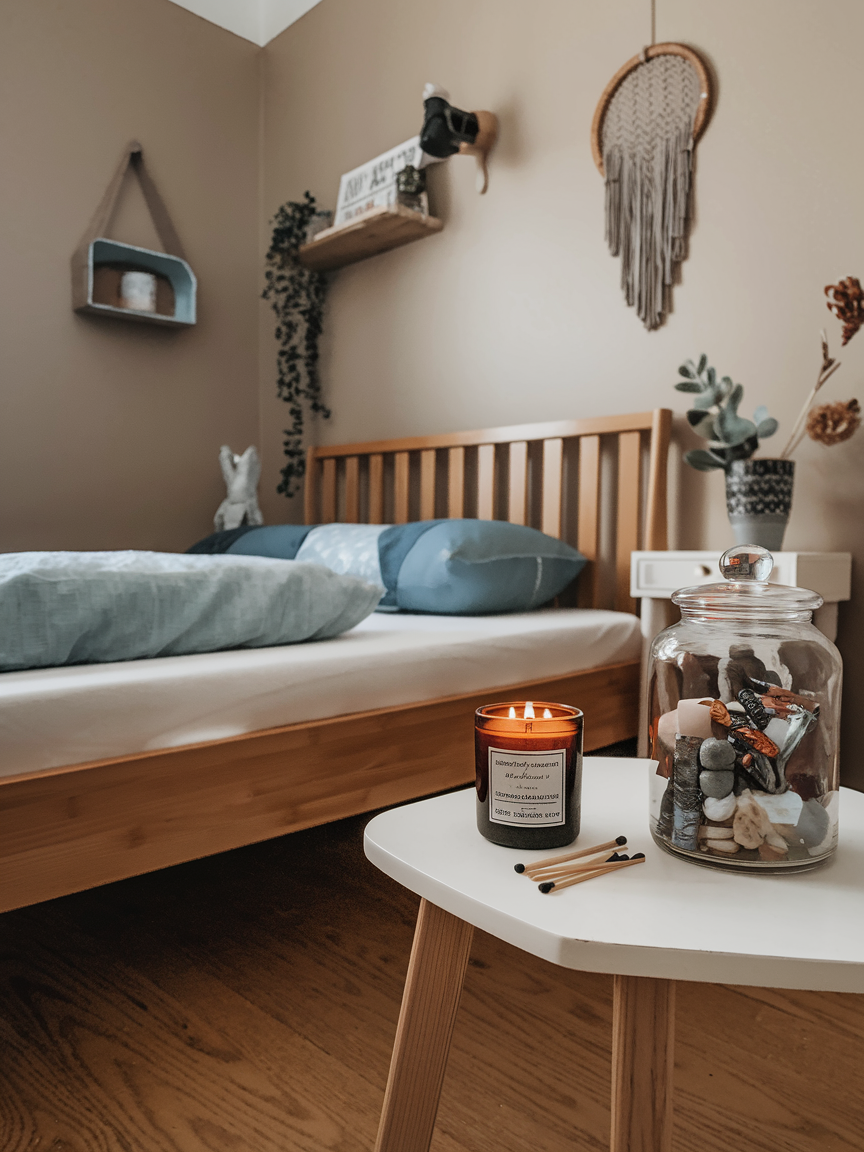
Pleasant scents can contribute to a relaxing bedroom atmosphere by making the space feel more personal and inviting. Fragrances such as lavender, vanilla, sandalwood, and gentle floral notes are popular choices for creating a soothing mood. Place candles on a stable, heat-resistant surface away from curtains, bedding, and other flammable materials. Their soft glow can also add visual warmth during a quiet evening at home. If you prefer a flame-free option, consider reed diffusers or an appropriate electric diffuser instead. Keep in mind that strong fragrances may be uncomfortable for some people, so choose a scent intensity that suits your preferences. Small sensory details like these can help make your bedroom feel more welcoming at the end of the day.
* The appeal of a cozy bedroom lies in its ability to reflect your personality while offering a comfortable escape from everyday life. Use these inspirations to experiment with textures, colors, lighting, and decor, and create a bedroom that feels like your own peaceful sanctuary.