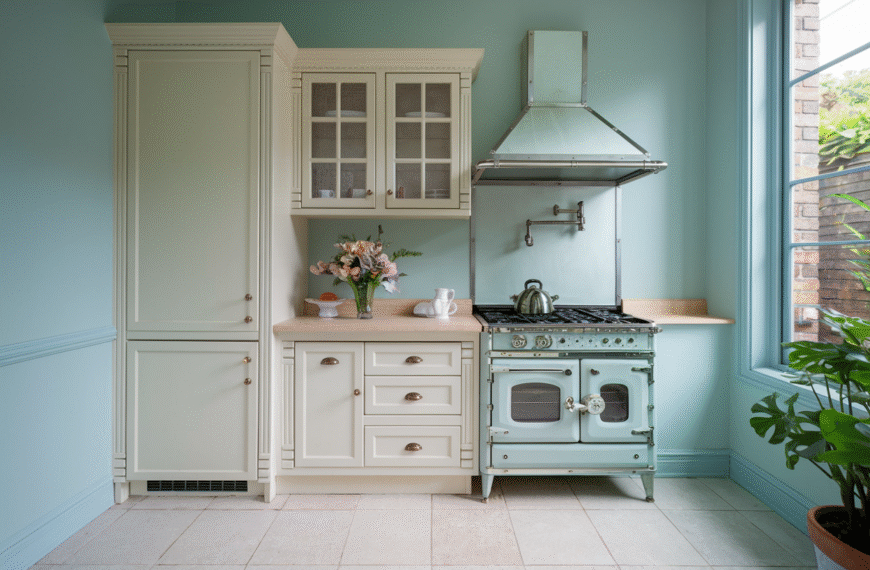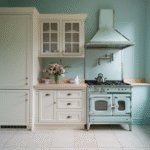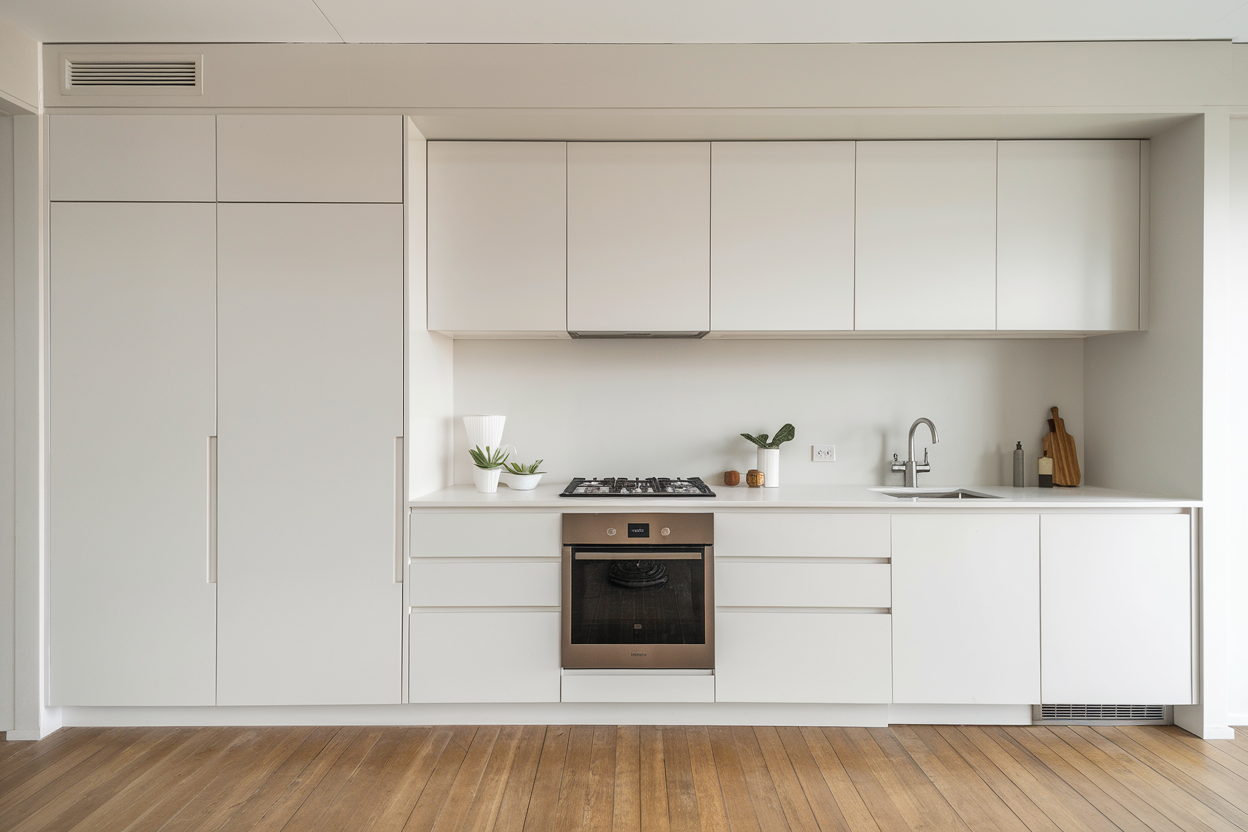
A modern minimalist kitchen embraces simplicity while delivering a refined and timeless aesthetic. Clean lines, uncluttered surfaces, and a carefully curated color palette create a space that feels calm, functional, and effortlessly stylish. Thoughtful storage solutions and streamlined cabinetry keep visual distractions to a minimum, allowing the beauty of quality materials and precise craftsmanship to stand out.
Subtle contrasts and natural textures add depth without compromising the minimalist philosophy. Sleek countertops, handleless cabinets, integrated appliances, and soft neutral tones work together to establish a harmonious and balanced environment. Strategic lighting further enhances the design, highlighting architectural features while maintaining a bright and welcoming atmosphere.
This curated collection showcases inspiring ways to achieve a kitchen that feels both modern and enduring. Each idea demonstrates how simplicity can become a powerful design statement. Let’s explore these modern minimalist kitchen ideas and discover how to create a clean, timeless space that blends practicality with understated elegance!
1. All-White Cabinetry
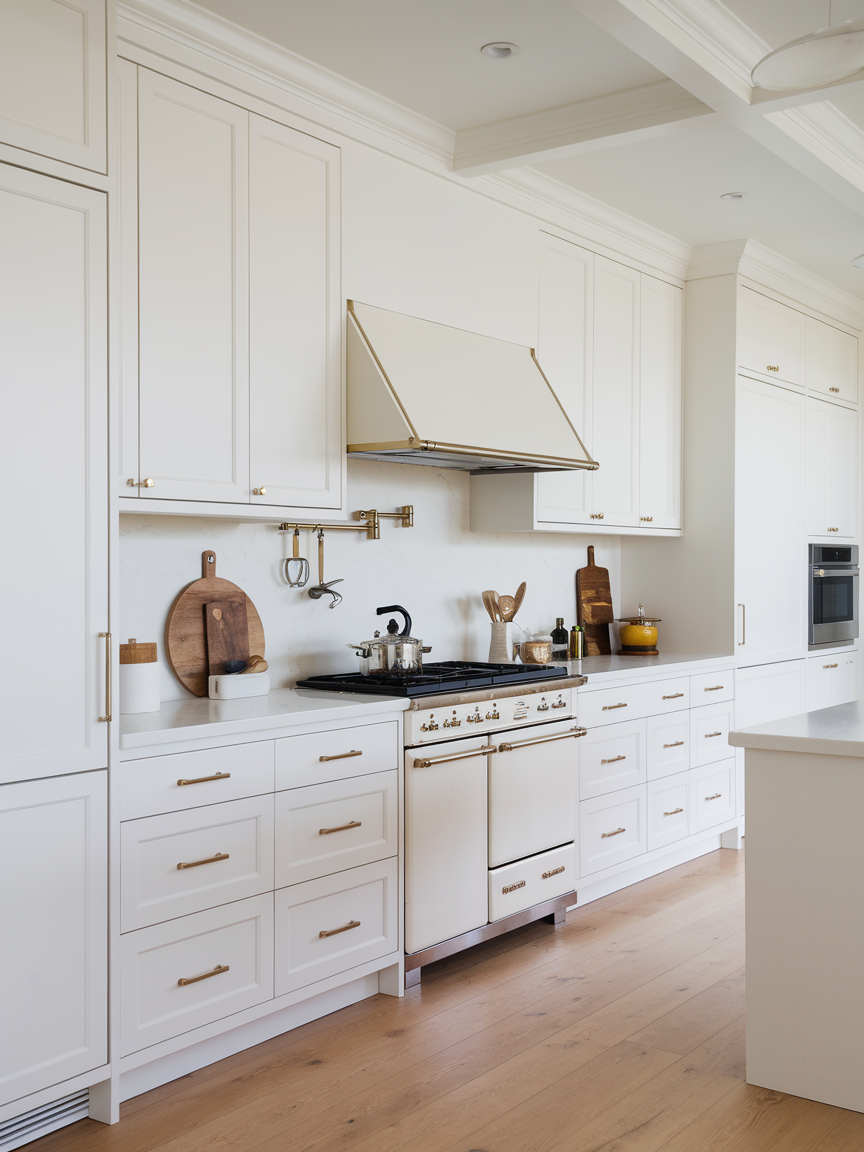
All-white cabinetry creates a fresh and airy foundation that defines modern minimalist kitchens. Flat-panel doors without ornate detailing keep the look streamlined and contemporary, while a matte or satin finish prevents the space from feeling overly glossy. White cabinets reflect natural light beautifully, making even smaller kitchens feel open and expansive. Pairing them with subtle hardware or completely handleless designs enhances the seamless appearance and eliminates visual clutter. To avoid a sterile feel, introduce warmth through wooden flooring or soft textiles. This approach ensures the kitchen feels welcoming while maintaining a refined, clean-lined aesthetic that remains timeless year after year.
2. Handleless Cabinets
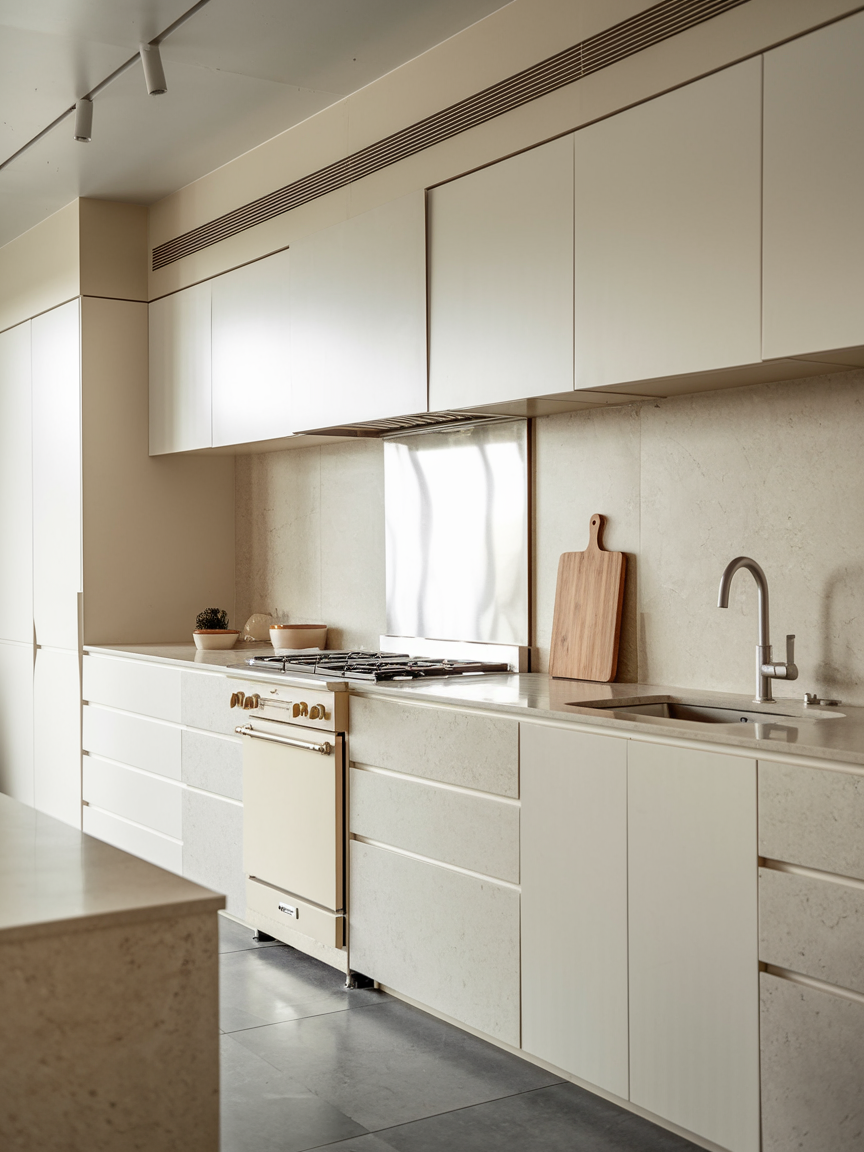
Handleless cabinets instantly elevate a minimalist kitchen by removing unnecessary visual interruptions. Push-to-open mechanisms or integrated finger pulls create smooth, uninterrupted surfaces that feel sleek and modern. This design choice enhances the sense of calm and order because there are no protruding elements breaking up the cabinetry lines. It also improves functionality, especially in compact kitchens where space efficiency matters. Choosing a neutral color palette such as white, beige, or soft gray further emphasizes the seamless aesthetic. The result is a sophisticated and understated kitchen design that prioritizes clean geometry and refined simplicity.
3. Neutral Color Palette
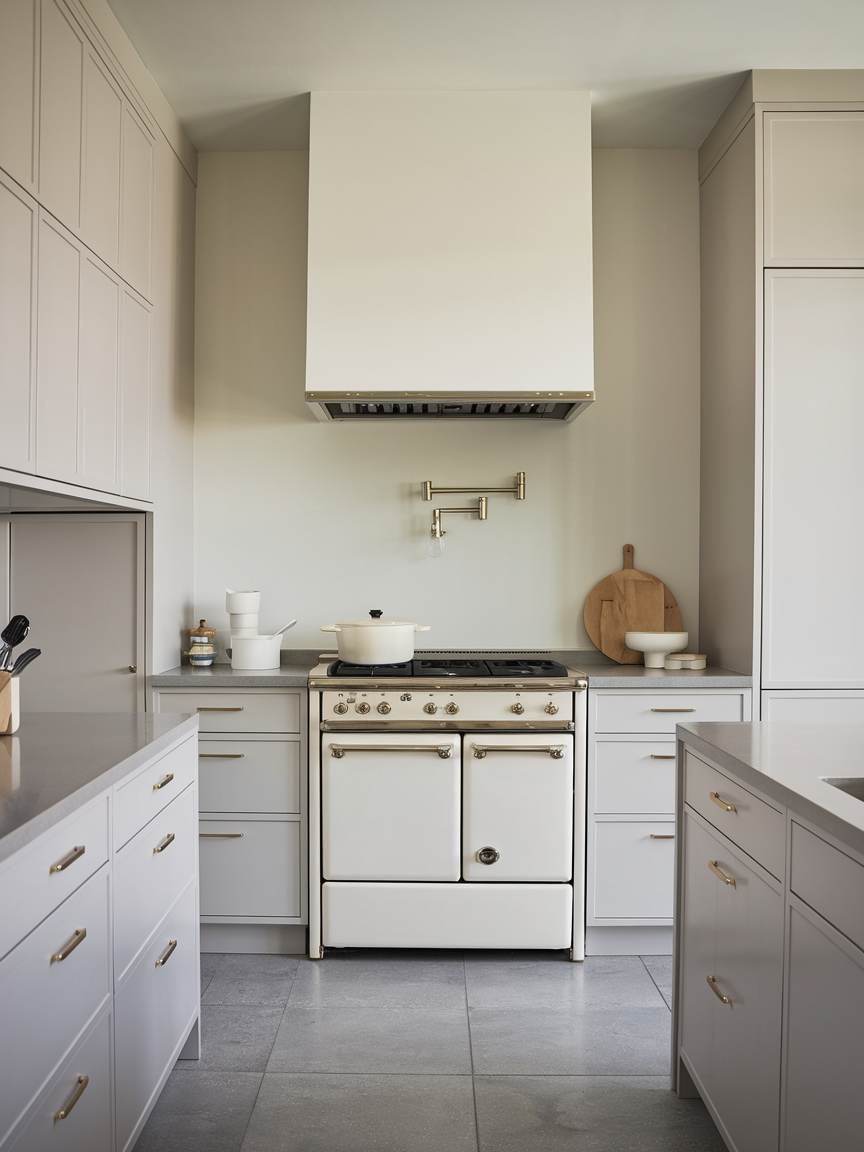
A neutral color palette is at the heart of minimalist kitchen design because it fosters a serene and balanced environment. Shades like white, cream, taupe, light gray, and soft beige create a cohesive and harmonious look that never goes out of style. These subtle tones allow architectural details and textures to shine without overwhelming the senses. Neutral kitchens are also highly versatile, making it easy to update décor or accessories over time. Incorporating layered neutrals rather than a single flat tone adds depth and dimension, ensuring the space feels warm and inviting while maintaining a polished and uncluttered aesthetic.
4. Natural Wood Accents
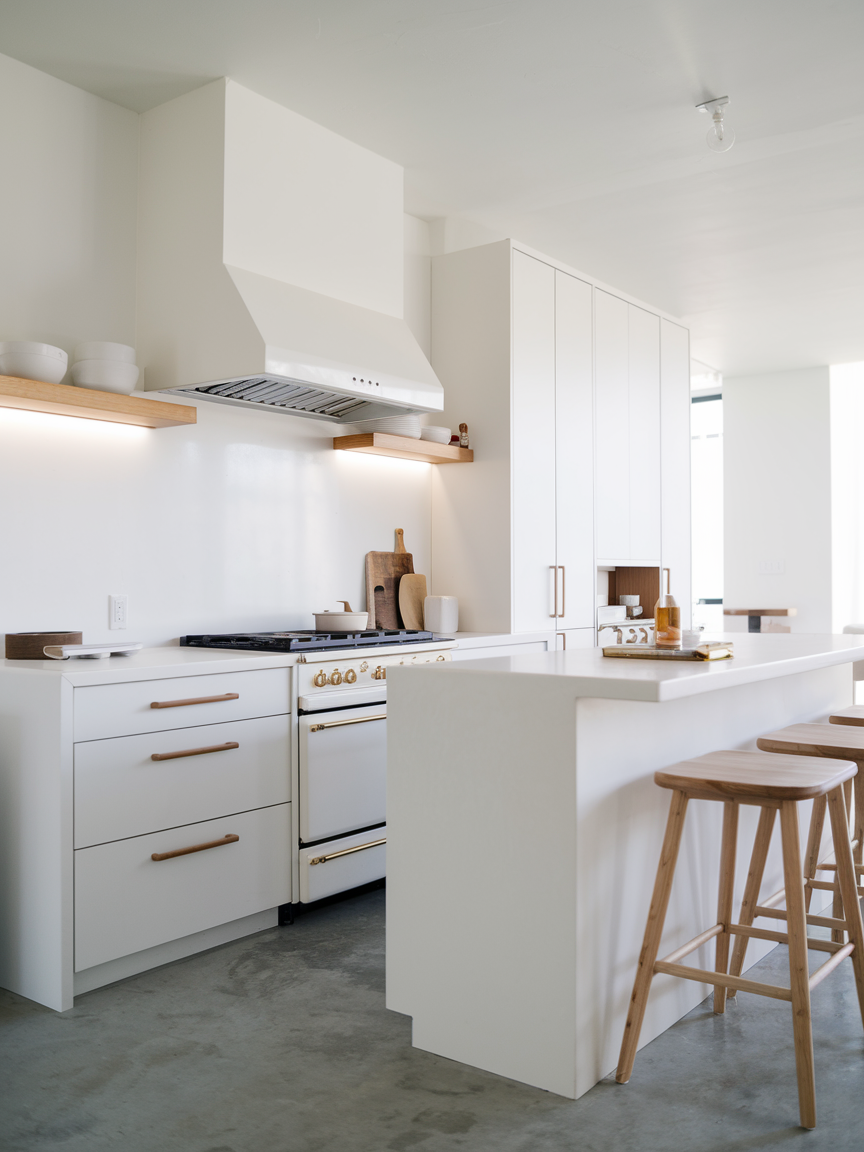
Incorporating natural wood accents brings warmth and organic beauty into a minimalist kitchen. Light oak shelves, walnut bar stools, or wooden cabinet panels soften the crisp lines and neutral tones typical of modern design. Wood introduces subtle texture and natural grain patterns that create visual interest without overwhelming the space. Keeping the wood finish simple and matte ensures it complements the minimalist philosophy rather than dominating the room. This balance between clean white surfaces and earthy wood elements results in a kitchen that feels both contemporary and welcoming, proving that minimalism can be cozy and inviting.
5. Open Shelving with Intentional Styling
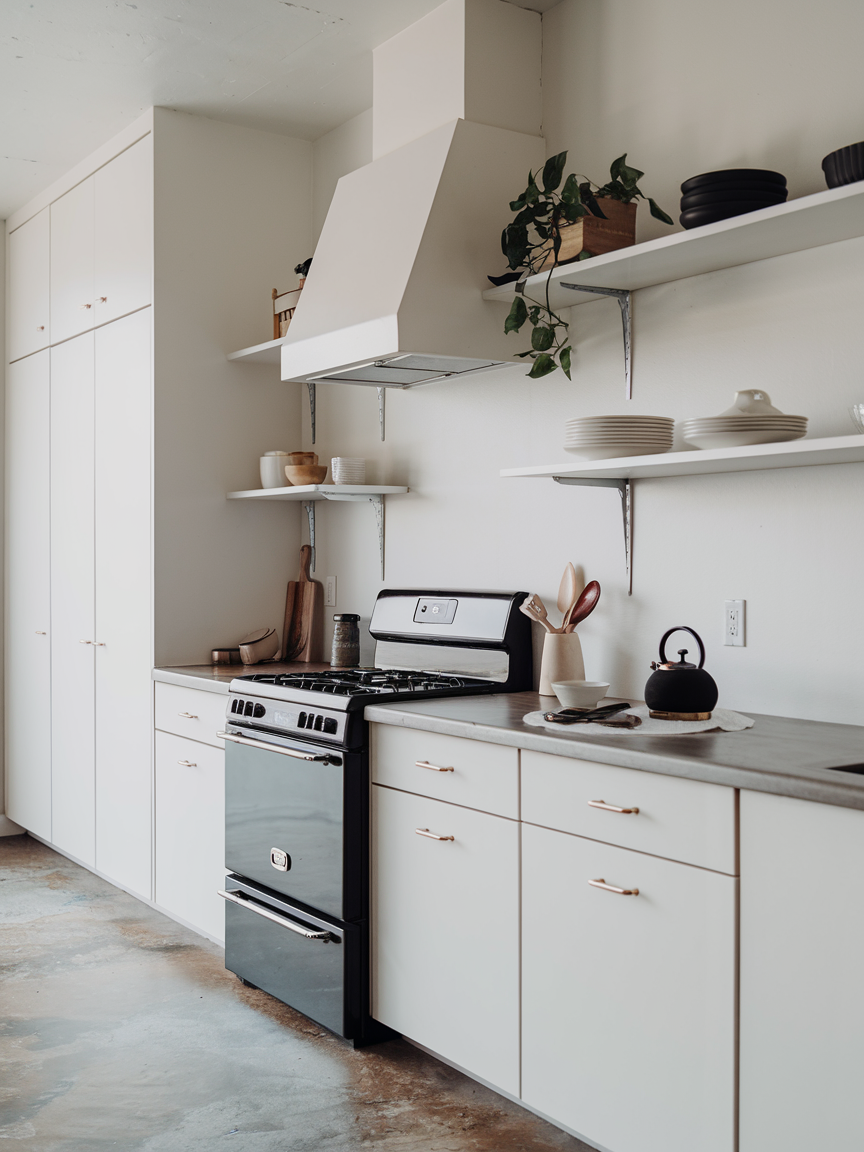
Open shelving offers a practical yet stylish way to showcase essential kitchen items while maintaining a minimalist look. Instead of cluttering shelves with miscellaneous objects, curate a small collection of cohesive pieces such as ceramic dishes, glass jars, or neutral-toned bowls. Keeping spacing consistent and avoiding overcrowding ensures the shelves enhance rather than disrupt the clean aesthetic. Floating wooden or metal shelves with hidden brackets create a streamlined effect that aligns with modern design principles. When styled thoughtfully, open shelving adds personality and functionality while preserving the airy and uncluttered atmosphere central to minimalist kitchens.
6. Integrated Appliances
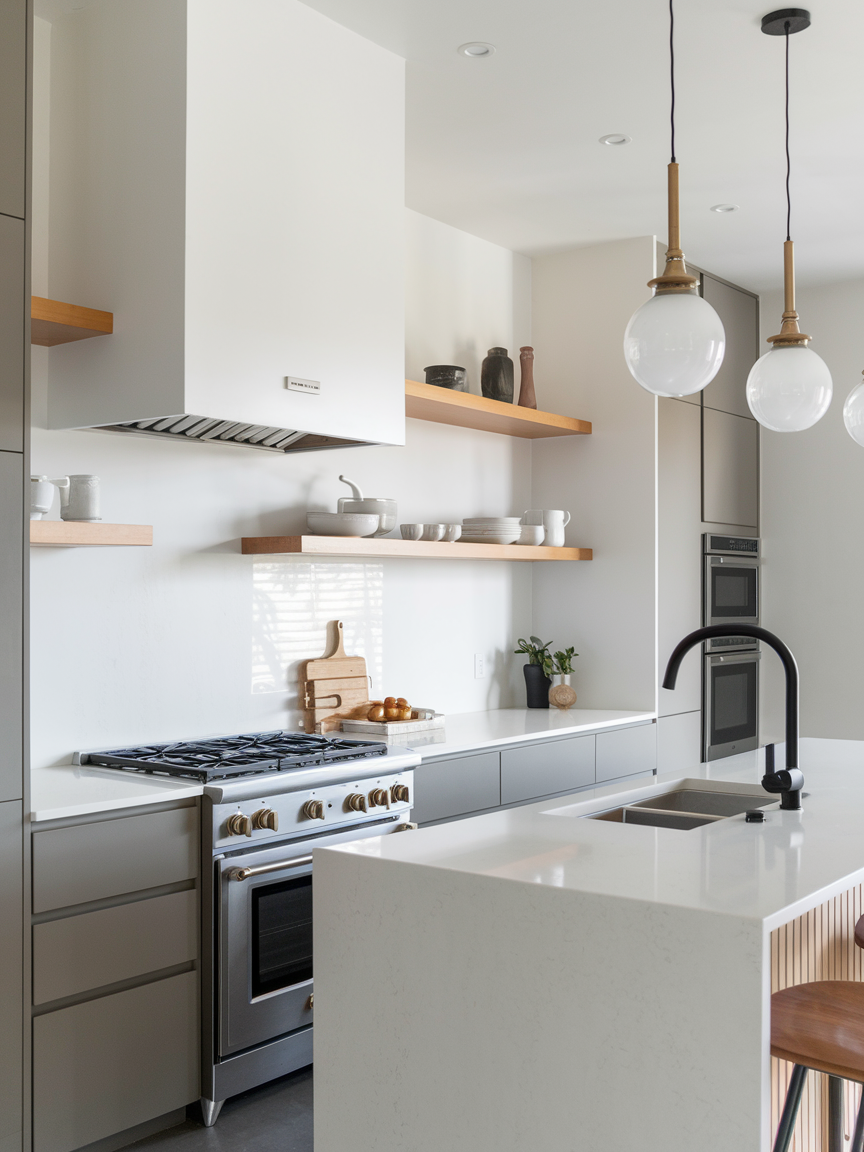
Integrated appliances are key to achieving a seamless and cohesive minimalist kitchen design. Built-in refrigerators, concealed dishwashers, and flush-mounted ovens blend effortlessly with surrounding cabinetry, reducing visual noise. By hiding bulky appliances behind cabinet panels, the overall look remains clean and uninterrupted. This design strategy emphasizes symmetry and order, which are essential elements of minimalism. Choosing appliances in matching finishes or concealed designs enhances uniformity and sophistication. The result is a kitchen that feels organized and polished, where functionality exists without distracting from the sleek and timeless aesthetic.
7. Quartz Countertops
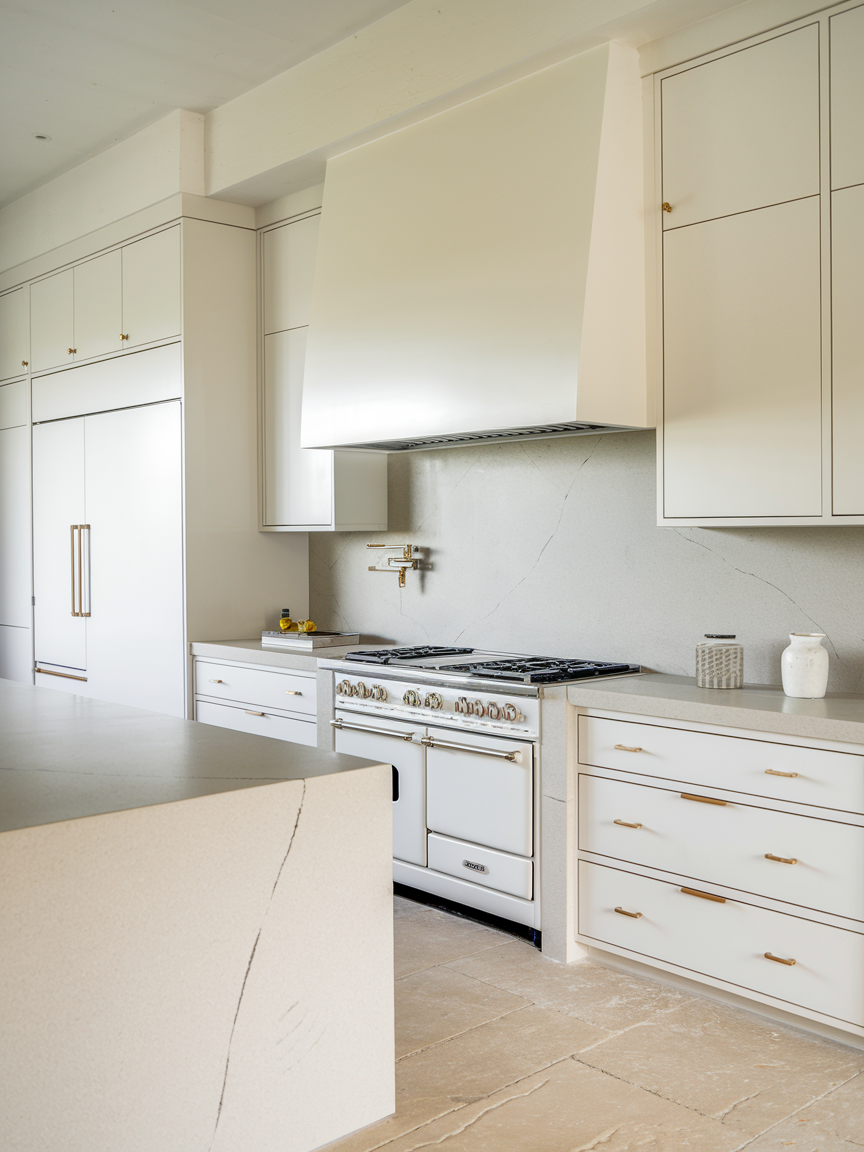
Quartz countertops with soft, subtle veining offer elegance without overpowering the minimalist theme. Choosing light tones such as white or pale gray keeps the surface looking clean while introducing gentle visual movement. Unlike bold marble patterns, understated veining complements rather than dominates the space. Quartz is also highly durable and low-maintenance, making it a practical choice for busy kitchens. Pairing these countertops with flat-panel cabinetry and simple backsplashes ensures the overall design remains cohesive. This balance of beauty and functionality makes quartz an ideal surface for modern minimalist kitchens seeking timeless sophistication.
8. Hidden Storage Solutions
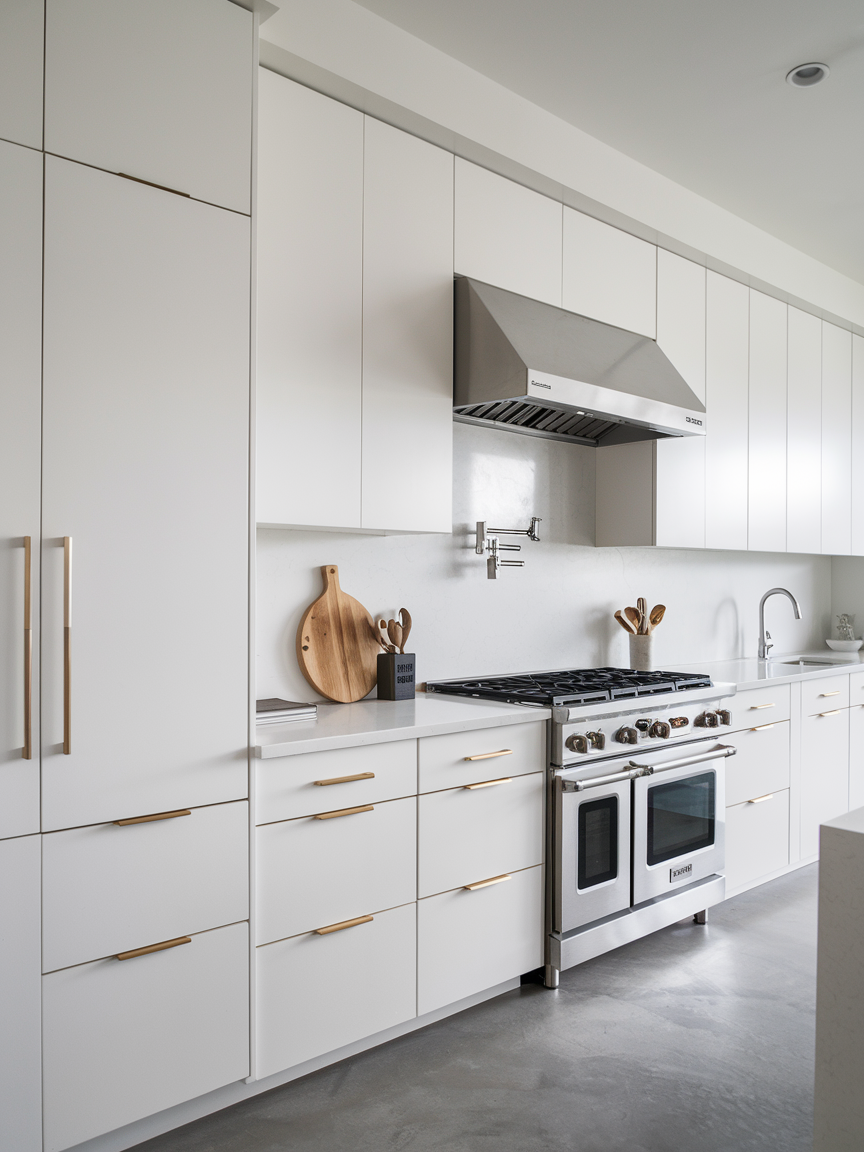
Hidden storage solutions help maintain clutter-free countertops, which are essential in minimalist kitchens. Pull-out pantry systems, deep drawers with organizers, and concealed compartments maximize functionality without adding visual bulk. By storing small appliances and kitchen tools out of sight, the space feels calm and orderly. Custom cabinetry that reaches the ceiling also increases storage capacity while maintaining clean vertical lines. This thoughtful approach to organization enhances efficiency and supports the minimalist principle of keeping only what is necessary and purposeful within view.
9. Clutter-Free Countertops
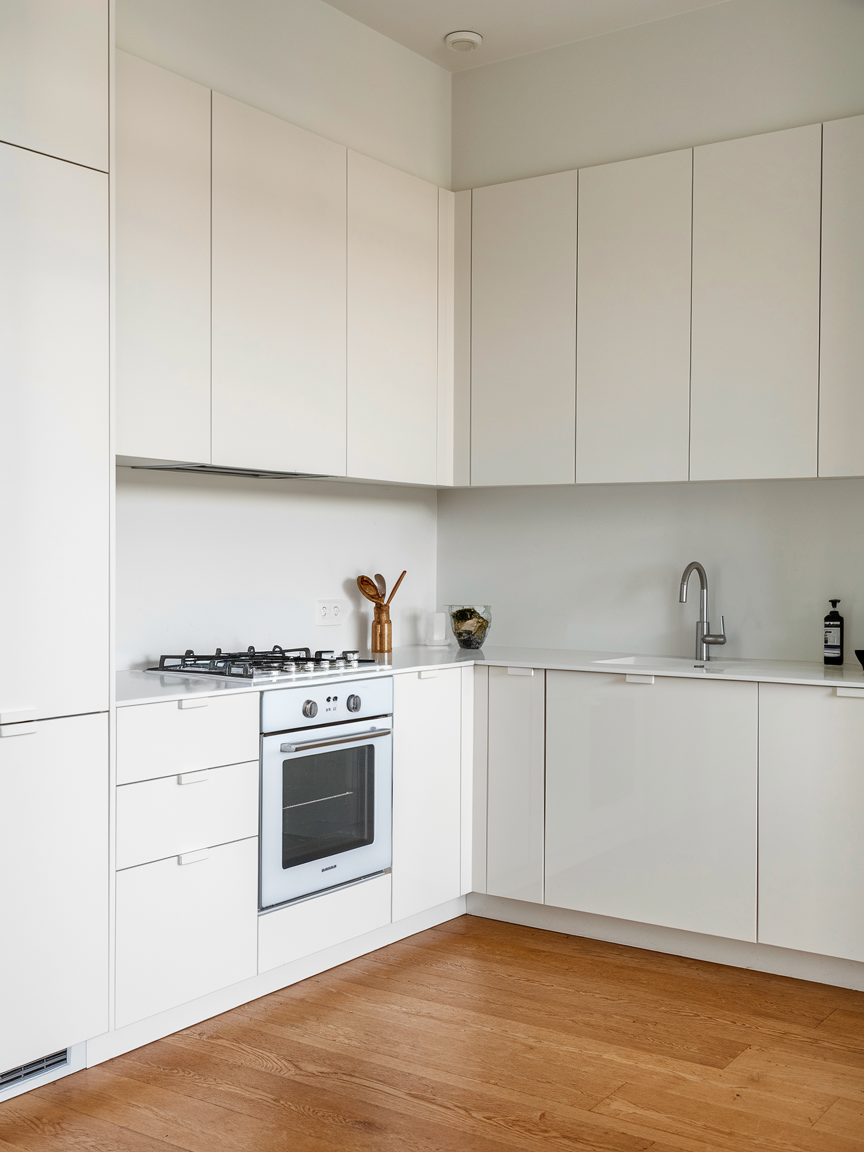
Keeping countertops clutter-free is the ultimate expression of minimalist design. Store appliances and utensils out of sight to maintain clear surfaces. Limit visible items to essentials only, arranged neatly and intentionally. Clear countertops enhance functionality and create a sense of calm. This disciplined approach reinforces the core principle of minimalism—embracing simplicity to achieve lasting beauty and practicality in everyday living.
10. Matte Finishes for Soft Sophistication
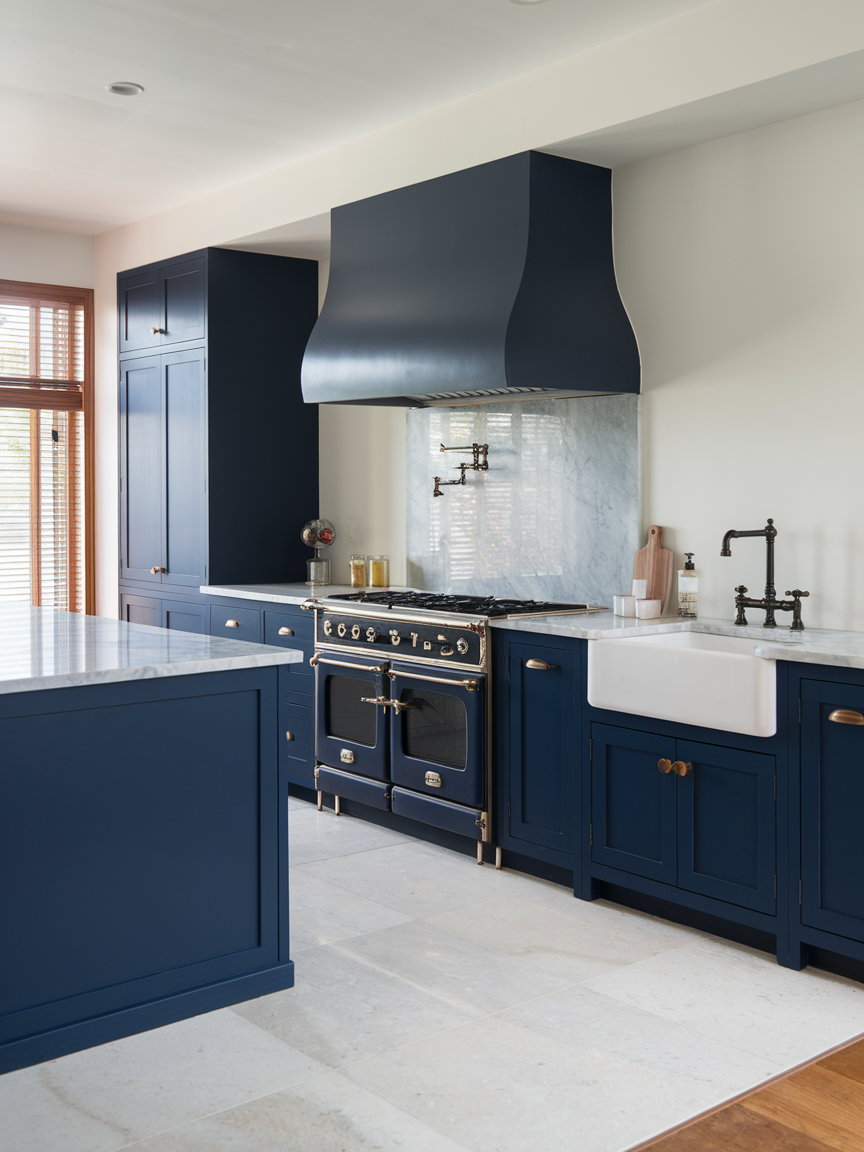
Matte finishes contribute to a soft and understated elegance that defines minimalist kitchens. Matte cabinetry, countertops, or fixtures reduce glare and create a smooth, velvety appearance. This finish feels modern and sophisticated while preventing the space from looking overly glossy or dramatic. Matte black faucets or hardware can add contrast without disrupting the clean aesthetic. The subdued quality of matte surfaces enhances the calming atmosphere, making the kitchen feel balanced and cohesive. This simple design choice reinforces the timeless appeal of modern minimalism.
11. Floor-to-Ceiling Cabinets
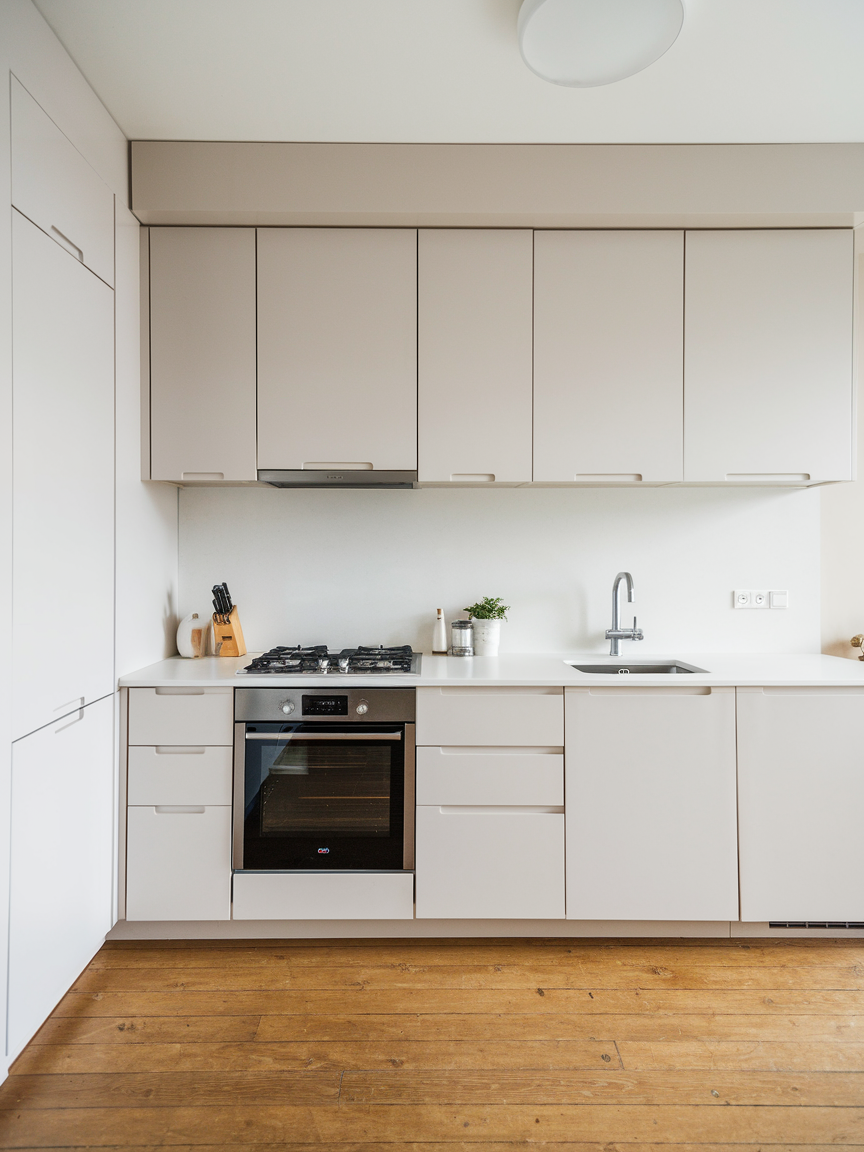
Floor-to-ceiling cabinetry maximizes storage while emphasizing sleek vertical lines that enhance a minimalist aesthetic. By extending cabinets all the way up, you eliminate awkward gaps that often collect dust and visual clutter. This design also creates a seamless wall effect, making the kitchen appear taller and more structured. Choosing flat-panel doors in neutral shades maintains a smooth and cohesive look. Integrated handles or push-latch systems further streamline the appearance. Beyond aesthetics, this approach increases functionality by providing ample hidden storage for rarely used items, ensuring countertops remain clear and organized for a timeless, refined kitchen atmosphere.
12. Monochrome Design
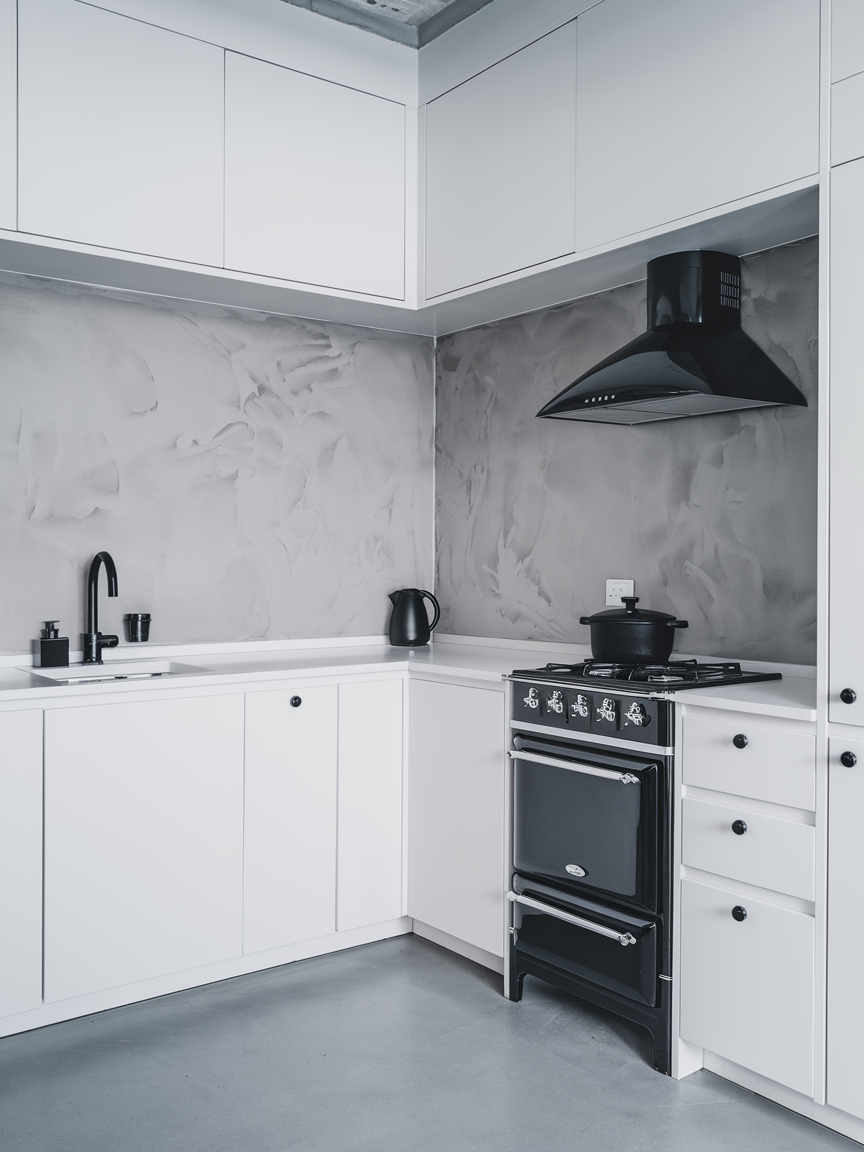
A monochrome color scheme creates strong visual harmony in a modern minimalist kitchen. Selecting varying shades of one color, such as soft gray or warm beige, adds depth while maintaining cohesion. Layering tones through cabinetry, backsplash, and décor prevents the space from feeling flat or lifeless. Subtle textural contrasts—like matte cabinets paired with polished countertops—add interest without breaking the clean aesthetic. This approach fosters a calm and intentional environment that feels balanced and sophisticated. Monochrome kitchens remain timeless because they rely on consistency rather than fleeting trends, ensuring lasting elegance and simplicity.
13. Slim Profile Kitchen Island
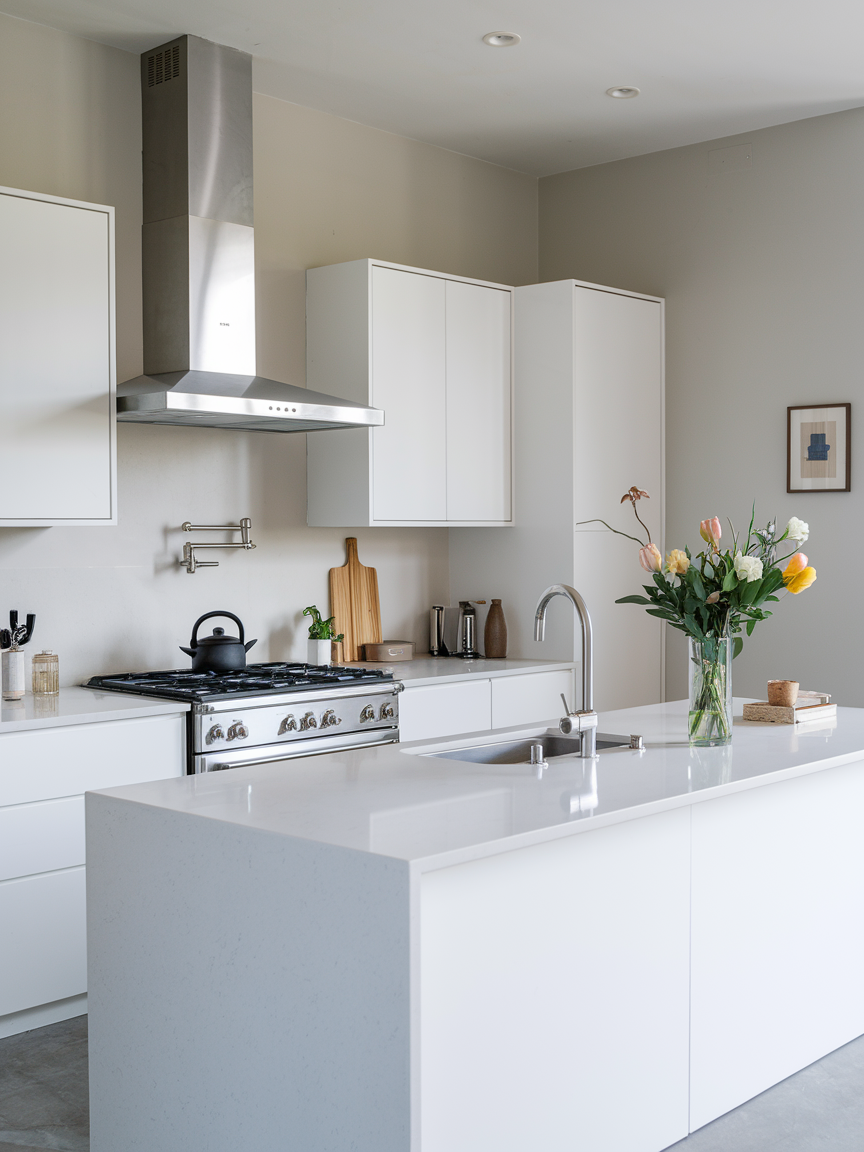
A slim-profile kitchen island offers functionality without overwhelming the space. Instead of a bulky centerpiece, choose a streamlined design with clean edges and minimal detailing. A waterfall countertop can add subtle drama while maintaining simplicity. Incorporating hidden storage within the island keeps clutter at bay and supports the minimalist philosophy. The slim structure ensures easy movement around the kitchen, improving flow and usability. When paired with simple bar stools in neutral tones, the island becomes both a practical workspace and a refined focal point that enhances the overall clean and timeless look.
14. Glass Cabinet Panels
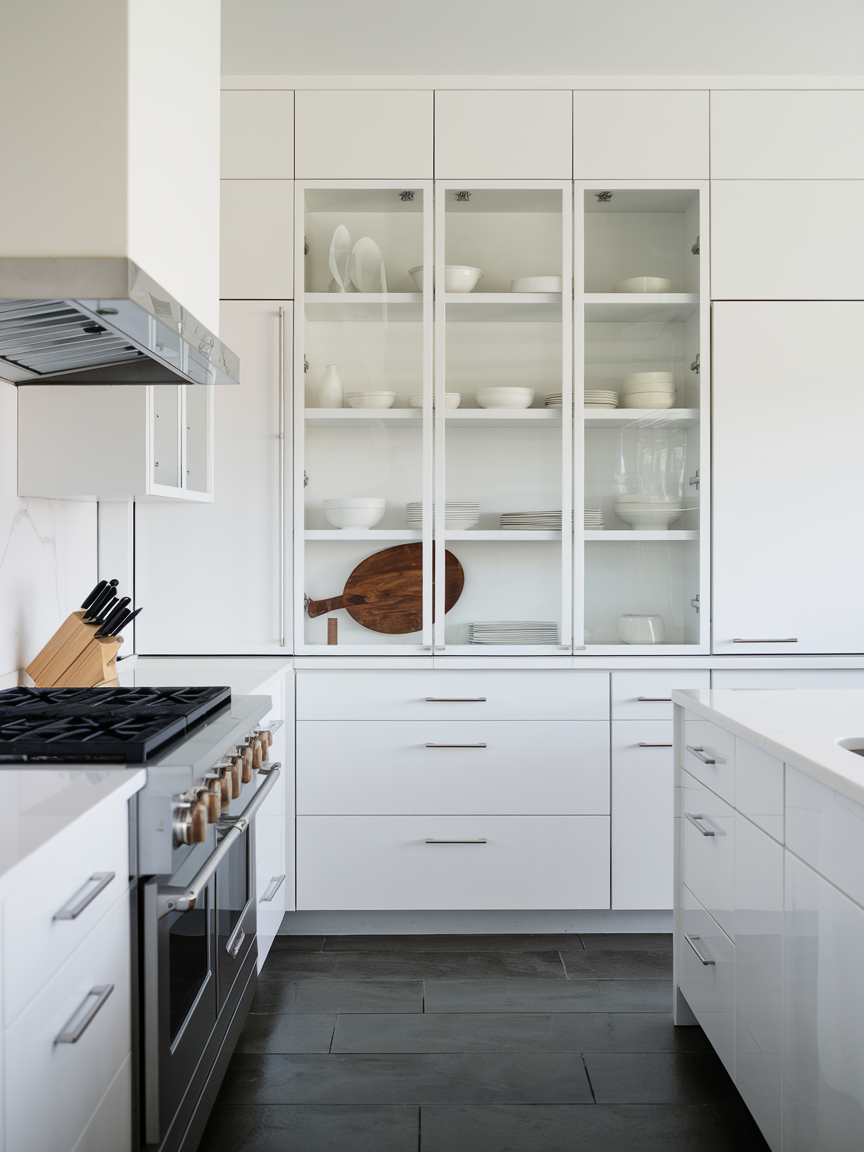
Glass cabinet panels introduce a touch of openness while maintaining minimalist principles. Frosted or lightly tinted glass keeps contents partially concealed, preventing visual clutter while adding dimension. This design element breaks up solid cabinetry without disrupting the streamlined aesthetic. Displaying carefully curated dishware in cohesive colors ensures the look remains polished and intentional. Glass panels also reflect light, brightening the space and enhancing its airy feel. When used sparingly, this feature adds sophistication and modern charm without compromising the kitchen’s clean and uncluttered design.
15. Simple Tile Backsplash
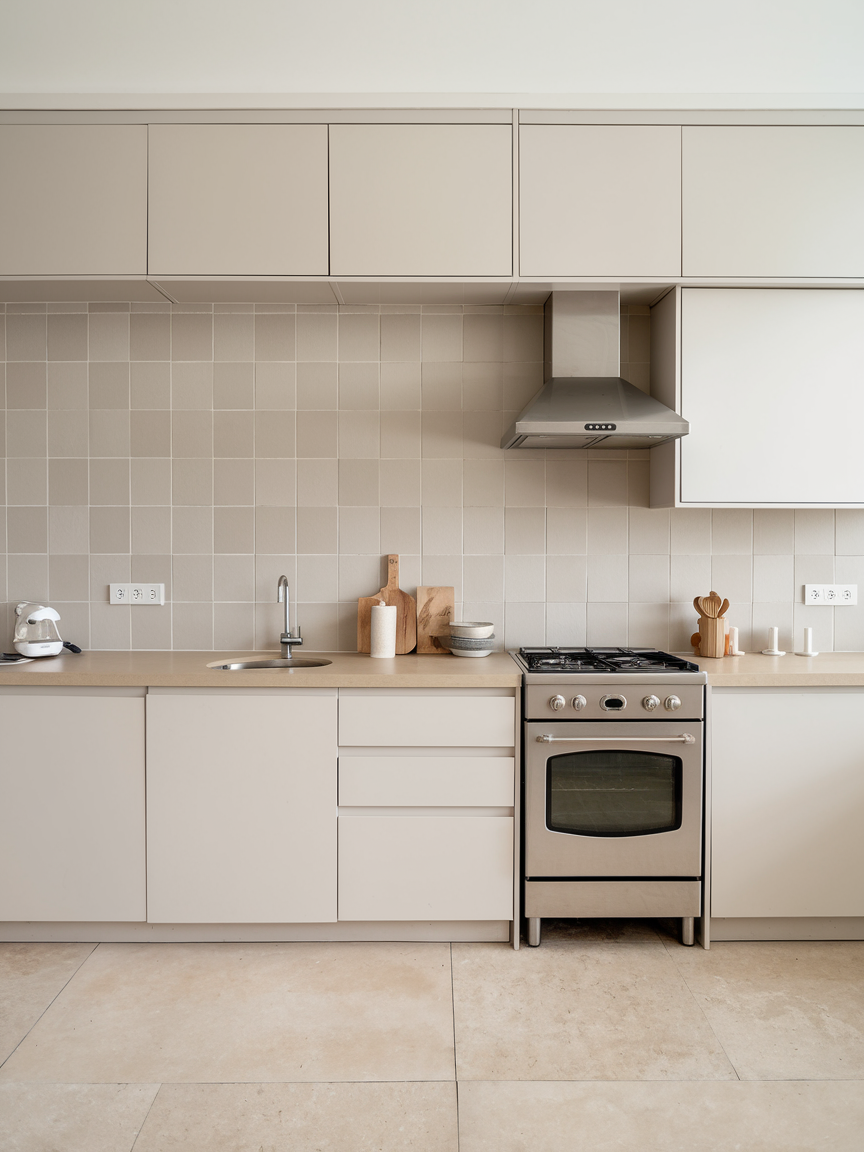
A simple tile backsplash in soft neutral shades complements minimalist kitchens beautifully. Opt for classic subway tiles or large-format slabs in white, beige, or light gray for a subtle backdrop. Minimal grout lines and clean installation enhance the seamless look. Avoid bold patterns or overly decorative tiles that may distract from the clean aesthetic. A restrained backsplash allows cabinetry and countertops to take center stage while protecting the walls from daily wear. This understated design choice supports the timeless appeal of modern minimalism while maintaining practical functionality.
16. Under-Cabinet Lighting
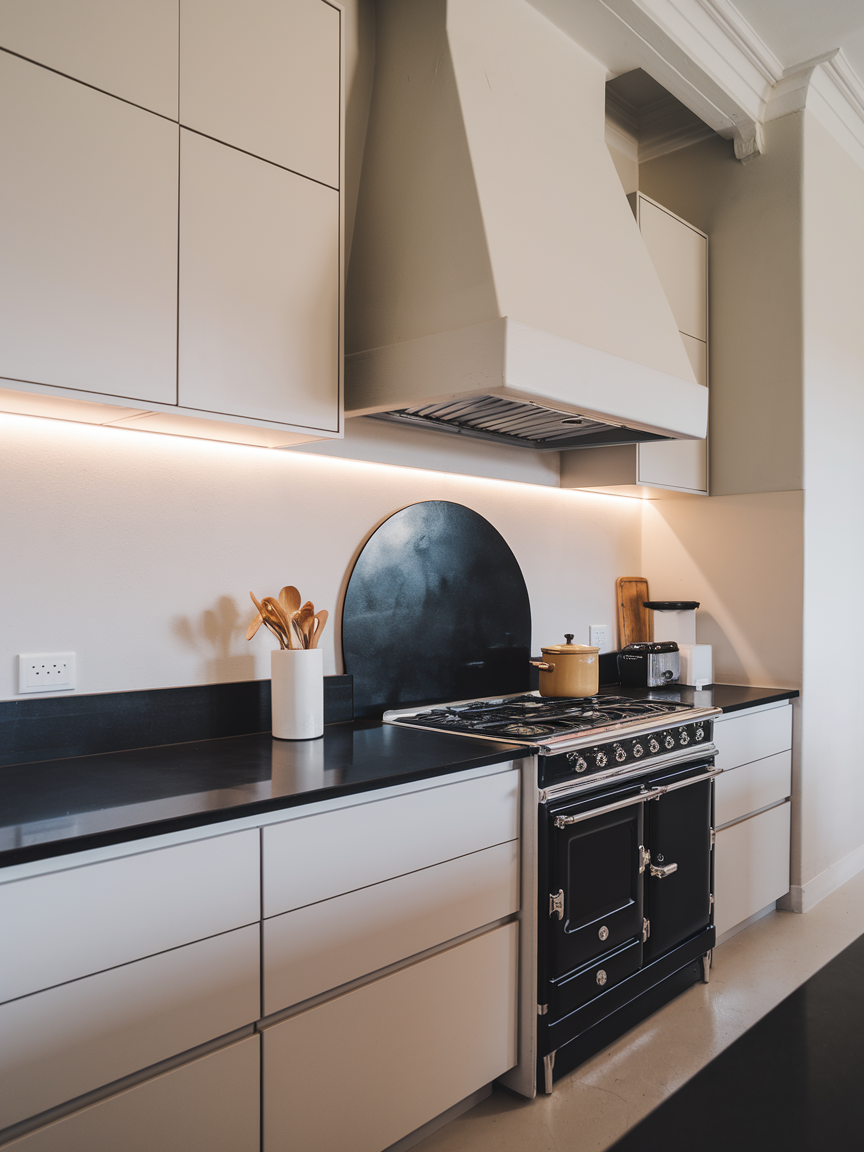
Under-cabinet lighting enhances both functionality and atmosphere in a minimalist kitchen. Soft LED strips illuminate countertops evenly, making food preparation easier while adding warmth to the space. Concealed lighting fixtures maintain the streamlined look, ensuring no bulky elements disrupt the clean lines. Warm white tones create a cozy glow that balances cooler neutral palettes. This subtle illumination highlights textures and materials without overwhelming the design. The result is a kitchen that feels inviting and refined, especially during evening hours, while preserving the simplicity and clarity central to minimalist style.
17. Statement Marble Slab
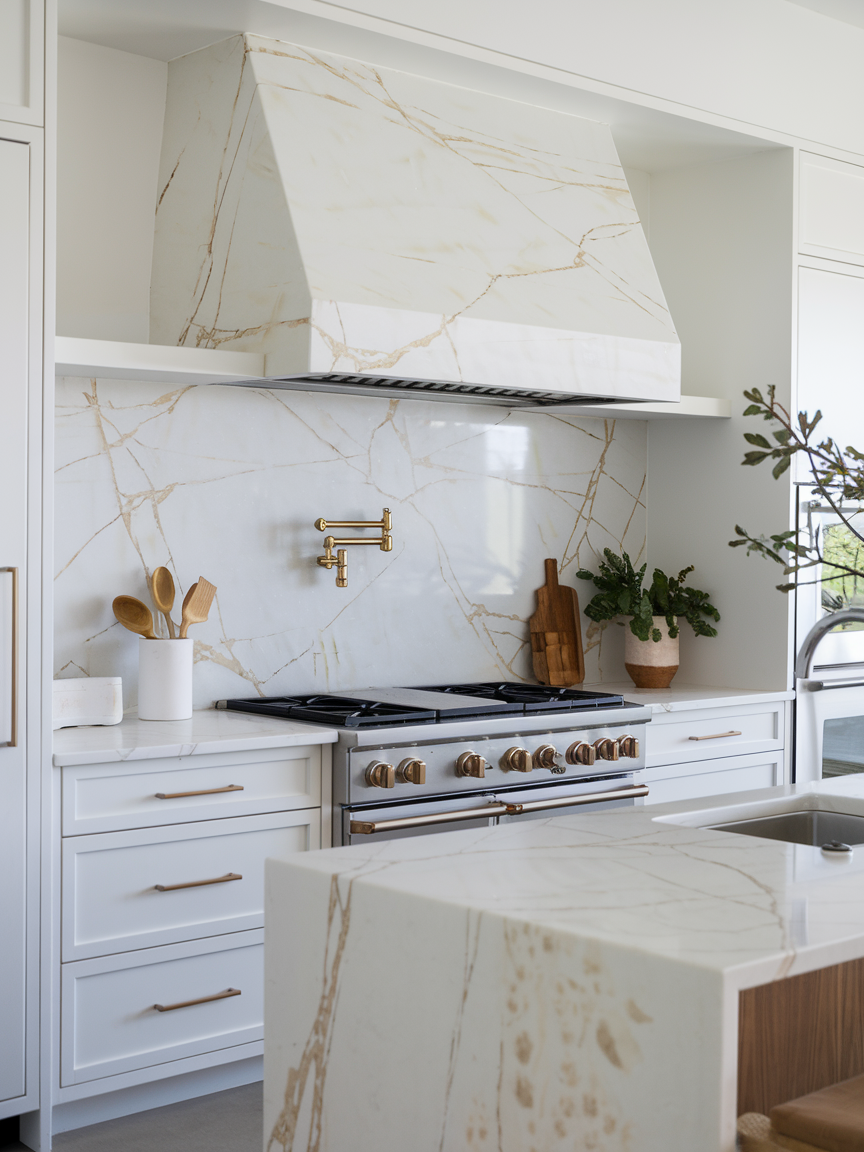
A single statement marble slab can serve as a focal point while preserving minimalism. Choosing marble with delicate veining adds elegance without overwhelming the space. Using it for a backsplash or waterfall island creates visual interest in a controlled and intentional way. Pairing marble with simple cabinetry ensures balance. This refined touch elevates the kitchen’s sophistication while maintaining its clean and timeless appeal.
18. Concrete Accents for Modern Edge
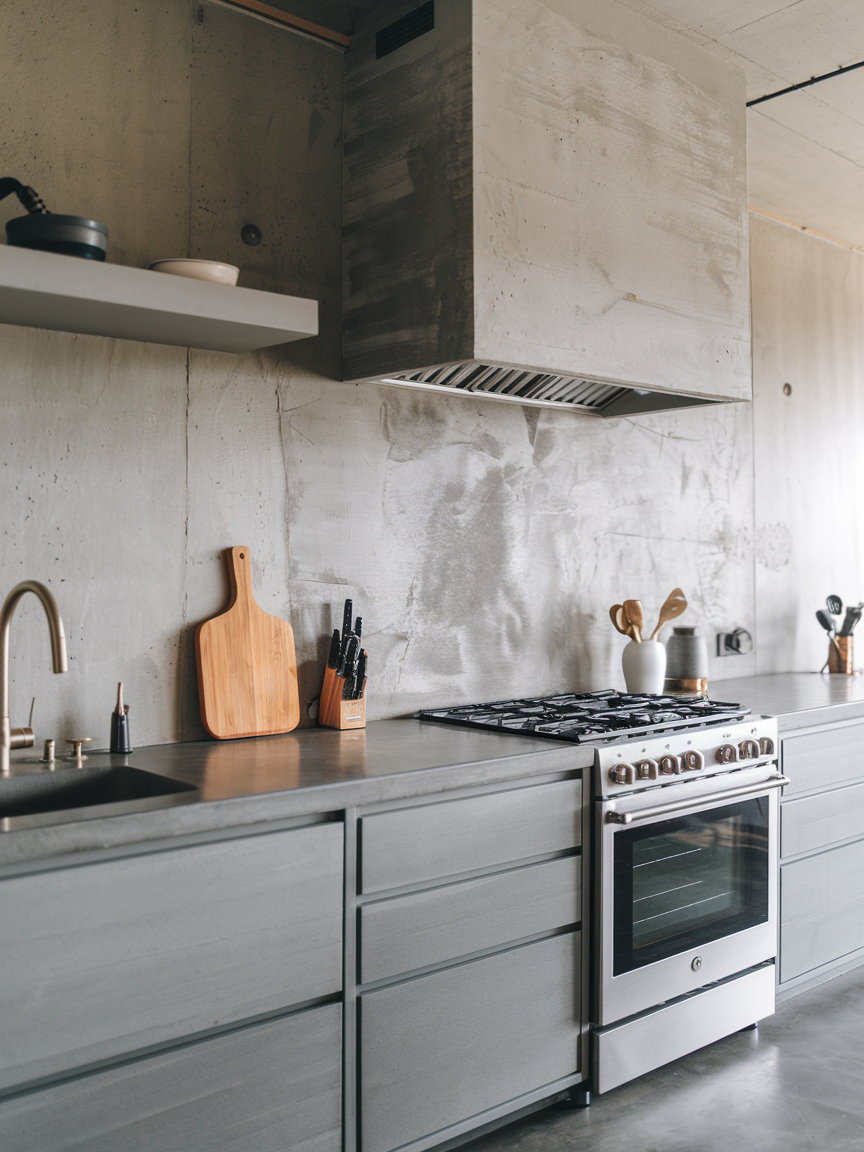
Concrete elements introduce a subtle industrial character to a minimalist kitchen. Polished concrete countertops or floors provide texture while maintaining neutral tones. The raw yet refined appearance complements flat-panel cabinetry and clean lines. To prevent the space from feeling too cold, balance concrete with warm wood or soft lighting. Its durability and understated look make it a practical and stylish choice. When used thoughtfully, concrete adds depth and modern sophistication without compromising the clean, uncluttered atmosphere that defines minimalist design.
19. Black and White Contrast
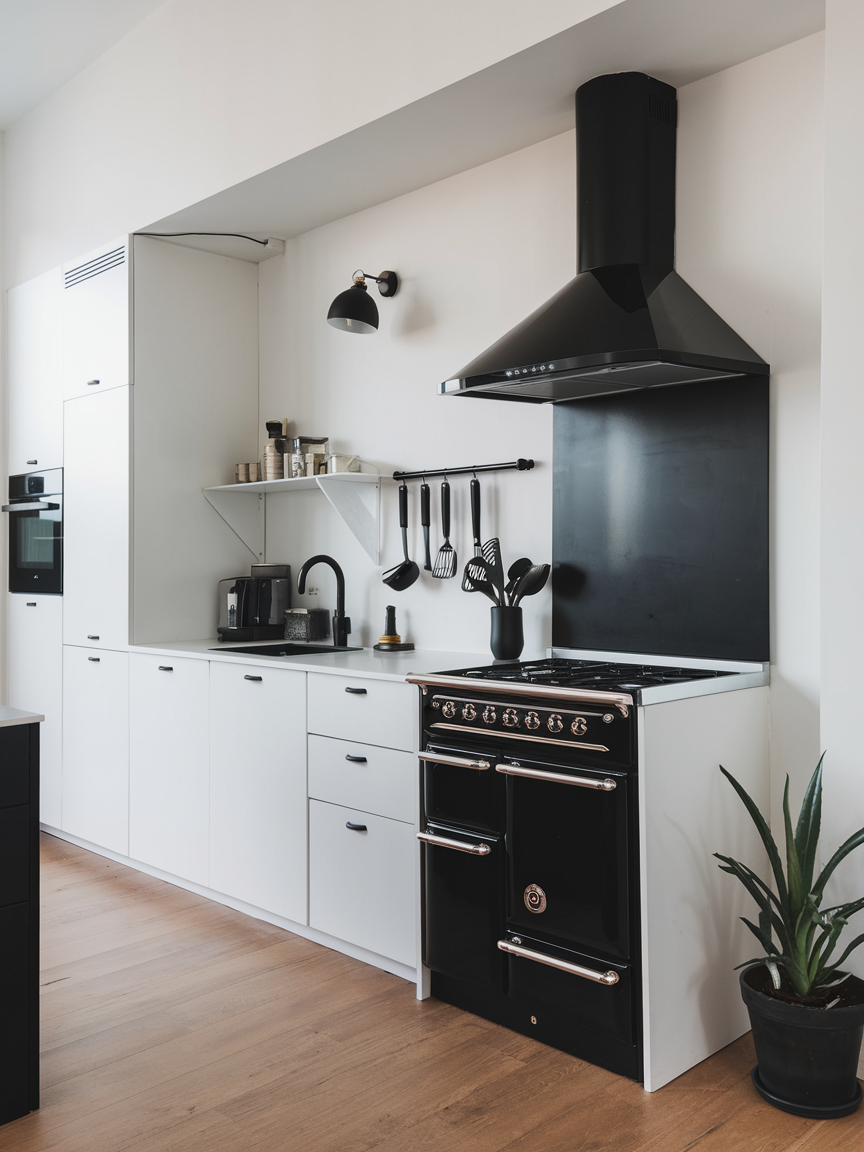
A black and white color combination delivers striking simplicity in minimalist kitchens. Crisp white cabinetry paired with matte black fixtures or lighting creates visual interest while maintaining clarity. The contrast emphasizes geometric shapes and clean lines, reinforcing modern aesthetics. Keeping the palette limited ensures the design remains timeless rather than trendy. Incorporating subtle textures, such as brushed metal or natural wood, prevents the space from feeling stark. This classic color pairing provides drama and sophistication while preserving the minimalist philosophy of restraint and balance.
20. Minimal Hardware in Brushed Metal
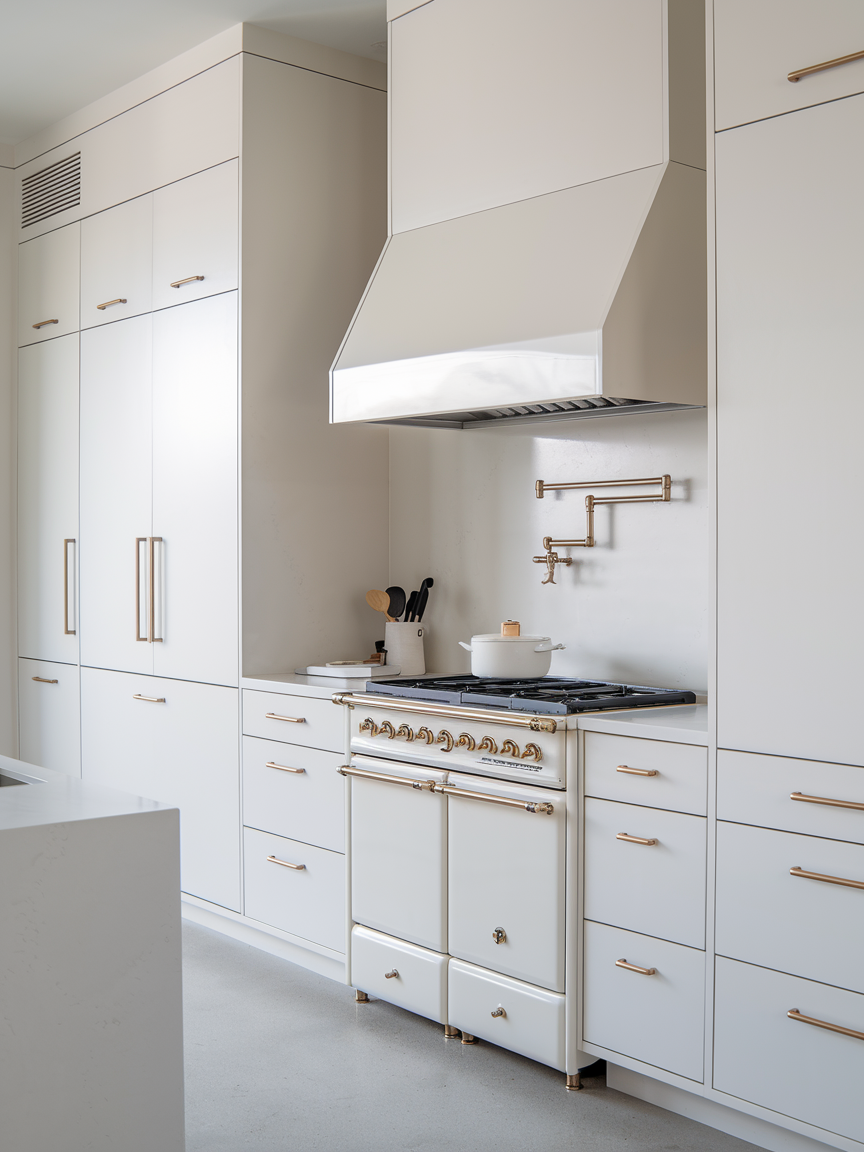
Choosing minimal hardware in brushed metal adds subtle detail without overwhelming the design. Slim bar pulls or discreet knobs in finishes like brushed nickel or stainless steel complement modern cabinetry beautifully. Their understated sheen introduces elegance while maintaining simplicity. Avoid overly ornate shapes or high-gloss finishes that may distract from the clean aesthetic. Consistency in hardware style throughout the kitchen enhances cohesion and symmetry. This small yet impactful detail reinforces the polished and timeless character of a minimalist kitchen.
21. Large Windows for Natural Light
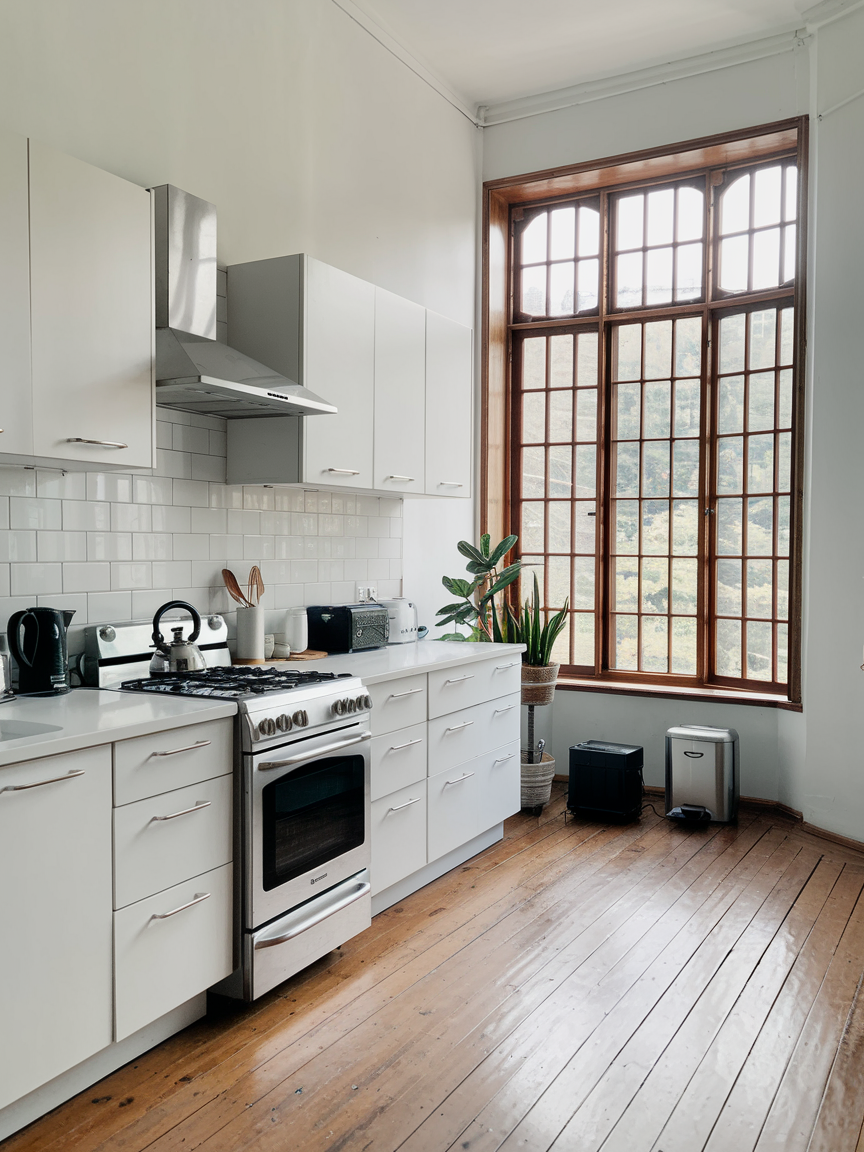
Large windows are essential in creating an airy and inviting minimalist kitchen. Abundant natural light enhances neutral tones and highlights clean architectural lines. Keeping window treatments simple—such as sheer curtains or none at all—maintains an open feel. Sunlight also reduces the need for excessive decorative elements, as brightness itself becomes a defining feature. Framing views of greenery outside can add organic warmth without cluttering the interior. The result is a bright and serene kitchen that feels connected to its surroundings and aligned with minimalist principles.
22. Minimal Decor with Purpose
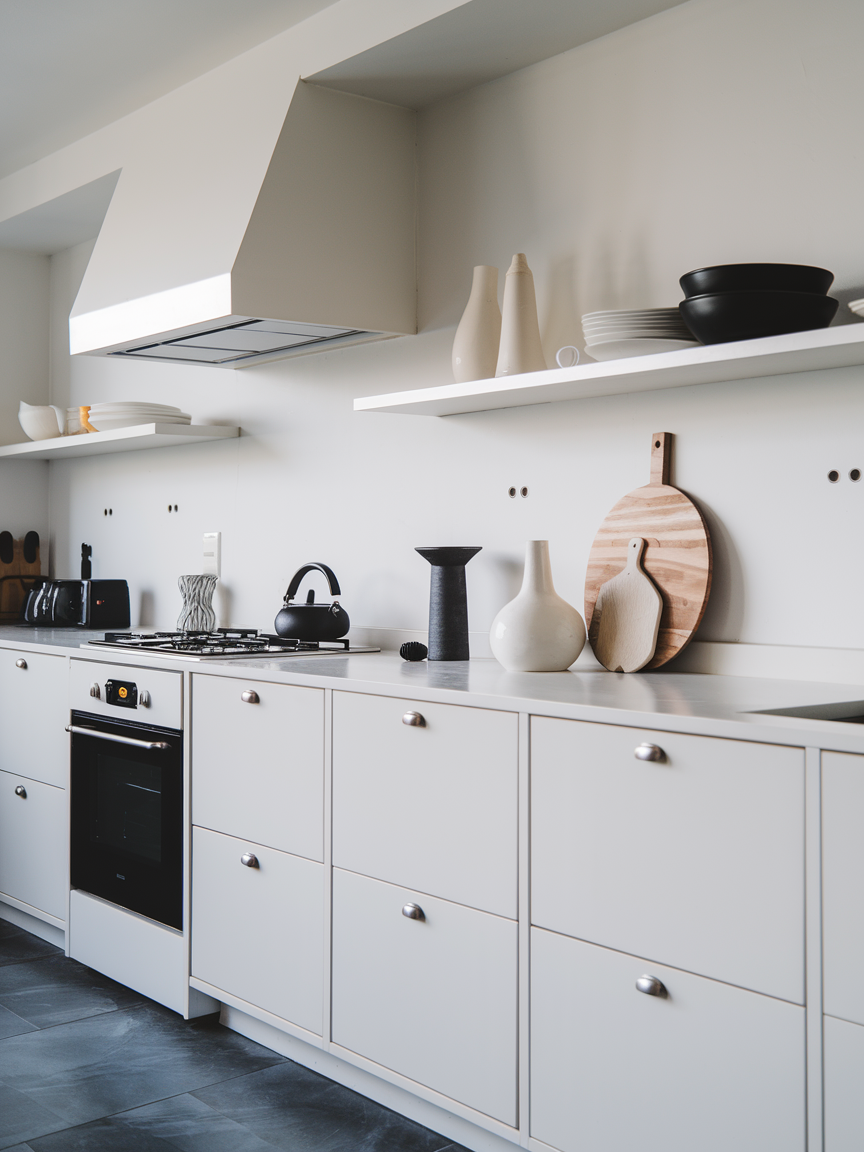
Minimalist kitchens benefit from décor that is intentional and purposeful. Instead of filling countertops with accessories, select a few meaningful pieces such as a ceramic vase or wooden cutting board. Each item should serve a function or enhance the overall aesthetic subtly. Keeping surfaces mostly clear reinforces the clean and organized appearance. Thoughtful placement ensures décor complements rather than competes with the architecture. This curated approach creates a calm environment that feels refined and balanced, reflecting the essence of minimalist living.
23. Seamless Flooring Throughout
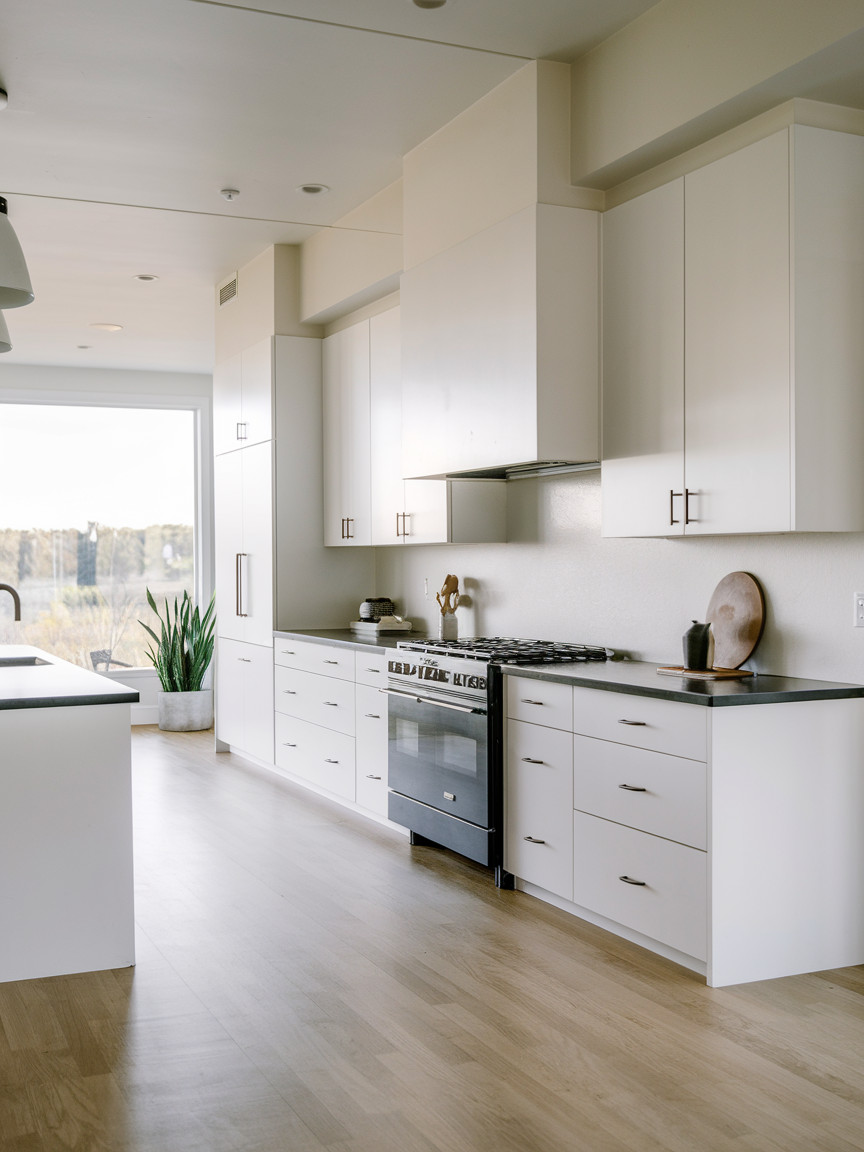
Using consistent flooring throughout the kitchen and adjacent spaces enhances visual continuity. Materials such as light wood, polished concrete, or large-format tiles create a unified foundation. Avoiding abrupt transitions between rooms strengthens the open and cohesive look. Seamless flooring also emphasizes spaciousness and supports a clean design narrative. Choosing neutral tones ensures the floor complements cabinetry and walls without drawing excessive attention. This subtle yet effective strategy reinforces the timeless and harmonious character of modern minimalist kitchens.
24. Slimline Range Hood
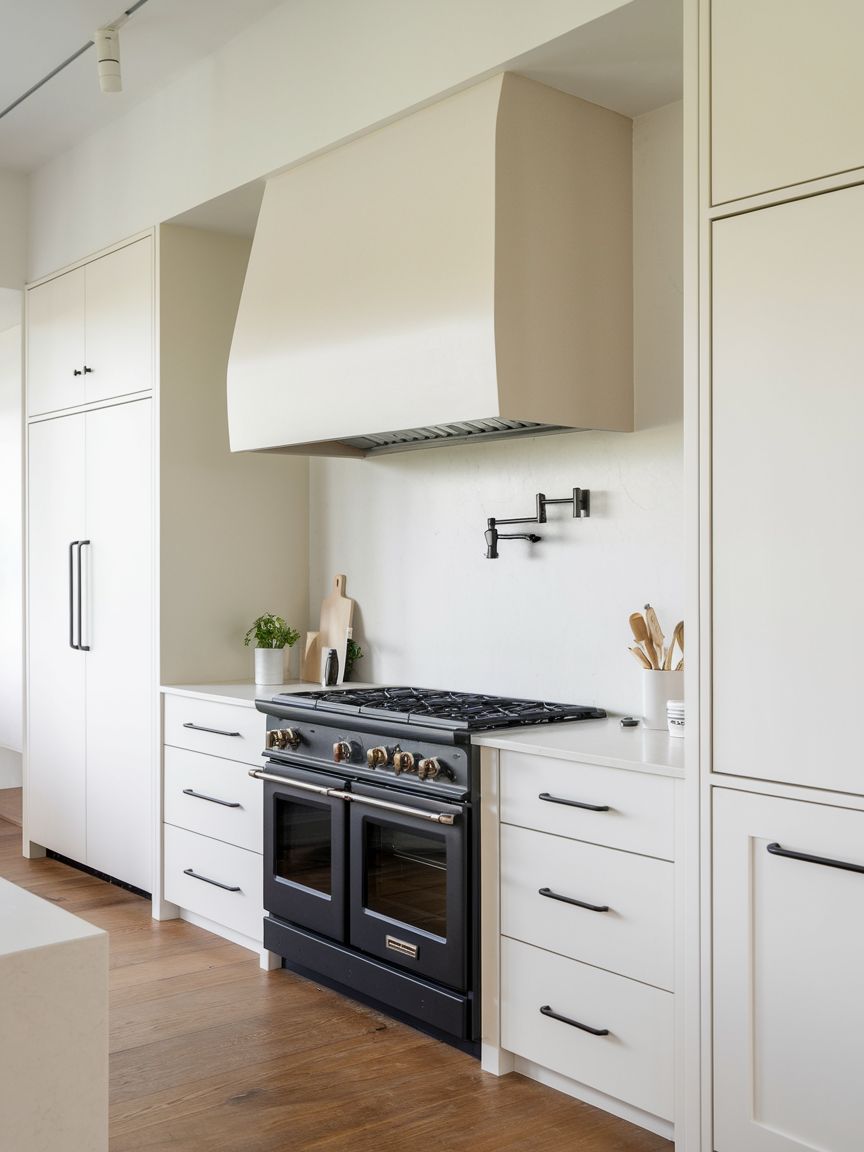
A slimline range hood maintains ventilation while preserving clean lines. Opt for a built-in or concealed design that blends with cabinetry. Stainless steel or matte finishes work well in minimalist settings. Avoid bulky or decorative hoods that dominate the space visually. By keeping the hood understated, the focus remains on the overall cohesive design. This functional element becomes almost invisible, contributing to the sleek and uncluttered aesthetic central to minimalist kitchens.
25. Minimalist Stools
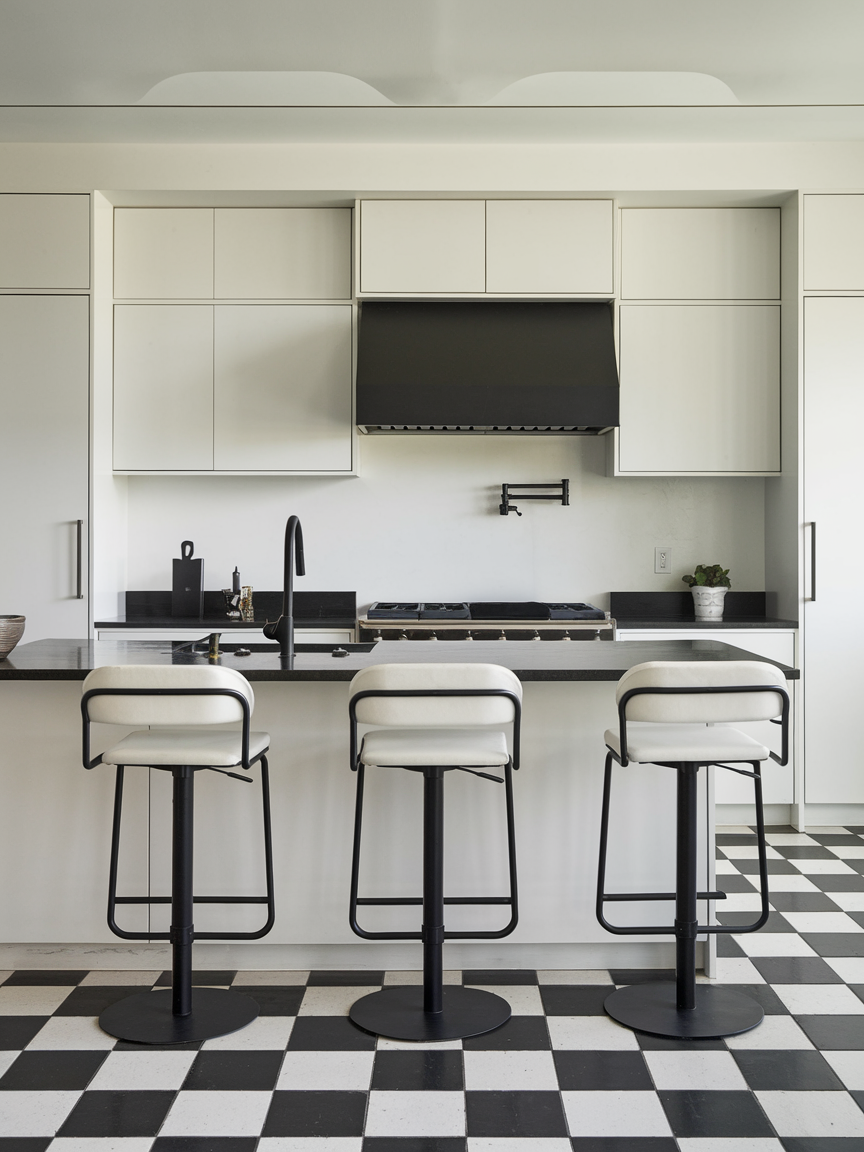
Minimalist stools with simple silhouettes complement a streamlined kitchen island. Choose designs with slim legs, neutral upholstery, or natural wood finishes. Avoid ornate details or excessive padding that may feel heavy. The goal is to provide comfortable seating without disrupting the clean visual flow. Consistency in materials and color ensures harmony. These understated seating options add functionality while reinforcing the kitchen’s refined and timeless atmosphere.
26. Integrated Sink Design
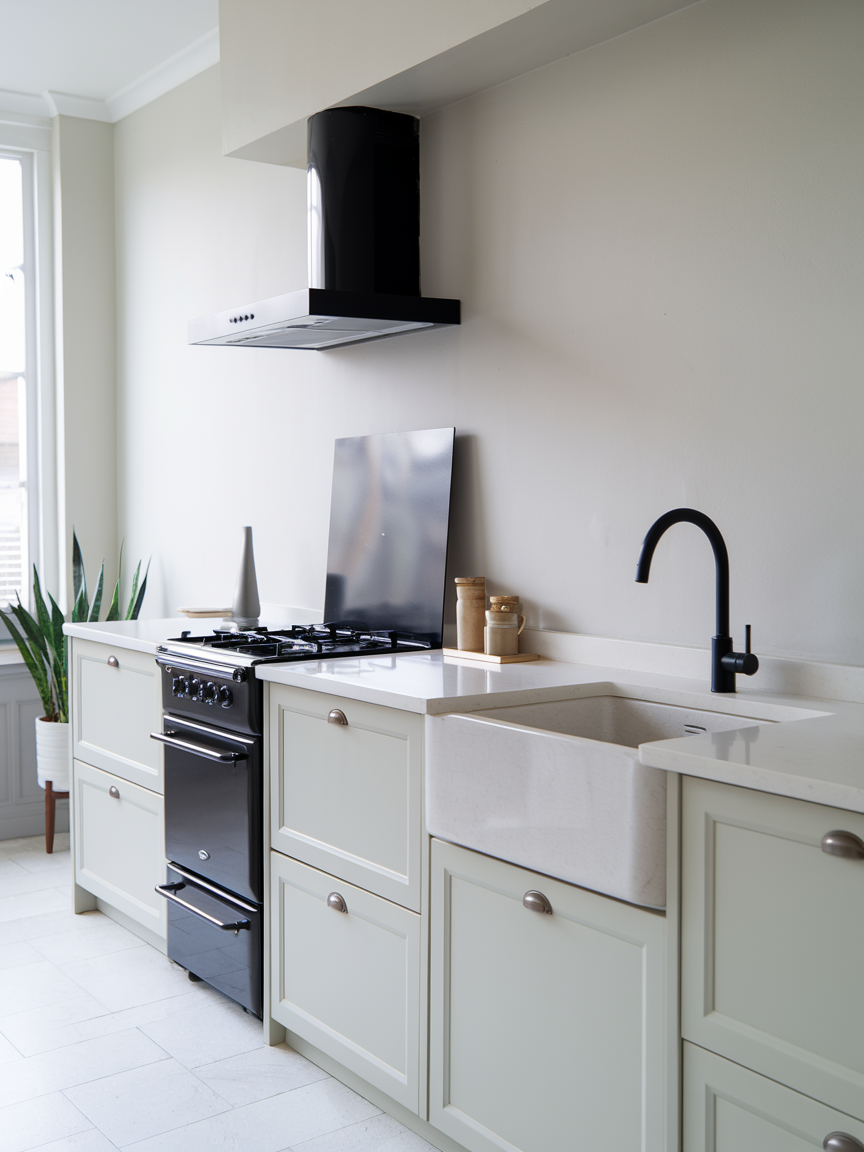
An integrated sink made from the same material as the countertop creates a seamless appearance. This design eliminates harsh transitions and maintains smooth surfaces. Undermount sinks further enhance the clean look by keeping edges discreet. Pairing the sink with a minimalist faucet in matte black or brushed metal completes the refined aesthetic. The result is a cohesive and functional feature that supports the uncluttered philosophy of modern minimalism.
* These 26 modern minimalist kitchen ideas demonstrate how simplicity can create a space that feels both timeless and beautifully refined. Let these ideas inspire you to design a kitchen that prioritizes clarity, balance, and efficiency—resulting in a clean, sophisticated space that remains stylish and relevant for years to come.